A curtain cut is hair left long on top, parted down the middle and swept to each side to frame the face, the look Leonardo DiCaprio wore in the nineties.
It sits most naturally on wavy hair. Straight hair needs styling to hold the split, and curly hair needs extra length on top.
1. Undercut Curtains
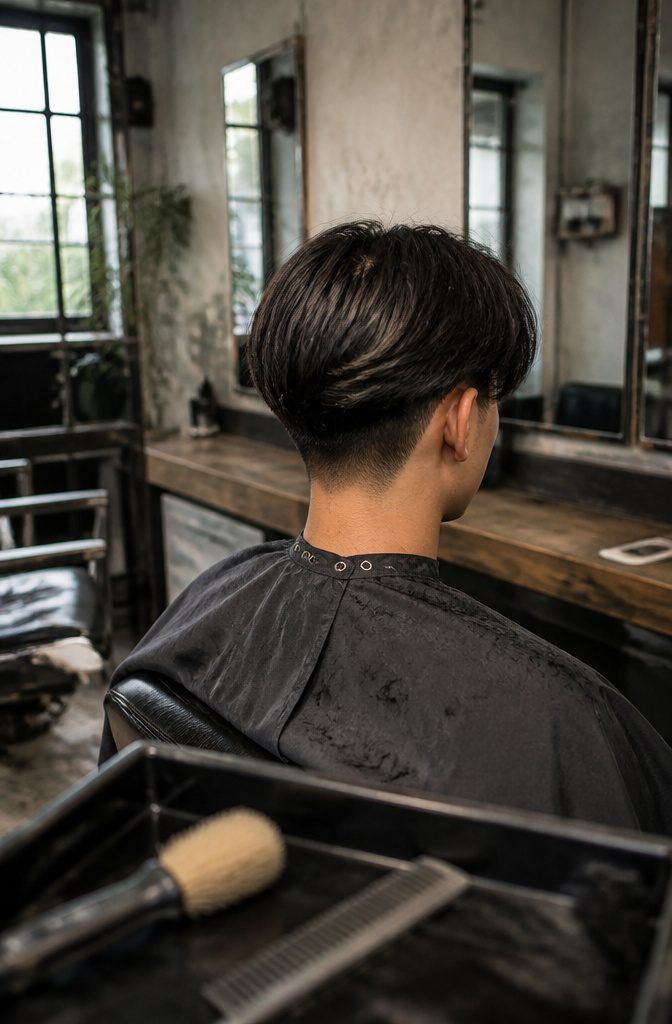
The undercut curtain is contrast taken to its maximum setting.
The top falls long enough to part down the center and sweep just above the ear, while the sides and back are cut into a tight undercut that leaves almost no transition zone between lengths.
That sharp division frames the curtain’s flow and makes the center part read instantly, even from across a room.
Instruct your barber to leave the top layers long enough for a center part and cut the sides and back into a tight undercut for maximum contrast.
Ask for exactly that. The length difference does the work, so you want clean separation rather than a gradual fade.
The undercut keeps the silhouette tight where a traditional curtain haircut might start to look heavy, and it grows out with a defined edge instead of blending into shapelessness after three weeks.
This works best on straight to slightly wavy hair, where the top has enough body to hold the part without collapsing flat against the scalp.
2. Taper Fade Curtains
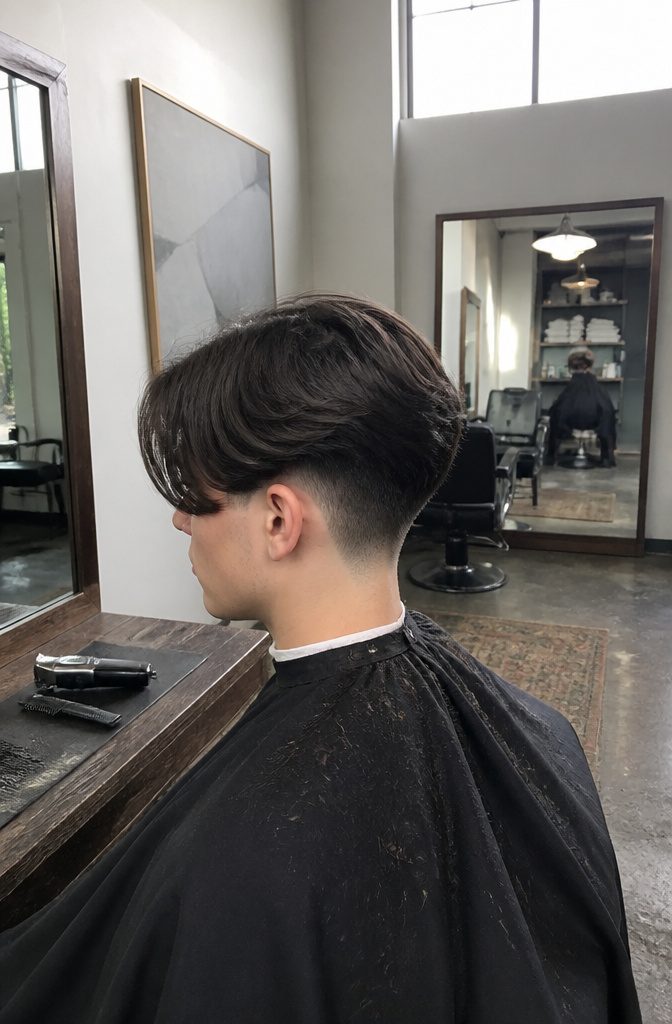
A taper fade keeps the curtains long on top and lets the sides shrink gradually from the bottom upward, so the shift looks softer than an undercut’s hard line.
The longer hair still frames the face, and the fade adds a subtle edge without hiding the retro shape.
I’d pick this cut for a busy schedule. It suits straight to mildly wavy hair, and it flatters square and oval faces most.
The upkeep is the catch: book a trim every 3–4 weeks. Wait longer and the fade grows out, the sides lose their structure, and the curtains start to look shapeless instead of crisp.
3. Tapered Curtains
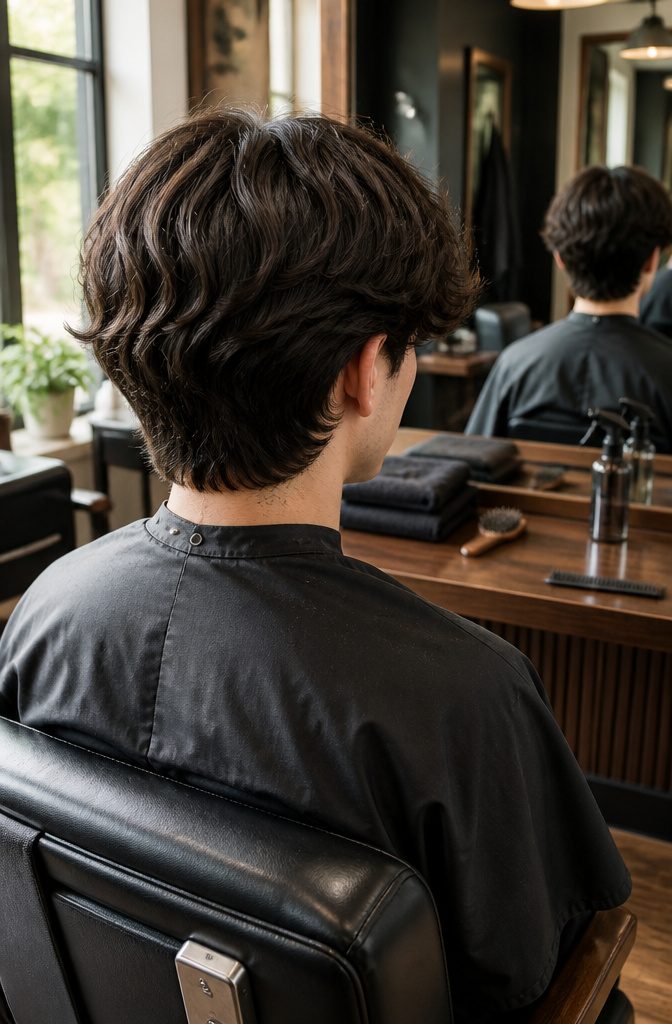
A tapered curtain keeps the top long and lets the sides shorten gradually toward the ears and nape, so there is no visible line where length stops.
That is the difference from a fade, which cuts down to skin and shows a clear band.
Here the hair simply collapses at the taper, and the shaping happens at the back of the head where you won’t see it in the mirror.
The fringe is the part you can check: S-shaped curtains should fall just below the brow line.
I’d ask for the taper to run to the nape. Curly or wavy hair usually does better with extra length on top.
4. Textured Layers
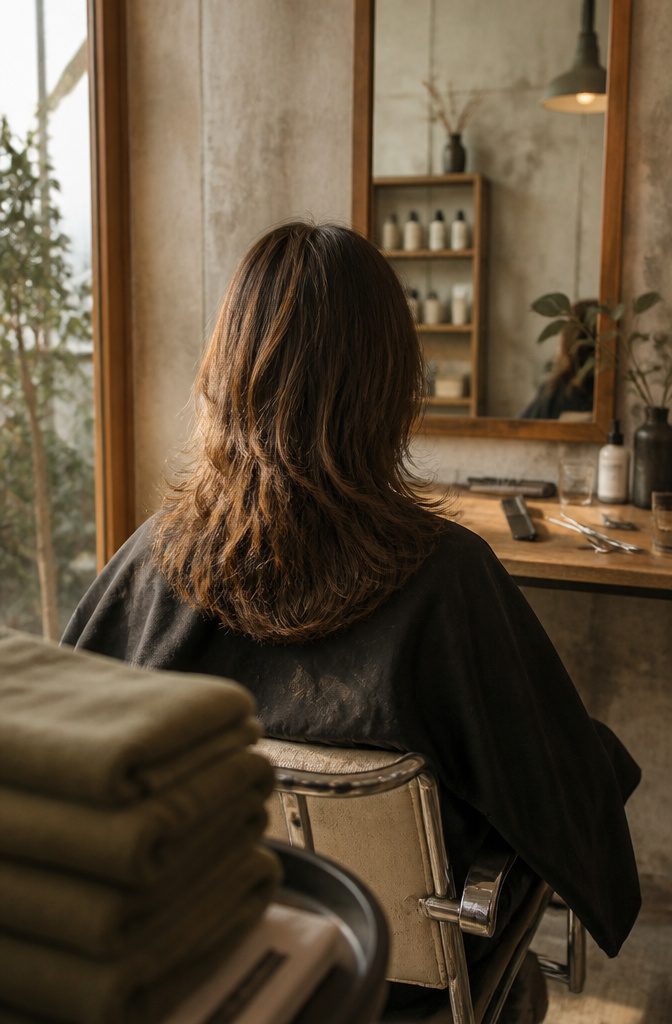
Ask for gradual layers with feathered ends, and say "textured" rather than "choppy."
Layers cut in steps add volume and a relaxed, slightly disheveled finish that a blunt center-parted curtain can’t give you. This version suits medium to thick hair and looks best on oval and angular face shapes.
Fine hair is the risk. Thin it out too much and the ends turn wispy, so don’t let your stylist over-texturize.
If the shears or razor come out for a third pass, I’d politely stop them. Extra weight at the ends is what keeps the curtain shape.
5. Blonde Highlights on Top
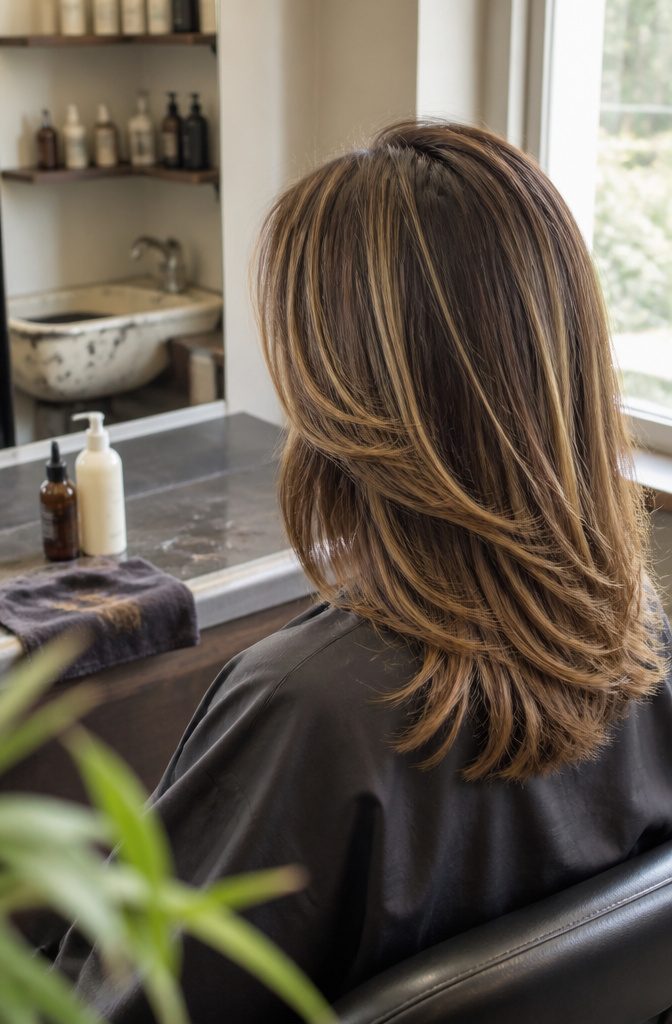
Flaxen or blonde color layered on top adds brightness right where the curtain parts, so the center crease stands out instead of disappearing into flat brown or black. The placement matters more than the shade.
Ask for highlights near the front and crown, not scattered all over, so the color frames the face and catches light when the hair moves. This keeps the effect clean instead of streaky.
Color this bright needs sulfate-free shampoo to hold longer than a few weeks.
Sulfates strip lightened hair fast, and faded blonde goes brassy or dull gray depending on the underlying tone. A lightweight serum seals the cuticle after washing, which stops moisture loss and keeps the highlights from turning straw-like.
The upkeep is real, but the dimension it adds to a curtain cut makes the style read as intentional rather than accidental.
6. Shaggy Finish
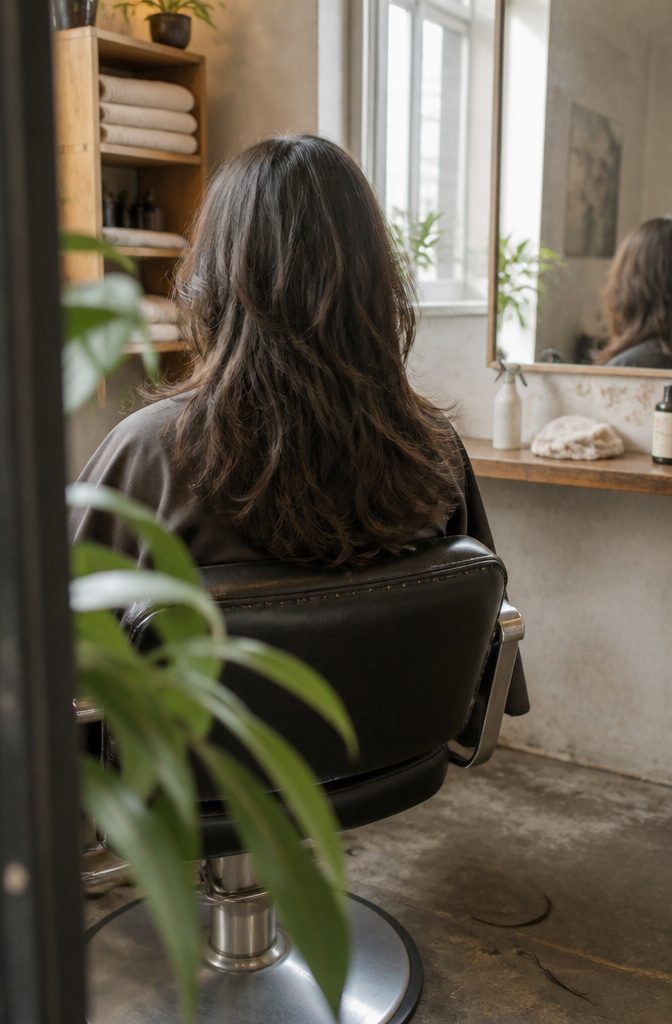
The shaggy finish loosens the center-parted curtain with uneven layers and a tousled texture, so the look reads relaxed and a little bohemian.
It suits thicker hair that holds volume on its own, and it softens the strong angles of a rectangular or square face.
Upkeep is minimal, because the mess is the design. I’d skip heavy product entirely: too much product weighs shaggy hair down and flattens the layers that give it shape.
A light texturizing mist or a bit of air-dry time does more than a handful of paste. If you have fine, flat hair, this is the curtain variation I’d pass on.
7. Middle Part With Fringe
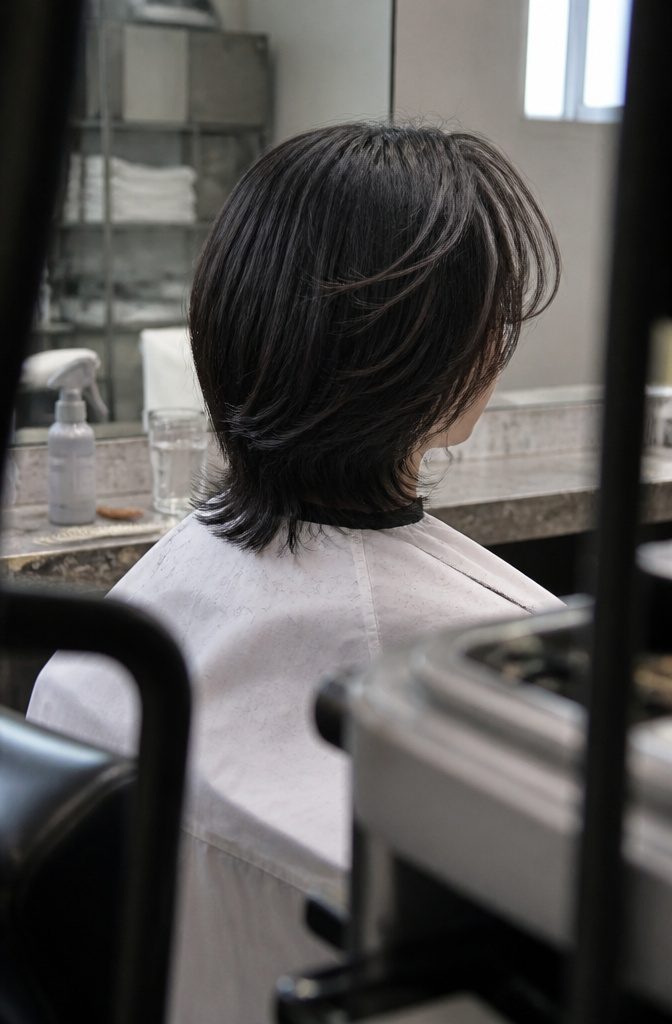
A loose fringe that melts into a middle part is the softest version of this cut, and it suits straighter hair best.
Long, oval face shapes get the most from it, since the fringe breaks up the length of the forehead without covering it.
Keep the fringe wispy at the front so it blends into the part rather than ending in a hard line.
Because it isn’t cut to one side, you can sweep it left or right depending on the day, and it reads as natural either way.
Hold is where this style goes wrong.
A flexible hold spray keeps the fringe in place without the stiffness that makes it look glued. I’d pick that over a firm spray every time, because this look depends on movement.
8. Loose Waves
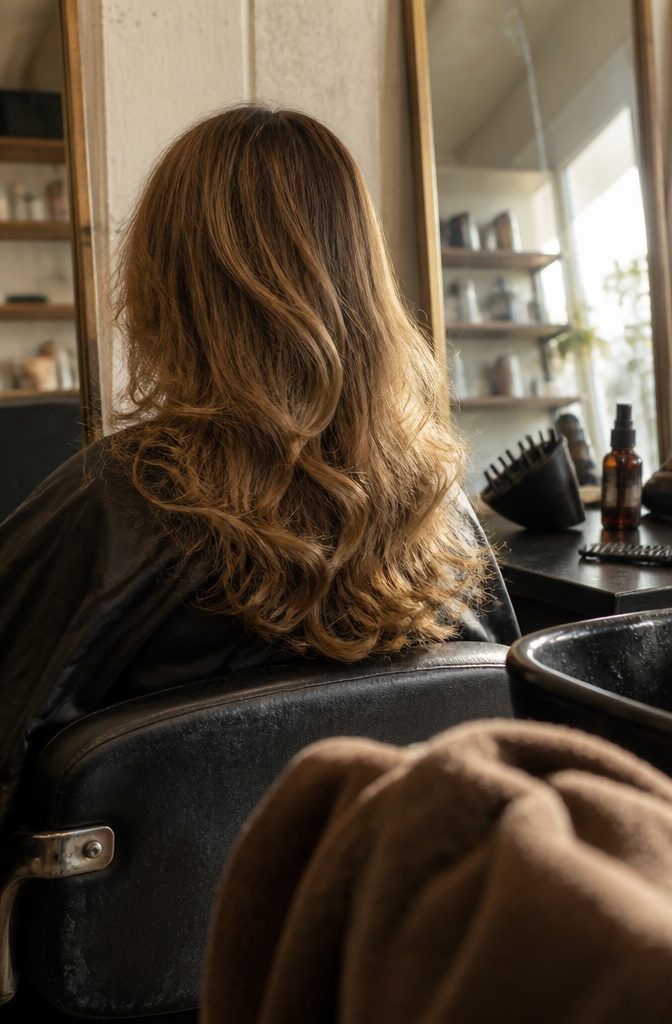
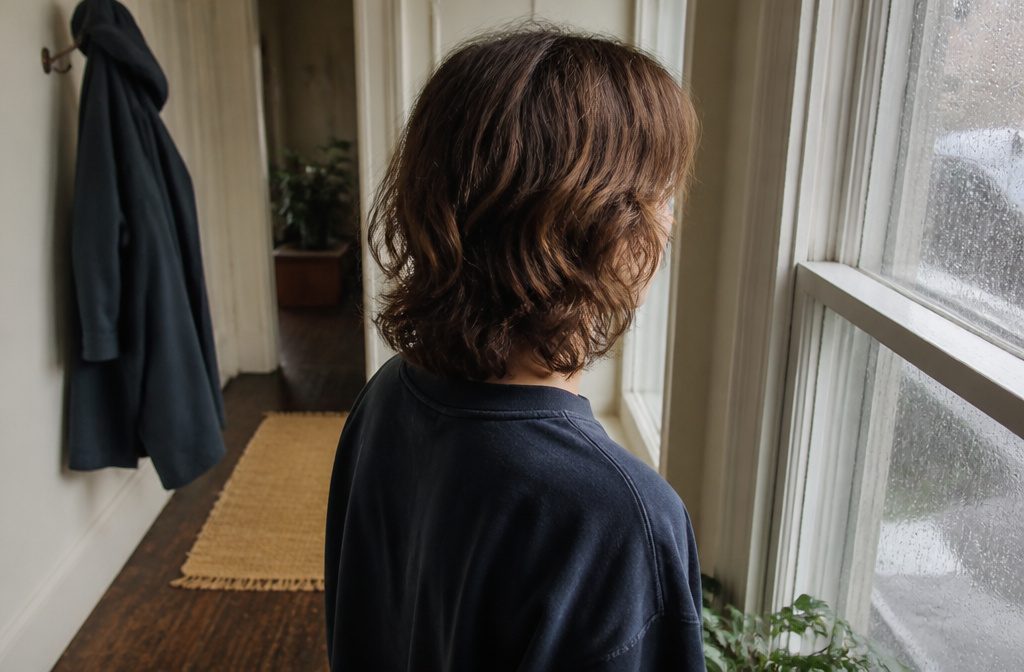
Wave texture softens the curtains and adds fullness, which makes this version feel less geometric than the straight-parted original.
If your hair has natural wave, you get the shape without fighting it; if it’s straight, you can use heat styling to build that texture in.
The look reads relaxed rather than sharp, and it flatters round and heart-shaped faces by adding dimension where those shapes need it most.
One stylist described it as Disney-prince hair, and the reference lands: volume, movement, an off-the-beach ease that still looks intentional.
The wavy curtain shows off healthy hair in a way the flat version can’t, and it holds up better through the day because the texture itself is structure.
For straighter hair that wants more defined waves, a perm gives you modern movement without the daily heat. After styling, an anti-frizz serum keeps the waves smooth and stops them from separating into frizz by mid-afternoon.
Some of the K-Pop-inspired takes use a perm for that purpose, tighter and more deliberate than the original ’90s version but still parted down the middle.
9. Slicked-Back Curtains
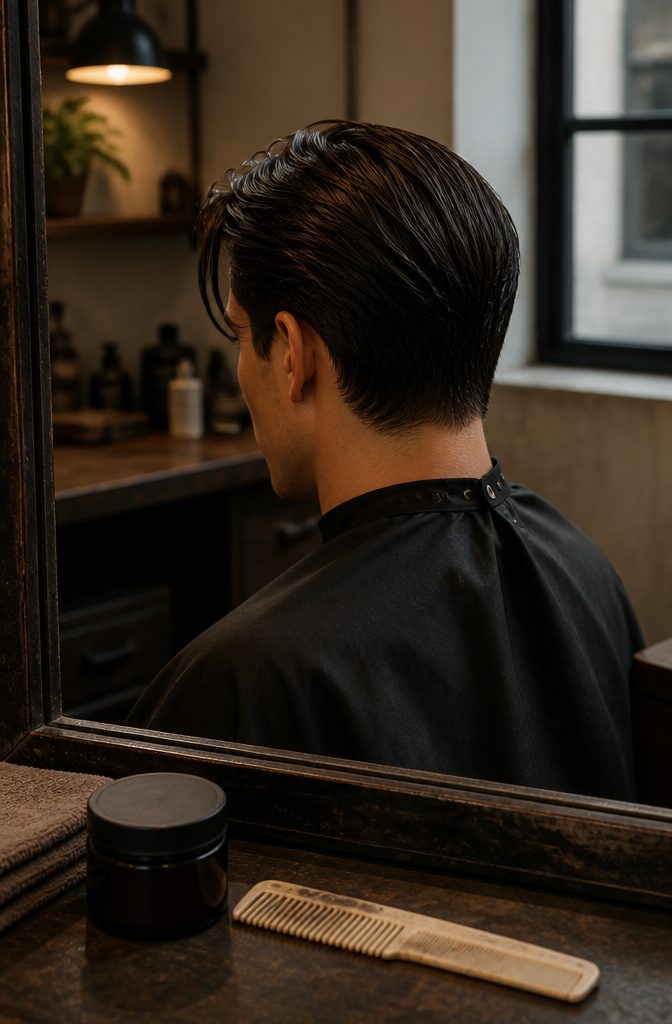
This version takes the classic curtain cut and slicks the center-parted sections back with a high-shine pomade or gel, keeping the divided front visible but locked into place.
The result leans polished rather than casual, with enough structure for a night out or a setting where grooming matters. Straight hair delivers the cleanest finish, though wavy texture can pull it off with the right product weight.
If you want a little friction worked back in, leave a few front strands loose instead of pinning everything down.
That controlled mess breaks the otherwise tight finish and keeps the look from reading too formal. The curtain framework stays intact either way; you’re just deciding how much rebellion to dial in against the shine.
10. Curly Texture
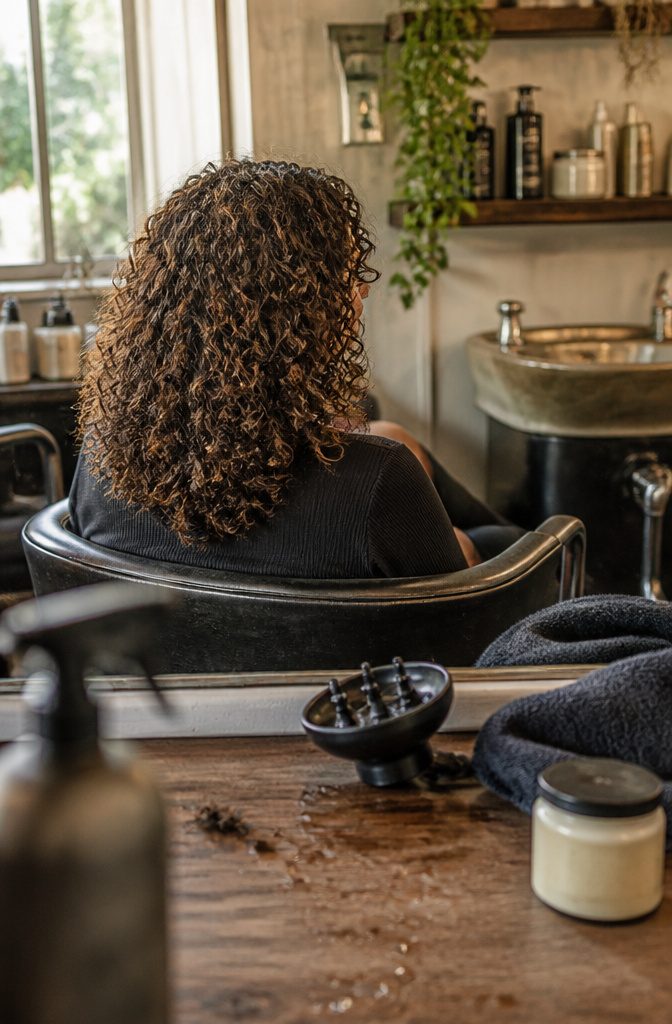
Curly hair keeps the center part and curtain frame while letting natural texture do the work. Instead of fighting curl for sleekness, this version leans into bounce and volume, giving you a defined shape that still moves.
The center part stays visible even as curls spring outward, and the result softens angles on diamond and heart-shaped faces without flattening what makes the cut work.
The main risk is weighing curls down with too much product. Heavier creams and gels pull the frame flat and lose the volume that makes this cut distinct from the straight version.
A light leave-in or curl cream keeps definition without collapsing the structure. You get a playful look that holds its shape but doesn’t read as controlled or slicked.
11. Asymmetrical Part
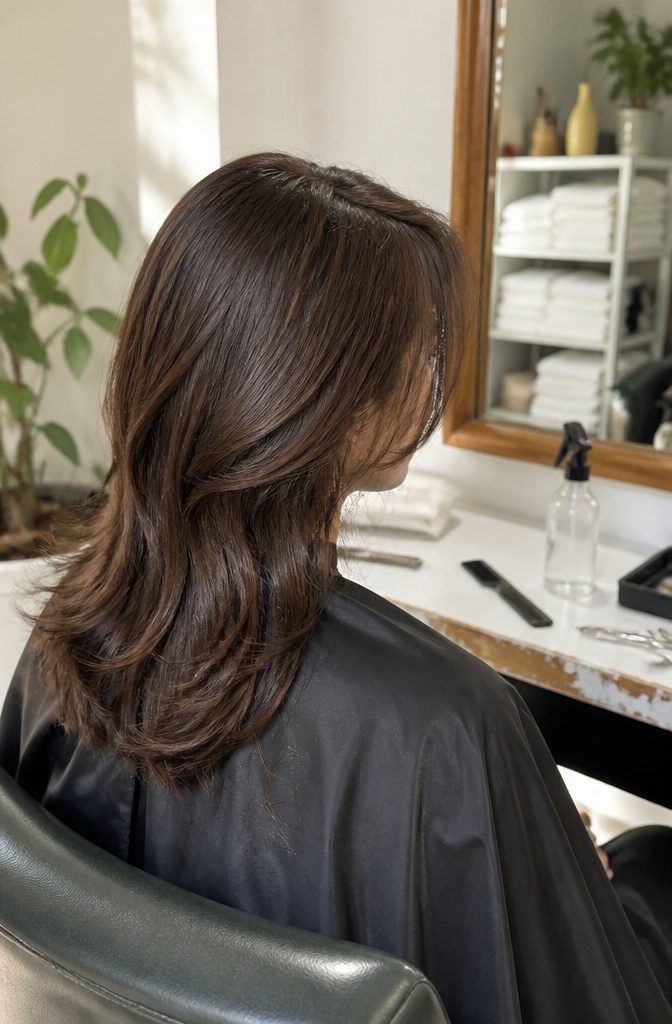
Shifting the part slightly off-center gives you a curtain cut with less symmetry and a little more edge.
Instead of the straight-down-the-middle divide, you start the part an inch or two to one side, so one curtain panel falls heavier than the other.
The look still reads as curtains, just with a deliberate imbalance that keeps it from feeling too polished or too tied to one decade.
This version works well on straight to wavy hair, and it balances out a round or square face by introducing an asymmetric line where a centered part would emphasize width.
Use a flexible hold spray to lock the part in place after you blow-dry it forward.
Without some hold, hair tends to drift back toward its natural part by midday, and you lose the off-kilter effect that makes this variation worth asking for.
12. Frontal Flop
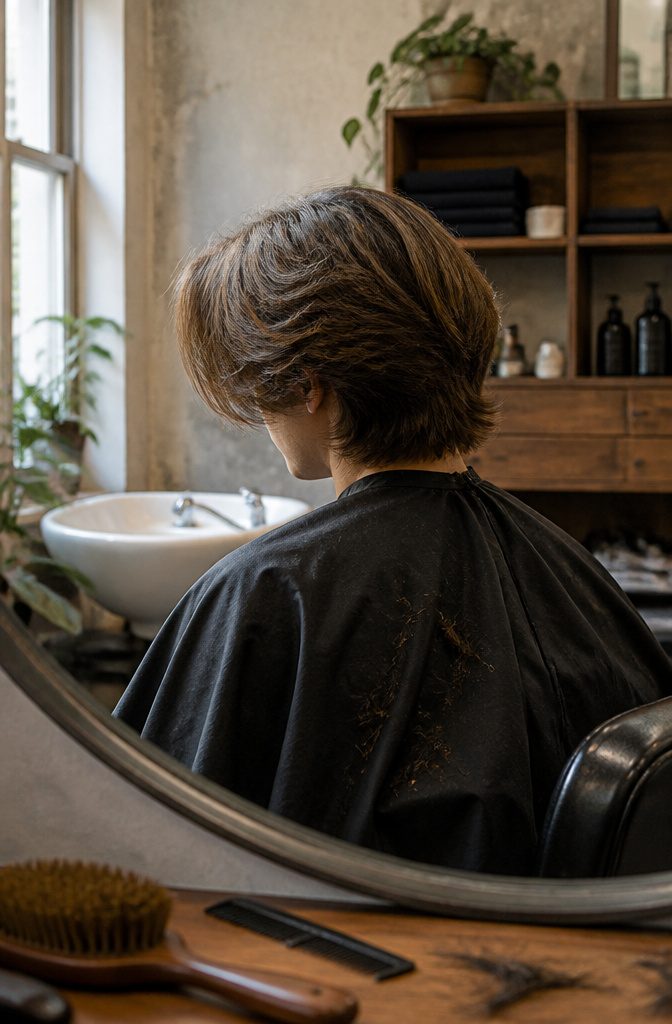
This is what Leonardo DiCaprio wore in the nineties, and what came back without the hard middle part.
The front hair falls medium-length over the forehead and sweeps back where that old center split used to sit. The curtains grow out openly on each side instead of hugging a defined line down the middle of the scalp.
The result reads softer and less staged than the classic version. You get the same face-framing movement without committing to a part that has to land exactly center every morning.
Ask for medium length through the front with the hair trained to fall forward and back naturally. The stylist will cut it so the weight lets it flop rather than stand or stick straight out.
How to Style Curtain Hair
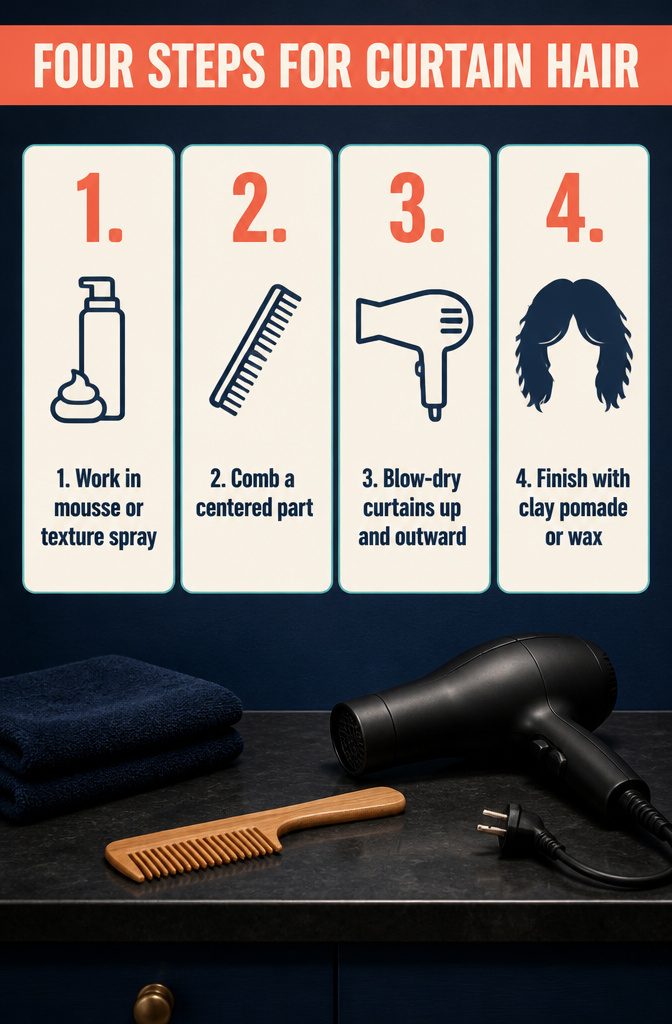
Start with towel-dried hair and work a golf-ball-sized amount of volumising mousse or a few spritzes of texture spray through with your fingers. Use a comb to create the center part, lining it up with your nose as a guide.
Blow dry while using your hands to push the curtains upward and outward from the base of the part. This creates the volume and structure the look needs.
Once dry, warm a pea-sized amount of clay pomade or wax between your palms and run it through to finish with that tousled texture. Products that work: Moroccanoil Moisture Repair Shampoo and Conditioner Bundle £34.70, POMP AND CO.
Salted Tonic Spray £18, FIRSTHAND Clay Pomade £20, or Toni&Guy Sea Salt Texturising Spray. The styling takes some technique, but the result is a cut that reads as very natural.
Which Variation Fits Your Hair Type
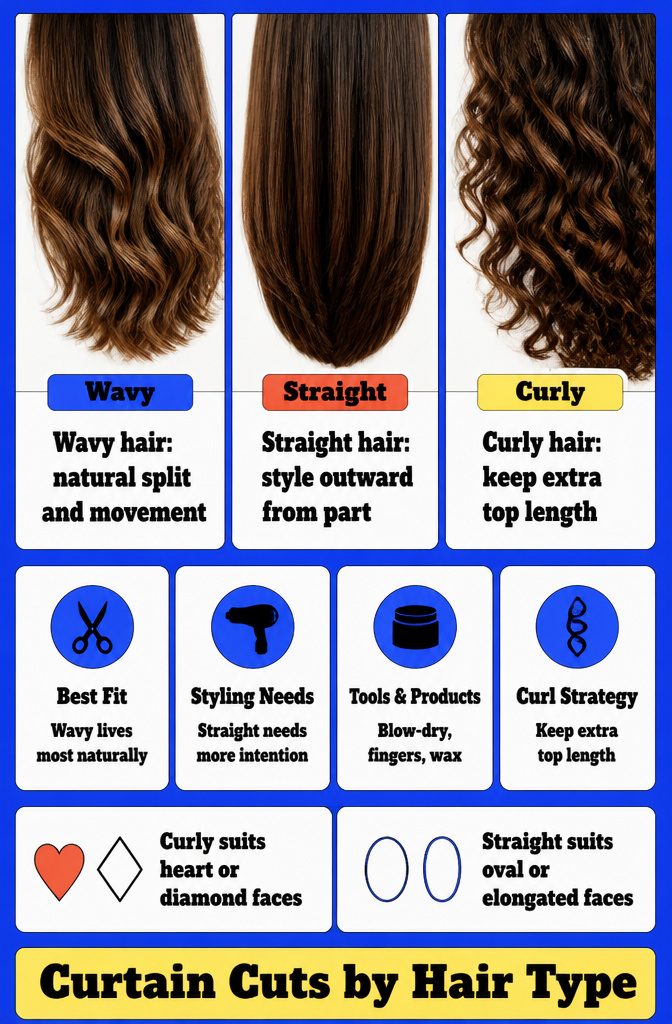
The curtain cut works best on wavy hair, where the natural texture gives you the split and movement without much effort.
Straight hair can pull it off too, though you may need to add a bit of styling to coax the curtain shape rather than letting it fall flat.
Curly hair is fair game as well, but you’ll want to leave more length on top so the curls don’t spring up too short and lose the frame around your face.
If your hair has some wave or curl, the cut takes advantage of what’s already there.
The bounce and volume do half the work. Straight hair needs a little more intention: blow-drying from the base of the part outward, shaping with your fingers, maybe finishing with wax to hold the split.
Curly versions soften angles and suit heart or diamond face shapes, while straight to slightly wavy hair fits oval or elongated faces. The style adapts, but wavy is where it lives most naturally.
Frequently Asked Questions
What is the 90s curtain haircut?
The 90s curtain haircut features longer hair at the front and center split by a middle part, with the hair sweeping down on each side to frame the face like curtains frame a window.
It became popular in the 1990s through celebrities like Leonardo DiCaprio and Hugh Grant. The style works best on wavy hair but adapts to straight and curly textures with the right cut and styling.
What haircut did Leonardo DiCaprio have in the 90s?
Leonardo DiCaprio wore the frontal flop version of the curtain cut, where medium-length front hair falls over the forehead and sweeps back without a hard middle part.
The hair falls forward and back naturally on each side, creating face-framing movement with a softer, less staged finish than the classic center-parted curtain.
Which actors have a middle part?
Actors with middle-part curtain haircuts include Charles Melton, John Mulaney, Chris Hemsworth, and Tom Cruise in recent years.
In the 1990s, Hugh Grant, Leonardo DiCaprio, and Jonathan Taylor Thomas made the style popular. The look has returned among younger people and remains adaptable for men with gray hair when cut properly.