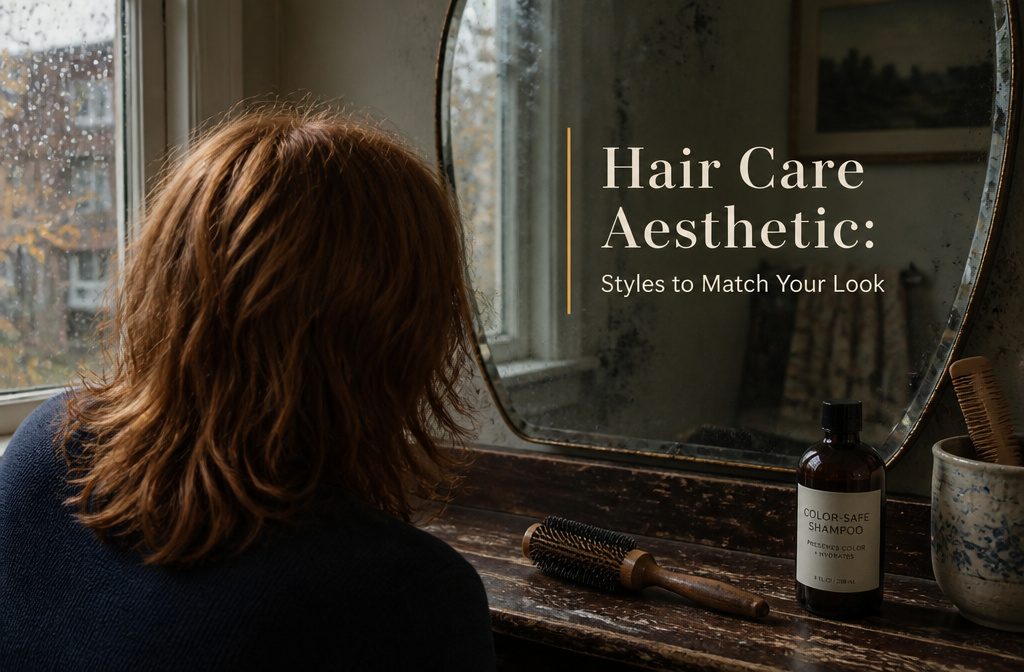
Your hair can follow a theme, like cottagecore, grunge, or spacecore, that ties it to your clothing and makeup; that theme is a hair care aesthetic.
The cost varies by theme: a cottagecore look should take minutes, while a ’70s shag with voluminous bangs needs a round brush and 10 minutes most mornings, and colorcore needs color-safe shampoo.
What Hair Care Aesthetic Means
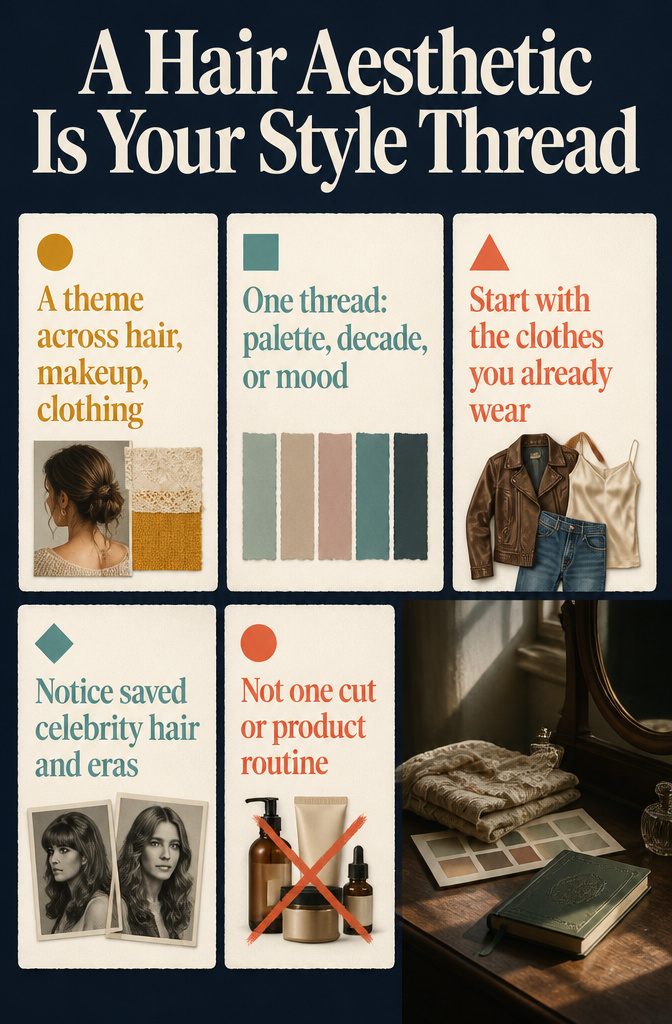
A hair care aesthetic is a style built around a specific theme that shows up in your hair, makeup, or clothing.
It is not one haircut or one product routine. It is the thread that ties your choices together, whether that thread is a color palette, a decade, or a mood you keep coming back to.
Finding your own aesthetic starts with noticing what you already reach for. Look at the colors you wear most often, the celebrities whose hair you screenshot, and the eras that feel right when you scroll.
If you lean toward muted tones and vintage silhouettes, that tells you something different than if you gravitate toward neon brights and oversized hoodies.
Your clothing is usually the easiest place to start, because most people have settled into a look there before they think about naming it.
Once you know what pulls you in, the hair follows. The ten categories ahead are the aesthetics showing up most right now, each with cuts, colors, and styling that fit the theme.
1. Cottagecore
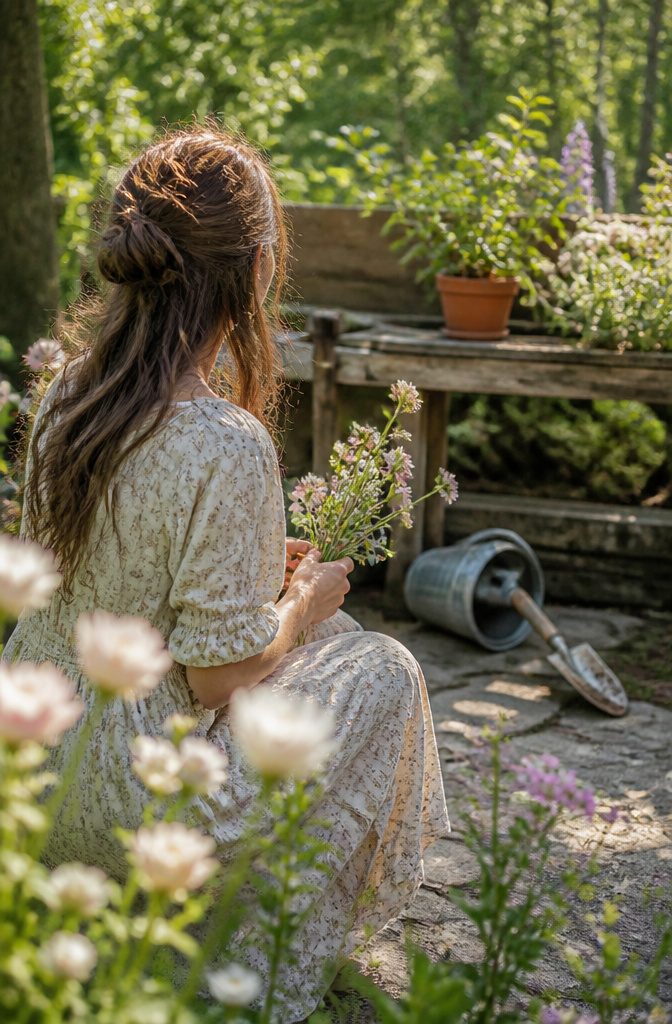
It only says cottagecore (also called farmcore or countrycore) mimics the simple, harmonious feel of nature, with peasant dresses, planted flowers, and natural-looking hair. So I’ll stay within that.
Cottagecore, also called farmcore or countrycore, asks for hair that looks like it grew that way.
The aim is the simple, harmonious feel of nature, so anything that reads as heavily engineered works against you. I’d skip stiff hairspray finishes and razor-sharp lines.
Pair the hair with the rest of the look: a peasant dress, a garden of your own planting, and a style you can finish in minutes.
Natural-looking beats elaborate here. If a style needs a mirror check every hour, it has already drifted from the aesthetic.
2. Forestcore
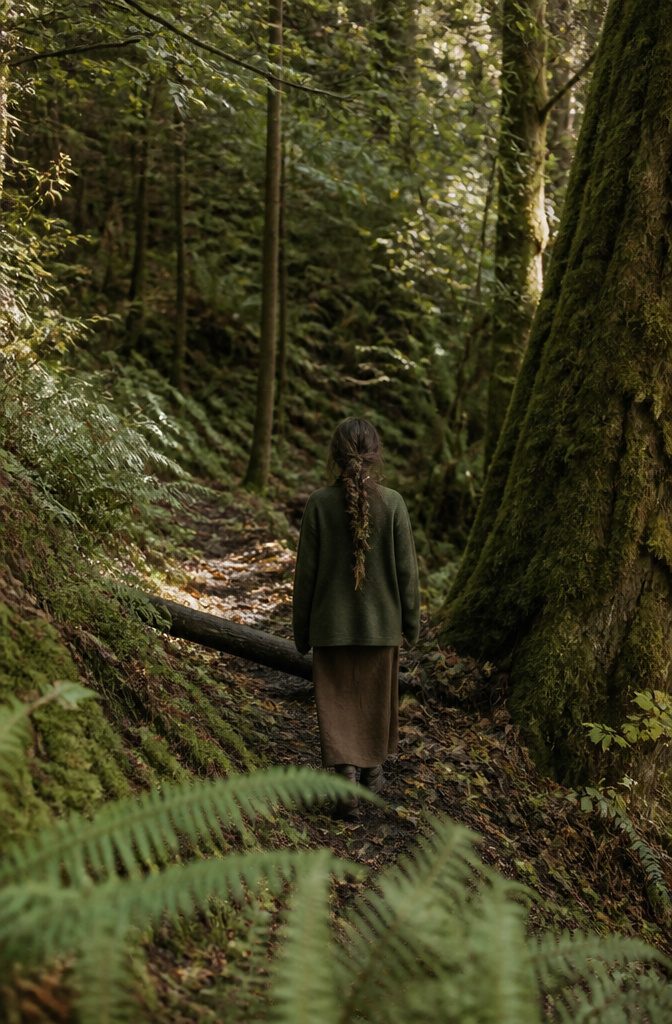
Forestcore pulls from the same natural thread as cottagecore but takes a darker, earthier turn.
Where cottagecore leans romantic and light, forestcore is whimsical and free-spirited, drawing on the creatures, textures and shaded greenery you’d actually find deep in the woods.
The palette shifts from pastels to mossy greens, bark browns and muted forest-floor tones, and the styling follows: looser braids woven with twigs or dried foliage, half-up styles that look slightly undone, and texture that reads more wild than polished.
Hair can be worn down with minimal styling to keep that effortless, just-stepped-out-of-the-forest look, or pulled into a low braid that sits heavy and unstructured.
The finish should feel lived-in rather than set, so skip the hairspray and let a few pieces fall where they want.
3. Normcore
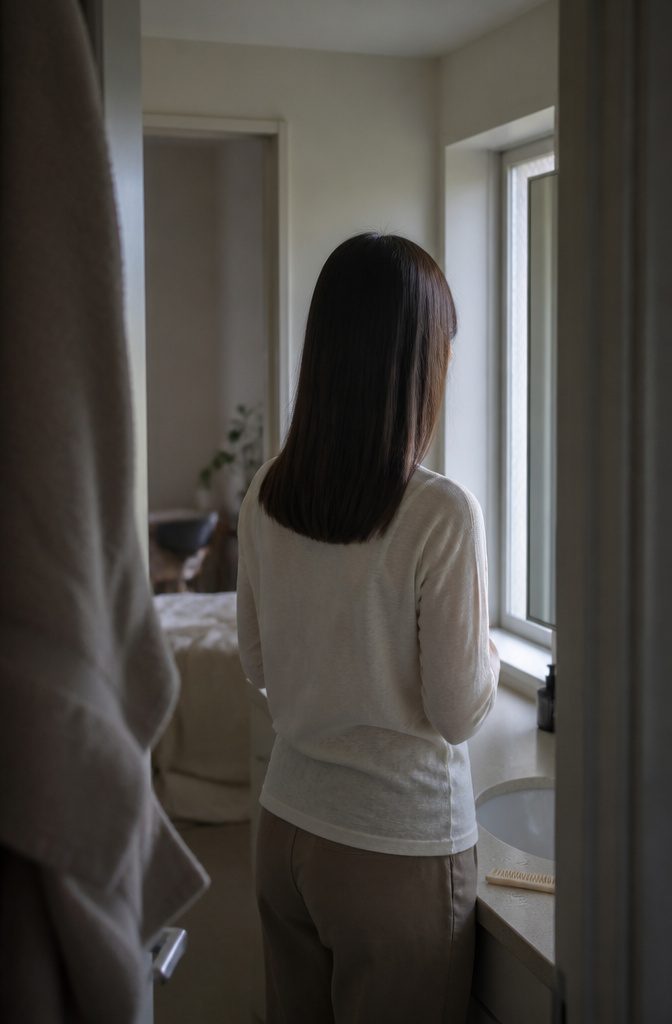
Normcore pulls style back to neutral, minimalistic basics, and the hair follows. If you’re dressing in muted colors and clean lines without trying to stand out, the cut and styling need to match that simplicity.
The look responds to oversaturation in fashion by choosing what reads as normal, which in practice means low-maintenance shapes that don’t announce themselves.
Three routes work.
A sleek low bun keeps everything contained and out of the way, no texture or flyaways breaking the line. A simple middle part with straight hair reads clean and unfussy, especially when the length hits just past the shoulders.
A loose, low ponytail sits at the nape without height or volume at the crown. All three take minutes, need minimal product, and grow out without looking like a grow-out.
The point is to not try, which is harder than it sounds if your instinct is to add a twist or a curl. Here, you skip both.
4. Grunge
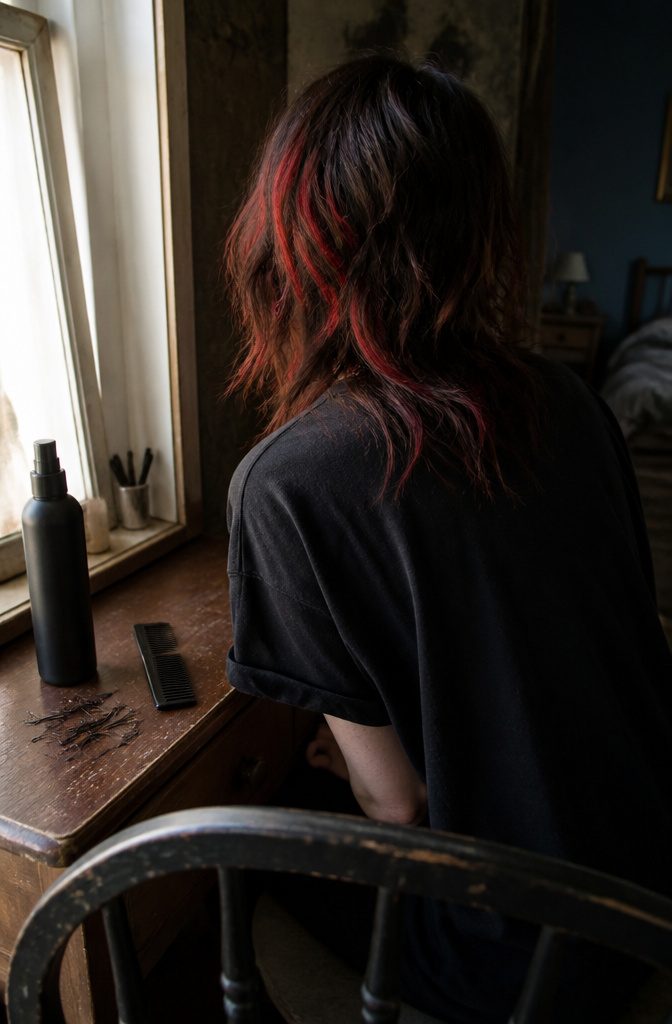
The wolf cut brought grunge hair back in 2021, but the aesthetic itself pulls straight from ’80s and ’90s punk: messy layers, textured braids, and vivid or unconventional color.
Think choppy ends, deliberately undone texture, and enough contrast to read as intentional rather than accidental. The layers create volume without polish, which gives the style its slouchy, lived-in feel.
For texture without heat, Matrix Style Link Texture Builder Messy Finishing Spray adds separation and grit. Redken Triple Dry 15 Dry Texture Finishing Spray works the same way but with less stiffness, so the hair still moves.
Both deliver that piece-y, slept-in look grunge depends on. I reach for dry texture spray over mousse here because mousse can clump, and grunge reads better when each section looks like it fell that way on its own.
5. Princesscore
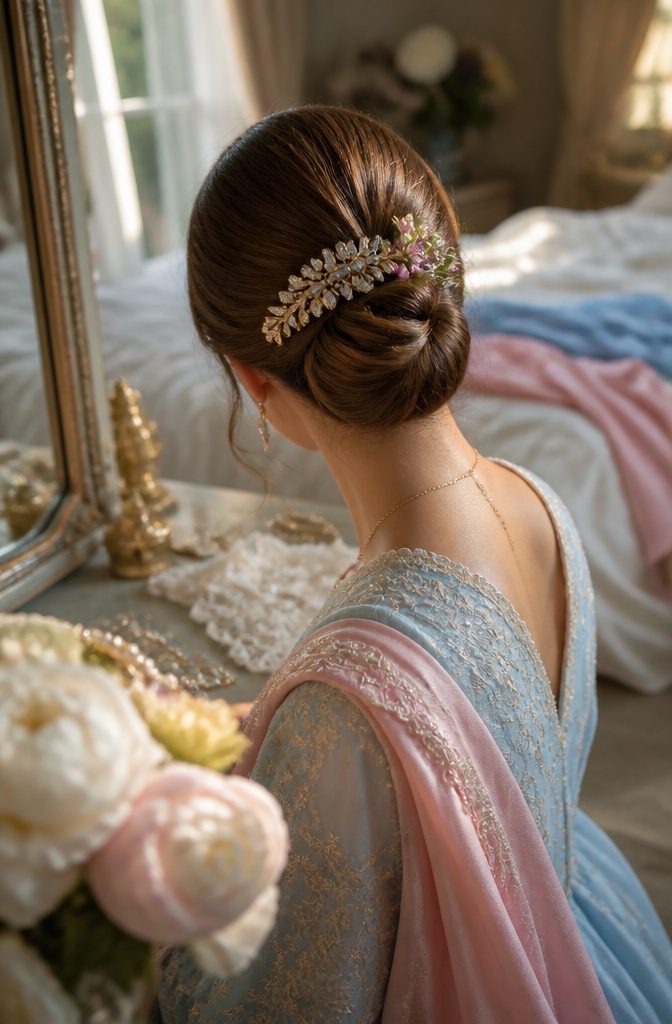
Princesscore comes down to polish plus ornament: a smooth updo, then something sparkly or flowery pinned into it.
The look borrows from real royalty, so tiaras, lace and glitzy jewelry set the mood, and the hair has to be tidy enough to hold them up.
I’d start with the polished updo as the base, because a bedazzled clip on loose, flyaway hair just looks messy.
Smooth the hair first, then add the jeweled accessory. Floral accents are the softer route: a few small flowers pinned along the bun or twist suit pink and baby blue outfits well.
If you only buy one piece, make it the bedazzled clip. It dresses up a five-minute bun faster than anything else here.
6. Colorcore
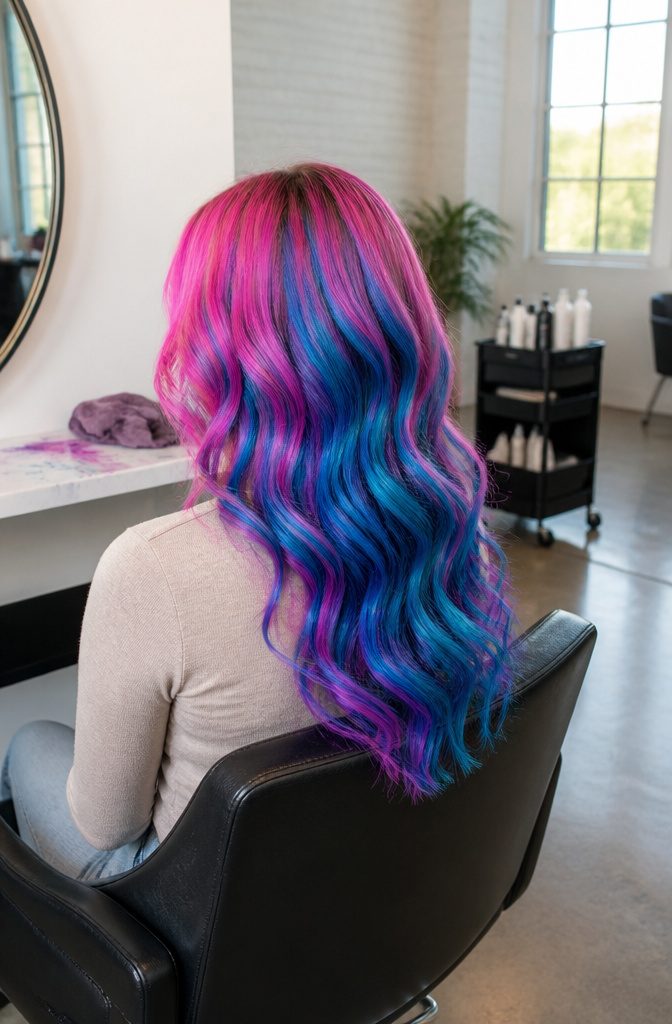
Colorcore lives up to its name: this aesthetic is about saturated, high-impact color in every shade you can think of.
If you’re leaning into vivid pinks, electric blues, or a full technicolor balayage, the hair itself is the statement. The cut matters less than the hue, so styles that let the color show win here.
Think blunt bobs that stack the pigment, long loose waves that catch the light differently at every angle, or a sleek center part that splits two tones cleanly down the middle.
Color-treated hair fades fast without protection, so a system like Biolage Colorlast Shampoo and Conditioner helps lock in the saturation and balance moisture.
Technicolor balayage in particular benefits from the routine since it layers multiple tones that need to stay distinct. The upkeep is real, but you get a look that photographs like nothing else.
7. Kidcore
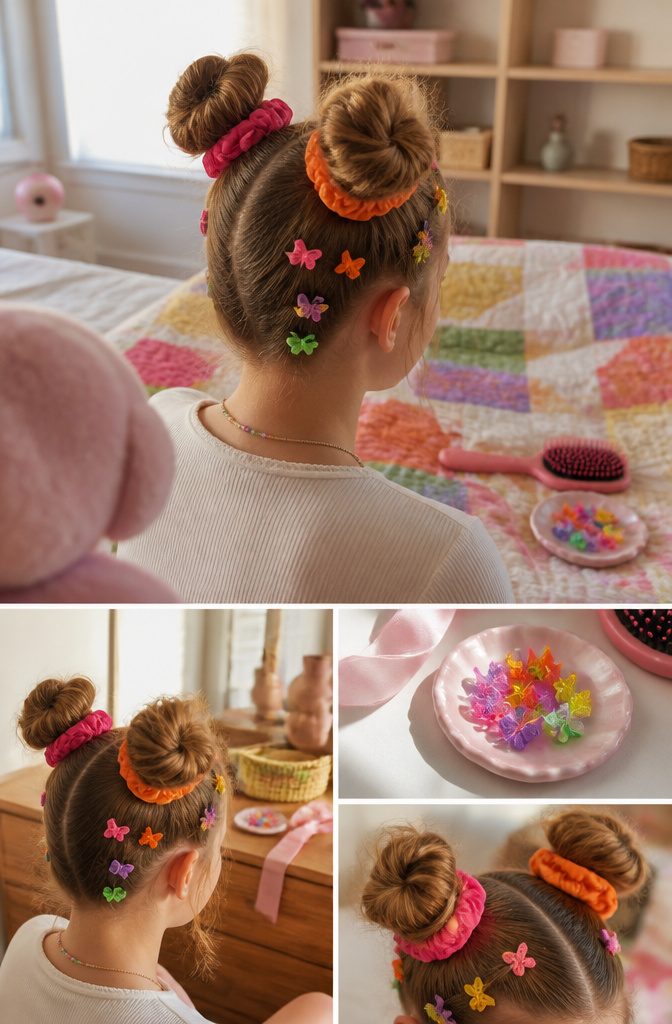
Kidcore leans into childhood nostalgia and ’90s throwback details, with accessories and styling choices that feel playful without trying to be polished. The aesthetic favors bright clips, pigtails, and anything that brings back elementary school photo day energy.
Butterfly clips are the signature move here. These tiny plastic accessories dominated the late ’90s and have cycled back into regular rotation.
Scatter them along one side of your hair, clip a row above a low ponytail, or place a few at your part for a look that reads instantly as kidcore.
The clips themselves do most of the work, so the base style can stay simple.
Space buns sit high on the head and lean cartoonish in the best way. They pair well with bright scrunchies or ribbon ties and work whether your hair is straight, wavy, or curly.
Pigtails follow the same logic: split your hair down the middle, secure low or high, and add colorful elastics or bows. Both styles take under three minutes and hold up through a full day.
8. Angelcore
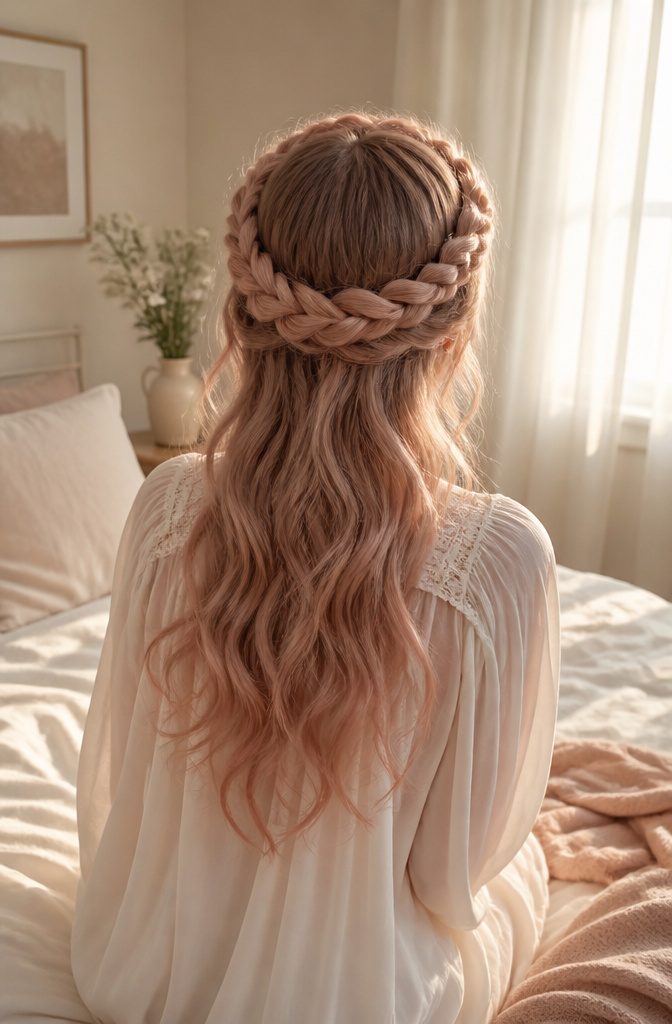
Angelcore calls for soft, ethereal styling in a light color palette that matches the dainty, dreamy clothing. The aesthetic lifts imagery and characterizations of angels into what you wear and how you style your hair.
A halo braid delivers the look most directly. The braid wraps around your crown in a continuous circle, and the effect reads as soft and angelic without much effort.
It works across hair types and holds through a full day, though you’ll need enough length to reach all the way around or be willing to pin extensions into the base.
Loose waves and pastel color both fit the aesthetic.
Think platinum blonde, the palest rose gold, or a barely-there lavender that catches light without announcing itself from across a room. The color stays light, the styling stays soft, and the whole look leans ethereal rather than sharp or structured.
9. Spacecore
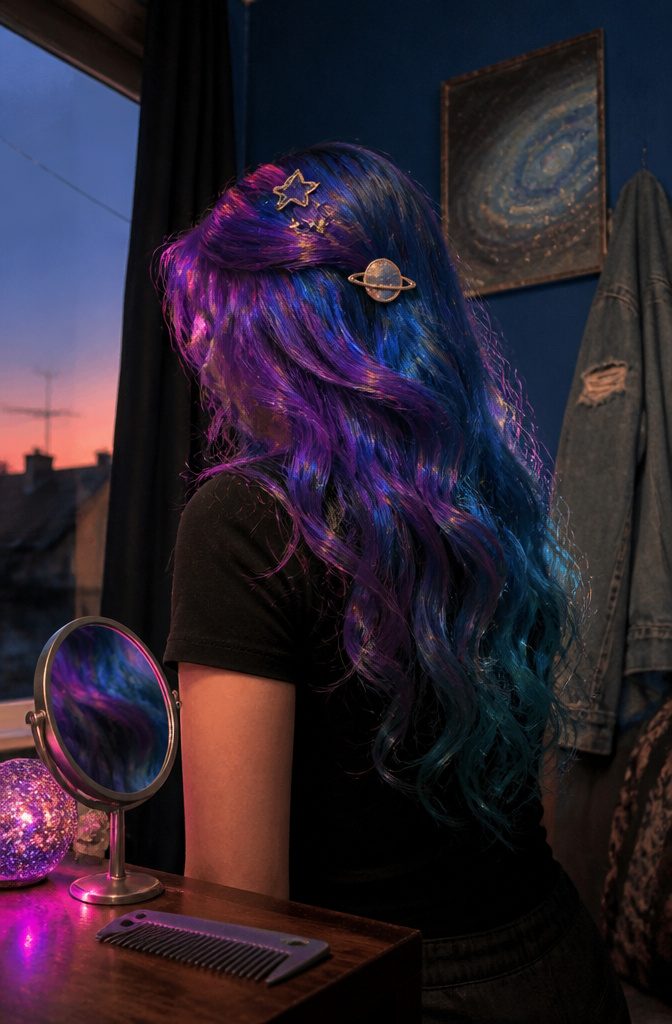
Spacecore pays homage to astronomy, stars, and planets, and it shows up in clothing and decor as much as hair. The hair version is galactic color: purple, magenta, blue, and turquoise blended together for a celestial look.
I’d start with that palette, since it does most of the work on its own. Those four shades sit close enough on the color wheel to melt into each other, so the blend reads as a nebula rather than stripes.
Accessories are the lower-commitment route.
Star clips, planet pins, and other space-themed pieces work on a plain ponytail or half-up, and they come out at night. Dye takes upkeep; a clip doesn’t, so I’d try the accessories first.
10. Vintage
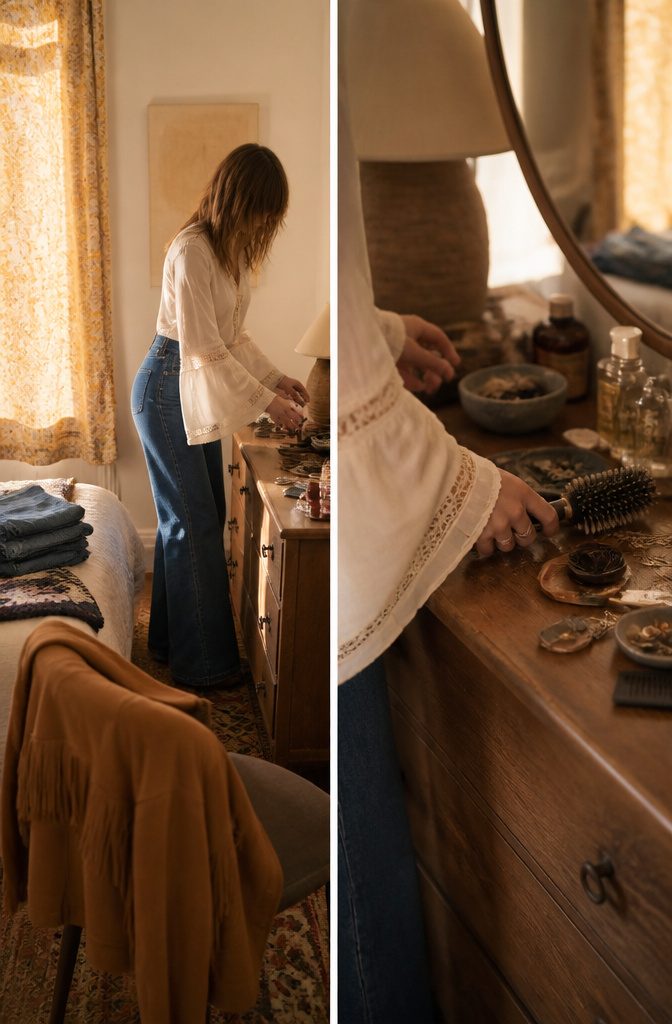
Vintage pulls from any decade you want, or from several at once. The term is an umbrella for looks from the ’90s, ’70s, or even the ’20s, which means the styling choice is entirely yours.
A ’90s blowout with face-framing layers reads differently than a ’20s finger wave, and both land as vintage depending on which era you prefer.
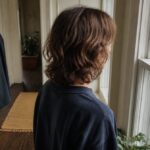
One shaggy cut with piece-y voluminous bangs feels squarely ’70s, especially when paired with bell bottoms and bell sleeves. The bangs sit heavy across the forehead and the layers throughout add movement without polish.
The look works if you already lean into retro denim and suede, and it grows out better than most curtain bangs because the weight distribution across the forehead keeps the shape recognizable longer.
The downside is styling time: getting that volume takes a round brush and ten minutes most mornings, not five.
Matching Products and Styling to Your Hair Type
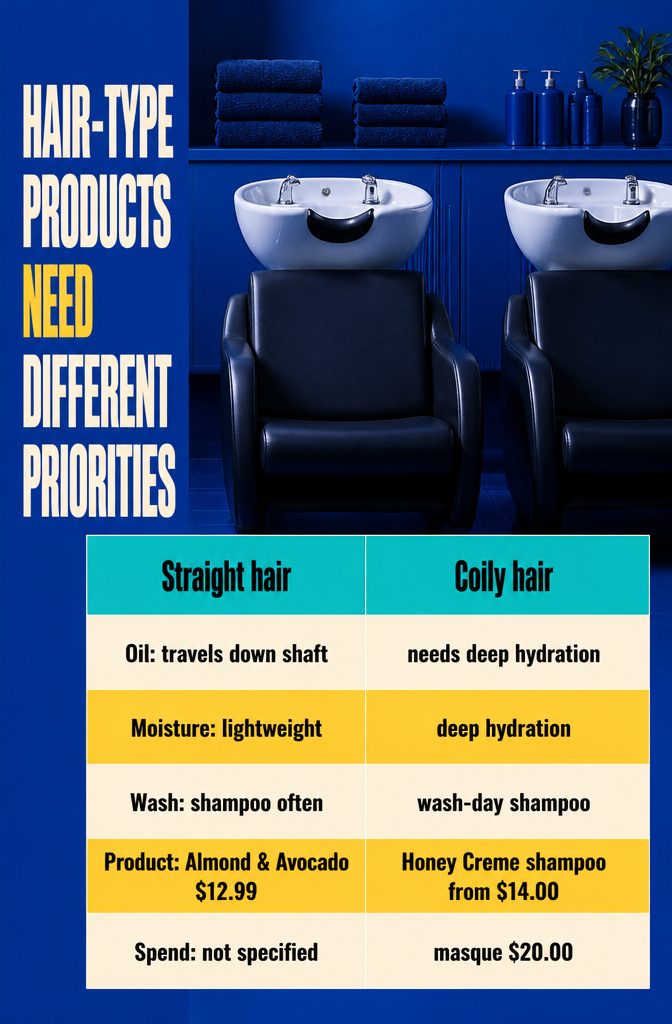
Straight hair gets greasy faster than curly hair because oil slides down the shaft with nothing to slow it, so I’d keep it to lightweight moisture and volume, and shampoo often.
The Almond & Avocado Moisturizing & Detangling Sulfate-Free Shampoo ($12.99) fits that kind of routine.
Coily hair needs the opposite: deep hydration and strength.
Honey Creme Moisture Retention Super Detangling Conditioning Shampoo (starting at $14.00) handles wash day, and the Honey Crème Moisture Retention Masque ($20.00) is the one I’d spend on. Rosemary & Mint Stimulating Super Moisturizing Conditioner suits a dry scalp.
Locs and protective styles shield natural hair and help you keep length. Design Essentials has made salon-quality products for over 35 years.
Frequently Asked Questions
What is a hair care aesthetic?
A hair care aesthetic is a style built around a specific theme that connects your hair, makeup, and clothing choices.
It’s not a single cut or product routine but the thread tying your choices together, whether that’s a color palette, a decade, or a mood you return to.
Start by noticing what you already reach for in colors, clothing, and the eras that feel right when you scroll.
What types of core aesthetics are there?
The 10 most popular aesthetics right now are cottagecore, forestcore, normcore, grunge, princesscore, colorcore, kidcore, angelcore, spacecore, and vintage.
Each pulls from a different theme or era, from the natural simplicity of cottagecore to the saturated color of colorcore to the decade-spanning range of vintage. The aesthetic you choose shapes the cuts, colors, and styling that fit your look.
How do I establish the right hair care routine for me?
Build your routine around your hair type, any chemical processing, your preferred styles, and specific concerns like dryness or grease.
Straight hair needs lightweight moisture and frequent shampooing since oil slides down the shaft faster, while coily hair requires deep hydration and strength.
Every routine shares a few basic components, but your hair type determines which products and how often you use them.
What are the best ways to care for my hair?
Be gentle when hair is wet by using a wide-tooth comb instead of a brush, and wrap your hair in a towel or t-shirt to absorb moisture rather than rubbing it dry.
Protect your hair from excessive heat by limiting blow drying and hot tools, and use low or medium heat settings with a heat protectant product.
If you have thick curly hair, comb in the shower before rinsing conditioner; if you have straight hair, let it dry a bit first.
What is the healthiest thing to put on your hair?
The healthiest product depends on your hair type. Straight hair does best with lightweight moisture like Almond & Avocado Moisturizing & Detangling Sulfate-Free Shampoo at $12.99, while coily hair needs deep hydration from products like Honey Crème Moisture Retention Masque at $20.00.
Match the product to your hair’s needs rather than reaching for one universal option.