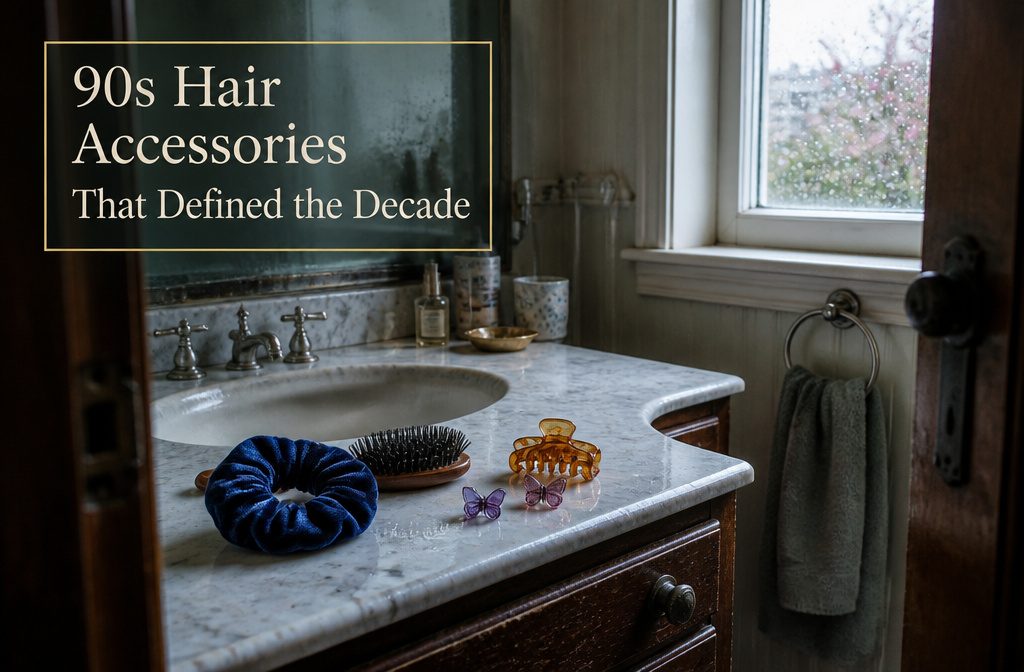
The fabric scrunchie holds without creasing, the butterfly clip decorates more than it grips, and the claw does the actual work of securing an updo.
What decides which one you reach for is whether you need function or just want the look.
Most of the decade’s accessories leaned playful over practical.
Velvet scrunchies cost $12 at Urban Outfitters and still hold a ponytail through a full day. Pom pom hair ties and mini butterfly clips broadcast that you weren’t taking it seriously, which was half the point.
1. Scrunchies
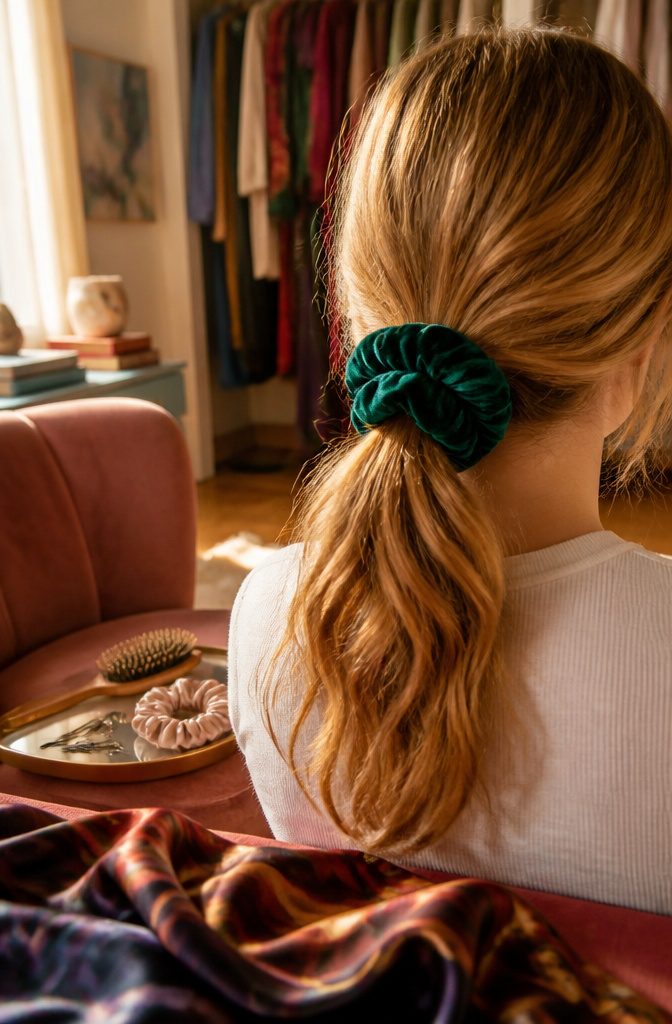
The fabric hair tie most people picture first, and the one that returned hardest.
Scrunchies showed up oversized in Mansur Gavriel’s spring 2017 collection and never left, partly because they hold without creasing or denting hair the way a plain elastic does.
The fabric cushions the ponytail instead of pulling too tightly, which matters if you wear one all day or tie your hair up wet.
Velvet and satin versions run cheapest. The Urban Outfitters set is $12 for velvet, and that texture grips well enough that the scrunchie stays put without a second wrap.
Silk and cotton work the same way but slide more easily, which helps if your hair is fine or fragile.
At the top end, the Loeffler Randall Broderie Anglais set costs $60 for two pieces and reads more like jewelry than gym gear.
Dua Lipa matches hers to her outfit, and the scale makes that possible now in a way it didn’t the first time around.
2. Butterfly Clips
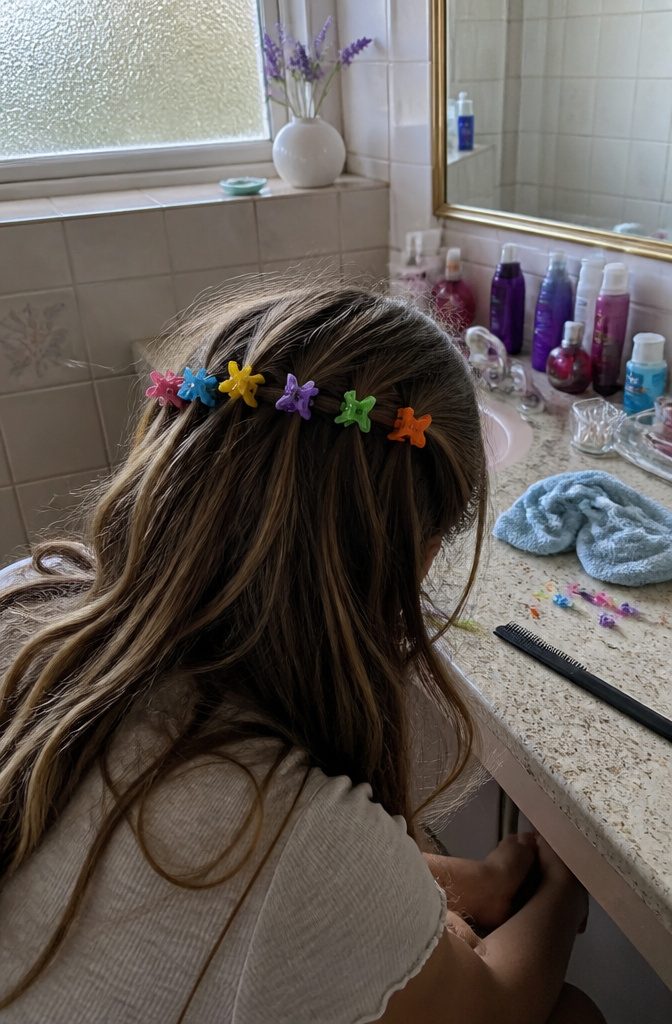
Butterfly clips came in mini and baby sizes, and you pinned them wherever you split your hair into sections. The bright plastic ones looked great but held almost nothing, which means they worked best as decoration rather than actual support.
The poll put them at 90 percent approval, with 10 percent passing, and that split makes sense when you consider what they actually did.
You could line up three or four across the crown, use a matched pair at the temples, or scatter them through a half-up to catch small pieces near the face.
The hold was gentle enough that thick or heavy hair would pull free if you relied on them to secure a whole updo, but for light layering or accent work they stayed put long enough to finish the look.
3. Headbands
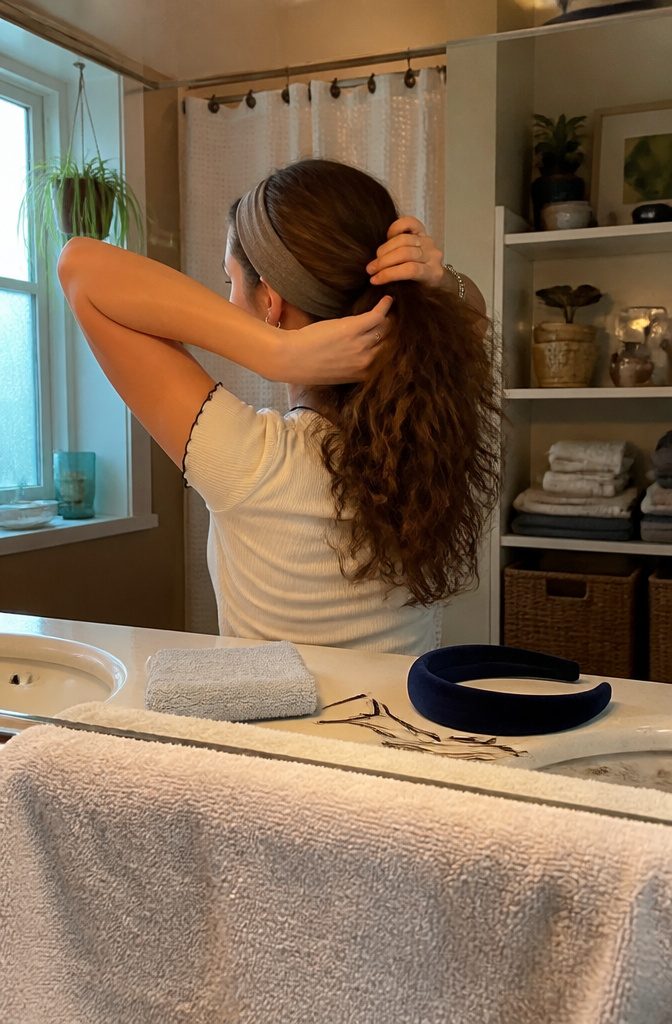
Headbands came in three distinct builds in the ’90s, and the width you picked changed what the look did.
Wide jersey headbands sat low across the forehead for that sporty-chic vibe or pushed back for something more relaxed, and they doubled as the thing you wore while washing your face at night. The fabric gave: soft, stretchy, no dig.
Padded versions in velvet or satin read bolder.
You wore them with loose waves, a sleek ponytail, or a top knot, and the padding gave the headband presence against your hair instead of disappearing into it. Velvet held the ’90s statement look; satin leaned dressier.
Headbands as a function are genius. As a look, I’ll probably save it for Gossip Girl cosplay.
— ELLE
That tracks.
The function wins every time: hair off your face, no fuss, stays put. The fashion case takes more commitment, but if you’re already leaning into the decade, the wide jersey or padded velvet finishes it.
4. Comb-Tooth Headbands
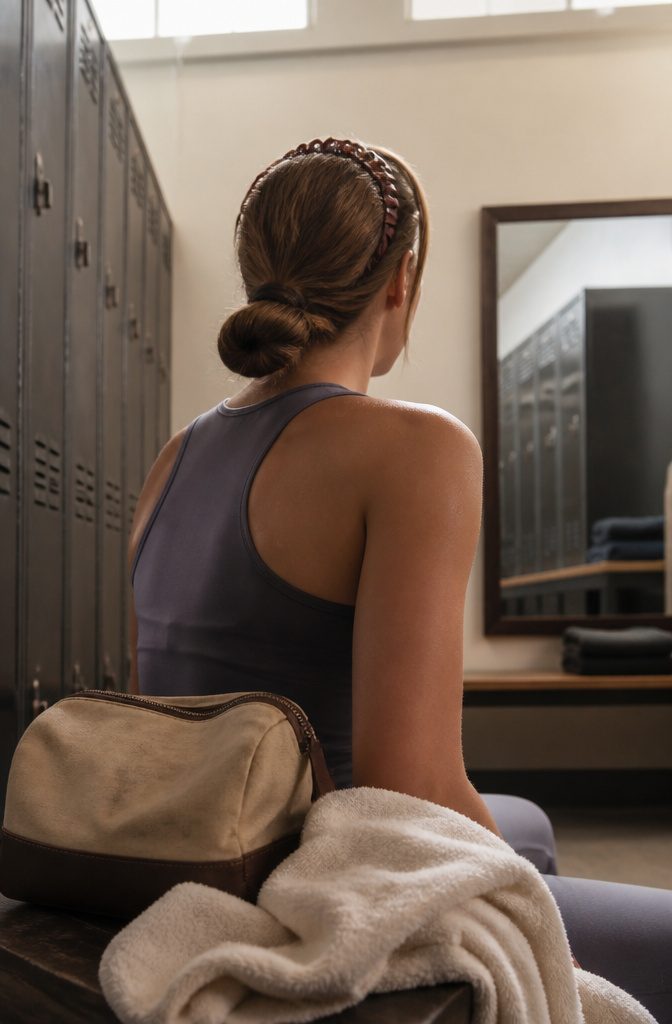
The comb-tooth headband gripped hair with a zig-zag or spiral stretch design, often in tortoiseshell brown, and landed somewhere between sporty and slightly awkward depending on who wore it.
The teeth slide into place and hold the band without clips, which sounds straightforward until you factor in hair texture.
Straight, fine hair tends to let the band slip down the head until it sits more like a choker than a headband, while textured or thicker hair holds it steady.
Prabal Gurung brought the comb headband back at his fall 2018 show, styling models with low buns and the band pushed in for a polished, post-workout look.
On Bella Hadid it read chic. In practice, the band needs grip to stay put, so if your hair is smooth and slides easily, expect to adjust it throughout the day or skip it altogether.
The sporty vibe holds up better than the actual function for a lot of people.
5. Hair Scarves and Bandanas
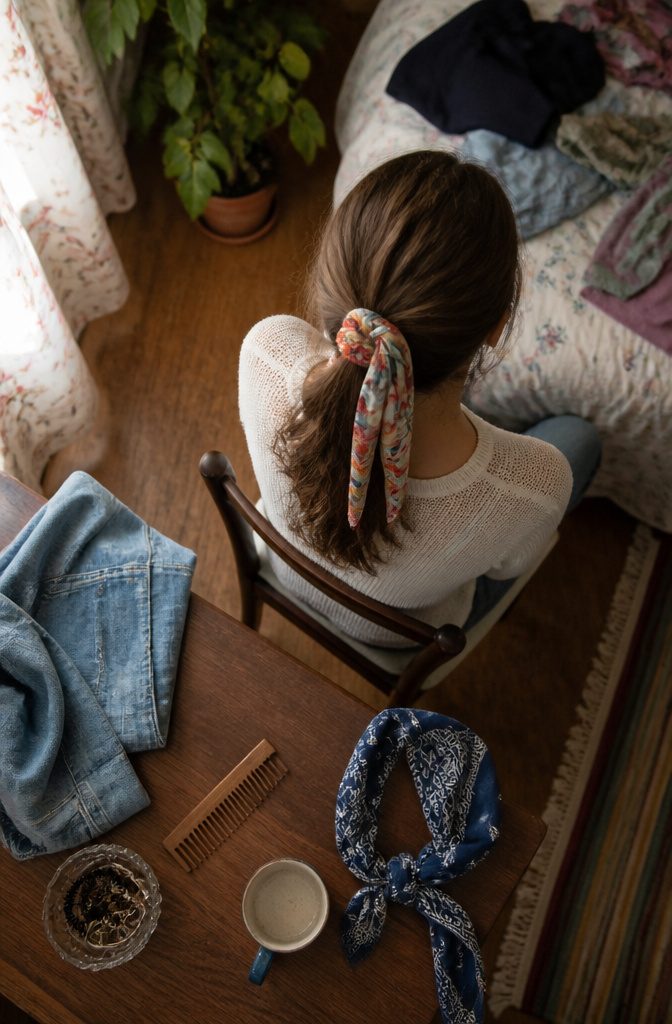
Bandanas and silk scarves made the leap from functional to aspirational somewhere around 1996, and the trick was in how you wore them. Tied as a headband or scrunched into a narrow band, they added color without committing to anything permanent.
The Free People Hometown Hair Scarf captures that silky-smooth printed fabric that turned a ponytail or bun into something more finished. I like the ponytail wrap best because it takes ten seconds and covers the elastic completely.
Bandanas gave you more options, mostly because they were cotton and held a knot better. Folded into a headband, they kept hair back without the pressure of a hard plastic band.
Scrunched tighter, they worked as makeshift scrunchies if you were skilled enough to tie the ends without the whole thing sliding apart halfway through the day. Both worked on second-day hair, which was half the point.
6. Barrettes and Snap Clips
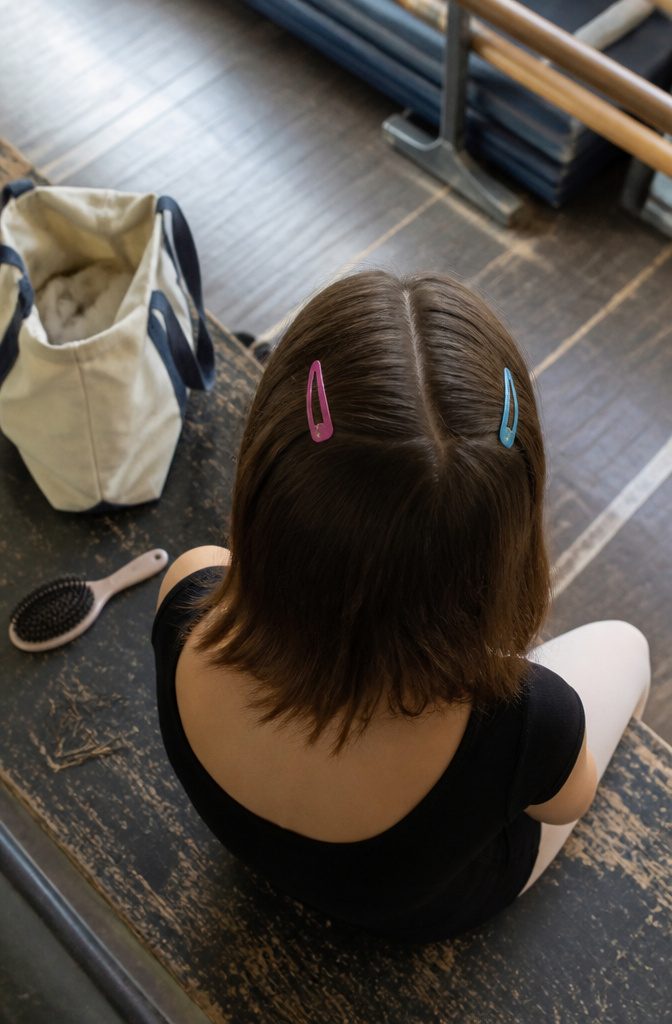
Barrettes and snap clips are the flatter, more functional cousin of the butterfly clip, designed to pin back sections at the front or sides without much bulk.
They came in bright colors and worked well for holding stubborn flyaways or pinning curtain bangs out of your face. You could wear a single clip for a minimalist look or stack them together for something more playful.
The typical move was wearing them in pairs, either clipped on both sides with a middle part or doubled up on one side with a side part.
They held hair securely, and because they sat close to the scalp, they stayed put better than decorative clips that prioritized shape over grip.
For dance recitals and quick fixes, they were more reliable than bobby pins and easier to pop in than anything with a hinge or claw mechanism.
7. Claw Clips
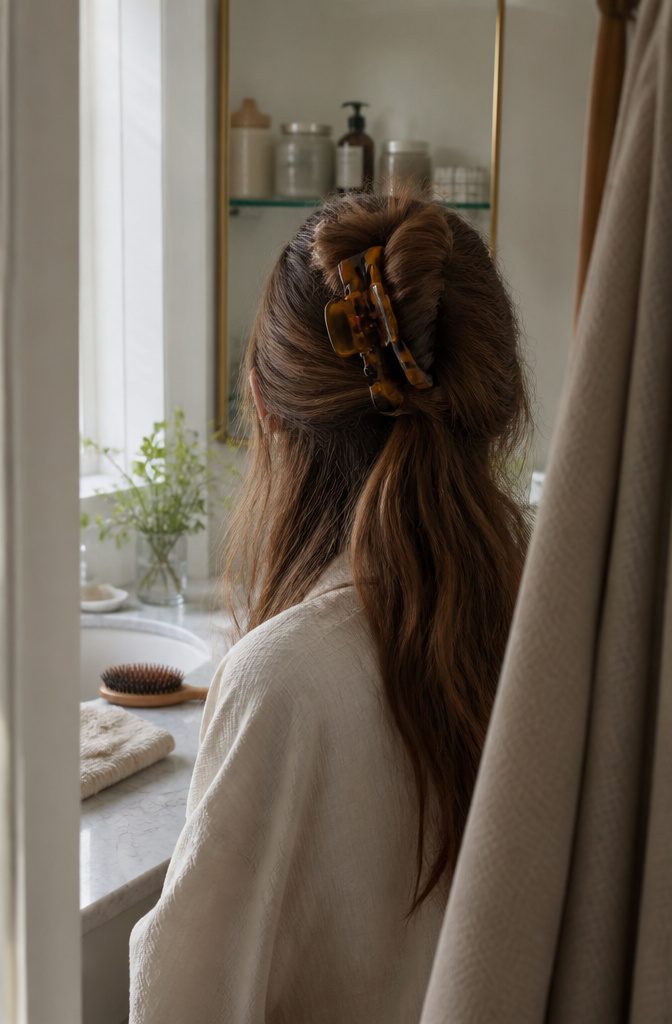
The larger claw clip is what held updos and half-up styles in place when you needed actual grip. These aren’t the tiny decorative clips you scatter through a braid.
They’re the ones that gather a full ponytail into a twisted bun or pin the top half back while the rest falls loose, and they do it without elastics or bobby pins.
Alexander Wang’s fall 2018 runway brought them back after years in the drawer.
The show styled hair with oversized tortoiseshell claws, and within a season you could find them in every drugstore again. Traditional styles like the ETTIKA Neutral Hair Claw Set come in neutral acetate finishes that read polished rather than playful.
The teeth interlock to distribute tension across the whole section of hair, so thick or slippery textures stay put through a full day.
I reach for mine when I want my hair up but don’t want to commit to the twenty minutes a proper bun takes.
8. Bucket Hats
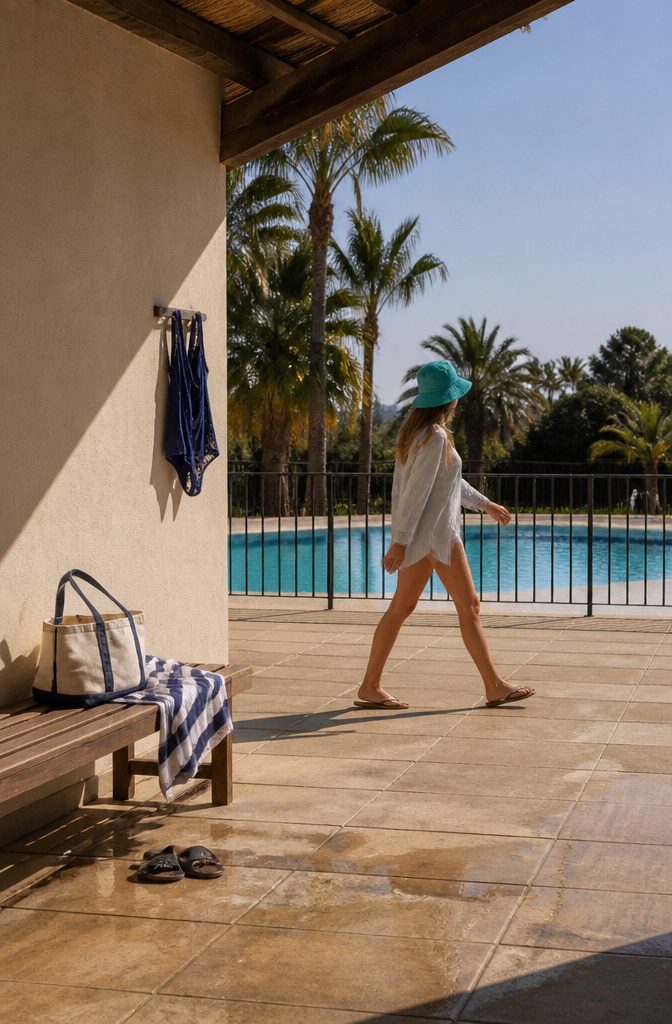
Bucket Hats
Bucket hats became the statement piece that replaced fussy hair accessories in the first place.
The plush terry versions matched poolside vibes, crocheted ones leaned festival-casual, and the occasional satin or faux-fur finish dressed the silhouette up without changing its shape.
You wore the hat as the focal point of the outfit rather than clipping something into styled hair underneath it.
That made bucket hats different from nearly everything else on this list.
A scrunchie or butterfly clip works with your hairstyle. A bucket hat becomes the look, and whatever your hair does under the brim stays secondary.
The hat sits low enough that most of the styling happens out of sight, which meant less time with a curling iron on days when the bucket hat was doing the work.
9. Flower Hair Accessories
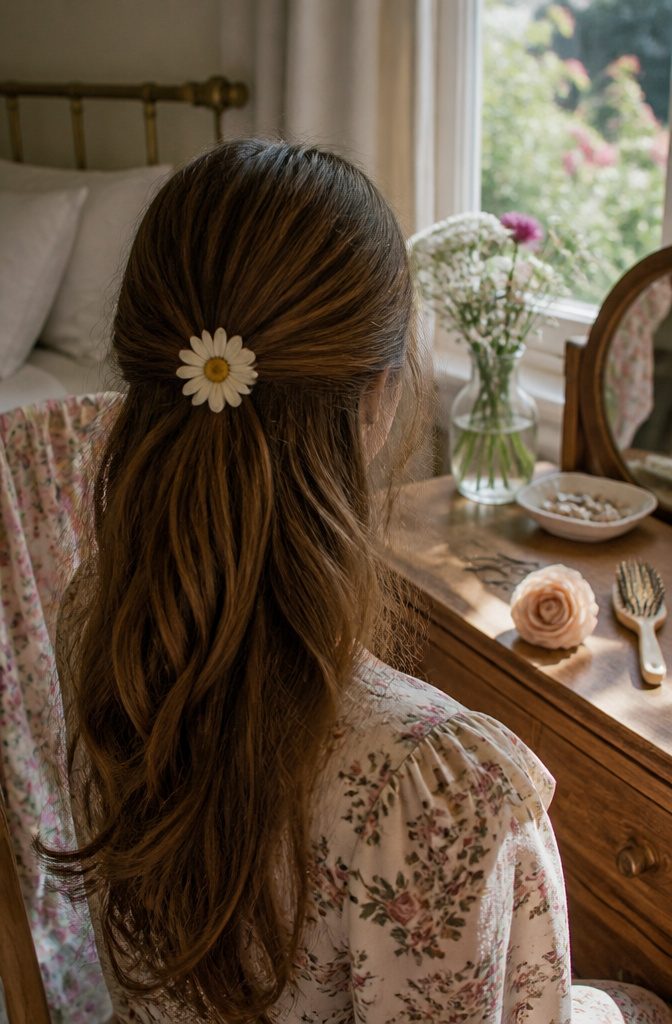
Hair flowers showed up in two versions through the decade. Hair daisies were the casual side of the trend, clipped into half-up styles or pinned at the side where a section pulled back.
They worked best when they matched an outfit already carrying the same daisy print, turning one detail into a coordinated look.
The dressier option was the formal hair rose, reserved for updos and occasions where a barrette or clip would read too plain.
Both sat the same way structurally, anchored into a gathered section rather than floating loose on top of the hair, but the daisy telegraphed a different occasion entirely.
One dressed up, the other dressed down, and the choice between them said more about the event than about the hairstyle itself.
10. Hair Beads
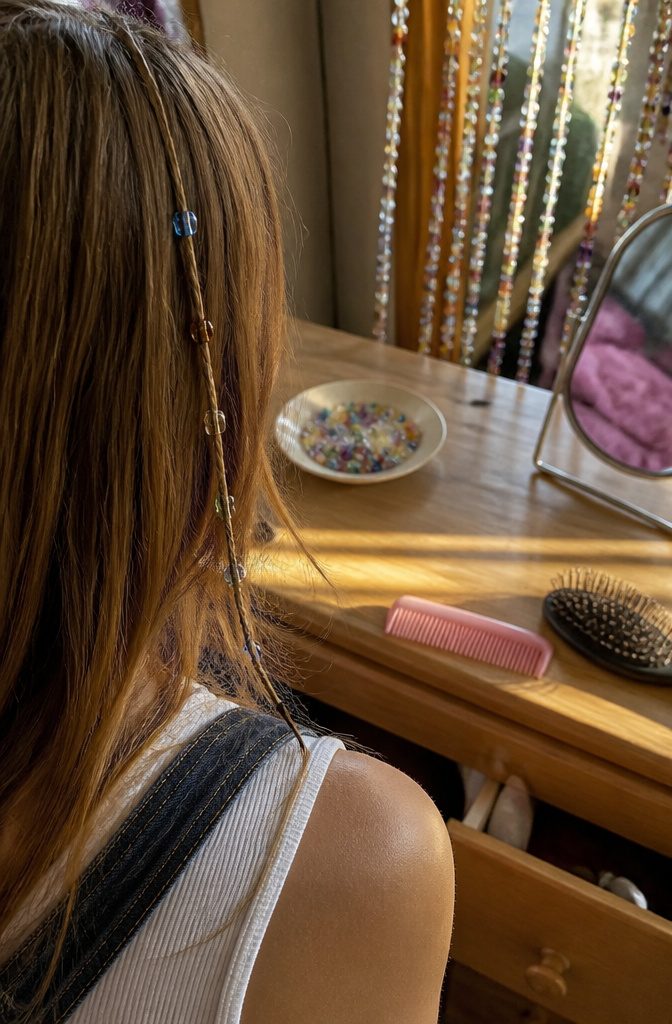
Hair beads threaded onto thin strands gave the decade one of its most tactile accessories.
You’d separate a small tendril, usually framing the face or tucked near the temple, and slide a few plastic or glass beads down the section before securing them with a tiny elastic or crimping the bead shut at the end.
The result was a subtle, musical detail that moved when you turned your head. Beads worked best on hair long enough to show the strand clearly, and the smaller the section, the more delicate the finished look.
Most people kept it to two or four beaded pieces rather than covering the whole head, which let the accessory stay playful without turning costume.
11. Hair Jewelry
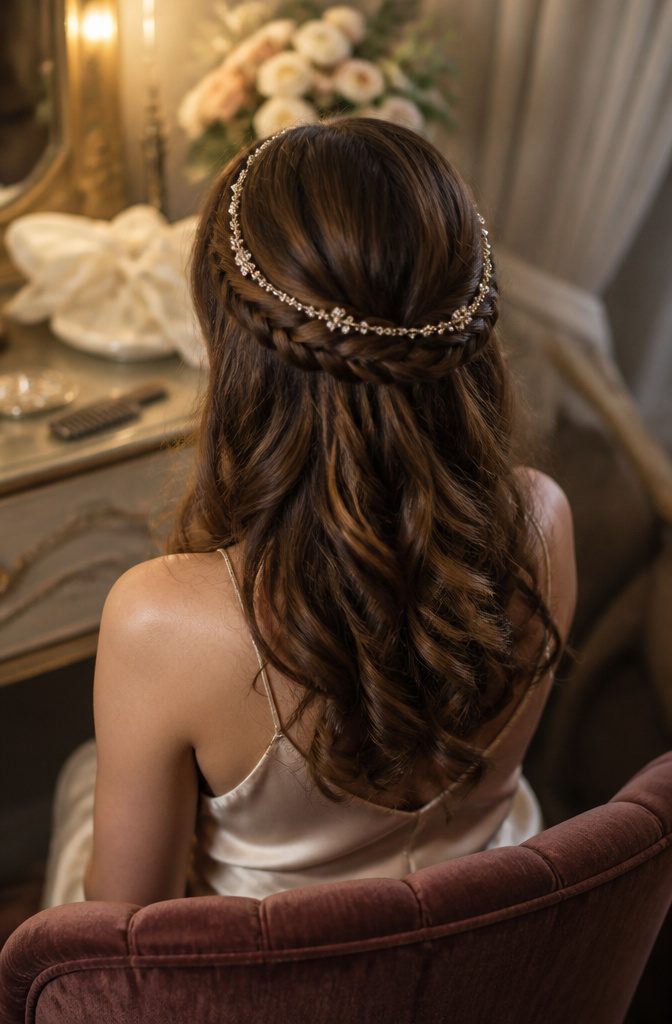
Hair jewelry sits across the crown or wraps around a section of hair like a delicate chain, giving you the sparkle of a tiara without the structure. Unlike clips that hold anything in place, hair jewelry is purely ornamental.
You thread it through braids, drape it over loose waves, or position it across the hairline where a headband would go, and it catches light without doing any actual work.
The look fits formal occasions best: prom, weddings, anything where a dress code already leans dressy and a little extra sparkle reads as intentional rather than overdone.
I’ve seen it work with sleek updos and with bohemian half-braids, but it needs a hairstyle polished enough to support the formality. Throw it on with a T-shirt and it tips into costume territory fast.
12. Denim Accessories
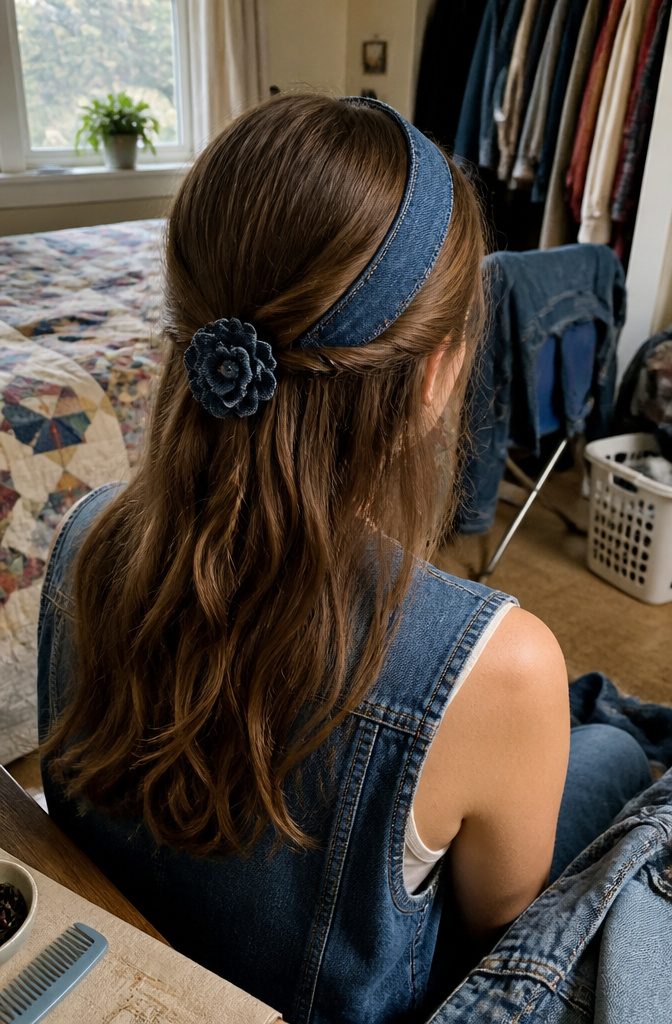
Denim showed up in hats, headbands and hair flowers, sometimes all at once. The fabric matched what was already in the closet: denim overalls, denim jackets, denim vests.
A denim headband paired with a denim vest made sense in a way that reads as purely ’90s now, when matching textures across accessories and clothing has mostly disappeared.
The look was casual by design, built around a fabric that refused to dress up, and the accessories followed that lead.
13. Beanies
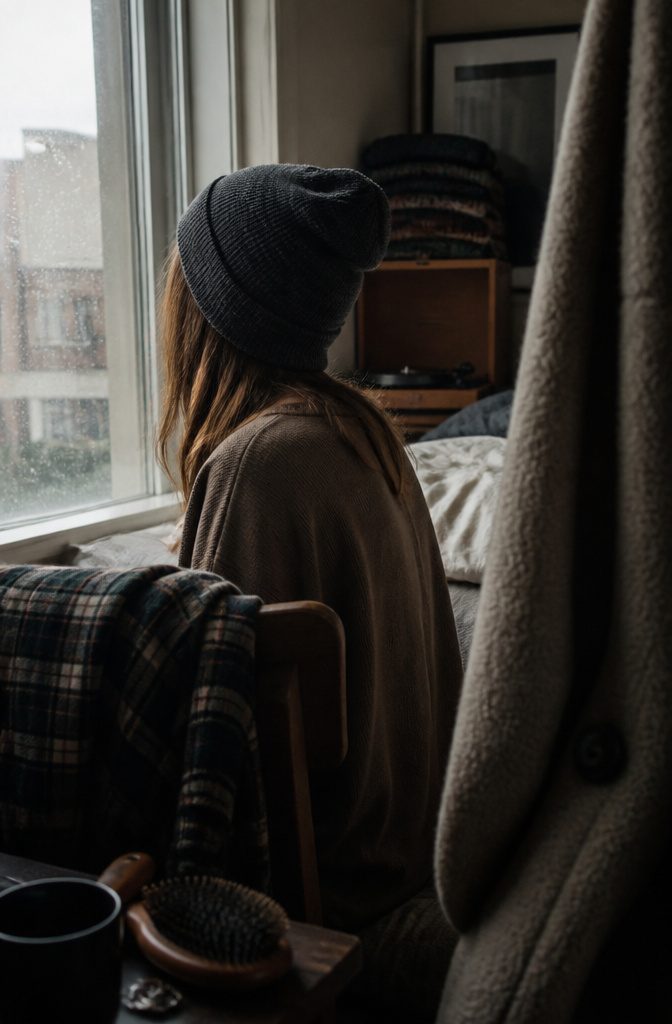
The beanie manifested in so many different forms during the ’90s. The grunge-girl version paired with flannel and sat low over loose hair, sometimes tucked behind the ears with ends spilling out.
But beanies also showed up in crocheted versions worn by women who leaned more fashionista than skater, styled with hair smoothed underneath or a few face-framing pieces left free.
A beanie works as full coverage. Hair can sit loose beneath it, or you can pin it back first if thickness or texture makes the fit too tight.
The fabric holds everything in place without clips, which made it useful for second-day hair or anyone who wanted a deliberate slouchy silhouette without fussing over individual strands. The look read as effortless, even when it wasn’t.
14. Pom Pom Hair Ties
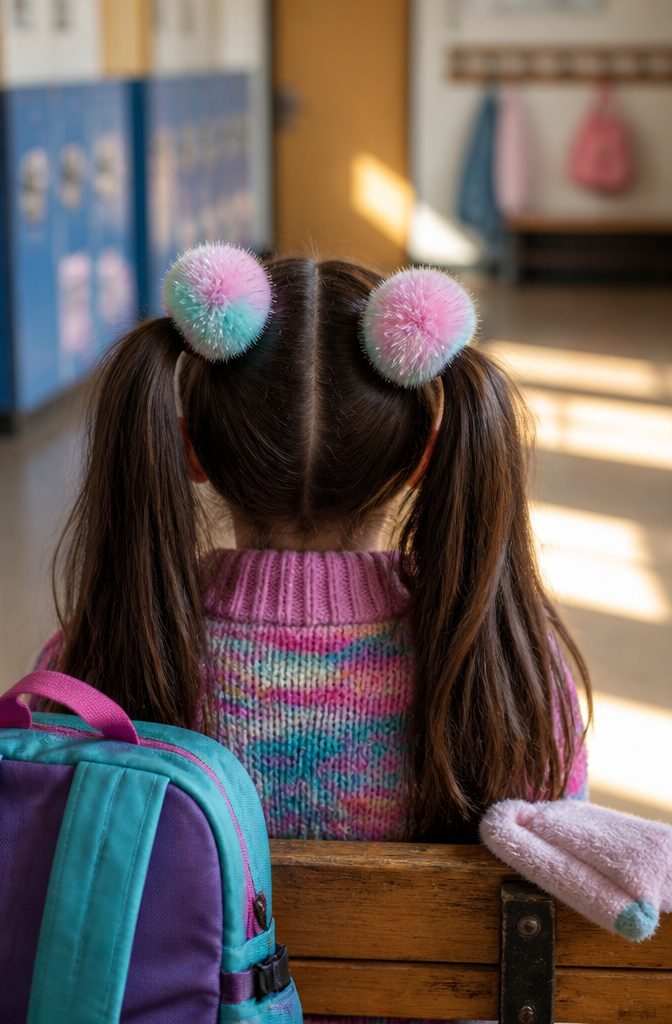
Pom pom hair ties sat somewhere between a scrunchie and a joke, which was exactly the point.
The fuzzy spheres bobbing on top of a ponytail or pigtail broadcast that you weren’t taking the look too seriously. Where a velvet or satin scrunchie still read polished, pom poms landed squarely in playful territory.
The ties themselves worked like any elastic, but the attached pom created volume and movement that a flat fabric scrunchie couldn’t. You’d see them most often in neon or pastel, sometimes with glitter woven through the fuzz.
They showed up on half-ups and low ponytails in middle school hallways and on anyone leaning into the more whimsical end of the decade’s accessory spectrum. Not every look needed to announce itself, but pom pom ties did.
15. Dragonfly Clips
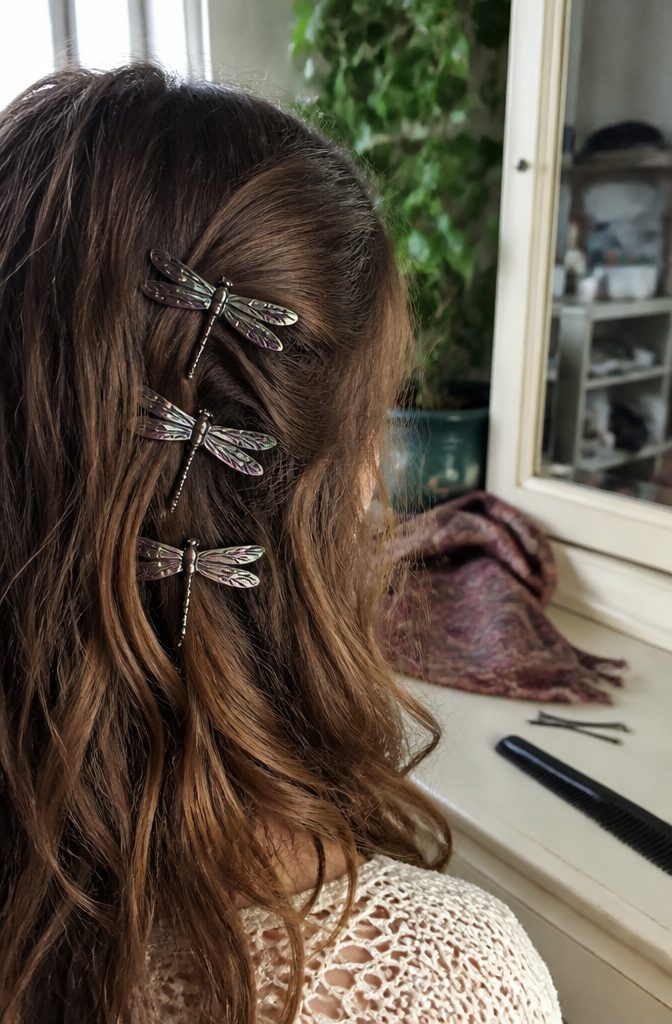
Dragonfly clips showed up as a quieter alternative to the butterfly shapes everyone else was wearing. The silhouette read a little more elongated and graphic, which made them feel slightly less sweet and more grounded in actual insect anatomy.
You placed them the same way you would a butterfly clip: scattered through the hair in odd numbers, sometimes clustered at the crown or clipped along one side to hold back a loose wave.
What they added that flowers and butterflies did not was a hint of structure.
The segmented body and narrower wings gave each clip a technical, almost architectural presence, especially in gunmetal or iridescent finishes. If you wanted the same clipping function without the soft, rounded look, dragonflies delivered.
16. Berets
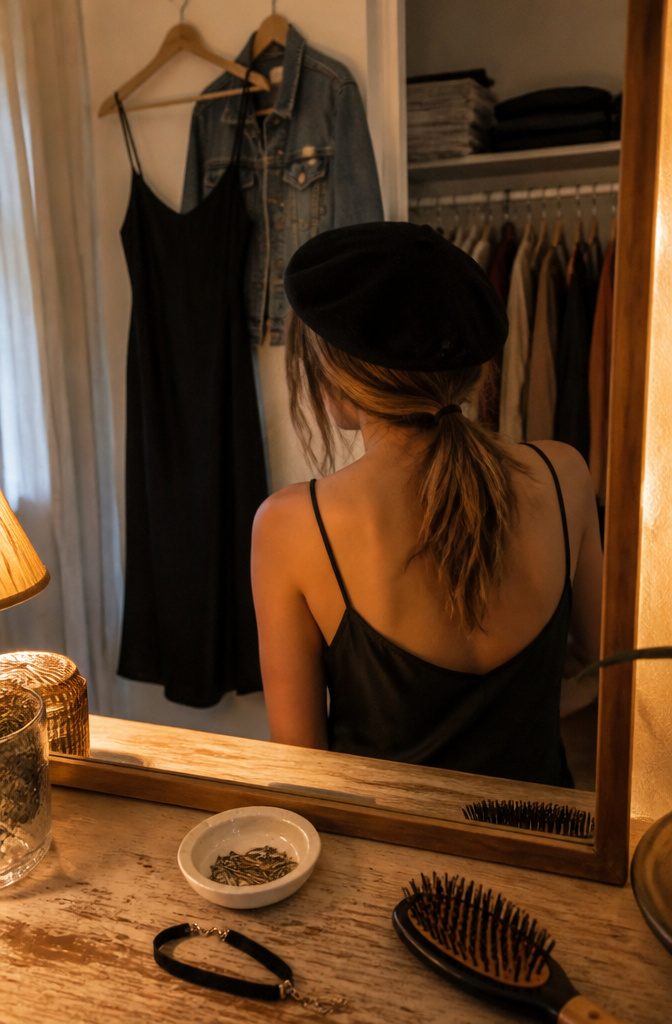
The beret perched slightly back on the crown, never pulled all the way down, which let the hair underneath stay visible.
Most women wore them with loose hair tucked behind the ears or falling forward at the temples, though slicked-back low ponytails worked too.
The accessory tilted fashion instead of function: berets showed up on red carpets through the mid-90s, often in velvet or wool felt, and the angle mattered more than security.
You pinned or clipped it if needed, but the look relied on that casual tilt rather than a snug fit.
The style borrowed from decades earlier but read younger when paired with chokers, slip dresses, or denim, and it worked best on second-day hair with a little texture to hold the pins.
17. Extra-Large Rectangular Clips
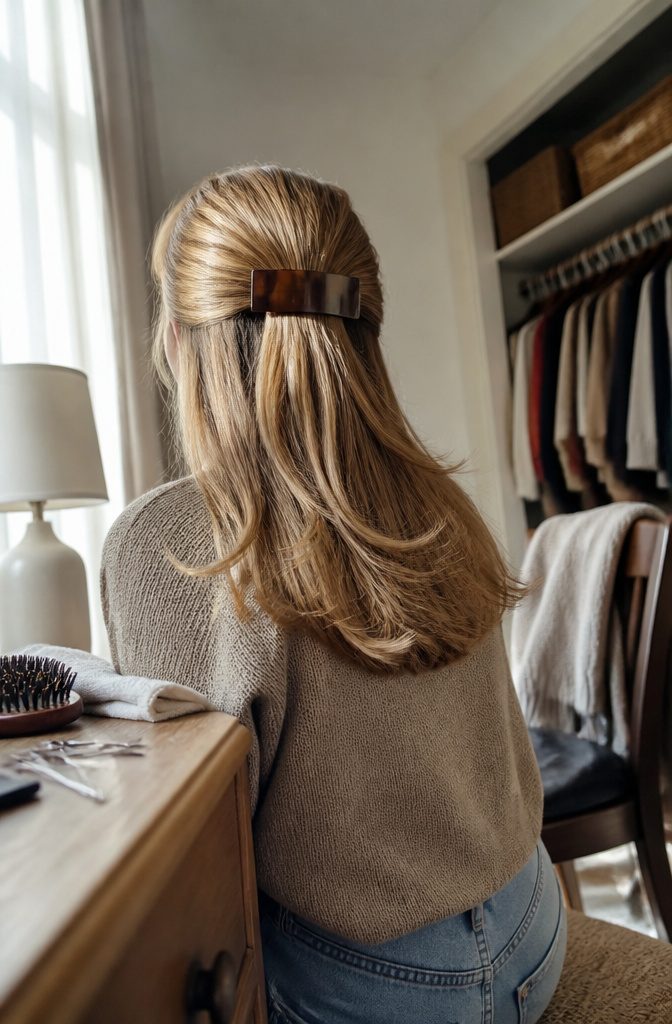
The rectangular clip that covered two to three inches of gathered hair made holding a half-up or low ponytail feel like a deliberate choice rather than something you pinned as an afterthought. The shape itself carried weight.
Where a barrette disappeared into the hair or a claw clip twisted to the side, the rectangle sat flat and visible, a surface that read as intentional even when the rest of the look stayed simple.
The size let it grip enough hair to actually matter.
You could pull back the top section of a blowout, clip it horizontally across the back of your head, and trust it to hold without needing three bobby pins as backup.
That made it practical for anyone whose hair was thick enough to overwhelm smaller clips, but the look worked just as well on finer hair when you wanted the accessory to show.
18. Oversized Flat Caps
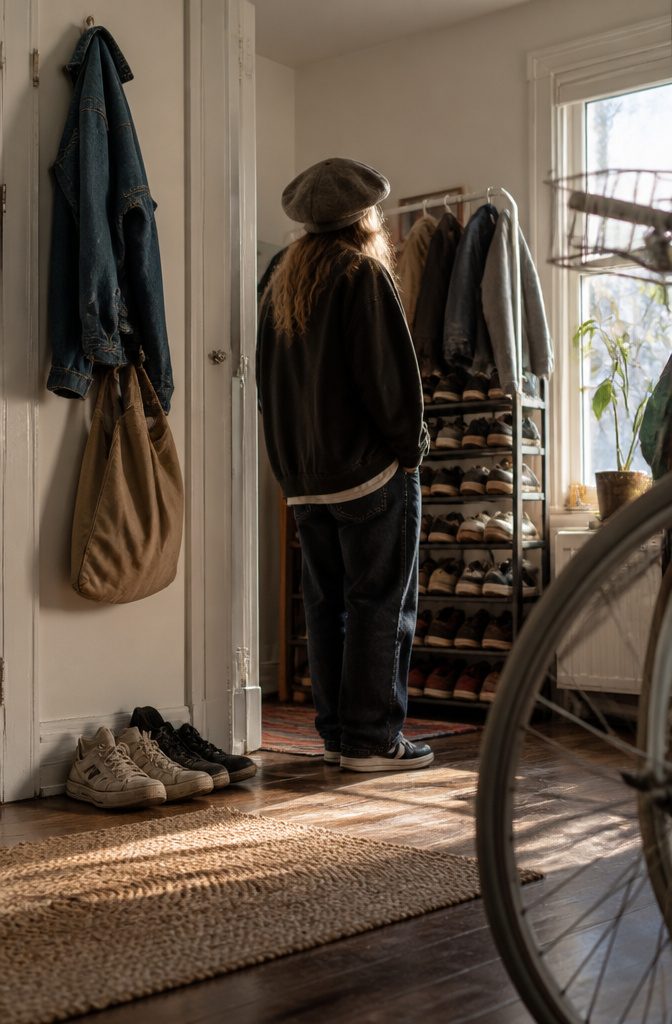
The proportions were everything. The bigger the flat cap, the cooler you looked, and anyone wearing a properly fitted version missed the point entirely.
These weren’t tailored newsboy caps borrowed from vintage menswear. They were exaggerated, oversized, and worn with the kind of confidence that came from knowing the look was ridiculous and leaning in anyway.
The shape sat high off the crown, brim wide enough that it changed your silhouette from across the room.
You could tuck long hair up under it or let it spill out the back, and either way the cap did the work.
It read streetwear without trying, which is exactly what made it stick around as long as it did.
I’d wear one now if I could find the right balance between oversized and cartoonish, but that line is narrower than it was thirty years ago.
19. Toweled Hair Bands
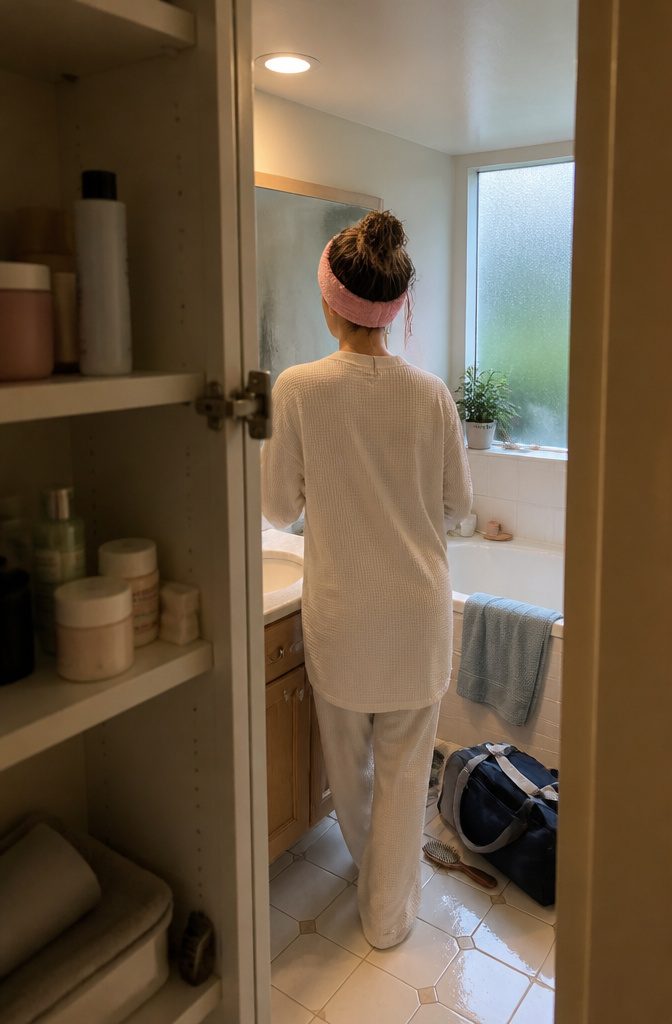
Toweled Hair Bands
Toweled hair bands brought the texture of a bath towel to the headband, and the terry cloth fabric made them soft enough to wear wet or dry.
The material soaked up water after a shower, which meant you could pull damp hair back without a regular elastic digging in or slipping.
The casual, sporty look fit right into the decade’s athleisure mood, and they showed up in bright solids and pastels that matched windbreakers and gym bags.
You still find them sold in sets, often two or three to a pack, because they stretched out faster than smoother bands. They worked best for post-workout ponytails or lazy weekend hair, not polished looks.
20. Banana Clips
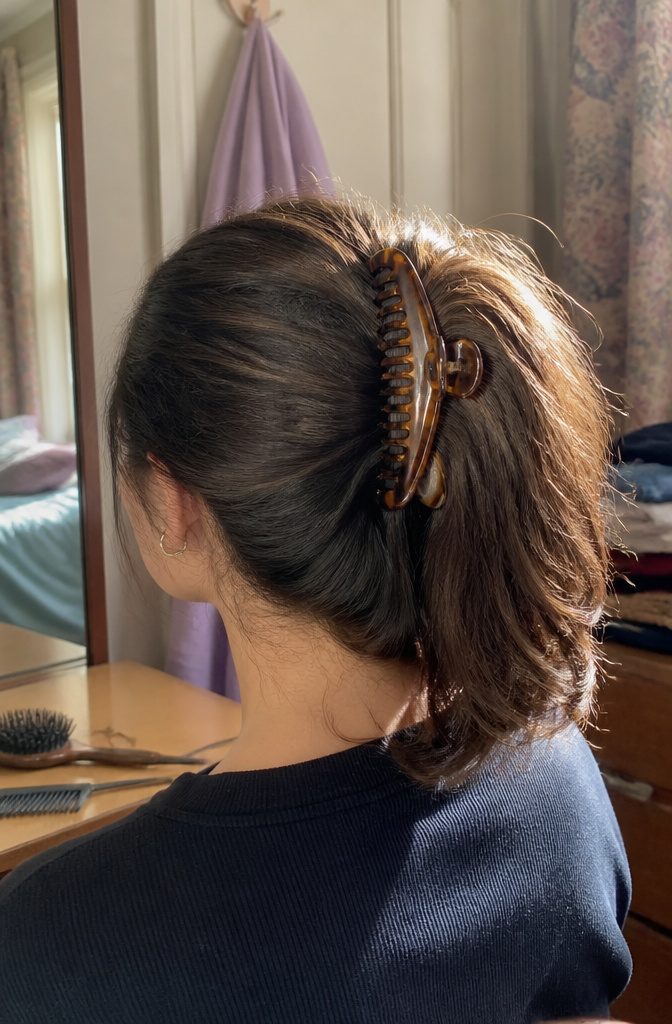
The curved plastic comb snapped over a ponytail or twisted section at the back, holding hair with a grip that claw clips couldn’t match at the time.
Banana clips came in every finish drugstore racks could fit, but tortoiseshell showed up most often in school hallways and on sitcom characters.
The shape followed the curve of your head instead of sitting flat the way a barrette did, so volume stayed put without flattening.
You twisted a section, lined up the open comb, and pressed the hinged side down until it clicked. The hold worked best on medium to thick hair; fine hair slipped unless you added a quick backcomb at the crown first.
It took about fifteen seconds, which made it faster than a French twist and more secure than a scrunchie alone when you wanted hair fully off your neck.
21. French Pins
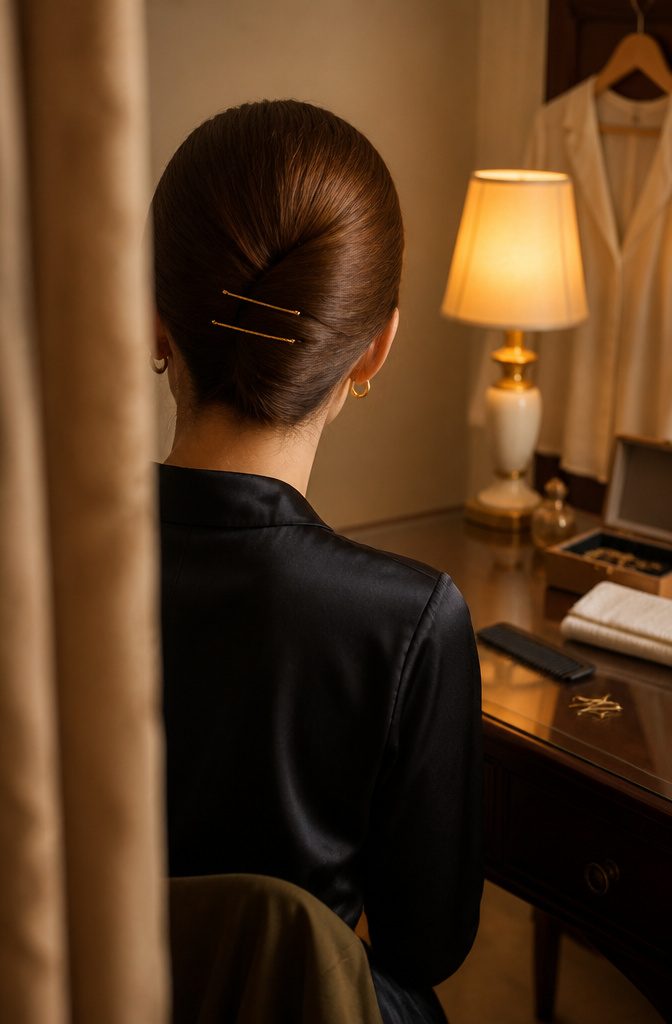
French pins grip a twist with a single curved piece of metal, and that is what separates them from a claw clip.
You roll the hair into a twist, fold it up against the back of your head, and slide the pin in so it passes through the twist and catches a bit of hair at the scalp.
A claw clip clamps from the outside with teeth and a spring; a French pin threads through the hair itself.
For a ’90s look, I’d choose a pin for sleek, polished twists and keep the claw for loose, messy ones.
A pin only holds a twist that’s already neat, so smooth the hair first. Thick hair may need two.
22. Colored Clip-In Extensions
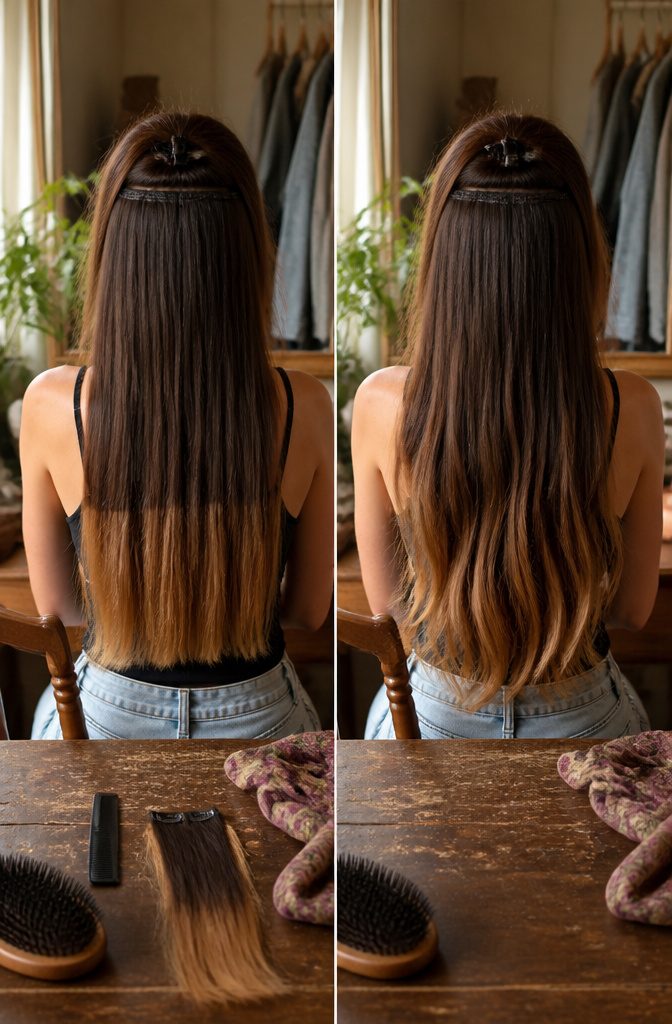
Rainbow dye was never the move for most teens in the ’90s, since bleaching meant real damage, and I doubt Olaplex was around to fix it.
Colored clip-ins were the workaround: all the color, none of the commitment. The trend sort of died in 2008, but the idea holds up.
Clip-ins are still the easiest way to test a shade before touching your own hair.
Ombre and balayage wefts add dimension in minutes. A set like the 220g Ombre Chestnut from Luxy is a good example, since the color blends into brown instead of fighting it.
For a first try, I’d pick that over neon: color without bleach, and it comes out at night.
Accessories as Self-Expression
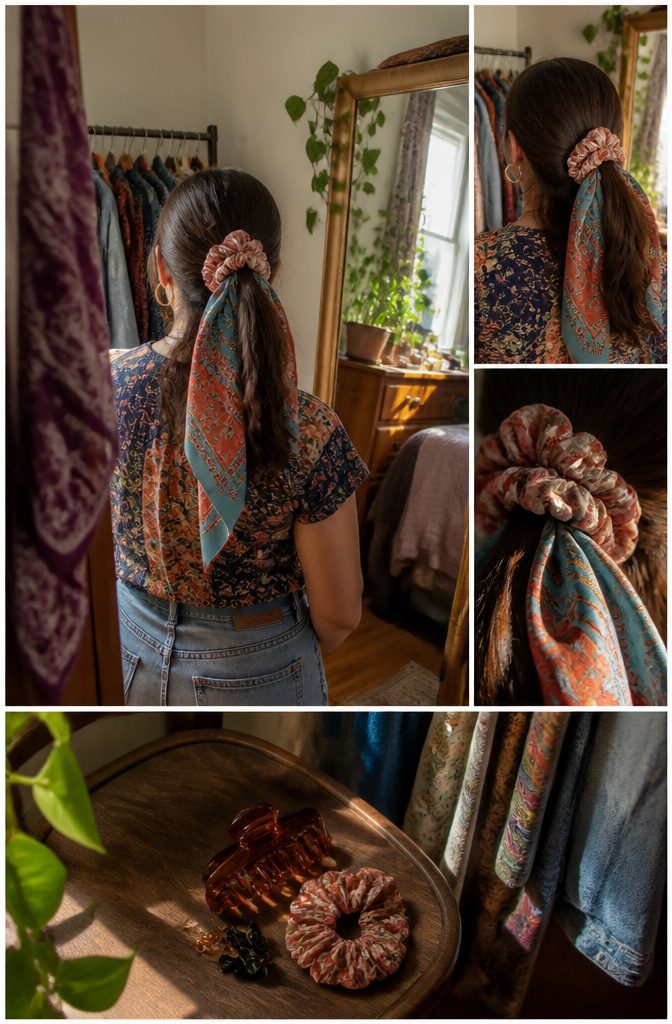
The decade’s accessories were loud on purpose.
"The bigger, the better" was the unofficial rule, and that is why the pieces still read as fun, bold and a little nostalgic. They also read as personal, since nobody wore them quietly.
The comeback has a high-end stamp: Prada, Versace and Gucci have all put ’90s staples on their runways. That helps explain why a plastic-and-fabric throwback now feels current rather than costume-y.
To pick one, start with your outfit.
Match a scrunchie to what you’re wearing, or deliberately clash it with a pattern. A scarf works as a headband or tied around a ponytail, and I’d choose it first if your look is plain.
Function Versus Decoration
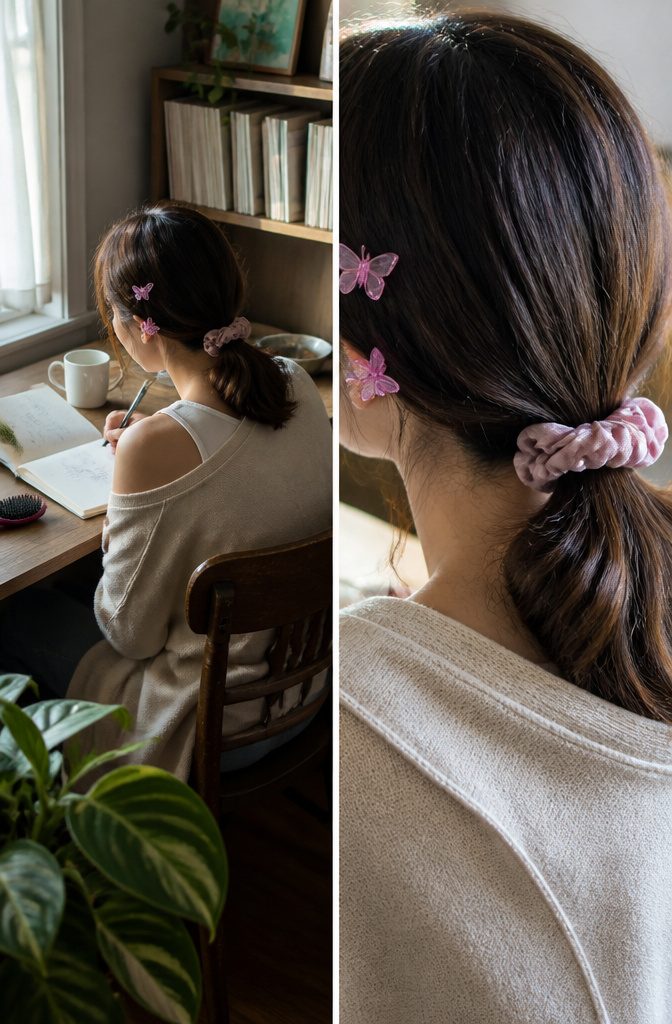
Some ’90s accessories had a job, and the best of them kept doing it.
Scrunchies and butterfly clips held hair off the face and out of the way. A scrunchie holds a ponytail without pulling the hair too tight, and it adds a little structure to a simple pony that a plain elastic can’t.
Headbands show the split most clearly. Pulled back, they keep hair out of your eyes at a desk all day, which is genuinely useful.
As a look, comfort and wearability varied by style, and some are better saved for a costume moment. I’d choose the ones that hold hair and skip the ones that only photograph well.
Frequently Asked Questions
What were some popular hair accessories in the 90s?
Scrunchies, butterfly clips, claw clips, and headbands were the most popular 90s hair accessories.
Other standouts included snap clips, banana clips, hair scarves, beads threaded onto thin strands, and bucket hats. The decade favored bold, visible accessories that added color and personality to hairstyles.
What hair products were popular in the 90s?
The 90s prioritized accessories over styling products, with scrunchies, clips, and headbands doing most of the work.
Colored clip-in extensions offered temporary color without bleach damage, while basic elastics and bobby pins handled the functional side. Hair beads and decorative clips added texture and movement without requiring gels or sprays.
How did people in the 90s wear their hair?
Ponytails and half-up styles dominated, usually secured with scrunchies or claw clips. People scattered butterfly clips through loose waves, wore headbands pushed back or low across the forehead, and threaded beads onto face-framing strands.
Updos relied on banana clips or French pins, while hats like bucket hats and beanies covered everything when accessories became the focal point.