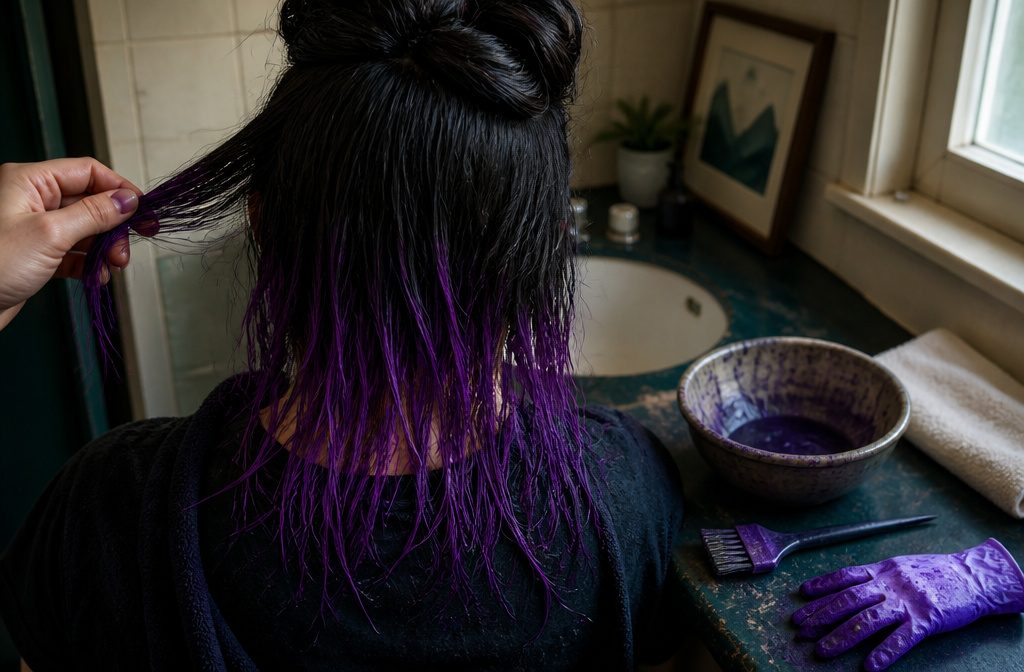
Most dye stays on the ends for about 30 minutes, and pulling some color up with your fingertips softens the line where it meets your natural hair.
Dark hair adds a step: purple on black is barely visible unless the ends are bleached first. Run the 48-hour allergy patch test days ahead, never the morning of.
What You Need
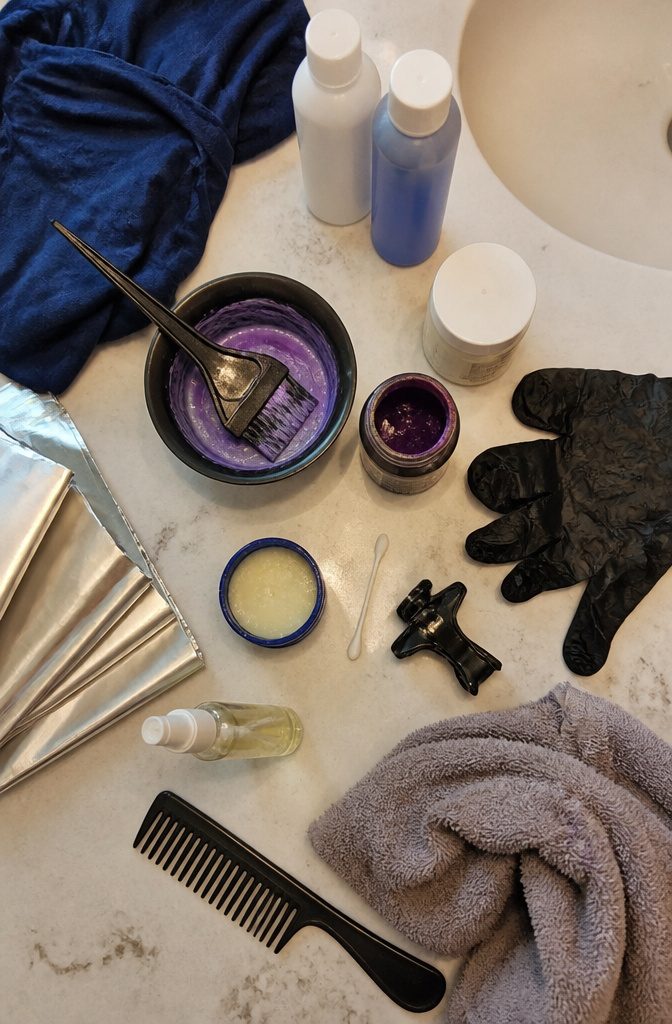
Gather everything before the jar opens.
- Dye: Manic Panic can go on straight from the jar. Other brands need mixing, so follow the package. Buy enough to saturate every tip.
- Conditioner: Stir it into a bold color to soften it.
- Bleach and developer, only if your hair is dark. Developer comes in 10, 20, 30 and 40 volume.
- Tools: gloves, a dye brush or color bowl, and a comb.
- Clips or ties for sections you’re leaving alone. Aluminum foil is optional.
- Protection: an old shirt, an old hand towel wrapped at the neck, a counter cover, plus petroleum jelly and a cotton swab for the hairline.
- Aftercare: heat protectant and a deep conditioner.
Tip Dye Steps
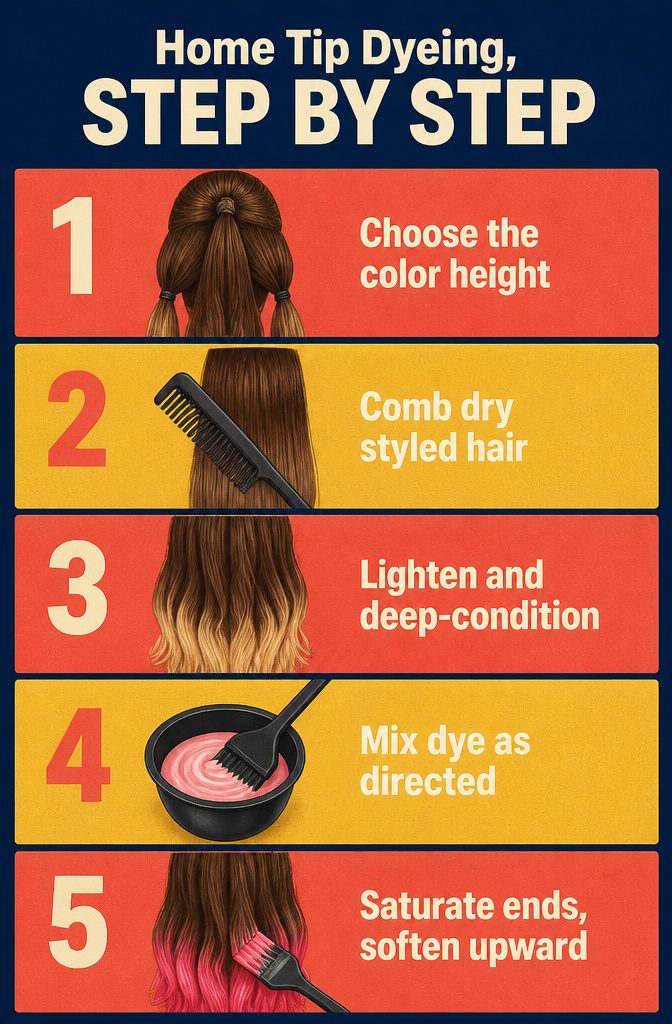
Tip Dye Steps
- Decide how high the color goes based on your hair length and what you want to see. Tie up the sections you plan to leave natural.
- Comb your hair thoroughly and part it the way you normally would. Work on dry, styled hair.
- If you are going lighter than your natural color, bleach only the sections you plan to dye, then deep-condition.
- Mix the dye according to the package directions. Some go on straight, others benefit from a little conditioner to soften bold shades, and you can blend two colors if you want something in between.
- Apply with a brush or by dipping the ends into a bowl. Saturate the very ends heavily to get solid color, then use less dye as you move up the strand.
- Use your fingertips to gently pull some dye up the hair without saturating it. This softens the line between dyed and natural and keeps the height even around your head.
- Optionally, wrap each section in aluminum foil. This heats the hair, speeds processing and contains the mess.
- Leave the dye on according to the package and check the color periodically. Longer processing gives brighter color, shorter gives a paler shade that fades faster.
- Rinse with cold water until the water runs clear, then condition. Skip shampoo, which can strip the dye and lighten it immediately.
- Style with heat protectant if you are using heat tools.
Choosing Your Color
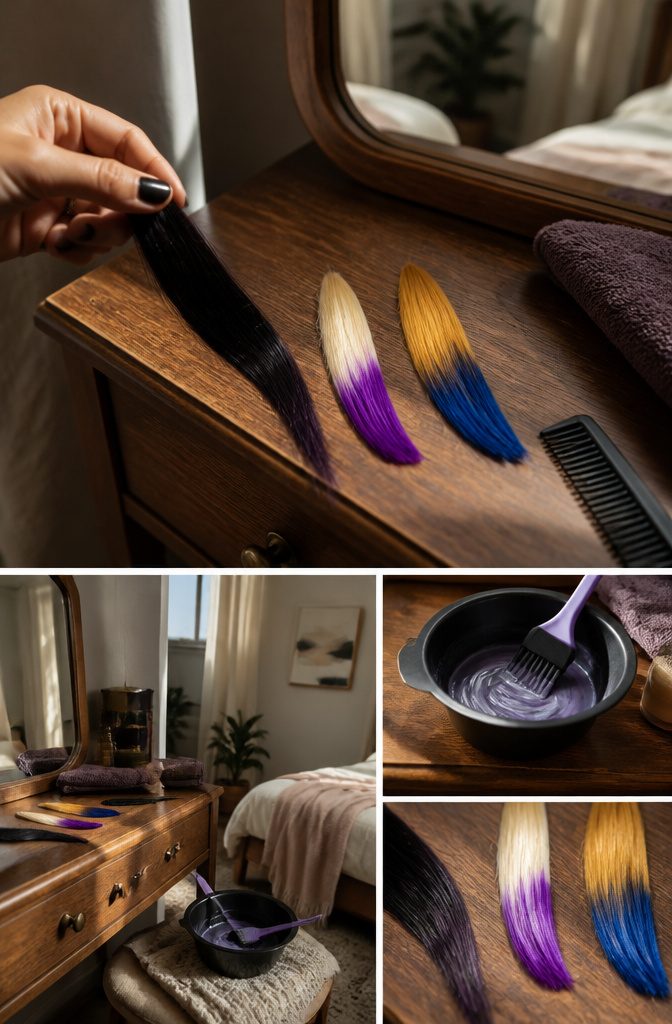
Because tips sit away from your face, a tip dye lets you try a color without it framing your skin. Cool skin tones suit cool shades and warm ones suit warm shades, so I start there.
Dye also mixes with whatever is already in the hair: blue over a yellow or gold tint turns green or teal. Blue on brown can work, especially cool-toned brown, so hold a swatch against your natural hair before committing.
Purple on black hair is barely visible, or just a dark tint, unless the ends are bleached first. Garnier’s Shade Selector and virtual try-on tool let you preview a shade.
For a first try, I’d pick semi-permanent, which coats the outer layer and fades gradually. Permanent color penetrates the cortex.
Lightening and Bleach
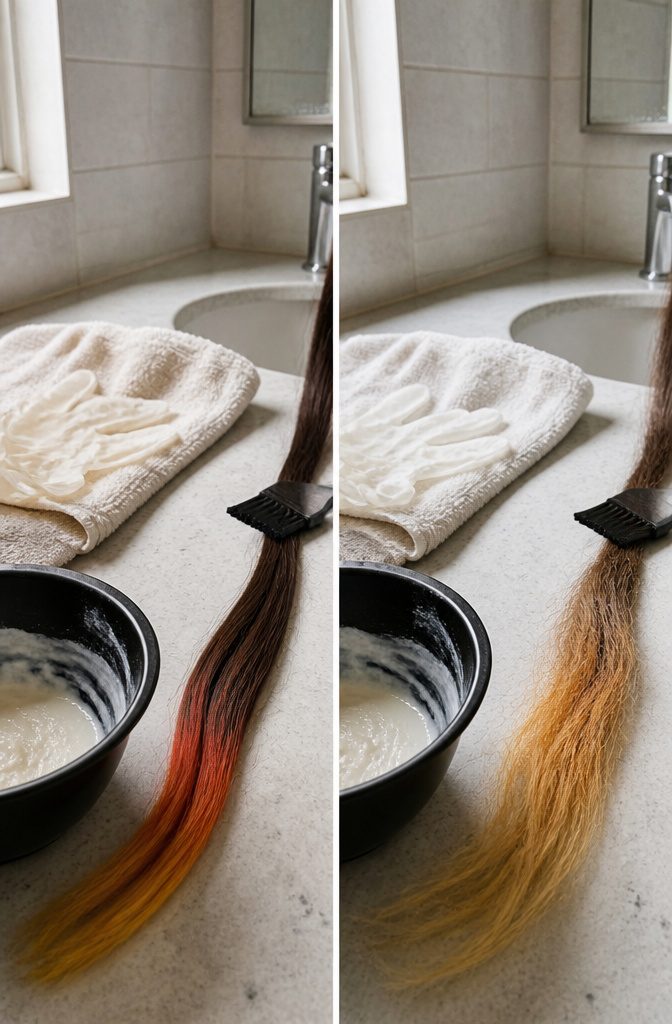
Dark hair needs bleach for light tips. A lighter dye lifts only virgin, never-colored hair and may still turn brassy; previously dyed hair needs bleach, or Color Oops to strip the dye.
Brown lifts through red, then orange, then yellow, so high-lift blonde may give golden, not platinum, the first time. Wella T14 (more blue) tones orange; T18 (more purple) tones yellow.
Rinse when the bleach looks white; it has been on too long.
A blow-dryer speeds lifting but adds damage. Resist a second round:
If your hair needs to be lifted even lighter after the first bleach, the solution is NOT to bleach it again.
— BuzzFeed
Bleach once per session, then wait at least a few weeks before lightening again.
Protect Hair and Keep Color
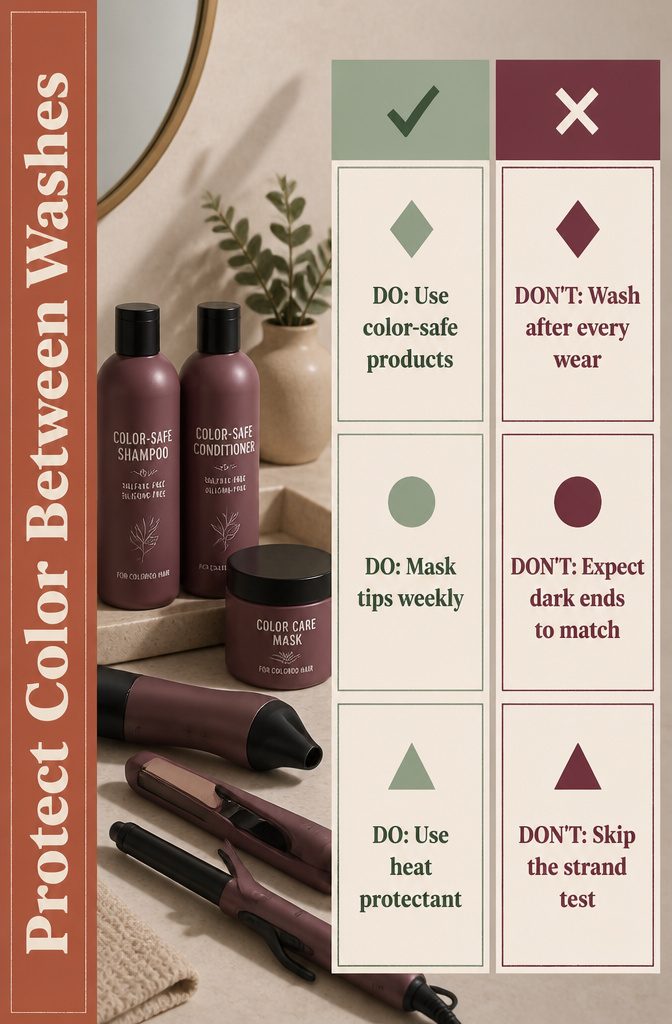
Use shampoo and conditioner made for colored hair, skip sulfates and silicones, and put a mask on the tips once a week.
Washing less often matters just as much, because semi-permanent color only coats the outer layer and fades with every wash. Keep blow dryers, flat irons and curling irons to a minimum, and use heat protectant when they do come out.
To fade a color on purpose, vitamin C tablets mixed with dish soap may lighten fresh dye, but I wouldn’t expect a big difference.
Dry or damaged ends dyed darker can grab far more pigment than the box promises. Pick a shade lighter than you want, strand-test it, and consider a protein filler first so the color goes on evenly.
Tests Before Coloring
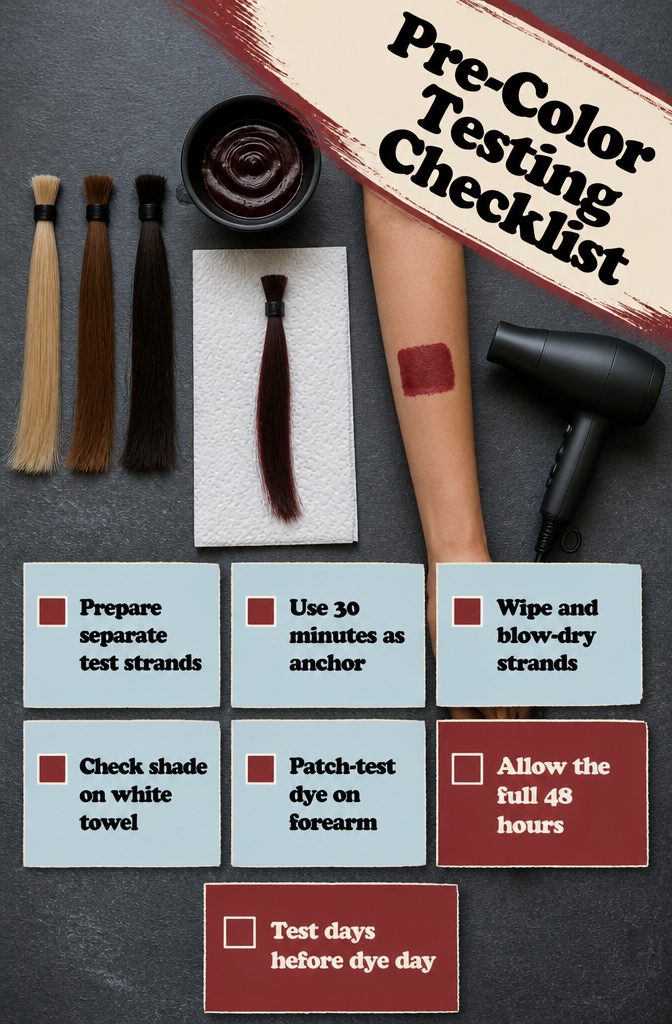
Two tests come before any dye touches the tips, and they run on different clocks.
- Pick a few strands and leave dye on each for a different length of time. Most dye stays on about 30 minutes, so that’s your anchor.
- Wipe each strand clean with a damp paper towel, then blow-dry it.
- Hold the dry strand against a white paper towel. The white background gives the purest read of the shade.
- For allergies, test a dab of dye on your forearm, or do a 48-hour patch test as the box directs.
- The allergy test needs the full 48 hours, so it happens days before dye day, never that morning. I’d skip nothing else before this.
Protect Skin and Clothes
Protect Skin and Clothes
Dye will get on skin and fabric, so set up for it.
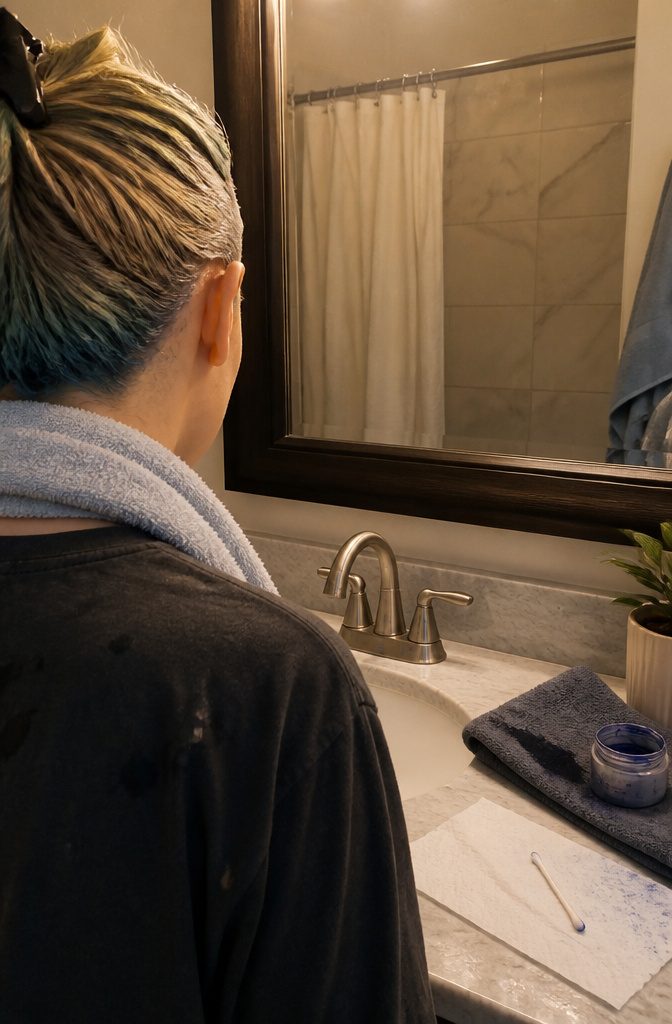
I spread petroleum jelly along my hairline before I start—Wella and Garnier both recommend this, and it works. The dye wipes off the jelly instead of staining your forehead and temples.
Put on an old shirt you don’t care about, wrap an old hand towel around your neck, and work in the bathroom where you have counter space, water, and a mirror.
If your counter is light-colored, cover it. Dye can stain shower surfaces too.
For any spots you miss, dip a cotton swab in toner and lift the color off. Stained fingertips need a longer fix: soak them in lemon juice for thirty minutes, then wash and moisturize.
Getting Help With the Back
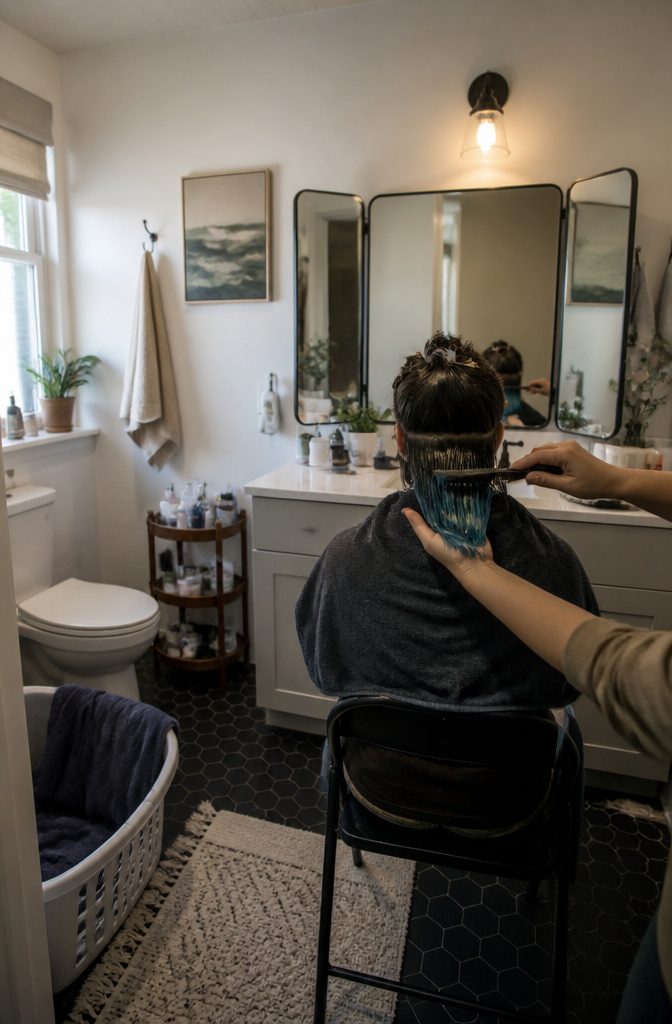
The back of your head decides whether the dye line stays level or drifts up on one side.
Ask a friend to help with the back, or set up a three-panel mirror so you can see all angles before you start.
Wella recommends calling someone over specifically for this reason: you cannot judge evenness from the front alone, and a crooked line around the back is the mistake that shows in every ponytail.
If something does go wrong partway through, ask a friend or family member for help right away.
A second set of hands can catch uneven application, wipe drips before they set, or hold sections while you work. Waiting until after the dye has processed leaves you with fewer options and a harder fix.
When to See a Stylist
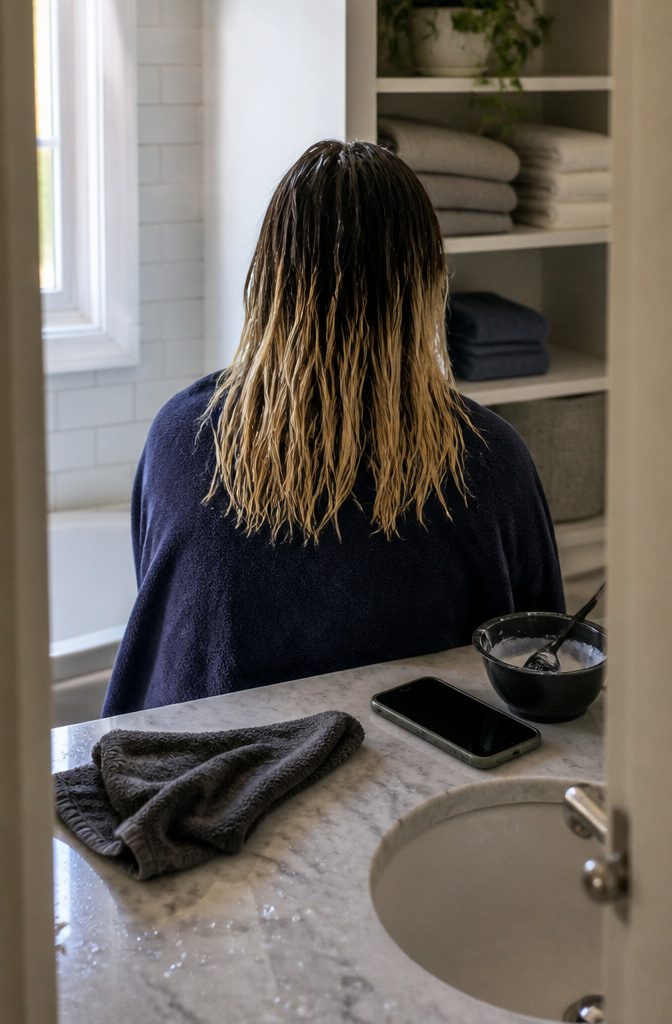
Going fully blonde, especially from dark hair, is the job I’d hand to a stylist.
Tips are forgiving, but an all-over lift is not, and the risk is over-processing: hair lightened and colored past what it can take ends up damaged.
The same logic applies mid-project. If the bleach result looks wrong, stop and book a stylist before adding another round.
A second pass over a bad lift is how over-processing happens. Doubts about the process are reason enough to stop, even if nothing has gone wrong yet.
Dark hair needs bleach before light tips will show, and some results are permanent, so plan the color before you start. If you can’t picture living with it, a consultation is cheaper than a correction.
Frequently Asked Questions
Can you dye just the tips of your hair?
Yes. Decide how high the color should go, tie up the sections you want to leave natural, and saturate the very ends heavily with less dye as you move up the strand.
Pull a little dye upward with your fingertips to soften the line between dyed and natural hair. Dark hair needs bleach on the ends first if you want a light or bright color.
What is it called when you dye just the tips of your hair?
It’s called a tip dye, and plenty of people say dip dye for the same look, since you can dip the ends straight into a bowl of color.
Either way, only the ends get color and the rest of your hair stays natural.
How long does tip dye hair last?
There’s no fixed number, because it depends on the dye and how often you wash.
Semi-permanent color only coats the outer layer and fades with every wash, so washing less often, using color-safe shampoo without sulfates, and putting a mask on the tips weekly all help it hang on.
Longer processing gives a brighter color, while a shorter time gives a paler shade that fades faster.
Will purple dye show up on black hair tips?
Barely.
Purple on black hair is either almost invisible or a very dark tint. Bleach the ends first, then apply the dye, if you want the purple to show clearly.
Will blue tip dye look good on brown hair?
It can, especially if your brown has cool undertones. Hold a swatch against your natural hair before you commit, since beauty supply stores carry them.
Blue also blends with whatever is already in your hair, so a yellow or gold tint turns it green or teal, and for a bright blue you’d have to lighten the ends first.
Can I bleach my hair tips at home?
Yes, and Garnier says at-home bleach and lightener formulas have improved a lot in recent years.
Bleach only the sections you plan to dye, rinse when the bleach looks white, and bleach just once per session. If the result looks wrong, stop and see a stylist instead of going another round.
What should I do if something goes wrong while dyeing my tips?
Ask a friend or family member for help right away.
A second person can catch uneven application and wipe drips before they set. If the bleach result looks off, stop and book a stylist rather than bleaching again, because a second pass is how over-processing happens.