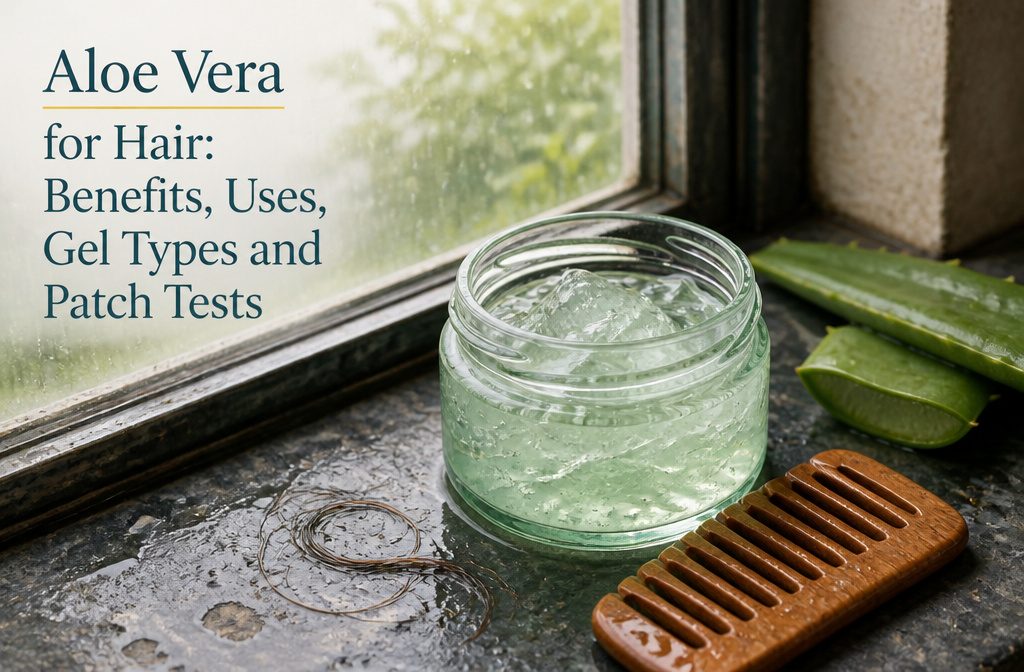
Aloe gel works best as a light hydrator and detangler, not a growth treatment: the growth evidence is a mouse study, and hair may just break less.
Fine hair is the exception, since pure gel can dry into a stiff, crunchy film. Patch-test first by dabbing gel on your hand and waiting about 2 hours.
What Aloe May Do
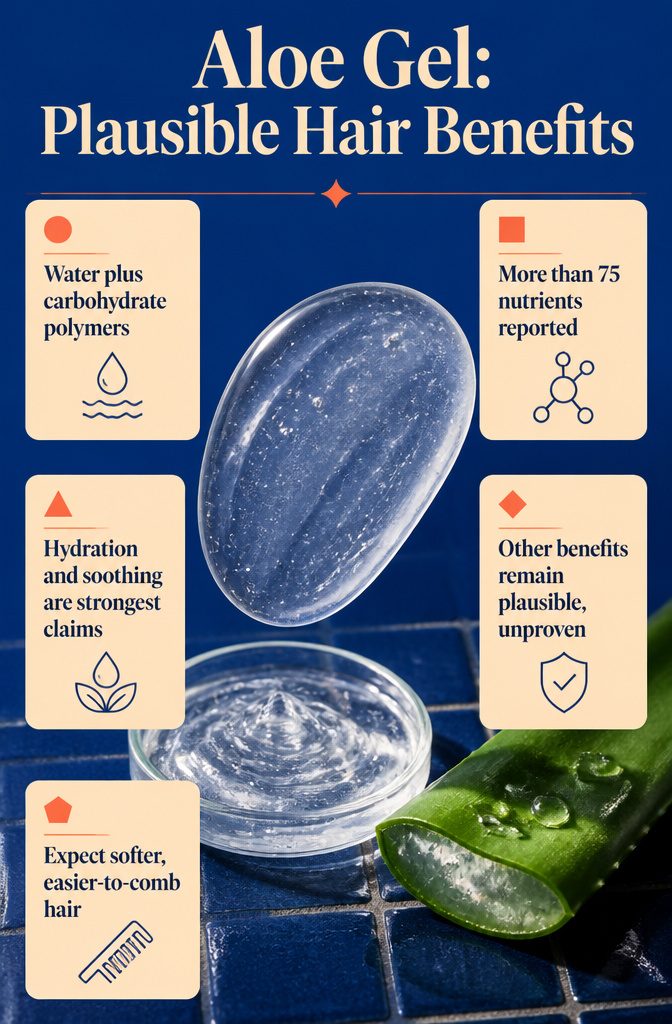
Aloe gel is water plus carbohydrate polymers, vitamins and amino acids.
Hairobics counts more than 75 nutrients and names vitamins A, B12, C and E; other lists give A, B1, B2, B6, C and E, so I wouldn’t lean on any one vitamin roster.
The claimed effects are hydration, conditioning, detangling, soothing, less oiliness and UV protection. The hydrating, soothing claim is the easiest to defend:
"Aloe is a soothing humectant that is deeply hydrating and has anti-inflammatory properties."
— ELLE
Controlled research is limited, so treat the rest as plausible benefits, not proven ones. Expect a softer, easier-to-comb feel, not a miracle.
Ways to Use Aloe
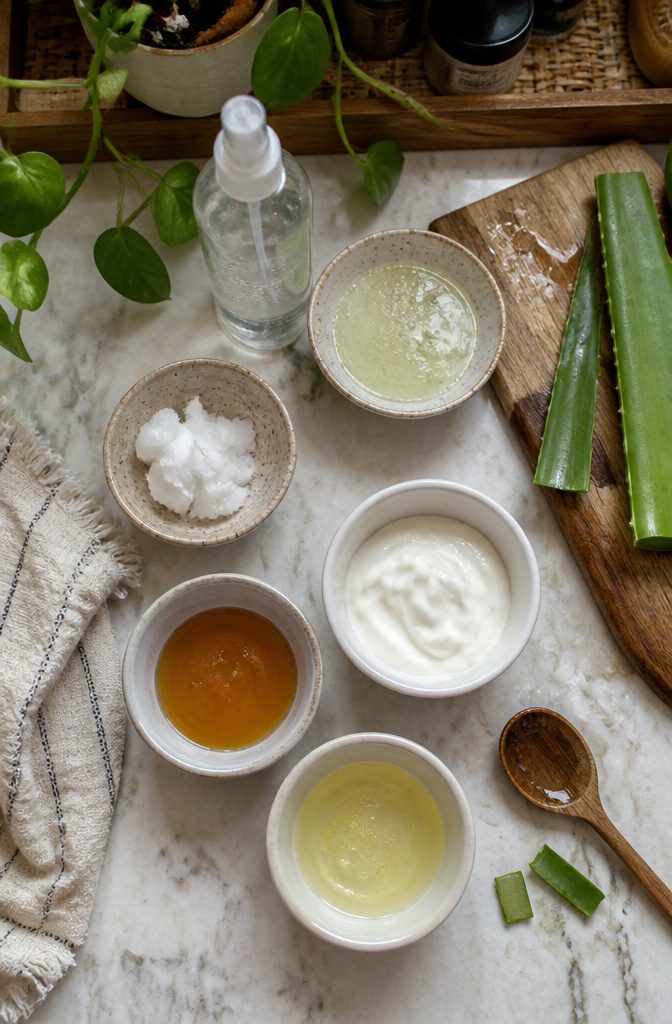
Aloe also comes as conditioner, leave-in, pre-shampoo treatment and styling gel, but these five home recipes are the ones worth comparing.
| Recipe | Ingredients | Wait | How often |
|---|---|---|---|
| Coconut oil | 2 tbsp gel, 2 tbsp coconut oil | 10–15 min | Weekly |
| Plain gel | 2 leaves | n/a | About 3 times a day |
| Egg white | 2–3 tbsp gel, 2 egg whites | 5 min | n/a |
| Yogurt | 2 tbsp gel, 2 tbsp Greek yogurt, 1 tbsp honey | 5 min massage, 30 min rest | Weekly |
| Spray | ½ cup gel, ½ cup water | n/a | Daily |
My starting point is the spray: two ingredients, no timer, and daily use shows quickly if your scalp objects. Save the yogurt mask for dandruff, once a week.
Fresh Gel or Store-Bought
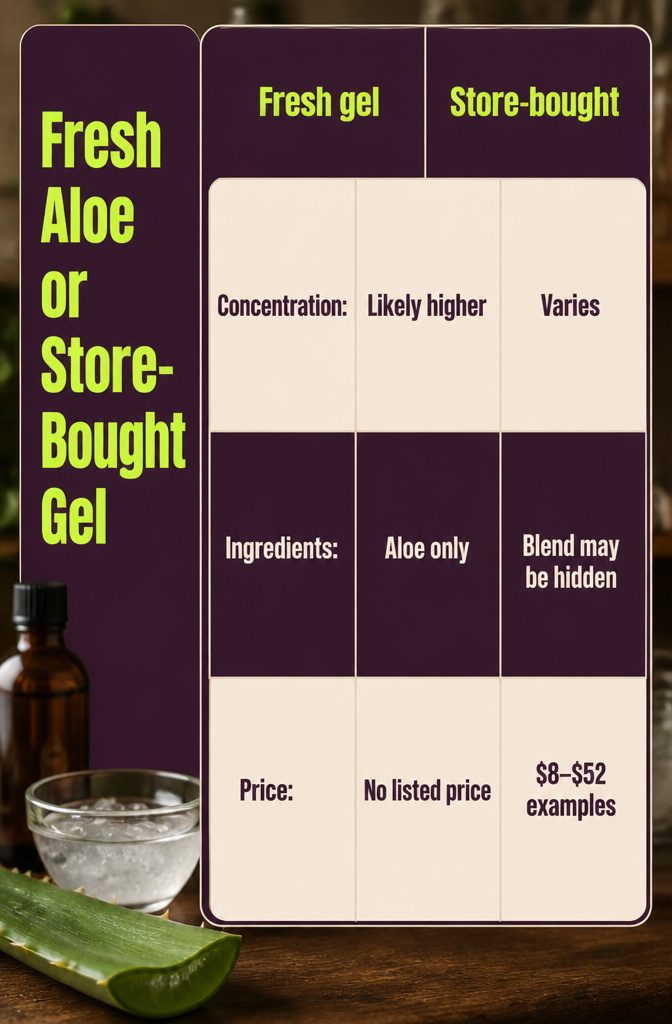
Fresh gel from the plant is likely more concentrated than anything in a bottle, and nothing else is in it. Infused products are formulated differently from brand to brand, and the blend often stays undisclosed.
The choice comes down to purity versus convenience:
| Fresh gel | Store-bought | |
|---|---|---|
| Concentration | Likely higher | Varies |
| Ingredients | Aloe only | Blend may be hidden |
| Price | n/a | Garnier Fructis leave-in $8 Target, $9 Walmart; SheaMoisture masque under $15 for 4 ounces; WEN, Verb, Carol’s Daughter picks $20–$52 |
For plain aloe with no additives, fresh gel wins. For detangling, heat protection and shine in one step, the Garnier cream is the easier buy, and the SheaMoisture masque suits a pre-shampoo treatment.
Matching Aloe to Hair Type
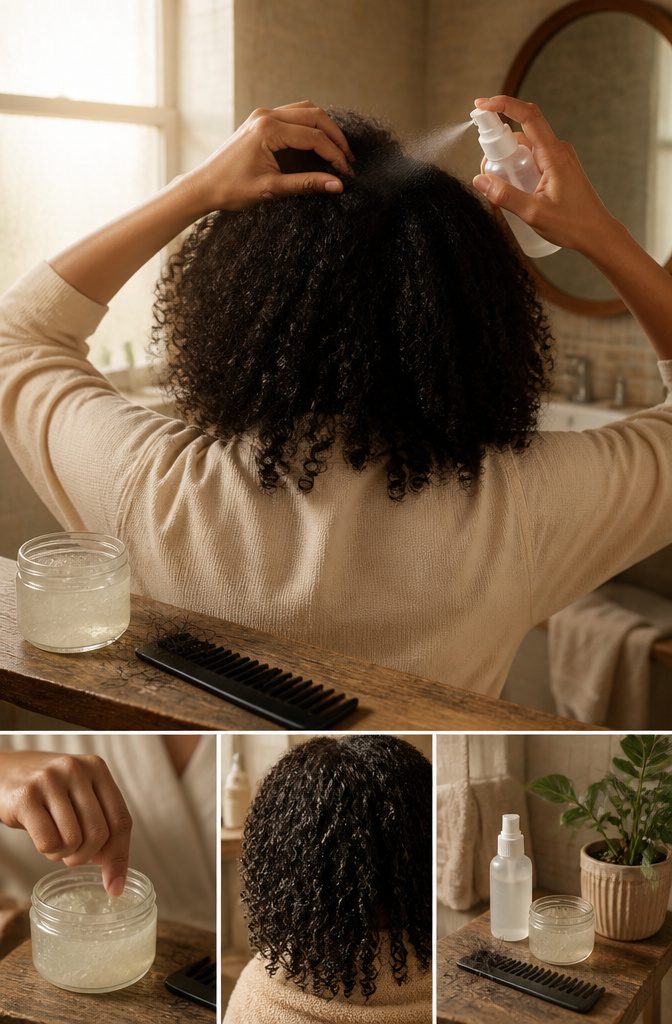
Oily hair gets the clearest win.
Aloe contains enzymes, lipases among them, that break down sebum and product residue without stripping the strands, so fine or greasy hair does best with a scalp application. Dry, brittle hair benefits most from the hydration and added elasticity.
For textured hair from 3A through 4C, I’d choose a gel with a pH around 4.5–5.5, the range tied to smoother cuticles and better moisture retention. Some formulas suit coarse or curly hair better than others, so check the label.
With braids, locs, twists, wigs and sew-ins, skip the lengths and go to the scalp with a spray or direct application. Edge control works best on non-oily hair, so put the gel on first and the oil afterward.
Prep and Patch Testing
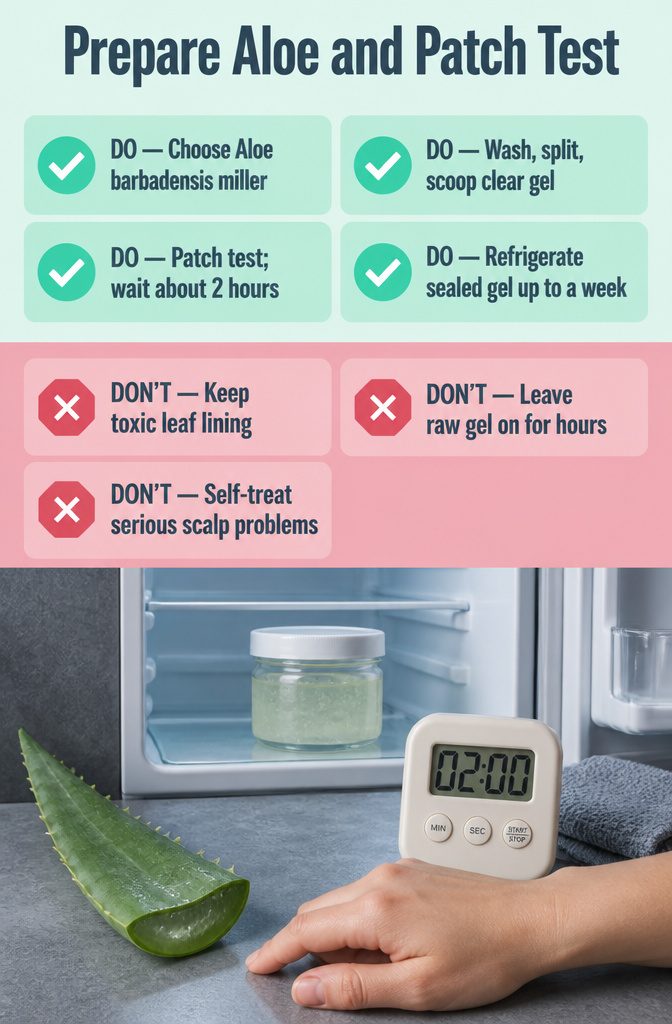
Raw aloe needs a little prep before it touches your scalp:
- Pick Aloe barbadensis miller when you have a choice.
- Wash the leaf, cut it lengthwise, and scoop out the clear inner gel. Throw away the leaf lining, which has toxic effects.
- Dab a small amount on the back of your hand and wait about 2 hours. Redness or irritation means aloe isn’t for your hair.
- Keep preservative-free gel in a sealed container in the refrigerator for up to a week.
- Rinse raw gel out after a few minutes up to a few hours. Left in, it can form a film that feels crunchy on fine, dry hair.
- Take a serious scalp problem to a professional rather than treating it with homemade gel.
Moisture and Conditioning
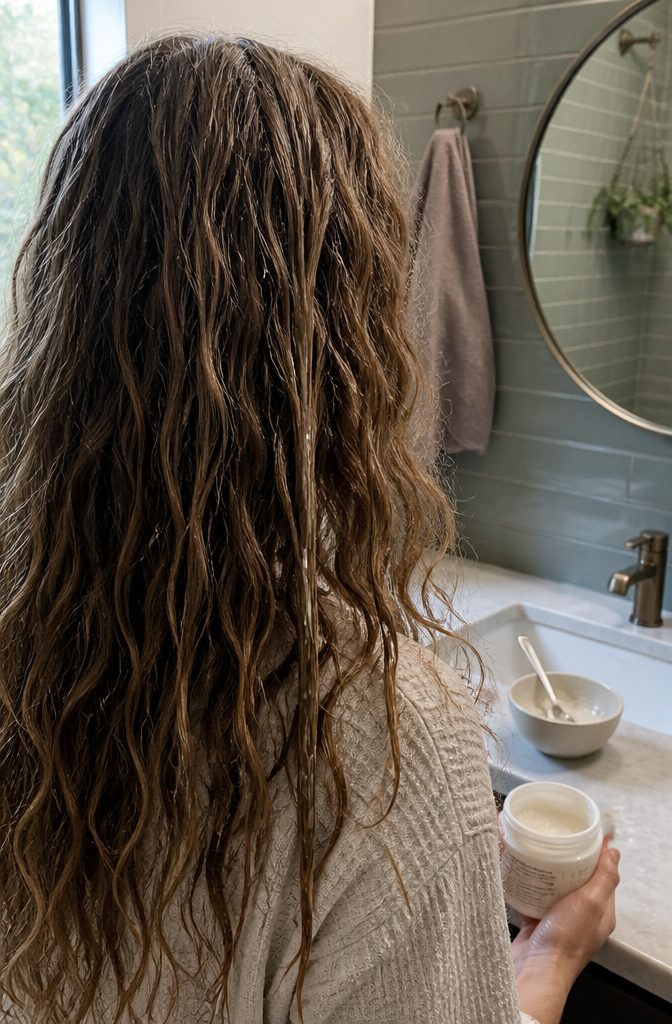
Aloe’s reputation as a conditioner rests on its polysaccharides, which form a light film on each strand. That film binds water and gives a little hold, so hair feels softer, dries out less and is easier to manage.
Dry hair gains the most. The same slip makes aloe handy for detangling, and smoother strands may break less, though I’d call that a likely perk rather than a proven one.
The simplest use is stirring a spoonful into the conditioner you already own for extra moisture. As a leave-in, I’d go lighter.
Aloe lacks the cationic moisturizers most conditioners rely on, so much of it rinses away. On fine, dry hair, the film can turn stiff and crunchy.
Scalp Comfort and Dandruff
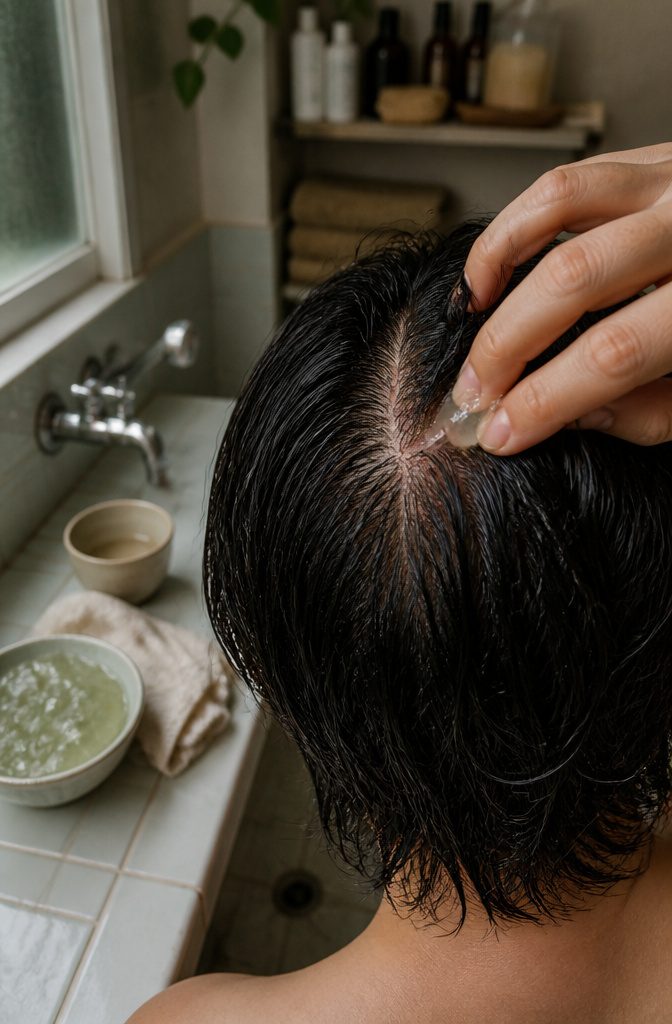
Aloe is anti-inflammatory, antimicrobial and cooling, and it hydrates, so it can calm itching, flaking and redness when dandruff comes from a dry scalp. Oily scalps and dry, brittle hair tend to get the most from it.
Results are mild and slow, though. A 2014 study found only a small improvement in redness, and the salicylic acid in aloe is too dilute to work as a treatment.
Aloe alone will not clear more severe dandruff or seborrheic dermatitis.
With thick, persistent scales, I’d see a dermatologist and keep aloe as a soothing extra. Rinse it out diligently, since it can feel heavy, especially on thin hair.
Aloe and Hair Growth
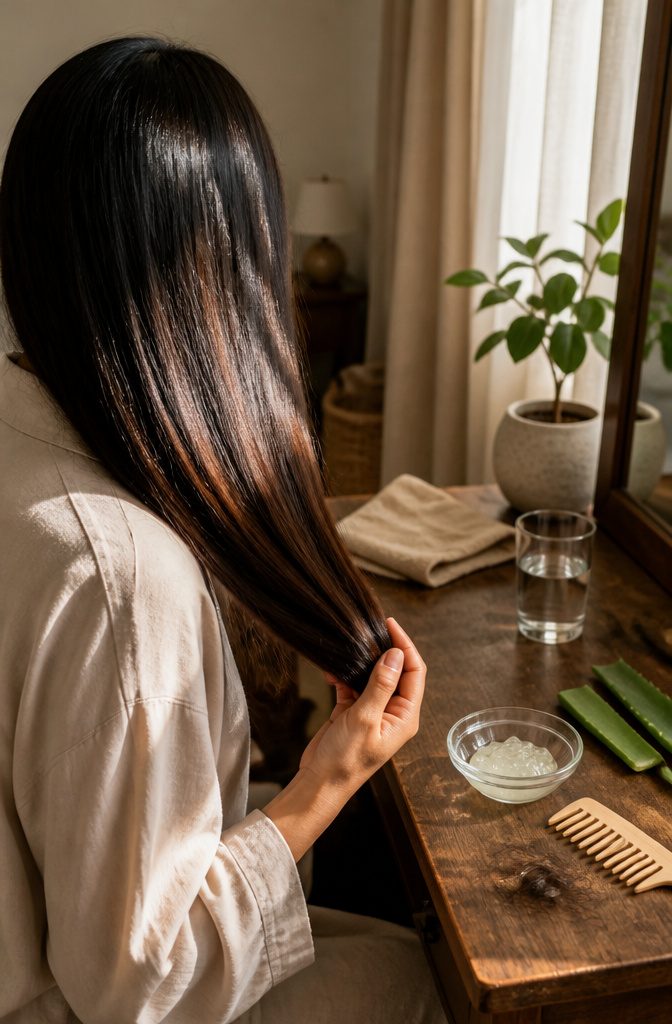
Aloe’s best case is length retention, not faster growth.
It adds moisture and elasticity, which cuts brittleness, so fewer strands snap before they get long. Hair can even feel longer simply because less of it is breaking off.
The growth claims don’t hold up.
A mouse study saw slightly faster regrowth from aloenin, but it used a concentrated Aloe arborescens extract, and results in mice don’t establish anything for human heads. Claims that aloe raises the rate or quality of growth remain unsubstantiated.
I’d use it to keep the hair you already grow, and I wouldn’t expect it to add any.
How to Apply Aloe
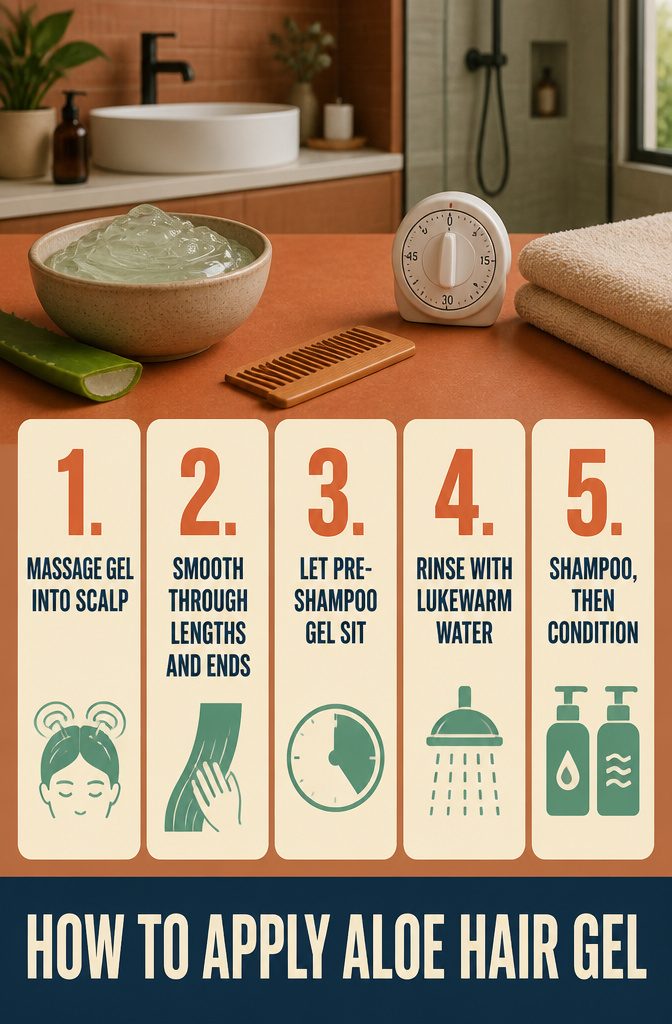
- Start at the scalp. Work the gel in with your fingertips in small circles, or use a scalp massager to lift buildup.
- Smooth what remains through the lengths and ends, detangling gently as you go.
- Set a timer. Gel used before shampooing stays 20–30 minutes, while fresh gel scooped from the leaf can sit 30–60 minutes.
- Rinse with lukewarm water, then shampoo and condition. I rinse plain gel out; only products made as leave-ins are meant to stay.
- Schedules exist only as isolated routines, not rules for your hair type: a daily spray (1/2 cup gel, 1/2 cup water), a weekly mask (2 tablespoons each of gel and coconut oil, 10–15 minutes), and scalp application 2–4 times a week.
Which Hair Types Do Best
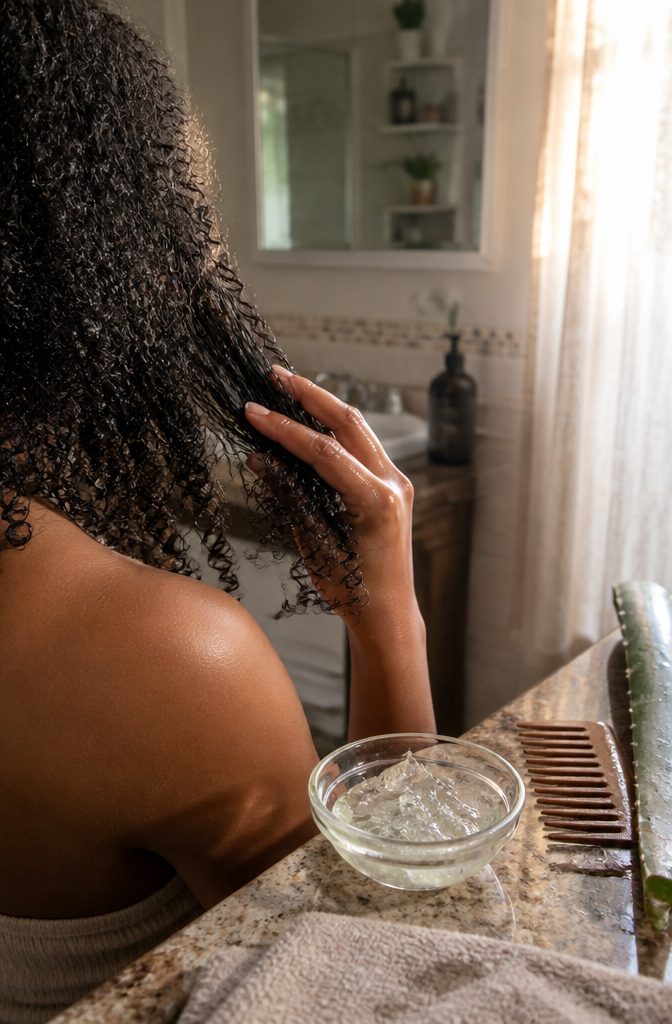
Dry hair gets the most from aloe because of its hydrating properties, and brittle, damaged strands respond well too. Curly, coily and natural textures do best with undiluted gel, and oily scalps tolerate it fine.
Fine hair is the exception. Pure gel can leave a film or a crunchy feel, especially on very fine or dry strands, so I’d choose a formulated product there, or blend a small amount into a conditioner you already like.
Use pure gel straight only on curly, coily or thick hair, and rinse well, because leftover residue turns hair stiff.
Check for an allergy first. After that, amounts and combinations are trial and error.
Frequently Asked Questions
Is aloe vera good for hair?
Yes, for moisture, softness and soothing an irritated scalp. Expect hair that feels smoother and combs more easily, not a dramatic change.
The growth claims are unproven: the one mouse study used a concentrated Aloe arborescens extract, and mouse results don’t establish anything for people. Aloe’s best case is length retention, because less breakage means more length survives.
Which aloe vera plant is best for hair?
Choose Aloe barbadensis miller when you have a choice.
Use only the clear gel inside the leaf. The leaf lining has toxic effects and should be discarded.
Is fresh aloe vera gel better than aloe-infused hair products?
Fresh gel is likely more concentrated, and it contains aloe and nothing else.
Store-bought products vary in how much aloe they hold, and the full blend often isn’t disclosed. A bottled product can still be the easier choice when you want detangling, heat protection and shine in one step.
What are the disadvantages of using aloe vera gel on hair?
The main drawbacks are a stiff, crunchy film on fine or dry hair and a heavy feel on thin hair when it isn’t rinsed out well.
Some people react to it, so dab a little on the back of your hand and wait about 2 hours before using it on your scalp.
Aloe also won’t clear severe dandruff or seborrheic dermatitis, and it won’t make hair grow faster.
How do you use an aloe vera plant on your hair?
Wash a leaf, cut it lengthwise, scoop out the clear gel and discard the lining. After a patch test, massage the gel into your scalp with your fingertips, then smooth the rest through your lengths.
Leave it on 20–30 minutes before shampooing (fresh gel can sit 30–60 minutes), then rinse with lukewarm water. Gel without preservatives keeps in a sealed container in the refrigerator for up to a week.
Can I use aloe vera gel on my hair every day without washing it out?
Not plain gel. Rinse it out after a few minutes up to a few hours, because left in it can form a film that feels crunchy, especially on fine, dry hair.
Only products made as leave-ins are meant to stay in. If you want a daily routine, use the spray: ½ cup gel mixed with ½ cup water.