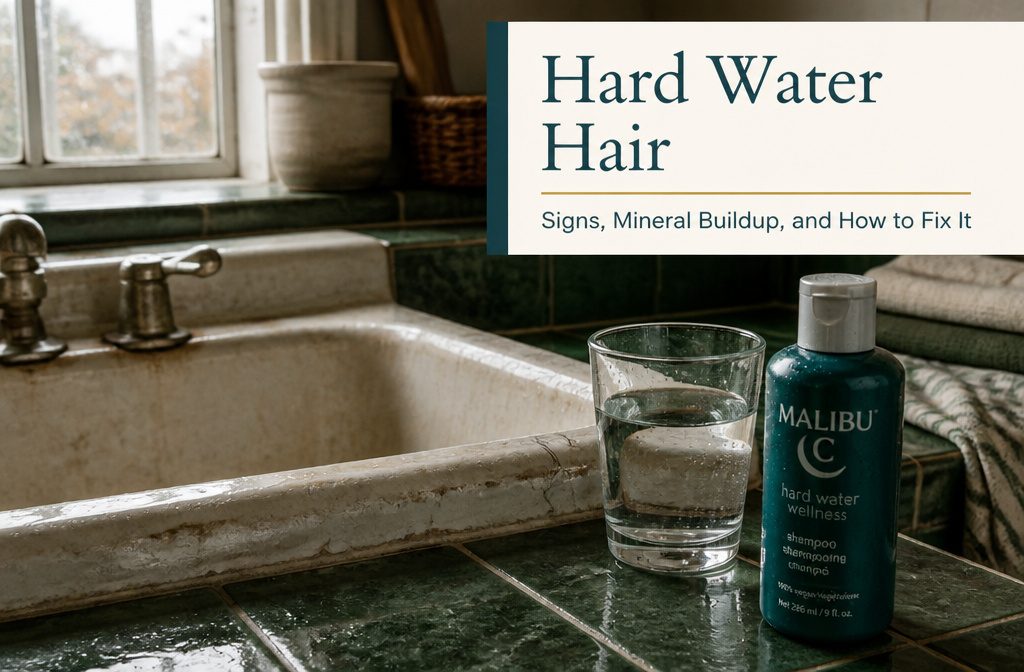
Hard water hair is hair coated with calcium and magnesium left behind by water above 3.5 grains per gallon (over 120 mg/L), leaving strands rough, dull, and heavy even right after shampooing.
No single sign proves it, since product buildup and damage look the same. A chelating shampoo like Malibu C, about $15–$18, removes it.
What Hard Water Is
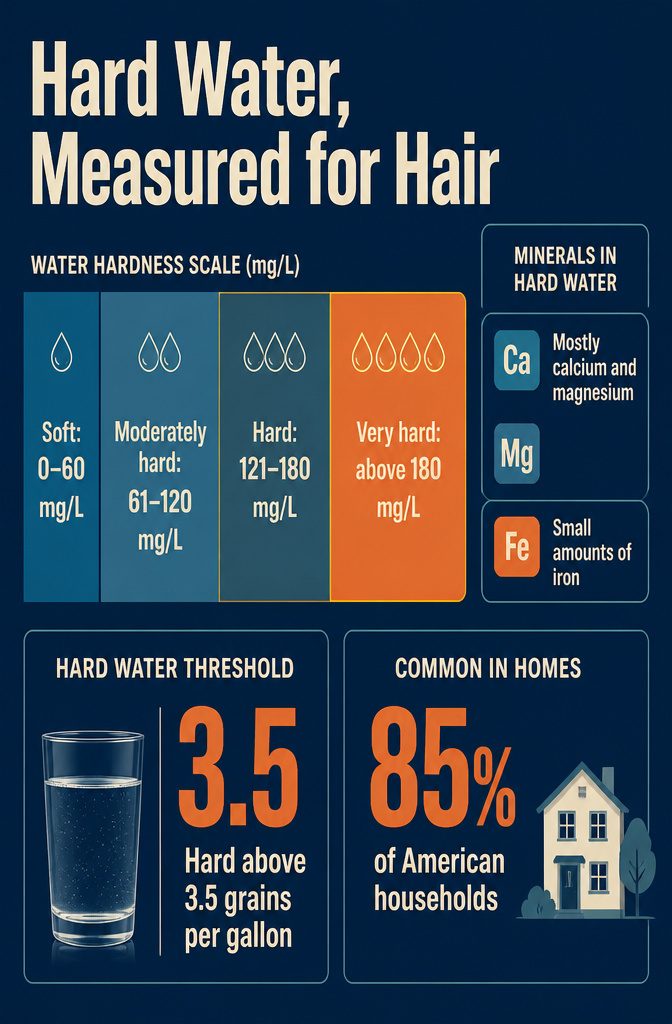
Hard water carries more dissolved minerals than average, mostly calcium and magnesium, picked up as it moves through limestone, chalk and other rock underground.
It can also hold small amounts of metals such as iron. Water counts as hard once it registers above 3.5 grains per gallon.
In milligrams per liter, the bands run soft at 0–60, moderately hard at 61–120, hard at 121–180 and very hard above 180. Those minerals aren’t harmful on their own; they leave buildup when the water washes your hair, skin or clothes.
About 85% of American households reportedly deal with hard water, so if your hair feels off, it’s a common place to look first.
How Minerals Affect Hair
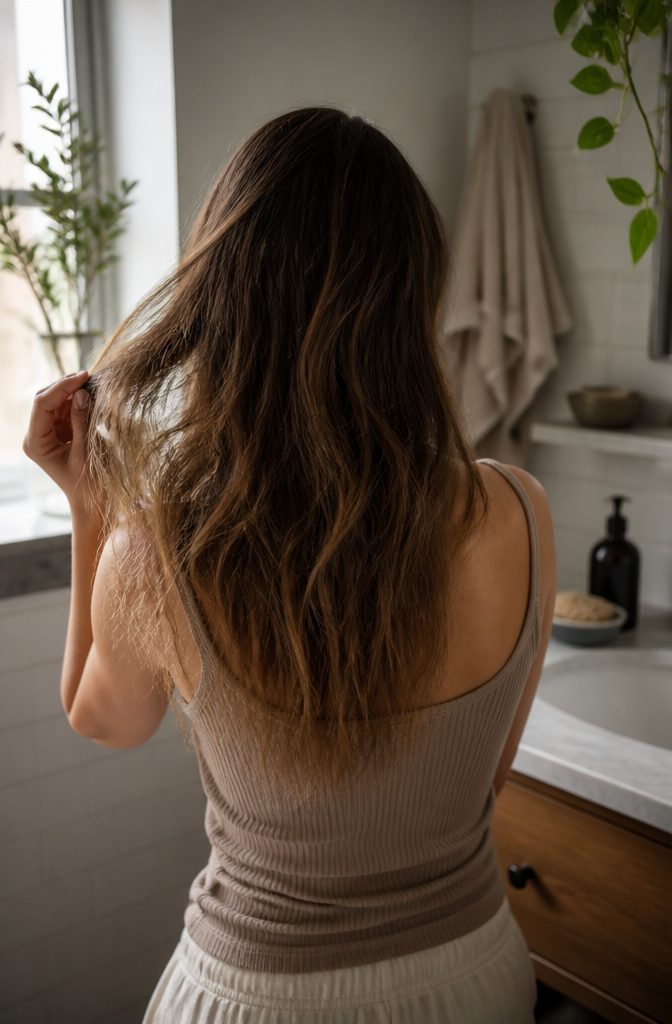
Calcium and magnesium cling to the hair surface, and every wash adds another thin layer. After a few weeks the film leaves strands rough, dull, coated and heavy, even right after shampooing.
It also blocks moisture from getting in, so hair can stay dry no matter what conditioner you use, and masks and treatments work less well through it.
How far this reaches the scalp and follicles is still argued.
In a 2016 study of 76 men, hair samples treated with hard water every other day were about 7% weaker after three months. That fits strands that turn brittle and snap under a brush or a hot tool.
Signs of Hard Water Hair
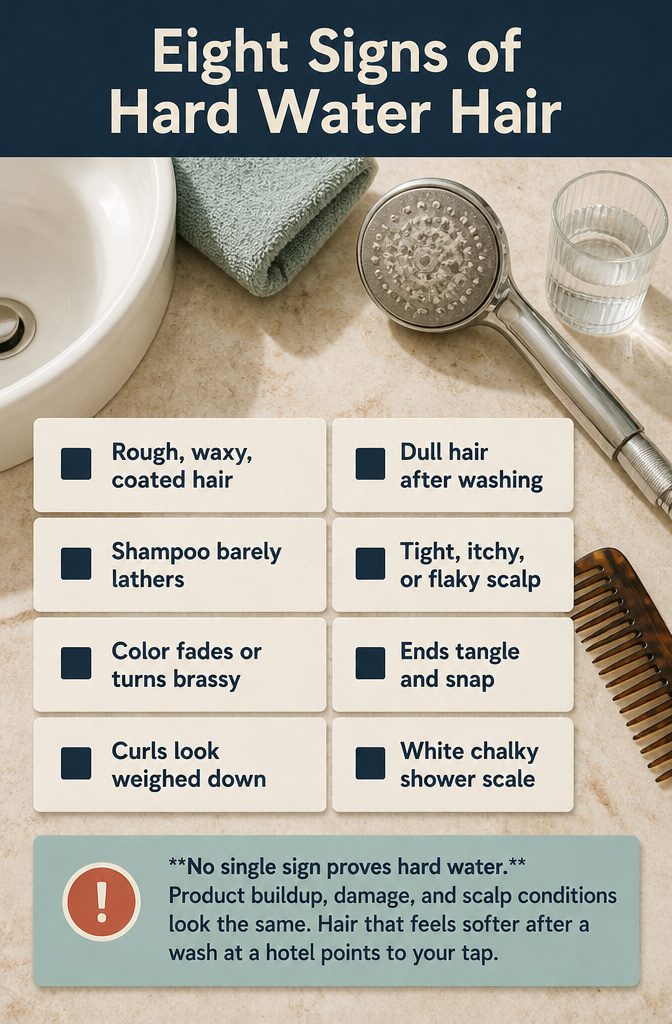
Hard water changes hair slowly, so I look for a pattern rather than one clue:
- Hair feels rough, waxy, or coated after washing and looks dull.
- Shampoo barely lathers, or hair still feels heavy after rinsing.
- The scalp feels tight, itchy, or flaky.
- Color fades or turns brassy faster than expected.
- Ends tangle and snap; curls look weighed down.
- White, chalky scale builds up on the showerhead and faucets.
No single sign proves hard water.
Product buildup, damage, and scalp conditions look the same. Hair that feels softer after a wash at a hotel points to your tap.
How to Check Your Water
Start with the free option: your utility’s annual water quality report, often called a Consumer Confidence Report, lists hardness. Read it against the scale: 0–60 mg/L is soft, 61–120 moderately hard, 121–180 hard, and above 180 mg/L is very hard.
If your report uses grains, hard begins above 3.5 gpg. A home test strip gives a hardness reading in under a minute, and I’d grab one if the report feels vague.
Washing your hair at a hotel or a friend’s place is a good cross-check, since a clear difference in feel points to your tap. Chalky scale on the showerhead is another clue, but buildup from products can mimic the symptoms.
Remove Existing Buildup
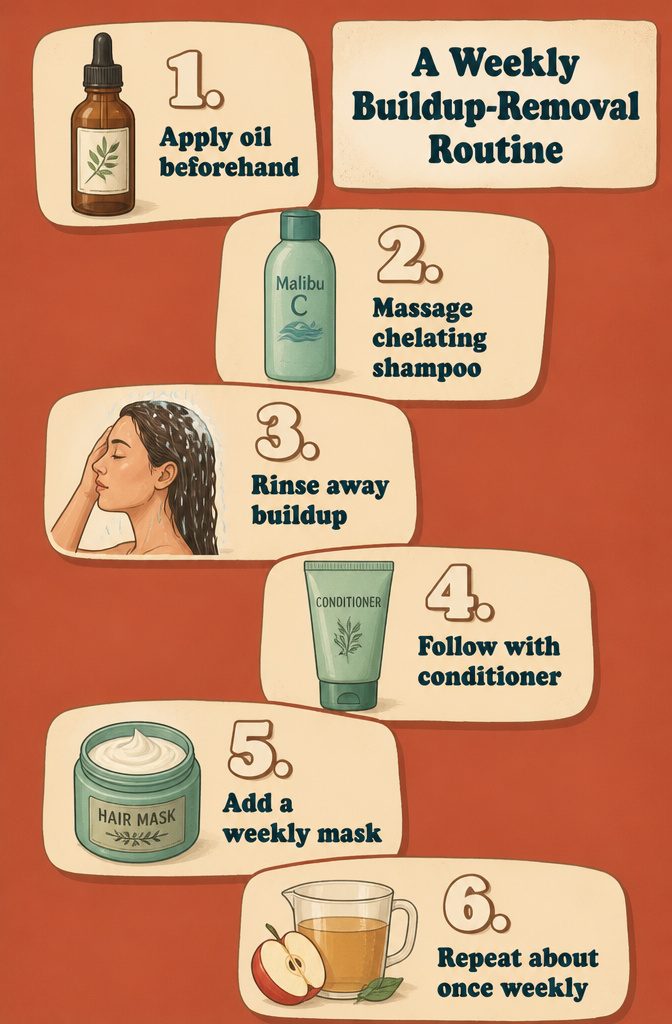
Chelating shampoos use EDTA or citric acid to bind calcium and magnesium so they rinse away. Malibu C Hard Water Wellness Shampoo runs $15–$18, and Oribe The Cleanse is $49; I’d pick Malibu C on price.
Use one about once a week, twice in very hard water, every two weeks for a dry or sensitive scalp, or twice a month for some hair types.
Rub oil in at least 10 minutes beforehand, then massage the lather for 1–2 minutes. Follow with conditioner, and add a mask weekly.
A rinse of 1 tablespoon apple cider vinegar per cup of water works weekly; 1 part vinegar to 6 parts water sits for 5 minutes. Expect results within a few washes.
Shower Filters and Softeners
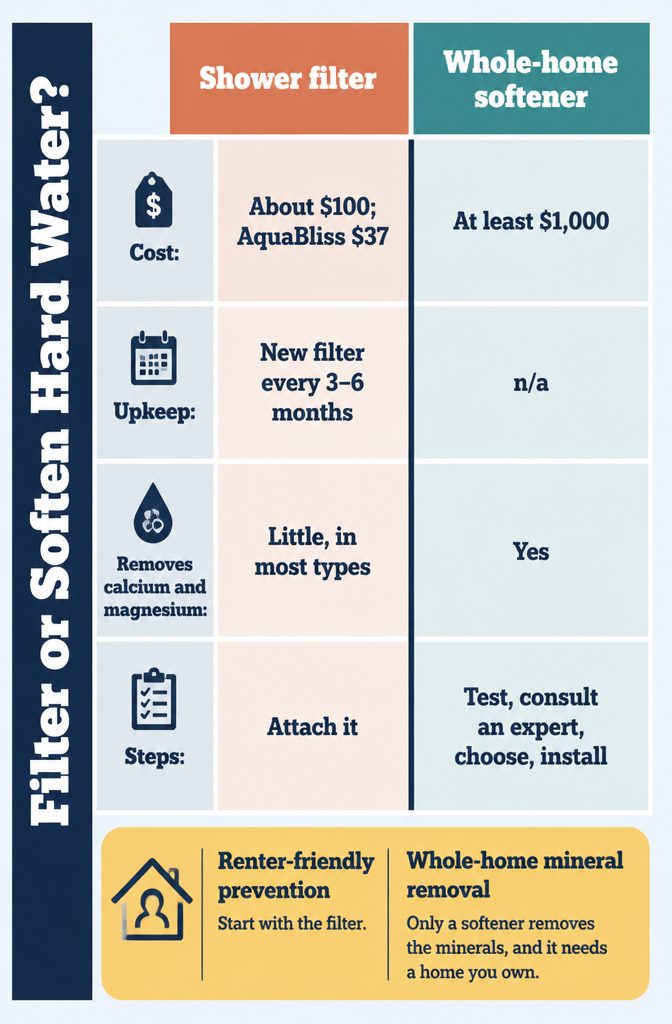
Most shower filters mainly reduce chlorine and some metals, while a softener removes the calcium and magnesium itself:
| Shower filter | Whole-home softener | |
|---|---|---|
| Cost | About $100; AquaBliss $37 | At least $1,000 |
| Upkeep | New filter every 3–6 months | n/a |
| Removes calcium and magnesium | Little, in most types | Yes |
| Steps | Attach it | Test, consult an expert, choose, install |
AquaBliss claims 75% filtration for about six months, and the pitch is prevention:
If you want to stop hard water damage before it has a chance to start, try installing a filter in your shower head.
— SELF
Renters should start with the filter; only a softener removes the minerals, and it needs a home you own.
Hair Loss Versus Breakage
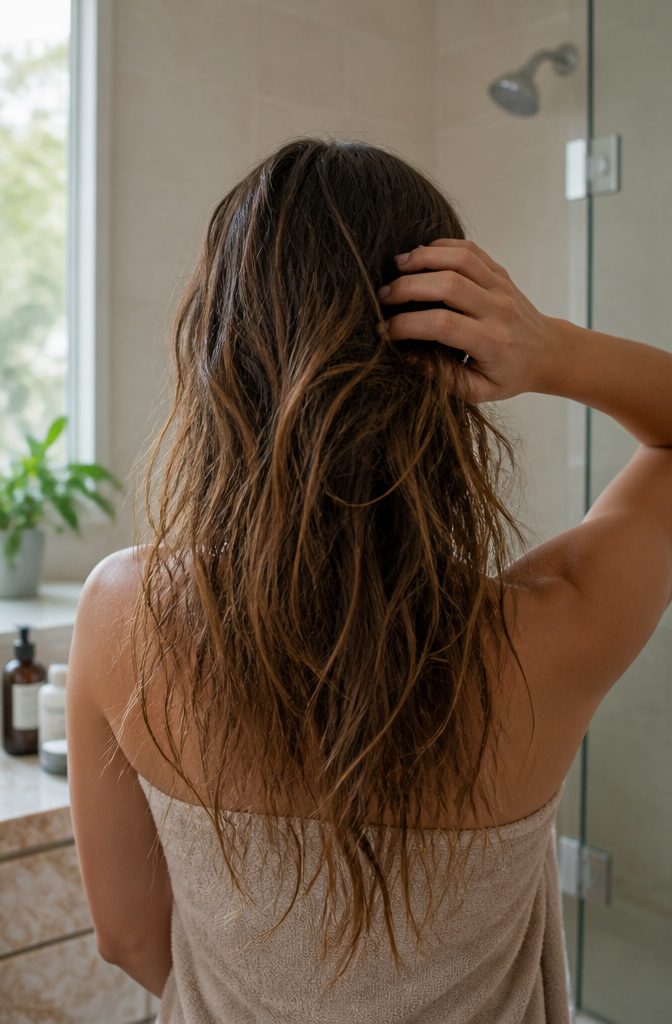
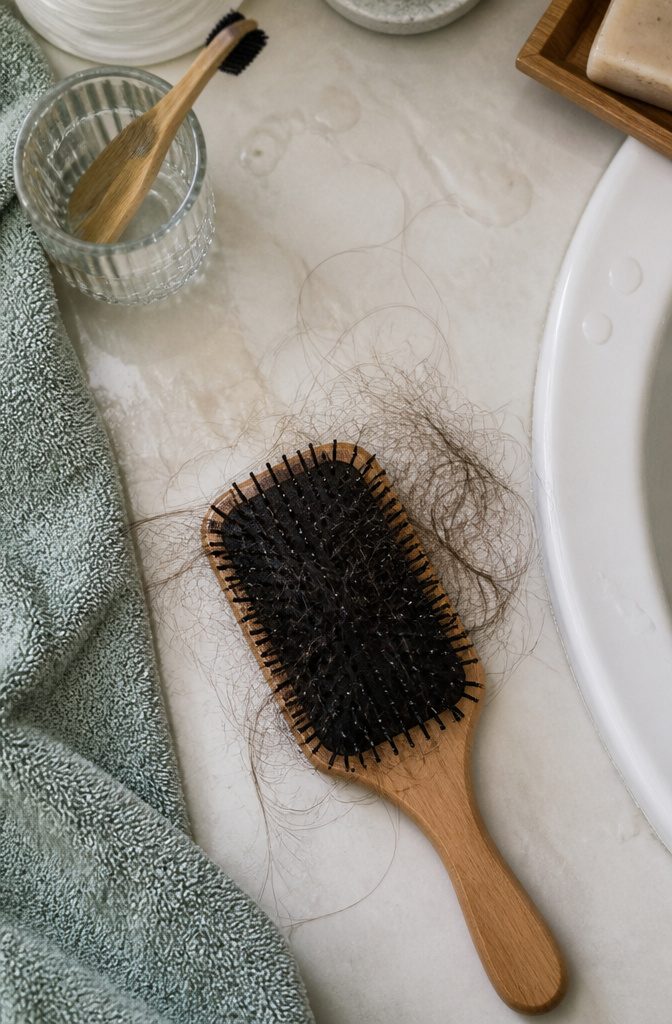
When hair comes out in the brush, the question is whether strands are snapping along the length or coming out at the root. Breakage happens when the shaft snaps, often leaving shorter pieces or uneven ends.
Shedding happens when the whole hair pulls from the follicle. Calcium and magnesium buildup can weaken strands and increase breakage, which makes hair look thinner without meaning the follicle itself is affected.
Whether hard water can cause hair loss at the follicle itself is still unsettled, and the evidence for breakage along the strand is much stronger.
One analysis says no study has shown that hard water causes hair to shed from the root, while others describe hair loss or thinning as a possible extreme effect when buildup becomes severe.
The head has over one million follicles, and buildup can be removed and dryness improved, but strands that have already broken will not repair.
Soft Water Effects
Soft water can leave hair flat.
Depending on your products and how much you style, it may feel limp, overly soft, or slightly greasy, and fine hair shows it first. If that sounds like your mornings, I’d lean toward lighter products over rich creams.
Soft doesn’t mean mineral-free, though. Trace calcium and magnesium can still take a toll on hair that’s already dull or damaged, so softer water is not automatically better for every hair type.
If strands look dull or feel rough even with a weekly clarifying shampoo, a glossing treatment is worth adding. It won’t block buildup, but the right formula brings back softness and shine.
Testing Beyond Hardness
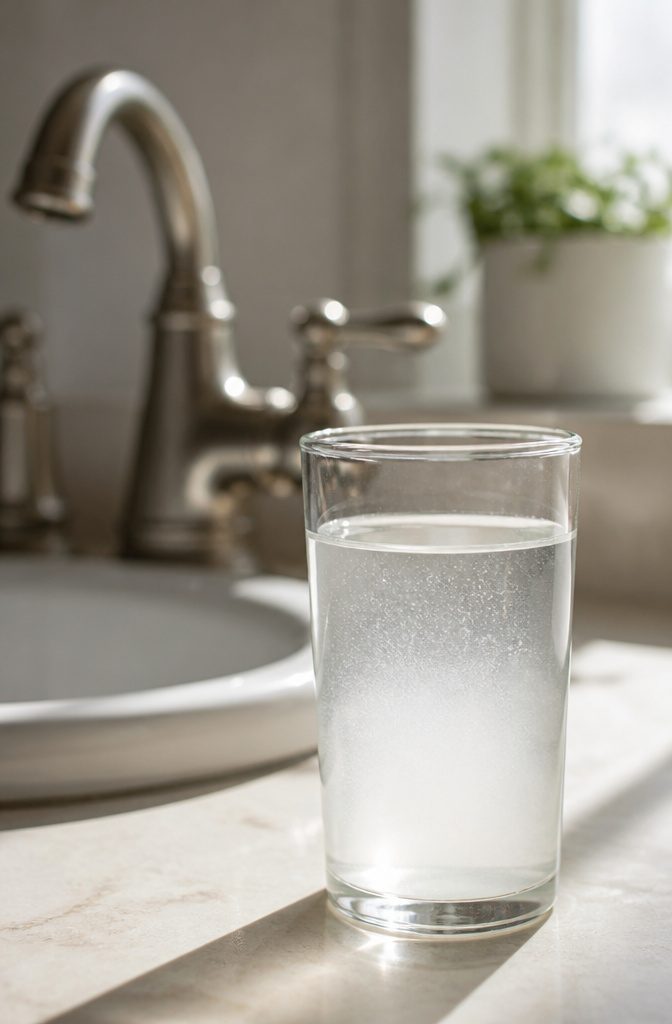
A simple hardness strip answers the first question, and a fuller test adds these checks:
- A professional test reports hardness, chlorine, total dissolved solids (TDS) and iron in one pass.
- The Malibu C kit falls in between: one hardness/softness strip, one chlorine indicator vial, and a guide for reading the results.
- At-home kits are less thorough than a lab, and you collect the sample and interpret the result yourself.
- If hardness explains your hair, a strip is enough to choose a clarifying routine.
- When hair stays dull and the hardness reading comes back low, chlorine is the next number I’d check.
- Before spending at least $1,000 on a whole-home softener, I’d want all four readings.
Frequently Asked Questions
Does hard water damage hair?
Yes. Calcium and magnesium build up on the strand with every wash, leaving hair rough, dull, dry and more likely to snap.
In a 2016 study of 76 men, hair treated with hard water every other day was about 7% weaker after 3 months. The damage is gradual, so it often gets blamed on products or styling first.
How do I know if I have hard water?
Check your utility’s annual water quality report (the Consumer Confidence Report) or use a home test strip, which reads in under a minute.
Water above 3.5 grains per gallon, or 121 mg/L and up, counts as hard. Poor shampoo lather and chalky white scale on the showerhead and faucets are common clues.
Can hard water cause hair loss?
Mostly it causes breakage, not shedding from the root.
Mineral buildup weakens strands so they snap, which can make hair look thinner. If you have persistent shedding, a widening part or bare patches, see a healthcare professional rather than assuming it’s the water.
Is hard water hair damage reversible?
Mostly.
Buildup can be removed with a chelating shampoo, and dryness improves with regular conditioning, often within a few washes. Strands that have already broken won’t repair, but new growth isn’t affected.
What kind of shampoo helps with hard water?
A chelating shampoo made with EDTA or citric acid, which binds calcium and magnesium so they rinse out.
Malibu C Hard Water Wellness Shampoo runs $15–$18, and Oribe The Cleanse is $49. Follow either one with conditioner, since these formulas can be drying.
How often should I use a clarifying shampoo for hard water?
About once a week works for most people, and up to twice a week if your water is very hard (above 180 mg/L).
Go down to every 2 weeks if your scalp is dry or sensitive. Rubbing oil in at least 10 minutes beforehand can make the wash gentler.
Is hard water better for hair?
No. Hard water leaves a mineral film that makes hair rough, coated and dry.
Soft water isn’t automatically better either: it can leave fine hair limp, flat or slightly greasy, and trace minerals can still affect hair that’s already damaged. Pick your routine based on how your hair actually feels.