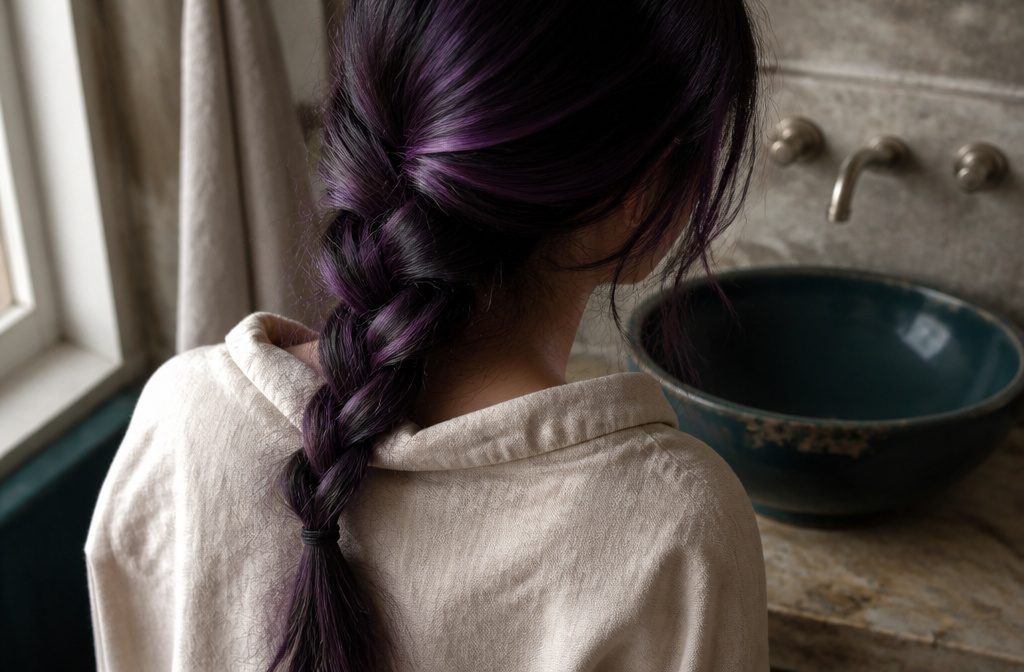
Aubergine hair is a deep, cool-toned purple, much more subdued than most purples, and it can be placed as balayage, highlights, dipped ends or an all-over color.
Any shade bright enough to show on black hair usually needs bleach, which always damages hair, so a deeper eggplant may be the smarter first pick.
Eggplant Balayage
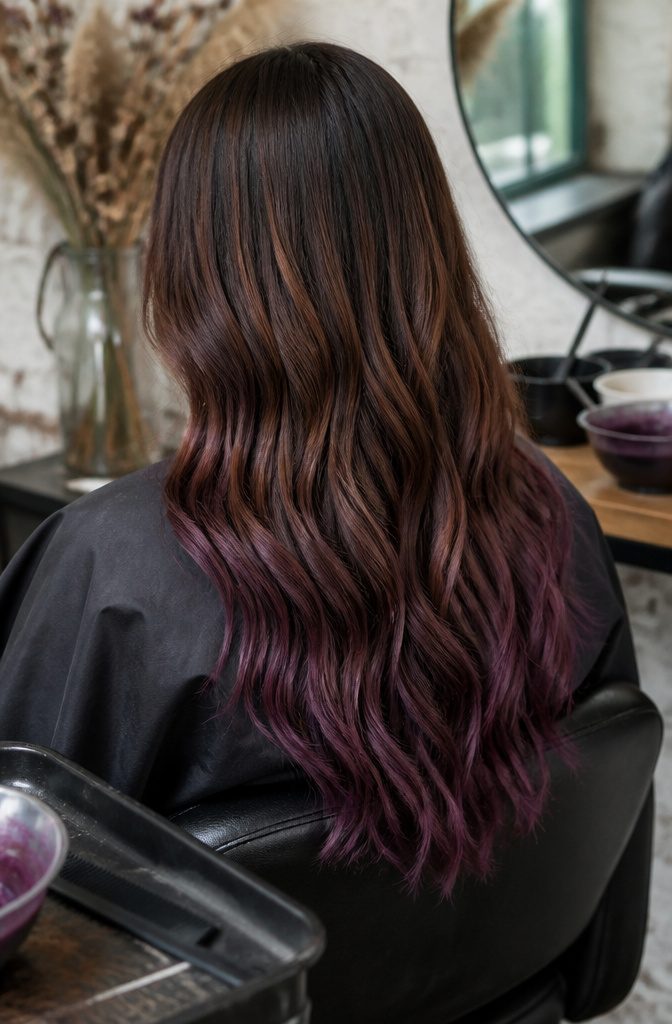
Eggplant blends well with brunette strands, which is why balayage is the version I’d steer most brunettes toward. The colorist hand-paints the purple from the mid-lengths to the ends and leaves your natural root color alone.
Brown gives the eggplant a dark base to melt into, so the shift from roots to ends reads as depth rather than a stripe.
Untouched roots mean no regrowth line to cover, and that is where the savings come from.
A full-head color shows new growth at the part, and you end up booking appointments to hide it. With balayage, the roots just keep growing in as your own shade, so you can stretch the time between salon visits.
Eggplant With Pops of Blue
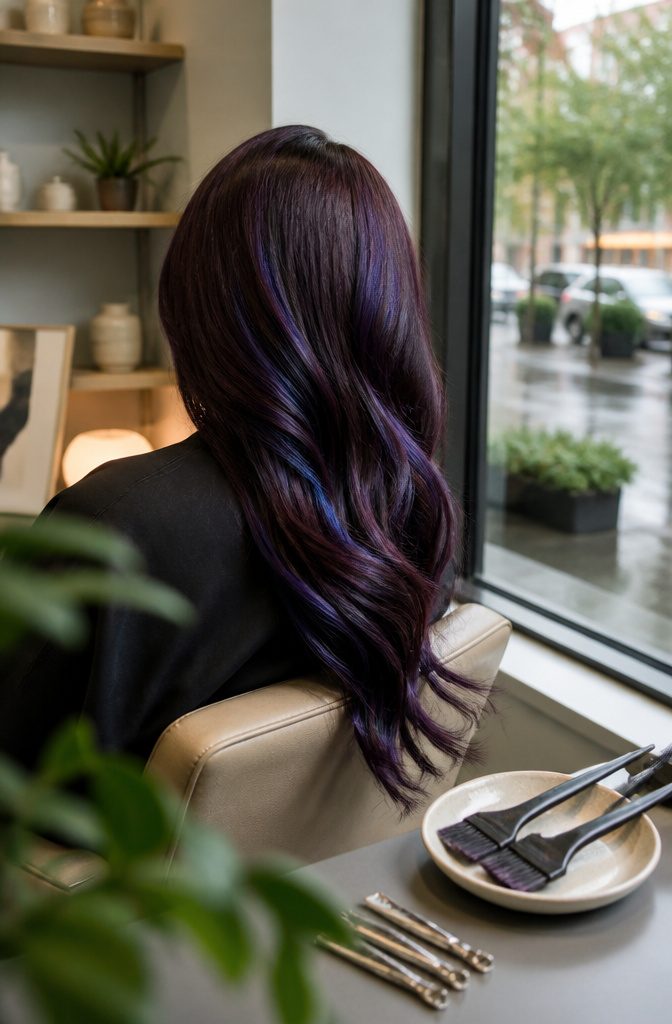
Eggplant already leans cool, and blue pushes it further in that direction. Woven through the base as highlights, the blue pieces make the surrounding purple read cooler and break up what would otherwise be one flat, solid shade.
I’d keep the blue to a few well-placed streaks rather than taking it all over. A handful of pieces adds a pop of color and dimension without going overboard, and the eggplant stays the main event.
Push the blue past accent level and the result stops looking like aubergine color hair and starts looking like a blue hair color with some purple in it.
This is also the low-commitment way in. You get the cool-toned finish without coloring your whole head.
Eggplant Highlights
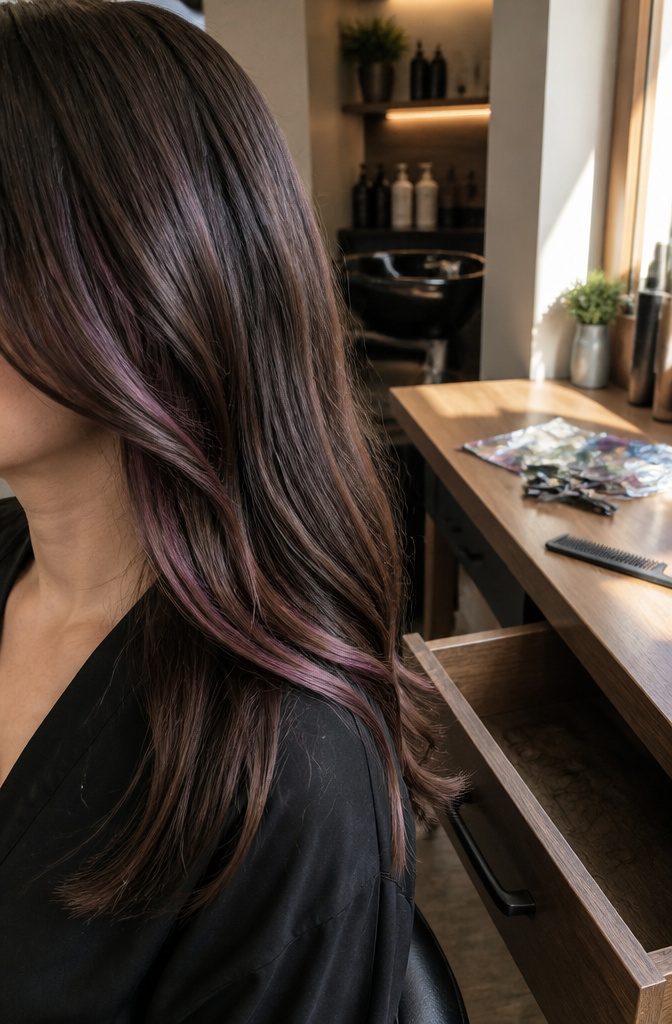
A few well-placed streaks are the lowest-commitment way to try aubergine color hair.
The rest of your base color stays put, so the eggplant adds a pop of color and dimension without taking over. If you’re unsure the shade suits you, start here.
Placement separates this from balayage. Balayage is hand-painted from the mid-lengths to the ends with the roots untouched, so the color gathers toward the bottom.
Highlights are individual streaks, so you decide where the eggplant shows: around the face, along the part, or under the top layer. I’d pick highlights for a small accent and balayage for a softer gradient.
Eggplant on Black Hair
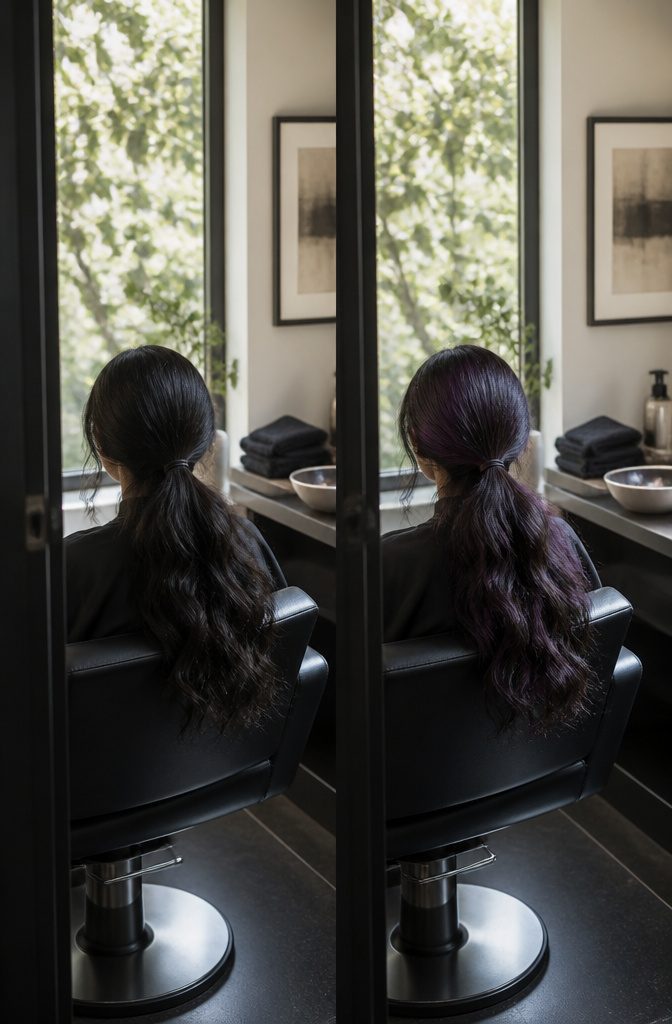
Eggplant on black hair is a low-contrast color, and that is the appeal. Indoors or in dim light, the purple nearly disappears and the hair reads as a deep, slightly warm black.
In sun or under a bright bulb, the violet comes forward, strongest along curls, waves and the top of a ponytail where the hair catches light.
How much bleach you need depends on how visible you want the purple. A deep, subtle eggplant tints dark hair and may not need lightening at all.
A brighter shade that shows in everyday light usually does, because purple can’t show up clearly over black pigment. Bleach always damages hair, so I’d pick the darkest eggplant you’d be happy with before deciding to lift.
Eggplant Ends
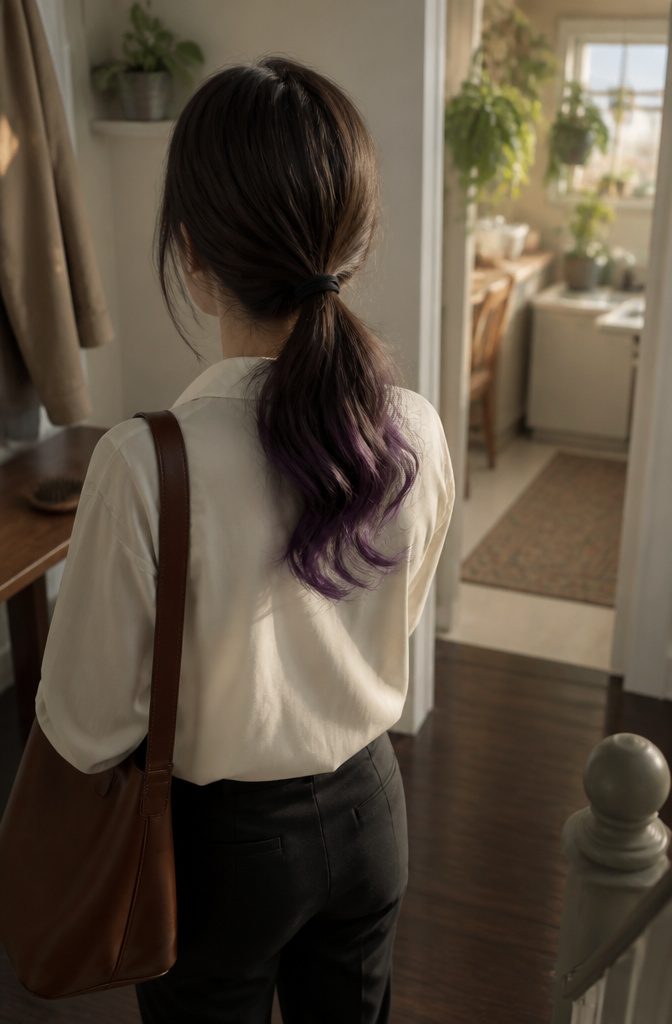
Dip-dyed ends keep eggplant on the lowest stretch of hair and leave your natural color at the roots, so nothing purple sits near the part or around the face.
That placement is why the look passes as work appropriate. In a low bun or ponytail the color tucks out of sight, and worn down it reads as a soft fade rather than a statement at the crown.
For anyone with a client-facing job, I’d pick this over an all-over shade.
The color stays on the ends only, so it can be quiet Monday through Friday and louder on weekends. It also blends well with brunette hair, and with no color at the scalp there’s no regrowth line to touch up.
Eggplant and Wine
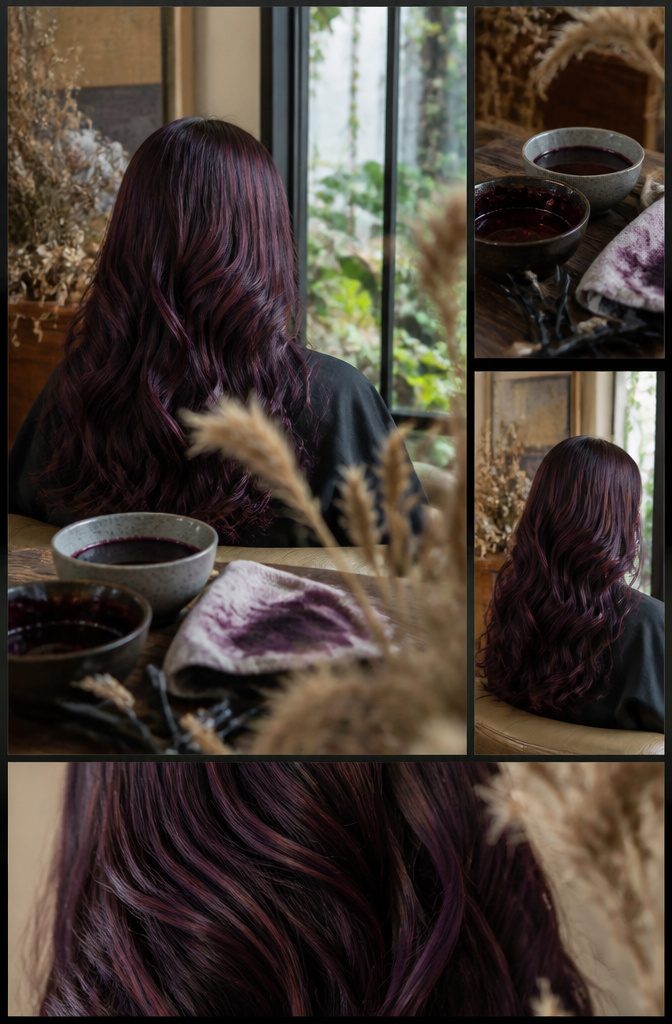
The contrast comes down to temperature, and it is why this pairing works.
Unlike similar warm-toned hair trends like mulled wine and burgundy, eggplant hair color is cool-toned and typically much more subdued.
— Hair.com
That subdued base is a quiet backdrop. Warm wine highlights over a cool eggplant base give the eye something to catch, so the purple reads deeper instead of flat.
Mulled wine leans softer and burgundy leans richer, and I’d pick burgundy if your eggplant is very dark, since a gentler wine can disappear into it.
Keep the wine pieces thin and let eggplant stay the main color. Ask your colorist whether the brightness you want needs bleach, because it always causes some damage.
Bright Eggplant
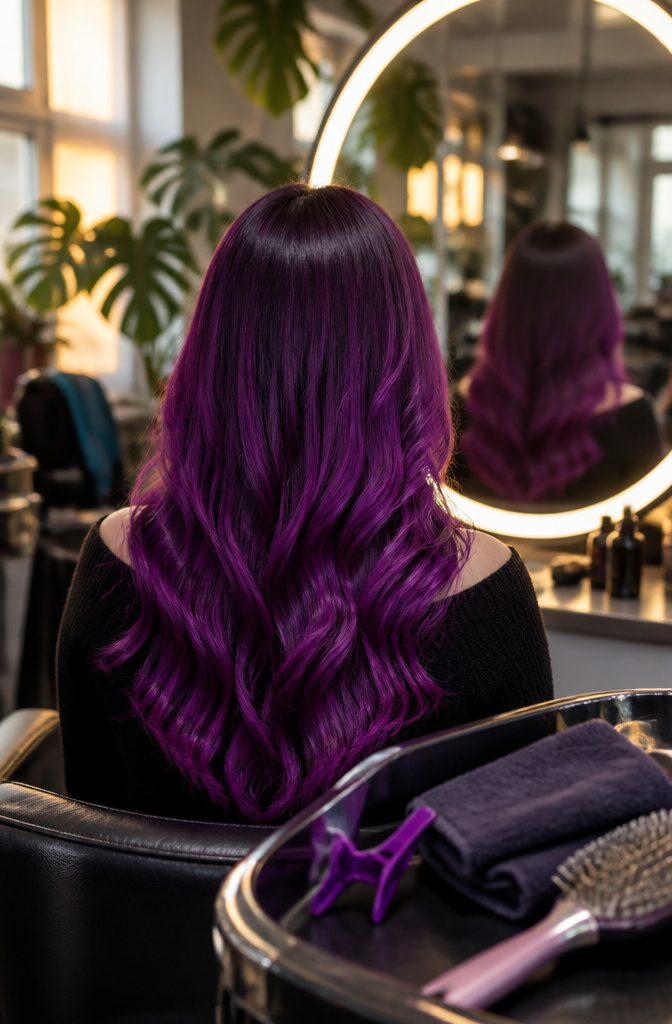
Eggplant doesn’t have to be subtle. Ask your colorist for a brighter take on the shade, and say "brighter" out loud at the consult, because "eggplant" alone covers a wide range.
The cost is calendar time. A louder color means heading back to the salon a few weeks sooner for a touch-up than a softer eggplant would.
I’d choose the bright version only if that extra appointment fits your budget and your schedule. If it doesn’t, a deeper, quieter eggplant is the easier life, and it still reads as unmistakably purple.
What Eggplant Hair Color Is
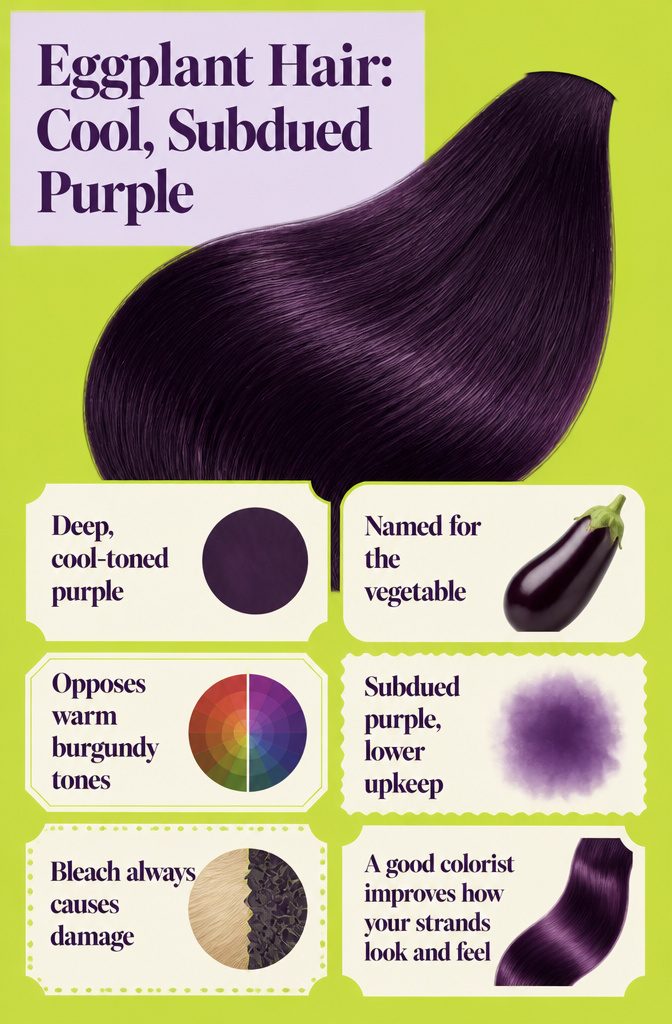
Eggplant is a deep, cool-toned purple, named for the vegetable and its famous emoji.
Warm-toned trends like mulled wine and burgundy sit on the opposite side of the color wheel. Eggplant is also much more subdued than most purples, so it’s my pick for anyone who wants purple without a loud, high-maintenance shade.
Your colorist applies the chosen hue throughout all of your hair. Whether bleach comes into play depends on how bright or deep you want the result.
Bleach always causes damage, so ask before the appointment whether your target shade needs it. A good colorist will improve how your strands look and feel before you leave the salon.
Color Care and Upkeep
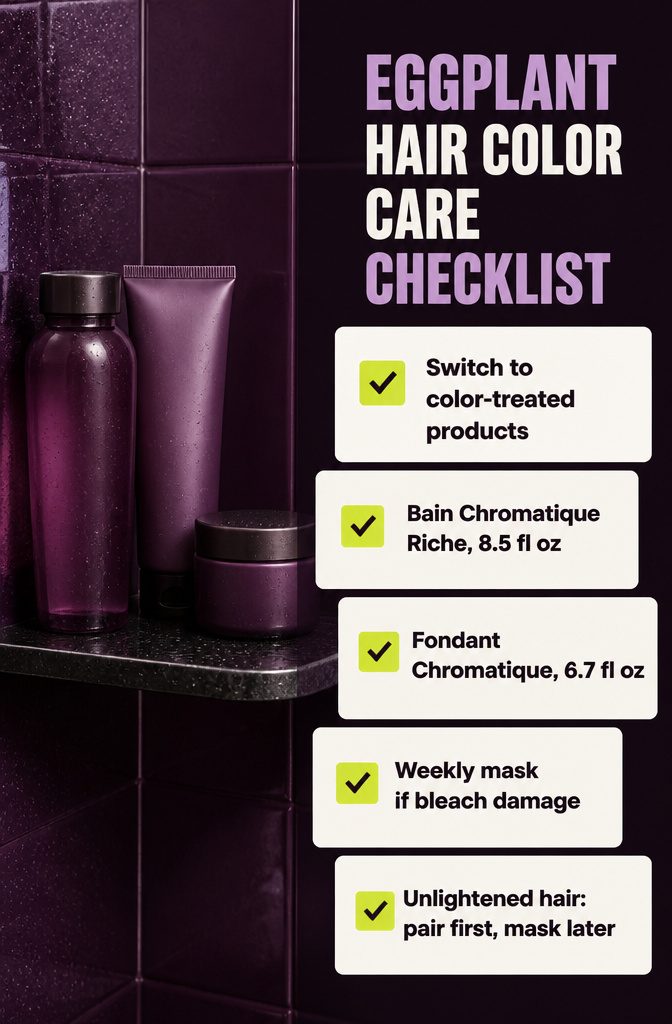
Booking the salon appointment also means changing what happens in your shower:
- Swap your regular products for a color-treated system. I’d go with Kérastase Bain Chromatique Riche Shampoo (8.5 fl oz) and Fondant Chromatique Conditioner (6.7 fl oz), which protect and prolong color.
- Add a weekly mask if bleach has left your strands feeling damaged. Kérastase Masque Chromatique Hair Mask (6.7 fl oz) nourishes deeply while protecting color vibrancy.
- Hair that was never lightened can start with the shampoo and conditioner pair alone and add the mask later if it feels dry.
Frequently Asked Questions
What colors go best with aubergine hair?
Blue and wine tones pair best. A few thin blue streaks make the purple look cooler, and warm wine pieces over a cool eggplant base add depth.
If your base is very dark, burgundy holds up better than a softer wine, which can get lost. Keep the accents small so the aubergine stays the main color.
What hair color is aubergine, and is it purple?
Aubergine is a deep, cool-toned purple, the same shade people call eggplant.
It is more subdued than most purples, which makes it a good fit if you want purple without a bright, high-maintenance color. It sits opposite warm shades like mulled wine and burgundy.