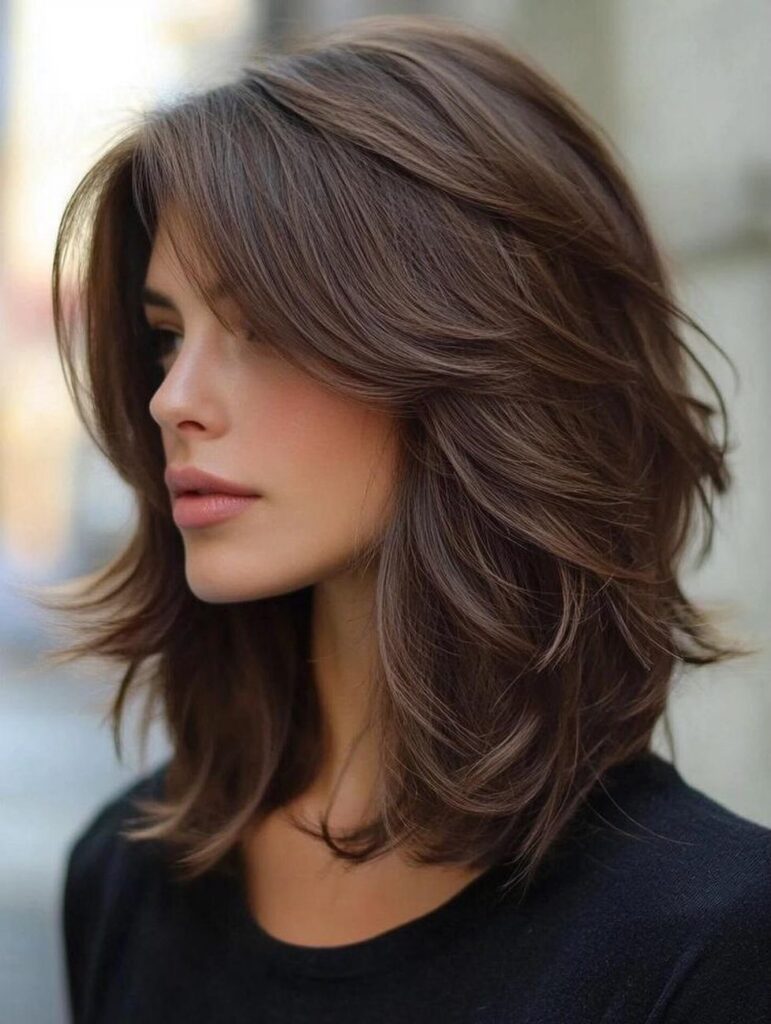
Your natural texture decides which look here is yours: straight hair shows every line of a cut, while hair with some wave lets choppy layers air-dry and still fall well.
The ideas run from shoulder-length choppy layers, a textured blonde bob and long blonde curtain bangs to burgundy box braids, then step away from hair entirely to salon rooms with illuminated mirrors and pink tufted chairs.
1. Shoulder-Length Choppy Layers
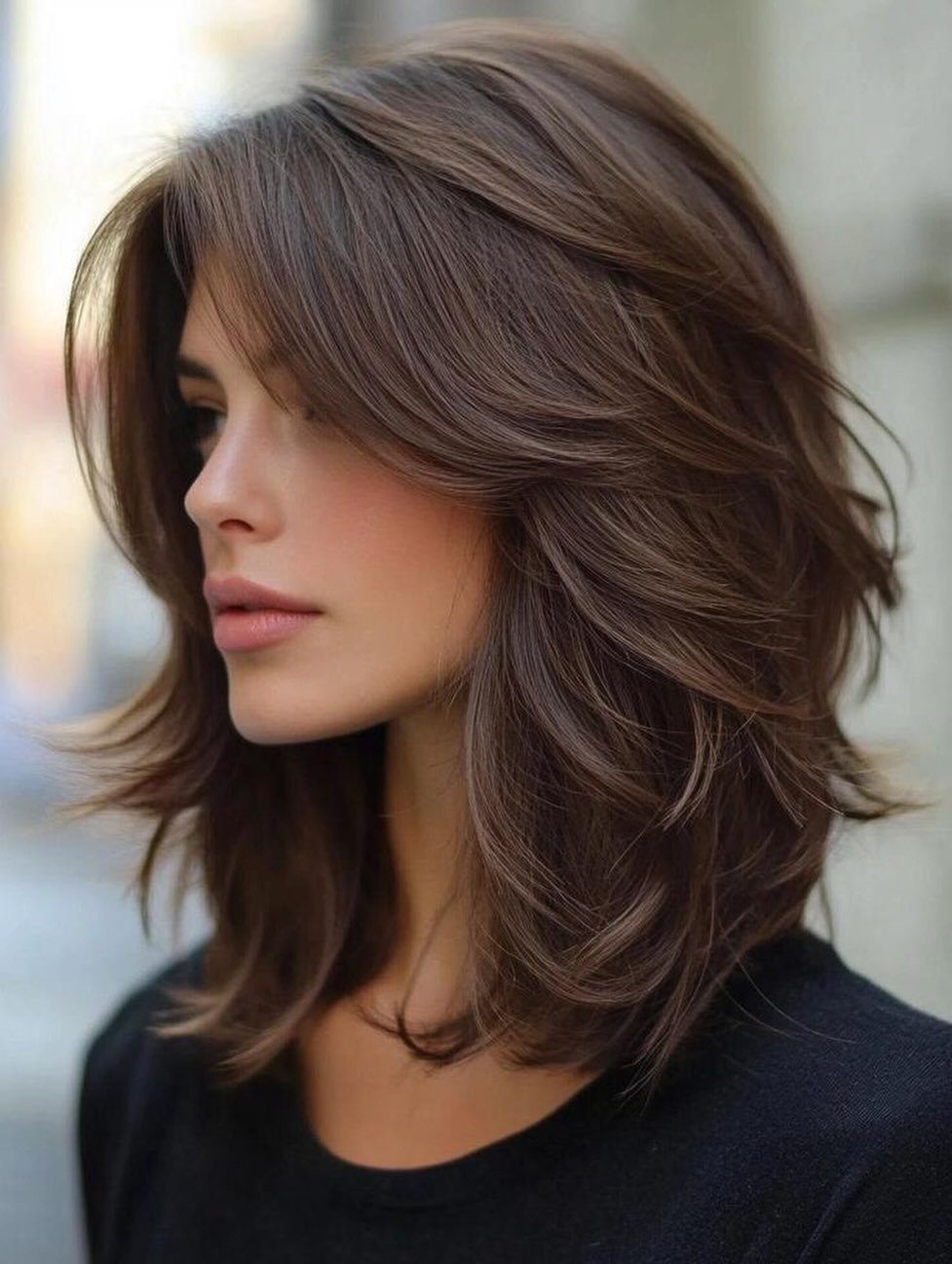
Choppy layers cut at different lengths through the mid-shaft and ends give shoulder-length hair more movement than a blunt cut.
The wispy bangs sweep to one side instead of sitting straight across, which softens the face and grows out without a hard line.
Ask for point-cut or razor-finished ends if you want the pieces to separate instead of clumping together. Dark lowlights through brown hair add depth without the upkeep blonde highlights need.
This length air-dries well if your hair holds any natural wave. Blow-dry with a round brush for more volume at the root, or skip it and let the layers fall where they want.
2. Textured Blonde Bob
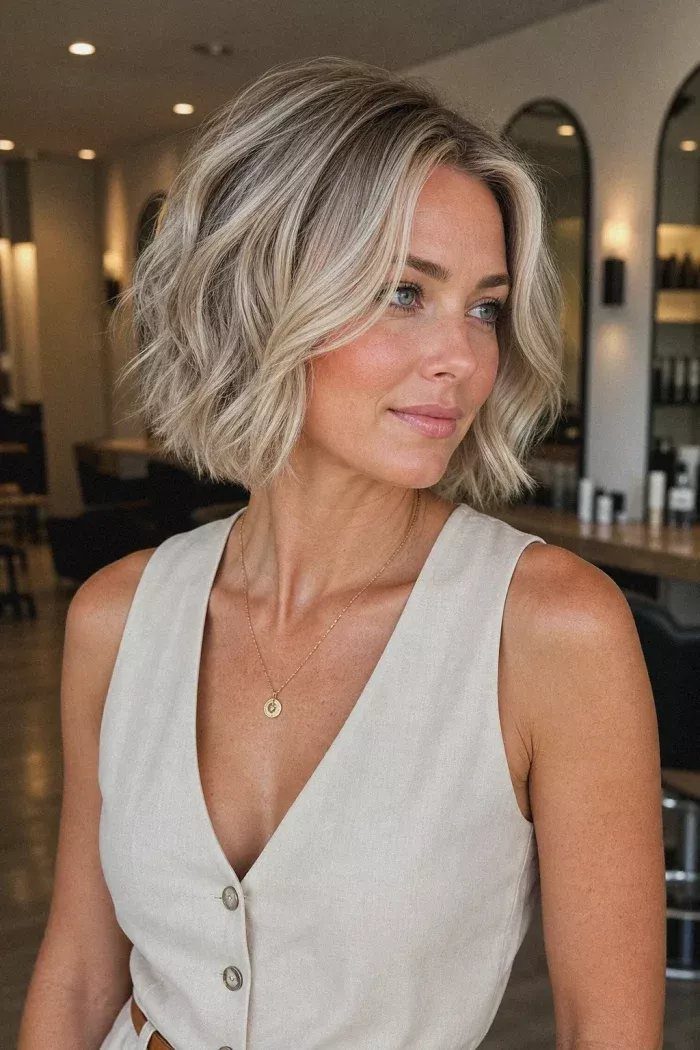
A choppy bob cut just above the shoulders with a deep side part and dark roots left visible. The blonde is tousled, not smoothed flat, so the texture shows through each piece.
Leaving roots dark cuts down on how often you need a touch-up.
Blonde grows out softer when you stop lifting it all the way to the scalp. The deep part adds volume on one side and keeps the look from reading too symmetrical.
Loose waves or bends through the length keep a bob from sitting too heavy. Use a curling iron and wrap sections away from your face, or braid damp hair overnight and shake it out in the morning.
3. Long Blonde Curtain Bangs
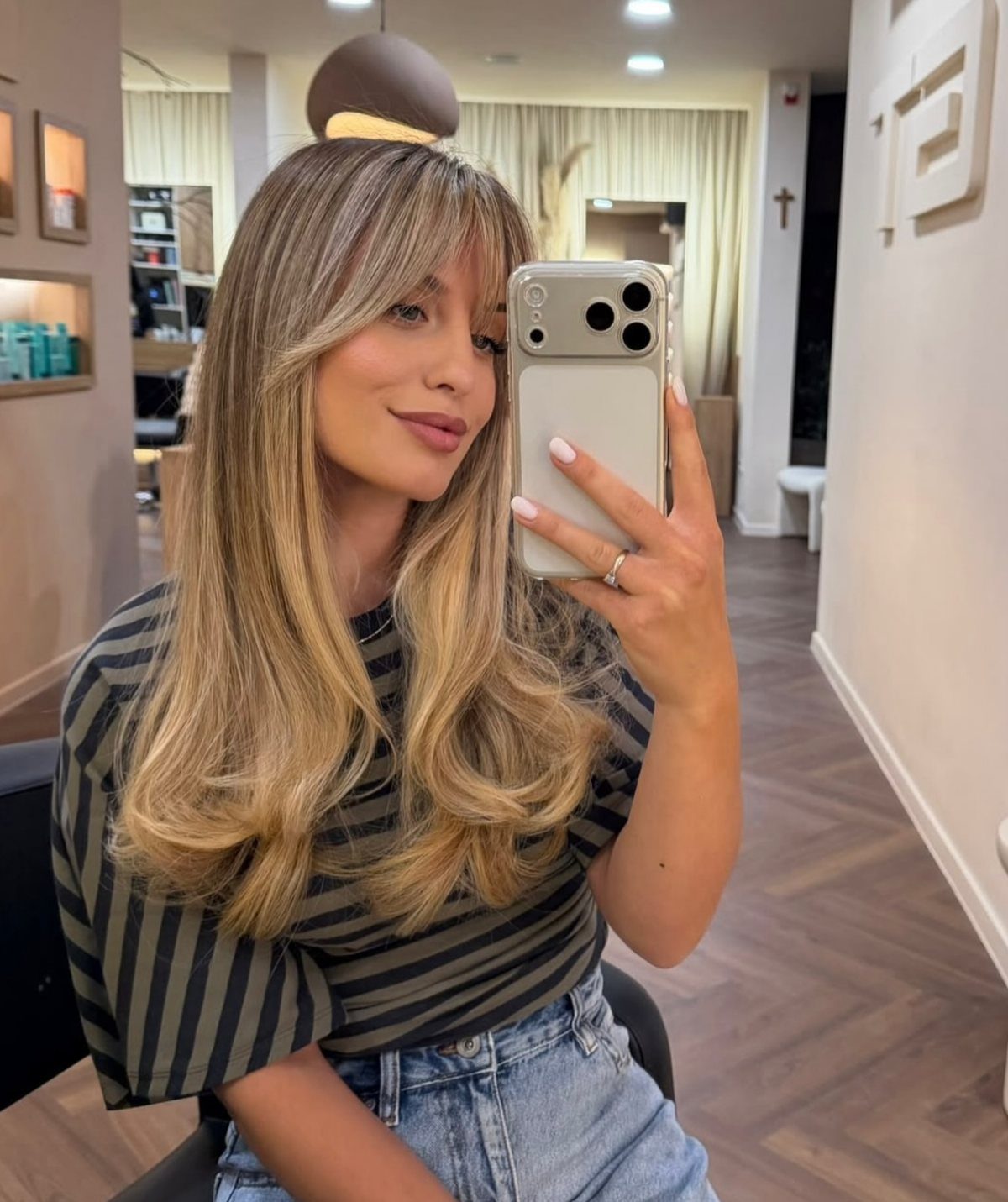
Curtain bangs that part in the middle and sweep to each side soften the face, and fine highlights through long layers keep the blonde from looking flat.
The length falls well past the shoulders, and the highlights are woven through rather than painted in thick pieces.
Curtain bangs start shorter at the part and angle longer toward the sides, so they blend into the rest of your hair as they grow. Fine highlights mean less contrast between your base and the blonde, which softens regrowth lines.
Blow-dry the bangs forward first, then sweep them to each side with a round brush. The rest can air-dry or get a quick pass with the dryer for volume at the root.
4. Brunette Caramel Layers
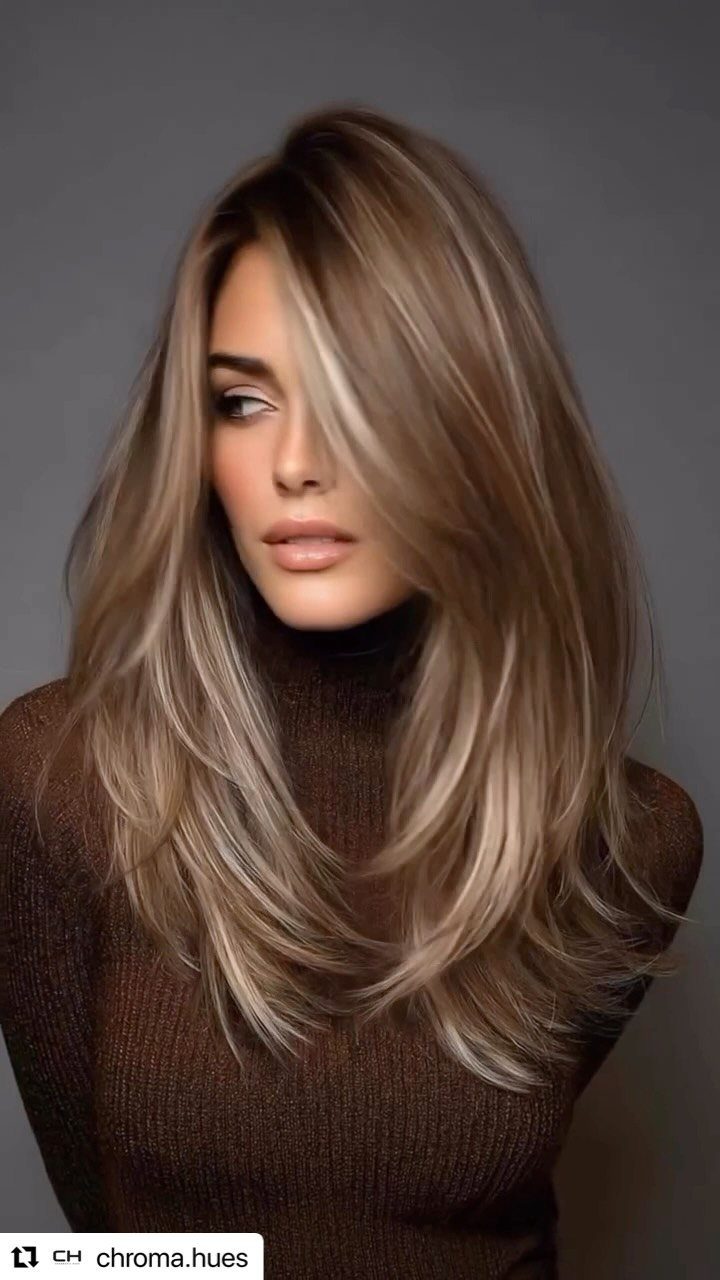
Shoulder-length brunette hair with caramel highlights painted through the mid-lengths and ends. The layers are cut choppy so the color breaks up into separate pieces instead of one solid block.
Caramel sits warmer than ash blonde and works better if your natural base is dark brown.
The highlights catch light without reading as a full head of blonde. Layers through the bottom half keep longer hair from sitting flat.
Tousled waves show off the color better than straight hair does.
Wrap sections around a 1-inch curling iron, alternating the direction, and run your fingers through once it cools. The waves loosen after a few hours but the movement stays.
5. Feathered Fringe Waves
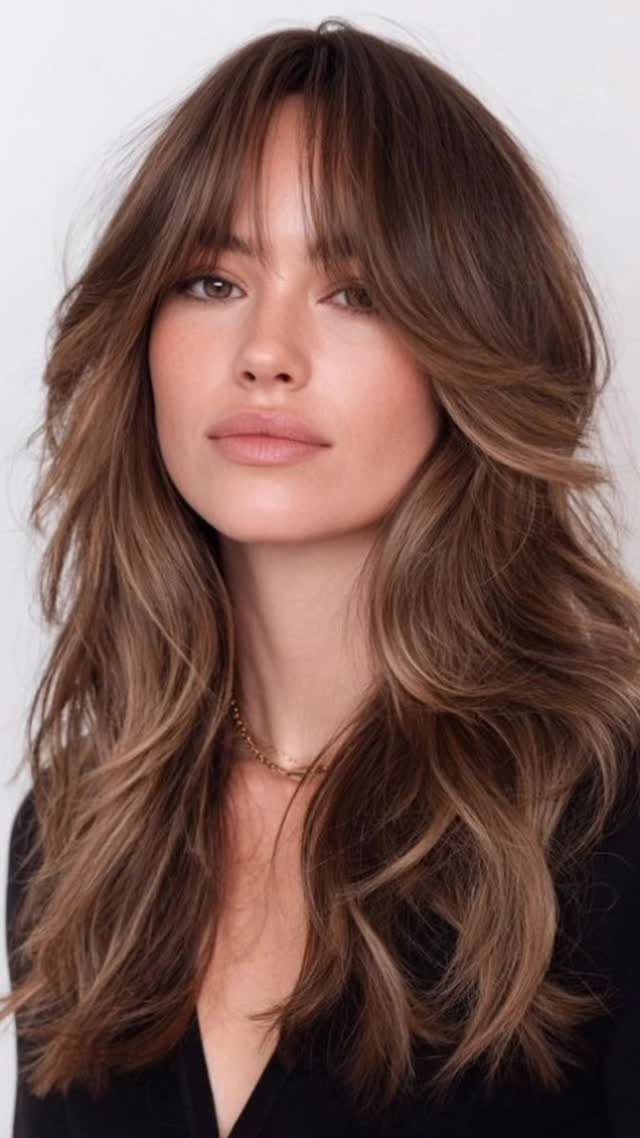
Full feathered fringe cut straight across the forehead with the ends point-cut so they sit soft instead of blunt. The rest of the hair falls in shoulder-length waves with dark roots and blonde through the mid-lengths.
Feathered fringe means the stylist cuts into the ends with scissors held vertically, which breaks up the line and lets the bangs separate. It grows out softer than a blunt fringe, but it still needs trims to hold its shape.
Blow-dry the fringe with a round brush, rolling it under slightly so it curves toward your face. The waves through the rest can be done with a curling iron or set overnight in foam rollers.
6. Illuminated Salon Mirror
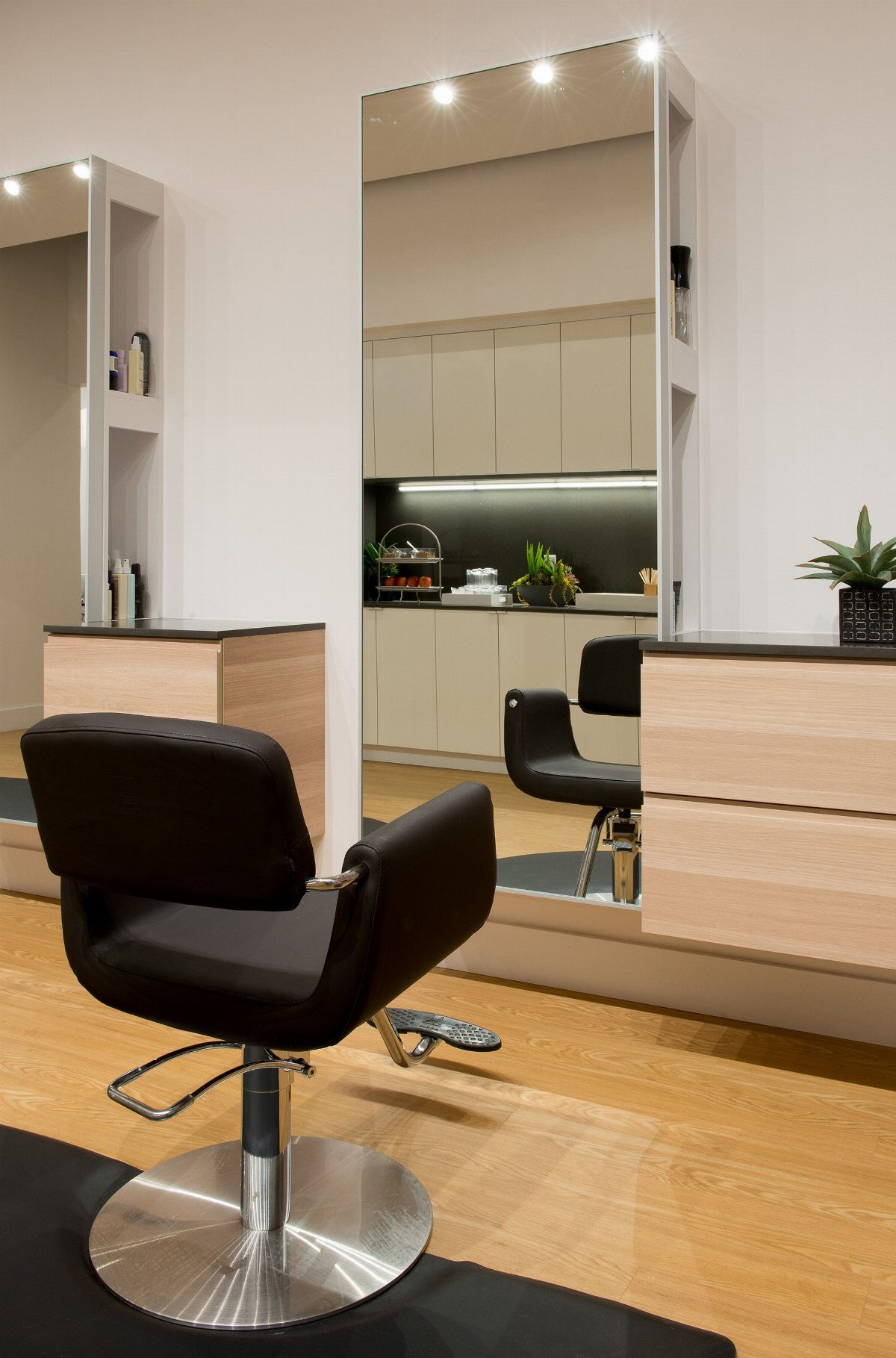
A full-height mirror with built-in lighting lights your hair evenly from root to ends, so you can check the sides and back without shadows.
The mirror runs floor to ceiling, and the light strips sit along the top edge, not around the perimeter.
Top lighting works better than perimeter strips if the mirror is tall enough.
Light that sits at the sides and front of the mirror, rather than coming down from above, gives more even color and fewer harsh shadows when you’re styling hair or doing makeup.
Light wood cabinets underneath hold tools and products without taking up floor space. A black swivel chair keeps the station clean and lets you turn instead of leaning sideways.
7. Green Salon Design
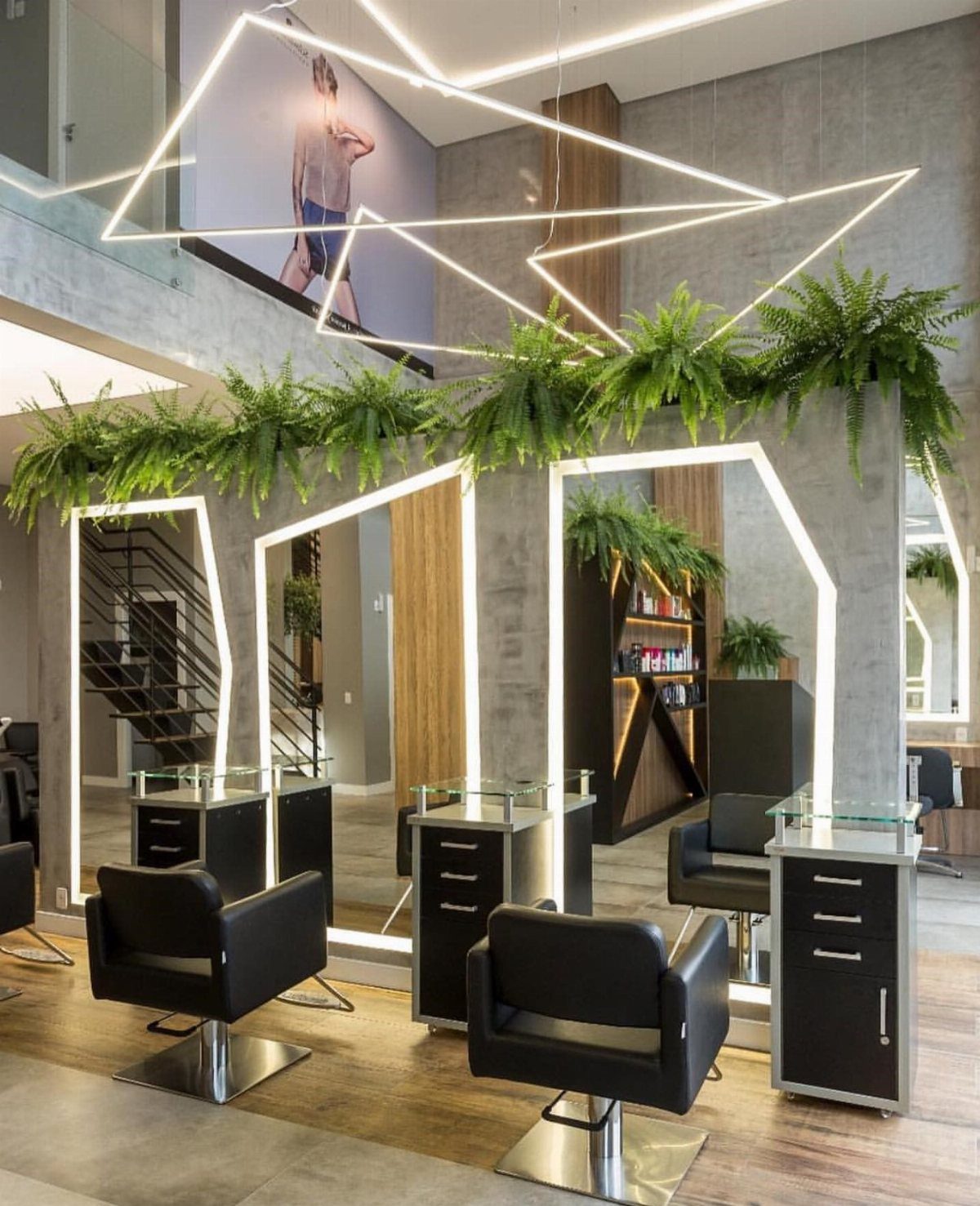
Ferns in a long planter hung from a geometric light fixture give a black-and-leather station something living to look at. Black chairs, black cabinets and tall lit mirrors can feel heavy on their own, and the green breaks that up.
I like that the plants hang overhead instead of sitting on the counter, so the work surface stays clear. If you copy the look, keep the furniture simple and let the greenery be the single soft element.
8. Pink Tufted Salon Chairs
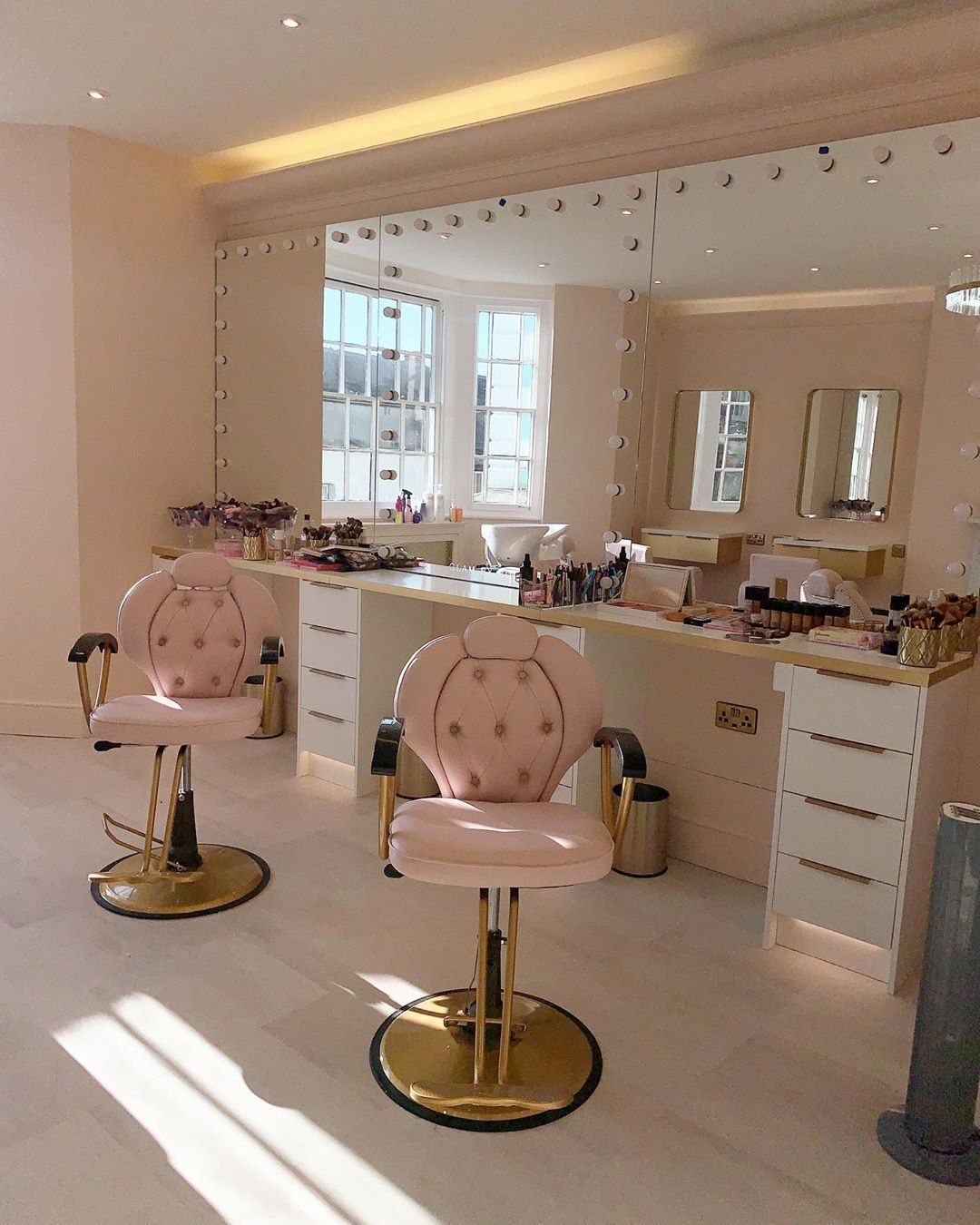
A white vanity can read as plain until you add pale pink tufted chairs on round gold bases, and then the whole corner looks like a small, bright studio.
The hydraulic base lets the seat adjust, which matters whenever someone else is doing your hair or makeup.
My pick would be to keep everything around the chairs white or neutral, so the pink and gold are the only color.
With a large lighted mirror in front, the room stays clean and the chairs read as the focal point.
9. Styling Hair in Salon
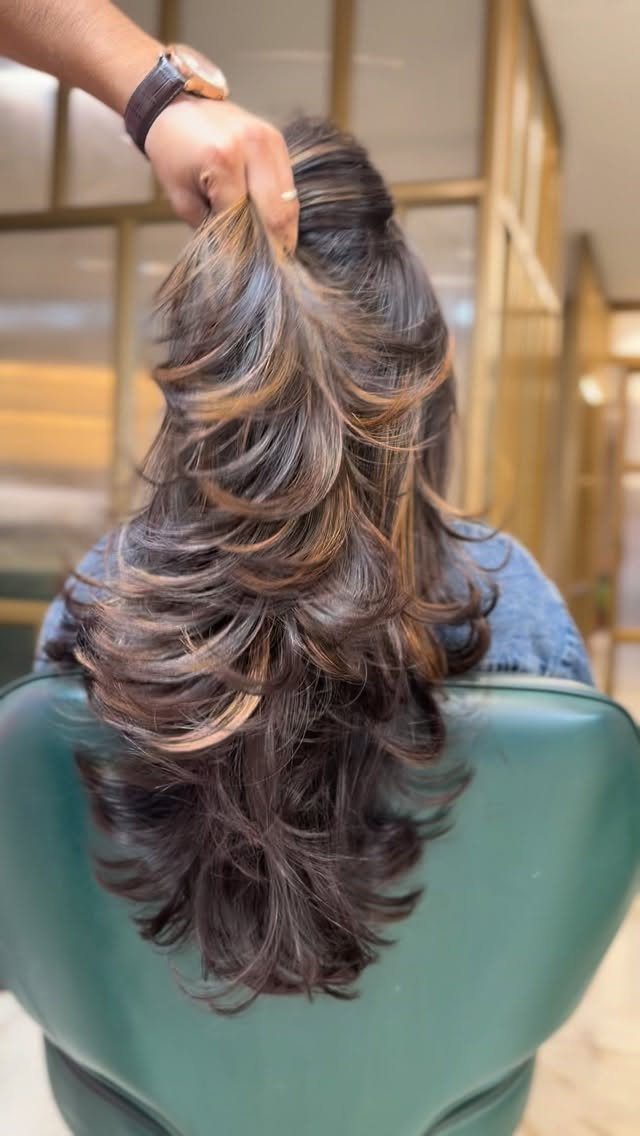
Balayage is painted by hand, which is why a stylist lifts and arranges sections like this to see how the caramel falls through long brunette waves. Watching that step on your own hair tells you more than any photo.
If you’re booking this, bring a picture and ask the stylist to place the lightest pieces where they’ll show once the waves are set. Brunette with caramel stays natural-looking, and the wave pattern carries it.
10. Burgundy Box Braids
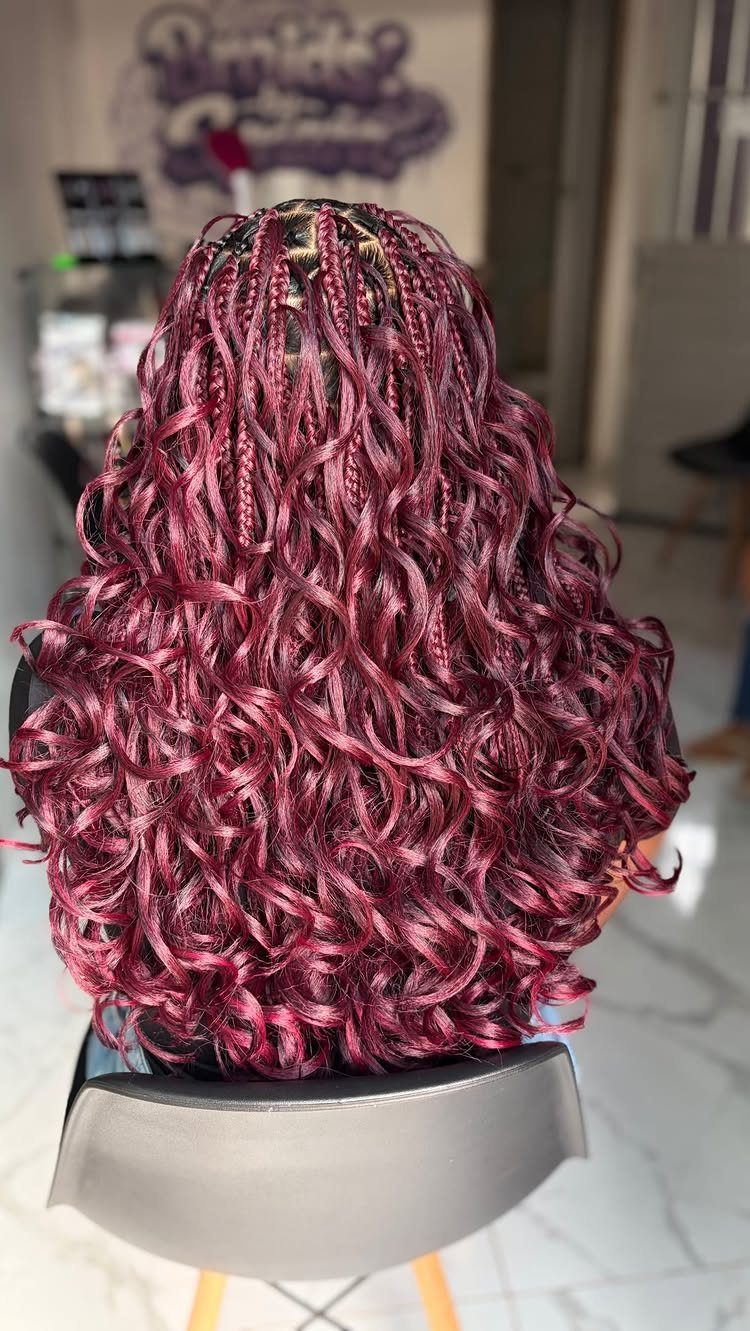
Deep burgundy box braids in a small size, with clean geometric parts and curly ends, hold up from the front, the sides and the back. The tight parting is what makes the scalp pattern read as designed.
Ask for small parts and say exactly how you want the ends: left curly, as in this look.
Smaller parts mean more braids, so ask the braider how long the appointment will run before you commit. A dark burgundy reads richer than a bright red, and I’d choose it for that depth.
11. Straight Light Brown Layers
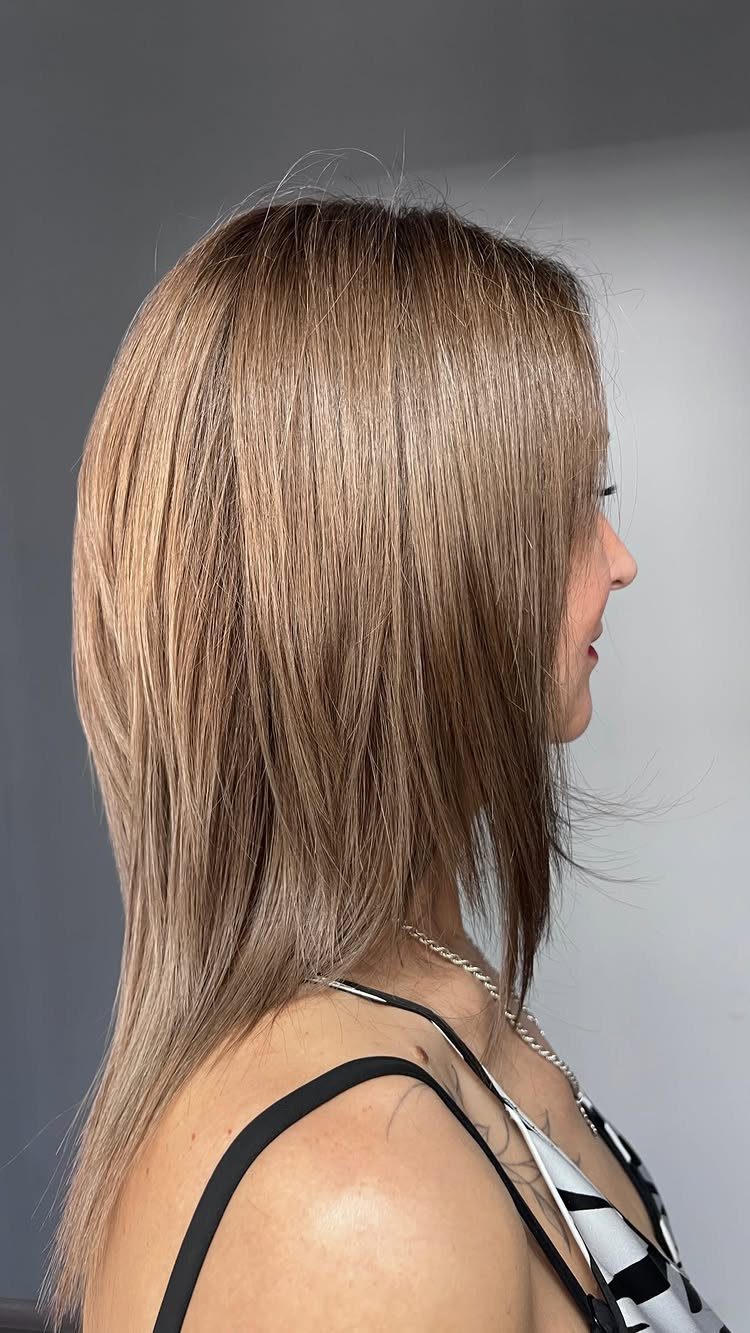
Straight hair shows every line of the cut, so a precise haircut matters more here than any styling. Light brown layers past the shoulders with long side-swept bangs keep the length without looking blunt.
Ask for the bangs long enough to sweep to one side and merge into the face-framing layers.
Straight, smooth finishing is the whole look, and a flat iron pass or a blow-dry will get you there. Darker lowlights keep the light brown from reading flat.
12. Short Layered Brown Hair
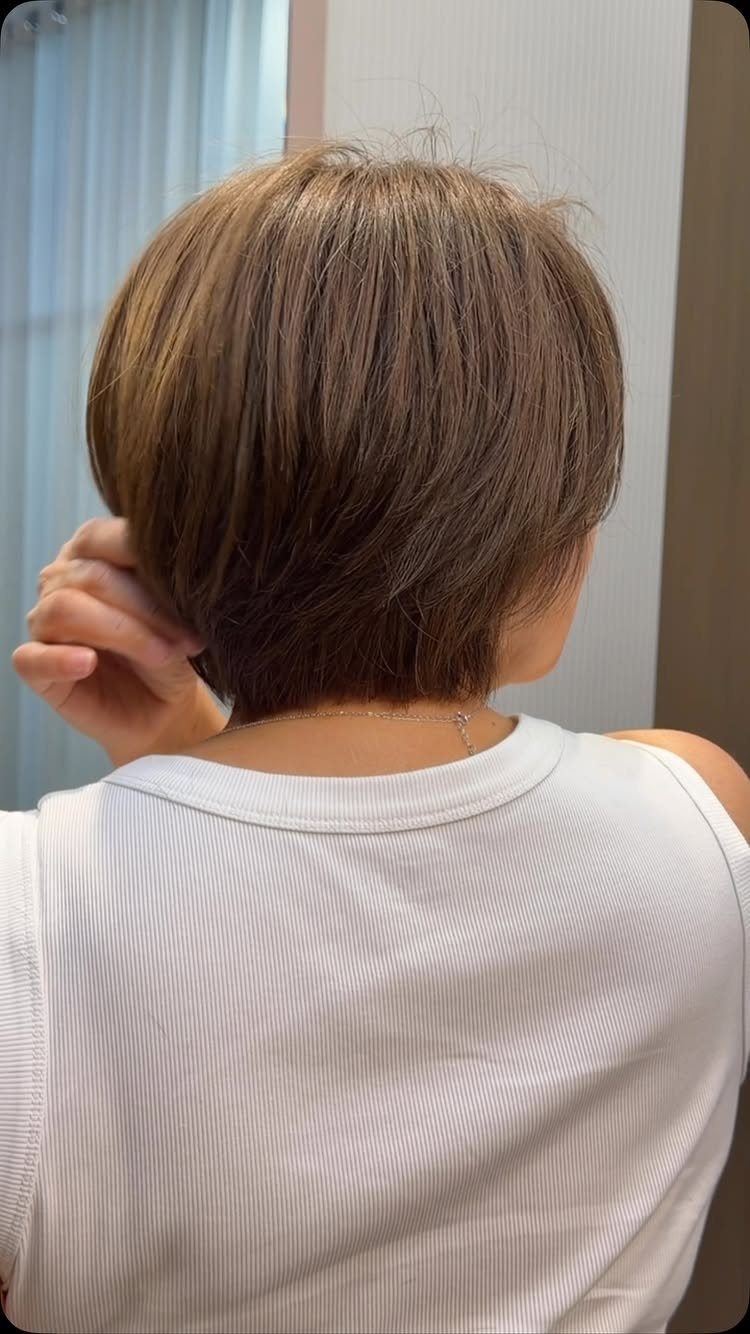
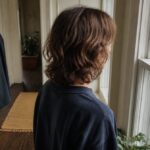
Show a stylist the back view, because a short layered cut lives or dies there. The layers should follow the shape of your head and stack softly through the nape, with no harsh steps.
I like brown for this length: the layers show as movement and not as a color effect. Short hair also asks for regular trims to hold its shape, so plan on seeing your stylist often.
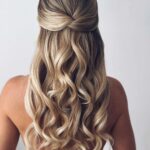
13. Blonde Curls
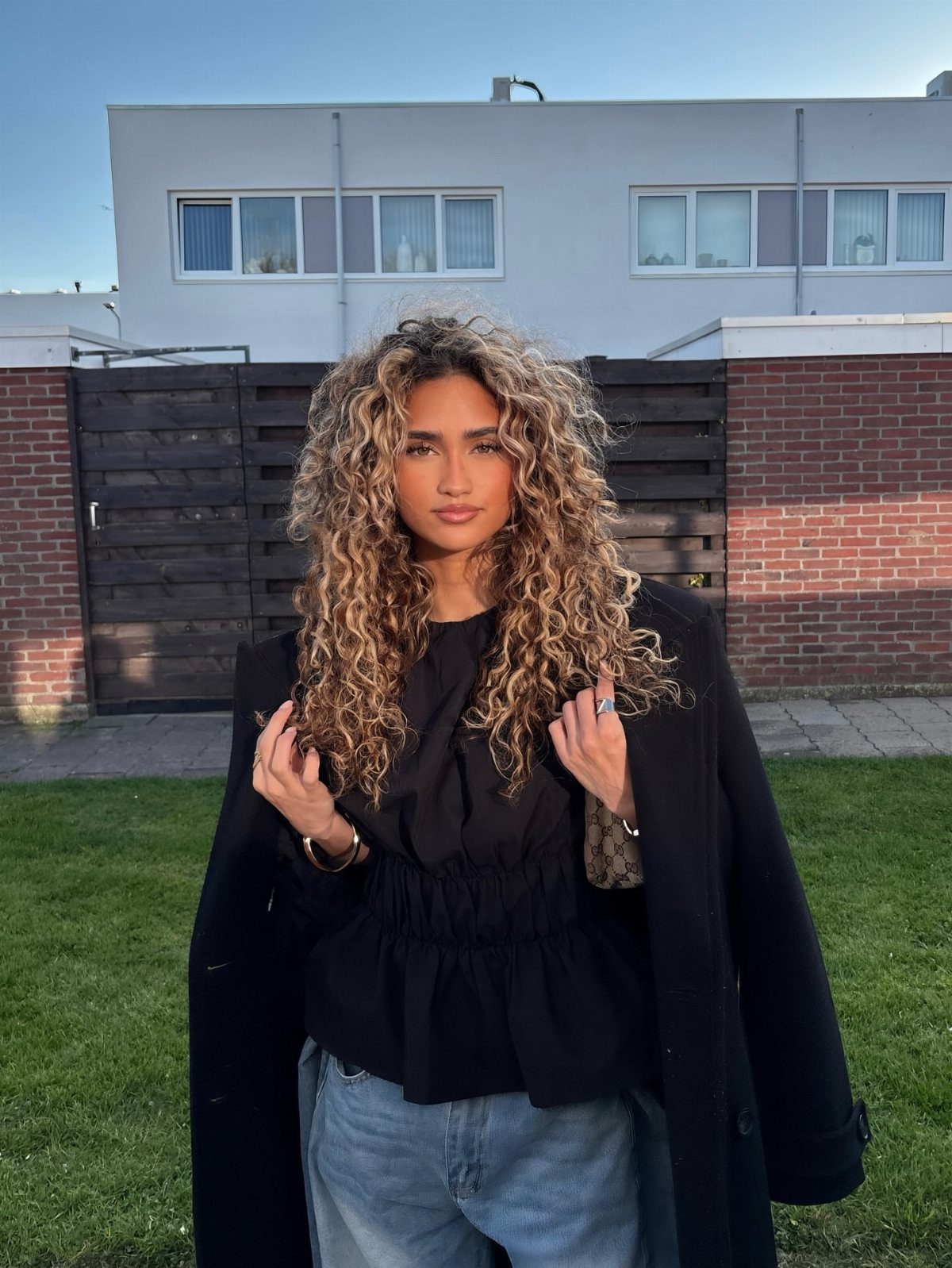
Long, loose curls worn down give you volume without any pinning or styling past the first shape. The light brown reads soft and natural, and the curls fall with enough body that nothing needs adding on top.
Curls this size take up space, so ask for length that lets them spring up a bit and still fall well past the shoulders.
I’d leave them unbrushed once they’re dry, since a brush pulls the pattern into frizz and flattens the volume you’re after.
14. Long Black Waves
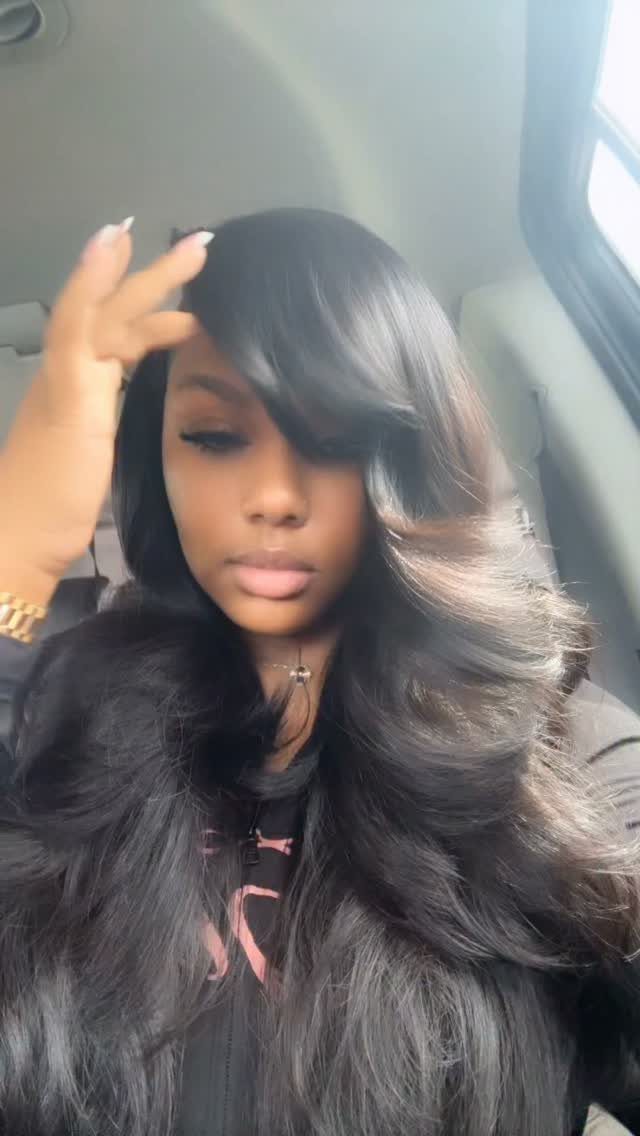
Smooth, glossy waves in long black hair look polished because the shine does most of the work. With bangs in front, the face stays framed, and the waves give the length some movement instead of letting it hang flat.
Ask your stylist for bangs that blend into the length so they don’t sit as a separate block.
For the waves, a curling iron or wand works well, and I’d brush them out gently so they stay smooth and shiny, not crimped and separate.