Color on hair either deposits pigment, lifts it, or does both, and only permanent color can lighten hair or fully cover gray.
The limit is about 2 levels from your natural level, with 3 the most I’d attempt at home. Color does not lift color, so going lighter on dyed hair takes lightener.
Pigment, Levels, and Tone
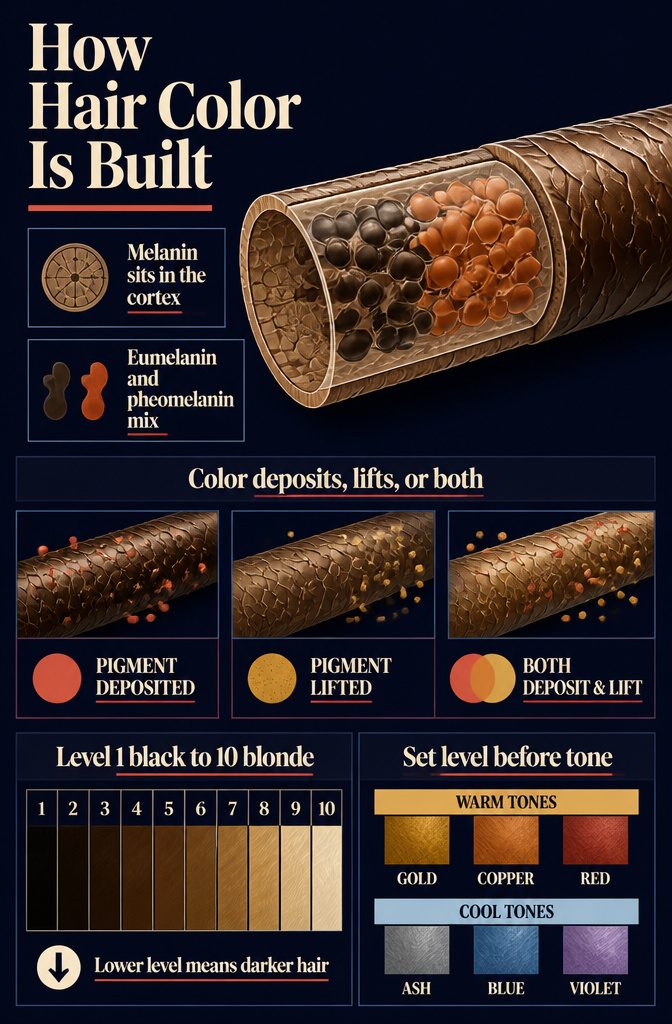
Natural color comes from melanin, which sits in the cortex.
Eumelanin and pheomelanin combine in different ratios to make every shade from black to blonde. Color on hair works in one of three ways: it deposits pigment, lifts pigment, or does both at once.
Level is lightness, on a scale from 1 (black) to 10 (lightest blonde).
The lower the number, the darker the hair. Brunettes fall roughly between levels 4 and 7, and level 8 is dark blonde, where brown turns blonde.
Tone is the hue you see at any given level.
Gold, copper and red read warm; ash, blue and violet read cool. Two heads at the same level can look nothing alike, so I settle level first, then tone.
Choose the Target Shade
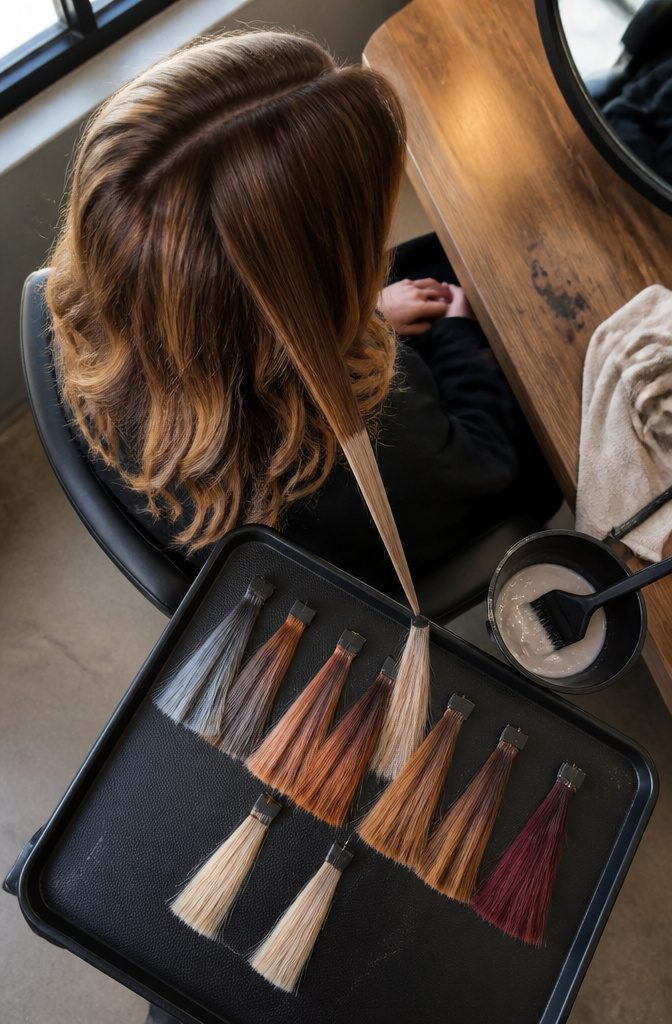
Keep the move to about two levels from your current natural level. Three is the most I’d attempt at home, and a strand test shows how porous hair grabs color.
Warm skin suits golden, copper, caramel, mahogany or auburn; cool skin suits ash, neutral, burgundy or icy. Blue eyes lean toward ash tones, hazel or brown toward chestnut and golden.
Stubborn gray calls for a shade labeled 100% gray coverage. Red and lighter shades need frequent touch-ups, while deeper tones forgive more.
When these conflict, level and hair condition beat undertone, because they decide what the color can physically do. If you’re torn, go lighter: too dark can’t be lightened at home.
Color Types and Techniques
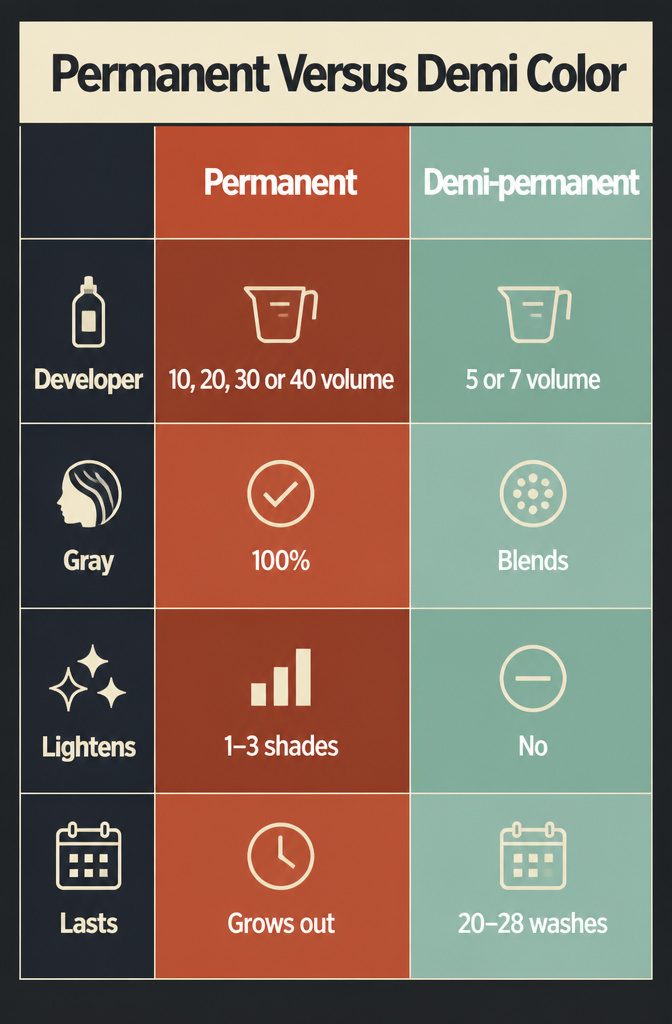
Only permanent color lifts and fully covers gray; the other three just deposit. Published wash counts differ: demi-permanent runs 20–28 washes or up to 24, and semi-permanent 6–12 or up to 8.
Plan on the lower number. For a first color, I’d pick demi-permanent.
| Type | Developer | Gray | Lightens | Lasts |
|---|---|---|---|---|
| Permanent | 10, 20, 30 or 40 volume | 100% | 1–3 shades | Grows out |
| Demi-permanent | 5 or 7 volume | Blends | No | 20–28 washes |
| Semi-permanent | None | No | No | 6–12 washes |
| Temporary | n/a | n/a | n/a | One shampoo |
Techniques to ask for by name: single-process, highlights, lowlights, balayage, ombre and color correction.
Color or Lightener
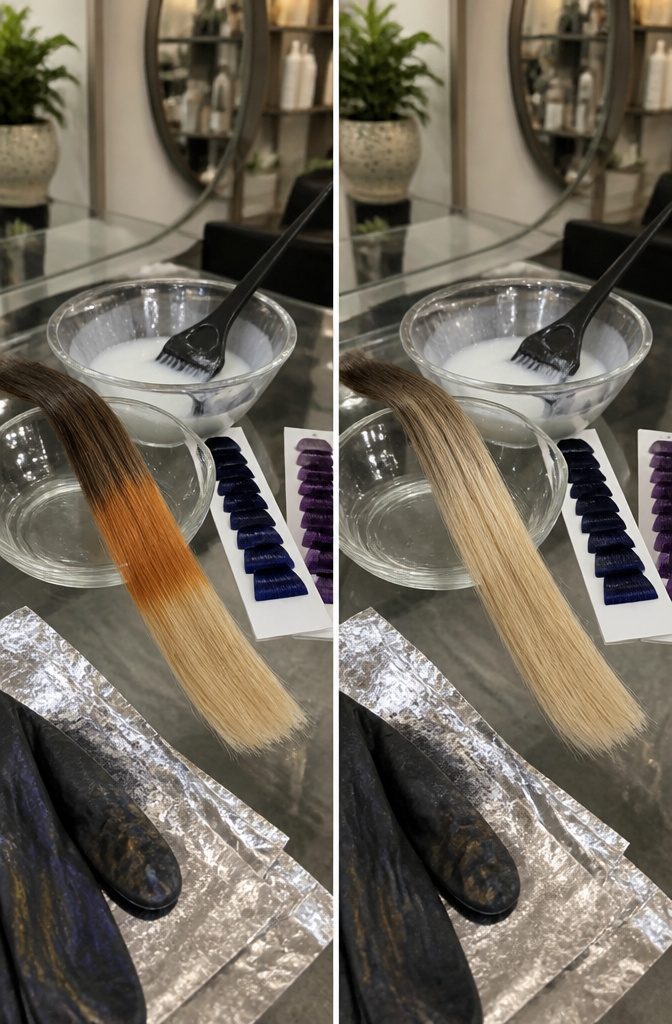
A lighter box over dyed hair will not make it lighter. Color does not lift color, so the new shade just muddies what is already there.
That is why I send anyone going lighter on color-treated hair to a professional for lightener. Going darker works fine.
Color can still lift a little.
From level 5 to level 7, the hair shows orange with some orange/yellow underneath, and blue and violet cancel both. A 7 Ash or 7 Ash/Violet with 20 volume developer handles that jump and lands on a neutral beige.
Past two levels, color loses its grip on warmth.
A level 4 will never reach a cool level 9 with color, whatever the developer. That jump needs lightener.
Prepare Safely
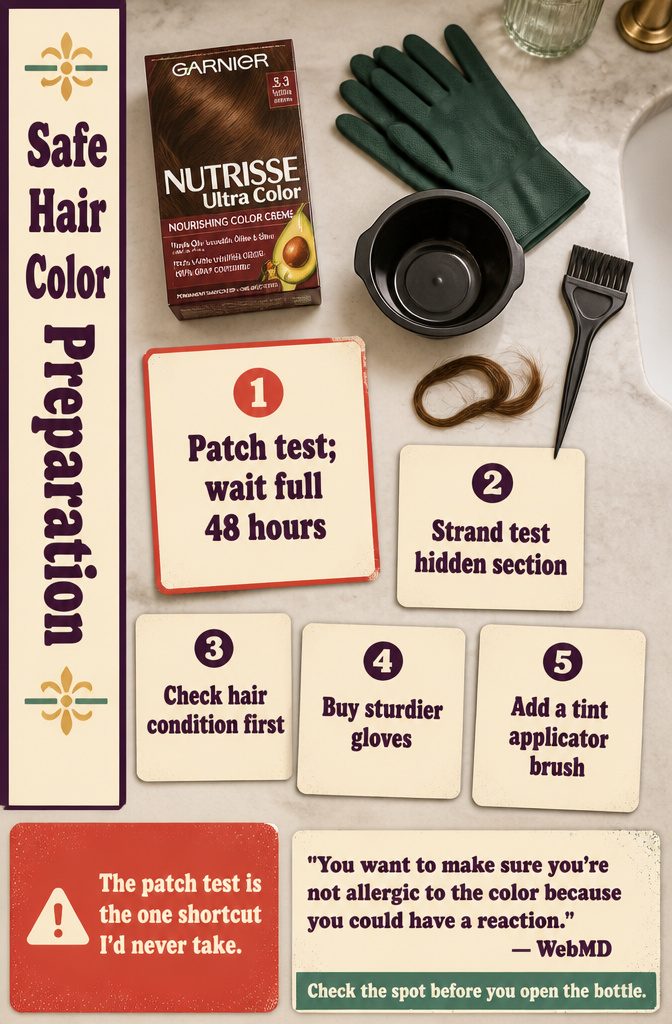
Four checks come first:
- Patch test: dab mixed color behind your ear or on your elbow. Garnier says wait 48 hours; WebMD says at least 24. I’d wait the full 48.
- Strand test: color one hidden section to preview the shade and adjust timing.
- Hair check: look over its condition first; the strand shows how it takes color.
- Gloves and tools: box gloves are thin and tear, so buy sturdier drugstore ones, plus a tint applicator brush from a beauty supply store.
The patch test is the one shortcut I’d never take.
"You want to make sure you’re not allergic to the color because you could have a reaction."
— WebMD
Check the spot before you open the bottle.
Apply the Color
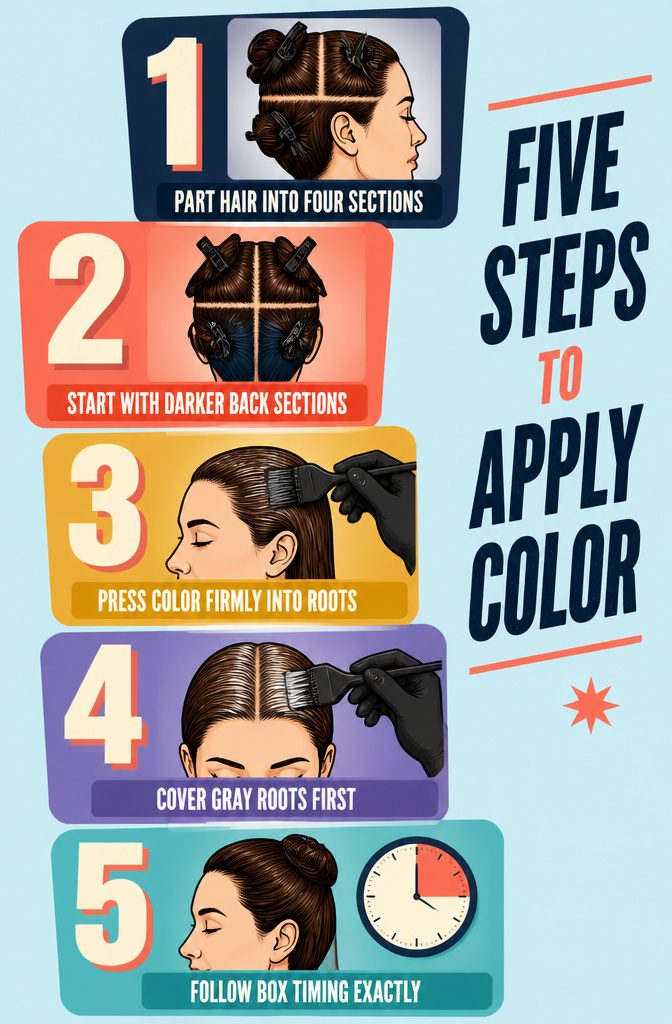
- Part your hair from forehead to nape, then from ear to ear, and clip the four sections. Hair past the shoulder may need two boxes, so have the second one open before you run short.
- Start with the back sections. The back is darker and more resistant to color, so it goes on first and gets a little more processing time.
- Apply the color as close to the scalp as you can. Press the brush firmly into the roots until you feel it on your skin, because light feathering gives patchy results.
- For gray coverage, do the roots first, then work the color through the rest.
- Follow the timing on the box exactly. Leaving color on longer won’t make it lighter. Ask a friend to watch the back, since you can’t see where the dye is going.
Rinse, Condition, and Maintain
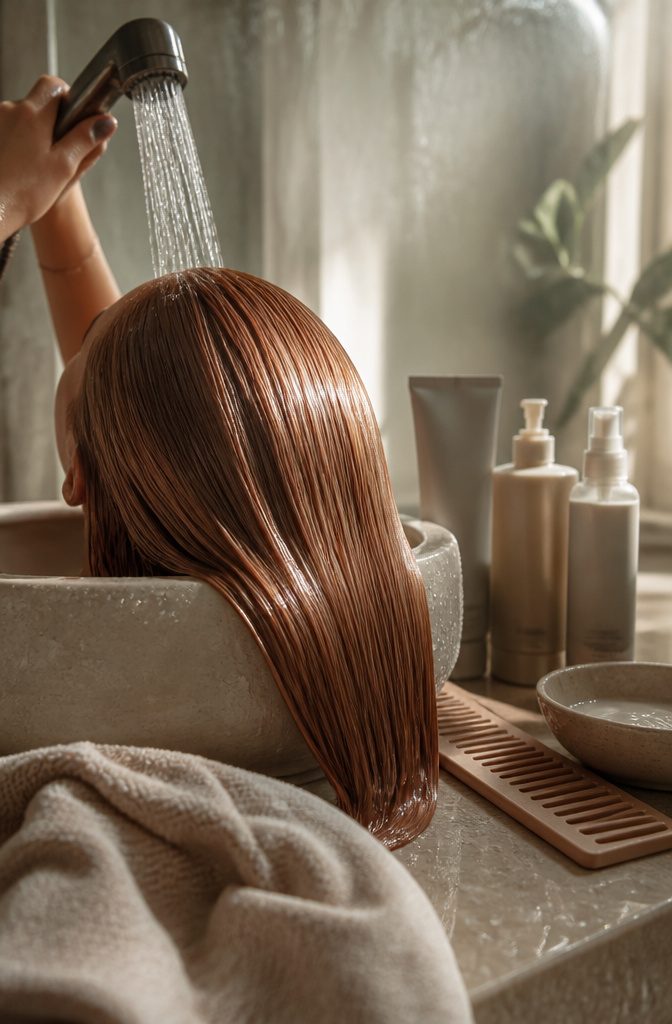
Rinse with lukewarm water until it runs clear, then use the conditioner that came in the box. That conditioner lowers the pH of the hair and closes the cuticle, so the color lasts longer.
I wouldn’t skip it. If your kit doesn’t include one, use a conditioner made for color-treated hair.
After that, switch to a color-safe, sulfate-free shampoo and keep washes lukewarm.
Hot tools and sun both push color to fade, so a leave-in with heat and UV protection earns its spot, and I’d cut back on flat iron days wherever the style allows.
When tone turns dull between full applications, a gloss revives it without another round of dye.
When to Call a Pro
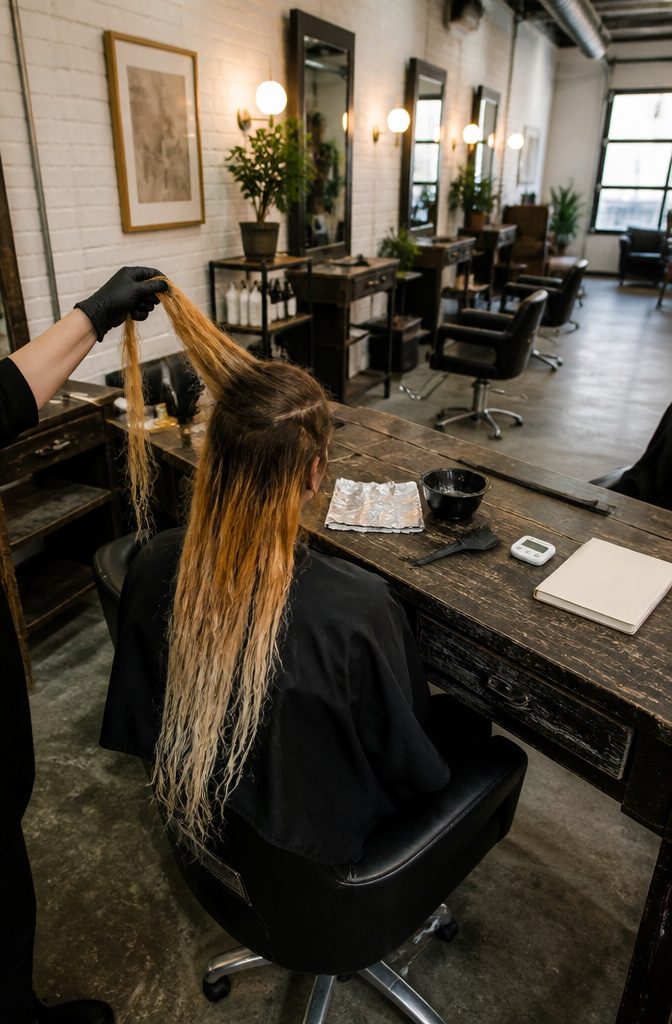
Going more than two shades lighter or darker than your natural color makes home results unpredictable, and bleach is the clearest case.
How long it stays on depends on how your color lifts, plus your hair’s density and texture, which is hard to judge at a bathroom mirror.
Dyed hair needs a pro to go lighter too: color does not lift color, so a lighter shade over it only muddies what is already there.
Damaged or overly processed hair may not survive aggressive lightening, and a stylist can suggest gentler routes to a similar look. After a bad result, I’d book the appointment rather than stack correction after correction at home.
Hair Type and Condition
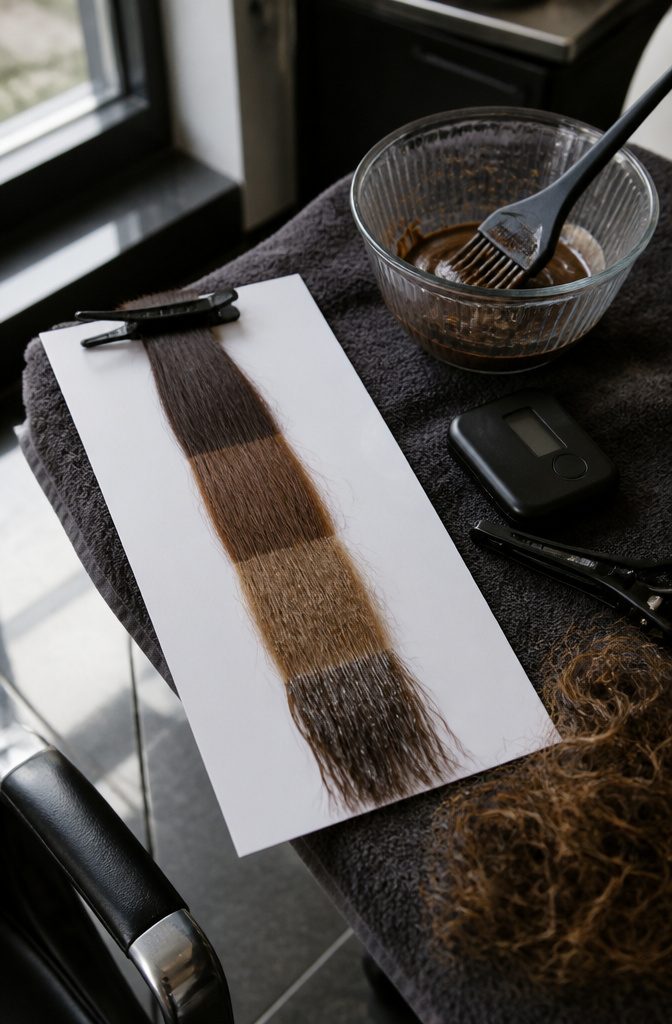
Coarse hair absorbs color more slowly than fine hair, while dry or permed hair may absorb it faster, so the same formula can behave differently from one head to the next.
That is why a strand test sets the timing: color one small piece, check the shade, and adjust before touching the rest.
Waiting longer on stubborn coarse hair will not make color lighter.
Damaged, porous or overly processed hair may not withstand aggressive lightening at all. If your ends feel dry, I’d skip the big jump and ask a stylist about a gentler route to the same look.
Find Your Current Level
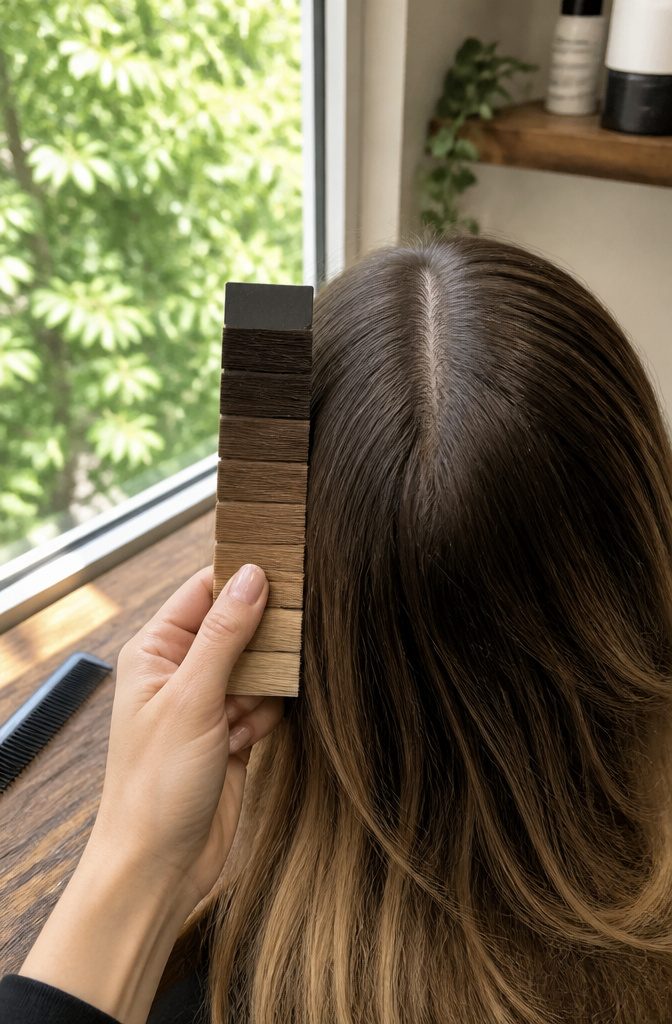
Stand by a window or step outside, where daylight shows the true tone, and part your hair at the crown.
Your natural color is whatever is growing in at the roots right now, not your lengths, your ends, the shade you had as a kid, or your last salon result.
Hold a level chart next to that regrowth and match it as closely as you can.
I’d skip the hairline for this check. Hair there tends to be lighter, so reading it puts you too high on the chart.
The crown gives the most accurate read. If gray is coming in, ignore the gray strands and judge the color between them.
Keep Color Off Your Hairline
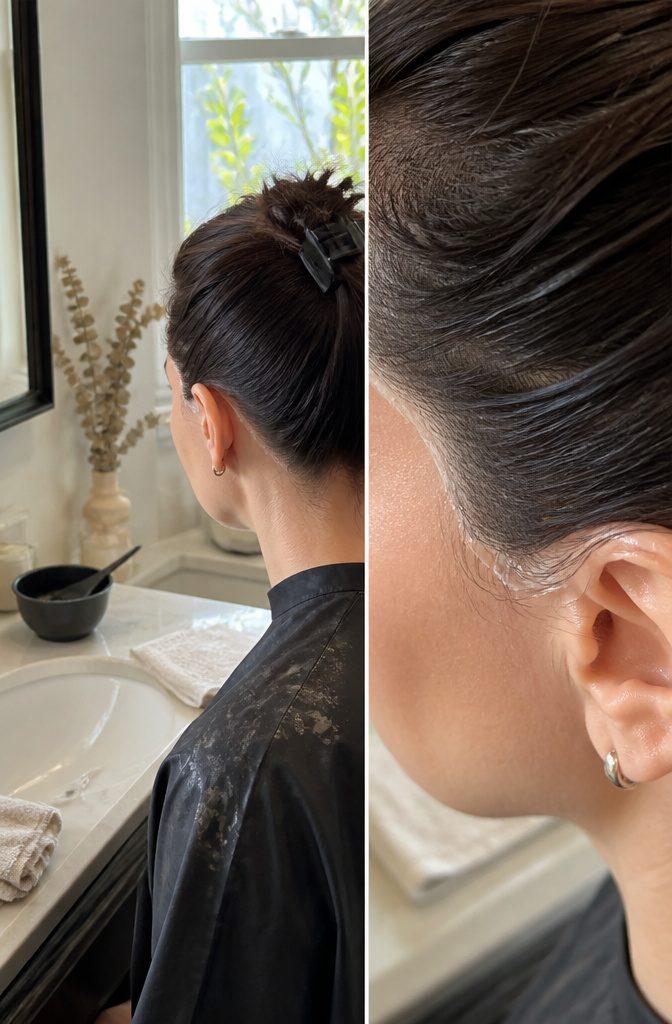
Stained skin along the hairline is the quickest giveaway that color was done at home.
Vaseline spread around the hairline and across the tops of your ears gives the dye nothing to grab, and I’d treat it as a step you never skip.
Placement is where people go wrong. The Vaseline must not touch your hair, because it blocks pigment from getting in, and you can end up with a patchy strip right at the front, where the color is most visible.
Use a fingertip or cotton swab and stop at the skin’s edge. Before you start applying color, check that the first strands along the line are clean and dry.
Temporary and Fashion Color
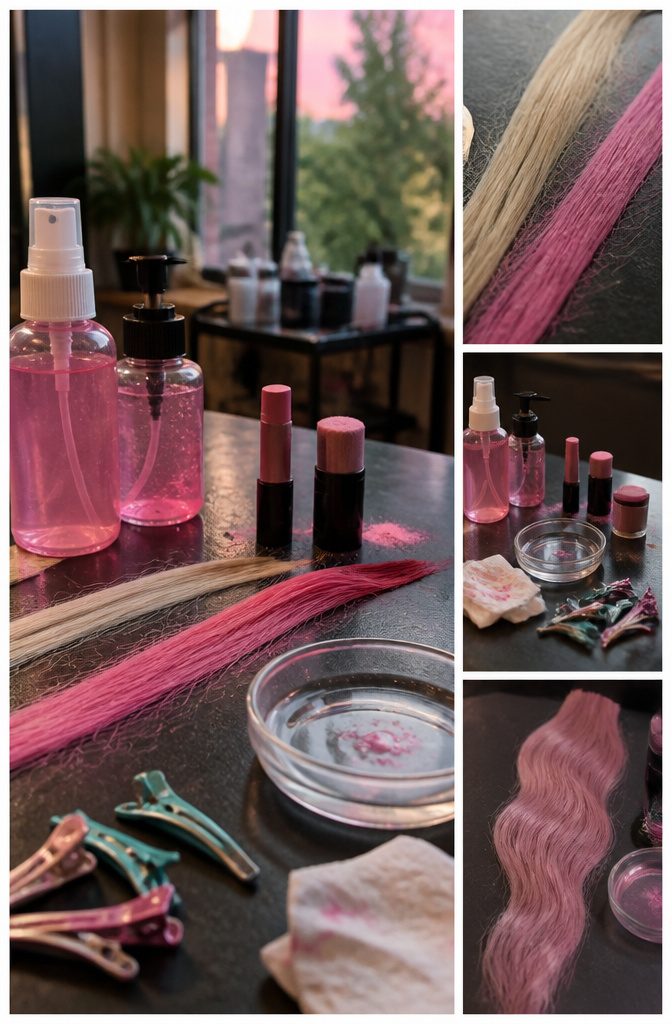
Sprays, gels, chalks and powders sit on the surface of the strand and wash out after one shampoo.
That makes them my pick for a party, a photo shoot or a single weekend of pink, and for testing a shade you’re unsure about.
Vivid shades and pastels usually fall under semi-permanent color. It coats the outer layer without ammonia or peroxide and fades over about 6–12 washes, so it suits trying a new shade or brightening faded color.
Without peroxide, it can’t lighten hair or cover gray. The shade you get is limited by the hair you start with, so a pastel on dark hair may barely show.
Fading and Touch-Up Timing
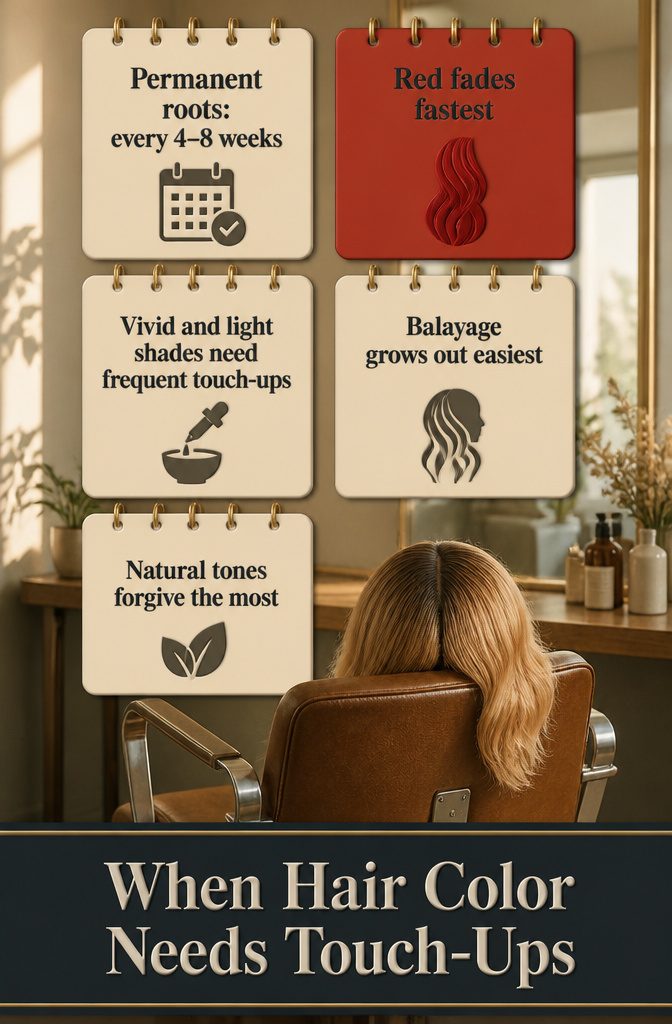
Fade speed depends on the shade and the technique, so your touch-up calendar should too.
- Permanent color roots need a touch-up every 4–8 weeks. Go at 4–6 if you hate seeing any regrowth line.
- Red fades fastest and takes more care than blonde or brown. I’d plan on gentler washing and extra color-safe upkeep from the start.
- Vivid and lighter shades need a touch-up more often, because both fade and regrowth show sooner.
- Balayage is the easiest to grow out, since there’s no hard line at the root to chase.
- Softer natural tones forgive the most. New growth blends in, so you can stretch toward the long end of that range.
Garnier Shade Examples
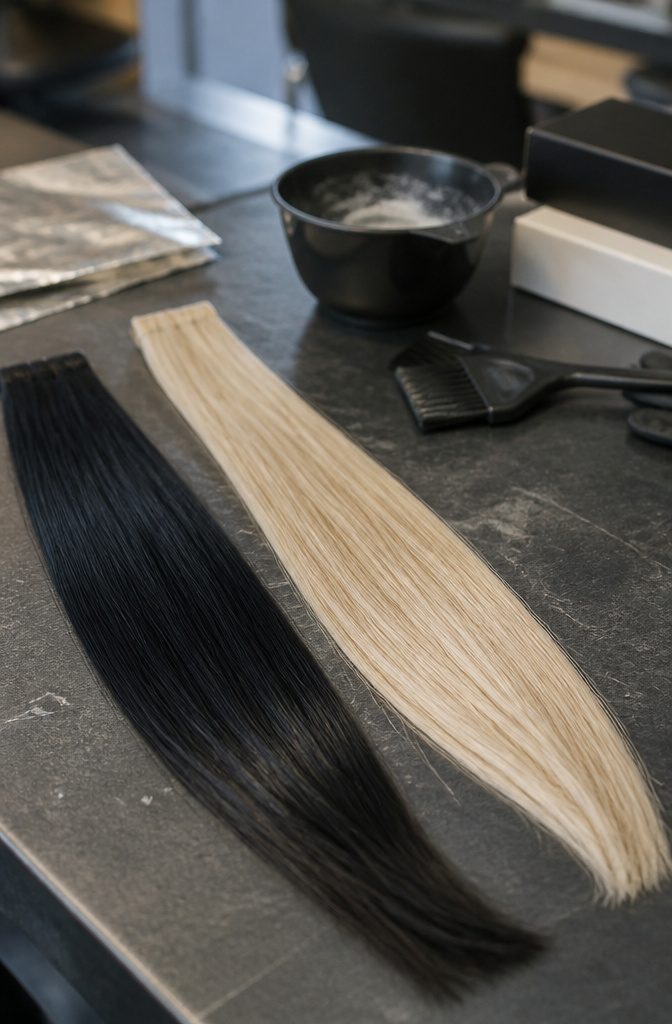
Two Garnier boxes sit at opposite ends of the shade range:
- Olia 1.0 Black is the darkest of the pair, at $11.99 MSRP.
- Nutrisse Ultra Color LB1 Ultra Light Cool Blonde (Calla Lily) is $10.99 MSRP, so the lighter shade costs a dollar less.
- LB1 is a permanent dye that lifts dark hair up to three levels without bleach.
- It aims for cool, brass-free tones, and the color lasts up to 8 weeks.
- The non-drip crème conditions as it processes, which makes it a forgiving first box for home application.
- I’d reach for LB1 only if you want a lift of three levels or less. Anything bigger is beyond what the box promises.
Frequently Asked Questions
How do I find my natural hair color level?
Hold a level chart next to the regrowth at your crown, in daylight.
The scale runs from 1 (black) to 10 (lightest blonde), so blondes land at levels 8–10. Judge the roots only, not your lengths, ends, childhood shade or last salon result, and skip any gray strands.
What level is brunette, and what is level 8 hair color?
Brunette covers dark to light brown, roughly levels 4–7. Level 8 is dark blonde, the spot where brown turns blonde on the scale.
How can I dye my hair at home safely?
Run a patch test and a strand test first, check your hair’s condition, and wear sturdy gloves.
Keep Vaseline on the skin along your hairline but off the hair itself. Then follow the box timing exactly, and stay within about 2 levels of your natural color.
Do I need a patch test before coloring?
Yes. Dab the mixed color behind your ear or on your elbow and wait the full 48 hours before coloring.
What should I consider when choosing a hair color?
Start with your natural level and keep the change to about 2 levels.
Then weigh undertone, gray coverage, how much upkeep you’ll tolerate, and your hair’s condition. When those conflict, level and condition win, because they set what the color can physically do.
Should I use color or lightener?
Use color for a lift of 2 levels or less, and lightener for anything bigger.
A level 4 will never reach a cool level 9 with color, whatever the developer. Lightener is also the only route to lighter hair that’s already dyed.
Can I lighten previously colored hair at home?
No. Color does not lift color, so a lighter shade over dyed hair just muddies what’s there.
See a professional for lightener. Going darker over dyed hair works fine.
What developer is the right choice?
It depends on the color type.
Permanent uses 10, 20, 30 or 40 volume, demi-permanent uses 5 or 7 volume, and semi-permanent uses none. Going from level 5 to level 7, for example, calls for 20 volume.
How do I cancel orange or yellow tones when coloring?
Use blue and violet, which cancel orange and yellow. Lifting from level 5 to level 7 exposes orange with some orange/yellow underneath, so a 7 Ash or 7 Ash/Violet with 20 volume developer lands on a neutral beige.
How do I cover gray hair effectively?
Pick a permanent color labeled for 100% gray coverage, since demi-permanent only blends gray.
Apply it to the roots first, then work it through the rest of your hair. Follow the box timing exactly.
How do I adjust coloring to my hair type?
Do a strand test and let it set your timing.
Coarse hair absorbs color more slowly than fine hair, while dry or permed hair may absorb it faster. Color one small hidden piece, check the shade, then adjust before doing the rest.
How often should you color your hair?
Permanent color roots need a touch-up every 4–8 weeks, or every 4–6 if you hate seeing a regrowth line.
Red, vivid and lighter shades fade and show regrowth sooner. Softer natural tones can stretch to the long end of that range.
How can I make my color last longer?
Switch to a color-safe, sulfate-free shampoo and wash with lukewarm water.
Cut back on hot tools and use a leave-in with heat and UV protection. A gloss between full applications revives dull tone without another round of dye.