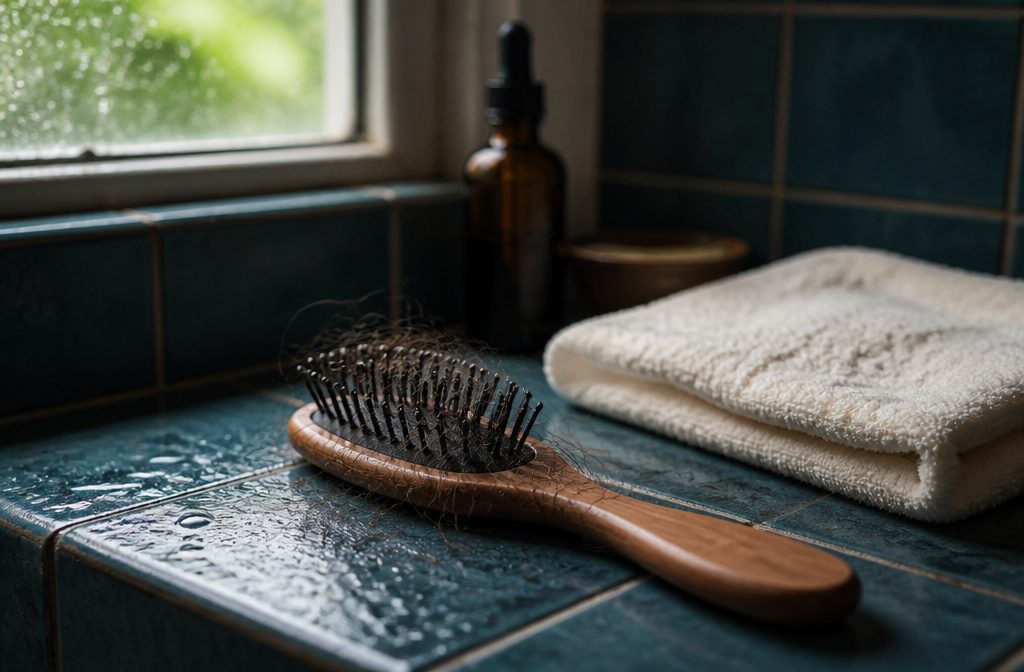
The fixes run from a gentler shampoo routine to prescription JAK inhibitors and transplants, and the cause decides which one is yours.
A supplement that corrects a deficiency does nothing for hereditary thinning, and shedding after a major illness or childbirth can start 2 to 3 months later, so the trigger is easy to miss.
1. Gentle Washing and Brushing

Rubbing shampoo down the length of your hair is the habit I’d drop first.
Massage it into the scalp only, then let the rinse water carry it through the lengths. Follow every shampoo with conditioner, and pick gentle formulas, since harsh ingredients upset the scalp’s natural oil balance.
Regular washing clears the oil, sweat and product buildup that can block follicles. Wrap wet hair in a towel instead of rubbing it.
Brush with a natural bristle brush and a soft touch, because rough pulling can yank hairs out of the follicle. Straight hair should dry a bit before a wide-tooth comb, while tightly curled or textured hair is best combed damp.
This lowers breakage and irritation, but it won’t treat a medical cause.
2. Cut Heat and Chemical Services
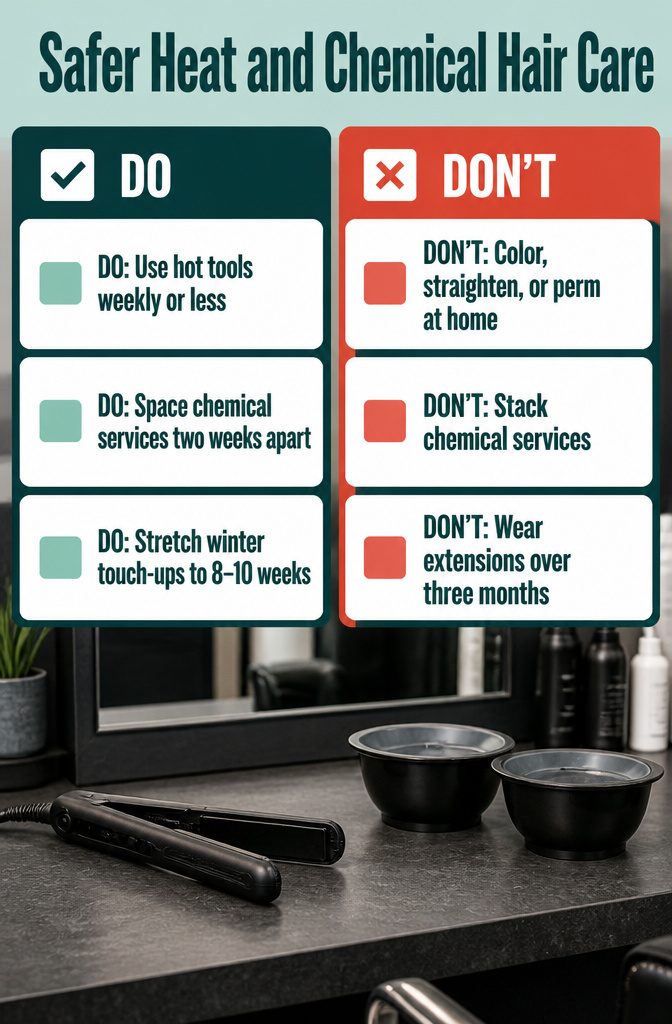
Heat and chemicals do the most damage when they stack up, so I’d trim them in this order:
- Use hot tools once a week or less, or skip them. Repeated thermal straightening changes the keratin structure and leaves strands fragile. On styling days, a heat protectant spray helps.
- Skip at-home colors, straighteners and perms. A professional can pick the safest option for your hair.
- Book one chemical service at a time. If you want two, perm or relax first, then color two weeks later.
- Stretch winter touch-ups to every 8 to 10 weeks or longer, especially when the air is dry.
- Wear a professional weave or extensions for two or three months at most, and keep your scalp clean underneath.
3. Skip Tight Styles
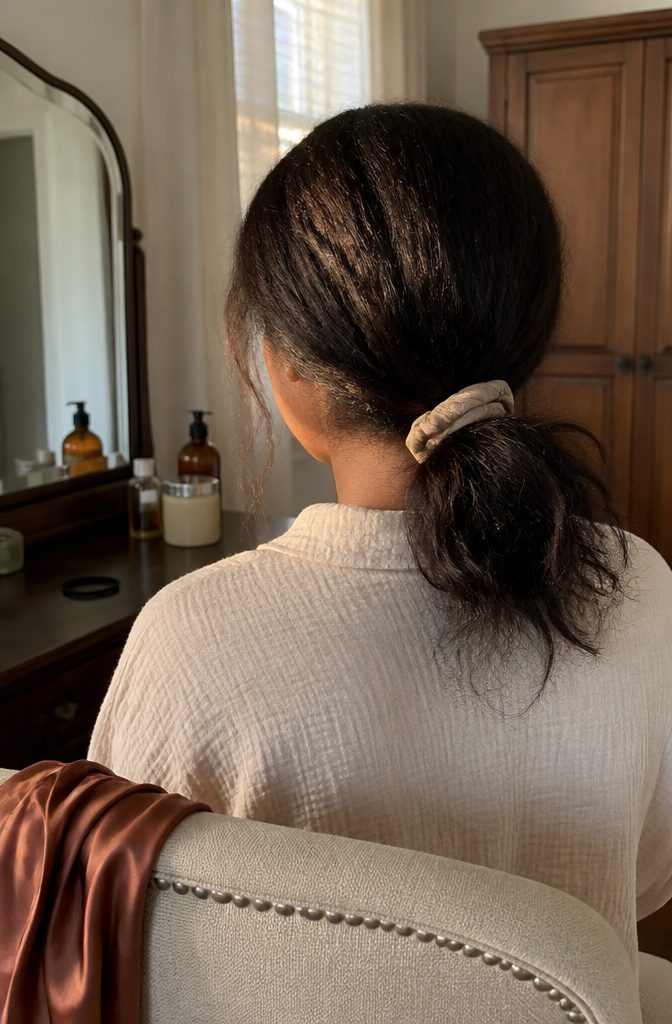
Tight ponytails, braids and cornrows tug on the follicle for as long as they stay in, and that constant pull is what leads to traction-related loss, often called tension alopecia or traumatic alopecia.
This is the section that stings most on a site built around braids and updos, and I’d rather say so plainly.
Loosen any style that leaves your scalp feeling tight or sore. A low, relaxed ponytail beats a high, snapped-tight one, and a style that pulls at your hairline is too tight, no matter how good it looks.
Rotate your looks, too. Alternate braids with a soft bun or half-up so the same strands aren’t hauled in one direction every day, and give your hair a few days with nothing in it.
4. Sun and Pool Protection
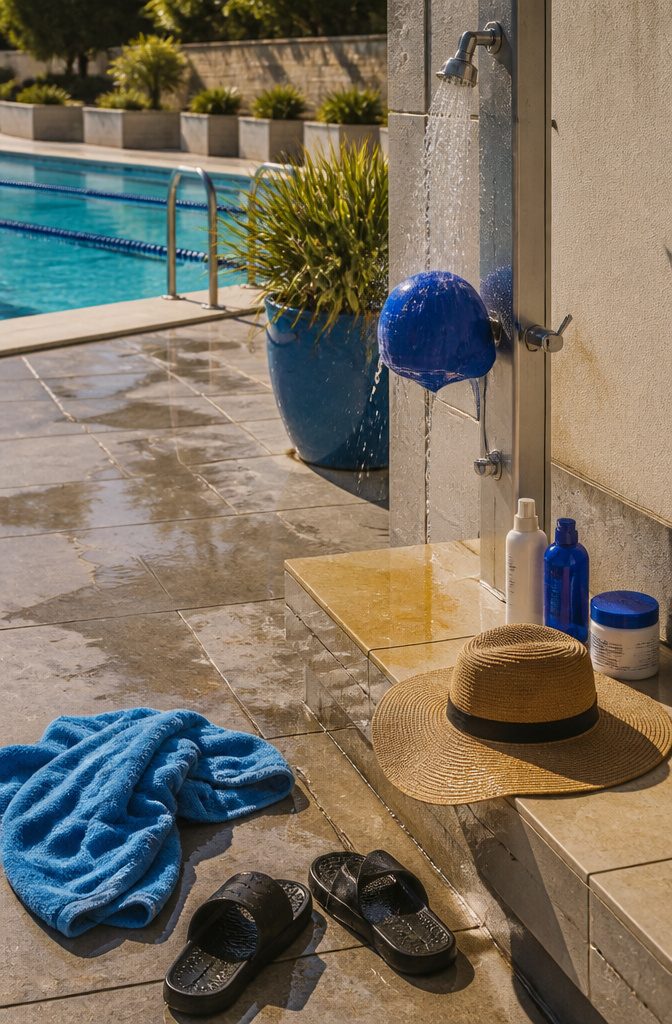
Pool chemicals are hard on hair, and snapped strands add to what you see in the drain. Here is what I’d do, in order:
- Wear a swim cap. Hair that stays dry needs no repair afterward, so this is the strongest step.
- Rinse your hair right after you get out, even if you only waded in.
- Wash with a swimmers’ shampoo, then follow with a deep conditioner. A regular shampoo isn’t formulated for pool exposure.
- For sun, use a leave-in conditioner that contains zinc oxide, or wear a wide-brimmed hat. On long days outdoors I’d pick the hat, since it needs no reapplying.
5. Scalp Conditions
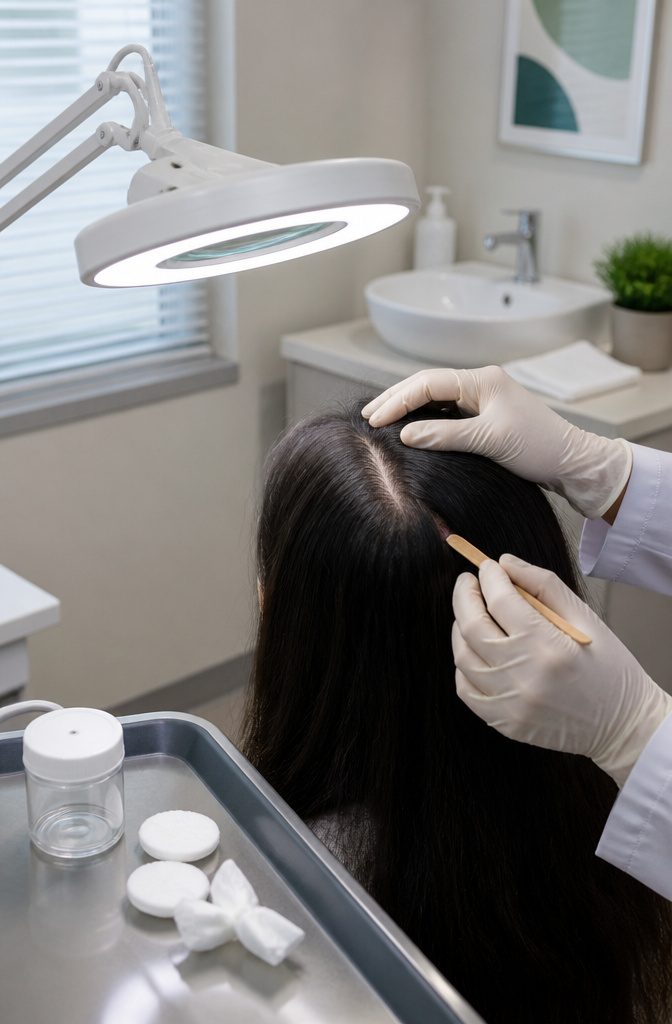
Fungal infection, dandruff and scalp inflammation can each contribute to hair fall, and none of them improves with the fixes that work for other causes.
A tinea infection of the scalp is treated with oral medication: terbinafine (Lamisil), griseofulvin (Grifulvin V) or itraconazole (Sporanox).
Shampoos with selenium sulfide (Selsun Blue, Head & Shoulders), ketoconazole (Nizoral) or ciclopirox (Loprox) can be added alongside. Treatment lasts at least 6 to 12 weeks, so keep going after the itch fades.
I’d hold off on buying a medicated shampoo until you know what you’re treating. Flaking, redness and a fungal infection can look alike, and the treatments differ, so a clinician should diagnose which one it is.
6. Protein and Nutrition Check
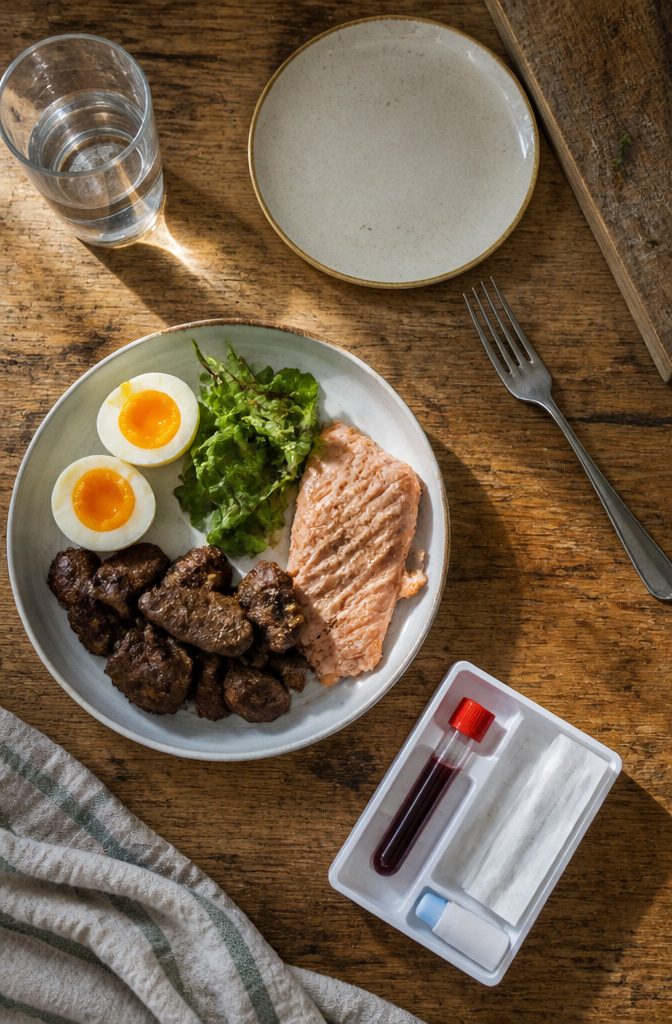
Hair follicles are mostly protein, so a thin diet can show up on your head.
Aim for 0.4 grams of protein per pound of body weight each day; at 150 pounds, that works out to 60 grams. Eggs, fish and liver also supply biotin, which is one more reason to start with food.
Iron is the other nutrient worth checking.
Iron-deficiency anemia can show up as hair loss, though not commonly, and a blood test is the only way to know if it applies to you. Supplements are not a universal fix.
Biotin and vitamin D help mainly when your levels start low, and going over the daily recommended amount of any vitamin can be dangerous. I’d test before I’d buy.
7. Supplements, Cautiously
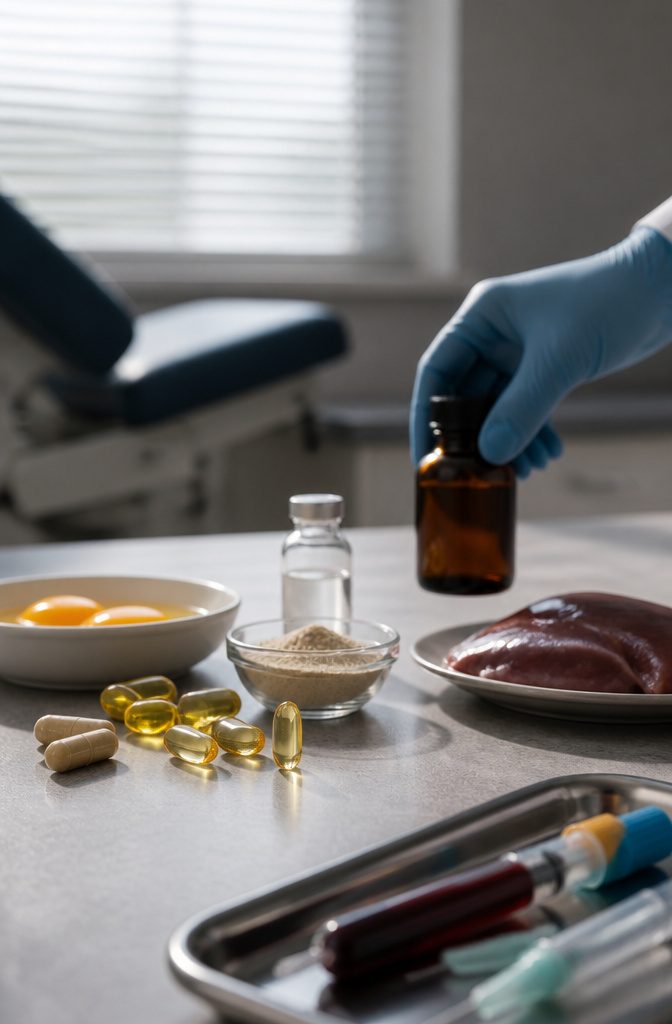
Biotin only helps if you are short on it. A true deficiency can cause shedding, but no studies show biotin prevents or treats hair loss in people who eat normally, and egg yolks, yeast and liver already supply plenty.
Vitamin D follows the same pattern: regrowth shows up in people whose levels start low. Cysteine and lysine still need better studies, so I would skip them.
Viviscal and Nutrafol blend biotin, collagen, horsetail extract and B-complex, and they have been reported to boost growth.
Get a doctor to check for a deficiency before you buy anything, because exceeding the daily recommended intake of any vitamin can cause side effects from mild to severe.
8. Natural Remedies
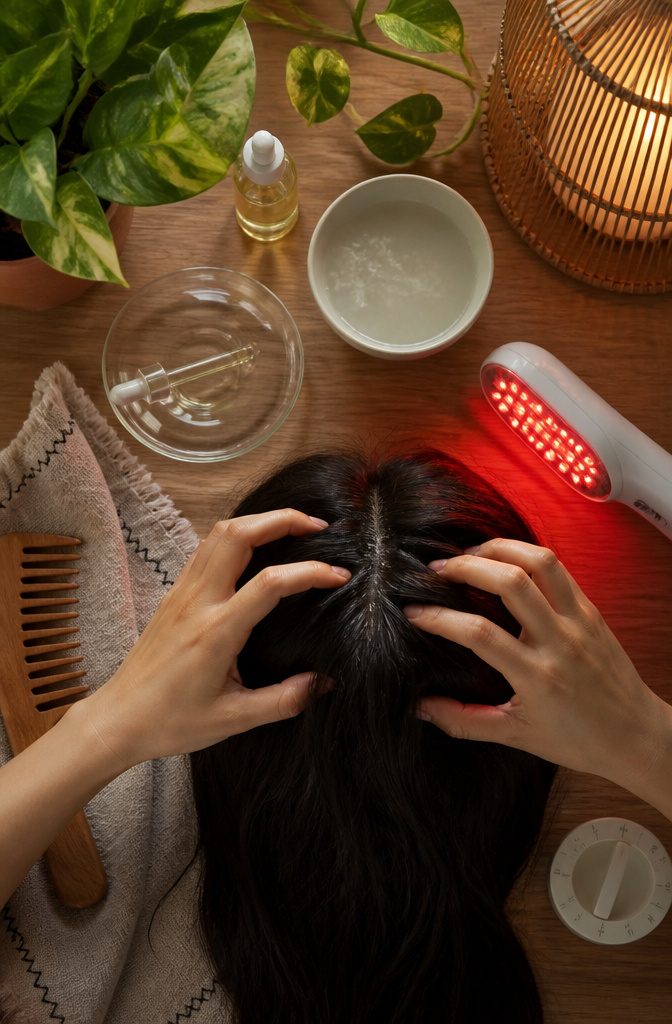
Red light therapy, caffeine and topical melatonin have the firmest backing; oils, massage and rice water sit lower.
Rosemary oil matched minoxidil after 6 months in one small study. Dilute any oil, since irritation and allergic reactions happen.
Massage is where I’d start. In a study of about 330 people, 11 to 20 minutes daily left nearly 70% with less loss or more growth at 6 months.
Nine men doing 4 minutes a day got thicker, not longer, hair. John Frank, MD, suggests at least twice a month.
Red light divides opinion: some rate it, others find too little proof. Devices run 630 nm to 800 nm, 10 to 25 minutes, 2 to 3 times a week, with results in 4 to 6 months.
9. Manage Stress

Shedding after a big body stress arrives late. Telogen effluvium starts about two to three months after a prolonged illness, major surgery, serious infection or childbirth, so by the time the brush fills up, the trigger is easy to miss.
Hair comes out across the whole scalp, with large bald spots rare. It sheds over several weeks to months, then grows back over the next several months.
Lowering stress is worth doing, because the stress hormone cortisol is linked to this kind of shedding and to alopecia areata. Relaxing activities like listening to music are tied to lower cortisol in hair.
I’d treat that as support only. If shedding drags on, keep looking for the cause instead of blaming stress by default.
10. Sleep 7–9 Hours
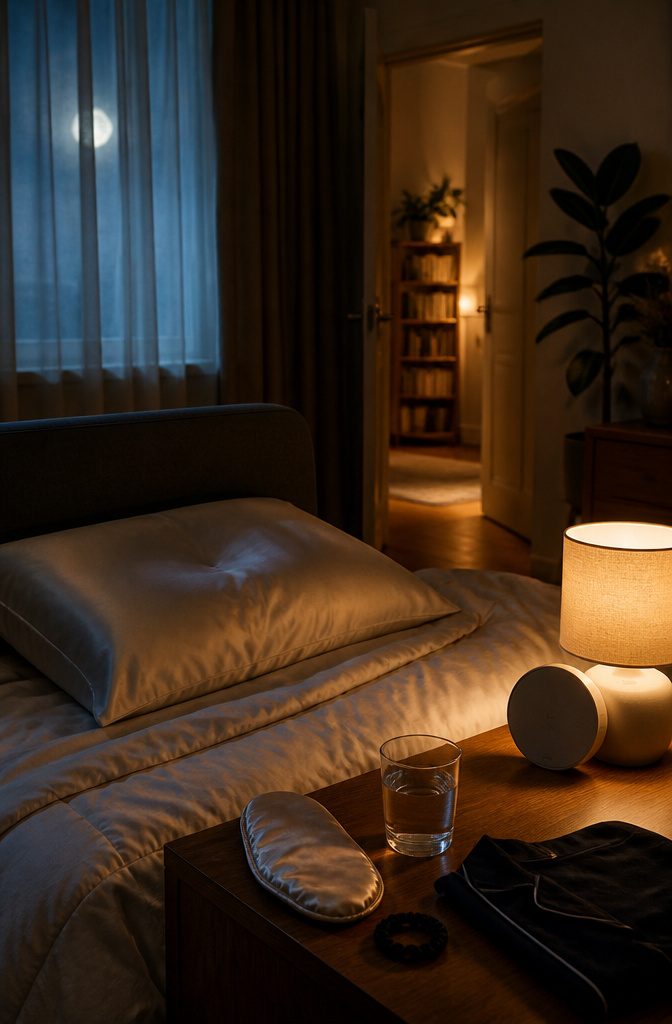
Getting 7–9 hours of sleep each night matters more for your scalp than most people think. Sleep disturbances link directly to androgenetic alopecia, and chronic lack of sleep raises stress levels enough to trigger shedding on its own.
I treat this like any other part of the routine: if you skip it, the other steps work less well.
A regular schedule helps more than the occasional long night. Going to bed and waking at roughly the same time every day keeps cell regeneration steady, and your follicles depend on that cycle to stay functional.
A bedtime routine signals the wind-down: dim the lights an hour before, skip the late coffee, and keep screens out of the last stretch if you can.
The claim here is modest because only a few sources cover sleep directly, but the logic holds. Poor sleep thins growth over time, and fixing it costs nothing.
11. Regular Exercise

The usual recommendation is at least 60 minutes of aerobic exercise, several times per week.
A brisk walk, bike ride or jog all count. The proposed link runs through three side effects: a healthier scalp, less stress tied to anxiety and depression, and better sleep.
None of these acts directly on the follicle, so the support is thin and indirect. I wouldn’t expect exercise to regrow thinning hair on its own.
It still earns a spot on the list because it costs nothing and may delay progression and ease symptoms. I’d treat it as a supporting habit alongside treatments with firmer evidence, never a replacement for them.
12. Alcohol and Tobacco
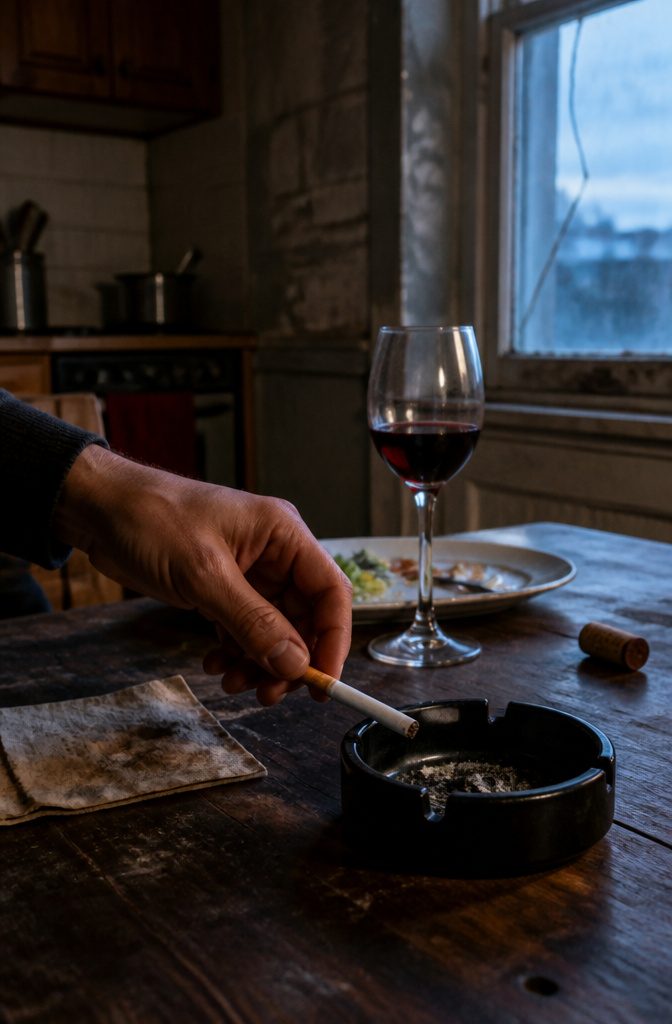
Smoking has the clearer link to hair trouble. It causes inflammation that might contribute to alopecia areata, an immune-related type of hair loss, and smoking alongside a poor diet can affect growth more broadly.
If you smoke and are watching your part widen, cutting back or quitting is the habit change I’d rank first here, especially if you already have patchy loss.
Alcohol is murkier. It may raise the risk of alopecia areata by triggering an immune response, yet a drink in moderation can ease the stress that comes with that kind of hair loss.
Researchers haven’t settled which effect wins, so I wouldn’t give up a glass of wine for your hair alone.
13. A Clinician’s Assessment
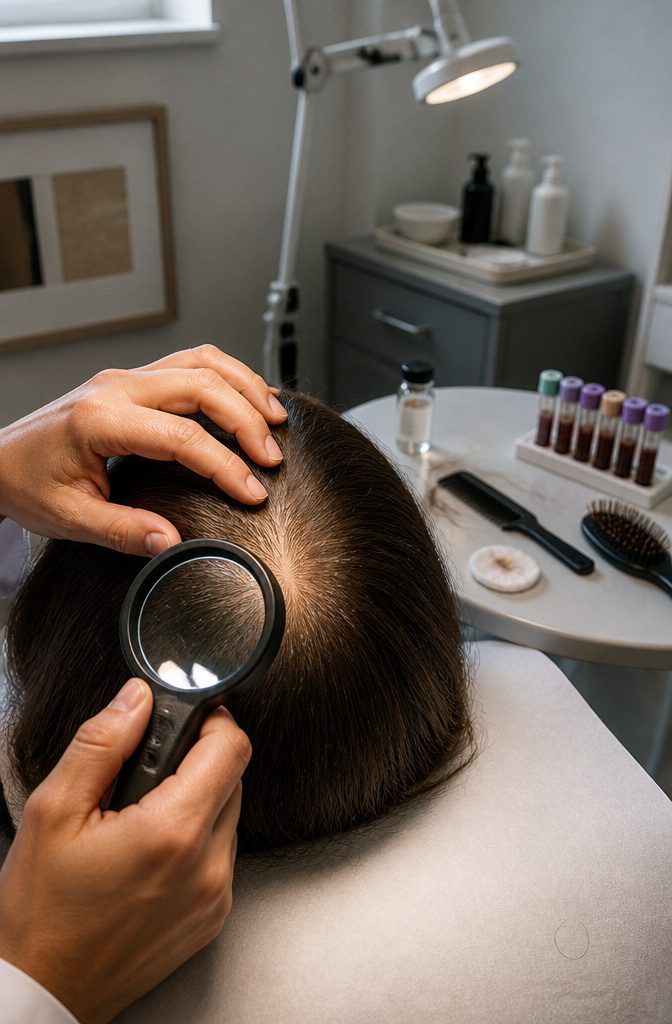
Sudden shedding calls for a doctor’s visit, not another shampoo. Illness, medication, and low iron or vitamin D can all be behind it, and guessing wrong costs months.
Bring a list of every medication you take, since some shrink follicles, plus a rundown of your diet and your styling habits: heat, color, tight updos. A dermatologist combines that history with a scalp exam.
If a fungal infection is suspected, a hair sample goes to the lab. Blood tests can check for thyroid problems, iron deficiency, sex-hormone imbalance and conditions like lupus.
I’d book the visit even when the loss is slow but upsetting you. Most causes can be stopped or treated, and results are better the sooner you start.
14. Minoxidil and Finasteride
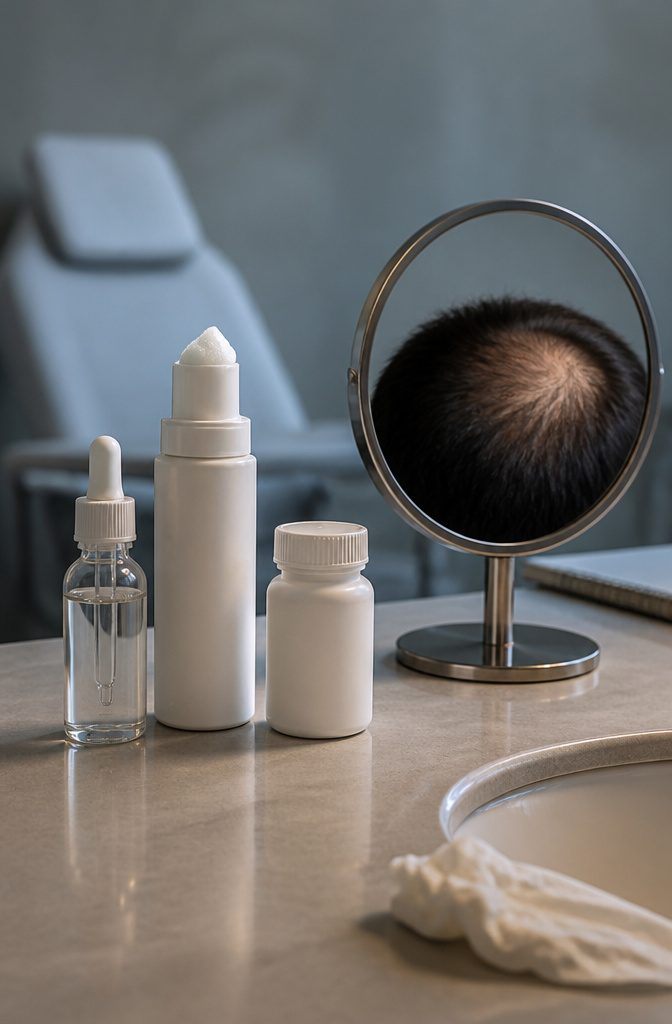
Minoxidil (Rogaine, Theroxidil or generic) is the only over-the-counter hair loss treatment the FDA has approved for both men and women.
It comes as liquid or foam, 2% or 5%; the 5% irritates more often. Apply it twice a day to dry, thinning spots and wait four months or more before judging.
It works for about 2 out of 3 men, and the hair goes again if you stop. Oral doses usually run 2.5 to 5 milligrams daily.
Finasteride (Propecia) blocks DHT and slows or stops loss in nearly 90% of men, and about two-thirds regrow some hair.
It is not approved for women and is unsafe in pregnancy. Side effects can take three months or more to clear after stopping.
15. Light, Injections and PRP
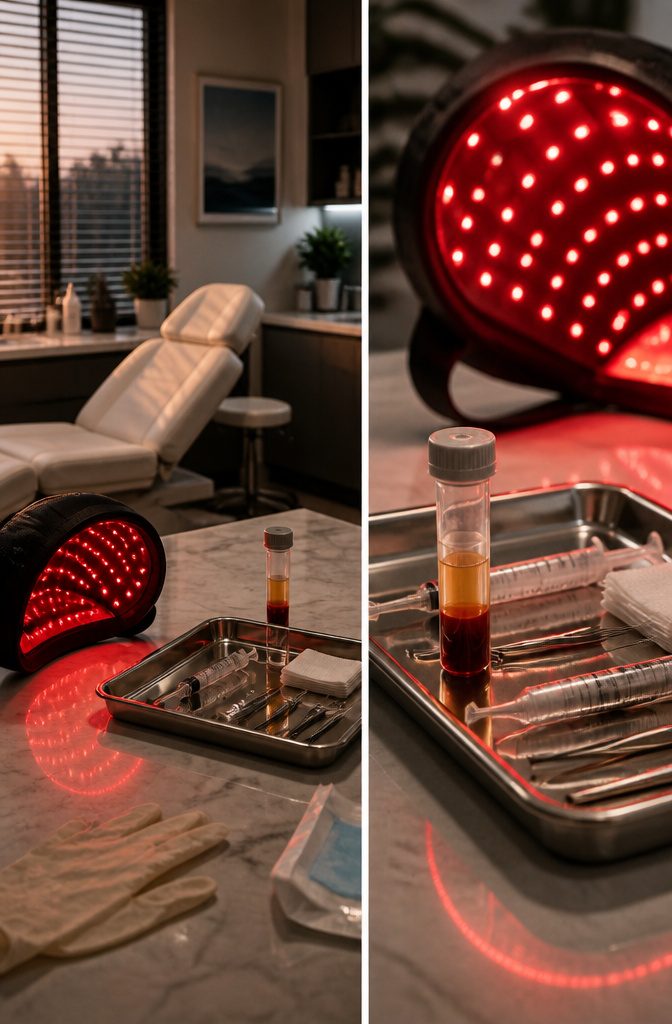
Cortisone shots earn their place when inflammation is driving the loss. Given about quarterly, they usually slow shedding as the scalp calms down, so they suit inflammatory conditions better than general thinning.
PRP sessions take about ten minutes and repeat monthly for several months, then retreatment every three to six months. Budget for that ongoing schedule before you start.
Light devices split opinion. Many doctors say the evidence for laser combs, caps and hoods is insufficient, while other reports credit red light with better density.
If you try one, look for 630–800 nm, use it 10 to 25 minutes, 2 to 3 times a week, and give it 4 to 6 months. I’d treat it as a low-risk add-on, not a first move.
16. Hair Transplants
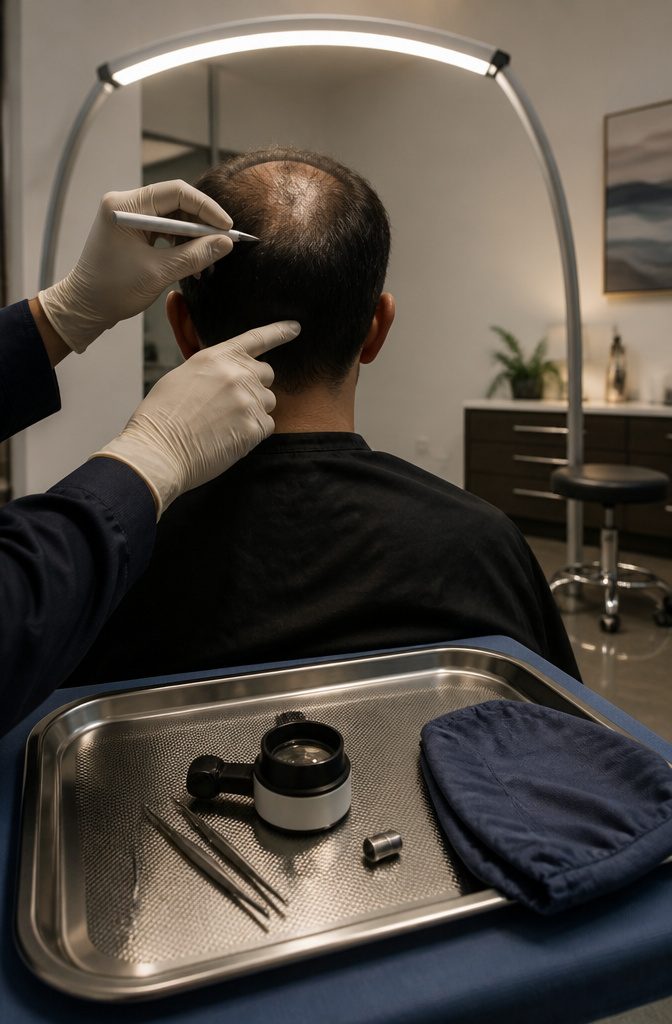
Hair Transplants
For persistent bald spots or pattern hair loss that hasn’t responded to other treatments, transplantation moves follicles from one area of the scalp to another.
U.S. Dermatology Partners notes that correctly performed results can look natural and are usually permanent. Harvard includes it among options for androgenetic alopecia.
This is a procedural choice for some people, not a first step. I’d consider it only after working with a dermatologist to rule out reversible causes and after trying medication if that route made sense.
Transplants require recovery time, cost several thousand dollars, and work best when there’s enough donor hair left in areas that aren’t thinning.
What Causes Hair Fall
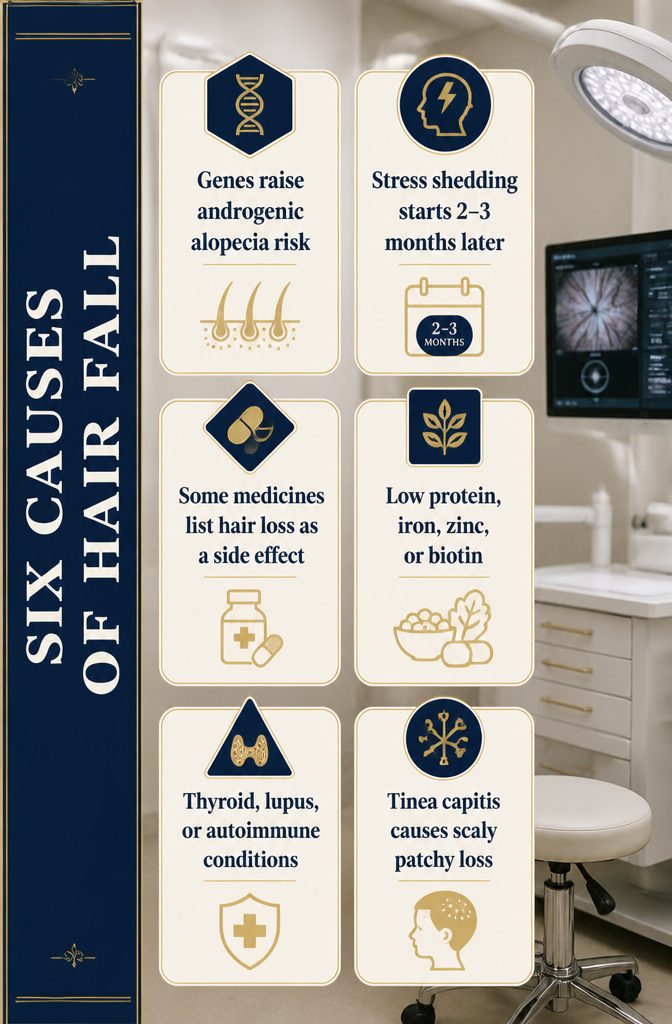
Hair fall has more than one cause, and which one is driving yours decides what will actually help.
- Heredity: androgenic alopecia, the most common type, is tied to your genes and gets likelier as you age.
- Stress: physical or psychological stress can trigger telogen effluvium two to three months after a major illness, surgery, infection or sudden hormone shift like childbirth. Moderate shedding from all over the scalp, rarely large bald patches.
- Medications: lithium, beta-blockers, some antidepressants, warfarin, heparin, amphetamines, levodopa and most cancer chemotherapy drugs can cause hair loss as a side effect.
- Nutritional deficiencies: low protein, iron, zinc or biotin, most common in restrictive diets or heavy menstrual flow.
- Hormonal or medical conditions: thyroid disorder, lupus, syphilis, sex-hormone imbalance, autoimmune alopecia areata.
- Scalp infections: tinea capitis, a fungal infection that causes patchy loss and scaly flaking, especially in children.
Diagnosis matters before you pick a fix, because a supplement that helps a deficiency does nothing for androgenic alopecia, and a topical that helps hereditary thinning will not treat a fungal infection.
50 to 100 Hairs a Day
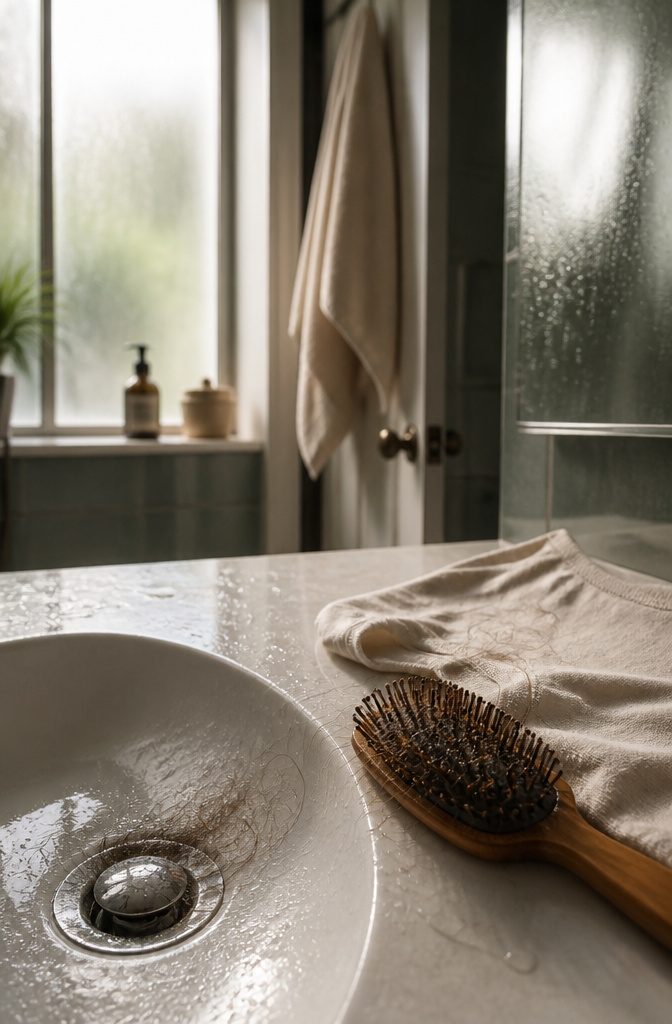
Before you worry that every shower is thinning your hair, the baseline matters.
Your scalp sheds roughly 50 to 100 hairs each day, and that figure is ordinary maintenance, not loss. Hair grows in cycles, and a portion is always letting go to make room for new growth.
We normally lose approximately 50 to 100 scalp hairs each day. If more than this is falling out, you may find unusually large amounts of hair in brushes, on clothing, and in the drains of sinks and tubs.
What tips you past normal is volume you can see: clumps in the drain, hair all over your shirt, a widening part or a hairline that has moved back.
If the shedding feels sudden or distressing, see a doctor. Illness, medication, or low iron or vitamin D can trigger it, and catching the cause early gives you more options to reverse it.
Prescription Options by Cause
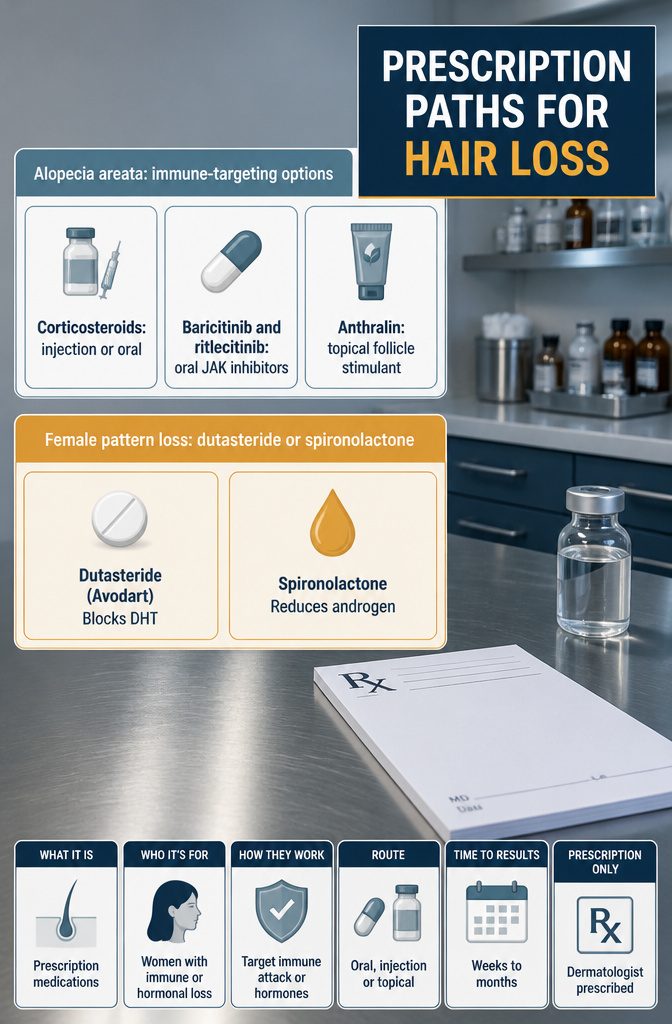
When loss follows a pattern the body set or an autoimmune reaction, prescription drugs give you paths minoxidil and finasteride cannot touch.
Alopecia areata, where the immune system attacks follicles in patches, responds to corticosteroids injected into the scalp or taken by mouth, the JAK inhibitors baricitinib (Olumiant) and ritlecitinib (Litfulo), and topical sensitizers like anthralin cream, diphenylcyclopropenone, or squaric acid dibutyl ester.
For androgenetic alopecia in women, dermatologists prescribe dutasteride (Avodart), a stronger DHT blocker than finasteride, or spironolactone, which reduces androgen activity. The table below compares route and mechanism.
| Drug | Used For | How It Works | Route |
|---|---|---|---|
| Corticosteroids | Alopecia areata | Suppress immune attack | Injection or oral |
| Baricitinib (Olumiant) | Alopecia areata | JAK inhibitor | Oral |
| Ritlecitinib (Litfulo) | Alopecia areata | JAK inhibitor | Oral |
| Anthralin | Alopecia areata | Irritant, stimulates growth | Topical |
| Dutasteride (Avodart) | Pattern loss | Blocks DHT | Oral |
| Spironolactone | Pattern loss | Reduces androgen | Oral |
Frequently Asked Questions
Can hair loss be reversed?
Often partly, depending on the cause. Shedding after illness, surgery or childbirth (telogen effluvium) grows back over several months, and minoxidil works for about 2 out of 3 men while you keep using it.
Pattern loss is usually slowed rather than cured, so a dermatologist should identify the cause before you choose a plan.
When should I see a doctor for hair loss?
See one if the shedding is sudden, or if slower loss is upsetting you.
Illness, medication, and low iron or vitamin D are common triggers, and most causes can be stopped or treated. Results are better the sooner you start.
What should I avoid if my hair is thinning?
Avoid harsh at-home chemical treatments such as colors, straighteners and perms, and limit hot tools to once a week or less.
Tight ponytails and braids also pull on follicles. Smoking and a poor diet may affect growth too.
What is minoxidil and does it work?
Minoxidil (Rogaine) is the only over-the-counter hair loss treatment the FDA has approved for both men and women.
You apply the 2% or 5% liquid or foam twice a day to thinning spots and wait 4 months or more to judge it. It can boost growth but does not cure baldness, and the new hair is lost if you stop.
What is finasteride and who can take it?
Finasteride (Propecia) is a pill that blocks DHT, the hormone behind male pattern hair loss.
It slows or stops loss in nearly 90% of men, and about two-thirds regrow some hair. It is not approved for women and is unsafe during pregnancy.
Can biotin help with hair loss?
Only if you are low on it.
A true deficiency can cause shedding, but no studies show biotin prevents or treats hair loss in people who eat normally. Get tested before buying supplements, since exceeding the daily recommended amount of any vitamin can cause side effects.
Can low iron cause hair thinning?
Yes.
Iron-deficiency anemia can show up as hair loss, though it is not common. A blood test is the only way to know if it applies to you, so check your levels before starting iron supplements.
Does low-level laser therapy work for hair loss?
The evidence is split. Many doctors say it is insufficient to show that laser combs, caps or hoods restore hair or prevent balding, while other reports credit red light with better density.
If you try one, look for 630–800 nm, use it 10 to 25 minutes, 2 to 3 times a week, and give it 4 to 6 months.
Does hair oil reduce hair fall?
Oils have weaker backing than red light, caffeine or topical melatonin.
In one small study, rosemary oil matched minoxidil after 6 months. Dilute any oil first, since irritation and allergic reactions happen.
What is hair loss?
It ranges from mild thinning to total baldness and has many possible causes, including genes, stress, medications, nutrient gaps, hormonal conditions and scalp infections.
Shedding 50 to 100 hairs a day is normal. Clumps in the drain, a widening part or a receding hairline point to real loss.