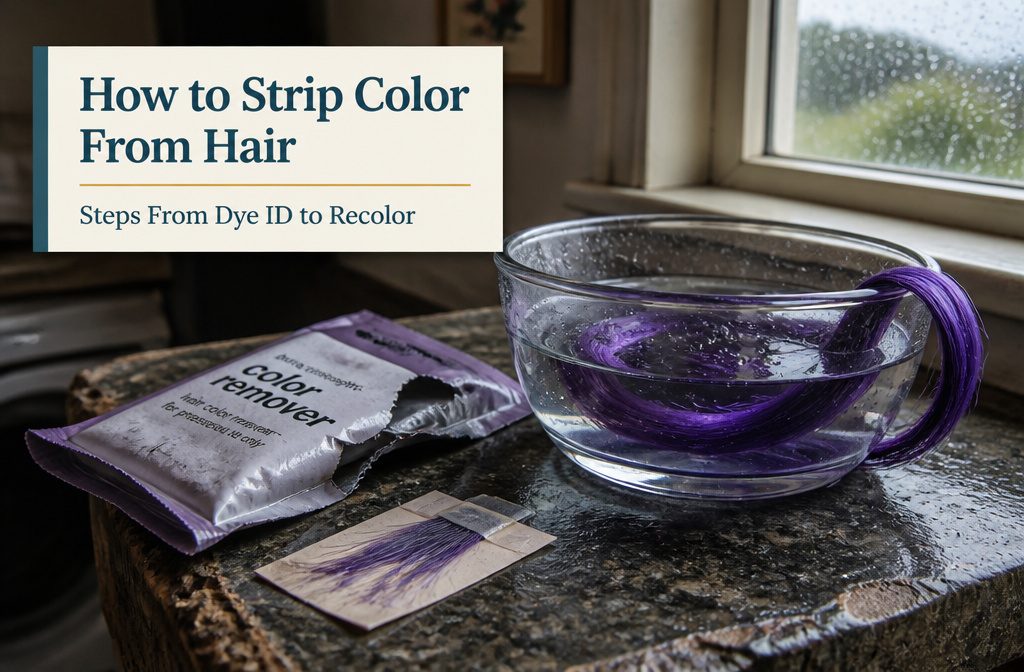
Most color can be stripped at home in an afternoon with a remover, 20 minutes per round, but stubborn shades can take 3 or 4 rounds.
Dye type decides everything: semi-permanent fades with washing, while bright reds, blues and violets resist, and bleached hair can hold fashion dye like Manic Panic almost permanently. Strand test first.
1. Identify the Dye and Goal
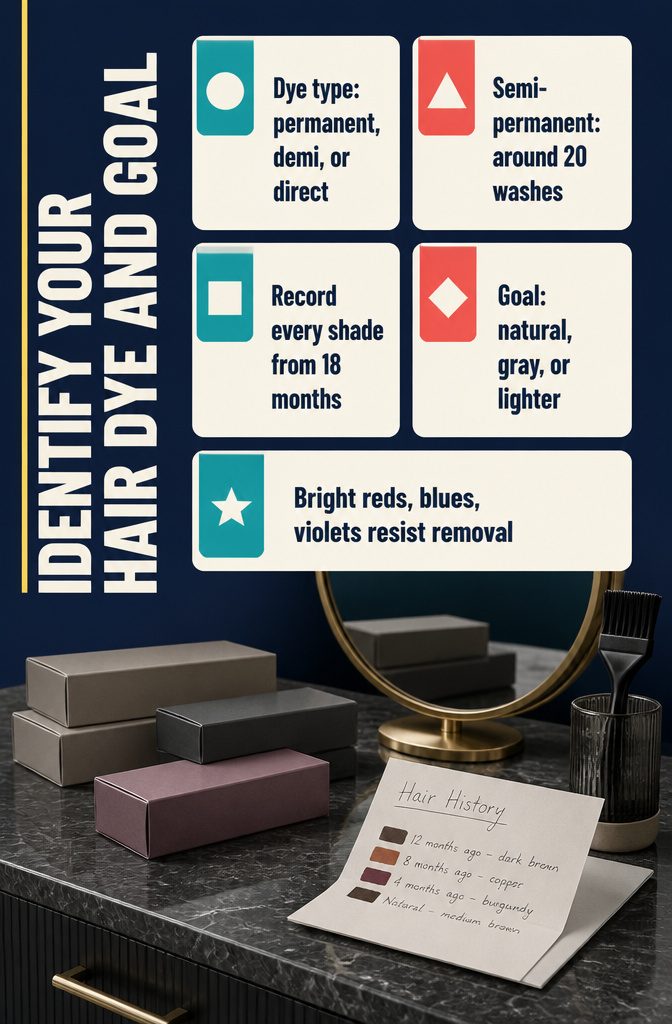
Four details decide the removal method:
- Dye type: permanent, semi- or demi-permanent, or direct fashion dye.
- Age: semi-permanent dye is typically designed to last around 20 washes.
- History: every color on the hair in the last 18 months, plus your natural shade.
- Goal: back to natural, growing out gray, or lightening a shade that went too dark.
- Difficulty: bright reds, blues and violets are harder to undo than regular oxidative dyes.
Semi-permanent is the easy case:
Semi-permanent dye doesn’t penetrate the hair shaft like permanent dye, it just stains the outside. This means it can be faded out at home more easily.
If that’s your dye, frequent washing can fade it without a salon visit.
2. Choose a Removal Route
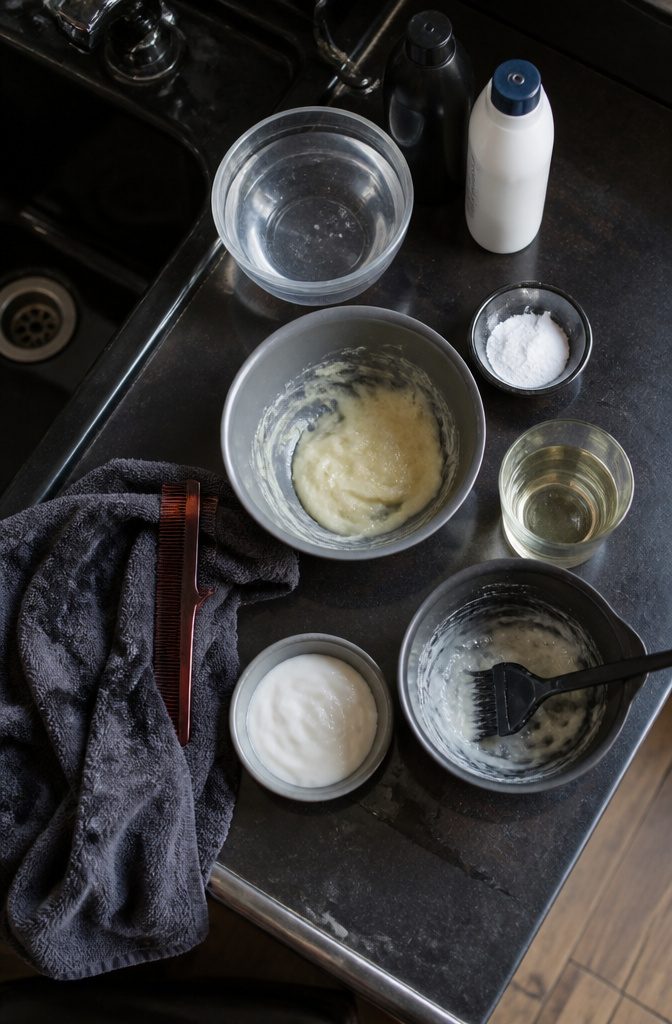
Fresh color fades more easily, so with an unwanted dark result act right away or within 48 hours.
Vitamin C works best on dye under 3 days old. These routes are not interchangeable, so match the method to the dye before you start.
| Route | Best match | Time on hair |
|---|---|---|
| Repeated washing | Fresh or semi-permanent dye | n/a |
| Dandruff shampoo and baking soda | Fresh or semi-permanent dye | 5–7 minutes |
| Vitamin C paste | Dye under 3 days old | 1 hour |
| Vinegar rinse | Home fading | 15–20 minutes |
| Color remover or stripper | Artificial oxidative pigment | n/a |
| Salon | Hard cases | n/a |
I’d start with washing, since it costs nothing.
3. Prepare and Strand Test
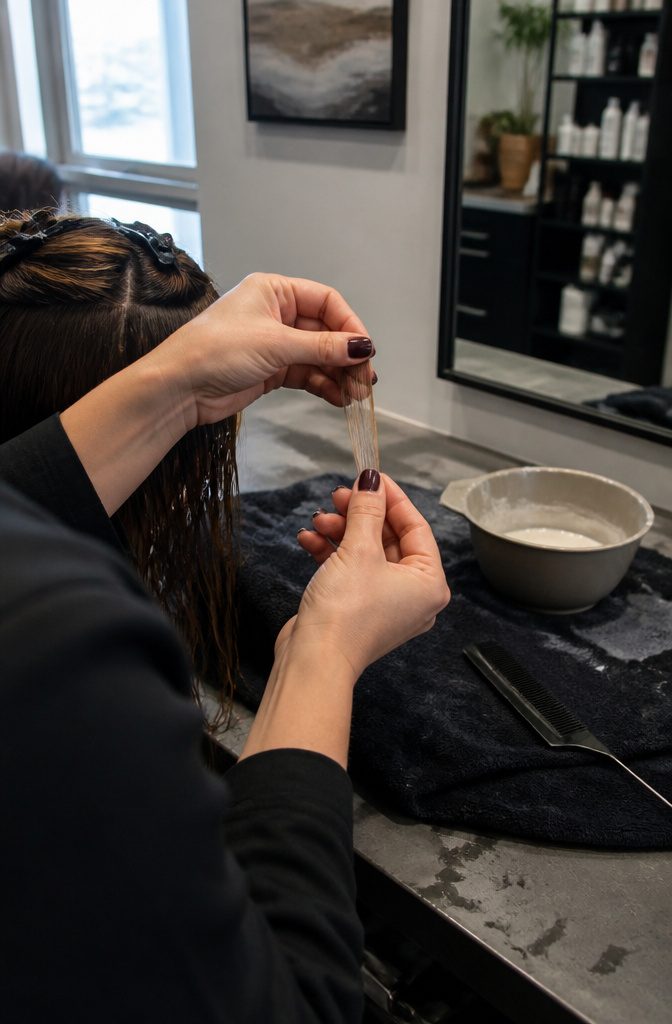
Clarify the hair before anything else, even if you conditioned yesterday. A film of product can block remover, and if nothing changes at all, heat-molded silicone may be the cause.
Apply remover only to dry hair with no serum, toner, color-lock or color-enhancing product on it, since those can stop it from working.
Test one strand first. It previews how far the color lifts and what tone is left underneath, including any warmth, and I’d never skip it: color can lift faster than expected and leave hair more compromised.
A salon will want a 48-hour patch test before correction, even if a box dye never bothered your skin.
4. Apply the Method
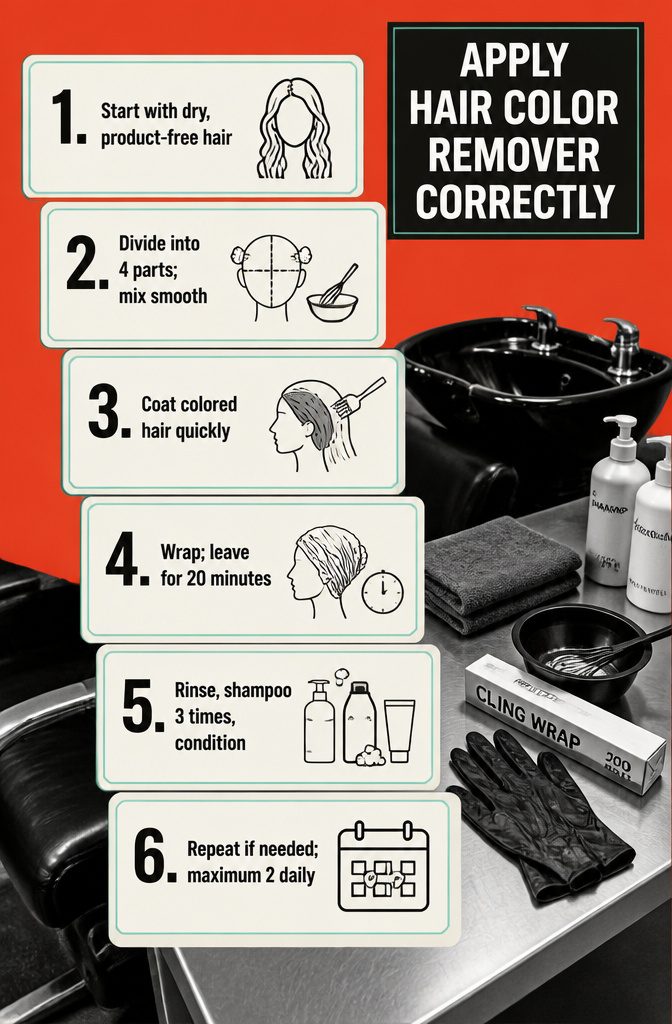
- Start with dry hair free of styling products, serums and toners, which block the remover.
- Section hair into 4 parts and mix the remover until smooth.
- Work fast, since it weakens as it sits. Coat colored hair generously and skip natural regrowth.
- Wrap in cling wrap and leave it on 20 minutes; longer adds nothing.
- Rinse well, shampoo 3 times, then condition.
- Repeat if needed, up to 2 applications a day, always on dry hair. Massage it into the darkest spots; stubborn color can take 3 or 4 rounds.
No remover? Mix 4 or 5 drops of Dawn or Palmolive into shampoo, or blend Head & Shoulders or Original Formula Prell with baking soda.
Both dry hair out. A soap cap (shampoo plus bleach, about 20 minutes under a cap) belongs in a stylist’s hands.
5. Rinse and Reassess
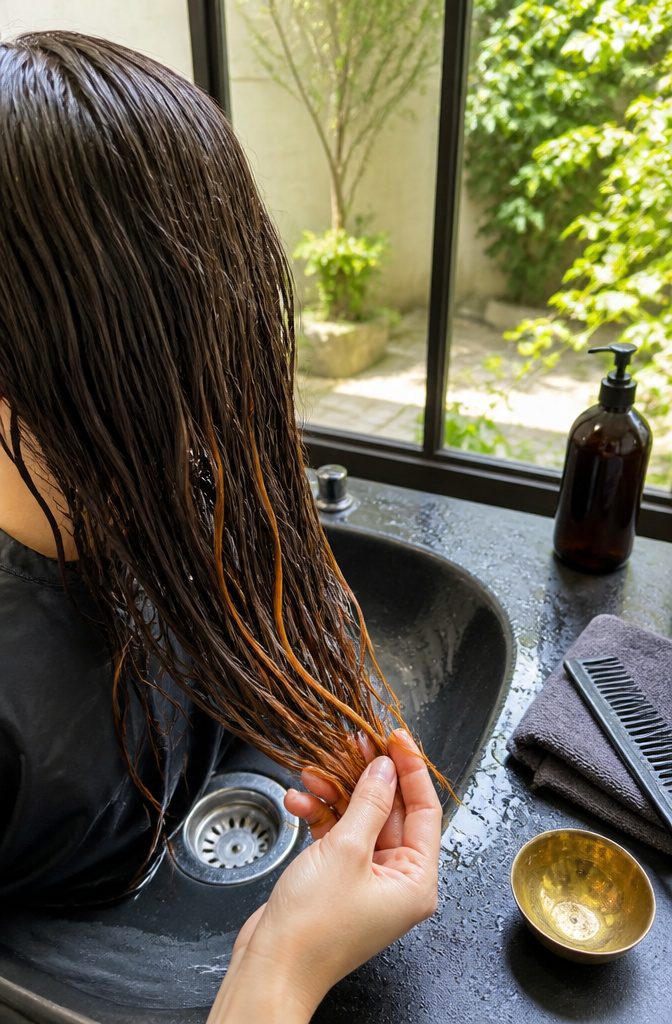
Rinse until the water runs clear, then shampoo three times, looking at the hair after each wash instead of running all three on autopilot.
If the color has faded where you want it after two, stop there, since extra washing only dries the strands.
Warmth often appears once the artificial pigment lifts.
The hair underneath can look brassy, yellow or even orange, a shade the dye was covering. Check the result in daylight before you decide whether to go again.
A salon looks at the hair again at this stage, judging what is exposed rather than what was there.
A toner then balances the warmth and cools the brass so the base reads even. I’d treat orange as a signal to pause, not a reason to strip again right away.
6. Wait Before Recoloring
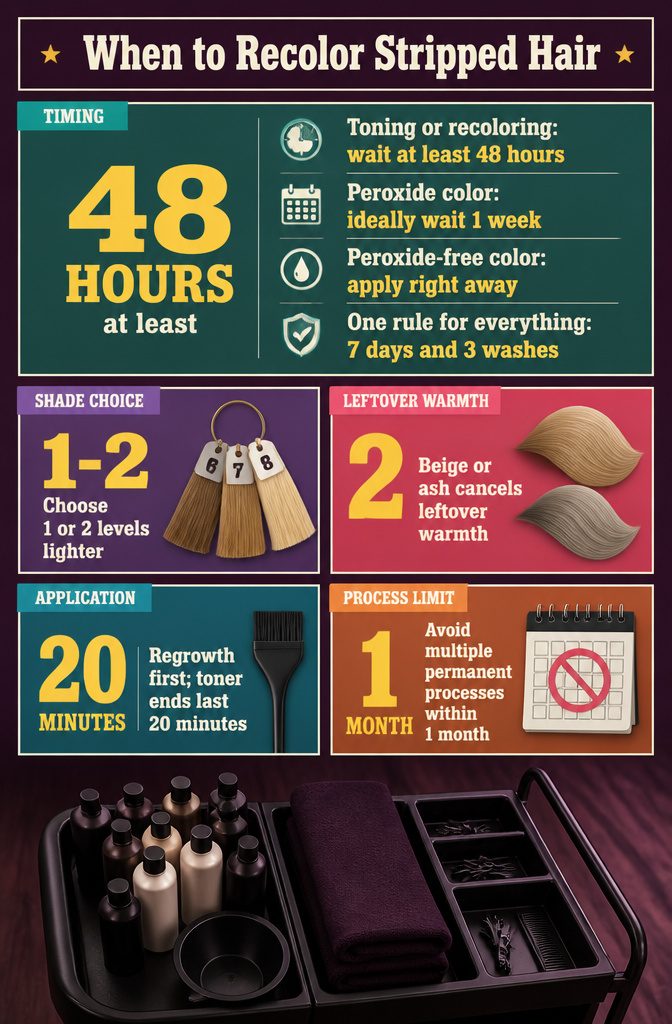
Your wait depends on what goes on next, and the numbers differ by method:
- Toning or recoloring: wait at least 48 hours.
- Peroxide-based color after a remover: ideally 1 week, because remover chemistry and peroxide work against each other.
- Peroxide-free semi-permanent color or a toner: go ahead right away.
- If you want one rule for everything, I’d use 7 days and 3 washes.
- Shade choice: go 1 or 2 levels lighter than your old color, so 6 Dark Blonde becomes a 7 or 8.
- Leftover warmth: beige or ash shades cancel it.
- Application: color the regrowth first, then pull a toner through the ends for the last 20 minutes.
- Limit: don’t stack several permanent color processes within 1 month.
7. Maintain Hair Condition
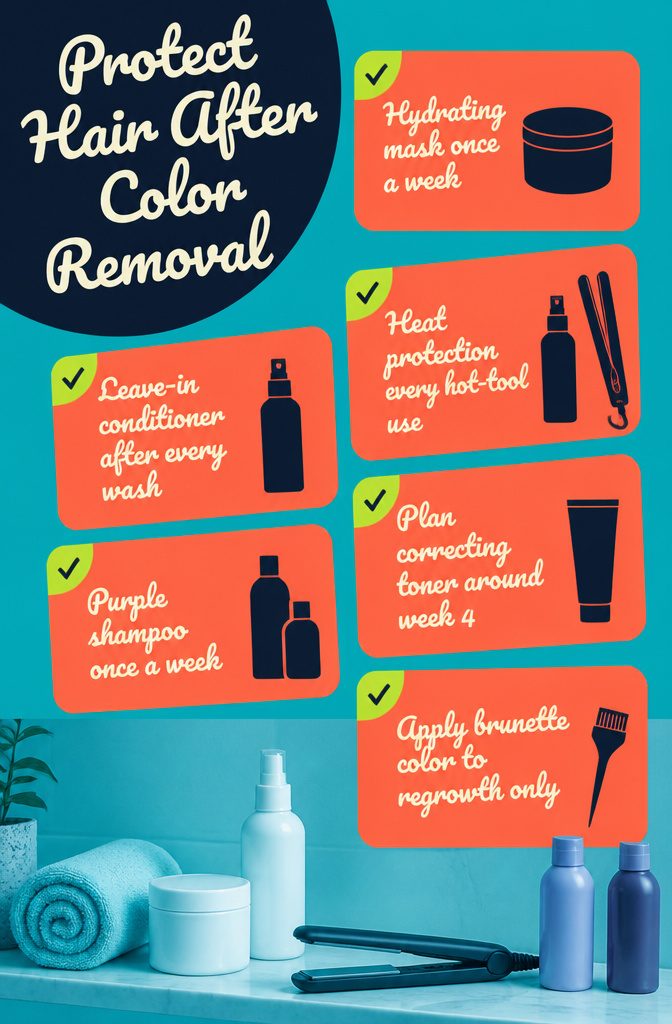
Stripped hair is parched, so the routine afterward matters as much as the removal:
- A hydrating mask once a week; Aveda’s Botanical Repair range is one example.
- Leave-in conditioner after every wash.
- Heat protection every single time you use a hot tool, since unprotected irons speed color fade.
- Purple shampoo once a week.
- Warmth can return as a cooler color fades, so I’d plan a correcting toner around week 4.
- Brunette color on regrowth only, never through the lengths, to prevent build-up.
Repeated peroxide, ammonia and PPD exposure leaves hair porous and damaged. Porous hair grabs color too dark or patchy, then fades fast.
Remover Versus Stripper
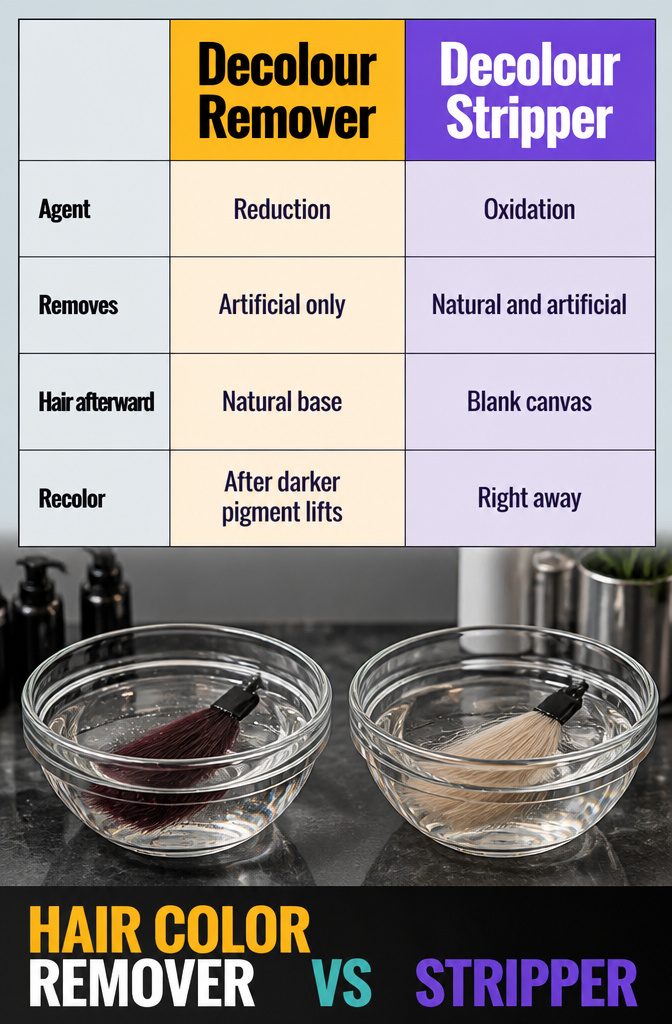
Decolour Remover and Decolour Stripper sound interchangeable, but they work differently.
The remover uses a reduction agent that breaks down artificial color molecules so they rinse out, and it cannot touch your natural pigment. The stripper uses an oxidation agent and lifts natural and artificial pigment together.
| Decolour Remover | Decolour Stripper | |
|---|---|---|
| Agent | Reduction | Oxidation |
| Removes | Artificial color only | Natural and artificial pigment |
| Hair afterward | Natural base intact | Blank canvas |
| Recolor | Lighten once darker pigment is out | Right away, to a different or lighter permanent shade |
For a return to your natural shade, I’d start with the remover.
Choose the stripper only if you’re going lighter, and have the new color on hand before you strip, because no natural pigment is left to show through. Colour Restore is the peroxide-free option for afterward.
When Home Methods Fall Short
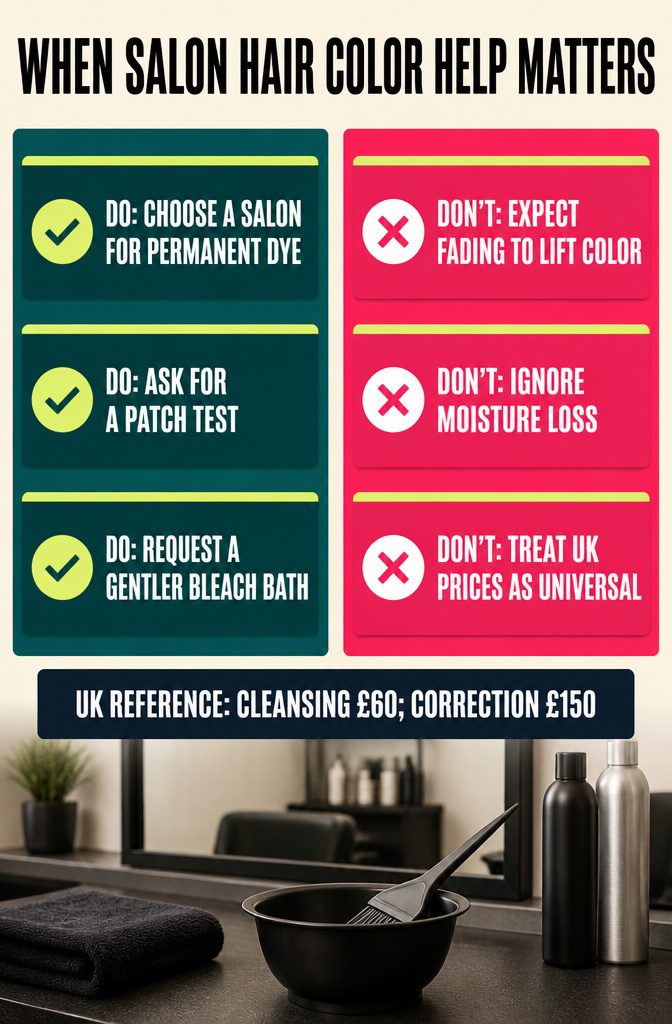
Home removal costs you moisture, and the result is hard to predict.
Fading only lightens color; it doesn’t lift it out. Stirring 2 tablespoons of baking soda into a small bottle of Head and Shoulders and washing daily lightened one dye job over three or four months.
For permanent dye or a stubborn shade, the salon is the safer route. A colorist patch tests first, then runs a bleach bath (bleach mixed with shampoo), which is gentler than a full bleach kit.
Next comes corrective color: a cool-toned brown, with demi-permanent dye on the lengths and ends to knock down warmth without going too dark. Toner finishes it.
In the UK, color cleansing starts at £60 and full correction at £150. Treat that as a UK reference only.
Stubborn Fashion Dyes
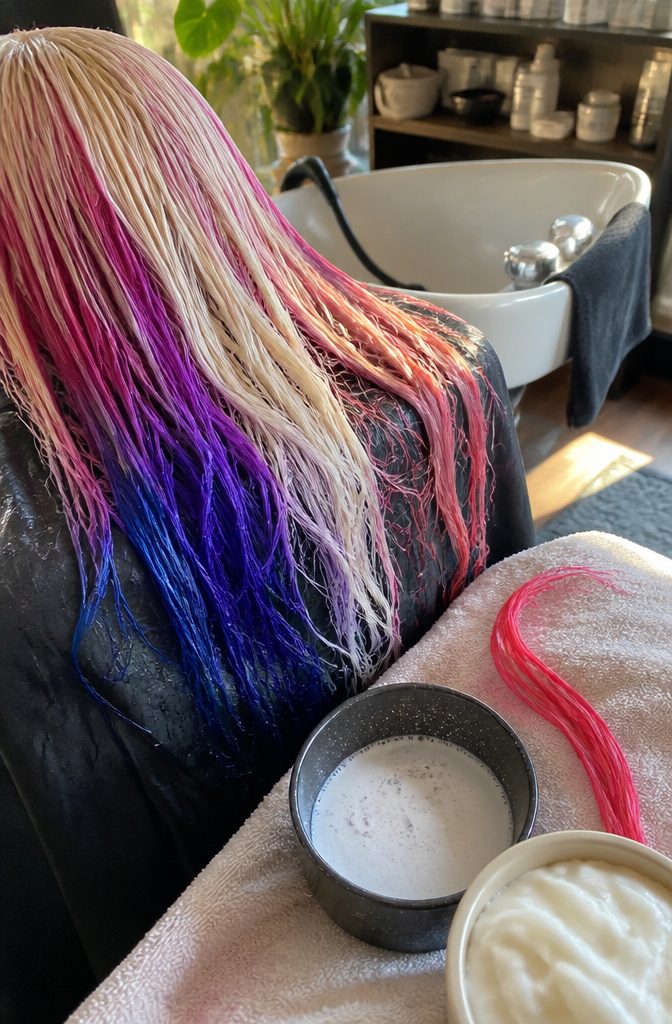
Pink, blue, purple and often bright red fashion shades like Manic Panic, Punky Color and Color Oops are direct dyes.
They stain the hair’s surface instead of working through peroxide. On bleached hair that stain can sink in so deeply it looks permanent, and a standard color remover isn’t built for it.
A stripper-style color cleanse can lift direct dye, but strand test first, since bleached hair may not tolerate it.
Home fixes lighten more than they remove. Dandruff shampoo mixed with baking soda is the popular one, and one person who washed with it daily saw her color fade over three or four months.
It’s rough on hair, so follow with a rich conditioner, and expect lighter, not gone.
Frequently Asked Questions
How can I remove hair dye from my hair?
Start with repeated washing, since it costs nothing and works best on fresh or semi-permanent dye.
If that stalls, try dandruff shampoo with baking soda, a vitamin C paste (only on dye under 3 days old), or a color remover for permanent oxidative dye. Permanent dye or a stubborn shade is safer in a colorist’s hands.
How do I use hair color remover?
Apply it to dry hair with no serum, toner or styling product on it. Section the hair into 4 parts, coat only the colored hair, wrap it in cling wrap for 20 minutes, then rinse well, shampoo 3 times and condition.
You can repeat up to 2 times a day, and stubborn color can take 3 or 4 rounds. Strand test first, and follow the package directions for your specific brand.
Can baking soda remove hair dye?
It can fade semi-permanent dye, and sometimes demi-permanent depending on the dye, but it lightens color rather than lifting it out.
Mix it with dandruff shampoo in equal parts, lather it in and leave it 5–7 minutes. It dries hair out, so follow with a rich conditioner and expect lighter, not gone.
What if my hair has semi-permanent dye?
You’re in the easiest situation, because semi-permanent dye only stains the outside of the hair instead of entering the shaft.
Wash more often than usual with a clarifying or anti-dandruff shampoo and use a deep conditioner each time. Most are designed to last around 20 washes, so it should fade gradually with patience.
Can I color my hair after using color remover?
Yes, but the wait depends on the color. A toner or peroxide-free semi-permanent color can go on right away.
Toning or recoloring generally needs at least 48 hours, and peroxide-based color is best left for about 1 week because remover chemistry and peroxide work against each other. Choose a shade 1 or 2 levels lighter than your old color.
What does a salon do to fix unwanted hair color?
A colorist patch tests, looks over your hair and the existing color, then plans the correction. That often starts with a bleach bath (bleach mixed with shampoo), which is gentler than a full bleach kit.
If orange or brassy tones show up, a cool-toned brown plus demi-permanent dye on the lengths and ends knocks the warmth down without going too dark, and a toner finishes the result.