Texture and length narrow the list fast: Textured Boho Waves and Brushed Out Ends need length, the Textured Middle-Part Bob suits shorter hair, and the braids, twists and cornrows go best when you can name the style to your stylist.
Some looks ask for little more than a comb and a steady hand, like the Precise Center Part, while Middle-Part Box Braids and Icy Platinum mean booking a stylist.
Your hair’s natural pattern should make the first call, and I’d say most of these styles work with the bend instead of against it.
1. Textured Boho Waves
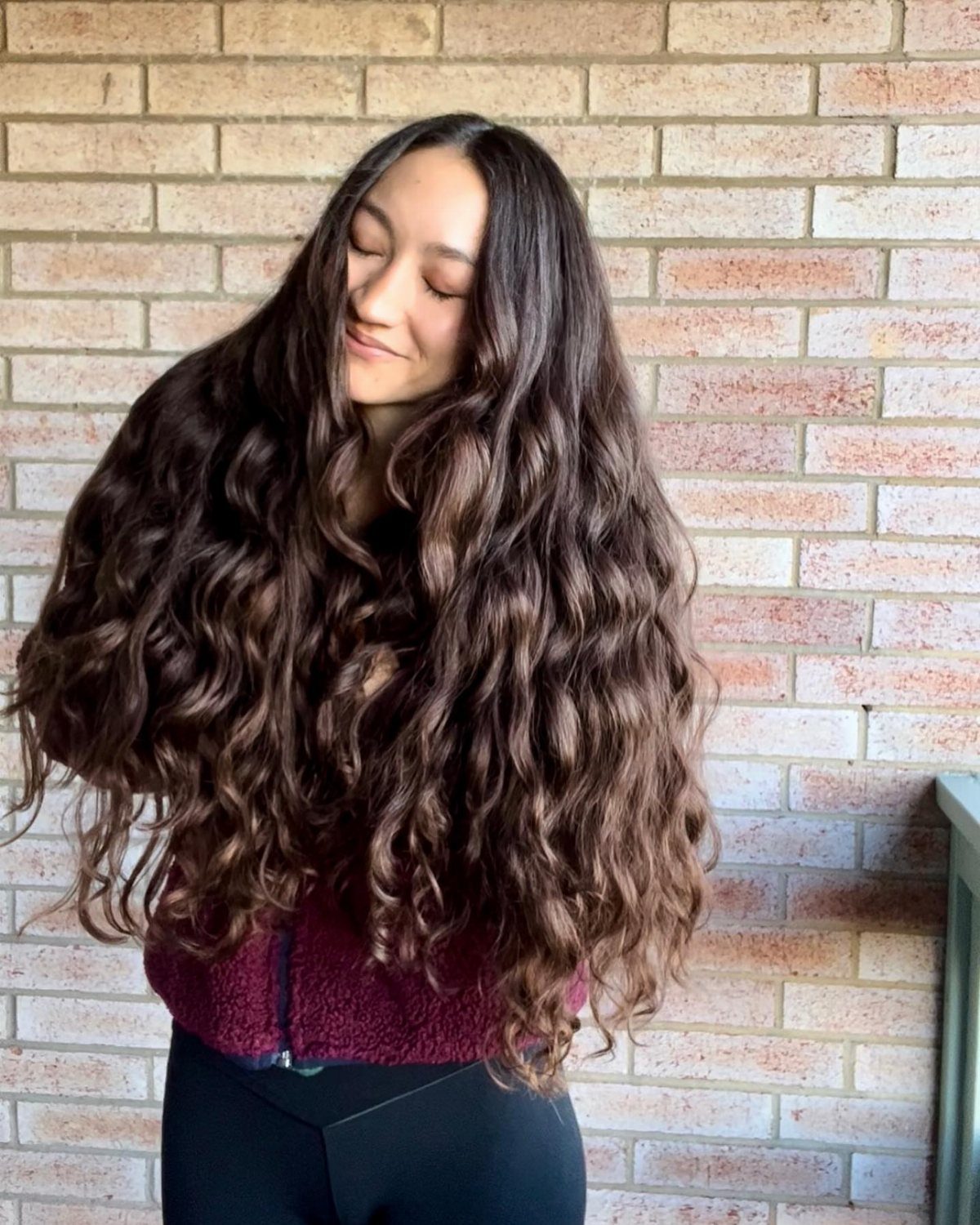
Loose, lived-in waves with a center part are the easiest texture look to wear on a day when nothing else is planned. Because the shape comes from your own bend, there is no fighting the hair into something polished.
I would keep product light so the waves stay soft and a little uneven. A part drawn down the middle with the tip of a comb is enough to frame the face.
This works best on long hair, where the weight lets the waves hang in loose S shapes.
2. Precise Center Part
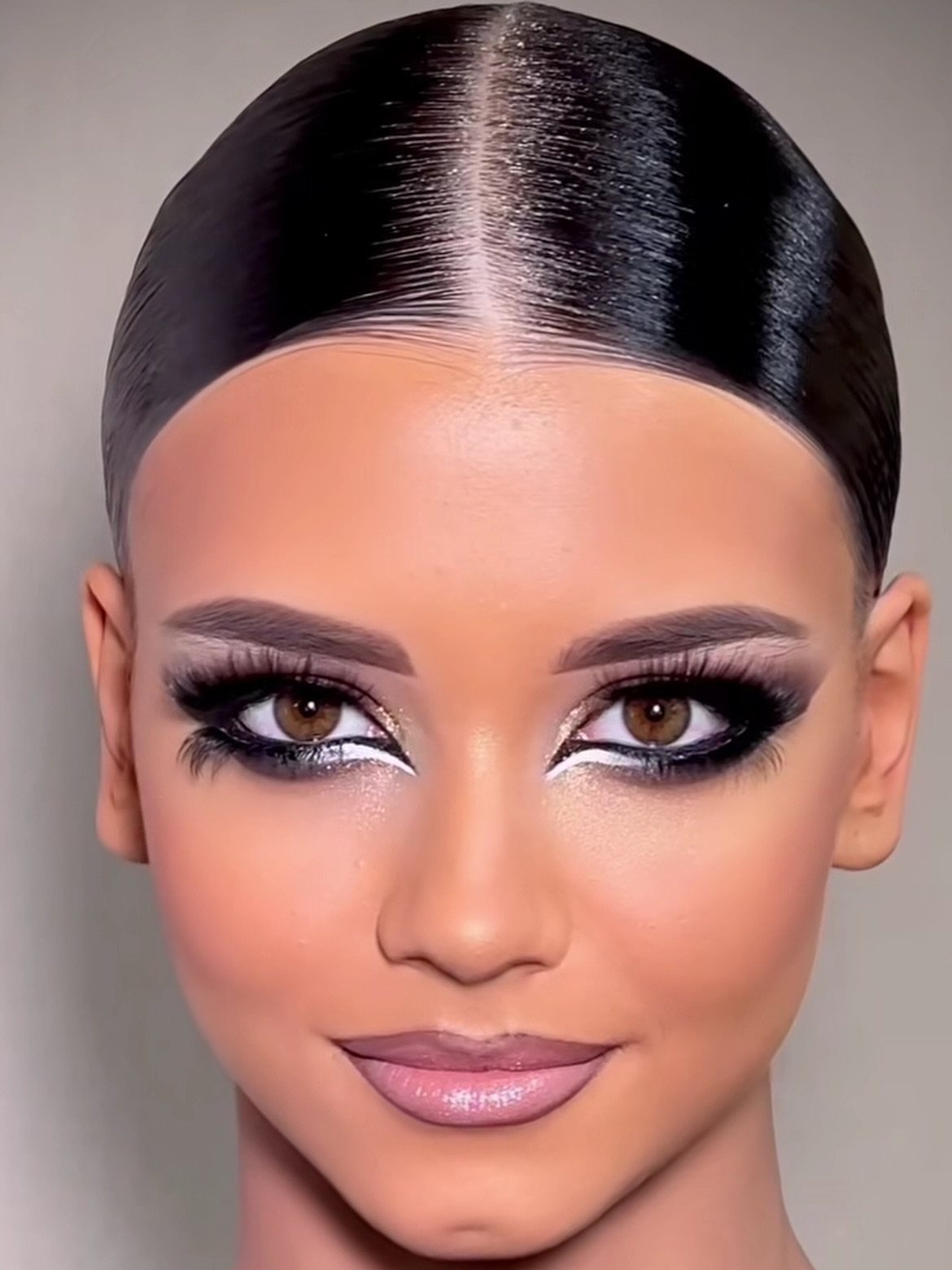
Glossy, flat and exact: this is the middle part at its most graphic. Every strand is smoothed down on both sides of a straight line, and any stray piece shows right away.
I like it for anyone who wants a sharp look without adding color or cutting a single inch.
Take a fine-tooth comb from the center of the forehead straight back, then smooth each side before the hair has a chance to wander.
A line this clean asks for a steady hand and a few extra minutes each morning, and that upkeep is the price of the look.
3. Tousled Middle Part
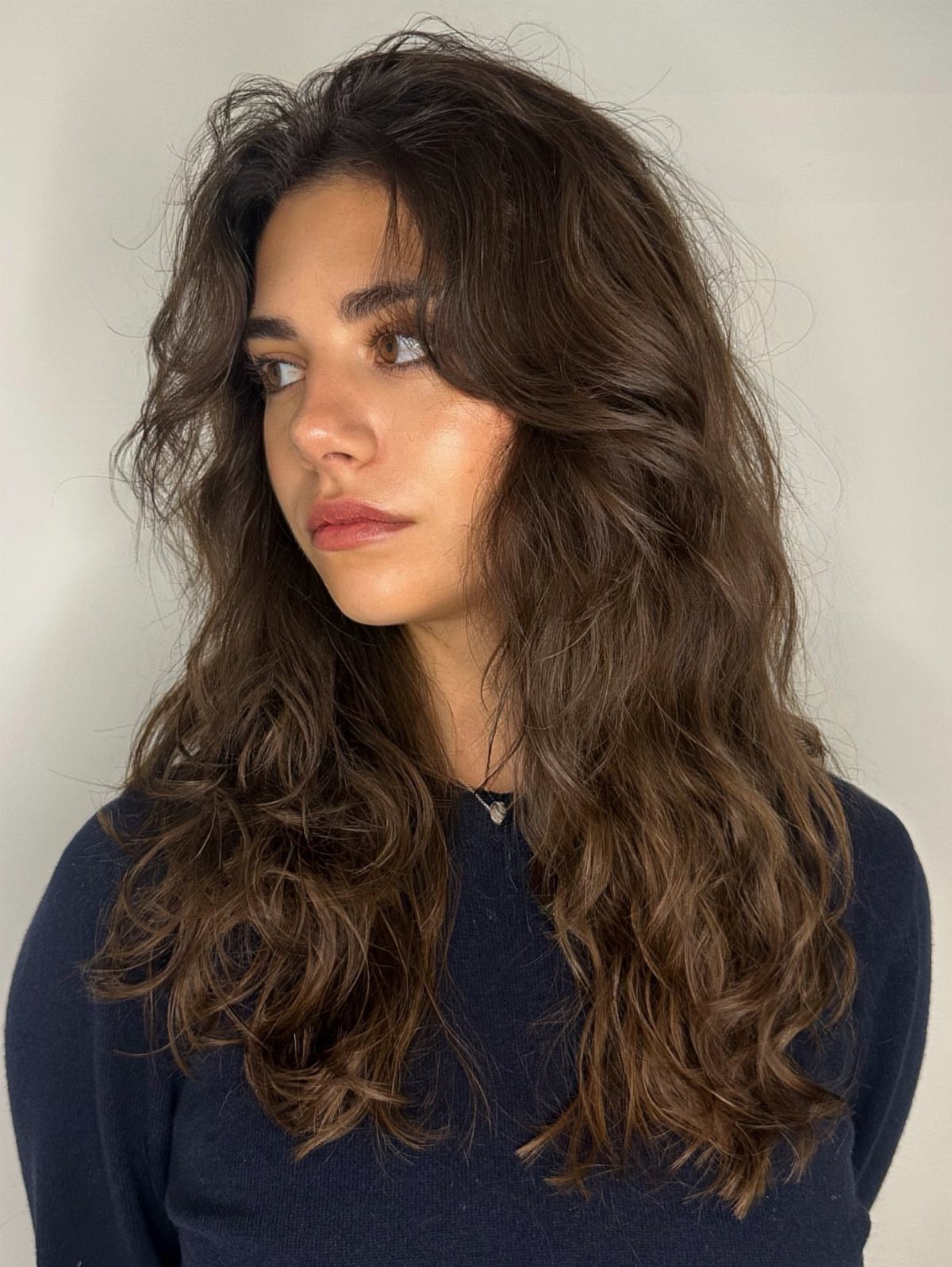
Tousled waves with a part down the middle look a little undone on purpose. The movement does the work, so there is no need for perfect curl definition.
My pick is to rough-dry the hair, then run your fingers through the lengths instead of a brush. That keeps the waves loose and a bit mussed, which is the whole appeal.
Part it with a comb first, then leave the rest alone. Overworking it flattens exactly the texture you are going for.
4. Brushed Out Ends
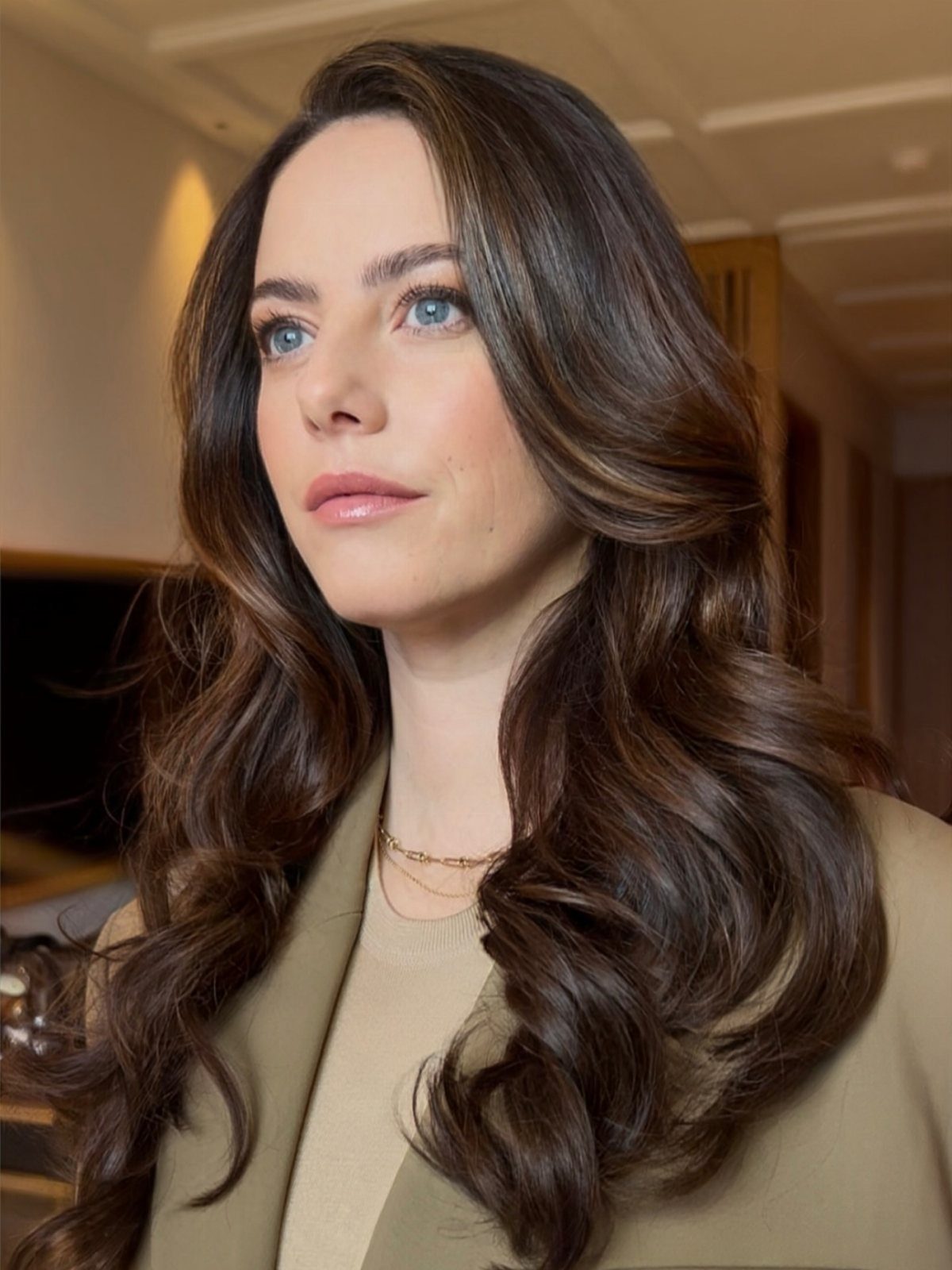
Brushed-out ends give a center part some bounce. Instead of tight, defined curls, the lengths finish in soft, full ends that look blown out and expensive.
To get there, curl the hair, then brush through the ends so the separate curls melt into one fuller wave. I would stop brushing as soon as the shape looks airy; keep going and it turns to frizz.
It suits long hair best, since the length gives the curled ends room to swing. Pair it with a clean, straight part so the volume looks intentional.
5. Jeweled Part
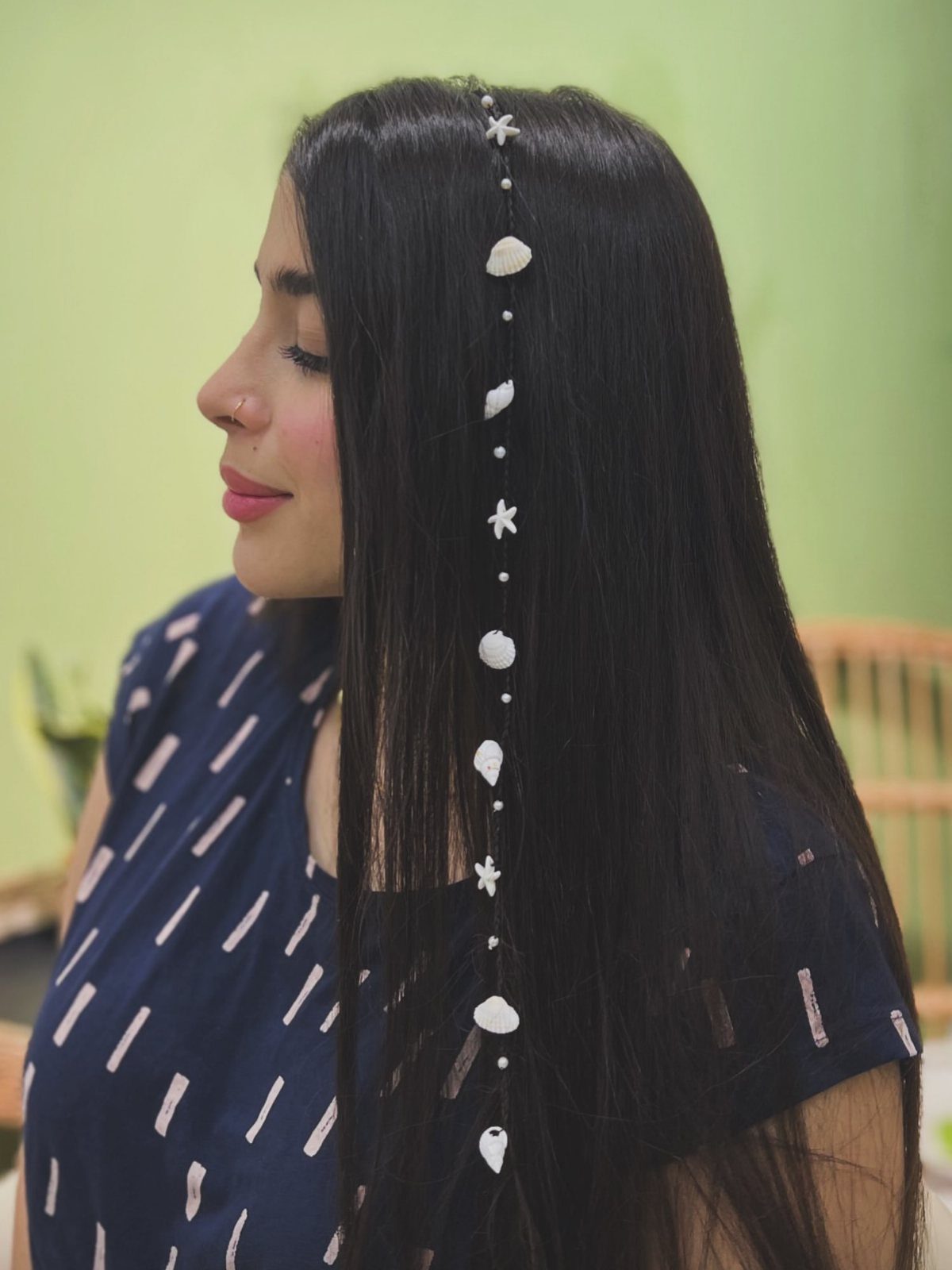
Pearls laid along the part turn a plain center line into the focal point of the whole look. A vertical string of white pearls and shells follows the part and catches the light against dark hair.
Dark hair makes the white stand out most, so I would choose this for black or deep brown lengths. Part the hair cleanly first, since a crooked line shows up with the jewelry on it.
Keep everything else simple. Straight, smooth hair lets the pieces do the talking.
6. Powderpuff Pink
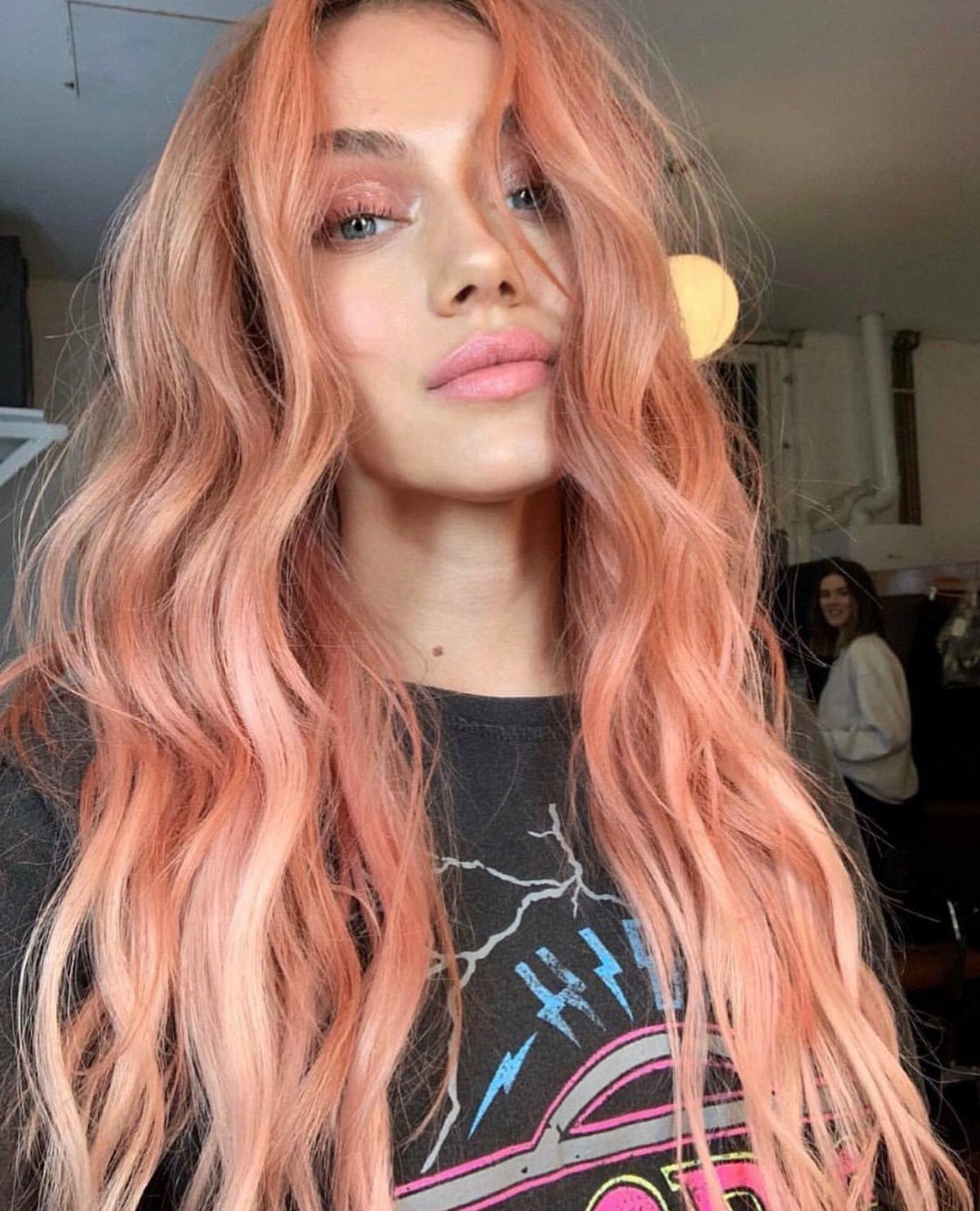
Pastel pink is a soft, sweet color, and a center part puts all of it on display on both sides of the face. The long waves add depth, so the shade reads as dimensional instead of flat.
I would pick this when you want a color change that still looks relaxed. Keep the styling loose, with waves left a little undone, so the pink feels casual rather than costume-like.
Light shades like this ask for more care than natural colors, so plan on gentle upkeep to keep the tone from fading.
7. Full-On Shine
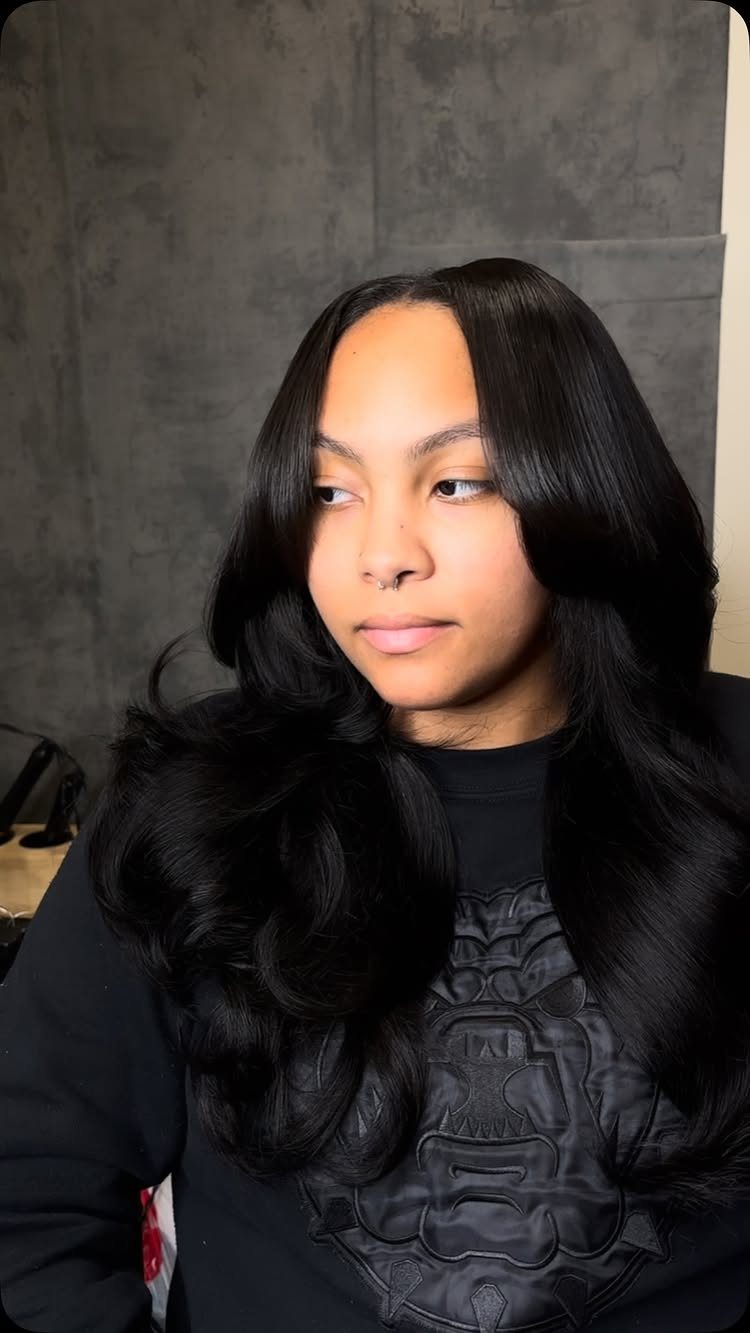
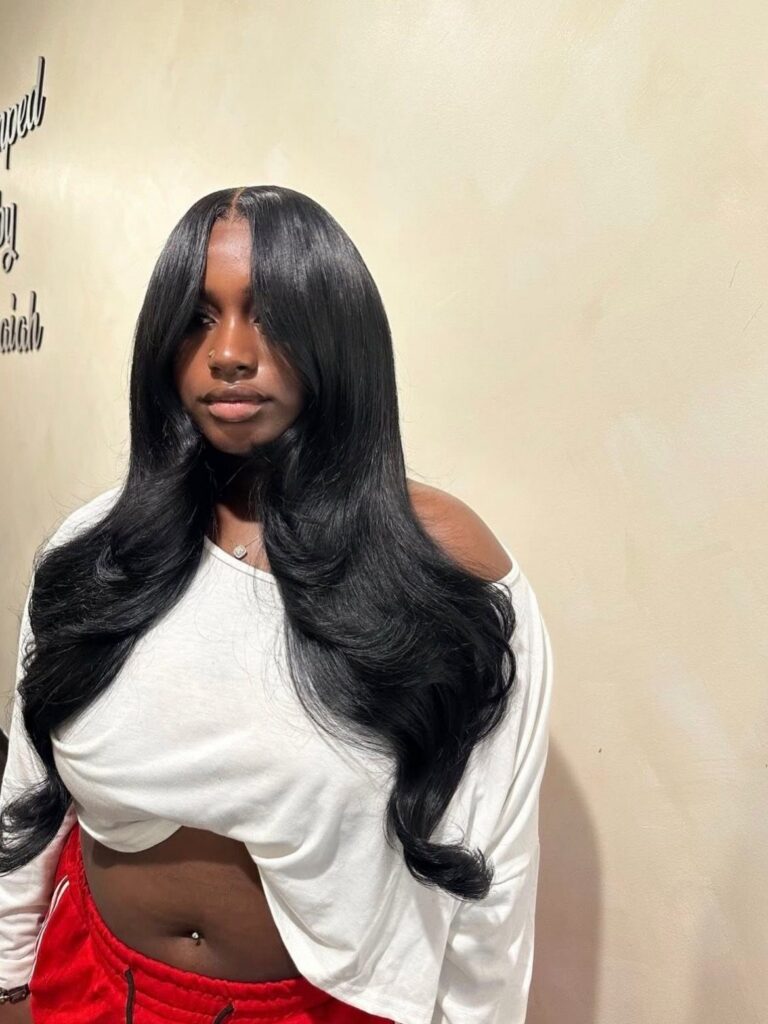
Shine does the styling here. Long black hair, a center part and big, loose waves look expensive mostly because the surface is smooth and reflective.
I would keep the waves soft and let the gloss show through, since heavy product dulls exactly what makes this one work.
Deep brown and black hair reflect the most light, which is why this finish looks richest on those shades; on lighter hair the shine reads softer.
A fine-tooth comb gives the cleanest center line, and keeping everything else plain lets the part and the gloss do the work.
8. Updo with Framed Strands
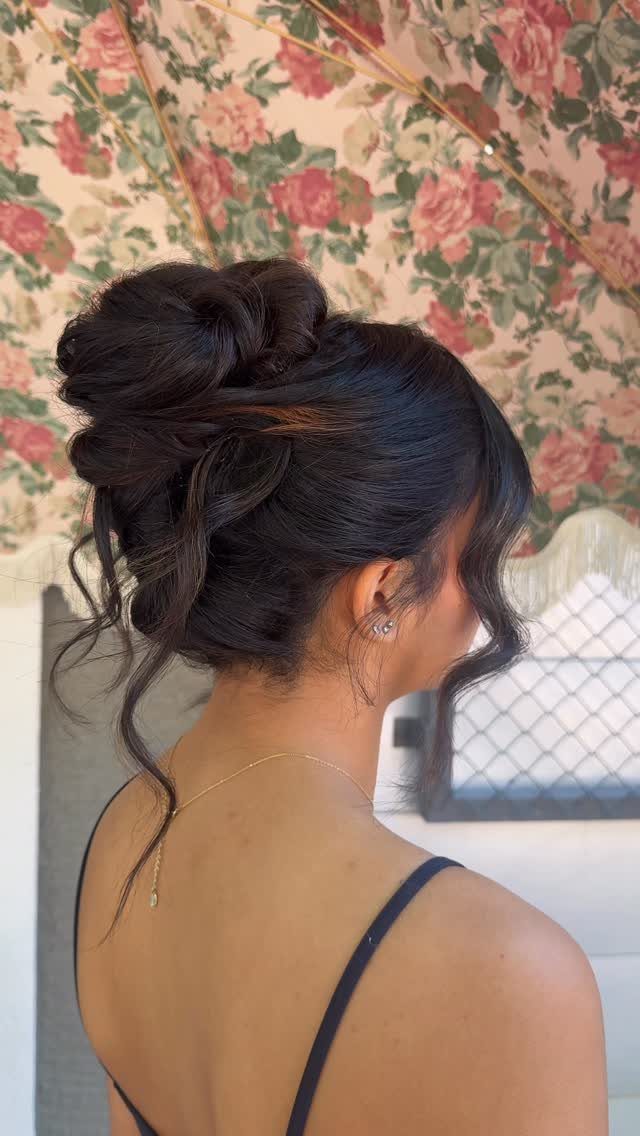
A loose updo with a few strands pulled out at the front gives a center part its softest dressed-up version.
Keep the hair pinned up and off the neck, then pull out 2 curled pieces at the face so the updo stays soft instead of stiff.
I would pin the updo first and release the front strands last, so you can judge how many to leave. Two on each side is plenty.
It reads as event-ready without looking set. Leave the pieces a little uneven.
9. Middle Part with Curly Hair
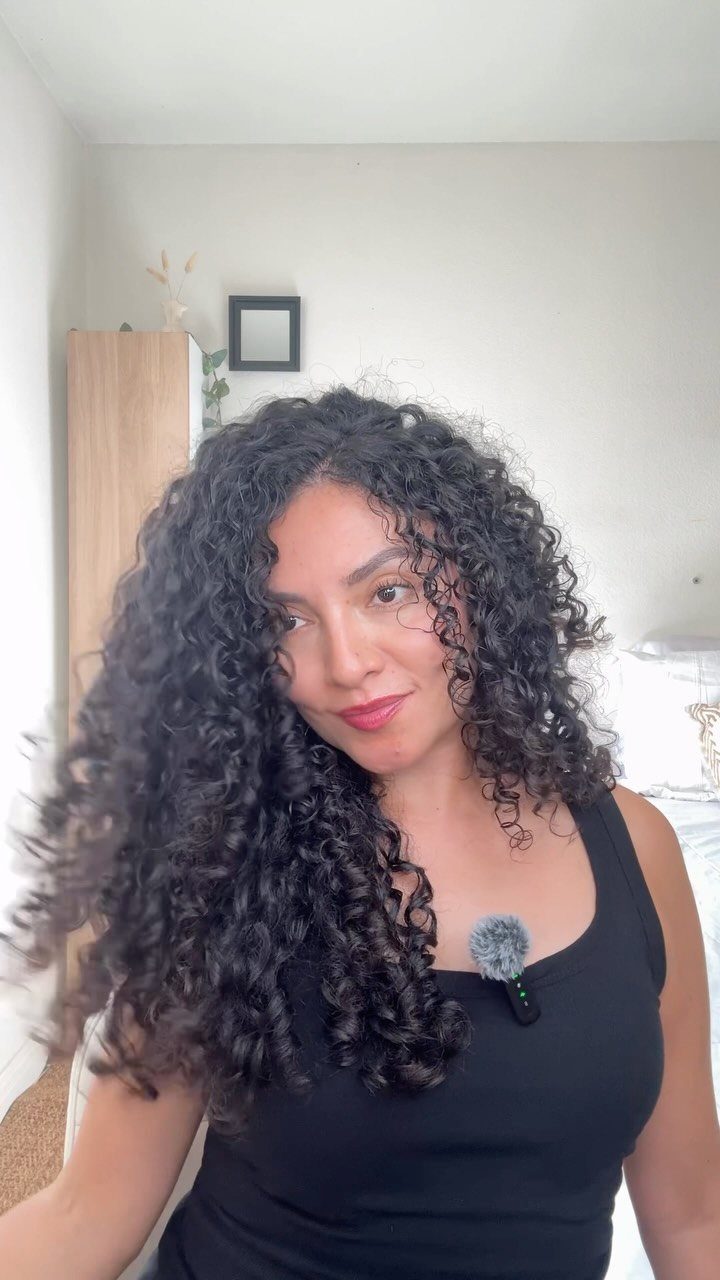
Curly hair and a middle part are a natural pair, because the curls fall on both sides and frame the face evenly. Long, dark curls need very little beyond a clean part.
Part the hair while it is damp, then leave the curls alone as they dry. Raking a comb through dry curls pulls them apart, and I would skip that.
A part this simple also works on days when the rest of your routine is minimal.
10. Icy Platinum
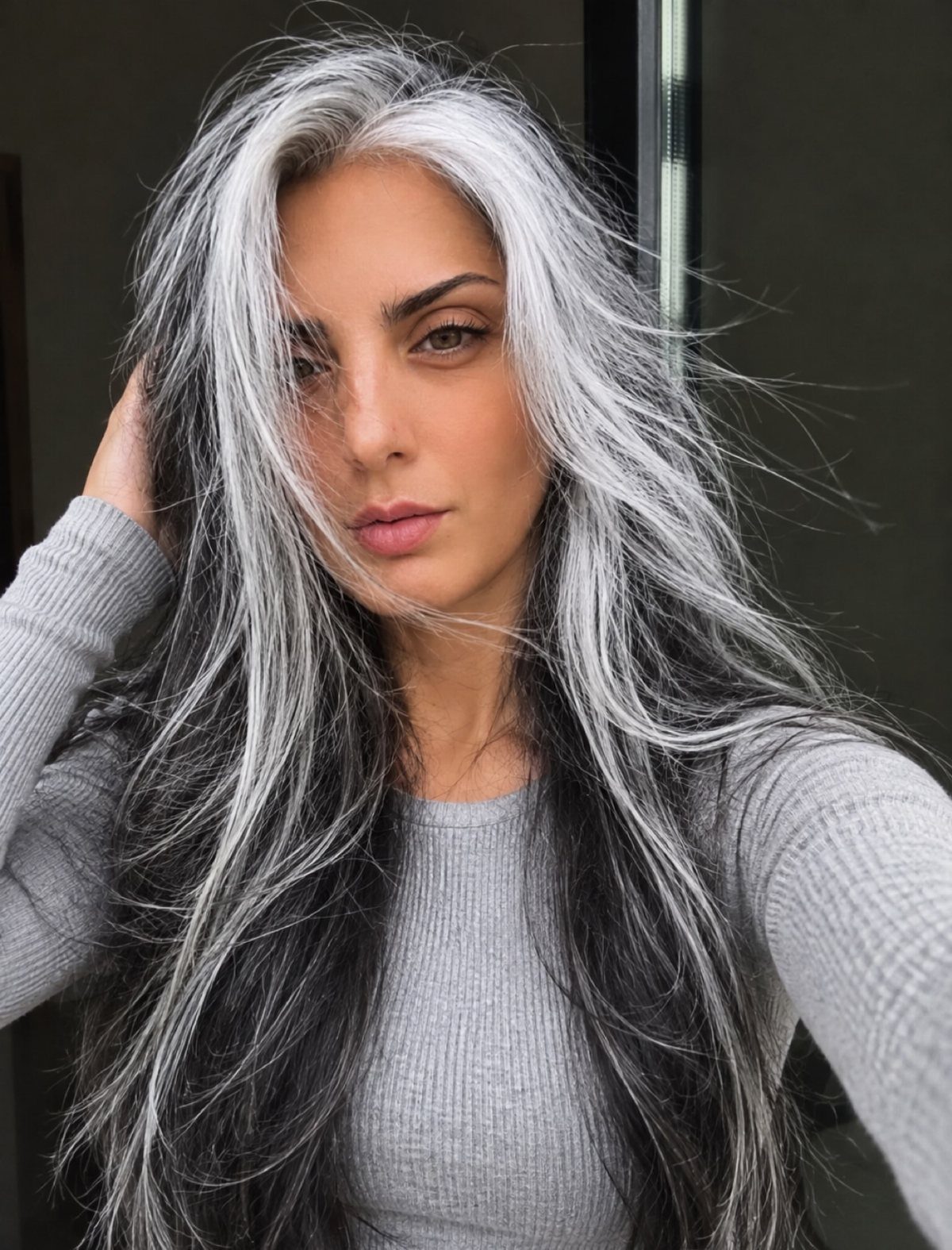
Icy platinum against a middle part makes the color the whole story.
Long, silver-white waves with dark roots at the top give the part a built-in contrast line, and the roots grow out softly instead of showing a harsh regrowth edge.
Going this pale from dark hair is a salon job, and I would not try it at home. Expect regular toning and gentle care to keep it from turning yellow or brittle.
Loose waves keep the shade looking dimensional.
11. Slicked Front Curls
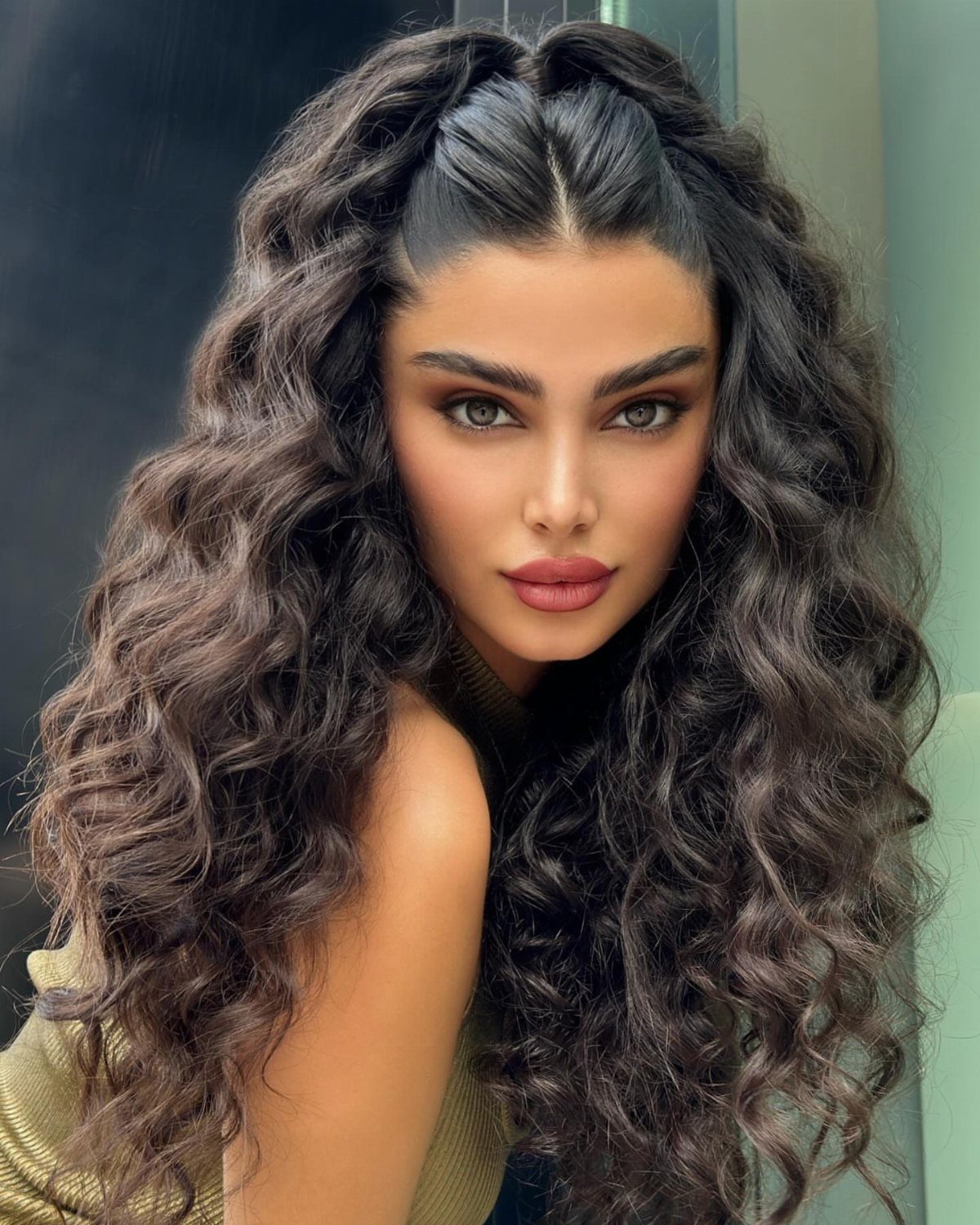
Slicked at the crown and wild below: that contrast is the appeal. The center part is pressed flat against the head, while long curls spill over the shoulders in full, natural shape.
To get it, smooth only the top section with a bit of gel and a brush, working from the part outward. Leave the lengths alone so the curls stay springy.
I like this best on long hair, where the curls have room to fall. It looks polished without any heat.
12. Curly Ends Braids
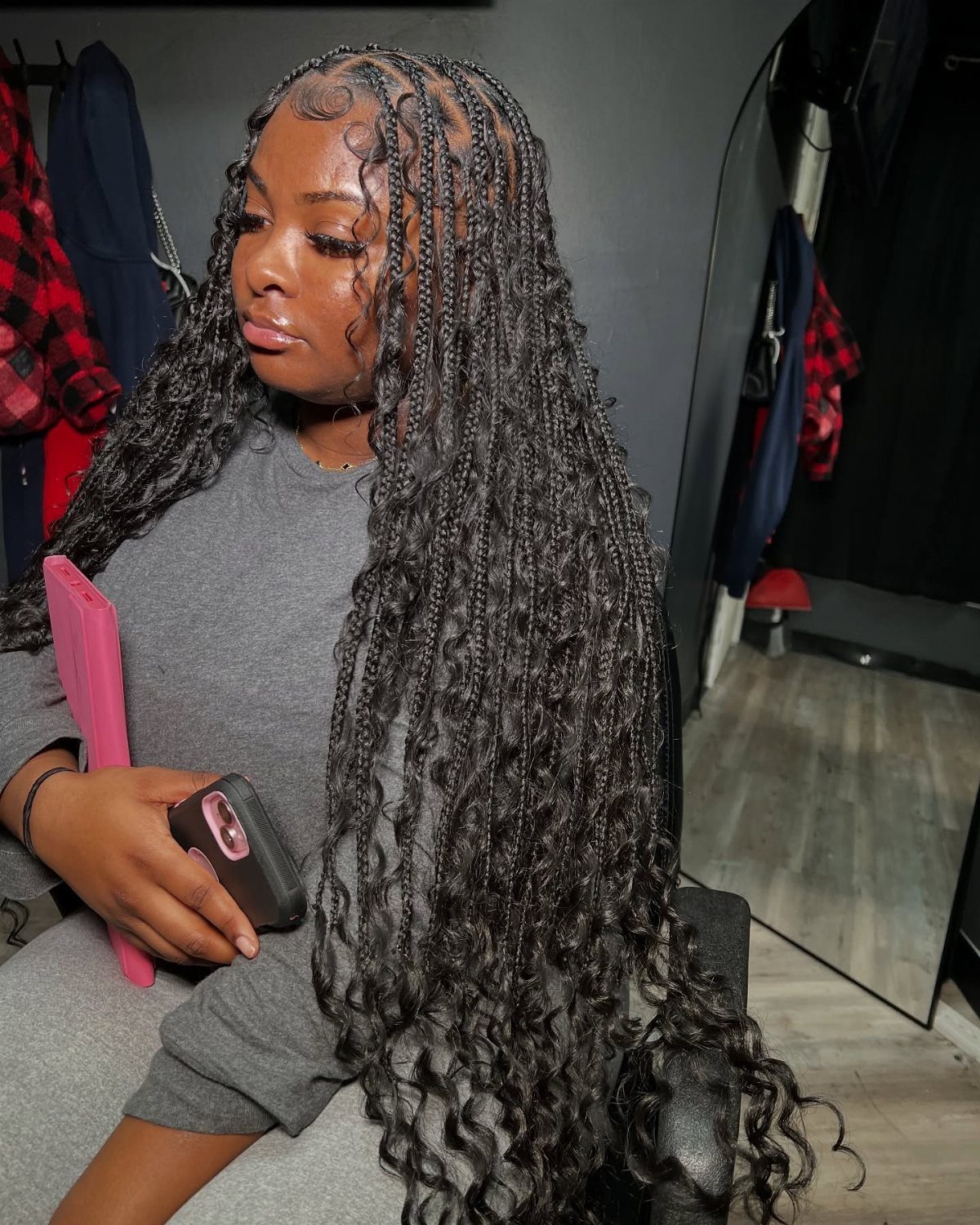
Long braids parted down the middle with loose, curly ends give a protective-style look some movement. The braid stays neat from root to mid-length, and the curled finish adds softness where straight braid ends would hang blunt.
Ask your braider for the curly ends by name, and say how long you want the braids to be. I would pick this when plain braids feel too severe.
The center part frames the face evenly, so the style looks tidy and relaxed at once.
13. Middle-Part Box Braids
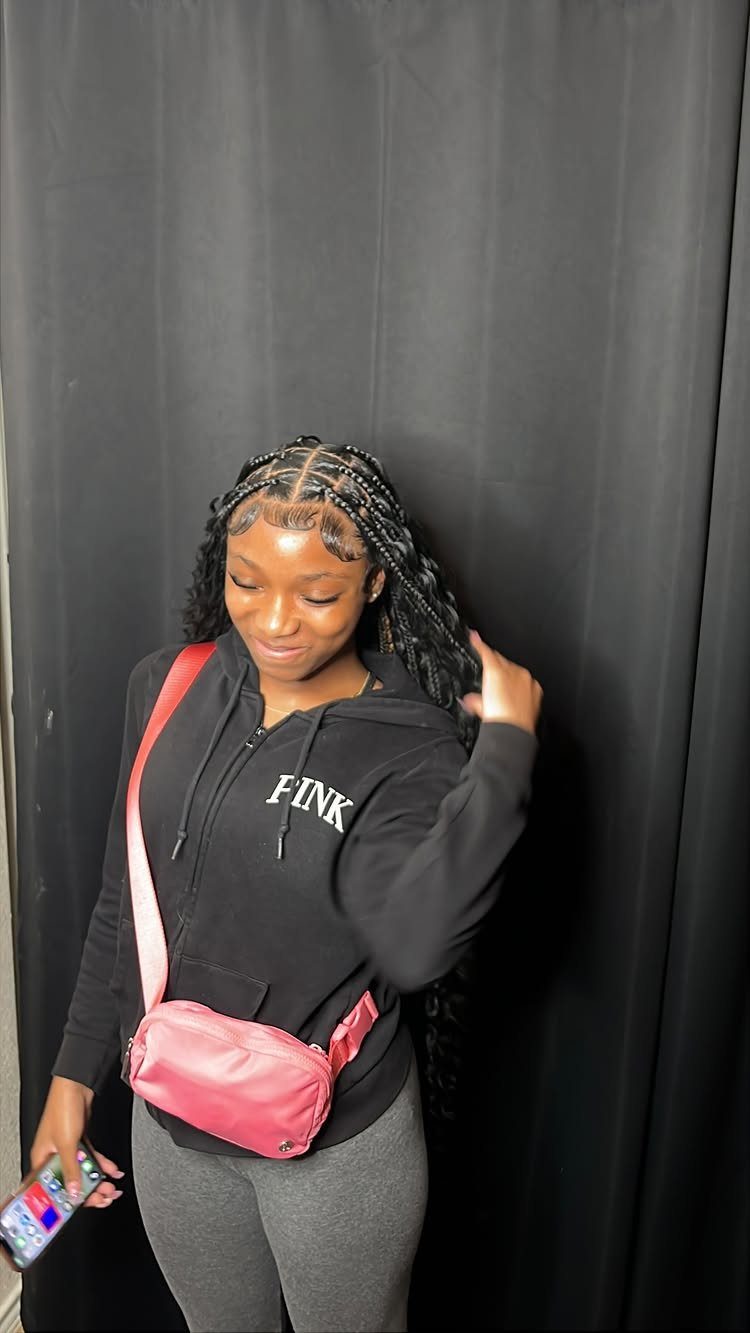
Small braids set along the hairline give long box braids a finished edge, and a near-center part keeps the whole look balanced. The length hangs well past the shoulders, so the style has real weight and swing.
I would ask the braider for the hairline pieces by name and mention that you want the part just off center, not razor straight. That slight offset looks relaxed.
Plan on a long appointment; long braids take time to install.
14. Curved Cornrow Part
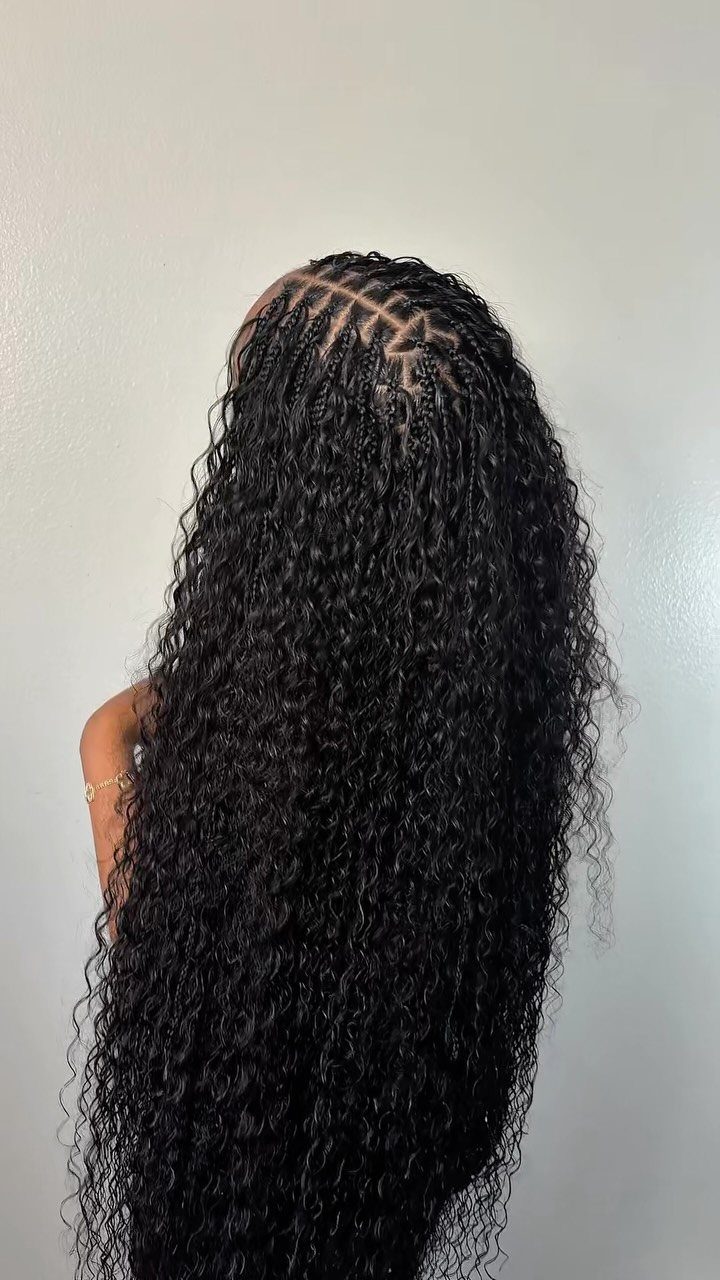
Curved cornrows that follow the part across the crown turn a plain center line into a design. The rows bend with the part, then give way to long curls that fall loose from the back.
This pairing of tight braids on top and open curls below is my favorite way to get structure and softness in one style.
Ask for the curve by showing your stylist the photo, since the sweep of the rows is hard to describe.
Leave the curls free and let the braids be the detail.
15. Middle-Part Twists
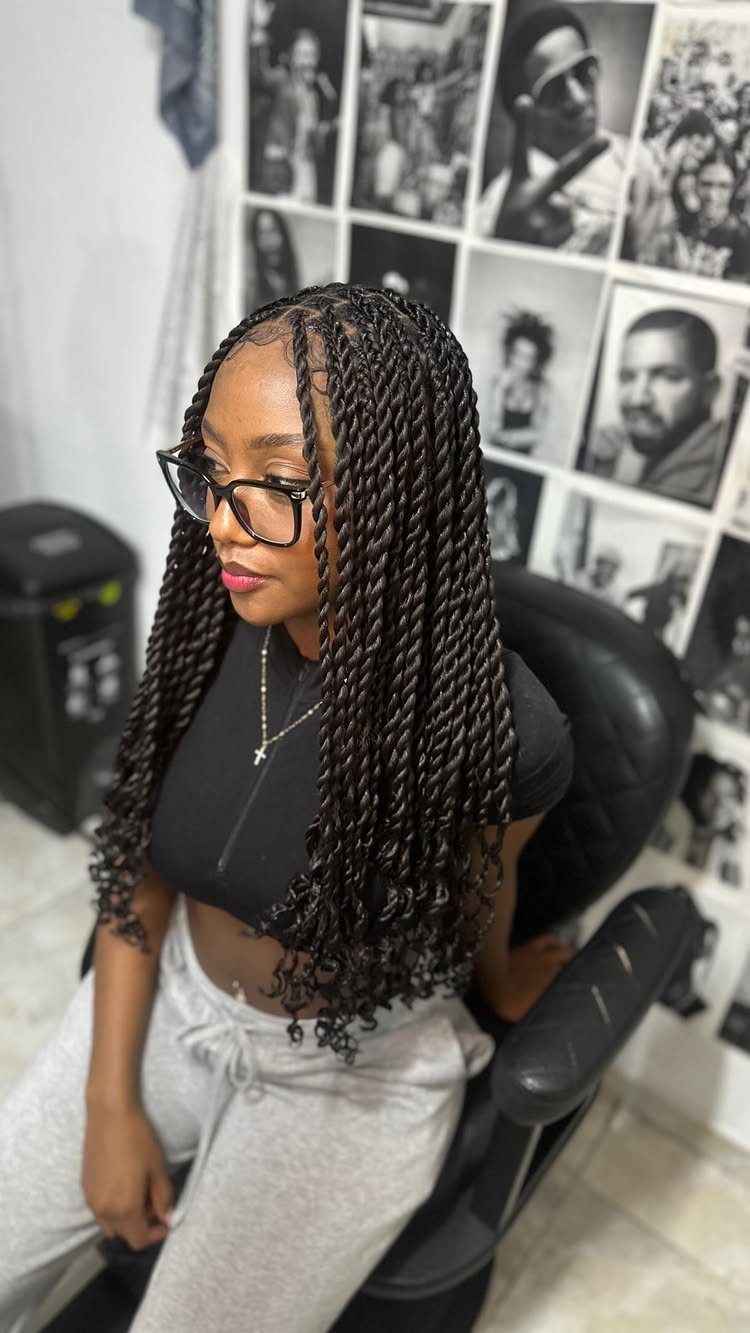
Long, textured twists with a middle part hang with a rope-like definition that flat braids do not have. The part sits right at the center, so both sides frame the face evenly.
I would choose twists when you want a protective style that still looks soft at the hairline. Ask your stylist to keep the part clean and the twist sizes consistent, since uneven sections show most near the face.
Long twists get heavy, so pick a length you are comfortable carrying.
16. Cornrows with Curled Braids
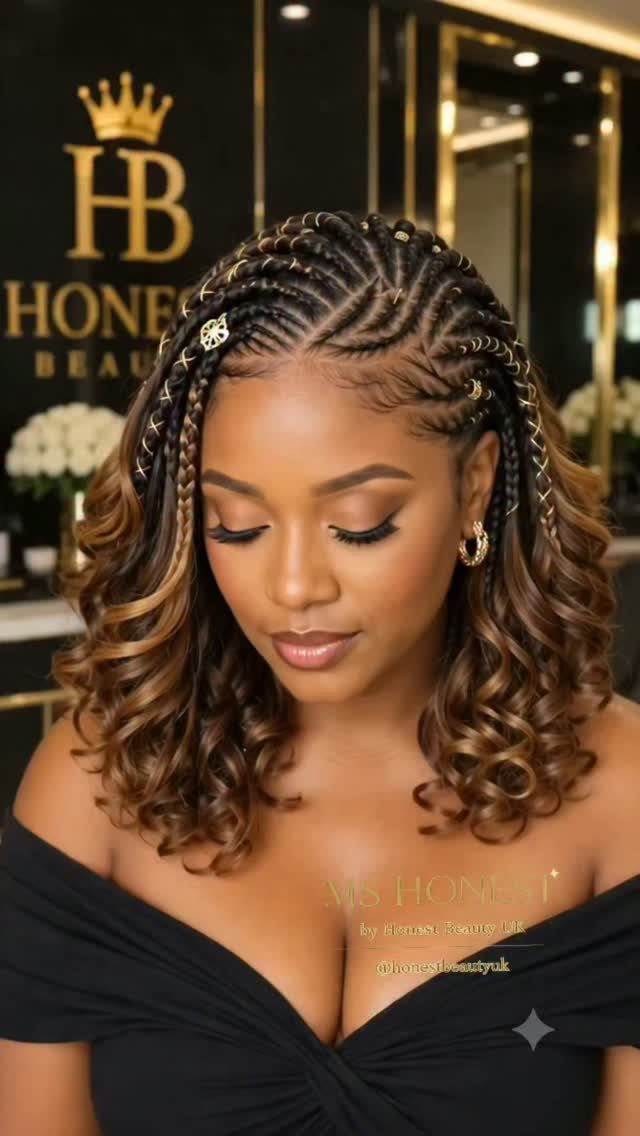
Cornrows laid flat across the crown, then shoulder-length braids with curled ends: two textures meet in one style, and the center part ties them together.
The flat rows give a tidy top, and the curled finish keeps the lengths from looking blunt.
I like this when you want something dressier than plain braids without extra length. Name both parts when you book, the cornrows and the curled ends, so your braider plans the full style.
Shoulder length also keeps the weight light.
17. Layered Face-Framing Texture
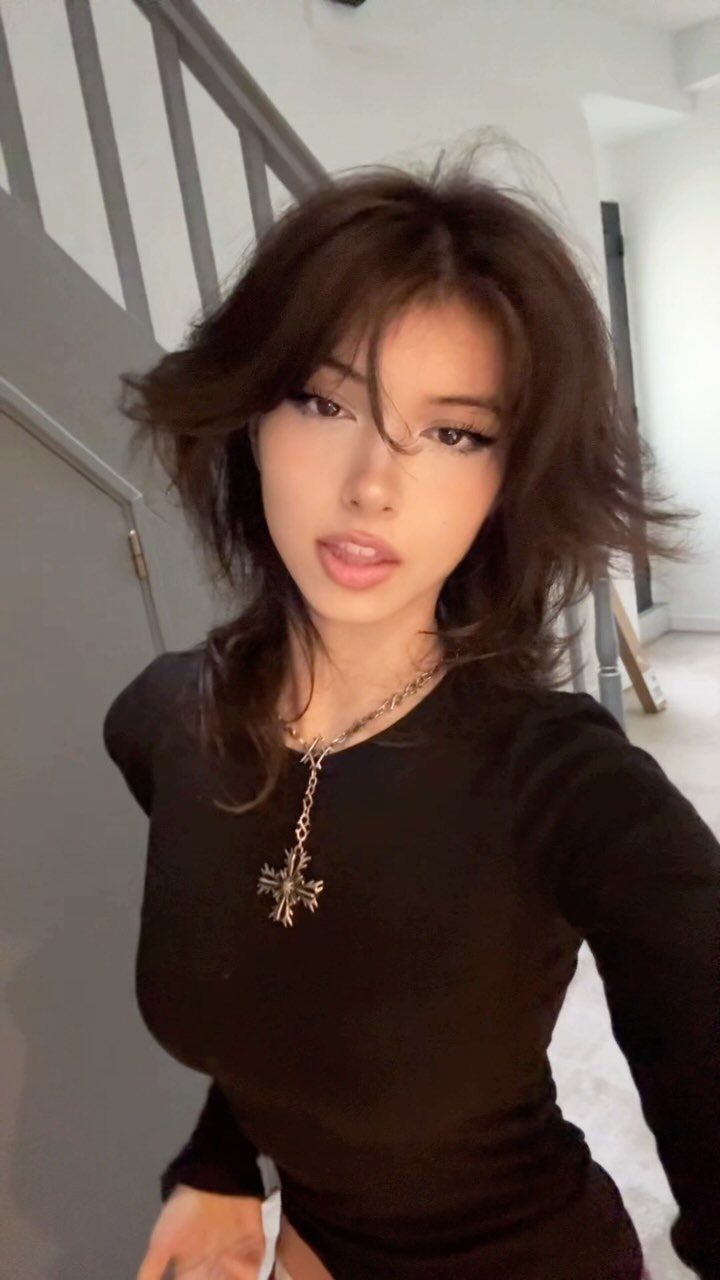
Layers cut around the face are what make this middle part look tousled rather than flat. The dark brown hair falls in soft, uneven pieces that curve in toward the cheeks.
To ask for it, tell your stylist you want long layers with face-framing pieces and a natural center part. At home, rough-dry and use your fingers, not a brush, so the layers keep their movement.
I would skip heavy smoothing products; they weigh the layers down and the texture disappears.
18. Twisted Half-Up Waves
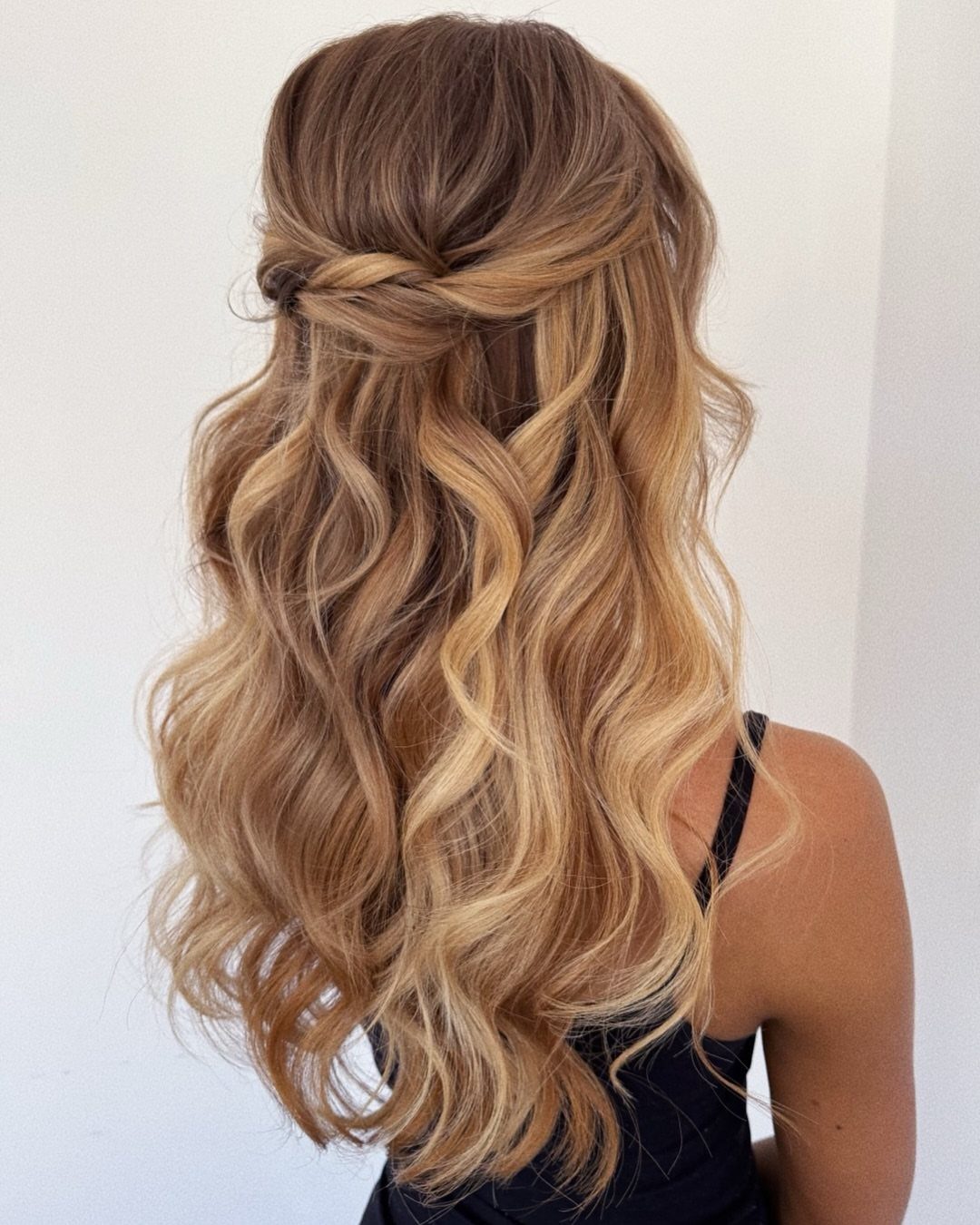
A twist pinned across the back turns a half-up into something more finished, while the long blonde waves stay loose below it. The twisted section keeps hair off the face and leaves the length free.
Gather the top sections, twist them back, and secure with pins or a clip. I would loosen the twist a little afterward so it looks soft instead of tight.
It suits wavy hair best, since the texture gives the twist something to hold onto and blends the transition into the lengths.
19. Textured Middle-Part Bob
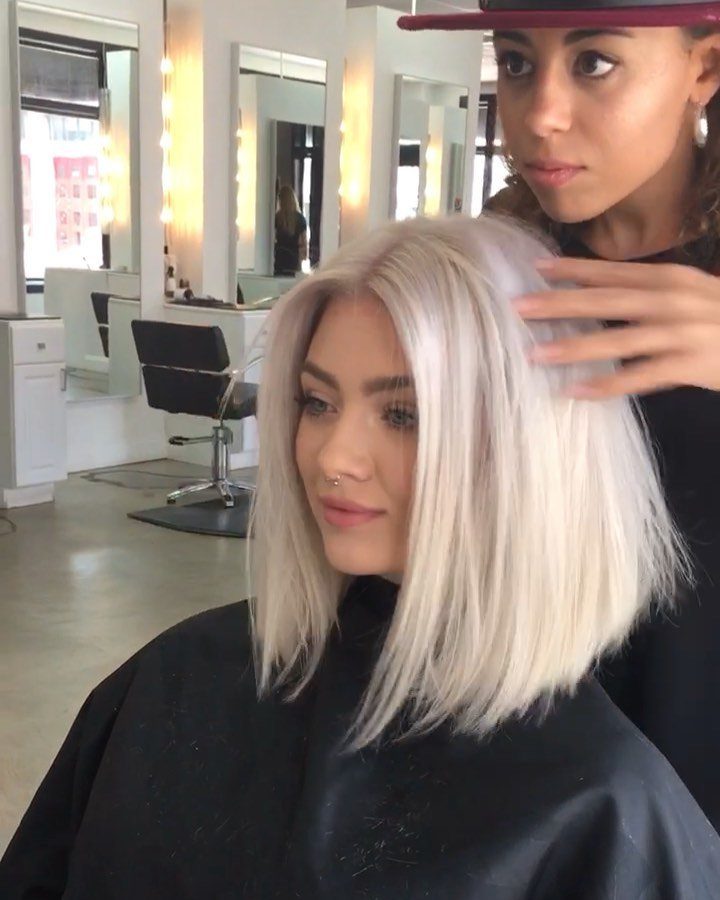
A chin-length bob with a near-center part and a bit of texture looks lived in rather than cut to a ruler.
The platinum shade sits easily with that loose shape, and the part just off center softens the face without looking strict.
Ask your stylist for a chin-length cut with texture through the ends, and say you want the part near the middle, not razor straight. I would show the photo, since "textured" means different things to different people.
Short hair like this leaves very little to manage each morning.
20. Middle-Part Curls with Side Braids
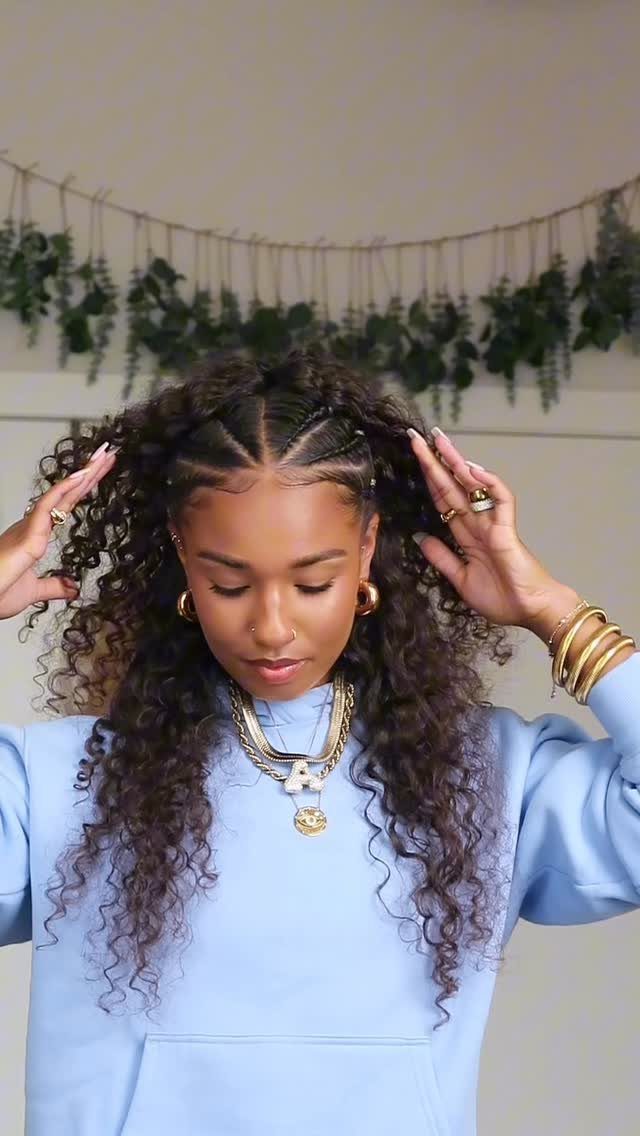
Long curls with a clean middle part and a few small braids along the sides give you a style with 2 moods: loose and full through the lengths, neat and detailed near the face.
The braids keep the sides tidy, and the curls stay free. I would keep the braids thin and few so they read as an accent, and let the curls take up most of the space.
Split the curls down the center while they’re still damp, then braid each side before they dry so the pattern sets in place. Ask a stylist for the side braids by name if you want them even.
Frequently Asked Questions
What are some good straight hair middle part hairstyles for men?
The sleek, straight version is the one to go for. Run a flat iron through the hair, then draw a precise part down the center with a fine-tooth comb, starting at the middle of the forehead and going straight back.
This works on pin-straight or naturally voluminous hair. Sleek, flat hair puts every flyaway on display, so give yourself an extra 3–5 minutes with a comb and a bit of smoothing cream before you head out.
What does a normal middle part look like?
A middle part is a straight line down the center of the head that divides the hair into 2 even sections, so each side frames the face equally.
To draw it, run a comb from the middle of the forehead straight back.
A part just off center looks softer and more relaxed than a razor-straight one, and a middle part can be worn on straight, wavy or curly hair.