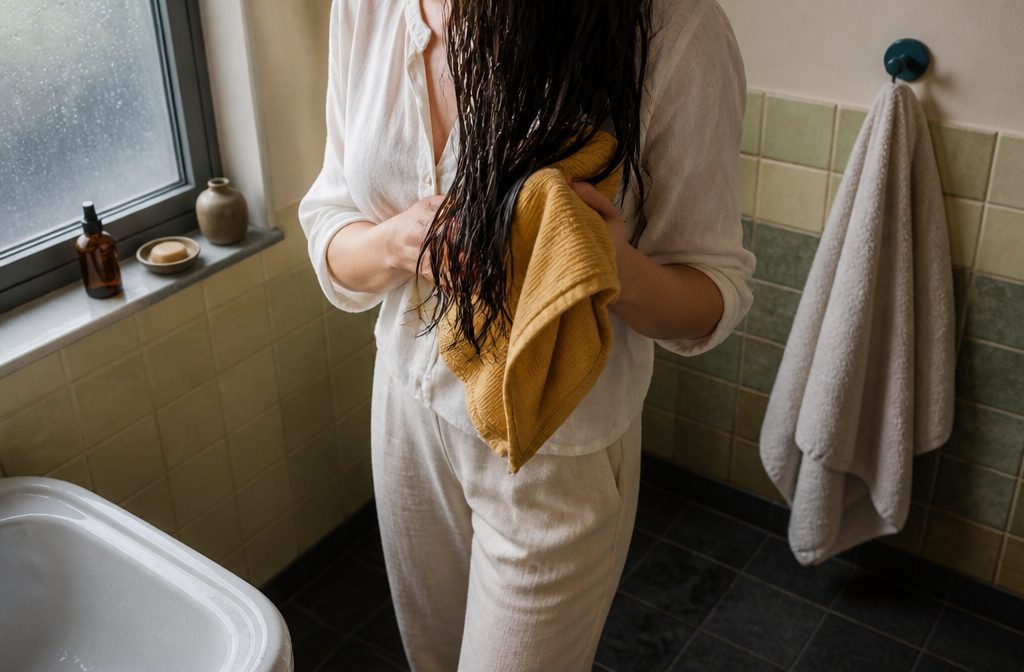
Blotting wet hair with a smooth microfiber towel, instead of rubbing it with a thick terry bath towel, removes water without roughing up the cuticle, which is what causes lasting frizz.
Leave the wrap on 5–10 minutes at most, since a damp scalp gets irritated. Done well, the method leaves hair about 65–75% dry.
Choose a Gentle Towel
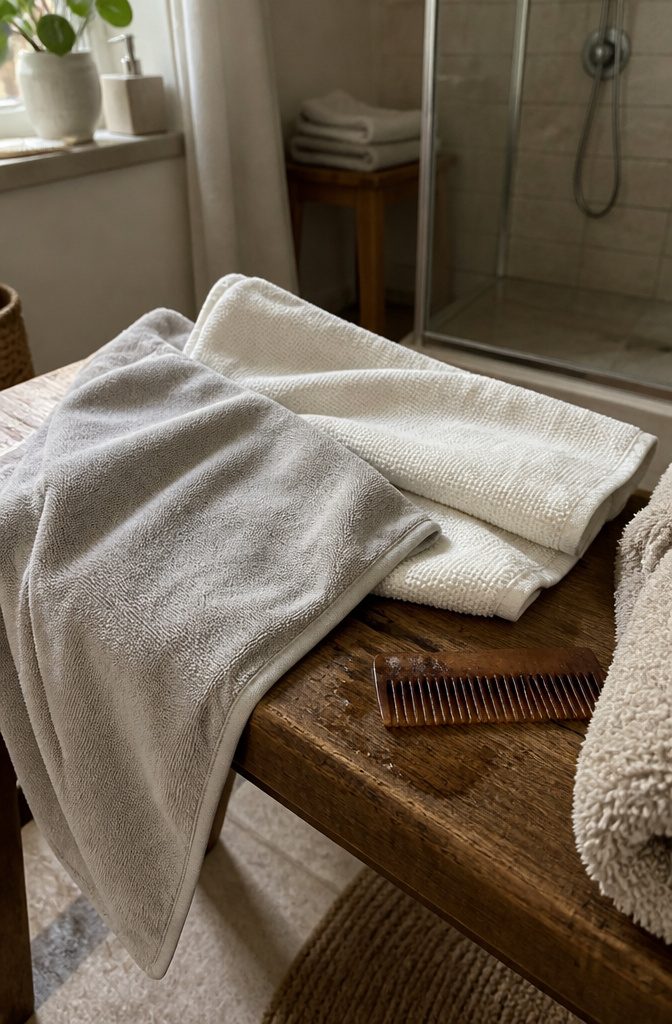
A smooth microfiber hair towel beats the rough bath towel on your rack. Wet hair is already weakened, and big, fluffy, cheap cotton towels drag against it.
Low thread count makes cotton coarse, and some terry cloth is cut with polyester, so the surface grabs strands and invites frizz, breakage and split ends. A tattered T-shirt does the same job badly.
Microfiber wins because its dense fibers give more moisture-wicking surface and a smoother feel, and it costs less than high-thread-count cotton.
If cotton is what you own, I’d still pick tightly woven, high-thread-count cotton over a thick bath towel. Skip anything with rough, looped stitching.
Squeeze Out Excess Water
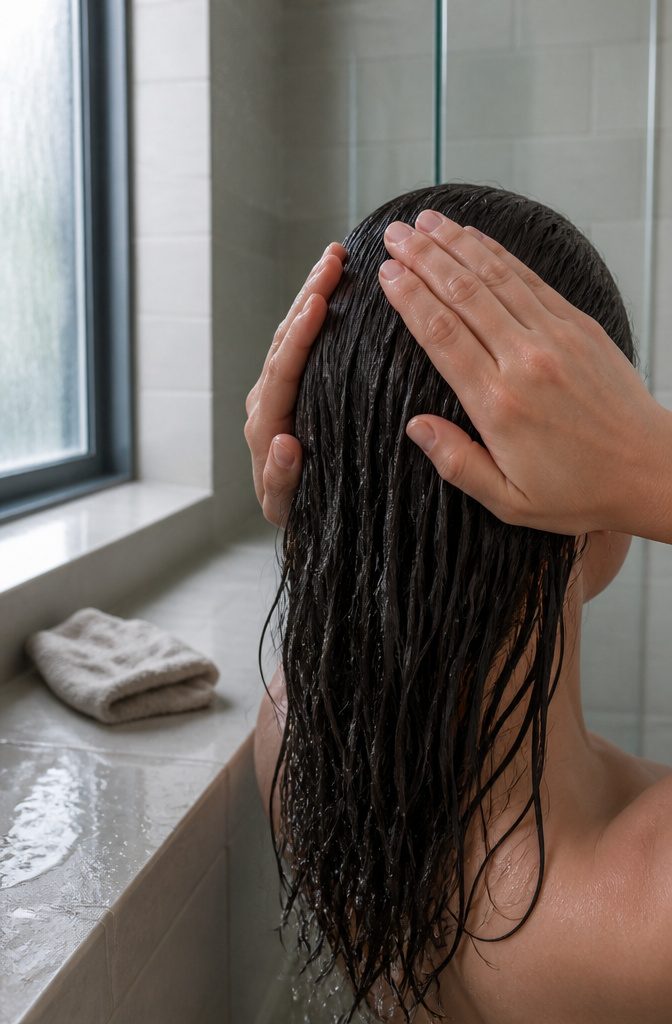
Start with your hands, ideally before you step out of the shower.
Slide them from the front hairline toward the back to push off the excess drip, slowly, like a squeegee. If your hair hangs past the nape, twist the lengths gently, just enough to release water.
Wet hair is fragile, so I skip wringing, hard twisting and any rubbing. A California stylist puts the risk plainly:
Do not rub the towel aggressively to absorb water. This can damage the cuticle and leave your hair feeling dry and frizzy.
— Allure
Squeezing first means the towel has far less to do, and less to rough up.
Apply Products at the Right Time
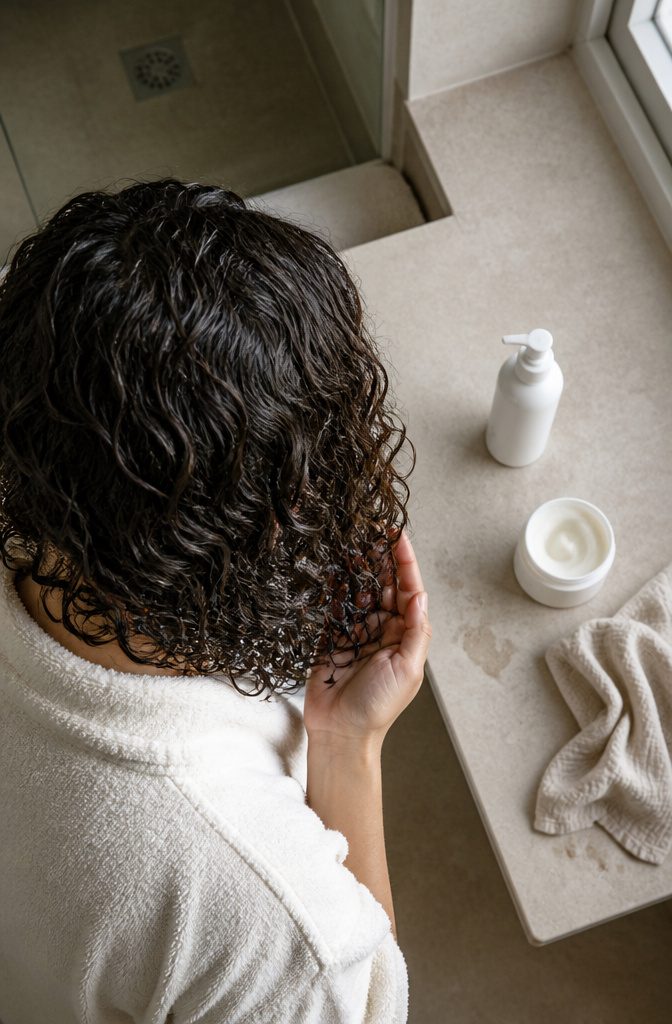
Curls take product best before the towel touches them. Work Prep and Style products into freshly washed hair, then scrunch out the water so the curls absorb moisture and product together.
Frizz-prone hair of any texture works better the other way around: pat first, then smooth on a serum such as Livon Anti-Frizz Serum or a keratin serum.
Curly hair can also take a curl-defining cream at that moment, as long as it is still slightly damp.
A third route is a leave-in conditioner, UV and heat protectant, or hair oil applied while you towel dry.
Whichever you pick, I’d skip holding products at this stage. They can leave hair crunchy once it dries.
Blot in Sections
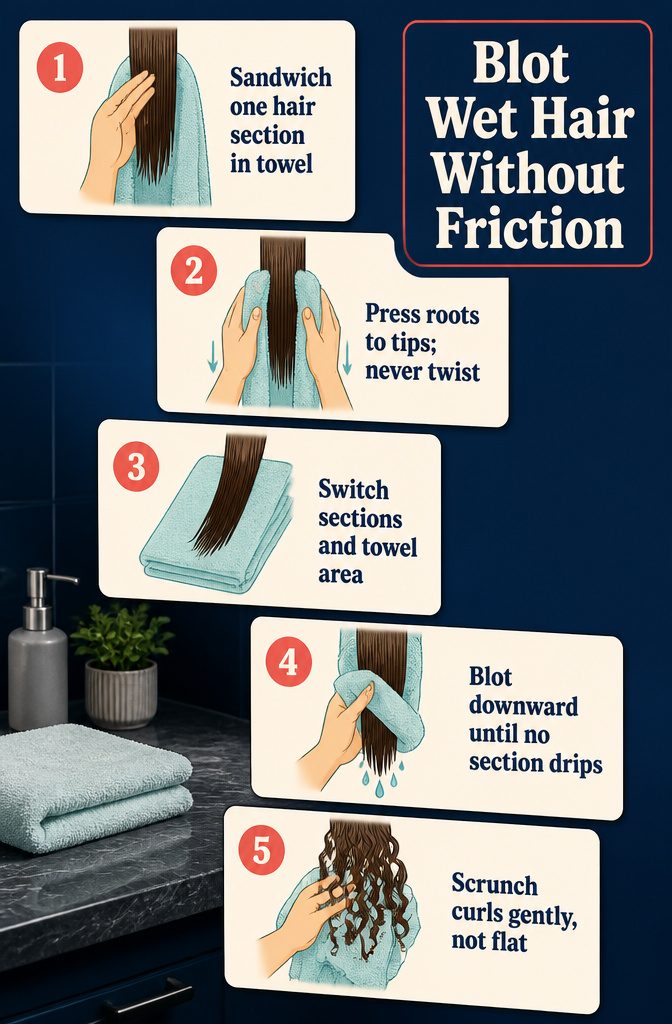
- Lay one section of hair between your palm and the towel.
- Starting at the roots, press the towel into the hair from both sides, then work down to the tips. Skip the twisting and pulling.
- Move to the next section and switch to a fresh part of the towel.
- Keep going section by section, moving downward, until no section drips.
- With curls, scrunch gently instead of pressing flat.
Rubbing roughs up the cuticle, which is a common cause of lasting frizz.
Pressing and blotting take the same water without that friction. Thick hair benefits most, because soggy roots get reached without a hard scrub.
Wrap or Plop Loosely
Wrap or Plop Loosely
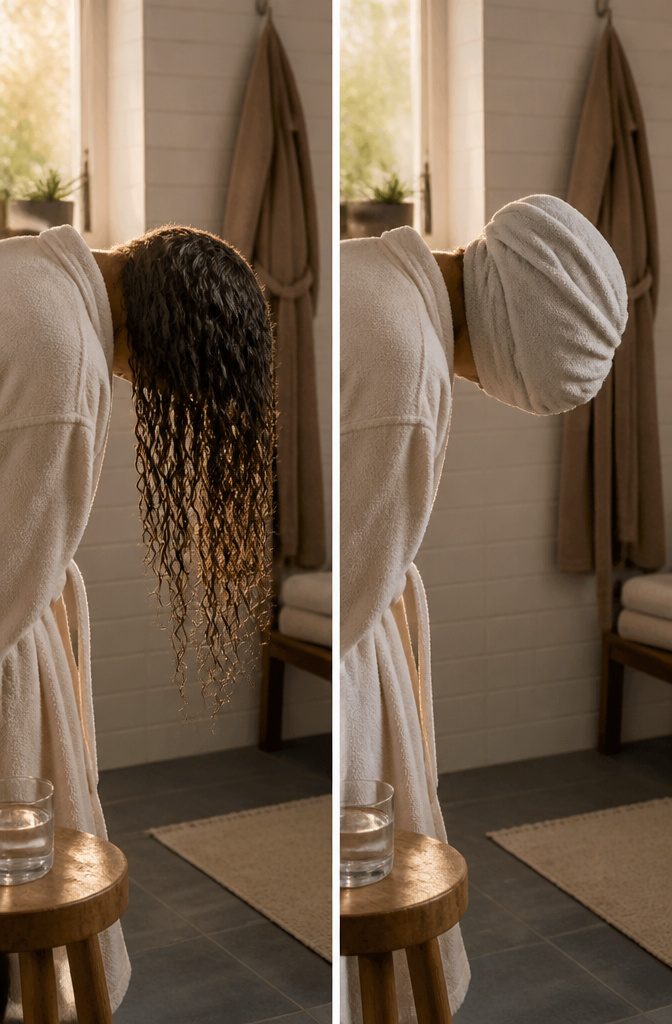
Flip your hair forward, drape the towel over the back of your head, gather everything at the crown and twist the fabric gently before tucking the end at the base. This holds the hair up without wringing it.
If you want more volume at the roots, start the twist at your nape and secure it at the back of your head; for flatter, more controlled lift, start at the hairline and fasten at the front.
Curly hair does better with plopping. Cover the curls while they’re still forward, twist the towel and tuck it at the base to hold the curl pattern in place while it dries.
Leave the wrap on for five to ten minutes, no longer. A turban that stays on too long leaves the scalp damp and prone to irritation, and you lose the point of towel drying in the first place.
I pull mine off after five if the hair feels mostly dry at the roots.
Finish Without Extra Heat
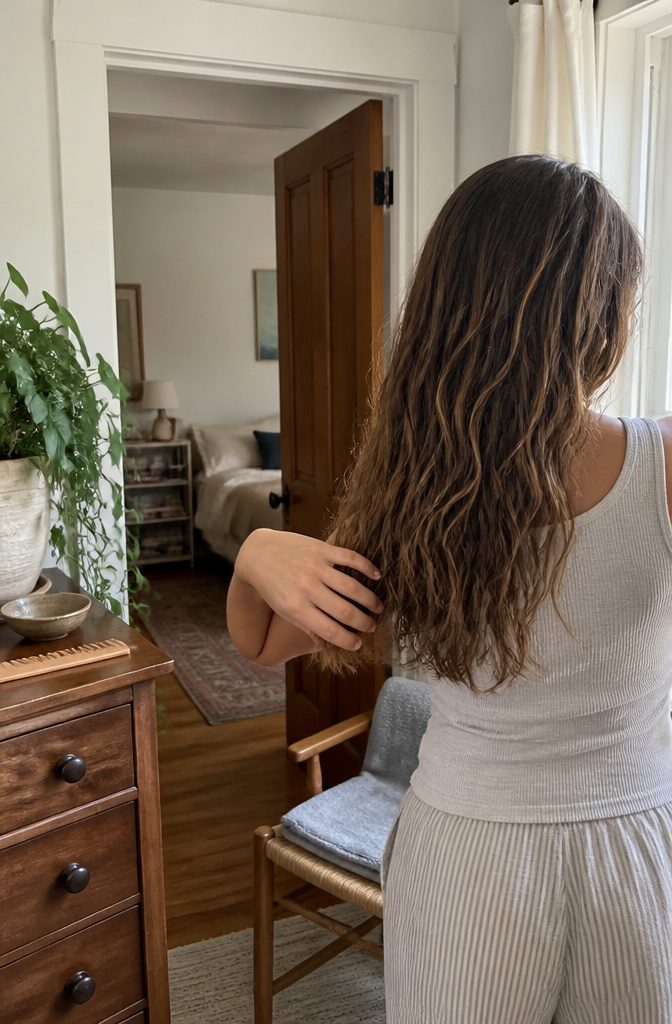
Towel drying cuts the time you spend with a dryer in your hand, and done well it can shorten overall dry time and help you skip heat altogether.
One method leaves hair about 65–75% dry, which is enough to let the rest happen on its own or give you a head start before you pick up the dryer.
A good towel can cut dry time by up to 70%, meaning less waiting and less temptation to reach for the hot air.
What it does not give you is the sleekness that comes from blow drying. Air-dried hair keeps more of its natural texture, so you get extra volume and softer movement, though the finish looks less polished.
If you want that smooth, finished look, the towel alone will not get you there. Skipping heat saves time and spares your hair damage, but you give up some control over the final shape.
Towels Worth Buying
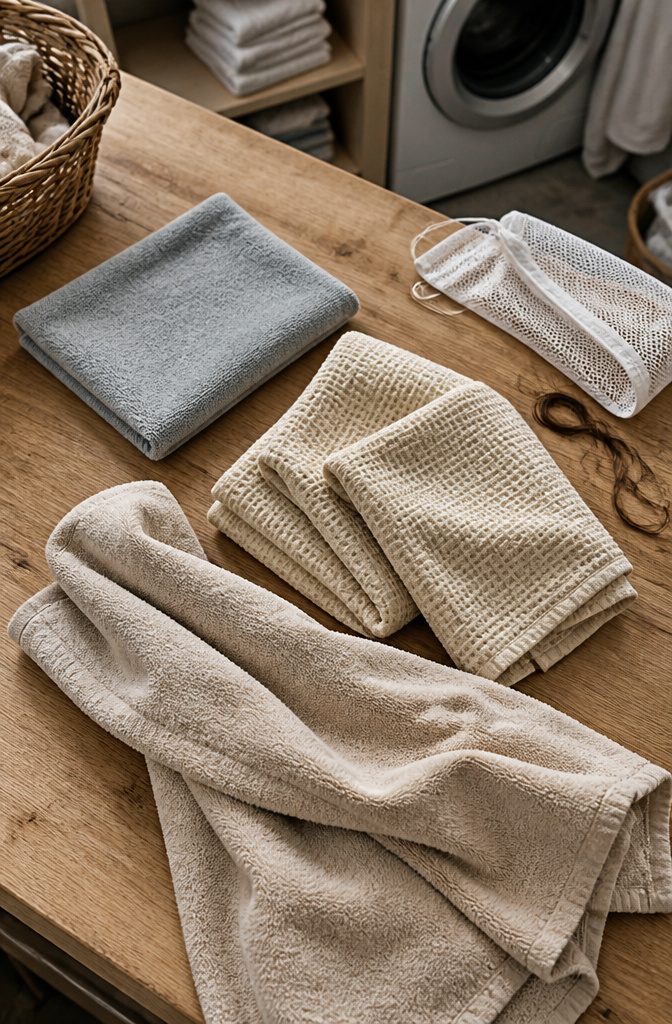
I lined up seven towels sources call out repeatedly, all between $20 and $59. The range covers material choices (microfiber, cotton-bamboo blend, waffle-knit), care instructions that matter if you wash towels weekly, and one size bump for hair past your shoulders.
| Towel | Price | Material | Care |
|---|---|---|---|
| Crown Affair The Hair Towel | $59 | Polyester, nylon | Machine washable |
| Turbie Twist (2-pack) | $20–21 | Microfiber | n/a |
| Act+Acre | $30 | Waffle-knit microfiber | Lay flat to dry |
| Sachajuan | $37 | Microfiber | Air-dry |
| Cozy Earth Luxe | $54 | Cotton, bamboo viscose | n/a |
| Volo Super Hero XL | $48 | Polyester, nylon | n/a |
| Rizos Curls Towel + Wrap | $31 | Microfiber | Dryer-safe |
Crown Affair takes it for machine-washable convenience and the 2025 Best of Beauty Award backing, but Turbie Twist at $20 for two is hard to argue with if budget decides the call.
Why Rough Handling Causes Frizz
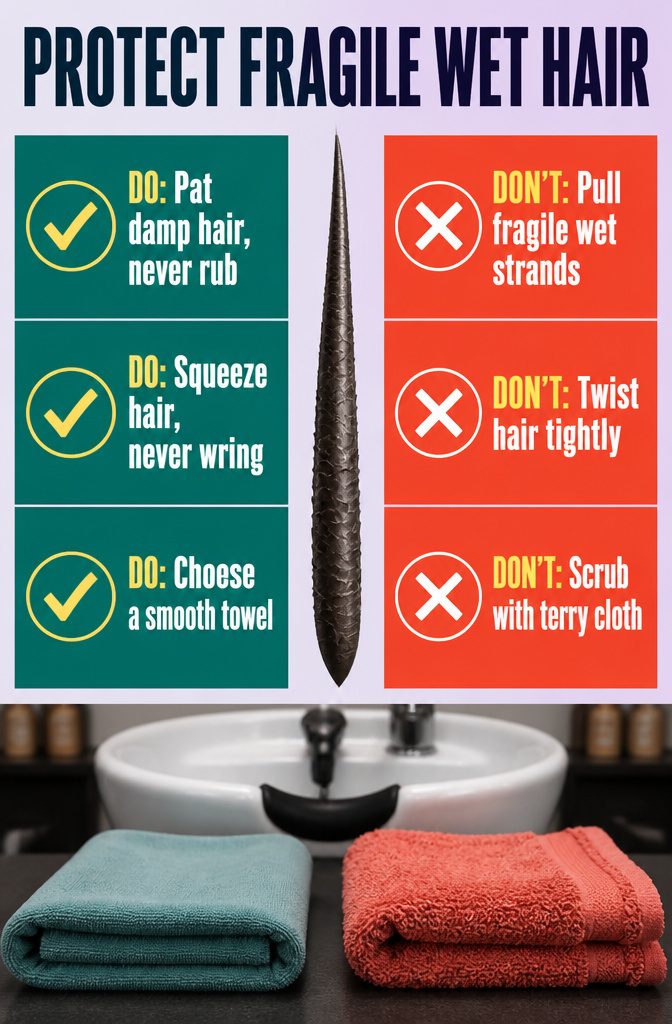
Wet hair snaps more easily than dry because water temporarily weakens the hydrogen bonds that hold each strand’s structure together.
That fragility means any pulling, twisting or rubbing will cause breakage, split ends and frizz before your hair has had a chance to dry.
Terry cloth towels make it worse. The looped weave that feels rough to the touch is also abrasive on your cuticles, lifting them and creating the frizz that survives every smoothing product you try later.
Vigorously rubbing damp hair with a standard bath towel roughs up those cuticles, making your strands harder to straighten and leaving texture you never asked for.
Tight twisting in the shower or immediately after adds tension when your hair can least handle it, snapping strands at the point where the twist gathers.
The fix is simpler than the damage: pat instead of rub, squeeze instead of wring, and trade the rough towel for something smooth.
Frequently Asked Questions
What does it mean to towel dry hair?
It means taking water out of freshly washed hair with a towel by squeezing, pressing and loosely wrapping instead of rubbing.
Done well, it leaves hair about 65–75% dry, so the rest can finish on its own or with a shorter session under a dryer.
What is the proper way to towel dry hair?
Start by sliding your hands from the front hairline to the back to push out the drip. Then press a smooth microfiber towel into one section at a time, working from roots to tips, with no twisting, pulling or rubbing.
Thick hair gets the most from this, since soggy roots are reached without a hard scrub. Finish with a loose wrap and let air do the rest, which is also the gentlest way to dry hair overall.
Is it better to towel dry your hair?
Yes, as long as you are gentle. Wet hair is fragile, and pressing instead of rubbing cuts down on frizz, breakage and split ends.
A good towel can also shorten dry time by up to 70%, which means less time under a hot dryer, and it helps curls hold their pattern.
Should you towel dry curly hair?
Yes, with a smooth, absorbent towel and a scrunching motion instead of rubbing or wringing.
Apply your styling products to freshly washed curls first, scrunch out the water, then plop the towel on top to hold the curl shape while it dries.
How do you wrap hair in a towel?
Flip your hair forward, lay the towel over the back of your head and gather all your hair at the crown.
Twist the fabric gently and tuck the end in at the base so it stays put without wringing the hair. For more root volume, start the twist at the nape and secure it at the back of your head.
Why shouldn’t I use a regular cotton towel?
A thick bath towel has a rough, looped weave that drags across wet strands, lifts the cuticle and leads to frizz and breakage.
Smooth microfiber is gentler and still absorbent. If cotton is all you have, choose a tightly woven, high-thread-count one.
How long should I leave my hair wrapped in a towel, and when can I use serum?
Leave the wrap on for 5–10 minutes at most.
Any longer and the scalp stays damp and can become irritated. Apply serum right after you pat the hair, while it is still slightly damp, and curly hair can take a curl-defining cream at that same point.
Can towel drying replace blow drying?
Not entirely.
A towel gets hair roughly 65–75% dry, but it does not give the sleek, polished finish a blow dryer does. If you want that look, towel dry first to cut the time you spend with heat, then style as usual.