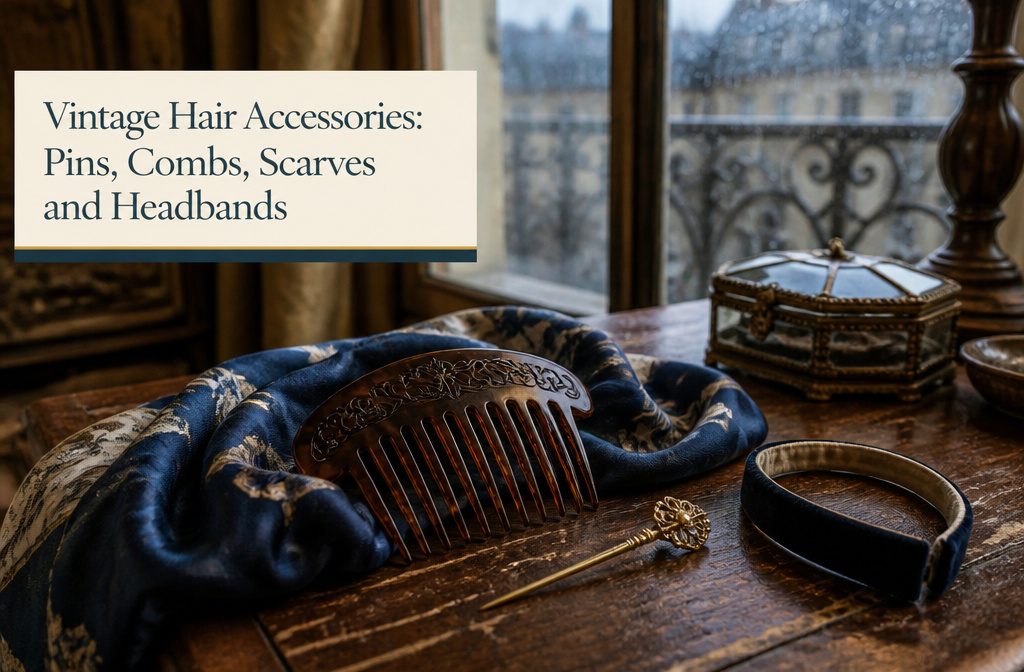
Vintage hair accessories are pins, combs, sticks, clips, bands and scarves used to hold, style or decorate hair, and the best ones worked hard before they looked good.
A Roman gold emerald pin dates to the 1st–4th century, and a carved French ivory comb from c. 1530–1550 shows David and Bathsheba, so decoration and function have run together for millennia.
Hairpins
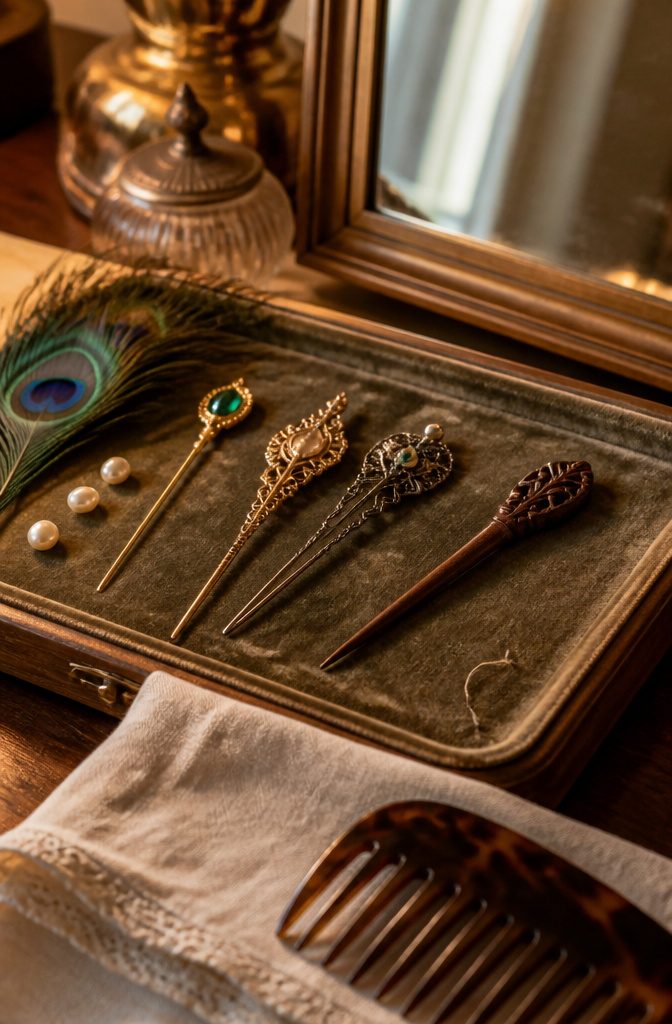
Hairpins are likely the oldest hair accessory there is.
The Venus of Willendorf, c. 30,000 BCE, may show a beaded ornament on the head, which would put pin use that far back.
Early pins were bone and wood, and later ones came in gold, ivory, tortoiseshell and gemstones, so a tool for holding hair became jewelry. A Roman gold emerald pin (c.
1st–4th century) and a Swiss gilt silver filigree pin (c. 1800–1870) show how long that held.
The 18th-century Aigrette is my favorite excess: a pin loaded with peacock feathers, gemstones and pearls, perched on a towering coiffure.
In China, a girl’s 15th birthday brought the hairpin ceremony, and she wore her hair up with pins from then on.
Hair Combs
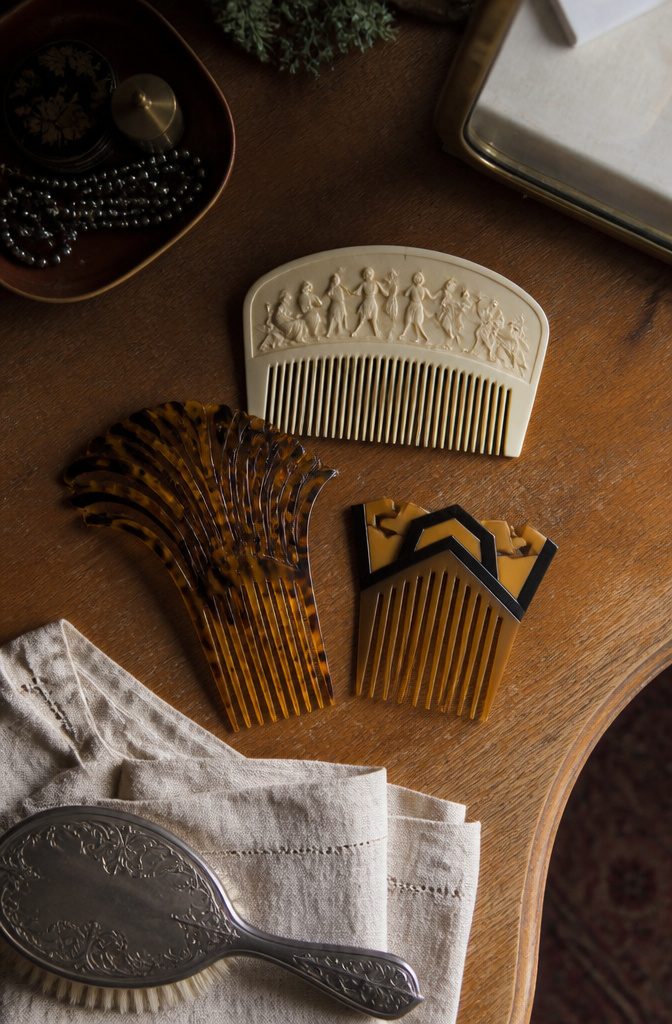
Combs began as grooming tools, and the decoration came later.
A carved French ivory comb from c. 1530–1550 carries scenes of David and Bathsheba and the Judgement of Paris, which makes it closer to a small sculpture than a hair tool.
A Chinese bone pin and comb from the Shang Dynasty (c. 1100–1000 B.C.) shows the habit of ornamenting them is far older.
Early 1900s celluloid combs have dramatic curves, and the 1920s Art Deco versions look like tiny sculptures. If I were collecting, those two eras are where I’d look.
Worn today, a decorative comb is part ornament, part anchor. Slide one into a bun or a half-up and it adds a point of interest while quietly holding the style in place.
Hair Sticks
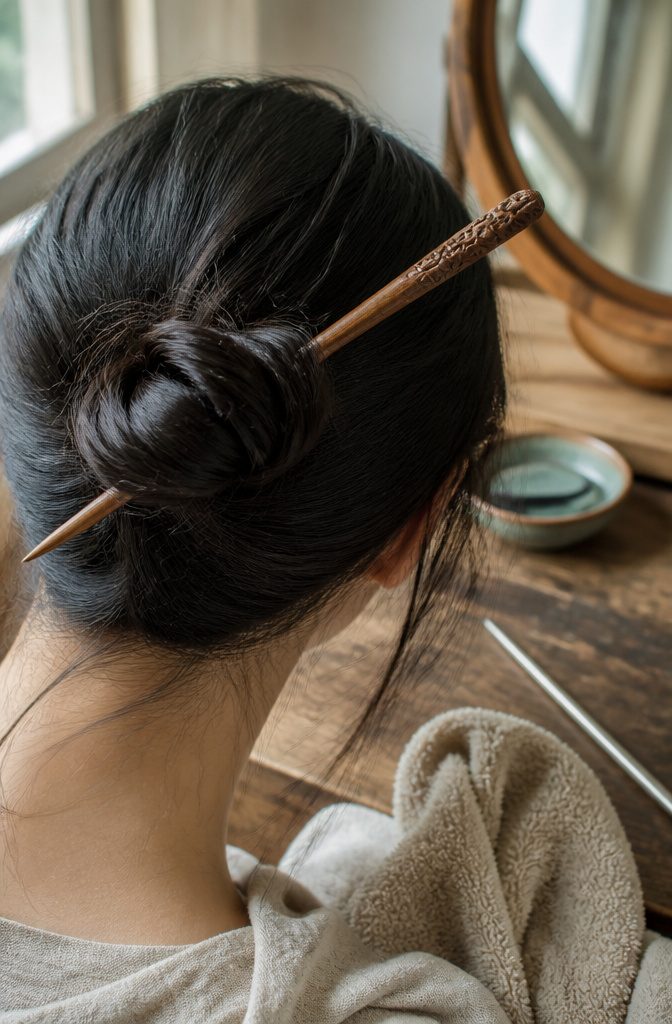
Hair sticks are one of the oldest ways to hold an updo, with a history that runs through ancient China, Japan, Greece and Egypt.
The early bone and carved-wood versions look a lot like the sleek metal and acetate sticks sold now, and the job hasn’t changed: keep the hair up, and spare it the tension and breakage that tighter fasteners can cause.
The modern way to wear one is simple. Twist your hair into a knot, then thread the stick diagonally through the base of the knot.
Going through at an angle, rather than straight in, is what gives you a secure hold. If the knot still feels loose, I’d add a second stick crossing the first before reaching for extra pins.
French Pins
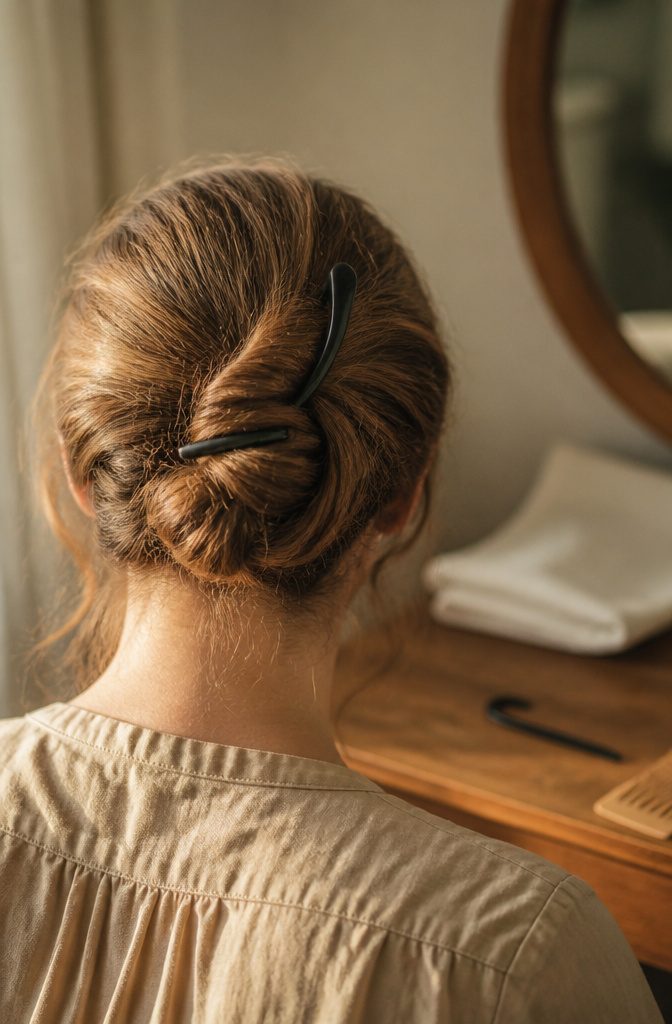
French pins were made of metal, bone, acetate, or whatever people could carve or bend into something strong enough to hold a bun.
Early versions in The Met’s archives look much like the ones sold today, which says the design barely needed improving.
Start with a loose twist or bun, then thread the pin through in an L shape.
The pin has to catch both the twist and the hair close to the scalp. That second catch is the anchor; a pin that grabs only the outer twist has nothing to hold it in place.
The pin holds without tugging and secures without creasing. For a quick updo that still looks finished, I’d choose one over a claw clip or hair tie every time.
Veils and Hair Coverings
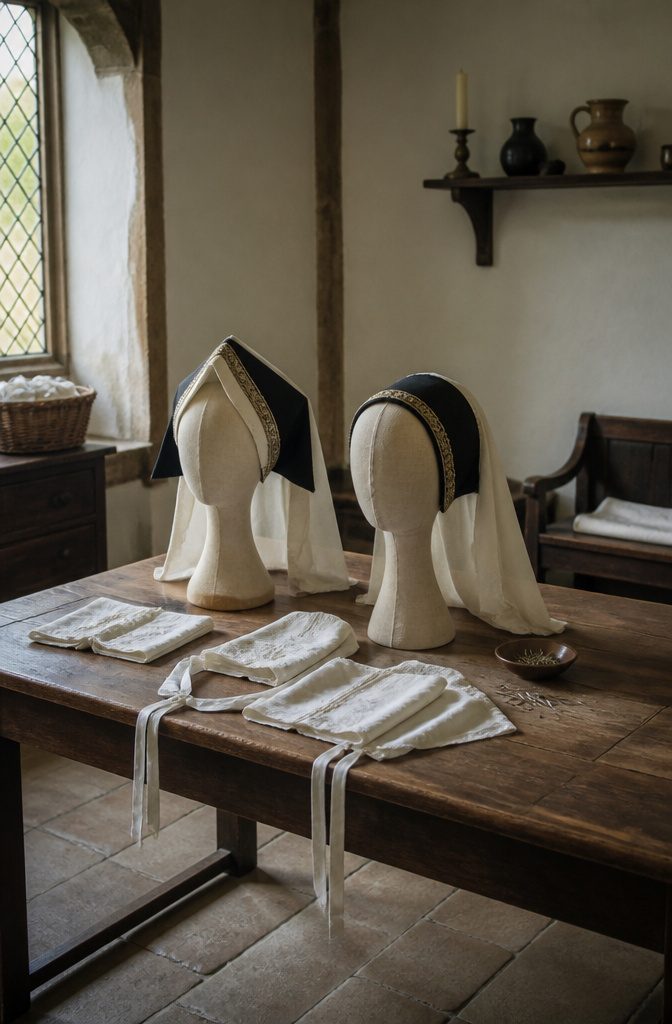
Medieval and Renaissance women covered their hair because a married woman’s bare head looked immodest, and the covering announced her standing before she said a word.
Linen coifs and veils did the basic work, while hoods sat on top and carried the status.
The Tudor gable hood is the one I’d point to first.
A stiff frame rose to a peak over the forehead like a roof gable, with fabric falling at the sides and back. The face sat inside a sharp, angular outline, and no hair showed at all.
The French hood took the opposite approach. It sat farther back on the head in a soft curve, which let a band of hair show at the front.
Modesty stayed intact, but the head looked rounder and lighter, and I think that shift is why the style read as fashionable rather than merely proper.
Ribbons and Bows
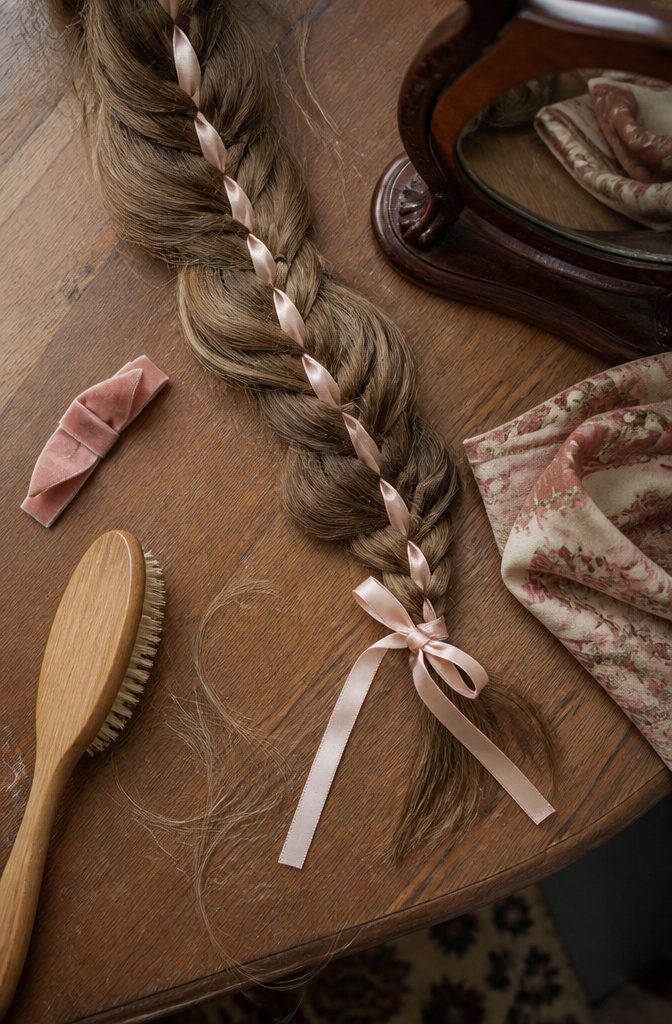
Ribbons were working hardware before they were decoration: in the 18th and 19th centuries they tied off braids and decorated structured updos.
By the early 20th century they had a reputation for softness and youthfulness. Mid-century added velvet bows tucked into polished curls, and the ’70s and ’80s moved to longer, looser ribbons that swung with the hair.
Today a ribbon can read romantic, polished or a little undone, depending on the type. Velvet is the softest, long tails add swish, and skinny ones draw a clean line.
For an easy finish, tie one at the base of a ponytail, or thread a slim ribbon through a loose braid. I’d pick the braid, since it hides the elastic and stays put.
Hair Rollers
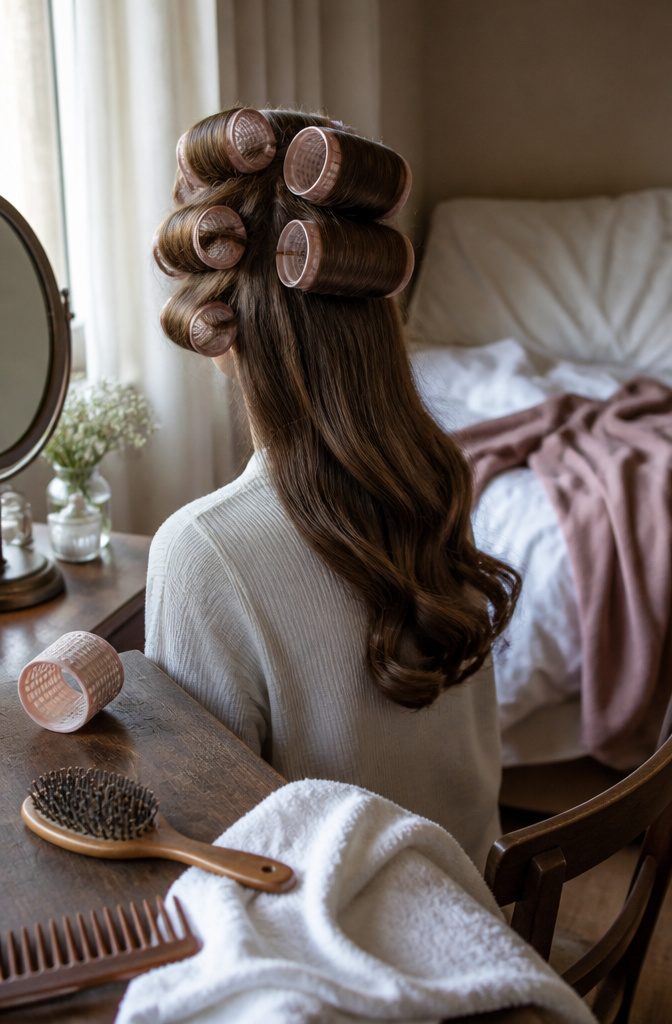
Rollers go by several names: curlers, pin curls, perm rods. The idea is old.
Ancient Egyptians wrapped hair around metal rods warmed by fire or the sun, and Old Hollywood stylists later leaned on rollers for plush, glamorous waves. Versions from the late 19th century set a gentle shape without any heat.
That heatless route is the one I’d pick today. Velvet and satin sets you can sleep in are everywhere again, and you wake up with the waves already done.
For extra lift, work foam through damp strands, blow-dry with a round brush, then roll. Thinner rollers make tighter curls, and thicker rollers give loose, bouncy waves.
Barrettes
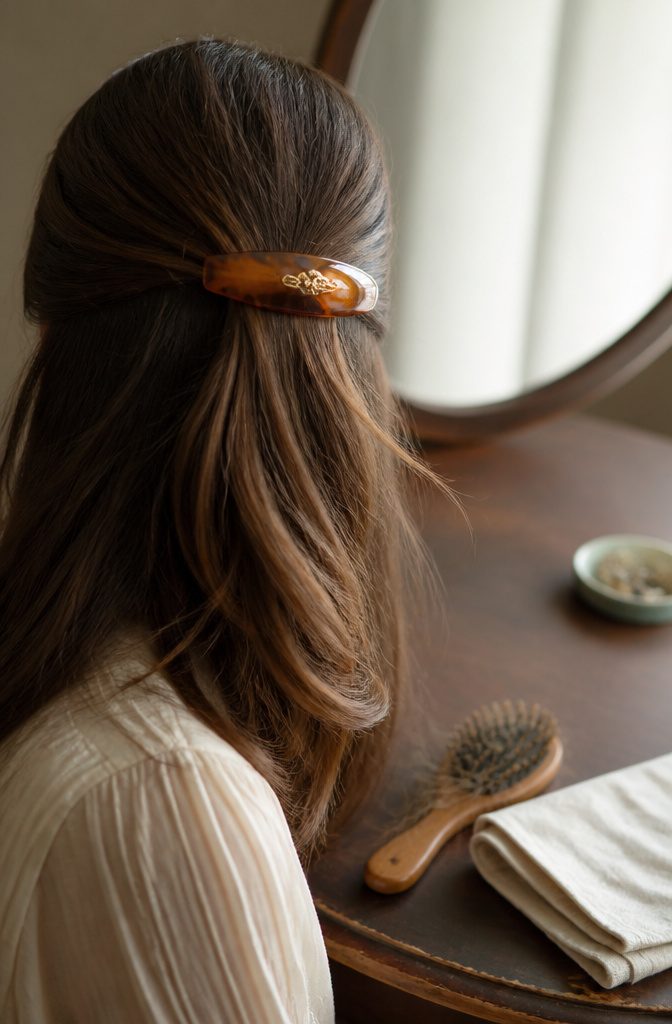
Barrettes are decorative clips that hold hair back or anchor a half-up style.
They are also newer than most of what fills a vintage tray: pins and combs go back centuries, but the clips we wear today were not invented until the 20th century.
For a half-up, gather the hair from temple to temple, smooth or twist it back, and set the barrette at the crown or just below it.
Place it so it covers the elastic or the spot where the two sections meet.
Leave the lower hair down. One bold barrette looks better than a matched pair, which tends to read as a child’s style, and it does the job of a headband without pressing behind the ears.
Flapper Headbands
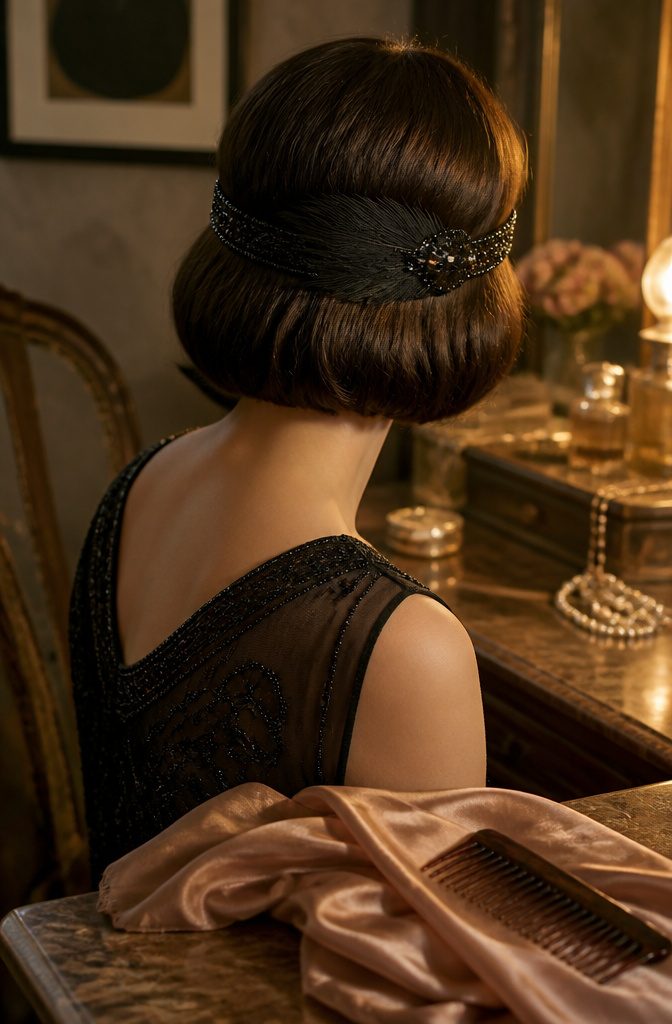
Flapper headbands sit low across the forehead, and the decoration carries the look: beading, sequins or feathers. They arrived with the 1920s bob, and the two belong together.
A short cut leaves the band as the one bold detail, and both marked a break from the stiff, structured Victorian styles before them. Women were dancing, working and moving, and hair kept pace.
For wearing one now, I’d skip the full costume and pick a descendant: a sleek, crystal-studded band, or a minimalist metal one that sits close to the hairline.
A flapper-style band also makes a great wedding hairpiece for a retro theme.
Hair Scarves
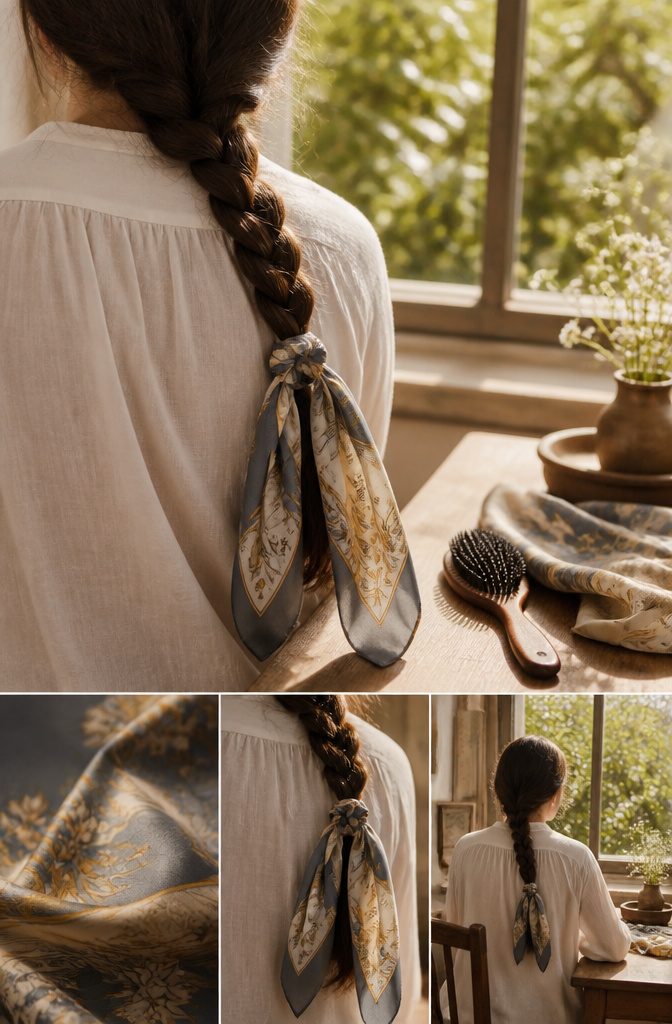
The classic 1960s version is hair wrapped in silk with oversized sunglasses, and it still reads instantly.
Scarves also get woven through braids, wrapped over a roller set to protect it, and tied in Black and Afro-Caribbean wrapping traditions, all while shielding hair from friction, humidity and sun.
For everyday wear, I’d reach for a scarf over a plain elastic whenever a style needs help.
Tie one around a braid’s end, knot it over a messy bun, or run it along the hairline to smooth second-day hair. Sleep in a silky scarf to prevent frizz, then retie it as a headband in the morning.
Soft Wide Headbands
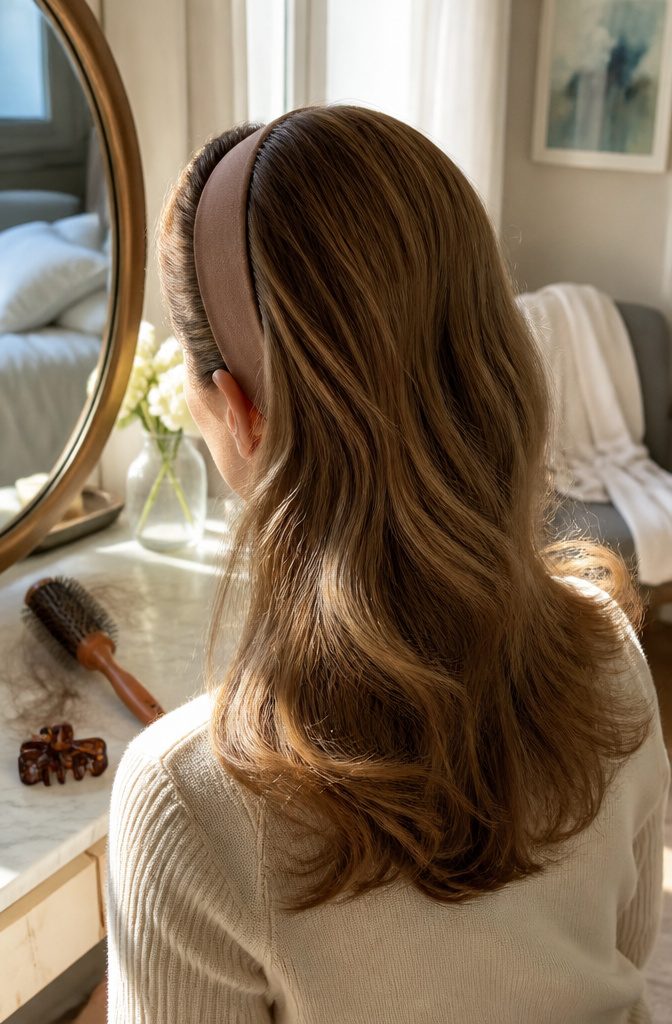
Soft, wide headbands had their real moment in the 1960s, worn over big volume and flipped ends. Jane Birkin and Catherine Deneuve are the faces to picture.
A wide band smooths the hairline, frames the face and lifts second-day hair, and it can read sporty or polished depending on how you style it. I’d pick it over a skinny band any day that the hair needs help.
Order matters. Brush your hair out, work in a little dry shampoo for texture, and backcomb the crown.
Add the headband last, so it sits behind the height instead of flattening it. For a modern blowout or loose waves, keep that lifted crown and let the ends fall free below the band.
Banana Clips
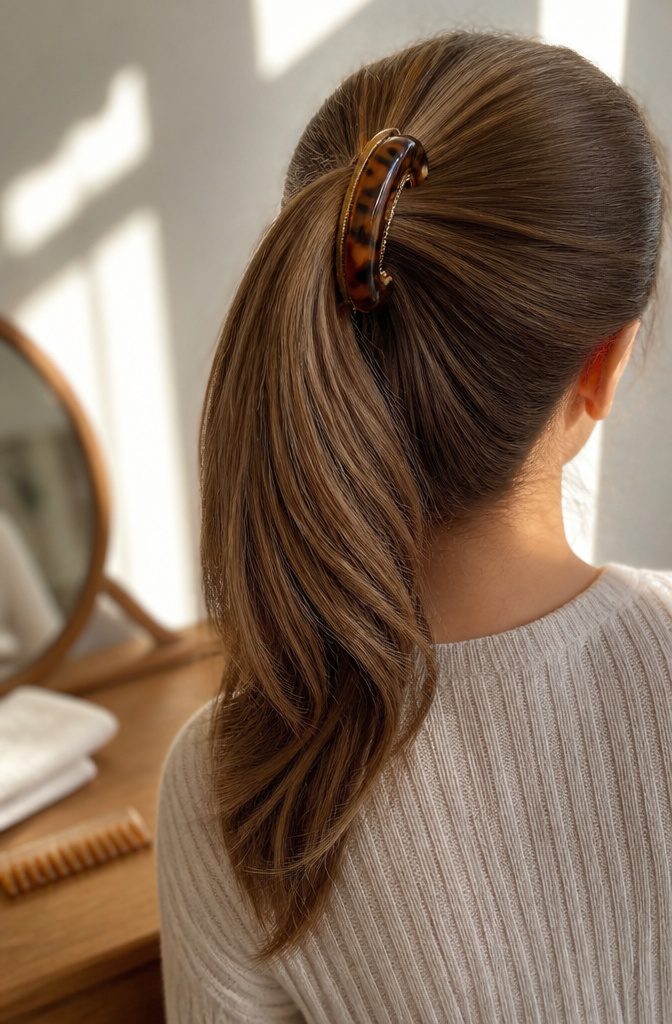
A banana clip is a long, curved clip that wraps around the back of a ponytail, and it had a real run in the 1980s and 1990s.
The curve spreads hair across its width instead of cinching it into a tight bunch, which makes the ponytail look twice as full. For me it’s the closest thing to a heatless blowout shortcut.
Worn now, it reads as an airy, lifted ponytail rather than a costume piece, and it keeps resurfacing on TikTok. Clip it at the base of the ponytail for instant height and volume.
It looks good on clean hair and even better on day two. Because the hold spreads rather than squeezes, I’d treat it as a volume tool, not a style for locking hair down.
How Use Changed Across Eras
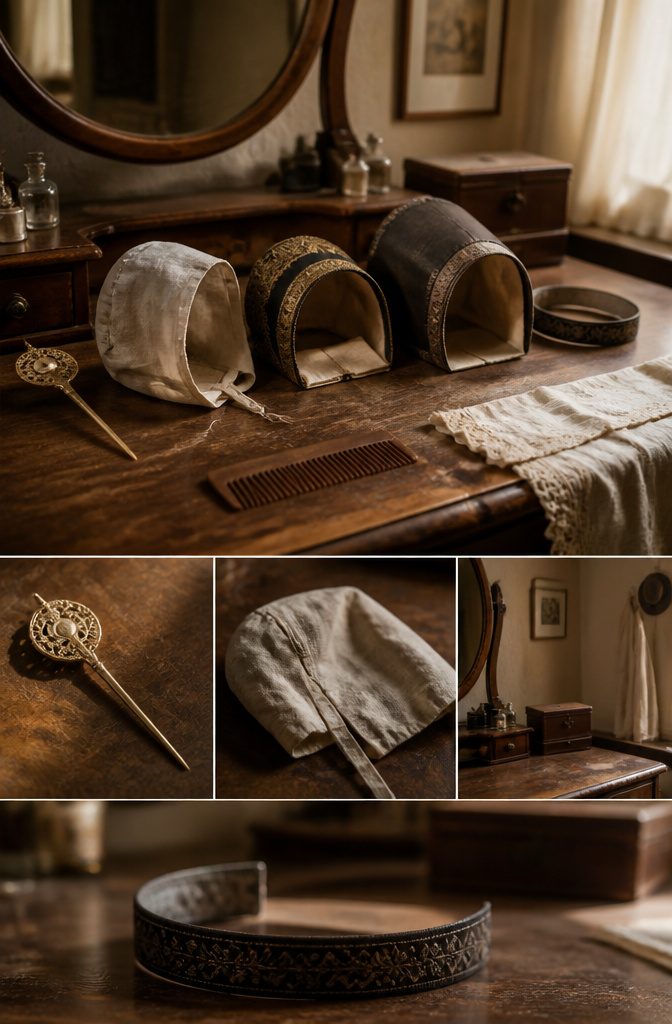
Roman hair was a status display, and the taller the better.
A style could signal standing, profession and age, which is why the tutulus, the nodu and the tight, wool-bound curls of the Flavian and Antoine looks took long sessions to build.
Medieval and Renaissance women covered their hair for modesty, so uncovered hair read as daring.
Tudor hoods followed court politics: the gable hood gave way to the French hood once Anne Boleyn was crowned. Victorian girls wore their hair up from age 15, so their true length shows only in intimate photographs.
The 1920s bob broke that habit. Hair has stayed tied to cultural identity since, and I read every pin and wrap with that history in mind.
More Than Decoration
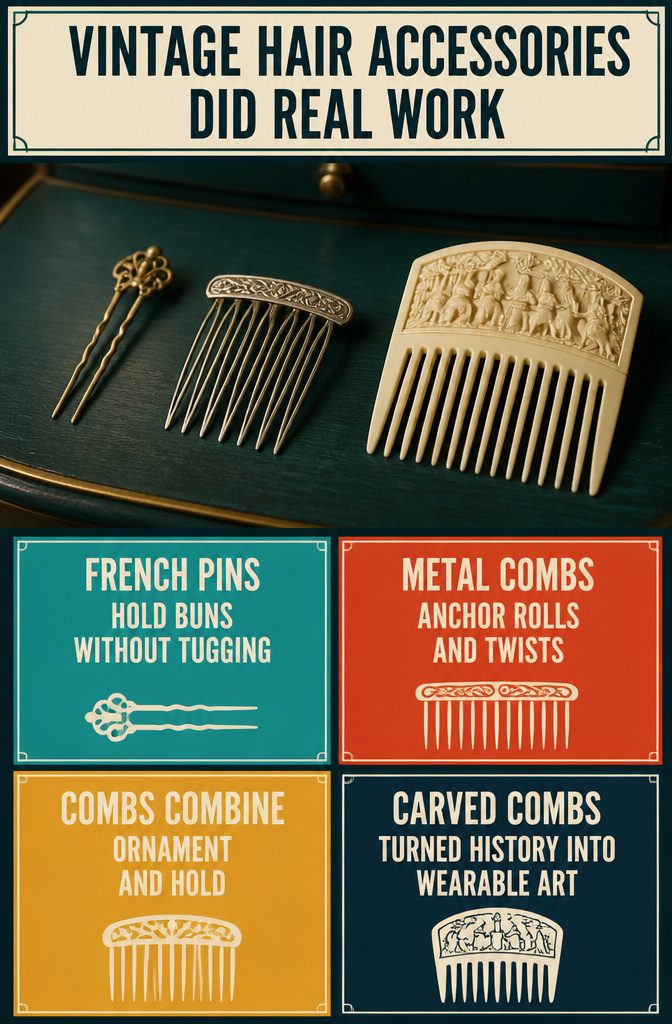
The best vintage hair accessories worked hard first and looked good second:
- French pins were made from metal, bone or acetate, strong enough to hold a bun. They hold without tugging and secure without creasing, and early versions at The Met look much like the ones sold now.
- Slim metal combs from the ’50s and ’60s anchored victory rolls and French twists. A comb is part ornament, part anchor, which is why I’d pick one over a plain pin for a half-up.
- Art Deco combs from the ’20s looked like tiny sculptures, and the oversized tortoiseshell ones of the ’70s and ’80s were statement pieces too.
- Combs in ancient China and Japan, the Middle Ages and the Renaissance were engraved, lacquered and painted. A carved French ivory comb from c.1530–1550 shows David and Bathsheba and the Judgement of Paris, so it was art you could wear.
Frequently Asked Questions
What are vintage hair accessories?
Vintage hair accessories include pins, combs, sticks, barrettes, headbands, scarves, ribbons, veils and clips used to hold or decorate hair, typically dating from the early 1900s through the 1990s.
The term covers everything from Art Deco combs and flapper headbands to banana clips and soft wide headbands from the 1960s. Most were designed to work hard first and look good second, holding styles in place while adding visual interest.
How do you wear vintage hair accessories?
Thread a decorative comb into a bun or half-up style so it holds while adding detail. Slide a hair stick diagonally through the base of a twisted knot to secure it without tension.
Clip a barrette at the crown to cover the elastic in a half-up, or tie a scarf around a braid’s end or over a messy bun.
Each piece has its own technique, but they all anchor the style and make it look finished.
What is the oldest hair accessory?
Hairpins are likely the oldest hair accessory, possibly dating back 30,000 years to the Venus of Willendorf, which may show a beaded ornament on the head.
Early pins were made from bone and wood, and later versions came in gold, ivory, tortoiseshell and gemstones.
Combs and hair sticks also have ancient roots, with bone examples from China’s Shang Dynasty (c. 1100–1000 B.C.) and usage recorded in ancient Greece, Egypt and Japan.
How do you use a French pin?
Start with a loose twist or bun, then thread the pin through in an L shape so it catches both the twist and the hair close to the scalp.
That second catch at the scalp is what anchors the pin. A pin that only grabs the outer twist has nothing to hold it in place and will slide out.
How do flapper headbands sit?
Flapper headbands sit low across the forehead, not on top of the head.
They arrived with the 1920s bob and feature beading, sequins or feathers as decoration. The low placement marked a break from Victorian styles and paired with short hair to create one bold detail.
How do you wear a banana clip?
Clip it at the base of the ponytail for instant height and volume.
The curved shape spreads hair across its width instead of cinching it tight, which makes the ponytail look fuller. It works best on day-two hair and reads as an airy, lifted ponytail rather than a costume piece.
What were hair accessories used for in history?
Roman hair was a status display, with tall styles signaling standing, profession and age. Medieval and Renaissance women covered their hair for modesty, so the type of veil or hood announced marital status and followed court politics.
Victorian girls wore their hair up from age 15, and the 1920s bob broke that tradition. Hair accessories have always been tied to cultural identity, working as signals before they were decoration.