Soft, manageable hair costs a few dollars of glycerin and about 5 minutes, but only if you dilute it first: straight from the bottle it turns sticky.
Even diluted, it works best when the dew point sits between 39 and 61°F. Outside that range it can pull moisture out of dry hair or swell strands into frizz.
1. Is Glycerin Good for Hair
Glycerin can leave hair feeling moisturized, soft and manageable, but results depend on the formula, the hair, the routine and the weather.
It functions as a humectant, pulling moisture from the air into the strand, which is why so many curl creams, gels and leave-ins include it. That said, glycerin is a helper and not a cure-all.
It won’t actually make stronger hair grow out of your head, but it’ll condition and strengthen your existing hair so that it’s shiny and less prone to split ends.
Hair may appear to grow faster because you are keeping more length: well-conditioned strands break less, so you retain what you grow.
The benefit comes from moisture management, not from speeding up the root. A few sources make broader scalp and growth claims, but glycerin’s real value sits in reducing dryness, preventing breakage and keeping curls soft between wash days.
If you live somewhere with moderate humidity, the ingredient works beautifully. If not, you may find it pulls moisture out of dry hair or draws too much in when it’s humid, leaving things frizzy or puffy.
2. What Glycerin Does
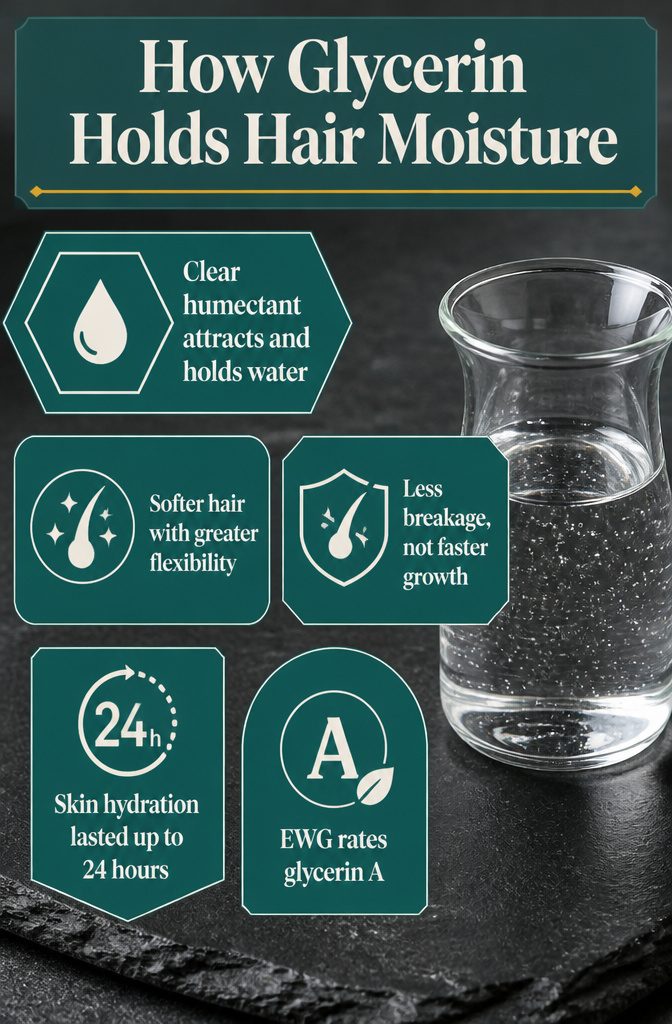
Glycerin, also known as glycerol, is a clear, colorless humectant that attracts and holds water in the hair. That hygroscopic property is the reason behind the softness and conditioning claims you see on product labels.
When you apply a leave-in conditioner or styling cream with glycerin, it helps the product film stay associated with water longer, which translates to hair that feels softer and more flexible.
The moisture support can reduce breakage during detangling and styling, which means you retain more length over time.
That is different from glycerin stimulating follicles or making new hair grow faster. A 2017 study found that a glycerin fluid kept skin hydrated for up to 24 hours, and the same moisture-holding effect applies to the hair shaft.
One study also links glycerin used as a leave-in treatment to lessened dandruff, though that finding deserves caution until it is replicated more widely.
The Environmental Working Group rates glycerin an A, meaning it poses no concern to human health or the environment.
The Cosmetic Ingredient Review Expert Panel reviewed glycerin in cosmetics and concluded it is safe under current conditions of use, and the FDA lists synthetic glycerin for multiple regulated food-related uses including as a humectant and stabilizer.
3. Humidity and Hair Porosity
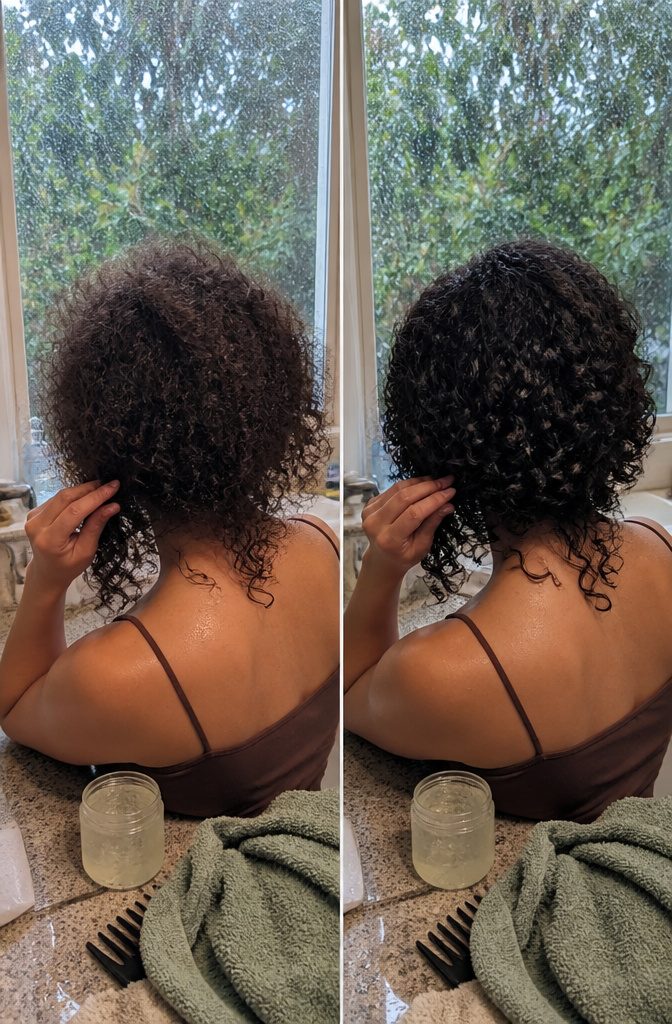
Weather and hair structure both change what glycerin does, but the advice to avoid it completely based on climate thresholds oversimplifies how products actually behave. Glycerin performs best when the dew point sits between 4 and 16 degrees Celsius, roughly 39 to 61°F.
Outside that range, particularly in very high or very dry conditions, it may contribute to frizz or leave hair feeling rougher. In extremely humid weather, a hard-hold gel containing PVA/VP Copolymer can help manage swelling.
But glycerin does not become harmful the moment a thermometer crosses a line. Watch your own hair instead of following rigid rules.
Porosity and texture matter too.
Curls, coils and dry hair respond differently, and high-porosity hair may pull in too much moisture when humidity climbs. Low-porosity hair might feel weighed down if glycerin sits too high on the ingredient list.
For 4C hair, glycerin can work, though individual results vary widely. The pattern is less predictable than the marketing suggests, so give your routine a few weeks and adjust based on what your hair actually does.
4. Use It Diluted
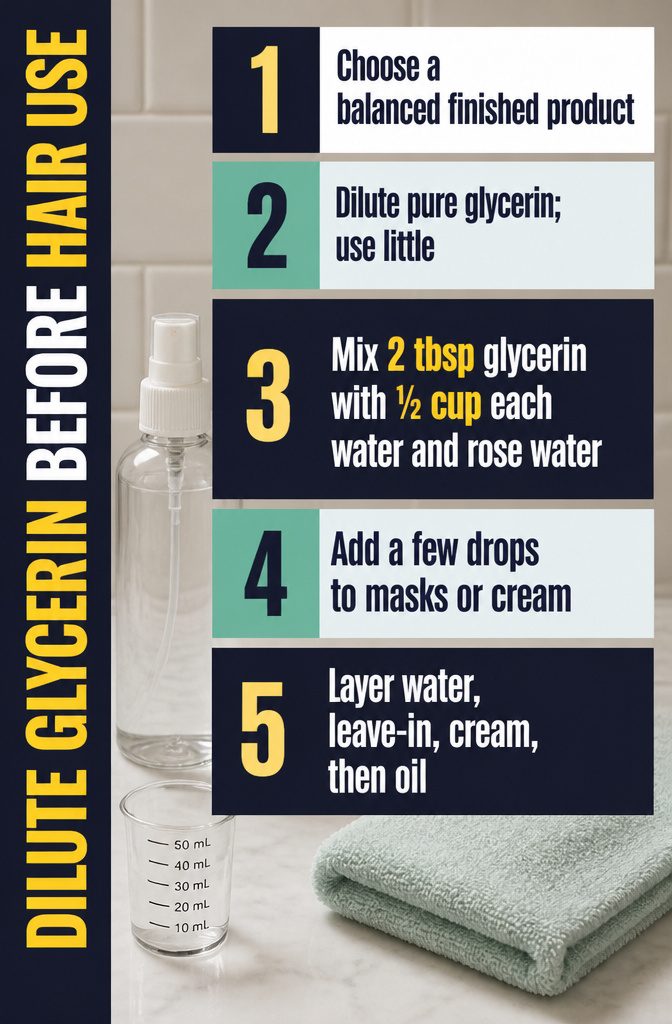
- Start with a finished product where the glycerin is already balanced: Lush Sea Spray Hair Mist, Verb Ghost Oil, Bumble and Bumble Styling Creme, or Jason Intense Moisture Aloe Vera 80% shampoo and conditioner. I’d pick one of these over anything mixed at home.
- For pure glycerin, dilute it and keep the amount small. Straight from the bottle is too sticky.
- Spray: stir 2 tablespoons of glycerin into half a cup each of water and rose water. Mist it on damp hair after the shower.
- Mask or styling cream: add a few drops, no more.
- Conditioner: pour 10 mL (.34 fl oz) into a 50 mL (1.7 fl oz) bottle.
- Layer in this order: water, leave-in conditioner, cream, then a light oil or styling product.
5. Stickiness, Frizz and Cautions
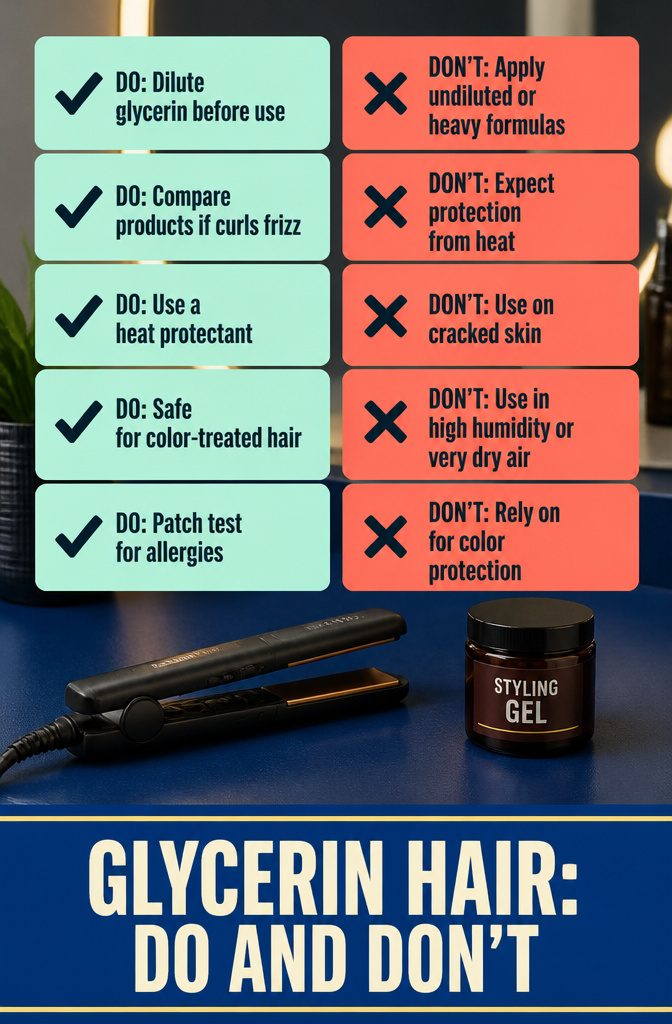
Glycerin is considered safe for hair, but the formula or the weather can still produce results you dislike.
Common performance complaints include:
- Sticky or tacky feel. Glycerin is thick and syrupy, and using it undiluted or in a heavy formula can leave hair greasy or coated.
- Frizz, puffiness, or loss of curl definition. In high humidity, glycerin can pull excess moisture from the air and cause hair strands to swell. In very dry air, it may pull moisture out of your hair instead. Humidity itself is a major factor in frizz, so if a glycerin-heavy gel consistently makes your wash-and-go frizzy, try a different product and compare.
- Heat intensification. Glycerin conducts heat well. When you use heat styling tools, it may intensify the heat from the tool and damage the hair shaft. Glycerin is not a heat protectant, so use a product made for that.
- Semi-permanent color fading. One source warns that glycerin can cause semi-permanent dye to fade more quickly, though another does not broadly say to avoid it on color-treated hair.
- Possible allergy. Glycerin allergies are rare but possible.
One more caution: do not use glycerin on cracked or broken skin.
Natural or Synthetic Glycerin
Glycerin comes from three sources: plant oils like coconut or shea butter, animal fats, or petroleum-based synthesis.
Chemist Carl Wilhelm Scheele discovered it in 1778, though people had been using it in soap long before that. Plant-derived versions get labeled vegetable glycerin, and some product lines promote that as gentler or more eco-friendly.
Chemically, purified glycerin is glycerin. The Cosmetic Ingredient Review Expert Panel reviewed it and found synthetic versions safe for cosmetic use, and the FDA lists synthetic glycerin for regulated food applications including as a humectant and stabilizer.
If you want vegetable glycerin for vegan or sourcing reasons, go for it.
But the blanket claim that synthetic is automatically dangerous does not hold up under review. The differences are about preference and production origin, not about whether one works better on hair.
DIY Sprays and Masks
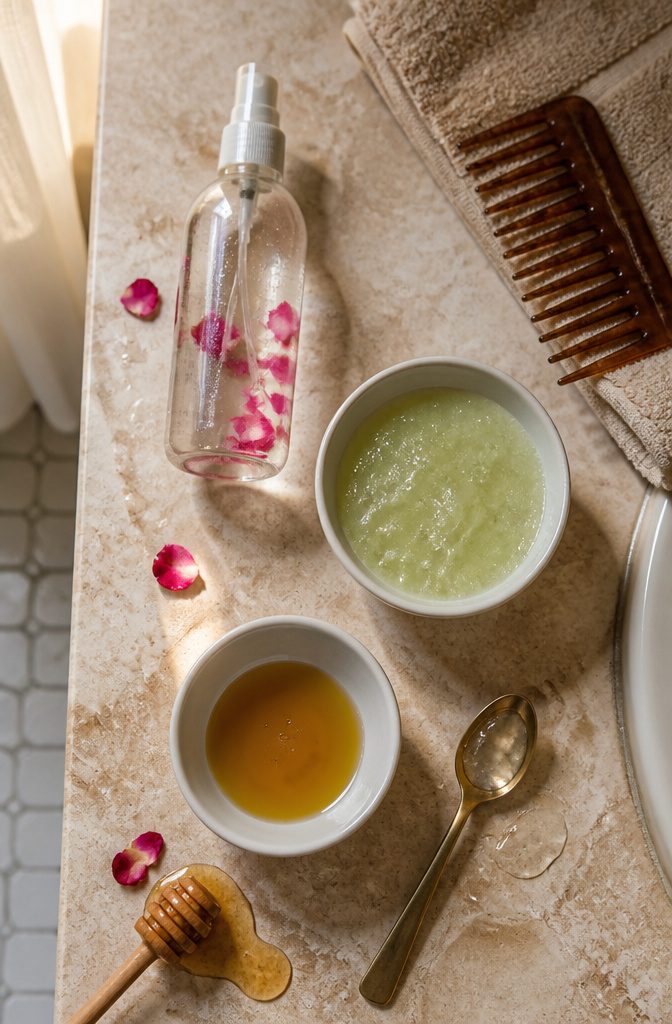
Glycerin amounts run from 1 teaspoon to 1/4 cup, and there is no shared ratio.
| Option | Glycerin | Also in it | Leave time |
|---|---|---|---|
| Spray | 1/4 cup | 1/4 cup each distilled water, rosewater; 2–3 drops essential oil | n/a |
| Spray, damp hair | 2 tsp | 1/2 cup each water, rose water; 1 tsp olive oil | n/a |
| Rosewater mask | 2 tbsp | rosewater | 30 min |
| Aloe mask | 1/4 cup | 1/4 cup aloe gel | 30+ min |
| Honey mask | 1/4 cup | 1/4 cup honey, 2 tbsp coconut oil | 30 min |
| Egg mask | 1 tsp | egg, castor oil | 40 min |
| Honey-olive mask | n/a | honey, olive oil | 20 min |
| Conditioner | 10 mL | 50 mL conditioner | n/a |
Start at the small end, and use masks once or twice a week, weekly for curly hair.
Frequently Asked Questions
Is glycerin good for hair?
Yes, it can be, mainly as a moisturizer.
Glycerin is a humectant that pulls water into the strand, so hair feels softer and breaks less during detangling and styling. How well it works depends on the formula, your hair type and the weather.
What are the downsides of using glycerin on hair?
The most common complaints are a sticky or tacky feel, frizz or puffiness, and lost curl definition.
Glycerin also conducts heat and is not a heat protectant, and it may fade semi-permanent dye faster. Allergies are rare but possible.
Can you put pure glycerin directly on hair?
No. Straight from the bottle it is too sticky, so use a finished hair product or dilute it first, such as 10 mL (.34 fl oz) of glycerin in a 50 mL (1.7 fl oz) bottle of conditioner.
If you mix your own, avoid big water-based batches, because without a preservative they can support microbial growth.
Does glycerin cause frizz?
It can. Glycerin works best when the dew point sits between about 39 and 61°F (4–16°C); in very humid air hair swells, and in very dry air glycerin can pull moisture out of the strand.
If a glycerin-heavy gel keeps frizzing your wash-and-go, switch products and compare.
Does glycerin help hair grow?
No, it does not stimulate follicles or speed up growth at the root. Hair can look like it grows faster because well-moisturized strands break less, so you keep more of the length you already have.
Is glycerin good for 4C hair?
It can work, but results vary widely from person to person.
Low-porosity hair may feel weighed down if glycerin sits high on the ingredient list, and high-porosity hair may take in too much moisture when humidity climbs. Give a new routine a few weeks before judging it.
Can you use glycerin on color-treated hair?
One warns that glycerin can make semi-permanent dye fade faster, while another does not say to avoid it on color-treated hair. If you use semi-permanent color, watch how long your shade lasts after you add glycerin.
How long can you leave glycerin in your hair?
It depends on the recipe. Start with the small amounts listed and adjust from there.
Can I use aloe vera and glycerin together?
Yes.
Stir 1/4 cup aloe vera gel with 1/4 cup glycerin, apply it in sections to dry or slightly damp hair, and leave it on for at least 30 minutes. Rinse thoroughly with warm water.