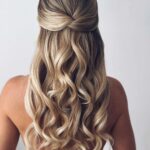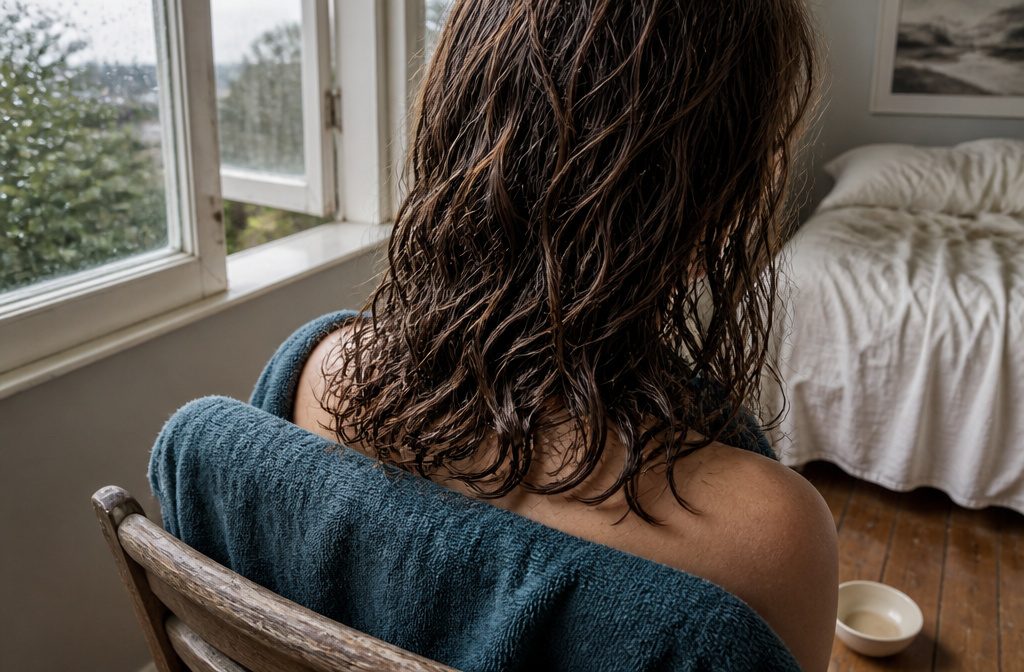
Smooth, frizz-free hair takes no heat tool, just up to 3 hours and some restraint.
The stage people get wrong is the wait: touching wet strands roughs up the cuticle and breaks the curl pattern. Blot to 60–70% damp first, and hold your product until hair is about 60% dry.
1. Prep in the Shower
Air drying leaves your shampoo and conditioner to do the work a blow dryer would otherwise cover, so I reach for hydrating formulas.
A sulfate-free shampoo won’t strip natural oils, and the moisture it leaves behind helps hold frizz down as the hair dries.
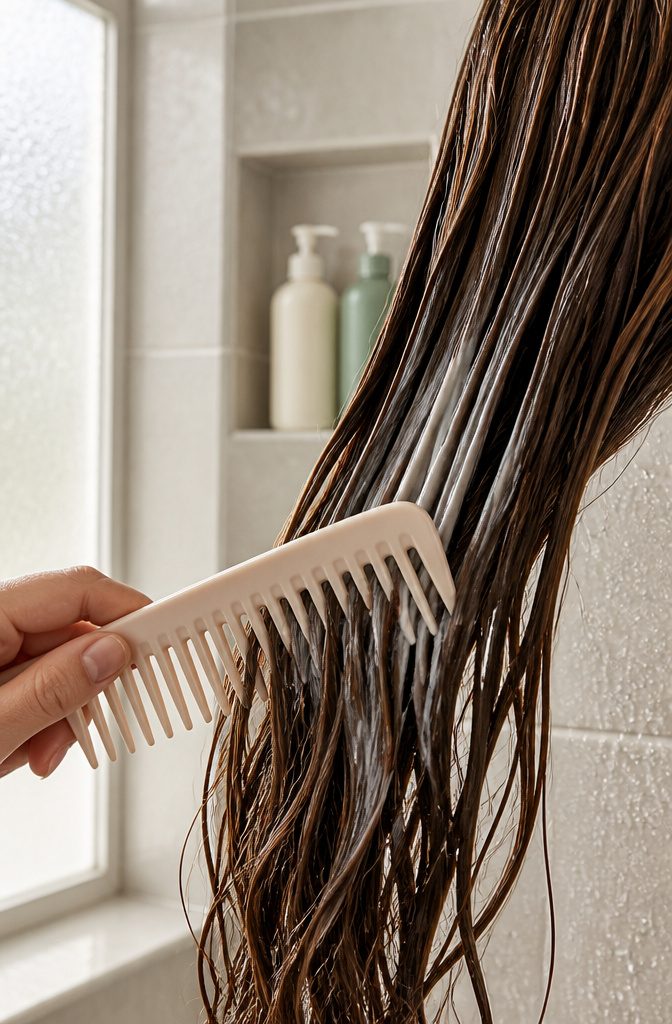
Put conditioner on mid-lengths to ends, where strands are older and more porous, especially on long hair. While it’s still in, work a wide-tooth comb through; this detangles and spreads the product evenly.
Fingers work too. Never brush soaking-wet hair, because wet strands are stretched and fragile and a brush will damage them.
I’d finish with a cool rinse. It’s optional, but it lays the cuticle flat and cuts down on frizz later.
2. Blot to 60–70% Damp
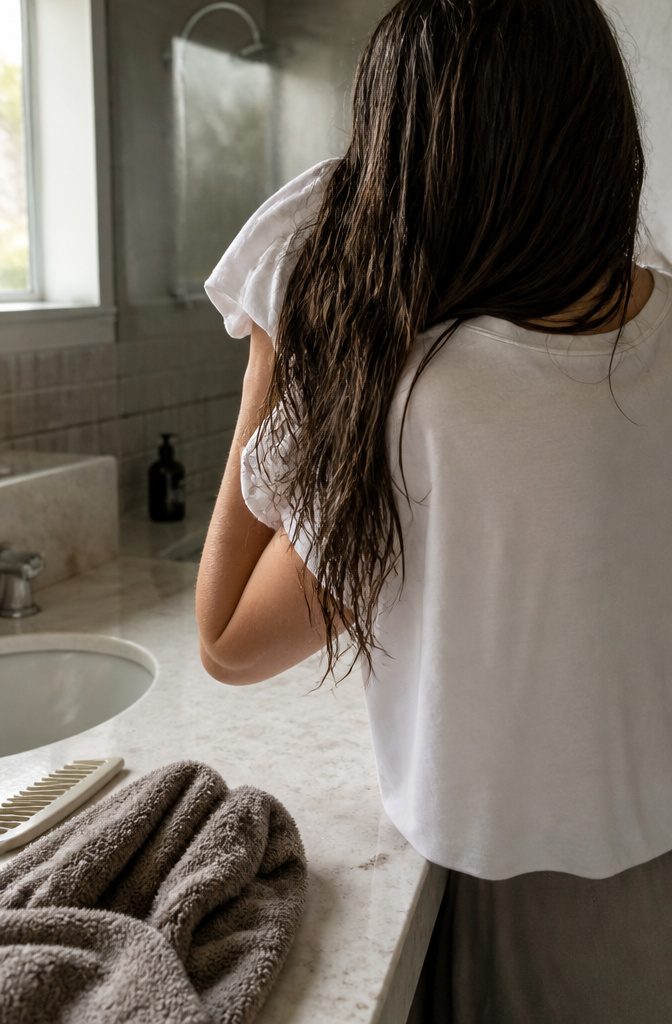
Squeeze each section from mid-length to ends, then give your head a quick shake to get the heaviest water out.
A smooth towel or an old cotton T-shirt pressed against the hair absorbs water without roughing up the cuticle, while a looped terry towel does the opposite.
Microfiber works well too, and so does organic jersey cotton, a soft knit that wraps without twisting. For hair below bra-strap length, I’d go with an XL towel.
Pat or squeeze in sections until hair feels cool to the touch with nothing dripping, about 60–70% damp.
Rubbing causes breakage, so press instead. Leave a wrap on only a few minutes; longer on long hair flattens the roots and holds moisture in.
3. Time Your Products
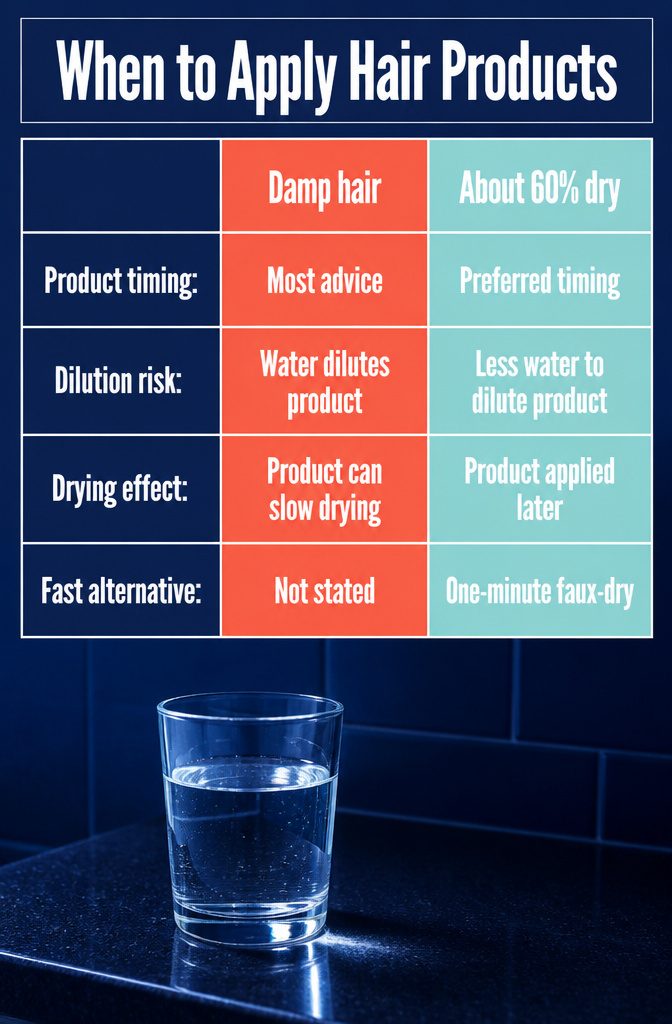
Most advice says to apply product to damp hair, but I wait until hair is about 60% dry.
Water dilutes product, and product can slow drying. If you can’t wait, a one-minute faux-dry on low speed and medium heat gets you there.
Use an egg-sized amount of curl mousse before braiding, and a dime-sized amount for pomade or paste, or for curl mousse on romantic curls. Keep heavy product off the roots.
Skipping product entirely is the bigger mistake:
"Air-drying does not mean being lazy and not putting products into your hair."
— Allure
Even a little gel beats none.
4. Set the Shape
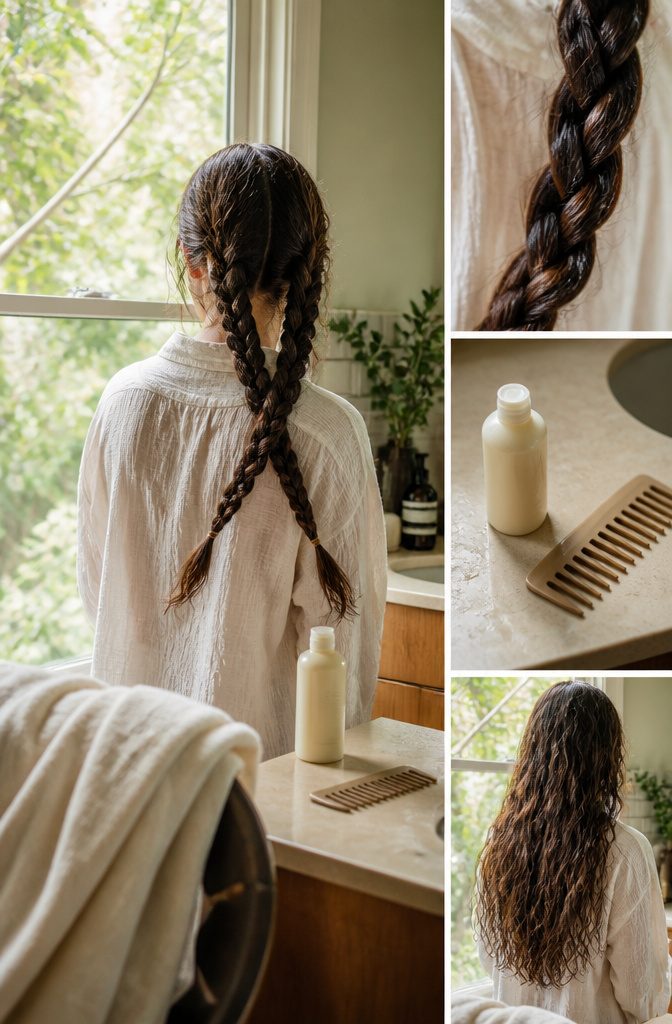
Not every head of hair needs a setting method, but waves and curls hold their pattern better when they dry in a shape. Match the method to the look:
- Scrunch or finger-coil: Scrunch up from the ends for looser waves. Finger-coil sections for more defined waves and curls.
- Braids: Use one or two braids for looser waves and four or five for tighter ones. Undo them once hair feels about 95 percent dry. Braids are my pick for waves because the braid count controls the result.
- Buns and twists: A tight bun on damp hair smooths and elongates curl. Leave it in until the hair is fully dry.
- Bantu knots: Part one-inch sections, twist root to ends, coil into a mini bun, and secure. Cover with a silk scarf or bonnet overnight.
- Plopping: Lay a towel flat, lower your head onto it, and wrap loosely so curls dry coiled instead of pulled down.
- Clips: Pin at the hairline for a smooth finish.
5. Hands Off While It Dries
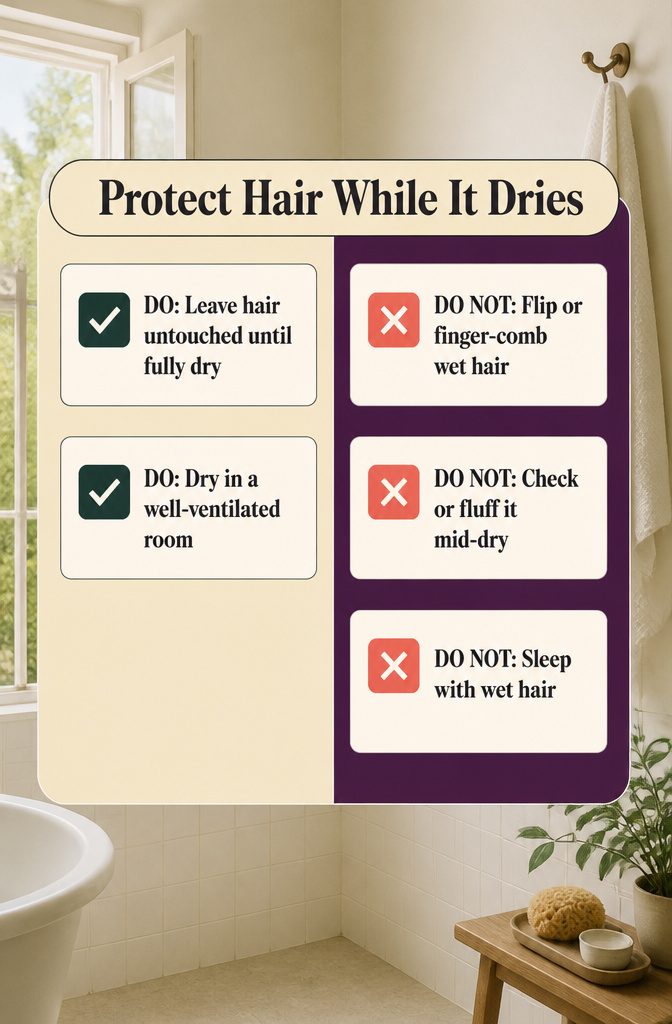
Wet hair is at its weakest, so every flip, finger-comb and mirror check roughs up the cuticle, and the damage shows up later as frizz.
Water also adds weight. On waves and curls, that weight pulls the pattern downward before it can form, and finer hair gives in fastest.
Once your hair is in place, leave it alone until it is fully dry. I know the urge to fluff a piece that looks flat, but touching it mid-dry is usually what breaks the curl pattern.
Let it dry in a well-ventilated room, and don’t go to bed with wet hair, which invites tangles and breakage.
6. Finish Once Dry
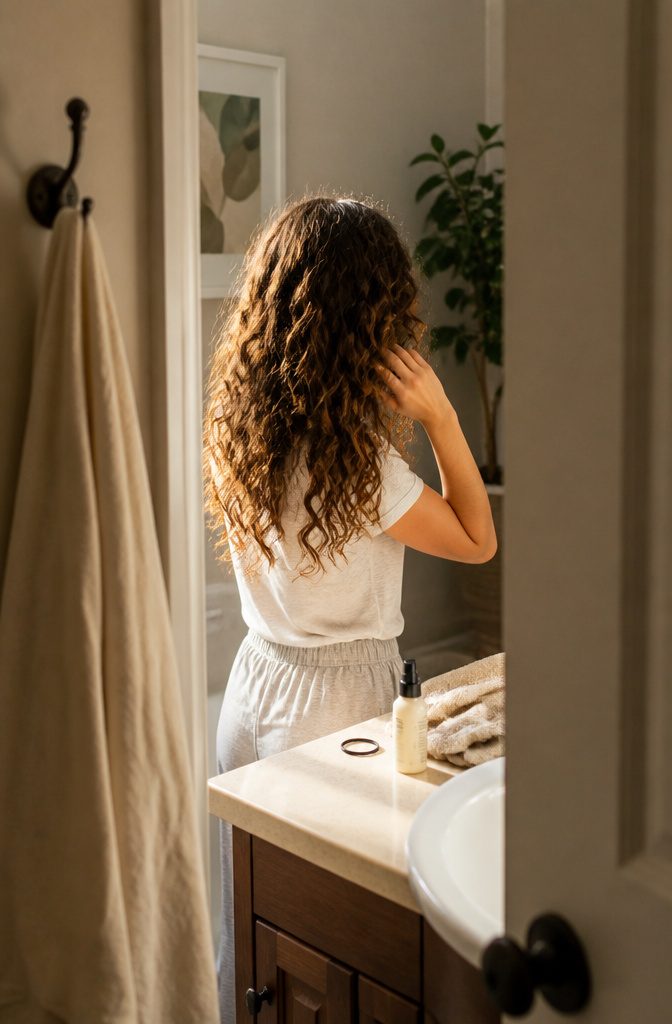
Finishing takes a couple of minutes, and each move depends on how dry your hair is:
- A bun set on damp hair stays in until the hair is fully dry. Release it, then finger-comb through lightly rather than brushing, so the curls separate without puffing out.
- Braids come out sooner, once hair feels about 95% dry. Shake the waves loose. Left in much longer, braids give a crimped look.
- For root lift, blow-dry only the roots and let the lengths air dry. Ends dry faster than roots, so this shortens the wait too. Use heat protectant first.
- On fully dry hair, a quick root-only pass with a heat tool keeps the lengths heat-free. I’d choose this over the blow dryer for fine hair that goes flat.
Stop Frizz and Crunch
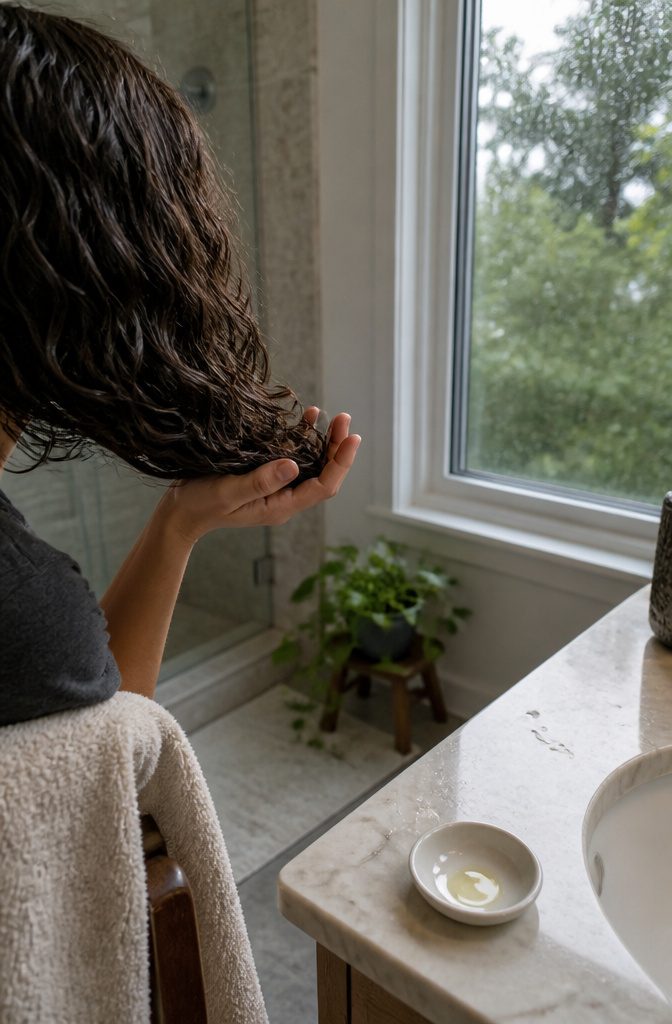
Crunchy hair after air drying is usually a product problem. Dryness and damage cause it too, but too much product is the more common culprit, so use less before you blame anything else.
Humidity above 70% swells hair shafts, and on muggy days a light serum before you head out does more than another layer of gel.
For texture, scrunch looser waves up from the ends. More defined waves do better with finger coiling, which sets the shape and discourages frizz.
Setting the shape in a bun or braids works well too. A tight bun on damp hair smooths and elongates the curl pattern, and two loose braids with a lotion-like product give soft waves.
Take braids out when hair is dry or nearly dry, because leaving them in too long gives a crimped look.
Adjust for Hair Type
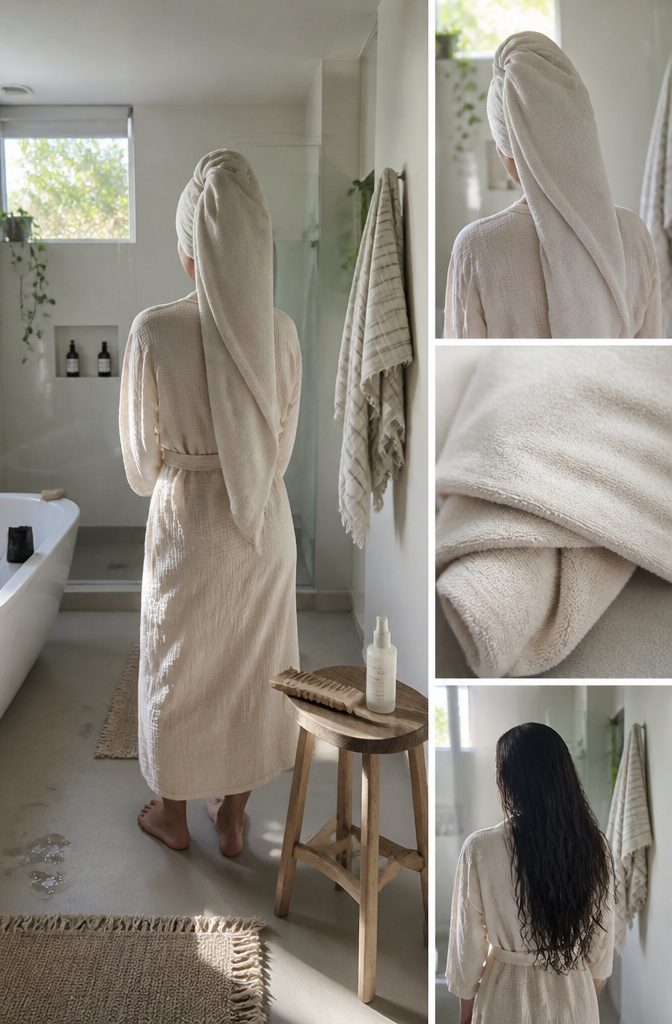
Towel, product weight and wrap time shift with hair type:
- Straight: Squeeze lightly in a smooth towel. Rubbing roughs up the surface and leaves hair flat or frizzy.
- Wavy and curly: Plop or microplop right out of the shower, then add curl cream or gel for definition. Thick curls take a richer cream.
- Coily: Wrap longest. The tighter the curl, the more patiently it dries.
- Fine or thin: Use a lightweight towel and lightweight products, and spray volumizer on detangled, towel-dried hair.
- Thick or long: Below bra-strap length, an XL towel covers everything without awkward folding.
- Colored or treated: This hair is porous and fragile when wet, so choose a gentle fabric and a light touch.
How Long Drying Takes
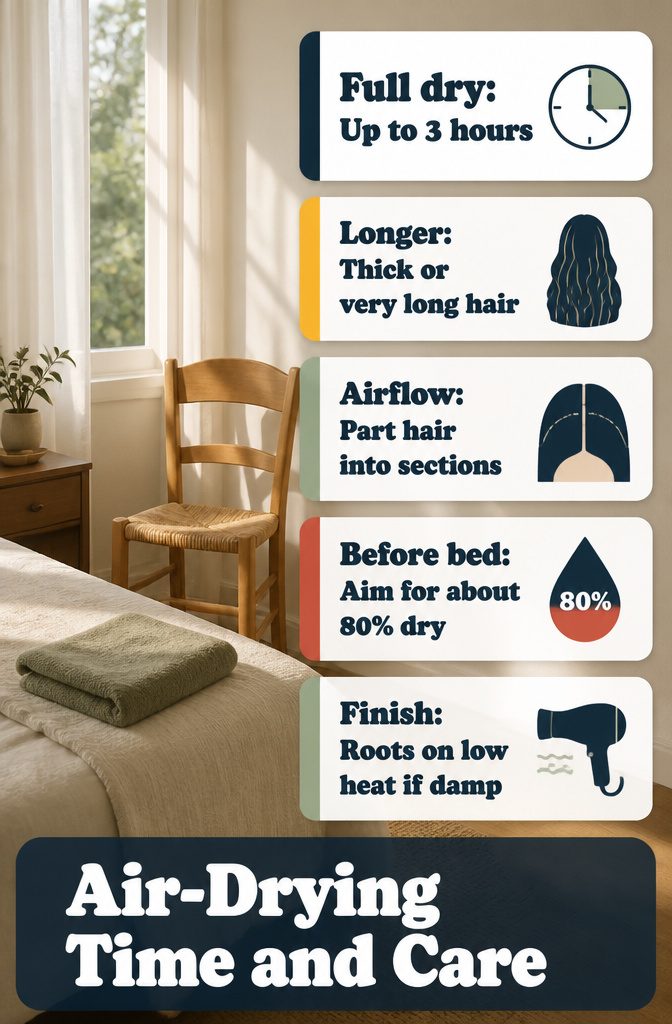
When you air dry hair, plan on up to 3 hours for it to dry fully, and longer if it’s thick or very long.
Most of that time is water you can remove early, so blot thoroughly before anything else. Part hair into sections so air reaches the inner layers, and keep heavy creams off the roots, where they slow things down.
Skipping the blow dryer spares your hair heat, but wet strands are at their most fragile. Protective products and gentle handling keep that from becoming damage.
I wouldn’t go to bed with soaked hair, though. Aim for about 80% dry first, then finish only the roots on low heat if they’re still damp.
Frequently Asked Questions
Is it bad to air dry your hair?
No, air drying is generally fine and keeps your hair away from heat styling.
Wet strands are fragile, so the risk comes from rough handling rather than from the drying itself. Use protective products, press water out instead of rubbing, and skip the brush until your hair is dry.
How long does it take for hair to air dry?
Plan on up to 3 hours, and longer for thick or very long hair. You can shorten the wait by blotting well first and parting hair into sections so air reaches the inner layers.
What is the fastest way to air dry hair?
Get the water out early: squeeze, then press with a microfiber towel until hair is about 60–70% damp, starting at the roots since they dry slowest.
Detangle with a wide-tooth comb and wrap for a few minutes. Keep heavy creams and leave-ins off the roots, because they slow drying.
Why is my hair crunchy when it air dries?
Too much product is the most common cause, so cut back before blaming anything else.
Dryness and damage can also leave hair stiff. Try a smaller amount and apply it once hair is about 60% dry.
Why does my air-dried hair look greasy?
Heavy product near the roots is the first thing to check.
Keep creams and gels on the mid-lengths and ends, and use a lightweight formula if your hair is fine. Roots stay damp longer under heavy product too, which makes the drying time drag.
Should I let my 4c hair air dry?
Yes, air drying works for coily hair, which includes 4c.
It needs the longest wrap time and the most patience of any hair type, since the tighter the curl, the slower it dries. Expect it to run past the usual 3 hours if your hair is thick or long.
How do I dry wavy hair naturally without frizz?
Plop or microplop right out of the shower, then add curl cream or gel for definition.
Scrunch up from the ends for looser waves, or finger-coil sections for more defined ones. Once the shape is set, leave your hair alone until it is fully dry, because touching it while wet is a main source of frizz.