The ideas here run from a TWA with Pink Highlights that fluffs into shape in about a minute to Cornrow Braids that cost one long session in a stylist’s chair, with bobs, shags and long layers in between.
Before you pick a cut, let a clean, product-free section dry on its own and watch whether it bends, waves or coils; that tells you more about the right shape than any photo will.
A cut that looks finished after 2 minutes of effort will outlast one that demands 20, so measure each look against your real mornings.
1. Textured Bob
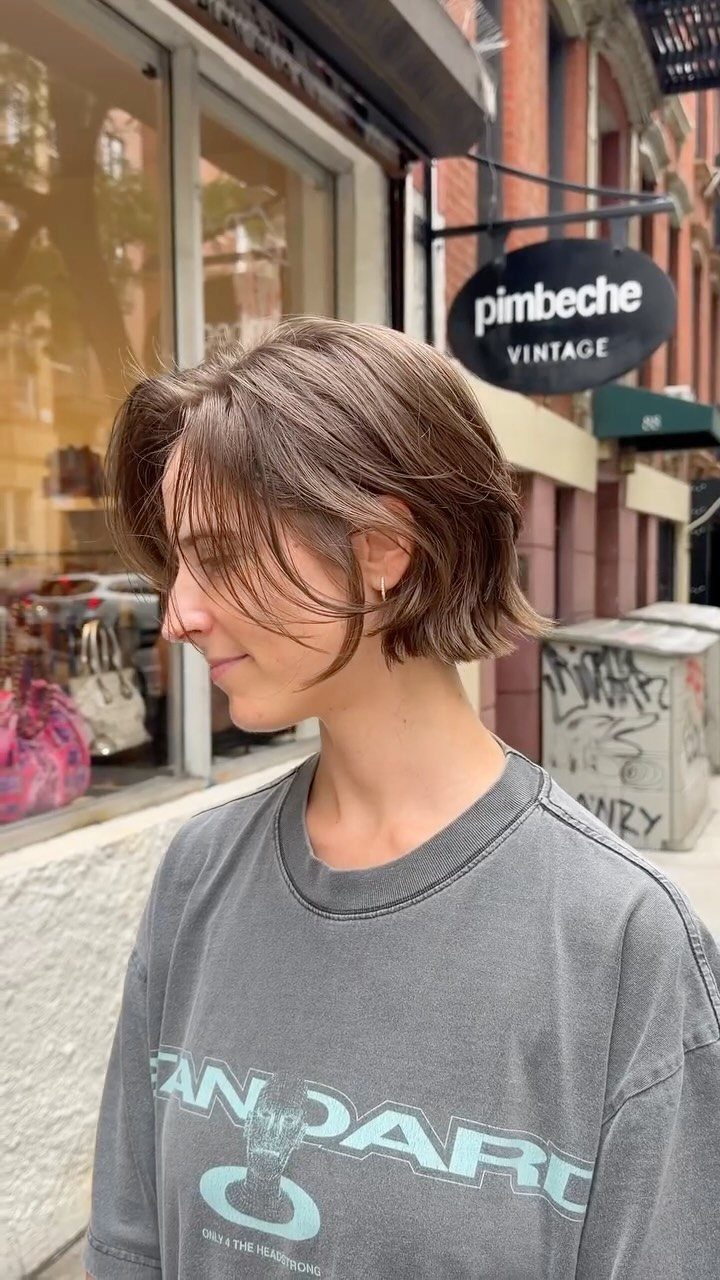
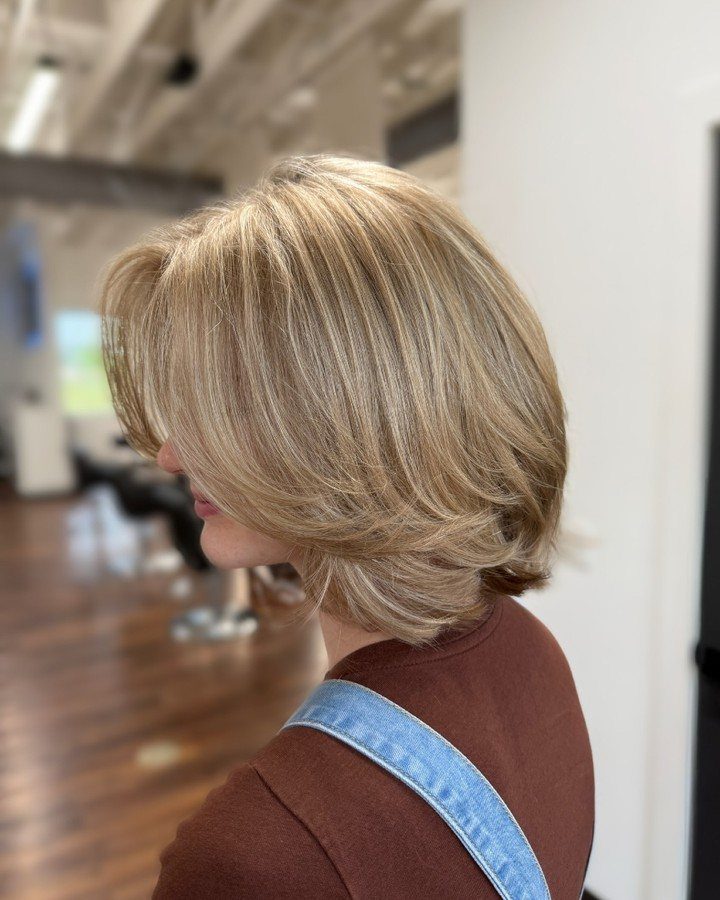
Wispy bangs and ends that look broken up on purpose are what make this bob read as relaxed instead of blunt. The shape stays short and soft, with layers that let the hair move without any styling effort.
Ask your stylist for a bob cut with both a razor and scissors, since that combination is what builds the feathered texture. Razoring softens the ends, and the scissors keep the overall line clean.
I like it best on hair that already has some body, because the texture has something to work with. Fine, flat hair may need a light texture spray to hold the separation.
Elliott calls the textured bob a modern, more playful take on the classic blunt bob. Rather than sharp, blunt edges, “the textured bob incorporates soft layers and subtle internal shaping to create a lived-in look that’s full of movement and dimension”.
2. Pixie Cut
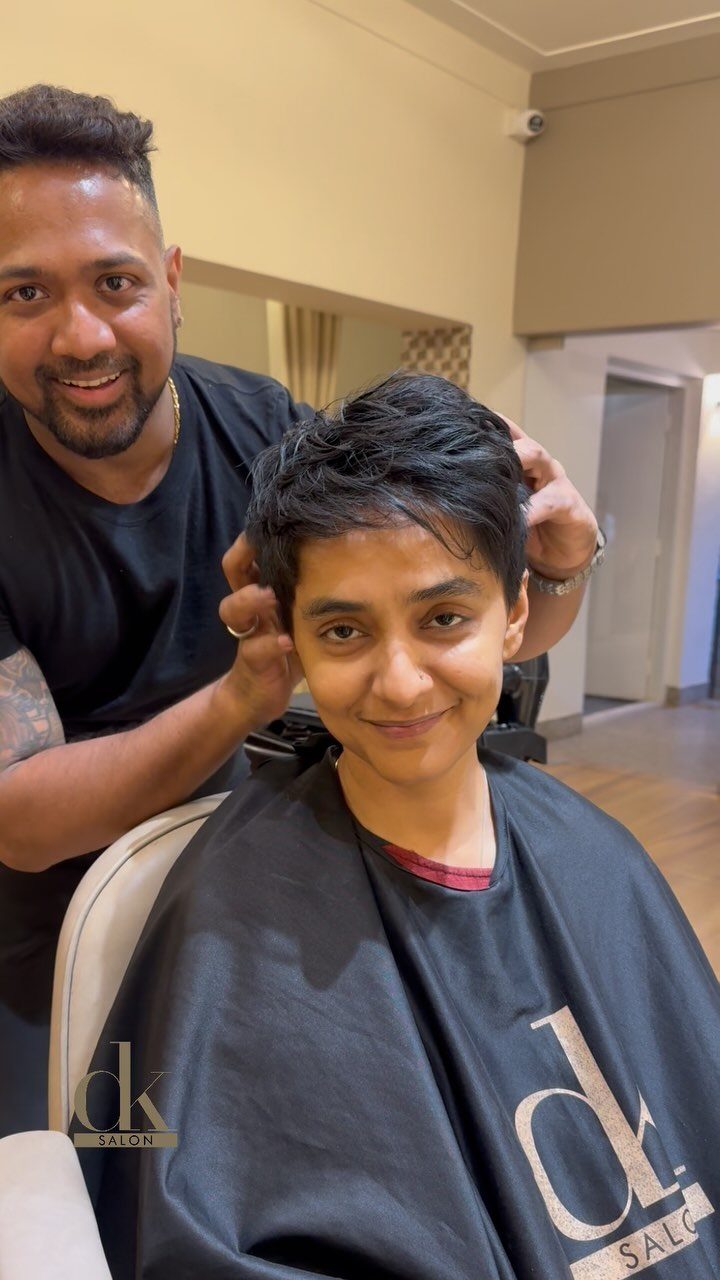
A cropped cut cuts the morning short: less hair means less drying time and less to style. That’s the whole case for a pixie, and for a low-maintenance routine it’s a strong one.
Dark hair cut this short shows its shape clearly, so the lines matter more than any product.
I’d bring the photo to the salon and ask for the same crop, then let the stylist adjust it to your face shape and texture.
Short hair doesn’t mean no upkeep, though. A pixie loses its outline as it grows, so the savings come from daily time, not from skipping appointments.
3. Shag Haircut
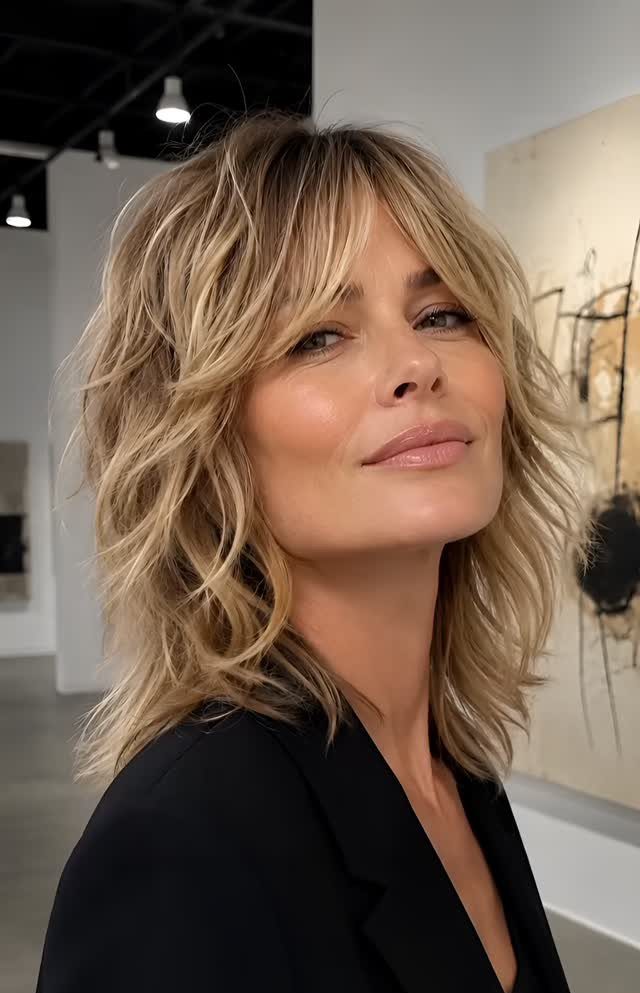
Layers cut through the crown and ends, with bangs on top, give a shag its choppy, lived-in shape. Natural waves or curls do most of the styling, because all that texture lets each strand bend and separate on its own.
That makes it a good fit if you want movement without a daily routine. Scrunch a bit of product through damp hair, let it dry, and shake it out.
I’d take this one to a stylist who cuts shags regularly. The layering decides whether the shape looks tousled or just uneven, and the bangs need to blend into the rest rather than sit apart.
4. French Bob
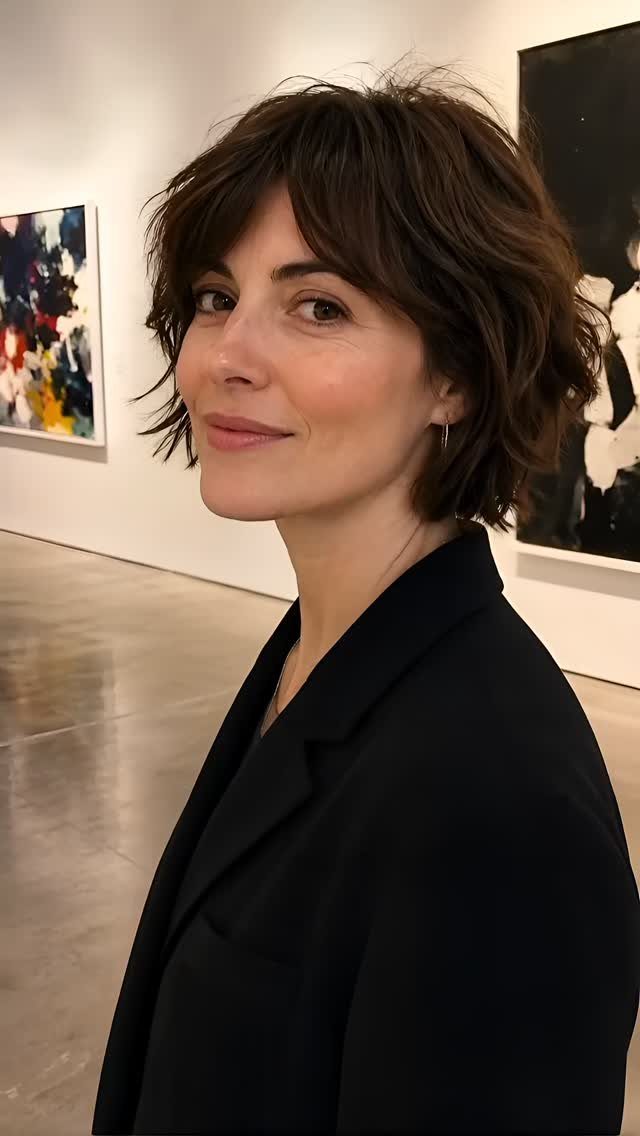
A French bob stops short of the jaw, and on wavy hair that shorter length lets the natural bend do the work. The fringe sits across the forehead and the ends curve in or flick out without any help.
For a low-maintenance routine, I’d skip the iron and let the hair air-dry with a bit of scrunching. Wavy texture gives this cut its shape, so fighting it with heat only adds time to your morning.
Ask your stylist to cut the fringe and the bob together so they blend, and expect to trim the fringe more often than the rest.
5. Blunt Bob
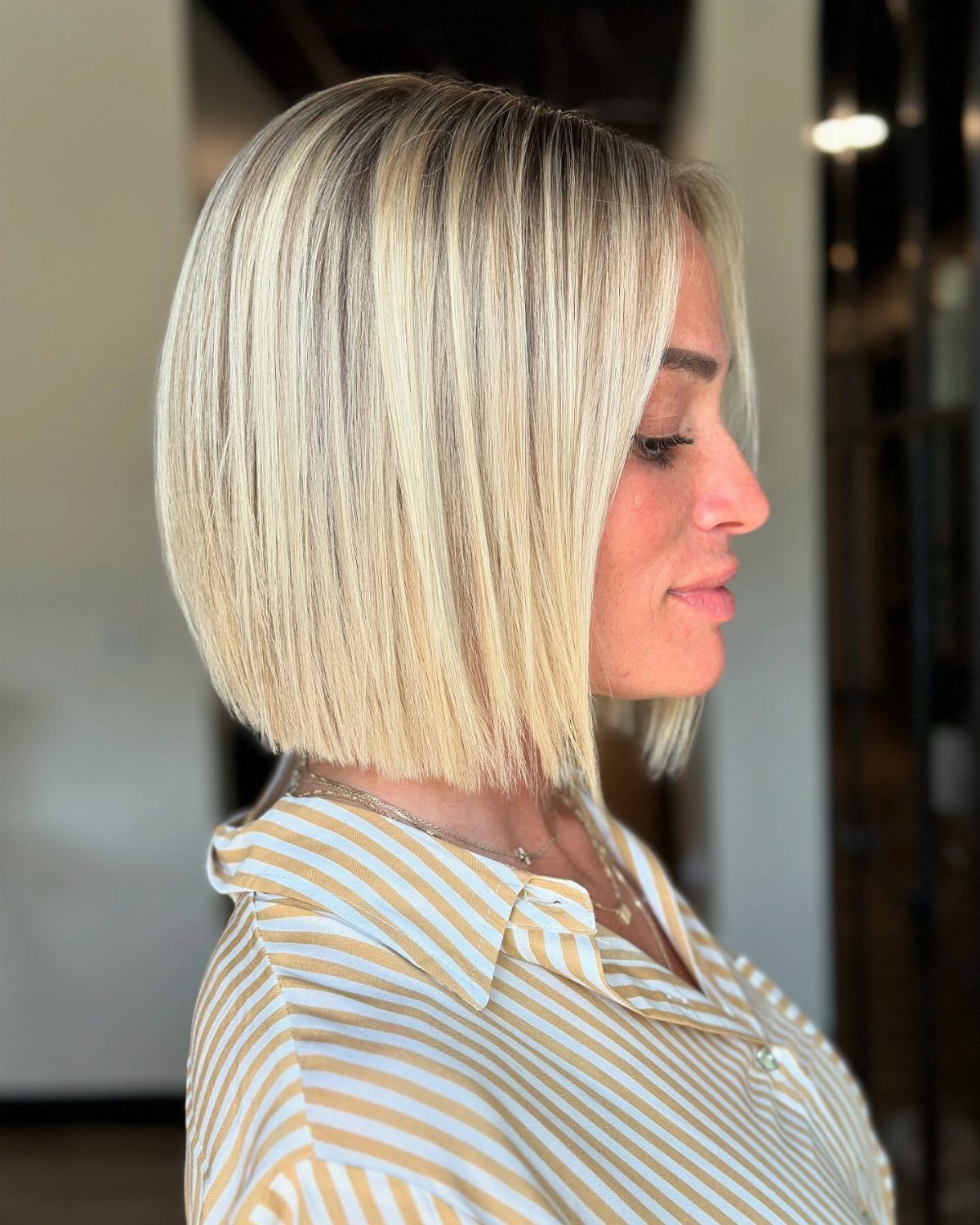
A blunt bob is cut in one straight line across the bottom, which is why the hair looks thicker at the edge even when the strands themselves are fine.
A blunt bob cut right at the chin keeps the perimeter hard and clean, and blonde shows that line off better than most shades, so ask your stylist for one even length with no layering.
Straight hair shows off this cut best, since there are no layers to break up the line.
Ask for the ends cut straight across with no point-cutting or razoring, and say so out loud, because many stylists add texture by habit.
The upkeep is mostly about the edge. A sharp line looks its best fresh and softens as it grows, so expect to book trims more often than you would for a shaggy cut.
6. Choppy Layers
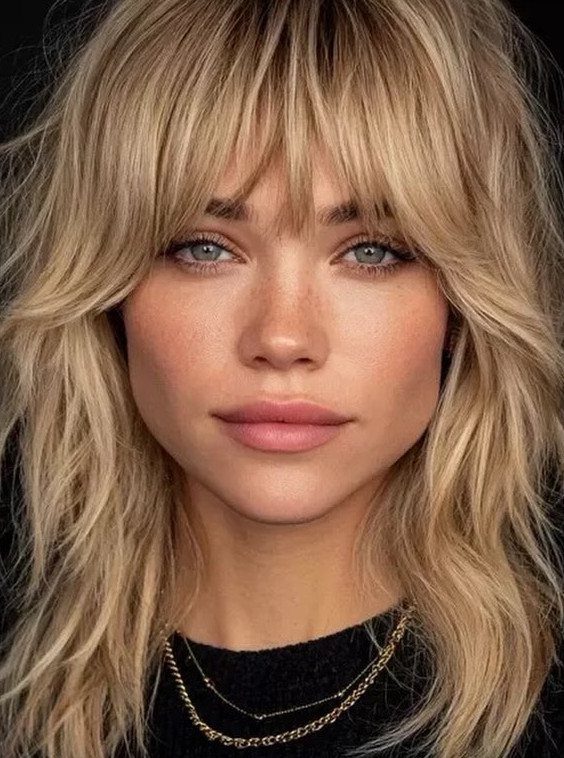
Choppy layers are short, uneven pieces cut through the length so the ends separate instead of lying in one smooth line.
Choppy layers break up the weight so the hair moves and sits tousled with almost no styling, and wispy bangs soften the front without needing a daily blow-dry.
For a low-maintenance routine, I like this cut because it asks for texture rather than polish. Rough-dry it, rake your fingers through, and leave the pieces uneven.
A smooth, flat-ironed finish works against the cut, so skip it. Ask your stylist for visible, chopped-in layers, not blended ones, and mention the bangs up front so they sit with the rest of the shape.
7. Textured Lob
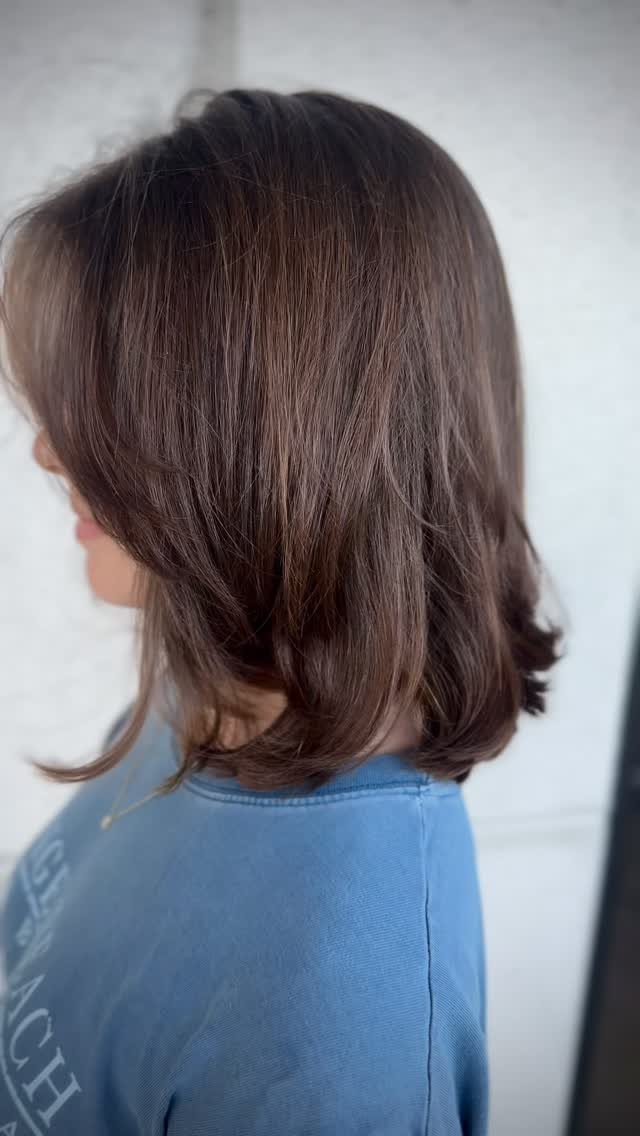
A textured lob lands between the chin and the collarbone, with the ends broken up so the weight doesn’t sit in one hard line.
Softly curled ends give a lob that relaxed, lived-in shape without any teasing, and a 1¼-inch barrel turned loosely away from the face is enough to get there.
Because the length is flexible, this cut works for a morning when you want it smooth, a day when you’d rather leave it tousled, and a day when it needs to go into a low ponytail or half-up.
For fine or straight hair, the texture adds movement a one-length cut can’t.
I’d ask for a lob with internal texture and loose, curled ends, so you can skip heavy styling.
8. Blunt Lob
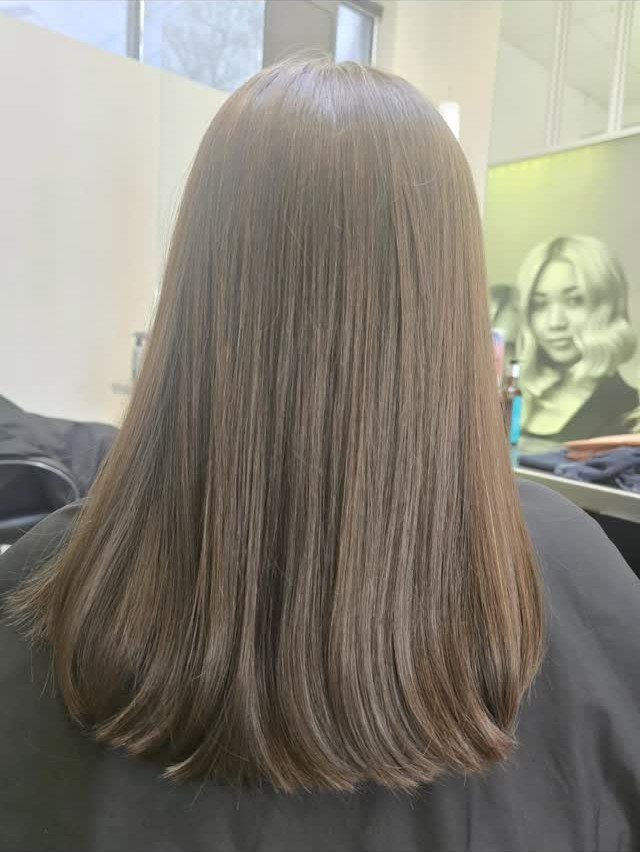
A blunt lob cuts the hair in one solid line at the shoulders, with no layers or texture chopped into the ends.
A blunt lob depends on its edge, so it holds up best on straight, smooth hair, where the line stays crisp without much help.
Ask your stylist for a single-length cut with a crisp perimeter. Because everything ends at one line, a trim keeps it sharp, and I would book that before the ends start to look ragged.
The upside is a shape that looks finished with little work. Fine or wavy hair can lose that clean line, and a quick pass with a flat iron brings it back.
9. Curly Shag
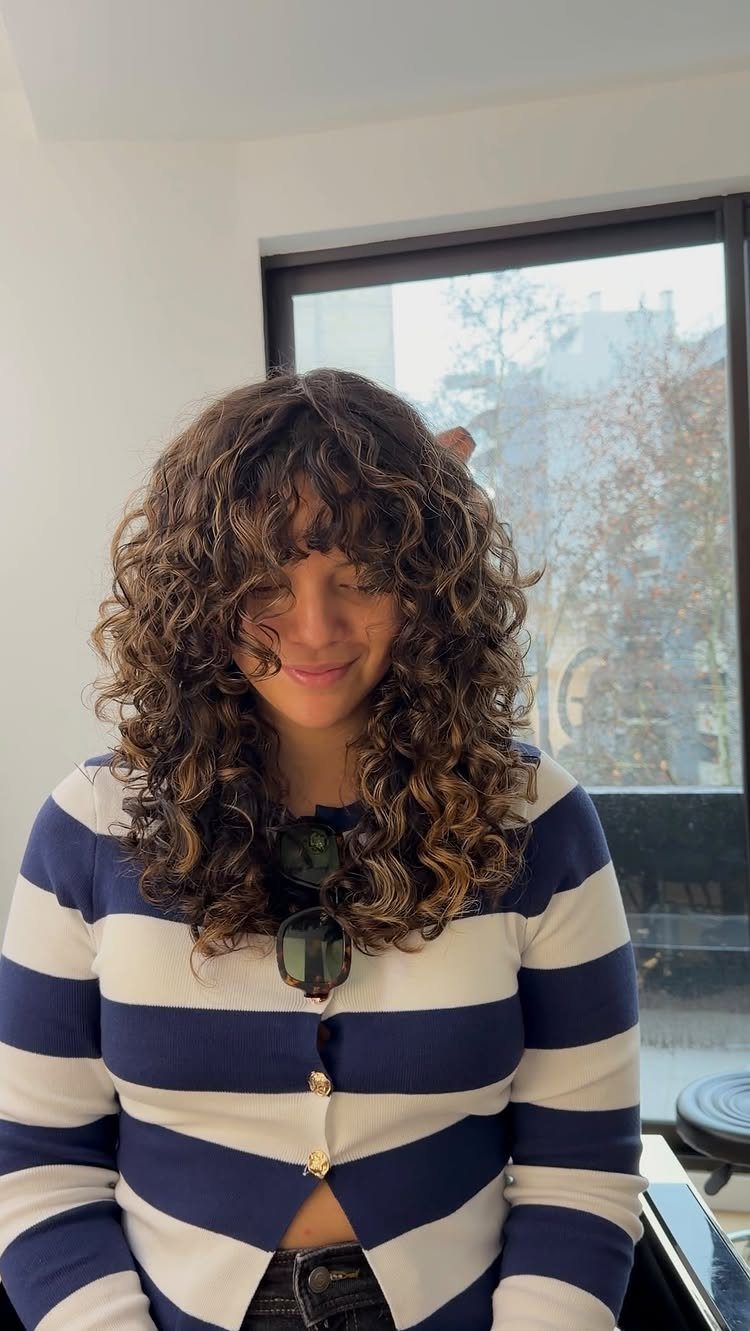
Layers cut to follow the curl pattern are what make a shag work on natural curls: the shorter pieces around the crown and face let the spiral stack instead of hang flat, while the length stays long through the back.
For a low-maintenance routine, that shaping does most of the work. Ask the stylist to cut the layers on dry or stretched curls, so the shape matches how your hair actually sits.
Wash-day styling can stay simple: scrunch in product while the hair is wet and let it air-dry. Trims every few months are enough to keep the layers from growing into one heavy shape.
10. Long Layers with Fringe
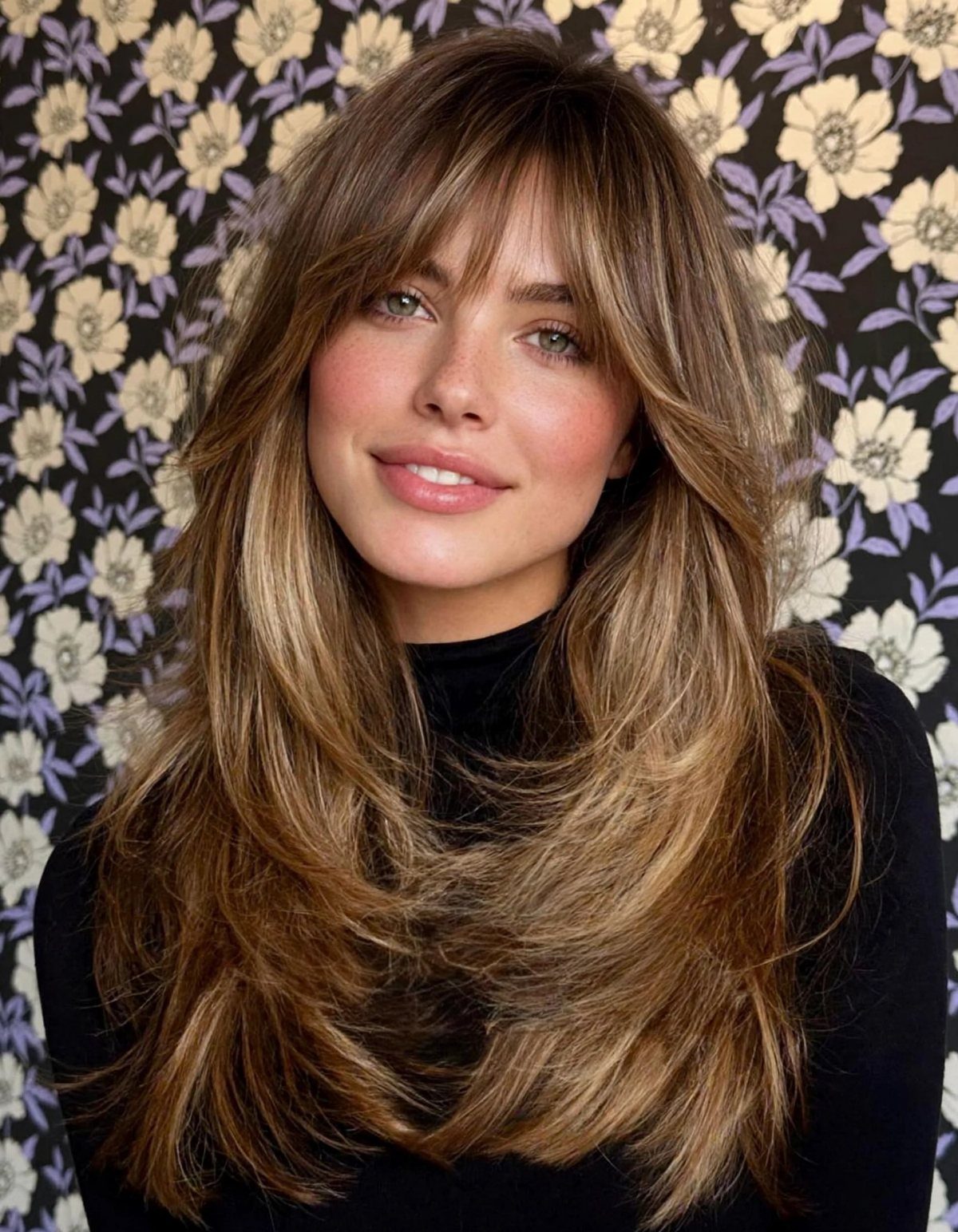
Long layers with a full fringe give a longer face some width where it needs it. The bangs break up the forehead, and the layers keep the length from hanging straight down.
Ask for the fringe cut wide, running toward the temples rather than stopping at the center.
That width is what widens the face. I’d keep the layers long and soft so the shape grows out evenly.
The trade-off is the fringe itself. It needs a quick check each morning, since bangs show oil and bends faster than the rest of the hair.
11. Bixie
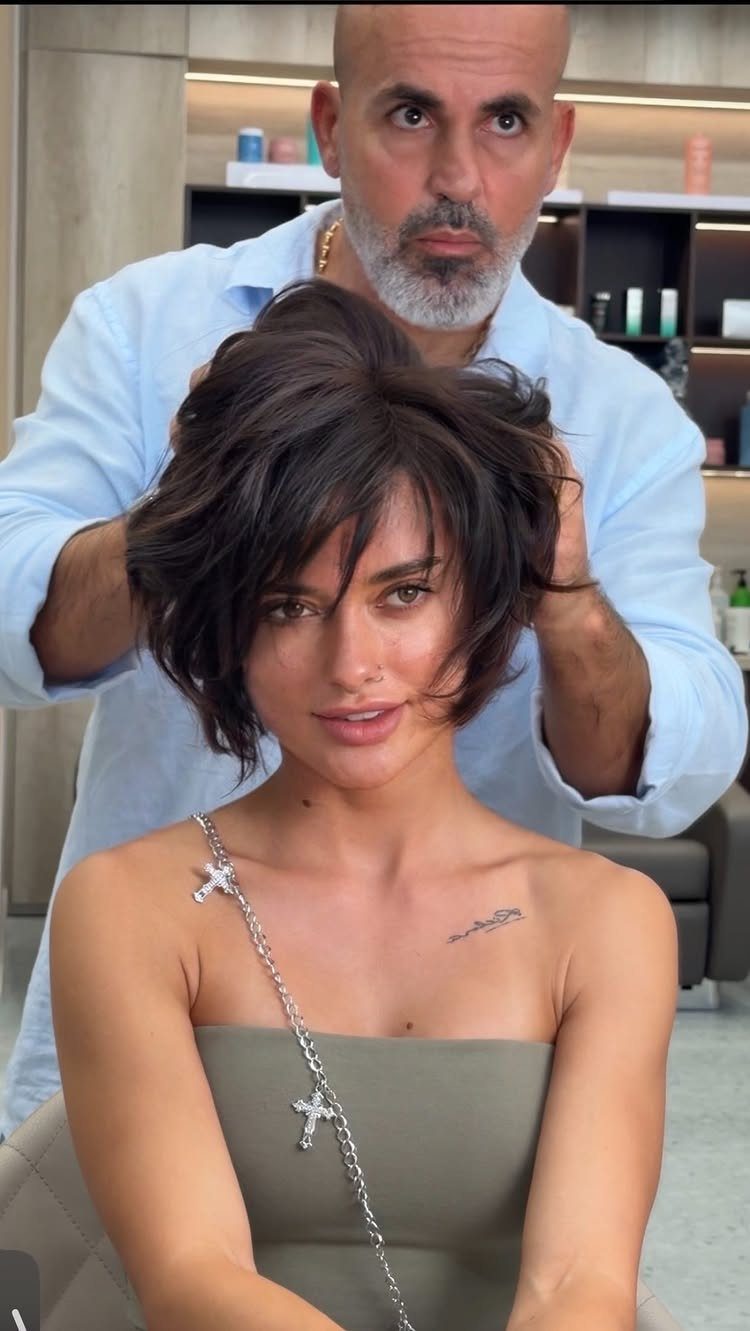
A bixie takes the length of a bob and the shorter, cropped shape of a pixie, then blends the two so the outline stays soft.
A bixie looks best tousled, with long side-swept bangs that fall across the face and soften the cropped length.
Those long bangs are what I’d ask for by name. They keep the cut from reading as a full pixie and give you something to tuck, sweep or leave loose, which suits anyone nervous about going short.
Style it with your fingers and a little texture product, and let the layers sit a bit uneven. The look is meant to be undone, so skip the round brush.
12. Undercut
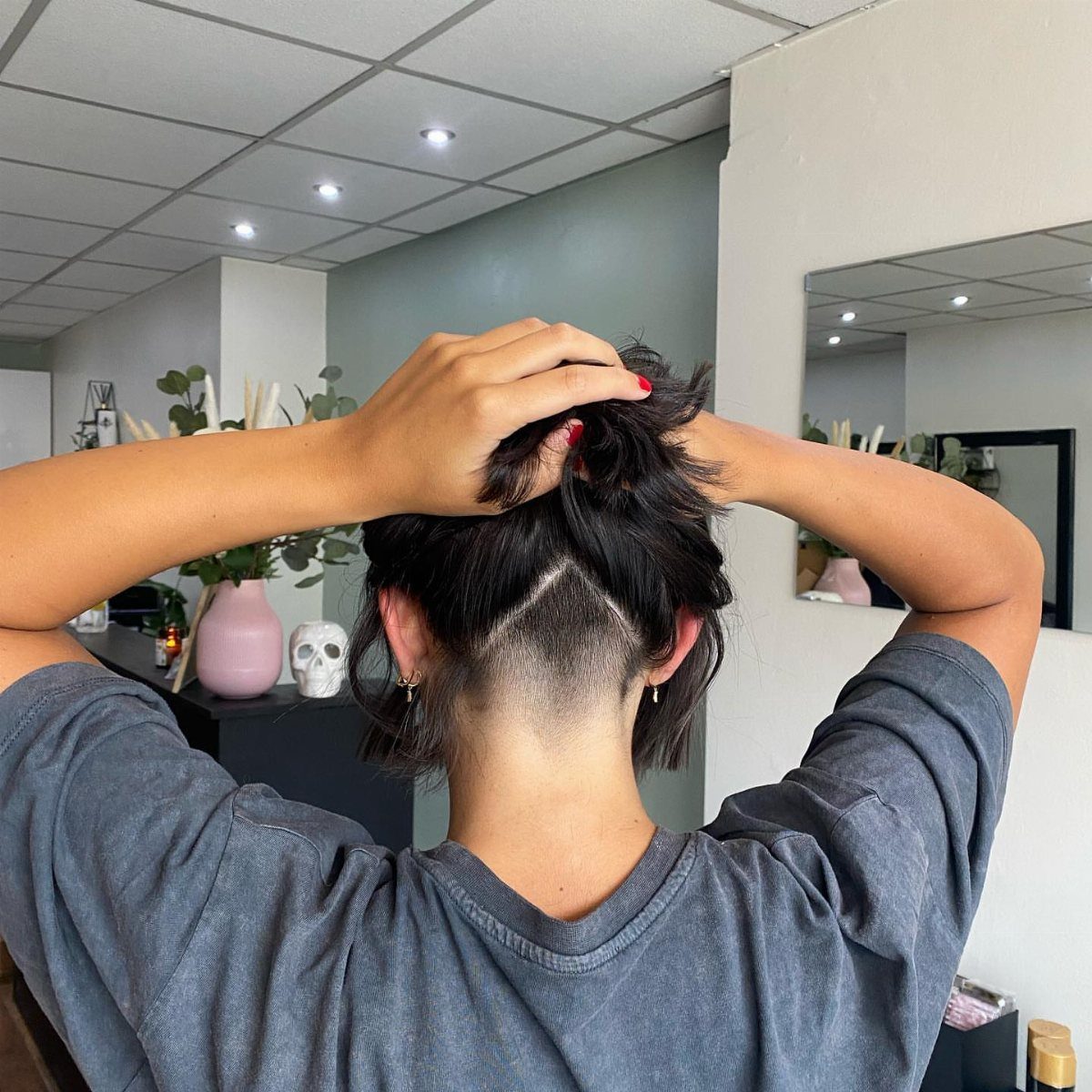
Thick hair carries a lot of weight, and an undercut takes some of it away by shaving the hair underneath, here at the nape, while the longer top layer stays intact.
The length falls over the shaved section, so the cut can stay hidden until you lift it or pull your hair up.
For anyone whose hair feels heavy or takes forever to dry, I like this as a fix that doesn’t mean cutting length.
Ask the stylist to keep the shaved area low and closely clipped, and bring a photo of the exact spot.
Expect to book regular touch-ups, since the shaved section grows in visibly.
13. Beach Waves
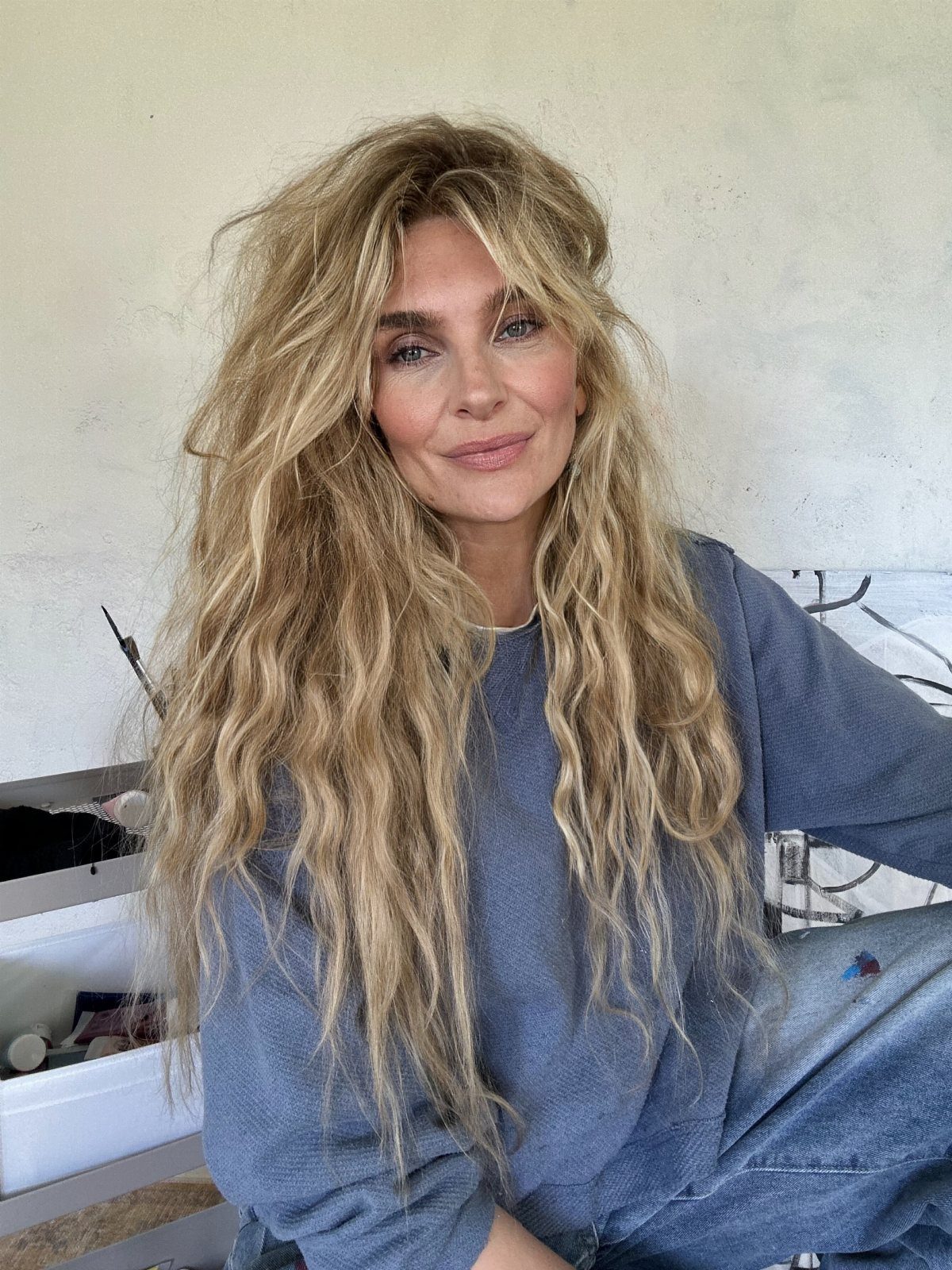
Loose waves with a center part and a soft fringe that falls open: that’s the whole look, and it asks very little of long hair.
Because the bends are relaxed rather than set, no single curl has to match the next, so a rushed morning still looks intentional.
Hair that already has a slight natural bend gets there fastest. Straight hair can get there too, though the waves will fall out sooner and need a refresh.
I’d keep the length long and the ends uneven; a blunt, heavy hemline fights the loose, lived-in movement. Ask your stylist for a fringe that blends into the sides so it parts easily.
14. Side-swept Bangs
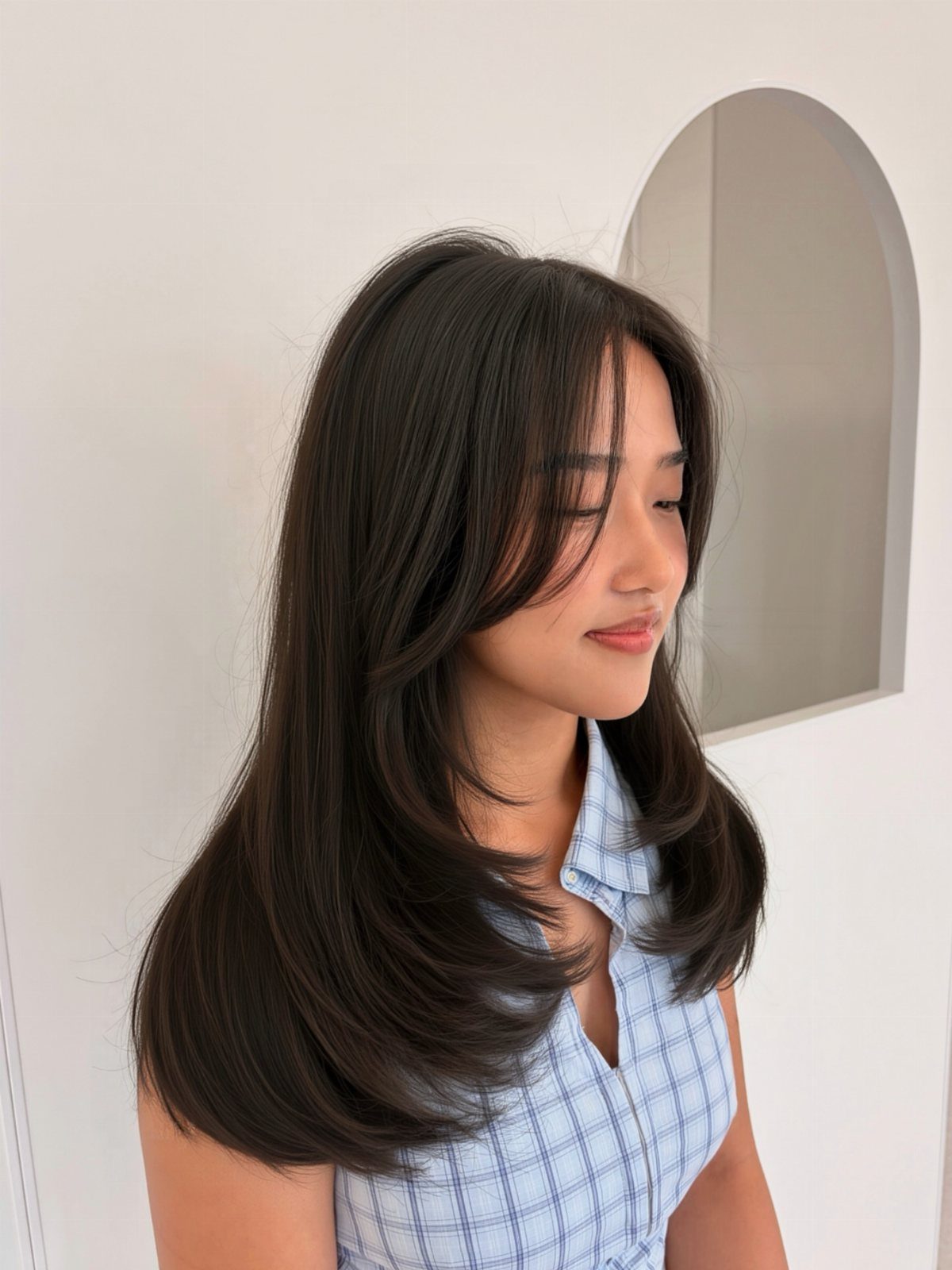
A side-swept fringe starts at the part and slides across the forehead toward one temple, so it never sits in a straight line over the brows.
On long dark layers, it blends into the face-hugging pieces instead of ending in a hard edge.
Growing it out is the easy part.
The fringe lengthens into extra layers around the cheekbones, and in between you can pin it back with a clip or bobby pins. That makes it forgiving for anyone who doesn’t want to commit to a trim every few weeks.
I’d choose this over a blunt fringe for a low-effort routine: a quick sweep with your fingers and you’re done.
15. Face-framing Layers
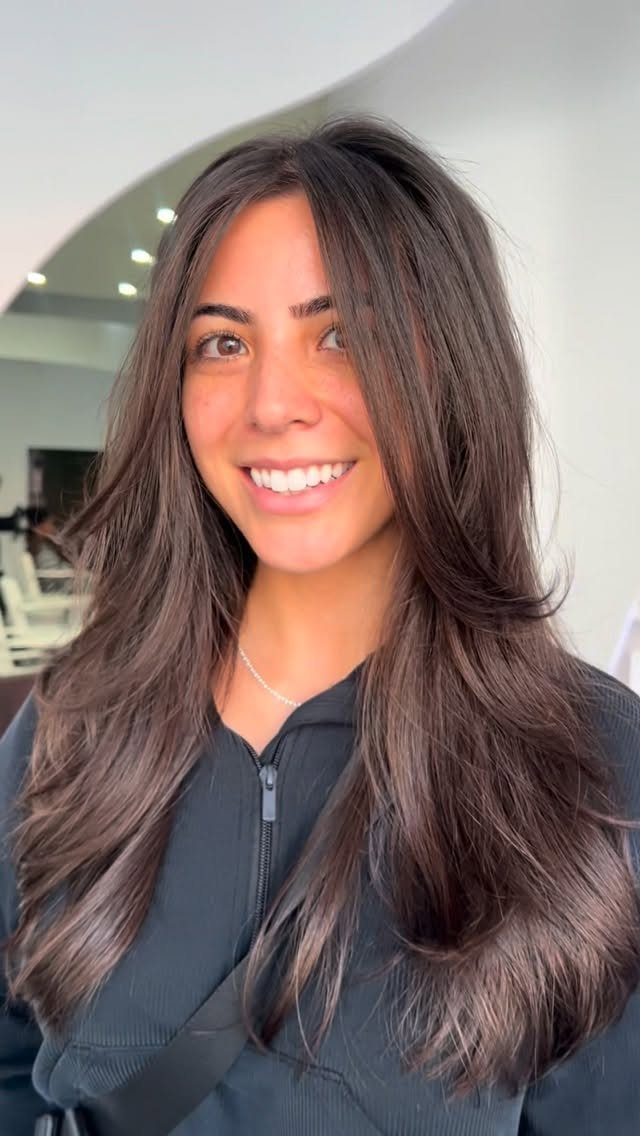
Layers start shorter at the cheekbone or jawline and grow longer as they move back, drawing attention to the eyes and framing the face without changing the length everywhere else.
The cut works with straight or wavy hair and skips the need for styling products if you let it air-dry. If your hair sits flat, the shortest layers at the front add volume where you see it most.
Ask for the first layer to hit at cheekbone level and blend back gradually so the transition stays soft. The layering grows out without looking choppy, and trims can wait longer between visits if you keep the ends healthy.
16. TWA with Pink Highlights
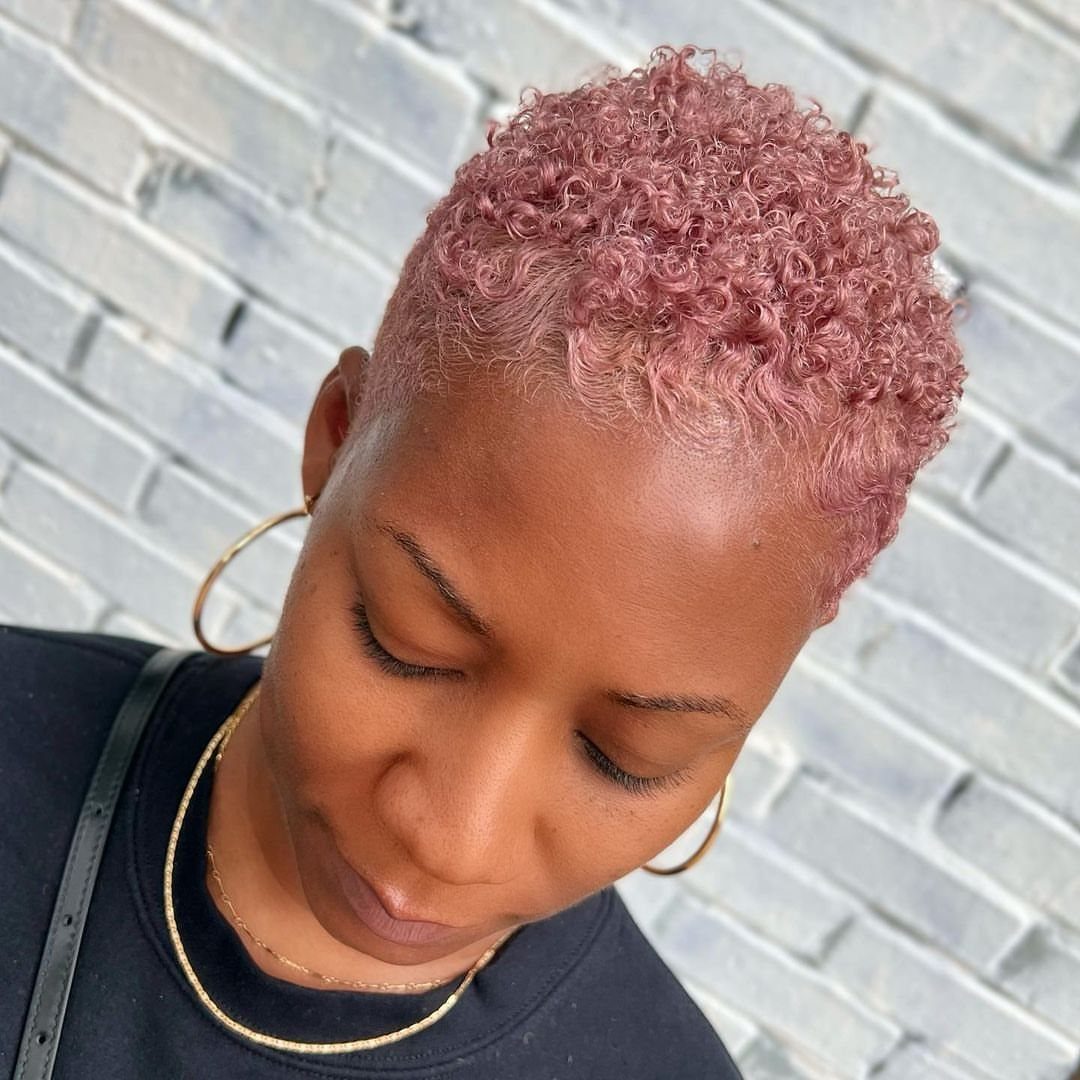
Pink on a TWA works because the cut is so short that every strand shows the color. Tight coils catch light unevenly, so the shade looks deeper in some spots and brighter in others.
Short natural hair gives you very little to style each morning.
Fluff the coils with your fingers, shape the outline, and you’re done in about a minute. I’d keep the cut as the main event and let the pink do the talking, rather than adding a lot of product.
Bleaching and dyeing dry out coils, and a TWA has no length to hide that. Plan on a moisturizing routine, and expect the pink to fade, so touch-ups come sooner than a regular trim would.
17. Mid-length Waves
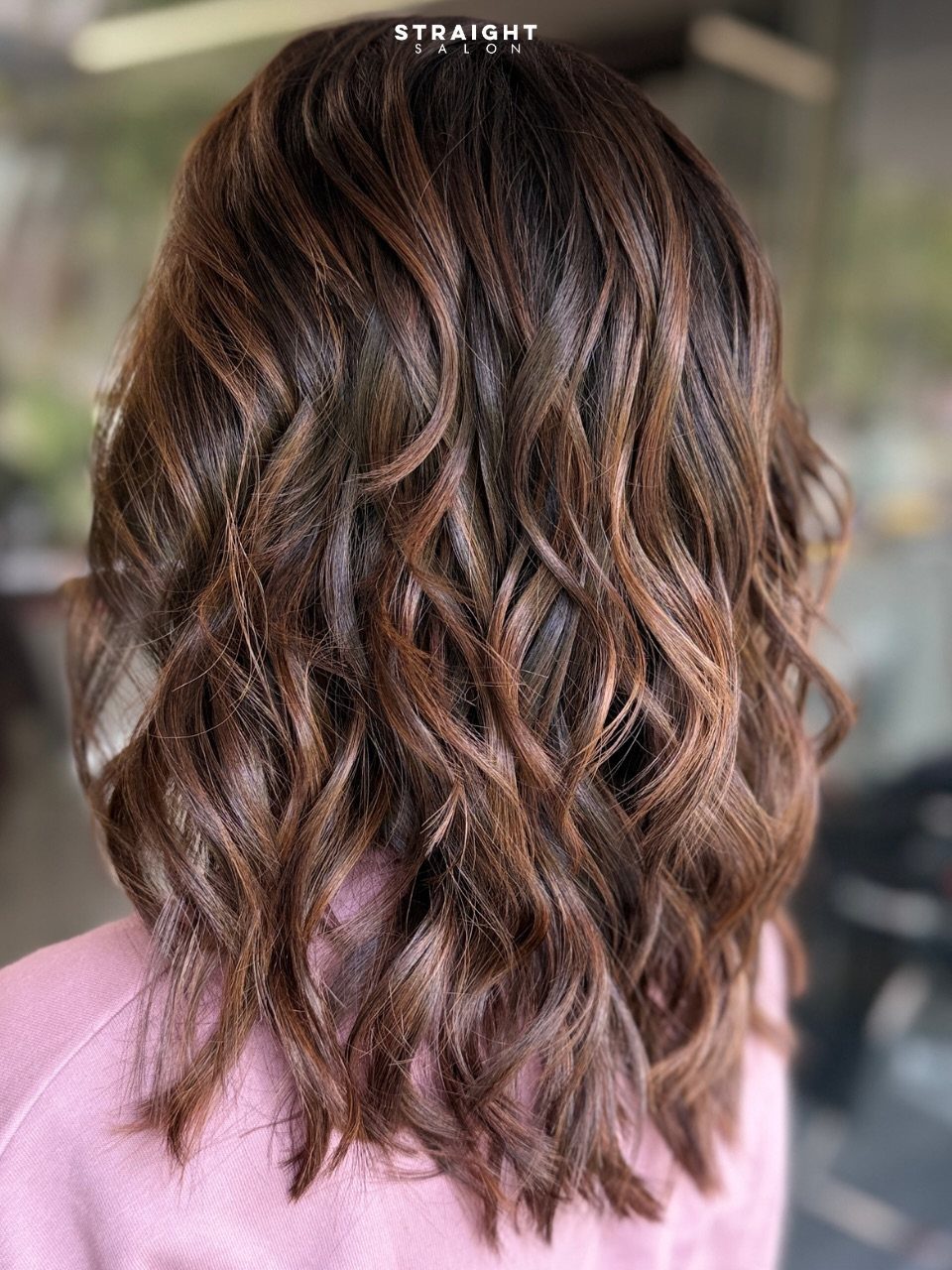
Shoulder-length hair holds a wave better than most lengths, because the weight is enough to pull the pattern into loose, defined S-shapes without dragging it flat.
That is why this cut suits women who already have some bend and want it to look intentional.
Ask for a blunt-to-softly-layered shoulder cut so the waves stack instead of puffing out at the ends. Air-dry with a light cream scrunched in, and skip the brush once it dries.
I like this length for upkeep: the shape stays put between trims, and mornings come down to a quick shake-out.
18. Feathered Cut
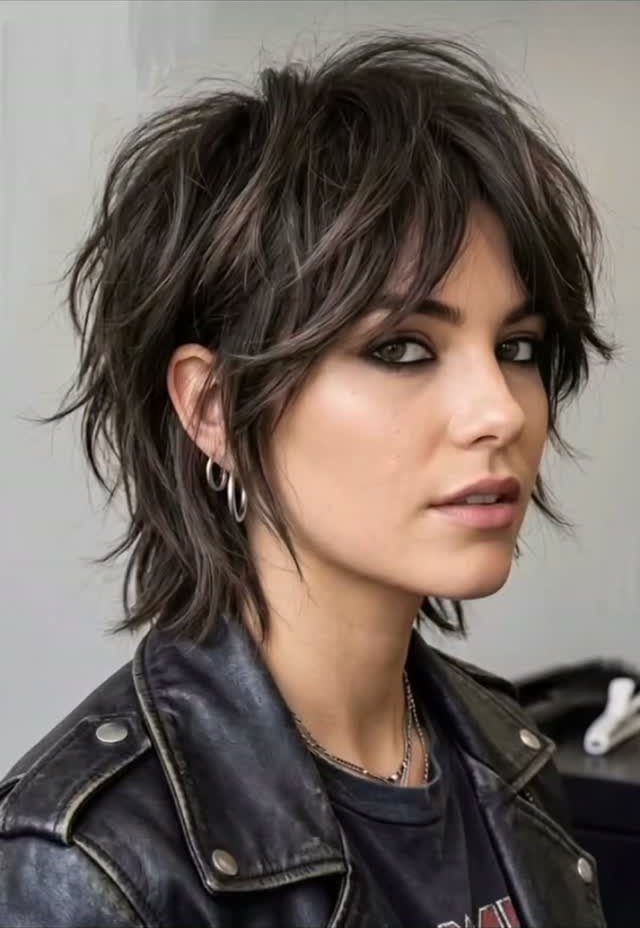
Feathering at the front is what makes this cut: shorter pieces around the face sweep up and away into swoopy bangs, so the movement starts right at the forehead instead of at the ends.
For a low-maintenance routine, that front section does the work. Ask your stylist for feathered layers through the bangs and sides, then bring a photo, since "feathered" can mean different things from one salon to the next.
I like it best on short to mid lengths, where the layers stay visible.
Brush the bangs back and out while they’re damp, and the shape holds its swoop on its own. Long stretches between trims will blur the layers, so plan on regular visits.
19. Long Layers for Thick Hair
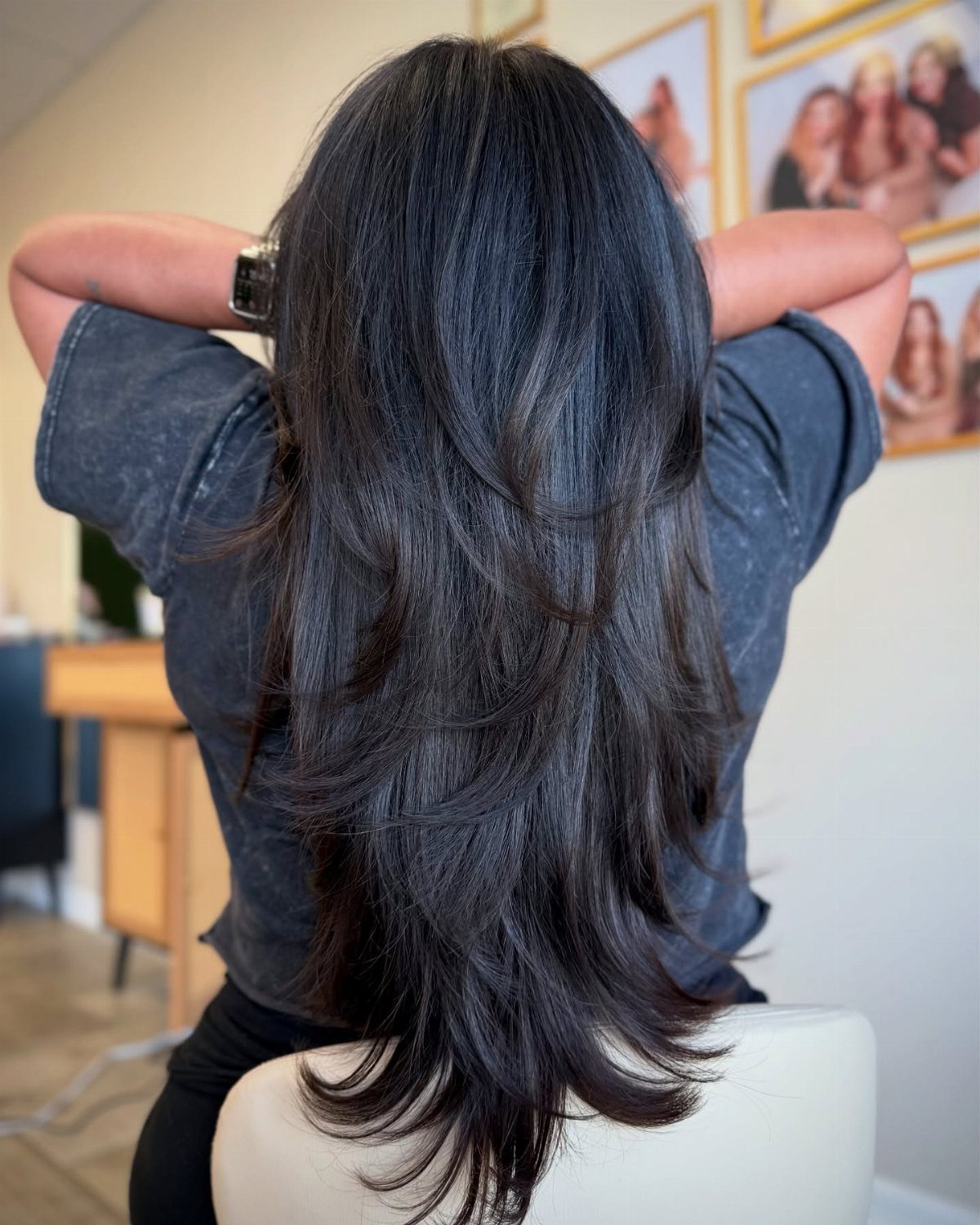
Thick hair carries its weight in the lengths and ends, and long layers cut that weight away so the hair swings instead of sitting in one heavy block.
Cut in sections down the back, long layers take weight out of thick hair without costing you length, and turning the ends under with a round brush or a quick pass of a curling iron leaves a soft, finished edge.
Ask your stylist to remove bulk through the layers while keeping the length. Layers that start too high can leave thick hair puffy at the sides, so I’d keep them long and gradual.
A curled-under finish is easy on thick hair, since the shape does most of the work once the weight is gone.
20. Curly Wolf Cut
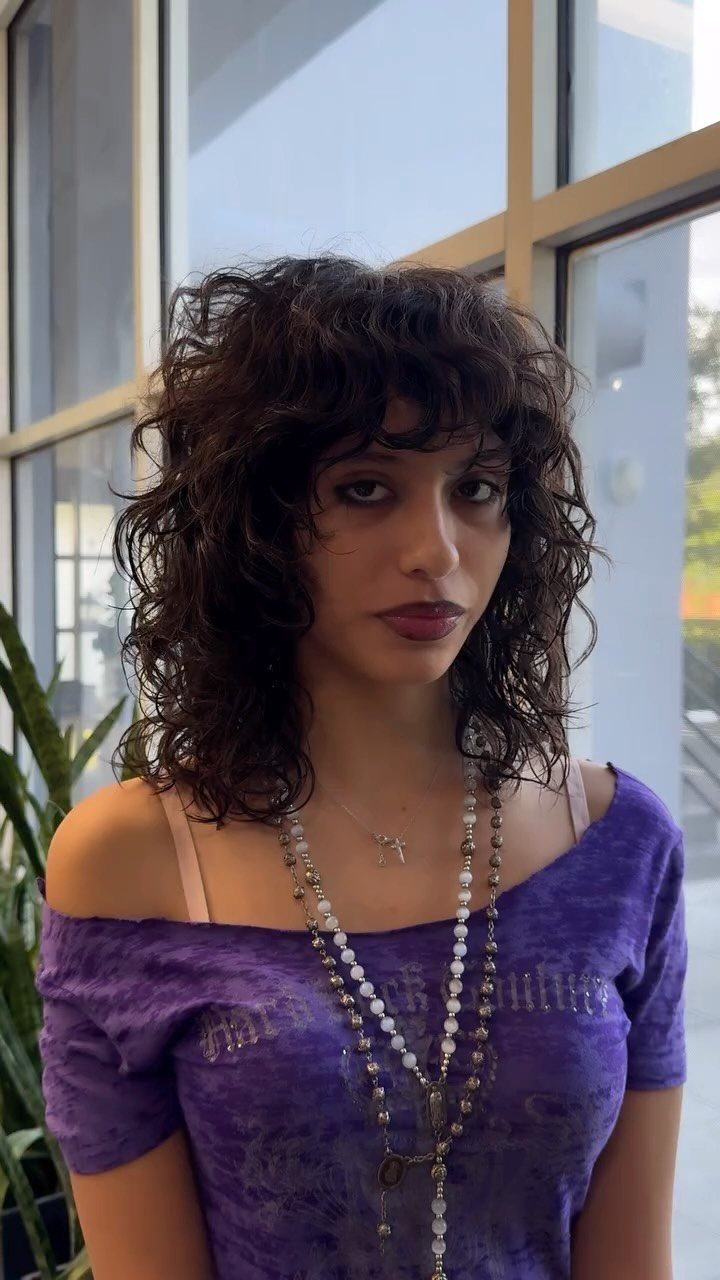
A wolf cut for curls works by cutting shorter layers into the crown and leaving length through the back, so the curls stack on top of each other instead of dropping into one heavy triangle.
Curly hair tends to puff out at the sides, and that layering gives the volume somewhere to go.
Ask for the layers to be cut with your curls dry, or at least with your curl pattern in mind, so the stylist can see where each strand springs up.
Bangs worked into the shape, as here, will curl up shorter than they hang wet, so have them cut longer than you think you want.
A brush will break up the curl pattern and cause frizz, so I rake in a curl cream with my fingers, scrunch upward while the hair is still damp, and leave it alone to dry.
21. Sleek Layers
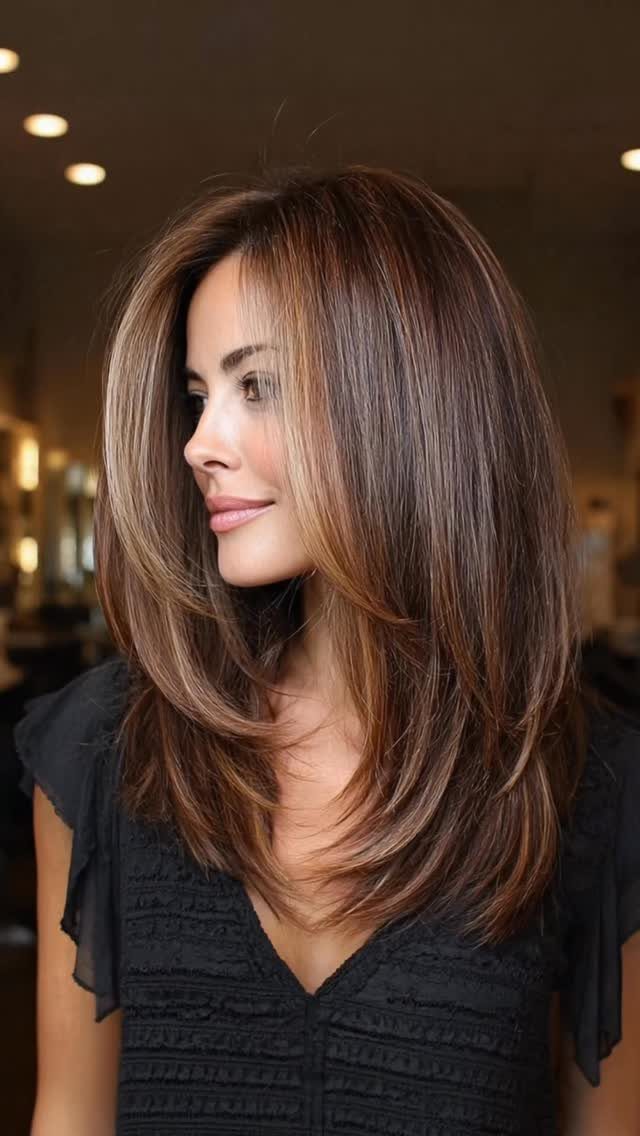
Sleek layers keep the length and add movement through the ends, so long hair stops hanging in one heavy sheet. The finish is smooth and polished, with the layers sitting in soft steps instead of obvious chunks.
For a low-maintenance routine, this suits anyone with straight to slightly wavy hair who wants shape without a short cut.
A blowout gives this finish, but I would ask the stylist to cut the layers so the hair also falls well when air-dried.
Layers add dimension and movement at any length, so you can grow them out slowly between trims.
22. Long Bob
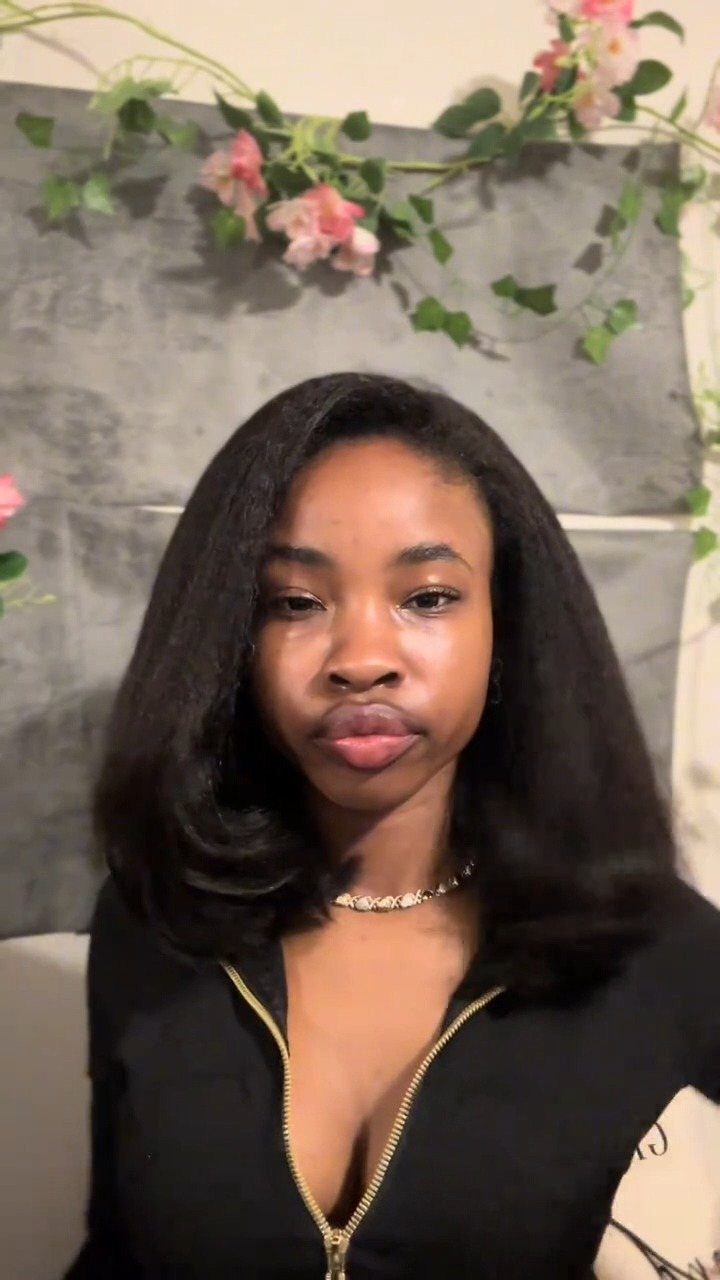
Shoulder length gives a bob some of the versatility of longer hair without the weight.
A smooth, dark cut like this one with a side part can be worn sleek, tucked behind one ear, or flipped to the other side for a different shape.
That range is why I’d pick it for anyone who wants short-hair ease but isn’t ready to commit to chin length. It still pulls back into a small ponytail on days when styling feels like too much.
Ask for the length to land right at the shoulder, and choose your part before the stylist cuts so the weight sits where you’ll wear it.
23. Cornrow Braids
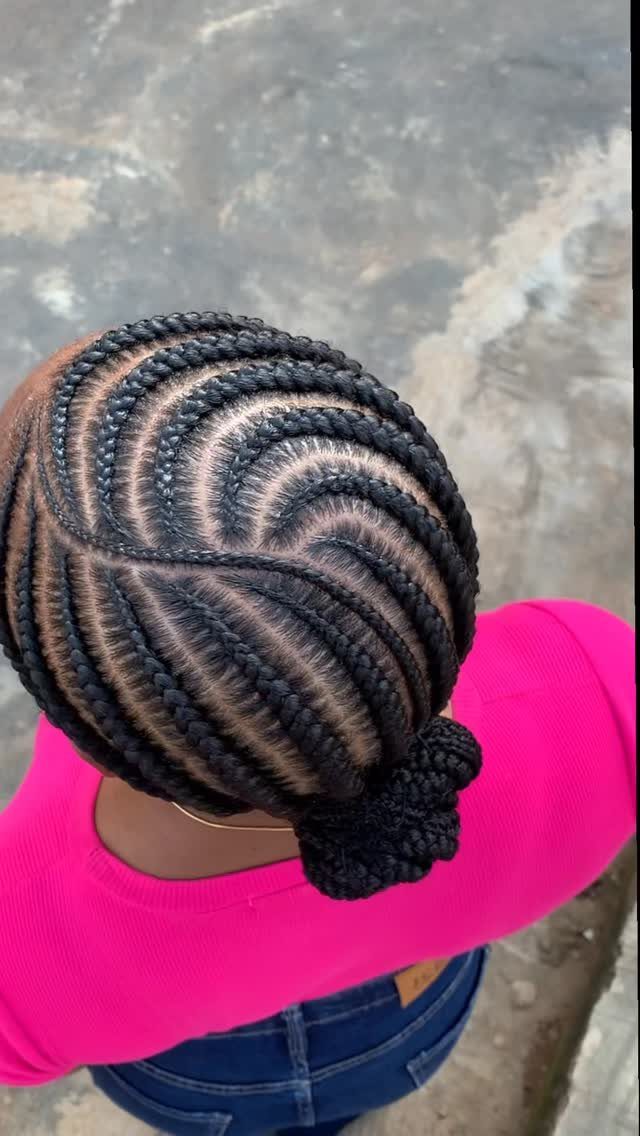
Cornrows gathered into a bun put the styling work into a single appointment instead of every morning. The braids lie flat against the scalp, so the bun on top is the only part you ever have to arrange.
For a low maintenance routine, that trade is the appeal: once the braids are in, daily styling shrinks to tucking the ends and smoothing the bun. Hair stays tucked away, which is why cornrows are called a protective style.
I like the bun placed high, as in this look, because it keeps length off the neck.
Getting cornrows installed means sitting in a stylist’s chair for hours, and that one long appointment is what you pay for the easy weeks that follow.
24. Undone Shaggy Layers
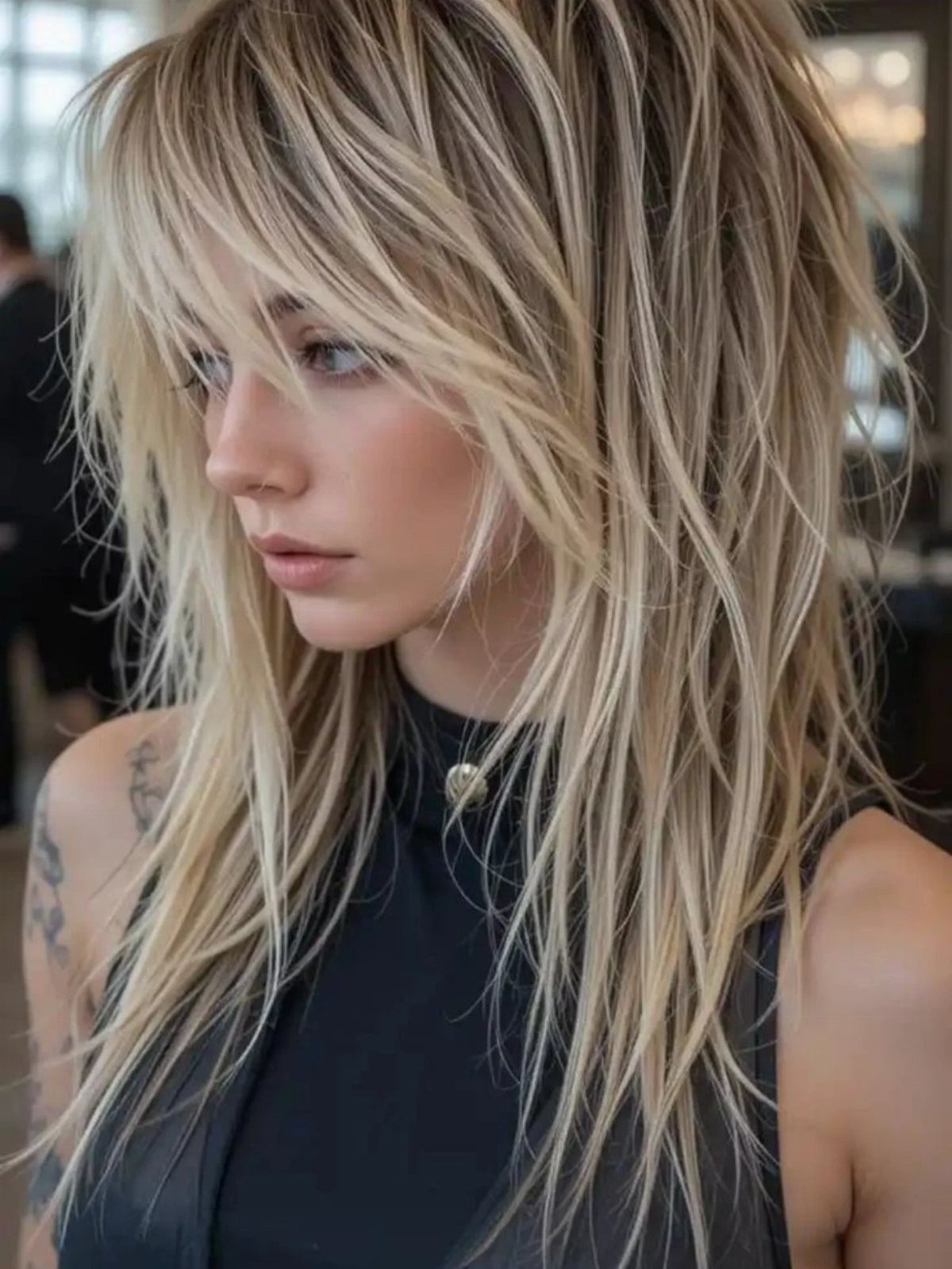
Long, choppy layers that run past the shoulders, with wispy bangs, give blonde hair a lived-in shape that never looks styled to the last strand.
Because the cut does the work, mornings can be as simple as a towel dry and a shake of the head.
Ask for the layers to be cut with visible separation rather than blended smooth. Without that, the shag turns into plain long hair with a fringe.
Wispy bangs grow out gently, so trims can stretch further apart than they would with a blunt fringe. I would keep the length and let the layers carry the look.
25. Messy Bob
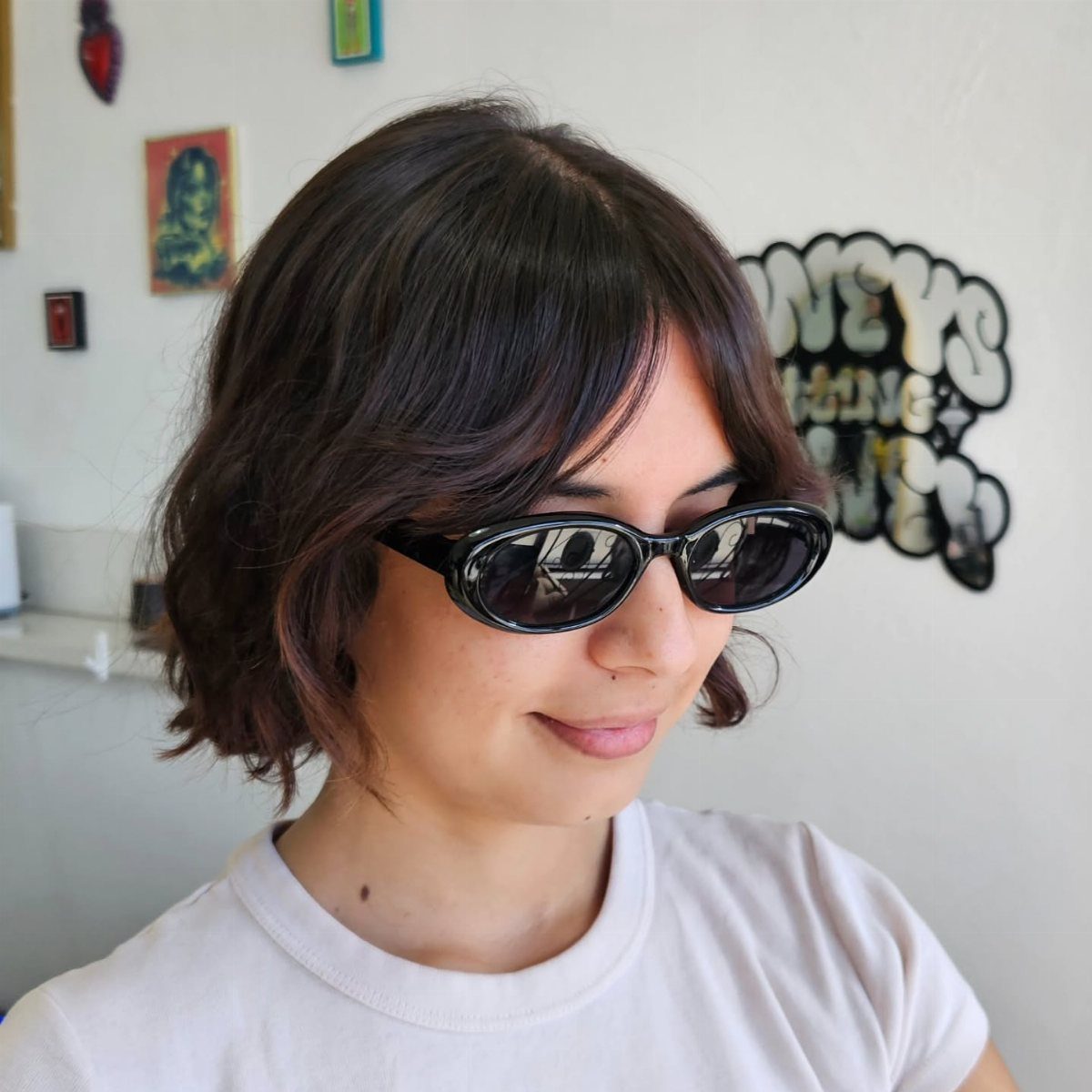
The cut sits at chin length with texture chopped through the ends, styled with bends that fall wherever they land instead of a smooth finish.
It fits anyone who wants a bob that skips the blowout. Air-dry or scrunch while damp, flip the part off-center, and let the pieces separate.
The mess reads as style rather than neglect when the cut itself has enough texture, which means asking for point-cutting or razored ends at the salon.
That gives you movement without needing a round brush or flat iron to finish it.
Work with Natural Texture
Let your hair air-dry once with nothing in it, and watch what it does. The bends, the cowlick at the crown, the flat spot at the front: that pattern is what a cut has to work with.
A cut that follows the pattern saves minutes every morning. Wavy hair cut to hang straight, or straight hair cut to look curly, means a daily fight with a hot tool.
Be honest with yourself about your mornings, too. If you will only give your hair 2 minutes, pick a shape that looks right at 2 minutes, not one that needs 20 to look good.
At the consultation, tell your stylist both things: how your hair behaves when you leave it alone, and how much time you will really spend on it. A good stylist will cut differently once they hear that.
Frequently Asked Questions
What are some good short haircuts for women in their 40s?
A pixie, a bixie and a textured bob are where I’d start. The pixie saves the most morning time because less hair means less drying and styling, and it suits thicker hair especially well.
The bixie adds long side-swept bangs you can tuck or leave loose, and the textured bob has broken-up ends and wispy bangs for a relaxed look.
Choose the one that works with your hair’s natural texture, and expect a pixie to need regular trims as it loses its outline.
Which is the best haircut for females?
No single cut wins for everyone; the best one works with the texture your hair already has.
Pick by texture: a French bob or shoulder-length cut flatters waves, a blunt bob gives straight hair its cleanest edge, and a layered shag cut along the curl pattern lets natural curls sit where they want to.
Thick hair gets relief from long, gradual layers that remove bulk and keep the length. Whichever you choose, bring a photo to the stylist and say exactly what you want.