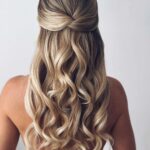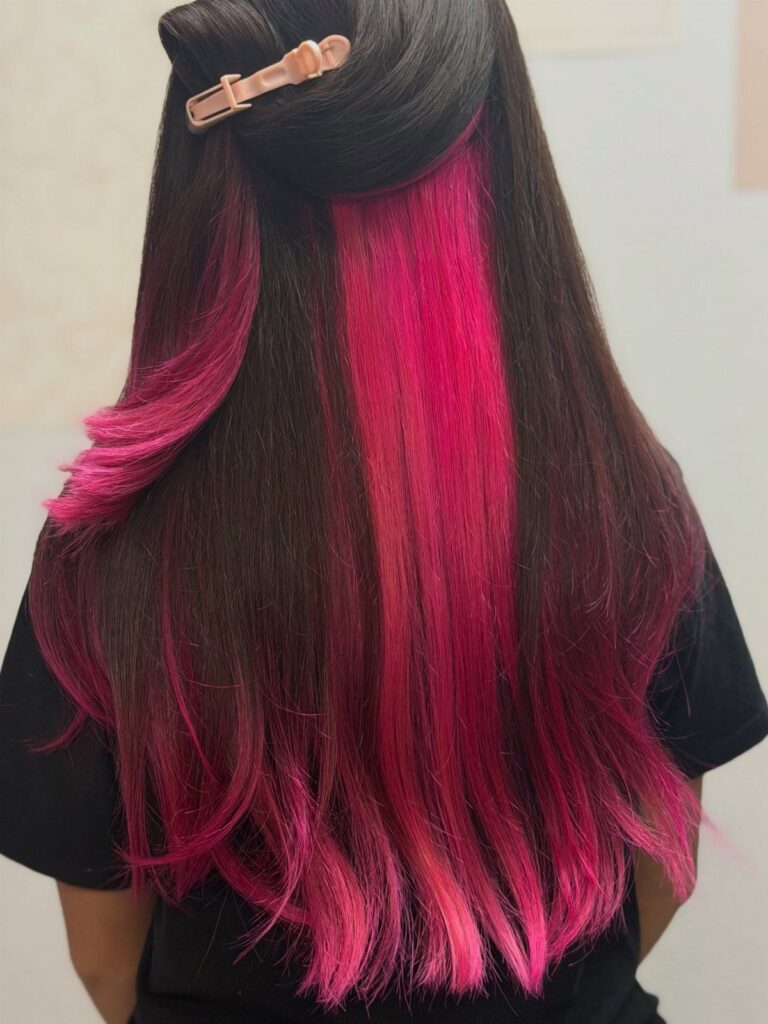
These ideas run from pink that stays hidden until a ponytail goes up to hot pink that shows through Dutch braids and fishtails.
Which one is yours depends on how you wear your hair most days: loose hair needs face-framing pieces or bangs to show any color, while hair pulled into a ponytail or braids lets a plain underlayer do the work.
Brunette and black bases add one more factor, since they need pre-lightening, a second process added to the appointment.
1. Pink Underlayer on Blonde Hair
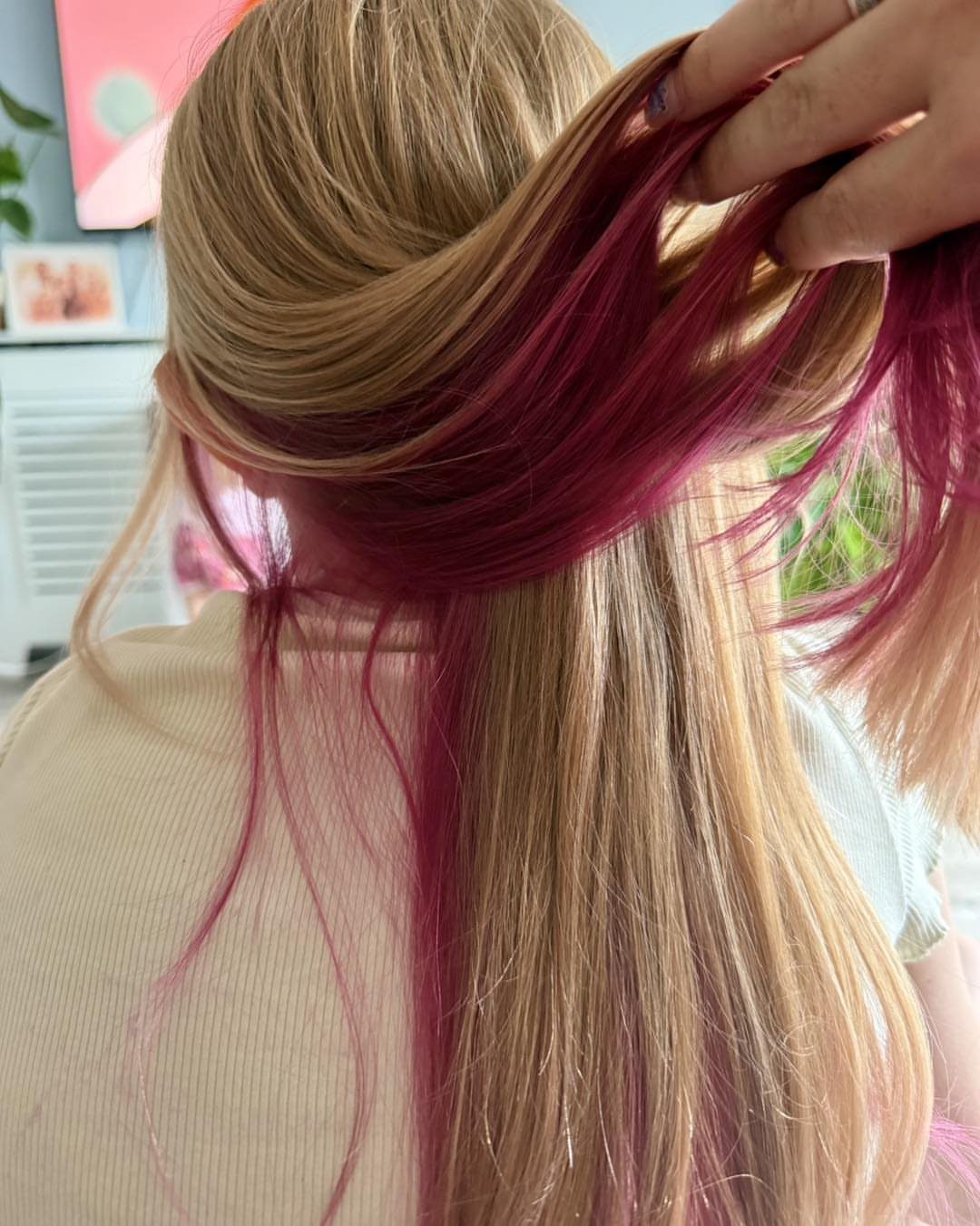
Blonde on top lets pink underneath sit quiet until you pull the hair into a ponytail or tuck one side back.
The contrast reads softer than it does on dark hair because blonde and pink share brightness, so the shift feels like a tonal step rather than a hard line.
If your blonde is warm, pink with a coral or peachy base will blend at the edges where the two meet. Cooler blonde takes a true fuchsia or a rose that leans blue.
2. Pink Underlayer on Dark Hair
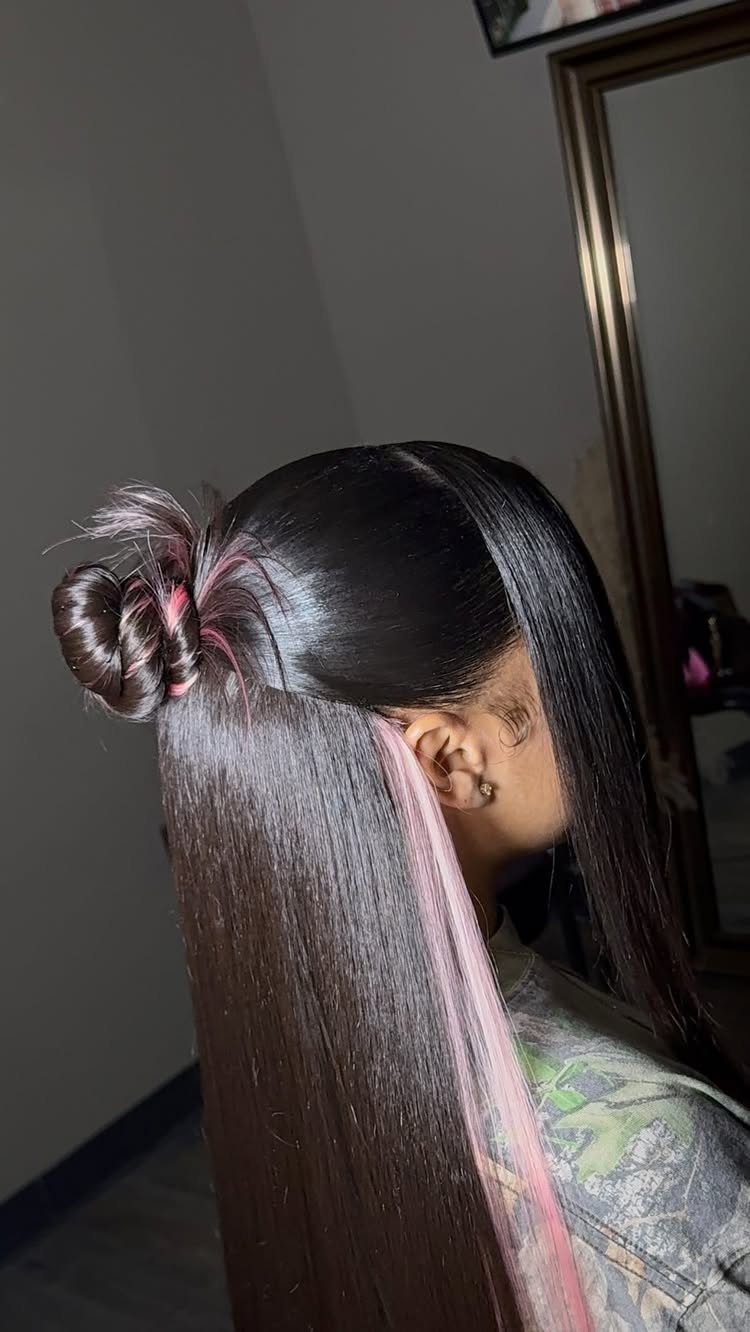
Dark hair holds pink completely hidden until you style it up or clip sections out of the way. The darker your base, the more vivid the pink needs to be to read clearly when it does show.
Ask for the pink placement to start just above the ear if you want it visible in a half-up style, or keep it lower for full updos and ponytails only.
Brunette and black hair both need the underlayer pre-lightened before the pink goes on, which adds time and a second process to the appointment.
3. Pink Underlayer with Face Framing
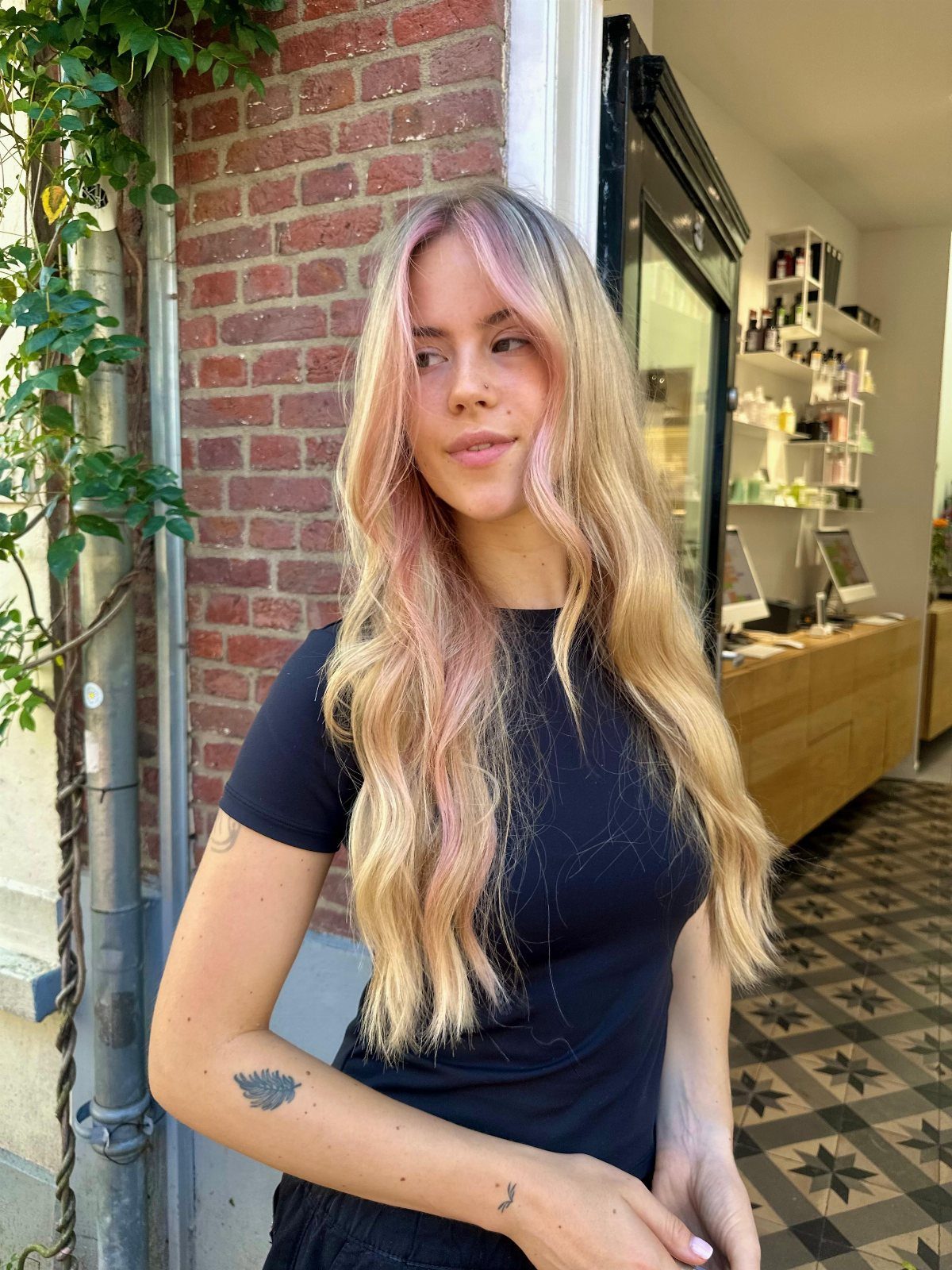
Pink runs underneath and also frames the face in narrow sections that stay visible when the hair is down. The 2 placements work together: the underlayer gives you color in updos, the face-framing pieces show it every day.
This setup takes longer to maintain because the front pieces lighten faster in the sun and fade sooner than hidden sections.
4. Pink Underlayer on Curly Hair
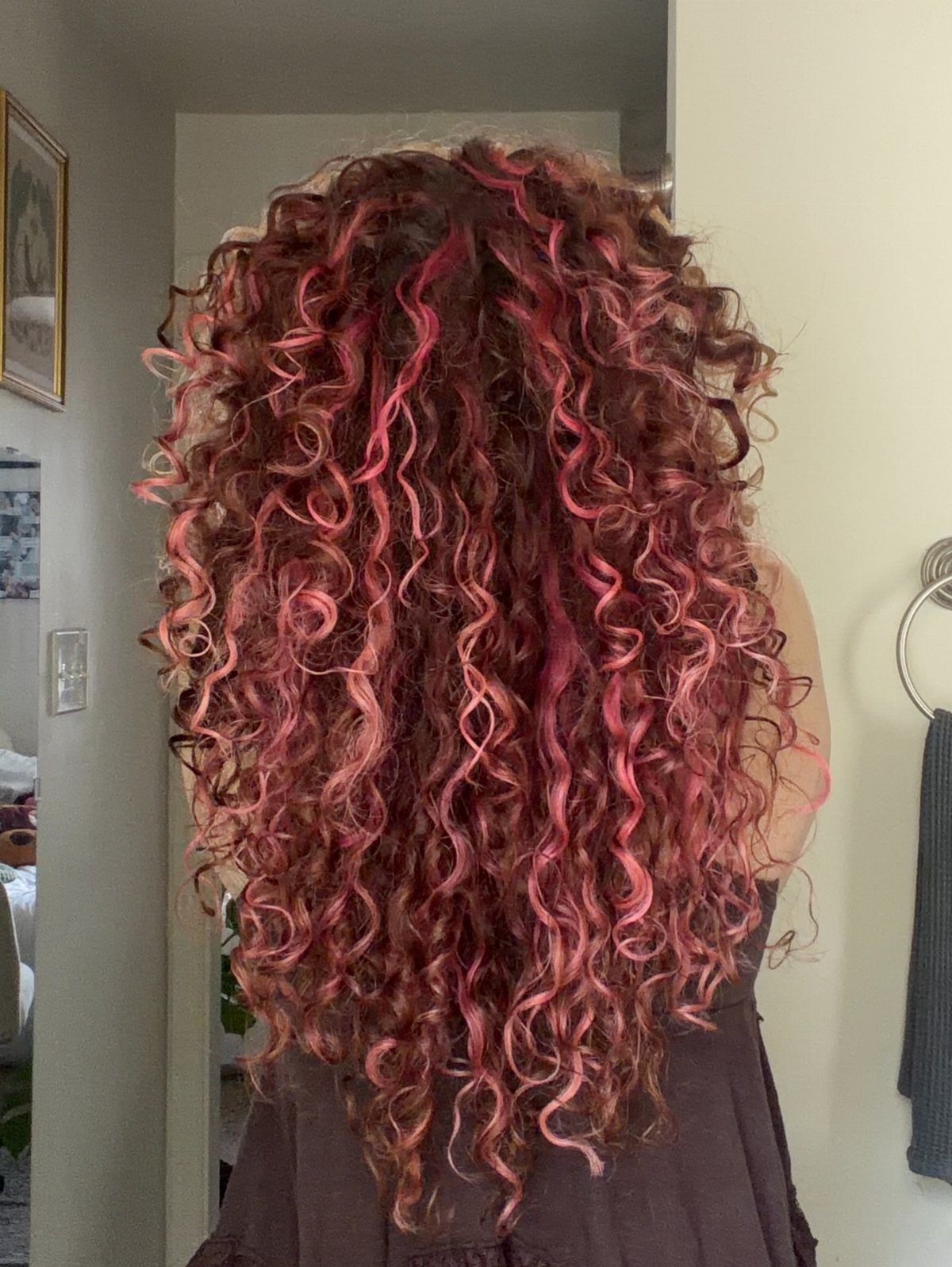
Curls pull pink forward in ways straight hair won’t. The texture means underlayers don’t stay flat and hidden, they spiral through the top sections and catch light at different points as the curls move.
Peekaboo pink on curly hair reads less controlled than it does on straight styles, which works if you want the color distributed rather than contained.
Placement matters more here: too high and the pink dominates, too low and it disappears into the curl mass at the back.
5. Hot-Pink Peekaboo Underlayers in Braids
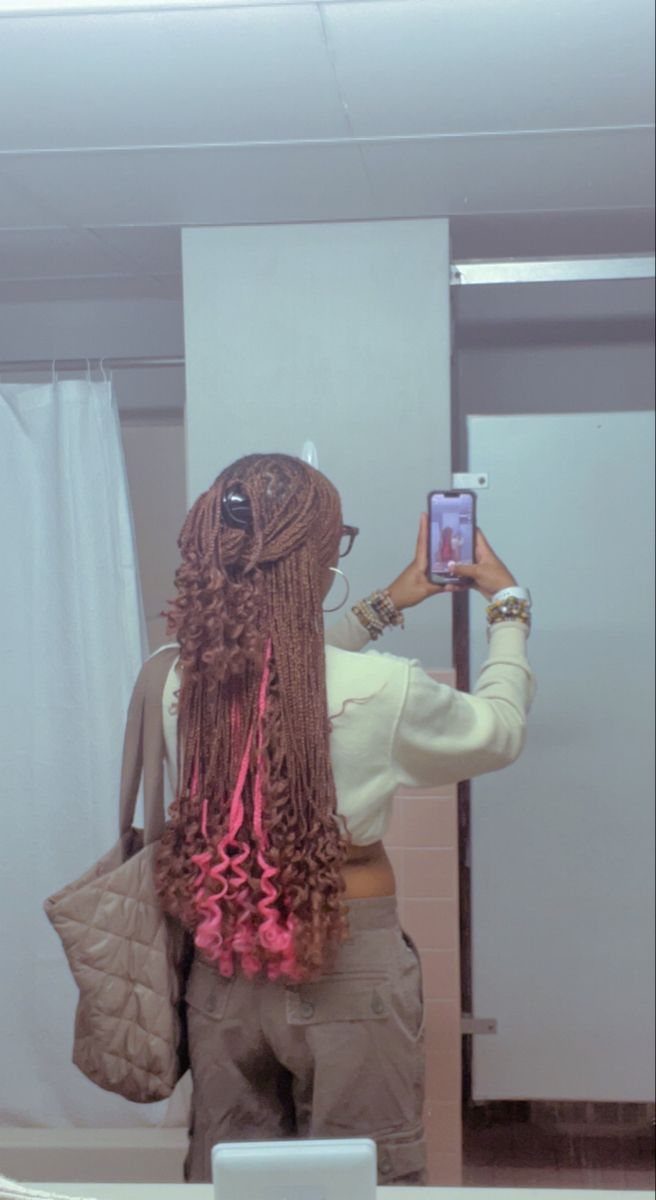
Braiding separates sections that usually sit stacked, so pink that hides completely when the hair is loose moves to the surface in plaits. The tighter the braid, the more the underlayer travels forward and sits against darker strands.
Hot pink, not pastel, gives you the punch that reads through a braid pattern. Dutch braids and fishtails both pull more of the underlayer into view than a standard 3-strand does.
6. Pink Peekaboo with Bangs
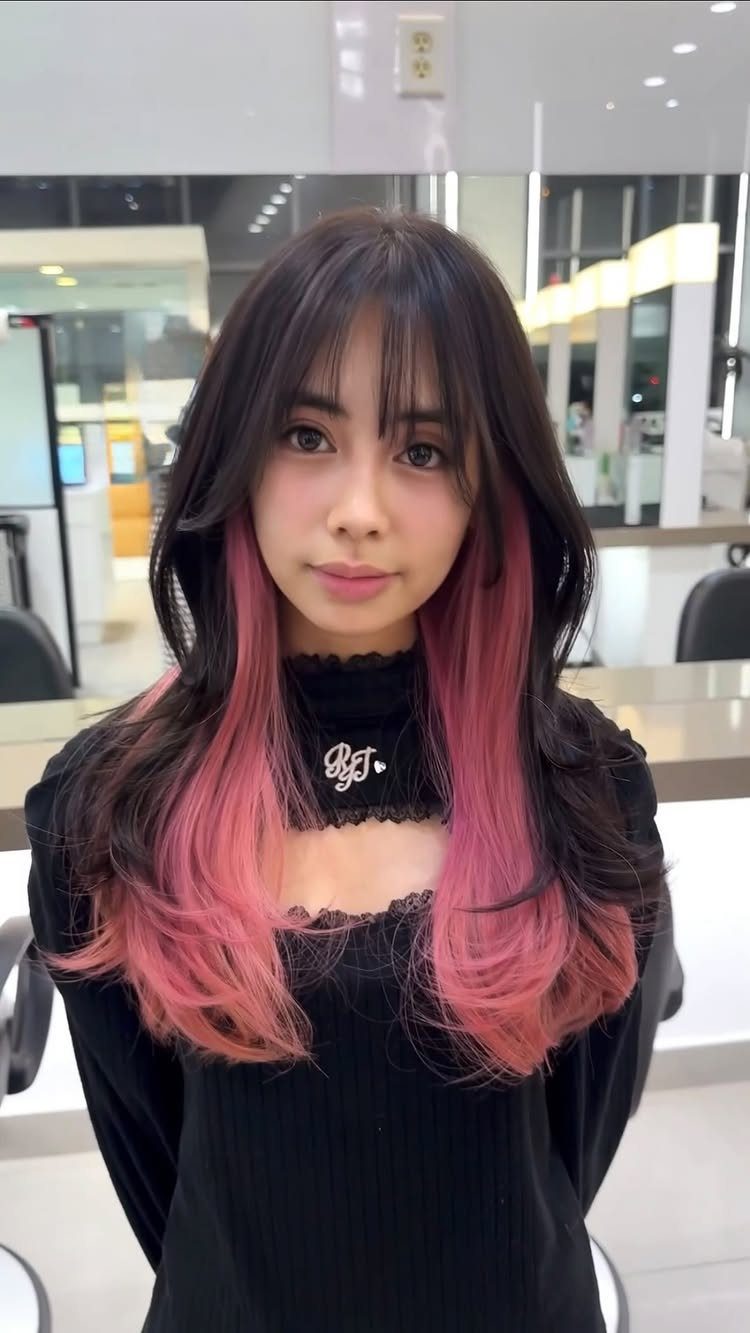
Bangs cover the top of the face, pink covers the underlayer, and the two together give you a finished look even when the hair is worn down.
The bangs anchor the style while the pink stays mostly tucked until you curl the ends or flip sections forward.
Shoulder-length hair shows the underlayer more often than long hair does because there’s less weight to hold it flat. If your bangs are blunt and heavy, the pink will read as an accent rather than a co-star.
7. Pink Peekaboo in a Ponytail
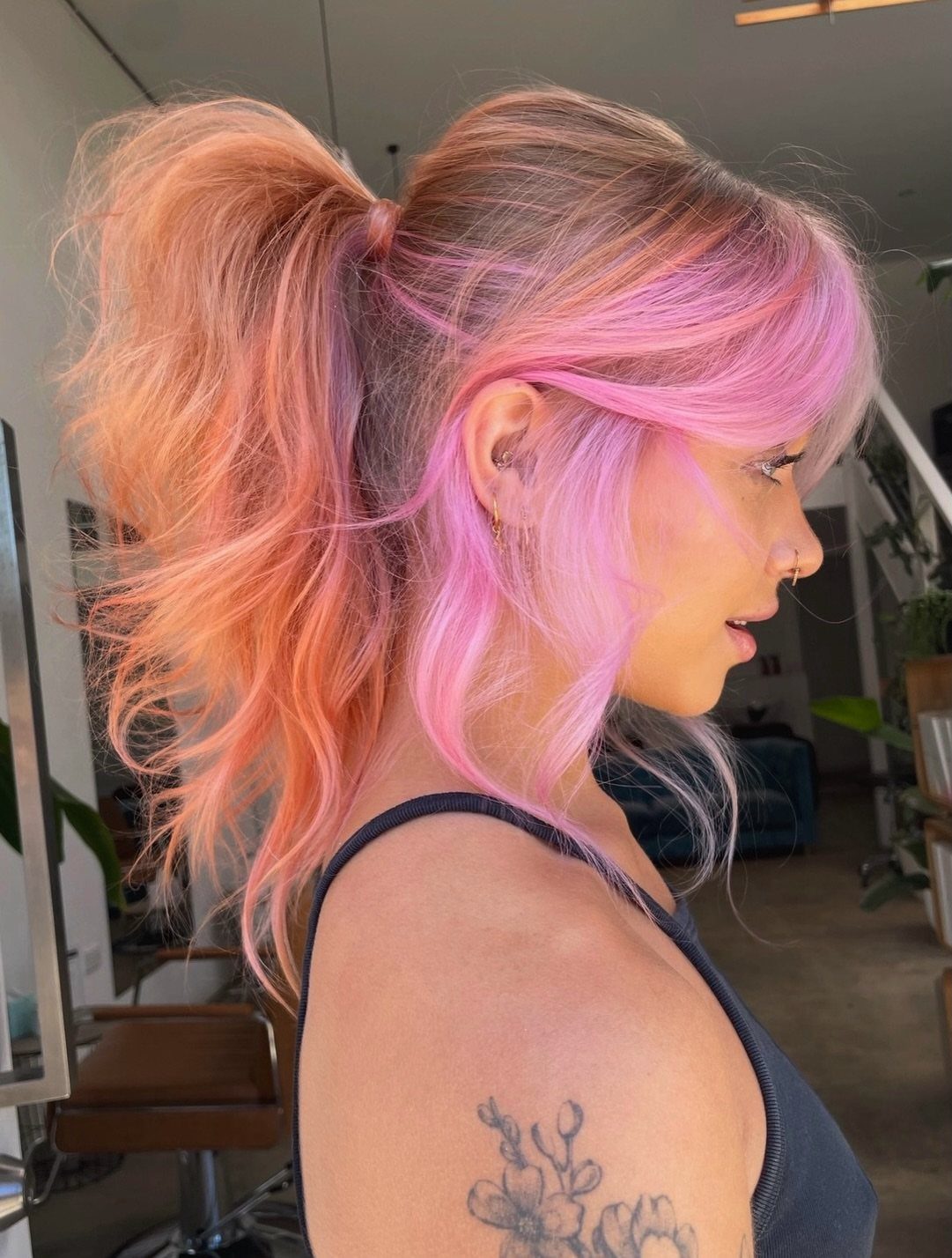
Pulling the hair into a high ponytail lifts pink underlayers up and back, so they sit visible beneath and behind the ear instead of lying flat under darker top sections. The higher the ponytail, the more pink shows.
This works best if the pink starts above the ear rather than at the nape.
Keeping the placement lower works for a ponytail, because the underlayer shows once the hair is tied up, which is the point of a peekaboo color meant to travel with the style.