Coconut oil can soften dry hair and slow moisture loss because its lauric acid enters the hair shaft instead of just coating it.
But fine hair gets weighed down and coarse hair can turn stiff from protein buildup, so keep it to the ends. Buildup also calls for a deep cleanse every 1–2 weeks.
Coconut Oil and the Hair Shaft
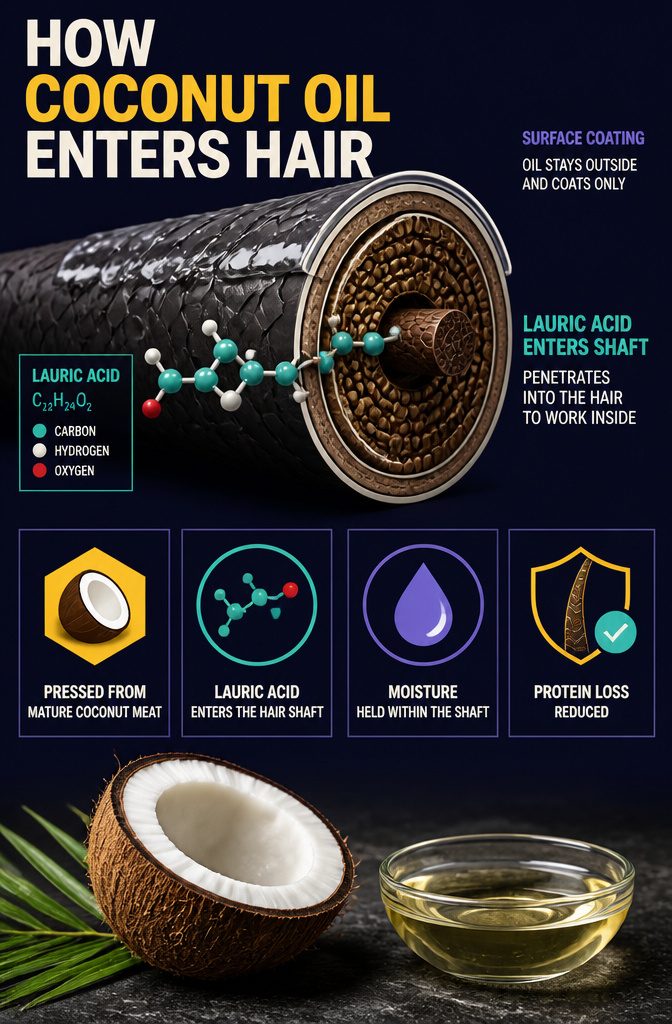
Coconut oil is pressed from the kernel, or meat, of mature coconuts from the Cocos nucifera tree.
Coconut water is the clear liquid inside, and coconut milk comes from heating the meat and filtering it, so neither is the same product.
The oil is almost entirely fat, mostly saturated, built from medium-chain fatty acids: lauric, capric and caprylic acid.
It also carries vitamins E and K. Lauric acid is the one that matters for hair, because its structure lets it enter the hair shaft instead of just coating it, where it holds moisture and cuts protein loss.
Results still shift with hair type, amount and method.
Softness, Shine and Frizz Control

Coconut oil’s medium-chain fatty acids are small enough to slip into the hair shaft, which is why it can leave dry strands softer and slow moisture loss.
It also smooths the cuticle, so hair reflects more light. A few drops on dry hair work as a shine serum, a fair swap if you avoid silicones.
Smooth, slippery strands knot and pull less under a brush, and a sealed cuticle lets in less humidity, so frizz usually eases too. Some people credit it with shielding hair from chlorine and heat and supporting a healthy scalp.
Claims that it clears dandruff or repairs damage are only claims. Results swing with hair type, amount and method, and for some people the oil ends up drying.
Mask, Leave-In or Pre-Wash
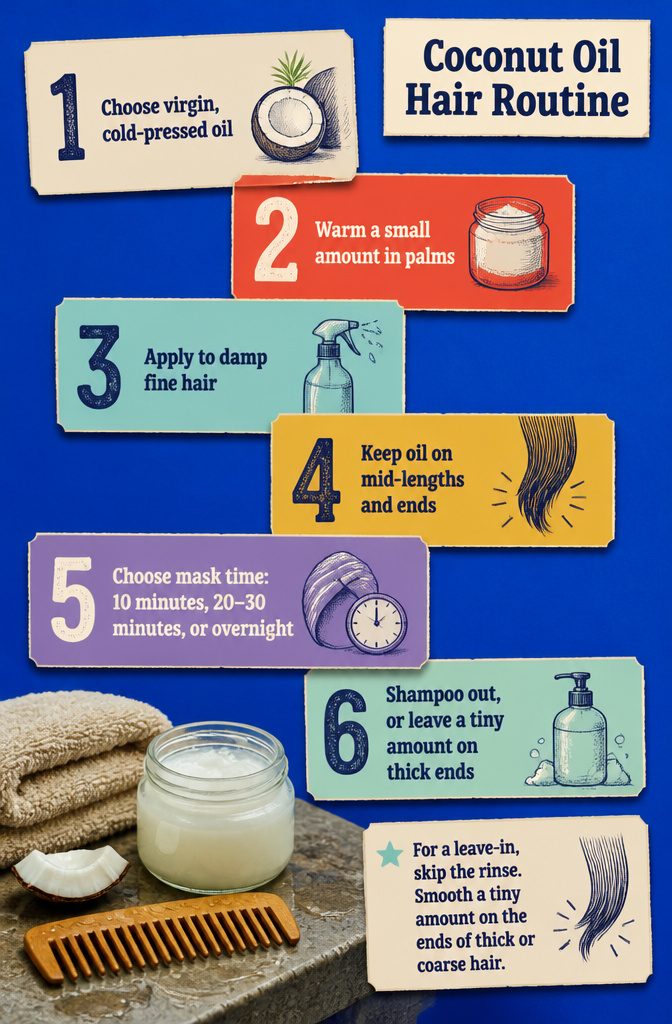
- Buy pure coconut oil, virgin and cold-pressed.
- Start with a drop or two. Thick or coarse hair can take more, up to about a tablespoon. Rub it between your palms until it turns liquid.
- Apply to damp hair if it’s fine, so it doesn’t weigh down. Use dry hair if it’s dry or damaged. Keep it on the ends and mid-lengths.
- Choose your time: a 10-minute mask with a lukewarm rinse, 20–30 minutes under a towel wrap, or overnight.
- Shampoo it out, especially after overnight.
- For a leave-in, skip the rinse. Smooth a tiny amount on the ends of thick or coarse hair.
No single method fits everyone, so adjust one variable at a time.
Match It to Hair Type
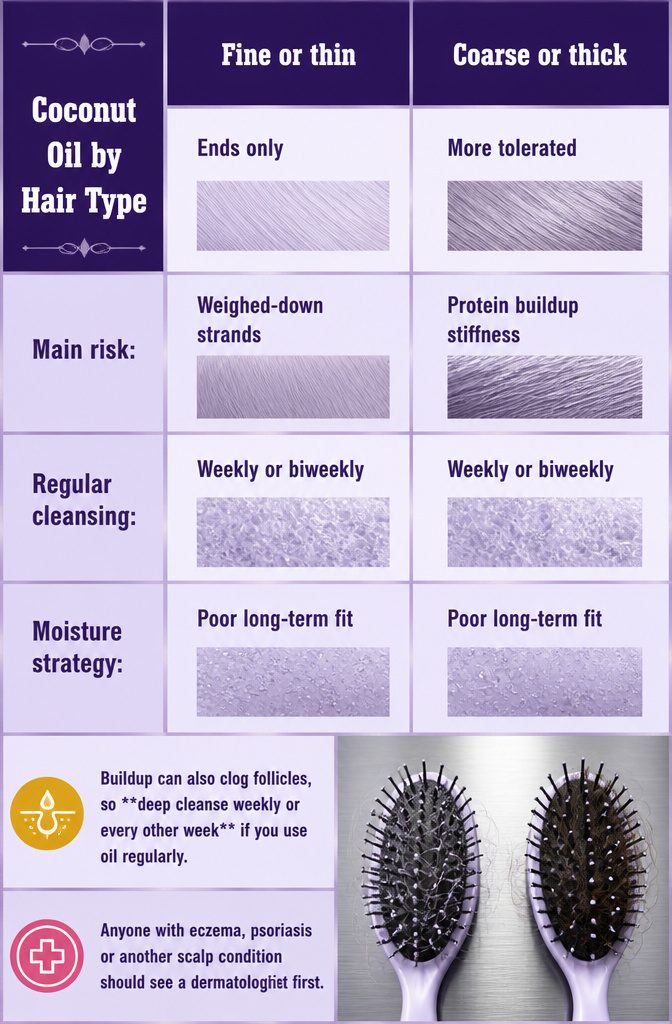
Fine or thin hair loses first. Coconut oil is such a potent hydrator that it can weigh strands down, so on fine hair I’d keep it to the ends.
Coarse, thick hair can turn stiff from protein buildup. Too much oil leaves any type greasy and hard to wash out, and its water-repelling effect makes long-term use a poor moisturizing strategy.
Buildup can also clog follicles, so deep cleanse weekly or every other week if you use oil regularly. Anyone with eczema, psoriasis or another scalp condition should see a dermatologist first.
Getting Excess Oil Out
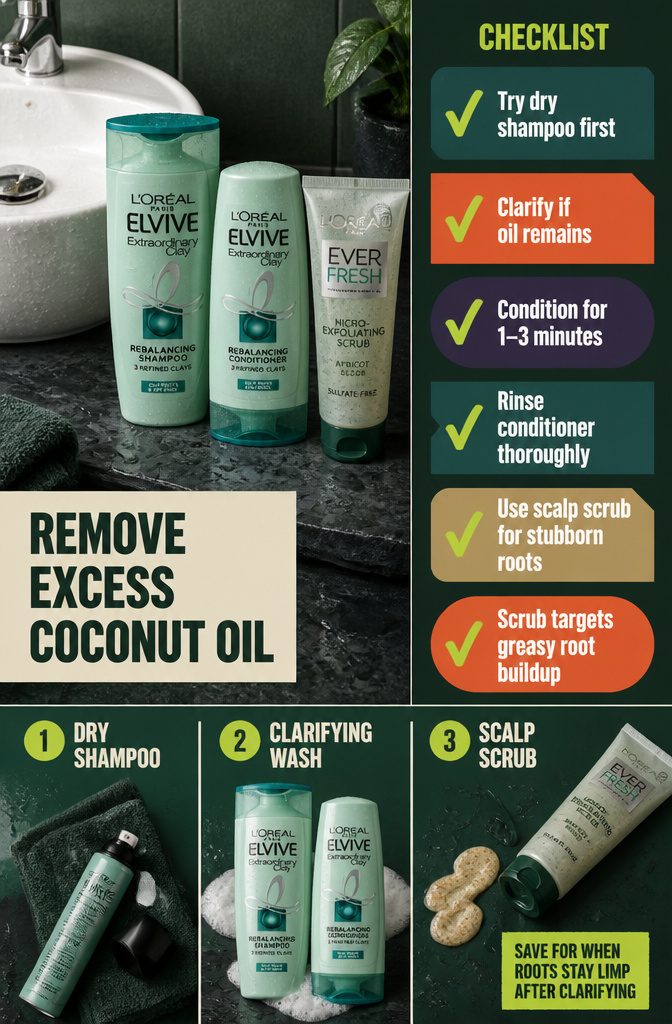
Three fixes work on leftover coconut oil, and I’d try them in this order:
- Dry shampoo goes first. If it doesn’t get the job done, step up to the next option.
- Clarifying shampoo and conditioner is the next step. Massage the shampoo into wet hair, lather, and rinse. Then apply conditioner, leave it on for one to three minutes, and rinse thoroughly. L’Oréal Paris Elvive Extraordinary Clay Shampoo and Conditioner is one example, made with three refined clays.
- A scalp scrub targets buildup at the roots, which is what makes hair look flat and greasy. L’Oréal Paris EverFresh Micro-Exfoliating Scrub is a sulfate-free example, made with apricot seeds. I’d save it for when roots stay limp after clarifying.
Products With Coconut Oil
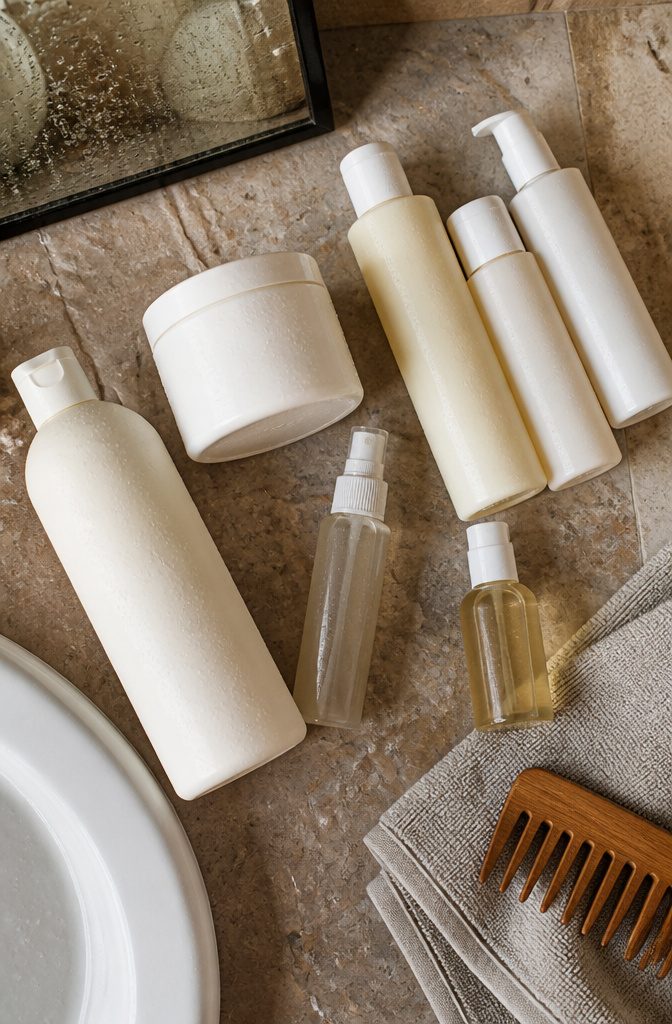
These products put coconut oil in the formula, so you skip handling the pure oil yourself:
- Herbal Essences Coconut Oil Paraben-Free Hydrating Shampoo is the simplest swap, aimed at deeply nourished, weightlessly soft hair.
- Like a Virgin Hair Mask blends coconut, fig, shea butter and argan oil, which makes it the most layered formula of the group.
- Miracle Hair Elixir states heat protection up to 428°F (220°C), so it fits blow-dryer and flat iron mornings.
- Silky Hair Set comes as a set rather than one bottle, handy if you want several steps from the same line.
- GLISS Oil Nutritive Weightless Oil seals the cuticle without weighing strands down, and it’s my pick if pure coconut oil leaves your hair heavy.
I won’t rank these, since nothing tests them side by side. Choose by the job: cleansing, deep conditioning, heat styling or smoothing.
Protection and Its Limits

A thin coat of coconut oil before water exposure cuts how much water the hair absorbs, so the cuticle swells less and weakens less.
That makes it a sensible pre-step for a chlorinated pool or a day in polluted air. It also forms a barrier against UV rays, which helps limit sun damage and color fading.
Growth claims run well ahead of the evidence. They rest on a 2015 rat study and a separate 2015 study on environmental damage and pollution:
The results of a 2015 study in rats suggest that formulas containing coconut oil might promote hair growth and increase hair thickness.
Rats are not human scalps, so I’d use the oil for protection before sun, pool or pollution, not as a growth treatment.
Frequently Asked Questions
Is coconut oil good for your hair?
It can be, mainly for dry hair. Its lauric acid slips into the hair shaft, so strands feel softer, hold moisture, lose less protein, shine more and frizz less.
Claims that it clears dandruff or repairs damage are unproven, and on fine hair or in heavy amounts it can weigh hair down or leave it dry.
Which coconut oil is best for hair?
Pure, virgin, cold-pressed coconut oil. If handling straight oil leaves your hair heavy, a product with coconut oil in the formula is an easier route.
Do you put coconut oil on wet or dry hair?
It depends on your hair.
Fine hair does best with the oil on damp strands so it doesn’t weigh down, while dry or damaged hair takes it better when dry. A few drops on dry hair also work as a finishing shine serum.
How long should you leave coconut oil in your hair?
Leave it on for 10 minutes as a quick mask, 20–30 minutes under a towel wrap, or overnight for the longest treatment.
Thick or coarse hair can also use a tiny amount on the ends as a leave-in with no wait at all.
Do you rinse coconut oil out of hair?
Yes, after a mask.
A 10-minute treatment needs a lukewarm rinse, and anything longer, especially overnight, calls for shampoo. Only a leave-in on the ends of thick or coarse hair skips the rinse.
How do you get coconut oil out of your hair?
Start with dry shampoo.
If hair still feels oily, use a clarifying shampoo and conditioner, leaving the conditioner on for 1–3 minutes before rinsing well. A scalp scrub is the last step, for roots that stay flat and greasy.