The ideas here run from a soft Pixie Cut to Teddy Graham Bronde, Copper Hair, and a Magenta Patterned Buzz Cut. The real difference between them is upkeep.
Your salon schedule picks the winner here: Balayage and Toffee Chocolate Balayage grow out softly with no line at the roots, while Cherry Cola Hair and Copper Hair lose richness fast and an Undercut Design needs frequent touch-ups to stay crisp.
1. Balayage
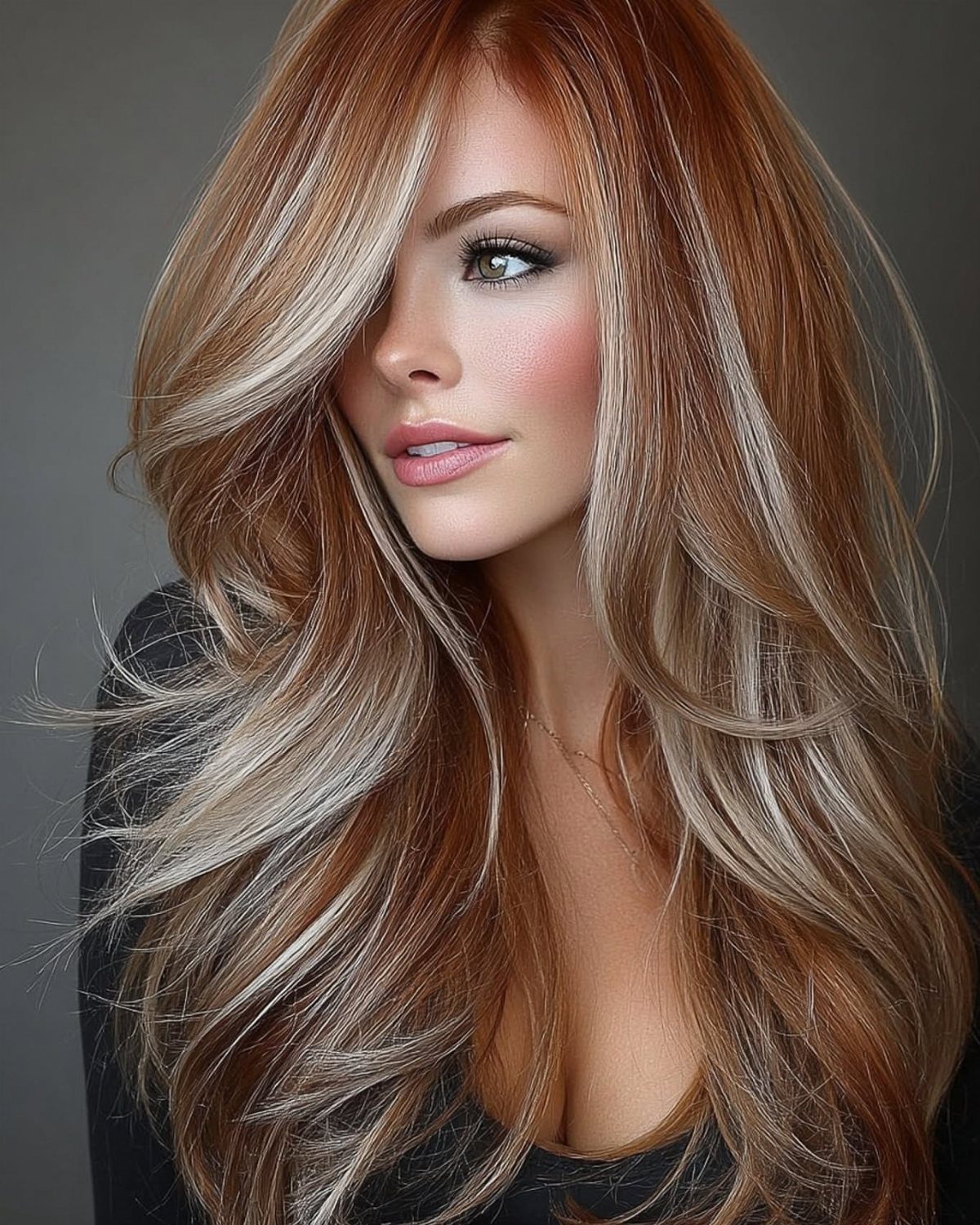
Color is painted onto the hair in soft, sweeping strokes rather than applied through foils, so the transition from dark to light stays gradual and the placement looks custom. The result reads dimensional instead of striped.
Ask for lighter pieces concentrated where the sun would naturally hit: around the face, through the crown, and along the ends.
This grows out softer than traditional highlights because there’s no harsh line at the root. Plan on regular refreshes to keep the contrast visible as it fades.
2. French Bob
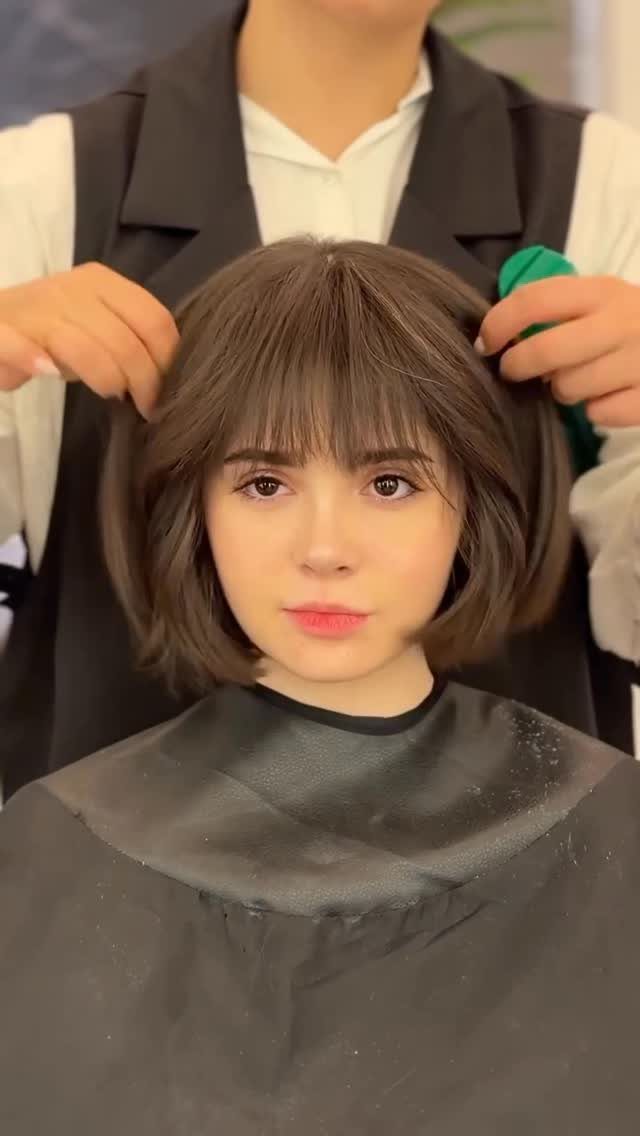
The length sits between chin and jaw, often with a slight inward curve at the ends and bangs that graze the brow or cheekbone. The silhouette feels intentionally compact rather than grown-out.
This works especially well on straight or slightly wavy hair, where the blunt perimeter holds its shape without much styling. If your hair is fine, the shorter length adds fullness.
If it’s thick, ask for internal layers to keep the weight manageable without losing the clean outline. A round brush will smooth it into place each morning.
3. Blunt Bob
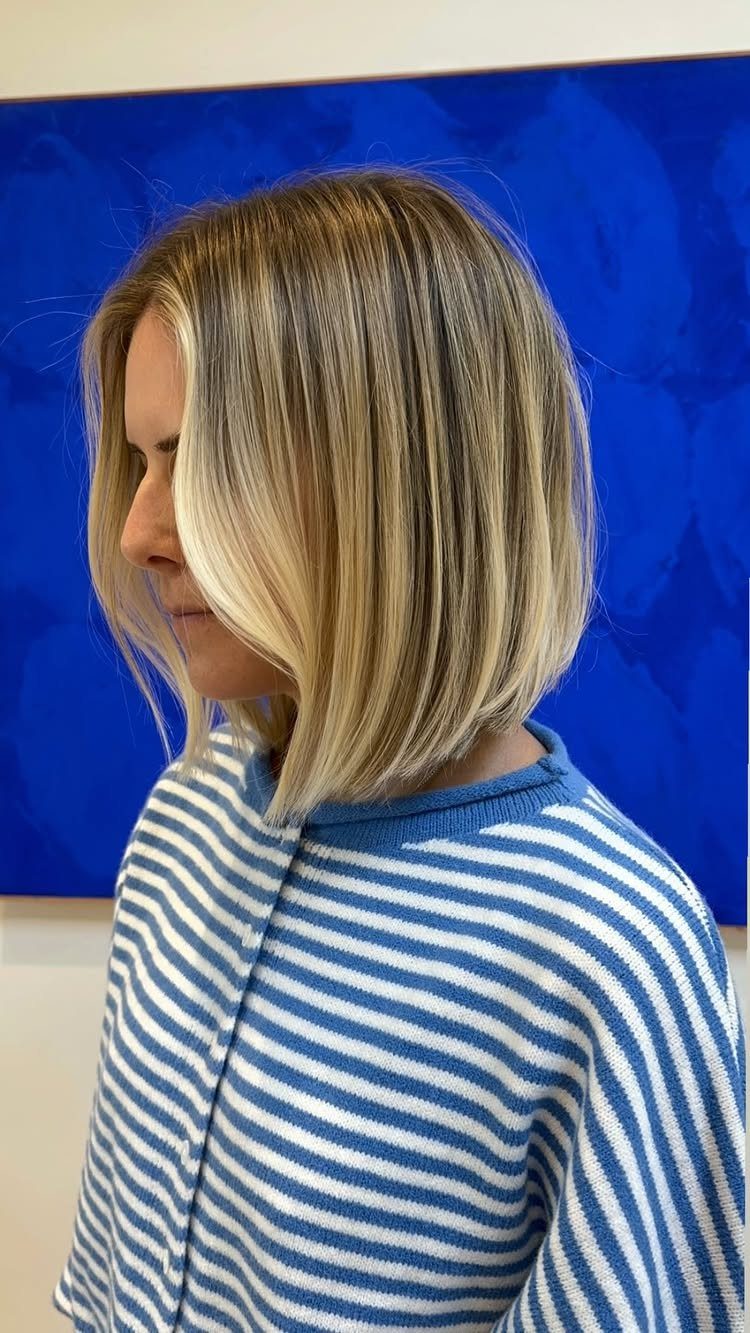
Every strand ends at the same point, creating a sharp horizontal line with no graduation or taper. The precision is the whole idea.
This cut shows off healthy ends and makes fine hair look thicker by keeping all the weight at the bottom.
It does require regular trims to maintain the edge, and any damage becomes immediately visible. Blow it smooth with a paddle brush or let it air-dry if your texture is naturally straight.
4. Brown Hair Highlights
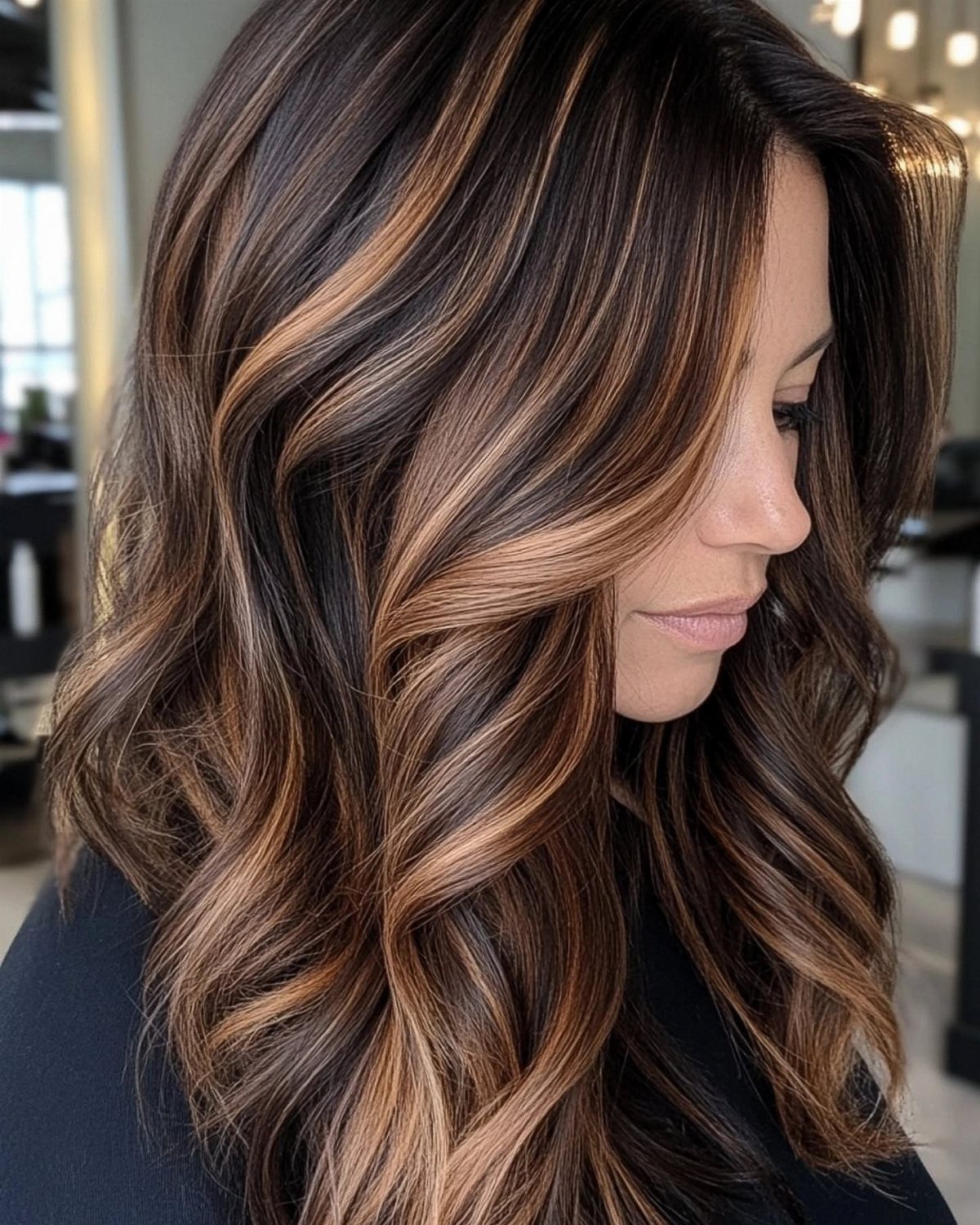
Lighter tones woven through brown hair lift the overall color without changing the base, and the contrast brings out movement in curls or waves.
The effect can range from subtle ribbons to bold streaks depending on how much lighter you go.
Caramel, honey, and golden tones warm up deeper browns, while cooler ash or beige highlights suit brunettes with neutral or cool undertones.
If you’re starting from virgin hair, expect a long afternoon in the chair. Regular toning keeps brassiness out and the color looking intentional as it grows.
Brunettes will lean into the darkest version with soft, silky black. No more subtle highlights.
— Allure
5. Pixie Cut
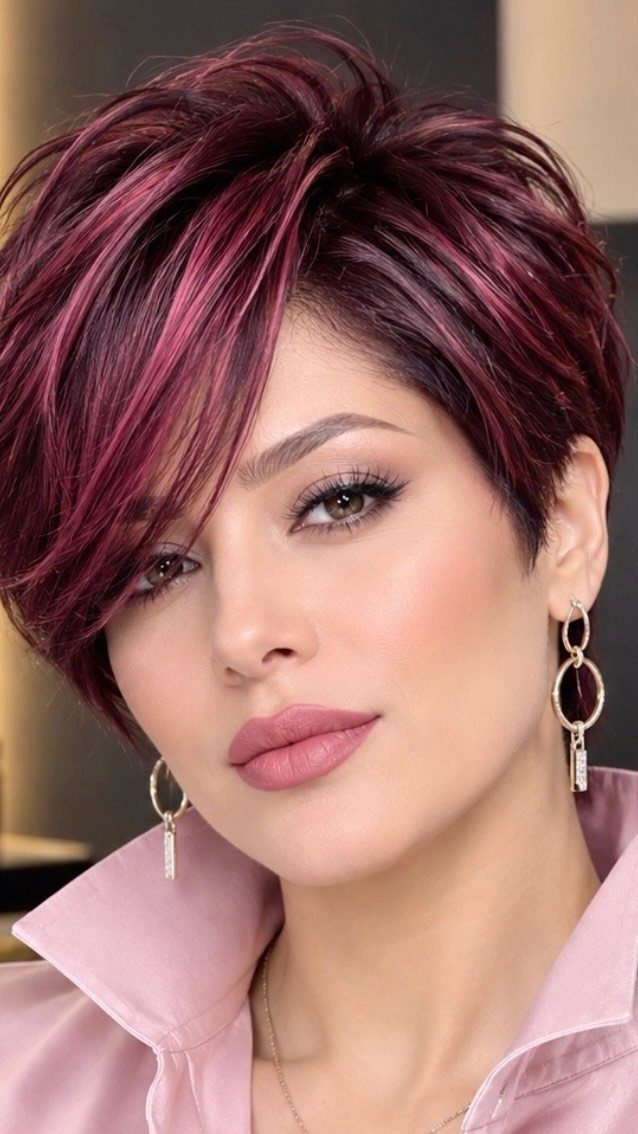
Short all around with enough length on top to style forward, to the side, or left tousled. The crop sits close to the head at the nape and sides, and texture on top keeps it from looking too uniform.
This is low-maintenance once you learn to work with the shape, but it grows out fast.
Book frequent cuts to hold the silhouette. A small amount of paste or pomade worked through damp hair gives definition without stiffness, and the whole routine is quick.
6. Long Layers
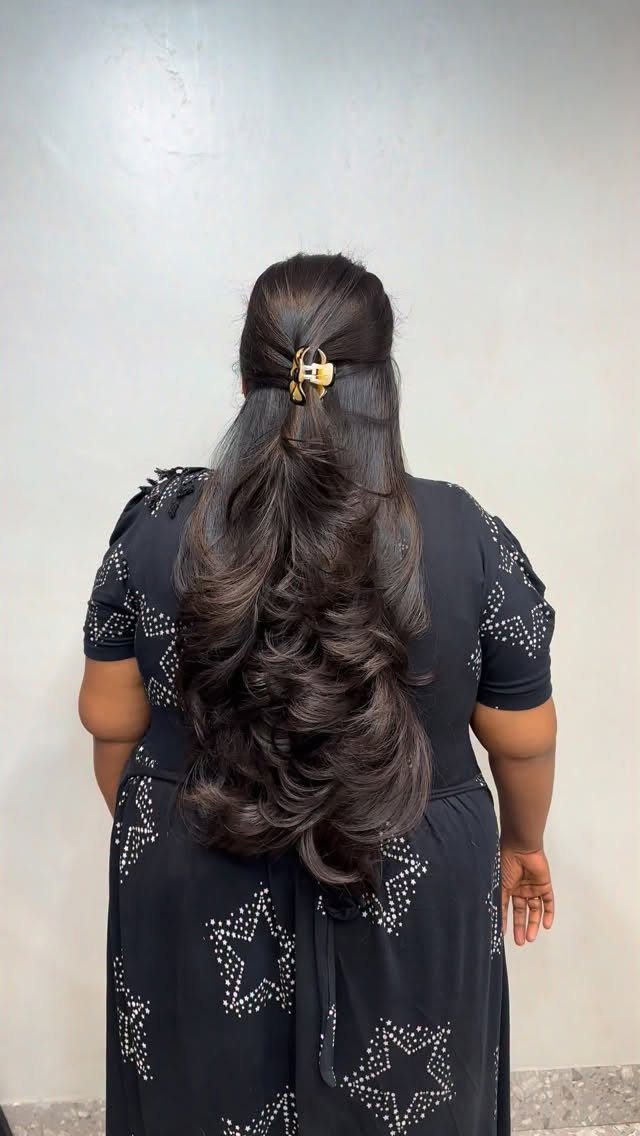
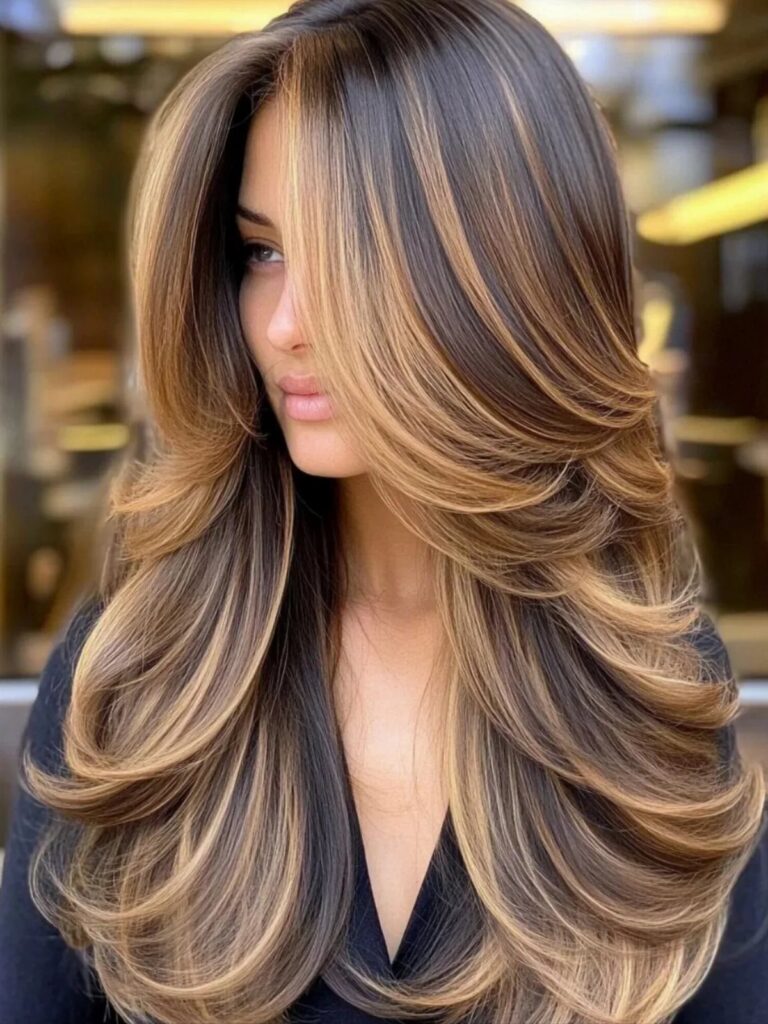
Layers are cut throughout long hair to remove weight and create movement without sacrificing overall length. The shortest pieces usually start around the collarbone or below, so the hair still reads long from every angle.
If your hair is thick or heavy, layers make it easier to style and keep it from sitting flat at the crown.
If it’s fine, ask for longer, more gradual layers so the ends don’t look thin. This cut works across all textures and grows out gracefully, though regular trims keep the shape defined.
7. Copper Hair
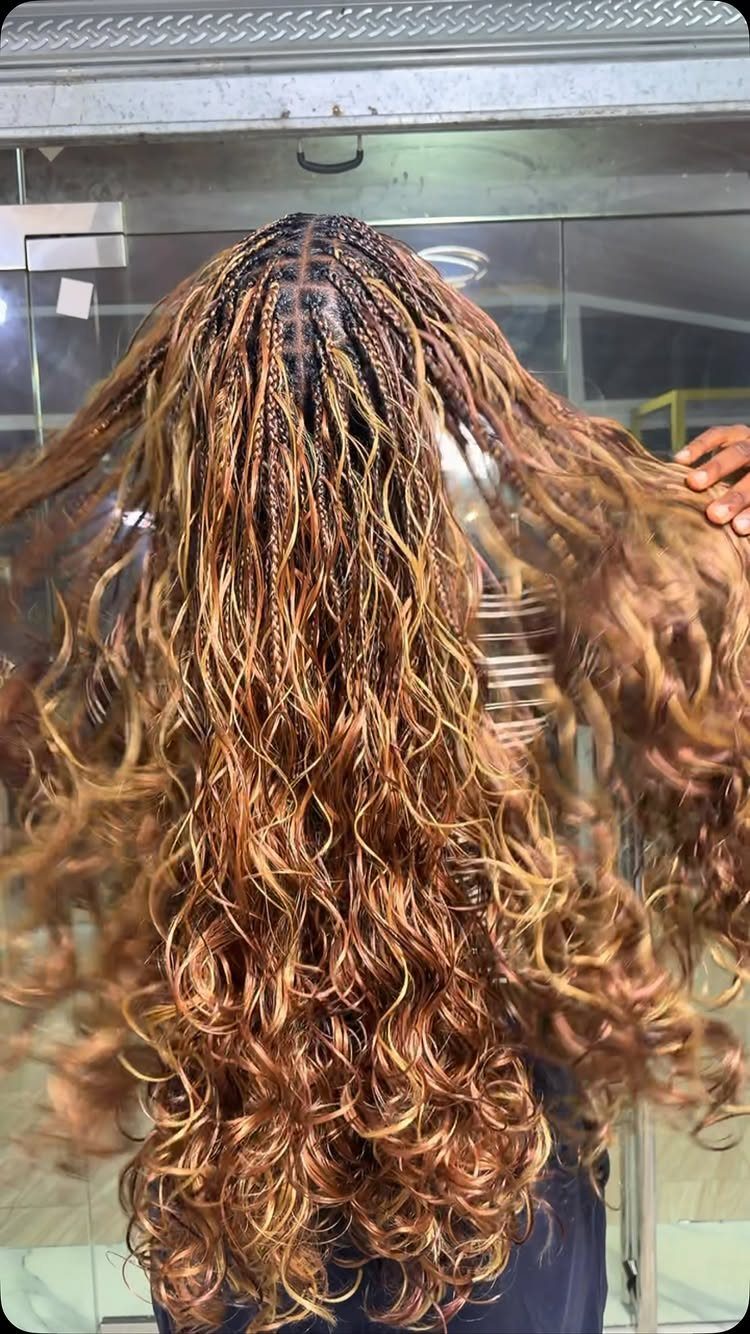
Copper sits in the red family but leans warm and orange, which is why it glows under salon lights and in daylight alike.
On long hair, the shade picks up every curl and braid, so texture gets as much attention as color.
Bring a photo to your colorist and say how warm you want it: brighter and more orange, or deeper and browner.
Red-toned color fades faster than most shades, and a color-depositing conditioner in the shower keeps the copper bright between salon visits.
8. Shag Haircut
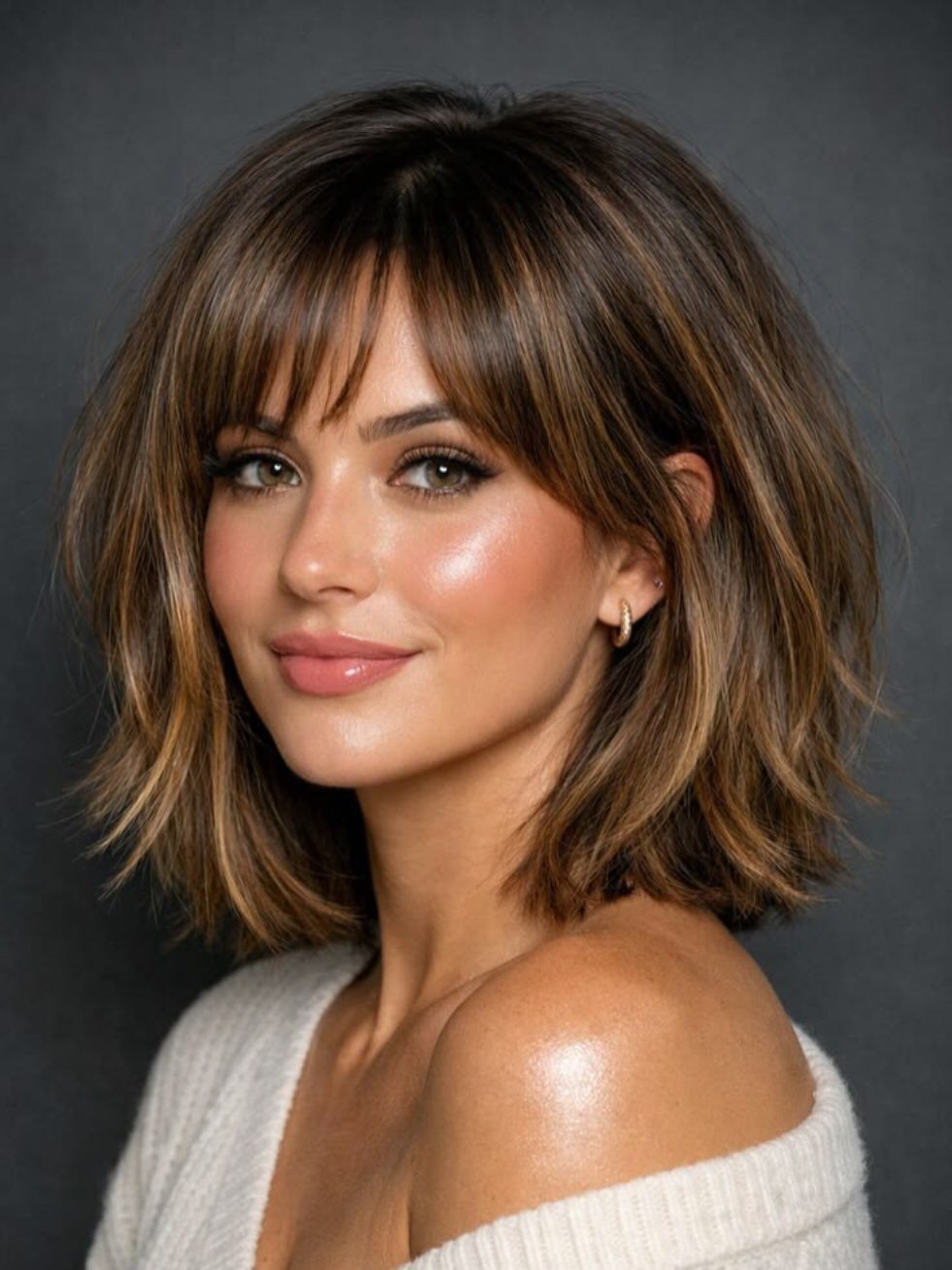
Choppy layers all through the length give this shag its movement, and wispy bangs soften the top. It looks best when the ends are texturized rather than blunt.
Ask your stylist for layers that start high and shorter pieces around the face.
A texturizing spray worked through damp hair and left to dry with your fingers does most of the styling. Expect trims every so often to keep the layers from collapsing into one shape as they grow.
9. Bouncy Blowout
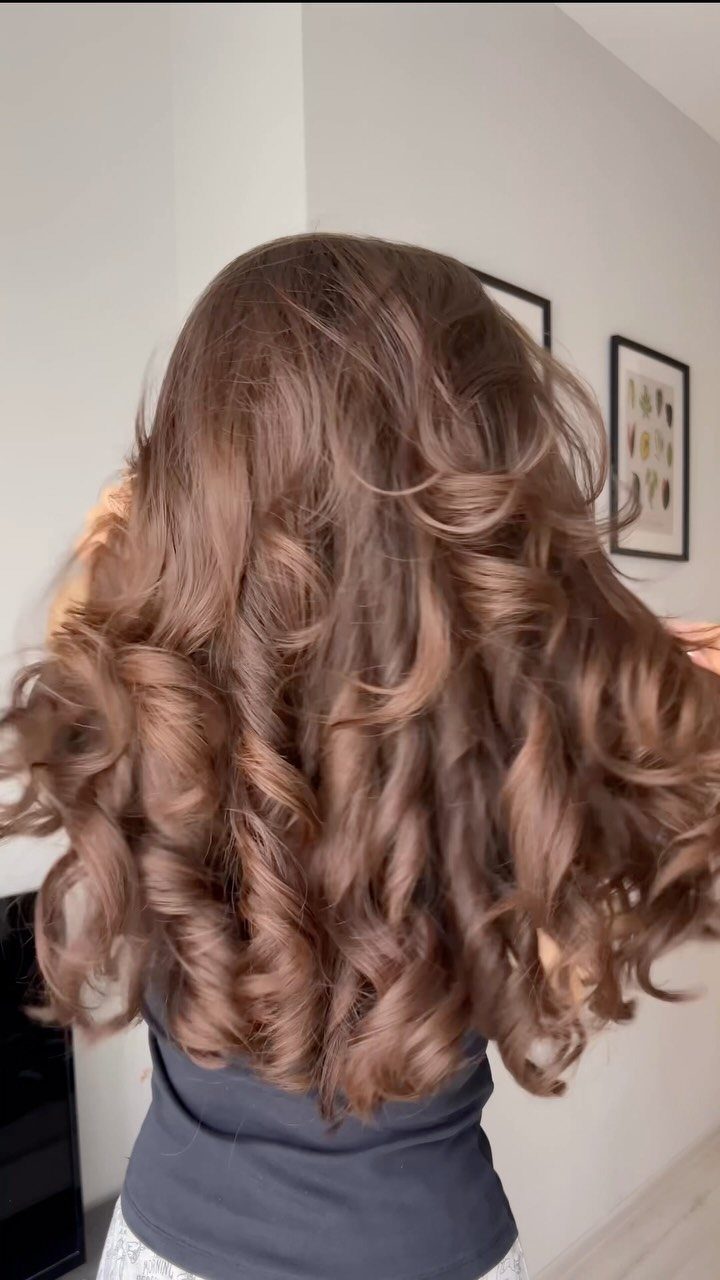
Autumn is when I most want hair that looks full and moves, and a bouncy blowout is the classic answer. Volume at the root, loose curl through the lengths, and a glossy finish do the work.
Blow-dry in sections with a large round brush, then set the ends with hot rollers or a curling iron for the bounce.
This look rewards time, so give it a real session with the dryer and a round brush. Keep a light-hold spray nearby so the shape lasts through the day.
10. Ombre Hair
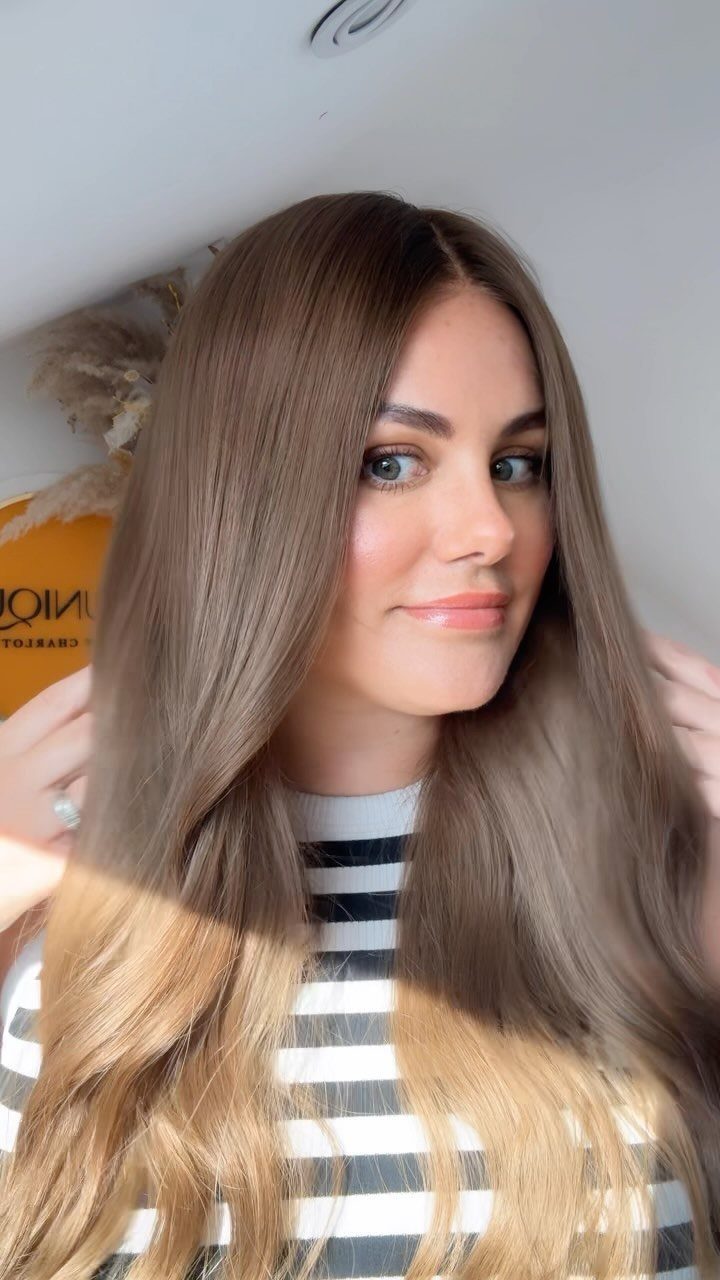
Ombre keeps the roots dark and lets the color drift to a much lighter blonde at the ends, with no ribbon-like blending in between. The contrast is the point, and on long straight hair it shows from every angle.
Ombre at 24” long and 180% density is fuller than most people grow on their own, so I’d expect extensions to get this exact result.
For your own head, ask for a gradual fade so the midlengths do not look striped. Ombre also grows out kindly, since the roots are meant to be dark.
11. Cherry Cola Hair
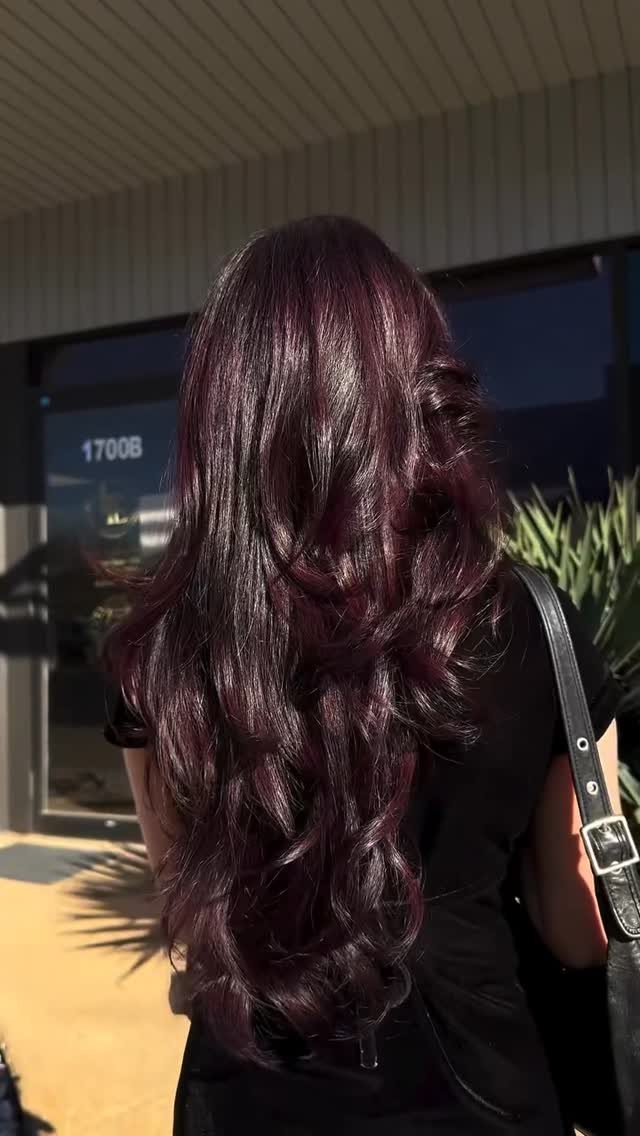
Cherry cola is a dark red with a hint of brown, almost black in low light and clearly red in the sun. It reads richer and less loud than a true cherry red.
I like it best on long waves, where the gloss catches every bend. Ask your colorist for a deep base with red mixed in rather than a bright red, and show a photo so the depth matches what you picture.
Red fades with each wash, so a color-safe shampoo and cool water help it last.
12. Blunt Bang Bob
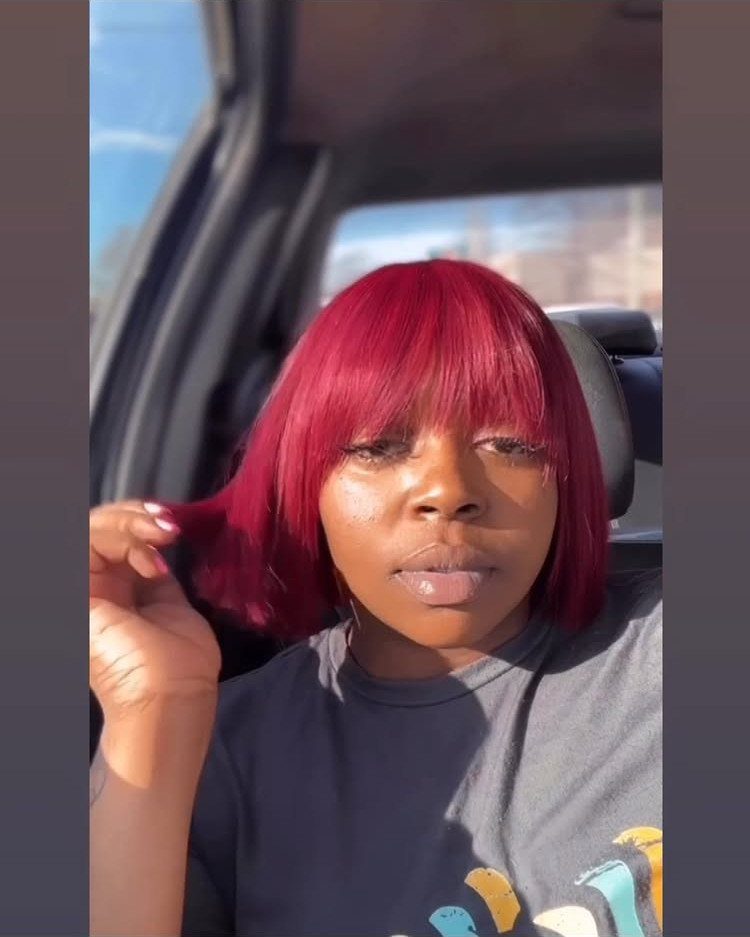
Pairing a bob with a blunt fringe puts a hard horizontal line across the forehead and another at the jaw, so the cut frames the whole face. Done in red, those 2 lines are impossible to miss.
Both edges need regular trims to stay crisp, and the bangs especially grow into your eyes fast.
Straight hair holds this cut best, and a flat iron run over it each morning keeps the edge sharp. If you have a strong cowlick at the hairline, talk to your stylist before committing to the fringe.
13. Metallic Platinum
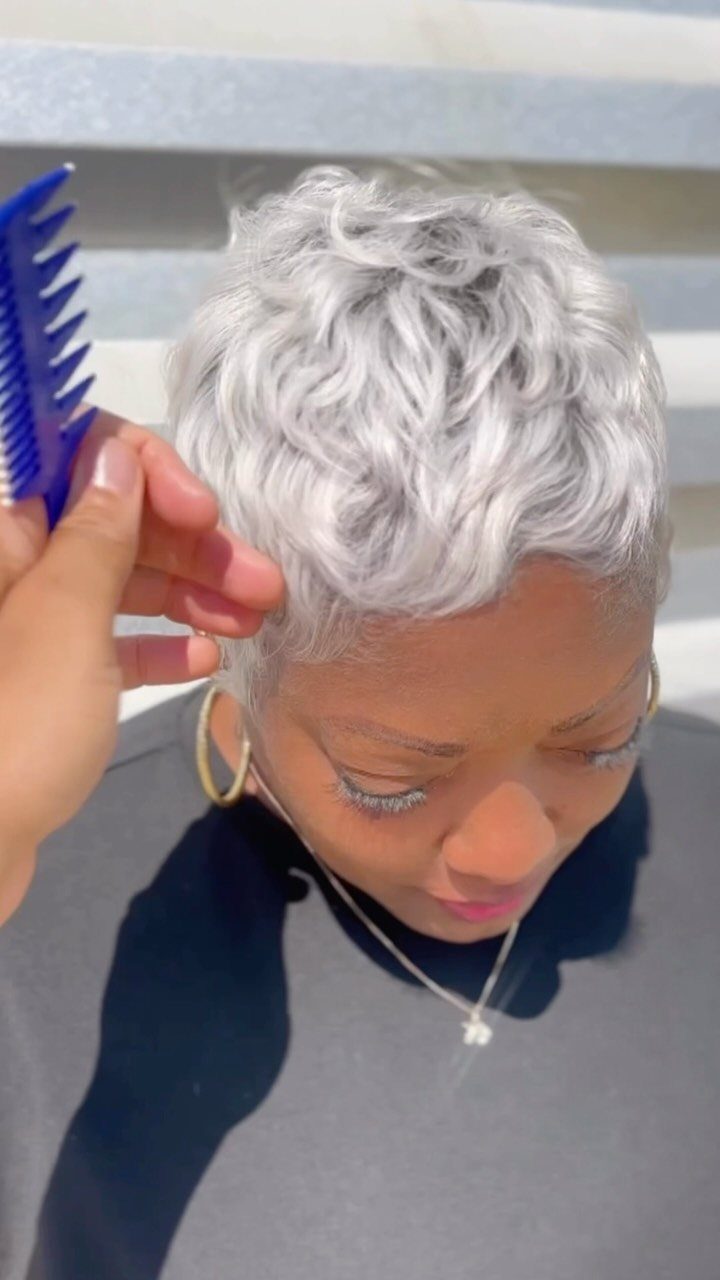
Frosty blonde with a reflective, silver finish reads almost like metal, and on short curls every ring catches light. The shade is cool and icy rather than creamy.
Bring a photo to your colorist and name the finish you want: silver-white, not yellow-leaning.
Platinum asks for a salon visit and regular upkeep, so plan for that before booking. Short hair makes the commitment easier to manage.
14. Grungy Grown-Out Color
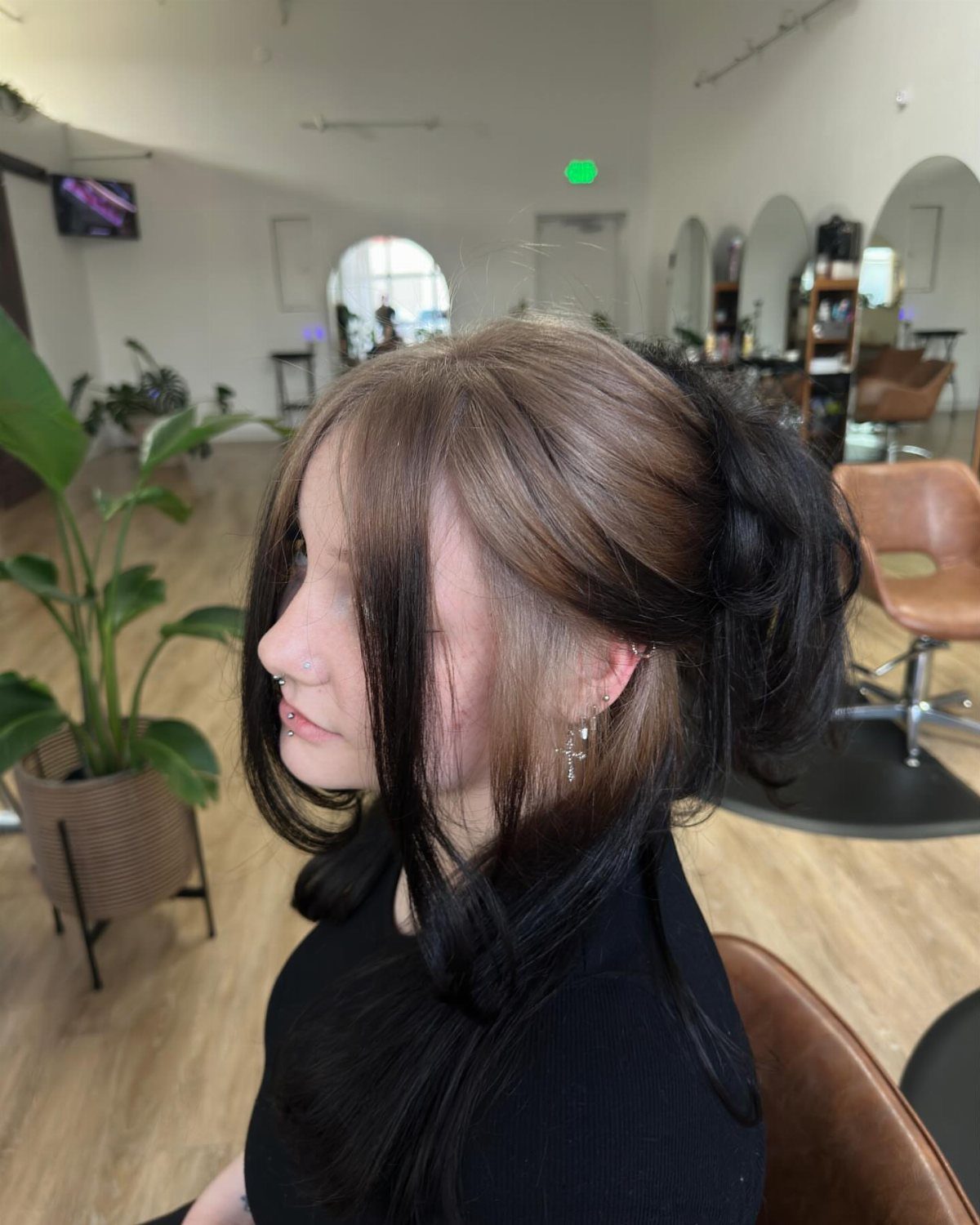
Dark lengths with a wide band of light brown at the roots give this look its edge. The contrast is the style, so nothing needs to be blended away.
Ask your stylist to leave the root section visible and keep the ends deep and dark.
It suits anyone who dreads salon visits, since the grow-out is built in. A smoothing cream at the roots keeps the light section from looking dry or frizzy.
15. Layered Waves
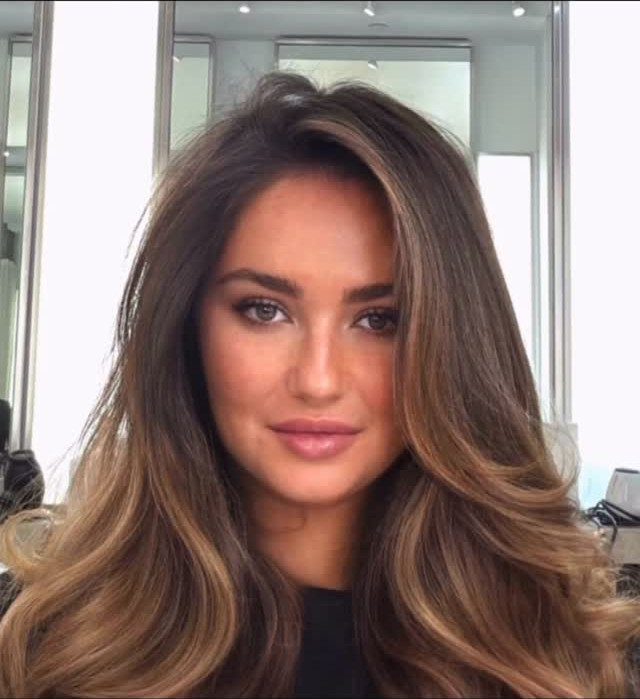
Soft layers cut through long hair give waves somewhere to land, so they bend and stack instead of hanging in one heavy sheet. Blended caramel highlights make the shape easier to read.
Ask for layers that start below the cheekbones and tell your stylist you plan to wear it wavy.
A curling iron or wand does the work, and tousling the curls with your fingers while they cool keeps them casual. I prefer a loose wave over a defined curl here.
16. Red Layers
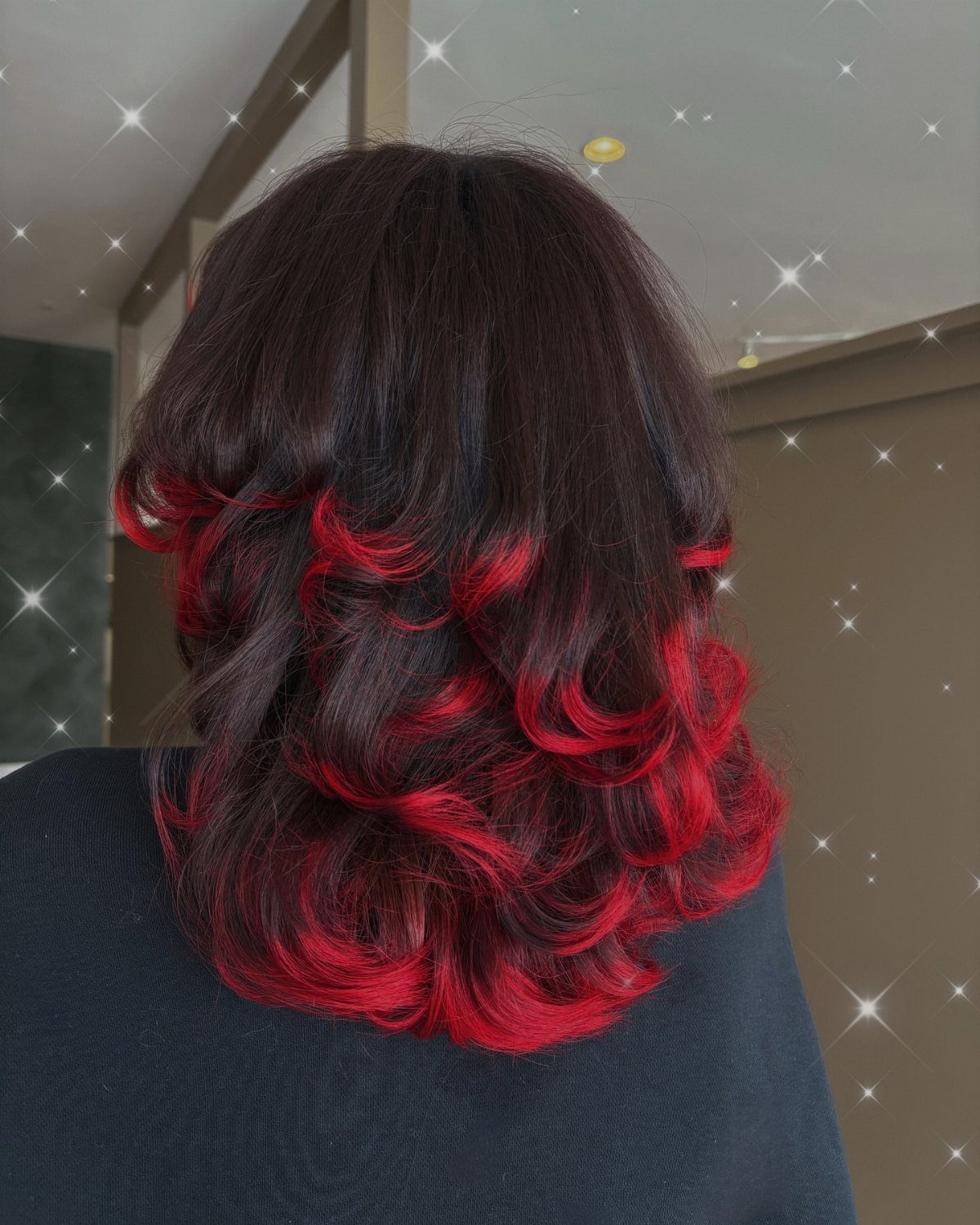
Dark brown hair with vivid red at the curled ends puts the color exactly where the layers move. From behind, each curl shows a flash of red against the brown.
Ask your colorist to keep the red on the ends and leave the roots natural.
Bright red loses its punch within a few weeks, and a sulfate-free shampoo plus a cool final rinse will slow that down. Layers help the shape, and curling the ends shows the color best.
17. Angled Wispy Bob
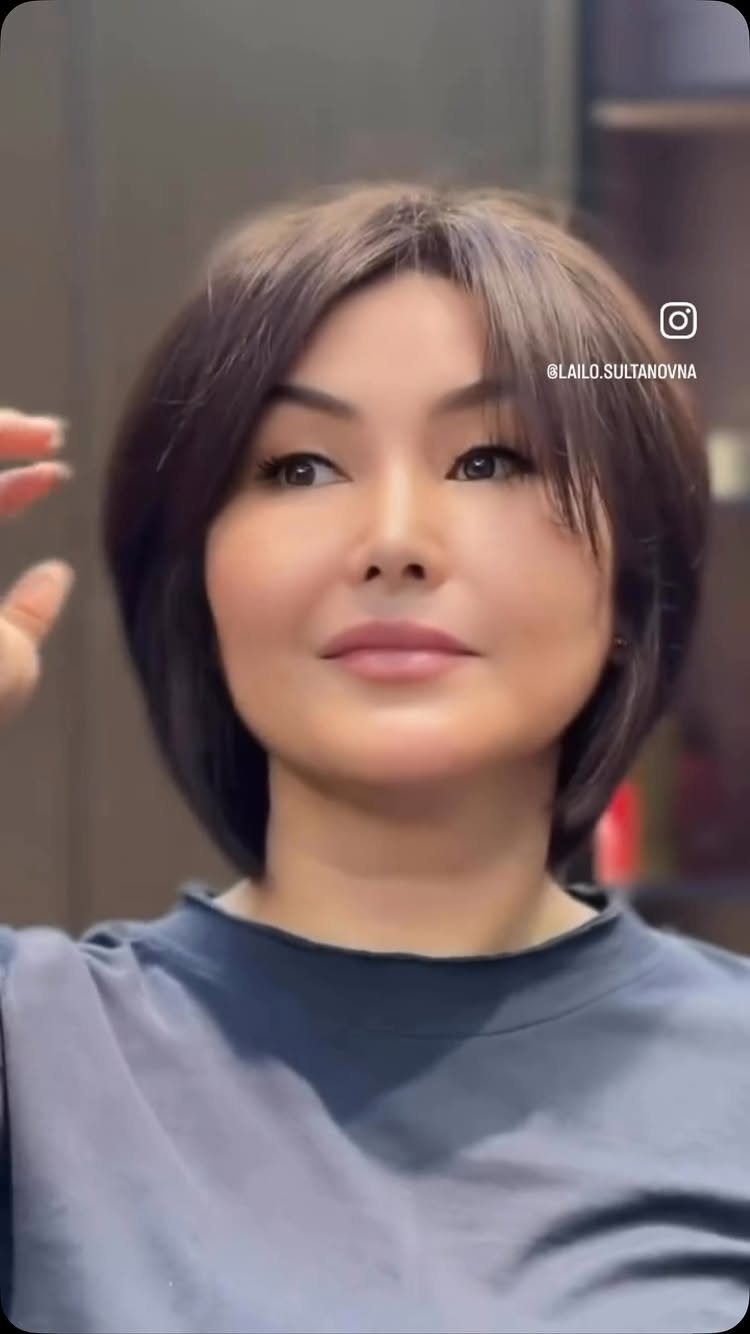
Cut on an angle, this bob sits shorter at the back and longer toward the front, with wispy bangs that blur the forehead line. The angle adds lift at the crown and jaw.
I like it best straight, where the diagonal edge reads clearly, though curls give it more body.
Ask for wispy, thinned ends instead of a blunt finish. Trims keep the angle from rounding off as it grows.
18. Long Shiny Hair
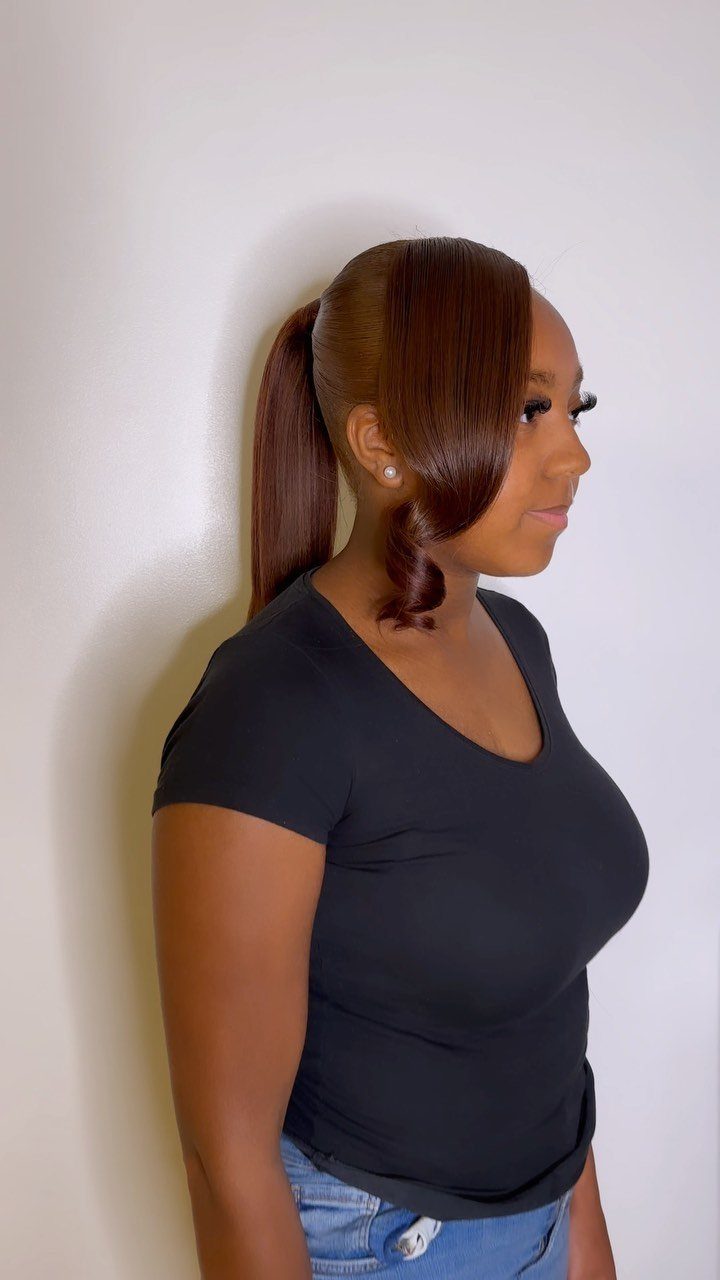
Smooth, glossy length is what makes a sleek high ponytail look expensive. A curled piece at the front keeps it from feeling stiff.
Blow-dry the hair straight with a paddle brush, then add a few drops of shine serum on the lengths before pulling it up.
Curl just the front section with an iron. Healthy ends matter most for this style, since shine shows every split end.
19. Invisible Layers
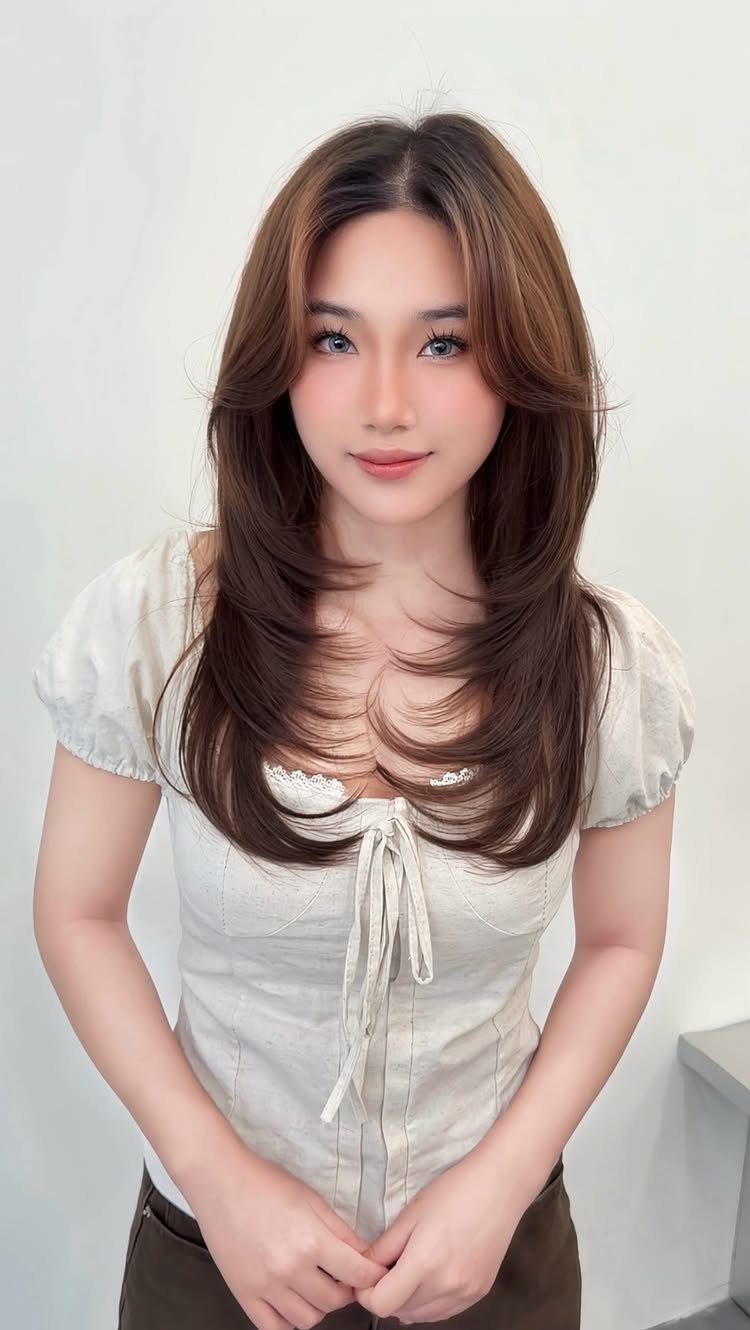
Blended layers cut so softly that no line shows give long hair body without a visible step. The length stays, and the ends keep a full, even look.
Ask your stylist for layers that melt into each other rather than chopped sections, and say you want volume without obvious separation.
Chestnut brown is a good base for invisible layers because the soft, hidden movement catches light in the mid-tones instead of disappearing. Regular trims keep the blend from turning heavy at the ends.
20. Tapered Sides and Back
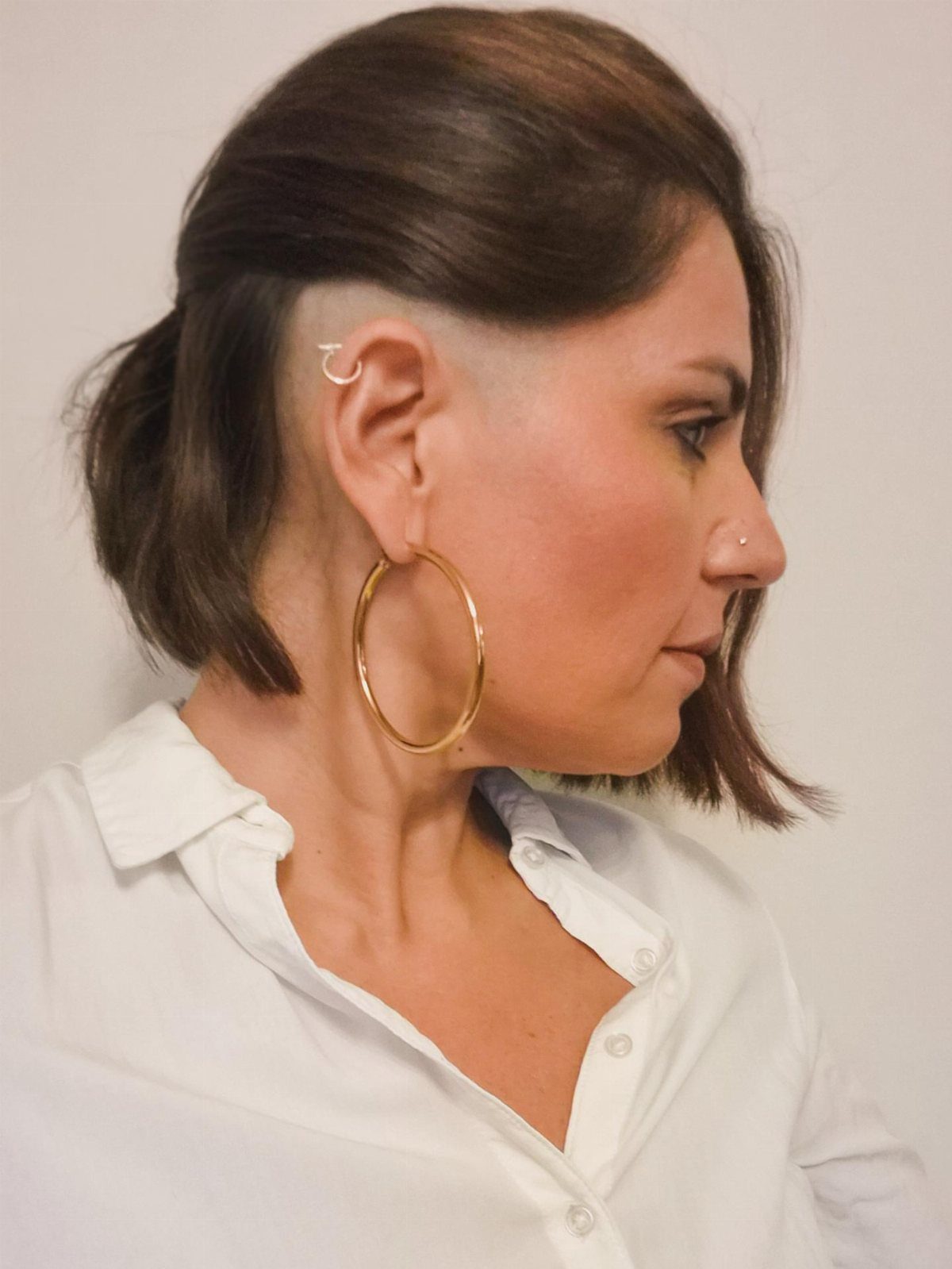
Short on top and tapered close at the sides and back, this cut leaves the profile clean and the nape neat.
On dark brown hair the gradation from short sides to longer top is easiest to see, so ask your stylist to blend it smoothly with no visible line.
Ask for the taper to fade gradually rather than stop at a hard line, and decide how much length you want left on top.
Short tapers lose their shape quickly, so expect frequent trims. Styling is minimal, which is the reason I’d choose it.
21. Undercut Design
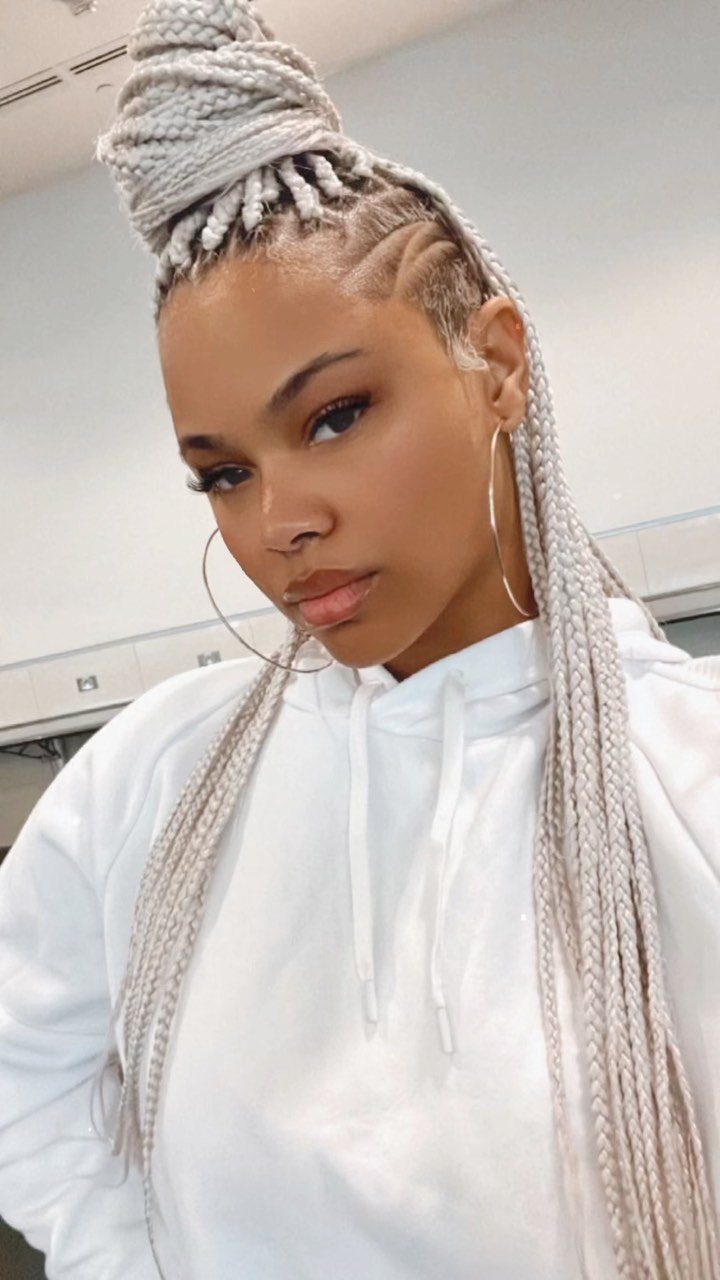
A shaved side design turns a small patch of the scalp into the focus, and pale braids on top make the geometry stand out. Contrast is what sells it.
Bring a clear reference to your barber and agree on the pattern before the clippers come out.
Shaved lines blur as the hair grows, so touch-ups are the real cost. Keeping the braids neat helps the design read sharply.
22. Silver Finger Waves
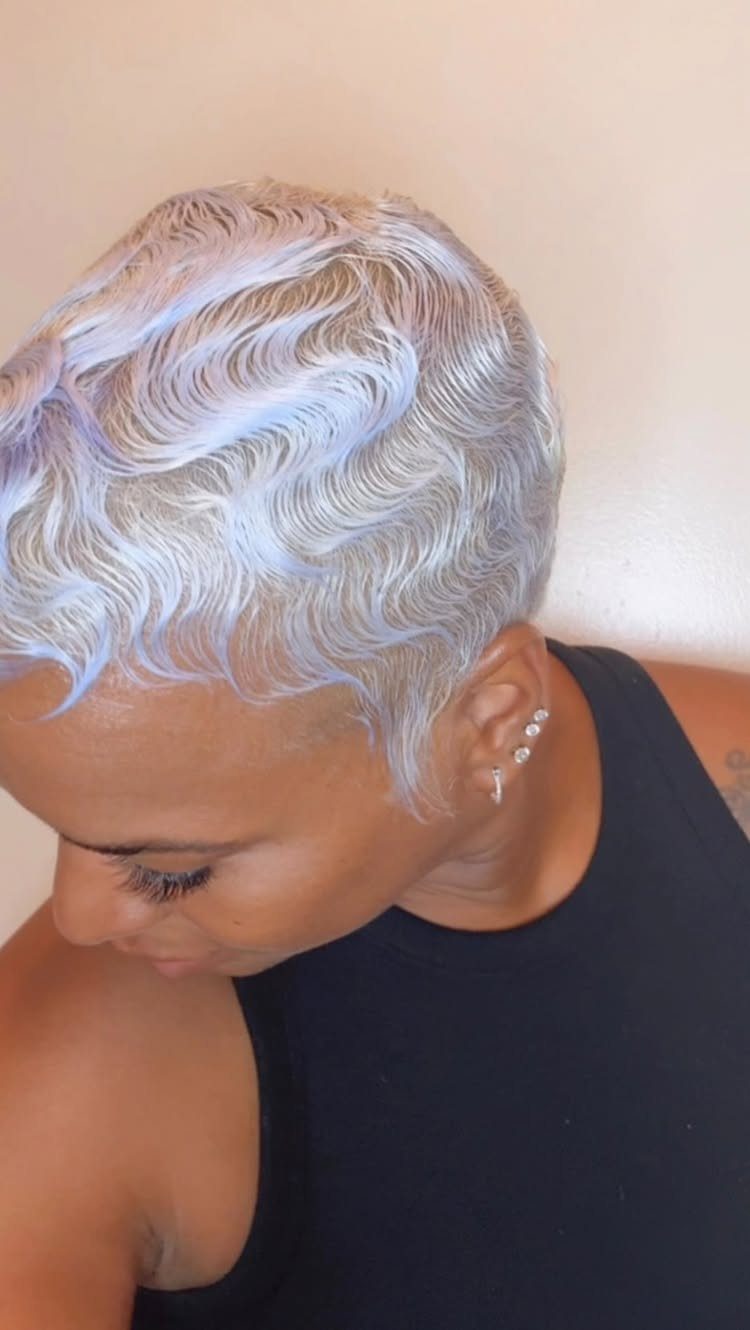
Finger waves are sculpted S-shaped ripples set close to the head, and in silver they look like polished metal. The short length keeps the pattern tidy.
Work a setting lotion or gel through damp hair, then shape each wave with your fingers and a comb, and let it dry fully.
A silver shade needs a salon, and color upkeep adds to the routine. I prefer the shine of a soft wave over a stiff, lacquered one.
23. Inverted Shaped Curls
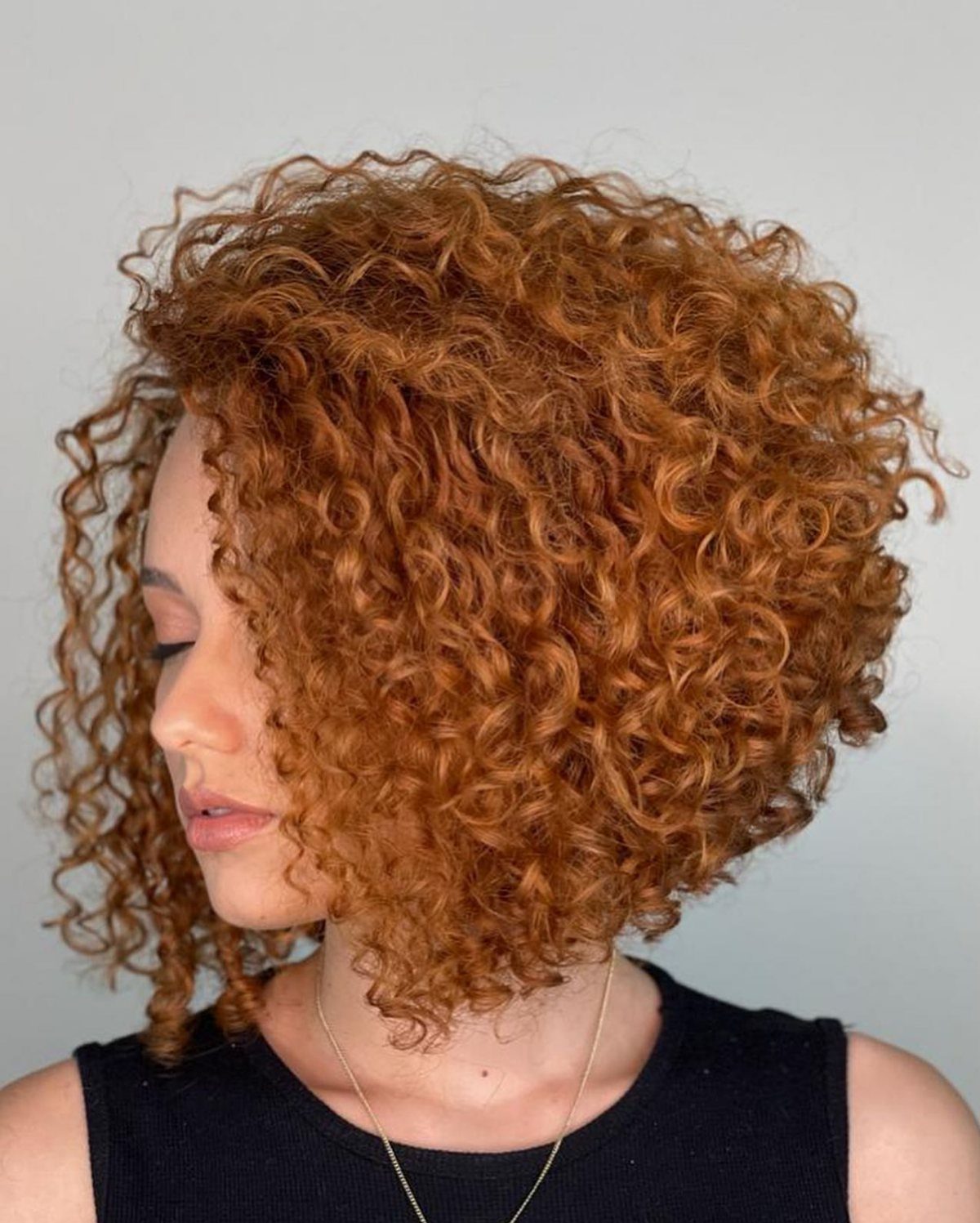
An inverted cut keeps curls shorter at the nape and longer toward the front, so the chin-length shape rounds out and tapers. Copper-red color makes each curl easy to see.
Ask your stylist to cut it while the curls are dry or in their natural pattern, so the shape matches how you wear it.
Wash-and-go works, or you can set the curls for a more defined finish. Red tones fade faster than most, so use color-safe care.
24. Wolf Cut
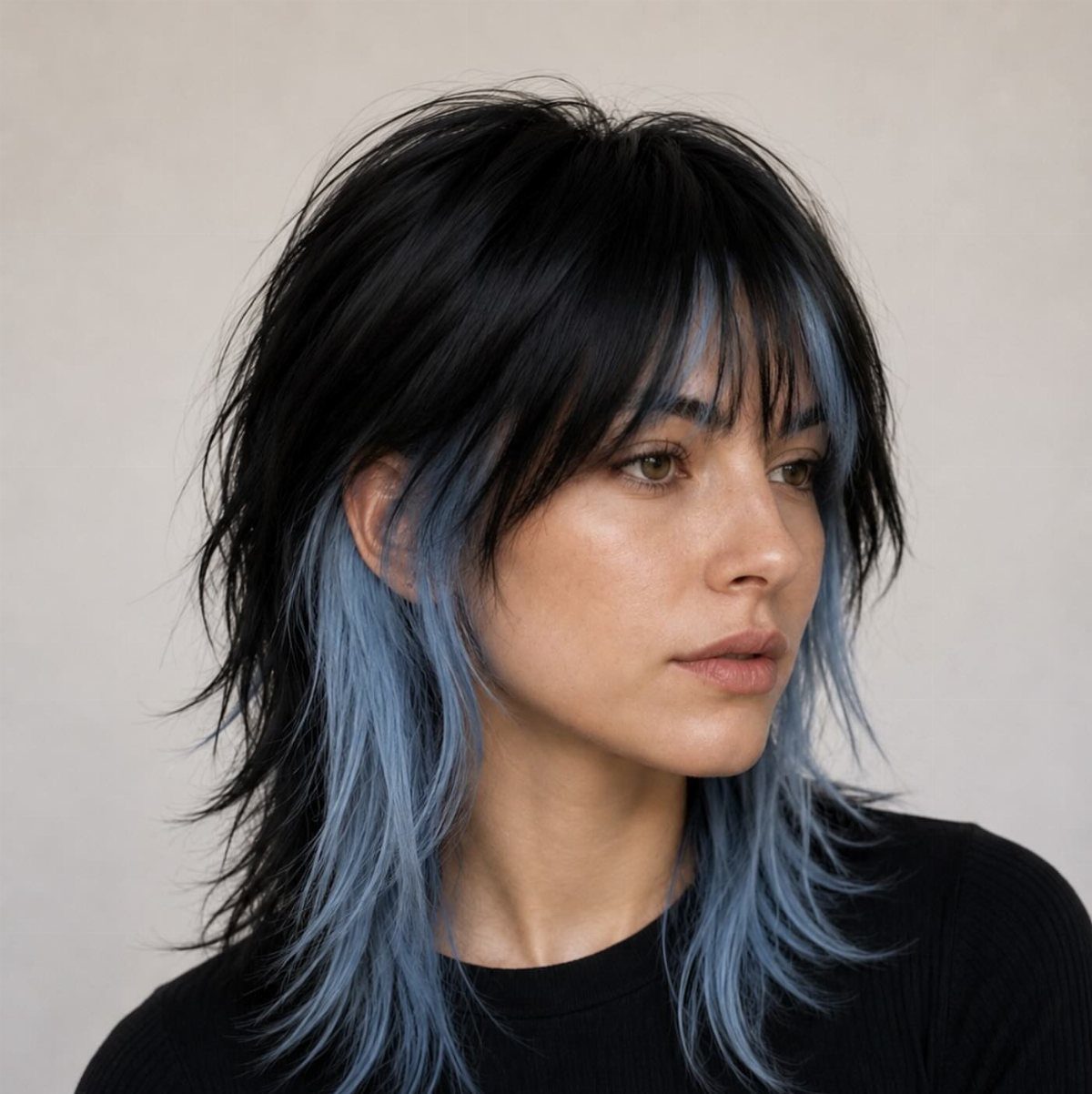
A wolf cut blends the shag’s choppy layers with the mullet’s shorter top and longer back.
Ask for heavy layering through the crown and a textured, uneven finish, and style it with a texturizing spray and your fingers.
The shape suits anyone who likes a lived-in look. Fantasy color takes upkeep, so expect regular salon visits.
25. Face-Framing Curls
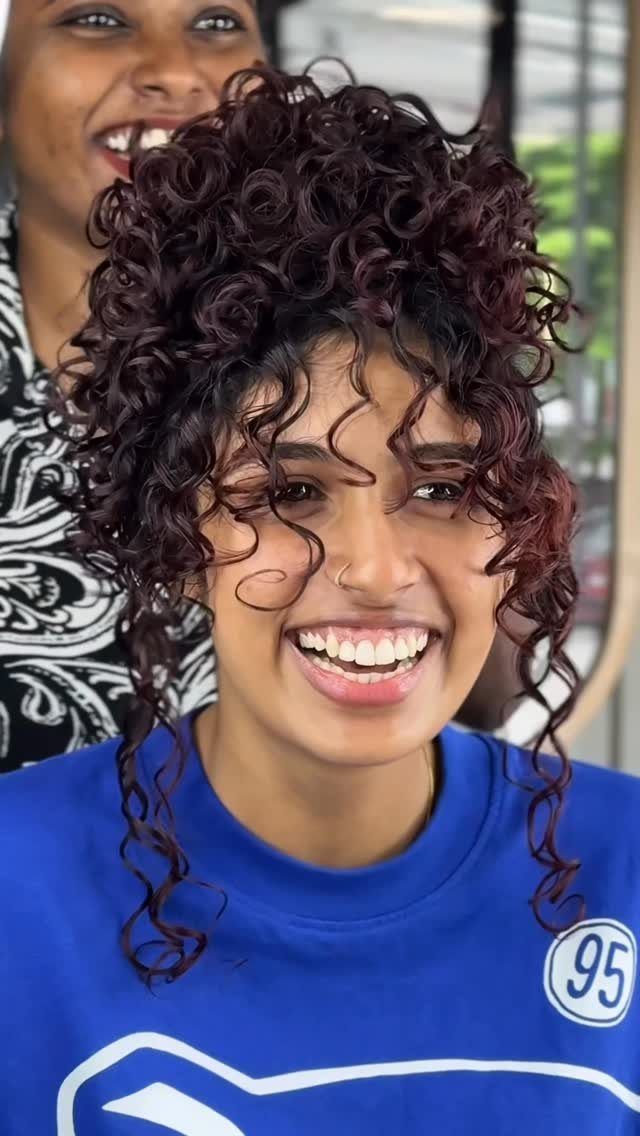
Dark burgundy curls that bounce at cheek level push attention toward the cheekbones, and a smile does the rest. Shorter pieces around the face matter most here.
Dry-cutting the front curls lets your stylist see exactly how much each one springs up, so the length you ask for is the length you get. Burgundy fades quickly, so I’d keep a color-safe shampoo on hand.
26. Fringe Bangs
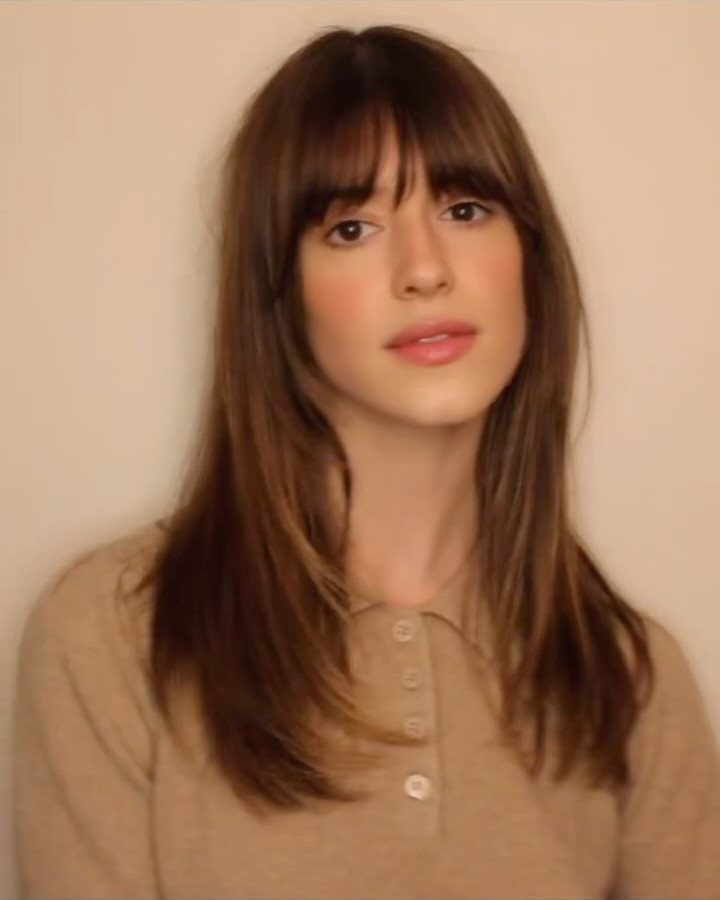
A short fringe sitting over long layers gives you 2 lengths to play with: a brow-skimming edge up front and soft movement below. Brown hair shows the shape well.
Ask for the fringe to be cut shorter and wispy, then blended into the layers so it doesn’t look stuck on.
Bangs this short grow into your eyes fast, so plan on quick trims between full cuts. I like it air-dried with a little cream through the lengths.
27. Caramel Ribbons
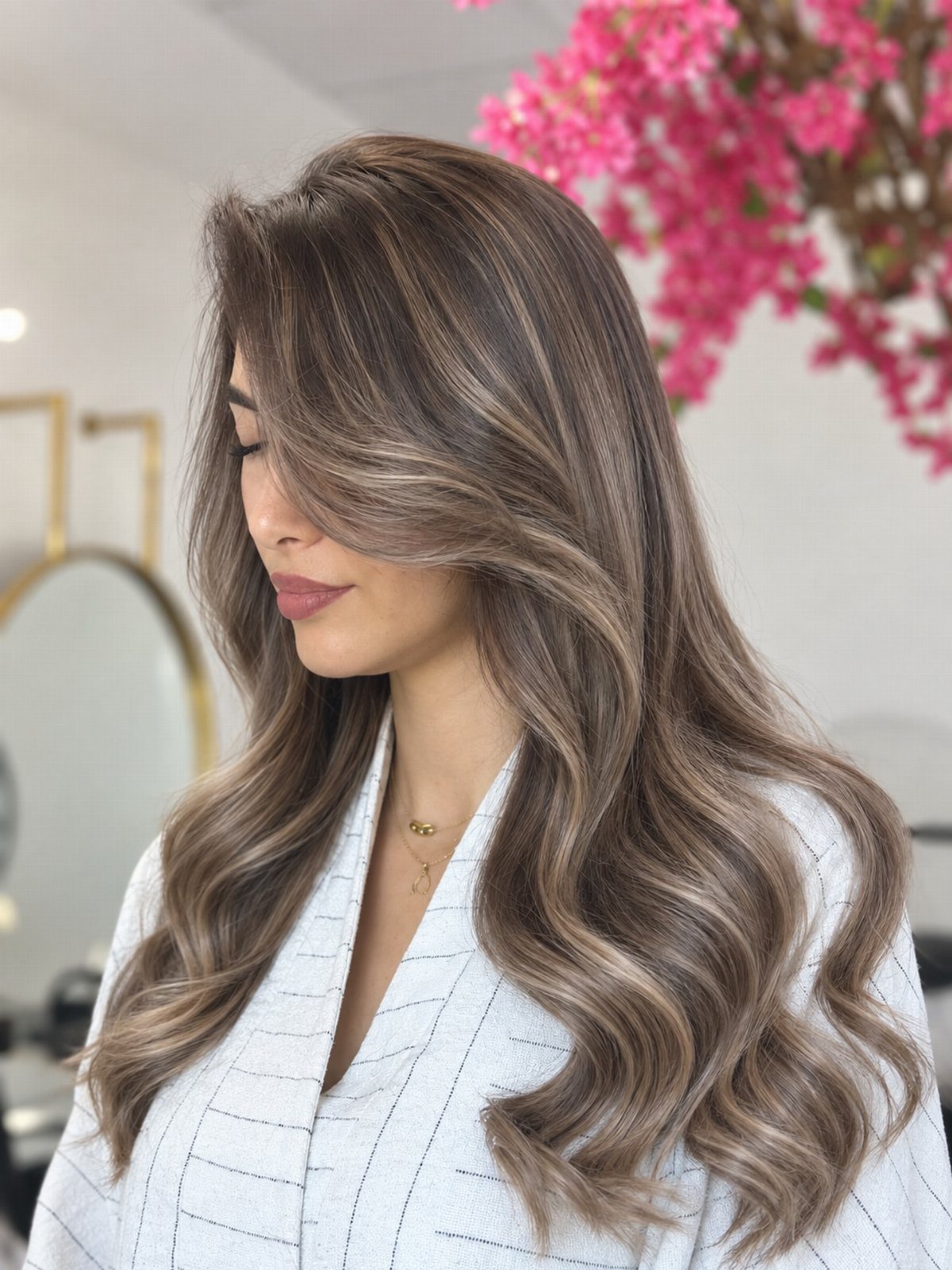
Caramel ribbons are thin, warm streaks woven through brunette waves, and they read golden-brown instead of red. That keeps the color soft while adding depth along every wave.
Tell your colorist you want caramel, not copper, and bring a photo so the warmth matches.
Keep the base brunette so the ribbons stand out. They grow out gently, since the roots stay dark.
28. Deep Auburn
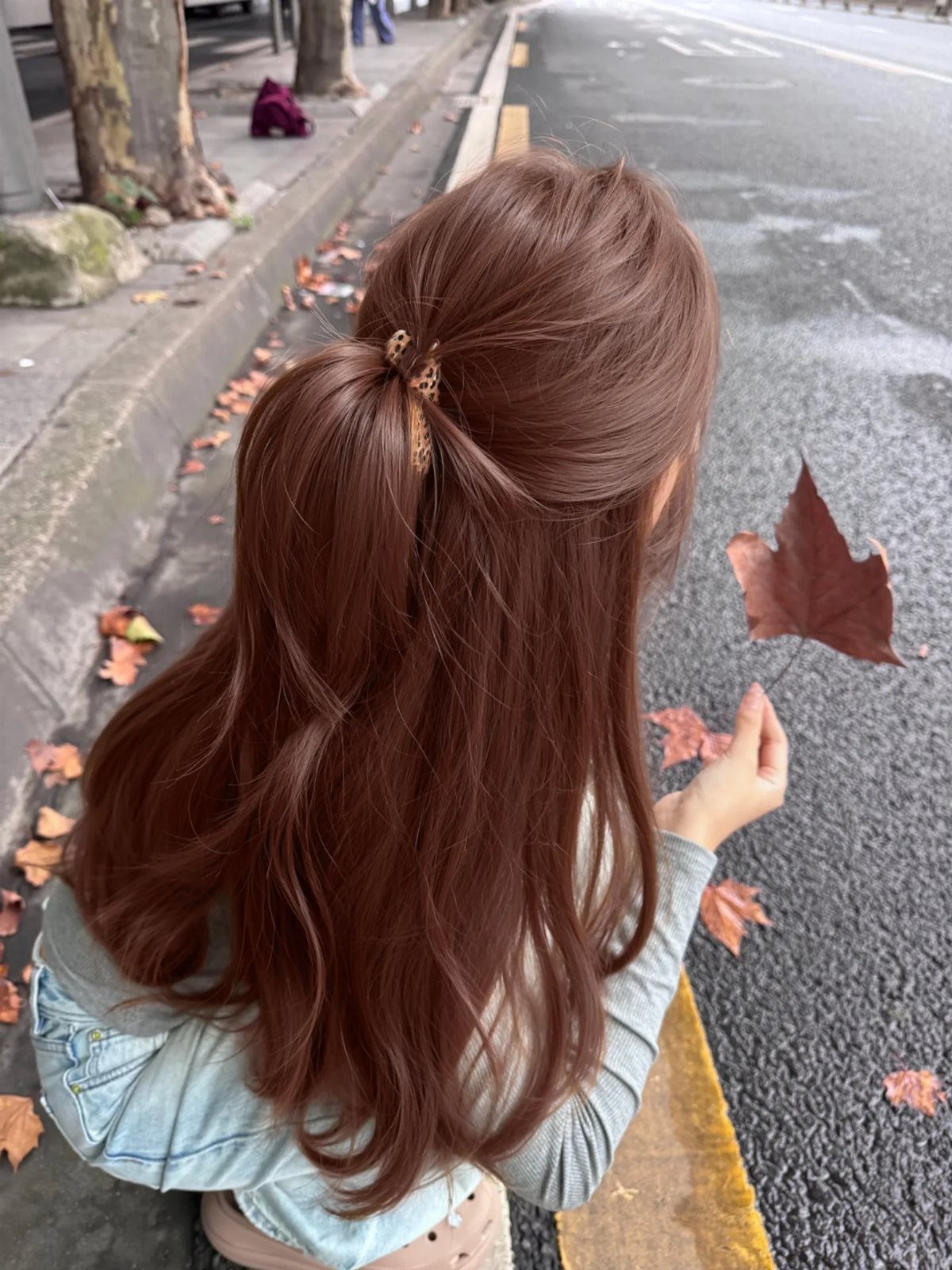
Deep auburn is a red with brown underneath, which makes it an easier first step into red hair than a bright copper. In loose waves it shifts from dark to warm as the light changes.
For auburn, ask for a shade with depth at the roots, then clip the front sections back to wear it half-up.
Red pigment slips out of the hair faster than most shades, which makes cool rinses and a color-safe shampoo worth the small habit change.
29. Toffee Chocolate Balayage
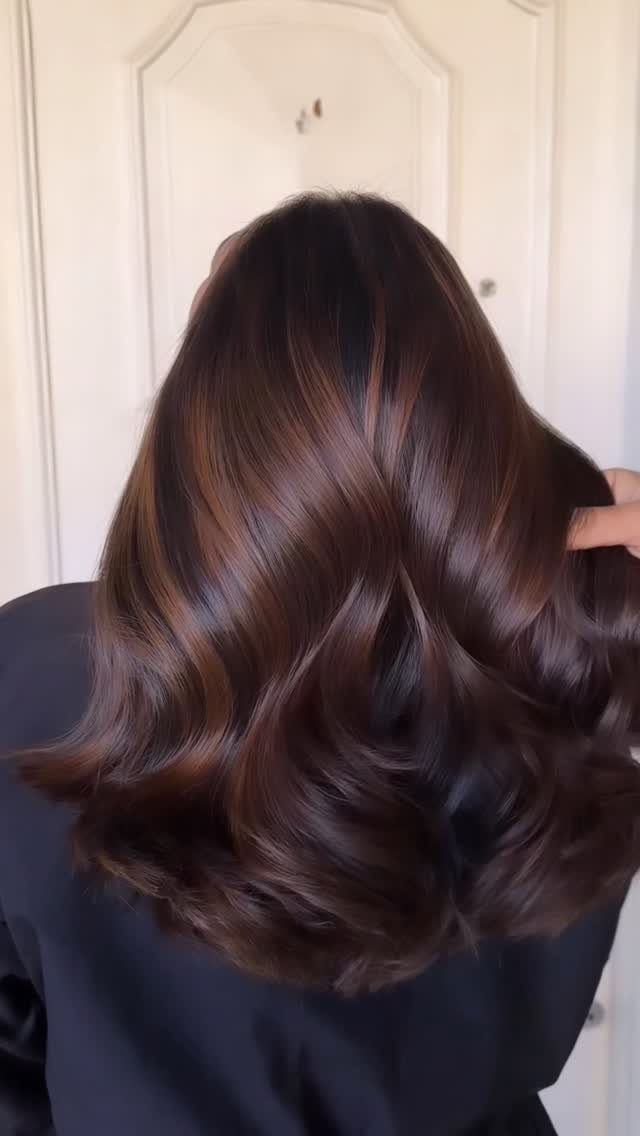
Toffee and chocolate is balayage at its most wearable: caramel tones painted by hand over a brunette base, so the root stays natural. On glossy waves, the warm pieces catch the light without looking striped.
Tell your colorist you want the brightness kept soft, with chocolate left at the roots.
Because there’s no hard regrowth line, you can stretch the time between salon visits. A gloss treatment keeps the shine up.
30. Teddy Graham Bronde
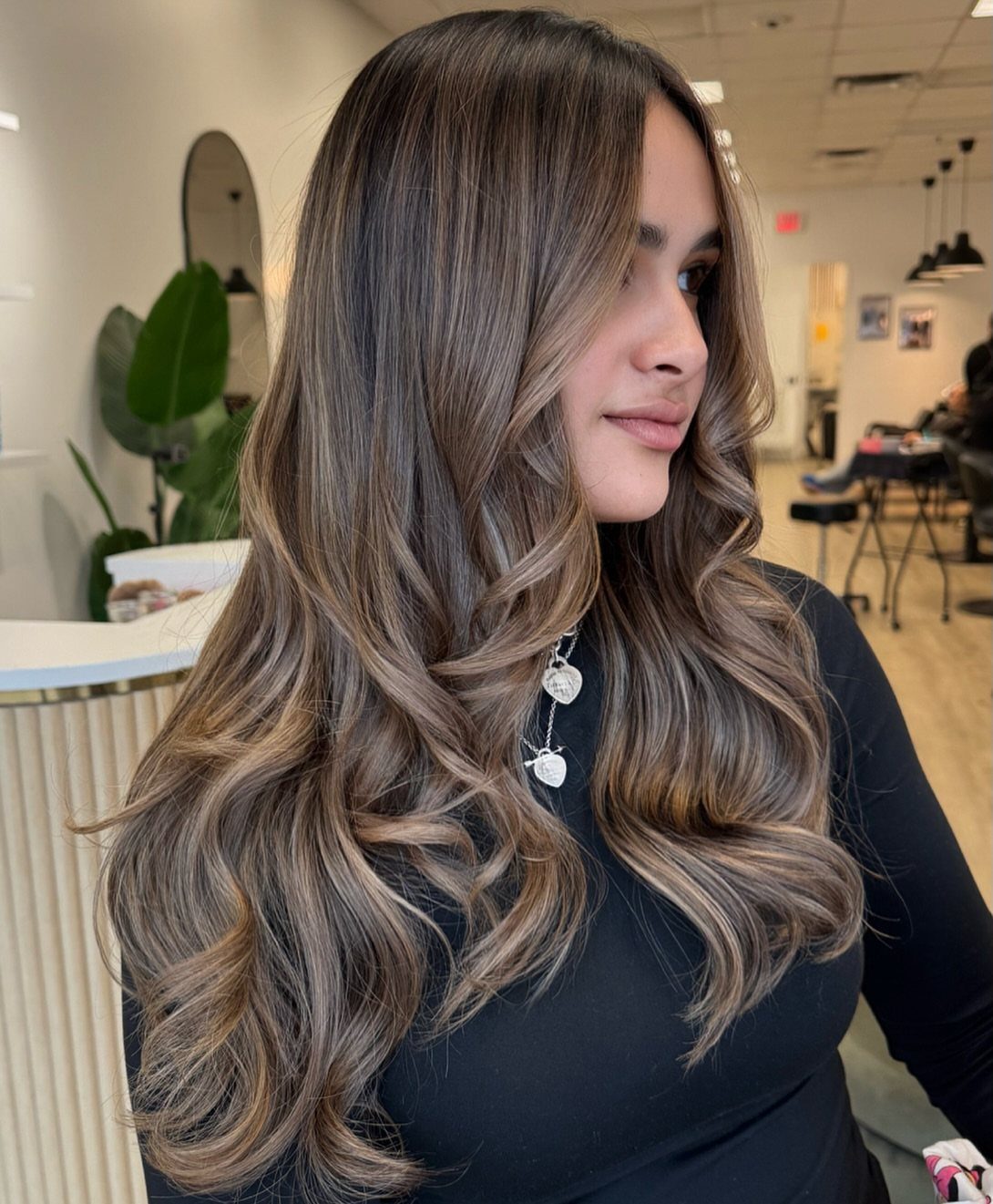
Teddy Graham bronde lands between blonde and brunette, with beige-blonde pieces placed to brighten the face and the ends. Soft curls spread that brightness evenly.
Ask your colorist to put the highlights where the light hits, around the face and through the midlengths, and to keep the base brown.
Name the tone you want: beige, not yellow. I like it best curled loosely, so the 2 shades mix.
31. Green Color-Blocked Curls
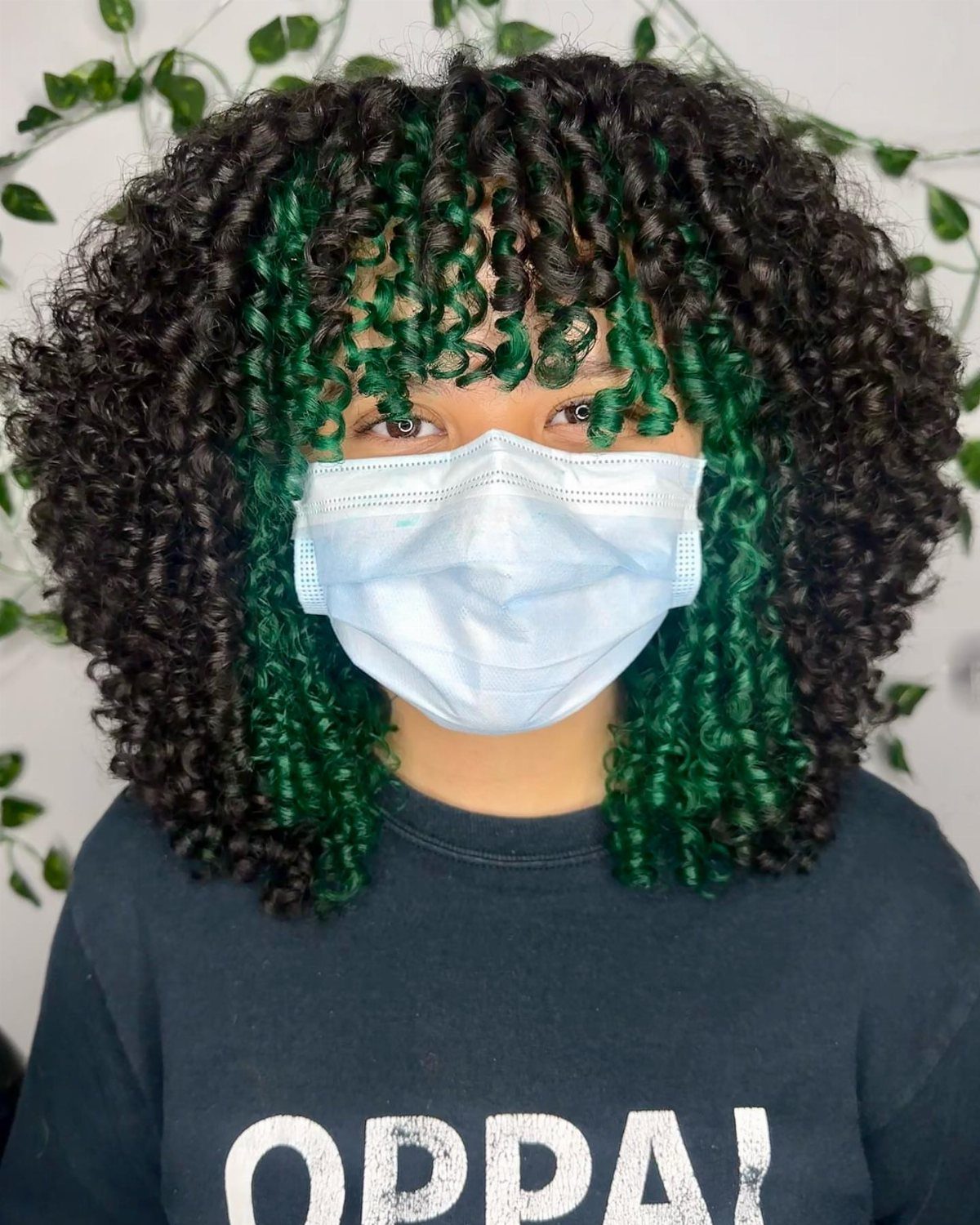
Tight shoulder-length curls split into black and vivid green sections make the color the shape, not just a shade. Each curl reads as its own block.
Colorists read "green and black" a dozen ways, so a saved photo plus the words "hard-edged sections, no melting" gets you the crisp contrast you want.
I’d keep the green in chunky pieces so it stays easy to see across the curl pattern. Decide beforehand which sections go green, since placement changes the whole look.
32. Lime Green Curly Mohawk
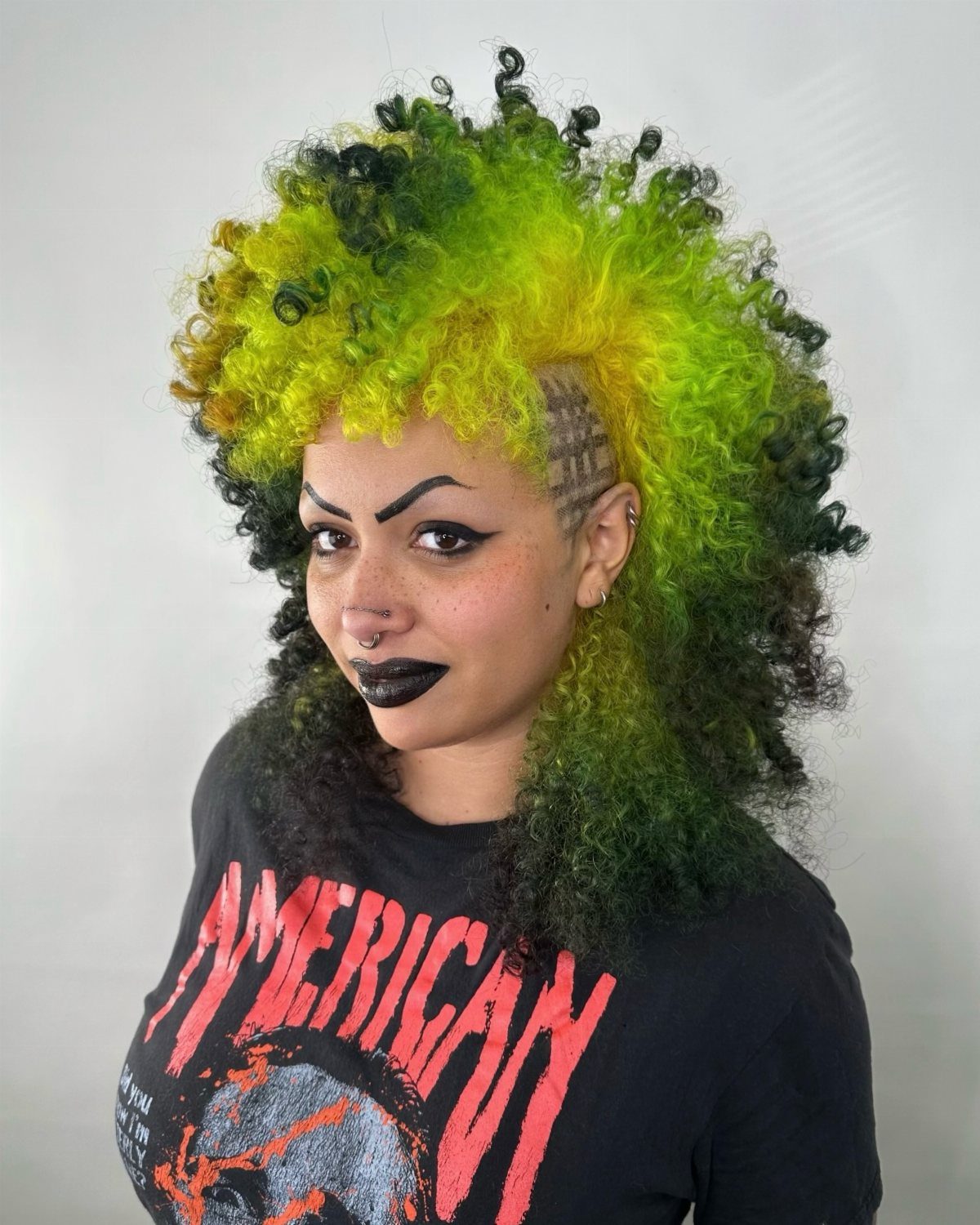
Lime green and yellow curls standing up on top, with shaved sides and thin lines cut into them, make a mohawk that is all about contrast. The dark sides push the bright color forward.
Agree on the width of the curly strip and the pattern of the shaved lines with your barber before any clippers come out.
I’d keep the line work simple so the color stays the star. Shaved lines need regular touch-ups to stay crisp.
33. Silver Face-Framing Streaks
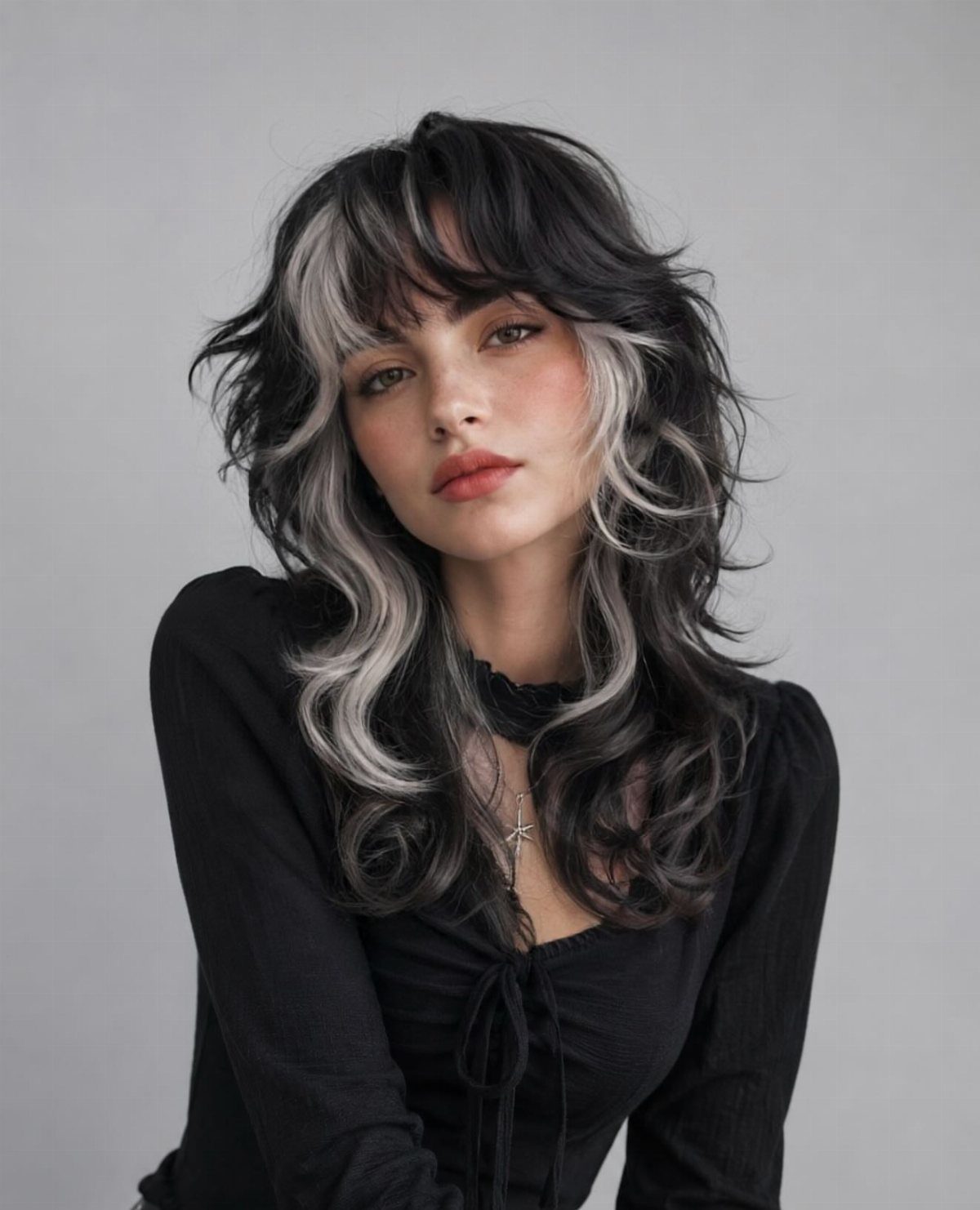
Silver-gray streaks against long black layers draw the eye straight to the face. The wispy bangs soften the contrast.
Tell your colorist to place the silver only in the face-framing pieces and leave the rest black.
A few streaks look sharper than many, and that’s the version I’d pick. Ask for the layers and bangs to be cut first so the color follows the shape.
34. Magenta Patterned Buzz Cut
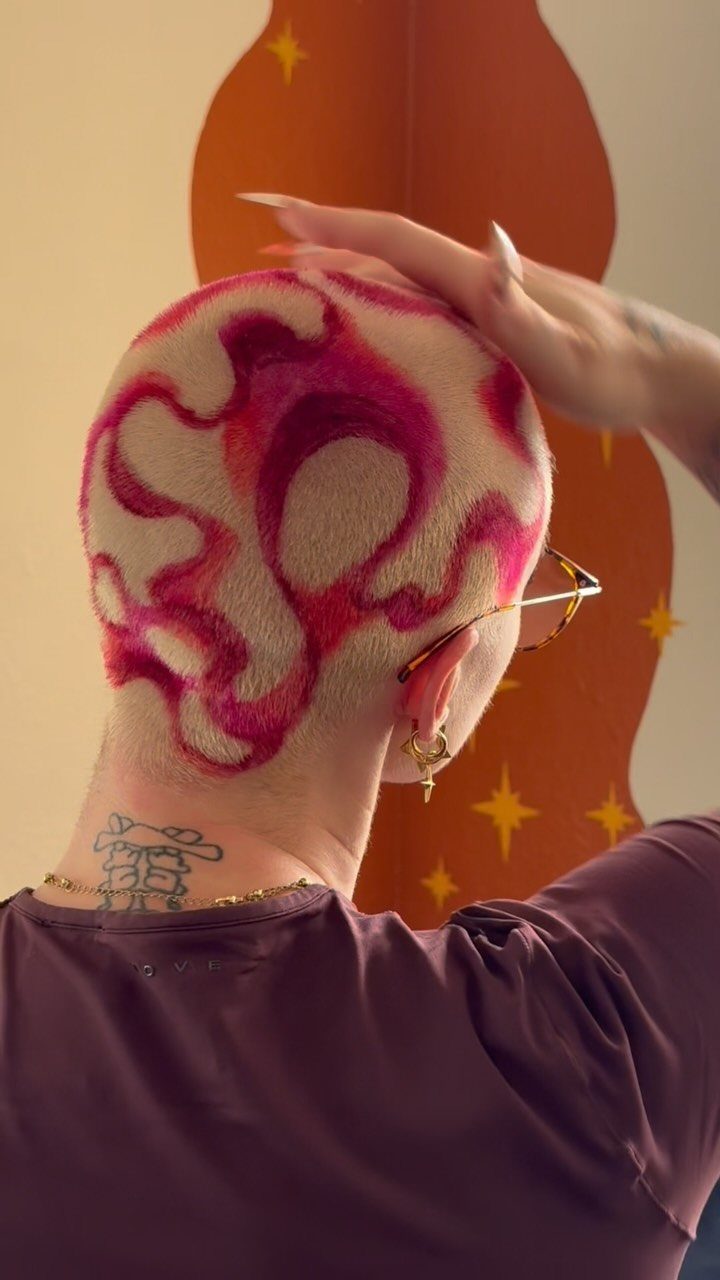
Very short bleached hair is a blank canvas, and magenta swirls with shaved patterns turn it into a design. The pale base makes the pink read loud.
Settle the exact shape with your barber before the clippers come out, ideally with a sketch or a clear photo in hand, since a shaved line can’t be undone.
Coloring and shaving take two skills, so ask whether one stylist does both.
I like bold swirls over thin, fussy lines. Shaved patterns blur as the hair grows, so book trims to keep them sharp.
35. Red Cornrows with Extensions
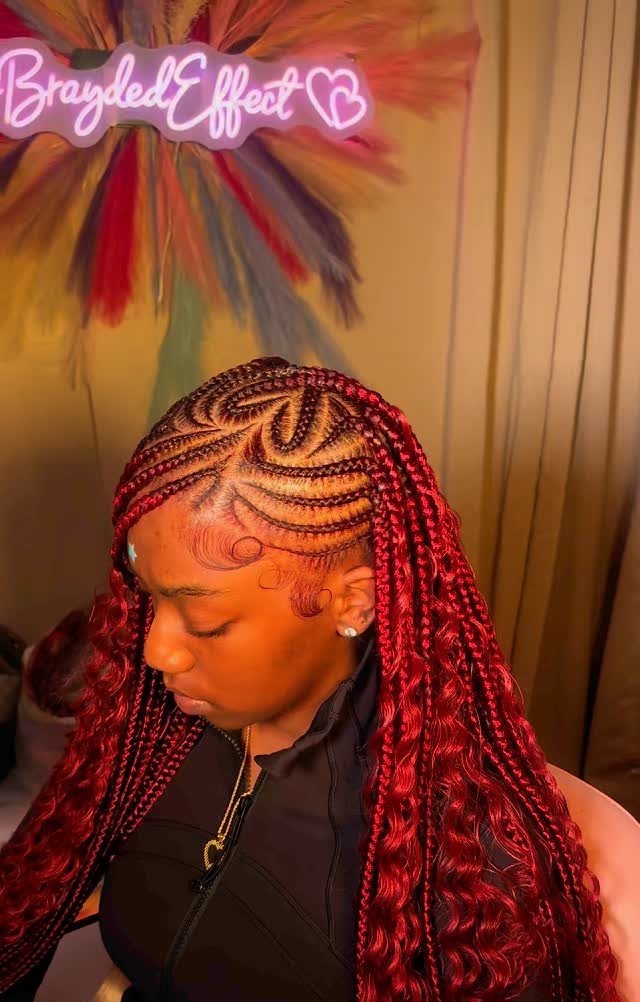
Curved cornrows in black and red that run into long red extensions make the scalp work part of the style. The curves are what set it apart from straight-back rows.
Show your braider a photo and name the pattern you want, then pick extensions in the same red as the braids so the two blend.
I’d choose curves with clear parting lines, since the detail shows best that way. Check that the black and red sections are placed before braiding starts.
36. Burgundy Crown Braids
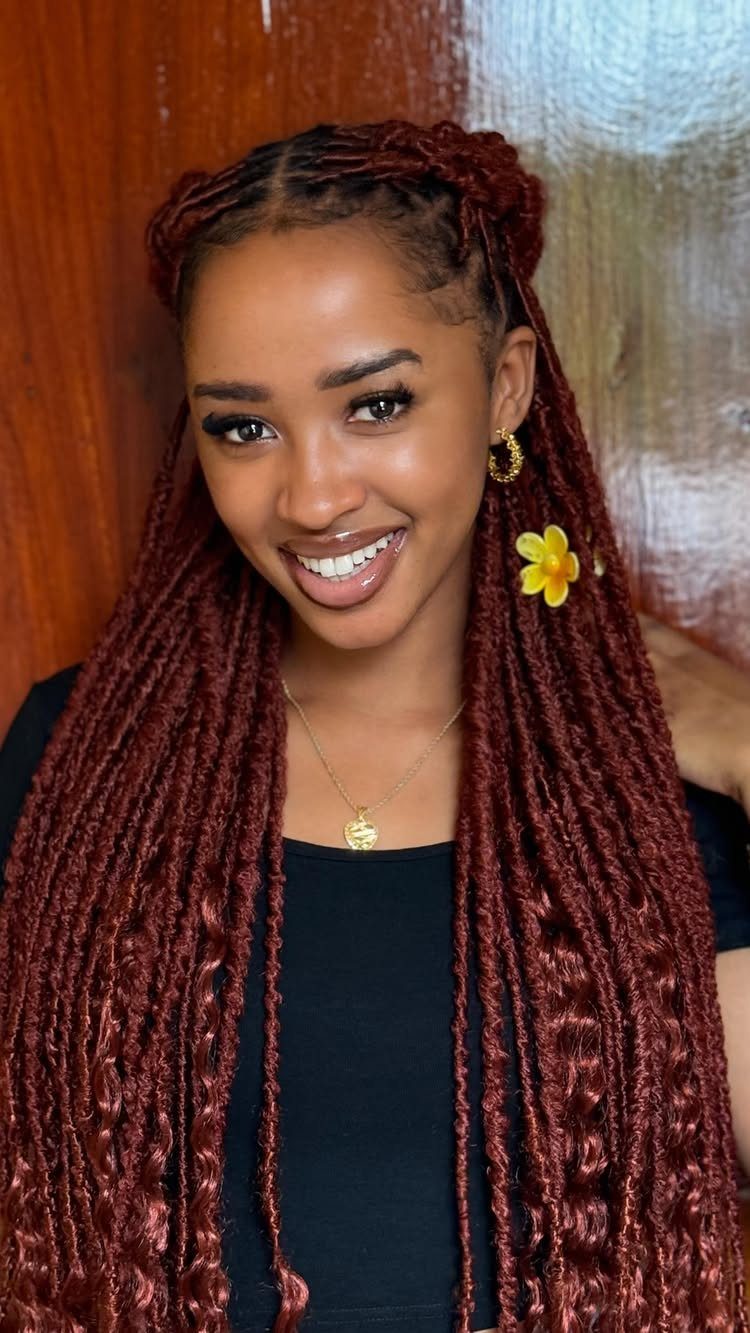
A braided crown circling the head, with long burgundy-red braids hanging below it, puts the finish at the top and the length at the back. The deep red looks rich against the pattern.
Ask your braider to build the crown first and let the long braids continue from it.
I prefer burgundy with a red tint over a flat brown-red, because the color shows in every braid. Bring a photo so the crown sits where you want it.
37. Copper Braids with Curls
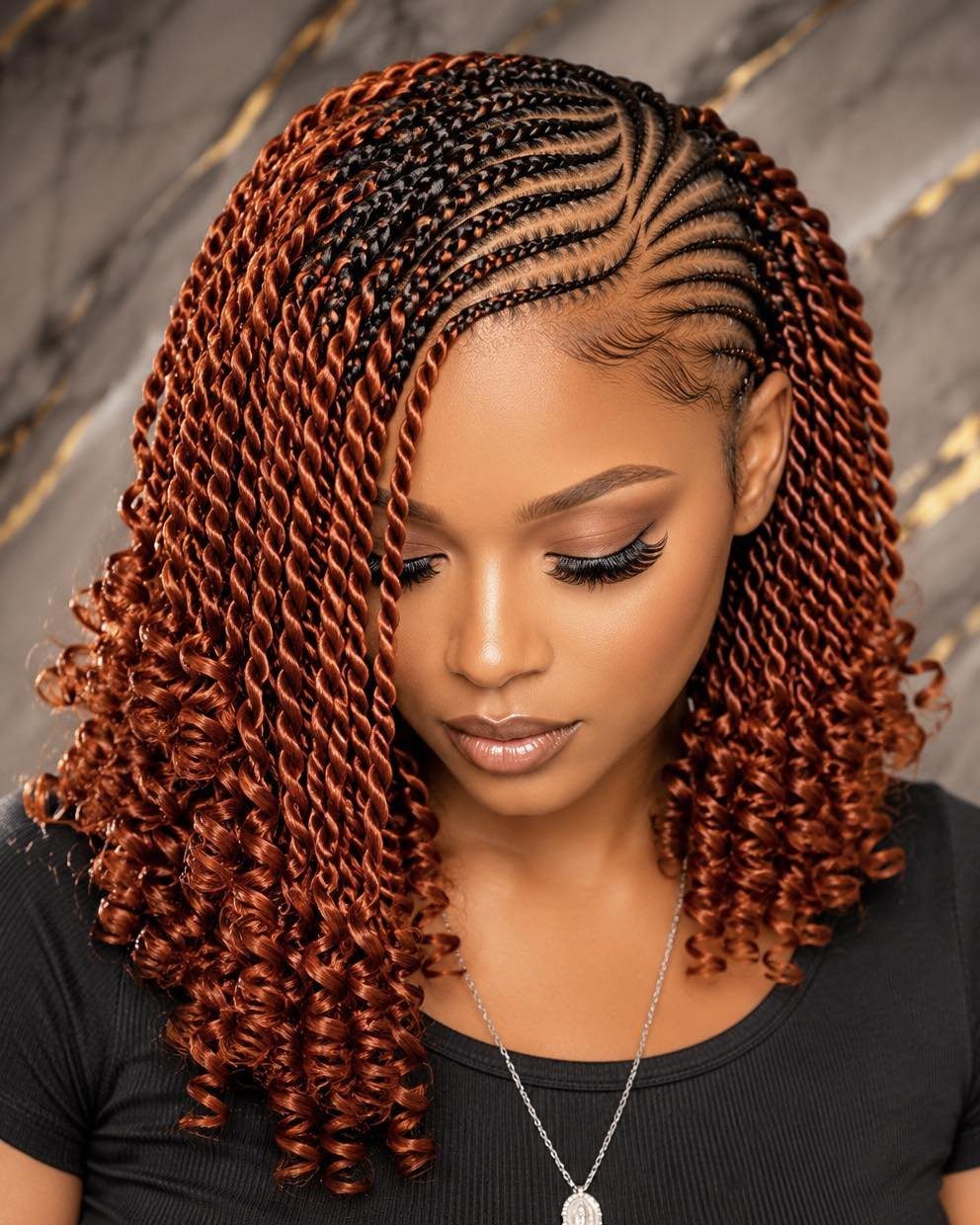
Long copper-brown braids with crisp scalp partings end in loose curls, so the style has a structured top and a soft finish. The warm color stays rich against both.
Show your braider a photo and ask for clean, even partings, since the neat lines are what make the style look finished. Curled ends are a detail I’d choose over blunt ones; they add movement without changing the braids themselves.
38. Gem-Clip Curls
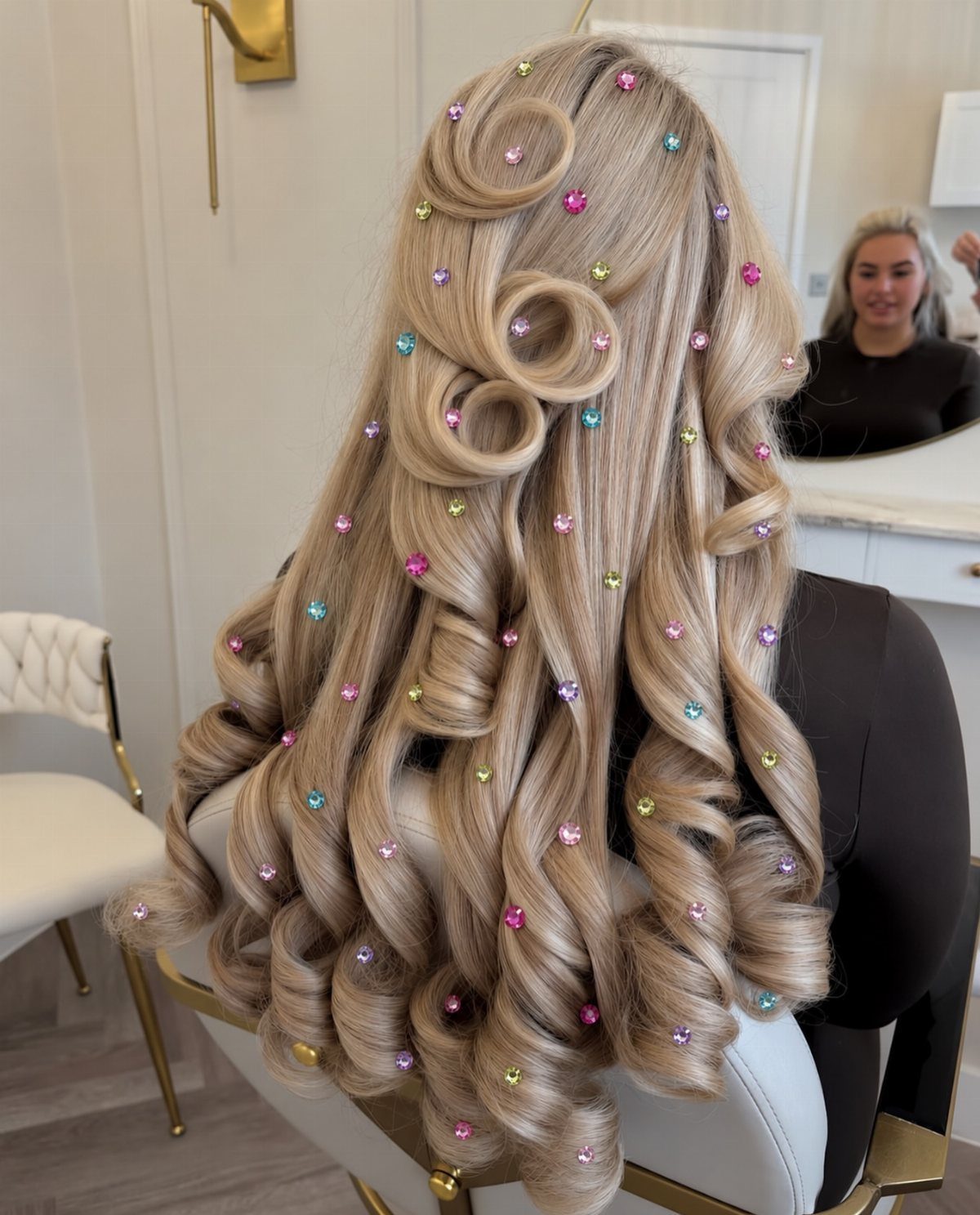
Large, smooth blonde curls with small gem clips pinned through them turn plain waves into something dressed up. The clips bring the color, so the hair can stay simple.
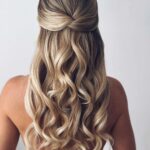
Curl in big sections with a wide barrel, then brush gently so the curls loosen into one soft shape.
Pin the clips after styling, spacing them unevenly for a scattered look. I’d keep them small so the curls remain the focus.
39. Golden Curl Updo
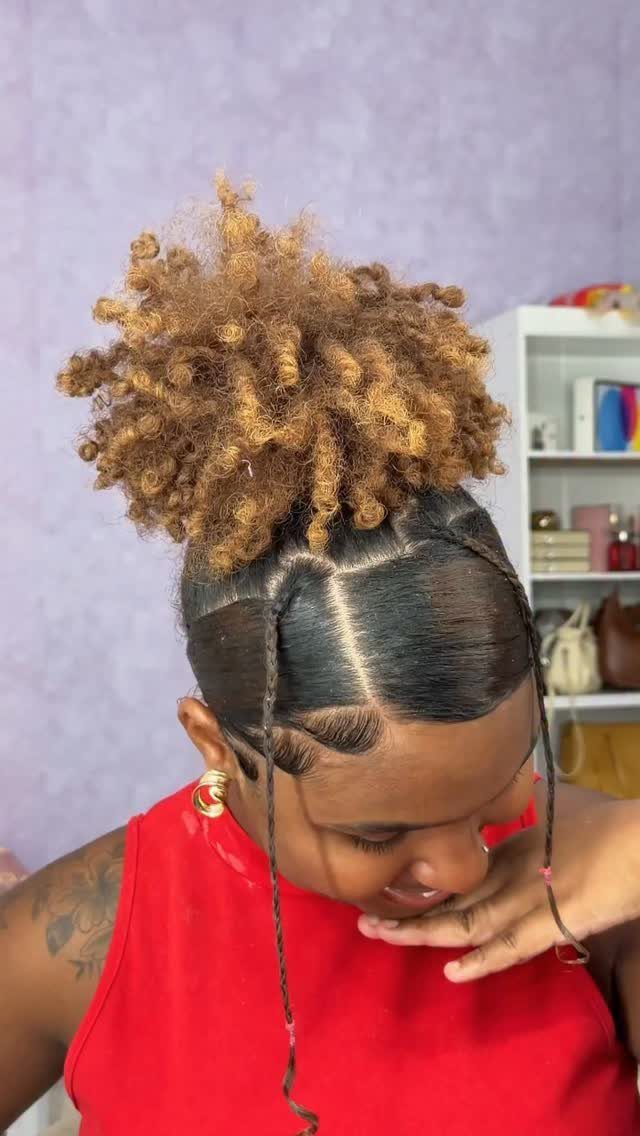
Golden-brown curls piled high over sleek dark hair, with a center part and thin braids woven in, make a two-tone updo where the curls do all the talking. The smooth hair underneath keeps the shape clean.
Ask your stylist to place the golden color only in the curled section so the contrast stays sharp.
Part the hair down the center first, then gather the curls up and secure them. I like the thin braids as the finishing detail.
Choosing Color for Complexion
Start with your skin’s undertone, since it narrows the base shade faster than anything else. Warm undertones usually read yellow, peachy or golden, while cool ones read pink or blue.
Warm skin tends to look best in caramel, honey brown or chestnut. Cool skin does well with ash brown, espresso or a dark brown base.
Neutral undertones sit in the middle and have the most room to move. For that skin tone, a deep chestnut or a cherry-tinted brown flatters without much risk.
Your eye color and your natural base shade matter as well, so compare any swatch against both before you commit.
Consultation and Reference Photos
Words like "caramel" or "chocolate" mean different things to different people, so a photo says more than a description. Bring one, or a few, and let your colorist tell you how close your own hair can get.
Before any color goes on, I’d ask these questions:
- What will maintenance look like?
- How will it grow out?
- How often will I need to come in to keep it fresh?
- How will it fade?
- What should home care involve?
The answers can change your pick. A color that looks effortless in a reference photo can mean extra hours in the chair and more visits to keep it looking that way, so ask your stylist for a time estimate first.
Frequently Asked Questions
What color hair makes an older woman look younger?
For a fresher look, I’d begin with a medium-to-dark brown that has a little warmth running through it and some dimension, rather than one flat shade. It brightens the face, blends gray, and doesn’t demand much upkeep.
Chocolate brown gives a youthful glow, and you can add subtle caramel accents or go bolder with espresso. Golden or honey-toned brown suits skin with a warm undertone, and an ash or beige brown flatters cooler skin.
What are the hair cut and color trends for 2026?
Color is where the direction is clearest, and it leans polished and quiet: cool deep brunettes, bronde blends that mix highlights and lowlights, and low-contrast roots.
Colorists expect fewer fashion shades and more cool-to-neutral tones, since the beigey golden look just had its big moment. Cherry cola, a deep red with a brown base, is gaining ground this year, and copper keeps its spot too.
How do I find the right hairstyle and color for me?
Pick the shade by your skin undertone, eye color, and natural hair color, then match the cut to your texture. A blunt bob makes fine hair look thicker, while thick hair does better with internal layers that take out weight.
Ask honestly about upkeep too: how the color grows out, how fast it fades, and what you’ll do at home between visits. Bring reference photos to your stylist so you both picture the same result.
What hair color should I dye my hair?
Let your undertone decide. Warm undertones (yellow, peachy, or golden) look best in warm brunettes like caramel or chestnut, cool undertones (pink or blue) suit ash brown or espresso, and neutral undertones can wear rich chestnut or dark cherry brown.
Before you commit, ask your colorist what maintenance will look like and how the color will grow out.