The range runs from the Buzzcut Pixie, cropped close all over, to the Wolf Cut, with the Choppy Bob, the Short Choppy Shag and the Choppy Modern Mullet sitting in between.
Upkeep should drive the choice: a Precise Nape Pixie, an Undercut Pixie or a Microbang Pixie loses its clean outline within a few weeks, while a Tousled Choppy Bob or Choppy Layered Pixie shrugs off a late appointment and only looks a little messier.
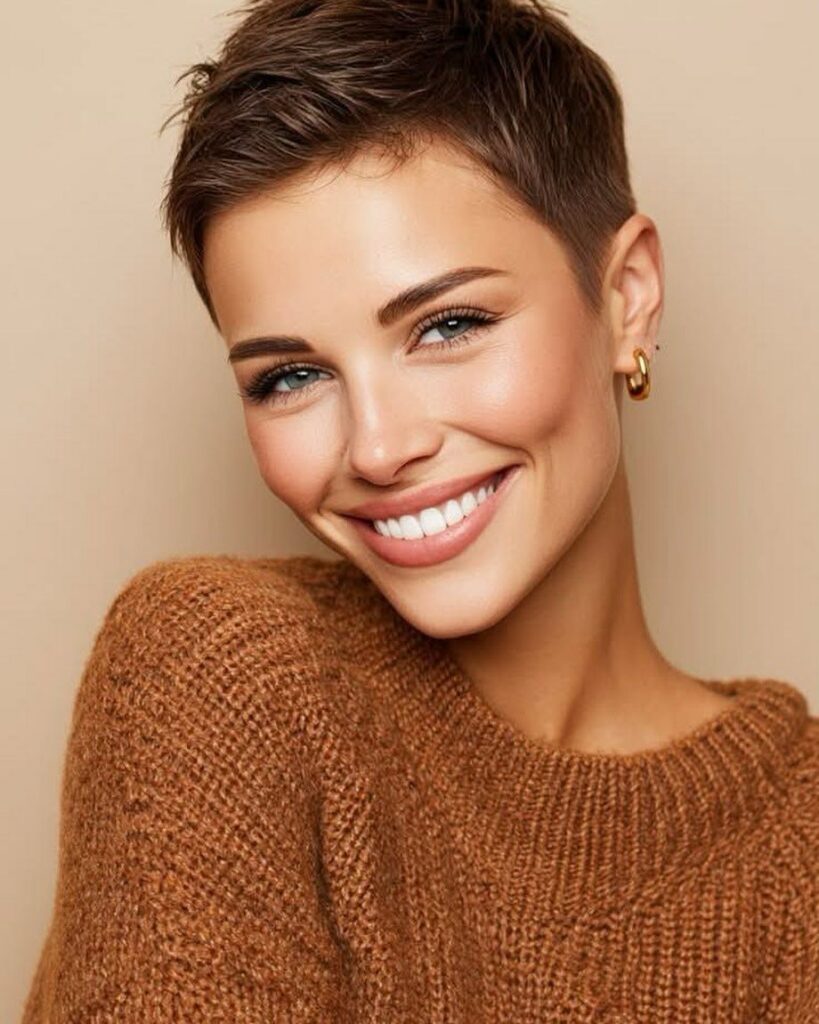
1. Textured Pixie
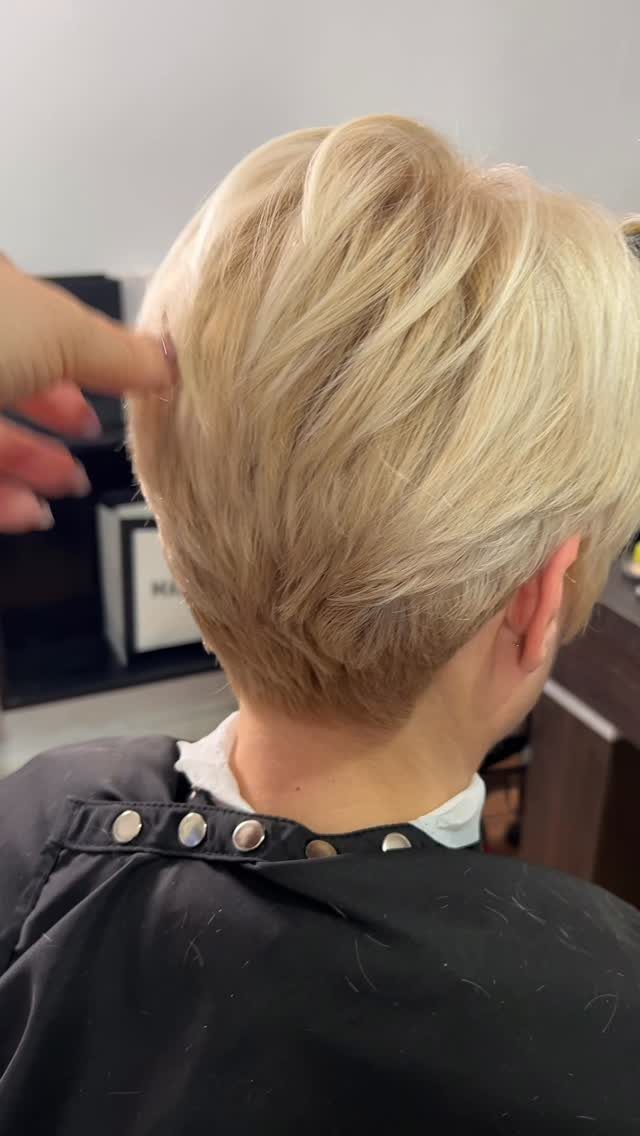
Choppy layers cut through a short crop give a pixie its movement, and a tapered nape keeps the back neat while the top stays piecey.
Blonde shows those separated layers well, since the lighter ends catch the shape of each section.
Ask your stylist for point-cut or razored layers on top with a tapered back. Texture paste or cream, worked through with fingertips, defines the pieces and gives the cut its choppy edge.
2. Textured Haircut
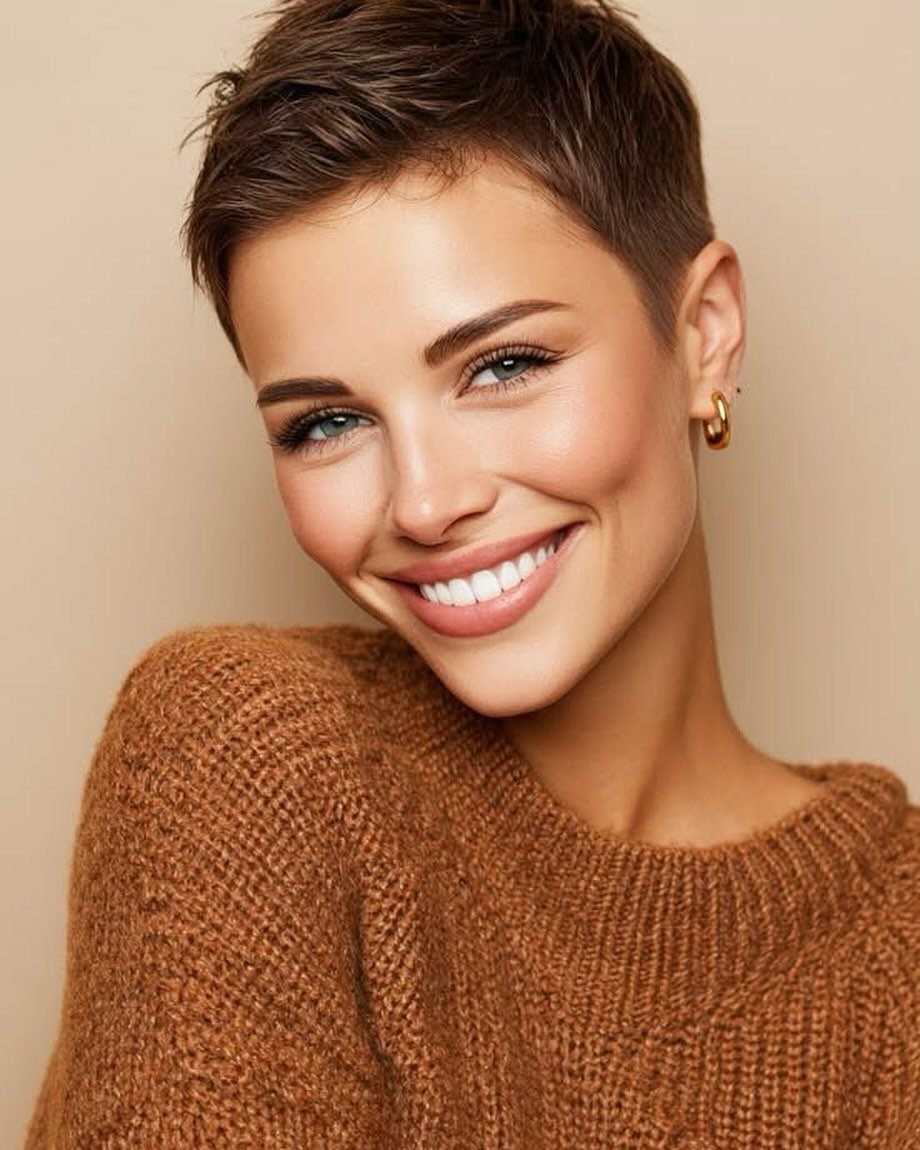
Swept pieces with real volume are what make this pixie work. The top is cut long enough to push sideways, and each section holds its own shape instead of lying flat against the head.
Brown hair gives this cut a lot of definition, so the pieces read clearly even without much product. A dab of styling cream, a quick blow-dry with your fingers pushing the hair to one side, and you’re done.
Bring a photo and ask for "defined, swept layers" so the top isn’t cut too blunt.
3. Undercut Pixie
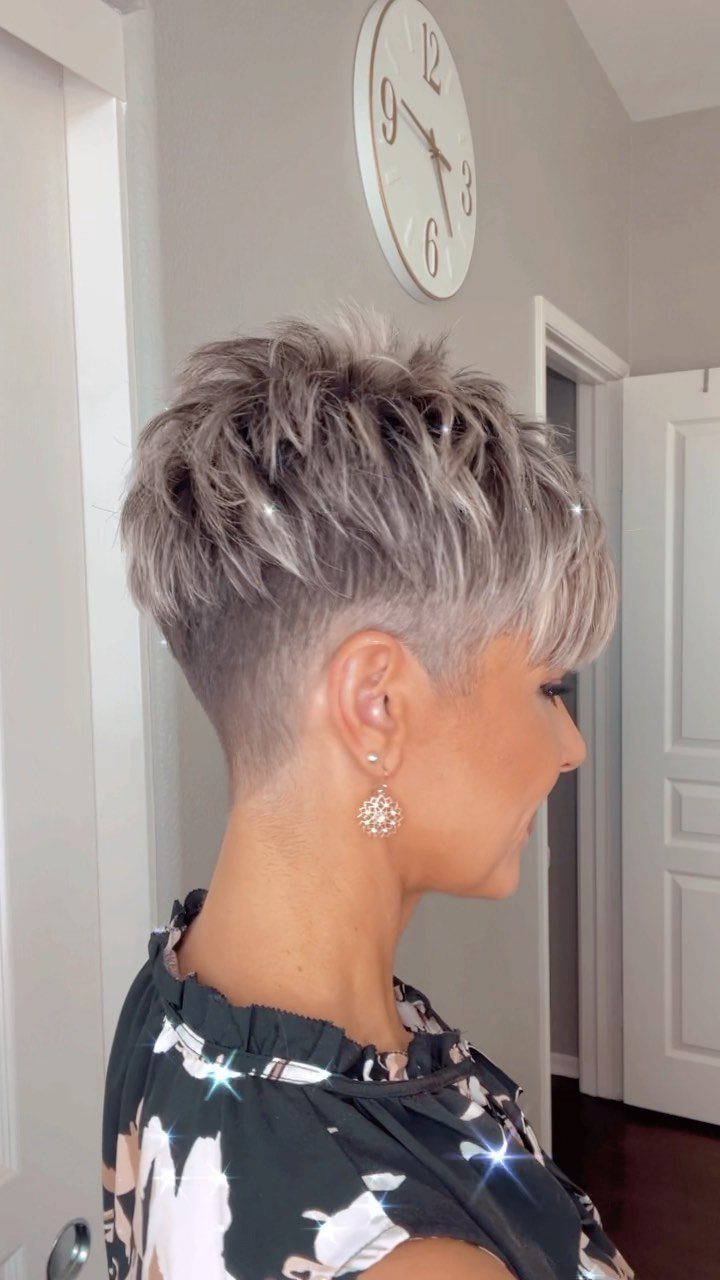
Closely cropped sides under a longer, tousled top give this pixie its contrast, and the shorter the undercut, the sharper the line between the 2 lengths. Silver-blonde looks especially striking against the buzzed shadow underneath.
The maker of this cut shared it with no product first, then styled, which is a useful test: ask your stylist whether it still looks good dry and unstyled before you commit. Expect regular trims to keep the sides crisp.
4. Choppy Bob with Bangs
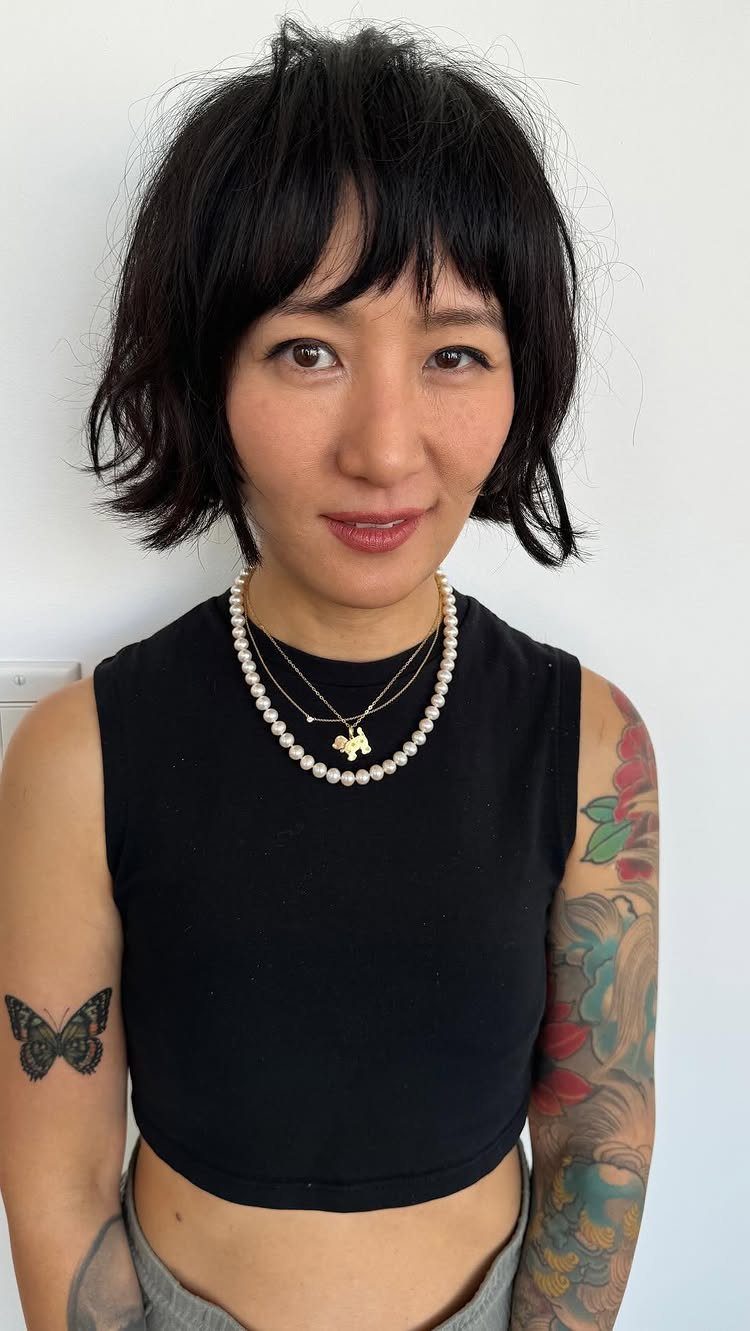
Bangs change a choppy bob more than any other add-on, and here they’re cut uneven so they blend with the ragged ends instead of sitting as a clean line. Black hair makes that unevenness easy to see.
If you want this, ask for the bangs to be texturized, not blunt.
Bangs grow out fast and need frequent touch-ups, which is the main cost of the look. I’d pick it for anyone who likes an edgier bob and doesn’t mind a quick trim between appointments.
5. Tousled Choppy Bob
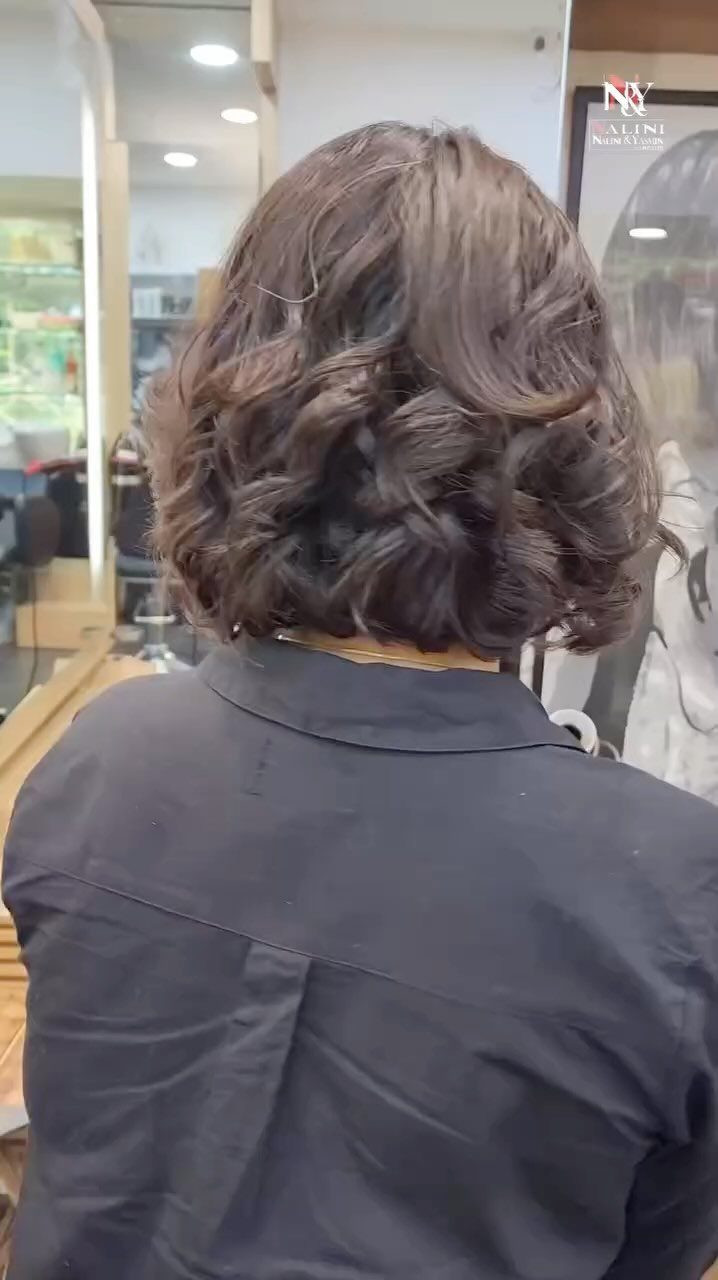
Loose waves and a messy finish are the whole idea here: a bob that looks slept-in on purpose. Seen from behind, the ends sit at different lengths, which keeps the shape from looking too tidy.
For the finish, rough-dry your hair, then twist a few sections around a curling iron or wand and shake it out with your fingers.
A texturizing spray adds grip. I like this on days when I’d rather not fuss, since mistakes just look like part of the style.
6. Tousled Pixie with Bangs
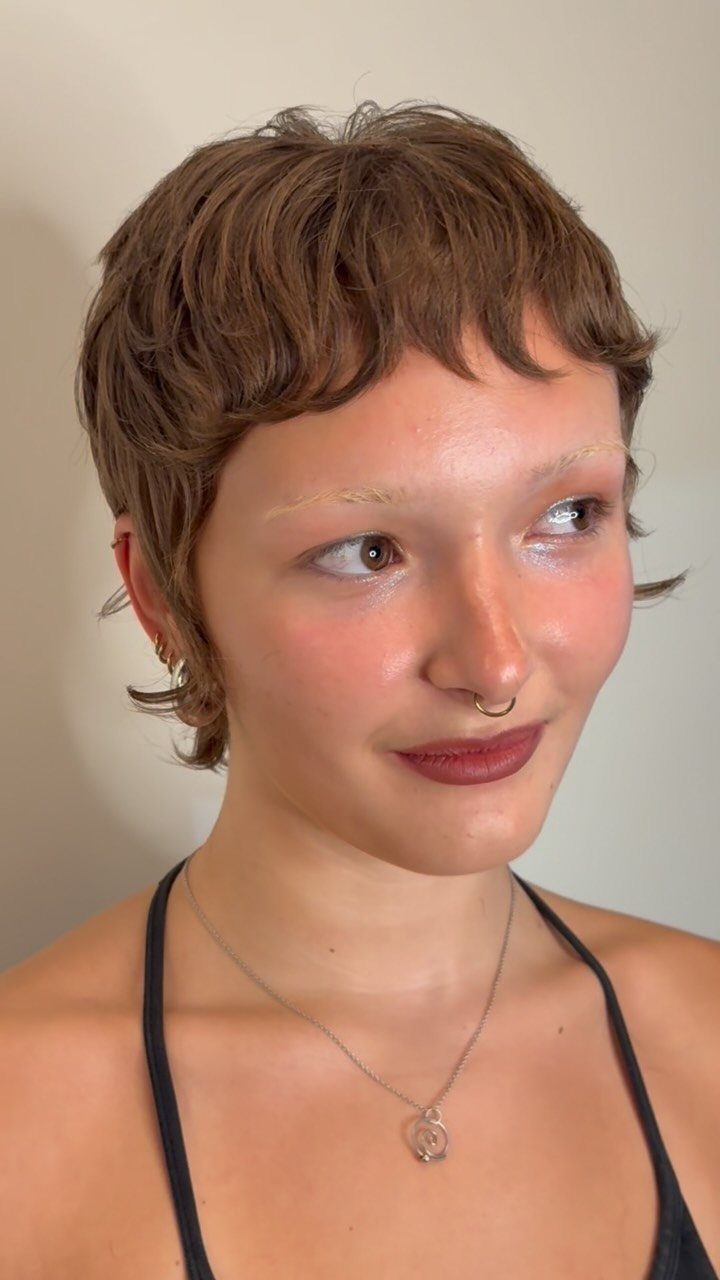
Bangs and sides that lie straight, paired with a tousled top, give this pixie a tidy frame around the face and a messy crown. That contrast keeps it from feeling either too neat or too wild.
Keep the sides and bangs smooth with a quick pass of a flat iron or a blow-dry, then rake a little paste through the top layers.
It suits anyone who wants a short cut with a softer front. Bangs mean trims every few weeks, so budget for that.
A hairstyle like Zoë Kravitz’s is low-fuss, but packs major impact. Go for choppy microbangs and keep it cropped all over.
7. Buzzcut Pixie
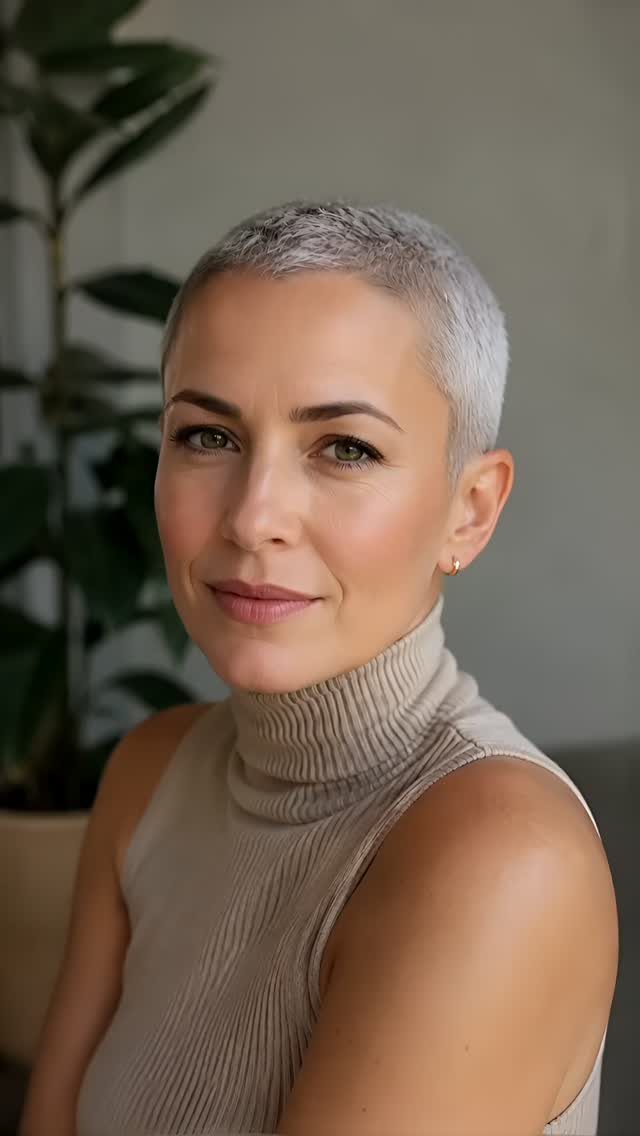
Clippers do nearly all the work in this pixie, which is cropped close all over so the silver reads as a soft, even shade. With so little length, the shape of the head and the features take over.
Bring a photo and name the clipper guard you want.
I’d start a little longer than you think, since you can always go shorter next visit and you can’t add length back. Expect frequent touch-ups to keep the outline clean.
8. Asymmetrical Pixie
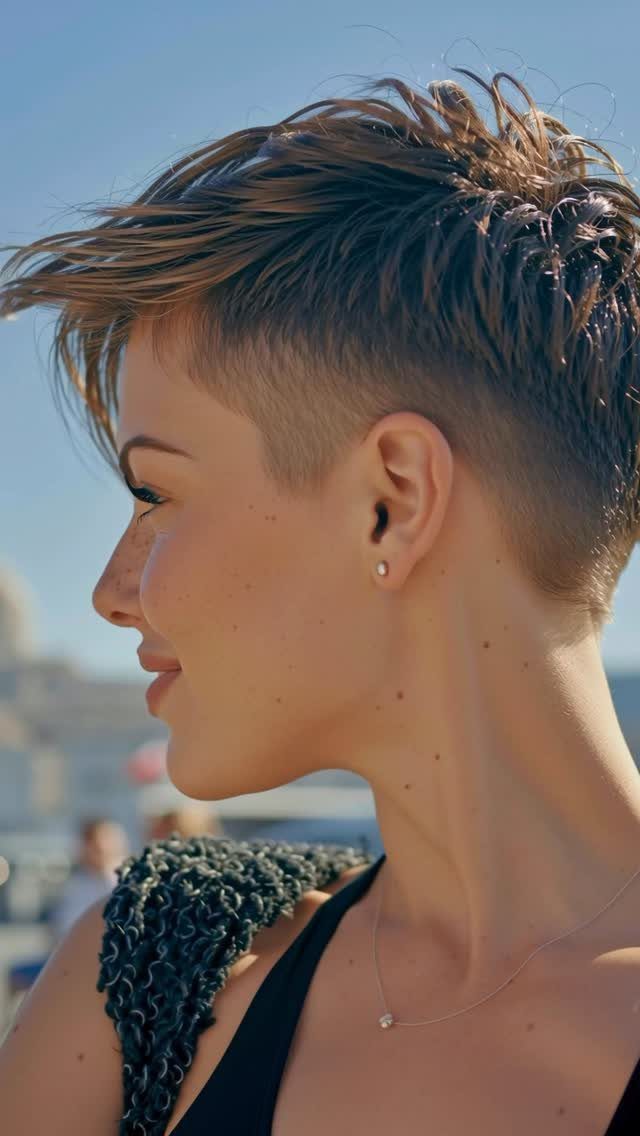
One side is kept short while a long, side-swept section of brown hair falls across the other, and that imbalance is the entire design. Profile is where it looks best.
Ask your stylist how much length to leave on top and which side to sweep it toward, ideally the way your hair already wants to part.
Blow-dry the long section across with a brush, then smooth it with a little cream. I like this for anyone bored of even pixies.
9. Pixie with Short Bangs
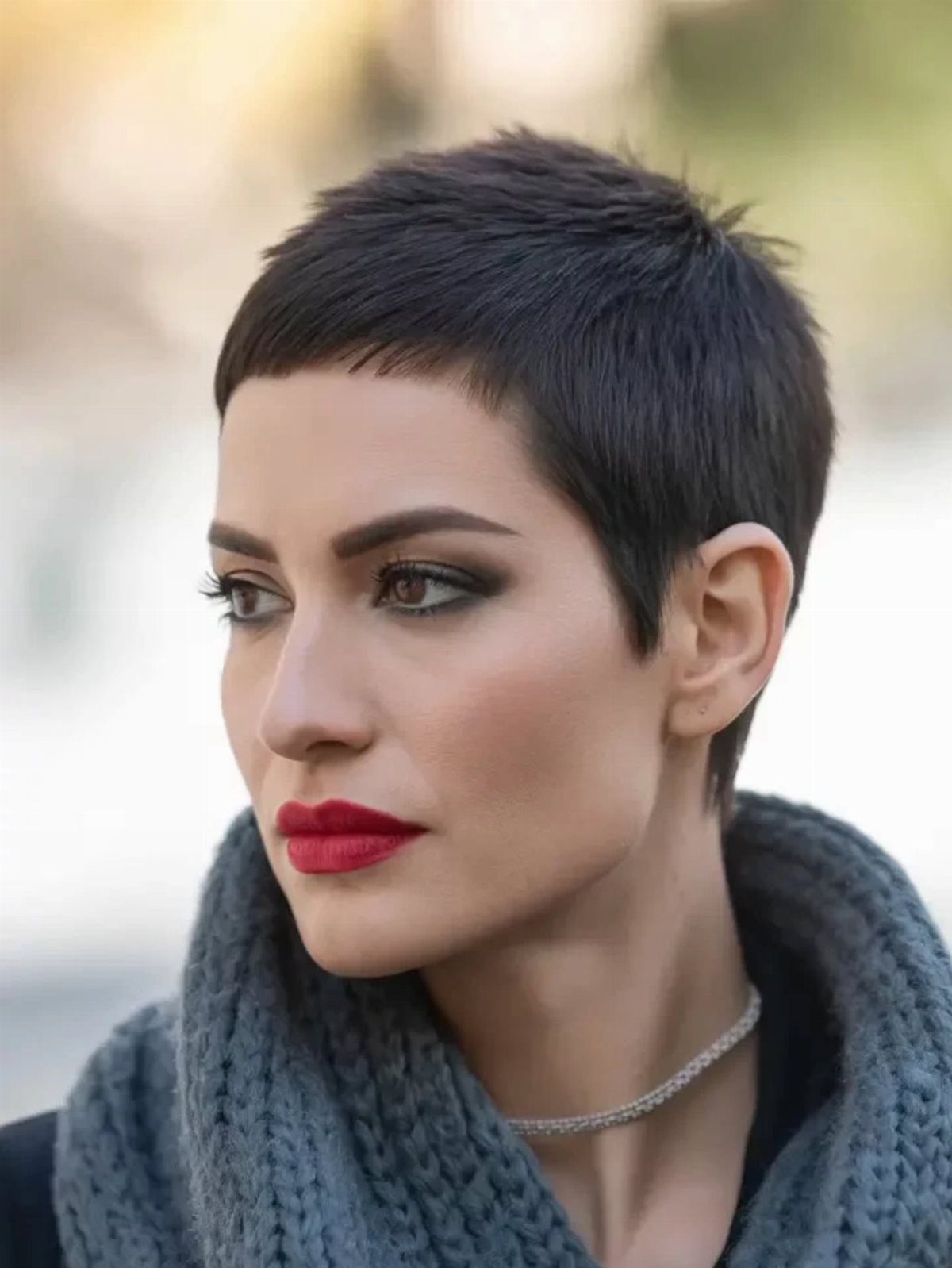
Short bangs are the detail to settle first with this cut. Cropped close on a dark brown pixie, they put the eyes front and center and keep the rest of the shape simple and classic.
Tell your stylist exactly where you want them to land, because a half inch changes the whole look.
Short bangs also grow past that point quickly, so plan on trims every few weeks. If that sounds like too much, pick a longer fringe.
10. Choppy Pixie Bob
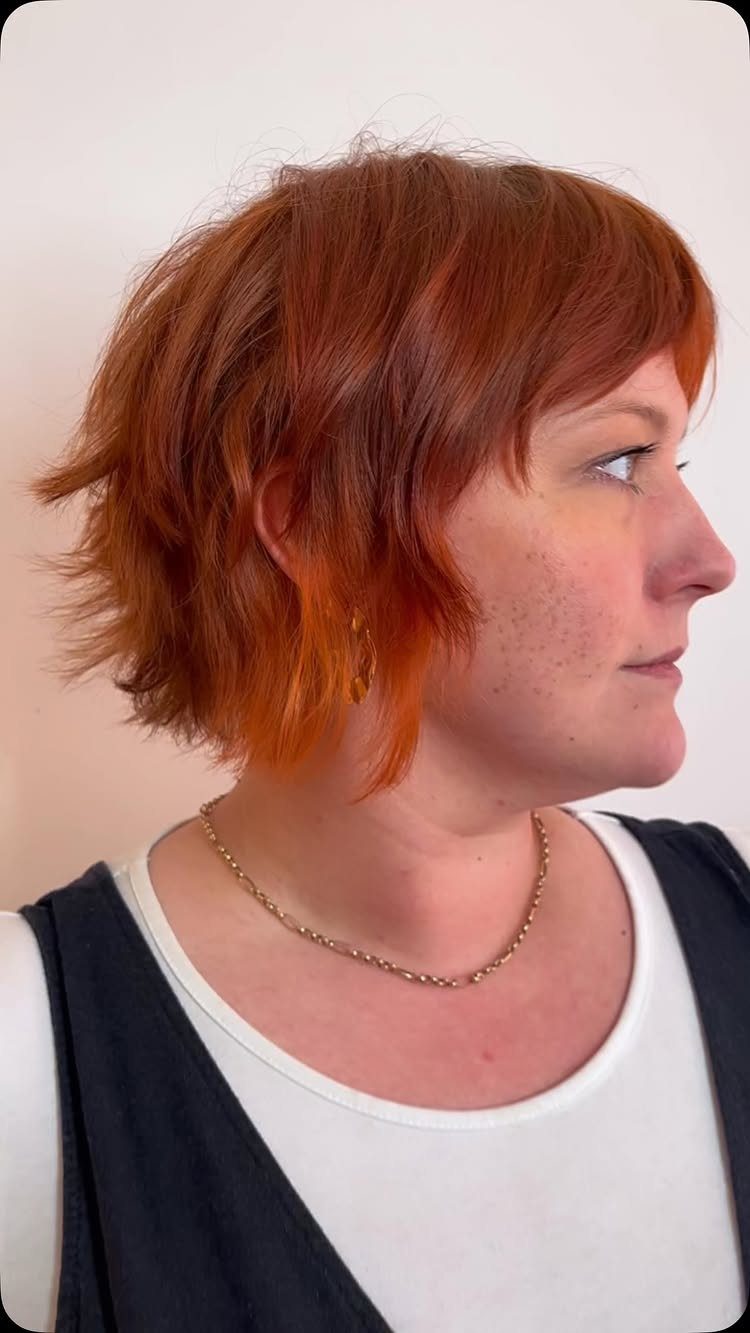
A choppy pixie bob sits between the 2 cuts: the sides are layered and a little longer than a true pixie, and the bangs sweep across the forehead. The choppy ends keep the copper-red from looking heavy.
I’d choose this for anyone growing out a pixie or not ready to commit to the shortest crop. Ask for layers through the sides and bangs long enough to sweep, then finish with a light texturizing spray and your fingers.
11. Short Choppy Shag
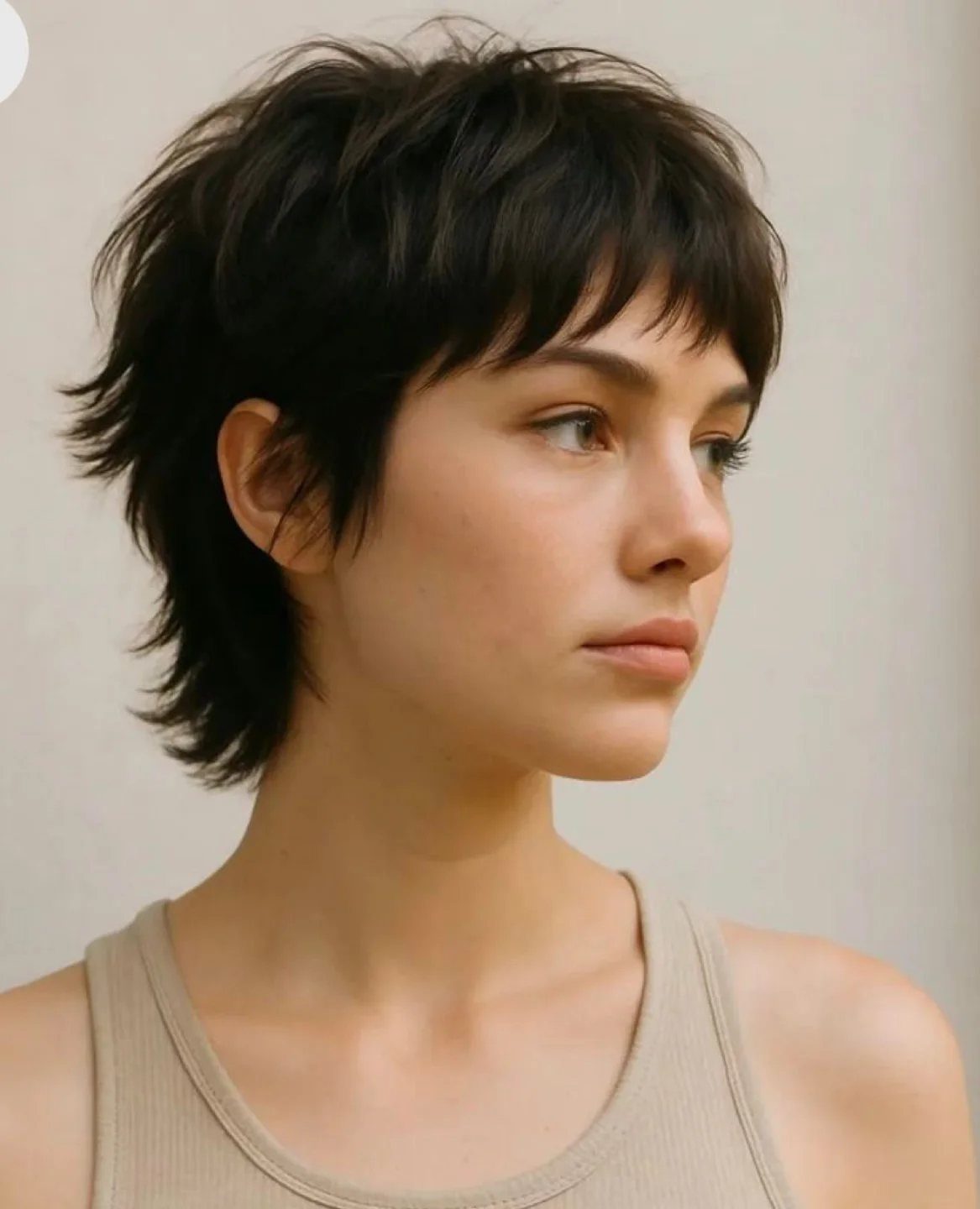
Separated layers of different lengths give this shag its raggedy, lived-in shape, and wispy bangs keep the front light. On dark brown hair, each layer shows as its own strand.
Ask for layers cut at varied lengths instead of one even tier, and for bangs that are thinned out, not solid.
To style, rough-dry, then twist a few pieces with your fingers and add texture spray for grip. Trim the bangs between appointments.
12. Choppy Layered Pixie
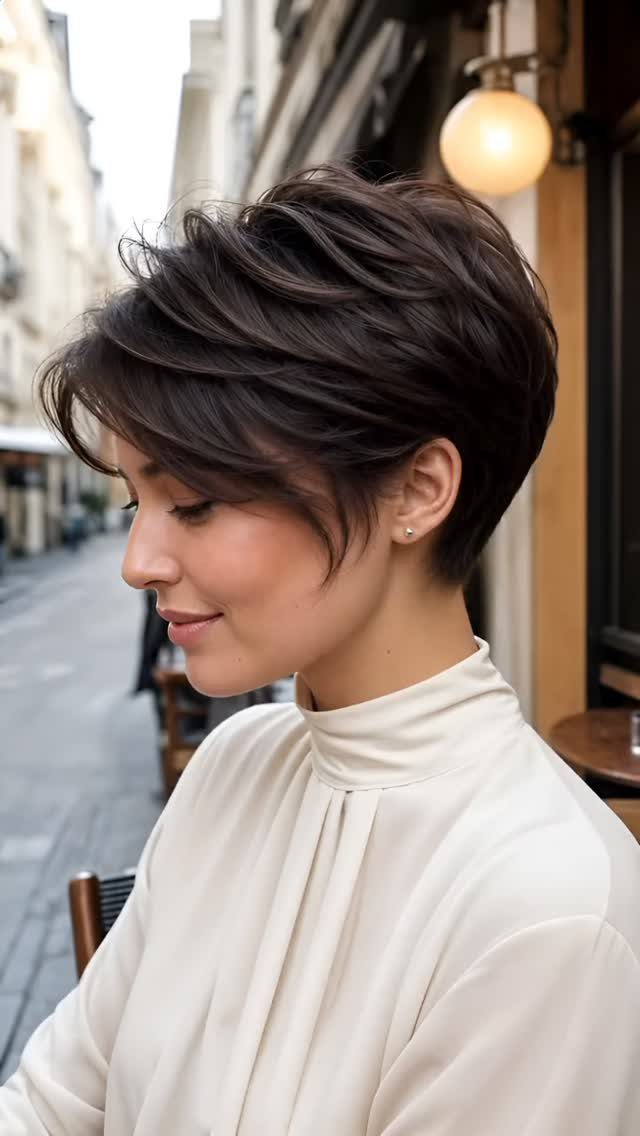
Strands swept in one direction, each cut at a slightly different length, make this pixie look choppy without going shaggy. Dark brown hair shows the layering clearly.
Ask for layers that are cut to move, so the top can be pushed to one side and still hold its pieces.
A pea-sized dab of paste worked through with your fingertips is plenty. It’s an easy cut to style on a rushed morning.
13. Choppy Layered Bob
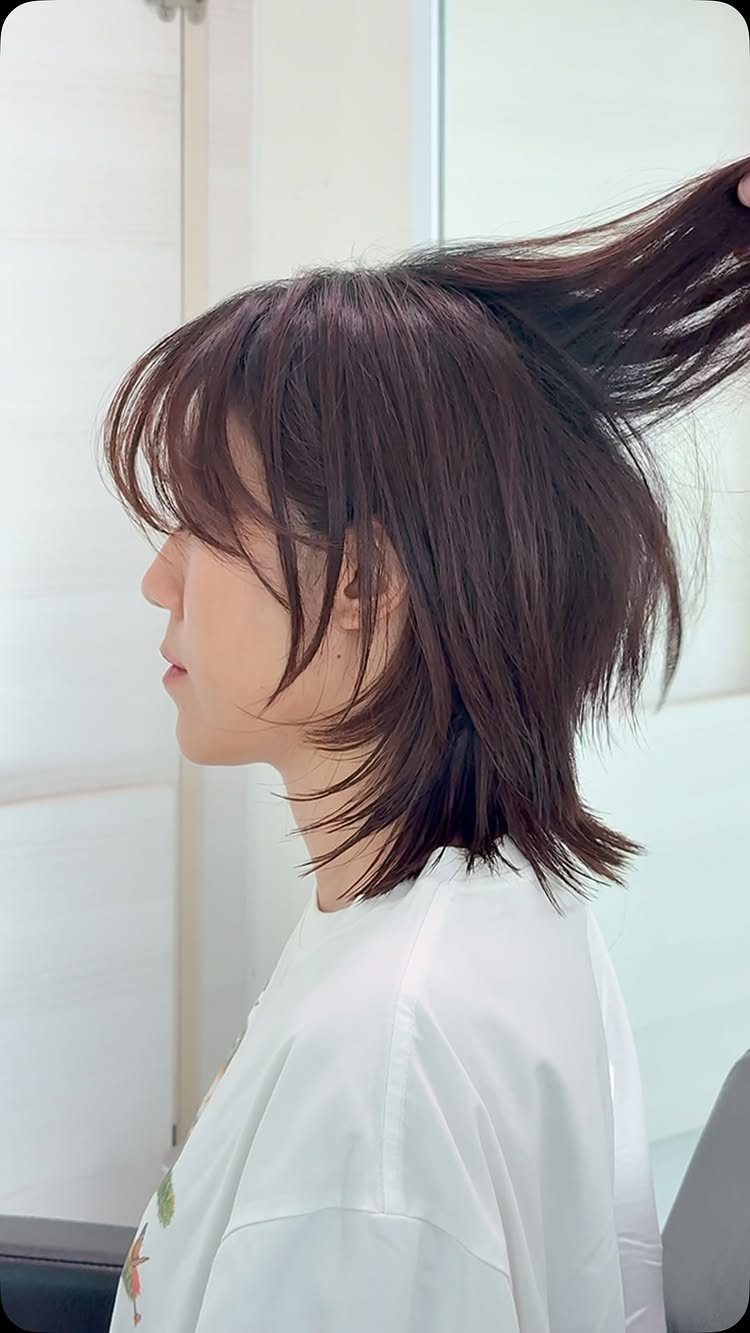
Wispy bangs and choppy layers sit on a bob that stops short, so the ends look broken up instead of cut in one line. Brown hair keeps those layers soft and easy to read.
Ask your stylist to cut the layers with a point-cut technique, and have the bangs thinned so they stay airy. I’d skip heavy product here; a little texturizing spray is enough to keep the pieces separate.
14. Wolf Cut
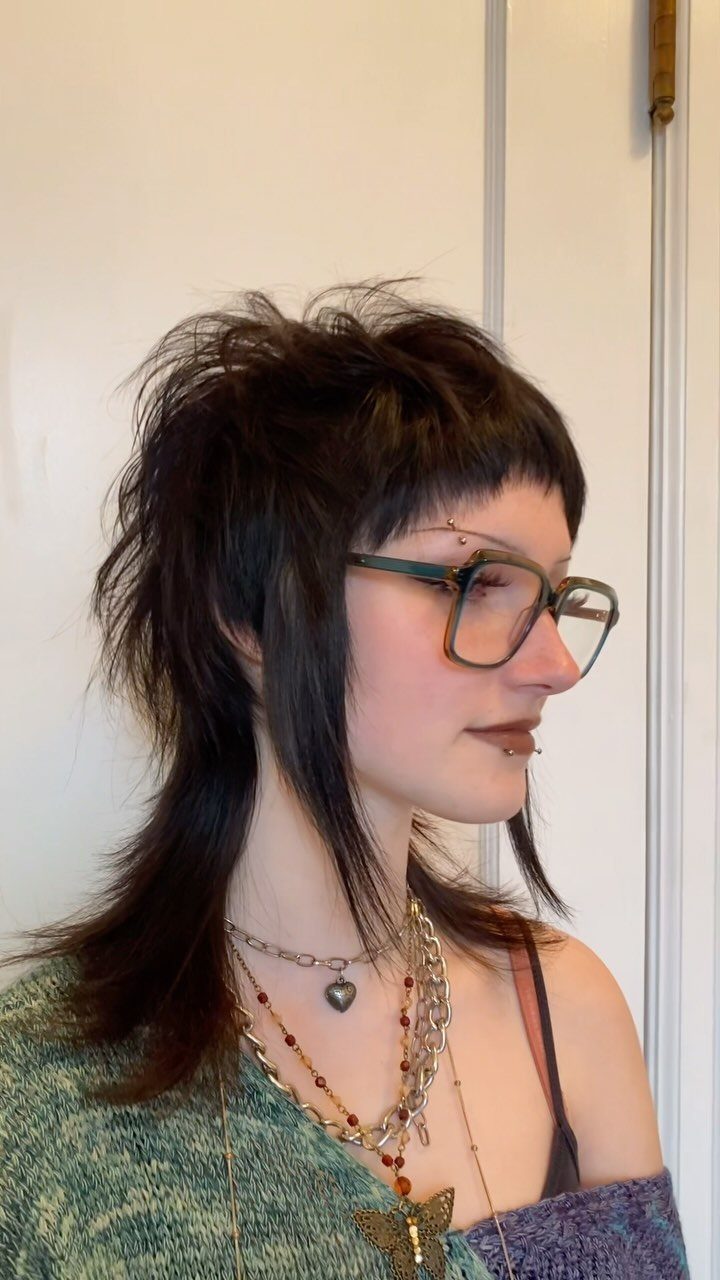
Heavy layers across the crown, shag texture and a hint of mullet in the back: that mix is what makes a short wolf cut.
A wolf cut layers the crown short and choppy, keeps the bangs ragged, and lets the back taper into longer, wispy pieces, so ask your stylist for disconnected layers rather than a smooth blend.
Bring a photo and ask for the crown layers to be cut short, with the back left longer and tapered.
A sea salt or texture spray scrunched through damp hair gives the shape its grit. I like it best on glasses wearers, since the bangs frame the frames.
15. Wavy Pixie
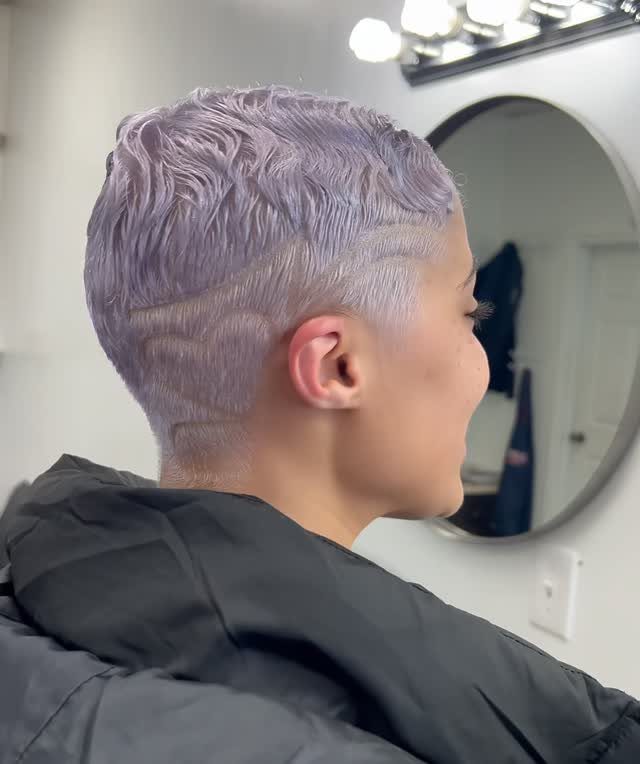
Waves are the point of this pixie, and the length on top is cut to let them curl and bend rather than lie flat. Shaved sides keep the shape from getting bulky, so all the movement stays up top.
Ask your stylist to leave enough length on top for the wave to form, and tell them how short you want the sides.
Let your hair air-dry or rough-dry with a diffuser, then scrunch in a light cream. Lavender is an option, not a requirement; the cut works in any shade.
16. Wet-Hair Pixie
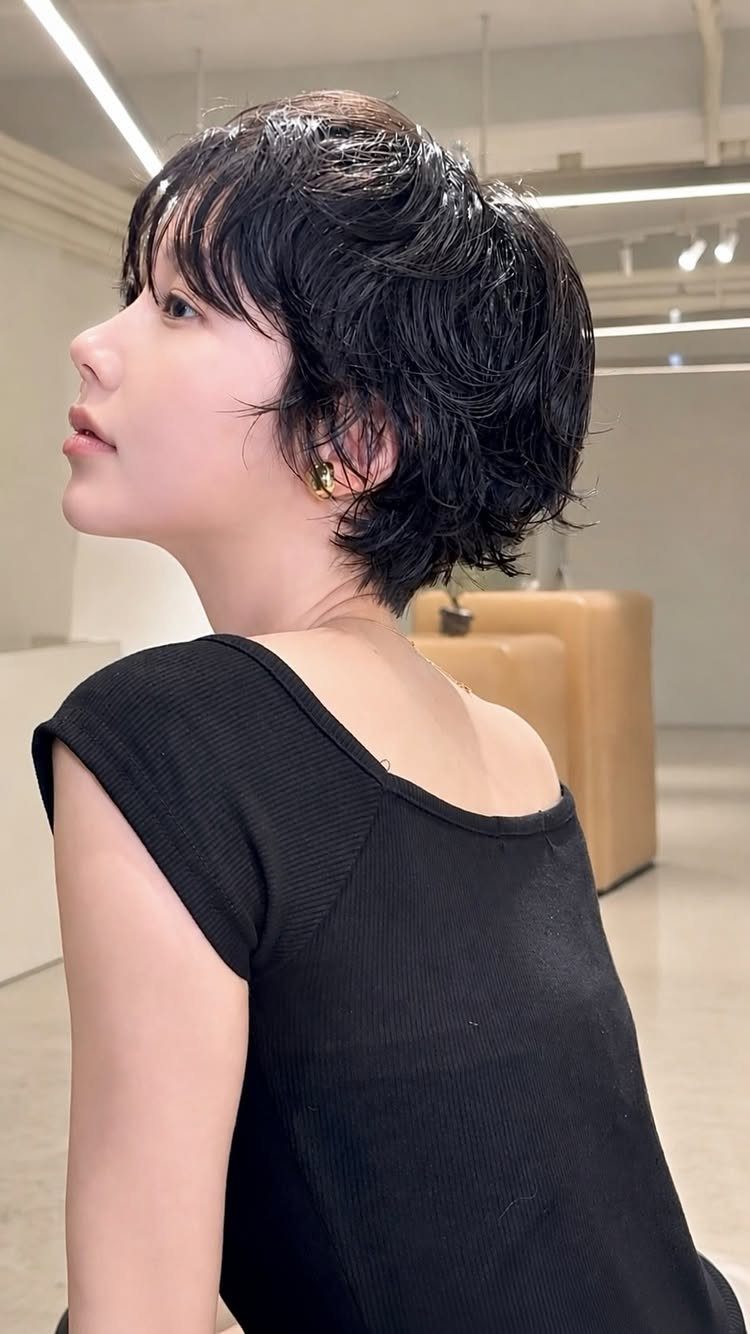
Wet-look styling on a grown-out pixie is mostly a product decision. A glossy gel or shine cream, raked through with your fingers, turns a tousled black pixie with bangs into something sleek and a little undone.
Start with damp hair, work the product through from roots to ends, and push the pieces where you want them.
Grown-out lengths give you more to sculpt, which I prefer to a fresh crop. Expect to wash it out nightly, since gel builds up fast.
17. Feathered Pixie
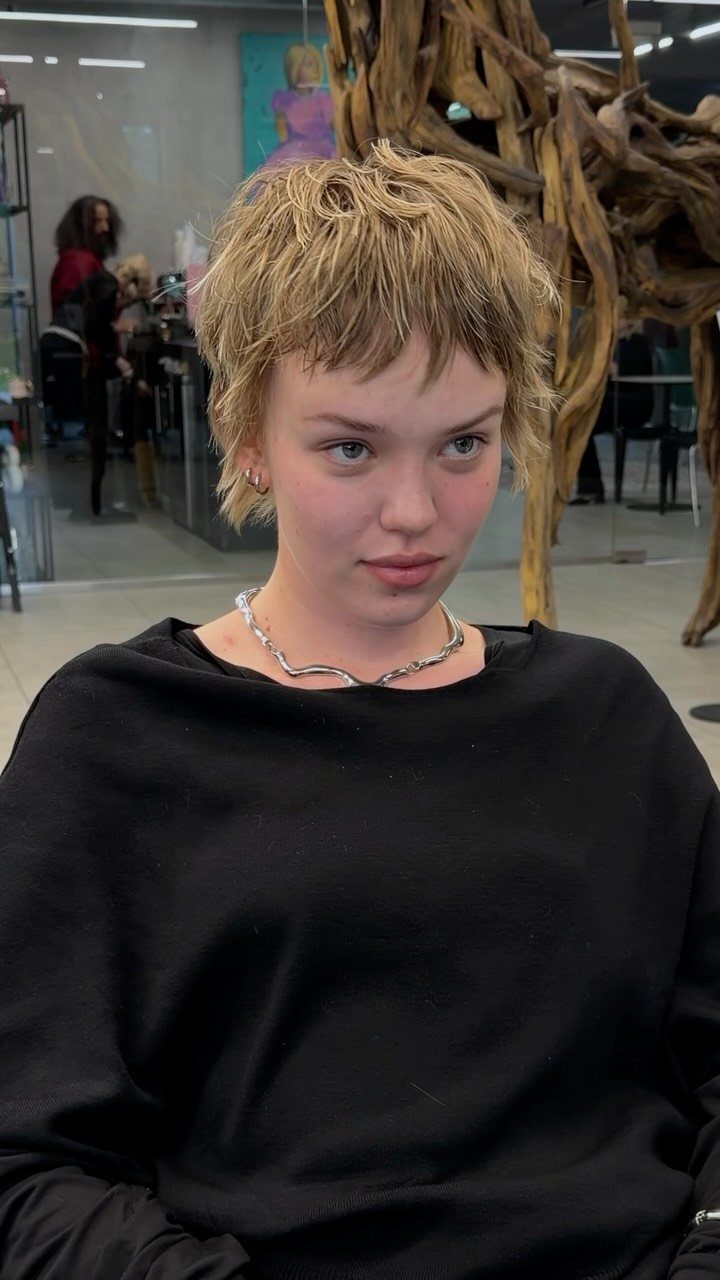
Highlights do half the work in this feathered pixie. Light and dark ribbons of blonde follow the layers, so every wispy piece looks like its own strand, and the asymmetry gives the bangs a diagonal sweep.
Ask for feathered, point-cut layers with the length on one side, and tell your colorist to place the highlights along the layers instead of in even stripes.
Finish with a texturizing spray and your fingertips. Highlighted hair needs regular toning and trims to keep the pieces crisp.
18. A-Line Bixie
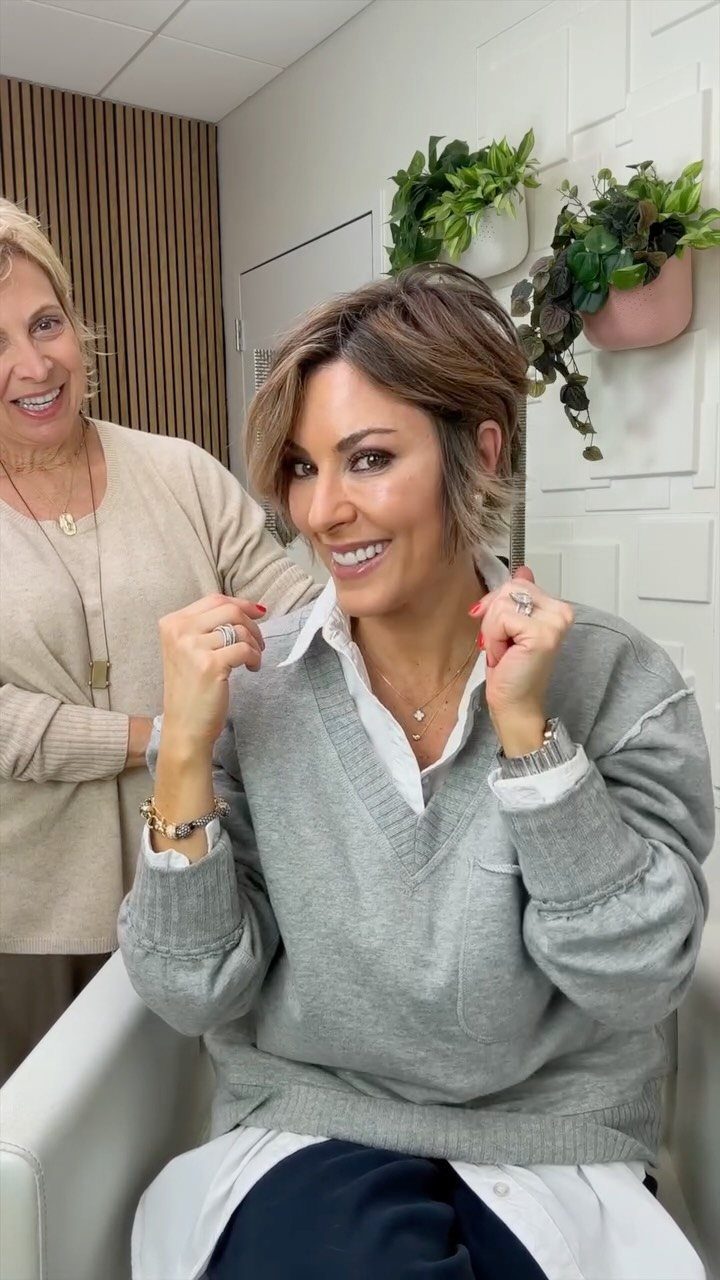
Longer front pieces and a shaggy, side-parted shape set this bixie apart from a standard pixie.
Growing out a pixie? This cut works as a rest stop on the way to a bob, since the longer lengths at the sides and nape look planned while the rest catches up.
Ask your stylist for layers all over, with the front left long enough to tuck behind your ear or sweep across.
Blow-dry with a round brush for a little lift at the part, then roughen the ends with cream. I’d pick this if you want short hair but still want something to hold onto.
19. Precise Nape Pixie
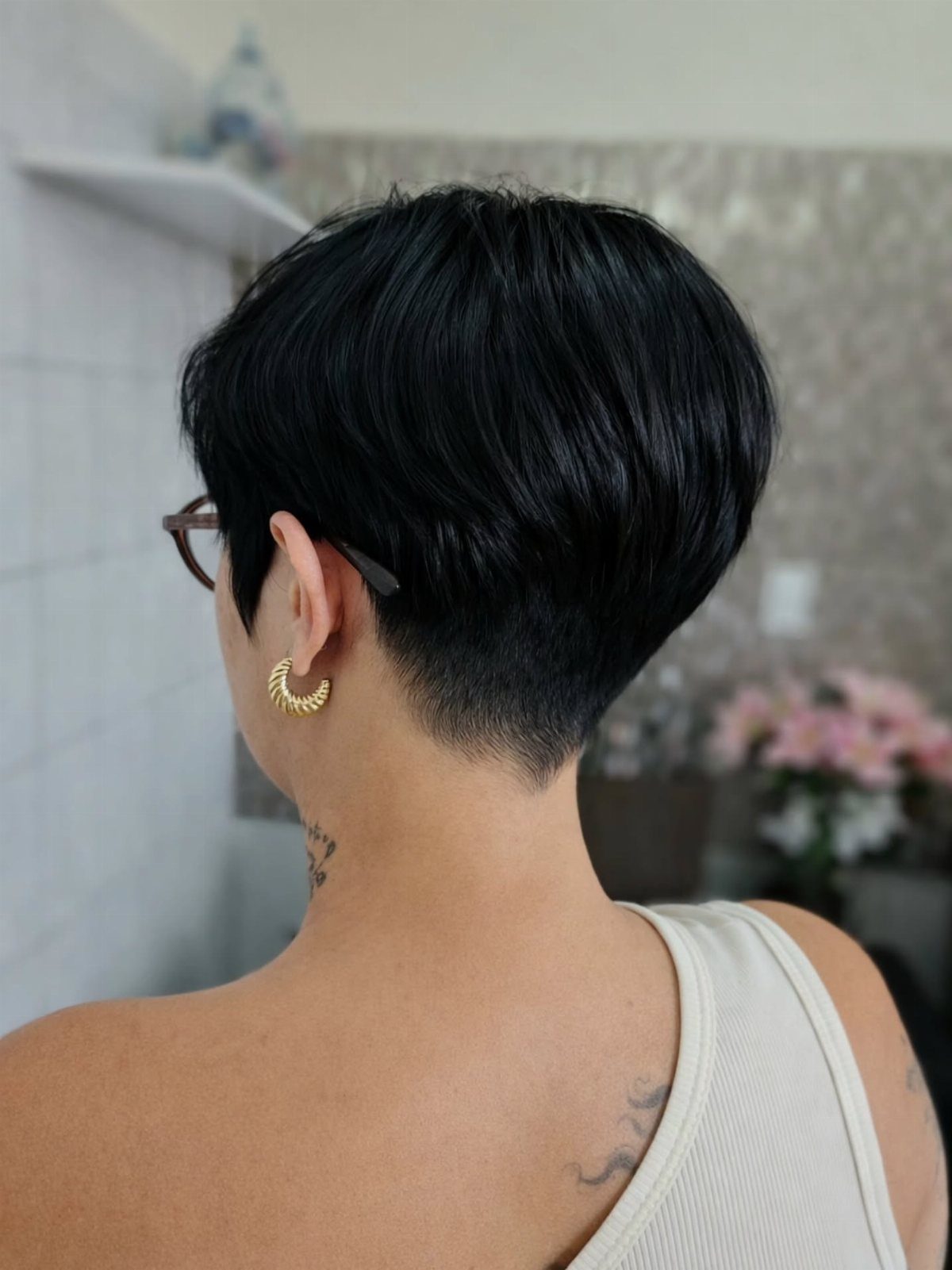
A tapered nape is the detail that decides this pixie. The back is cut close and clean, while wispy layers on the crown keep the top soft and a little feathery.
Ask your stylist for a precise taper at the neckline and layers through the crown that are point-cut, not chopped blunt.
Black hair makes the clean edge easy to see, so the line needs to be sharp. A nape line goes soft within a few weeks of growth, so plan on frequent trims to keep it clean.
20. Disheveled Pixie
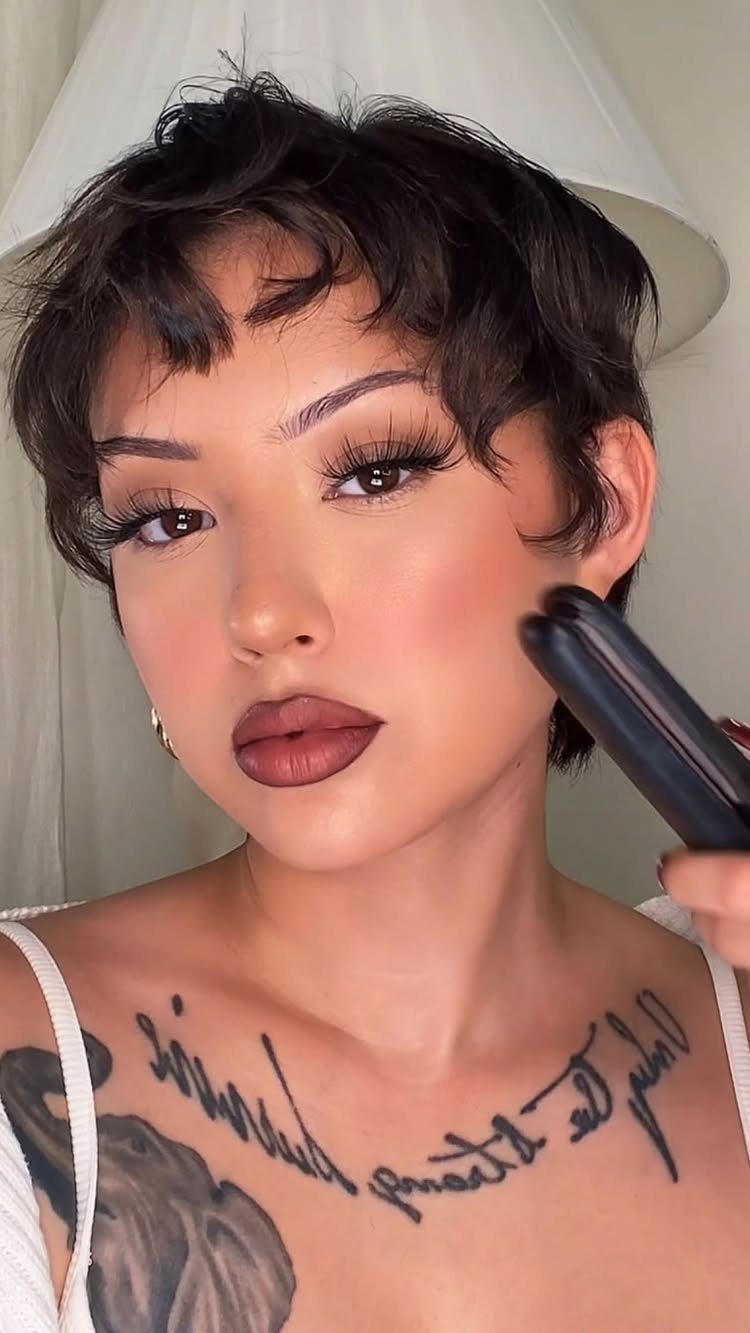
Finely chopped, razor-sharp pieces are what give this pixie its disheveled look. Each lock ends in a point instead of a straight edge, so the whole top looks broken up on purpose.
Ask for razored or point-cut layers and wispy bangs.
I’d skip a brush and a heavy hand with product, since the messy finish is the whole idea. It’s a quick cut to style, and touch-ups keep the ends from going blunt.
21. Side-Swept Pixie
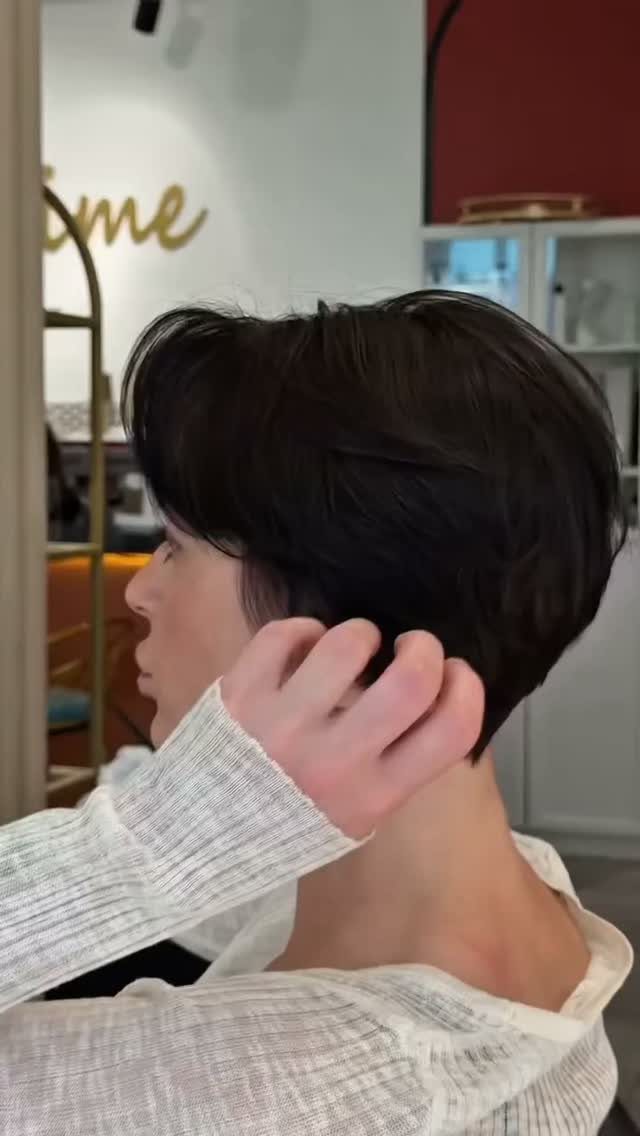
A long fringe swept to one side, with a tapered nape behind it, is how this pixie stays soft on top and neat in back. The sweep does the framing, so the sides don’t need much length.
Ask your stylist to leave the fringe long enough to cross the forehead and to cut it with some layering so it moves.
Layers read best on dark brown hair, where the shadows between pieces stay visible. I like this for anyone who wants a short cut but isn’t ready to give up bangs.
22. Bowl-Shaped Pixie
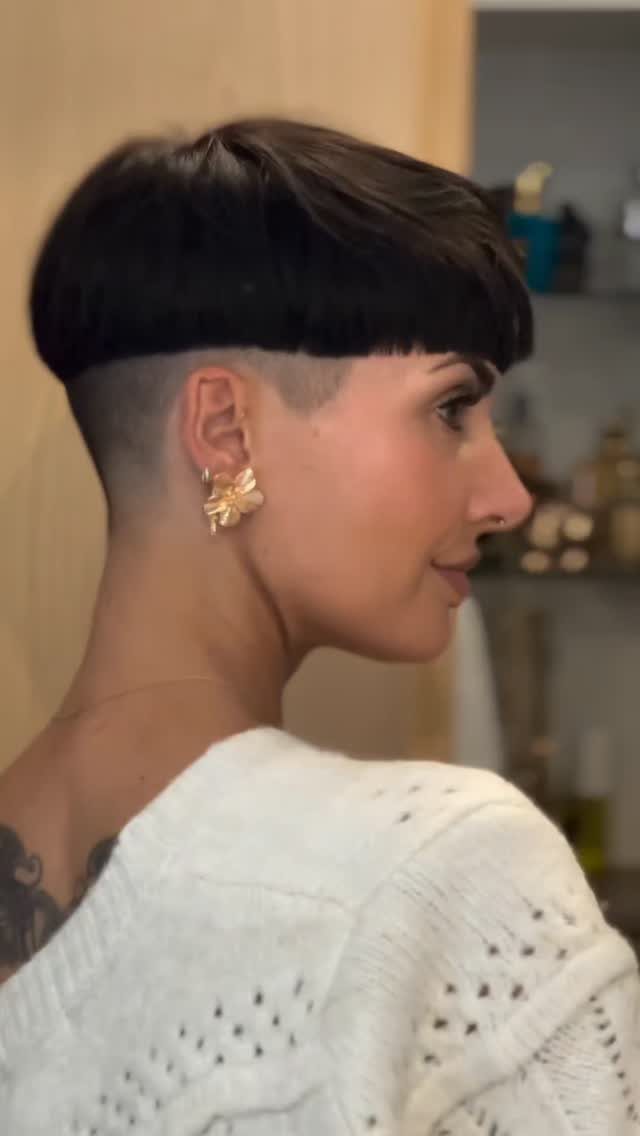
Think of a bowl-like crop with the sides and nape undercut, so the top sits like a cap over the shaved lines. The blunt fringe keeps the outline strict and graphic.
Tell your stylist how short you want the undercut and where the line should sit, since that line is the whole design.
Styling is minimal: a comb and a touch of smoothing cream. Upkeep is the cost here: the shaved areas lose their crisp line fast and need frequent trims.
23. Long Layered Pixie
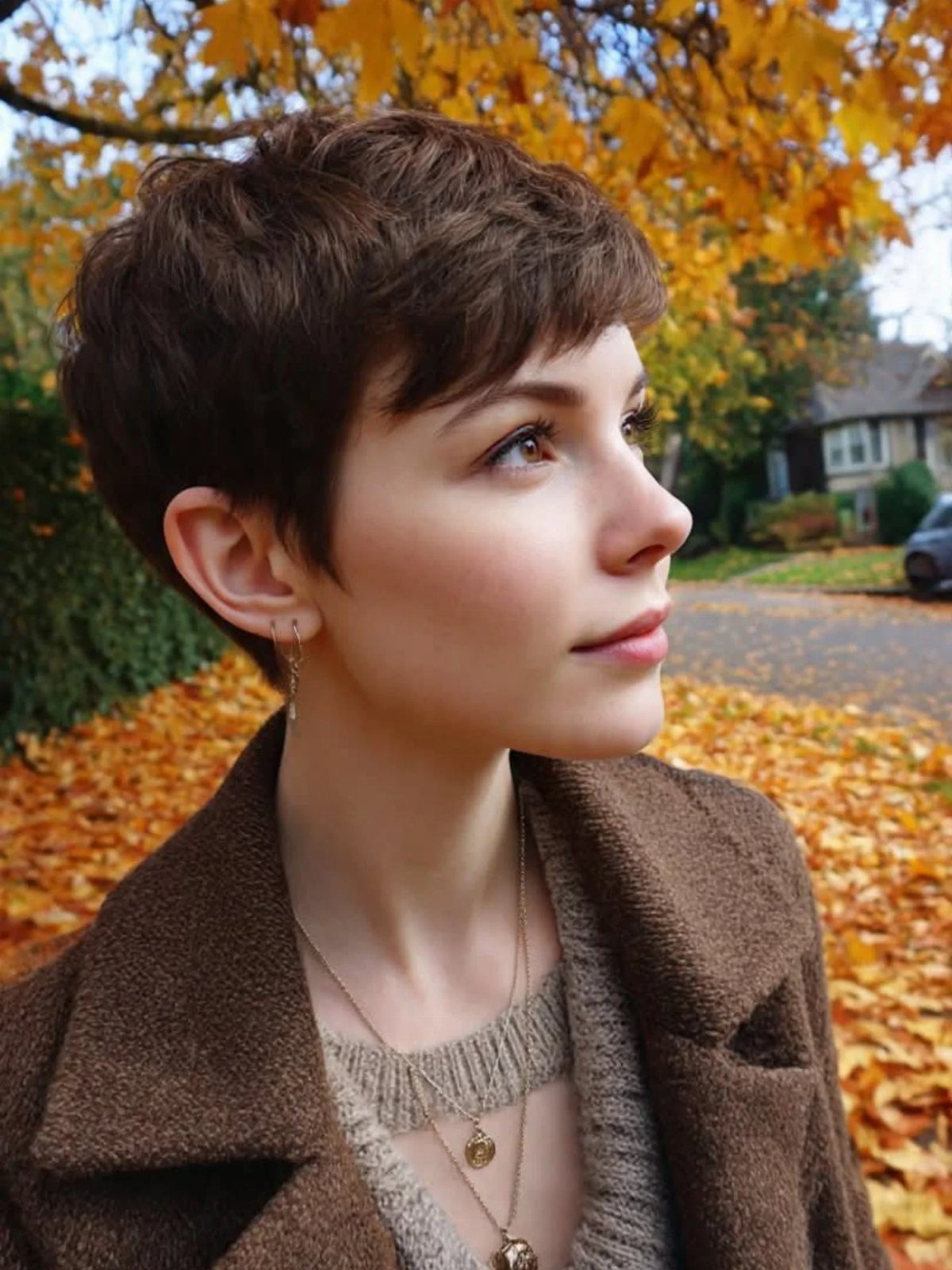
Straight hair gets flat fast at this length, so layers are the answer. A long layered pixie keeps extra length on top and cuts it in steps, which gives the side-swept fringe some lift and motion.
Tell your stylist you want layers across the top and a fringe with enough length to sweep to the side. Rough-dry the hair with your fingers, pushing it sideways, and finish with a light texturizing spray for grip.
I’d choose this over a one-length crop if your hair is fine and falls straight, since the layering does the work a curl would.
24. Airy Choppy Hairstyle
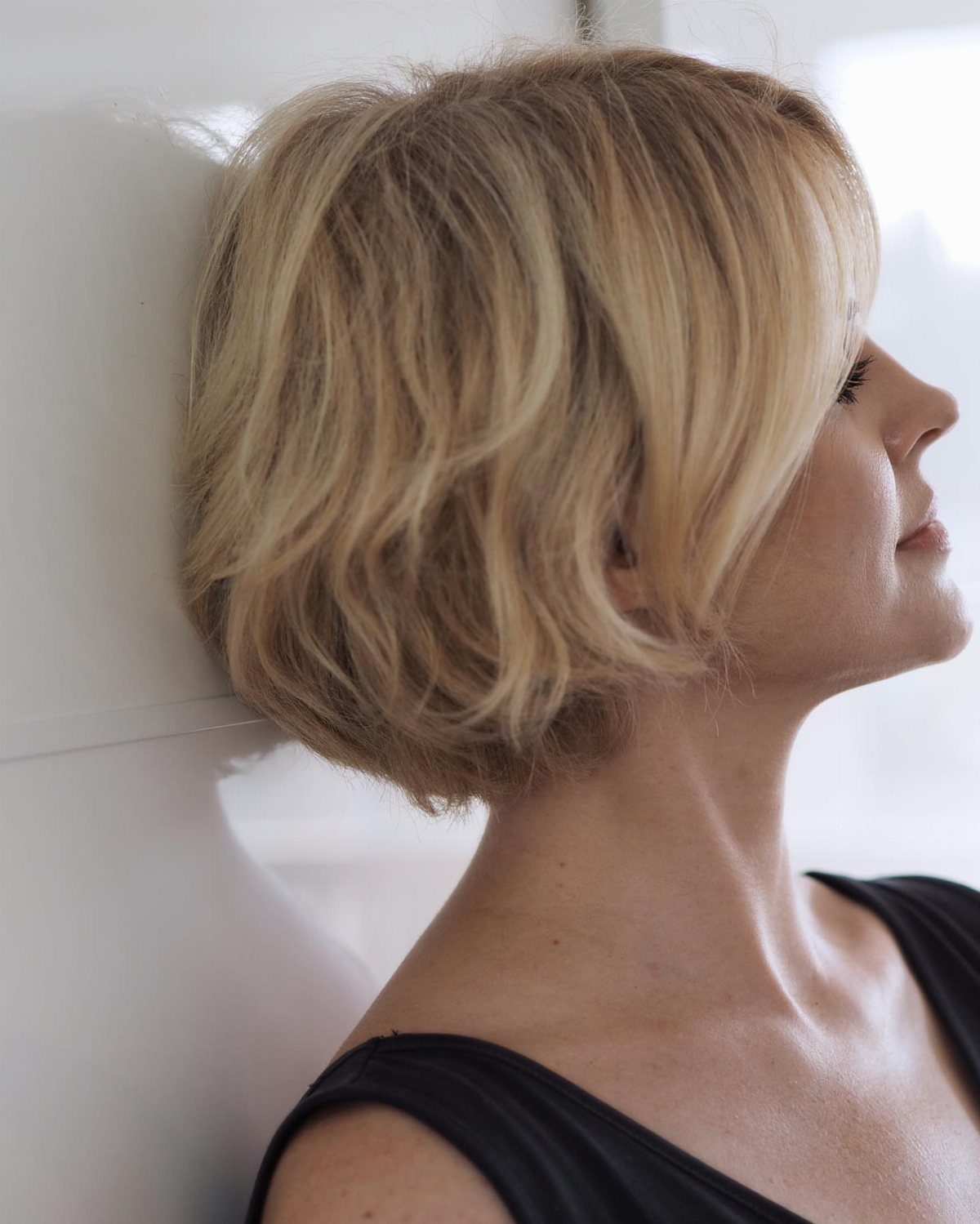
Fullness is the draw of this airy choppy bob, and it has a definite 2000s feel. Layered waves stack up through the sides and ends, so the shape reads big and light instead of heavy.
Ask for choppy layers all through the bob to build that volume. Blow-dry with a round brush for lift, then wave a few sections with an iron and shake them out.
A texturizing spray holds the airiness without weighing it down. Blonde shows the layers well, though the cut works in any shade.
25. Highlighted Style
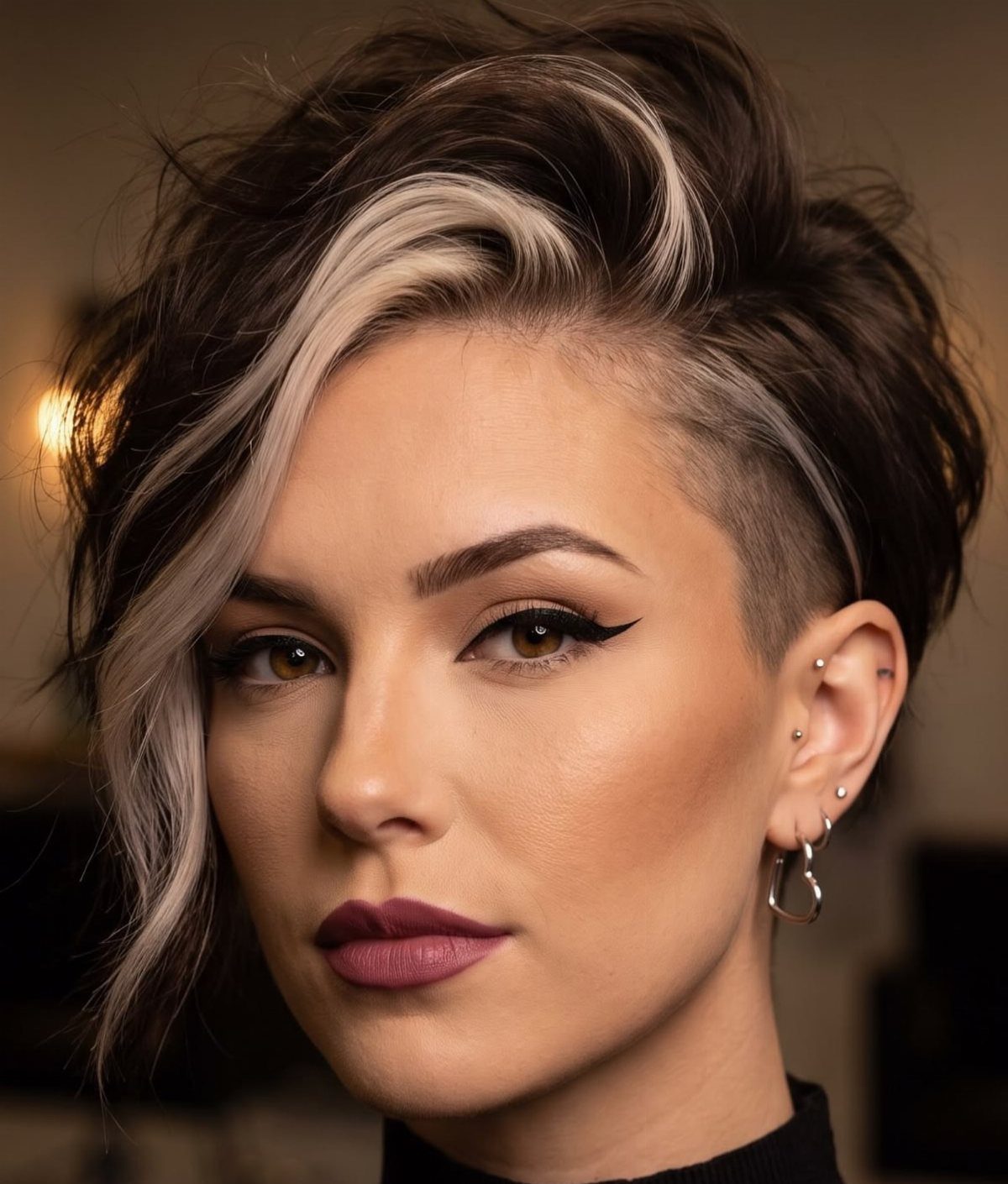
A single blonde streak at the front turns a dark, messy cut into something that looks planned. The shuffled layers underneath keep the dark brown from reading flat, so the highlight has texture to sit against.
Ask your stylist to cut layers at uneven lengths, then have the color placed in one front section instead of all over. I’d push the pieces around with a little paste on your fingertips and leave them alone after that.
26. Edgy Choppy Bob with Blunt Fringe
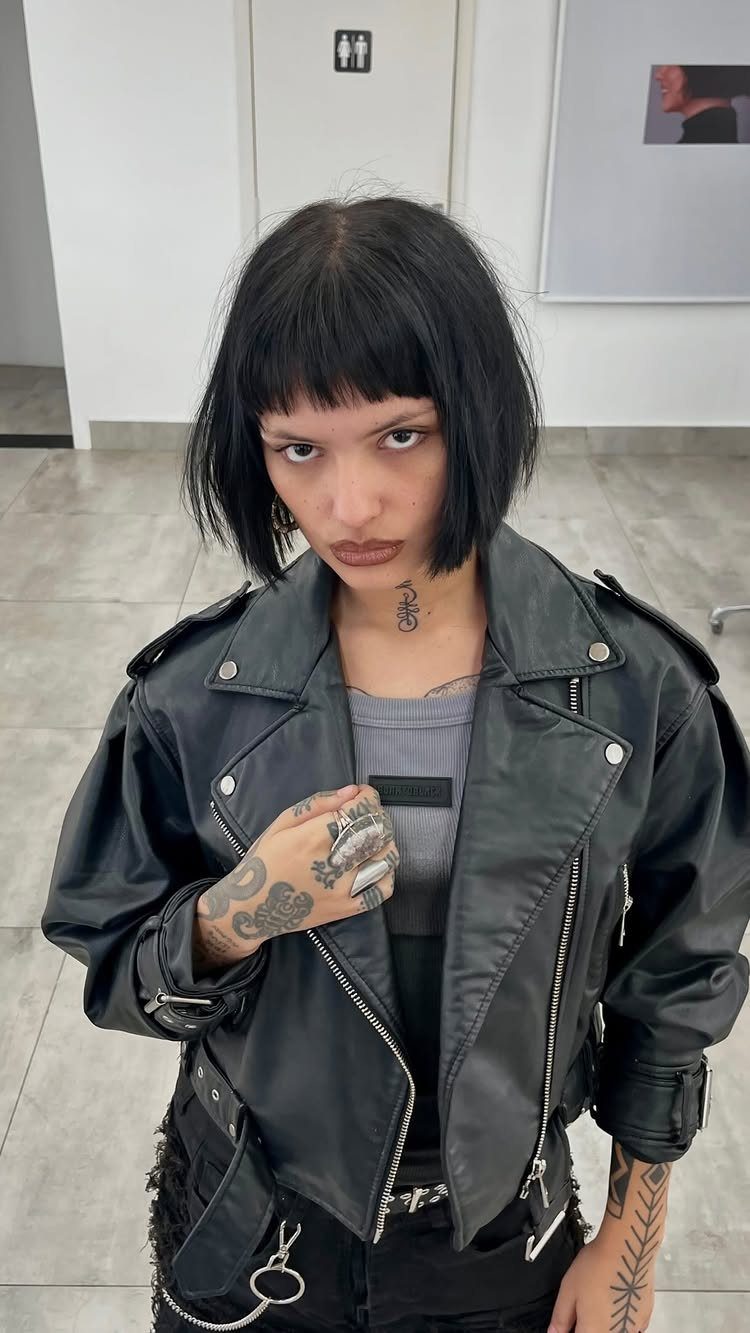
One clean line against a head of broken ones is the whole design here. The blunt fringe is cut straight across, while the black bob behind it is layered with no tidy edge anywhere.
Tell your stylist you want both: a solid, even fringe and choppy, point-cut layers through the rest.
Rough-dry the bob and rake your fingers through it, then smooth only the bangs flat. I like how black hair makes that fringe line read as sharp as it is.
27. Choppy Bob
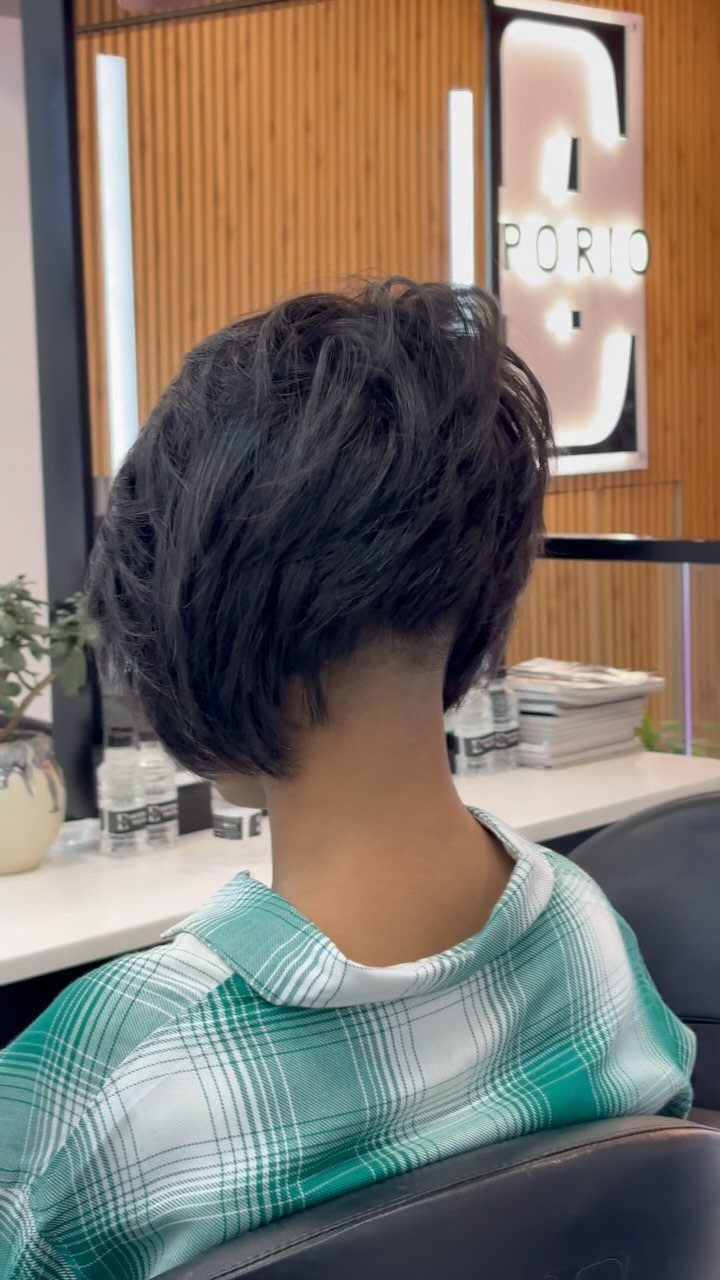
A choppy bob is cut in layers of uneven length that end abruptly instead of blending into one clean line. The finish is slightly messy on purpose.
Bring a back-view photo, since the layering is mostly a back-of-the-head story. Ask for uneven layers through the whole bob, then rough-dry and tousle with your fingers.
I’d keep product light so the pieces stay separate. A bob this short is a fast morning.
28. Choppy Modern Mullet
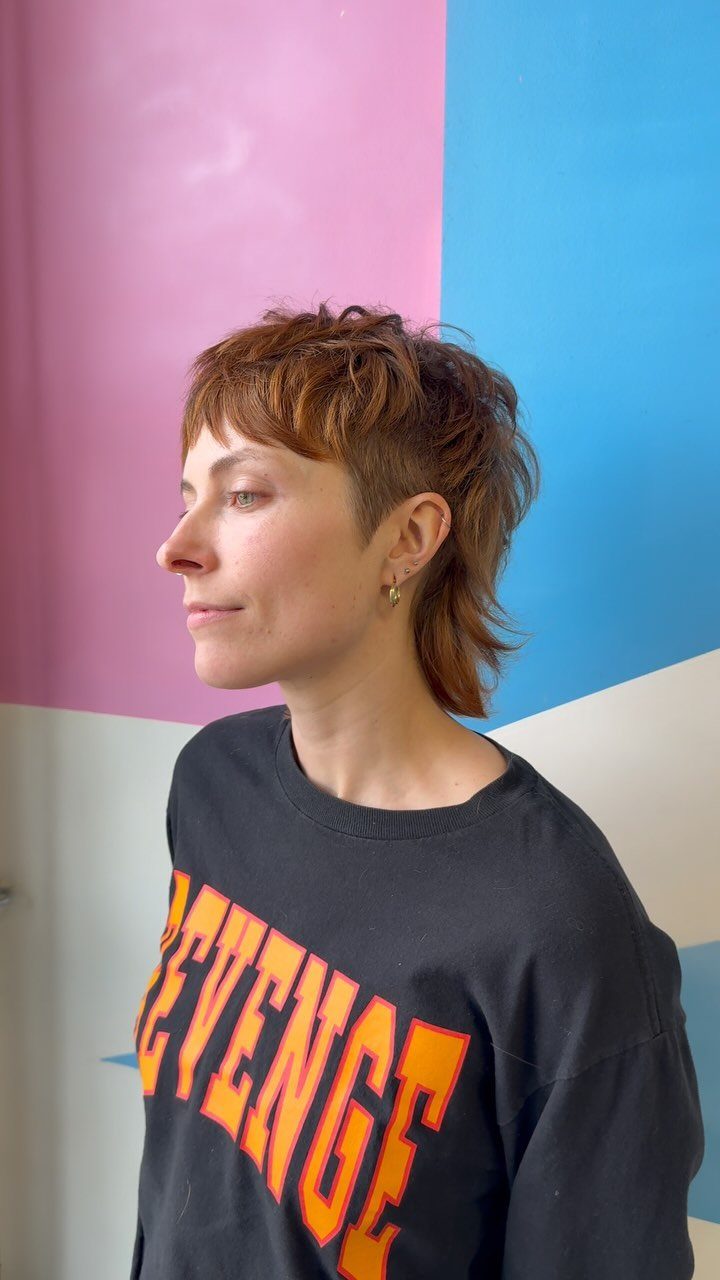
Shorter pieces up front and longer layers through the back give this mullet a softer, more wearable shape than the classic version. The sides stay cropped, so the length collects behind and the front stays easy.
Ask your stylist to blend the front layers into the back lengths instead of cutting a hard step between them. The blend is what makes it work.
Rake a texturizing spray through damp hair and let it dry loose, and the back keeps its movement. I’d pick this if a full mullet feels like too much.
29. Choppy Pixie with Fringe
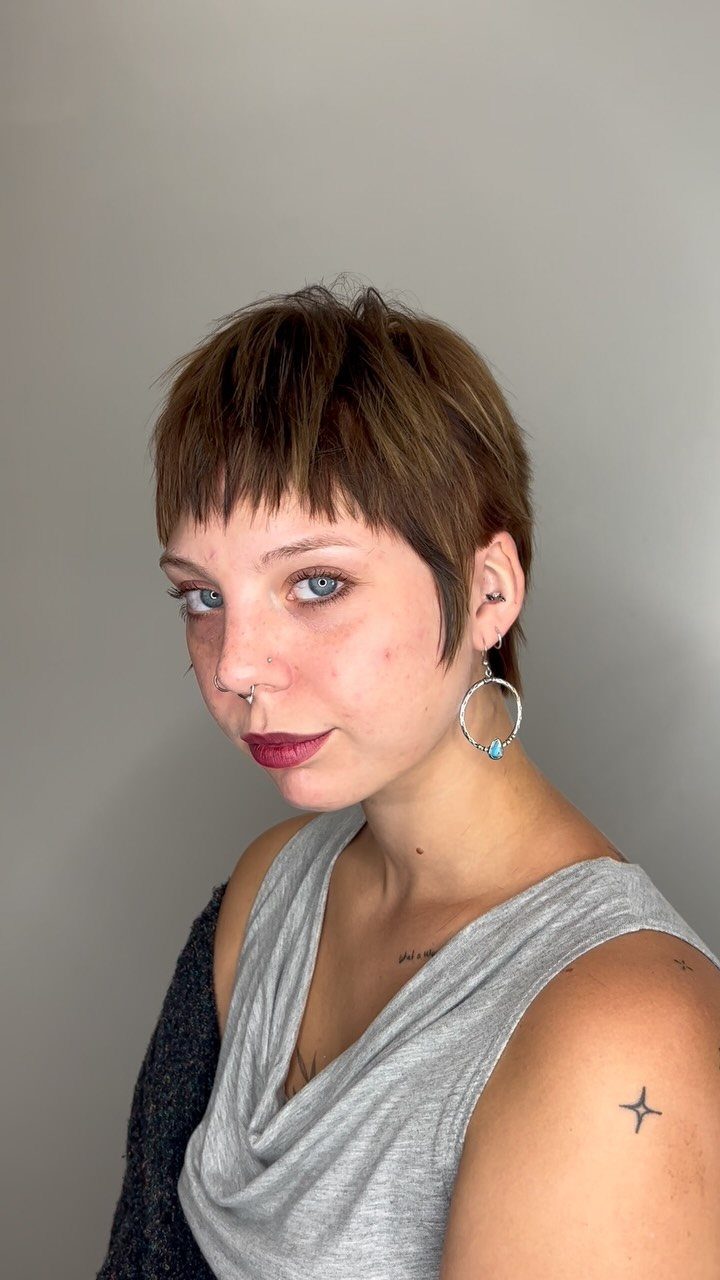
Texture does not stop at the crown here; it runs straight into the fringe. The brown pixie is cut choppy all over, so the bangs break into pieces instead of lying as one flat curtain.
Tell your stylist to point-cut the top and the bangs so the fringe falls in separated pieces rather than one solid curtain.
Pinch a pea-size dab of paste between your fingertips, twist it through, and leave the ends rough. Fringe grows past its best length fast, so book trims often.
30. Choppy Pixie with Long Top
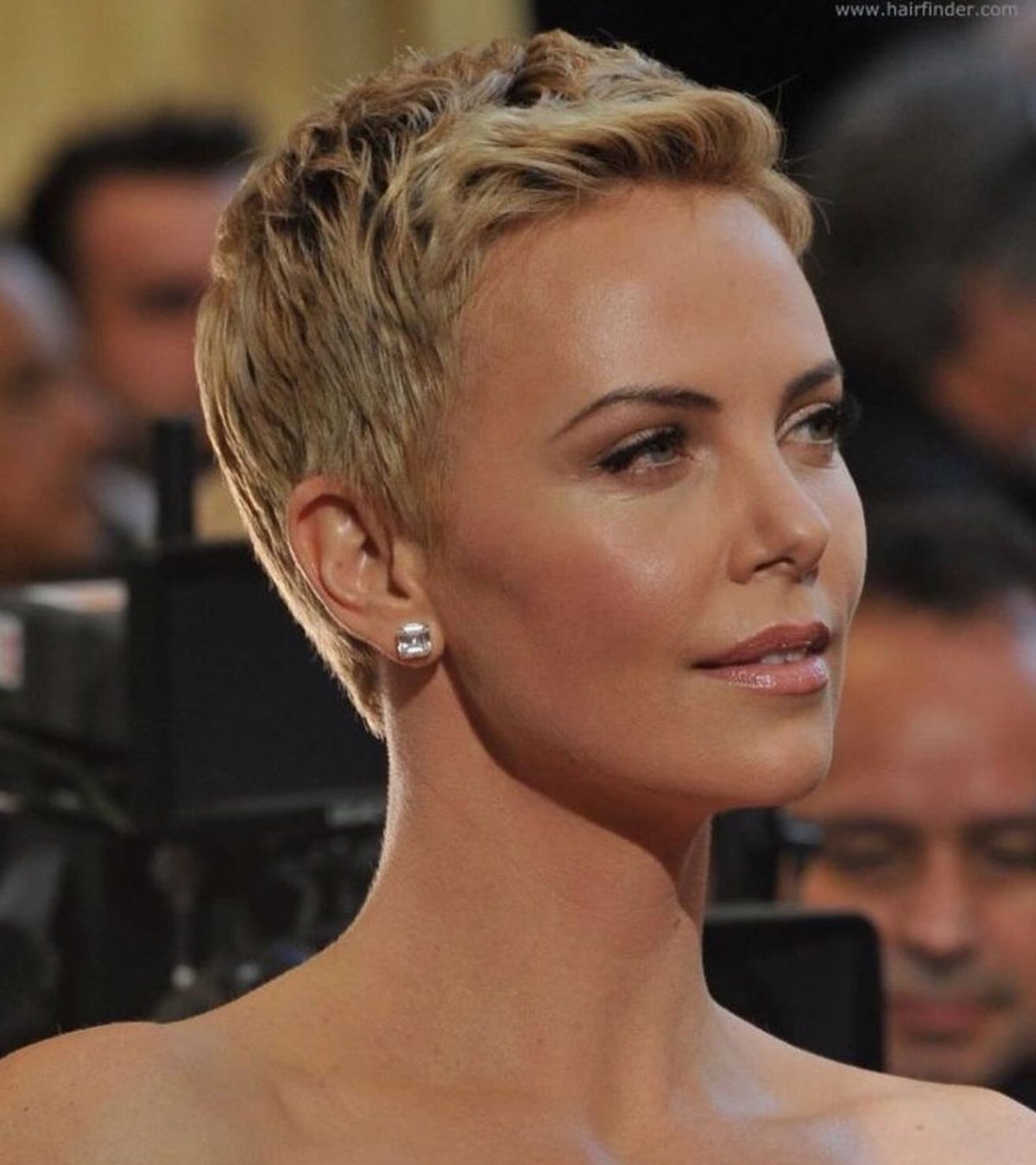
Cropped sides and back with extra length up top: that contrast is what lets a blonde pixie move instead of sitting flat. The contrast in length is what makes the choppy layers show.
Ask your stylist to leave enough on top to push forward or to the side, with the sides and back cut short.
A light texturizing spray on dry hair, then pieces twisted with your fingers, finishes it. I’d choose this over an all-one-length crop, since the longer top gives you more ways to style it.
31. Sculpted Curly Pixie
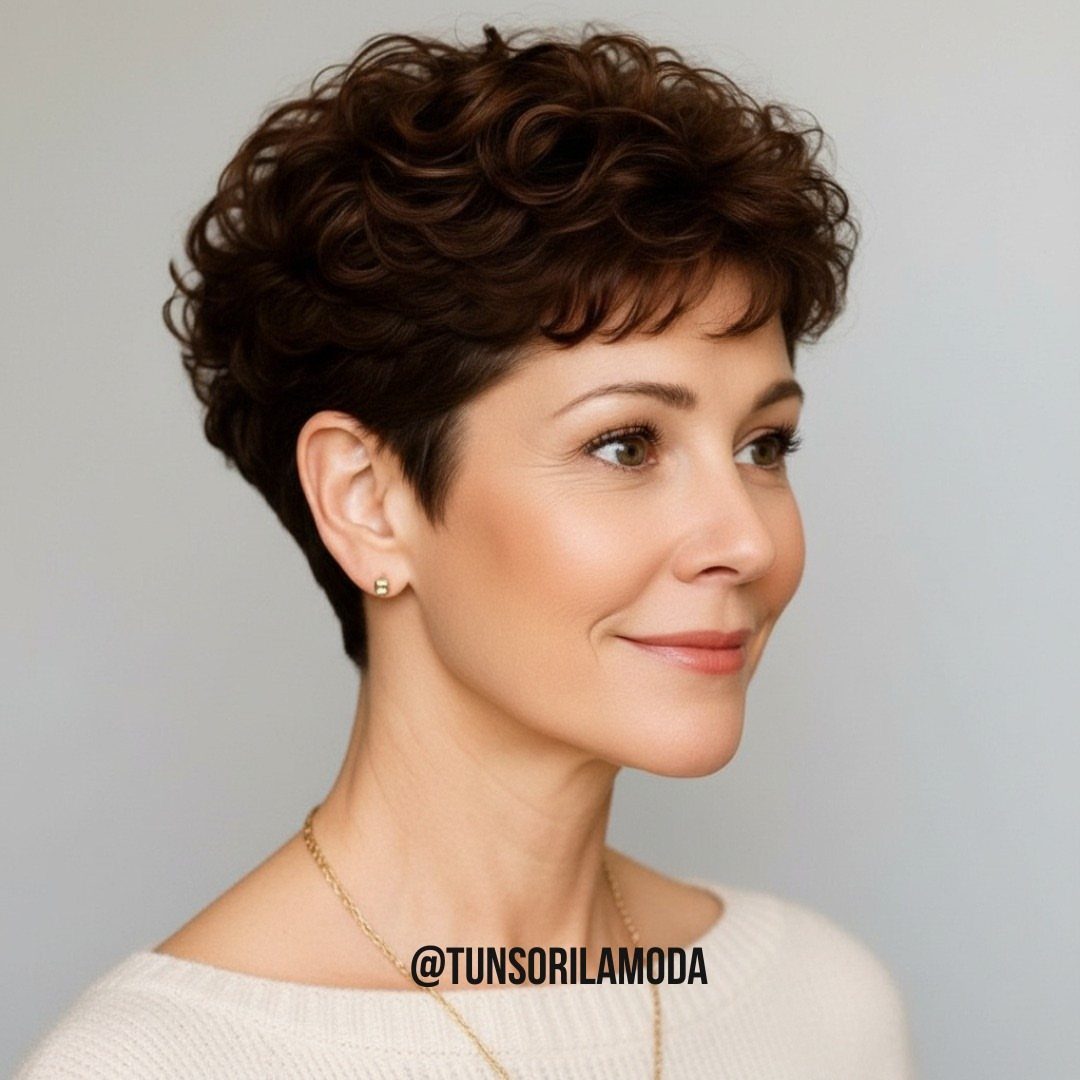
Natural curls do the shaping in this pixie, and the sides are cropped close so the curl pattern stays the focus. The dark top has enough length to coil and stack into a rounded, sculpted outline.
Ask your stylist to cut the curls dry, or at least to check the shape dry, so the length is judged where it springs up.
Tell them how short you want the sides. I’d keep styling to a curl cream scrunched in and left alone.
32. Microbang Pixie
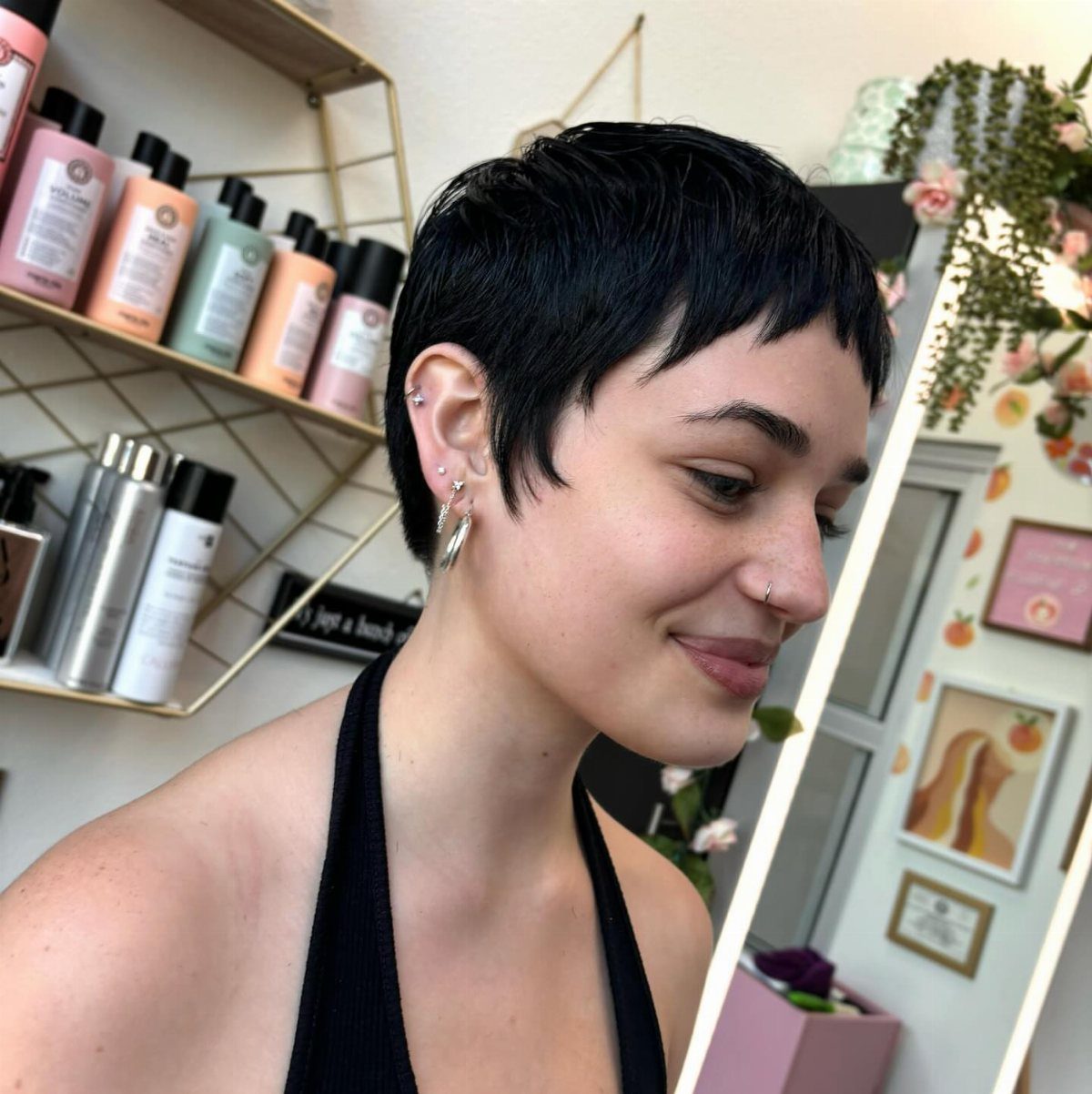
Micro bangs are the detail that decides this cut: a fringe cropped well above the brows, broken into short, choppy pieces over a black pixie.
Show your stylist exactly where the fringe should end, since a small difference in length changes the whole look.
Ask for the bangs to be point-cut so they separate. Style with a dab of paste, pushing the pieces forward.
A microbang sits only an inch or so above the brow, so even a few weeks of growth pushes it into your eyes; expect a trim every 3–4 weeks to keep the line crisp.
33. Voluminous Pixie
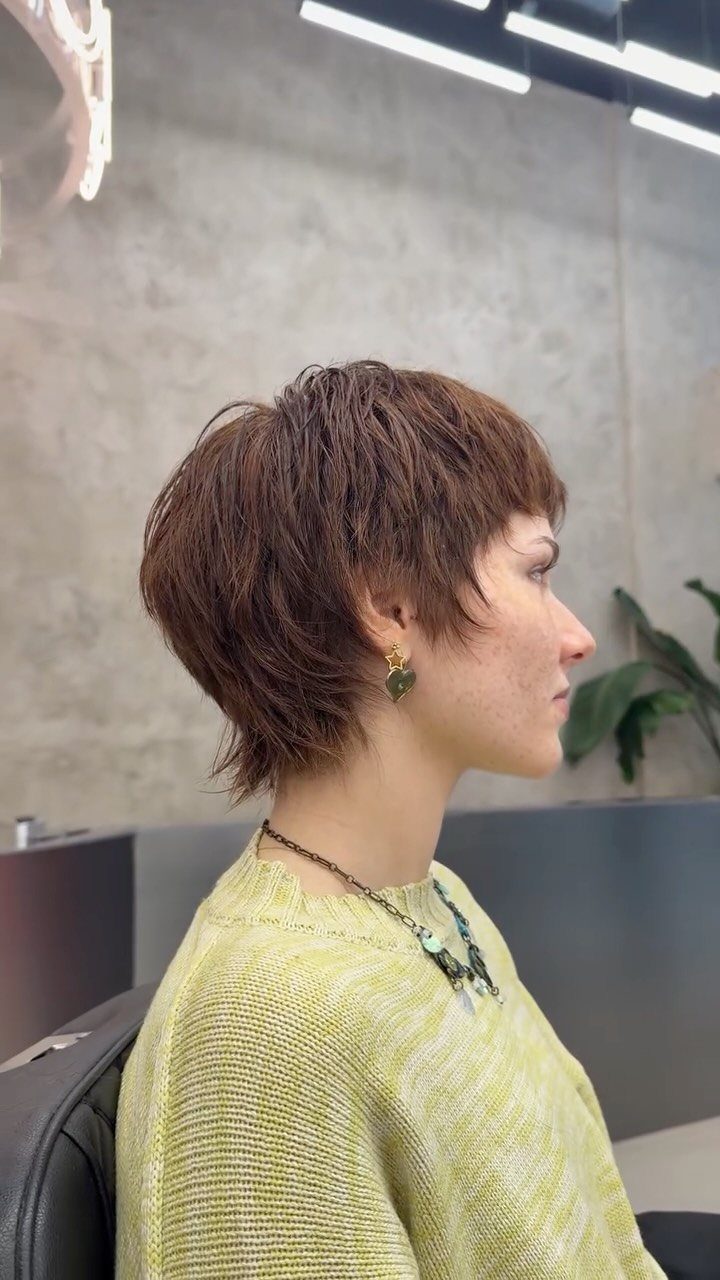
Lift at the crown is what separates this pixie from a flat crop. The brown layers are cut choppy and stand up from the roots, so the top reads full while the sides stay short.
For the lift to hold, the crown needs the most length, while the sides should be cut noticeably closer to the head.
Blow-dry with a round brush, pulling the roots upward, then break the pieces up with a texturizing spray. I’d pick this for fine hair that tends to lie down.
34. Pixie Wedge
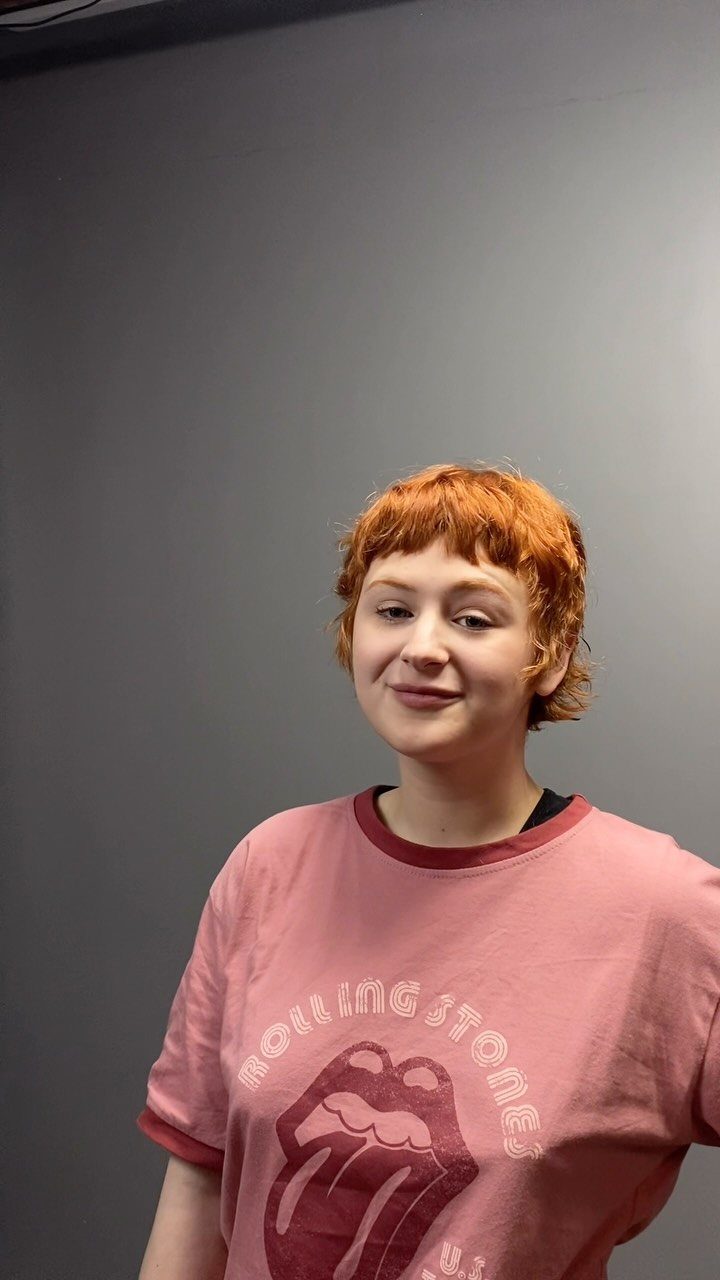
Extra length on top and at the sides sets a pixie wedge apart from a traditional crop. The layers stack into a soft, rounded shape that ends in a short fringe.
Ask your stylist to leave more length through the top and sides, cut in tousled layers, and to keep the back shorter so the shape tapers.
A rough dry with your fingers, followed by a pea-sized dab of texture cream worked through the ends, finishes the look. The longer sides give you room to tuck or sweep, which I like when a crop feels too bare.
Styling Choppy Hair at Home
Air-drying is the lowest-effort way to style a choppy cut. Aussie Sprunch Non-Aerosol Hair Spray is one option; its medium hold keeps definition for 24 hours.
Fine, pin-straight hair tends to fall flat, so a golf-ball-sized scrunch of mousse is what gives you those separated pieces from the photos.
A diffuser also brings out natural texture and helps keep frizz down.
For beachy waves, use a curling wand, and put a heat protectant on first.
A dry texturizing spray lets you add texture only where you want it, so the hair isn’t weighed down the way wet products can do.
Frequently Asked Questions
What are some popular short haircuts for women?
Choppy bobs, textured pixies, short shags and wolf cuts are the ones I’d start with.
Wispy bangs sit over a shag, where layers of mixed lengths are stacked one on another. The wolf cut pairs a short, choppy crown with a longer back that tapers off at the ends.
Is a pixie cut good for round faces?
Yes, as long as the cut has height on top.
Tiered layers build that lift and lengthen the face, which is why this shape flatters round and square faces alike. If you want bangs, longer layered side-swept ones balance a round face best, and any straight fringe should stay short.
What’s the difference between choppy and layered hair?
Every choppy cut is layered, but not every layered cut is choppy: choppy layers are uneven, stop sharply and look slightly undone.
A standard layered cut blends from one length to the next, while a choppy one looks broken up on purpose. Stylists get that look with point-cutting or razoring, so ask for those by name.
How do I style my short choppy hair?
Once the hair is rough-dried, press a pea-sized bit of paste or a few sprays of texturizer through it with your fingertips. It isn’t hard at home, since the cut carries most of the texture.
Do choppy layers make short hair look thicker?
They can make it look fuller, but they don’t add real density.
Breaking the hair into separate pieces lets air and light pass through, so it stops lying in one flat sheet. Fine hair with decent density shows the biggest change, and truly sparse hair gains much less.
How often do choppy layers need a trim?
Plan on a trim every 3–5 weeks if the cut has bangs, an undercut or a hard edge, since those details blur fast. Close undercuts show growth even sooner, within 2–3 weeks.
Can I get choppy layers on curly or wavy hair?
Yes.
Removing bulk through layering lets curls lift and bounce instead of drooping. Waves need room to bend, so keep the top of a wavy pixie longer than you would for straight hair.