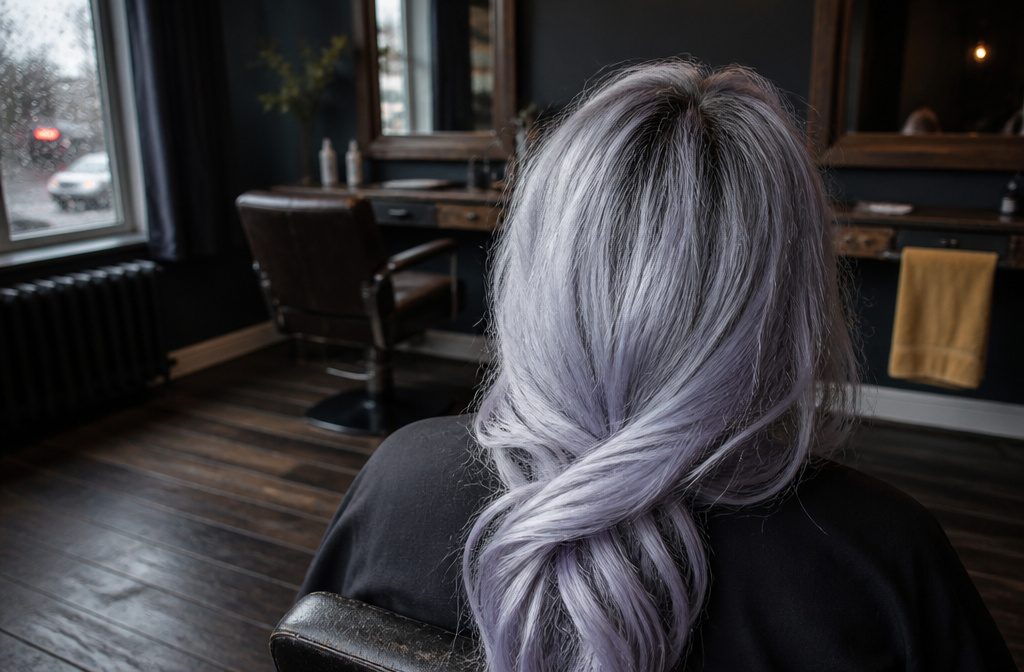
The granny hair trend is the practice of dyeing your hair silver, steel gray or platinum white on purpose, usually with violet or cool metallic undertones, to get a look closer to Elsa than to aging.
Getting there requires bleaching all your natural color out first, which can mean sitting in the salon chair for seven hours if you start with dark brown or black hair.
The cost runs $200 to $700 depending on how much lifting your hair needs, and you’ll be back every four weeks as your roots grow in.
What Granny Hair Actually Looks Like
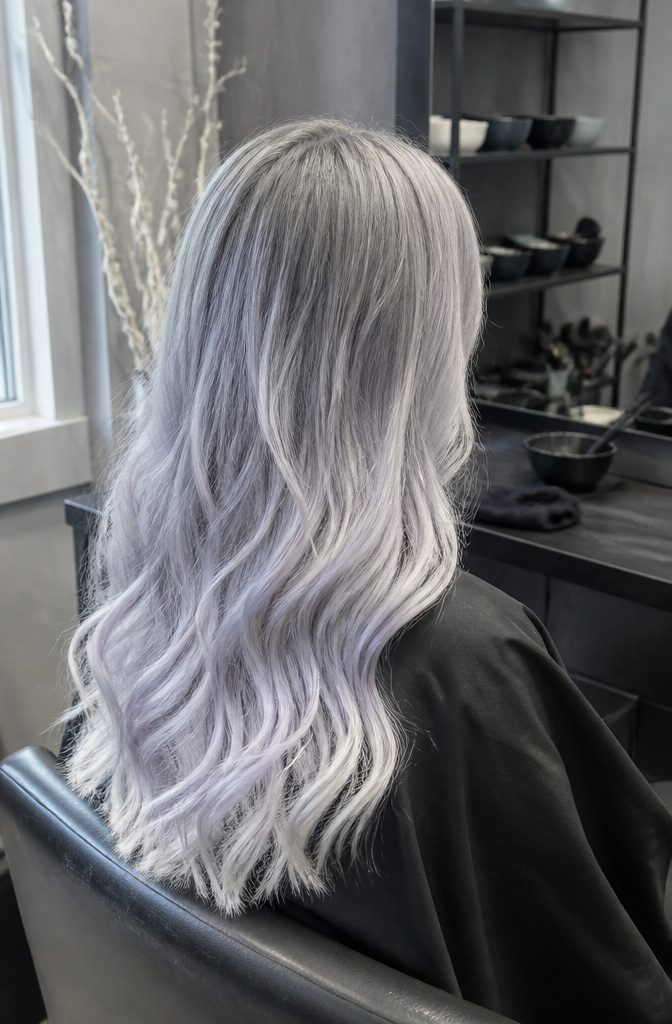
Granny hair isn’t the gray you’re covering up. It’s fashionably dyed gray, the kind you ask for by name: steel gray, silvery gray, really white, platinum-like with violet or silver undertones.
The look has a fairytale quality, cool and almost metallic, and more than one person has compared it to Elsa from Frozen.
That’s the appeal. Where natural gray can read dull or uneven, the dyed version is bright and intentional, closer to white gold than to aging.
The shades vary, but they all land somewhere between silver and ice, and the cooler the undertone the sharper the effect.
How the Look Became a Trend
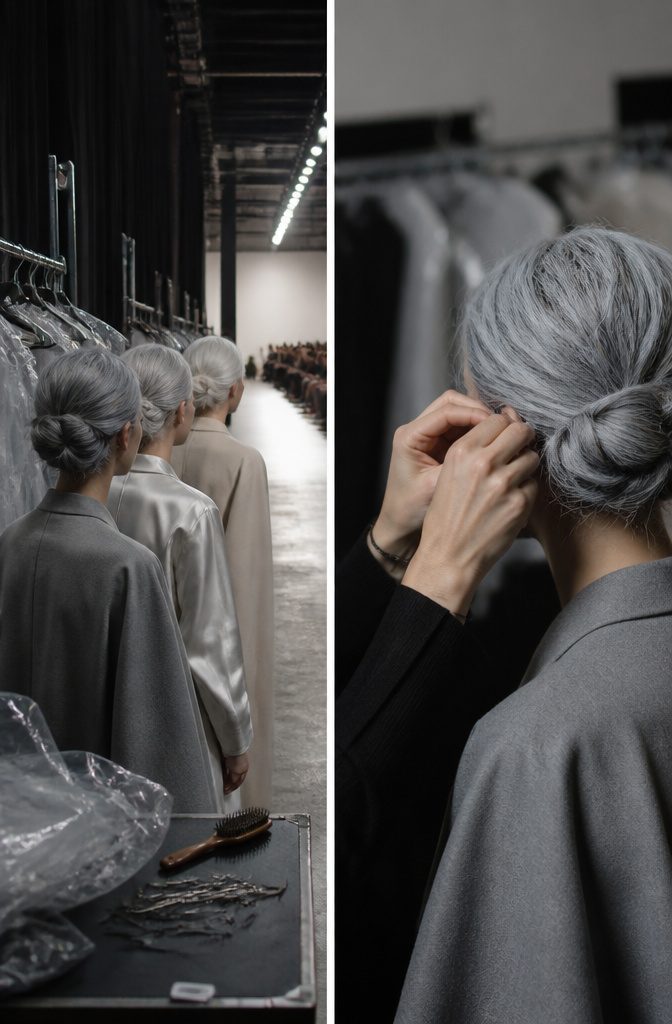
Silver hair started showing up on fashion runways first. Jean-Paul Gaultier, Chanel and Gareth Pugh all sent models down the catwalk wearing silver and gray tones that read more editorial than accidental.
Celebrities picked it up fast after that. Kelly Osbourne, Lady Gaga, Pink, Rihanna and Nicole Ritchie were all spotted with versions of the look, and women watching started asking their colorists for the same thing.
The contrast became obvious pretty quickly: some women were spending hours covering gray, while others were paying to get it applied on purpose.
The hashtag #grannyhair took off, and a page on boredpanda asking women to post their granny hair photos pulled over 500,000 views.
Fashion blogs started calling it the hottest color trend for 2015, and salons reported appointments specifically requesting steel gray, silvery gray or platinum with violet undertones.
The Bleaching and Coloring Process
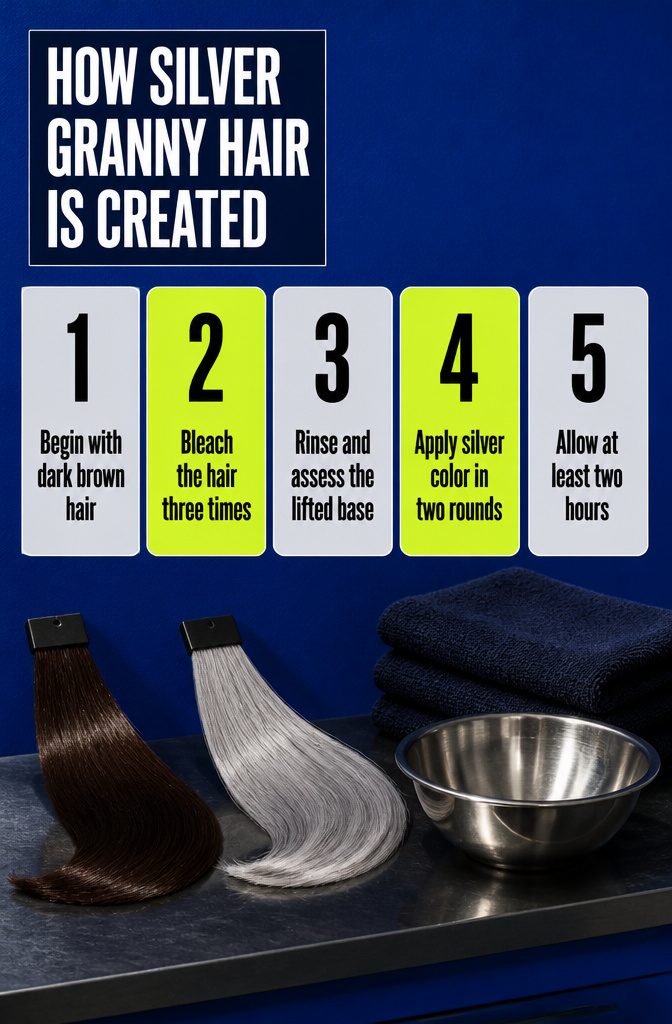
The hair has to be bleached before the silver color will take.
Natural color sits in the way, so stylists lift it out first and then deposit the gray. The timeline starts at two hours minimum to bleach and add color, but that assumes lighter starting hair and a straightforward lift.
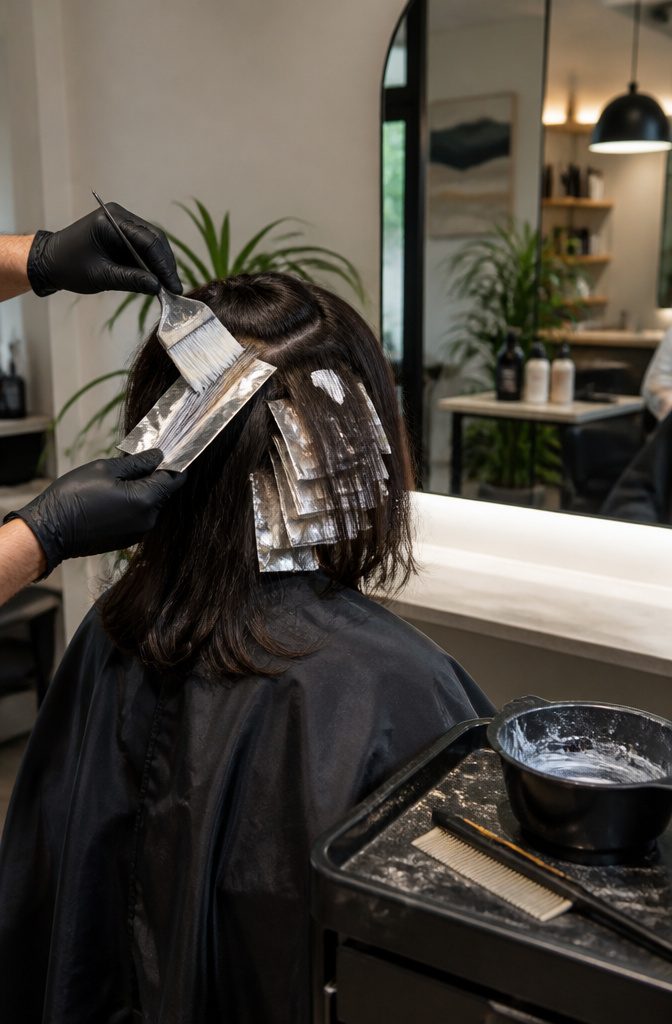
Jackie’s appointment ran seven hours. She walked in with dark brown hair, sat through three separate bleach sessions to get the base light enough, then two rounds of color to build the silver tone she wanted.
Dark hair holds more pigment, which means more passes with bleach and more time in the chair before the stylist can even start on the gray.
The process stretches because each bleach application has to develop, get rinsed, assessed, and often repeated if the hair still reads too warm or too dark for the final color to show true.
What It Costs and How Often You Touch It Up
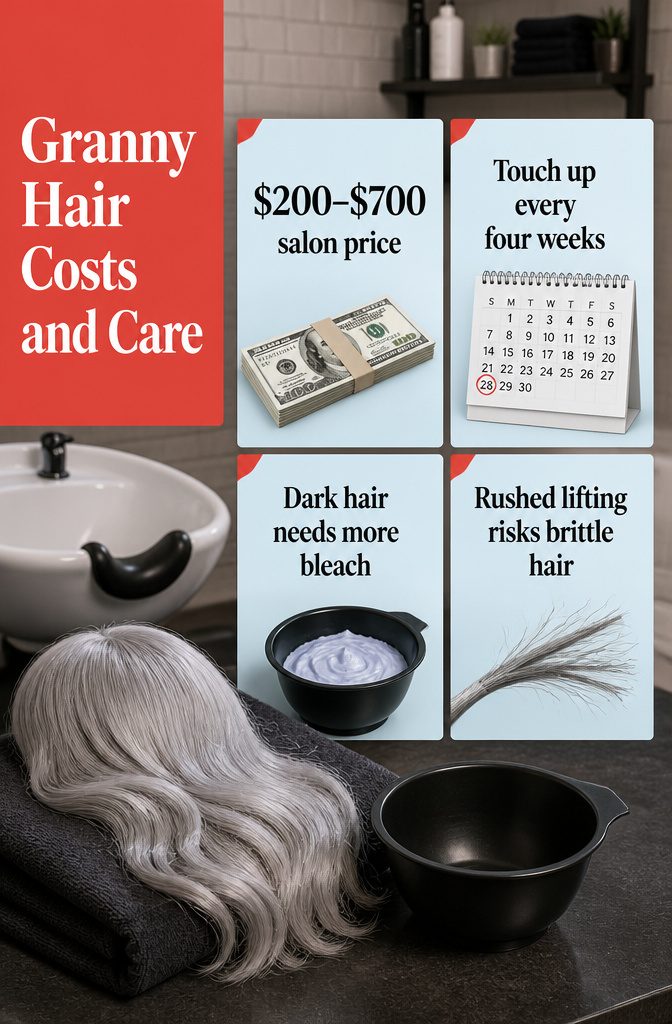
Expect to pay $200 to $700 depending on how dark your starting color is and how much processing your hair needs to get there.
Stylists charge more when they have to lift naturally black or deep brown hair through multiple rounds of bleach, and the bill climbs again if your hair is long or thick enough that it takes extra product and time.
Touch-ups land around every four weeks, since your natural root color will show the moment it grows out against that pale silver.
The bleaching part worries people with naturally dark hair, and for good reason. Lifting that much pigment means sitting through sessions that can leave hair dry and brittle if the colorist rushes it or skips bond-building treatments.
The fear of damage keeps some people from trying the look at all, even when they love how it photographs.
Kelly Osbourne and the Question of Who Started It
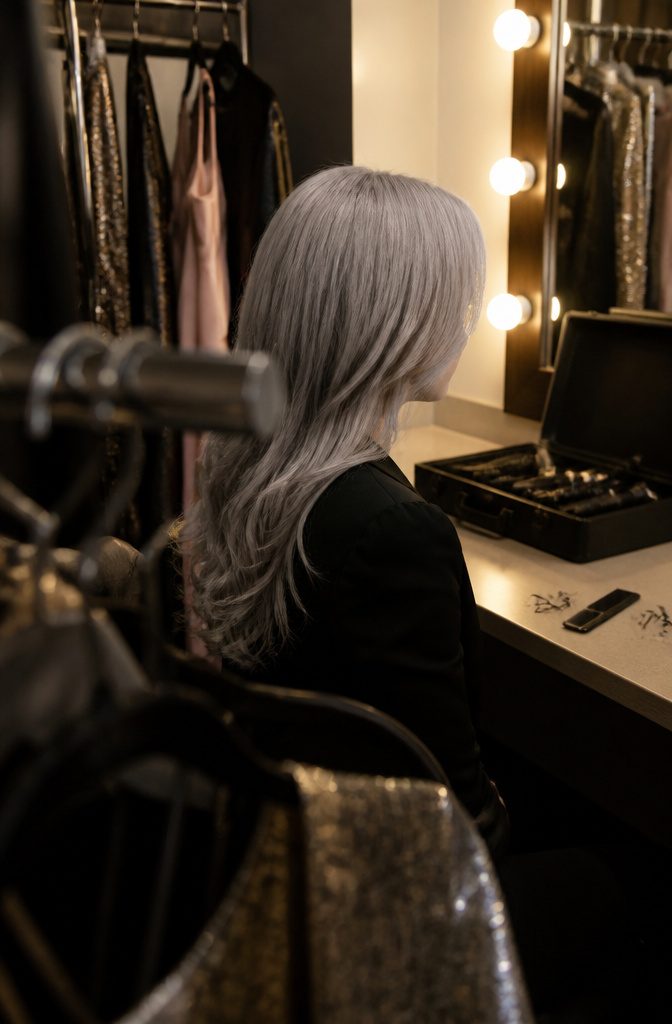
Kelly Osbourne is the name most people remember from granny hair’s early days.
I don’t know if she was actually the first celebrity to dye her hair silver, but she wore the look around the time it started showing up everywhere, and sources mention her alongside Lady Gaga, Nicole Richie, Rihanna and Pink as someone who made the color visible.
Once Osbourne went gray, girls everywhere followed. The association stuck, whether or not she led the charge.
Fashion designers like Jean-Paul Gaultier, Chanel and Gareth Pugh put silver hair on runway models, but Osbourne is the name that comes up when people talk about who wore it when it was still a risk rather than a Pinterest save.
Personal Reactions: Beautiful but Not for Everyone
The reactions split in a way that happens every time someone posts a bold color change: plenty of readers called it beautiful and striking, but not everyone pictured it on themselves.
One commenter loved the look but worried about frying naturally dark hair through all that bleaching. Another thought it was beautiful but doubted it would suit them.
Jackie, the 27-year-old who sat for the full transformation, had been fascinated since she first saw granny hair in a magazine.
She described it as something that sparked excitement every time she noticed it, a look that would draw attention just by being different.
That reaction lines up with what made the trend catch on: the color reads as unusual and deliberate, which means it gets noticed whether you love it or not.
Frequently Asked Questions
What is the granny hair trend?
Granny hair is fashionably dyed gray or silver hair, not natural aging gray. The look includes shades like steel gray, silvery gray, and platinum with violet or silver undertones that read bright, cool, and metallic rather than dull.
It became a fashion trend after appearing on runways for designers like Jean-Paul Gaultier and Chanel, then spreading when celebrities like Kelly Osbourne, Lady Gaga, and Rihanna wore it.
How much does it cost to get granny hair?
Getting granny hair costs $200 to $700 depending on your starting hair color and how much bleaching is required.
Darker hair needs multiple rounds of bleach to lift enough pigment before the silver color can be applied, which raises both time and cost. Touch-ups run about every 4 weeks since your natural roots will show quickly against the pale silver.
How long does it take to dye your hair granny gray?
Dyeing hair granny gray takes at least 2 hours for lighter starting hair, but can stretch to 7 hours or more for naturally dark brown or black hair.
The hair has to be bleached first to remove natural pigment, sometimes through multiple sessions, before the gray color is applied. Each bleach round has to develop, get rinsed, and be assessed before moving to the next step.
Is gray hair still in style?
Gray hair as a dyed fashion trend peaked around 2015 when it was called the hottest color trend, with hashtags like #grannyhair pulling hundreds of thousands of views.
The look still appears but no longer dominates the way it did when celebrities first started wearing it and salons reported a surge in requests for silver and steel gray tones.