
Black cumin oil is pressed from Nigella sativa seeds, sold as black seed or kalonji oil, and its main active compound is thymoquinone.
It calms the scalp and eases shedding, but it won’t reverse established pattern loss. The one trial behind it, a 2014 study in telogen effluvium, used a concentrated extract and took 8–12 weeks.
Black Cumin Oil and Its Compounds
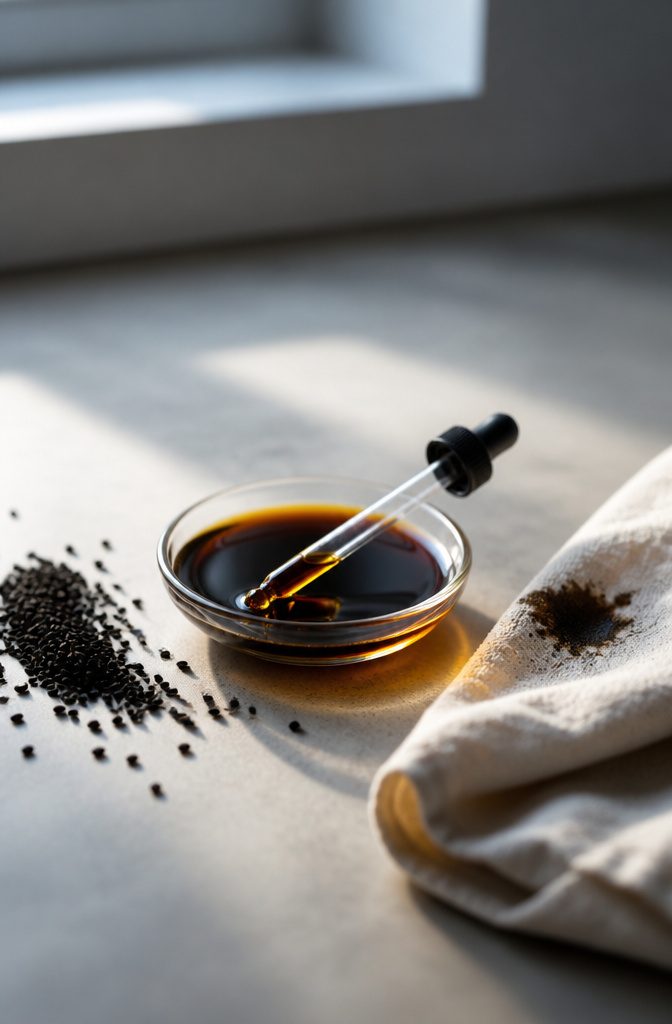
Black cumin oil is pressed from the seeds of Nigella sativa, and the same bottle is sold as black seed oil, kalonji oil, Nigella oil or Habbat-ul-sauda.
"Black cumin" is technically a misnomer because the plant is unrelated to cumin, yet labels use the names interchangeably.
The compound to know is thymoquinone, the main bioactive and the one most of the oil’s benefits are tied to.
Thymohydroquinone, dithymoquinone and nigellone come alongside it, plus unsaturated fatty acids. Alpha-linolenic acid alone is around 22% of the oil.
Expect a deep amber color that can look almost black, and a strong, bitter smell that fades after washing.
Choose the Application Method
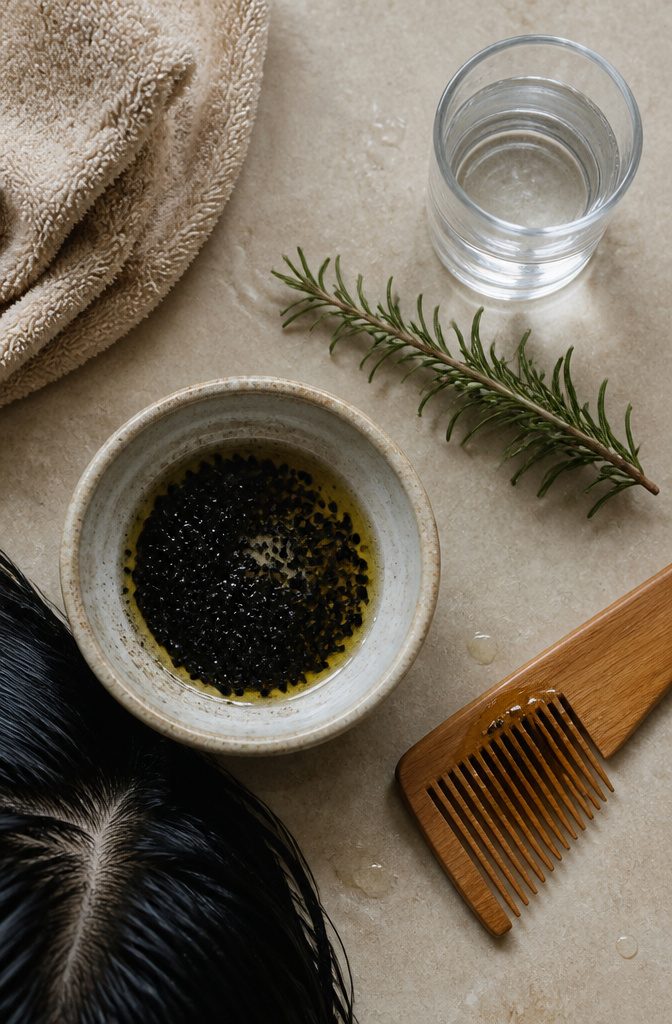
Start with the scalp treatment and move to the others only if it doesn’t suit your hair.
- Scalp treatment: Warm ½ teaspoon to 2 teaspoons between your palms. Part your hair in sections, apply to the scalp, and massage for 3–10 minutes. Massage shampoo into the oil before adding water, then rinse.
- Mask: Mix 2 tablespoons black seed oil with 2 tablespoons jojoba or coconut oil. Add 5 drops rosemary if you like. The carrier dilutes it, so it suits lower-density hair.
- Shampoo or conditioner: Add 5 to 6 drops to your usual bottle amount.
- Rinse: Mix 5 drops, 1 cup warm water and 1 tablespoon apple cider vinegar. Pour it over your scalp after shampooing and wait 2 minutes. It’s the lightest option for fine hair.
- Onion-juice mask: Mix 1 tablespoon juice with 1 teaspoon oil and leave it on for 30 minutes. The smell washes out.
Frequency and Contact Time
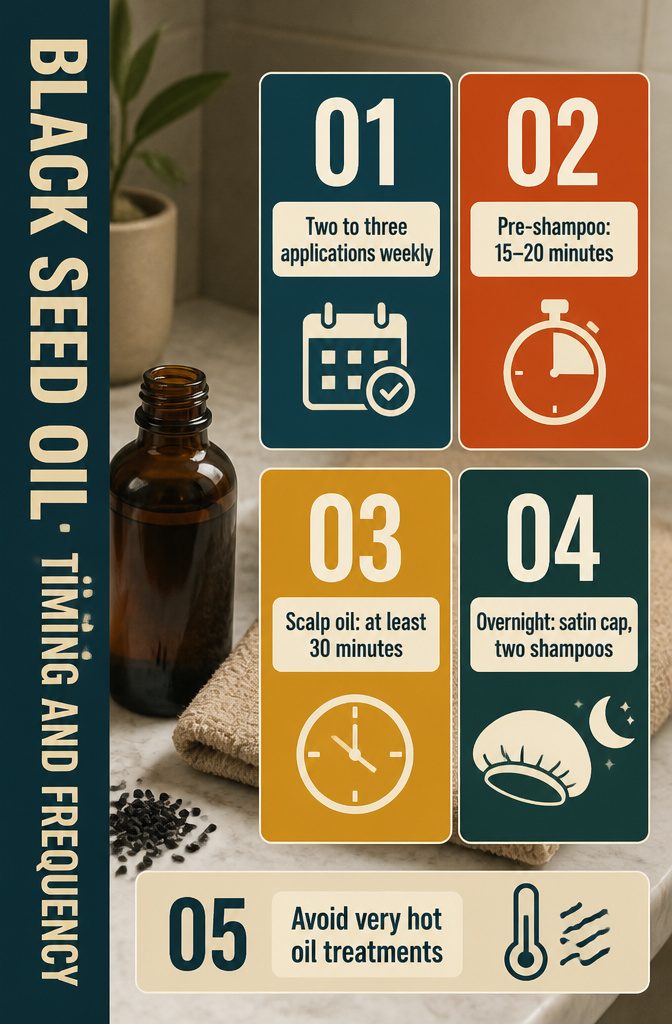
Two to three applications a week is the range to stick with. Daily use is unnecessary and tends to leave hair greasy or heavy, and the oil needs the days between to work.
Contact time depends on the method.
A pre-shampoo treatment needs only 15–20 minutes. Scalp oil should sit for at least 30 minutes, and the strongest routine runs an hour or overnight.
For overnight, wear a satin cap or use a pillow protector, and expect two shampoos to clear it. A mask goes on once a week for 30–60 minutes.
Color-treated hair is fine, since the oil doesn’t affect color. Skip very hot oil treatments, though, because heat can lift it.
Match Method to Concern
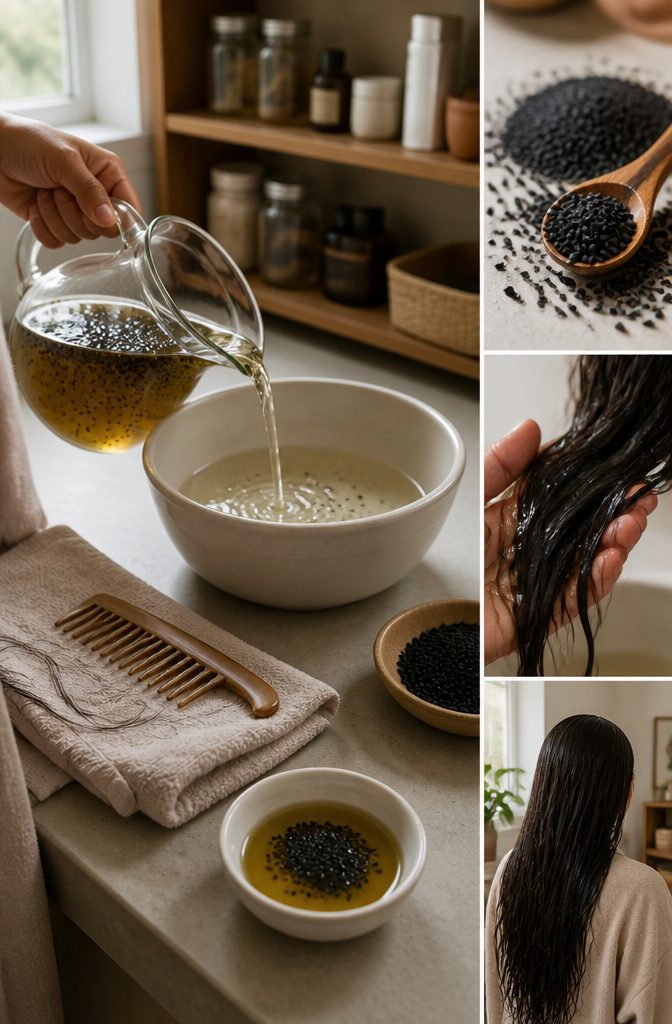
Black cumin for hair works best when the method fits the problem, and the match is fairly clean:
| Concern | Method | How often |
|---|---|---|
| General thinning | Direct scalp massage | 2–3 times a week |
| Dandruff and itch | Direct massage or rinse | 2–3 times a week |
| Breakage, weak ends | Mixed with coconut oil | 1–2 times a week |
| Pattern hair loss | Overnight scalp massage | 3 times a week |
| Post-stress shedding | Massage with castor oil blend | Twice a week |
| Fine, greasy hair | Rinse | After every wash |
| Active dandruff with hair fall | Onion juice mask | Once a week |
If your scalp runs oily, use less and pick a rinse or a few drops in your shampoo. A heavy overnight application is the wrong fit there.
Results in 4–12 Weeks
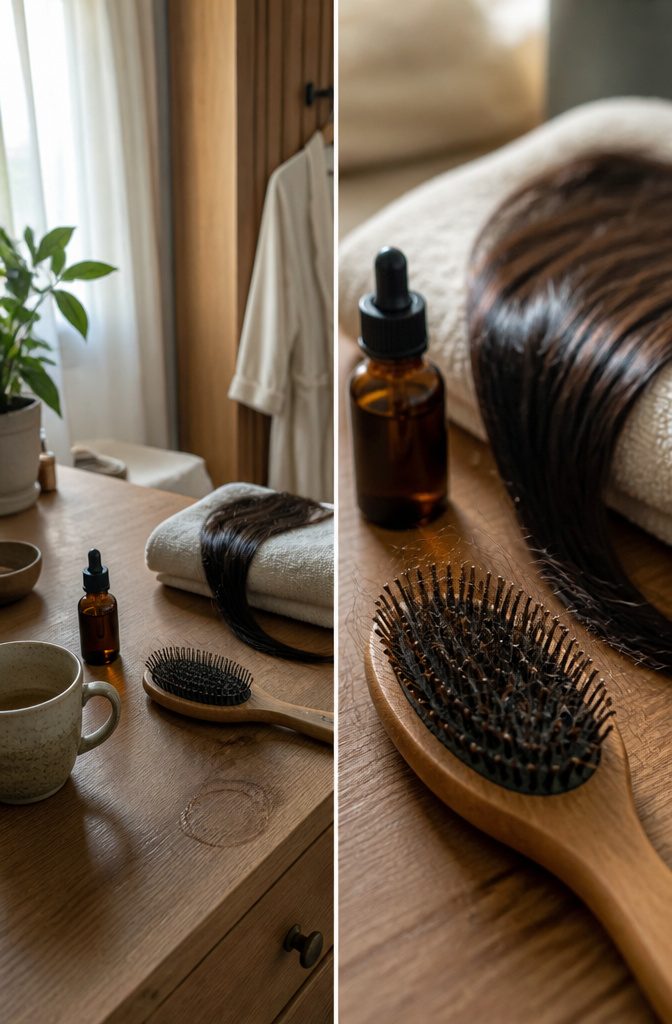
Shedding and breakage ease first.
Around weeks 4–6 of steady use, expect fewer hairs in the brush and shower drain, plus softer, shinier strands. Density takes longer: visible new growth and fullness need 8–12 weeks at minimum, roughly 3 months.
That matches the window in the 2014 telogen effluvium trial. Two weeks is not a fair test, and I’d hold off judging until the 3-month mark.
Treat black cumin as a supporting routine, not a fix. Results vary from person to person.
For pattern loss driven by DHT, progress is slower and more modest. The oil may slow things down, but it won’t reverse established loss.
Quality and Safety Checks
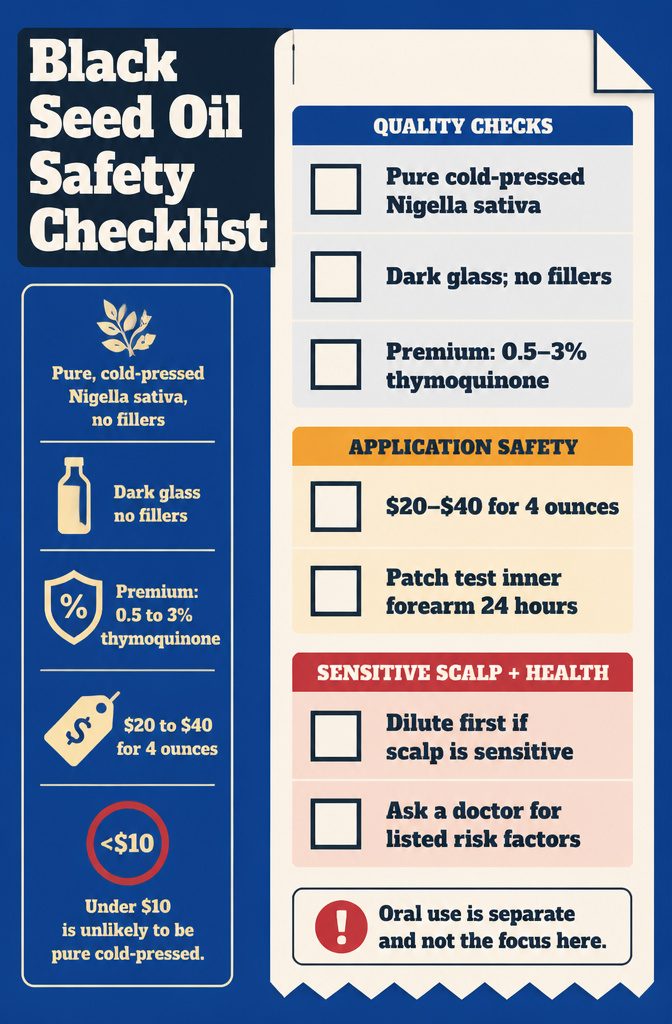
What to buy:
- Pure, cold-pressed Nigella sativa, no fillers, dark glass bottle; heat damages thymoquinone.
- Premium runs 0.5 to 3% thymoquinone and $20 to $40 for 4 ounces; under $10 is unlikely to be pure cold-pressed.
Sensitive scalps need a carrier oil:
it’s best to dilute the oil with a carrier oil, such as rosehip or coconut oil, to minimize the risk of irritation.
Mix first, then apply.
- Patch test on the inner forearm 24 hours before scalp use.
- Mild irritation may settle in 1 to 2 weeks.
- Doctor first for: pregnancy, breastfeeding, bleeding disorders, blood thinners or other medication, Ranunculaceae allergy, sudden or patchy hair loss.
- Oral use is separate and not the focus here.
Scalp Health and Inflammation
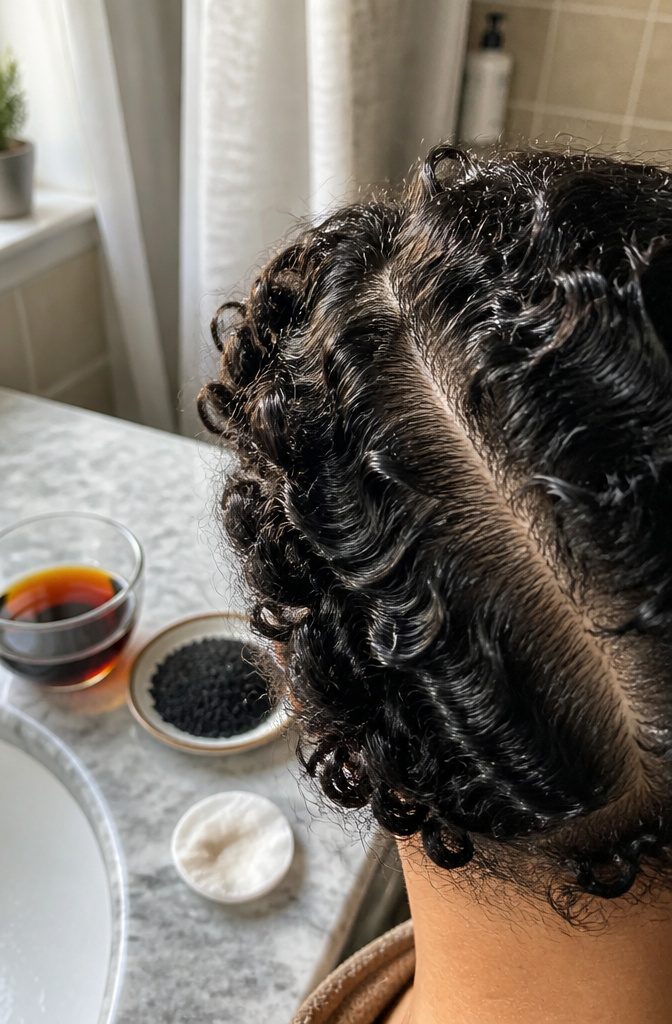
Thymoquinone and nigellone are the two most studied compounds in black cumin, and they carry most of the scalp claims. Thymoquinone acts as an antioxidant and calms inflammation, while nigellone has antihistamine properties that reduce scalp irritation.
Alpha-linolenic acid, about 22% of the oil, covers the moisturizing side. A calmer, less dry scalp is a better place for a follicle to work, and I find that the most believable part of the pitch.
Dandruff is more specific.
The oil has documented antifungal activity against Malassezia, the fungus that overgrows on the scalp and drives flaking. For a dry, flaky scalp the support is milder, so I’d treat it as a gentle add-on.
Hair Growth and Hair Loss Evidence
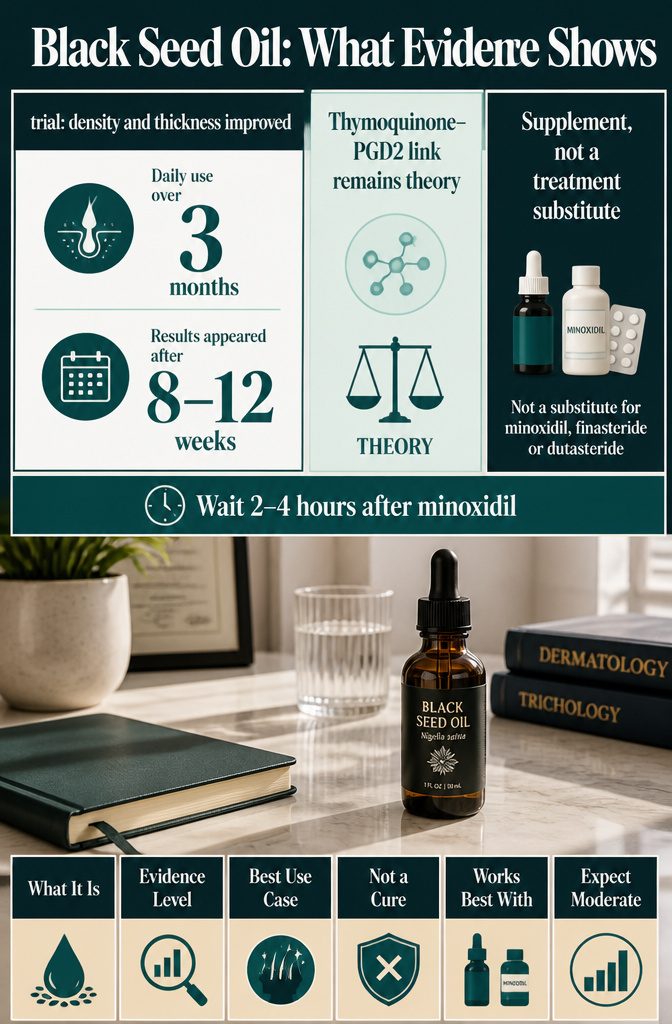
A 2014 randomized controlled trial found that a topical Nigella sativa lotion improved hair density and thickness in telogen effluvium after 8 to 12 weeks, with daily use over 3 months.
That lotion was a concentrated extract, so ordinary retail black seed oil will likely do less.
Thymoquinone may block COX-2 and lower PGD2, an inflammatory molecule elevated in balding scalps, but that is a theory, not proof.
For pattern hair loss, I’d treat black seed oil as a supplement, not a substitute for minoxidil, finasteride or dutasteride.
If you use minoxidil, apply it to a clean, dry scalp, let it absorb for 2 to 4 hours, and keep oil off until then.
Moisture and Breakage by Hair Type
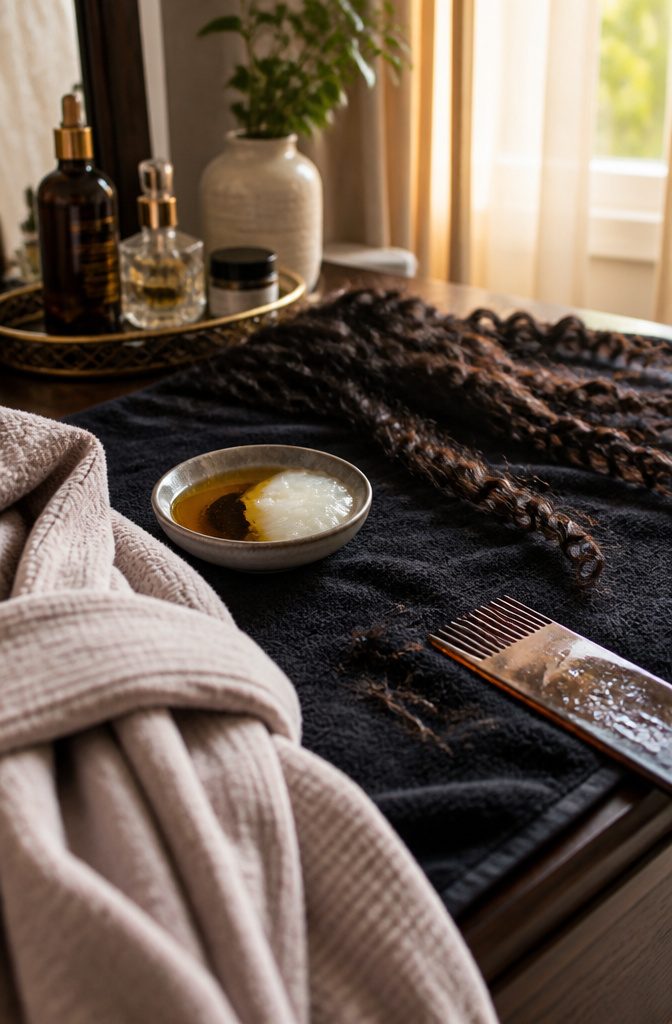
Black seed oil’s fatty acids help hair hold moisture, and its vitamin E is credited with strengthening strands, which is where the softness, shine and fewer snapped ends come from.
In a study of natural oils, it raised hair moisture by about 12% in dry climates and roughly 15% in hot or humid ones.
Low-porosity, fine or oily hair does best with a small amount, rinsed out thoroughly, which adds shine without weighing it down. Dry, damaged, curly, coily and high-porosity hair can take richer use, since it needs more hydration.
Mixing it with coconut oil in equal parts works well: coconut oil penetrates the shaft and cuts protein loss, while black seed oil works on the scalp.
Rosemary Oil and Minoxidil Compared
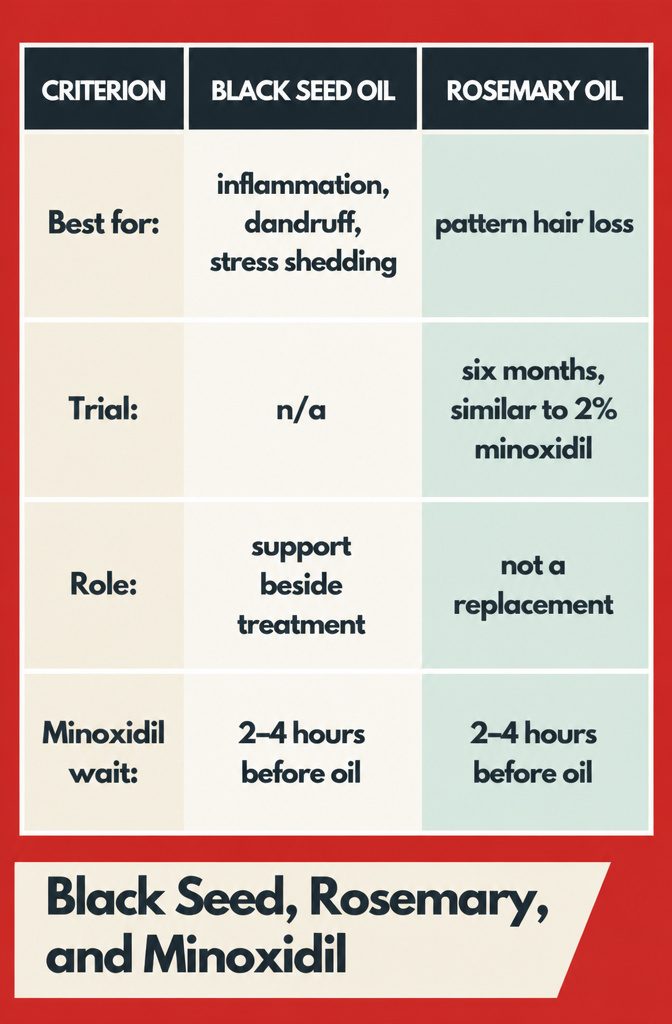
Rosemary oil has the stronger case for pattern hair loss.
A 2015 trial ran six months and found it gave results very similar to 2% minoxidil for androgenetic alopecia. Black seed oil is the better pick for the scalp itself.
| Option | Best for | Trial evidence |
|---|---|---|
| Black seed oil | Inflammation, dandruff, stress-related shedding | n/a |
| Rosemary oil | Pattern hair loss | Six months vs. 2% minoxidil, similar results |
| Minoxidil | Pattern hair loss | Benchmark in that trial |
Neither oil replaces minoxidil, finasteride or dutasteride, so I’d treat black seed oil as a supporting step beside medical treatment.
Let minoxidil absorb for 2–4 hours before any oil touches the scalp. Using black seed and rosemary together is reasonable.
Frequently Asked Questions
Does black seed oil really work for hair growth?
The evidence is promising but limited. A 2014 randomized trial found a Nigella sativa lotion improved hair density and thickness in telogen effluvium after 8–12 weeks, though that lotion was a concentrated extract and store-bought oil likely does less.
For pattern hair loss, expect slow, modest progress; the oil may slow things down but won’t reverse established loss.
How long does black seed oil take to work on hair?
Less shedding and breakage usually show up around weeks 4–6 of steady use.
Visible new growth and fullness take 8–12 weeks at minimum, roughly 3 months. Two weeks is too short to judge anything.
Can I leave black seed oil in my hair overnight?
Yes, overnight is the strongest version of the routine.
Wear a satin cap or use a pillow protector, then massage shampoo into the oil before adding water and plan on 2 shampoos to clear it. For pattern hair loss, an overnight scalp massage about 3 times a week is the match.
Can you use black seed oil with minoxidil?
Yes, but not at the same time.
Put minoxidil on a clean, dry scalp, let it absorb for 2–4 hours, and keep oil off until then. Treat the oil as a supporting step beside minoxidil, not a replacement for it.
How often should I use black seed oil, and can I use it every day?
Stick with 2–3 applications a week. Daily use is unnecessary and tends to leave hair greasy or heavy, since the oil needs the days between to work.
A diluted rinse after each wash is the lightest option if you want something more frequent, especially for fine hair.
Is black seed oil safe on color-treated hair?
Yes, it doesn’t affect hair color. Skip very hot oil treatments, because heat can lift color.
My scalp is oily. Can I still use black seed oil?
Yes, just use less. Choose a rinse or add 5–6 drops to your shampoo or conditioner instead of doing a heavy overnight application, which is the wrong fit for an oily scalp.
Can I mix black seed oil with coconut oil?
Yes, equal parts works well.
Coconut oil penetrates the hair shaft and cuts protein loss, while black seed oil works on the scalp. Use 2 tablespoons of each as a mask once a week for 30–60 minutes.
Is black seed oil the same as kalonji oil?
Yes.
Kalonji oil, black cumin oil, Nigella oil and Habbat-ul-sauda are all names for oil pressed from Nigella sativa seeds. "Black cumin" is a misnomer, since the plant isn’t related to cumin.
Black seed oil vs. rosemary oil: which is better for hair growth?
Rosemary oil has the stronger case for pattern hair loss: a 2015 six-month trial found results very similar to 2% minoxidil.
Black seed oil is the better pick for the scalp itself, including inflammation, dandruff and stress-related shedding. Using them together is reasonable.
Who should not use black cumin seed oil?
Talk to a doctor first if you’re pregnant or breastfeeding, have a bleeding disorder, take blood thinners or other medication, or have an allergy to Ranunculaceae plants.
The same goes for sudden or patchy hair loss, which needs a diagnosis before any oil.
What are the side effects of black cumin oil on hair?
The main one is scalp irritation, and mild irritation may settle within 1–2 weeks.
Patch test on your inner forearm 24 hours before scalp use, and dilute the oil with a carrier like coconut or rosehip if your scalp is sensitive. Side effects of taking it orally are a separate topic and not covered here.