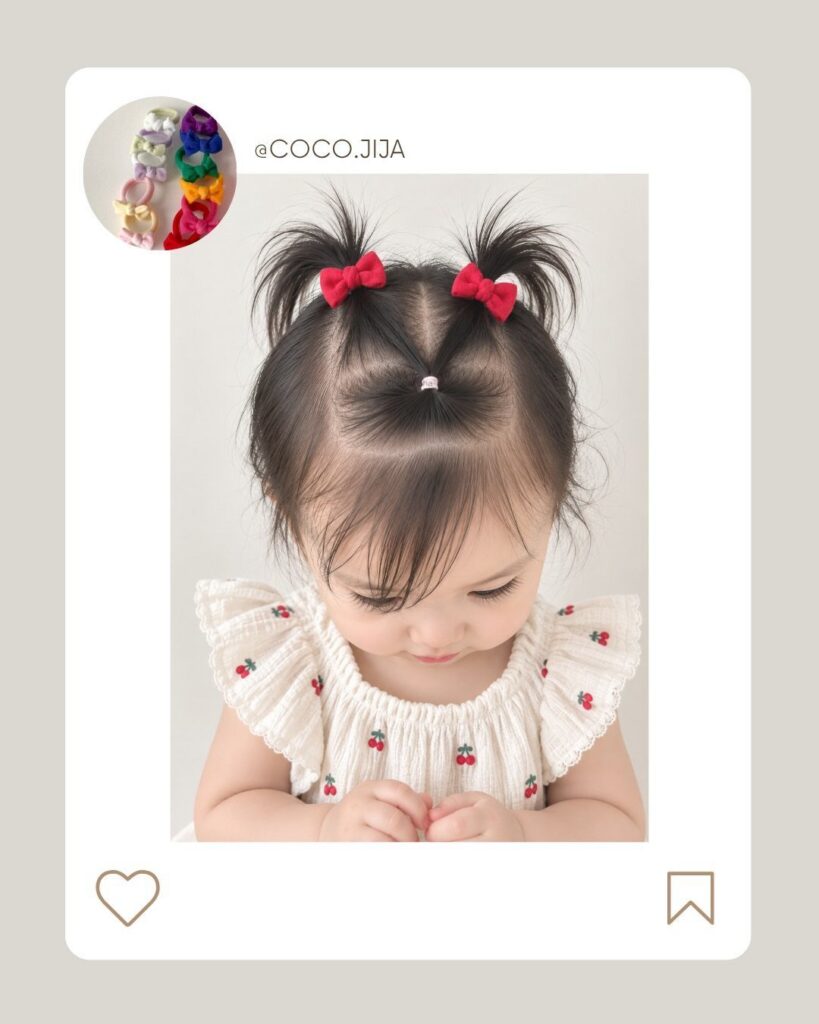
The 11 ideas start with a bow pin on a short side part and run up to geometric beaded cornrows, which need a braider comfortable with patterned work.
Hair amount and texture settle the choice: a baby with fine wisps that grip nothing does best in the wide bow headband, while hair long enough to section opens up the ponytails, buns, braids and twists.
Textured hair keeps a braid in place for several days, so those looks need the least daily restyling.
1. Short Side-Parted Hairstyle with Bow Pin
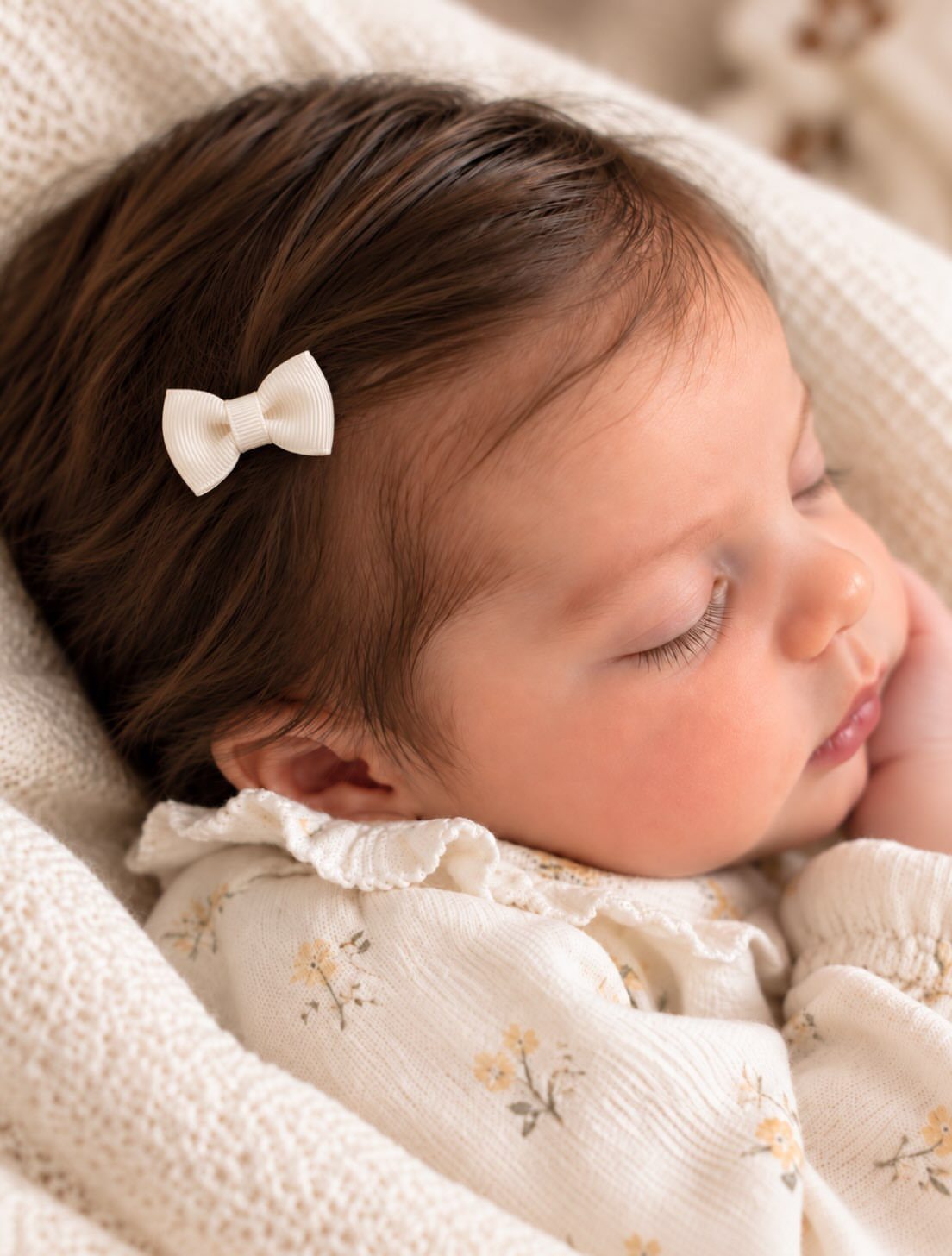
A side part and one small clip, just enough to keep hair off the forehead. When there isn’t much hair yet, a simple part gives the style its shape and a bow or snap clip finishes it.
Part the hair where it naturally wants to fall, usually a bit off-center, and smooth the front section to the side.
Clip it near the temple. The clip does most of the work here, holding that front piece in place while adding a little detail without covering the whole head.
2. Two Ponytails with Fluffy Bows
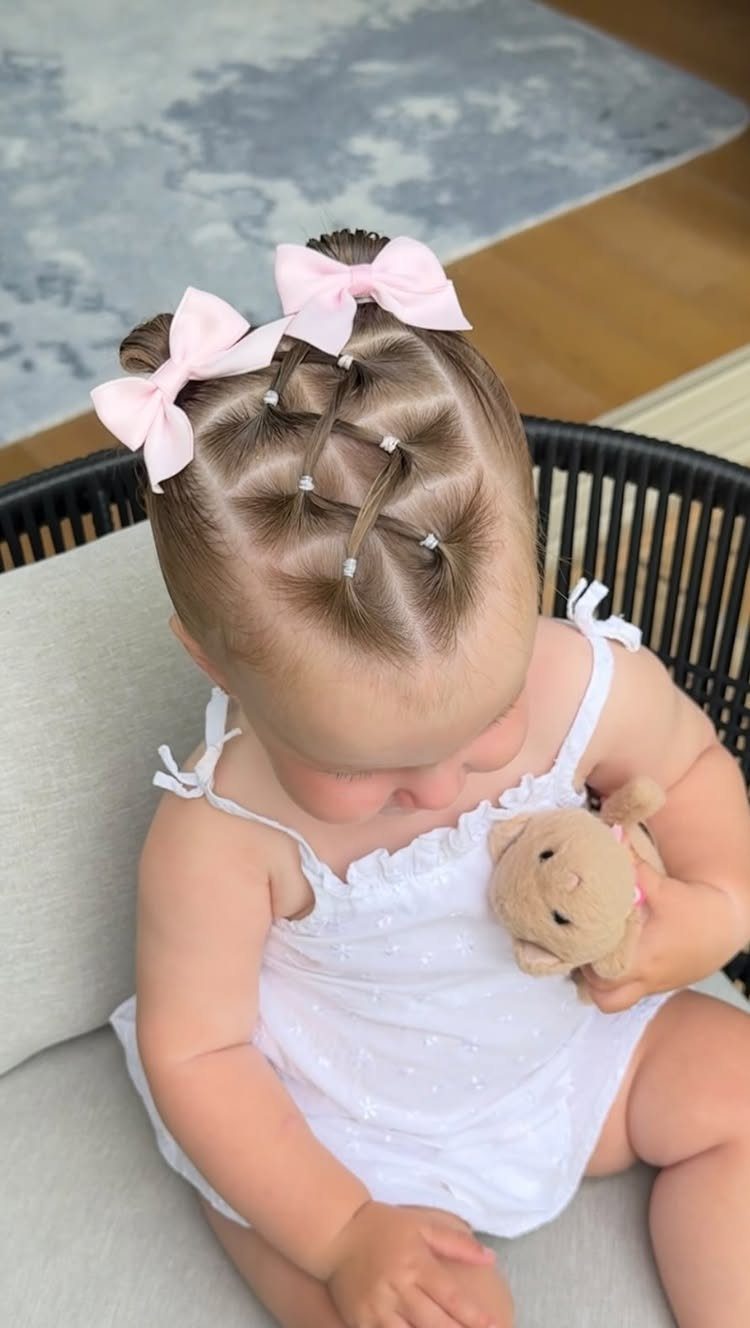
Four sections are gathered into 2 larger ponytails, finished with fluffy bows. This works when there’s enough hair to section but not enough volume to hold just one ponytail in place all day.
Part the hair down the middle from front to back, then divide each side again horizontally to create 4 sections total.
Gather the front and back sections on each side together into 2 ponytails, one on the left and one on the right. Secure with small elastics and tie bows over them.
The bows do double duty: they cover the elastics and add enough weight to keep the ponytails from sliding forward.
3. Wide Bow Headband for Short Hair
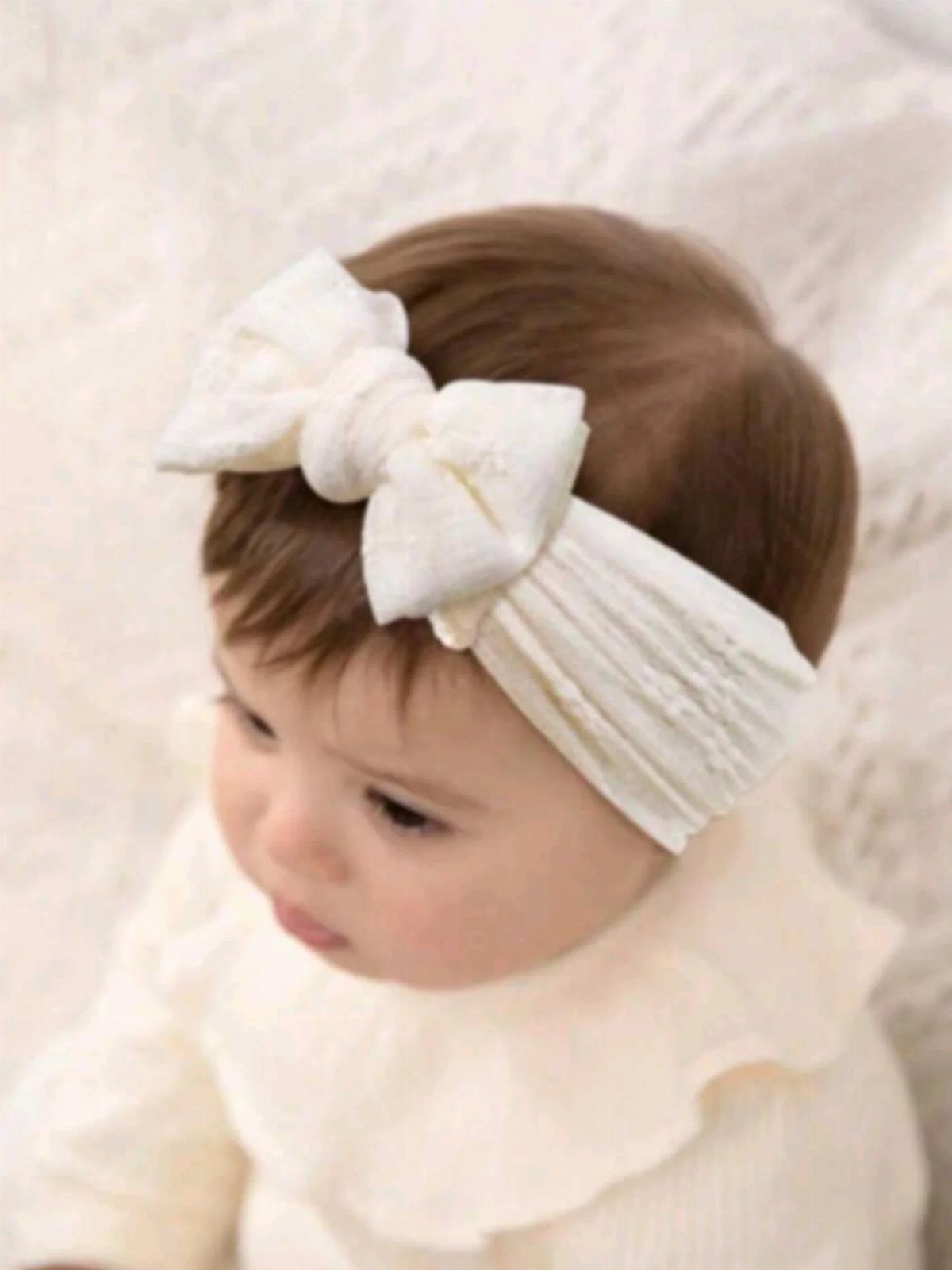
A wide, soft bow headband sits across the crown and does all the styling when there isn’t much hair to work with yet.
This is the fastest option for infants with very short or fine hair that won’t hold clips or elastics.
Look for headbands with a wide band that won’t dig in or slide around.
The bow should be floppy and oversized, not stiff, so it moves with the baby instead of poking or sitting too high. Fabric or cotton blends are softer than satin or grosgrain and less likely to irritate.
Slip it on and adjust the band so it sits comfortably behind the ears. No additional styling needed.
4. Multiple Braids
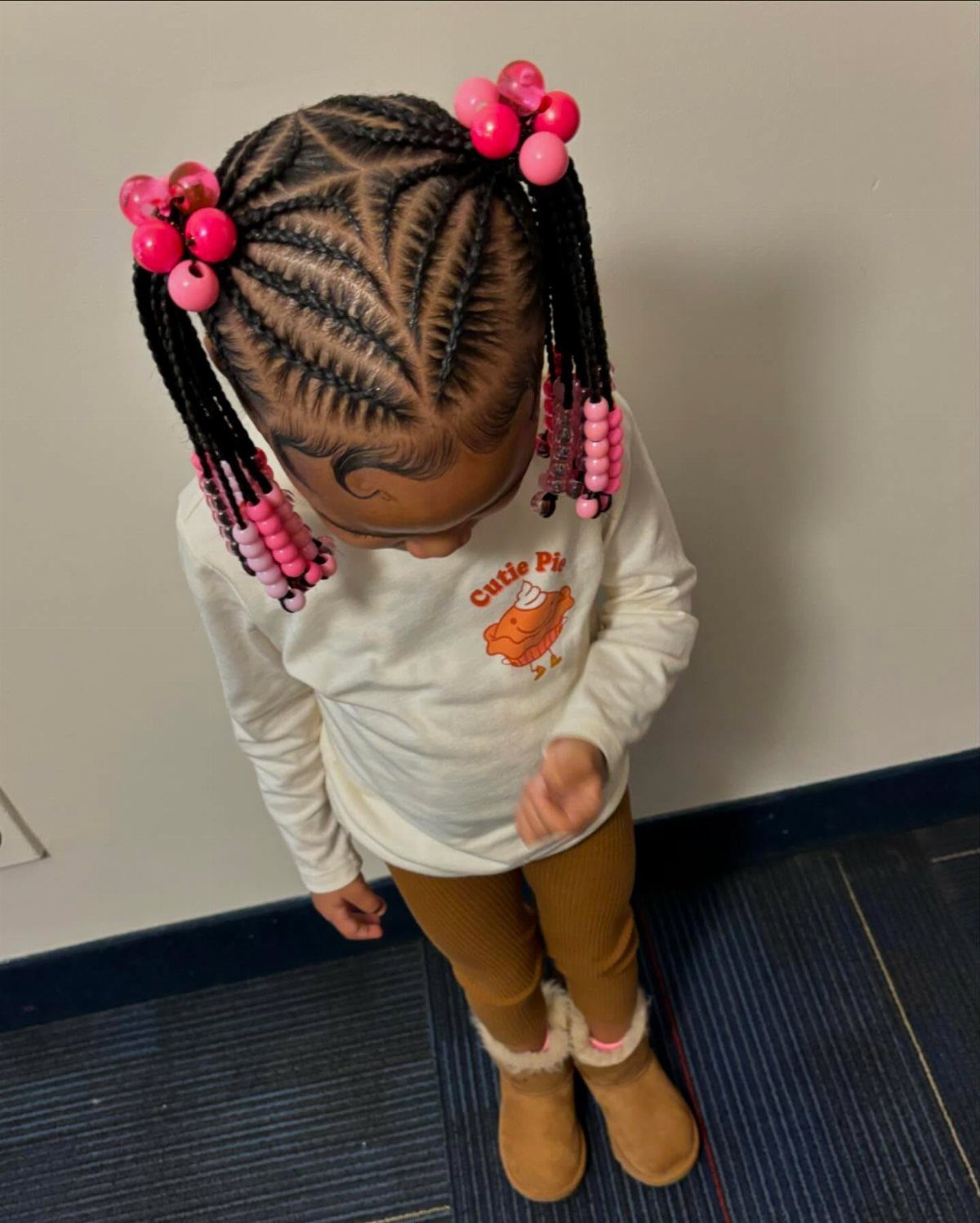
Several cornrow braids are arranged in rows and gathered at the ends with beads or elastics. The braids follow the scalp in straight or curved lines, depending on how they’re laid out, and finish in 2 high ponytails or left loose.
This works best with textured hair that holds a braid without slipping.
The braids themselves keep the style in place for several days, which cuts down on daily restyling. Beads add color and a little weight to keep the ends from unraveling.
If the infant is very active, keep the braids shorter or gather them into ponytails so they don’t catch on anything during tummy time or play.
5. Tiny Twisted Knots
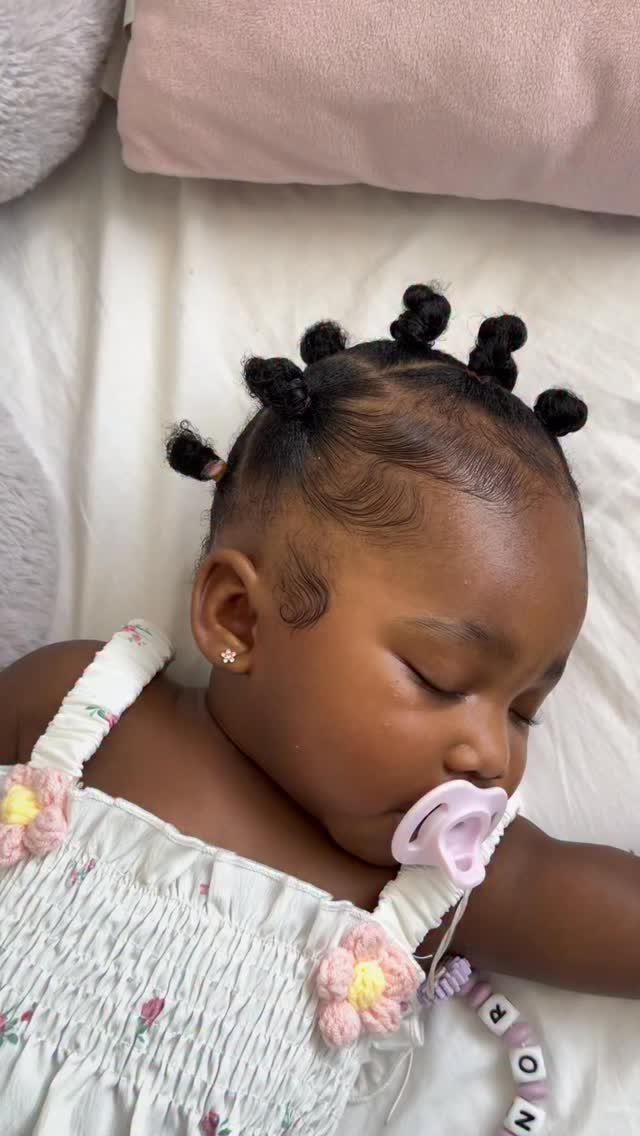
The hair is divided into small sections, each twisted and gathered into a rounded knot across the top of the head. This keeps fine or medium-textured hair in place without needing much length.
Divide the hair according to how much there is: thicker hair needs more sections, and fine, wispy hair looks better with fewer, so each knot still has enough to twist.
Twist each section loosely, then coil it into a small knot and secure with a small elastic or clip. The knots sit close to the scalp and won’t pull if kept loose.
This style holds well on slightly damp hair and lasts through naps and crawling without needing adjustments. Keep the twists gentle so they don’t tug at the roots.
6. Two Bow-Tied Sections
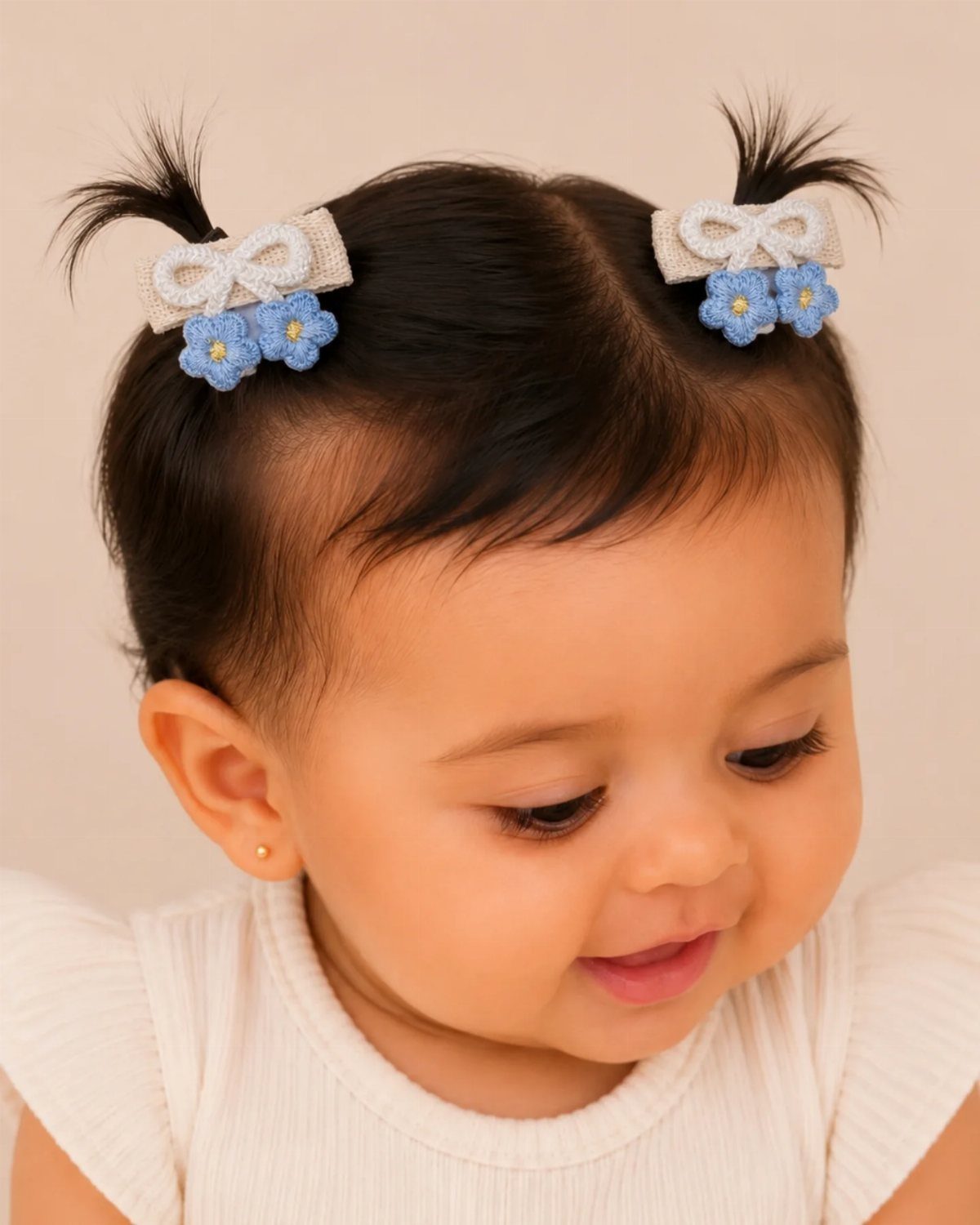
Short hair is parted to one side and gathered into 2 small sections, each decorated with a white bow and a small flower clip.
The bows cover the elastics and the flower clips add a second layer of detail without adding much weight.
Section the hair horizontally into a top and bottom piece on each side, then gather each side into a tiny ponytail.
Small elastics hold each section, the bows cover them, and the flowers clip in beside the bows or right on top.
This works when there’s just enough hair to section but not enough to keep clips in place on their own. The elastics do the holding, and the accessories add the style.
7. Two High Coiled Buns
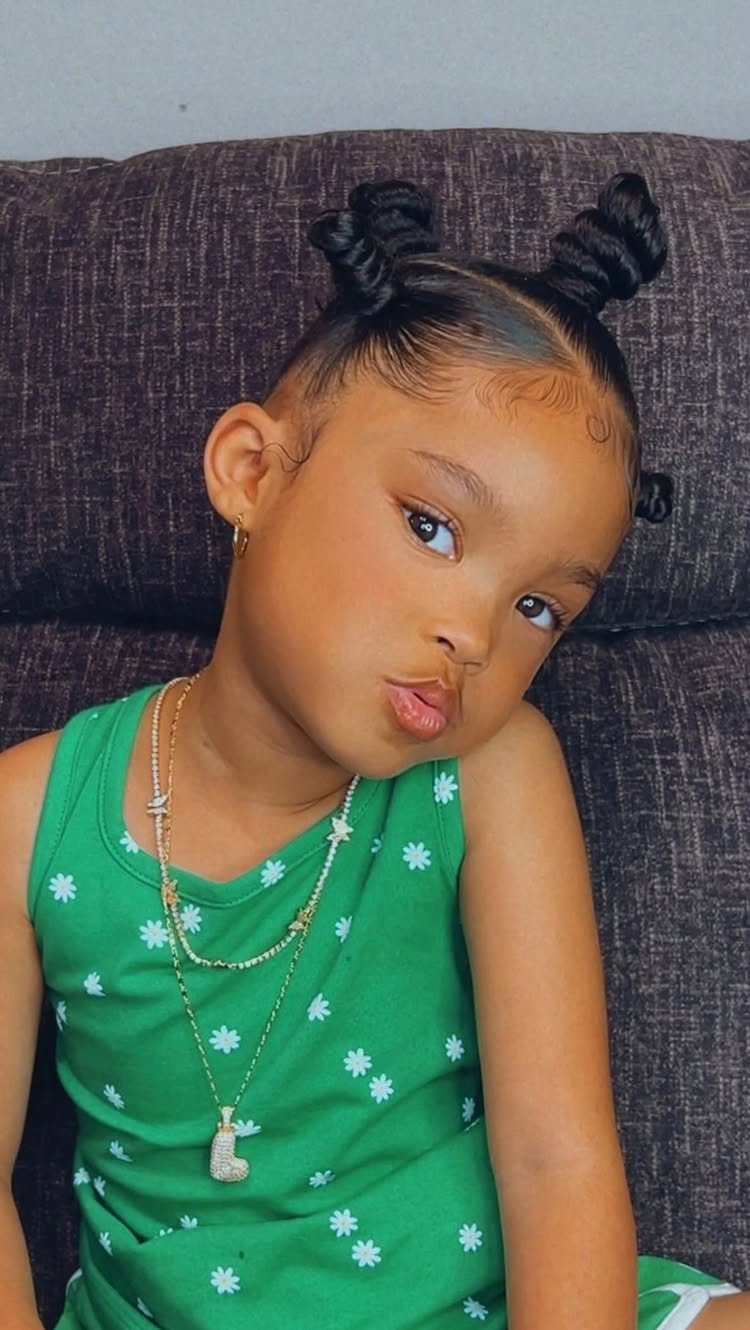
Two buns sit high on the head, each one coiled and the edges smoothed flat along the hairline. The smooth edges make it look finished, so that’s where I’d spend the effort.
Part down the middle, gather each side up high, and coil the hair around itself into a bun. Keep the 2 buns level with each other, because a mismatch is the first thing the eye catches.
8. Cornrow Buns with Bows
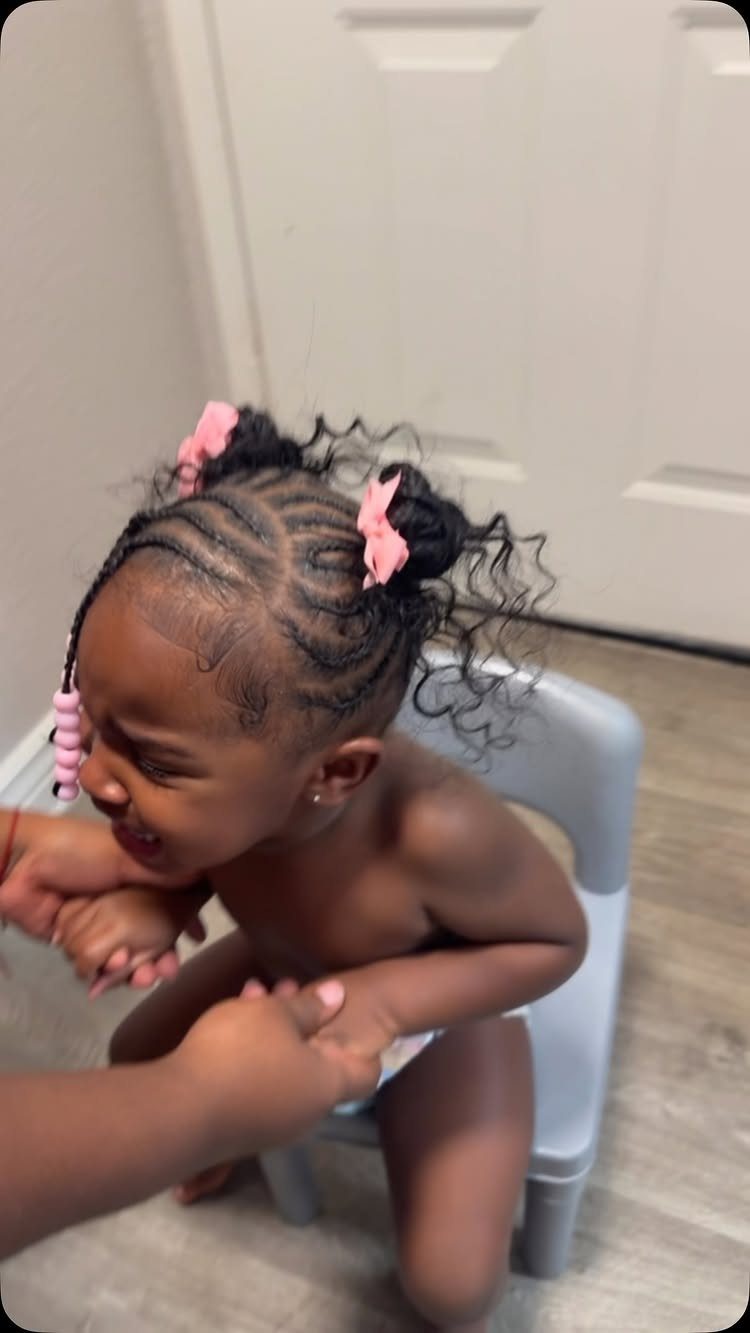
Cornrows lay the foundation, and each braid ends in a small bun topped with a pink bow. The bow is the only decoration, so the buns can stay plain.
I’d choose small, soft bows scaled to the size of the buns. An oversized bow on a tiny bun looks heavy and tends to tip to one side.
9. Geometric Beaded Cornrows
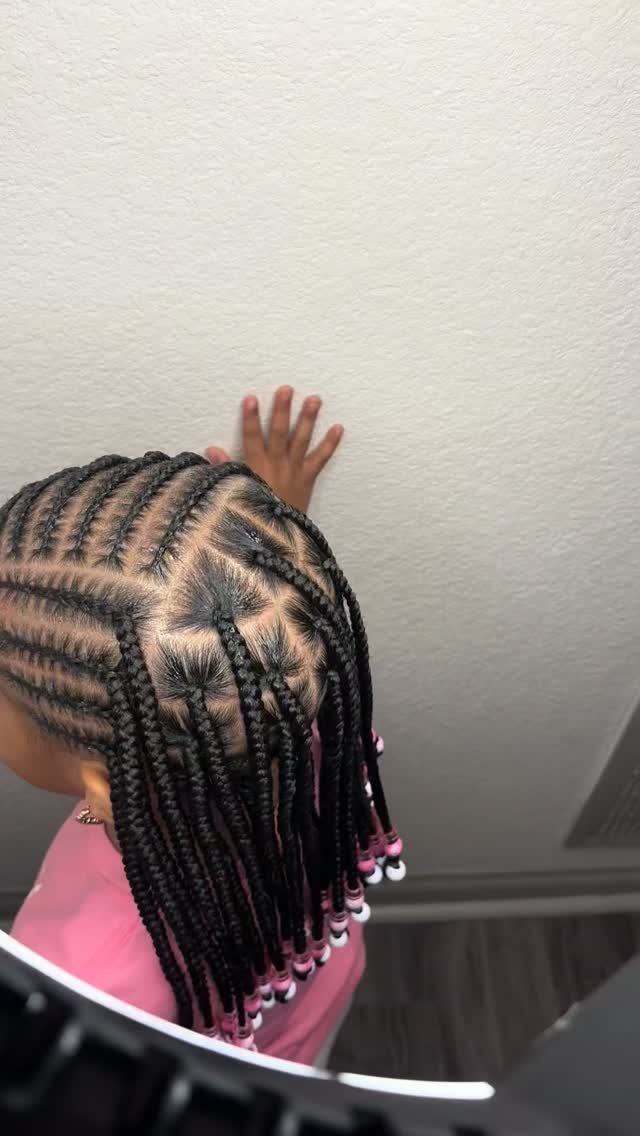
The design lives in the partings. Geometric lines are drawn across the scalp before any braiding starts, and each cornrow finishes in pink and white beads.
Crisp, clean parts matter more here than anything else, so this is one to book with a braider who does patterned work.
On a baby, I’d keep the beads minimal or skip them and let the geometric partings carry the style, since loose beads are a choking hazard and a heavy pattern pulls on fine, soft hair.
10. Braided Twists with Buns
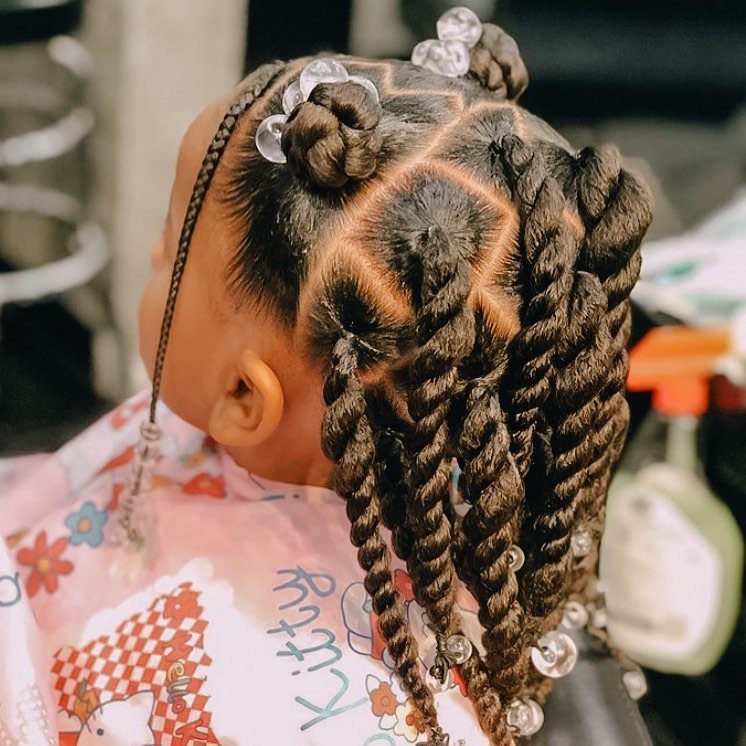
Thick braided twists are pinned up into small buns, with clear beads worked into the hair. Clear beads add sparkle without adding a color, so the style goes with any outfit.
It’s a detailed look, and it takes longer than a ponytail. I’d save it for a day when there’s time to sit down and do it properly.
11. Small Ponytail with Flower Clip
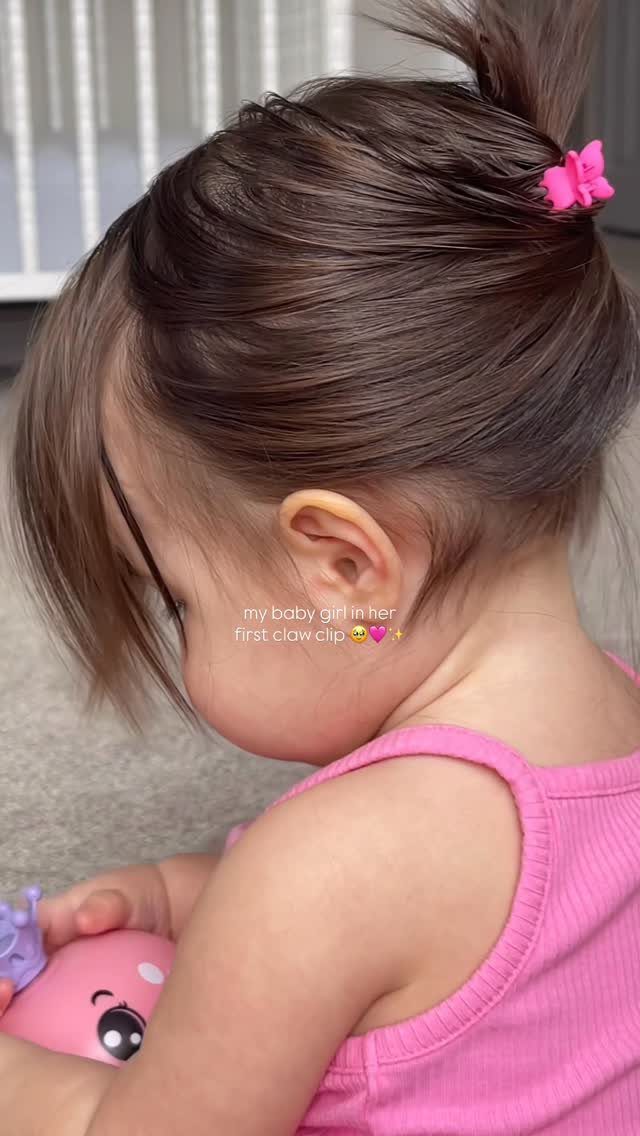
Sweep the hair back from the forehead, gather it into a small ponytail, and set a pink flower clip over the base. It’s an easy way to dress up a ponytail that is already quick.
Pick a clip scaled to the baby’s head. A flower about the size of the ponytail looks balanced, while a big one starts to take over.
Frequently Asked Questions
Which haircut is best for a baby girl?
I’d think in styles rather than cuts, and match the style to how much hair there is. With very short or fine hair, a side part with one small clip or a wide, floppy bow headband is the easiest choice.
Once there’s enough hair to part, 2 small ponytails topped with bows do double duty: the bows hide the elastics and add a bit of weight.
What accessories are okay for baby hair?
Soft, wide ones, and sometimes none at all. A floppy bow headband in fabric or a cotton blend is gentler than satin or grosgrain, and a small clip works for holding a front piece to the side.
Some parents skip bows, bands, wraps, hats and barrettes entirely and let the baby’s natural part, crown spiral and texture do the work.
Anything bead-like that can work loose is a choking risk, so I’d use very few or skip them altogether.
What if my baby has a lot of hair?
More hair opens up more options. Thicker hair can be divided into more sections for small twisted knots, and textured hair holds cornrows that stay in place for several days.
A full head of hair can also stay loose, and curly hair in particular doesn’t need braids or ponytails until the baby is older.
With a baby who moves around a lot, short braids or small ponytails stay out of the way and are less likely to snag during tummy time.
What comb or brush works best on baby hair?
For tangles, I’d reach for a wide-tooth comb or a soft baby brush and let your fingers do the rest.
Fine teeth separate tiny hairs well, while wooden combs can be too thick to grab fine baby hair, going by one parent’s experience.
A baby brush feels gentle and doubles as a light scalp massage, though its bristles are too soft to work through knots.