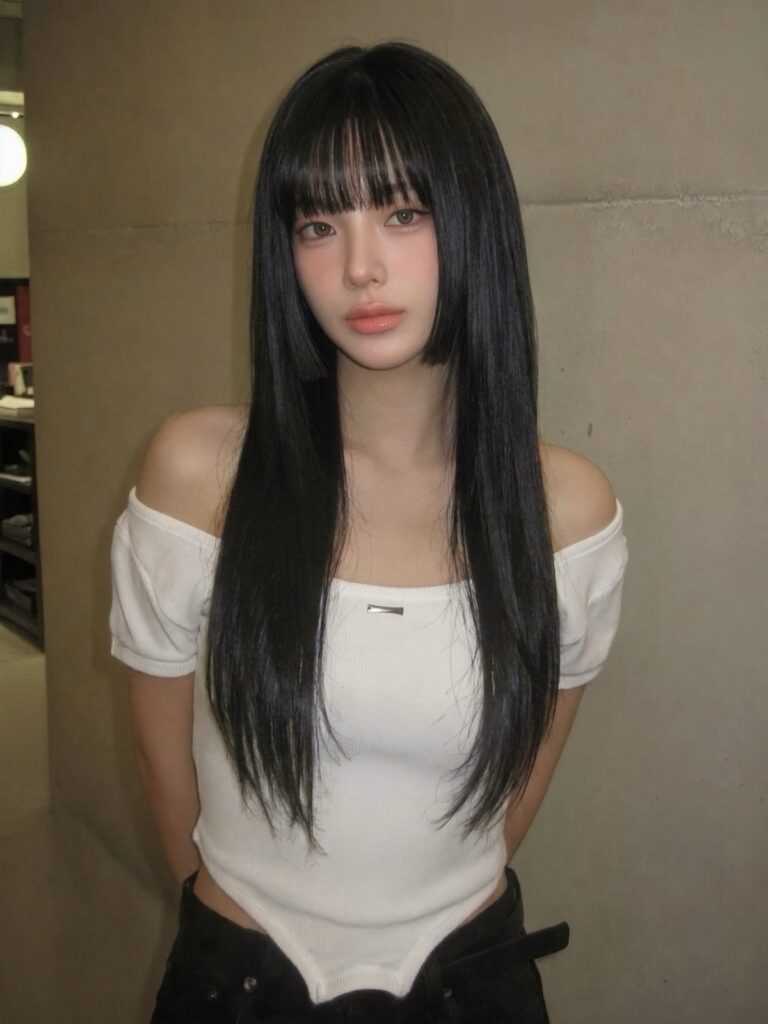
Some of these ask for minor trimming at the front, while others involve blunt vertical cuts that will take months to blend back in.
How much length and outline you’re willing to change decides which one is yours, since most of them leave the longest line alone.
Hair type matters just as much: a hime cut depends on smooth, straight hair to hold its line, and curly layers need shaping that follows how your curls actually fall.
1. Long Side Bangs
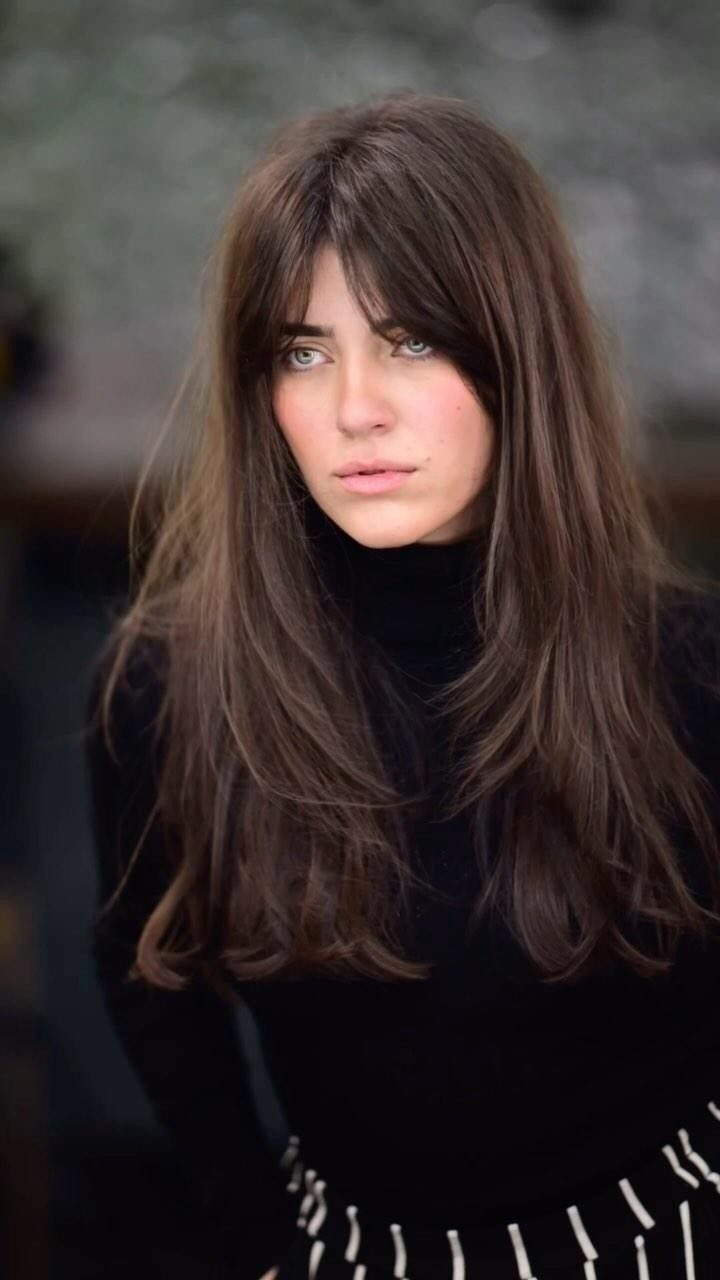
Side bangs on long hair are really just the shortest front sections, cut to sweep across the forehead and blend into the length. Worn down, they read as long, soft bangs; pinned back, they disappear into the layers.
I like this for anyone who wants a face-framing cut without committing to a full fringe.
Ask your stylist for the front pieces only and let the rest keep its length. A bit of blow-drying away from the part keeps the sweep from falling flat.
2. Choppy Layered Cut
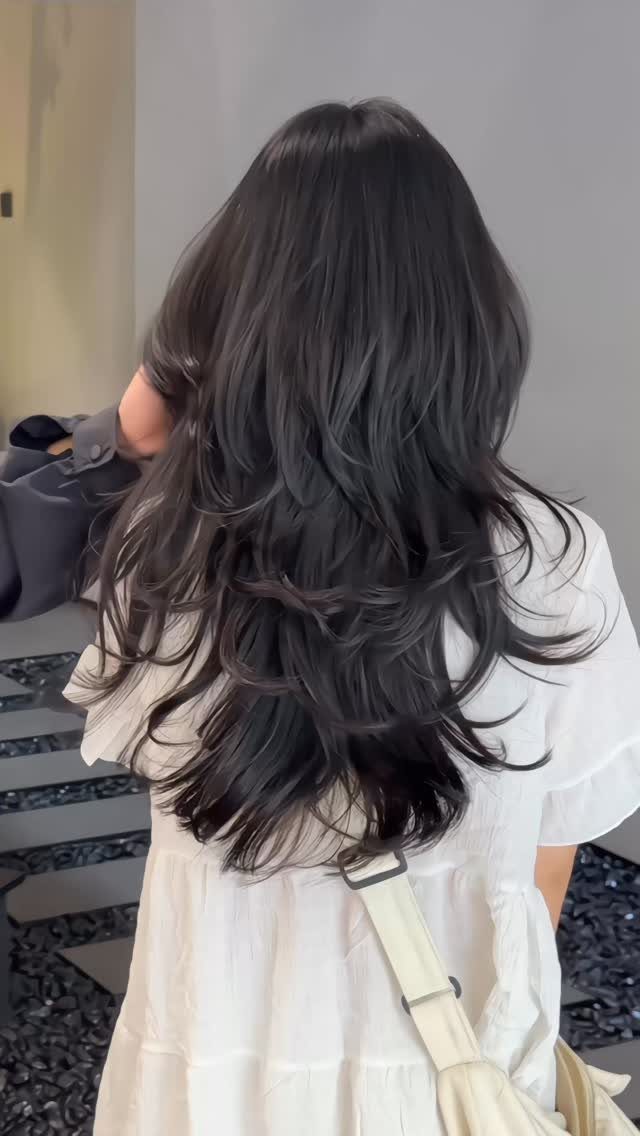
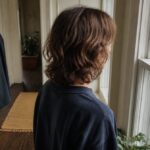
Choppy layers give long hair texture by cutting the pieces at uneven lengths, so the ends look broken up instead of blunt. The result has an easy, lived-in movement that a smooth one-length cut can’t fake.
If you want to keep your length, ask for the shorter pieces to be cut through the interior while the longest line stays put.
For texture without a big change in shape, a choppy layered cut is the better pick over a full shag, since the length and outline stay close to what you have now.
Takeaway: show your stylist the back view, since that’s where choppy layers show best.
3. Butterfly Layers
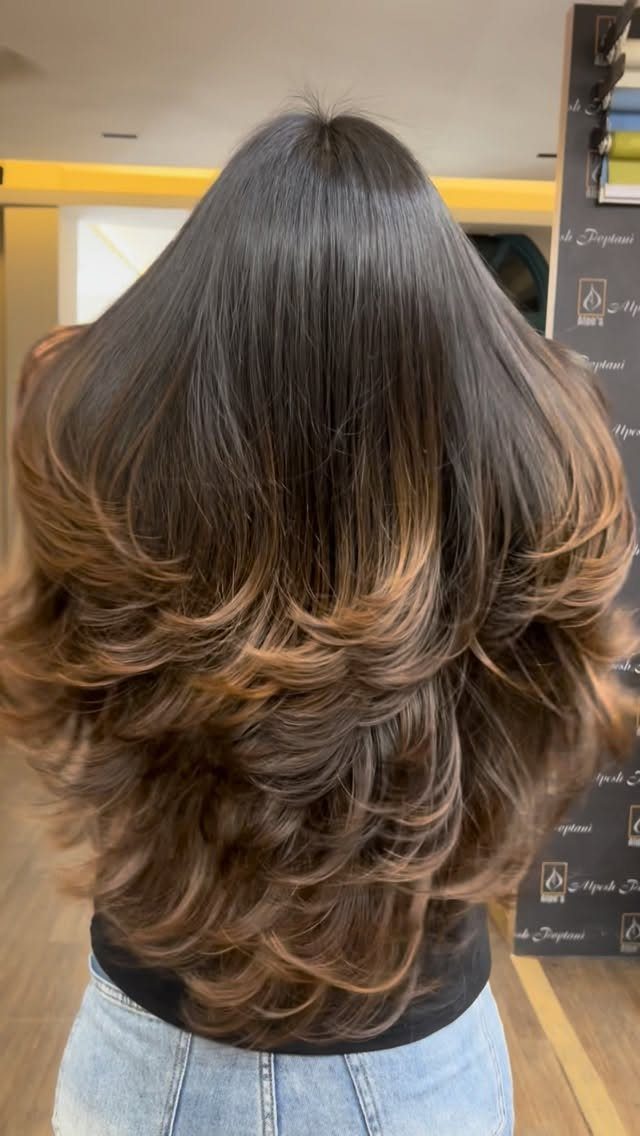
A butterfly cut works in 2 tiers: short, wispy layers sit around the crown and face, and a set of longer layers runs underneath to hold the length. That two-tier build is what creates the volume and the swing.
For long hair, I like that the bottom length stays intact, so you give up very little inches-wise.
Ask for the shorter tier to start around the face and crown, and tell your stylist you want the longer layers left alone.
A round brush and a blow dryer, pulling the front pieces away from your face, give the feathered shape the most lift.
4. Face-framing Layers
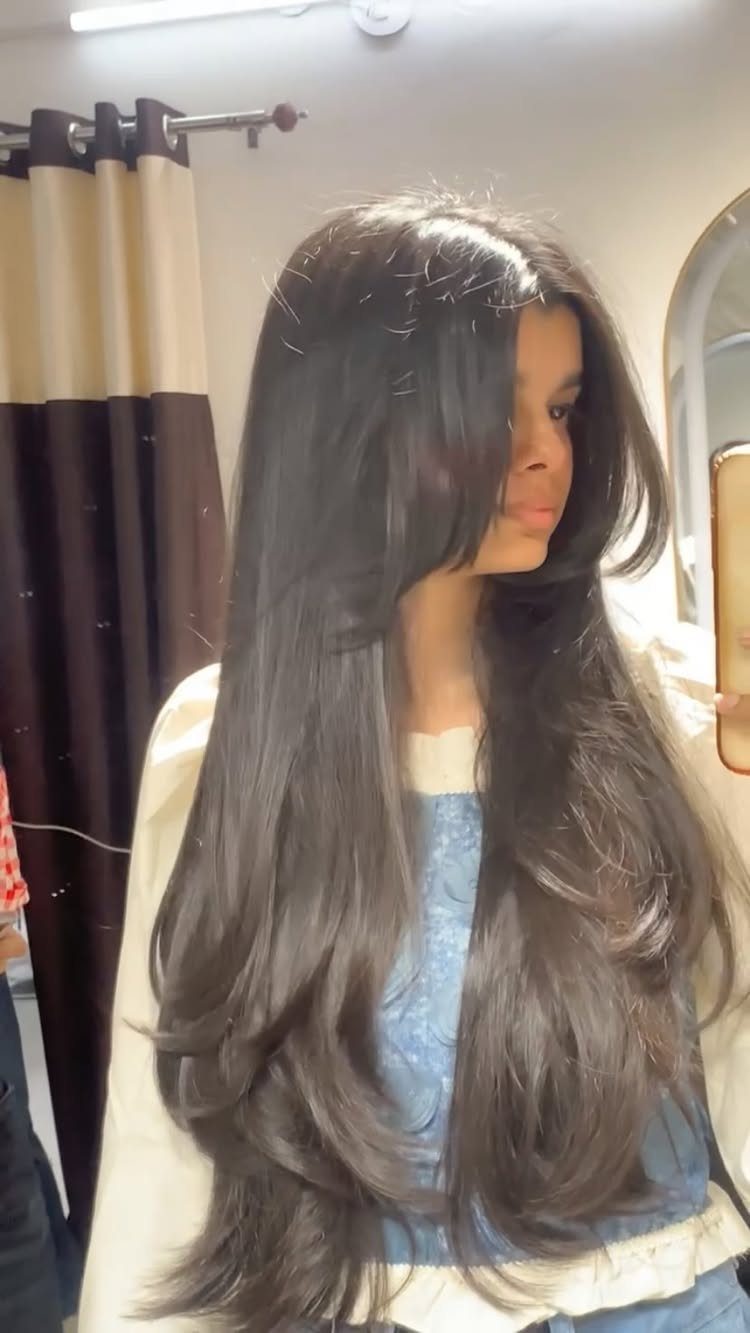
Angled or feathered layers cut around the face are the easiest way to add shape to long hair without losing length. They start near the face and blend back into the rest of the cut, so nothing looks chopped.
Ask for the layers to be cut at an angle instead of straight across; that’s what gives you the feathered ends. I’d pick this as a first layered cut, since the length stays where it is.
A flat iron turned slightly outward at the ends finishes the look in a few minutes.
“For longer lengths, you want to be sure to ask your stylist for face-framing layers. This way, the cut flatters your features and can be styled up with soft tendrils around the hairline.”
— ELLE
5. Hime Cut
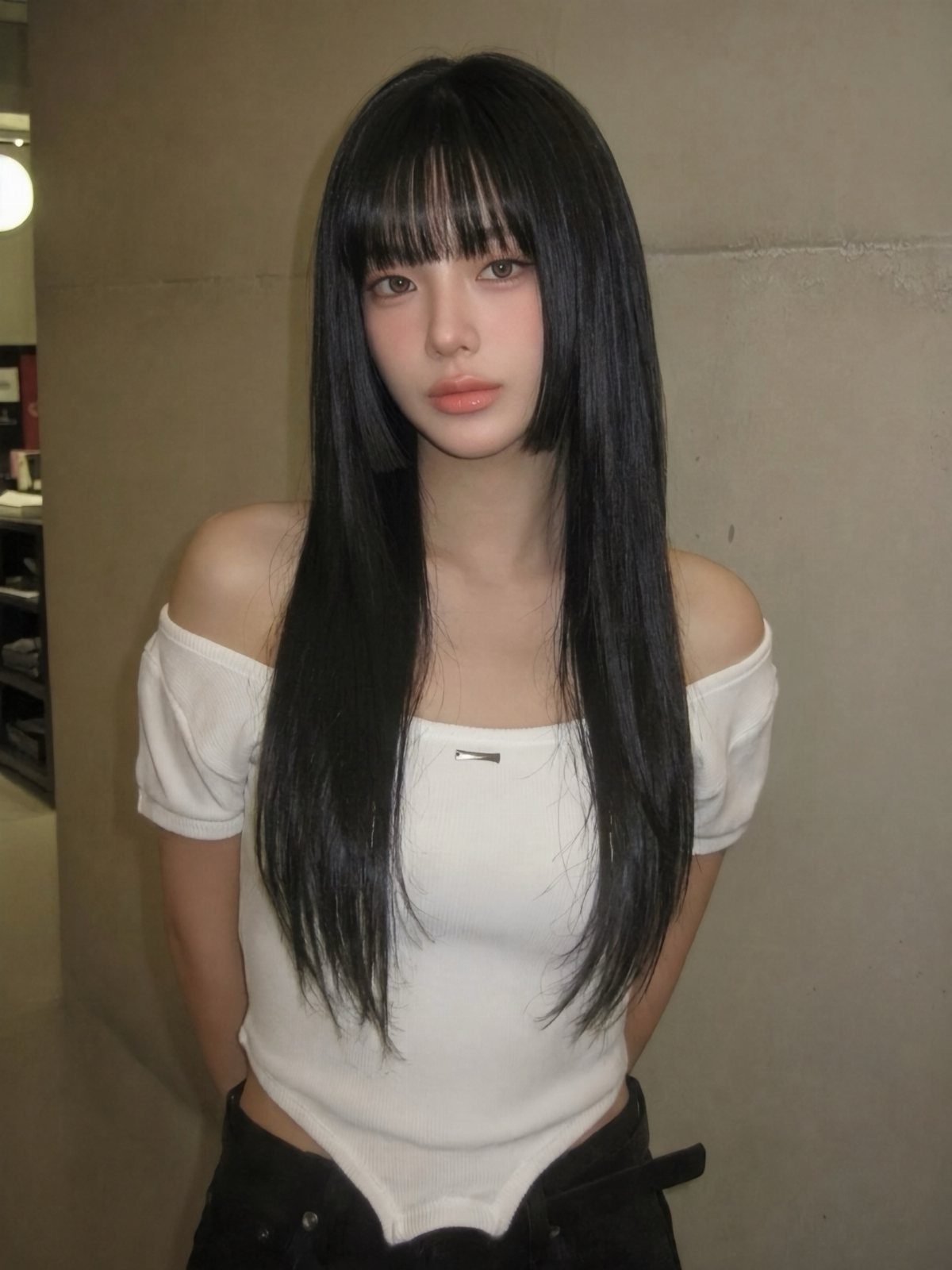
The hime cut pairs straight, short side pieces with hair that stays long everywhere else. The contrast between the 2 lengths is the whole look.
Because the side pieces are cut short and blunt, this works best on straight or very smooth hair.
If you have texture, plan on flat-ironing to keep the lines clean. I’d say this is a commitment: the sides take time to grow back to the length of the rest.
Bring a front and a side photo to your stylist so the length of those side pieces is clear.
6. Side-part Layers
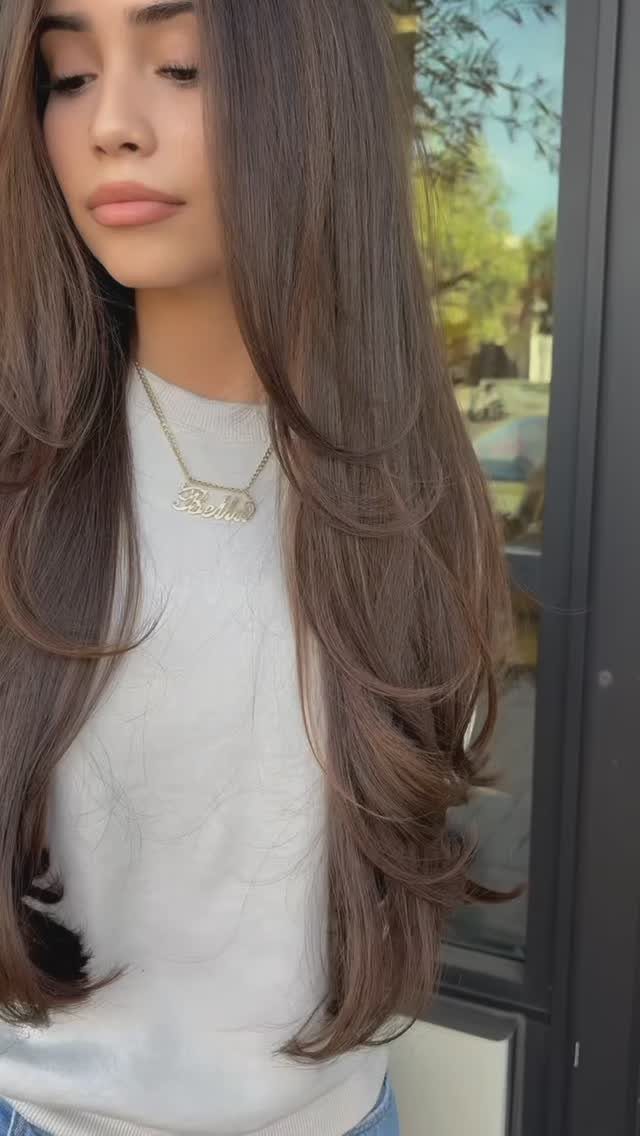
Long layers with a side part give the cut its direction. The part throws more hair to one side, and the layers underneath add movement through the length.
Pick your part before the cut, ideally in the same place you wear it every day, so your stylist shapes the layers around it. I prefer a deep part for this style, since it shows the layering best.
Smooth side-part layers need only a light blow-dry and a bit of smoothing product, so this is one of the lower-effort cuts for long hair.
7. V-cut Layers
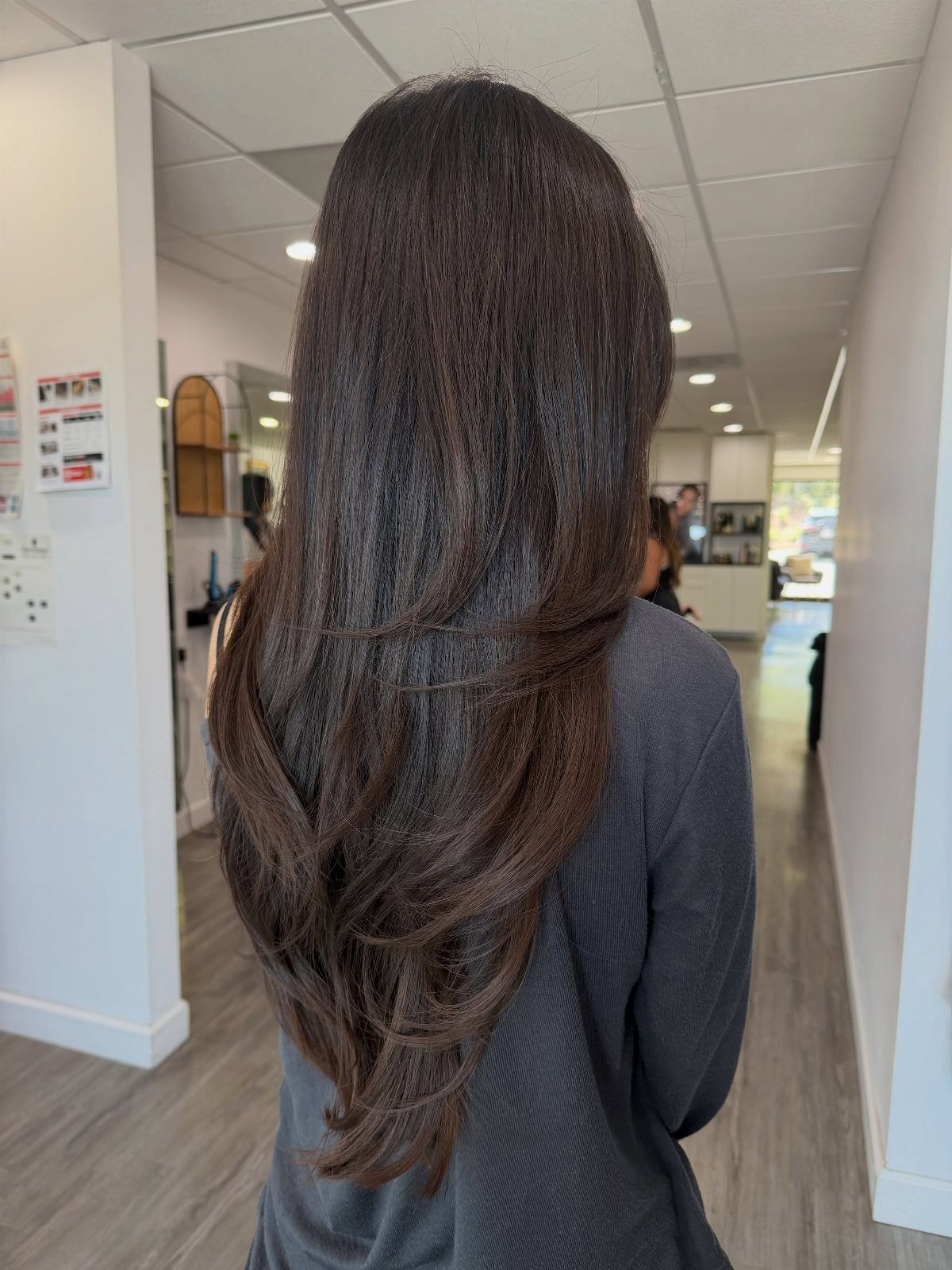
The layers cut into a sharp V at the back, so when you turn around the bottom edge points down instead of lying straight across. This preserves maximum length at the center while removing weight and bulk on the sides.
Ask for a V-cut with layers that taper gradually from shoulder height down to your longest point. The sharper the V, the more dramatic the silhouette when you wear your hair down and straight.
If you have thick or heavy hair, this takes off enough weight that your hair moves more easily without losing the visual length you worked for.
The V shows best when hair is blown smooth or straightened, less so in waves or updos.
8. Long Beach Waves
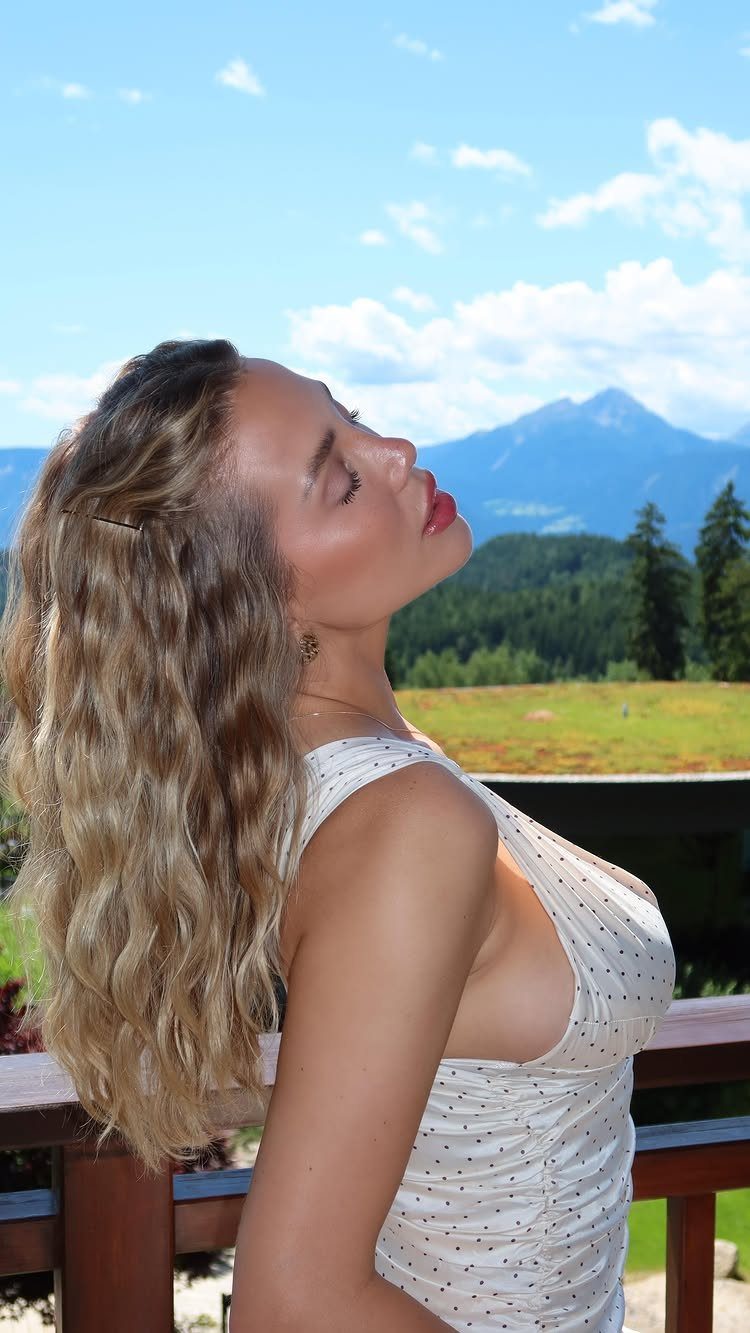
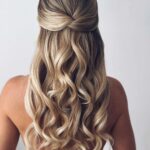
Loose waves on long hair look relaxed because the curl is soft and the pattern is broken up. The texture gives movement without shrinking the length.
If your hair is straight or fine, a 1-inch barrel curling iron or wand works better than a flat iron, which tends to give sharper bends.
Curl in sections, alternate the direction from one section to the next, and leave the last stretch of the ends out of the iron so the wave stays loose.
Salt spray while damp adds grip; a light oil after keeps the texture from looking dry.
9. Long Shag
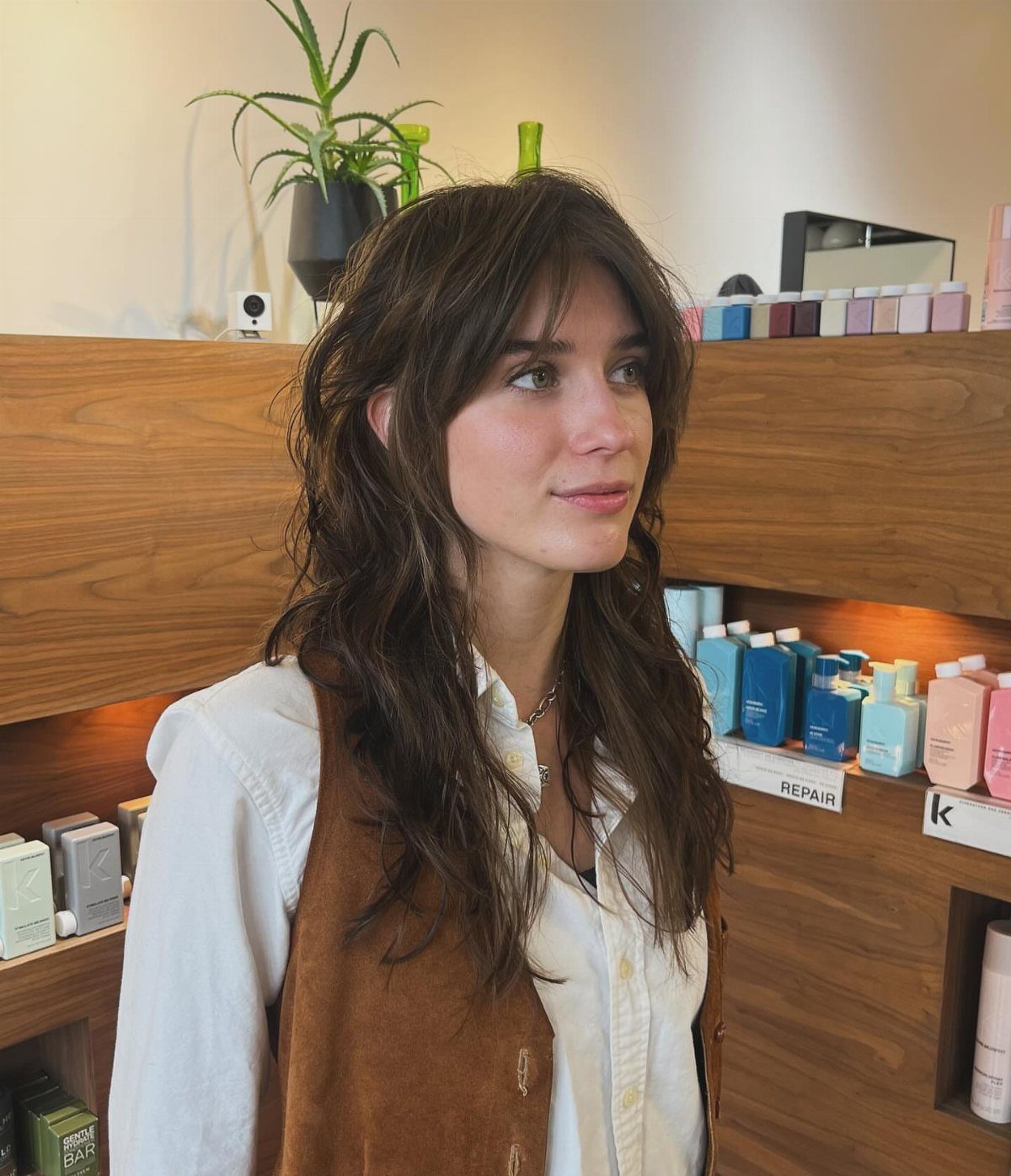
A long shag layers the hair heavily through the crown and sides while keeping most of the length at the back. The shorter, wispy pieces give it that broken-up, textured shape.
Ask your stylist to cut into the interior for movement, not just around the perimeter. This cut needs regular trims to keep the layers from looking stringy.
Styling takes a round brush and some texture spray. If you skip the blow-dry, the shag can flatten at the roots and lose its shape.
10. Long Boho Braids
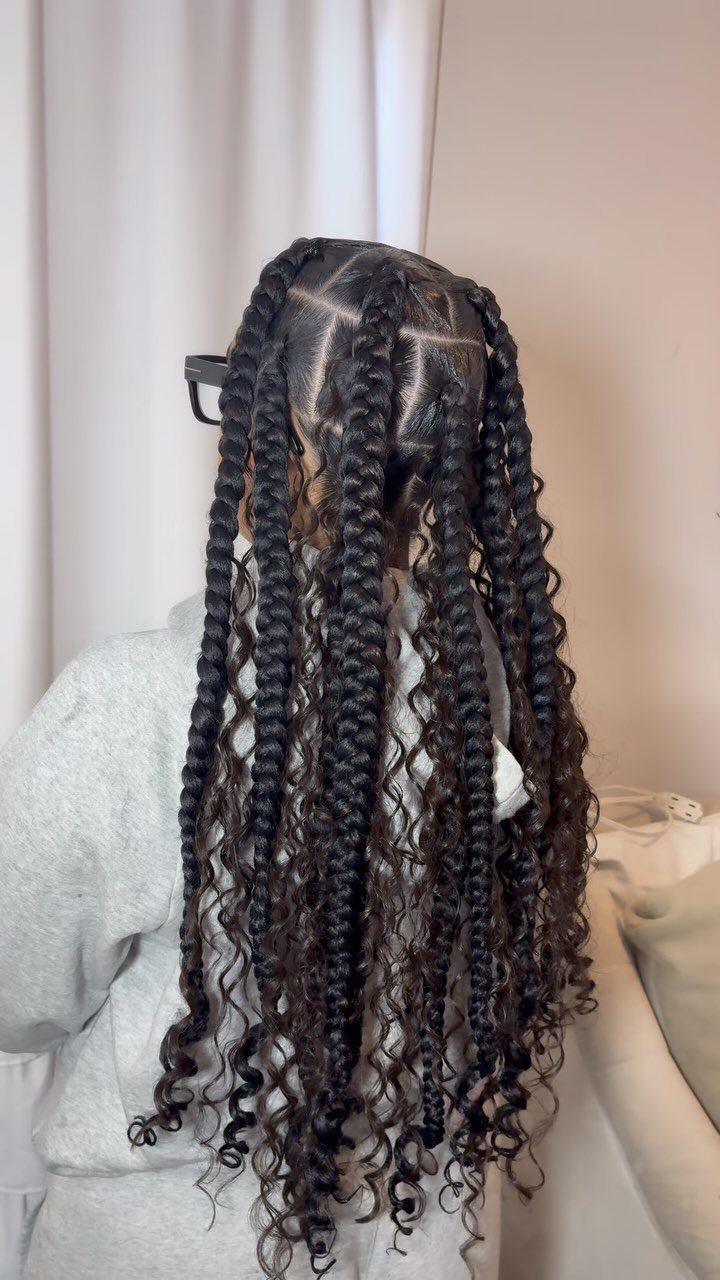
Feed-in box braids use extensions worked gradually into your natural hair, section by section, so the braid tapers at the root instead of starting thick. The wavy or curly ends left loose soften the look.
Wrapping the braids at night and keeping the scalp moisturized is what keeps this style looking fresh. The loose tendrils can be trimmed shorter or left long depending on how much movement you want around the face.
11. Front Layers
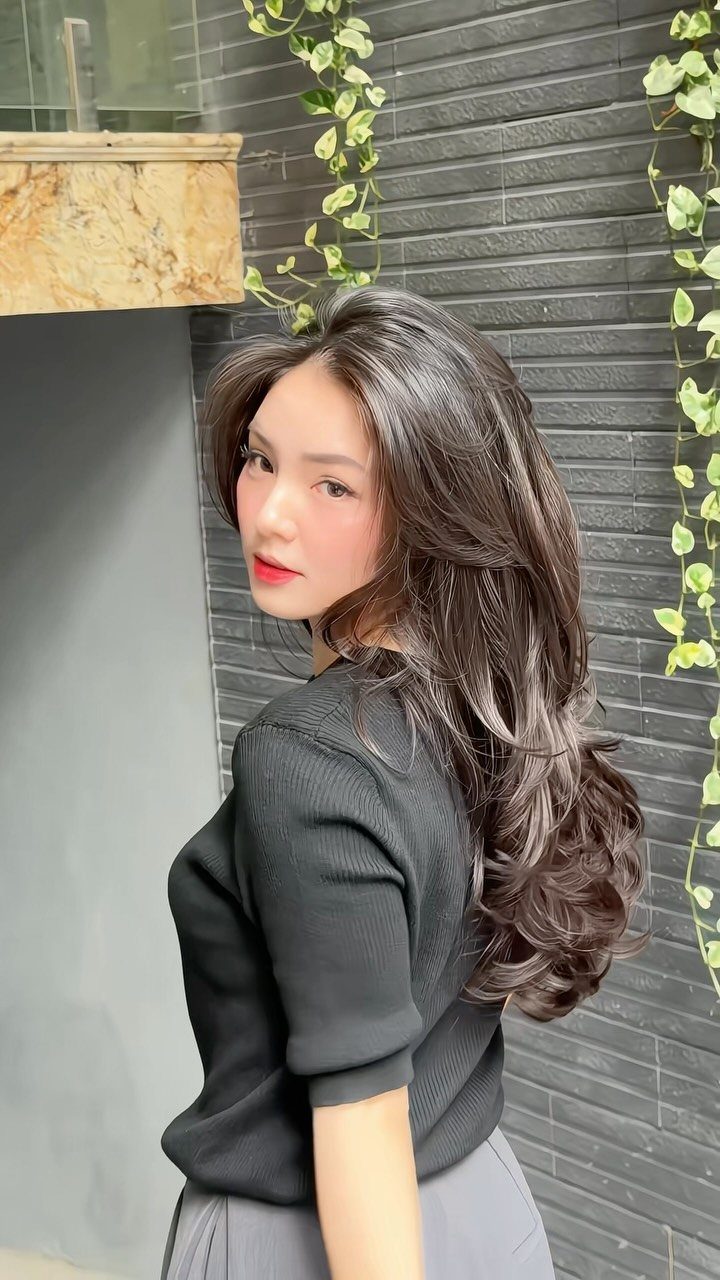
Layers cut only around the front of the face add shape without touching the back or sides. The rest of your hair keeps its length, so this is the safest layered option if you’re growing out.
Ask for the front pieces to be cut at an angle, starting just below the cheekbone or chin and blending back.
A flat iron or round brush pulls those layers forward so they actually frame instead of disappearing into the rest.
This cut grows out cleanly, since the back is left alone.
12. Long Angles
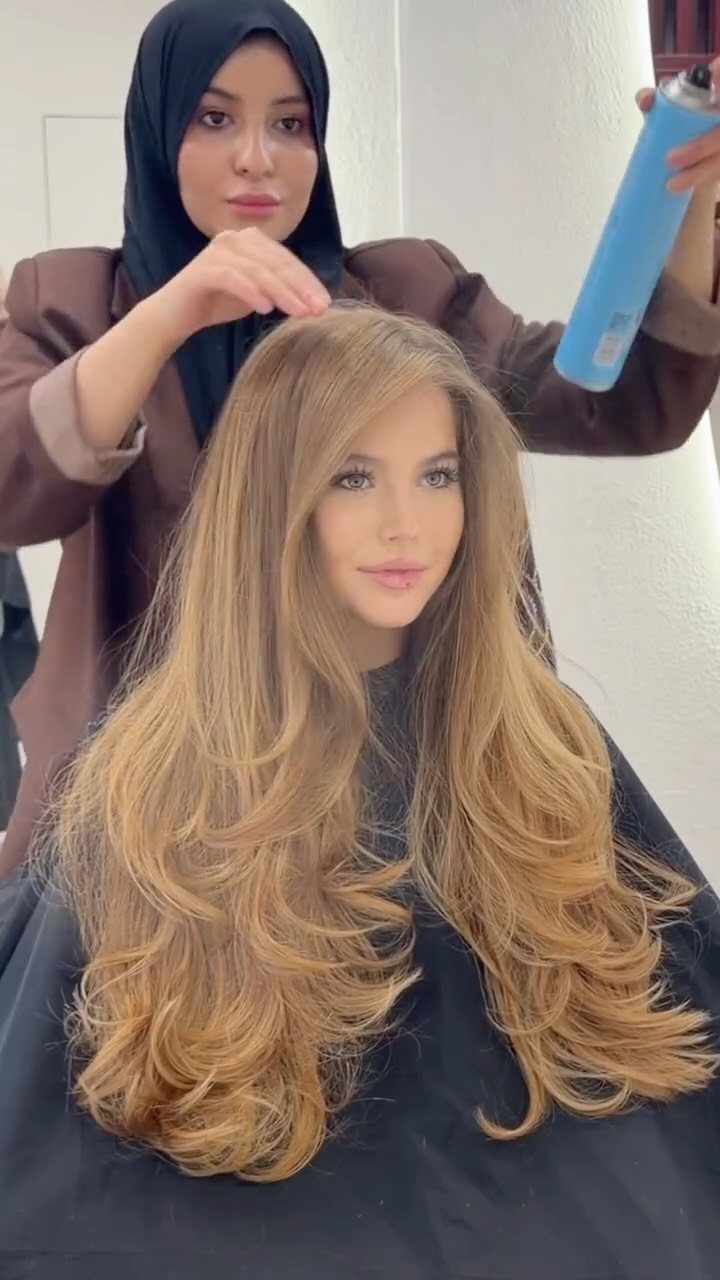
Angled layers cut shorter in the front and longer in the back give long hair a diagonal line when worn down.
The front sections fall around chest height, and the back stays longer, so the cut has direction without removing much length overall.
Ask your stylist to cut the front at your collarbone or a few inches below, then blend gradually into the back. This works well for thick hair, since the angle takes weight off the front without thinning the ends.
Curled or waved, the angled layers show more dimension than a one-length cut.
13. U-cut Swoopy Layers
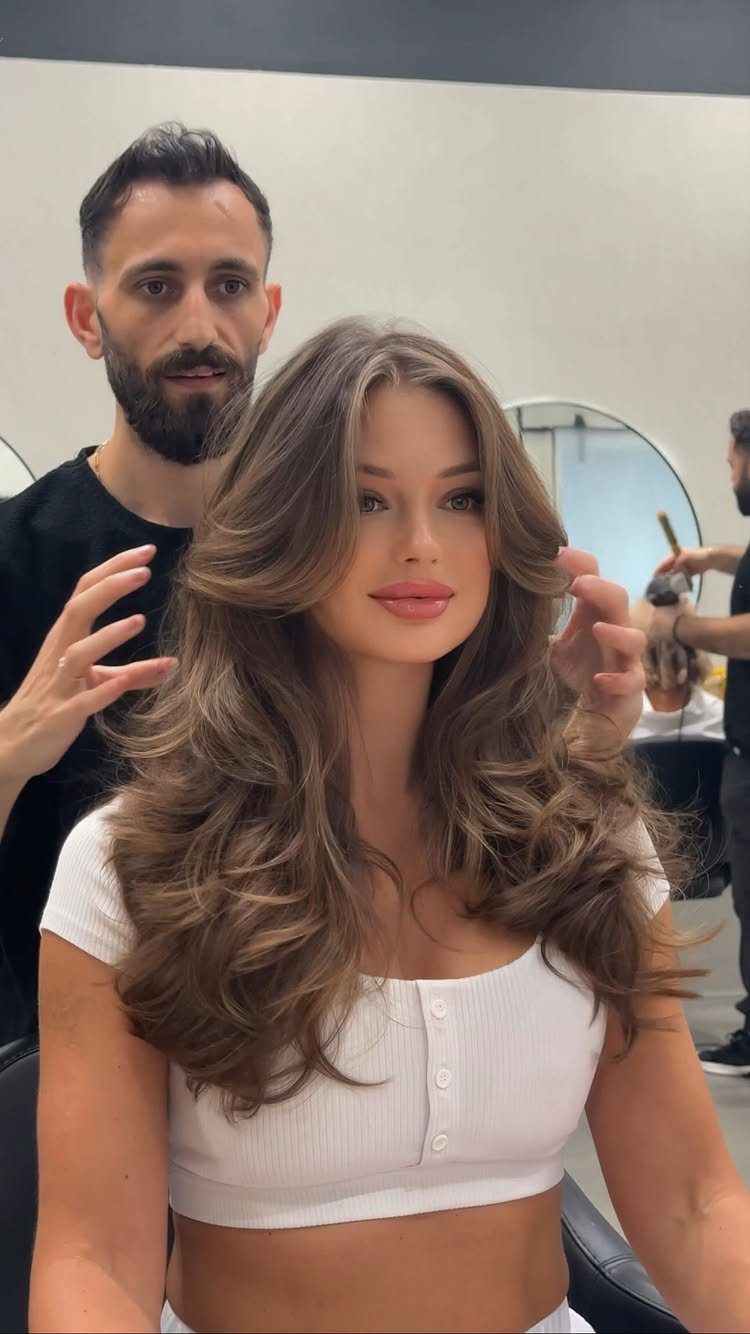
A U-shaped perimeter curves gently at the back, so the longest point sits in the center and the sides taper up slightly.
Layers cut through the top and sides add volume and movement, while the U-shape keeps the length visible from behind.
This cut is softer than a V and suits anyone who wants layered volume without a sharp silhouette.
Ask for the U to be subtle if you’re starting from a blunt cut, since a deep curve can look uneven while it grows.
Blown smooth or lightly curled, the swooping layers lift at the crown and bend softly at the ends.
14. Rounded Curly Layers
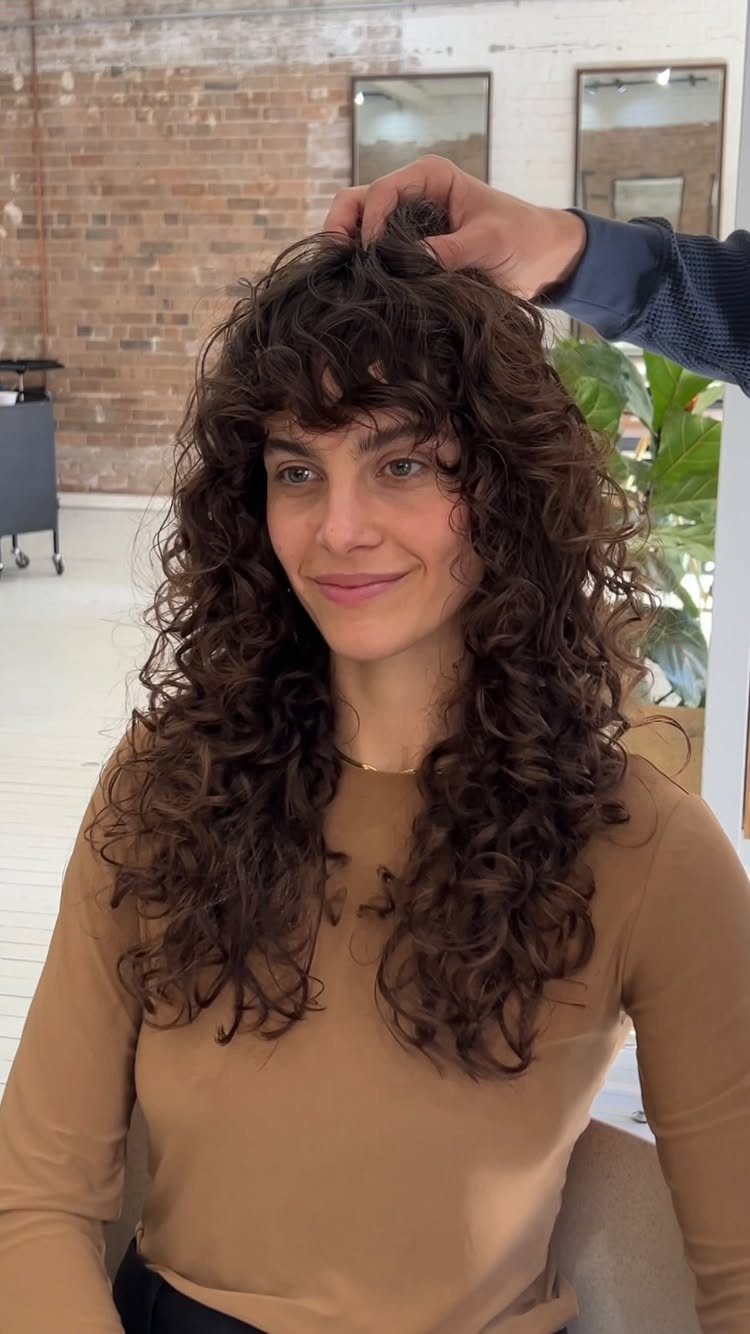
Long layers can round out curls so the whole head forms one soft, balanced shape instead of a heavy triangle. Cutting the layers to blend into each other keeps the curls stacked and bouncy, with no single ringlet sticking out.
Ask your stylist to shape the layers around your curl pattern, and show a front and back photo so the rounded outline is clear.
Bangs are a separate add-on to rounded curly layers, so decide on them before the cut, because adding them later means trimming into curls that were shaped to fall without them.
Curls take shape best when they are cut with the layers in mind, so I’d choose a stylist who is comfortable working with texture.
15. All-over Round Layers
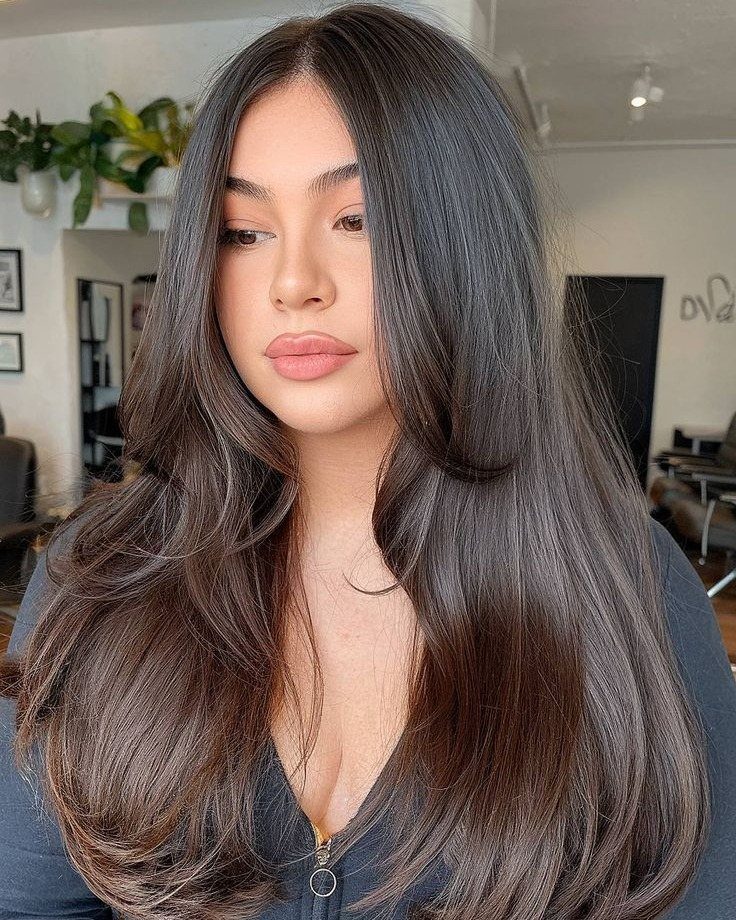
Slanted layers run through the whole head and turn under at the ends, which gives long hair a rounded, easy shape that looks finished even when it air-dries.
Because the layers are slanted, they lie in one direction and curl inward on their own, so you can skip heat on most mornings.
Ask your stylist for the layers to be cut at a slant from top to ends, and to keep the length where it is.
For a more polished version, a round brush at the ends helps the curve hold. I’d leave the dryer out for everyday wear, since this cut is built to be low effort.
Long Hair Damage Care
Split ends and breakage on long hair trace back to 2 things: heat and daily friction. The ends are the oldest hair you have, so they show the wear first.
For breakage, a bond-repair product works on the inner bonds of the strand.
For damaged lengths, a bond-repair oil like L’Oréal Paris EverPure Bond Repair+ Oil-in-Serum works well, and it belongs on the ends only, since that’s the oldest and most worn part of long hair.
Dullness usually means a raised, porous cuticle. A gloss leave-in serum, such as L’Oréal Paris Elvive Glycolic + Gloss High Shine, lays that surface flat so light bounces off it again.
Frizz and heat damage call for a barrier before every iron or dryer session.
Heat Slayer Leave-In from L’Oréal Paris Elvive Dream Lengths is rated to 450°F, which means your flat iron or curling wand should never run hotter than that.
A deep conditioning mask once a week keeps long hair soft and helps the ends hold up between trims.