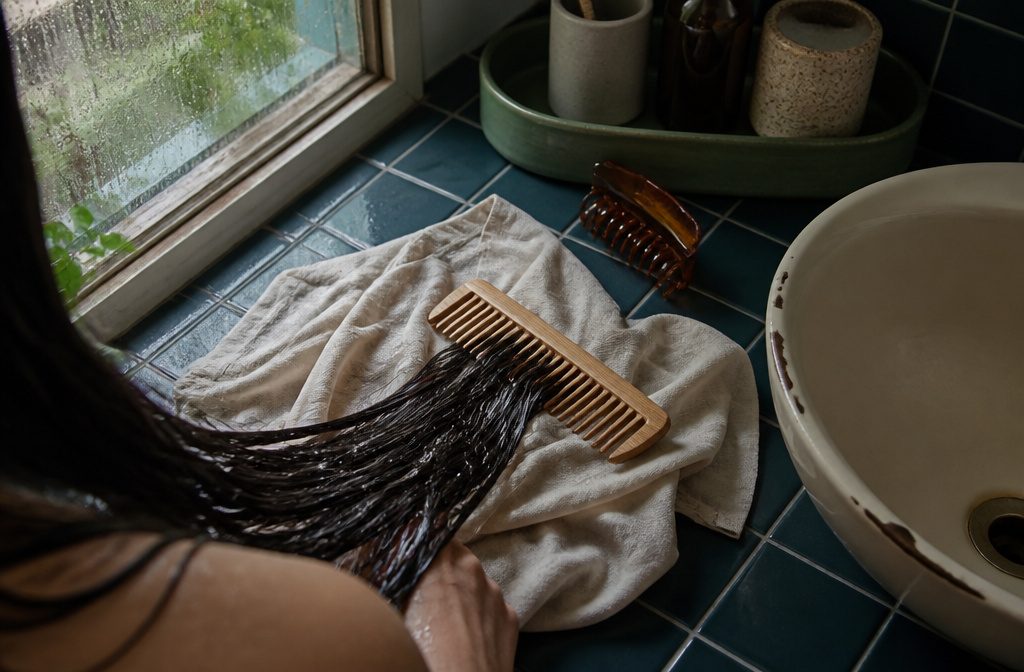
Healthy hair takes a few cheap swaps, not a new product shelf: a wide-tooth comb, an old cotton T-shirt instead of a towel, and a wash schedule matched to your hair type.
The damage happens while hair is wet: it is 3 times more vulnerable to breakage, and rubbing with a towel roughs up the cuticle.
1. Match Care to Hair Type
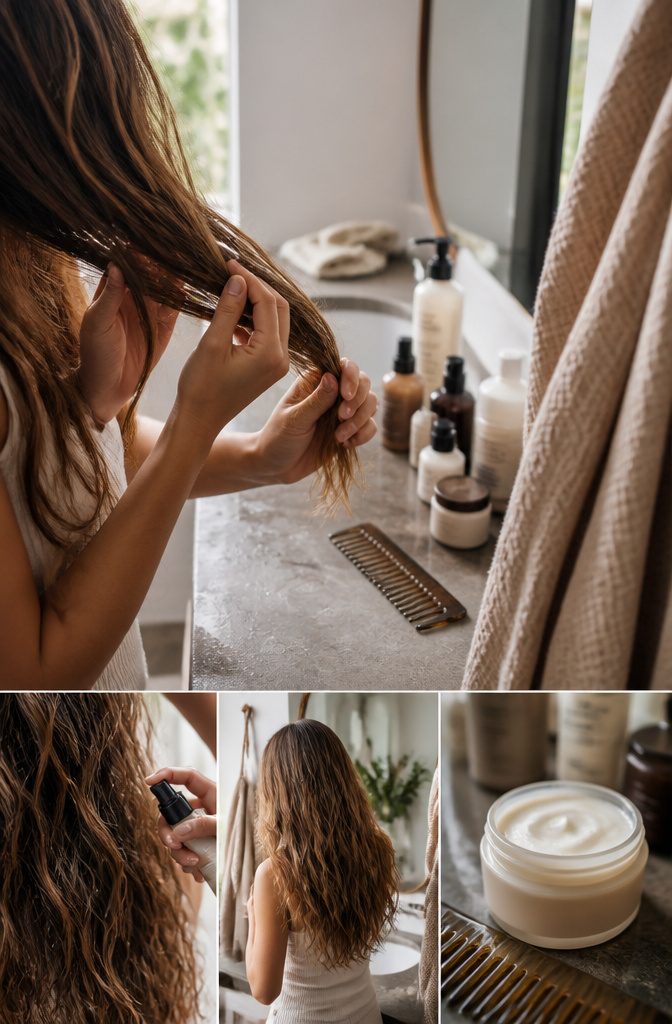
Your hair type decides how often to wash, which products work, and how much moisture you actually need.
Straight hair gets oily faster because scalp oils travel down the shaft easily, so you might need to shampoo every day or every other day and skip heavy products that weigh it down.
Curly and kinky hair does the opposite: the shape makes it harder for oils to move, so it stays drier and needs extra moisture and less frequent washing.
Wavy hair often splits the difference, with oily roots and dry ends that call for lighter hydration.
Porosity matters too.
Low-porosity hair resists moisture, so lighter products that can penetrate work better. High-porosity hair absorbs moisture fast but loses it just as quickly, so you need heavier formulas that lock it in.
Length plays in: long hair tends to be drier because oils have farther to travel, while short hair gets oilier and needs washing more often.
Fine hair gets weighed down by thick creams, thick hair handles richer products without going limp.
The rest of the routine adjusts from here. Once you know whether you lean oily or dry, straight or textured, you can match wash frequency, product weight, and styling to what your hair actually does.
2. Wash the Scalp, Not the Ends
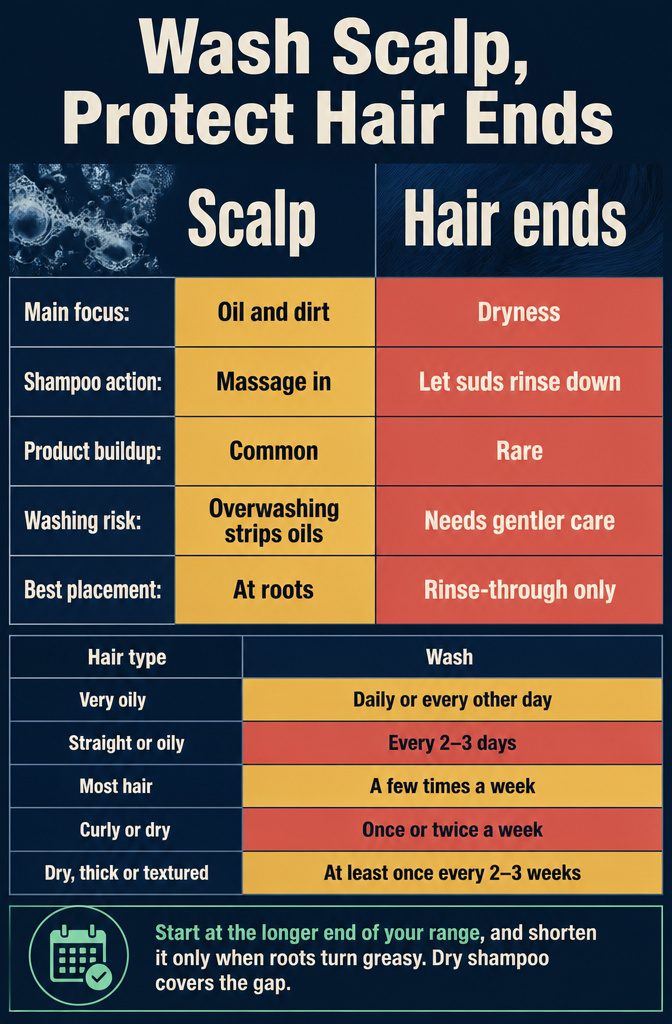
Massage shampoo into the scalp, where oil and dirt collect, and let the suds rinse down the lengths. Ends are drier and rarely build up product.
Advice on frequency conflicts, from every third day to 1–2 times a week, and overwashing strips natural oils. Ranges by hair type:
| Hair type | Wash |
|---|---|
| Very oily | Daily or every other day |
| Straight or oily | Every 2–3 days |
| Most hair | A few times a week |
| Curly or dry | Once or twice a week |
| Dry, thick or textured | At least once every 2–3 weeks |
Start at the longer end of your range, and shorten it only when roots turn greasy. Dry shampoo covers the gap.
3. Skip Harsh Shampoo Ingredients
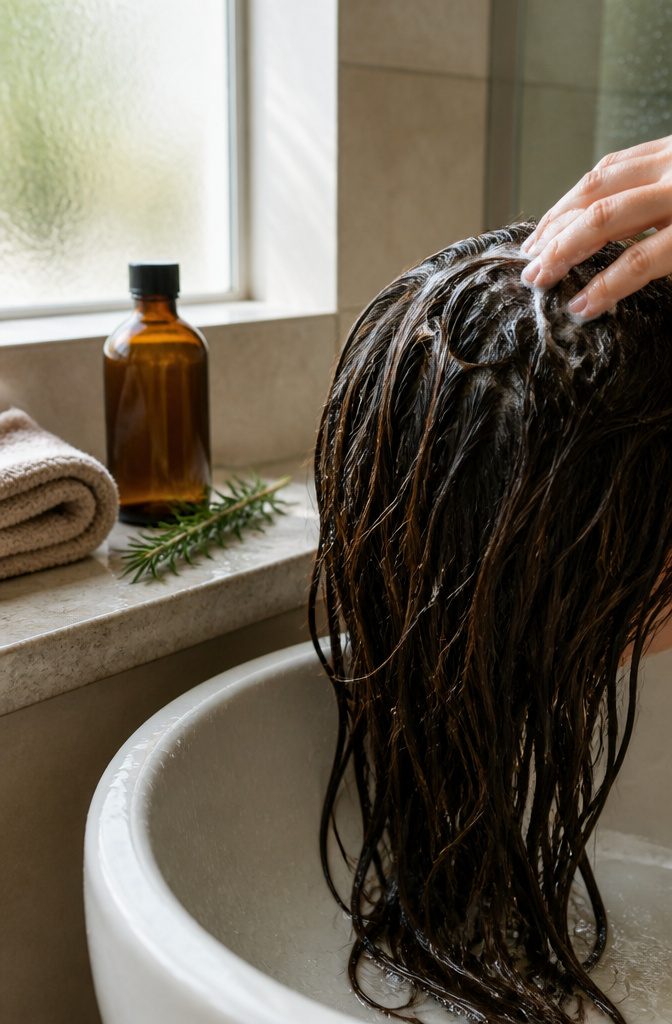
Shampoo ingredients matter more than price. Sulfates like ammonium lauryl sulfate and sodium lauryl sulfate strip natural oils from the hair, leading to dryness and breakage over time.
A sulfate-free formula cleans without stripping moisture, which keeps texture intact and helps hair grow longer without snapping mid-strand.
Match the formula to your hair type. Look for shampoos labeled for oily, normal, or dry hair, and choose one that addresses any specific issue like dandruff or damage.
For damaged hair, formulas with essential oils like angelica, ylang-ylang, and lavender help soften and protect the fiber. If your scalp runs sensitive, a gentle cleansing shampoo with lemon, orange, rosemary, and chamomile soothes while leaving hair light.
L’Occitane’s Intens Repair 500ml and Gentle & Balance 500ml fit those needs, though cost alone doesn’t predict whether a product will work.
4. Condition the Mid-Lengths and Ends
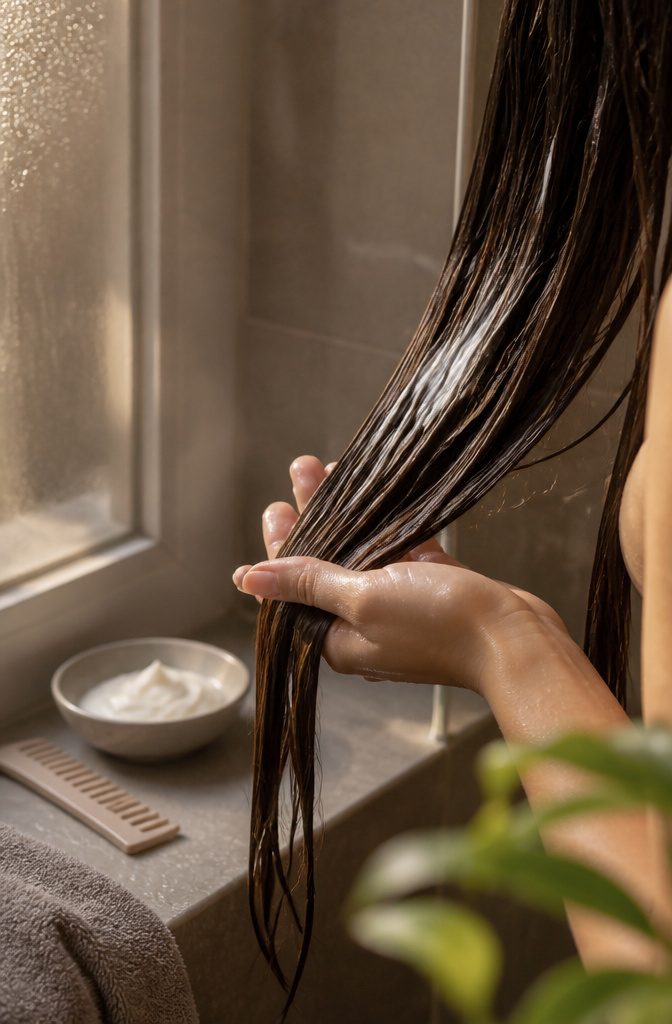
Conditioner goes on the mid-lengths and ends, where hair dries out most, and stays off the roots unless your scalp is flaking.
Apply it after shampooing, comb it through so every strand gets coated, and leave it in for two to three minutes before rinsing. That wait matters: the formula needs time to smooth the cuticle and lock in moisture.
What conditioner actually does is soften, detangle and cut frizz.
It coats each strand so friction drops and flyaways calm down. Straight hair does best with a lightweight formula that hydrates without adding weight or buildup at the roots.
Wavy, curly and kinky hair needs something richer, since those textures lose moisture faster and tangle more easily. Squeeze out excess water before you apply conditioner so the product absorbs instead of sliding off diluted.
5. Deep Conditioners and Hair Masks
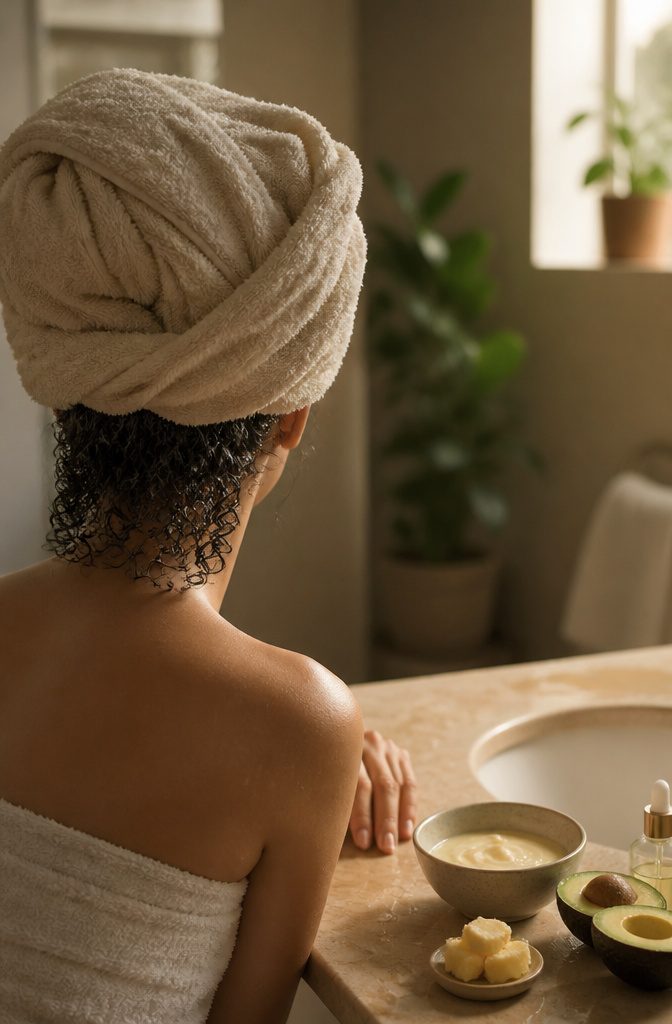
Hair masks feed dry or damaged strands with more moisture and protein than a regular conditioner can deliver.
The treatment sits on your hair for 10 to 30 minutes depending on the formula, giving hydrating ingredients like shea butter, avocado oil and glycerin time to penetrate the shaft.
I wrap my hair in a warm towel while the mask works, which helps it sink in deeper.
Frequency depends on your hair type. Curly and dry hair benefit from a weekly mask, while straight or oily hair should stick to every two to four weeks to avoid buildup that weighs hair down and leaves it looking greasy.
Follow the directions on the product rather than leaving it on overnight, which some people try but can actually cause damage. The treatment doesn’t need extra time to work.
6. Detangle Gently
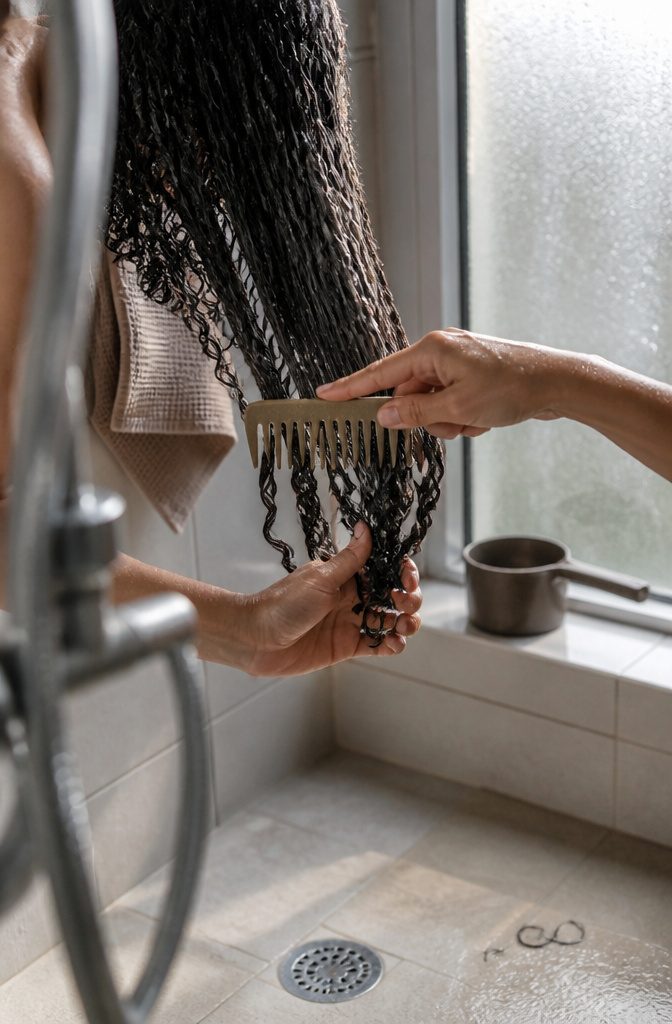
Use a wide-tooth comb and work from the ends upward. Comb the last few inches of a small section until they glide, then climb a little at a time so knots loosen instead of tightening.
Wet strands stretch and snap more easily than dry ones.
Treat hair gently when it’s wet. It’s three times more vulnerable to breakage.
So the comb goes in the shower, and the brush waits.
Advice on brushing wet hair splits.
I side with a comb on wet hair and a brush only once it’s dry. Thick, curly hair combs best in the shower with conditioner still in; straight hair, after it has dried a bit.
7. Dry Without Rubbing
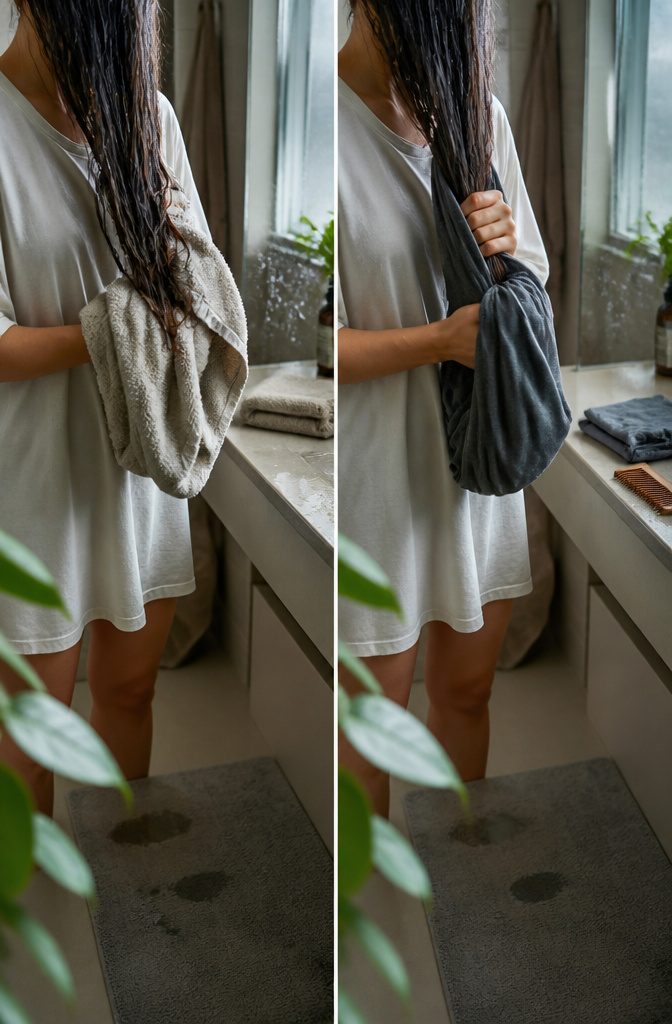
Wet hair is three times more vulnerable to breakage, so the towel is where a lot of avoidable damage happens.
Rubbing roughs up the cuticle, adds tangles and feeds frizz. Blot instead: wrap the towel around your head or lengths and press to soak up the water.
A regular cotton bath towel can still cause trouble when it’s wrapped tight, especially on long hair. A soft towel works if you stay gentle, but I’d reach for an old cotton T-shirt or a hair wrap.
Either one slicks moisture off without scrubbing at the strands. Satin wraps are a good pick too.
8. Go Easy on Heat
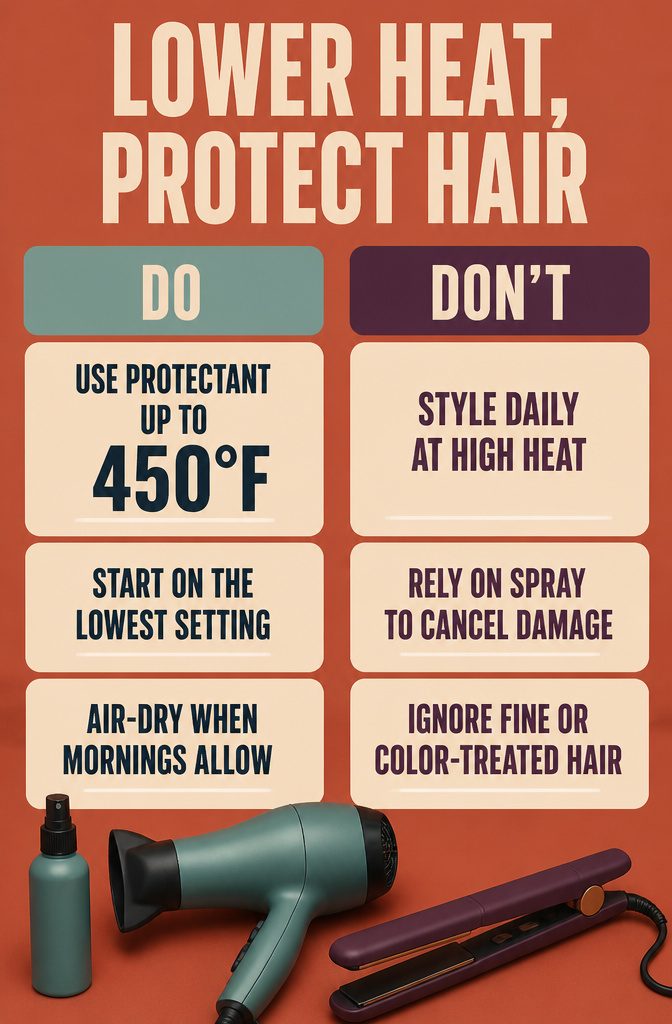
Daily heat dries hair out faster than almost anything else, so these are the changes I’d make first:
- Spray a protectant rated up to 450°F before every blow-dry, curl or flat-iron pass.
- Start the dryer on its lowest setting and raise it only if the hair won’t dry. Choose tools with real settings, and stay at low or medium.
- Air-dry whenever the morning allows. Even a couple of heat-free days a week gives hair time to recover.
- Fine and color-treated hair pay first, since heat thins fine strands and fades color faster.
- A protectant softens the damage but doesn’t cancel it. If you style daily, the honest fix is a lower temperature, not just more spray.
9. Limit Chemical Processing
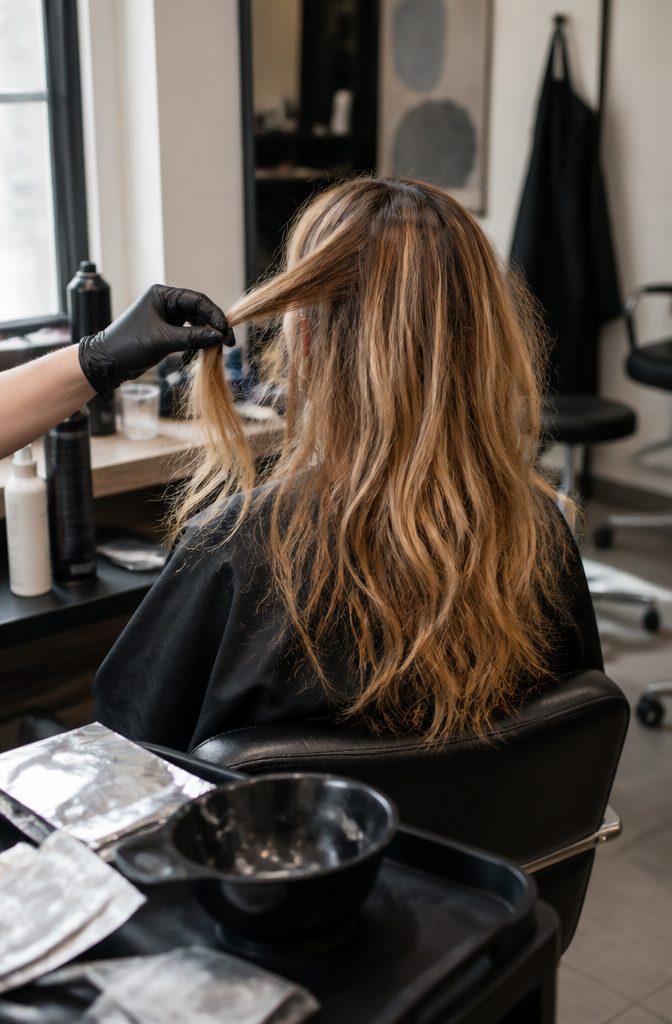
Bleach and chemical relaxers do the most damage, with perms and dye close behind. The ammonia and hydrogen peroxide in dye break down the hair’s protein, which weakens the shaft and leads to dryness and breakage.
If you color, stay within 3 shades of your natural color and wait 6–8 weeks between services. Dry shampoo stretches the time between washes so color fades more slowly, and a leave-in before long sun or water exposure helps too.
This is hard advice for anyone who colors regularly.
Gray coverage and a platinum goal don’t bend to a calendar. If something has to go, I’d drop the bleach first and the relaxer second.
10. Trim Schedules by Hair Length
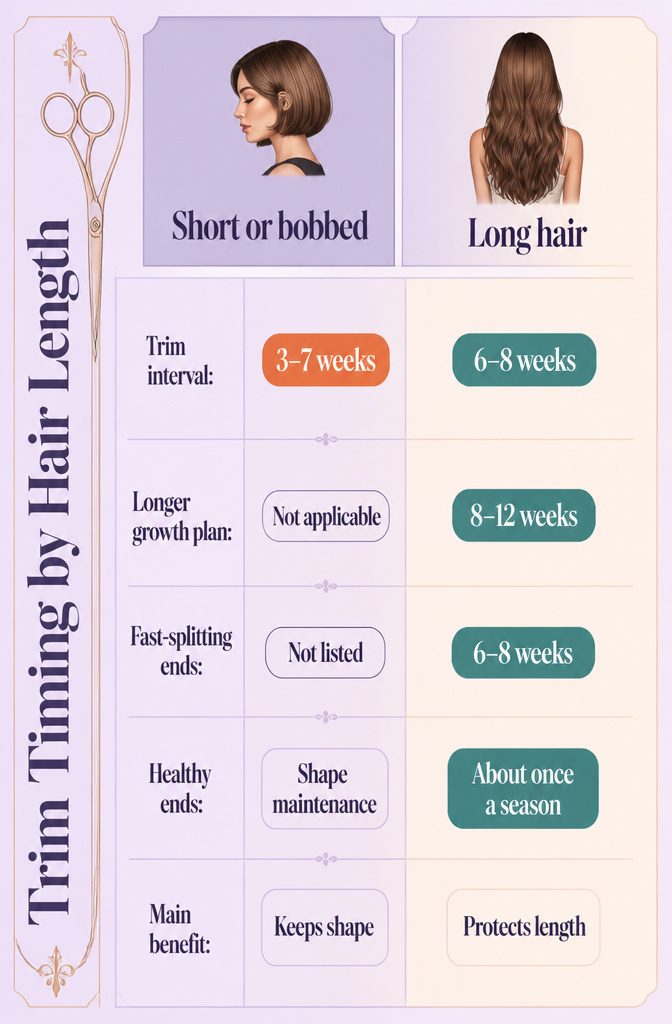
Trimming removes split ends before they travel up the strand, but the advice on how often varies, especially for long hair. The ranges below run from every 6 weeks to once a season.
| Hair type | Trim interval | Suits |
|---|---|---|
| Short or bobbed | 3–7 weeks | Keeping the shape |
| Curly or textured | 8–12 weeks | Curl definition, less breakage |
| Long, tight schedule | 6–8 weeks | Ends that split quickly |
| Long, middle | 8–12 weeks | Growing length steadily |
| Long, relaxed | About once a season | Healthy ends |
For long hair, I’d start at every 8–12 weeks. Tighten to 6–8 if your ends fray fast, and stretch to a season only if they look healthy.
11. Protect Hair From Sun
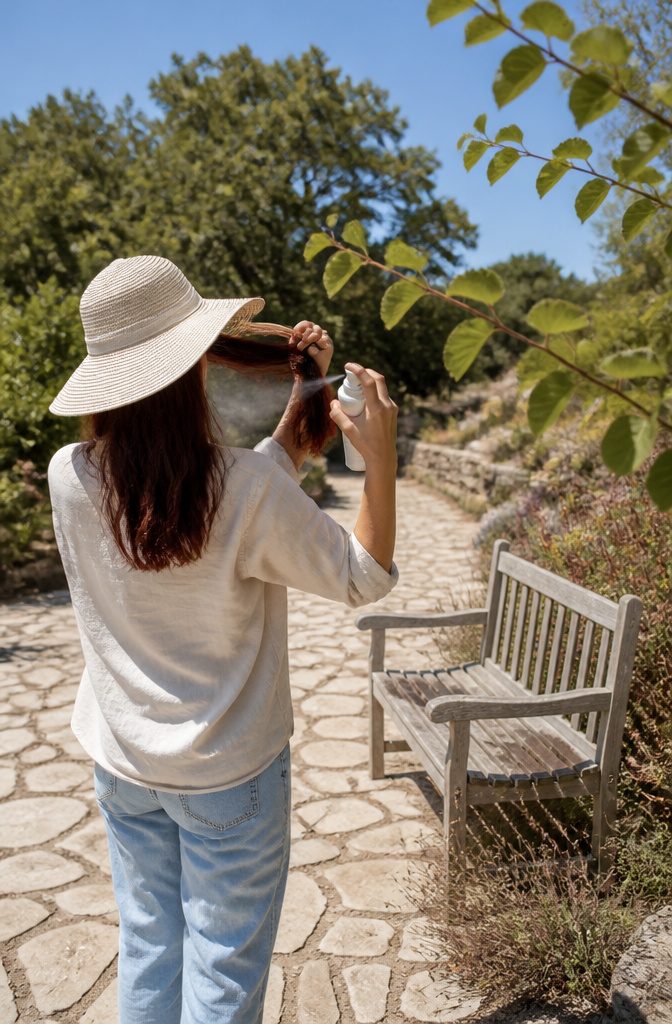
Midday sun is the hardest on hair. UV breaks down the cuticle, the outer layer that holds in moisture, so strands turn dry and brittle and color fades, most noticeably on dyed hair.
Two protections work. A hat is the simpler one because it covers hair and scalp together, and a fabric that blocks UV is the kind to buy.
A light spray with broad spectrum sun protection suits days when a hat flattens your style or won’t stay put, since it forms a barrier on the strands.
On color-treated hair I’d use both: a hat when the sun is strongest, and a spray underneath for long days outside.
12. Avoid Tight Hairstyles
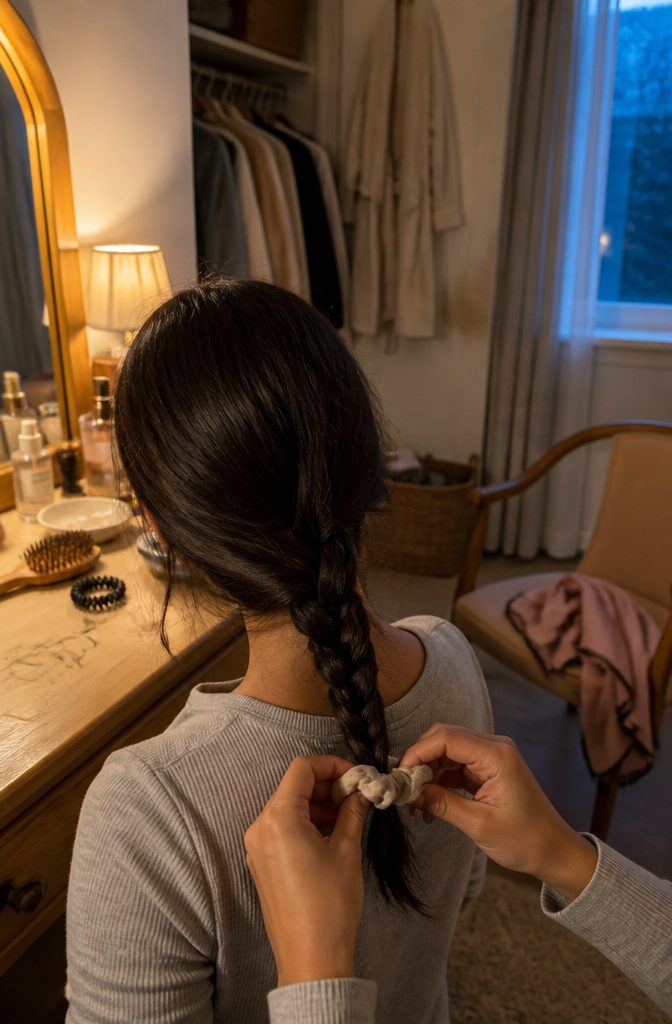
Ponytails and braids break hair at the roots when they’re too tight, and a style worn around the clock can lead to hair loss. A headache or sore scalp means the tie is too snug.
Constant pulling can cause traction alopecia and a receding hairline along the edges. I’d take hair down every night and pick a soft scrunchy or a plastic coil tie over a thin elastic that grips close to the strands.
For braids meant to last months, leave a little slack at the scalp.
With heavy extensions, give your hair a break after three months. A low, loose bun or a relaxed side braid gives you a five-minute look without the tug.
13. Diet and Hydration
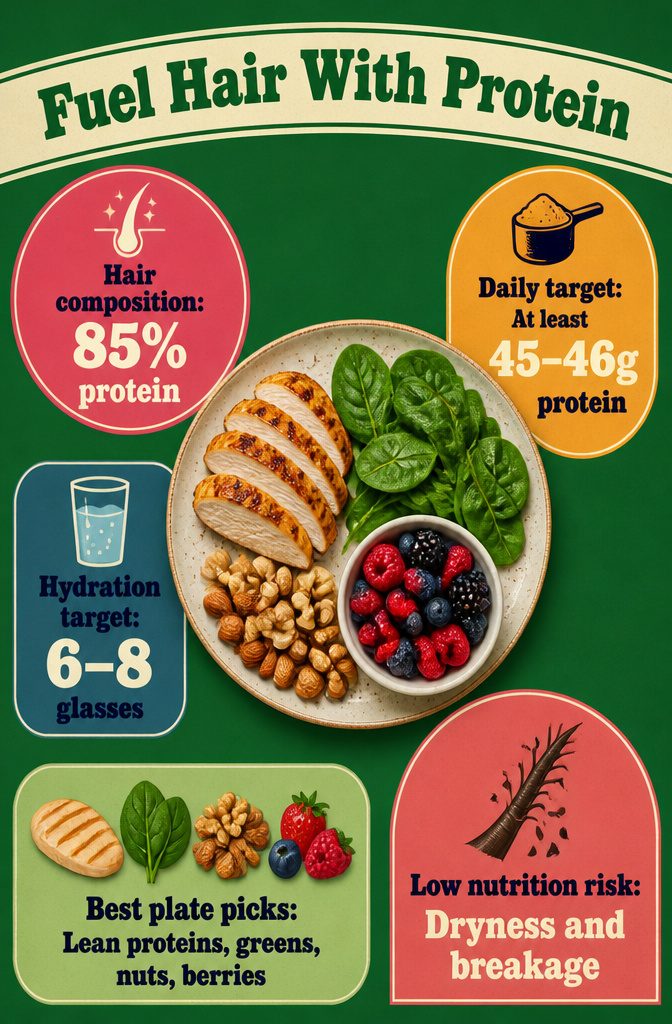
Hair is roughly 85% protein and 11% water, so what you eat and drink shows up in the strands.
The two published daily targets are nearly the same: at least 45–46g of protein, plus 6–8 glasses of water. That is an easy bar to clear if protein shows up at every meal rather than only at dinner.
For the rest of the plate, I’d stock lean proteins, leafy greens, nuts and berries.
Berries and a handful of nuts make the simplest snack swap. When nutrition runs short, hair can turn dry and prone to breakage, and no conditioner fully makes up for that.
14. Care for the Scalp
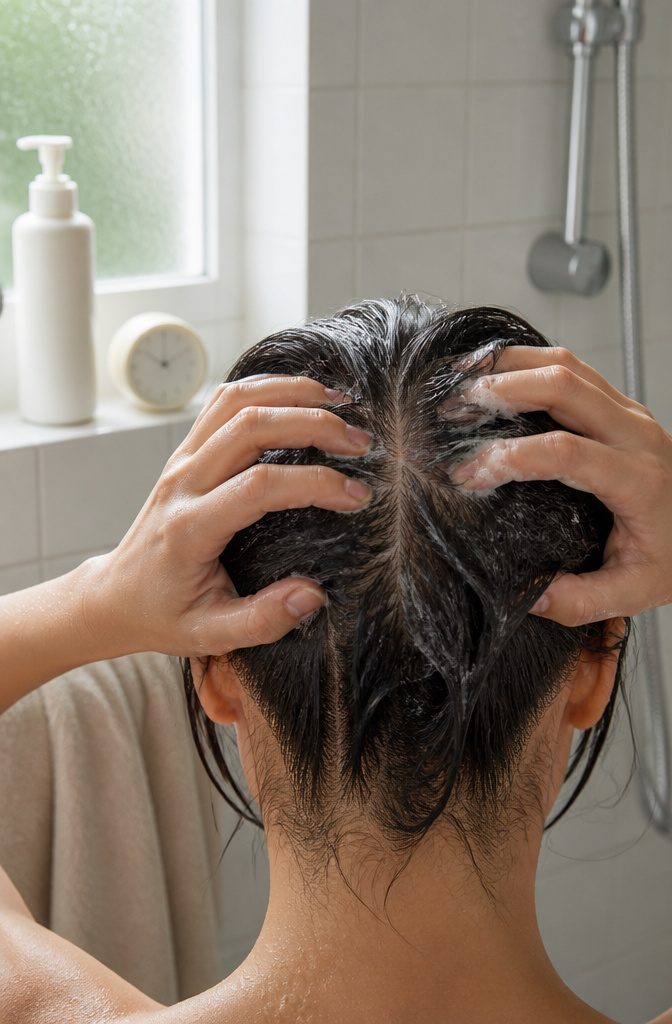
Shampoo belongs on the scalp, where oil, dirt and product collect, so work it in with your fingertips and let the rinse carry it down the lengths.
Dandruff shampoo needs 5 minutes on the scalp before rinsing. Buildup can block follicles and weigh hair down, which is when a clarifying shampoo earns its spot.
A dry scalp usually traces to over-shampooing, dry indoor air or sun, so wash less often, run a humidifier and wear a hat outside.
A few minutes of fingertip massage on wet, detangled hair may support circulation. Batiste Fragrance Free Light Dry Shampoo works as a between-wash refresh, never a replacement for cleansing.
15. Oils and Leave-Ins
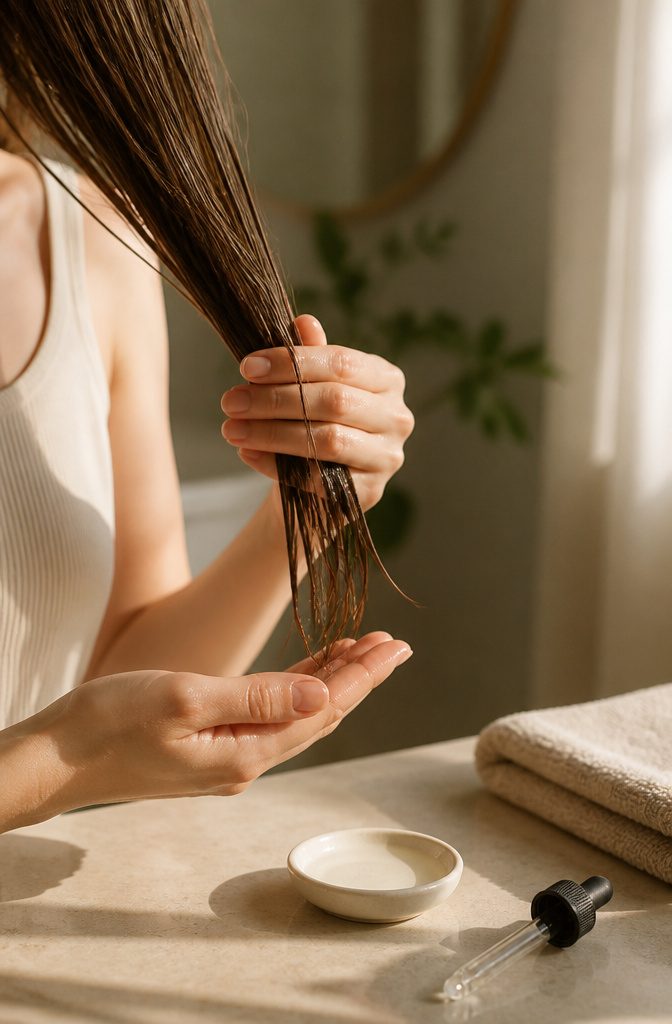
Damp hair holds moisture best, so work a leave-in through right after you towel off, then seal it with a few drops of oil. A little goes a long way.
Straight and fine hair wants a lightweight leave-in, since anything heavier looks greasy. Curly and kinky hair can take richer creams and oils like coconut oil or shea butter.
Living Proof claims up to 93% fewer split ends caused by styling, and hair 15x stronger, with its Restore Repair Leave-In. I’d start with less than feels right and add more only on the driest ends.
16. Sleep and Stress
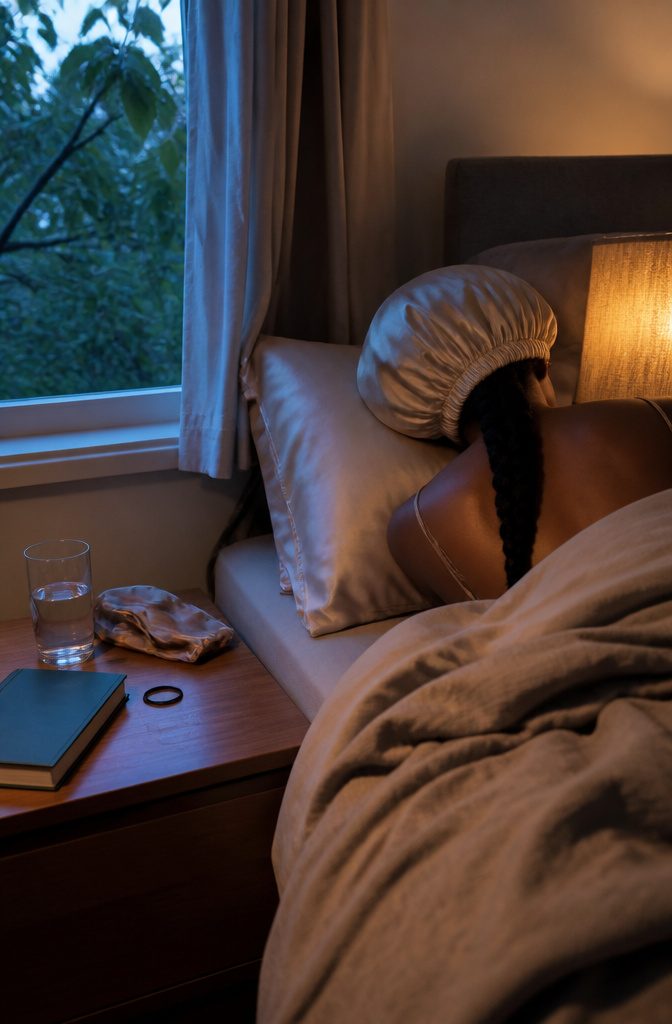
Cotton creates friction against hair for hours every night, and a silk or satin pillowcase cuts that down.
It helps most on thin, curly or frizzy hair. For curls I’d go a step further and wear a satin or silk bonnet or scarf, since it protects all of your hair, not just the strands touching the pillow.
Long hair does well in a loose braid or tucked into a sleep cap.
Aim for 7–9 hours of sleep a night to support healthy growth.
Exercise improves scalp circulation and lowers stress, which is a common cause of hair loss. Of the 16 tips here, this one has the thinnest backing, so treat it as a cheap bonus rather than a fix.
Protect Hair Before Swimming
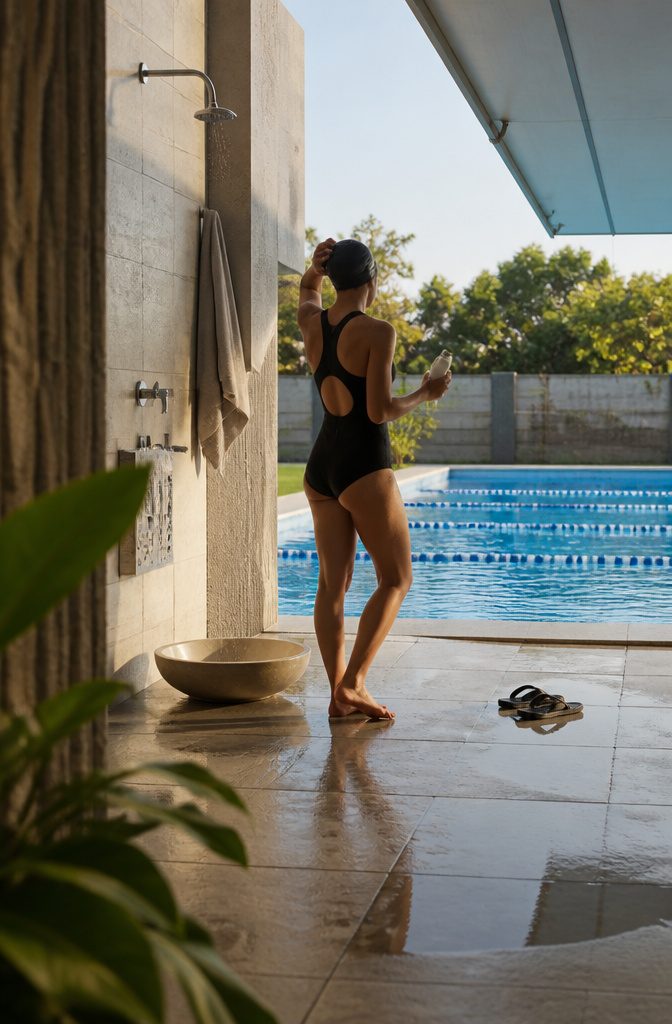
Three habits cut down chlorine and saltwater damage, and they work best together:
- Wet your hair in the shower before you get in. Hair already saturated with water absorbs less of the chemical-laden pool water.
- Work conditioner or a leave-in mask through your hair first. It forms a barrier against both chlorine and saltwater, so it’s the one step that works at the pool and the beach.
- Wear a swim cap if you swim often. It cuts exposure to pool chemicals directly, and for regular lap swimmers I’d make it the default rather than an extra.
- Add a pH-balancing hair product for a further layer of protection.
See a Dermatologist
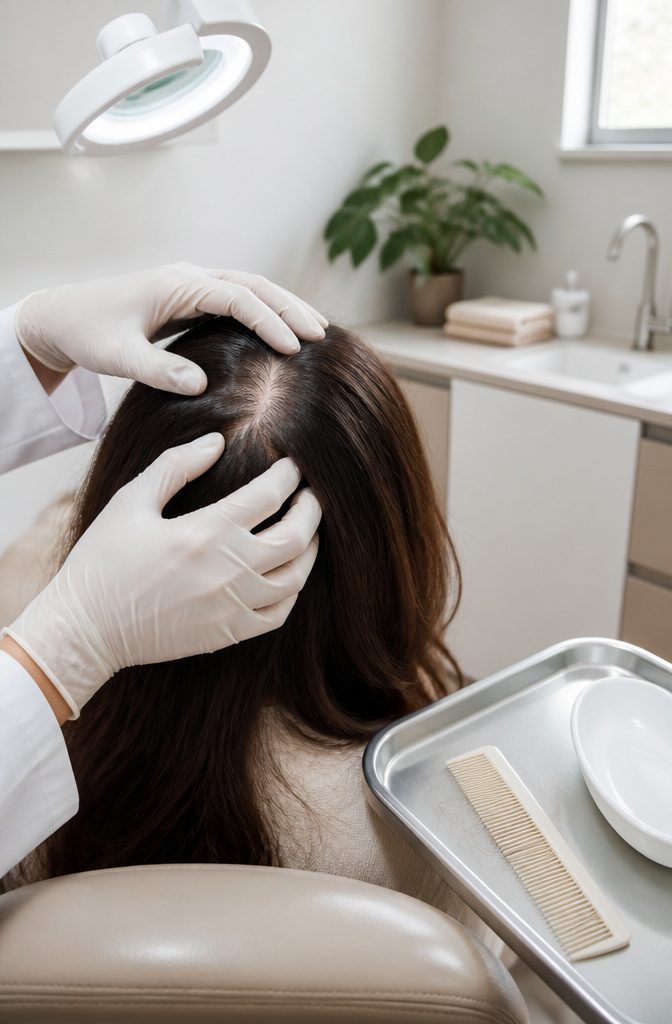
Normal shedding runs 50–100 hairs a day, so a few strands in the brush or shower drain are nothing to worry about.
Losing more than 50–100 hairs a day, or spotting thinning or bald patches, is the signal to book an appointment instead of buying another serum.
A sudden, dramatic change deserves the same response, as does a scalp that stays itchy or red no matter which shampoo you try.
Genetics, nutrition, age and products can all play a role, and sorting out which one is behind it takes an exam, not guesswork. I’d choose a board-certified dermatologist, who can tell you whether treatment options exist.
Frequently Asked Questions
How often should I wash my hair to keep it healthy?
It depends on your hair type. Very oily hair can be washed daily or every other day, most hair a few times a week, and curly or dry hair once or twice a week.
Dry, thick or textured hair can stretch to at least once every 2–3 weeks. Start at the longer end of your range and shorten it only when your roots turn greasy, because overwashing strips natural oils.
How can I make my hair healthier fast?
Add a deep-conditioning mask, left on for 10 to 30 minutes: weekly for dry or curly hair, every 2–4 weeks for straight or oily hair.
Cut back on heat styling and tight hairstyles, detangle with a wide-tooth comb, and trim every 8–12 weeks to remove split ends. Switching to a sulfate-free shampoo and conditioning only the mid-lengths and ends also helps hair hold moisture.
What are the main do’s and don’ts of hair care?
Do condition the mid-lengths and ends, spray a heat protectant before styling, and trim every 8–12 weeks.
Don’t overwash, rub hair dry with a towel, or wear tight styles around the clock. All three don’ts cause breakage, which is what dulls hair and keeps it from growing longer.
How can I tell if my hair is unhealthy?
Unhealthy hair looks dull, dry, frizzy or brittle, and it breaks easily.
Split ends, a rough texture and scalp problems like flaking or itching are other signs. Shedding more than 50–100 hairs a day, bald patches or sudden thinning goes beyond everyday damage and calls for a dermatologist visit.
What is healthy hair?
Healthy hair feels soft, has a natural shine and stretches slightly before it snaps. It holds moisture, shows few split ends and has a smooth cuticle, so strands lie flat with little frizz.
Does diet affect hair health, and which foods are good for hair?
Yes. Hair is roughly 85% protein, so aim for at least 45–46g of protein a day plus 6–8 glasses of water.
Lean proteins, leafy greens, nuts and berries are the foods to stock up on. When nutrition runs short, hair turns dry and prone to breakage.
How does sleep affect hair growth?
During sleep the body repairs and regenerates cells, including hair follicles, so aim for 7–9 hours a night.
The evidence is thinner here than for other habits, so treat sleep as a low-cost extra rather than a fix. A silk or satin pillowcase adds a little protection by cutting friction overnight.