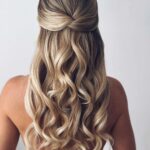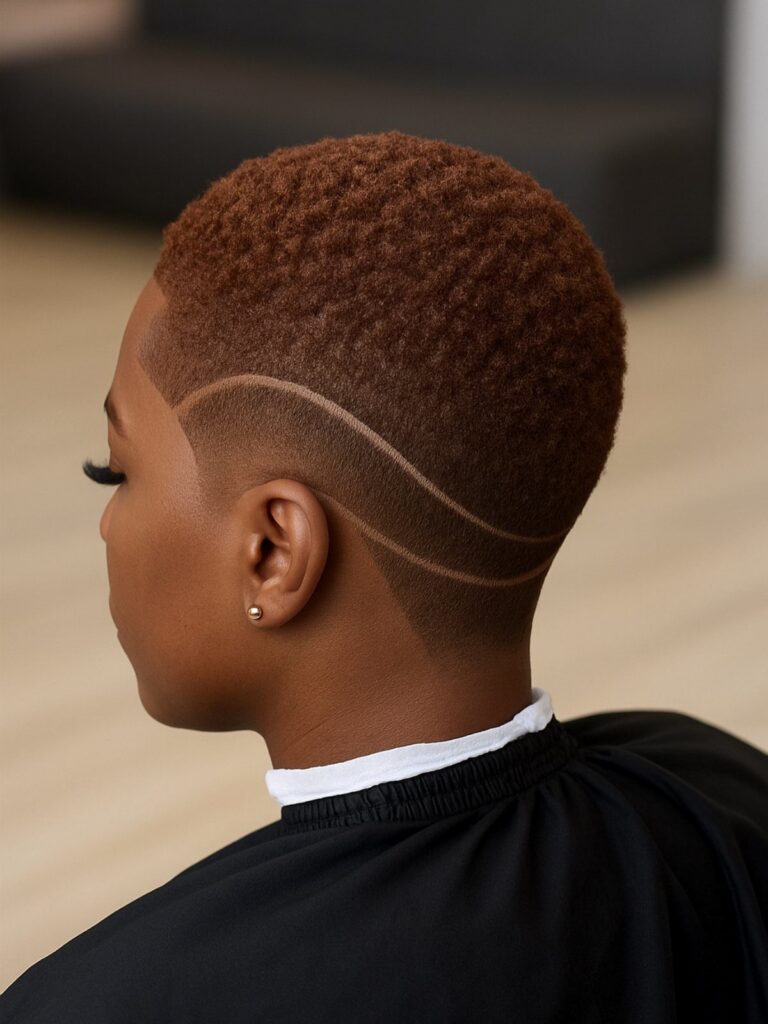
The 6 lengths here run from the Buzz Cut and Skin Fade at the shortest end, through the Pixie Cut, Chin-length and Shoulder-length hair, to Upper-back Hair Length at the longest.
Your choice depends on how much time you’ll spend drying and styling each morning and how often you’re willing to book a trim.
A buzz cut with a number 1 guard grows out evenly and takes no styling at all, while shoulder-length or longer hair needs 4 to 6 weeks between cuts if it’s layered and more time to dry than anything shorter.
1. Buzz Cut

A buzz cut keeps the same clipper guard number all over, so the hair sits at one even length from front to back.
The result is about as low-maintenance as hair gets: no styling, fast to wash, and it grows out evenly.
If you’re cutting at home, pick a guard between 1 and 4 depending on how much length you want.
A 1 gives about 1/8 inch, a 4 leaves closer to 1/2 inch. Run the clippers in every direction to catch any spots you missed the first pass.
2. Skin Fade
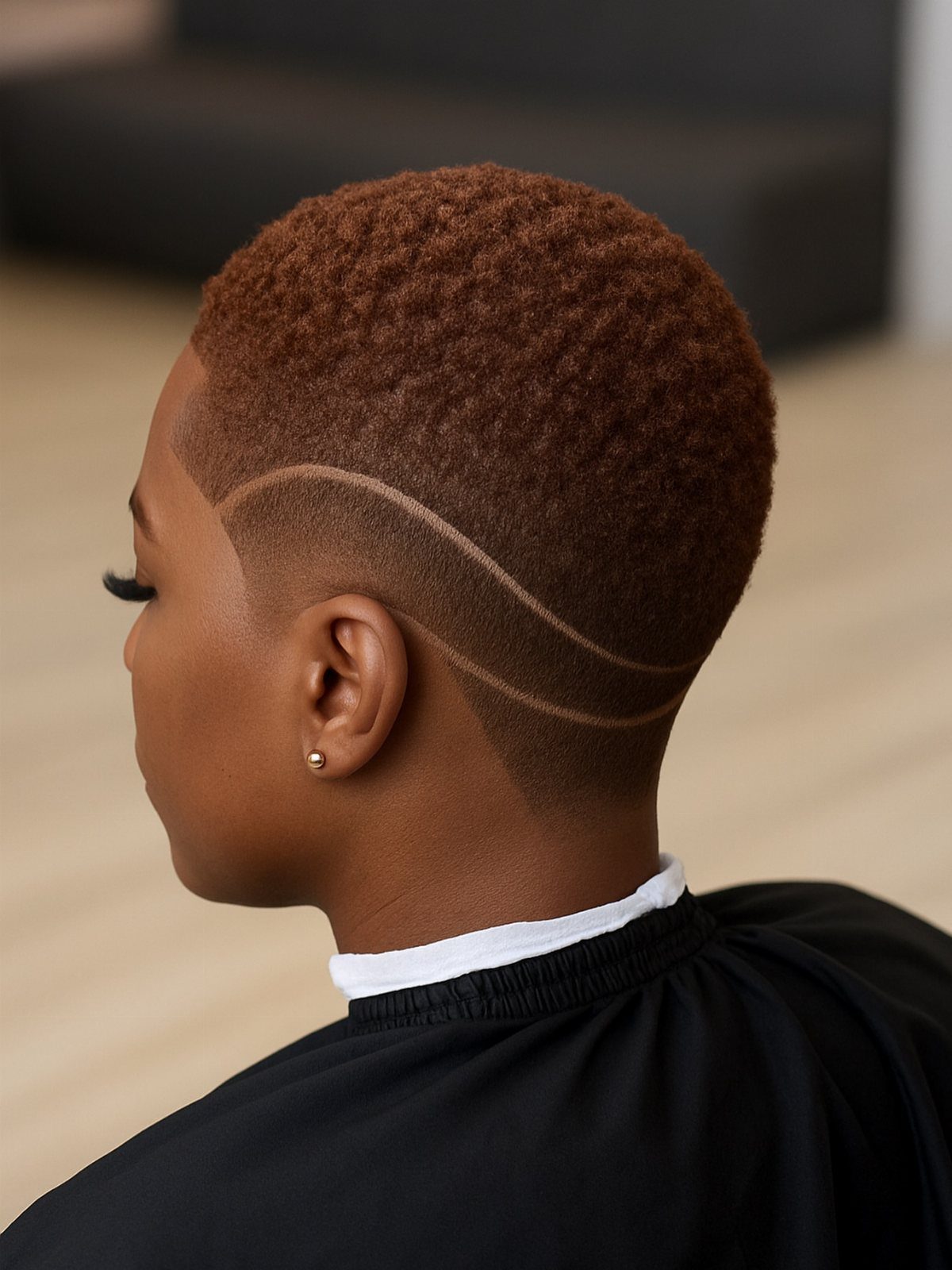
A skin fade starts at the skin or a zero guard at the bottom and gradually blends up into longer hair on top.
That sharp contrast between bare skin and length is what sets a fade apart from a taper, which stays longer all the way down.
Fades take more precision than a single-guard buzz, so most people get them done by a barber every 2 to 3 weeks. The shortest part grows in first, which means the fade loses its clean line faster than an all-over cut.
3. Chin-length Hair
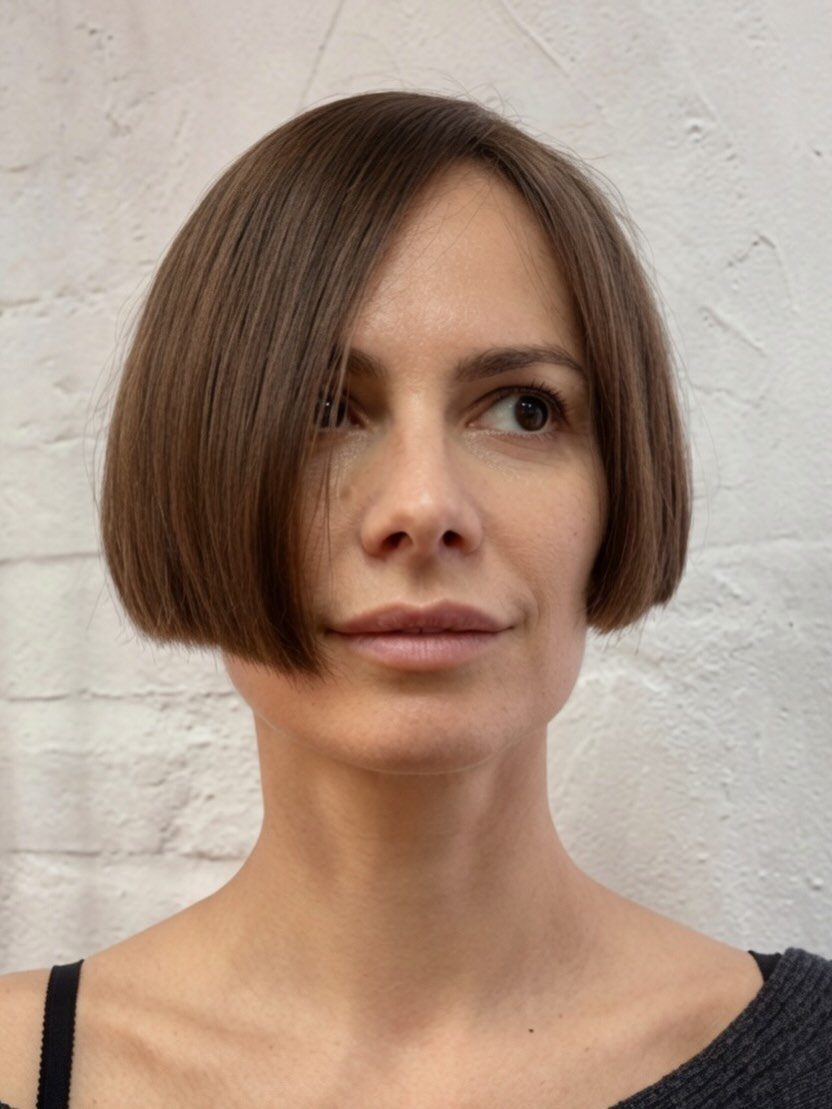
Chin-length hair lands right at the jawline, long enough to tuck behind your ears but short enough that drying time stays quick.
It works on straight, wavy or curly hair, though the curl will make the cut sit a little higher when dry.
Ask for it wet if you want precision, or dry if your stylist prefers to see exactly where it will land once styled.
Most stylists will cut a bit longer if your hair has wave or curl, since it springs up as it dries.
4. Shoulder-length Hair
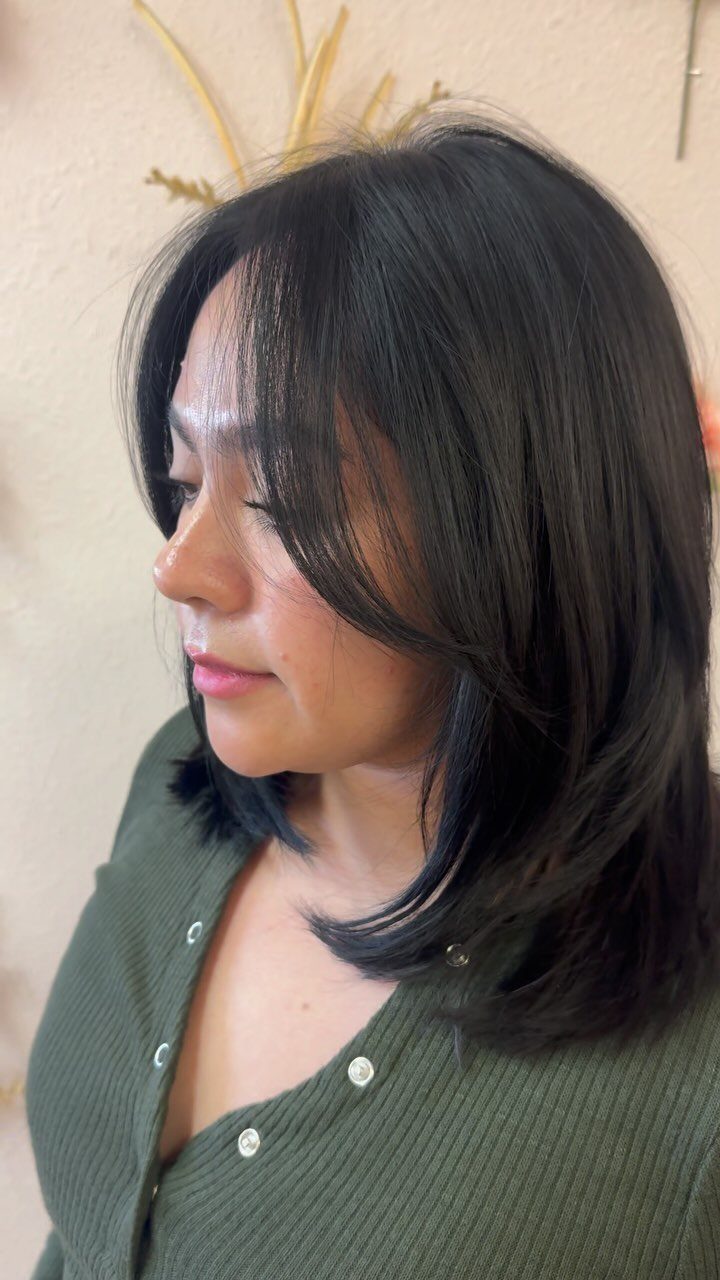
Shoulder-length hair reaches the collarbone or the top of the shoulder, long enough to pull into a low ponytail or bun.
It’s a middle ground: still easy to put up but without the weight and drying time that comes with longer lengths.
Layers help if your hair is thick or tends to sit flat. Without them, shoulder length can feel heavy at the ends, especially if you air-dry.
5. Pixie Cut
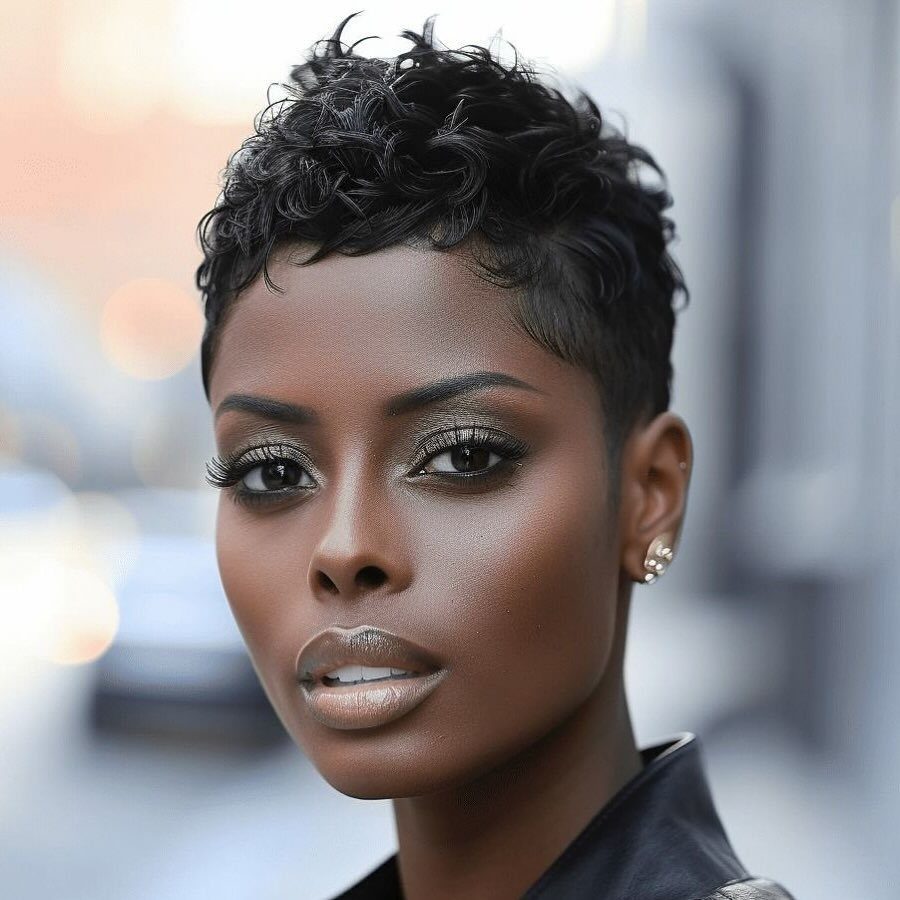
A pixie cut keeps the sides and back short, usually above the ear, with slightly more length on top. The contrast lets you style the top forward, to the side, or leave it textured, depending on what you ask for.
Pixies need a trim every 4 to 6 weeks to keep the shape. Between cuts, the sides grow out first, so the clean line around the ears softens before the top does.
6. Upper-back Hair Length
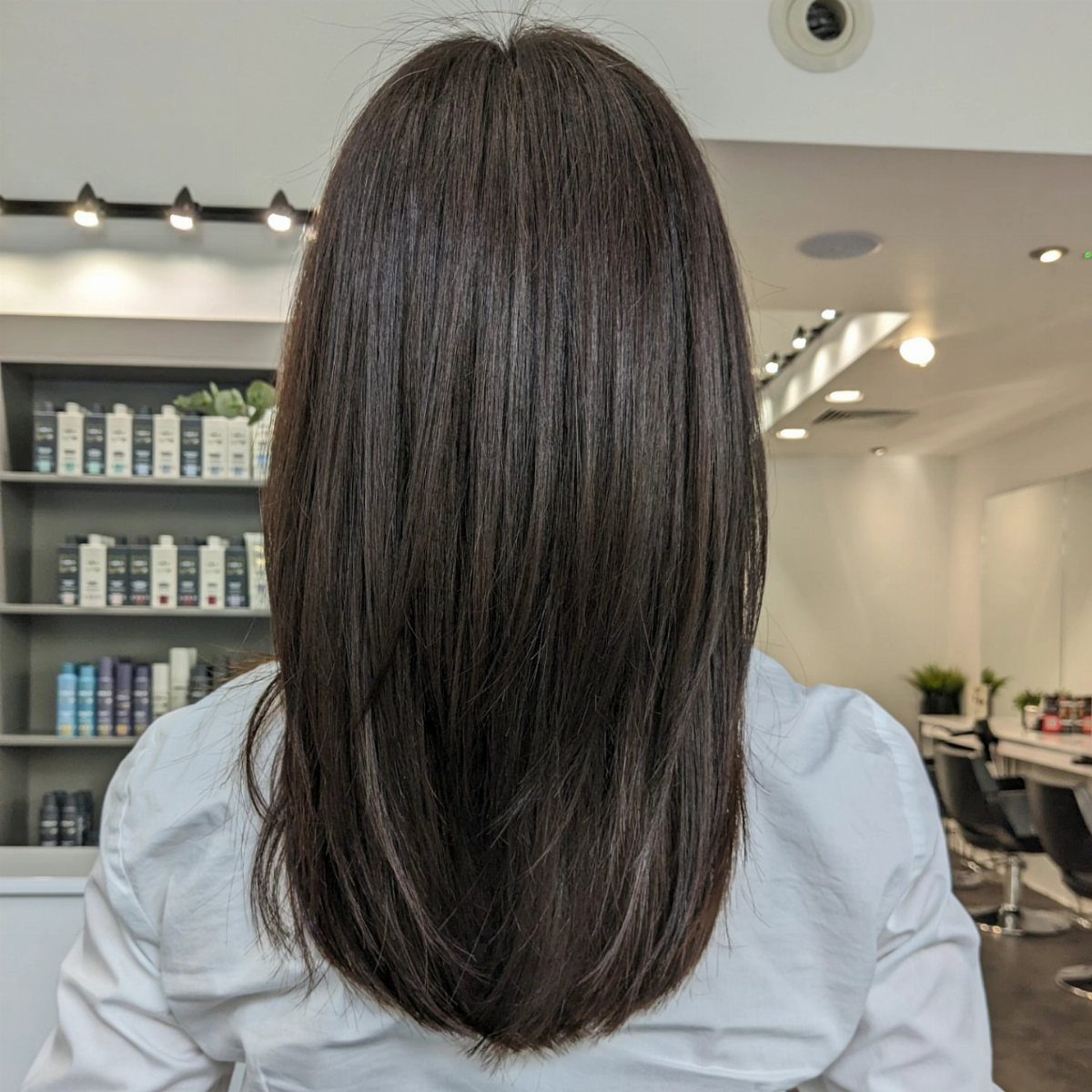
Hair that reaches the upper back falls a few inches below the shoulders, usually landing between the shoulder blades.
At this length, hair stays long enough to braid or put in an updo but takes more time to dry and style than shoulder length.
If your hair is fine, the weight can pull waves flat. Layers starting a few inches from the ends help keep volume without losing the length.
Frequently Asked Questions
What do 1, 2, 3, 4 and 5 mean in haircuts?
They are clipper guard sizes, and a higher number leaves more hair. Moving up one guard size leaves another 1/8 inch (about 3 mm) of hair.
What is a number 4 haircut on the sides?
A 4 guard leaves about 1/2 inch of hair, or 13 mm.
That is classic crew cut length, roughly the thickness of a pencil eraser. Your hair texture shows clearly, and it looks tidy without reading as buzzed.
How short is a number 3 haircut?
Pick a 3 and about 3/8 inch (roughly 10 mm) of hair stays on your head.
On most hair it covers the scalp, which a 1 or 2 does not. For an all-over cut that asks very little of you each morning, a 3 is an easy place to land.
Is a 2 or 3 longer haircut?
A 3 is longer.
The 3 wins on length, leaving 1/8 inch more than the 2. That gap is small, but you can see it in how much scalp shows.
Should I get a 2 or a 3?
Go with a 3 if your hair is fine or this is your first buzz cut.
Choose the 2 if you want a close, clean look with a little skin showing through; choose the 3 for softer coverage and a cut that stays tidy longer as it grows.
You can always go shorter on the next pass, but you can’t put length back.
How many mm is a 2 guard?
A 2 guard leaves about 6.4 mm, which most people round to 6 mm.
That is 1/4 inch of hair. It sits one step above a 1 and one below a 3.
Is a 2 guard a buzz cut?
Yes.
A 2 all over is the classic buzz cut length. A buzz cut uses one guard from front to back, so the hair sits at an even length and grows out evenly too.
What are some examples of short to mid-length hairstyles for women?
A pixie cut, chin-length hair and shoulder-length hair cover that range well. Chin-length hair lands at the jawline and dries fast, and it tucks behind the ears.