Pigment a follicle has stopped making doesn’t come back, so every natural option here slows graying or disguises it; none reverses it.
Slowing is realistic, mostly through fixing deficiencies like B-12, but get bloodwork first. Coffee or black tea rinses only tint gradually, and need reapplying every 1–2 weeks.
Why Gray and White Hair Happens
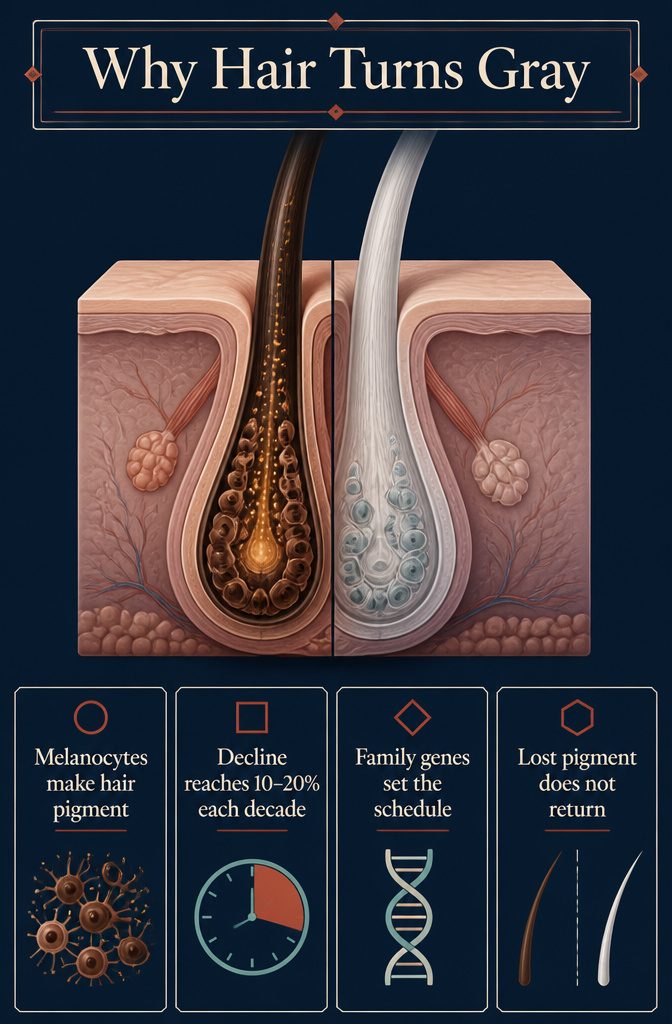
Hair gets its color from melanin, made by melanocytes at the base of each follicle.
Gray starts when those cells slow down or go inactive, and tyrosinase, the enzyme that drives pigment production, slows with them. Strands that grow in without pigment are actually white; light bouncing off them reads as silver.
Age and genes set the schedule. From around 40, melanocytes decline 10–20% every decade, and early graying runs in families.
Pigment a follicle has stopped making does not come back, so I treat every natural option as prevention or camouflage, never reversal. Slowing the loss is realistic; undoing it isn’t.
1. Correct Nutrient Deficiencies Through Food or Supplements
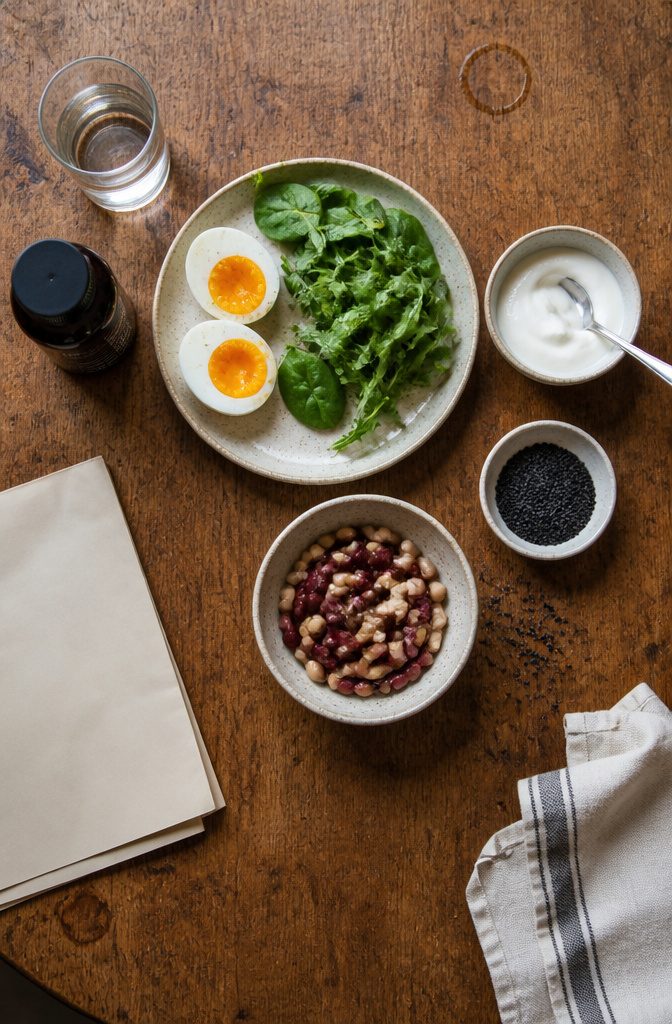
B-12 leads the list of deficiencies tied to early gray.
Research has found that many young adults with gray hair may also have a vitamin B-12 deficiency.
Vegetarians and vegans are most exposed, since the daily 2.4 mcg comes mainly from animal products.
Folate (400 mcg), copper (900 mcg), iron, zinc, vitamin D, B5, B-6 (1.3 mg), biotin (30 mcg) and protein belong on the same checklist, plus at least three servings of calcium foods a day. Not every multivitamin contains folate, so read the label.
I’d get bloodwork before buying any supplements, so you replace only what you’re actually low in. B-12 can call for injections rather than pills.
2. Manage Stress and Improve Lifestyle Habits

Oxidative stress and emotional stress are both linked to early graying, though the stress link is debated and genetics usually set the pace. I’d still start here, since these habits cost nothing:
- Say no to extra tasks and protect one hobby block each week.
- Meditate or do deep breathing daily; even 5 minutes counts.
- Exercise daily to ease stress and raise serotonin, but skip extreme workouts. Excessive activity is a listed risk.
- Keep a regular sleep schedule. All-nighters and irregular sleep are tied to early graying.
- Quit smoking, a listed risk factor for premature gray.
- Avoid fasting and very low-calorie diets.
- Drink 8–10 glasses of water daily.
3. Use Natural Oils and Scalp Care
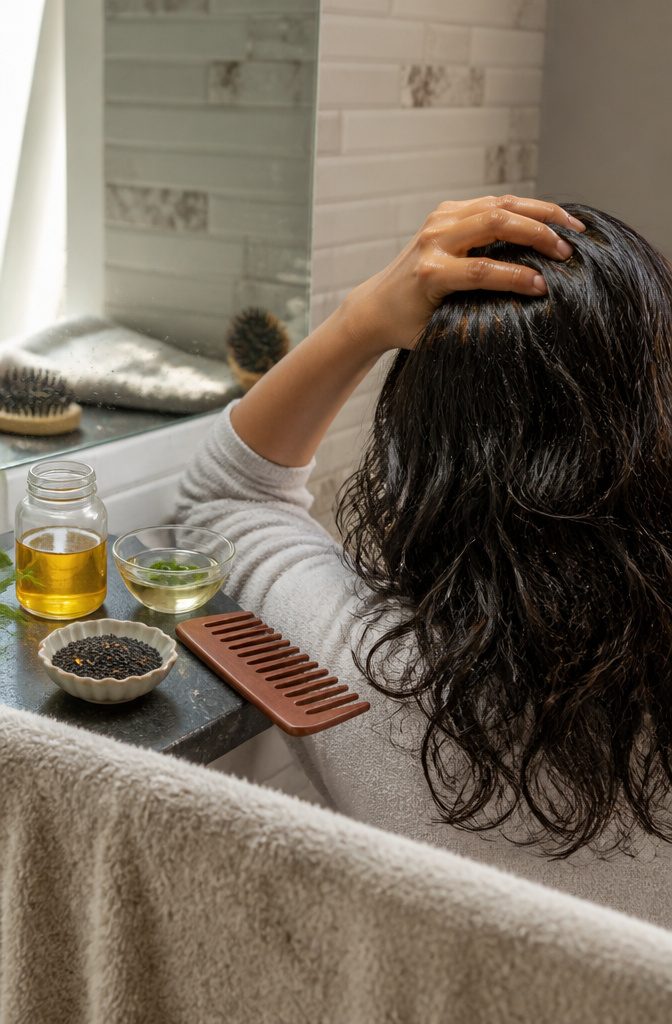
Amla (Indian gooseberry) oil is the one credited with rejuvenating melanocytes, the cells that make hair pigment, so it’s where I’d start.
Curry-leaf-infused coconut oil is the gentler second pick; it conditions the roots and feels like any other hair oil. Black sesame is a food rather than a topical, a traditional remedy for restoring pigmentation, so eat it.
Whichever oil you choose, massage it into your scalp regularly. The rubbing itself improves circulation and pigmentation.
Then cut back on what works against you: frequent chemical dyes, harsh shampoos and heat styling. I’d treat all of this as slowing and supporting, not a promised reversal.
4. Use Natural Rinses and Kitchen Ingredients to Darken or Blend Gray
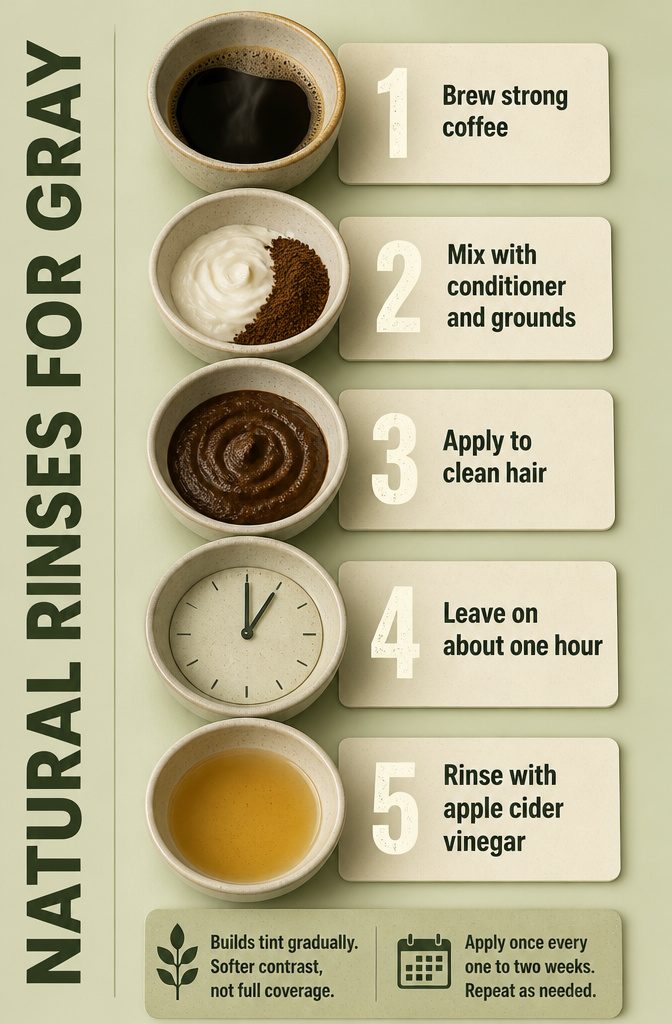
Coffee is one of the simplest ways to add depth to dark hair and soften the line between gray and pigmented strands.
Brew a strong pot, let it cool, then mix one cup with a couple cups of leave-in conditioner and 2 tablespoons of coffee grounds. Apply it to clean hair and leave it on for about an hour.
Rinsing with apple cider vinegar afterward helps the color last longer. You may need to repeat the process a couple of times before you see noticeable results.
Black tea works in a similar way. Steep 3–5 teabags in 2 cups of water, let it cool, and apply to hair for at least one hour.
For lighter hair, chamomile tea brings out warmer tones, and rhubarb root works well for subtle brightening. Simmer herbs for 30 minutes to release more pigment.
Beet or carrot juice, about one cup left on for at least one hour, can give a red tint to lighter shades. Walnut shells and catnip are also traditional options, though catnip is better suited for fair hair.
Henna is the closest natural option to a lasting dye. Mix one cup of henna powder with 2 cups of lemon juice, let it rest 4–6 hours, then apply for 2–3 hours.
It penetrates the hair surface and holds color for weeks. Lemon juice lightens over time but can dry hair out with frequent use.
None of these will cover gray completely.
They build tint gradually and work best when applied once every one to two weeks. You’ll get softer contrast, not full coverage.
5. Use Plant- or Mineral-Based Coloring and Temporary Camouflage
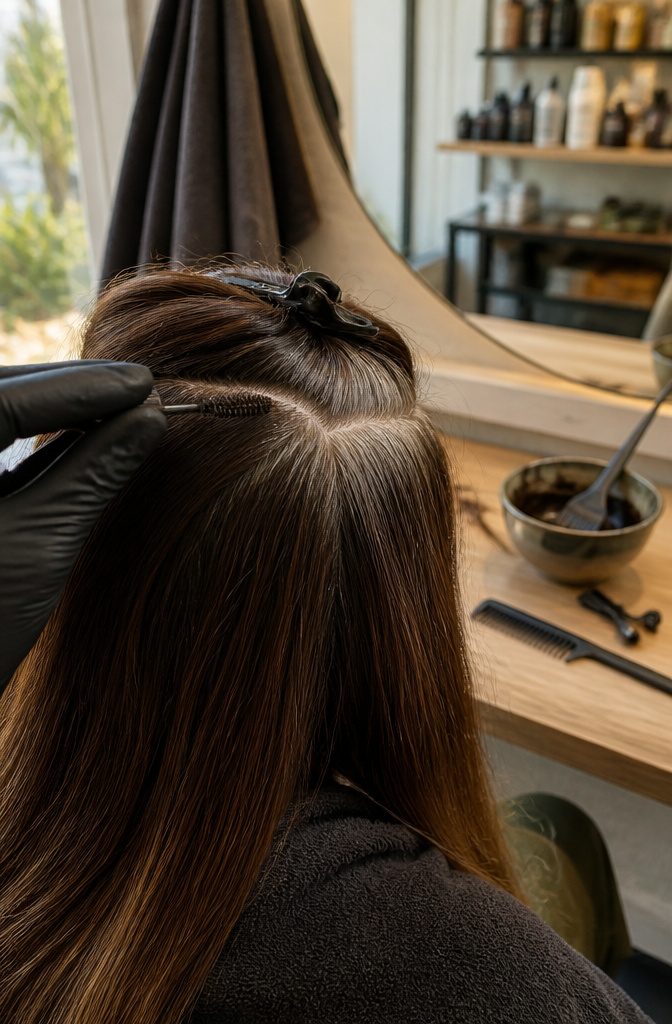
Plant or mineral color is the stronger choice for full coverage.
It uses plant or mineral pigments with butters and vegetable oils, no ammonia or ethanolamine, and it covers white hair until the new growth comes in, so expect a regrowth line at the roots.
Hairprint is a plant-based option worth a look if you want a name to start with. None of this restores pigment; it only disguises.
For the gap between touch-ups, a natural root mascara free of silicones and parabens is the quicker fix.
It fades with shampoo, which makes it better for a single event than for daily wear. If you’d rather keep the white and add depth, lowlights deposit a darker shade onto lighter strands.
6. Use Purple-Toned Care to Neutralize Yellowing
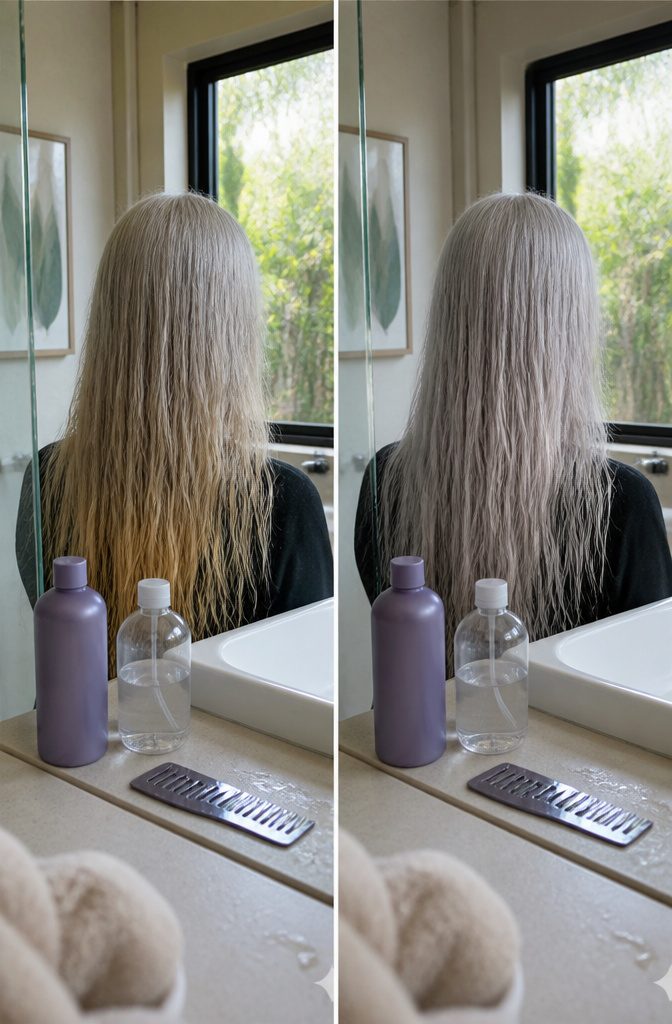
White hair looks clean when it’s silvery, but purple or violet shampoo is what you need when it starts to look yellow.
The violet pigment cools down excess warmth in one wash, neutralizing the brassy tones that can make white hair look dull or aged.
I keep purple shampoo in my rotation for those days when strands look more beige than crisp gray, and it works the same way it does for blondes trying to cancel out brassiness.
If you want something longer-lasting than a weekly shampoo, a color glaze can tone white hair without damage. These translucent treatments brighten and neutralize yellow at the same time, giving you a cooler, icier white.
A clear glaze adds shine without changing tone, which works if the color is already where you want it but the surface looks flat or dry.
7. Try a Natural Commercial Treatment or Serum
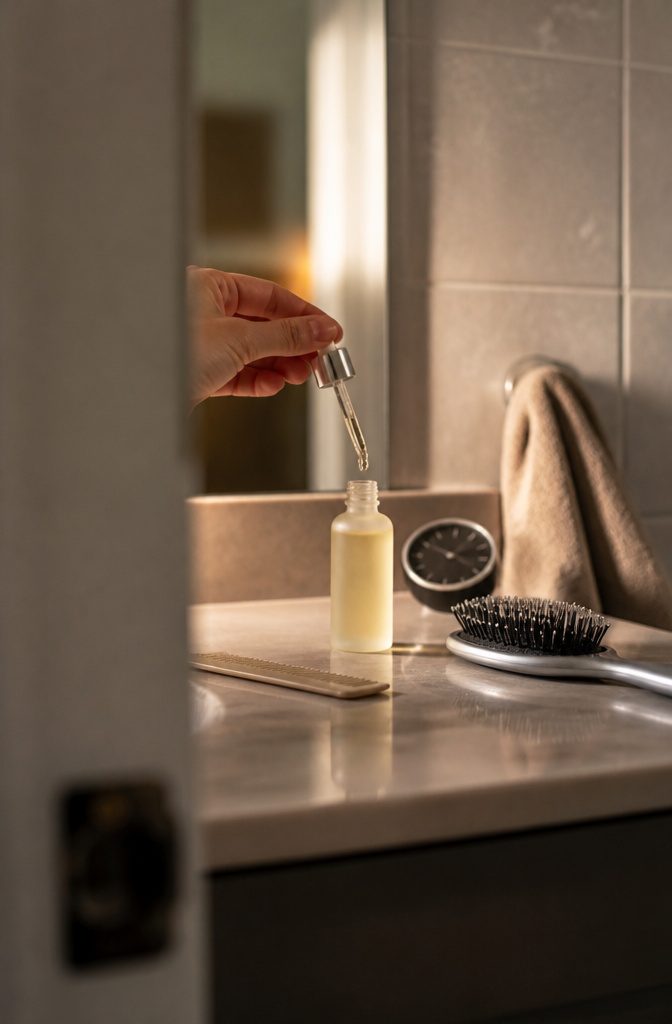
Dermo-Grey Serum is the clearest example of this category. It claims a reduction in gray of nearly 9% after 2.5 months and up to 15% after 5 months.
The routine is twice daily in 3-month courses, with a 3-month break between them. Hairprint is a second commercial option promoted for the same purpose.
Both are products with marketing behind them, and the figures are the makers’ own claims.
Even the best number leaves most of your gray in place, so I’d treat this as a slow-down experiment, not a replacement for color or a blend. It suits someone who will stick with a twice-a-day habit for months.
8. Accept or Transition to Natural Gray or White Hair
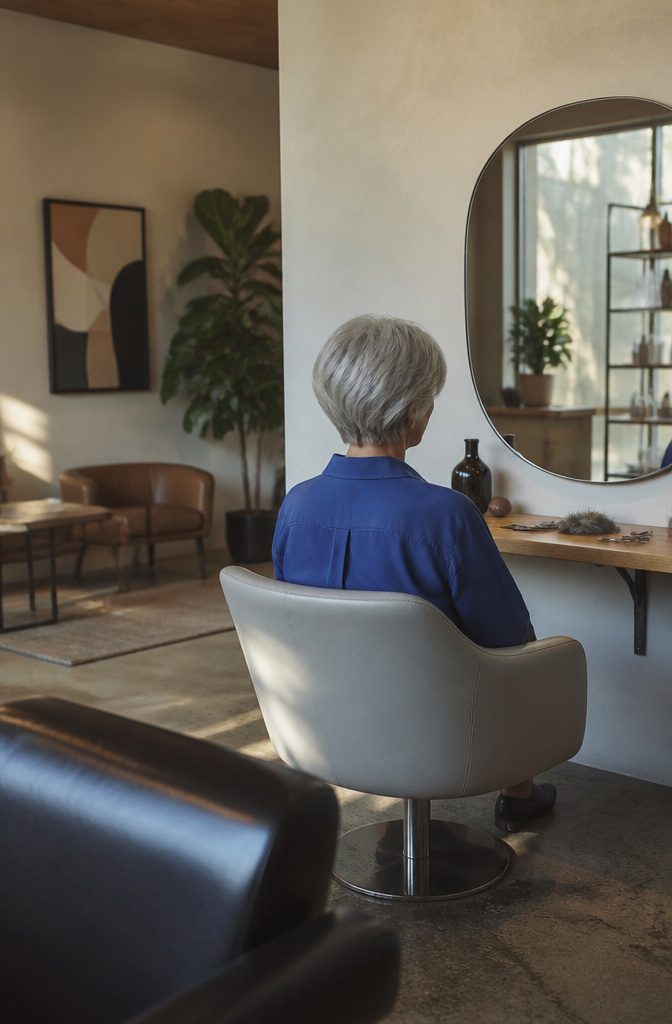
A full grow-out can take 2½ years, and the hardest stretch is the visible line where dyed length meets new roots.
Highlights and lowlights soften that line, so regrowth reads as dimension instead of a stripe. A shorter cut shortens the wait too, and I’d choose it over a long, patient grow-out if the contrast bothers you every morning.
Gray can wash out skin, so a little more blush, a defined brow and clear, saturated clothing colors make the change look deliberate.
Judge the color only after the transition is finished, because comfort with the new look usually arrives later than the hair itself.
Medical Causes That Require Evaluation
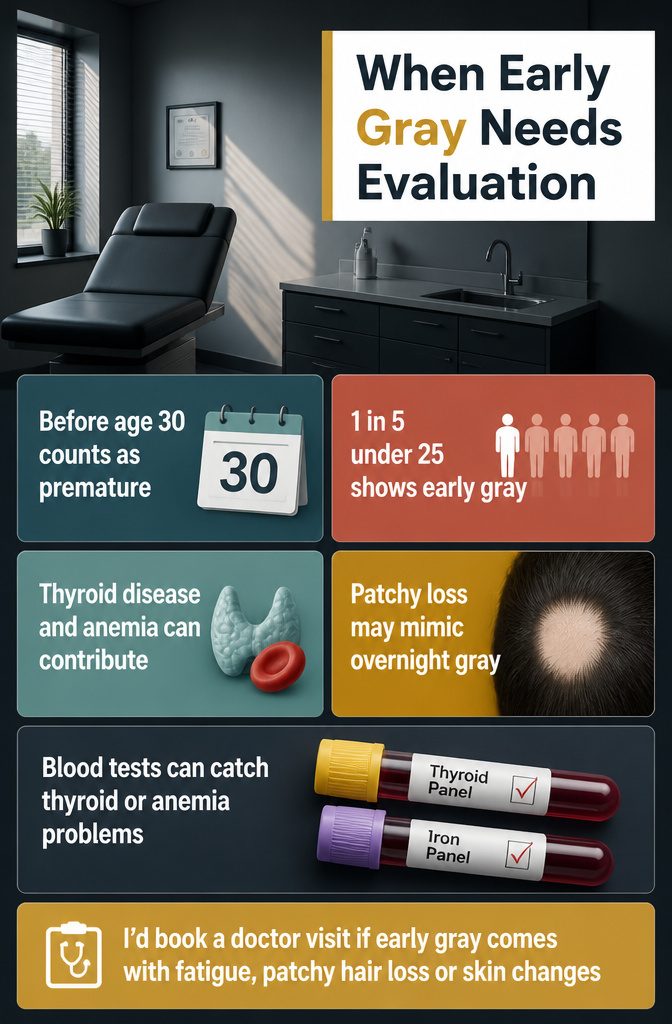
Graying before age 30 counts as premature, and 1 in 5 people under 25 already show early gray. Family history causes most of it, but thyroid disease (underactive or overactive), anemia, PCOS, early menopause and autoimmune disorders can all play a part.
Vitiligo damages the pigment cells at the follicle. Alopecia areata can look like overnight graying, because colored hairs fall out first and leave the gray ones showing; color may return later.
I’d book a doctor visit if early gray comes with fatigue, patchy hair loss or skin changes.
A blood test can catch a thyroid or anemia problem that no rinse will fix, and a medication causing it may only need a dose change.
How Often to Apply Natural Dyes
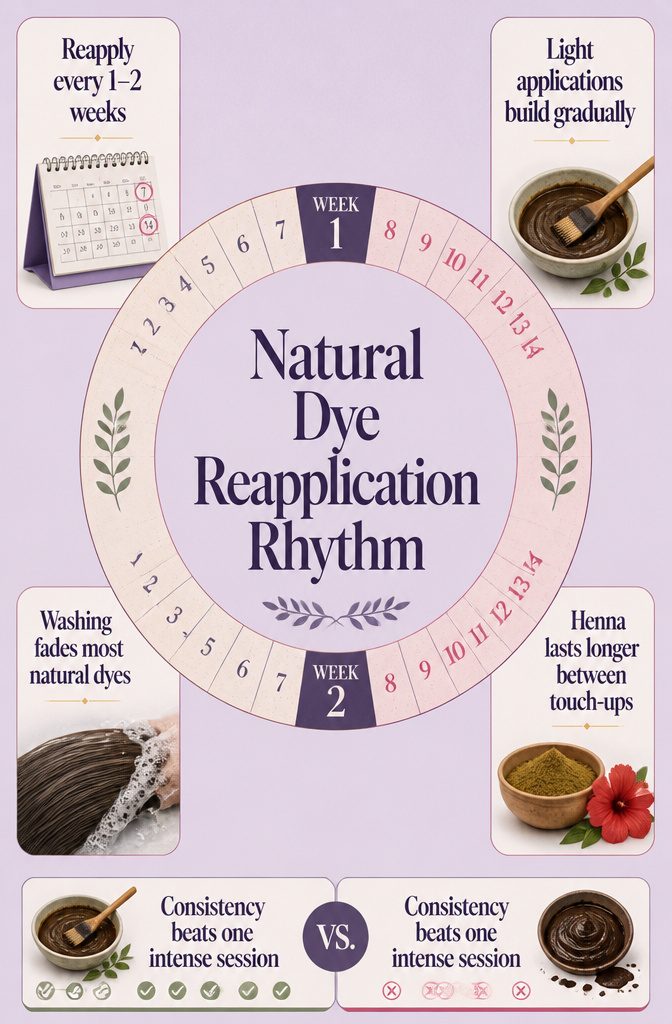
Once every one to two weeks suits most natural dyes. Light, regular applications build color better than an occasional heavy session, because the pigment stacks up gradually on the strand.
Natural dyes are not permanent. Most fade a little with each wash, so expect to reapply on that one-to-two-week rhythm to keep the tint from slipping back toward gray.
Henna is the exception: it lasts longer between touch-ups. It suits medium to dark hair best, especially if you want warm auburn or brown tones.
I’d pick consistency over intensity every time. Skipping a week or two won’t ruin anything, but chasing a deeper shade in one sitting rarely beats steady upkeep.
Whether Natural Dyes Damage Hair
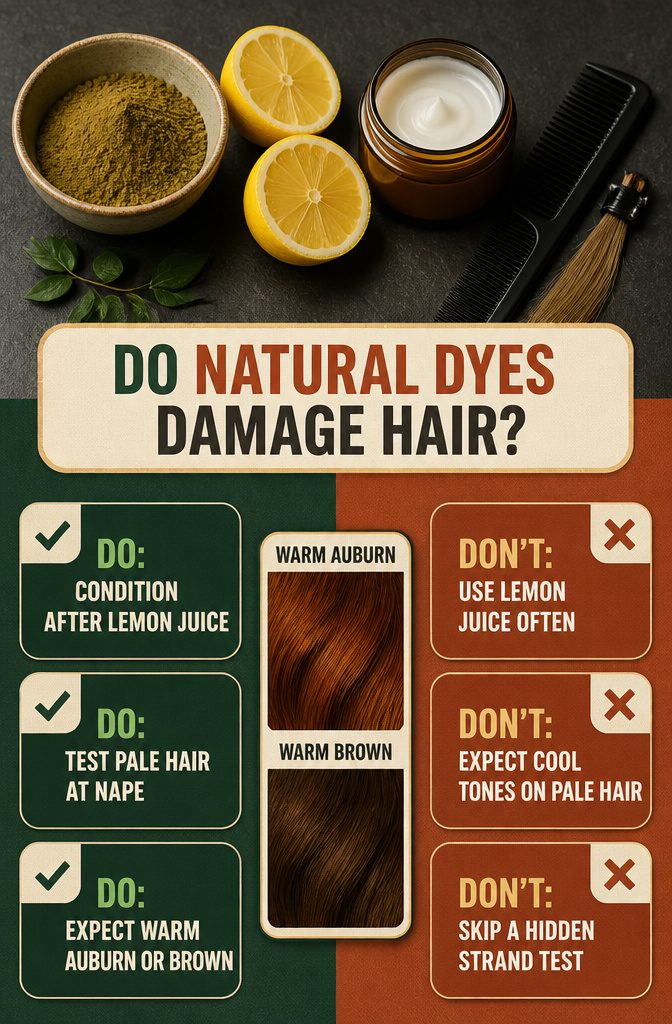
Plant-based and kitchen dyes are gentle compared with boxed permanent color, which relies on harsher chemicals.
Lemon juice is the exception. Used often, its acid dries hair out and leaves it rough and brittle, so I’d keep it occasional and follow it with a conditioning mask.
Henna needs realistic expectations. It suits medium to dark hair best, where it gives a warm auburn or brown result.
On lighter hair the color tends to land warmer and redder than people expect. If your base is pale, test a hidden strand at the nape before you commit to a full application.
Frequently Asked Questions
Can you reverse gray hair?
Not if genetics or age is behind it. A follicle that has stopped making pigment does not restart, so natural options only slow further loss or cover what has already turned.
If a deficiency or a medical issue such as thyroid disease or anemia is the cause, treating it may help, and a blood test can tell you.
Why does my hair turn white even with a healthy lifestyle?
Genetics usually sets the schedule, and early graying runs in families. Clean eating, exercise and low stress can slow the process, but they can’t override the inherited timing of when pigment cells wind down.
How can I stop white hair in my teens?
Start with bloodwork to check for deficiencies such as B-12, then manage stress, sleep on a regular schedule and cut back on harsh chemical dyes.
See a doctor if the gray comes with fatigue, patchy hair loss or skin changes, since thyroid problems, anemia and autoimmune conditions can be involved. Family history is the most common cause, so results may be modest.
How can I make my hair silver without dye?
Stop coloring and grow out your natural white, which can take about 2½ years; a shorter cut cuts the wait.
Use a purple shampoo to cancel yellow or brassy tones, or a color glaze for a cooler, icier white. A clear glaze adds shine without changing the tone.
Can natural hair dye fully cover gray hair?
No.
Kitchen rinses and herbal dyes build tint gradually and soften the contrast between gray and pigmented strands. For fuller coverage, a plant- or mineral-based color works better, though you’ll see a regrowth line at the roots.
Are natural hair dyes permanent?
No, most fade a little with each wash and need reapplying to keep the tint from drifting back toward gray. Henna is the exception and holds color longer between touch-ups.
How often should I apply natural hair dye?
Once every 1–2 weeks suits most natural dyes. Light, regular applications build color better than one heavy session, because the pigment stacks up gradually on the strand.
Is henna right for all hair types?
No. It works best on medium to dark hair, where it gives a warm auburn or brown.
On light hair it tends to turn out warmer and redder than expected, so test a hidden strand at the nape first, or try chamomile or catnip rinses instead.
Does natural hair dye damage hair?
Generally not; plant-based and kitchen dyes are gentler than boxed permanent color.
Lemon juice is the exception, since frequent use dries hair and leaves it rough. Keep it occasional and follow it with a conditioning mask.