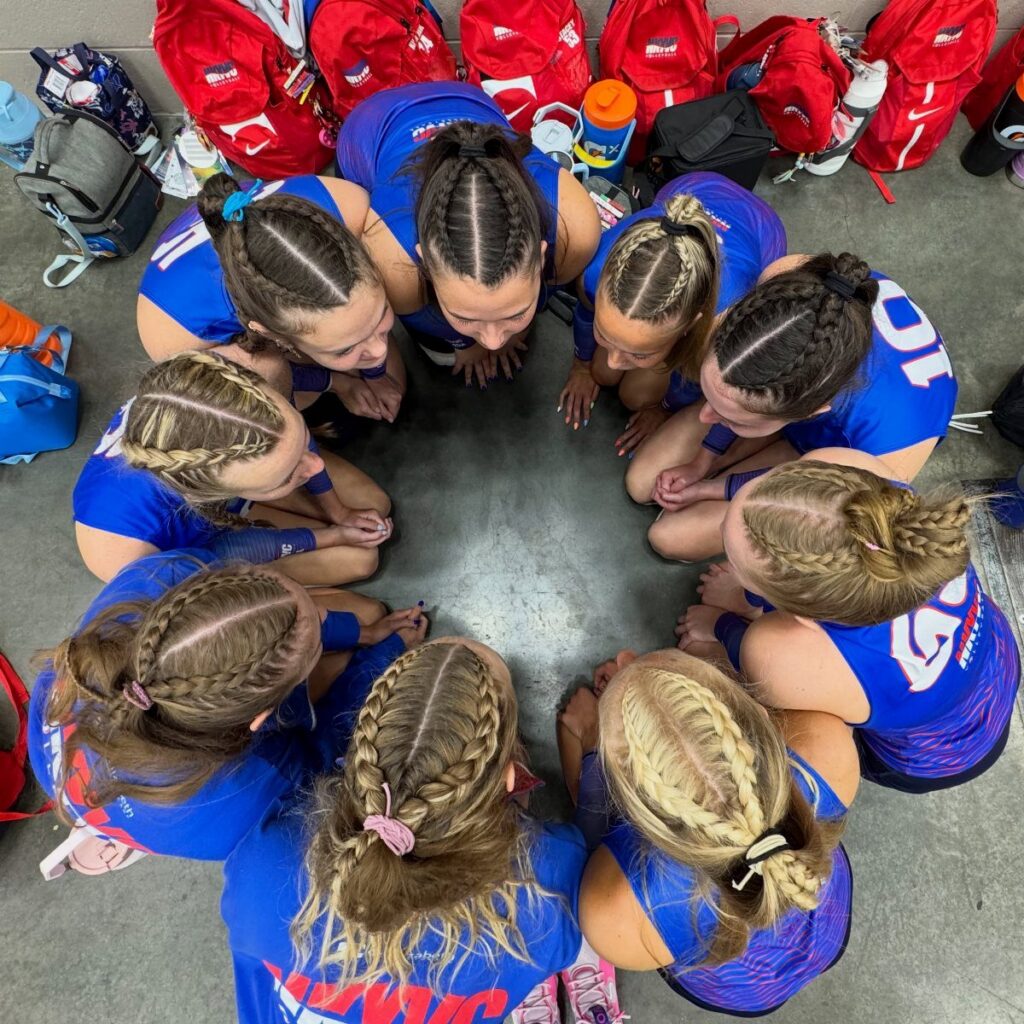
The styles here run from a basic High Ponytail to Cornrows Into Ponytail or Long Cornrows Into Braids, which take far more skill, and the time and practice you have before the match decide which one is yours.
A Braided Ponytail you can do from memory beats a Crown Braid with Long Braids you have never rehearsed, since anything rushed loosens by the second set.
Whichever one you pick, test it before game day with a hard head shake, a deep forward bend and a handful of jumps.
1. Dutch Braids Into Ponytail
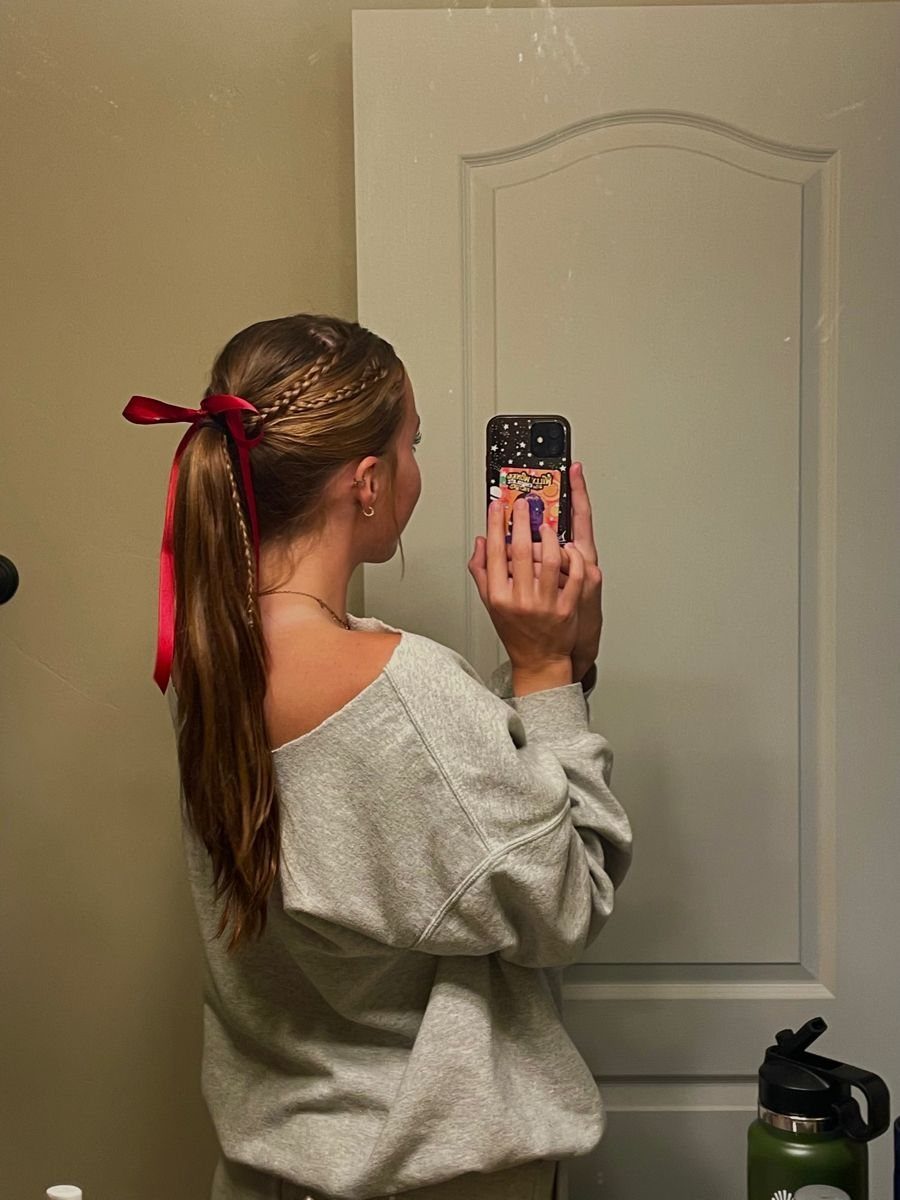
Braids that feed straight into the ponytail keep the hair contained, which is what a rally at the net asks of a style. Dutch braids sit raised on top of the head, so they read clearly even from a distance.
Keep Dutch braids snug against the scalp so they hold through diving and sprawling, then finish the ponytail with a ribbon, which adds color without adding bulk. Tie the ponytail firmly enough that the braid ends don’t loosen.
2. French Braids Into Ponytail
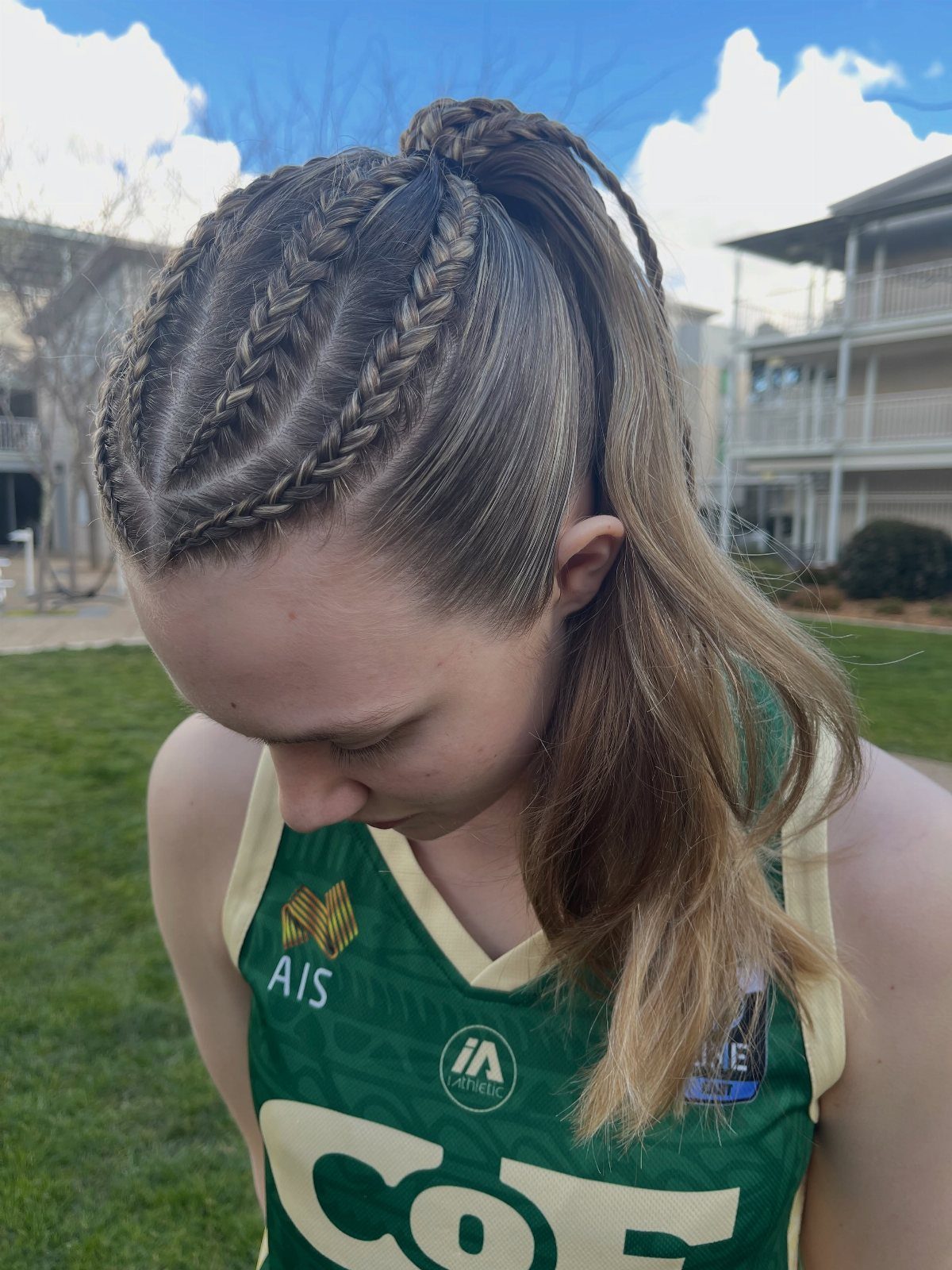
Two French braids that merge into one high ponytail suit anyone who wants the front of the head tidy and the length gathered up and off the neck.
The braids lie flatter against the head than Dutch ones, which keeps the look low-profile.
Start each braid at the front hairline and work back, then join both into a single elastic at the crown.
I like this for long hair, since the ponytail leaves plenty of length to swing without ever sitting in your face.
3. Braided Ponytail
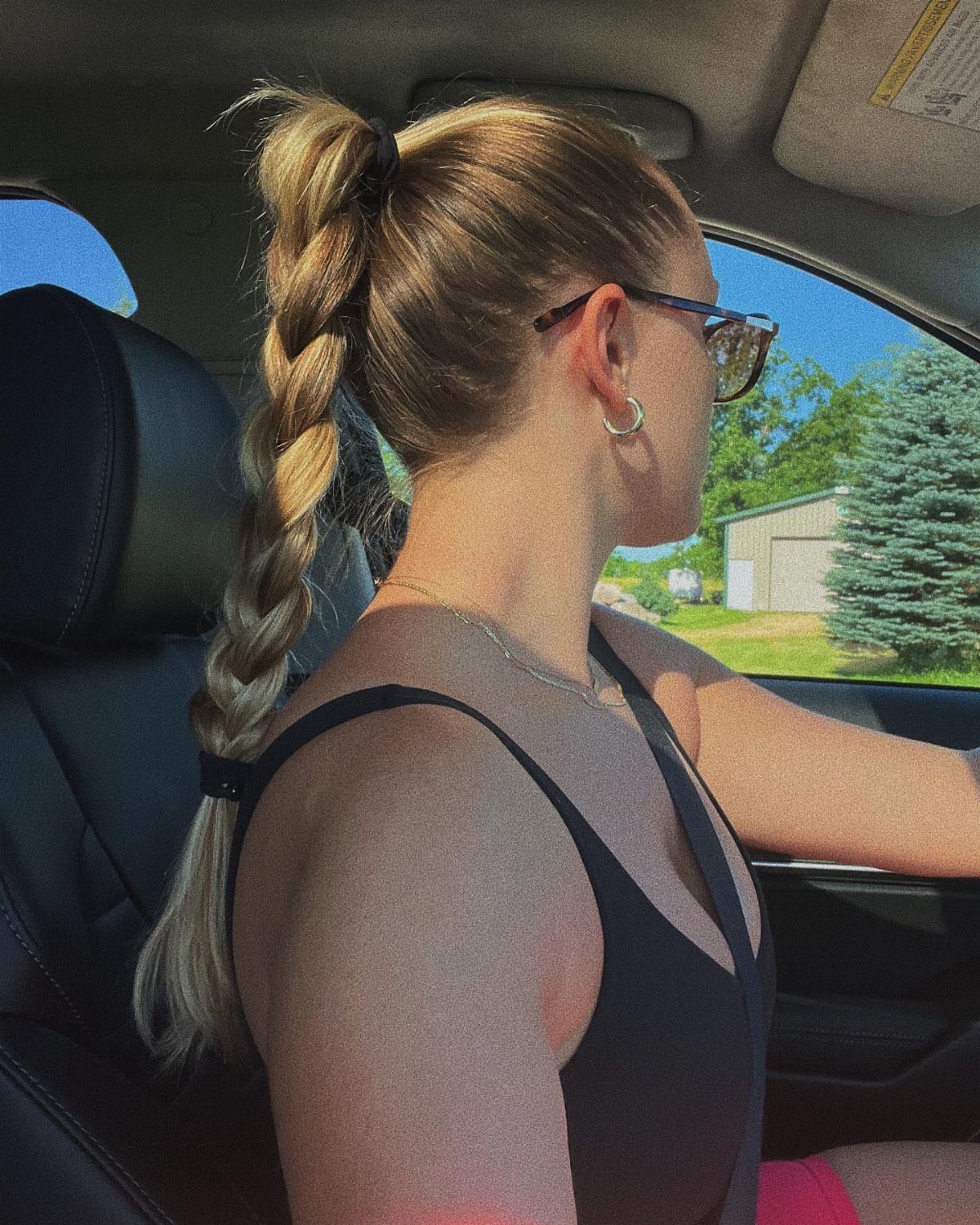
Braiding the ponytail itself is the fastest way to make a plain ponytail behave. Tie it high at the back, then braid the tail down its full length and secure the end with a second elastic.
A braided tail keeps long hair from whipping around and tangling at the ends, and it won’t stick to your back or shoulders. Pick this when you want a one-step upgrade and don’t have time for scalp braids.
4. Double Dutch Braids
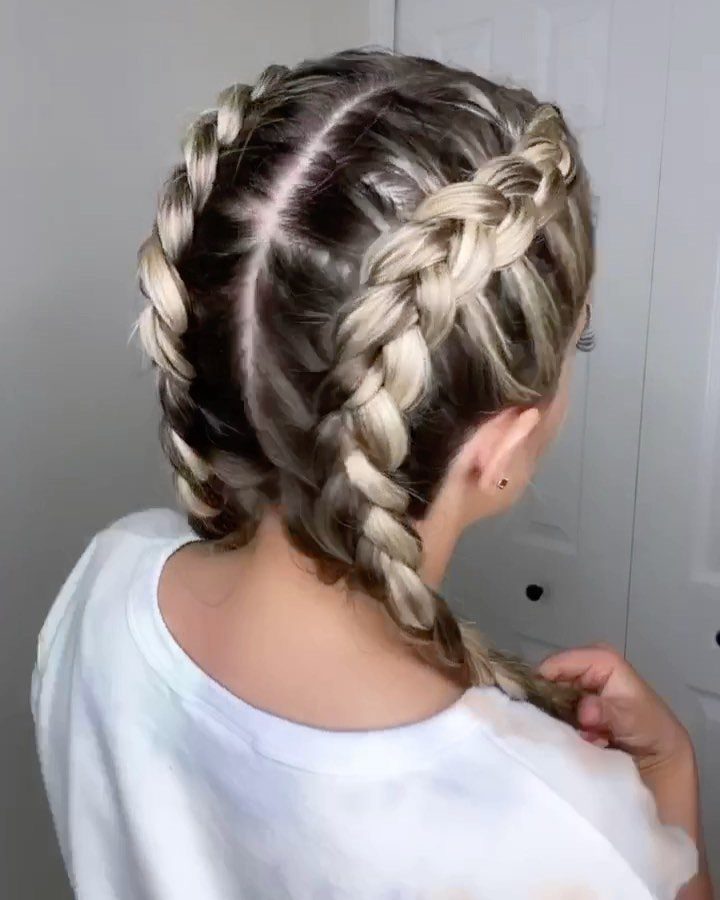
A center part is the base of this one: split the hair down the middle and run a tight Dutch braid down each side. Because the braids sit raised, they look thick even on fine hair.
Pull each strand firmly as you cross it under, so the braids hold their shape through a full match.
Two braids also balance each other, which means nothing pulls to one side when you dive. If I had to choose a single no-fuss style for a long tournament day, this would be near the top.
5. High Ponytail
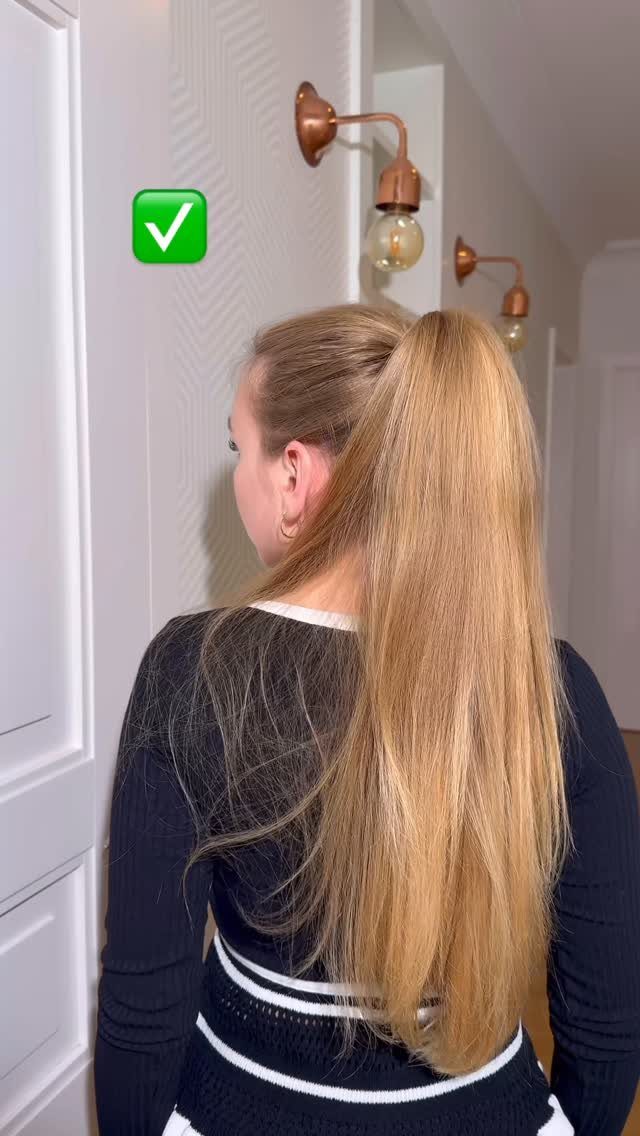
Height decides this ponytail. Gather everything at the high point at the back of the head, smooth the surface with your hand or a brush, and wrap the elastic twice if your hair is thick.
A high ponytail is the simplest style on the list, and the least forgiving of loose strands, so check the sides before you leave the mirror.
Long hair swings freely here. If that bothers you, braiding the tail (see the braided ponytail) tames it.
6. Cornrows Into Ponytail
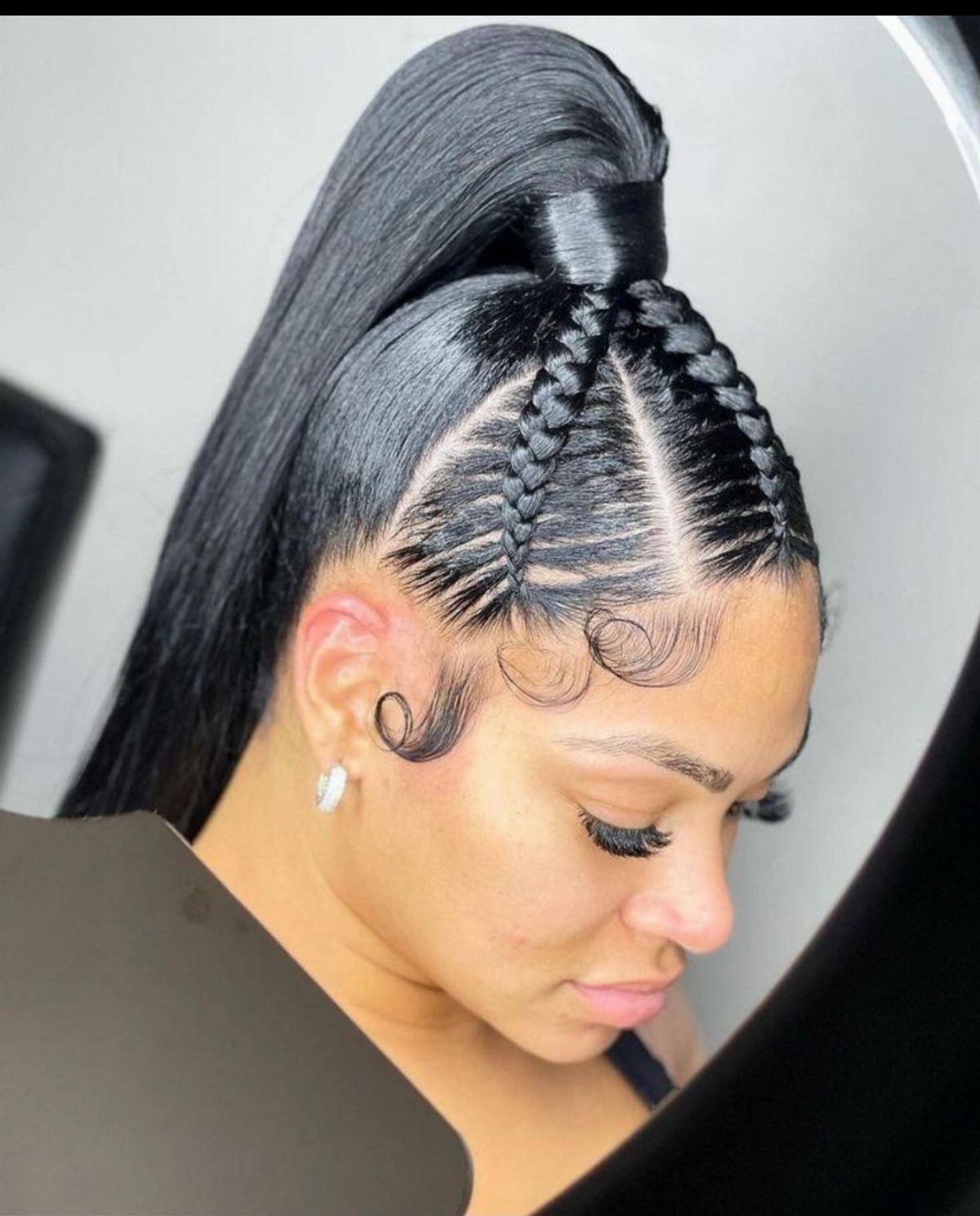
Cornrows run flat against the scalp and carry the hair back into a sleek high ponytail, which makes this one of the neatest styles you can wear on court.
Nothing at the front can slip loose, and the ponytail stays clean at the top.
Braiding them tightly is what gives the finish, so this is usually worth doing with a braider’s skill rather than in a rush.
A little edge smoothing, like curled baby hairs along the hairline, gives cornrows a polished finish, though it is entirely optional.
7. Bubble Ponytail
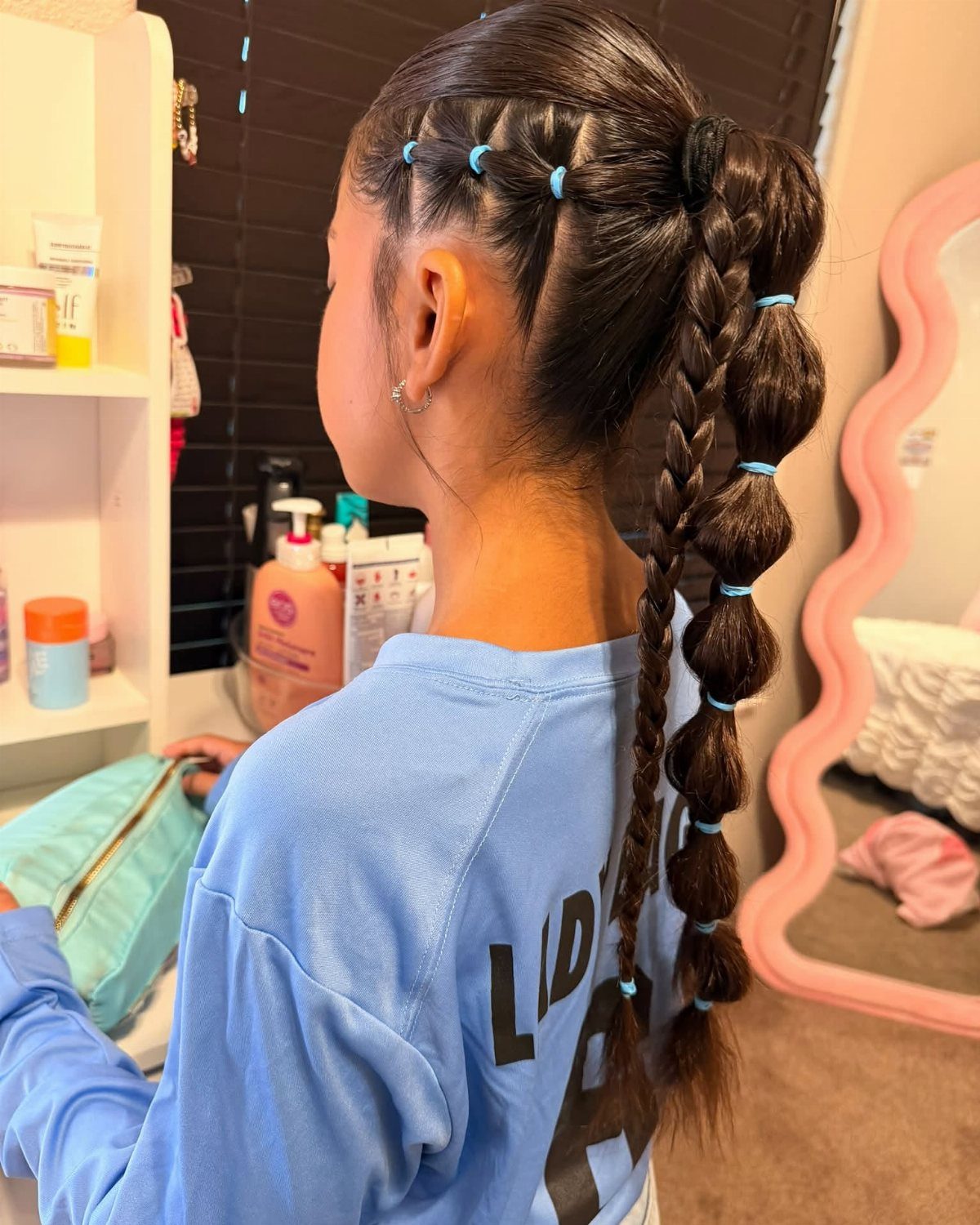
Small elastics spaced down a high ponytail turn it into a string of rounded sections, and each one puffs out between the bands. The result looks busy and playful, and it keeps a long tail in one controlled line.
Gather the ponytail high, then add an elastic every few inches and gently tug each section outward to round it. Matching the elastics to your jersey color is an easy way to tie the look to your team.
8. Dutch Braids Into Bun
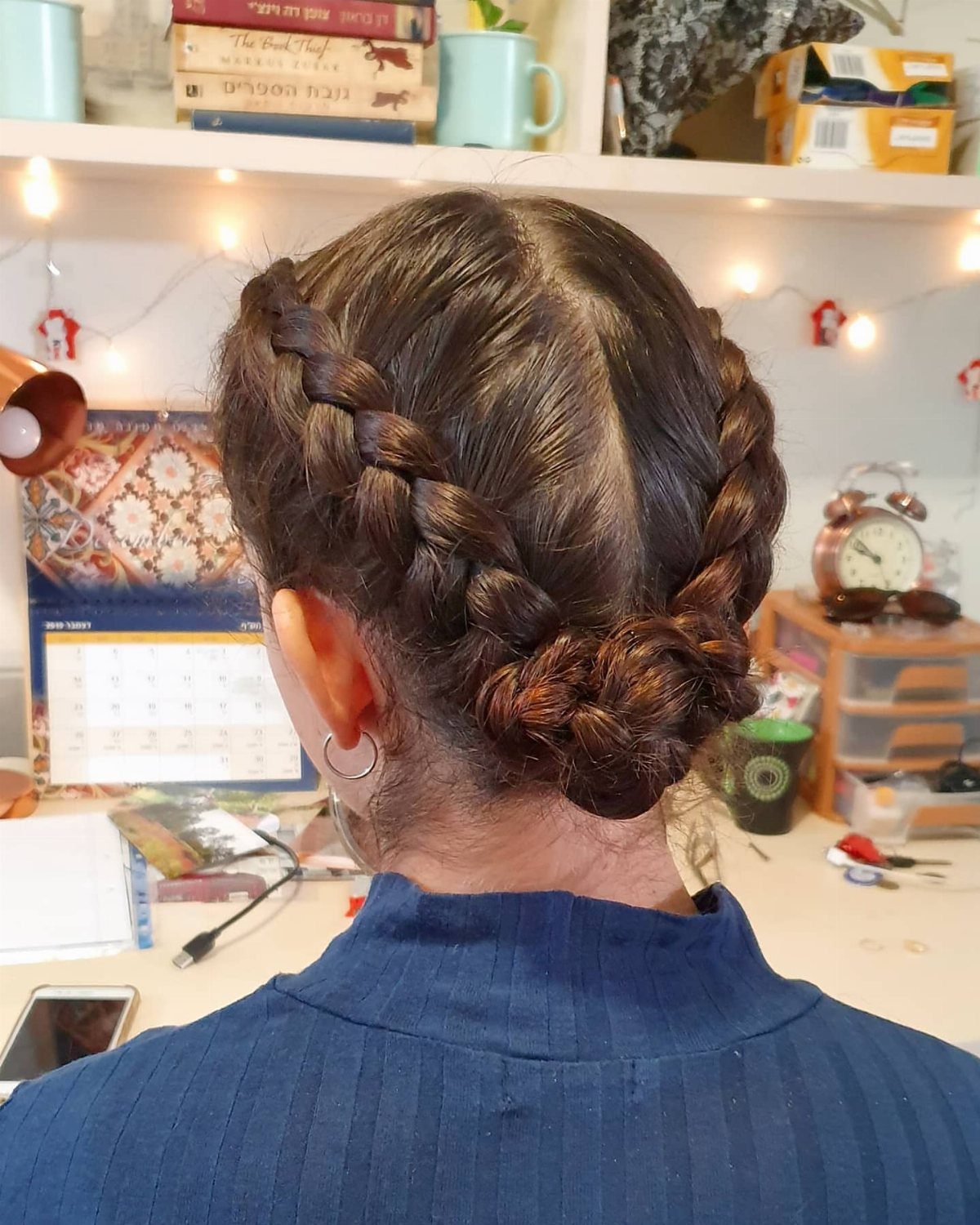
2 Dutch braids that finish in a low bun give you the raised, textured braiding of the earlier Dutch styles with the whole length tucked away. Nothing hangs below the neck, so a long ponytail has no chance to swing.
Braid both sides toward the back, then join the ends and wrap them into a bun at the nape.
Pin the bun in place with a few bobby pins along with the elastic. I would take this over a ponytail on a long day, since a low bun is also easier to lean against a wall or bench.
9. French Braids Into Bun
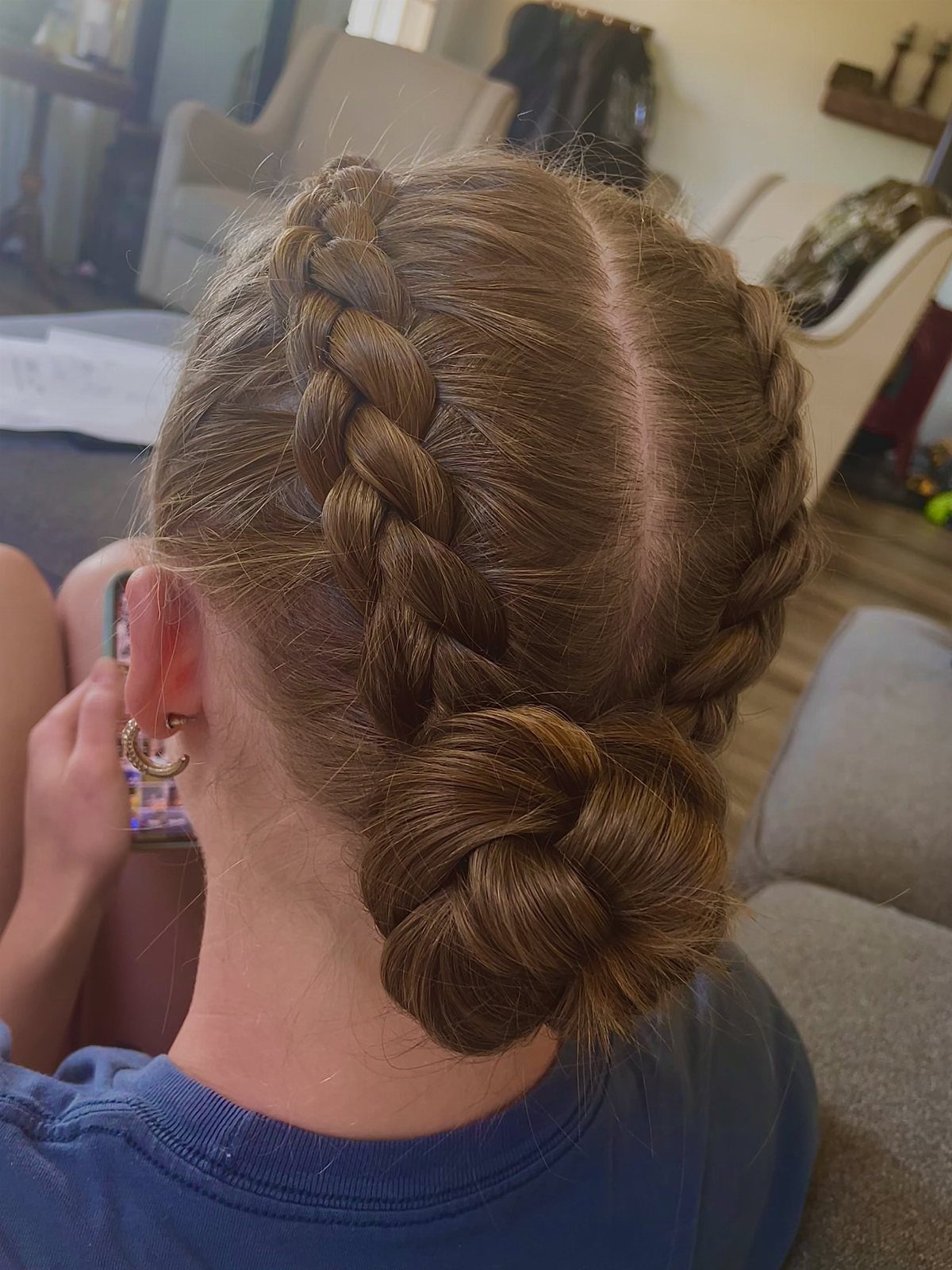
French braids that start at the hairline and end in a low bun make a flatter, quieter cousin of the Dutch version. The braids hug the head, so the style stays smooth under a headband or visor.
Work each braid back from the front, then bring the 2 tails together and coil them into a bun at the back.
A low placement keeps the bun from pressing into a headrest or the back of a car seat on the ride to a tournament.
10. Braided Buns
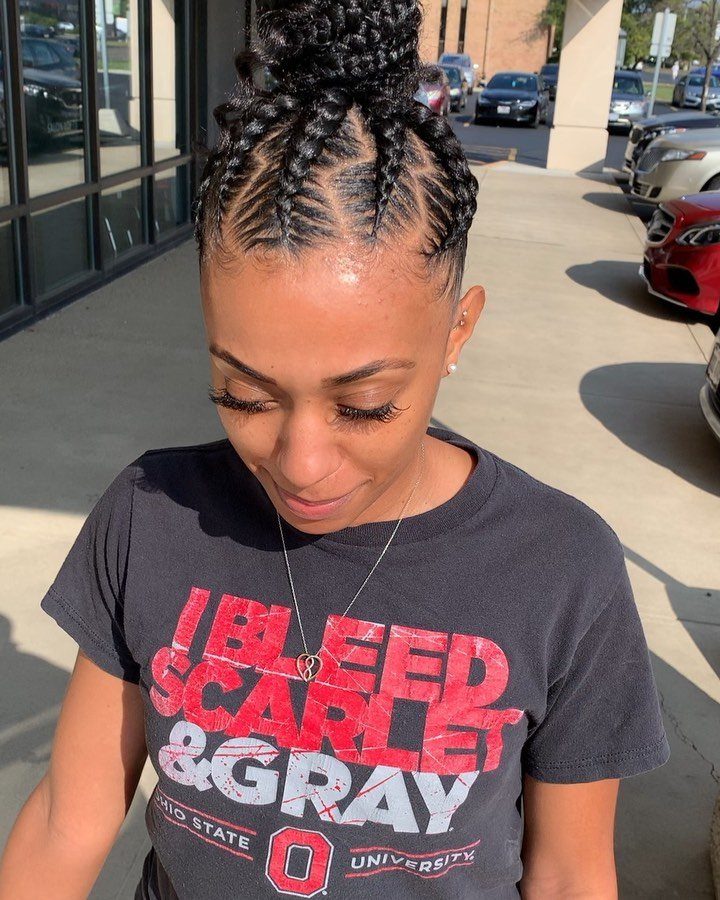
Scalp braids gathered into one large bun give you a style that is all texture. The braids carry the front of the hair back, and the bun collects whatever length is left.
Braid first, then wind the braids around themselves and pin them in place.
A bigger bun means more length to wrap, so it suits long hair best. If your hair is shorter, a smaller bun takes the same braids and works just as well.
11. French Braid with Side Braids
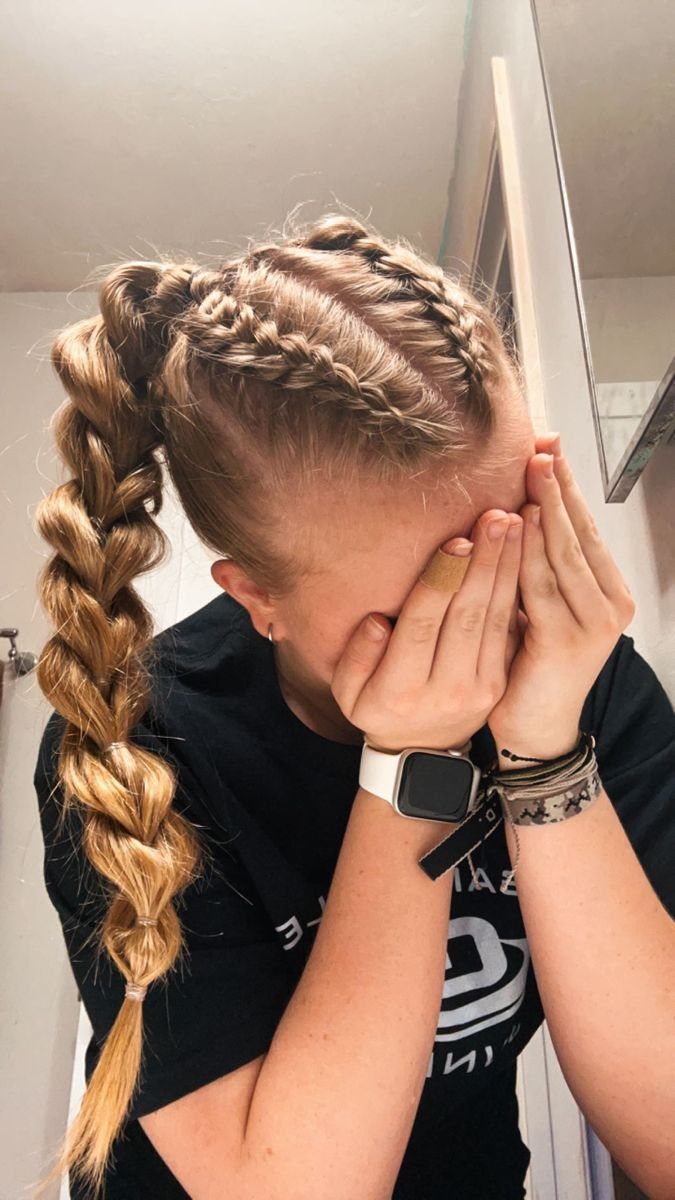
A single French braid down the back holds up well on court, and adding thin side braids along the crown gives the plain version more shape without adding much time.
The small braids add pattern at the top of the head without making the style any heavier.
Make the side braids first and pin them out of the way, then do the main French braid and blend them in.
This takes more time than a basic braid, so I would save it for game days where you want something a little special.
12. Dutch Braid Into Thick Braid
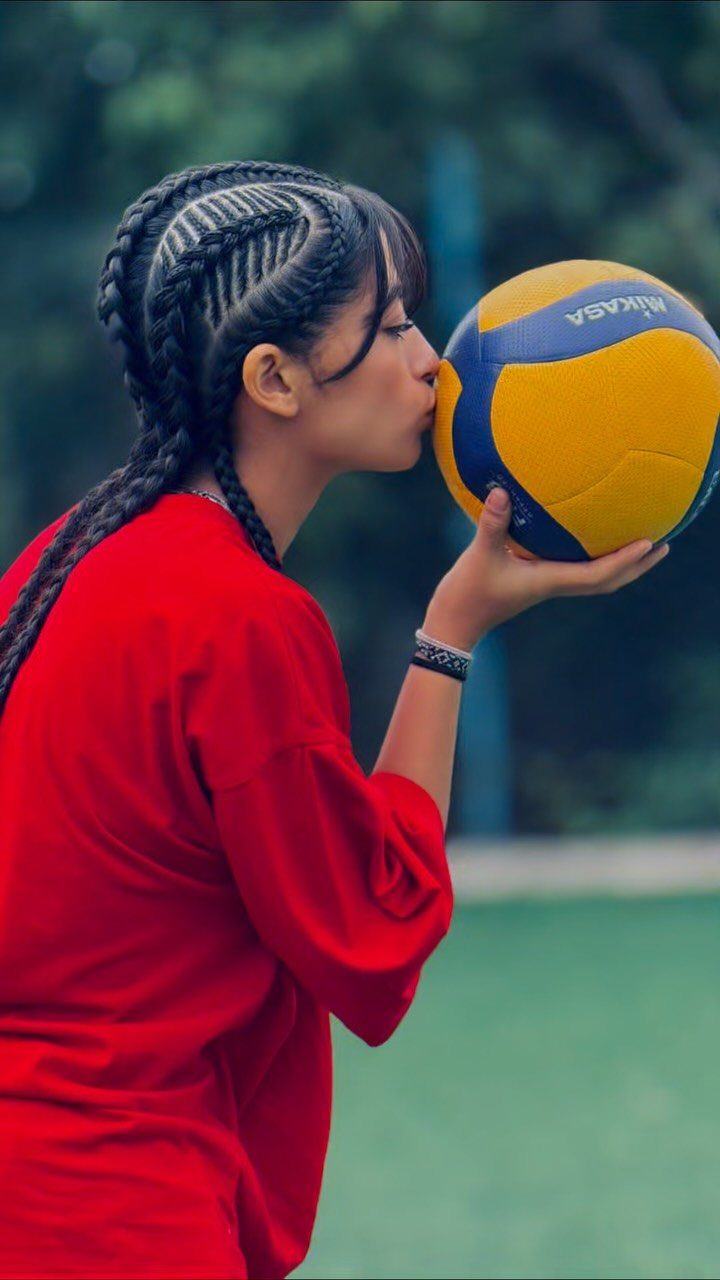
Several Dutch braids set close together run back and merge into one thick braid, so the finished piece looks wide and rope-like. The raised braiding gives it plenty of presence on court.
Keep the braids snug against the scalp, then combine them into a single braid and secure the end with an elastic.
Because everything ends in one braid, it sits neatly down the back and stays out of your face when you chase a ball.
13. High Ponytail with Bubbles
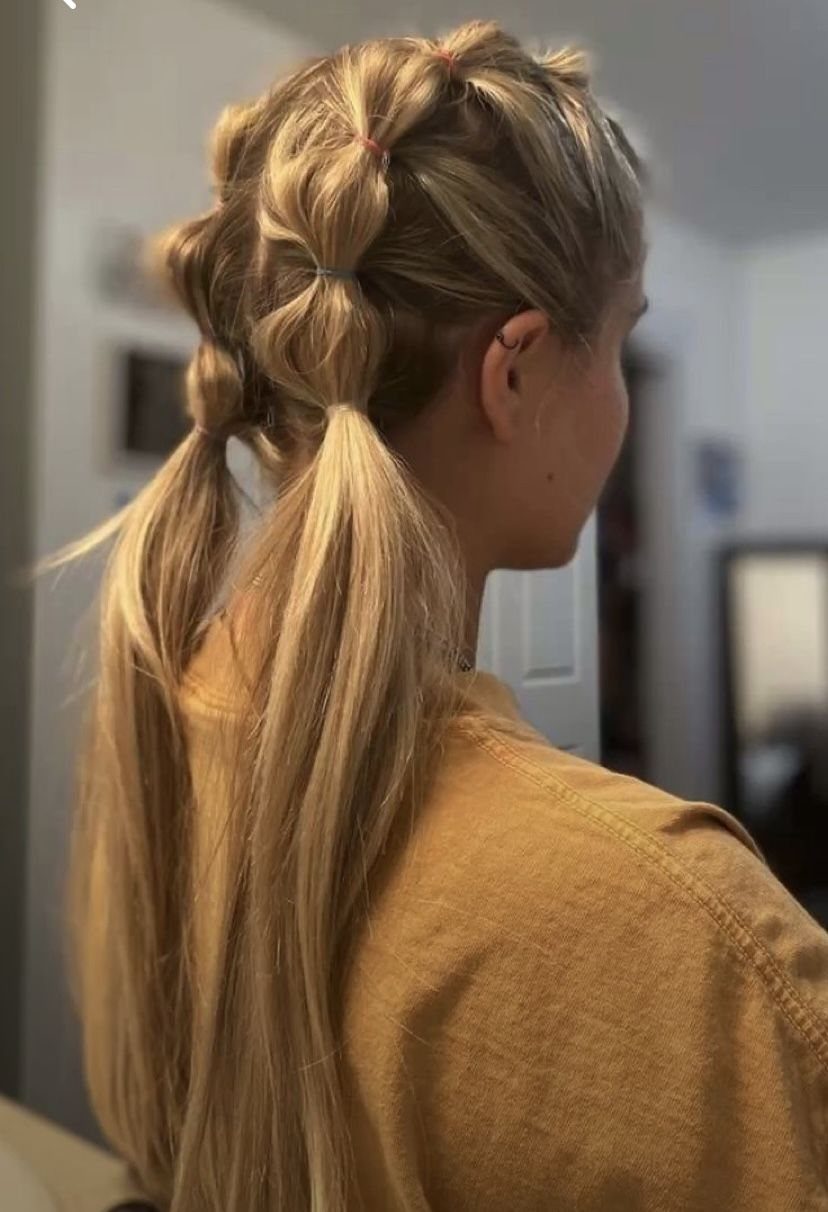
Fewer elastics make bigger bubbles. Splitting the high ponytail into a few large, rounded sections gives a softer, less busy look than small bands, and it takes fewer elastics too.
Gather the ponytail high, bind it again a few inches down, and tug the hair between the bands outward until it rounds.
Repeat down the tail. I’d pick this one over the tiny bubbles when I want shape without fuss.
14. High Ponytail with Elastics
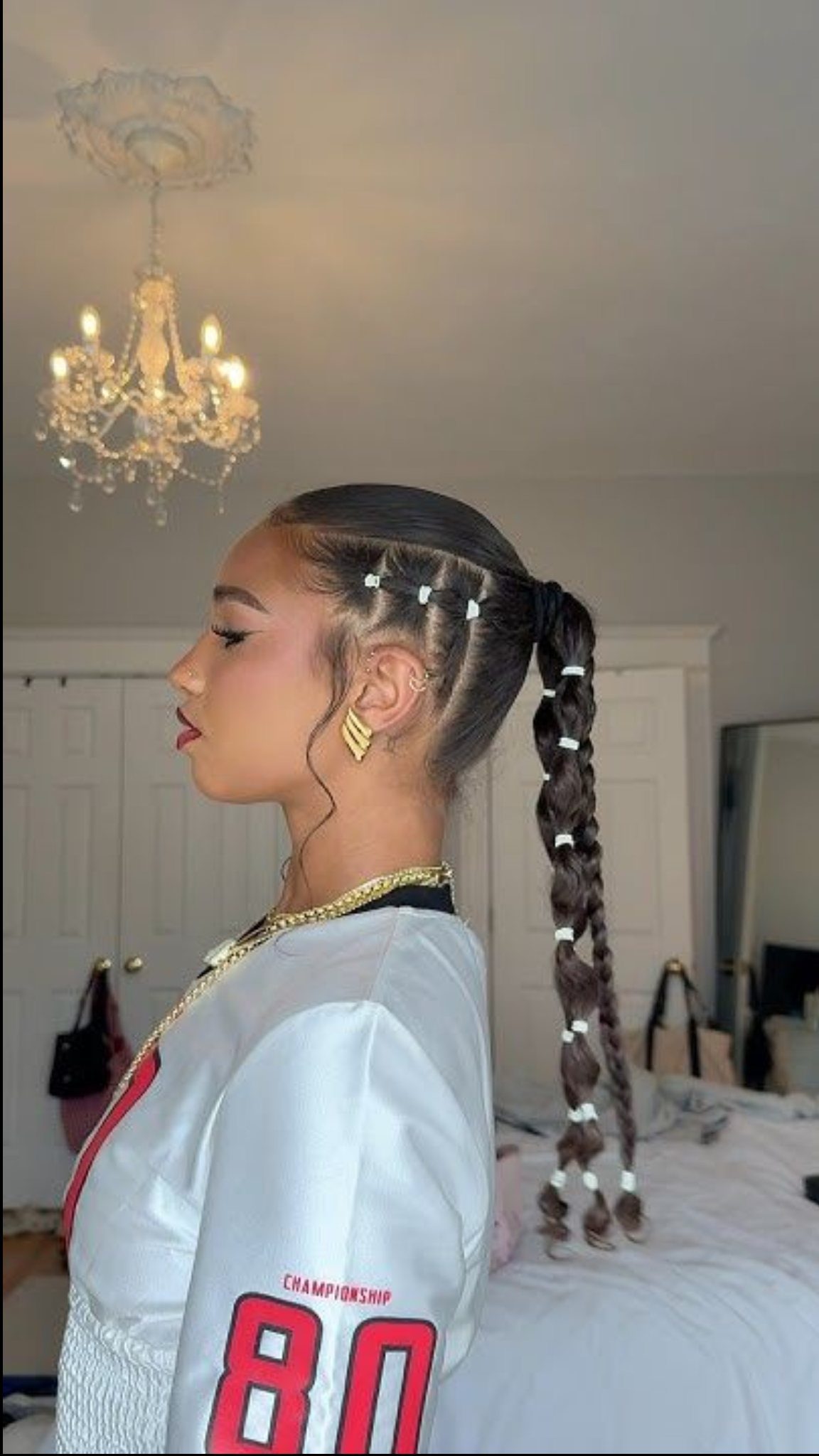
White elastics set at even intervals break a braided high ponytail into neat segments. Braid the tail first, then wrap an elastic at each interval, matching the gaps by eye or by finger width.
Uneven spacing is the first thing anyone notices, so take a second to check before you add the last band. A color that stands out against your hair color reads best, and white does that on darker hair.
15. High Ponytail with Side Braids
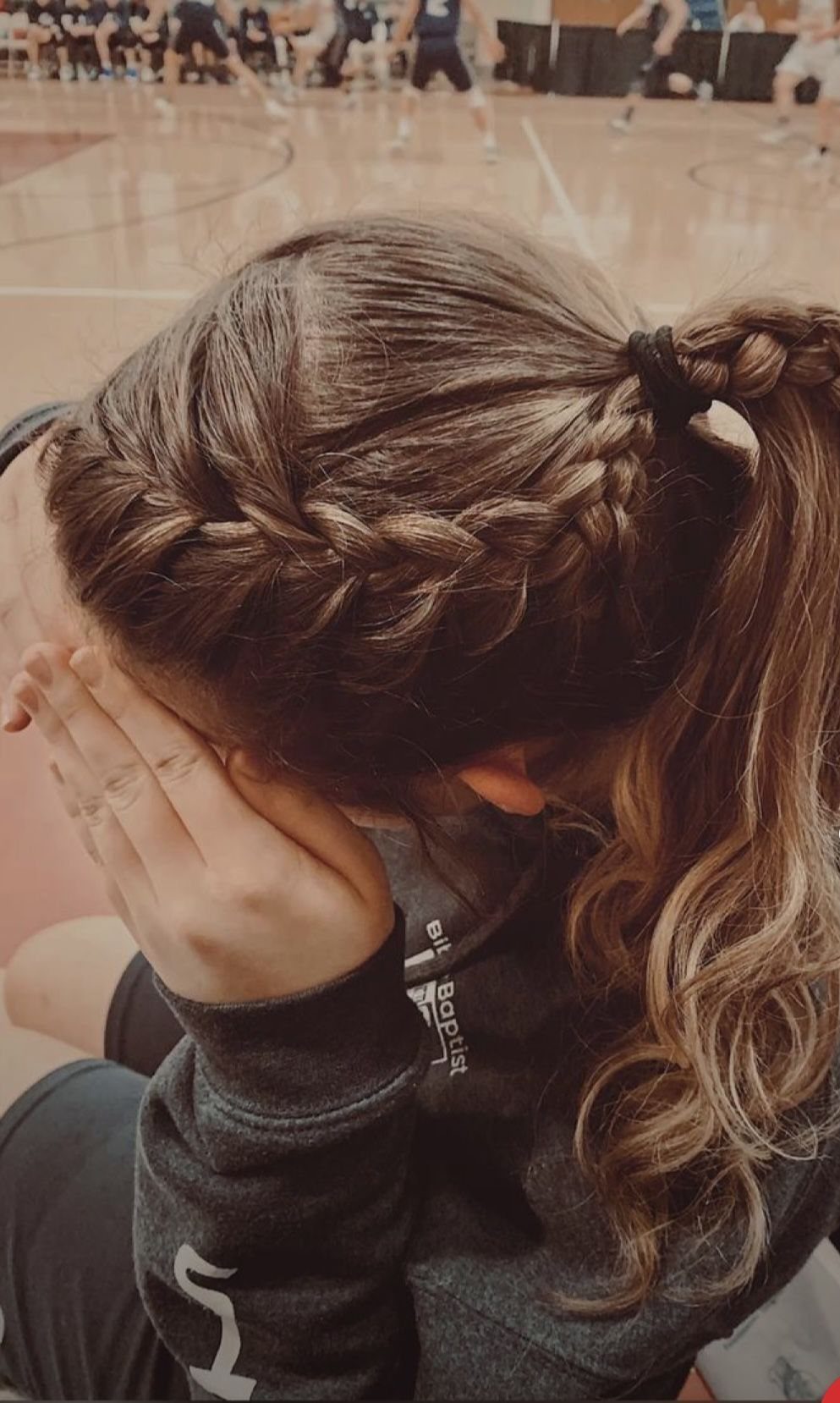
Pulling thin side braids back into a high ponytail puts a little detail at the temples while the rest of the hair stays simple.
Braid a narrow section on each side first, then carry both back and gather everything at the high point with one elastic.
Keep the side braids slim, because thick ones bulk up the base. These side braids end inside the ponytail rather than blending into a main braid, so the ponytail stays the focus.
16. Curved French Braids
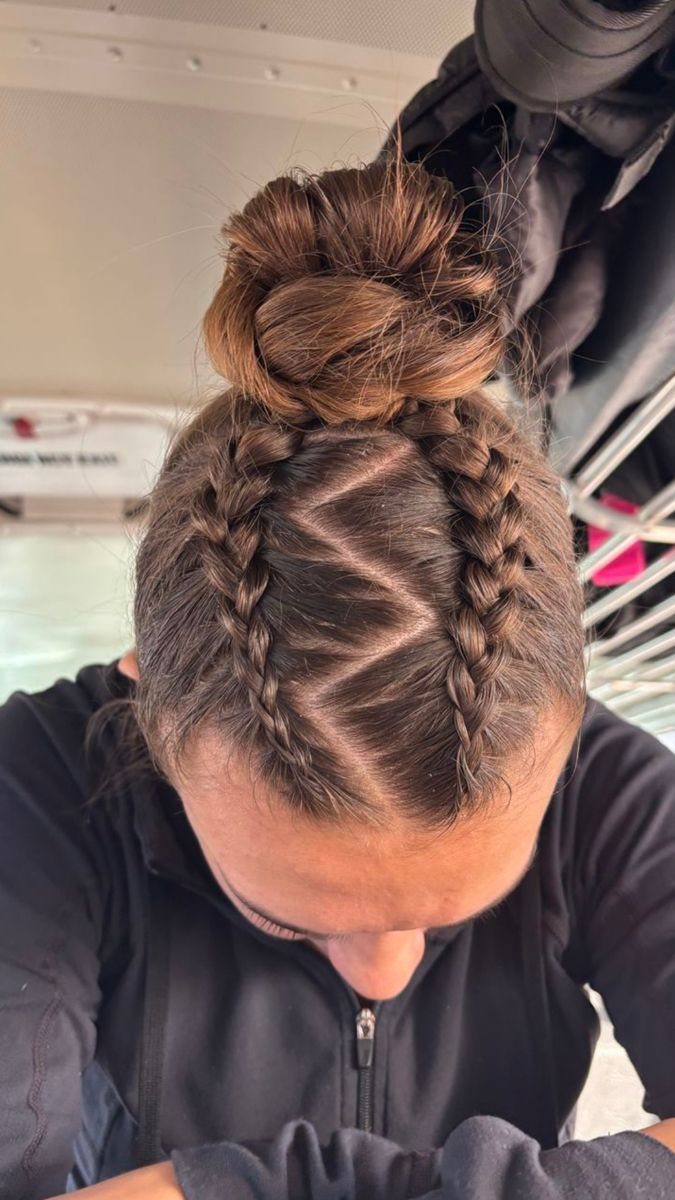
A zigzag part sets this one up. Draw it with the tail of a comb from the front hairline toward the crown, clip one side away, and French braid the other along a curve instead of a straight line.
Braid the other side the same way, join both tails at the crown, and wind them into a high bun. Curved braids ask for more patience than straight ones, so I’d practice once before a match day.
17. Fishtail Braid
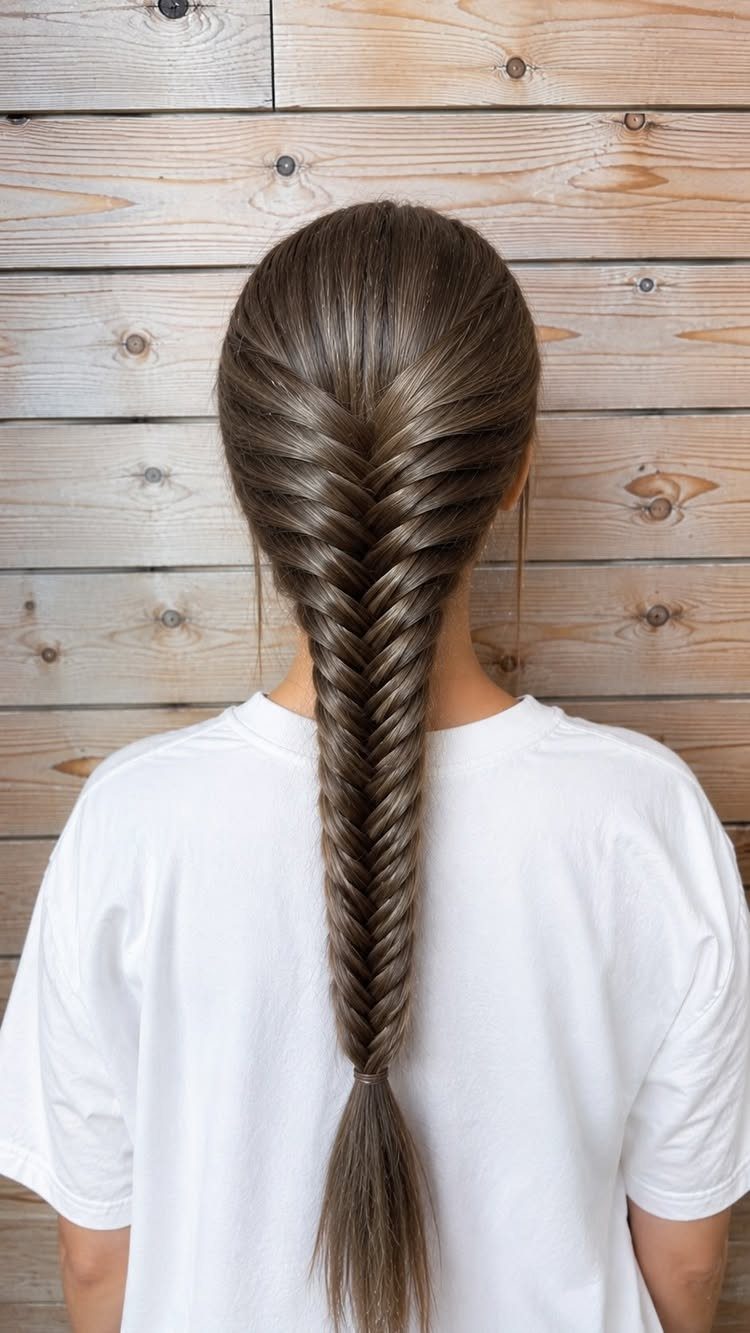
Only 2 sections go into a fishtail, which sounds easier than it feels at first.
Split the hair in half, take a thin strand from the outer edge of one side, cross it over to join the other, then repeat from the opposite side.
Thinner strands give a finer, tighter pattern.
Detangle thoroughly first, since snags show up quickly in this braid. Finish the end with an elastic.
18. Boxer Braids
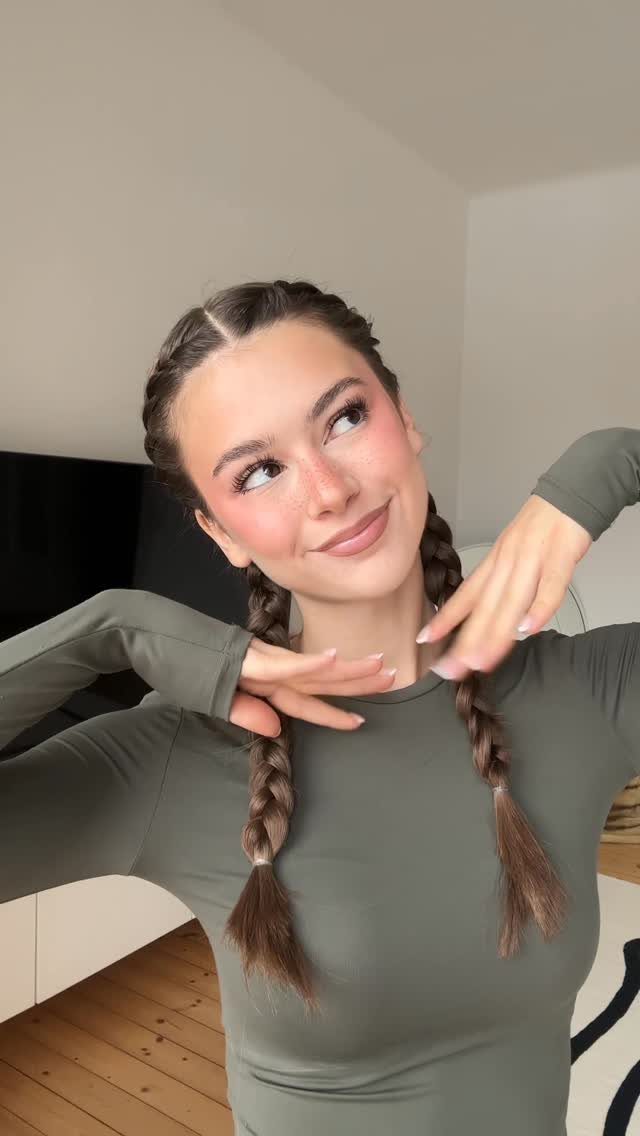
Boxer braids run the full length of the head, 1 on each side of a center part, and finish tied near the ends.
Part down the middle, braid each side snugly from the front hairline to the tips, then close each braid with an elastic.
Match the tension on both sides so the pair stays symmetrical. I’d choose this when I want the neatness of scalp braids without building toward a ponytail or bun.
19. Pull-through Braid
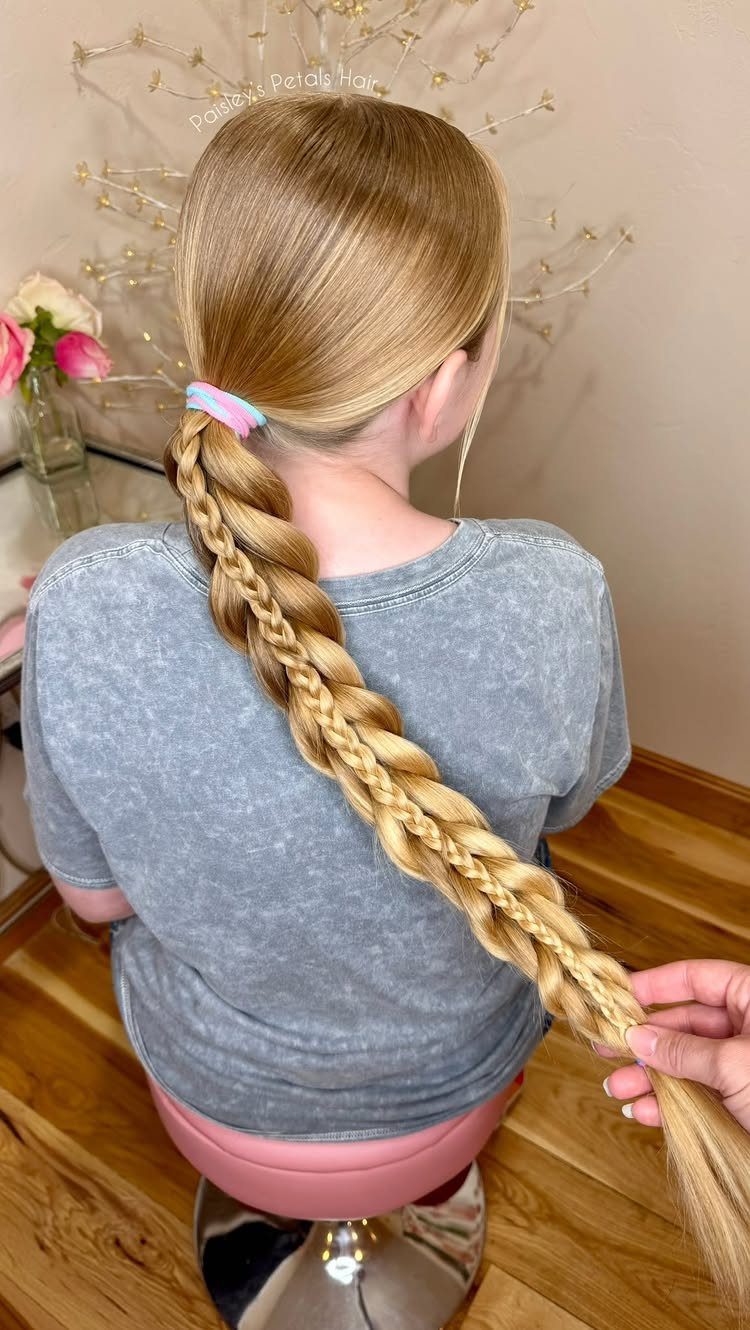
Ask for this one by name, because a pull-through braid is its own braid variation and not a standard three-strand plait. It leaves long hair as a single braid down the back, so nothing is left loose to swing.
Close the end with an elastic. I’d try it at home on a practice day before using it on a match day, since a less familiar braid is easier to get wrong in a rush.
20. French Braids Into One Braid
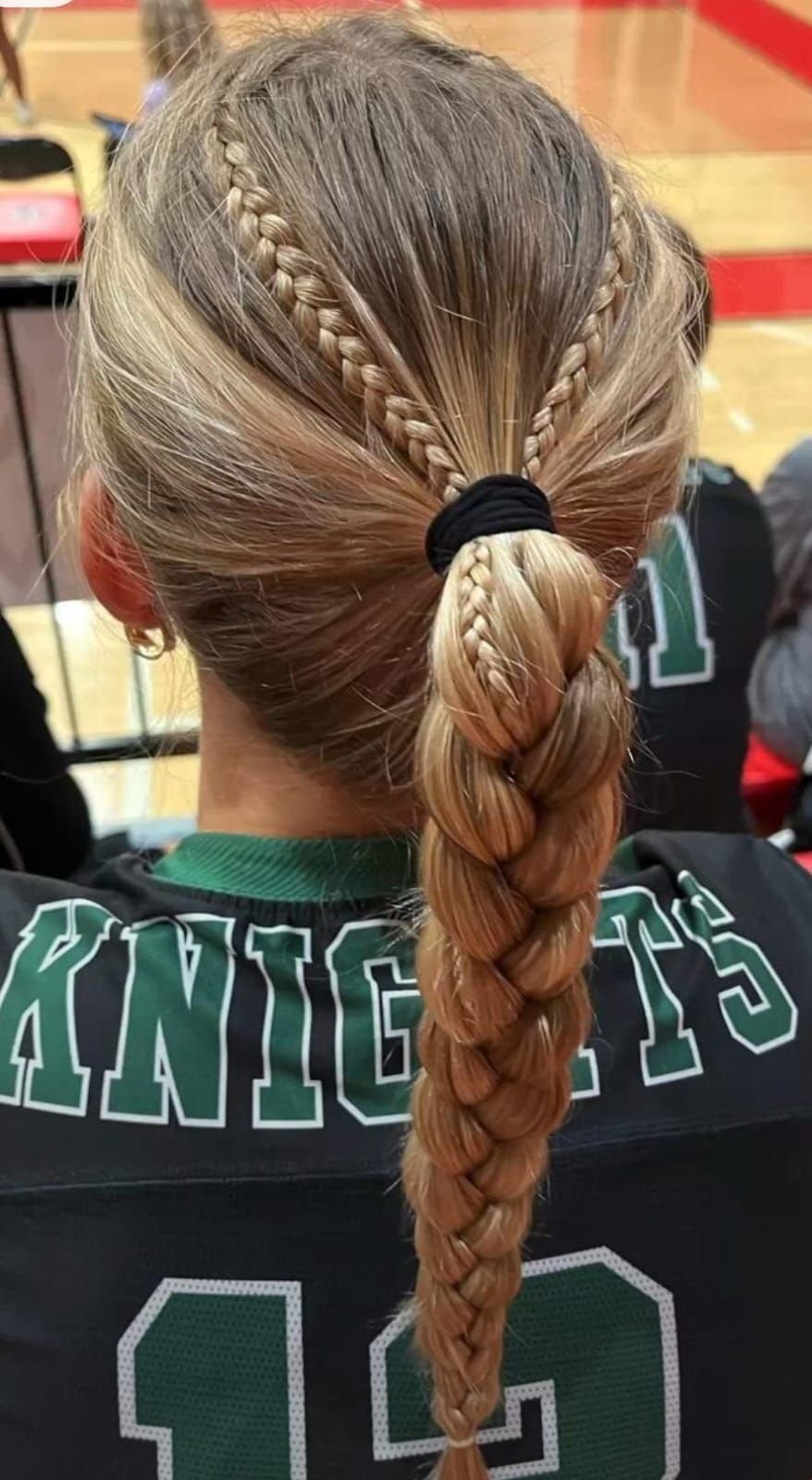
Two French braids start at the front hairline, travel back, and meet at a single tie, where they carry on as 1 thick braid.
That makes it a cousin of the French braids into a ponytail, except the length stays braided instead of swinging free.
Braid each side snugly, join them with an elastic at the back, then keep braiding the combined hair down to the ends. A dark tie hides the joining point well on darker or lighter hair alike.
21. Cornrows Into Messy Bun
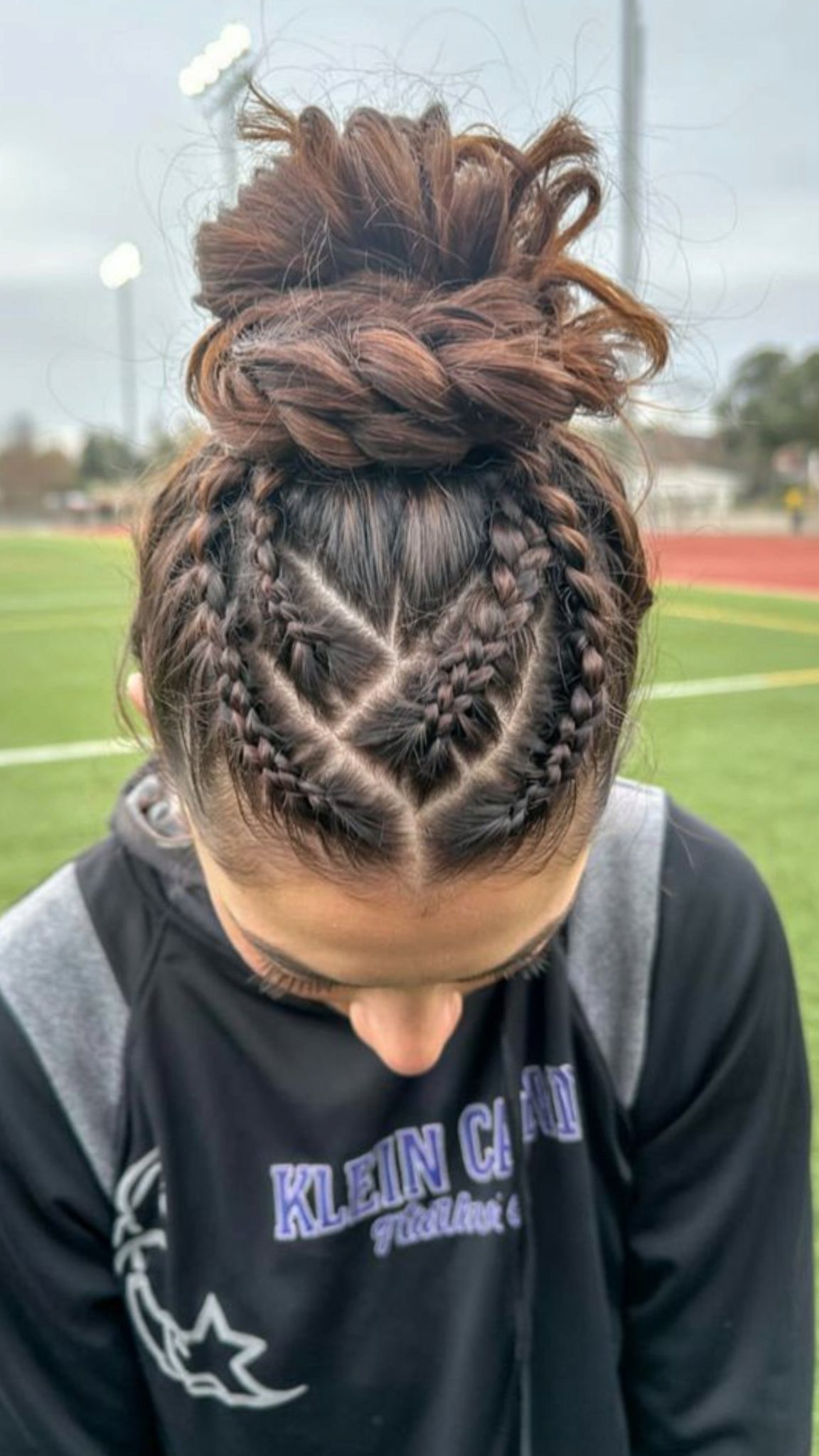
Geometric cornrows across the back of the head give a messy bun something tidy to sit on. The patterned braiding is the work; the bun itself is the easy part.
Leave the cornrows to someone with a braider’s skill, then gather the ends high, twist them into a loose coil, and fasten with an elastic. Loose is the idea here, so skip the pins unless you want it flatter.
22. Braided Bun
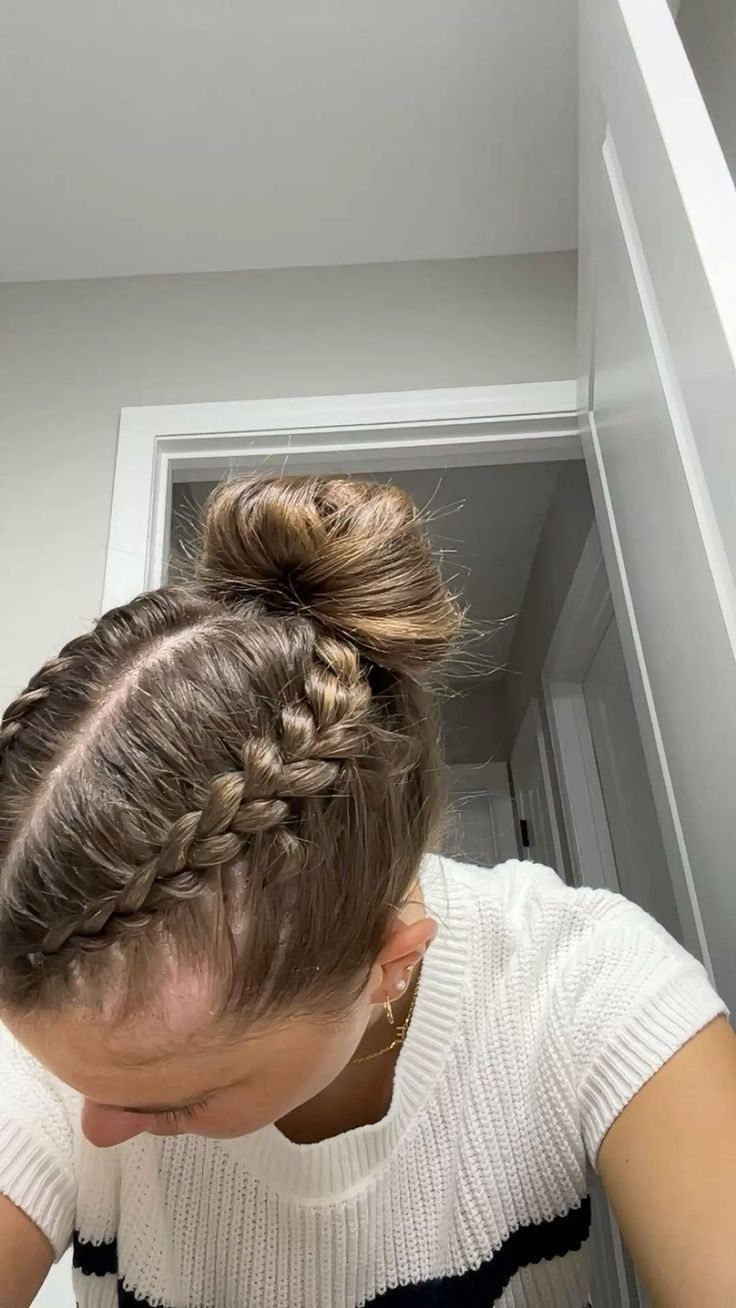
One large braided section, wound up into a high bun, is the simplest way to get a braided bun without scalp braiding. Braid the section first, then coil it around its own base and pin the coil down.
Placing the bun high keeps it clear of the neck. I’d pick this over the multi-braid buns earlier on the list when time is short, since it’s a single braid and a few pins.
23. Crown Braid with Long Braids
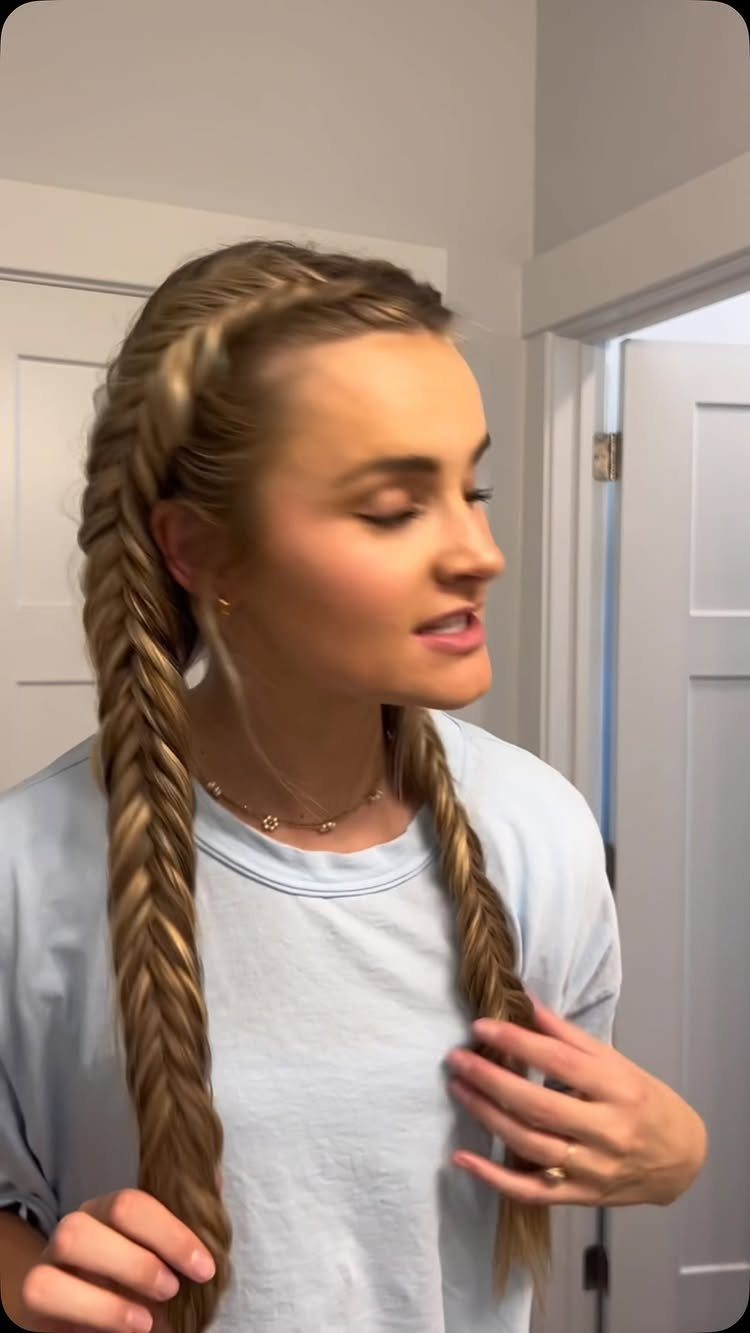
A braid that circles the head like a crown, then drops into 2 long braids, frames the face and still keeps the length controlled. It asks for more patience than a plain pair of braids.
Work the crown along the hairline first and pin it so it stays put while you finish.
Then braid the remaining hair into 2 long braids and tie each end. I’d rehearse it once before game day.
24. Long Cornrows Into Braids
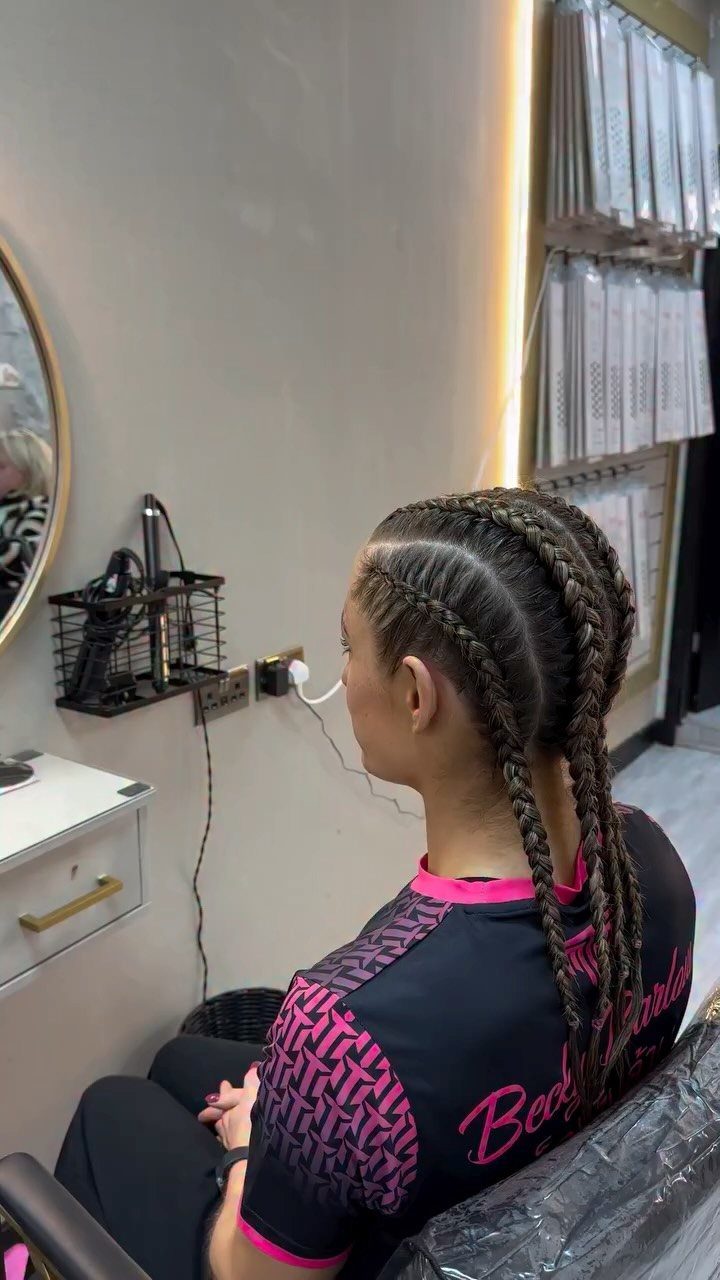
Tight cornrows across the scalp that run straight into long braids give you a style with no loose section at all. Tight rows along the scalp keep the hairline clear, then the length finishes as free braids down the back.
Keep the tension firm all the way down so the join between cornrow and braid doesn’t loosen. This is a job for a skilled braider, and I’d close each braid with an elastic near the ends.
Secure Game-day Hair
Braids add extra hold and stay neat through hard movement, but that hold is only as good as what fastens it. Hair ties and clips do the securing, so I’d keep a few spare of each in your bag.
Clips handle what a tie can’t: the short pieces at the hairline and around the ears that slip loose once you start to sweat.
Slide them in after the style is finished, along the edge and pointing back toward the braid or ponytail.
Test the style before you leave the house. Shake your head hard, bend over, and do a few jumps; if anything shifts, redo it then, not between sets.
A sweat-proof style comes down to snug sections, since loose hair gets heavy and slides once it’s damp.
Snug should never be painful, though. If the style pulls at your scalp or gives you a headache, loosen it a little.