Baking soda is an alkaline cleanser that strips oil and styling buildup from hair, but at about pH 9 it sits far from hair’s 3.7 and can dry and break strands.
Diluting barely helps: 1 tablespoon in 20 cups of water still reads 9.0. Use it once or twice a month, no more.
What Baking Soda Does
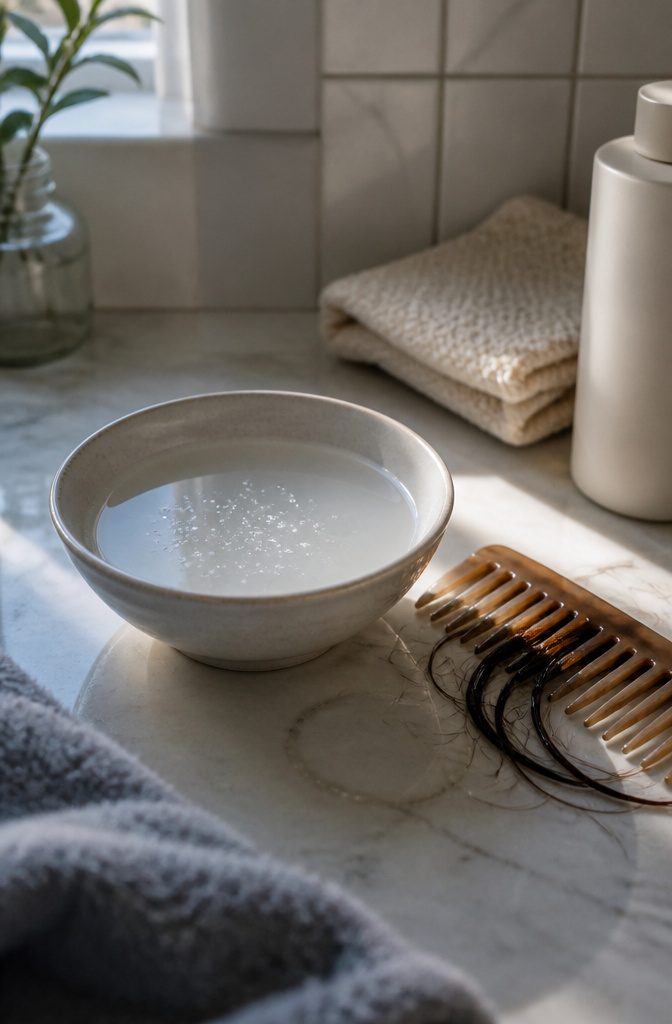
Baking soda dissolved in water lifts oil, silicones, waxes and other styling buildup, and its fine grain works as a mild scrub at the roots. It may also cut scalp odor between washes.
Whether those perks outweigh the damage is where opinions split.
I land on the cautious side, because a cleanser strong enough to strip buildup also strips the oils your hair needs. Keep it to once or twice a month at most:
Limit it to once or twice a month. You shouldn’t replace your normal shampoo with a baking soda shampoo.
— wikiHow
Used as an everyday wash, it leaves hair and scalp dry.
Why a pH Near 9 Matters
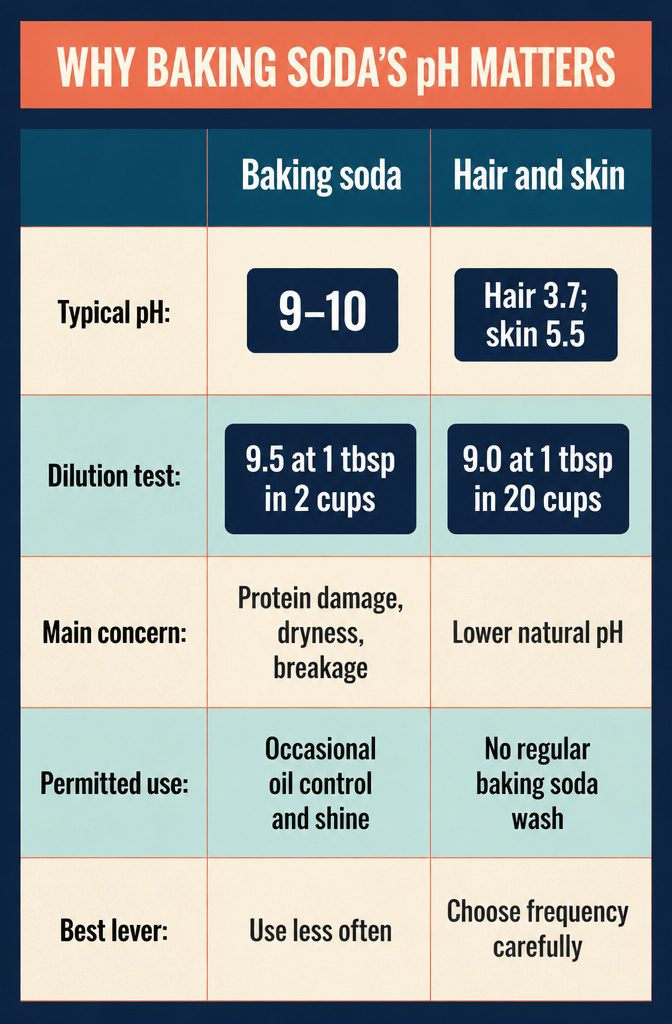
Baking soda measures around pH 9 (some readings say 9–10), while skin sits near 5.5 and hair near 3.7. That gap is why the safety question stays split.
The cautious view is that alkalinity plus gritty crystals can break down hair’s protein, causing dryness and breakage, and a weaker mix doesn’t fix it: 1 tablespoon in 2 cups of water still reads 9.5, and in 20 cups it only drops to 9.0.
The looser view allows occasional use for oil control and shine.
I side with the cautious camp for anything regular. Since dilution barely moves the number, how often you use it is the only real lever you have.
Who Should Avoid It
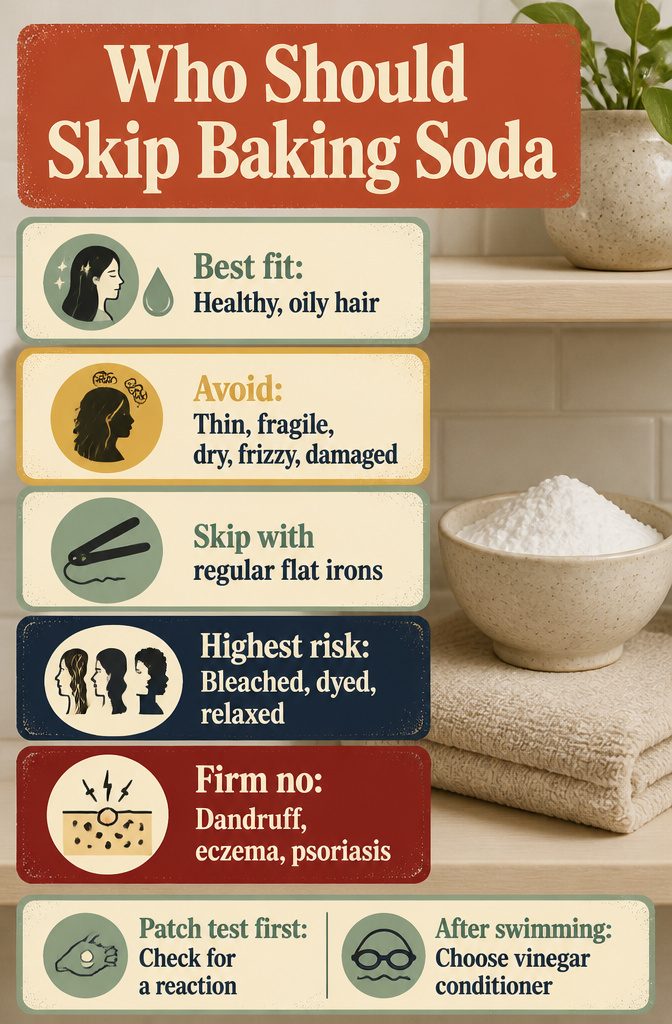
Baking soda suits healthy, oily hair and non-sensitive skin, and not much else. Skip it if your hair is thin, fragile, very dry, frizzy or damaged, or if you use a flat iron or curling iron regularly.
Bleached, dyed or relaxed hair is the worst case, since the alkalinity piles onto strands that are already weakened.
On the scalp, dandruff can get worse because baking soda dries and irritates, and eczema or psoriasis calls for a firm no.
Advice varies, but after swimming I’d skip the baking soda wash and use a vinegar conditioner instead. If you do try it, dab a little of the mixture on your skin first to check for a reaction.
Common Uses for Hair
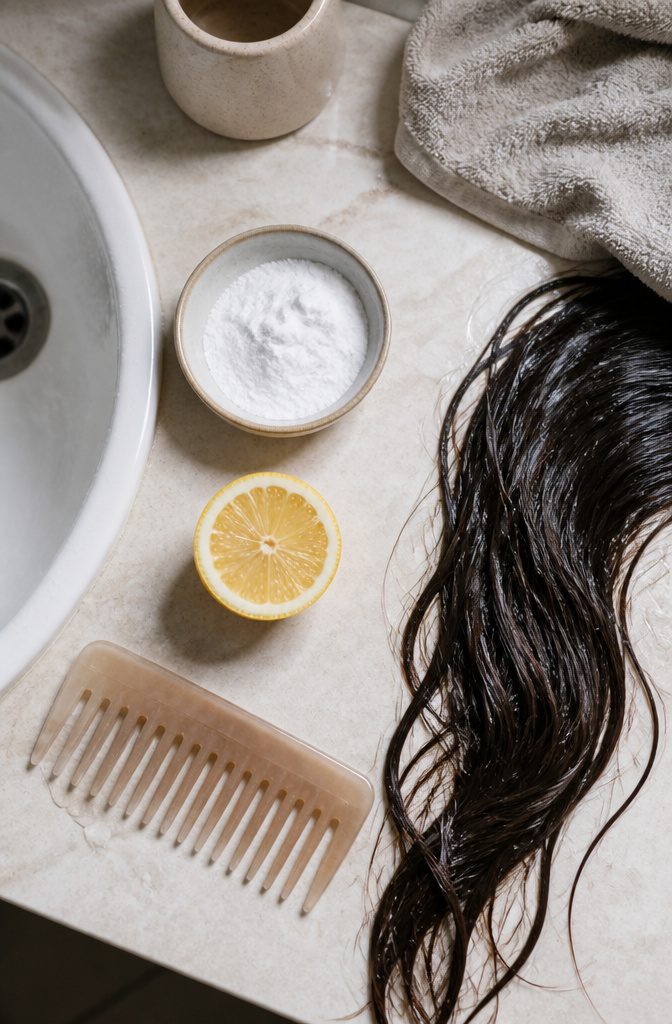
Three uses are well described, and two are thin.
- Buildup removal: baking soda breaks down oil and product, but only as an occasional treatment. Used often, there is little left to remove and it just irritates the scalp.
- Scalp exfoliation: after a hot rinse, massage a dessert spoon-sized amount into the scalp and nape for several minutes, then rinse thoroughly.
- Color removal: mix 2 tbsp baking soda with 2 tbsp lemon juice and leave it on for 15–20 minutes. Stop at 4 consecutive days.
- Lice nits: a lone claim says a small amount massaged into a child’s scalp loosens nits for a lice comb. I’d treat it as unproven.
- Yellow tones in gray hair: also a lone claim, so I’d skip it.
Application and Aftercare
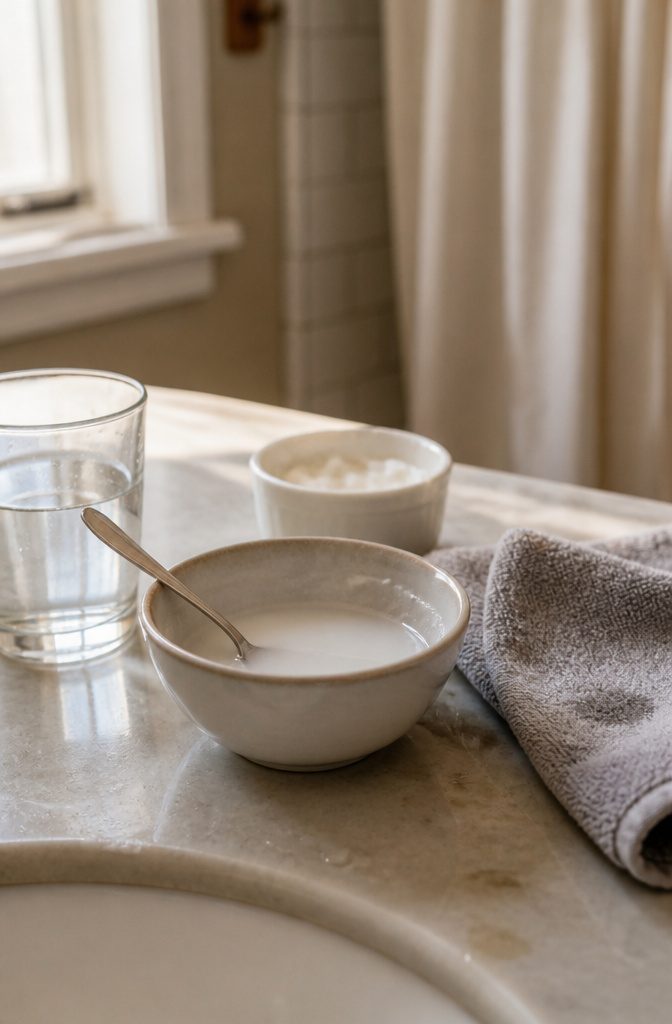
Frequency is where the methods split: about once a month at the gentle end, 1–2 times weekly at the other. I’d start at once a month, since the weekly paste is the harshest option here.
| Method | Mix | Time on hair | How often |
|---|---|---|---|
| Rinse | 1:3 baking soda to water | Massage 1–2 minutes | 1–2 times monthly |
| Paste | 2 tbsp + 3–4 tbsp warm water | Rinse within 5–7 minutes | 1–2 times weekly |
| Vinegar pair | ½ tbsp per 8 oz water (1 tbsp if oily) | Vinegar rinse after: 1 tbsp per 8 oz, 2 tbsp apple cider if dry | – |
| Boiled | 2–3 tsp in boiling water, cooled 10–20 minutes | 30 minutes | – |
| Simple | 1 tbsp in warm water | – | About monthly |
Mixing baking soda with apple cider vinegar on hair is advised against.
Alternatives and What to Expect
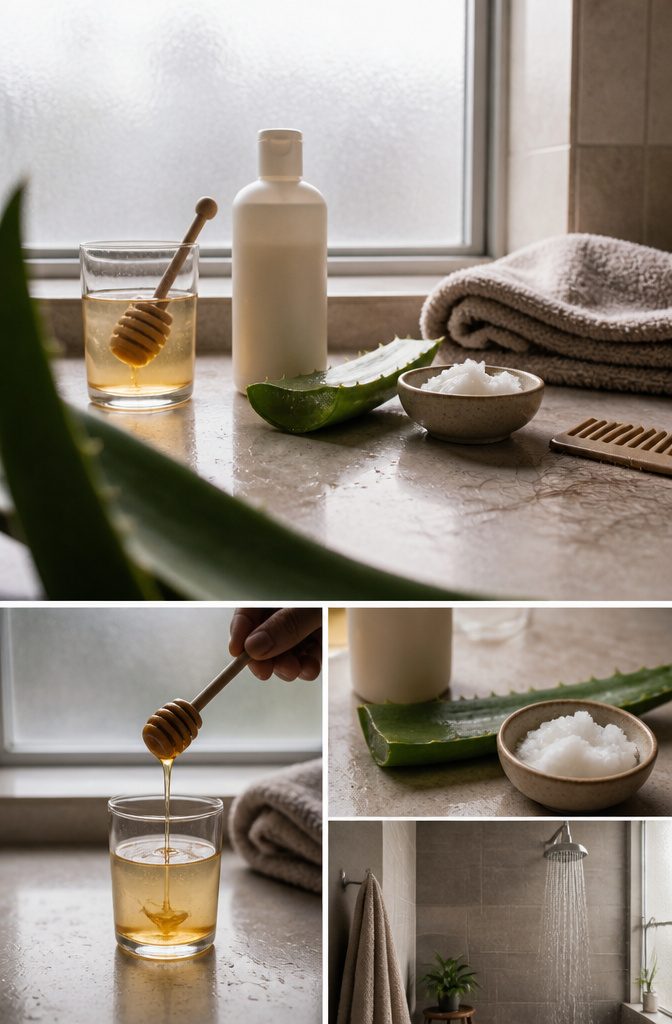
For a gentler swap, I’d start with a vinegar conditioner plus 1 teaspoon of raw honey per 8 ounces of warm water; the warmth helps the honey dissolve.
Aloe vera or coconut oil suits dry hair, and a regular or clarifying shampoo now and then is a fine fallback. Sea salt in place of baking soda works for some people and not for others, so test it small.
Reported results split. Anecdotally, some people describe extra shine, less buildup and better hair on days 2 and beyond.
Others report static, flyaways and hair that turns greasy faster, and one commenter called a second try "disastrous" on hair that was already dry. Coconut oil won’t dissolve in baking soda, but applied afterward it can nourish the strand.
Baking Soda and Hair Color
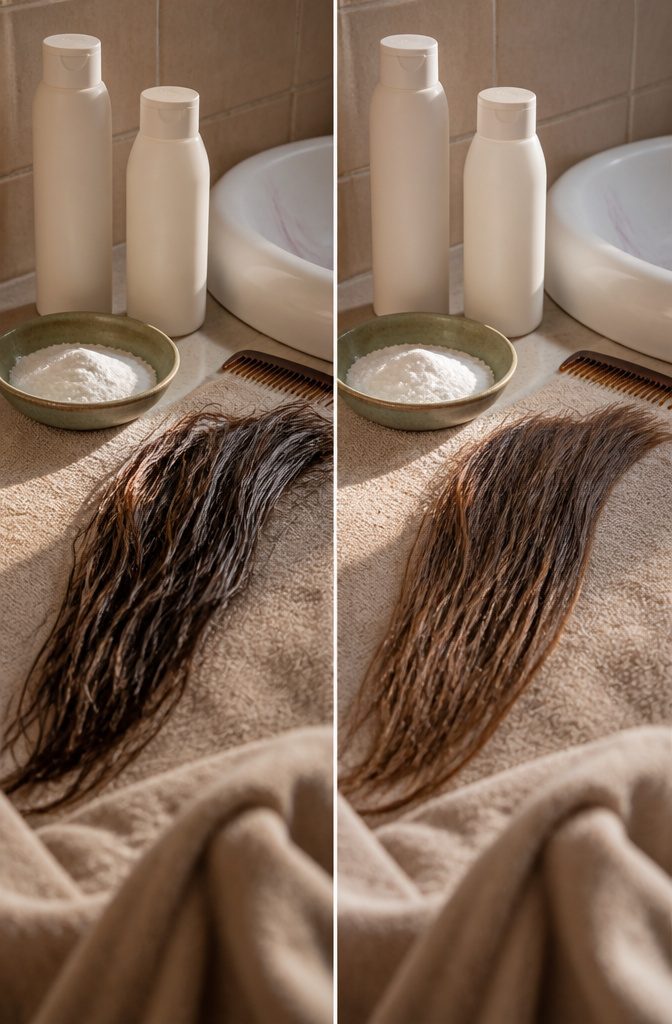
If your goal is to strip permanent or semi-permanent color, baking soda can help. Mix 1 teaspoon with a dose of your regular shampoo, massage it through from roots to ends, rinse with warm water, and follow with conditioner.
The alkaline action lifts some pigment with repeated use, though it works slowly and you will see the shift over several washes, not one.
For spot removal of temporary to semi-permanent dye, combine 2 tablespoons of baking soda with 2 tablespoons of lemon juice, apply to the colored areas, leave for 15–20 minutes, then shampoo and condition thoroughly. Do this no more than 4 consecutive days.
Lightening uncolored hair is a different story. On naturally light, untreated hair, baking soda can lift 1–2 tones at most, the effect lasts 2–3 weeks, and it is 80% less effective than professional lighteners.
The success rate sits around 25–30% for light tones and drops to 10% for medium ones. If you are hoping for anything more than a subtle shift, this is not the method.
One exception: rinsing with baking soda before applying semi-permanent color to gray hair can help the dye take more evenly, though it still calls for a deep conditioner afterward.
The Transition Period
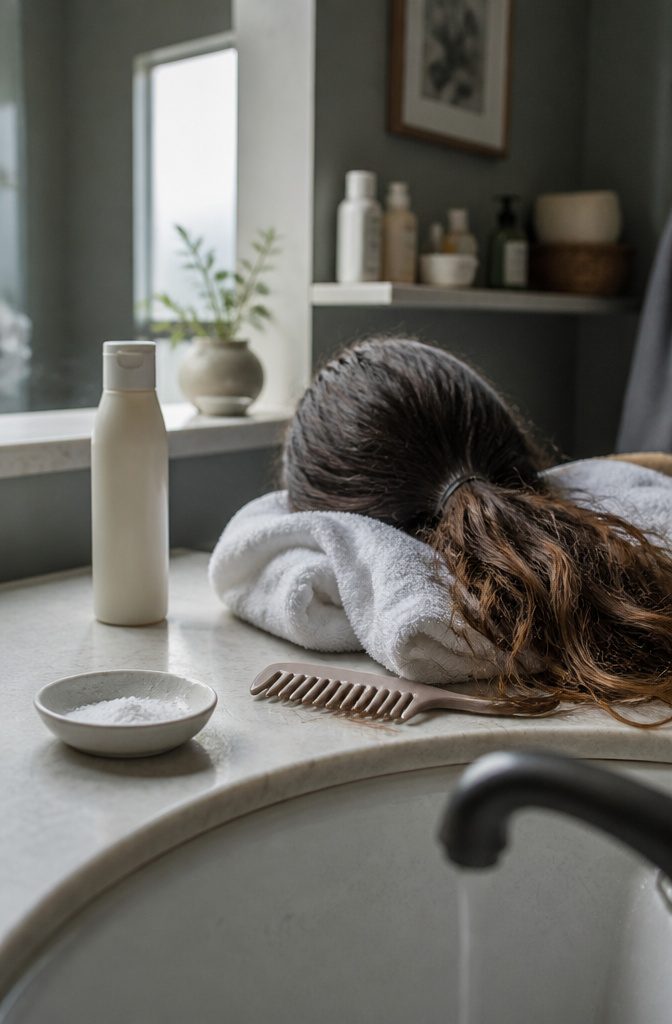
Switching from store-bought shampoo usually brings a greasy stretch, because shampoo strips the skin’s oils and the scalp overproduces to compensate.
Oil production typically normalizes in 1–4 weeks, though for some people it takes up to 3 months. Give it at least a month before judging, since this is the stage where most people quit.
Two accounts show ways through it. One writer washed daily during the adjustment, up from every other day, then returned to every other day after a few weeks.
Another alternates baking soda with regular shampoo and washes less than daily, because hair that isn’t used to daily washing adapts.
Both are individual stories, not consistent evidence. I’d pick the alternating route, since it keeps a fallback within reach.
Frequently Asked Questions
Is baking soda bad for your hair?
For regular use, yes.
It sits around pH 9 while hair is near 3.7, and that alkalinity plus the gritty crystals can break down hair’s protein, which shows up as dryness, frizz and breakage. I’d only back it as an occasional treatment.
Does diluting baking soda make it safe for hair?
No.
A mix of 1 tablespoon in 2 cups of water still reads about pH 9.5, and stretching it to 20 cups only gets it down to 9.0. Because the strength of the mix barely moves the number, how often you use it matters far more.
How often can you use baking soda on your hair?
Once or twice a month at most, and it should never replace your normal shampoo.
I’d start at once a month. Weekly use is the harshest approach and tends to leave hair and scalp dry.
Who can safely try baking soda on their hair?
Mainly people with healthy, oily hair and non-sensitive skin.
Skip it if your hair is thin, fragile, very dry, frizzy or damaged, or if you use a flat iron or curling iron regularly. Dab a little of the mixture on your skin first to check for a reaction.
Can you use baking soda on color-treated hair?
Mostly no.
Bleached, dyed or relaxed hair takes the worst of it because the alkalinity lands on strands that are already weakened, and it can strip dye. The exception is when you want to remove temporary or semi-permanent color on purpose.
Does baking soda lighten hair?
Only slightly.
On naturally light, untreated hair it lifts 1–2 tones at most, the effect lasts 2–3 weeks, and it is about 80% less effective than professional lighteners. Success rates run around 25–30% for light tones and 10% for medium ones.
Can baking soda and lemon juice be used as a shampoo?
No, that pairing is meant for spot color removal, not washing.
Mix 2 tablespoons of each, leave it on the colored areas for 15–20 minutes, then shampoo and condition thoroughly. Stop at 4 consecutive days.
Can you mix baking soda with regular shampoo to remove hair dye?
It can lift some pigment from permanent or semi-permanent color, but slowly. Stir 1 teaspoon into a dose of your usual shampoo, work it through from roots to ends, rinse with warm water and condition.
Expect the shift over several washes, not one. For plain cleaning, evidence that the mix works better is limited.
Can baking soda be used with apple cider vinegar?
Not mixed together on your hair; that combination is advised against.
Use them one after the other instead: the baking soda wash first, then a separate vinegar rinse at 1 tablespoon per 8 oz of water, or 2 tablespoons of apple cider vinegar if your hair is dry.
Does baking soda help with dandruff?
Probably not, and it can make dandruff worse because it dries and irritates the scalp. If you have eczema or psoriasis, skip it completely.
Does baking soda remove product buildup?
Yes, as an occasional treatment.
It breaks down oil, silicones, waxes and styling product. Used often, there is little left to remove and it mostly irritates the scalp.
Can I use baking soda on my hair after swimming?
Skip the baking soda wash and use a vinegar conditioner instead.
Pool chemicals and salt water already dry hair out. Wetting your hair with plain water before swimming and rinsing with plain water afterward also helps cut the drying.
Is baking soda hair care okay for kids?
Children’s scalps get the same cautions as adults, so patch test a little first and keep use rare. Vinegar rinses burn if they get in the eyes, and most kids before adolescence can usually go without shampoo and conditioner altogether.
Does baking soda work for very curly or kinky hair?
Some people with very curly or kinky hair report that it works, but you may need to experiment with the baking soda and vinegar ratios.
Very dry or frizzy hair is on the skip list, so start at once a month if you try it.
Is baking soda good for gray hair?
The claim that it removes yellow tones rests on a single account, so I’d skip it for that purpose.
A baking soda rinse before applying semi-permanent color to gray hair may help the dye take more evenly, though you’ll want a deep conditioner afterward.
What are gentler alternatives to baking soda for hair?
A vinegar conditioner with 1 teaspoon of raw honey per 8 ounces of warm water is where I’d start. Aloe vera or coconut oil suits dry hair, and a regular or clarifying shampoo now and then is a fine fallback.