
Hair length is sorted into short, medium and long by where strands land on your body: above the shoulders, around them, or below.
Texture shifts that line, because curls can shrink up to 30% when worn. A curl that pulls out to 10 inches may sit closer to 7, which can turn "long" into "medium."
Short, Medium, and Long Hair
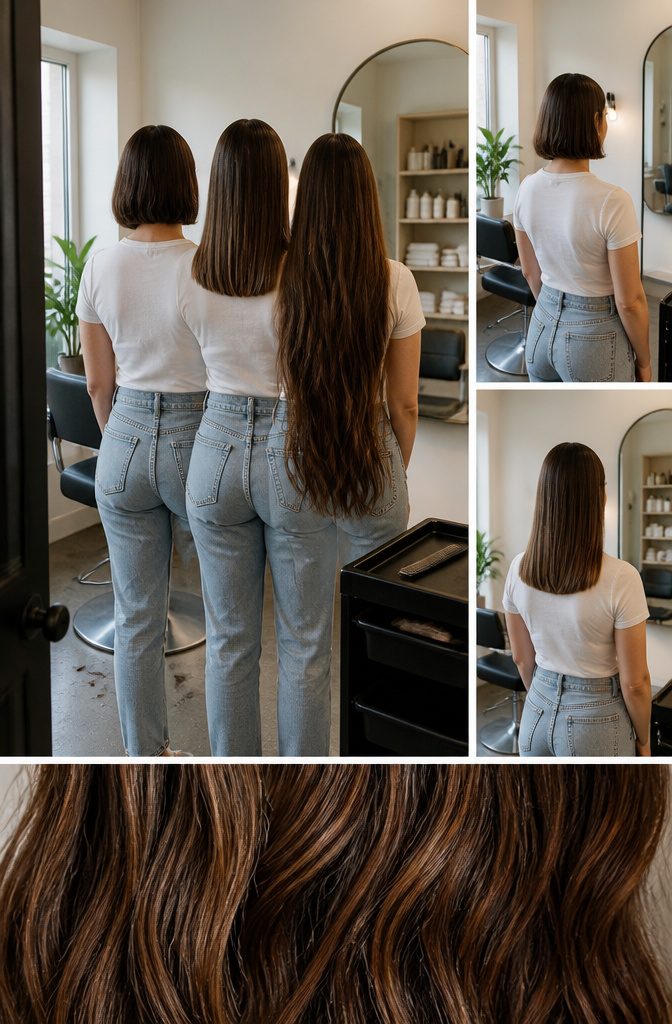
Short usually means above the shoulders, though some charts stop at the chin. Medium runs chin to shoulder, shoulder to armpit, or shoulder to mid-back, and long starts below that and runs to the floor.
Inches shift with texture: short is up to 12 inches straight but 14–16 for waves and spirals, and medium is 12–18 straight against up to 24 curly.
Men’s charts are simpler: short 0–2 inches, medium 2–4, long 5+. I give stylists a landmark, not a number.
By name, the inch ranges run like this:
| Length | Inches |
|---|---|
| Pixie | 1–2 |
| Bob | 4–6 |
| Lob | 6–8 |
| Shoulder | 10–12 |
| Bra strap | 16–20 |
| Waist | 22–24 |
| Hip | 24–30 |
How to Measure Hair Length
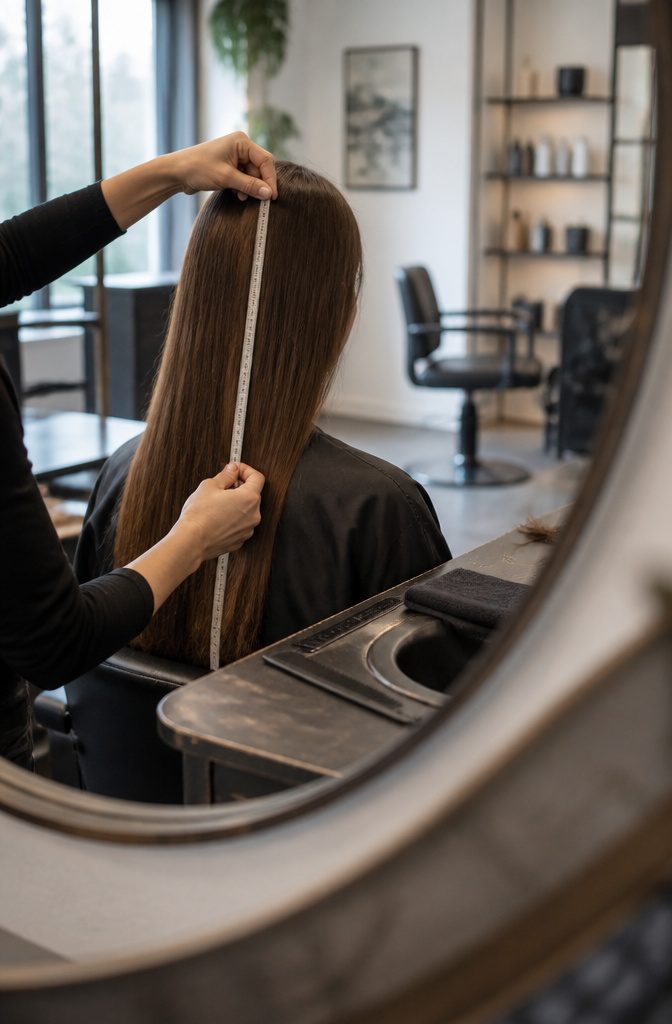
Hair length can be described two ways: by where it lands on your body, or by a number in inches.
Body landmarks drift, because height and neck length move the target. Shoulder length is about 14 inches on straight hair and 16–18 inches on ringlets, and most charts assume a woman 5 feet 7 inches tall.
For a real number, stretch a strand taut and measure from root to end with a ruler or tape.
I’d do that before buying extensions or a wig. Charts measure from the top of the head and ignore texture and proportions, so extensions clipped at the nape will land much longer than the chart shows.
Why Curls Look Shorter
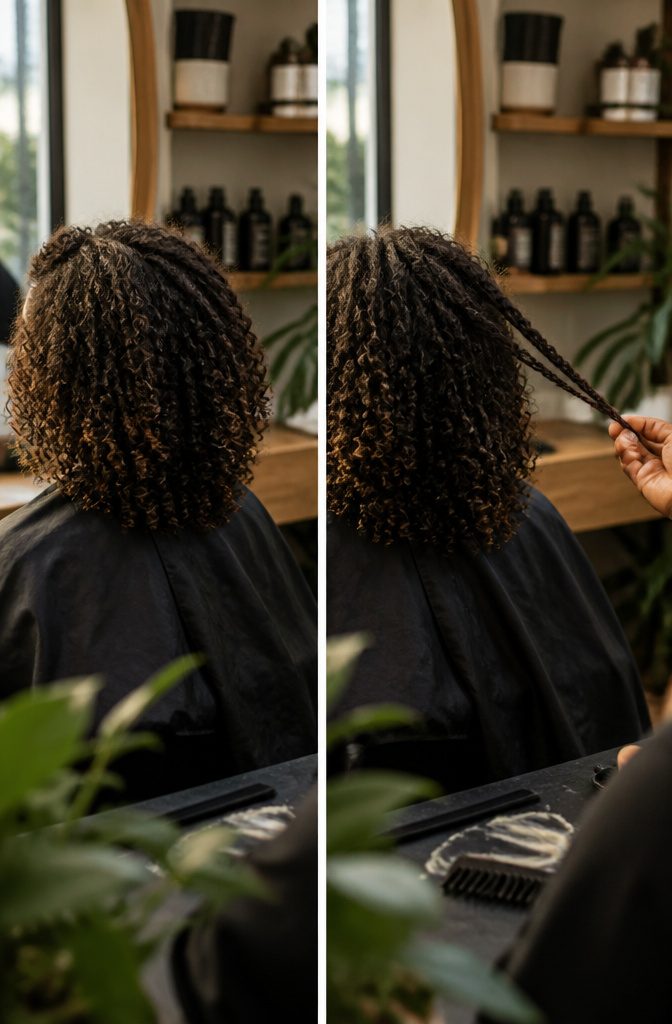
Straight hair (type 1) sits closest to its true length, so an inch figure from the earlier sections matches what you see in the mirror.
Waves can shrink up to 5%, and curls, which run from type 3 through 4c, can shrink up to 30%. A curl that stretches to 10 inches may sit near 7 when worn, which can push "long" hair into "medium" territory.
For that reason I’d measure and note both lengths, as worn and as stretched, before choosing a category or booking a cut. Stylists know the 1 through 4c system, so name your type when you describe a length.
Terms like "shoulder length" are ambiguous on textured hair. Ask whether the stylist means stretched or natural, and have them show you with their hand.
Choosing Your Length
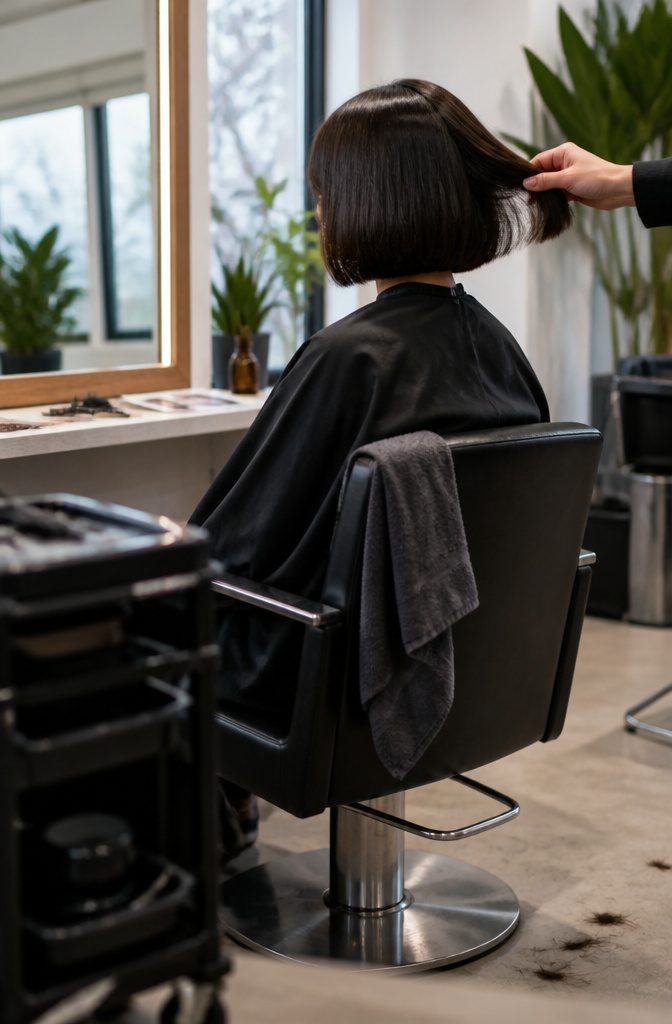
Short hair, anywhere from a pixie to a bob, can take 5–10 minutes to style, while long hair opens up braids, buns and updos but demands the most upkeep.
Texture changes the result: curls from 3a to 4c can read slightly shorter than straight hair cut to the same length.
I lean toward a chin-length bob for anyone who bores easily, since it works with a middle part, a side part, waves or a sleek finish.
Charts also disagree on where a lob belongs, short on one and medium on another, so name a body landmark or an inch count, and bring a photo to the stylist.
Face shape, lifestyle and hair health shape the call too.
Growth Time and Trim Schedules
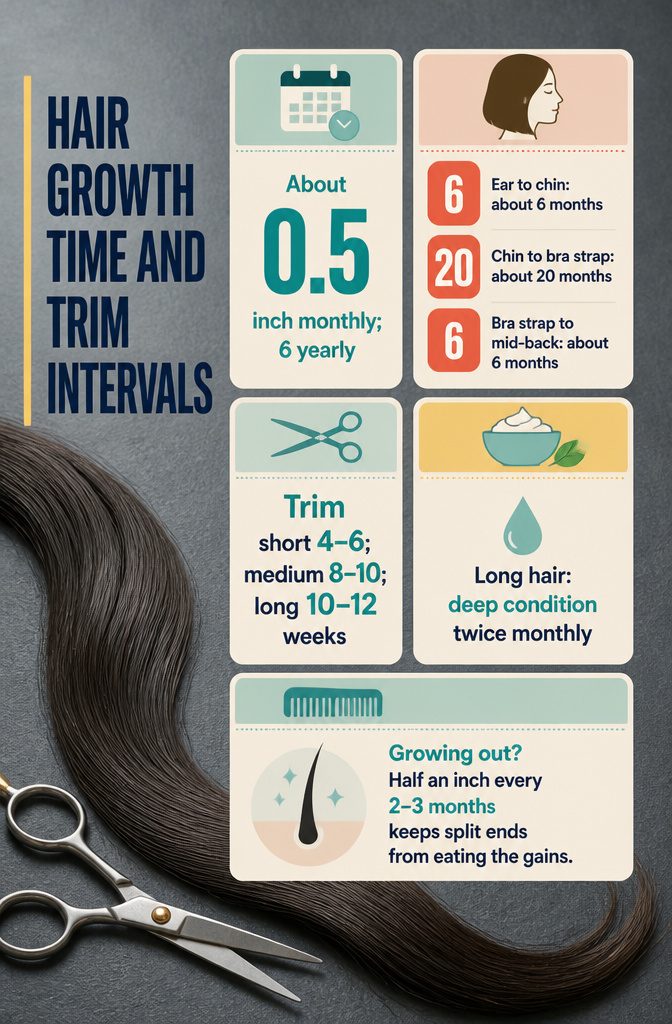
Hair grows about 0.5 inch a month, so the math is simple and the patience is not.
- That adds up to about 6 inches a year, and each strand grows for 2–7 years. Genetics set a maximum length; nutrition and care decide how close you get.
- Ear to chin takes about 6 months, chin to bra strap about 20, and bra strap to mid-back about 6 more. Those timings assume 5 feet 7 inches and 0.5 inch per month.
- Trim every 4–6 weeks for short, 8–10 for medium, 10–12 for long.
- Long hair also wants deep conditioning twice a month.
- Growing out? Half an inch every 2–3 months keeps split ends from eating the gains.
Frequently Asked Questions
How do you measure hair length?
Pull a strand taut and measure from the root to the end with a ruler or tape.
Body landmarks like the shoulder work as a quick description, but height and neck length shift where they fall. If your hair is curly, record the length as worn and as stretched, since curls can shrink up to 30%.
How many inches is shoulder length hair?
Shoulder length is about 14 inches on straight hair and 16–18 inches on ringlets.
Most charts assume a woman 5 feet 7 inches tall, so a shorter or taller person will land a little differently. Texture matters because curls pull upward and look shorter than their true length.
Can everyone grow long hair?
No.
Genetics set a maximum length for each person, and each strand grows for 2–7 years before it sheds. Nutrition and hair care decide how close you get to that ceiling.
How long does it take to grow chin-length hair to shoulders?
Plan on roughly a year. Hair grows about 0.5 inch a month, so each inch takes around 2 months, and going from chin to bra strap takes about 20 months, which puts the shoulders well before that mark.
Regular small trims keep split ends from cutting into the gain.
What do you call long hair?
Long hair starts below the medium range and is usually named by the body landmark where it ends.
Common names are bra strap length (16–20 inches), waist length (22–24 inches) and hip length (24–30 inches). Floor length is the extreme end of the scale.
Which hair length or haircut suits me best?
There is no single most flattering length; face shape, lifestyle and hair health decide it.
Short cuts from a pixie to a bob can take 5–10 minutes to style, while long hair allows braids, buns and updos but needs the most upkeep.
A chin-length bob is a safe pick if you get bored easily, since it works with several parts and finishes.