Big Cornrow Braids are the quickest style here to sit through, while Small Cornrows and Curved Cornrows can eat up hours of sectioning and braiding.
Between those 2 ends, the styles differ mostly in where the rows stop and what takes over, whether that is a Cornrow Bun, Box Braids with Cornrows, long twists, or loose curls at the ends.
Pick by how long you can sit, then by where you want the last row to end.
1. Classic Cornrows
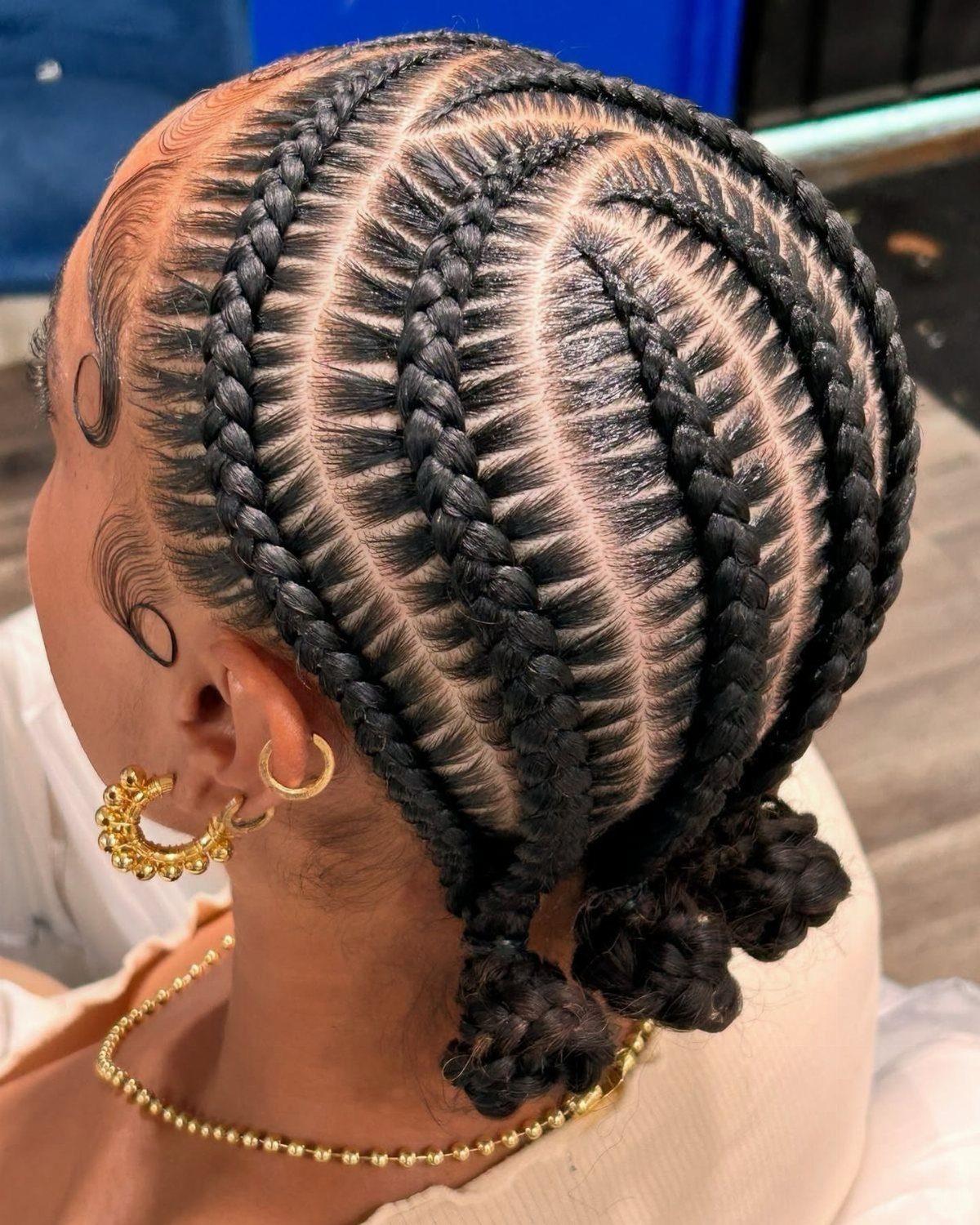
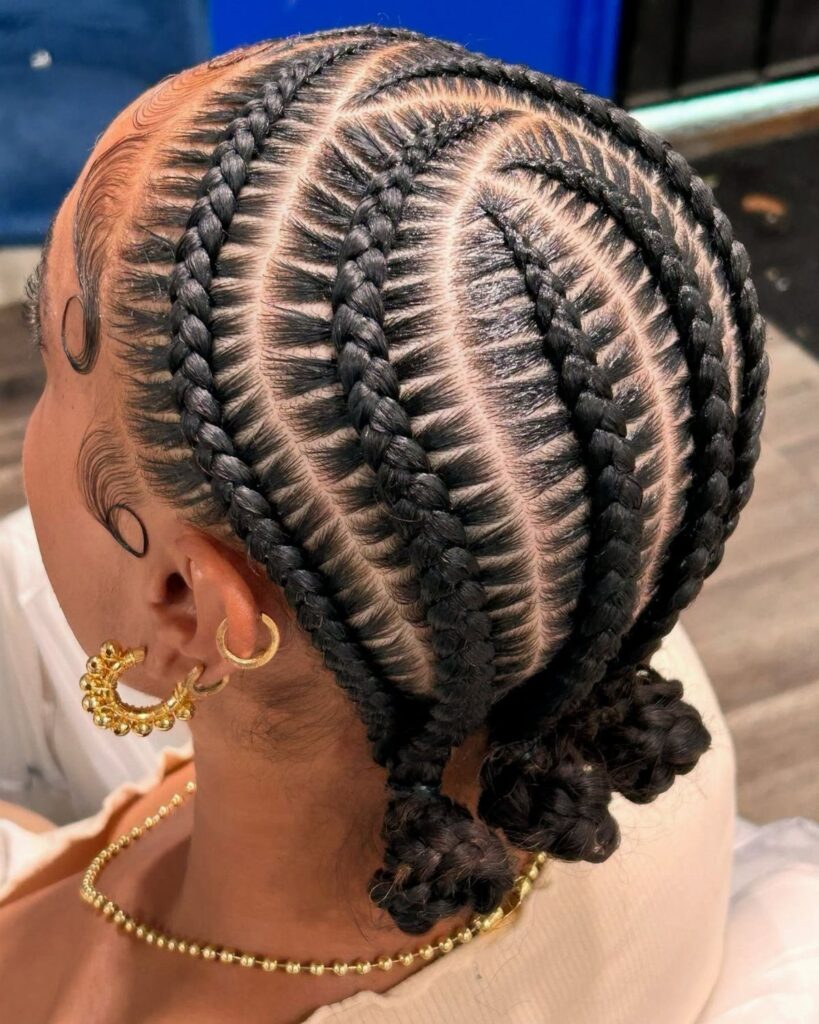
Rows braided tight to the scalp from the hairline back, following the shape of your head. This is the foundation style most others build from.
The rows can run straight back or curve to match where you want the ends to gather. Thicker sections braid faster, and that saves real time when the cornrows themselves are the finish rather than a base for added length.
Keep edges smooth with a light gel or edge control before you start, and tie a silk scarf at night to hold the pattern longer.
2. Cornrow Bun
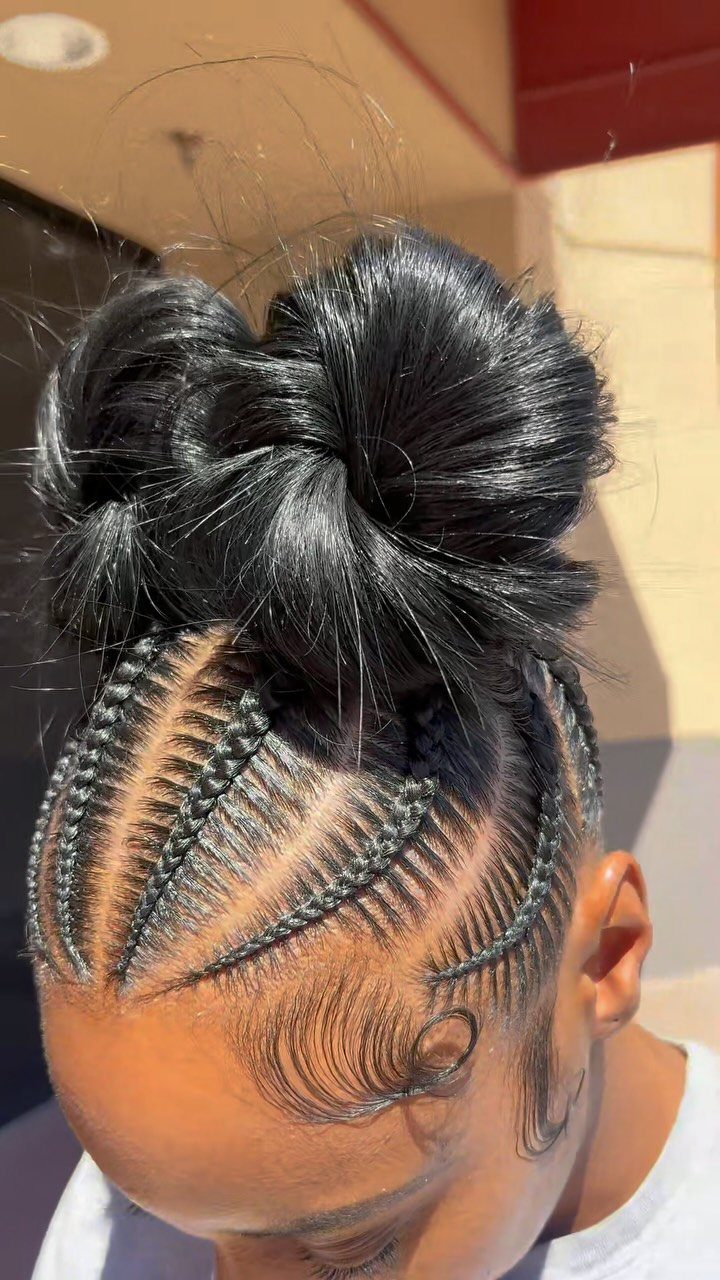
Cornrows direct all the hair toward one point, where it wraps into a bun instead of hanging loose. The bun can sit high, low, or off to one side depending on where the rows lead.
This keeps length off your neck and works well under helmets, headwraps, or when you need the hair completely contained. The bun itself can be sleek and tight or fuller if you pull sections apart slightly after securing.
Plan the row direction before you start braiding so they all converge cleanly at the bun base.
3. Side Cornrows
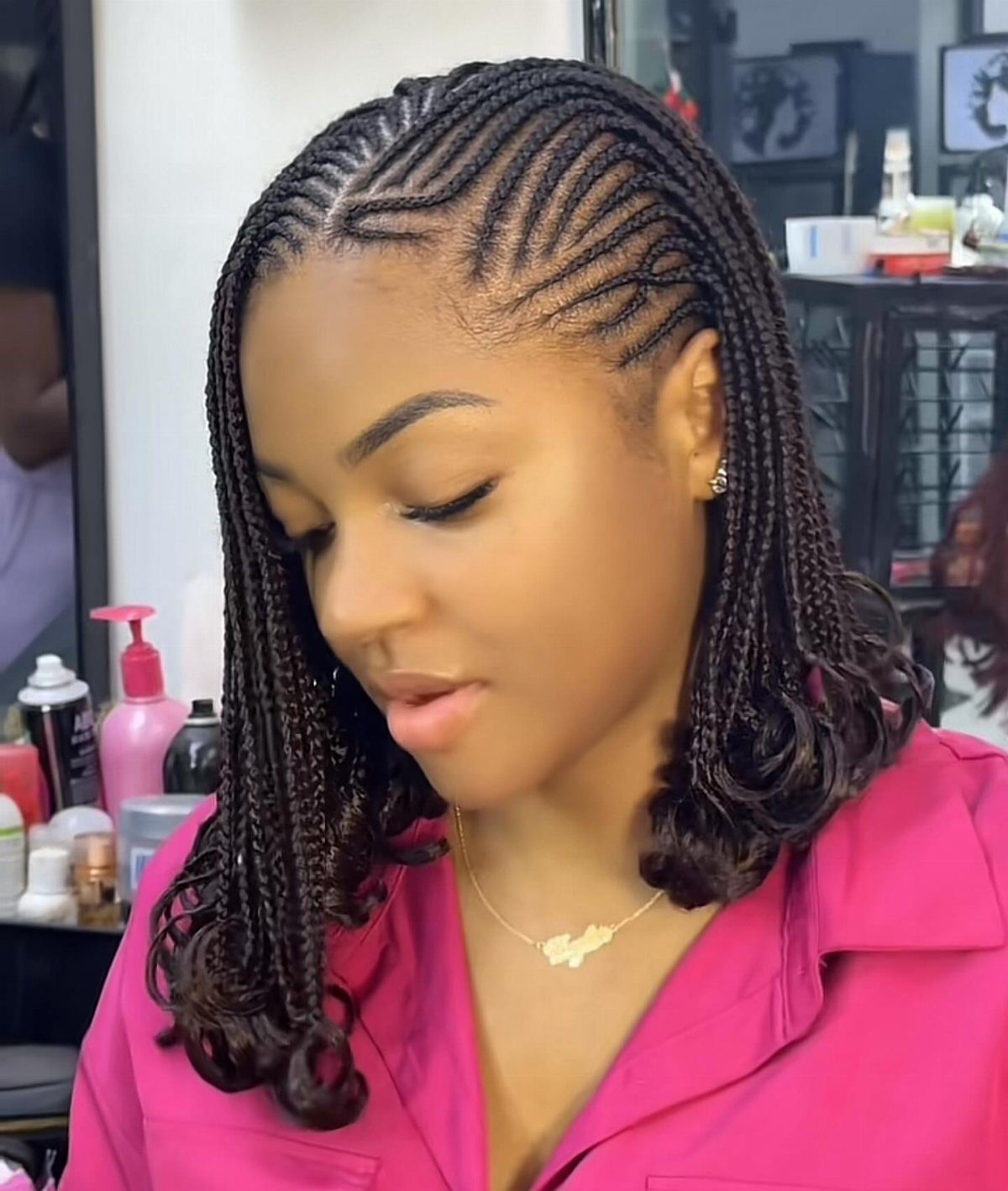
Rows run along one side of the head rather than straight back, which shifts the weight and opens up one side of the face.
The rest of the hair can hang as individual braids, stay loose, or gather into a ponytail.
This asymmetry works when you want one ear visible or when the other side of your hair is shorter. It also lets you change the part without rebraiding everything.
The side with the cornrows will last longer than loose sections, so refresh the free side as needed between full rebraids.
4. Curved Cornrows
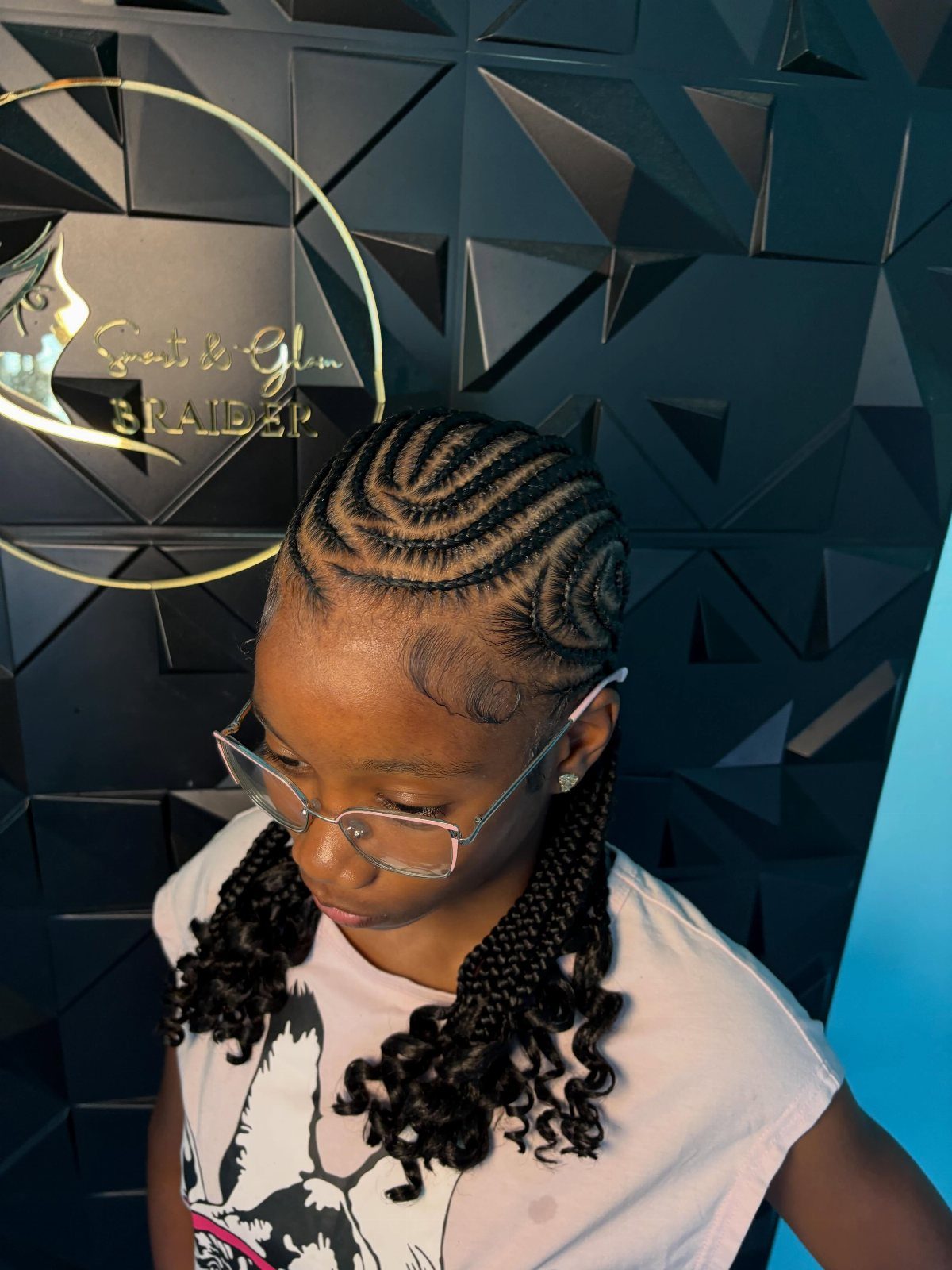
Rows follow arcs, waves, or circles instead of straight lines. The curves can swoop across the scalp in one direction or spiral outward from a center point.
Curved rows take longer to section and braid because you’re constantly adjusting the angle as you move along each row.
The result reads as more decorative than straight rows, and the curves hold their shape best on hair that’s braided close and kept smooth.
Section the curves with a rat-tail comb before you start braiding so the lines stay even.
5. Cornrow Ponytail
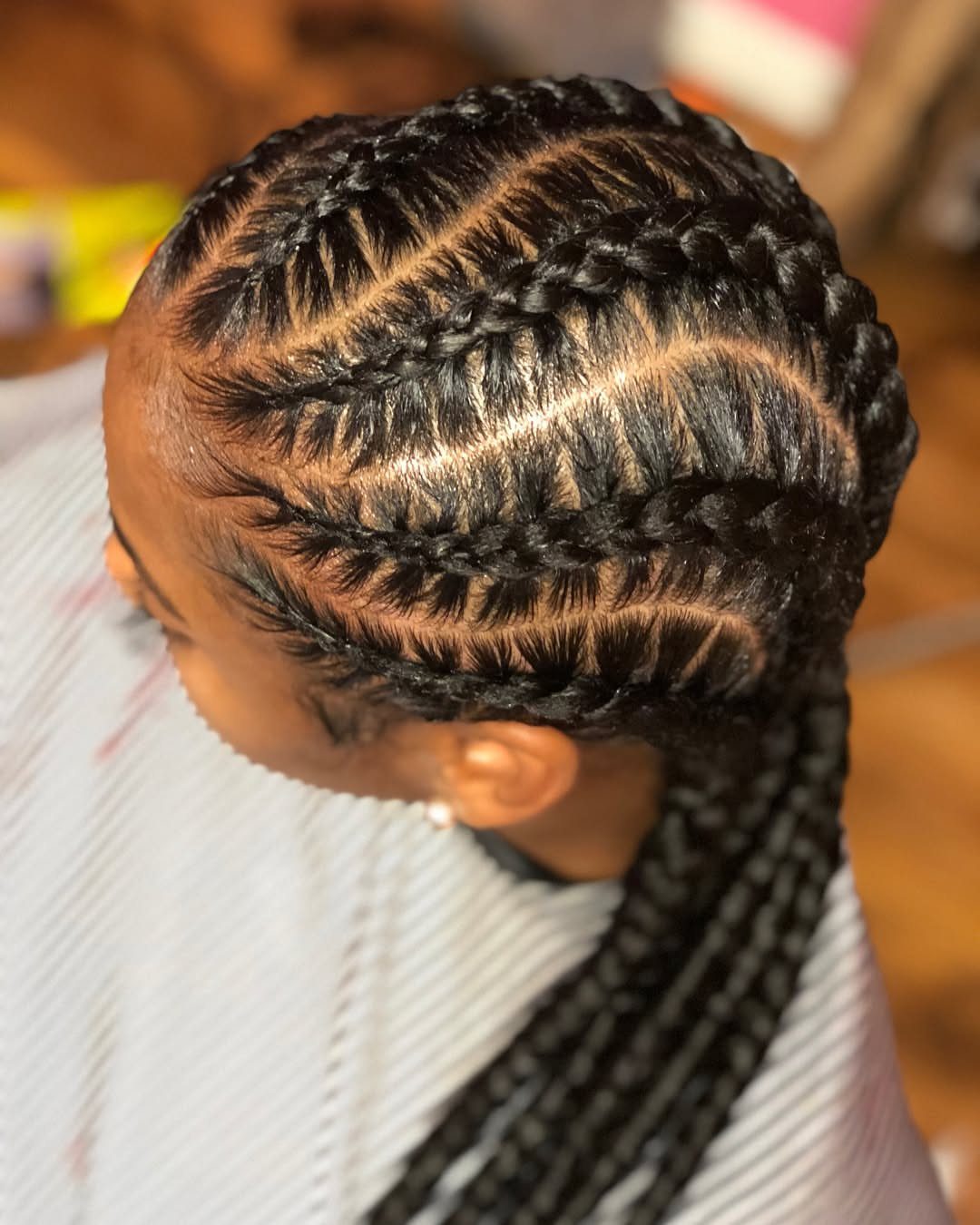
Rows braid back toward the crown or nape, where all the hair gathers into a single ponytail. The ponytail can be your natural length, or extensions can feed in at the gathering point for added length and fullness.
This gives you a pulled-back front with movement at the back, and the ponytail height changes the overall shape. Low sits formal, high reads more casual.
The rows keep the front neat for longer than a slicked ponytail would, which means fewer touch-ups between washes.
6. Feed-In Braids
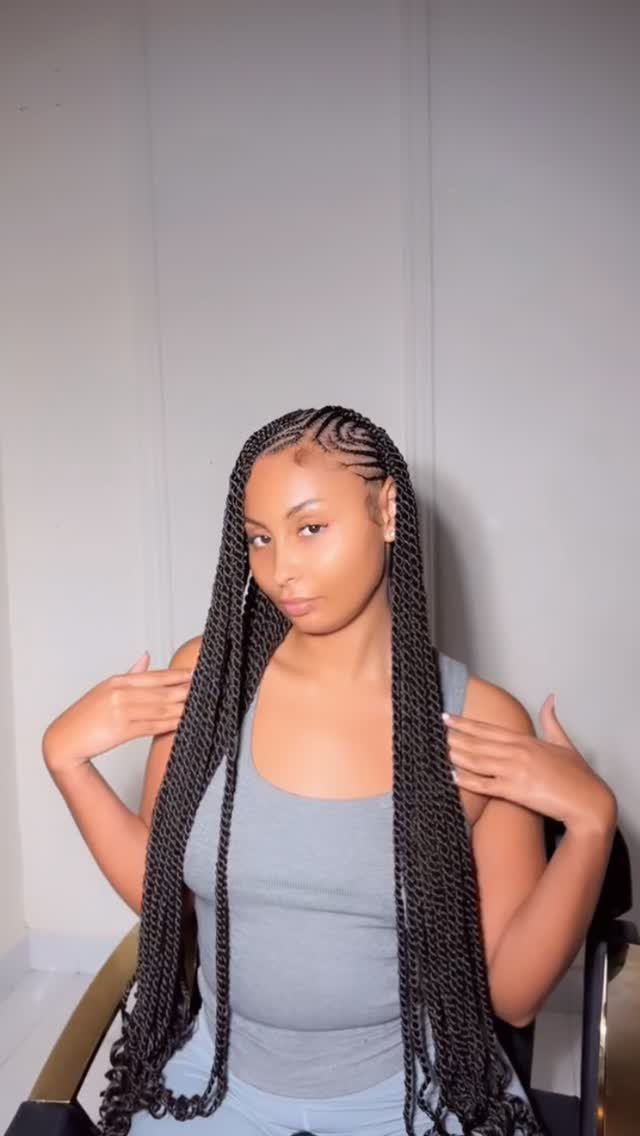
Extensions are added gradually as you braid each row, starting small at the hairline and increasing the amount as you move back. This keeps the start of each row flat and natural-looking rather than bulky.
The technique lets you add significant length without a visible line where the extension begins.
It takes longer than braiding with full extension pieces from the start, but the taper at the hairline sits flatter and lasts longer under a scarf.
Use synthetic or human hair extensions depending on how long you want the braids to stay in and how much heat styling you plan to do at the ends.
7. Big Cornrow Braids
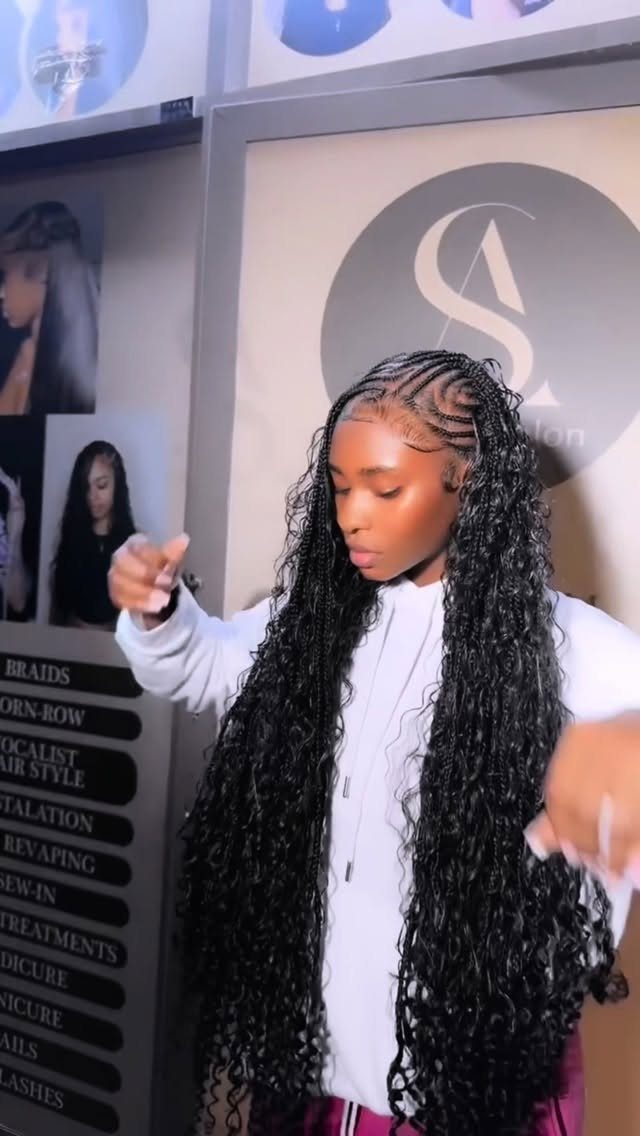
Fewer, thicker rows make this the fastest cornrow look to wear and the boldest to see.
Each plait carries more hair, so the scalp pattern reads clearly from across a room, and long curly extensions added below the braids give the style movement at the ends.
Thicker sections also sit flatter and braid up quicker than small ones. I’d pick this when you want the pattern itself to be the statement, since large rows leave space for it to show.
Ask for the row count by name or point to a photo, because "big" means different things to different braiders.
8. Cornrows with Extensions
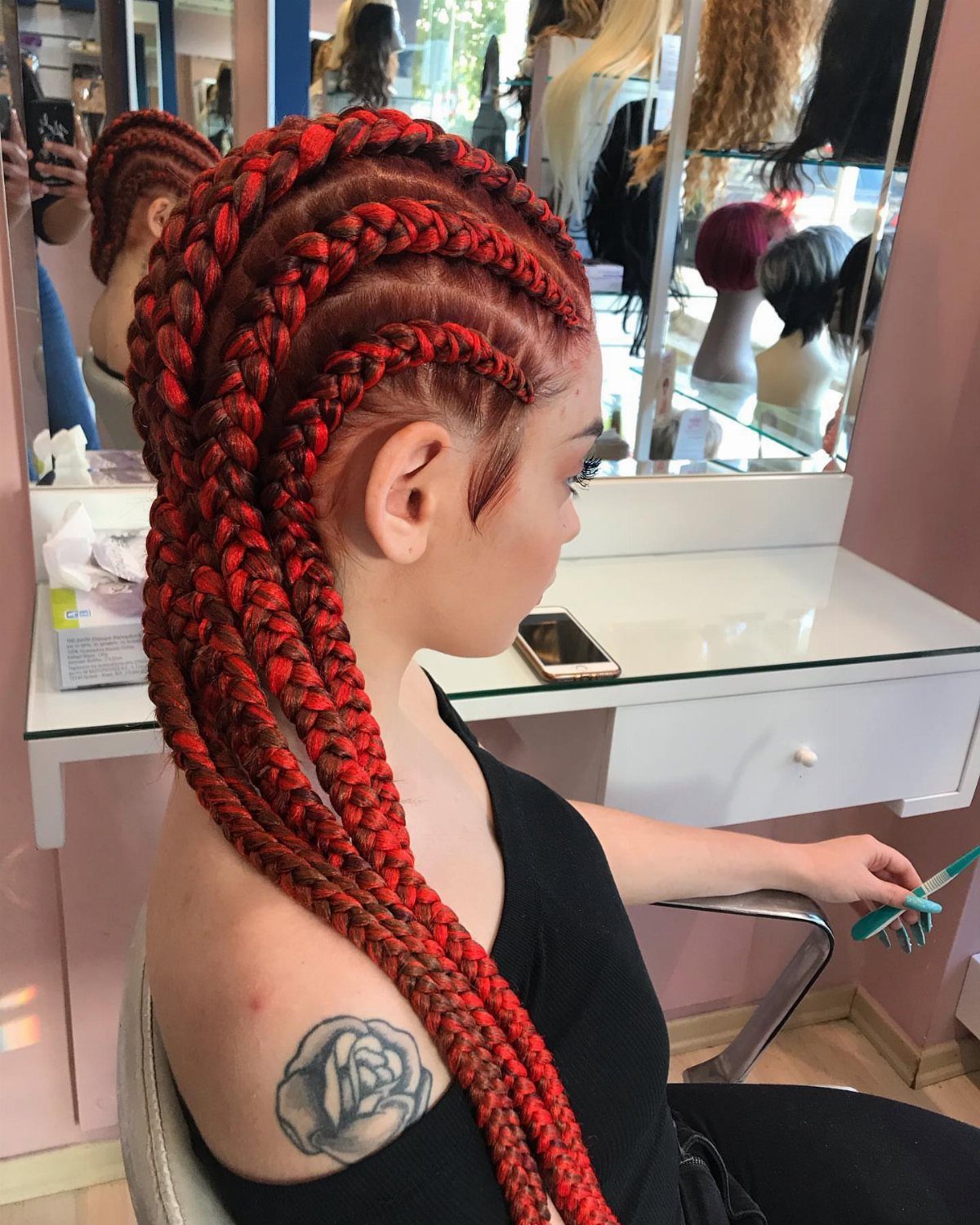
Red or any bright extension braided into the rows puts color on the hair without bleach or dye ever touching your natural strands.
That makes it an easy choice if you like changing looks often, or if your hair is happiest left alone.
I’d mix a bright shade with black, as the photo does, so the color reads as an accent and the rows stay defined. Pure bright can look flat.
Pick the extension shade in daylight before the appointment, since packaging color and finished color can differ.
9. Box Braids with Cornrows
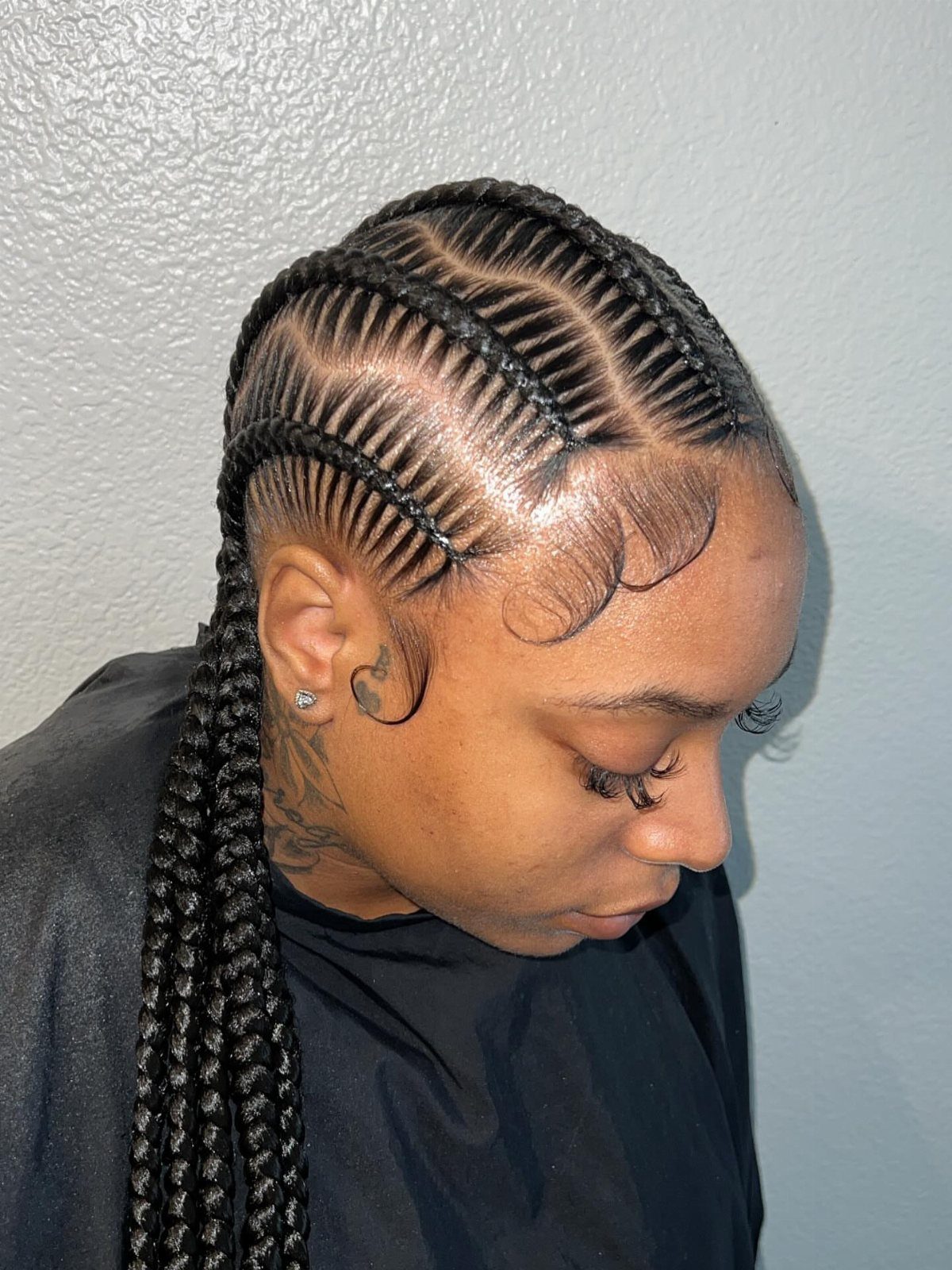
Cornrows hold the front flat and neat, then the style lets go into long box braids from the back. You get a clean hairline and a tidy top, with length and swing behind.
The transition point is the detail to settle first.
Decide where the rows should stop and the loose braids begin, and tell your braider, because that line shapes the whole look. I like it when the last cornrow runs straight into a box braid with no visible gap.
Dark extensions blend best with natural hair at that join.
10. Small Cornrows
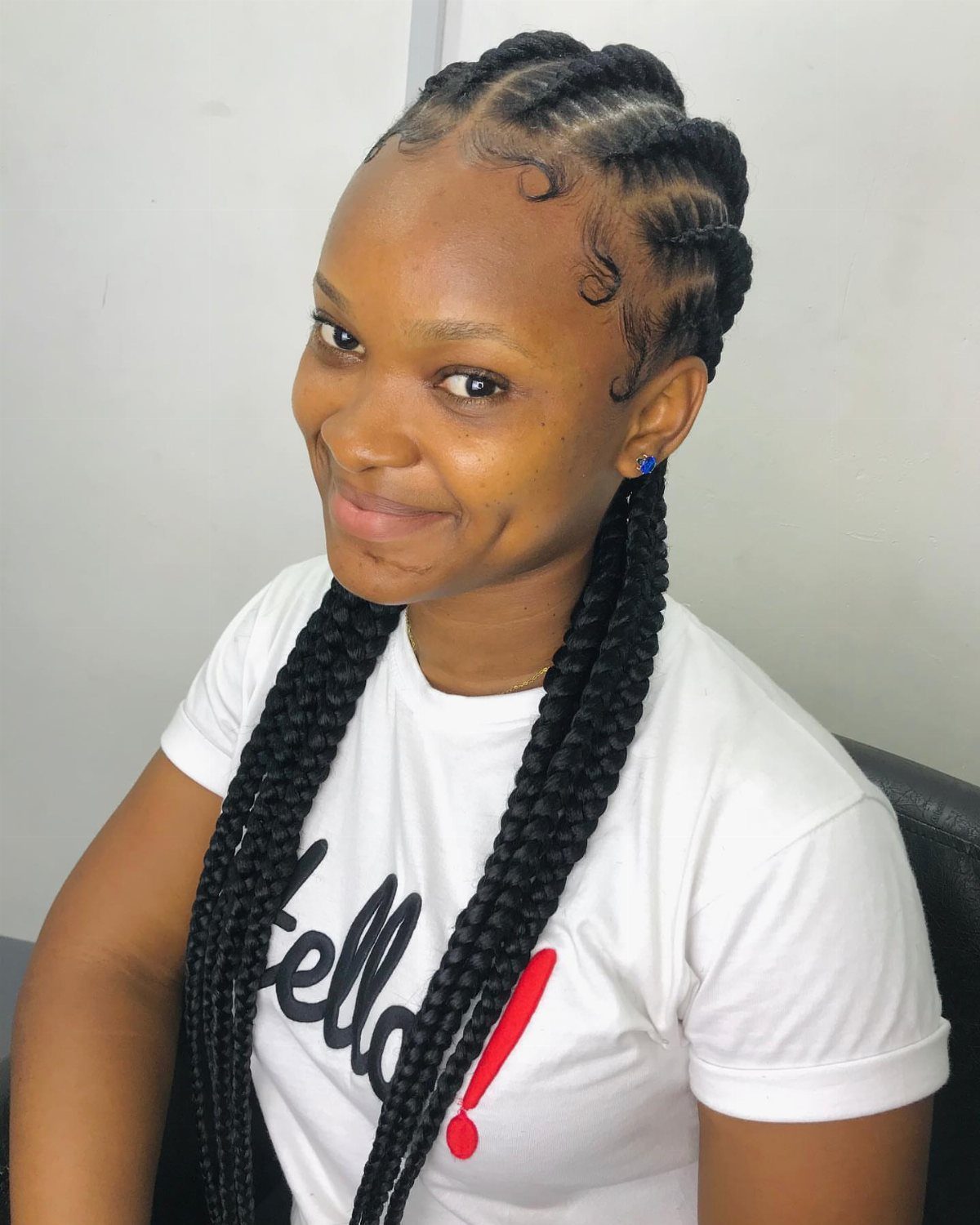
Small rows mean more of them, and more time in the chair. They have a reputation for lasting well, which helps justify the hours.
The fine pattern looks detailed and neat against the scalp, and long braids can hang from the finished rows if you want length on top of the pattern.
I’d choose this if you want a style you can leave alone and don’t mind a long install.
Block out a big part of the day, bring something to do, and eat beforehand. A tight, even row set at this size is worth the patience.
11. Goddess Cornrows
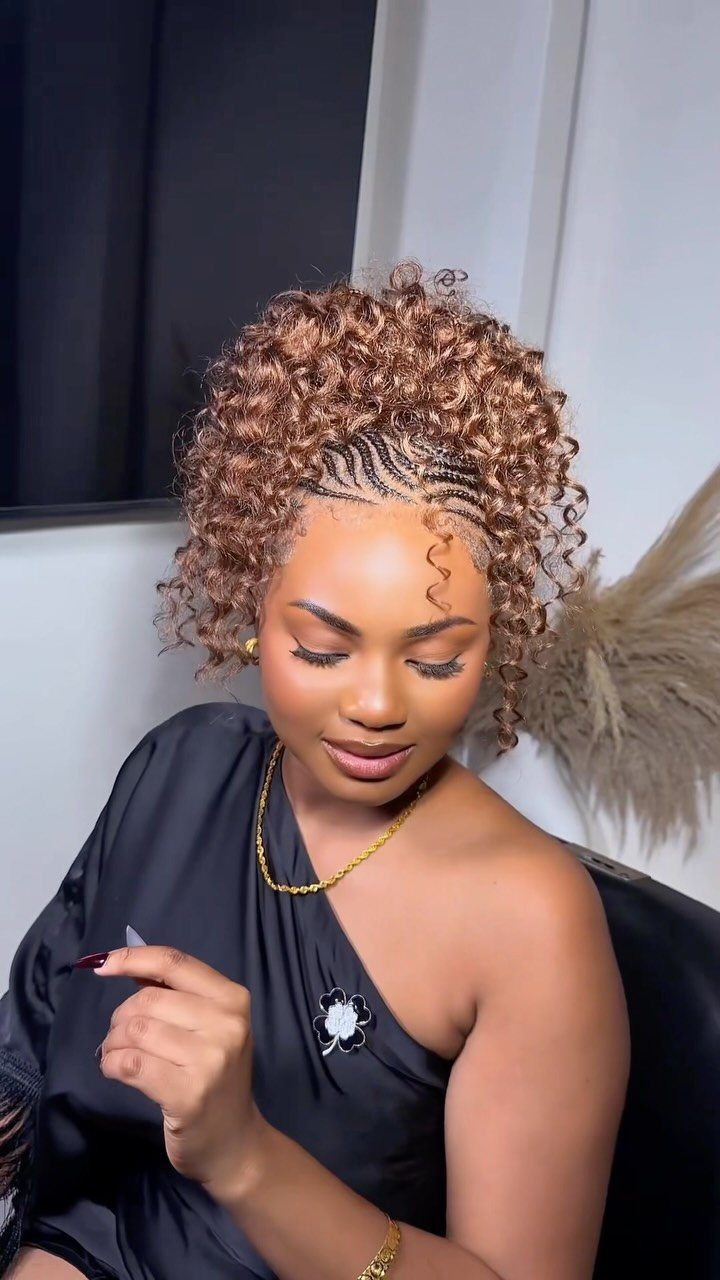
Goddess cornrows pair angled, decorative rows with soft curls left loose, so a structured front meets a full, flowing finish. The curls give the style its name and its volume.
For hair that’s naturally curly or can be set into curls, this gives you a way to wear texture without it all being on show.
I’d keep the cornrows slim and the curls generous; the contrast is what makes it work.
Show your braider a photo of the row angle, since the diagonal is the part that’s easy to get wrong.
12. Mohawk Cornrows
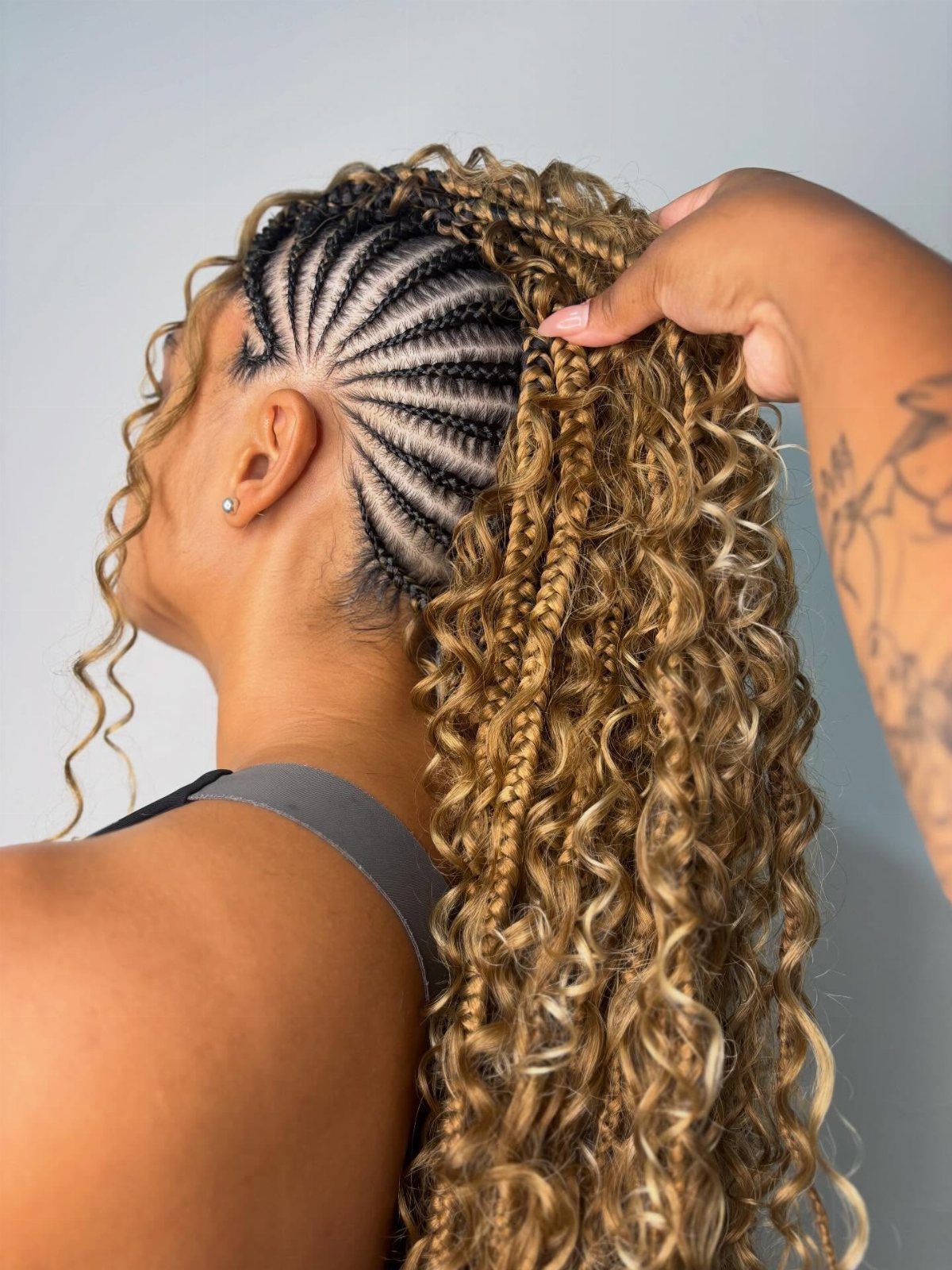
Rows sweep inward from both sides and gather into a raised ridge down the center of the head, like a mohawk built from braids. Curly braids stand along the middle, with the rows leading to them.
It suits anyone who wants an edgier shape than a ponytail or bun without cutting anything. Two-tone color is optional here; plain black extensions give a cleaner, quieter line.
Keep the center ridge secure and the side rows snug, because the whole shape depends on them holding.
13. Cornrow Braid Design
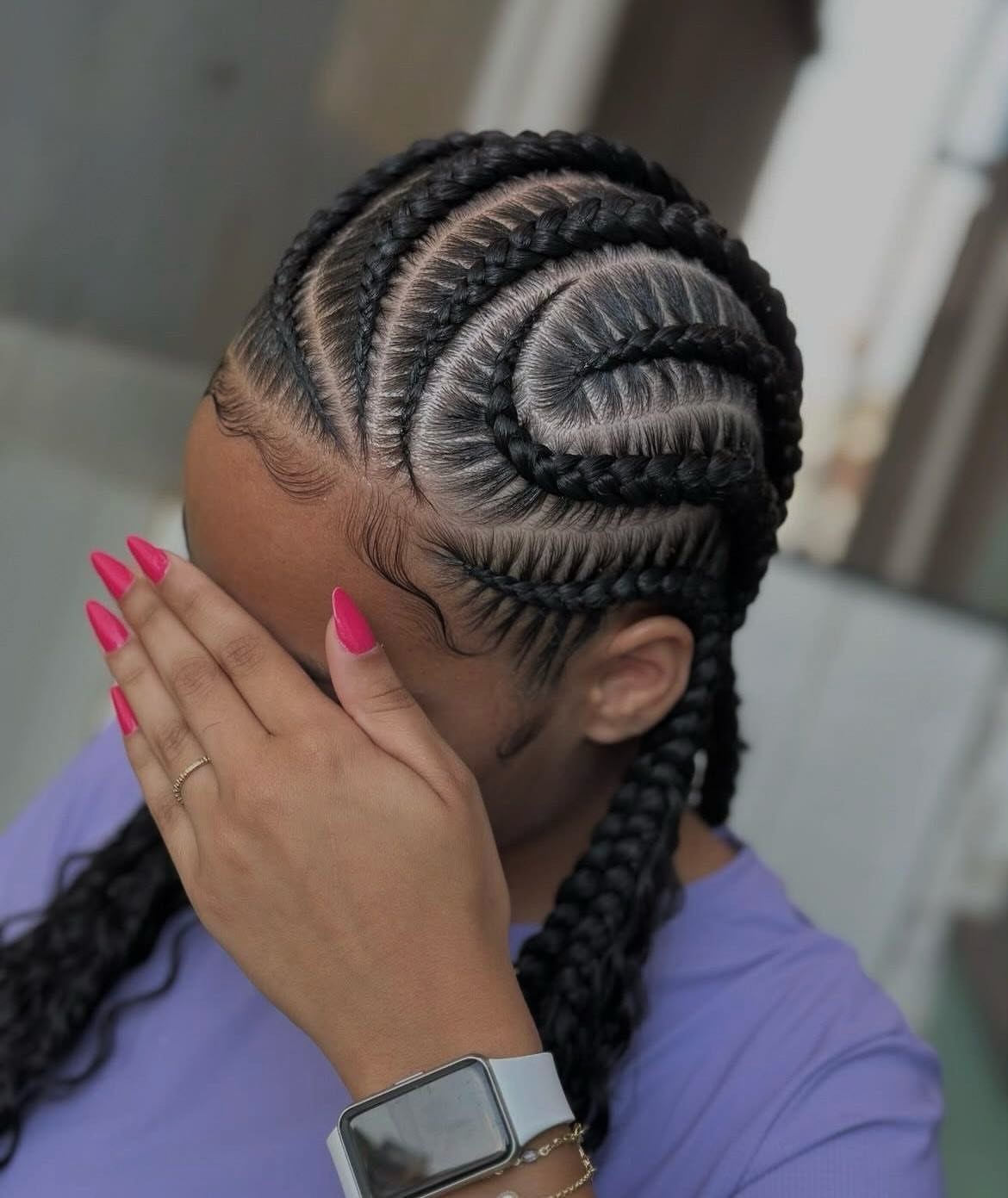
A ring of curved rows circling the crown turns the scalp itself into the design, with long braids hanging from the finished pattern.
Save the exact shape you want before the appointment, since a loop, a spiral and a swirl each need different sectioning.
Curved rows take longer than straight ones, so plan a longer sitting. I’d keep the hanging braids plain and let the pattern on top be the statement.
14. Rihanna’s Mid-Length Patterned Cornrows
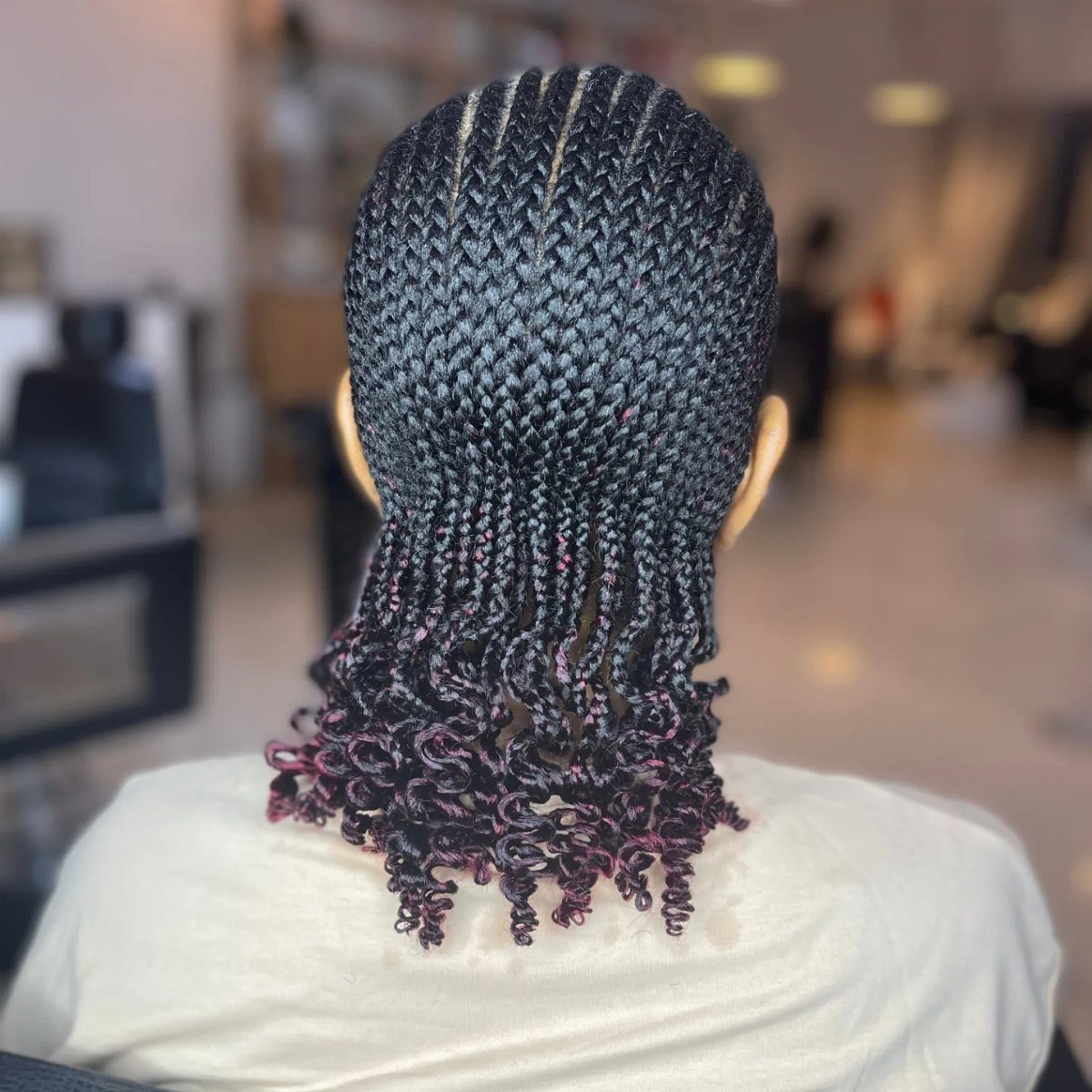
Mid-back length, a repeating pattern in the rows, and curled ends touched with purple: that is the whole look. Purple works best on a few strands rather than every braid, so the black pattern stays easy to read.
Bring a photo taken from behind, because the pattern is the part a verbal description loses. I like how the curls soften a design this precise.
15. Cornrows with Curly Ends
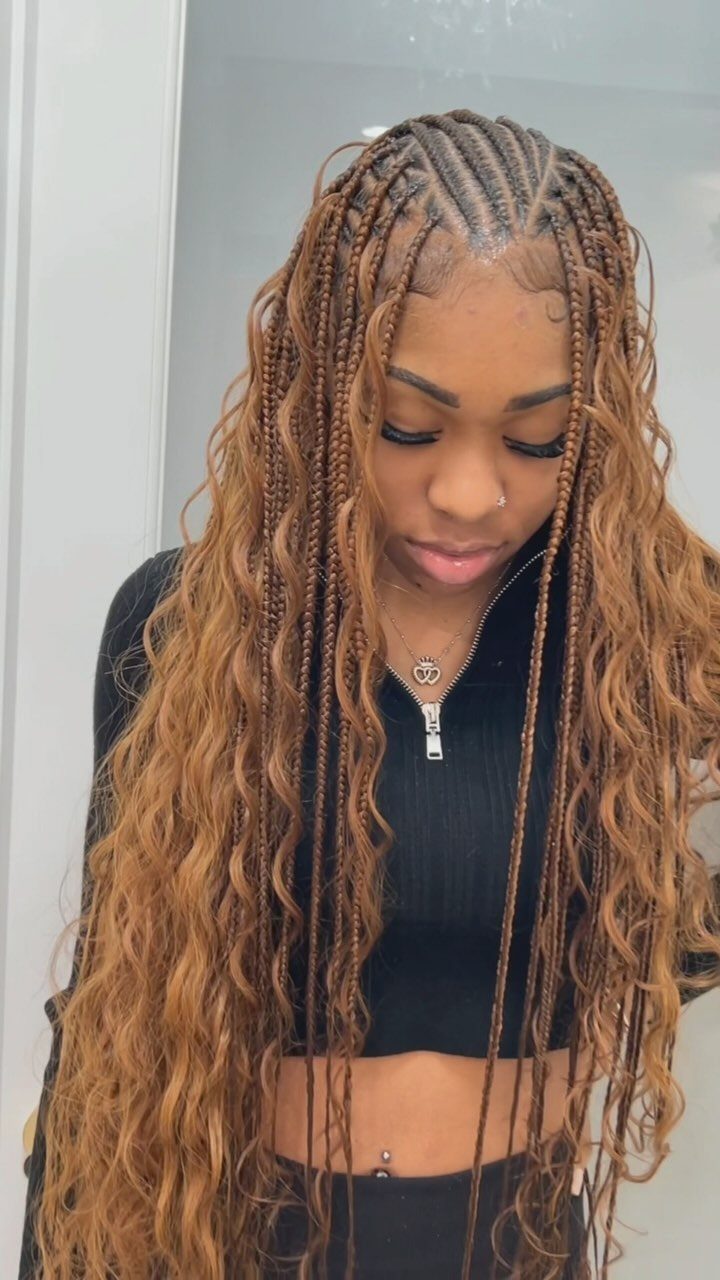
Narrow rows at the front give way to a long fall of loose, wavy brown hair. If the loose length is added hair, check its shade against your own in daylight, since the join is where a mismatch shows.
Slim rows mean more braids per head, which adds up to a longer appointment than chunky ones, so book extra time before you sit down.
I like this for anyone who wants the neatness of scalp braids without wearing braids all the way to the ends.
16. Cornrows with Face-Framing Curls
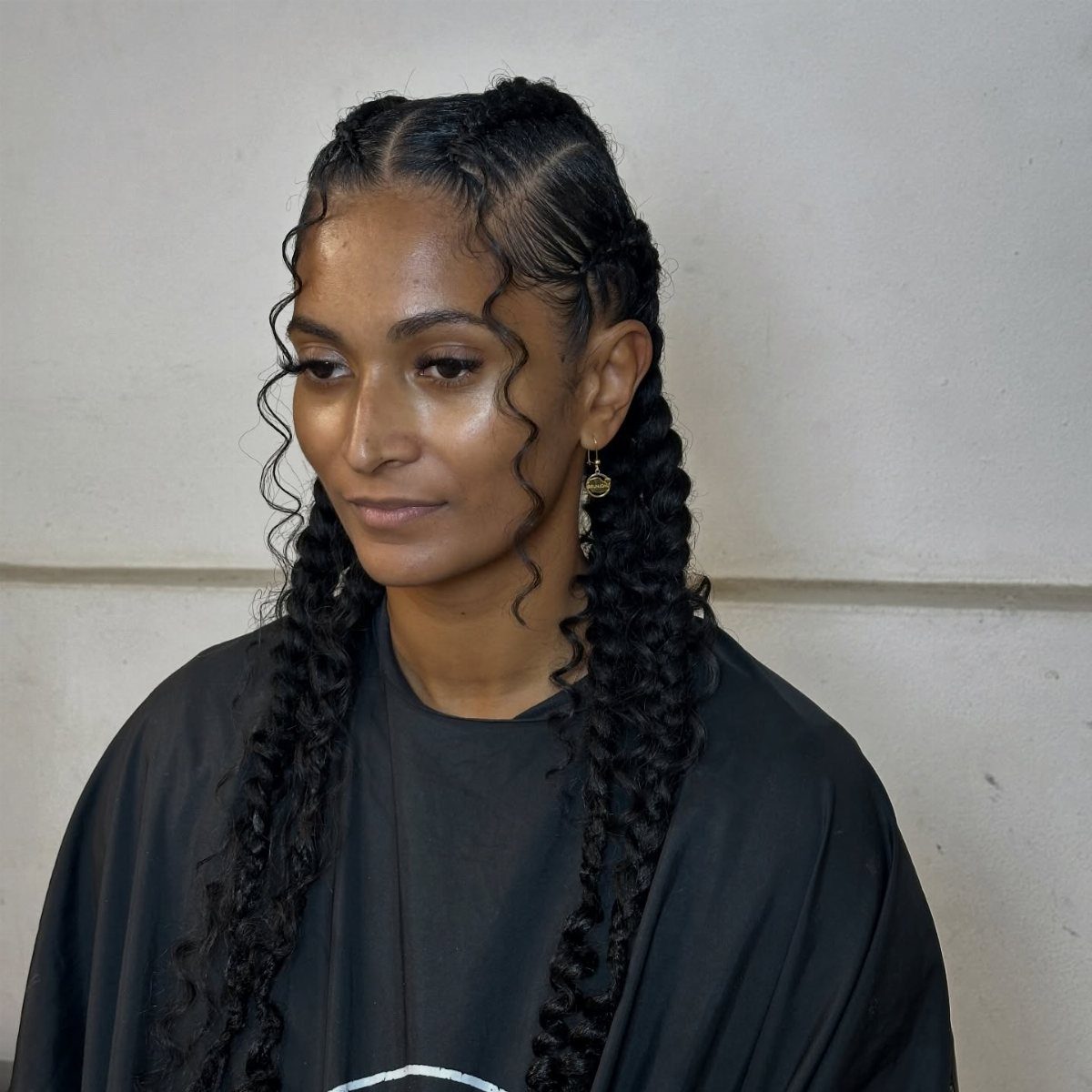
Loose curls at the temples soften a style that is otherwise all structure. Tell your braider which strands to leave out at the front, because they have to be set aside before the rows start.
I’d keep the curls few and light. They frame the face best when the black rows beside them stay clean, with the long textured braids carrying the length behind.
17. Cornrows with Curly Back
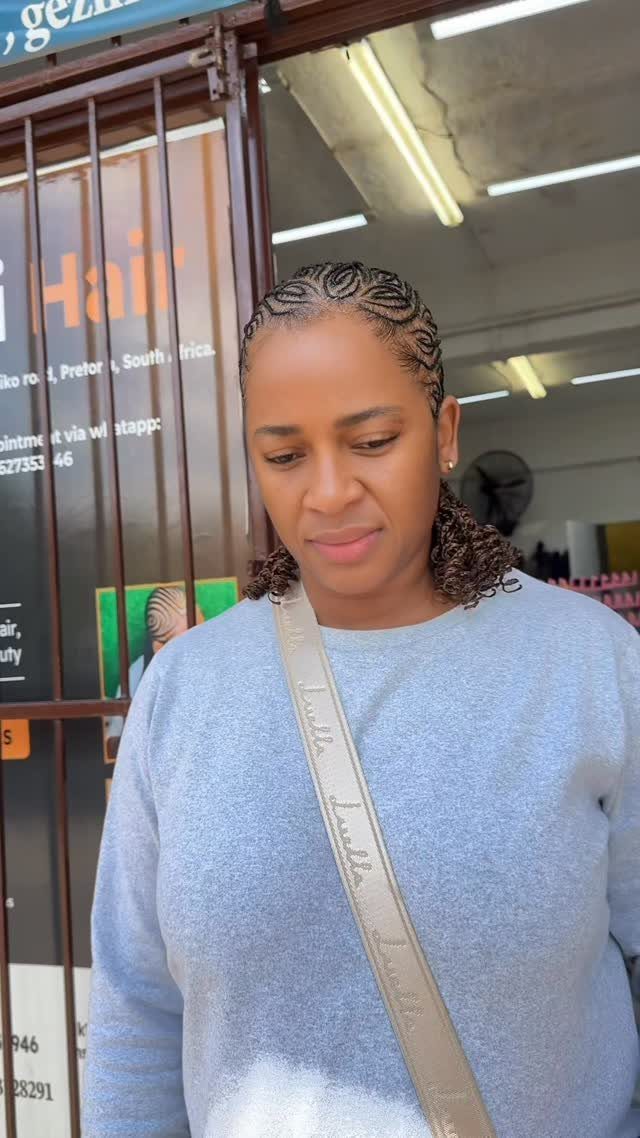
Patterned rows cover the top of the head while the back stays free in natural-looking curls. Settle where the pattern ends before anything else, because the curls begin at that line.
The curls can be your own texture or added hair; tell your braider which you plan to use.
I’d stop the pattern at a clear edge rather than let it trail off, since a defined line makes both halves look intentional.
18. Cornrows Into Long Twists
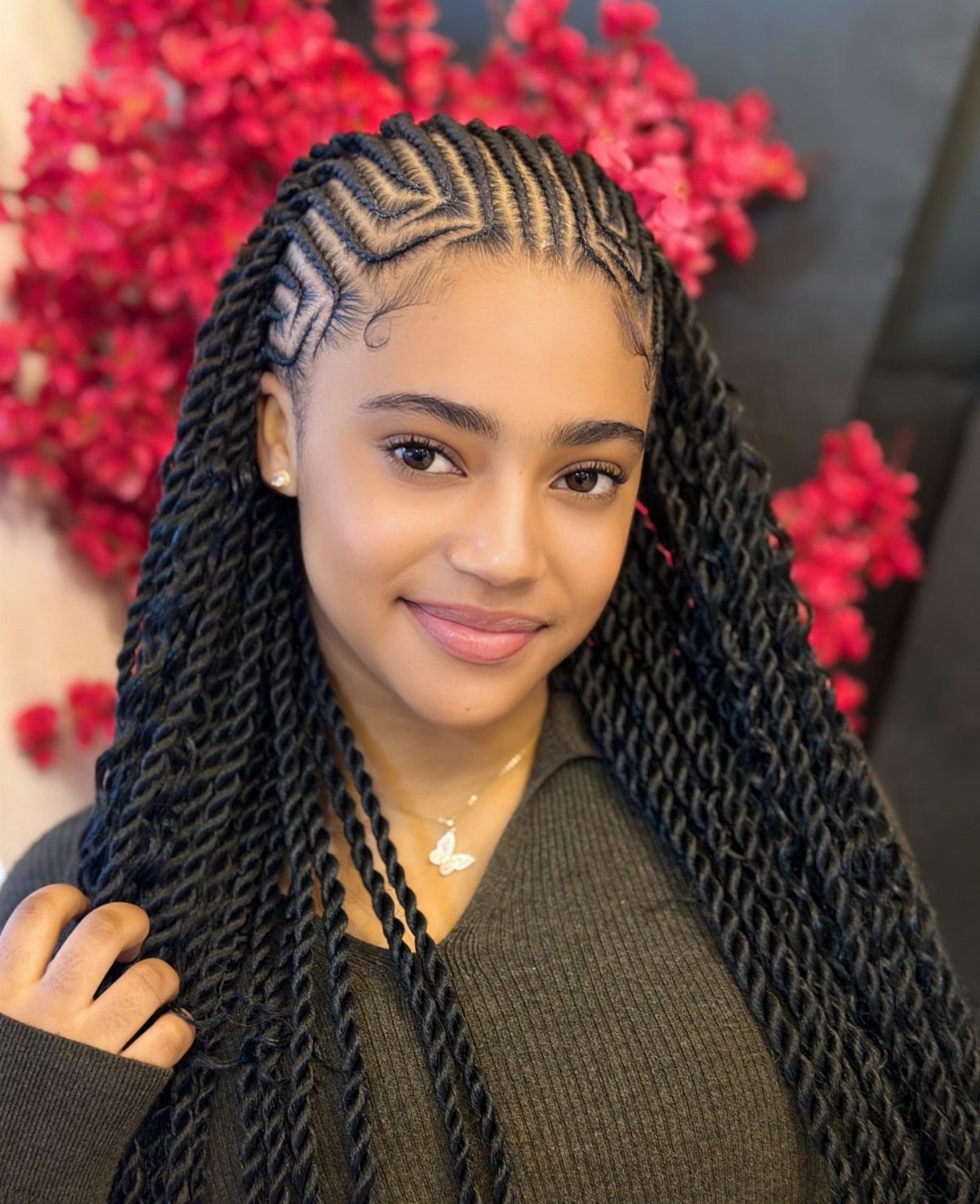
Twists take over where the rows stop, hanging long over the shoulders. They look rounder and softer than braids, so the change from flat row to loose length is easy to see.
I like that contrast, and keeping the twists black, matched to the rows, gives the look one continuous line. Show your braider a photo of the exact spot where a row ends and a twist begins.
19. Cornrows Into Thick Curls
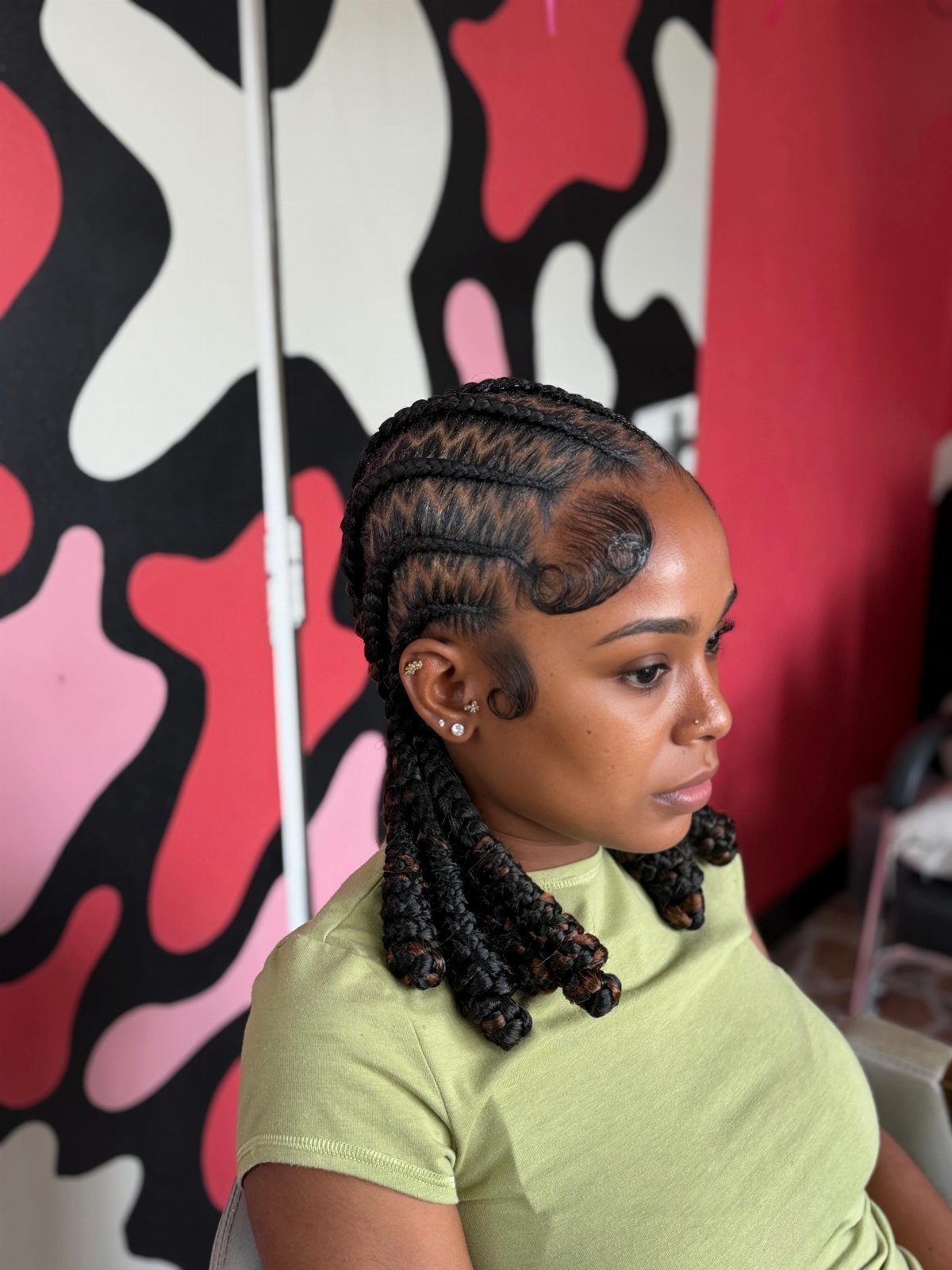
Rows sweep back from the hairline and end in thick, curled braids, so the flat scalp work gives way to rounded, bouncy length. The contrast between tight rows and chunky curls is the whole appeal.
I’d ask for the curls to be set a little looser than you think you want, since thick braids read fuller once they spring.
Tell your braider where each row stops and the curled section starts, and bring a photo showing the back, because that is where the style lives.
Thick curls take less time to install than fine ones, though I can’t give you an exact figure.
Protective Style Purpose
Cornrows earn the "protective" label because the hair stays tucked away from heat tools, dry air, and daily styling. That gives textured hair a break from the wear that causes dryness and breakage.
The protection only works if the braids aren’t pulled too tight. Tension can tug hair out at the follicle and cause the very breakage you’re trying to avoid, so speak up in the chair if anything feels sharp.
A satin bonnet or a satin pillowcase for sleep is my pick, since cotton pulls moisture out of braids and the friction roughs up the hair overnight.
Don’t wear them forever. Scalp and hair both do better with a rest between installs.
Cornrows are considered a protective style because they’re low maintenance, low manipulation and make it easy to care for textured strands and protect them from heat, dryness and breakage. They are also the foundation for other styles.
Cornrow Care and Upkeep
With a moisturized scalp, cornrows can stay in for weeks.
Small rows can go as long as 4–6 weeks, but they also put more tension on the scalp, so I’d weigh how comfortable the install feels against how long you want it to last.
Moisturize the scalp and braids regularly with a leave-in conditioner and a natural moisturizer. Keeping them conditioned also makes takedown easier, since dry hair tangles and snaps when you unbraid it.
If your scalp feels sore or tight, take the braids out early rather than pushing to the end of the window.
Braiding Technique
Cornrows are braided underhand: you cross each outer strand under the middle one and pick up new hair from the scalp as you go. Adding the same amount of hair with each stitch keeps the row even and flat.
If your hair is natural, detangle it thoroughly before you start braiding. Working small sections keeps the hair smooth and the row clean.
Wrap the loose ends around a finger to set them in a small curl, or close each one off with a snag-free band or a barrette. Both hold without catching on the hair.
Frequently Asked Questions
Which hairstyle is cornrows?
A cornrow is a braid that lies flat against the scalp, started at the hairline and run along the curve of the head.
You braid them underhand, picking up new hair as you go, which keeps each row flat. Rows can go straight back or bend into curves, then end in a bun, a ponytail, or free-hanging braids and twists.
What are some cool straight up hairstyles for black women?
Classic cornrows running straight back from the hairline are the base most other looks grow from. Where the pony sits sets the tone: down low looks dressier, up high feels more relaxed.
What are some popular styles of hair braids?
Feed-in braids are a big one: extensions are added gradually as each row is braided, so the hairline stays flat and the added length shows no visible line.
Box braids with cornrows keep the front neat and let long braids swing from the back. Goddess cornrows pair angled rows with loose curls, and cornrows that end in long twists give a softer, rounder finish.
How long does it take to do cornrows?
It depends on row size and pattern, and I can’t give an exact number of hours.
Big, thick rows are the quickest to install, while small rows take the longest, so block out a big part of the day for them.
Curved designs and feed-in braids also run longer than straight rows, because the angle keeps changing and the extensions go in gradually.
Are cornrow braids bad for your hair?
Not when they’re done and cared for well; they’re a protective style that keeps hair away from heat tools, dry air, and daily styling.
Tightness is where trouble starts: heavy tension pulls on the follicle and can break hair, the very damage you’re trying to prevent.
Moisturize the scalp and braids, sleep in a satin bonnet or on a satin pillowcase, and give your scalp and hair a rest between installs.