Hair fall comes from genetics, hormones, stress, illness, nutrition, medications, scalp infections, styling habits and hair-pulling, and the cause decides whether it grows back.
Shedding after stress or childbirth is temporary, usually starting 2–3 months after the trigger, while traction alopecia and scarring conditions destroy follicles for good. Patchy loss with scaling or itching shouldn’t wait.
Hereditary and Age-Related Hair Loss
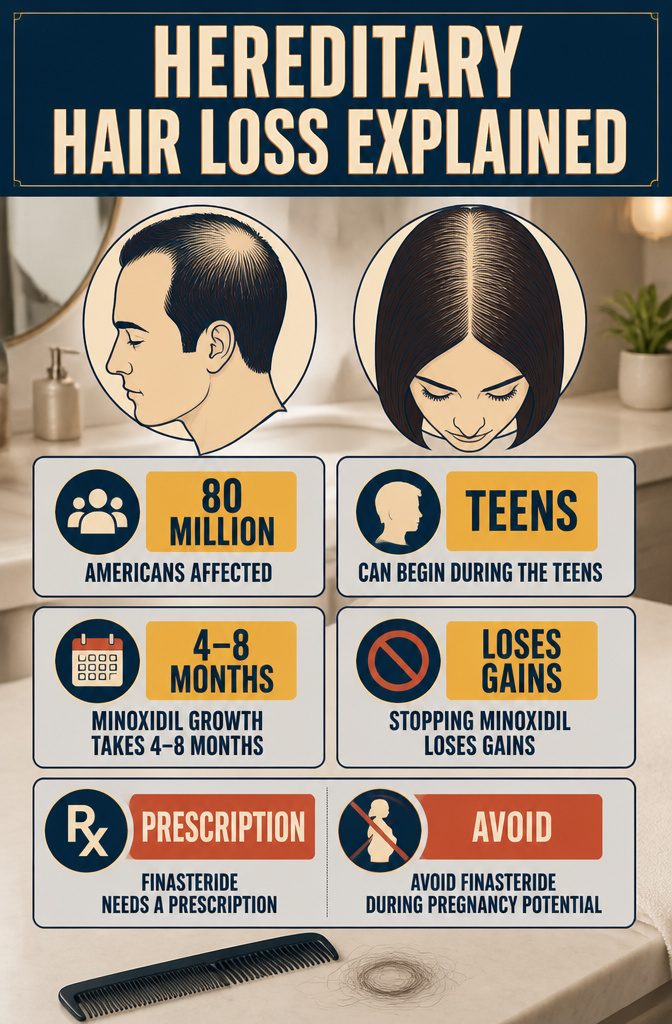
Androgenetic alopecia is the hereditary, progressive kind of hair loss, and it affects more than 50 million men and 30 million women in the U.S., roughly 80 million Americans.
It can start in the teens. In men, hair recedes from the temples in an "M" shape or thins at the crown.
In women, the hairline usually holds while the part widens and thinning spreads across the scalp. Testosterone also falls about 1% per year after 40, which may add to the thinning.
Minoxidil is sold over the counter, and new growth takes 4 to 8 months.
Stop using it and the gains go. Finasteride needs a prescription and isn’t advised for women who may become pregnant.
Hormonal Changes

Post-pregnancy shedding is the temporary kind.
High estrogen keeps hair growing through pregnancy, then levels drop after birth, and the shedding peaks about 4 months after delivery. It balances out in roughly 3 to 6 months and typically stops by the baby’s first birthday, with no treatment needed.
Ongoing loss looks different.
After menopause, female-pattern hair loss becomes more common, and the sign is a widening part rather than bald patches. It usually continues, and minoxidil or finasteride may help.
PCOS can produce the same pattern through higher androgens, typically with acne and irregular periods. Thyroid conditions disrupt the growth cycle, and starting or stopping hormonal birth control can trigger shedding weeks or months later.
Stress and Illness
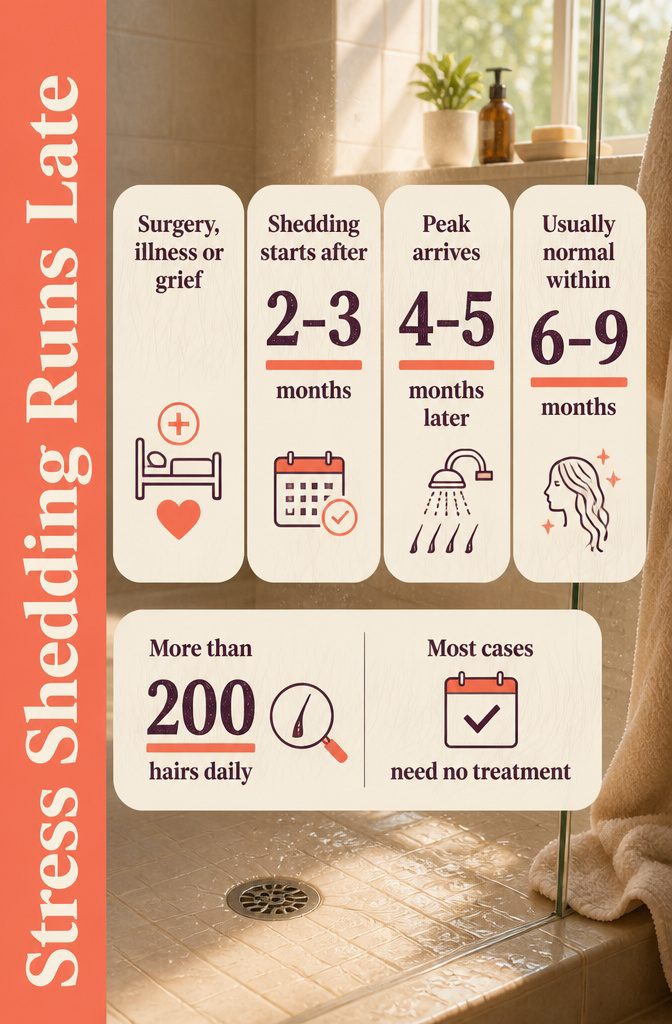
Telogen effluvium is the shedding that follows a major physical or emotional jolt: surgery, a serious illness, the loss of someone close. The delay is what confuses people.
Shedding starts 2 to 3 months after the event, so the cause is often forgotten by the time hair is clogging the shower drain. It peaks about 4 to 5 months later and returns to normal within 6 to 9 months.
Diffuse telogen effluvium means losing more than 200 scalp hairs a day, spread across the whole head rather than in bald patches.
Most cases are temporary and need no treatment. I’d try not to spiral over the shedding, since stress about hair loss can feed the cycle.
Nutrition and Weight Change

Low iron, zinc, vitamin D and vitamin B2 have all been linked to hair loss, and so has too little protein.
Protein-related shedding can begin about 2 to 3 months after intake drops, so the cause rarely lines up with the week the diet started.
Restrictive diets, too few calories and rapid weight loss set up the same delay. Shedding after bariatric surgery has been tied to low zinc.
More isn’t automatically better.
Too much selenium, vitamin A or vitamin E can also worsen loss, so I’d skip guessing at the supplement aisle. Ask for a blood test first, because supplements fix a deficiency without always restoring hair.
Medical and Autoimmune Conditions
Hair loss is a symptom of more than 30 diseases, including thyroid disease, lupus, diabetes and PCOS.
Hashimoto’s thyroiditis, the leading cause of hypothyroidism in the U.S., thins hair through inflammation or changes in the growth cycle. Lupus can thin the whole scalp.
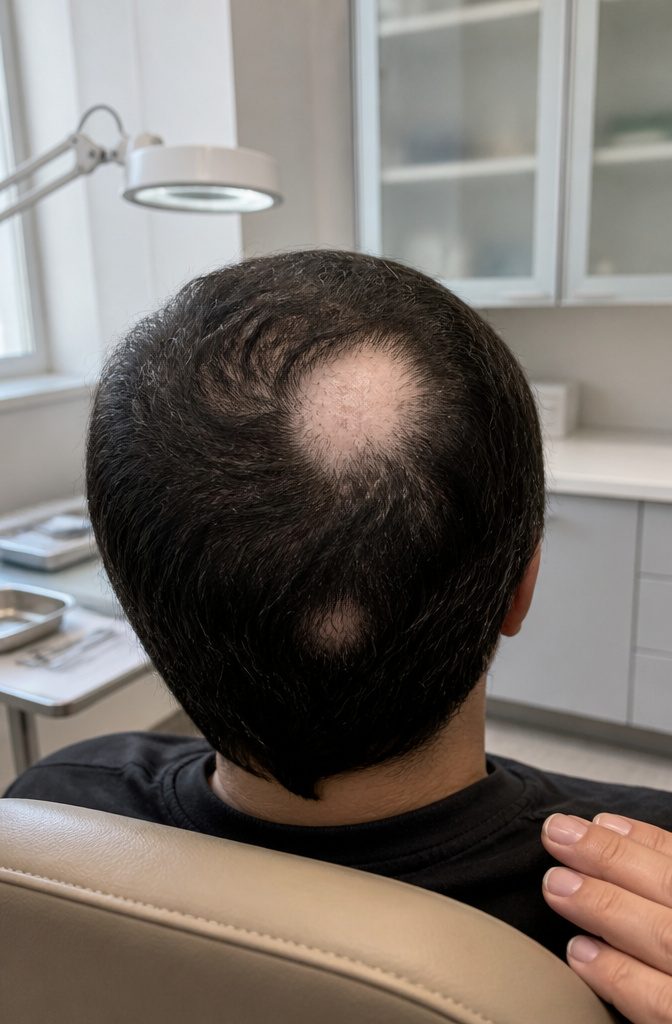
Alopecia areata is autoimmune, and it shows up as round, quarter-sized bare patches that often start in the teens, twenties or thirties.
Patchy is the common type, totalis takes nearly all scalp hair, and universalis, the rare one, takes hair from the face and body too. Nails can change as well.
The course is unpredictable, though up to 30% of milder cases regrow on their own. Janus kinase inhibitors such as Olumiant (baricitinib) and Litfulo (ritlecitinib) can help hair come back.
Scalp Infections
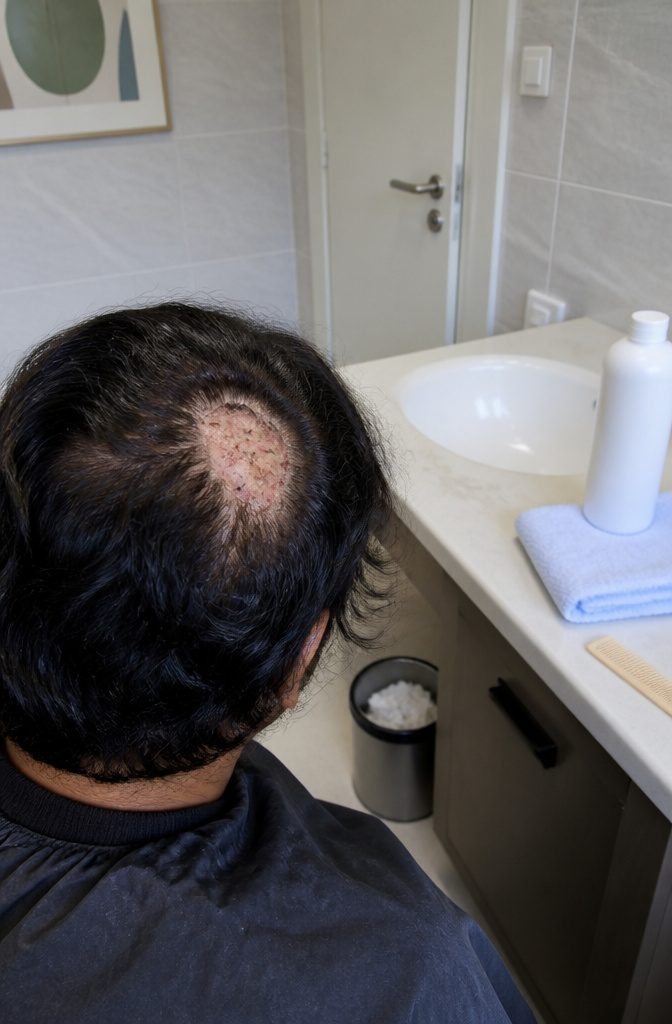
Patchy loss with scaling, itching or a red, inflamed scalp points to a fungal infection such as ringworm.
Small black dots inside a bald spot are a classic sign, and pus-filled sores can show up too. Ringworm is contagious, so I wouldn’t wait it out or cover it with styling.
Treatment is usually an oral antifungal such as terbinafine (Lamisil) or griseofulvin, often paired with ketoconazole shampoo (Nizoral) or a selenium sulfide shampoo.
Plan on at least 6 to 12 weeks of treatment, which is longer than most people expect. Left alone, the infection can scar the scalp and cause lasting loss, so a dermatologist visit beats guessing with drugstore shampoo.
Medications and Cancer Treatment
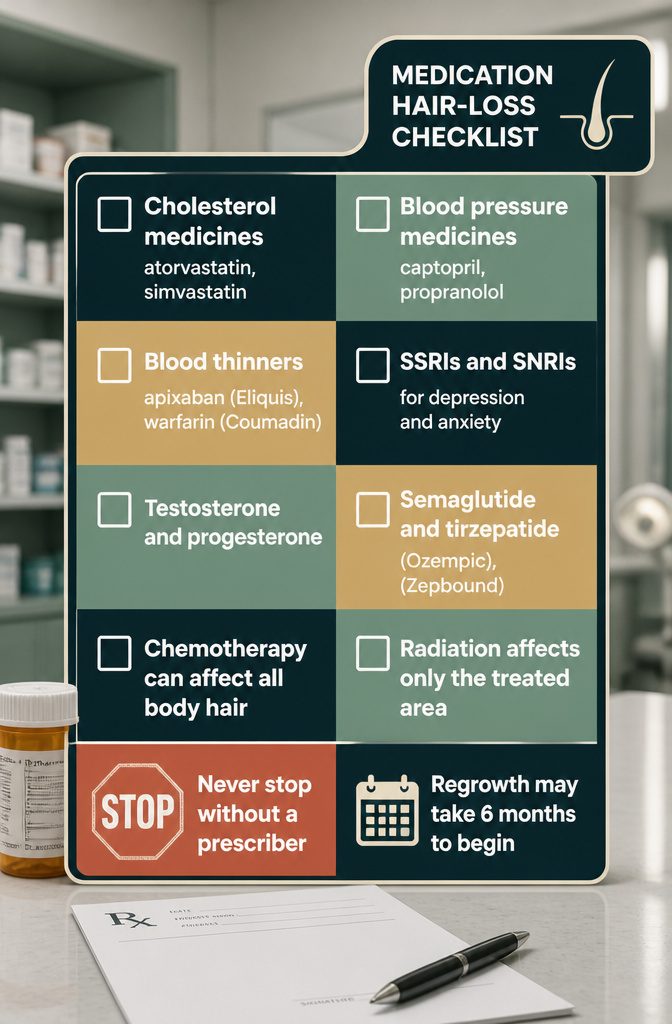
Some prescriptions list hair thinning as a side effect, though it doesn’t happen to everyone who takes them:
- Cholesterol: atorvastatin, simvastatin
- Blood pressure: captopril, propranolol
- Blood thinners: apixaban (Eliquis), warfarin (Coumadin)
- SSRIs and SNRIs for depression and anxiety
- Cimetidine (Tagamet), colchicine, isotretinoin (Accutane)
- Testosterone and progesterone
- Semaglutide (Ozempic), tirzepatide (Zepbound)
- Chemotherapy hits fast-growing cells, follicles included, so hair can go all over the body. Radiation generally affects only the treated area. Both are usually temporary, with regrowth a few months after treatment ends.
- Never stop a medicine without a prescriber. They can switch you to an alternative or help you stop safely, and regrowth may take 6 months to begin.
Hairstyling and Hair Damage
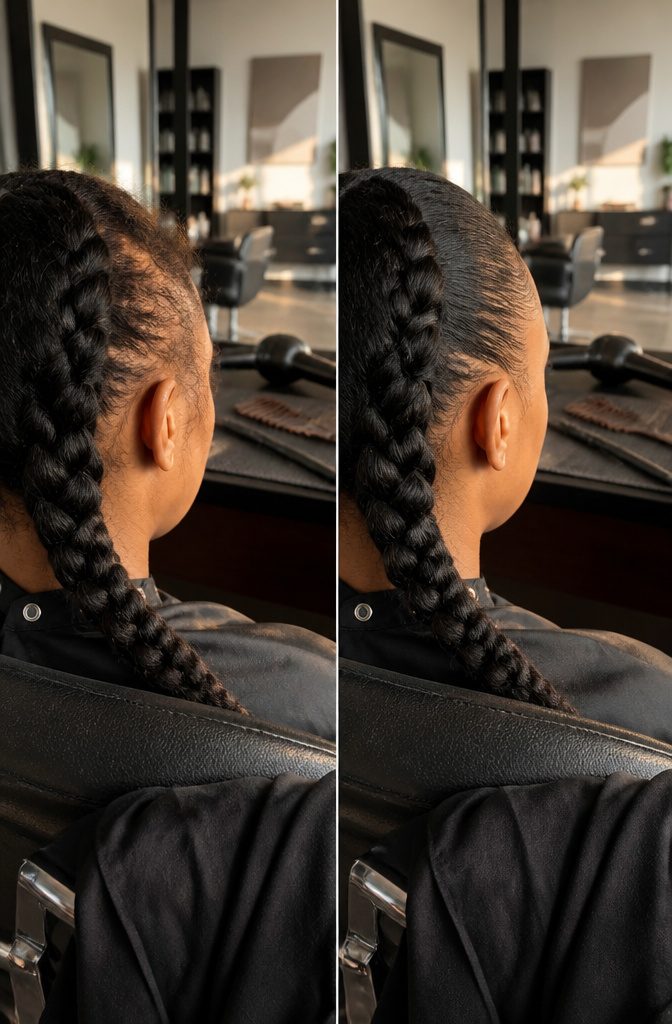
Tight braids, cornrows and ponytails pull on the follicle all day, and that is the styling habit most likely to cost you hair for good.
Traction alopecia scars the follicle, so once it is destroyed, nothing regrows. Alternate tight and loose styles every few days, and see a dermatologist if your scalp hurts or you notice patchy sections.
Heat and chemicals break hair instead of pulling it. Curling irons, hot rollers, bleach, color and perms all qualify, so I’d save hot tools for special occasions and keep the blow-dryer on its lowest setting.
If shedding starts after a new shampoo, stop using it and check the label for formaldehyde. Brush gently, only enough to style.
Smoking and Pollution
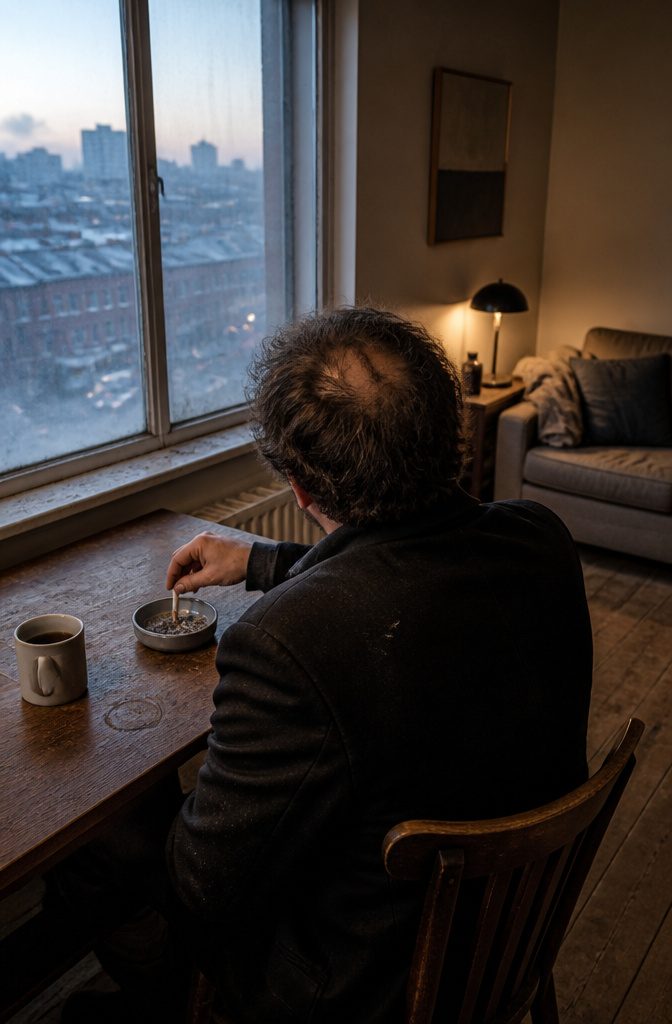
Smoking is linked with inflammation and damage to the follicle, and stopping is the advice for anyone who smokes and is losing hair.
Of the causes in this article, it is one of the few you can change yourself, since genetics and age are off the table. If you smoke and your hair is thinning, quitting is the clearest step on the list.
Pollution is a softer case. Airborne pollutants may produce free radicals and oxidative stress, and over time that may damage follicles.
I would read "may" literally: it describes a plausible slow pressure on the scalp, not a proven reason for the hair in your brush this week.
For sudden or heavy shedding, I would look at other causes before blaming city air.
Hair-Pulling Disorder
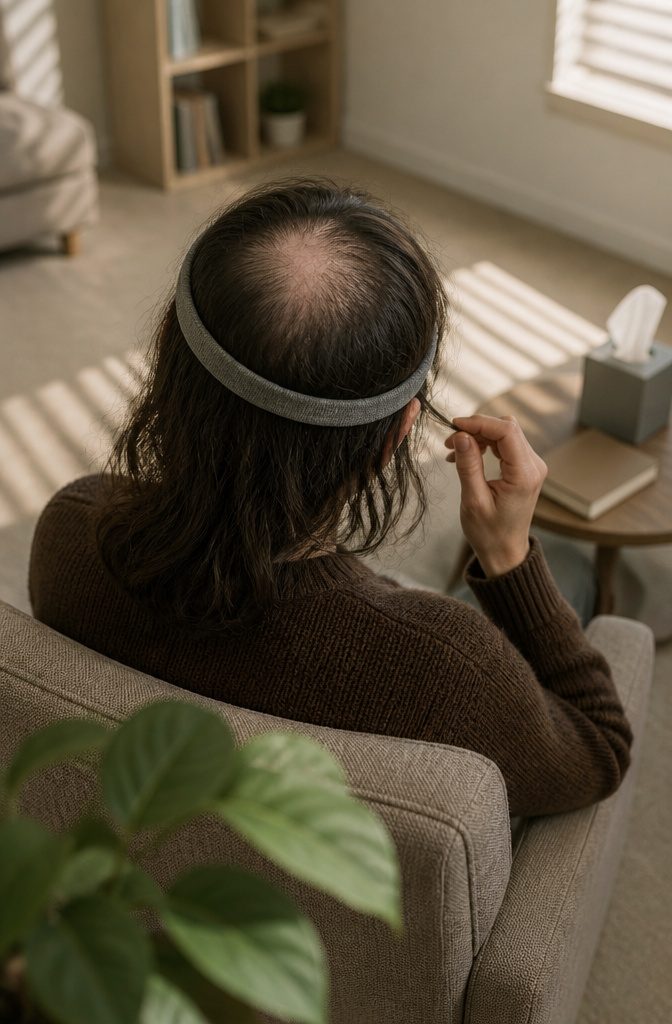
Trichotillomania, also called hair-pulling disorder, is a mental health condition in which a person feels driven to pull or twist out their hair, usually from the scalp.
It is a recognized condition, not a bad habit or a lack of willpower, which is why "just stop" rarely works. The urge can continue even after bald patches show.
Eyelashes and eyebrows can be pulled too, so thin brows or missing lashes next to scalp patches are worth mentioning.
I’d bring that to a doctor or mental health professional rather than treating it as a styling problem. Hiding patches with a part or a headband is fine for a day, but it doesn’t address the cause.
Normal Shedding Versus Real Loss
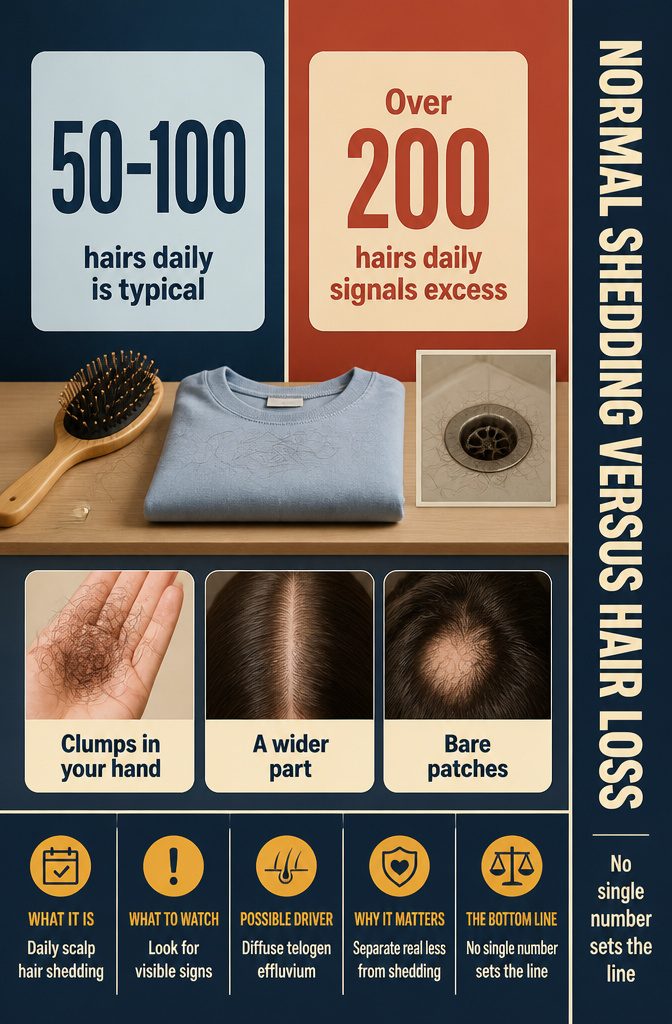
Most people lose 50 to 100 scalp hairs a day, and that’s what collects in your brush or shower drain. Harvard Health describes the signs of too much shedding well:
We normally lose approximately 50 to 100 scalp hairs each day. If more than this is falling out, you may find unusually large amounts of hair in brushes, on clothing, and in the drains of sinks and tubs.
Diffuse telogen effluvium can push daily loss past 200, but nobody counts strands at home.
I’d watch for clumps in your hand, a wider part or bare patches, since those separate real loss from a heavy shedding spell. No single number draws that line.
Patterns That Point to a Cause
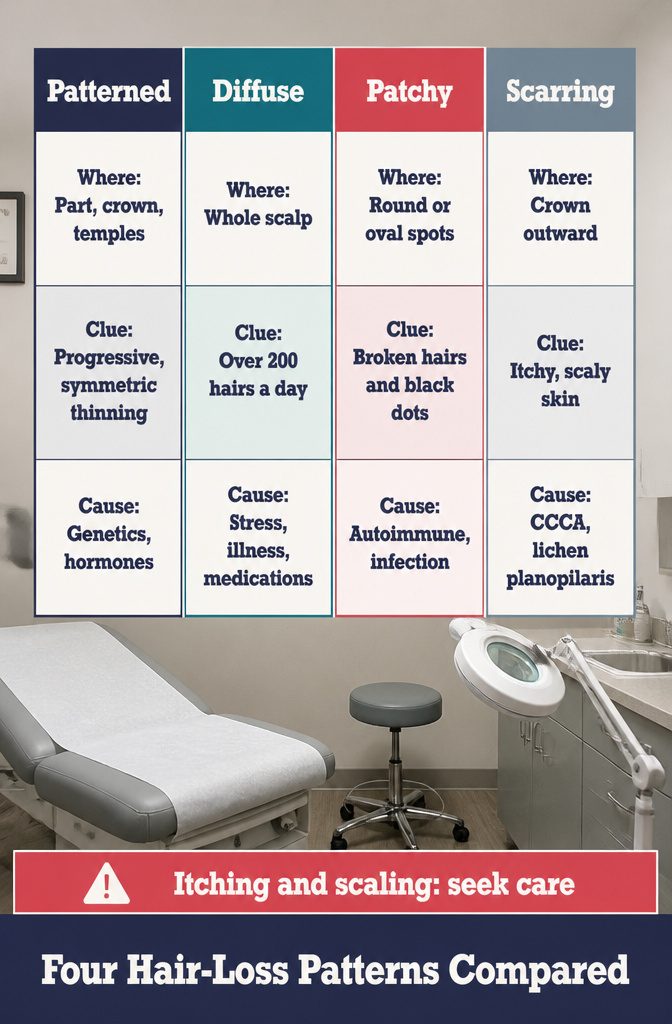
Where hair thins says more than how much falls. Find your pattern below, then check the matching cause section above.
| Pattern | Where | Clue | Likely cause |
|---|---|---|---|
| Patterned | Part, crown, temples | Progressive, symmetric thinning | Genetics, hormones |
| Diffuse | Whole scalp | Over 200 hairs a day | Stress, illness, medications |
| Patchy | Round or oval spots | Broken hairs; scaling with black dots | Autoimmune, scalp infection |
| Scarring | Crown outward | Itchy, scaly skin | CCCA, lichen planopilaris |
Itching and scaling alongside thinning is the combination I would not wait on. Scarring loss destroys follicles, so the hair stays gone, while nonscarring loss leaves follicles that can regrow.
When to See a Doctor
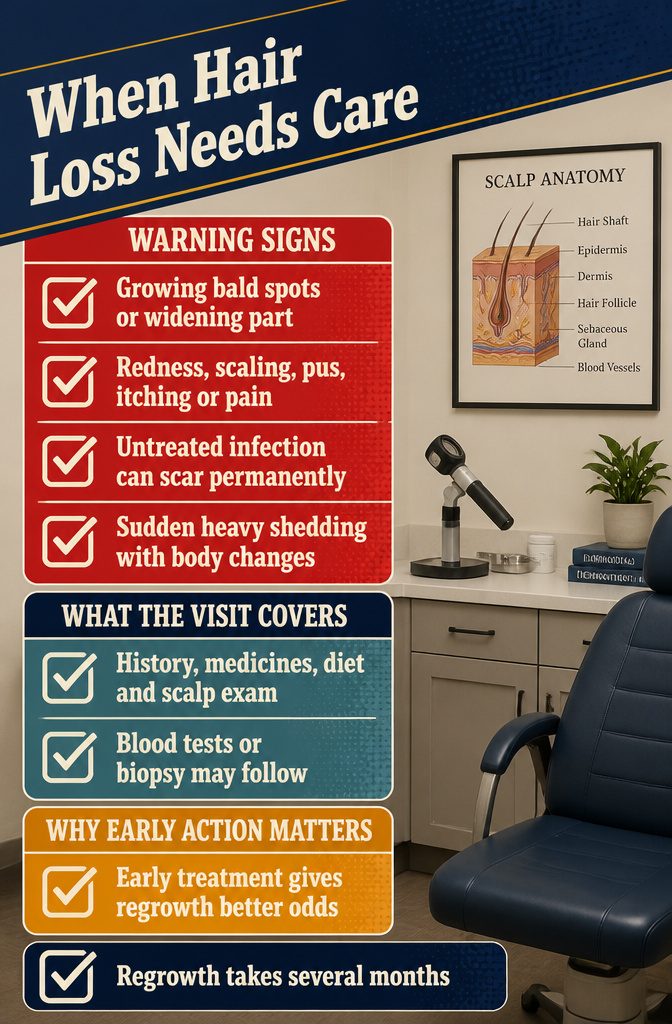
Treatment depends on the cause, so a primary care provider or dermatologist is worth seeing for any of these:
- Bald spots that grow, or a part that keeps widening.
- Redness, scaling, pus bumps, itching or pain on the scalp. Untreated infections can leave permanent scars, so don’t wait on these.
- Sudden heavy shedding, or shedding with skin changes, constant tiredness, feeling cold or unexpected weight loss.
Expect the visit to cover:
- Medical history, medications, diet and styling habits, then a scalp exam.
- Blood tests for thyroid problems, iron deficiency, sex-hormone imbalance or lupus.
- A hair sample for suspected fungus, or a biopsy when the cause is still unclear.
Even when treatment works, regrowth takes several months. Starting early gives it the best odds.
Frequently Asked Questions
What are the main causes of hair fall and alopecia?
Genetics, hormonal changes, stress, illness, poor nutrition, medications and styling damage are the main causes.
Alopecia areata is a specific autoimmune type, where the immune system attacks hair follicles and leaves round bare patches. A dermatologist can narrow down which cause applies to you.
What typically causes male baldness?
Hereditary androgenetic alopecia is the usual cause.
It comes from an inherited tendency, male hormones and age working together, and it can start in the teens. It shows up as a receding hairline at the temples or thinning at the crown.
What can cause hair loss in women?
Hormonal shifts are the most common triggers: pregnancy, menopause, thyroid conditions, PCOS, and starting or stopping hormonal birth control.
Stress, nutritional deficiencies and other health conditions can also play a part. Female-pattern loss typically appears as a widening part rather than bald patches, while shedding after pregnancy is temporary and usually stops by the baby’s first birthday.
How long do hair-loss medications take to work?
Expect several months.
Minoxidil, the over-the-counter option, takes 4 to 8 months to produce new growth, and the gains go away if you stop using it. Other treatments run on a similar timeline, depending on the cause.
What vitamin am I lacking if my hair is falling out?
Low iron, zinc, vitamin D and vitamin B2 have all been linked to hair loss, and so has too little protein.
Ask for a blood test before buying supplements, because too much selenium, vitamin A or vitamin E can make shedding worse. Supplements also fix a deficiency without always bringing the hair back.
How do I make my hair stop falling out?
It depends on the cause, so identifying that comes first. Some causes are within your control: quitting smoking, alternating tight and loose hairstyles, and treating a deficiency or scalp infection.
Shedding after stress, illness or childbirth often settles by itself within months, but bald spots, a scalp that is red, scaly or painful, or sudden heavy shedding call for a doctor visit.
Is losing 700 hairs a day normal?
No. Most people lose 50 to 100 scalp hairs a day, and even diffuse telogen effluvium is defined as losing more than 200.
A loss anywhere near 700 would be well past both figures, so see a primary care provider or dermatologist for a scalp exam and blood tests.
Since nobody counts strands at home, watch for clumps in your hand, a wider part or bare patches.