An occasional damp night is fine; a nightly one is what raises the odds of breakage, because wet strands are described as twice as likely to break, fray and split.
Fine, aging or heat-damaged hair goes first. If you can’t dry it, blot with a microfiber towel until it’s damp, not dripping.
Is Sleeping With Wet Hair Bad?
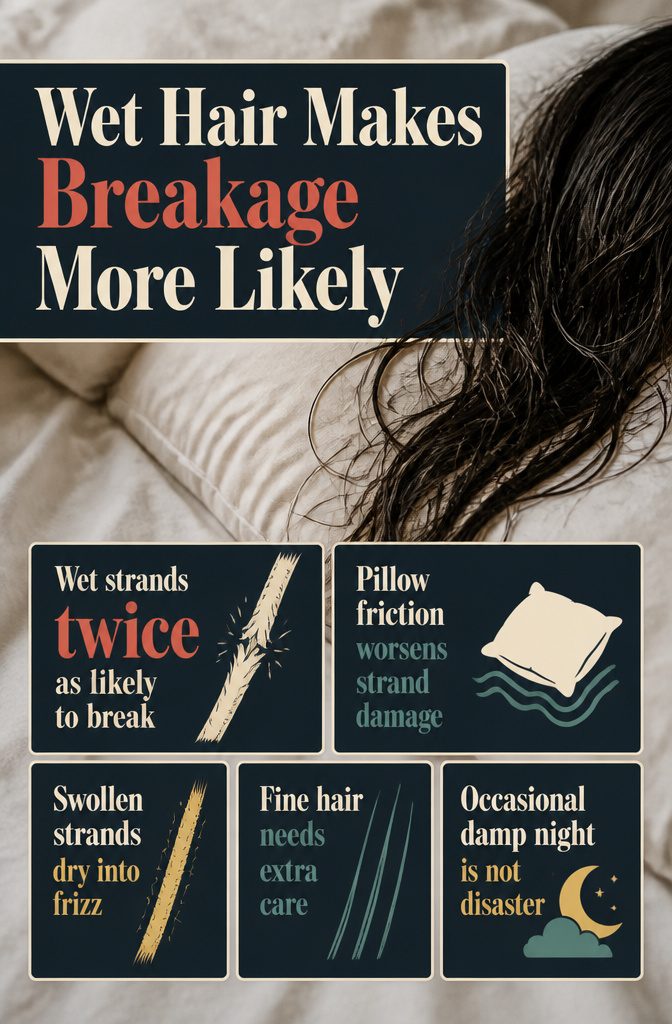
Soaking-wet hair raises the risk of breakage, frizz and scalp trouble, so drier is better, but an occasional damp night is not a disaster. Damage builds when sleeping with wet hair becomes a nightly habit.
Wet strands are weaker: they’re described as twice as likely to break, fray and split.
A wet cuticle is stretchier and more brittle, and every toss and turn drags it against the pillow. By morning you can wake up to tangles, extra split ends and frizz, because swollen strands separate as the moisture evaporates.
Fine, delicate hair needs the most care. I’d treat a rare damp night as fine and a nightly one as the thing to fix.
Scalp and Pillow Problems
A damp scalp pressed into a pillow all night gets blamed for fungal or bacterial growth, dandruff and irritation.
The evidence is thin. Most of it is reasoning about warm, moist conditions rather than studies of people who go to bed with wet hair, so I wouldn’t call any of these problems proven.
Silk and satin don’t get a free pass either. There isn’t enough clinical evidence that they cut the bacteria transferred to your scalp.
The cheap, low-risk move is washing your pillowcase at least once a week. If flaking or itching keeps showing up after damp nights, look for a shampoo with zinc pyrithione, an antifungal ingredient.
Hair Type and Frequency
Fine, thin, aging and heat-damaged hair breaks first, so I’d keep those heads off the pillow wet. An occasional wet night is a different thing from a nightly habit, which is what raises the odds of breakage.
Curly hair can take as many as 24 hours to dry, so wet-to-bed is common.
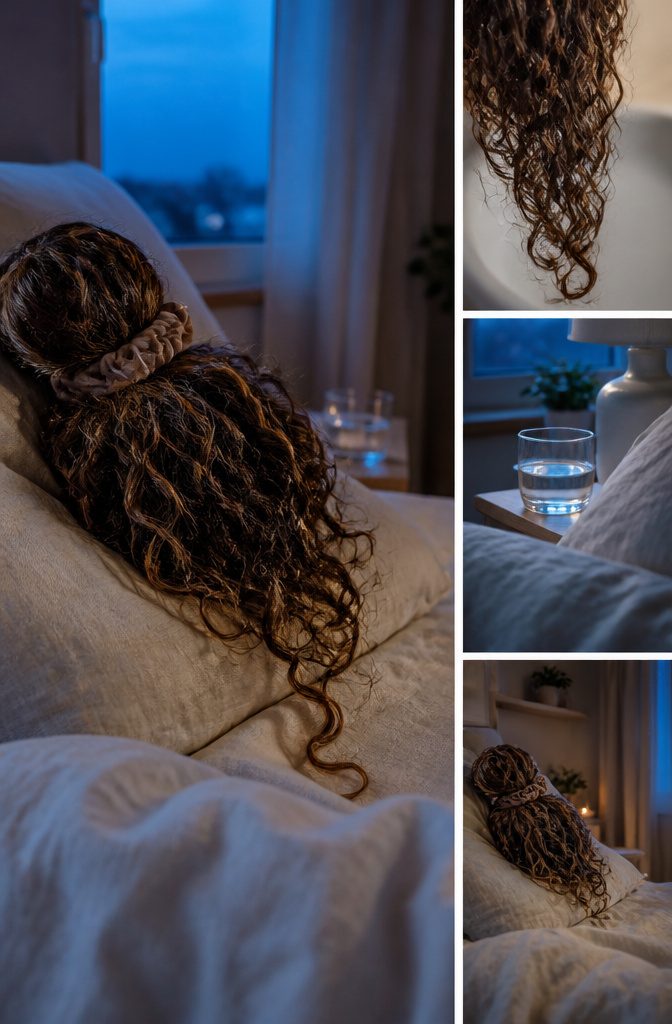
Wavy or curly hair does best with curl cream from roots to ends and a loose pineapple ponytail held by a scrunchie. Highly textured hair does well in two loose twists or under a silk scarf.
Waking up greasy is usually flattening: wet hair lies against the head and looks thin, which reads as oily. Sebum left on the strands can add to it.
If You Must Sleep on It
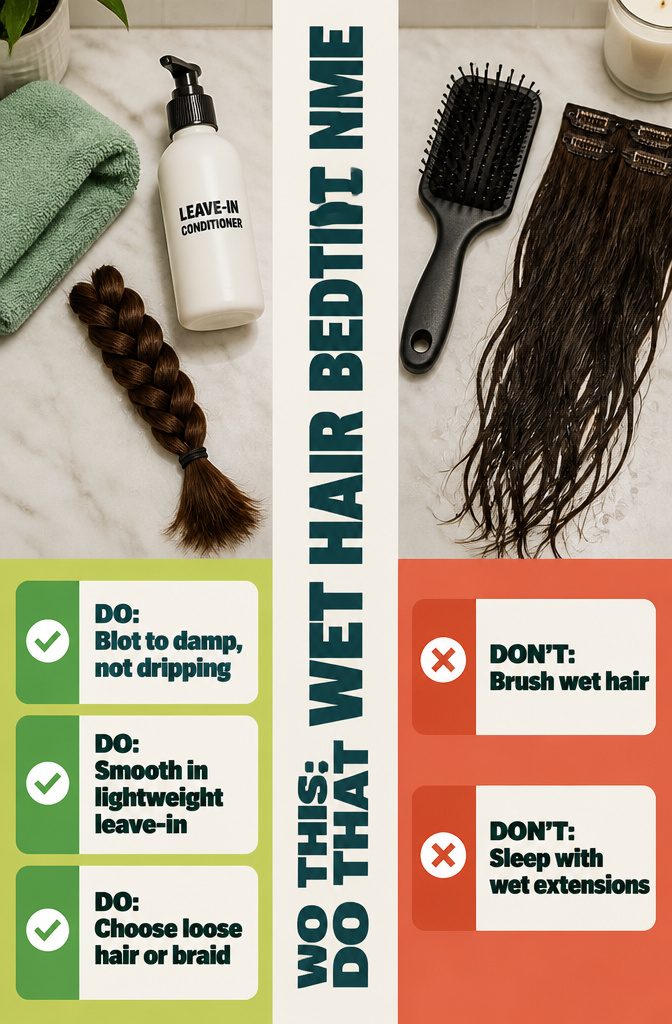
When drying is off the table, a few moves limit the damage:
- Blot with a microfiber towel until hair is damp, not dripping.
- Smooth a lightweight leave-in conditioner through the strands.
- Leave the brush alone, because brushing wet hair adds friction and frizz.
- Loose hair versus a loose braid or bun is a genuine split. A braid cuts friction, but gathering hair presses the cuticles together, which can slow evaporation and leave strands drier. Loose hair springs back to its natural shape. I’d choose by your bigger worry: friction or trapped moisture.
- Never sleep with wet extensions. They tangle and mat, often past saving, so shower earlier in the evening and let them dry fully.
Dry It Before Bed
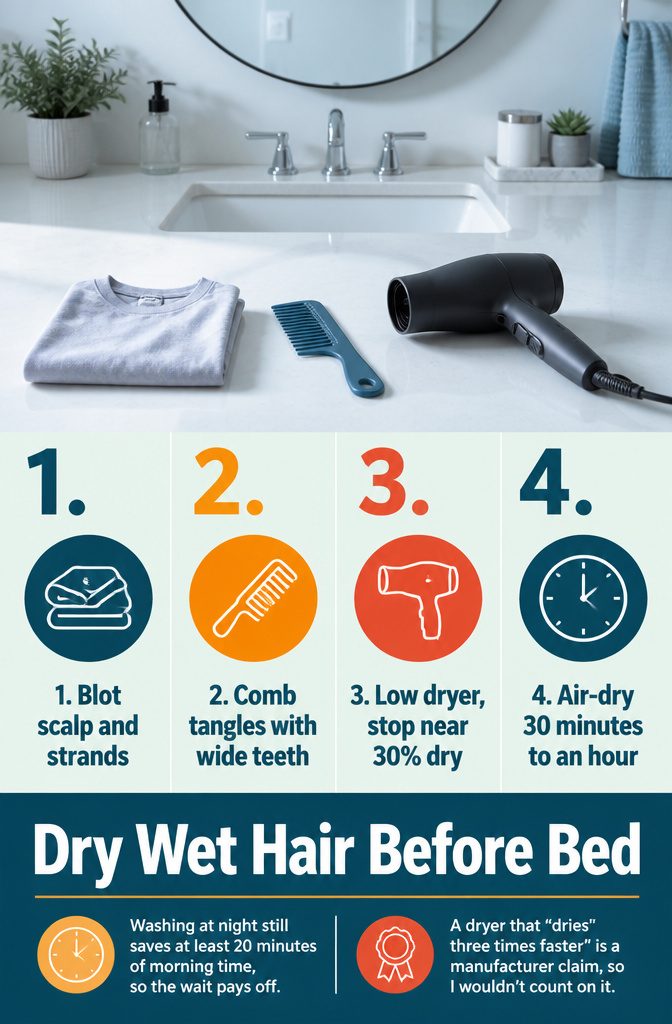
- Blot with a microfiber towel or a soft tee, scalp included. Rough terry towels create friction that damages strands.
- Work out tangles with a wide-tooth comb, which also pulls water out of the hair.
- Take the nozzle off the blow-dryer and use a low setting. I’d stop at roughly 30 percent of the way dry, since damp hair beats soaking-wet hair.
- Skipping heat? Let it air-dry for 30 minutes to an hour, depending on length and thickness.
Washing at night still saves at least 20 minutes of morning time, so the wait pays off. A dryer that "dries three times faster" is a manufacturer claim, so I wouldn’t count on it.
Pillowcases and Scarves
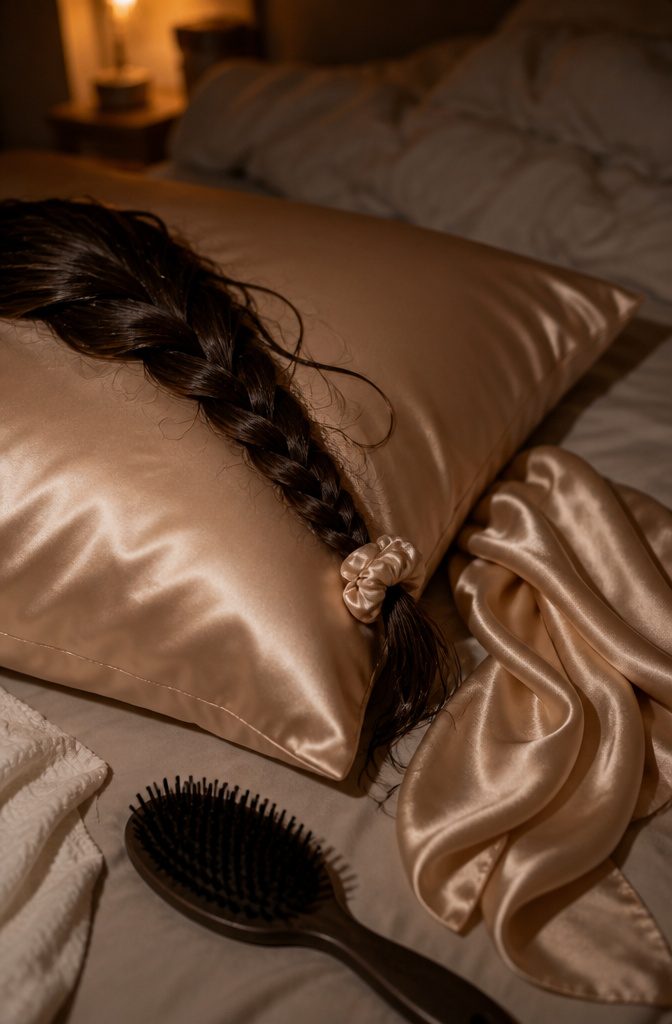
Cotton is rough and porous, so it pulls at wet strands and soaks up moisture all night.
A silk or satin pillowcase lets hair slide as you toss and turn, which cuts tugging, tangling, breakage and frizz. Satin is the softer of the two, and either beats cotton or linen.
A bonnet or scarf does the same job if you move a lot. A towel is not a substitute: wrapped overnight, it snarls hair.
Advice splits on whether hair goes in loose or loosely tied.
Some say let it lie free on the silk. Others say a loose braid or a messy bun held with a satin scrunchie.
I’d go with the loose braid or bun, since free hair still shifts and tangles. The scalp caveat from earlier applies under a bonnet too.
Morning Hair Styling
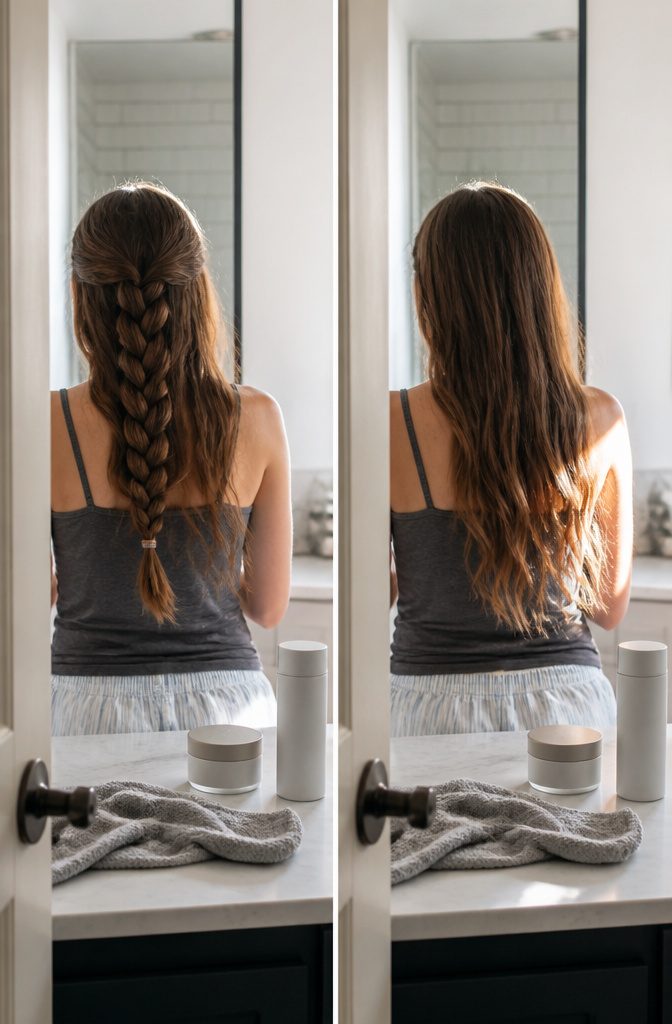
A wet night tends to leave kinks, frizz, flyaways and a flat crown, and what you do next depends on the direction you want.
For waves on straight hair, I’d go with the braid: work curling mousse from roots to ends, French braid, and secure the tie about 2 inches from the ends so the bend looks natural.
Undo it in the morning, rake through with your fingers, and rub dry shampoo into the roots for lift.
Curly hair needs product on it before bed. Davroe Curl Crème Definer keeps curls from going flat, and Aluram Leave-In Conditioner detangles and strengthens.
On textured hair, Number 4 Texture Styling Crème works as a base for a twist-out. All three are examples, not endorsements.
Colds and Headaches
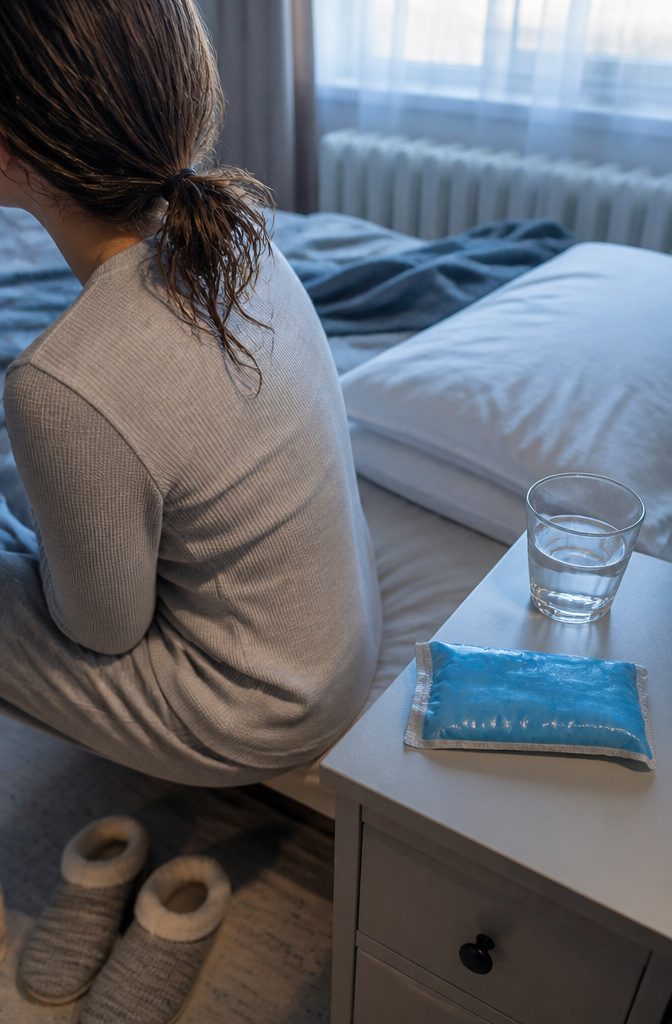
Wet hair doesn’t give you a cold. There is no evidence that it does, even in a chilly bedroom.
Headaches are more disputed. The one study linking wet hair to a sinus headache involved hypothermia conditions, which are nothing like a cool bedroom, and no one has shown that ordinary sleep on damp hair causes one.
The opposing argument is mechanical: you twist your head to dodge the wet patch, and the strained neck and head muscles can bring on a tension headache or migraine. I can’t call that settled either way.
If you already get migraines, I’d dry your hair first, since wet hair may make them worse. Tying it up damp to wake up with waves is the one habit that could plausibly cause a headache.
Frequently Asked Questions
Is sleeping with wet hair bad?
Not always. An occasional damp night is fine, but doing it every night raises the odds of breakage, because wet strands are weaker and drag against the pillow.
Fine, thin, aging and heat-damaged hair breaks first, so those types should skip it. Wet hair does not give you a cold.
How can I sleep with wet hair without causing much damage?
Blot with a microfiber towel until your hair is damp rather than dripping, then smooth in a lightweight leave-in conditioner. Leave the brush alone, since brushing wet hair adds friction and frizz.
A silk or satin pillowcase lets hair slide as you move. Never go to bed with wet extensions, because they tangle and mat, often past saving.
How should I dry my hair before bed?
Blot with a microfiber towel or soft tee, scalp included, then work out tangles with a wide-tooth comb.
Take the nozzle off the blow-dryer, use a low setting, and stop at roughly 30 percent of the way dry, since damp hair beats soaking-wet hair.
Skipping heat means 30 minutes to an hour of air-drying, depending on length and thickness. Claims that a dryer works three times faster come from manufacturers, so don’t plan around them.
Does sleeping with wet hair cause a headache?
Probably not. No one has shown that ordinary sleep on damp hair causes one, and the single study linking wet hair to a sinus headache involved hypothermia conditions.
The more plausible culprit is tying hair up damp to wake up with waves, or twisting your head to dodge the wet patch and straining your neck. If you already get migraines, dry your hair first.
Does sleeping with wet hair make it greasy?
Usually it only looks greasy.
Wet hair lies flat against your head and looks thin, and thin, flattened hair reads as oily. Sebum left on the strands can add to the effect.
Why does my hair look better when I sleep with it wet?
Often it comes down to the shape the hair dries in. Curly hair can take up to 24 hours to dry, so going to bed wet is common, and curl cream from roots to ends helps it set.
On straight hair, a braid made with curling mousse dries into waves. Without that kind of prep, a wet night tends to leave kinks, frizz and a flat crown.
What is the best hairstyle for sleeping with wet hair?
A loose braid or bun held with a satin scrunchie cuts friction, though advice splits: gathered hair can slow evaporation and leave strands drier, while loose hair springs back to its natural shape.
Wavy or curly hair does well in a loose pineapple ponytail. Highly textured hair does well in two loose twists or under a silk scarf.