These looks run from a shag you rough-dry and leave alone to a bouffant that takes hot rollers, hairspray and extra time in the morning.
Your natural texture decides where you land: tight curls and coils suit the Afro, looser curls suit the voluminous curls look, and straight hair takes a center part that hangs smooth and even.
1. Shag Haircut
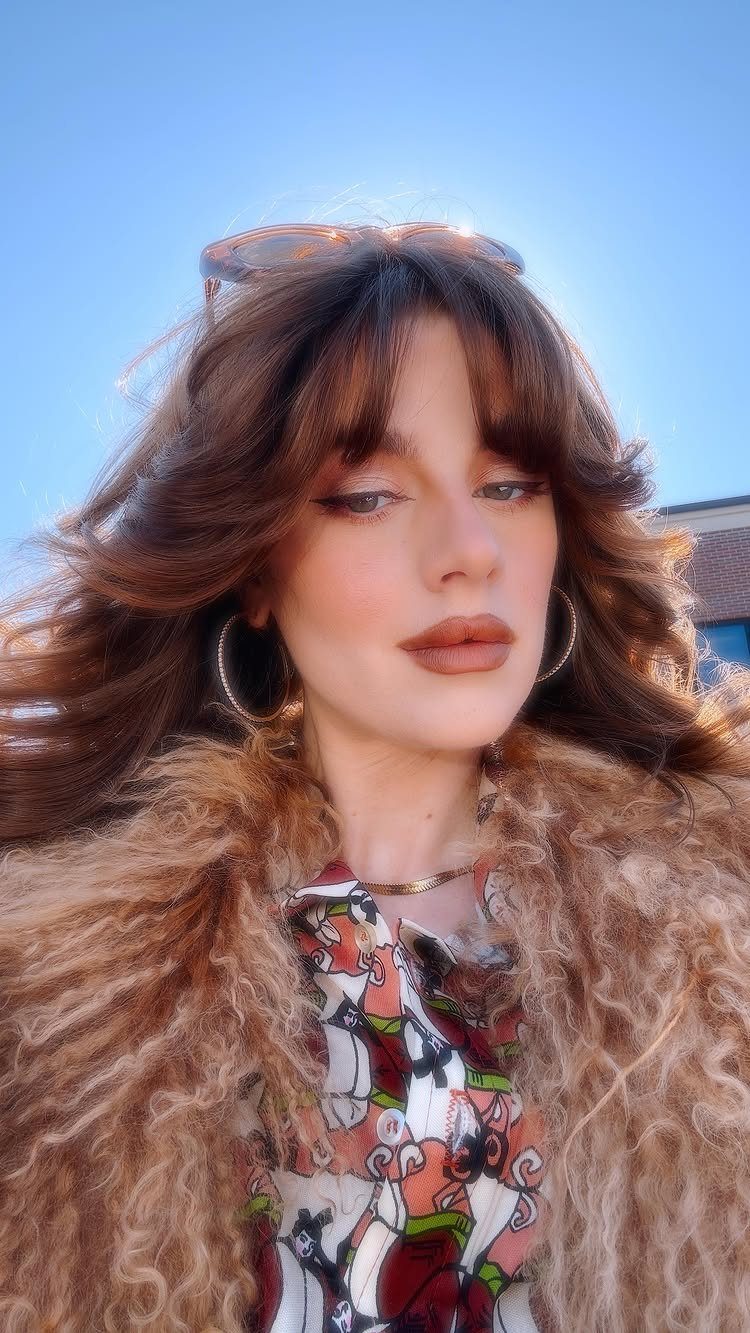
Choppy layers and a shaggy fringe give this cut its deliberately undone shape, and it looks best when the ends aren’t too neat. Ask for texture and shorter pieces around the face rather than a blunt line.
A trim every quarter is what keeps a shag looking intentional. The creator of this cut said quarterly trims left her hair looking and feeling the healthiest it had ever been, which is a good argument for booking them ahead.
For styling at home, rough-dry and leave it alone.
2. Afro
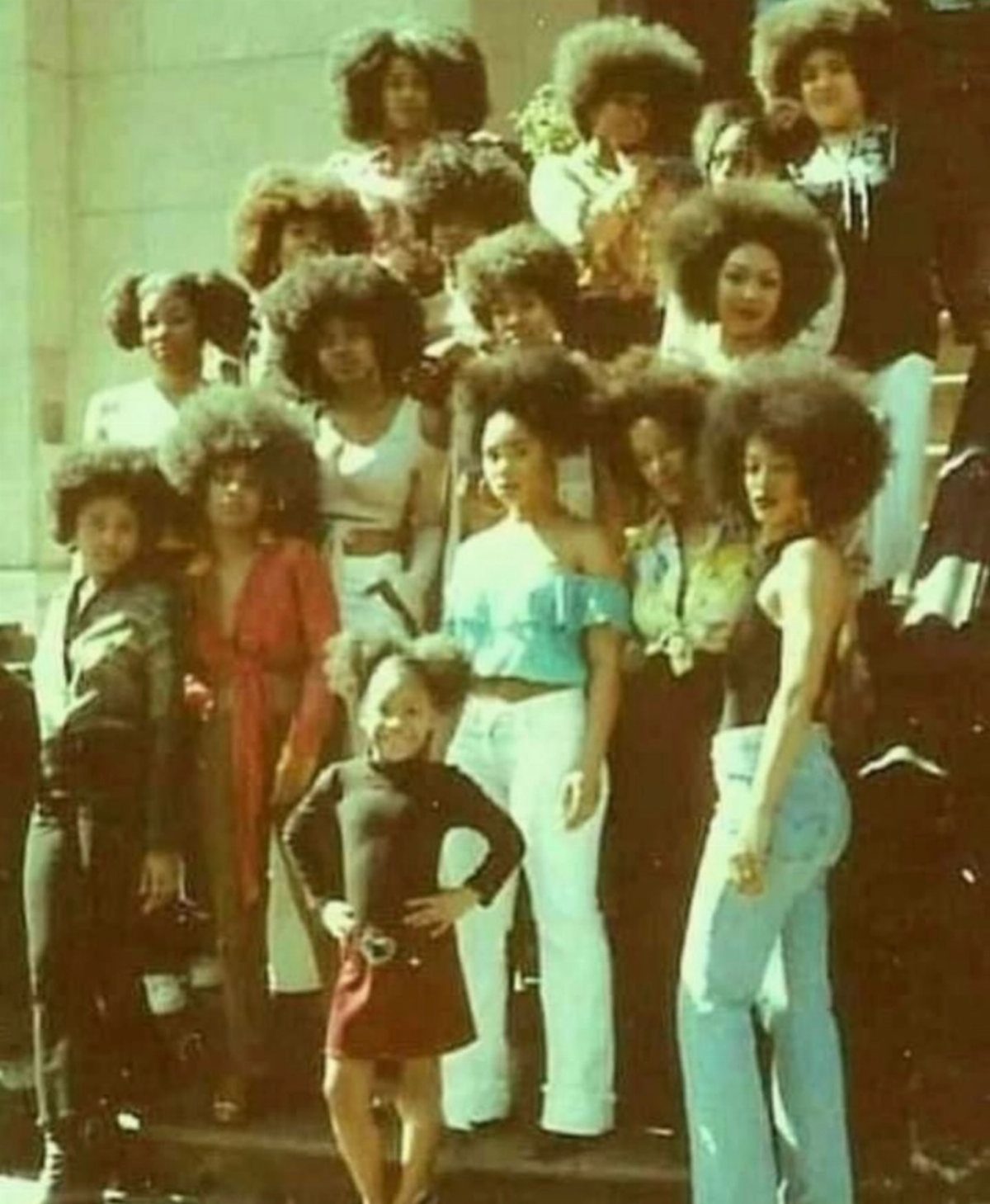
Round, full and shaped from every side, the Afro puts natural curls and coils on display without asking them to be anything else.
I like it best when the outline is even all the way around, so the volume reads as a deliberate shape.
Fluff it with a pick or wide-tooth comb instead of a fine brush, which can pull the curl pattern apart.
Pair it with bold color in your clothes and the whole look stays true to the decade.
3. Voluminous Curls
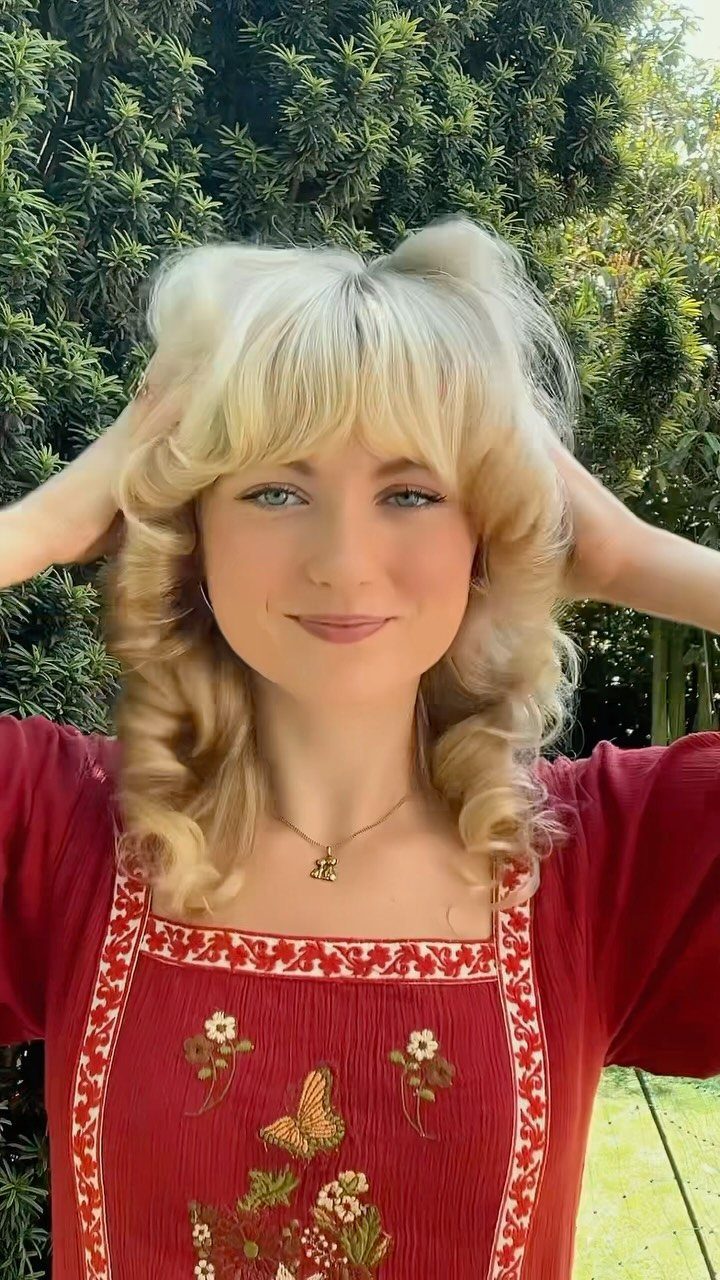
Big curls, worn with real height and bounce, are the point here. Bangs help the proportions: with this much volume through the crown and sides, a fringe keeps the face from getting lost in all that hair.
To get that 1970s fullness at home, set the hair on rollers or curl it with an iron, then brush through the curls slowly until the separate ringlets blur into a single big, soft shape.
This one asks for time in the morning, so I’d save it for days when the hair is the main event.
4. Scarf Updo
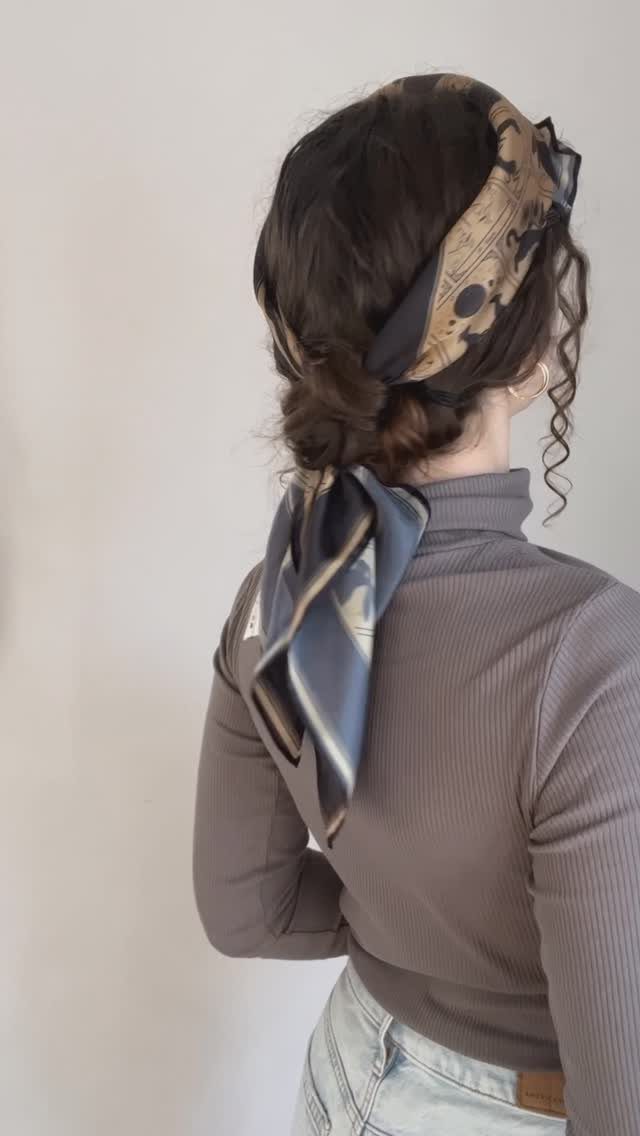
Tying a printed scarf into a low pinned updo is the easiest way I know to dress up a bad hair day.
Pin the hair first, then wrap the scarf around the head and knot it so the pattern shows against the hair.
Curly or textured hair holds a low updo well, since the curl gives the pins something to grip.
Pick a scarf with a pattern you love, because it becomes the focal point. A neutral outfit lets it stand out.
5. Curtain Bangs
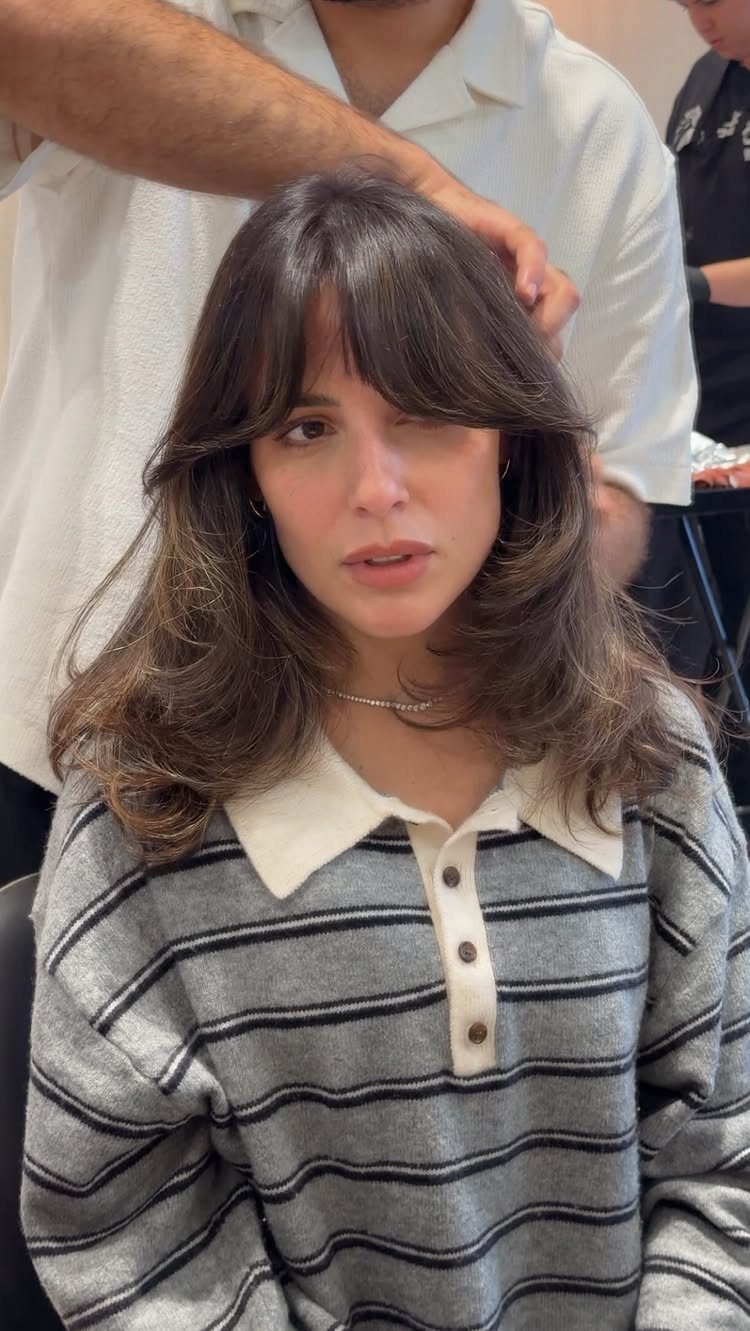
Parted in the center, curtain bangs sweep out to both sides and frame the face, and they blend into long layers better than most fringes do. Ask your stylist for them long enough to tuck behind the ears.
Because they grow out into face-framing layers, they’re forgiving if you change your mind.
Dry each side over a round brush with the blow-dryer aimed down and out, and the fringe will bend away from the center part. Do that for a couple of minutes and the shape holds.
6. Mullet
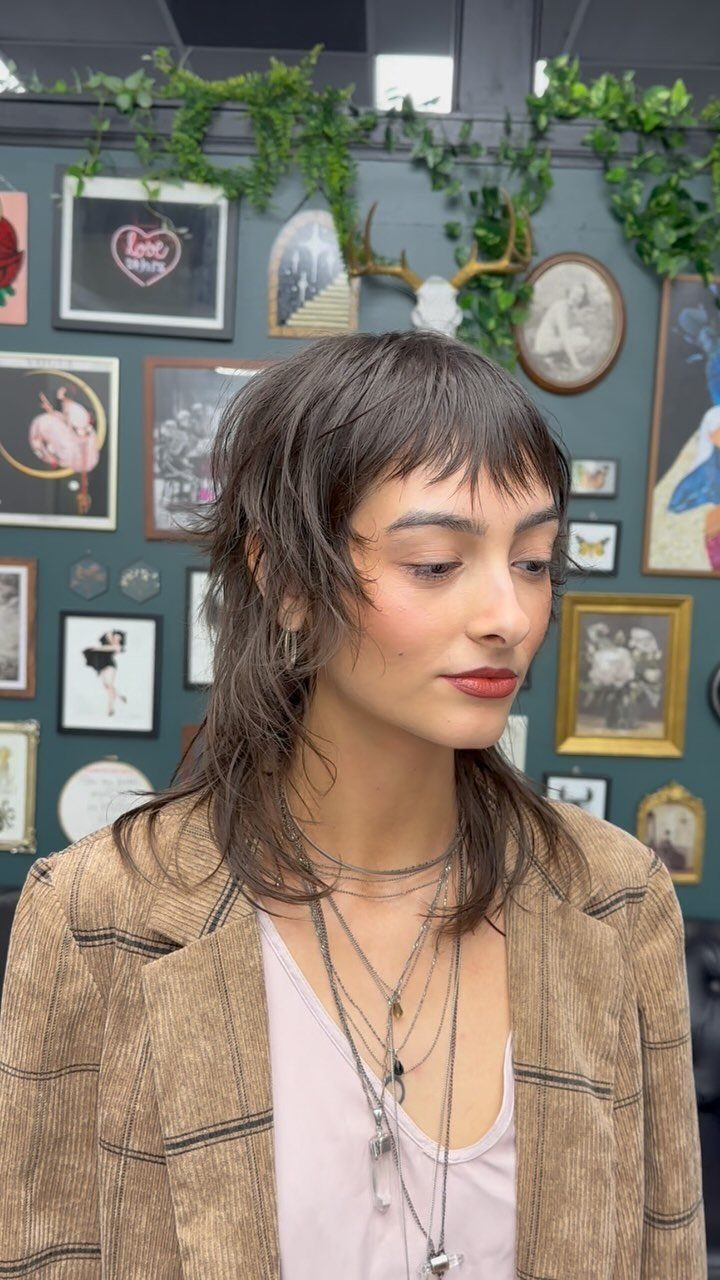
Short, choppy layers on top that run into longer hair at the back: that’s the mullet, and the best versions have texture instead of a hard edge. A V-shaped back with an hourglass silhouette looks the most current to me.
Its creator liked the textured V bangs on this one, and they’re worth requesting if you want the front to feel soft.
Bring a photo to the salon, since "mullet" can mean very different things to different stylists.
7. Modern Rounded Layers
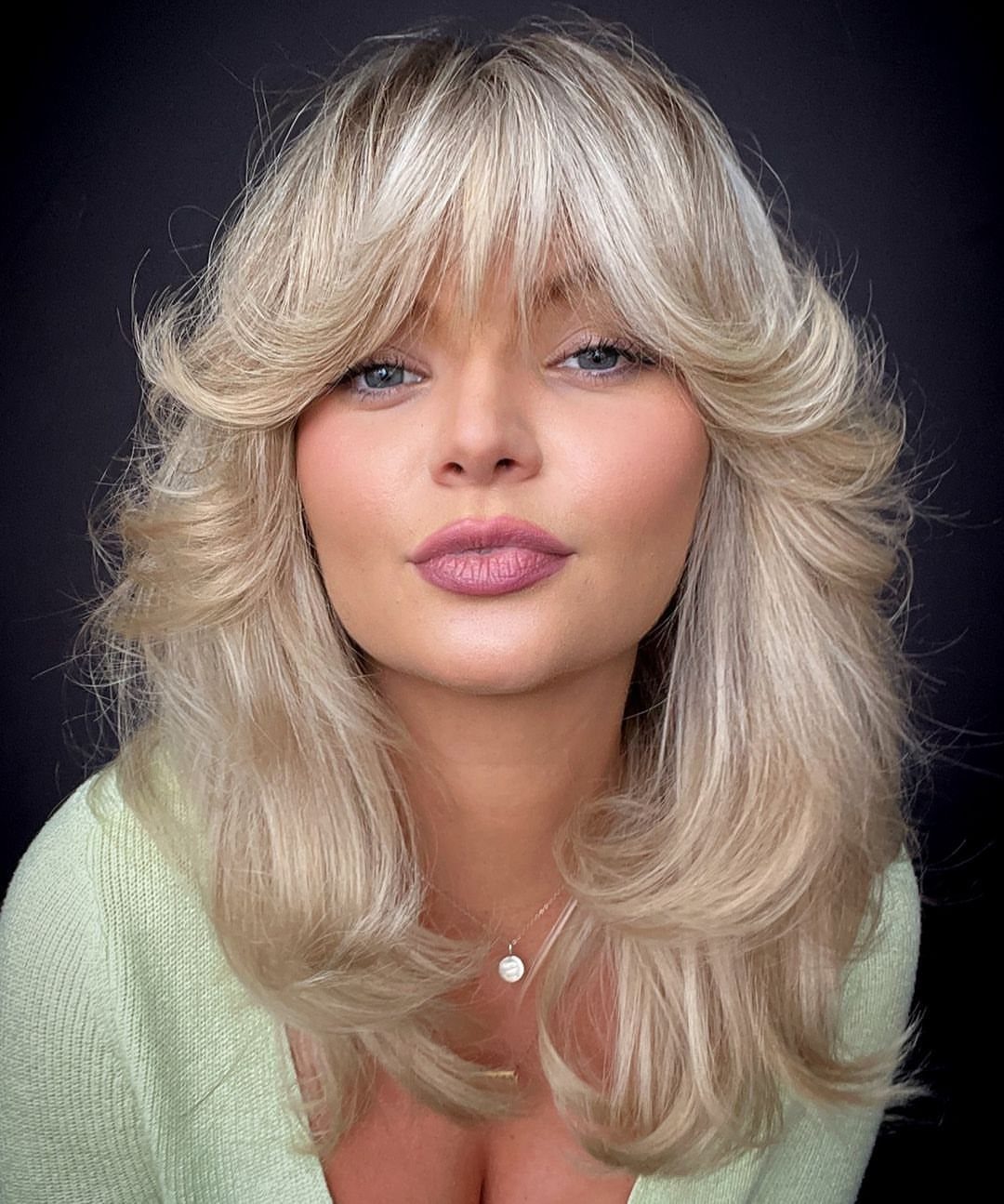
A rounded shape through the layers is what makes this cut feel current. Ask your stylist for layers that curve around the face, with sweeping bangs that blend into them.
Long blonde hair keeps its length here and gains movement through the sides. Stylists read the word "layers" in very different ways, so a saved photo on your phone will say more at the appointment than any description.
8. Wispy Bangs
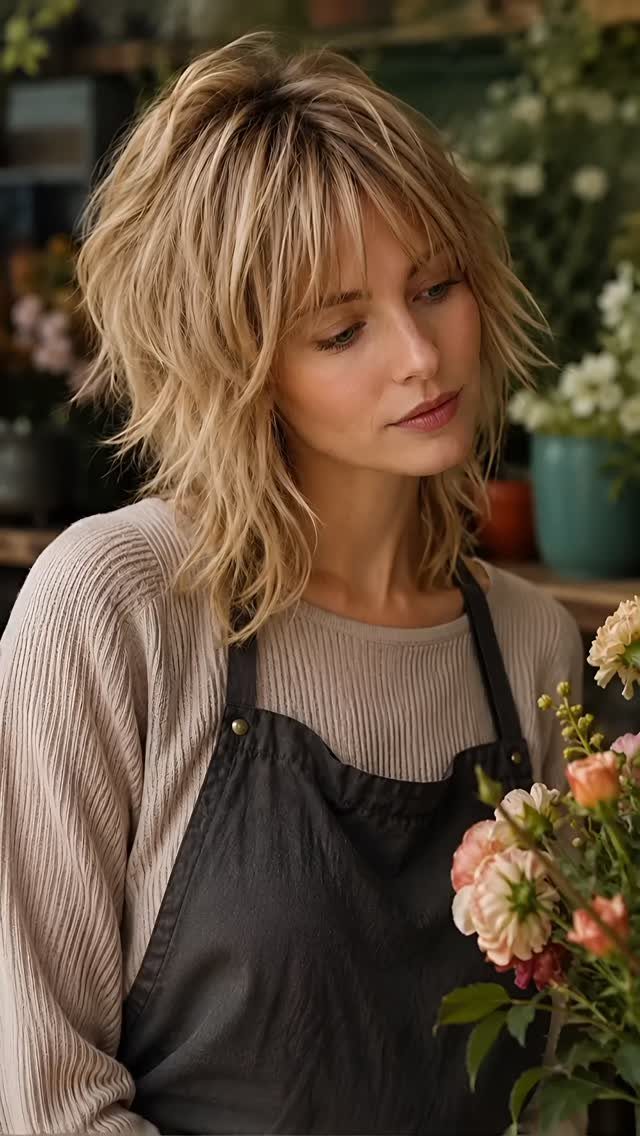
Thin, see-through bangs are the gentler way into a fringe. Ask for them wispy, with the hair left light at the front instead of a dense line across the forehead.
They sit well on a tousled, layered cut, so a rough, undone finish works with them. If a full fringe makes you nervous, this is the version I’d try first.
9. Curly Bangs
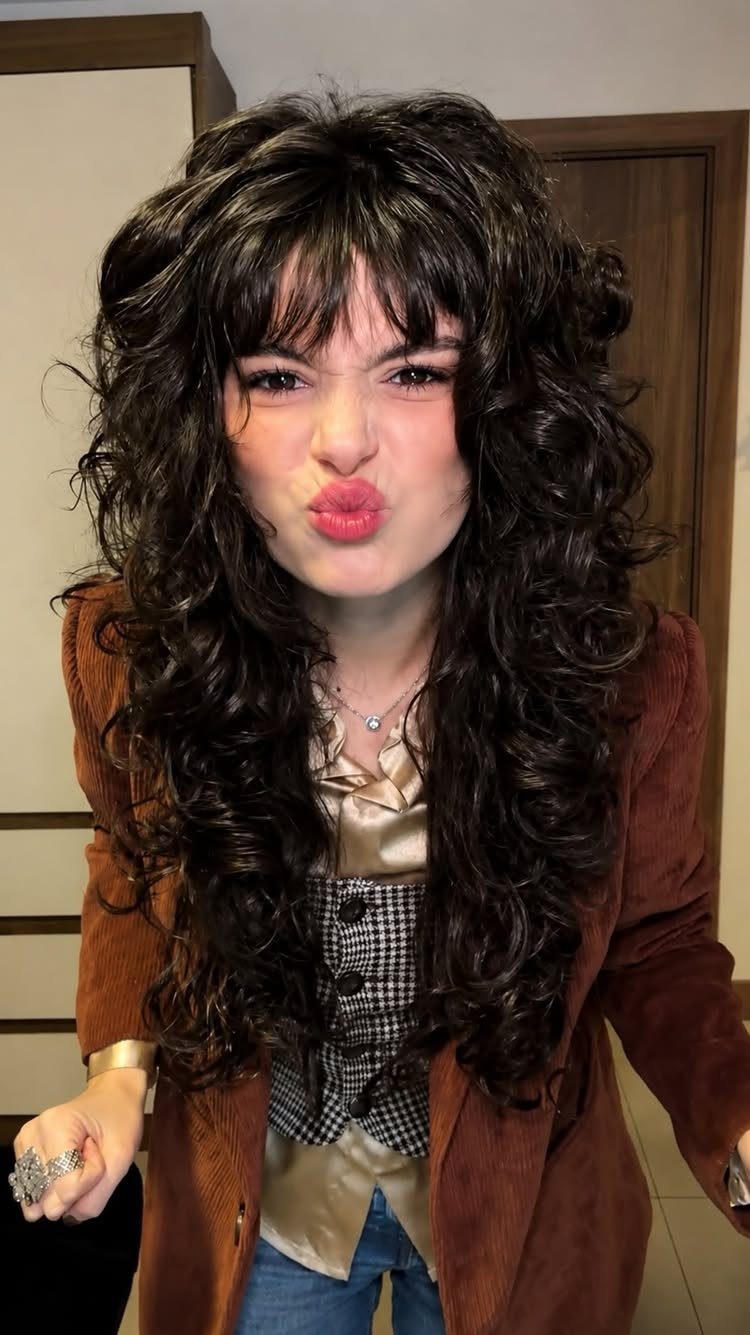
Leave the curl in your bangs and they become part of the overall shape instead of a straight piece sitting on top of it. Find a stylist who is comfortable cutting curly hair.
I’d ask for the fringe to be cut dry, so you can see how far it springs up before the length is final. Keep it long enough to blend into the rest of the curls.
10. Centre Part
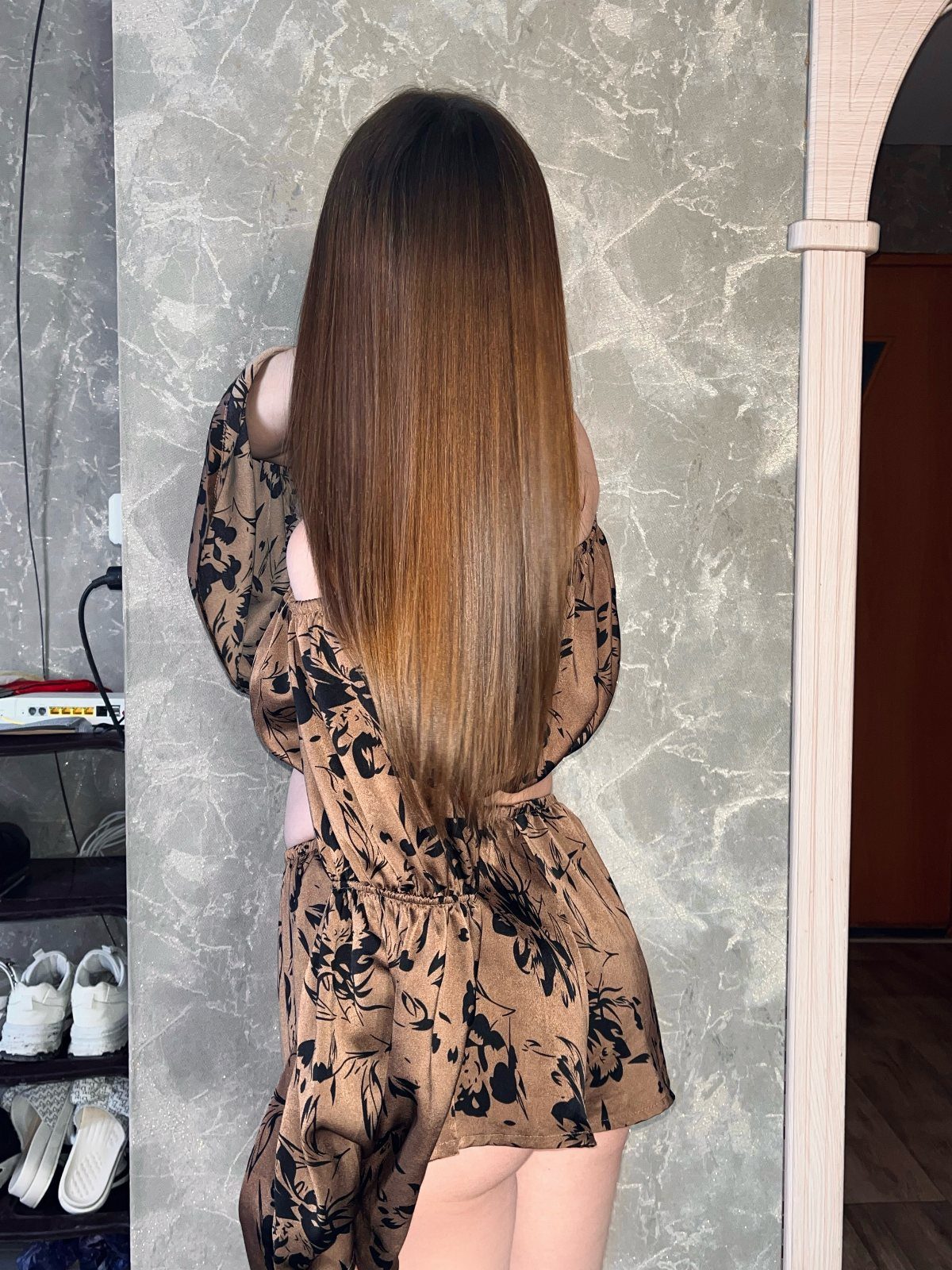
Straight down the middle, with lengths cut almost level, gives hair this smooth, even fall. Ask for very little graduation so the ends hang full and match on both sides.
A fine-tooth comb draws a clean part. Smooth the lengths with a blow-dryer or flat iron, depending on how your hair behaves.
This is the simplest look on the list to ask for.
11. Feathered Hair
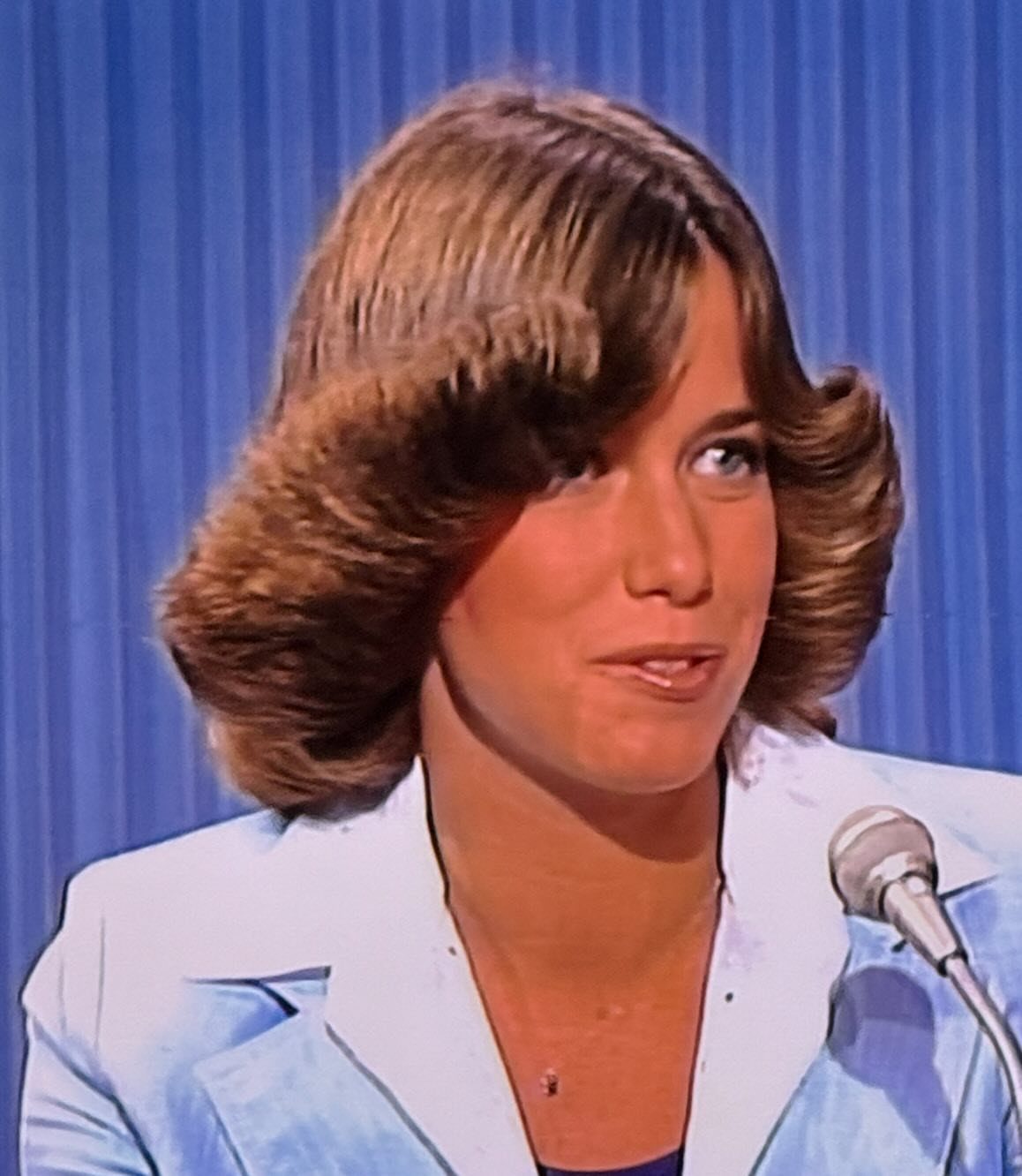
Airy layers that flick away from the face, plus a fringe swept to one side: that’s feathered hair, and brown shoulder-length hair shows it off well.
Dry it with a round brush, lifting at the roots and turning the ends away from the face. Rollers work too if you have the time.
Ask your stylist for feathered layers and a side-swept fringe by name, and bring a photo.
12. Long Layered Waves
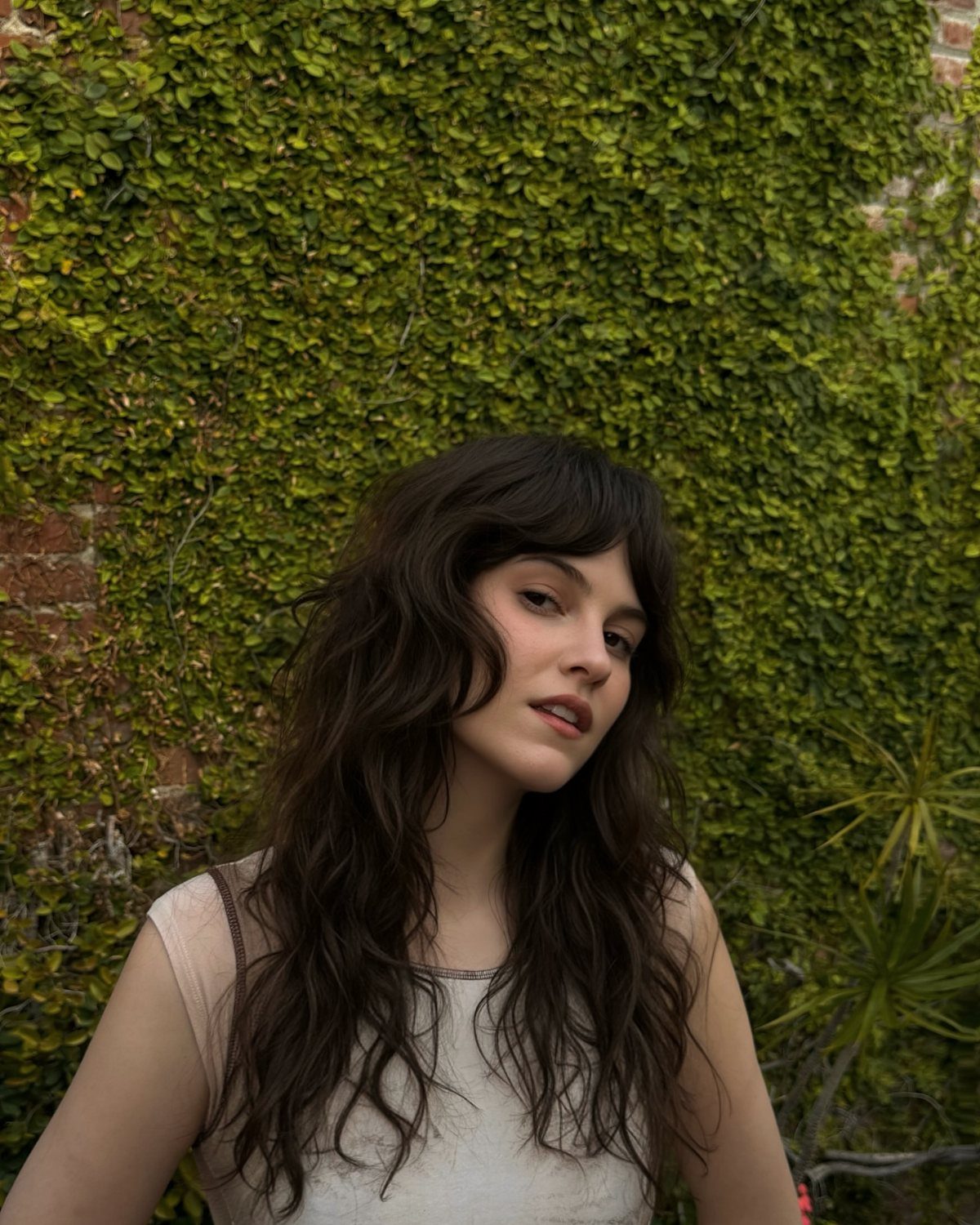
Loose waves falling over the shoulders, with bangs across the front, give long dark hair a relaxed, soft finish. Wave it with an iron or wand, then loosen the shapes with your fingers instead of a brush.
I like this one for days when you want some polish without a tight, set look.
13. Bouffant Updo
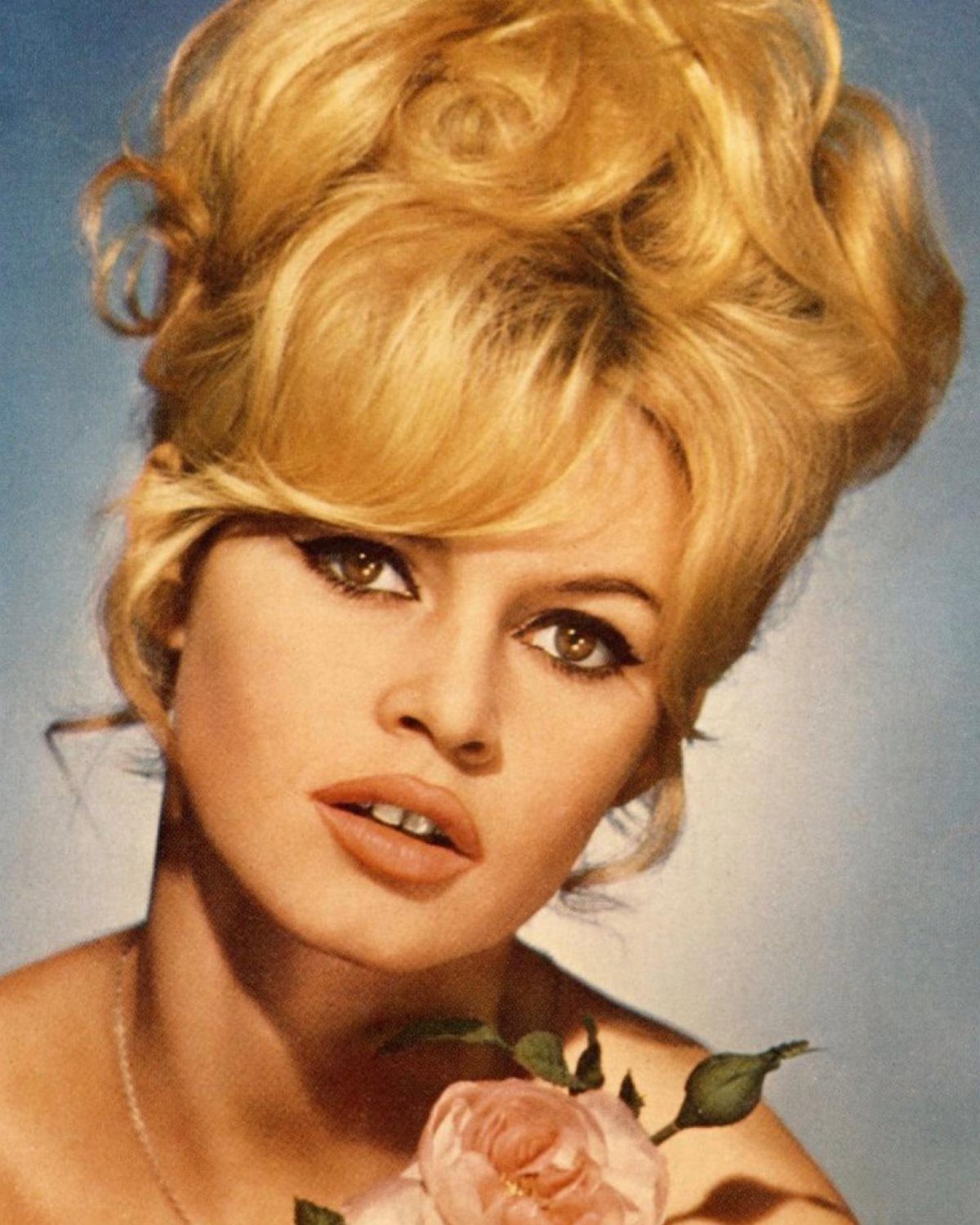
A tall, rounded crown with curled lengths swept up and pinned is what makes a bouffant a bouffant. The height sits on top of the head, so the shape reads as sculpted instead of piled on.
Use hot rollers or an iron to curl the hair first, then lift the crown and pin it where you want the peak. Hairspray locks the shape, and I’d go lighter at the front so the curls still look soft.
Allow extra time in the morning. This is a look for an evening out or a day when you want the hair to do the talking.
At-home Styling and Upkeep
Mousse on wet hair adds lift when layers fall flat.
Apply a heat protectant first, work the mousse through before blow-drying, and finish with hairspray to hold the shape. Keep products lightweight wherever you want volume.
Flipped layers call for a different product: a shine serum or smoothing balm run over the ends keeps the flip neat and glossy.
Curls need hydration to define.
For curls, shampoo and condition with curl-friendly formulas, then blot the water out with a microfiber towel or an old cotton tee instead of rubbing, and work a curl cream through while the hair is still damp.
For a tall, full shape, set the hair in 4 jumbo braids or twists and let it dry completely.
On thick hair that can take a few hours, so I’d start early. Pick the hair out until it reaches the height you want, then lock it in with a strong-hold hairspray.
If you wear braids or other protective styles, keep up scalp care underneath them.
Era Influences and Texture
Pick the mood first, because 1970s hair split into distinct camps and the outfit usually chooses the camp.
Disco hair was big, shiny and voluminous. Blowouts, big curls and layers matched metallic outfits, sequins and platform shoes, so a shine product matters as much as volume.
Bohemian hair went the other way: natural, free-flowing, often long, with minimal styling. Wavy or curly texture was embraced as it grew, then dressed with scarves, headbands or flowers.
Punk was the rebellion end, with spiked cuts, bright colors and bold styling. Styled with leather jackets, distressed clothes and bold makeup, this look is right for anyone who wants the hair to be the loudest thing in the outfit.
Behind all three sat the counterculture’s focus on individuality, so choose the camp that works with your own texture instead of forcing it into a shape it resists.