Most hair fall responds to gentle washing, looser styles and quitting smoking, but none of those stops genetic hair loss, which takes medication, laser therapy or a transplant.
Minoxidil at 2% or 5% is the first medical step. Shedding well past 50 to 100 hairs a day, or coming out in handfuls, needs a doctor.
1. Gentle Hair and Scalp Care
Choose a hydrating shampoo and conditioner without harsh ingredients, and apply the shampoo to your scalp rather than the full length.
Straight, oily hair may suit daily washing. Dry, textured, curly or thick hair can go 2 to 3 weeks between washes.
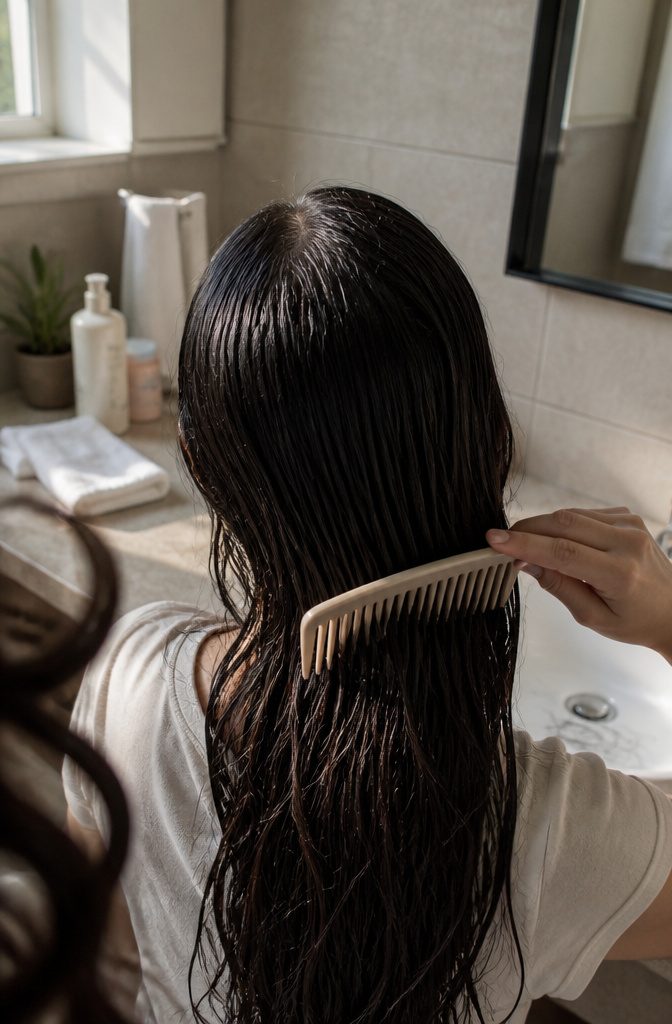
Wet hair is fragile. Detangle with a wide-tooth comb, ends first and then higher, and blot with a towel or T-shirt instead of rubbing.
Flakes deserve a quick fix, since washing too rarely or using the wrong conditioner or scalp moisturizer is a common cause.
Strands in the drain aren’t alarming on their own: a normal day sheds 50 to 100 hairs, and one wash can pull out about 150.
2. Limit Tight Styles and Heat
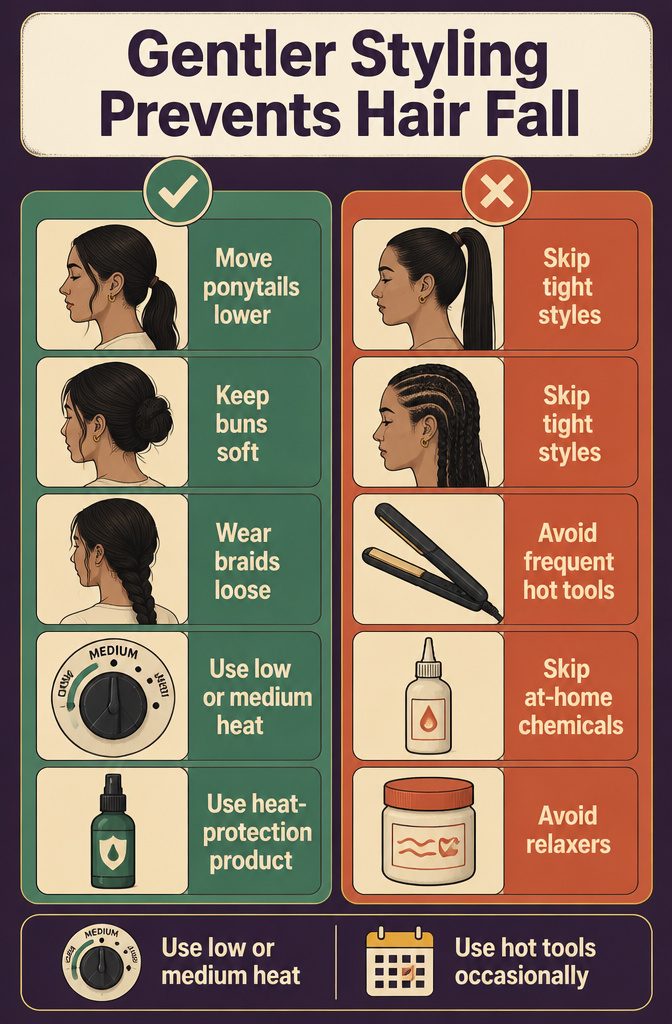
A tight ponytail, bun or braid pulls on the same follicles every day, and that steady tension leads to traction alopecia. Cornrows and snug braids do the same at the roots.
I’d loosen the high, slicked-back versions first: move the ponytail lower, let a bun sit soft, and wear braids loose enough that your scalp never feels tugged. A loose half-up is the easiest swap.
Heat and chemicals break hair along the shaft.
Hot combs, curling irons and flat irons should be occasional, and when you do use them, the AAD advises a low or medium setting plus a heat-protection product. At-home color, chemical straightening and relaxers are the ones I’d skip.
3. Eat a Balanced Diet

Protein comes first: eggs, fish and legumes are the easiest sources.
Iron comes from spinach and lentils, omega-3 from salmon, nuts and seeds, and vitamins from fruit and leafy greens. A shortfall in any of these can show up as extra shedding.
Hiranandani Hospital advises drinking at least 8 to 10 glasses of water a day. Diet gives its best results only when it’s paired with scalp care.
Food corrects shedding caused by a gap. It does not stop genetic hair loss, which usually calls for medication, laser therapy or a transplant.
4. Manage Stress and Physical Strain

Psychological stress, emotional shock and physical trauma can all loosen hair follicles and lead to shedding. High fever and infections can do the same, and so can medications such as chemotherapy, though in that case the hair grows back.
Stress is the one trigger you can work on daily, and the usual advice is yoga, meditation or deep breathing exercises.
I’d pick whichever you will repeat on a rushed Tuesday, since a five-minute breathing habit you keep beats a yoga class you skip. Stress management works best alongside the other habits in this list, not as a stand-alone fix.
Shedding that follows an illness or a medication change is a different problem from a rough month at work. Treat it that way.
5. Supplements and Vitamins
Biotin is a B vitamin, and the pairing that gets recommended is biotin taken together with vitamin C, zinc and folic acid.
Branded options exist too: WebMD lists Nutrafol and Viviscal, while U.S. Dermatology Partners names the RevitaLash Hair Enhancement Kit.
Those lists don’t match, and the evidence isn’t consistent from one recommendation to the next, so none of these is a sure thing.
I would try biotin with vitamin C, zinc and folic acid first.
It’s the easiest to find, and it’s the combination with a stated reason behind it. If the shedding is sudden or heavy, see a doctor before buying anything, since that pattern can point to an underlying condition.
6. Avoid Smoking
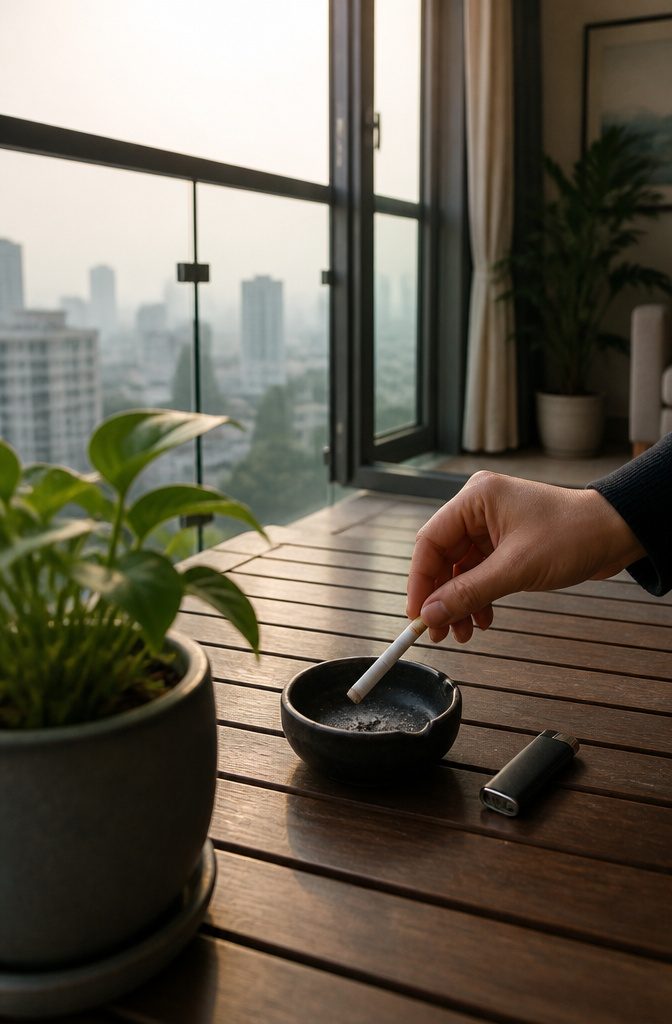
Quitting smoking is the one hair-fall step that never touches your salon budget.
Some of the toxins in cigarette smoke can damage hair follicles, and smoking can also throw off your hormones, which is one possible cause of hair loss. Smoking has also been linked to hair loss starting earlier.
Hereditary thinning is often unavoidable, and I won’t pretend quitting reverses it.
But avoiding smoking is one of the few things that can lower your risk, and it works alongside every other step in this list rather than competing with it.
If you have been putting off quitting, hair is a fair extra reason to stop.
7. Protect Hair From the Sun

Limiting sun exposure is one of the simpler habits for preventing hair fall, and cover works better than anything you spray on. Shade the scalp along your part, not just the lengths, because that strip takes the most direct sun.
A wide-brim hat does this well and pairs naturally with a low bun, since the knot sits at the nape below the back of the brim and nothing gets crushed.
For a braided updo, I’d choose a lightweight scarf over a hat.
Tie it loosely over the crown and knot it at the nape or under the braid, so the pattern stays intact. Keep the fabric breathable and the knot loose; a scarf pulled tight adds tension you’re trying to avoid.
8. Minoxidil 2% or 5%
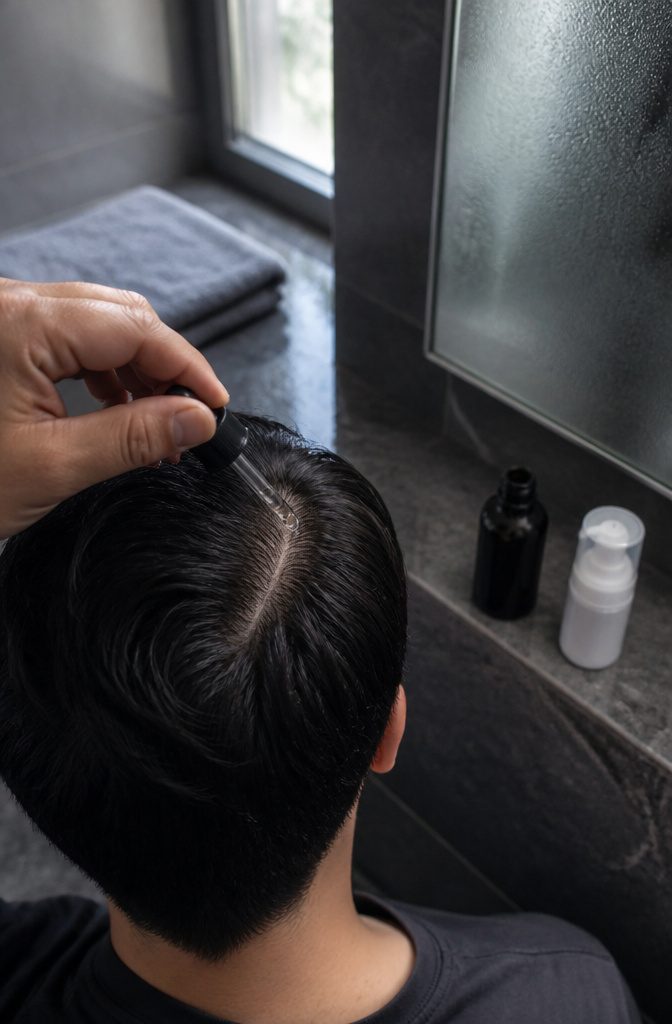
Minoxidil, sold over the counter as Rogaine, is the first medical step I’d point most people toward. It comes as a liquid or foam in 2% or 5% strength, and you apply it straight to the scalp.
It’s meant to slow shedding, and it can also coax hair to regrow thicker and healthier. It has been effective for almost all types of hair loss.
What I can’t hand you is a reliable regrowth percentage, or proof that 5% beats 2% for your scalp. Treat it as a long trial, not a quick fix.
Minoxidil also comes as a pill, and dermatologists have used it in recent years for alopecia. That version, oral Loniten, requires a prescription.
9. Other Prescription Medicines
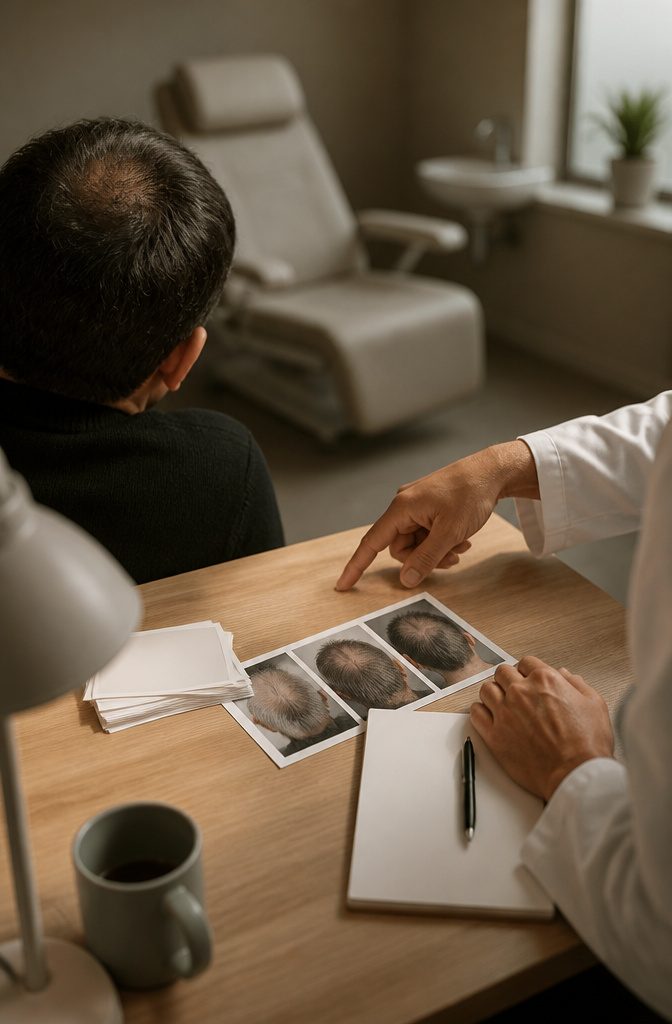
Four prescription medicines come up most often for hair loss: finasteride (Propecia), spironolactone (Aldactone, Carospir), oral dutasteride (Avodart) and oral minoxidil (Loniten). Oral minoxidil is a separate drug route from the foam or liquid kind sold over the counter.
Which one fits depends on why the hair is thinning and who is taking it.
Sudden, significant hair loss can signal an underlying condition, so a diagnosis should come before a prescription. I would not pick from this list on my own, and I would not copy a friend’s pick either.
All four need a clinician’s guidance, from the first dose through any change in plan. Bring photos of your part and hairline to the appointment, since they show what a single day in the mirror hides.
10. In-Office Procedures
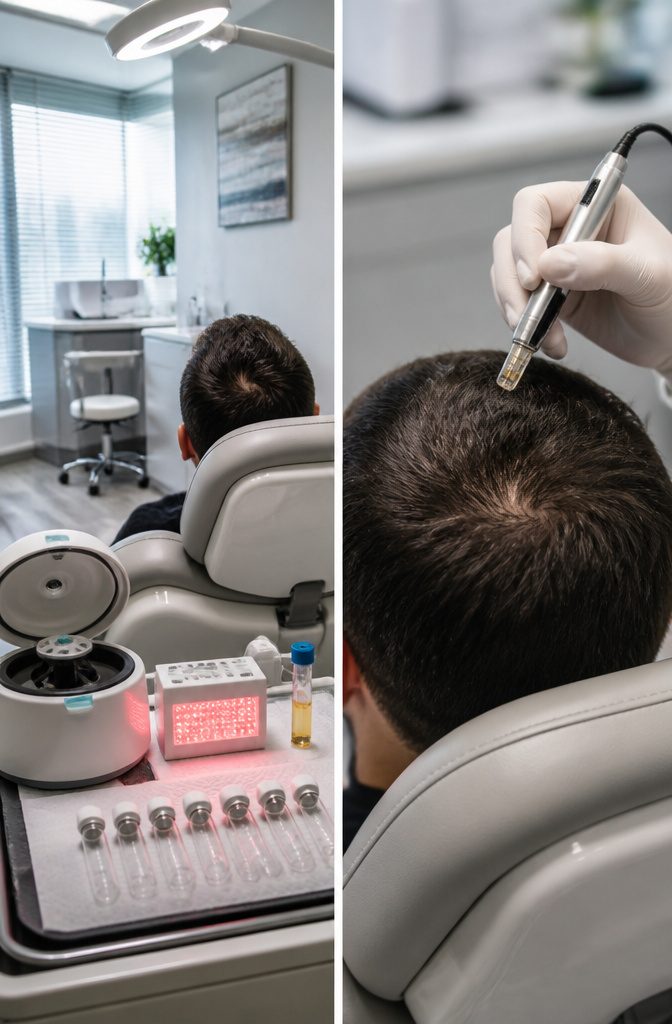
PRP uses a small sample of your own blood, spun to concentrate the platelets and injected into the scalp.
The schedule is monthly treatments for several months, then retreatment every 3 to 6 months, and each session takes about 10 minutes. Because it’s ongoing, it works as a maintenance plan, not a one-time fix.
Laser and light therapy shine low-level light on the scalp to stimulate follicles. Microneedling makes tiny controlled punctures in the skin, and some clinics pair it with other treatments.
I’d treat all three as clinician-directed options and book a consultation before buying a home device. Ask what the plan costs over a full year, since repeat visits add up quickly.
11. Hair Transplant Surgery
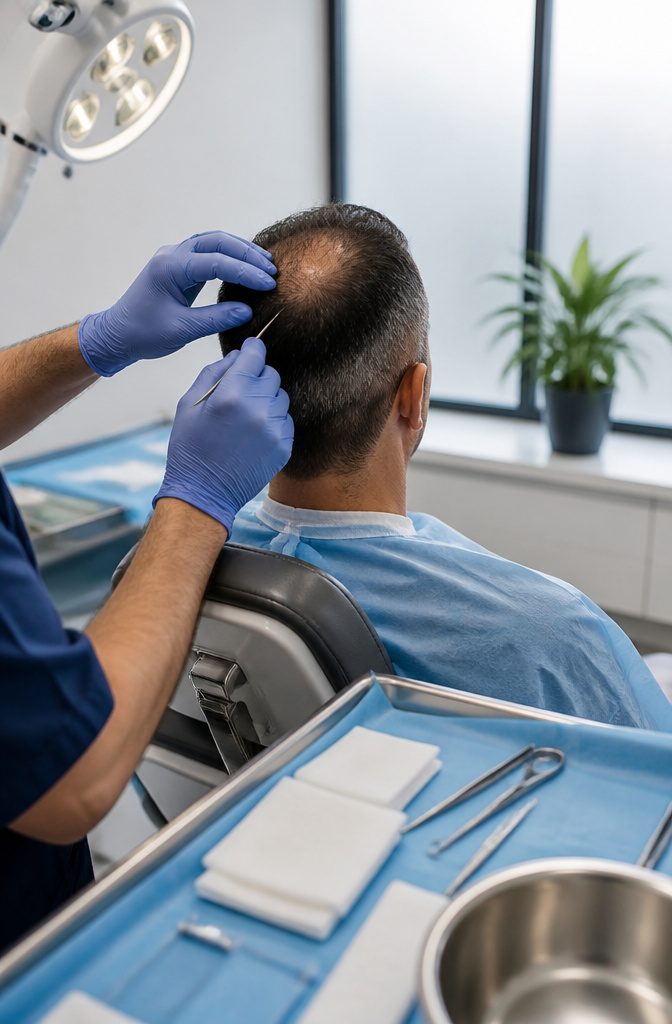
Transplant surgery treats areas that have already thinned or gone bald.
It is not a way of preventing hair fall. It sits at the end of the ladder, after home care, medication and laser therapy.
Oils, scalp massages and diet changes may slow loss, but they can’t cure genetic baldness or loss from hormonal imbalances, and that is where surgery enters the picture.
I wouldn’t book a consult as a first move.
If baldness persists, see a dermatologist first and find out whether medication or laser therapy is enough. Surgery still works alongside a healthy lifestyle, not in place of one.
Home Remedies to Try

Each of these has its own timer, so set one.
- Aloe vera: leave on for 30 minutes, 2–3 times weekly.
- Onion juice: 20–30 minutes.
- Fenugreek: soak 2 tablespoons overnight, grind to a paste, rinse after 30 minutes.
- Green tea: cool it, apply to the scalp, rinse after 1 hour.
- Egg and olive oil mask: 1 egg with 1 tablespoon olive oil for 20 minutes, then a cool rinse.
- Neem rinse: twice a week.
Coconut oil, amla, castor oil and henna are common add-ons, but the research on oils is preliminary.
Give any routine at least 2–3 months before judging it. Remedies may slow loss and improve scalp health, but they cannot cure hereditary baldness.
When to See a Doctor
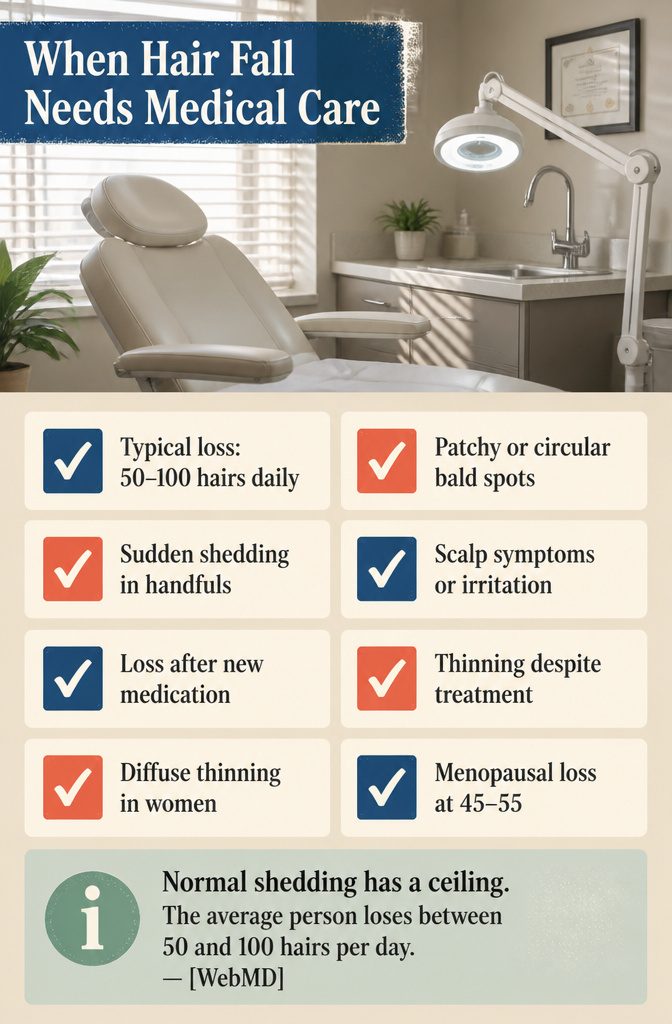
Normal shedding has a ceiling.
The average person loses between 50 and 100 hairs per day.
— WebMD
Well past that range, get checked. See a clinician for:
- Patchy or circular bald spots
- Sudden or significant shedding, like hair coming out in handfuls
- Scalp symptoms, since psoriasis and folliculitis can cause loss
- Loss that starts after a new medication or treatment
- Thinning that continues despite treatment
- Diffuse thinning in women, hereditary loss that can turn extreme from age 40, or menopausal loss at 45–55
More than 50% of women are affected at some point, about 80% by age 80, and about 30 million U.S. women have female pattern hair loss. A dermatologist can find the cause and set a plan.
Frequently Asked Questions
How do I stop hair loss?
Start by seeing a dermatologist, who can find the cause and set a treatment plan, because the right fix depends on why the hair is thinning.
Gentle washing, looser styles, a balanced diet and no smoking support that plan. Minoxidil at 2% or 5% is the usual over-the-counter first step.
Can all hair loss be prevented?
No.
Hereditary hair loss is often unavoidable, and diet or scalp care will not fully stop it. You can lower your risk by not smoking, limiting sun exposure and eating well, and genetic loss may need medication, laser therapy or surgery.
Can home remedies cure baldness?
No.
Home remedies may slow hair loss and support scalp health, but they cannot cure genetic baldness or loss caused by hormonal imbalances. Those cases usually need medication, laser therapy or a transplant, alongside healthy habits.
How long do home remedies take to work for hair loss?
Give any routine at least 2–3 months of consistent use before judging it. Remedies work slowly and are meant to ease shedding and improve scalp health, not to deliver quick regrowth.
Can diet alone prevent hair loss?
No.
A diet with enough protein, iron, omega-3 and vitamins corrects shedding that comes from a nutrient gap, and it gives its best results alongside scalp care. It does not stop genetic hair loss.
Can shampoo and styling cause hair loss?
Yes. Tight ponytails, buns and braids tug on the same follicles every day and can lead to traction alopecia, while harsh products, hot tools and chemical treatments damage strands and cause breakage.
Keep heat styling occasional, on a low or medium setting with a heat-protection product.
At what age do women start experiencing hair fall?
Hereditary hair loss in women can become extreme from about age 40, and menopausal hair loss may affect women between 45 and 55. More than 50% of women deal with hair loss at some point, and about 80% by age 80.
Which oils help with hair loss?
None has solid proof behind it, since research on oils is still preliminary.
Coconut oil, amla, castor oil and henna are common choices, and early mouse studies suggest peppermint and lavender oil may support growth, but human research is still needed. If you try one, give it at least 2–3 months.
Does biotin help stop hair loss?
It may. Doctors recommend biotin, a B vitamin, taken together with vitamin C, zinc and folic acid, but the evidence is not consistent across products and recommendations.
If your shedding is sudden or heavy, see a doctor before buying a supplement, since that pattern can point to an underlying condition.