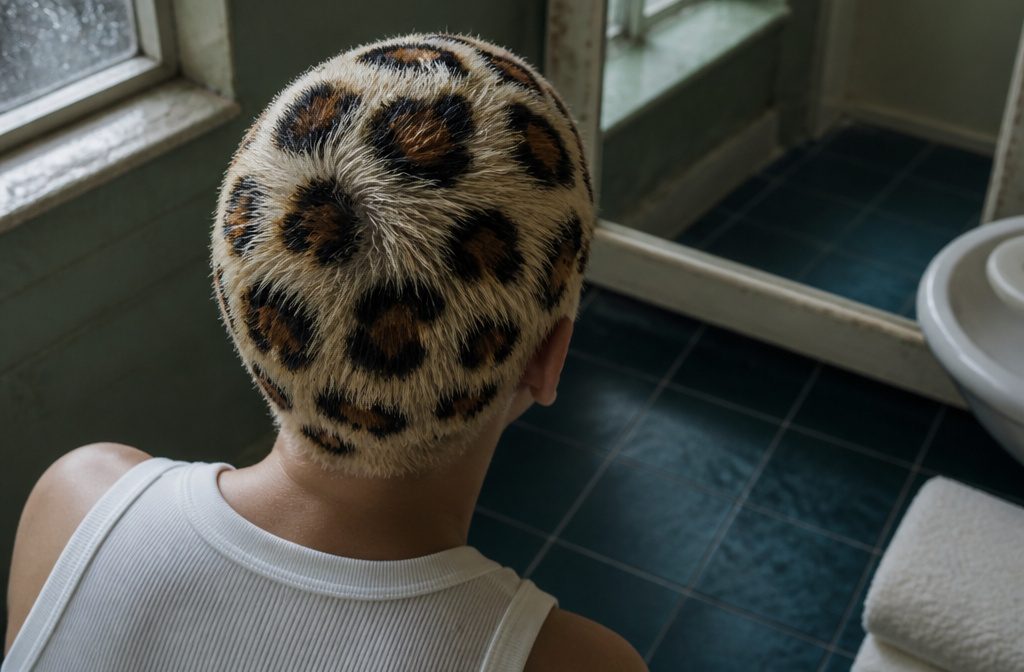
The look is a hand-painted pattern of black and brown spots on bleached, toned hair, with a stencil and colored hairspray as the temporary version.
The dye needs an even blonde base, and black semi-permanent can bleed blue into pale hair in the rinse. Erik Pascarelli at Bleach London first did it on a buzz cut.
Bleach for a Clean Base
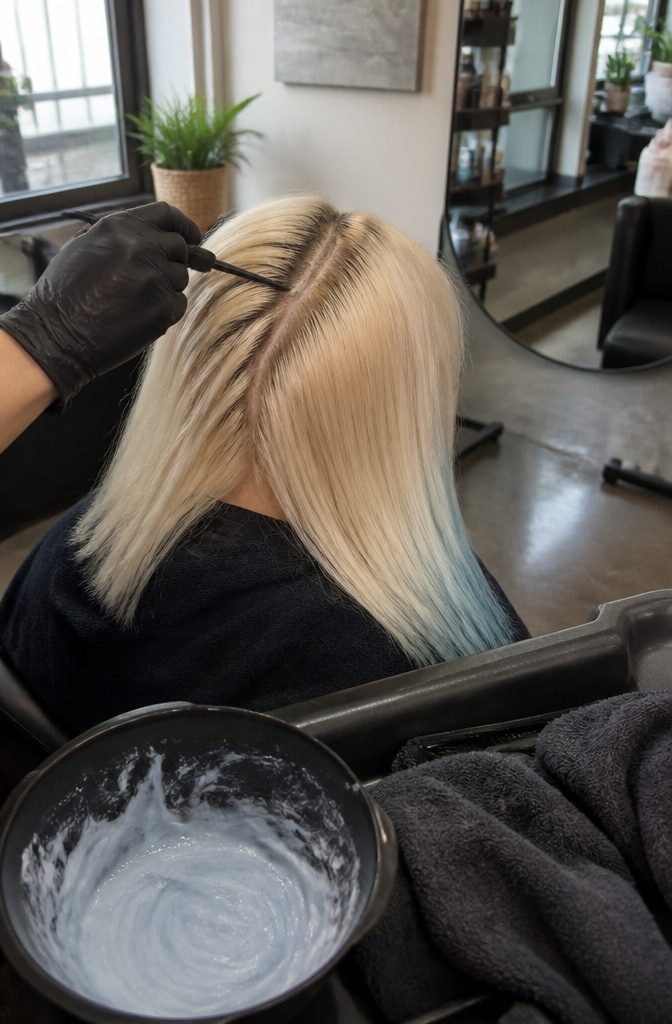
Erik Pascarelli at Bleach London starts leopard print hair by bleaching first, before any pattern goes on.
Spots only read clearly on a lightened canvas, because dark color on a darker or uneven base blurs into a smudge instead of a print.
A clean blonde shows everything, though, including mistakes. One Reddit poster bleached, toned and painted on semi-permanent black, and the rinse turned the blonde blue.
A commenter explained that black semi-permanent dye carries a lot of blue, and pale hair shows even a faint bleed. Lighten first, then plan for the dark color to run.
Tone to a Light Bronde
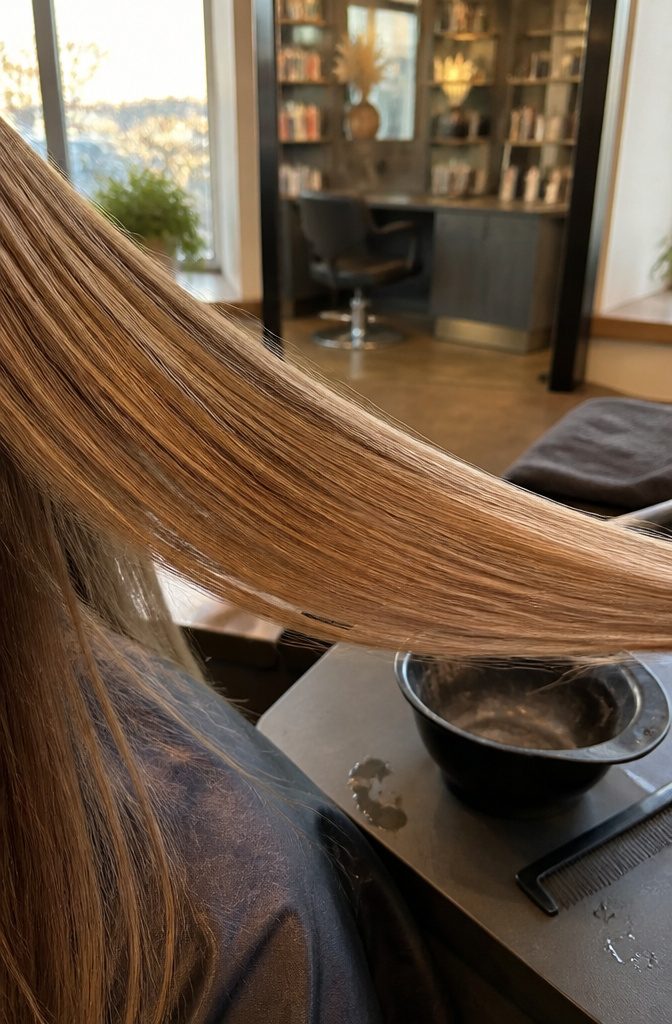
Pascarelli tones the bleached base to a light bronde with toners rather than vegetable dyes, because toners do not fade as fast. That matters more here than on a plain color job.
Spots only read against an even, warm ground, and a base that drifts or washes out turns the pattern muddy. A toned base that holds its shade is what keeps the spots legible.
Bleed is the other risk. One Reddit poster bleached, toned, then added black semi-permanent spots, and the rinse left the blonde blue.
A commenter explained that black semi-permanent carries a lot of blue and that pale hair shows even faint bleeding. I’d rinse cool and consider a sealing product before the spots go on.
Paint the Ocelot Spots
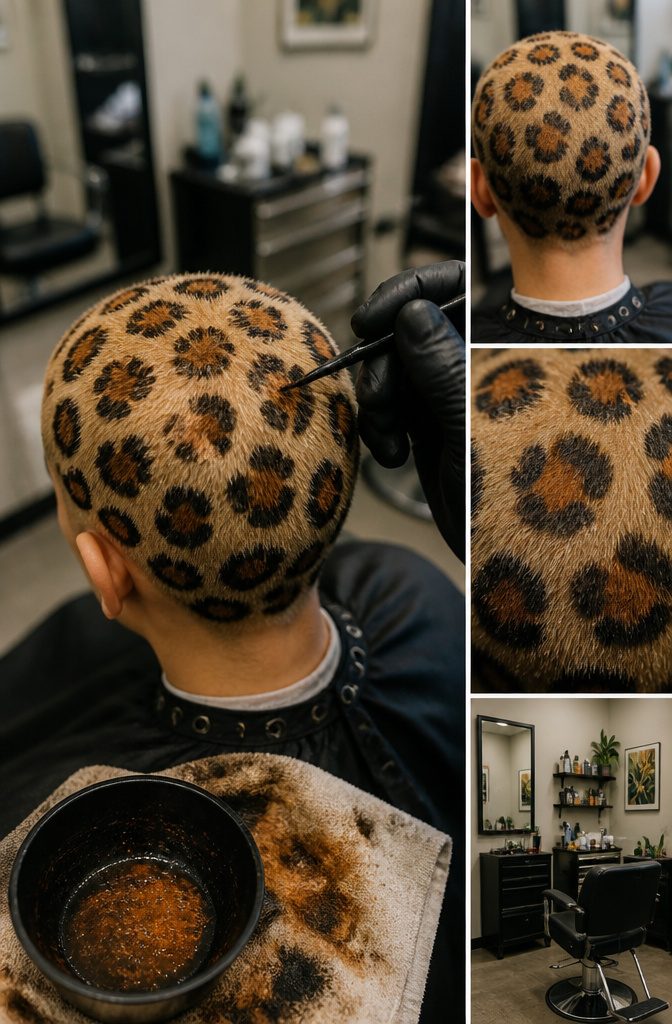
The ocelot pattern is made with two dyes, black and brown, and the spots are painted carefully by hand over the lightened, toned base.
This is the stage where patience pays off. Dark dye on an uneven blonde base will look muddy instead of spotted, so I wouldn’t start painting until the earlier stages are finished and even.
Pascarelli first gave the spotted treatment to a client with a buzz cut, so length is not a requirement for the pattern to read. Even a few millimeters of hair can carry it.
Stencil and Colored Hairspray
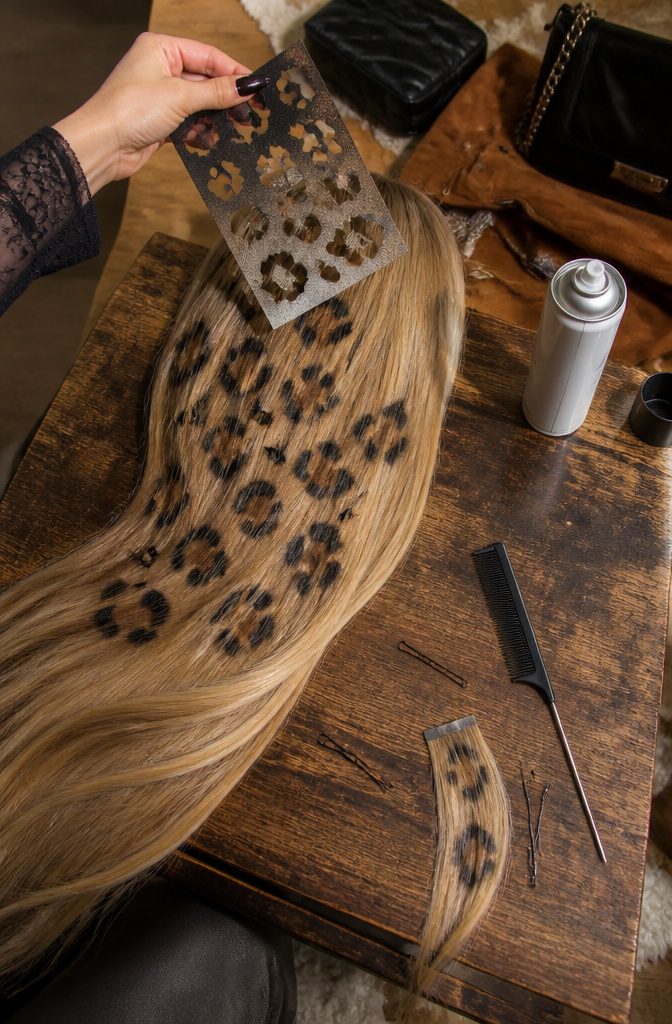
Stencil-style is the way to wear leopard print hair if your hair is long and you have no plans to buzz it.
A leopard print stencil and colored hairspray give you the spots for a night, with no bleach and no cutting.
I’d save it for a party, festival, costume or photo shoot, anywhere the look only has to last an evening. The color sits on the surface, so it works for one event, not a daily routine.
Hold the stencil flat against dry hair, spray in short bursts, and lift it straight off so the spots stay crisp instead of smearing. Test the spray on a hidden section first, since light hair shows color fastest.
Why Shorter Hair Works Better
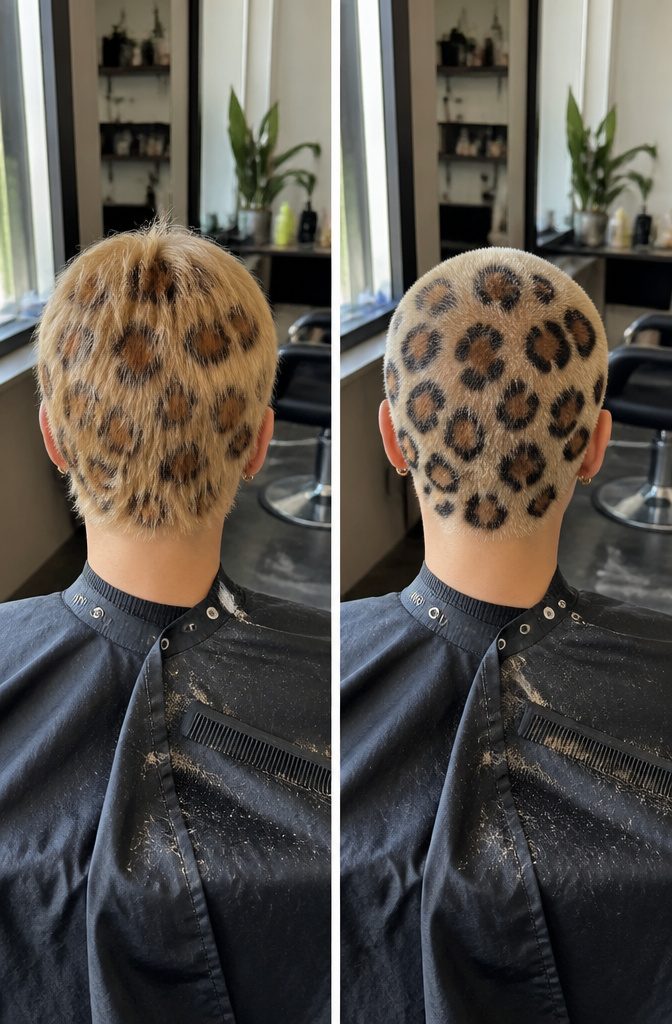
Leopard print hair started on buzzed heads, and the reason is mechanical. A buzz cut holds still, so every spot stays where it was painted.
On longer hair, strands shift against each other with every turn of the head, and a pattern dyed into them slides out of line and blurs. The shorter the cut, the cleaner the spots.
Longer hair can still carry the look through a stencil.
The spots go on over the hair as it falls, so movement can’t scramble a pattern that was never dyed strand by strand. For anything longer than a buzz, I’d choose the stencil over a full dye job.
Dyed Versus Temporary
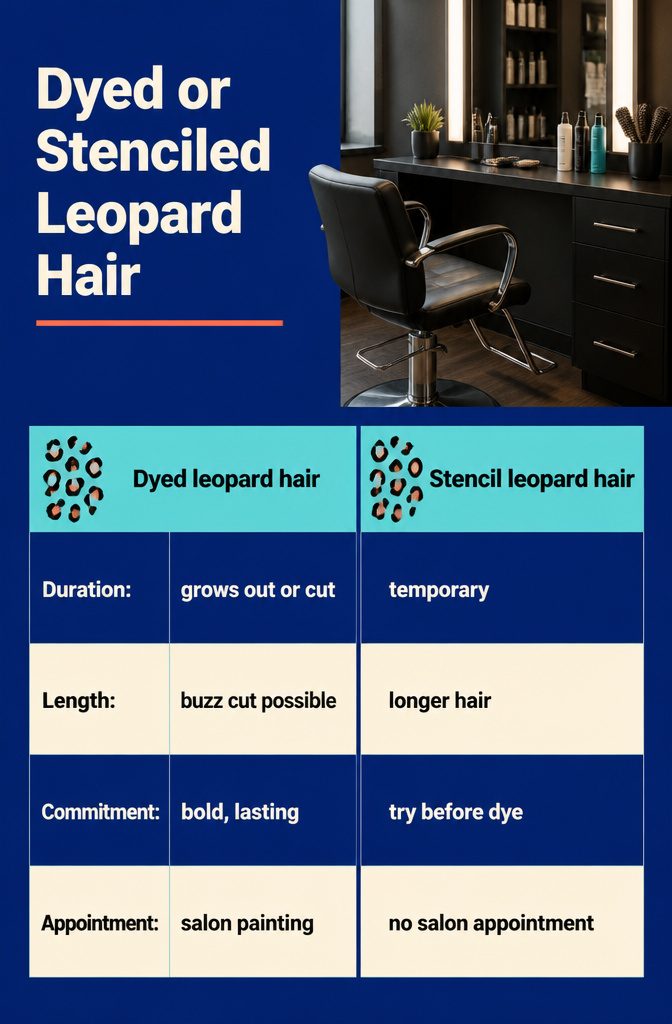
Dyed leopard print hair means bleaching, toning and painting the spots, so it stays until it grows out or gets cut. It’s bold and not for the faint of heart, and the buzz-cut version is especially noticeable.
The stencil route is the lighter deal: it works on longer hair, and the spots are temporary, so you can try the pattern without a salon appointment or a long wait to undo it.
For a first try, I would pick the stencil.
Wear the spots temporarily before you commit to the dye, because you’ll learn quickly whether you like the attention. Scroll the #LeopardPrintHair hashtag on Instagram for examples of both routes, then decide how bold you want to go.
Keep the Color Longer
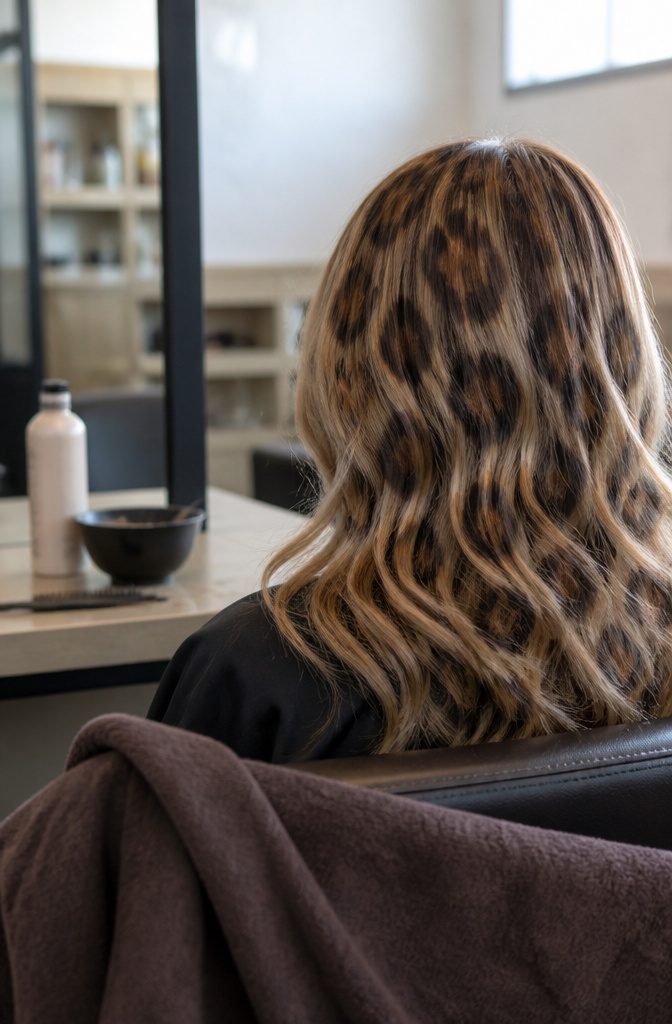
Choose a toner over a vegetable dye for leopard print hair.
Toner doesn’t fade as fast, and that matters here because the pattern depends on contrast. Once the color slips, the spots and the base start to blur together.
I’d also switch to a color-save shampoo.
It helps the color last a little longer, though it slows the fade rather than stopping it. Together, the toner and the shampoo are all the upkeep I’d count on for this look.
Frequently Asked Questions
Is leopard print hair too bold?
It can be.
A dyed leopard print is a loud look that won’t suit everyone, and the buzz-cut version draws the most attention. If you’re unsure, wear the temporary stencil version first and see how you feel about the attention.
Can I get the leopard print look without buzzing my hair?
Yes.
A leopard print stencil and colored hairspray put the spots on longer hair with no bleach and no cutting. The color sits on the surface, so it suits a party, festival, costume or photo shoot rather than daily wear.
How long does leopard print hair dye last?
The dyed version stays until it grows out or gets cut, since it’s bleached, toned and hand-painted.
A stencil with colored hairspray is temporary and lasts about one event. To slow fading on the dyed version, use a toner instead of a vegetable dye and a color-save shampoo, which slows the fade but doesn’t stop it.