These cuts run from a pixie that leaves almost nothing to style to shoulder-length layers that keep every inch, with bobs, a shag and a bixie in between.
Your natural texture decides which one is yours: a cut that fights the curl or wave you already have will call for a dryer, a straightener or a curling iron every morning.
1. Long Layers
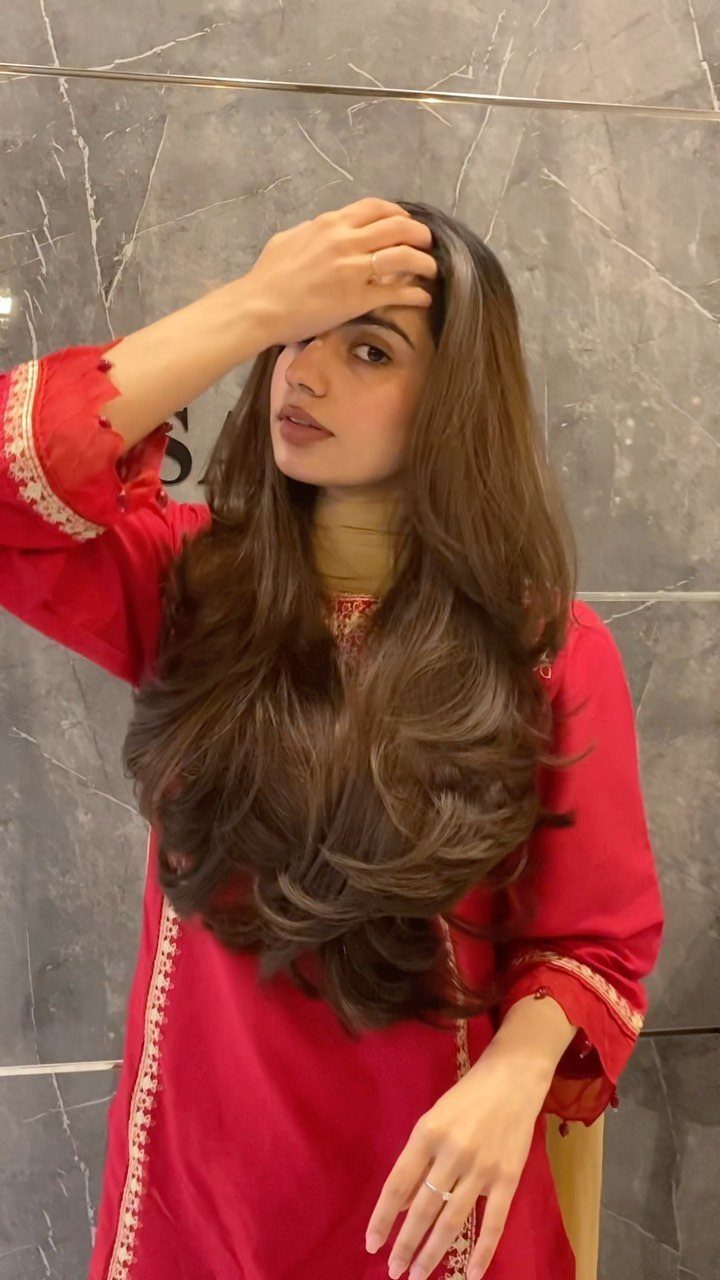
Movement is the reason to cut layers into long hair, and this version keeps the length while letting the ends swing.
I like it best with loose curls, because each layer gives a curl room to sit on its own instead of stacking into one heavy mass.
When you book, ask for blended layers rather than visible steps, and say plainly that you want to keep the length.
2. Textured Bob
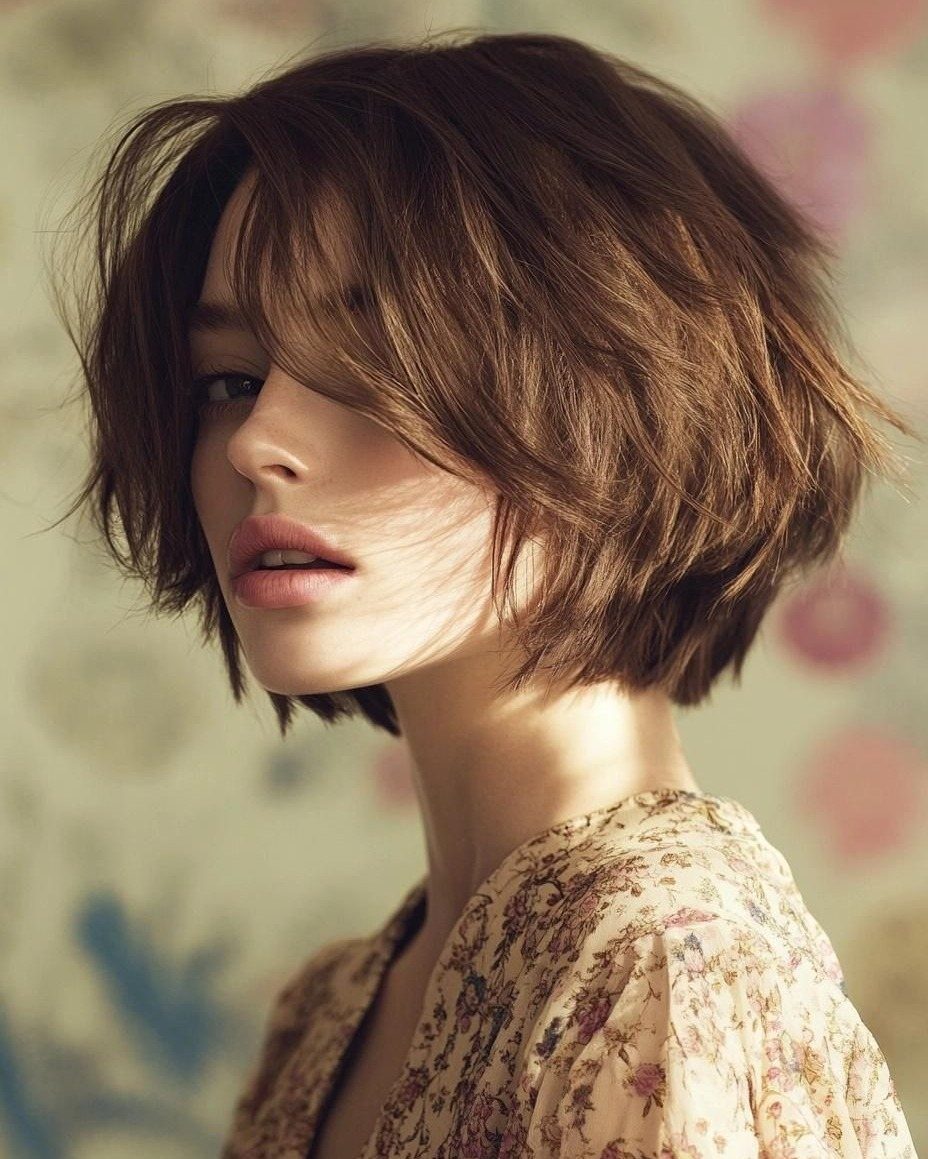
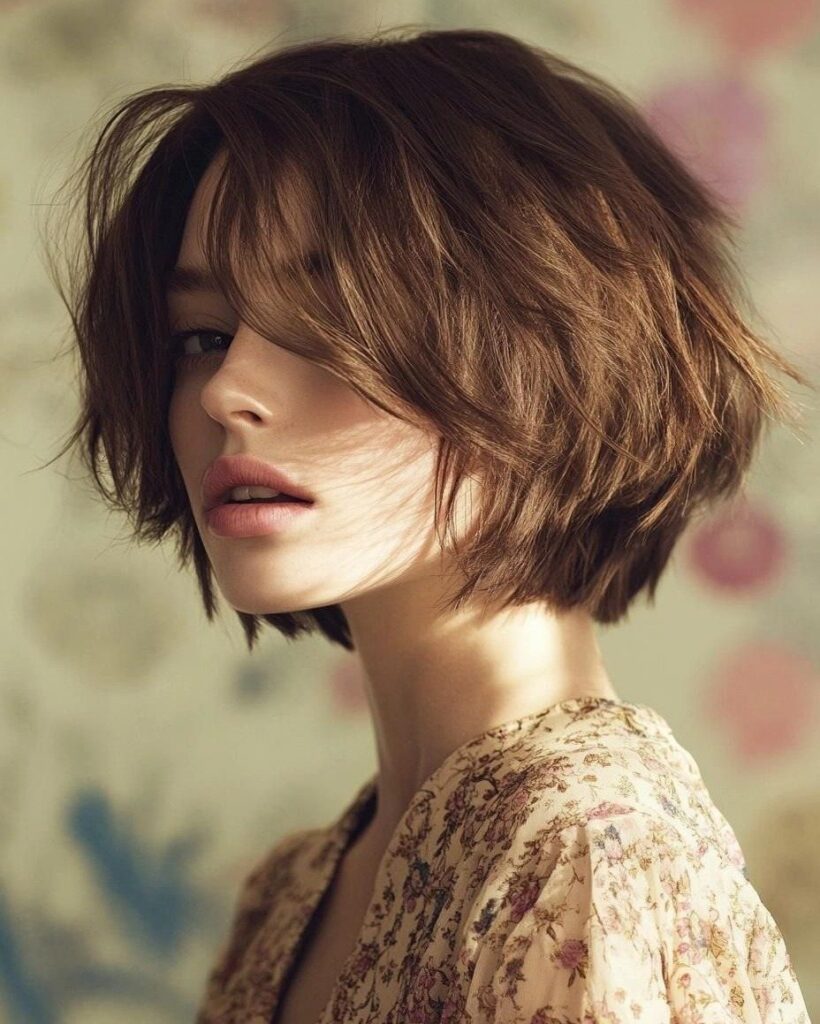
Soft layers and internal shaping do the work in a textured bob: weight is carved out from inside the cut, so the ends look broken up and a little tousled.
A side-swept fringe, as here, is my pick for this cut, since it melts the front into the rest instead of cutting a hard line over the brow.
A saved photo helps at the salon, and the words "textured" and "lived-in" tell the stylist what finish you’re after.
3. Textured Lob
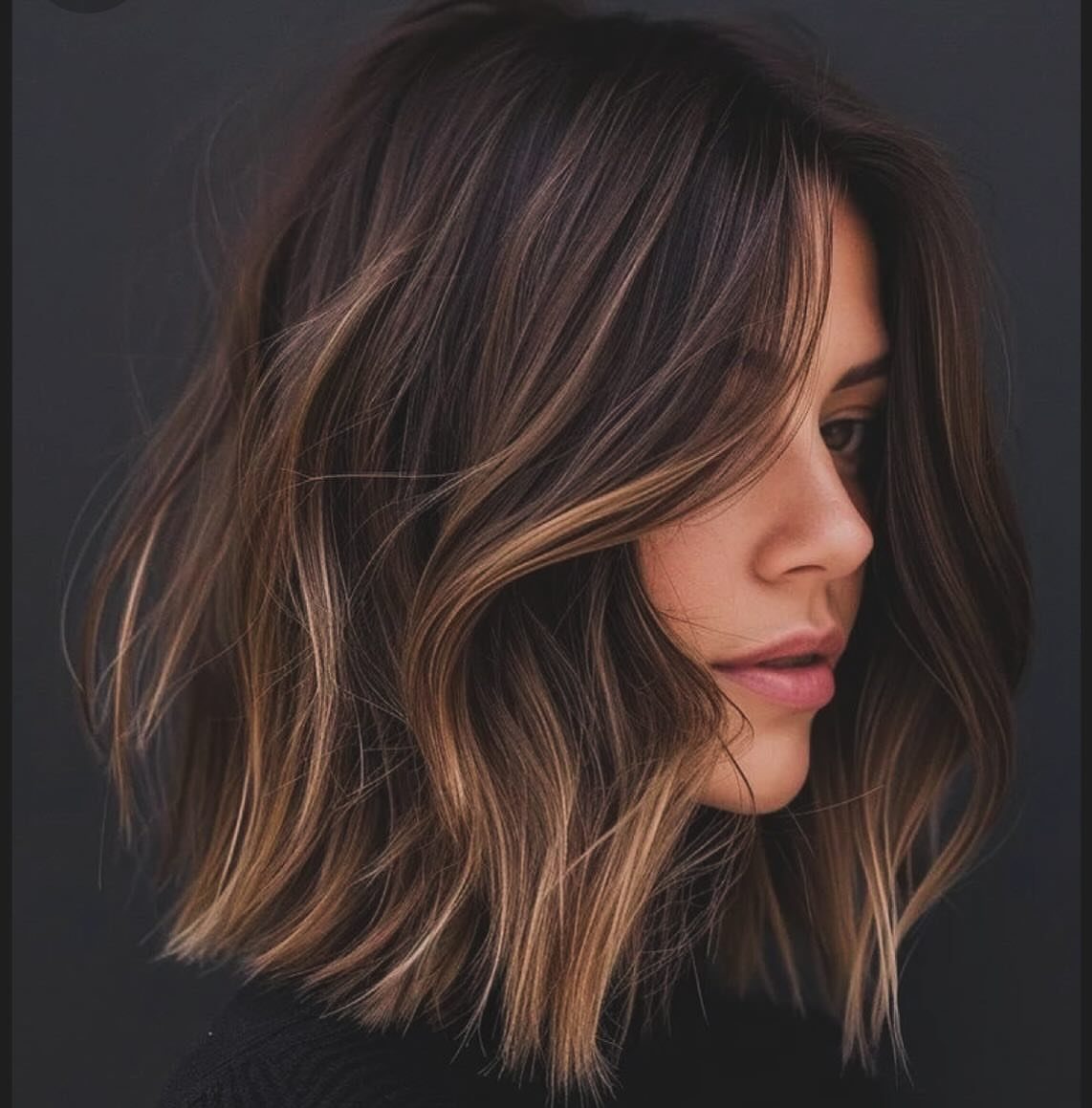
A long bob that grazes the shoulders gives you length enough to tie back and texture enough to leave alone. I prefer it wavy with highlights, as here, because the layers and waves keep the color moving.
A textured lob is the name to request, with layers running through the ends rather than one solid line.
4. Long V-Cut
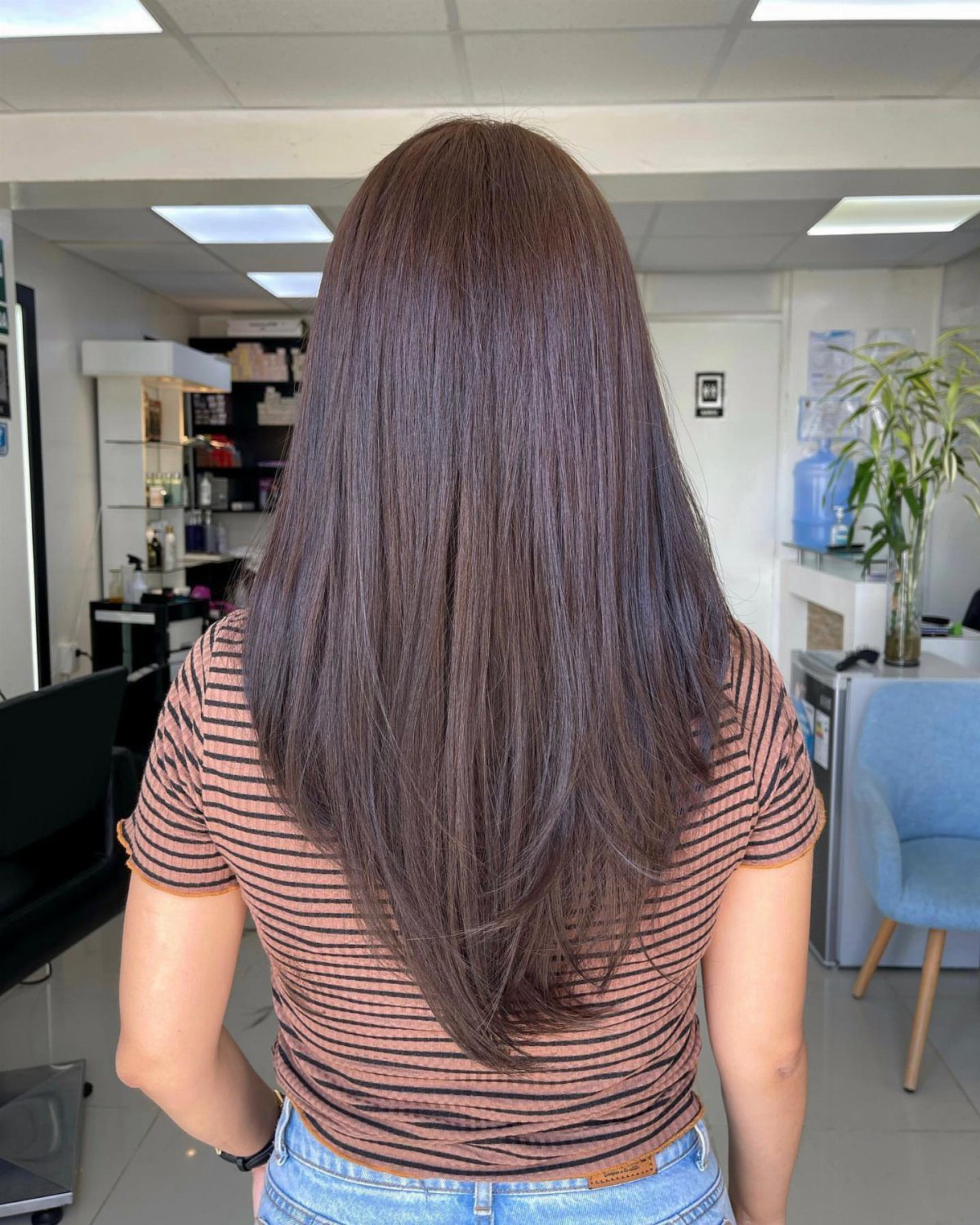
Seen from behind, a long V-cut ends in a point at the center back, with the sides angling toward it. On long, dark hair that shape reads clearly, and I think it looks best worn down and straight.
The sides sit shorter than the point, and that is the cost of the shape. Settle how long that point should stay before any cutting starts, and say it out loud in the chair.
5. Pixie Cut
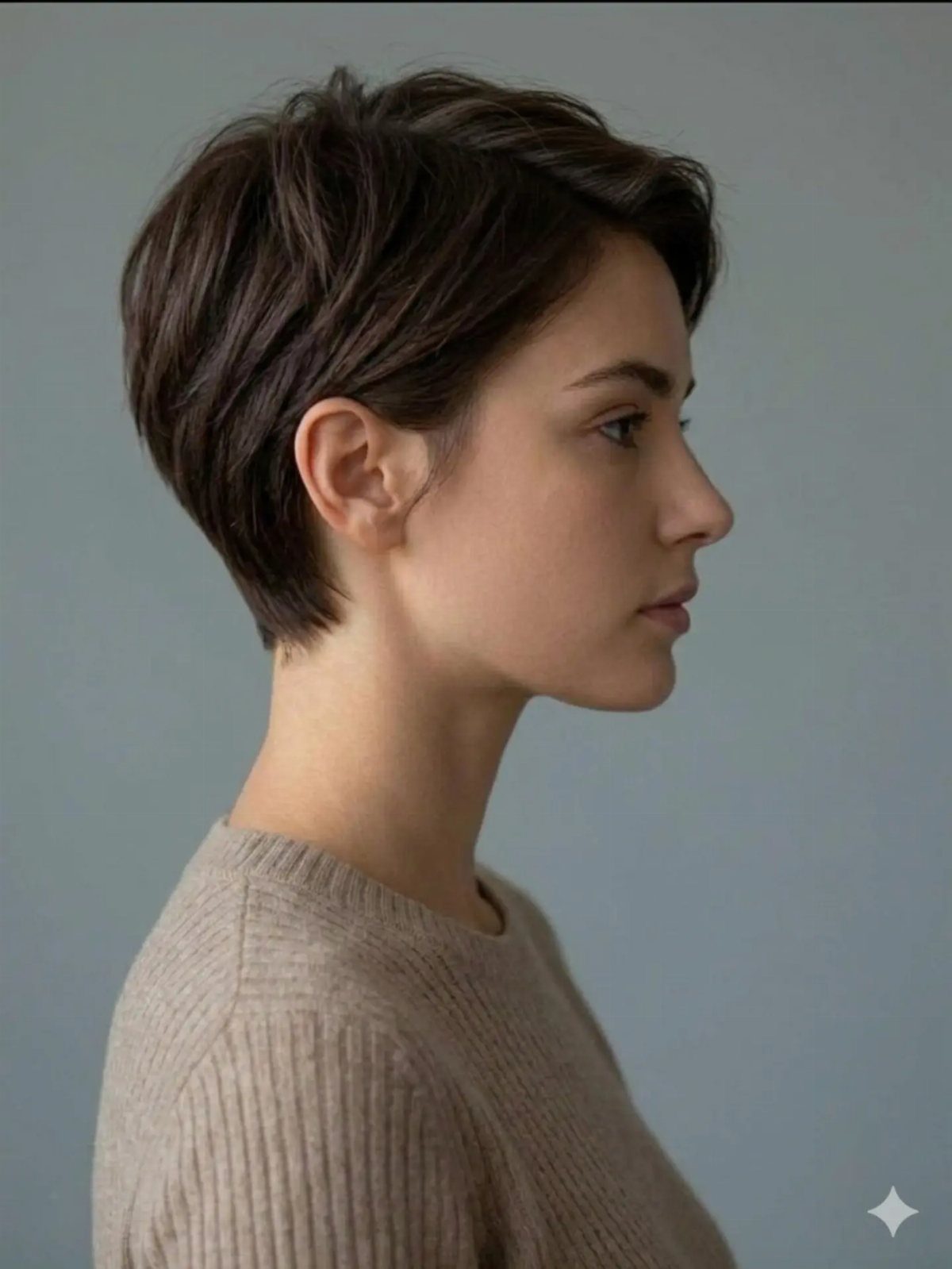
Less hair means less to style, which is the whole case for a pixie cut. The layering visible in profile keeps the top from lying flat, so ask for layers on top rather than one even length.
Choose it when you are truly ready to lose the length, because that is the one thing you can’t undo in the chair.
6. Shoulder-Length Cut
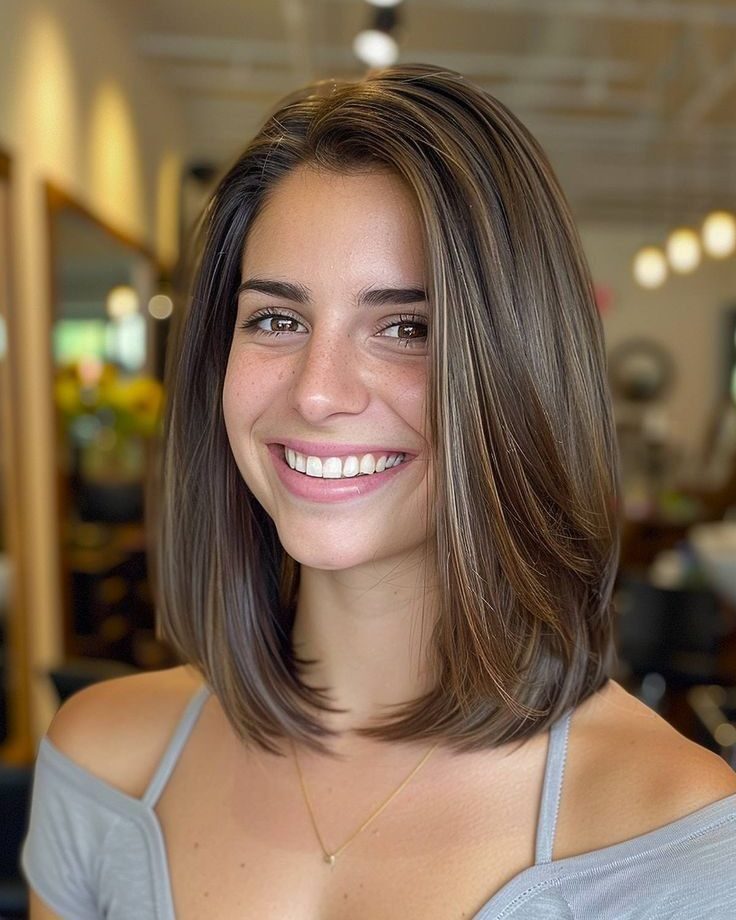
Shoulder-length is the cut I call the safe middle: it reaches far enough to tie back and stops short enough to wear down without much thought. Worn straight and parted down the middle, as here, it looks clean and finished.
If you are between a big chop and keeping everything, this is the easiest place to land. Request that the length be held right at the shoulder, so it doesn’t creep shorter.
7. Shag Cut
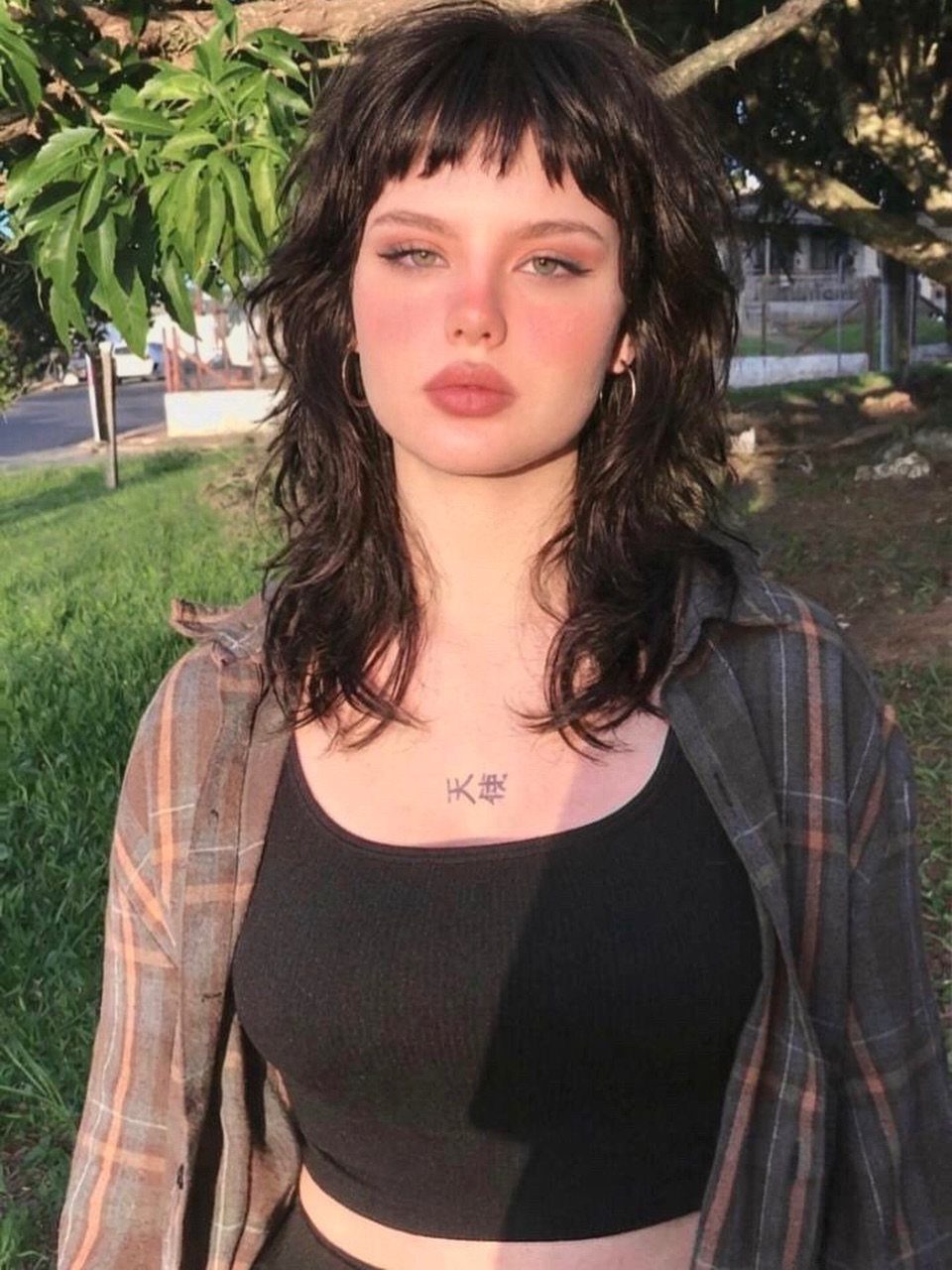
Choppy layers and a short fringe give a shag its tousled look, and the disconnected shape here leaves the top shorter than the lengths below it.
That makes it a low-effort cut for anyone who likes hair that looks slept-in on purpose.
Ask for a disconnected shag, meaning short bangs over longer, piecey layers, and have a saved image on your phone so the stylist sees exactly what you mean. Expect regular trims to keep the bangs from drifting into your eyes.
8. Curly Bob
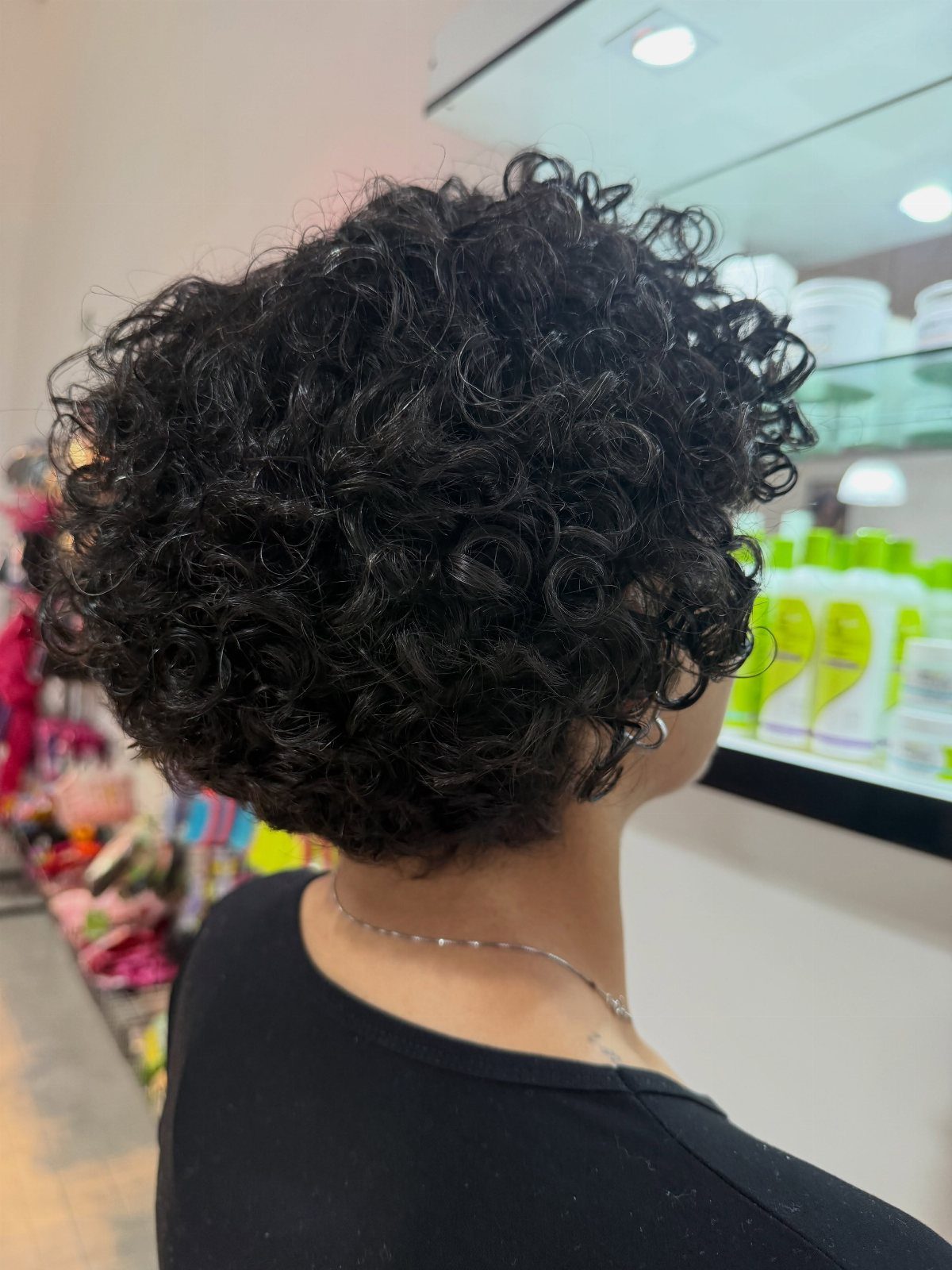
A short, rounded shape lets dense natural curls stay curls, which is what makes a curly bob so easy to live with.
My pick is to keep the cut close to the head’s natural curve, so the curls stack into a soft dome rather than a flat line.
Ask for a stylist who cuts curly hair dry or curl by curl, and say you want the shape built around your pattern.
9. Curved Bob
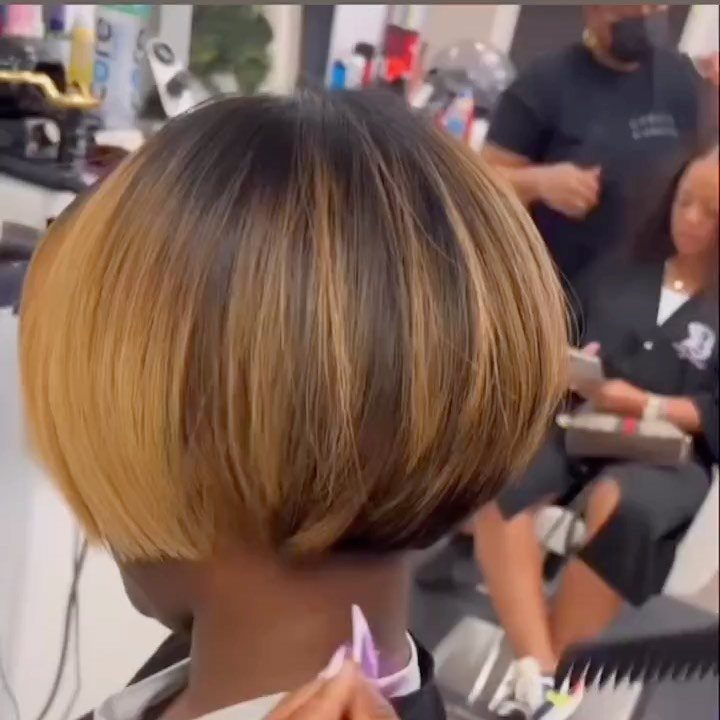
Curving inward at the back, a curved bob hugs the shape of the head and tips toward the face. In honey blonde with highlights, as here, the rounded line catches light along the whole edge.
Ask for a bob with a soft, rounded perimeter, not a flat or angled one. A curve like this holds its outline only while the ends stay fresh, so book trims before it loses that tuck.
10. Blunt Bob with Bangs
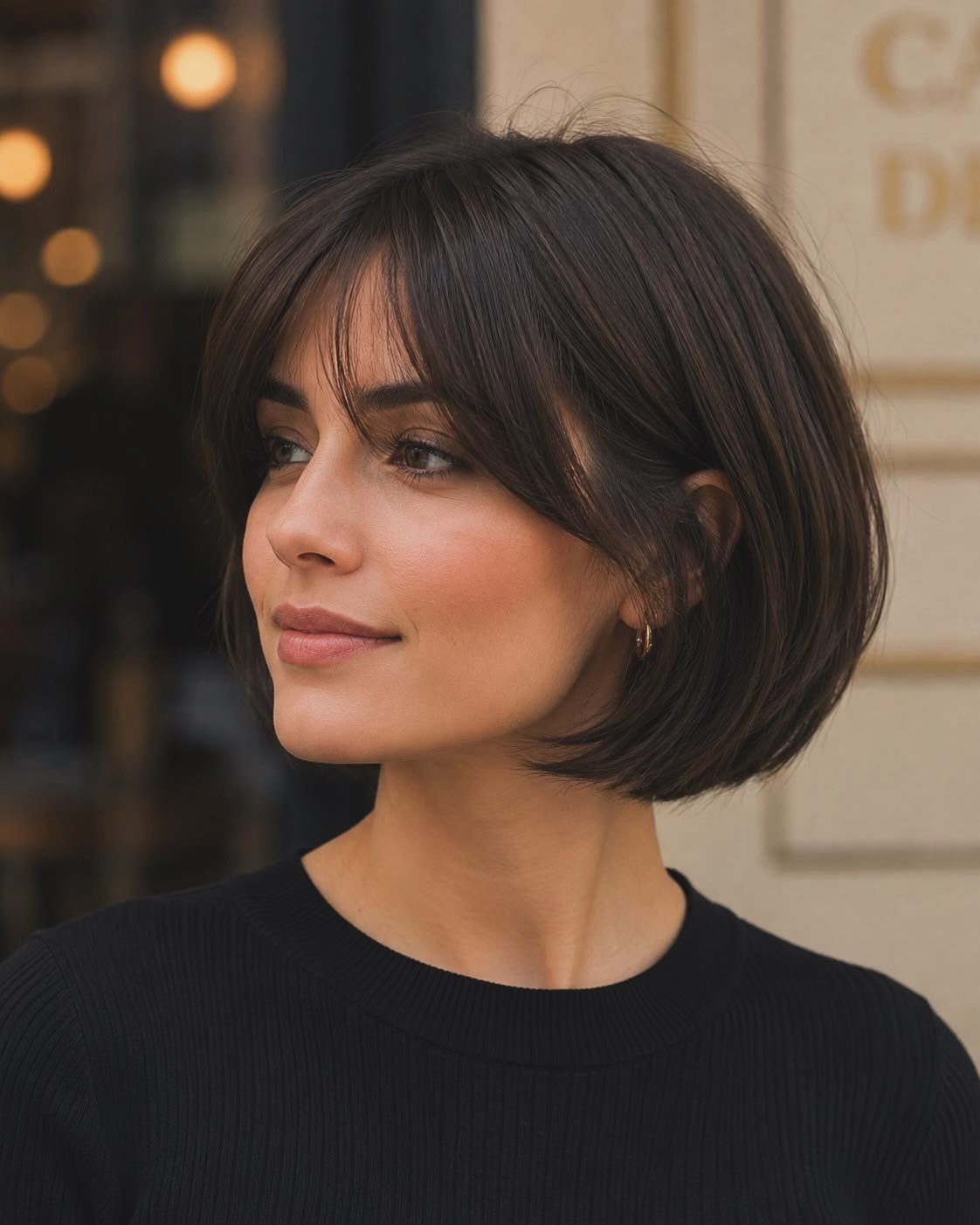
Straight across at the chin, with wispy bangs above, this bob is about as plain as a cut gets, and I like it for exactly that reason. Dark hair shows the clean edge best.
Wispy bangs take about a minute to style, but they do need regular trims to stay see-through. Ask for the bangs to be cut light and soft so the blunt line below stays the star.
11. Choppy Crop
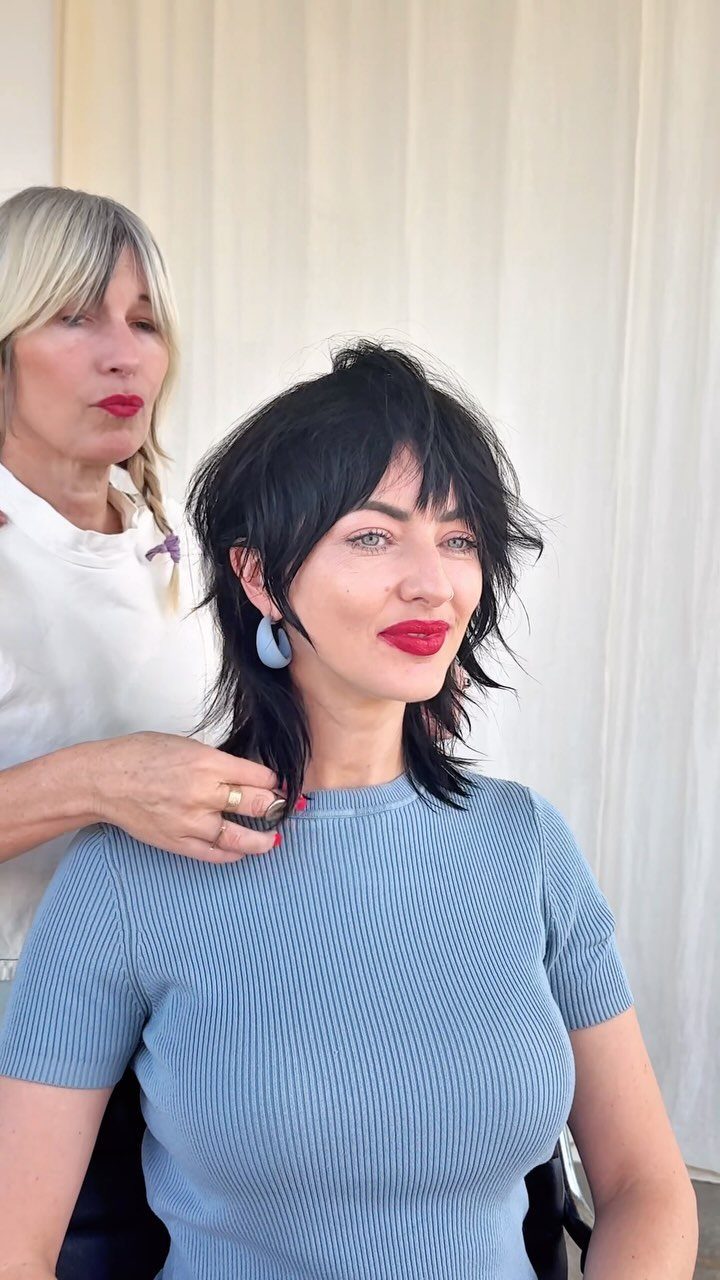
A choppy crop sits between a pixie and a bob, and its snipped, ragged ends do most of the work. Because the edges are broken up on purpose, there is no precise line to keep neat each morning.
Ask for a short, layered crop with choppy, point-cut ends. On colored hair, a bond-repair treatment adds moisture, calms frizz and helps smooth a damaged cuticle.
12. Natural Curls
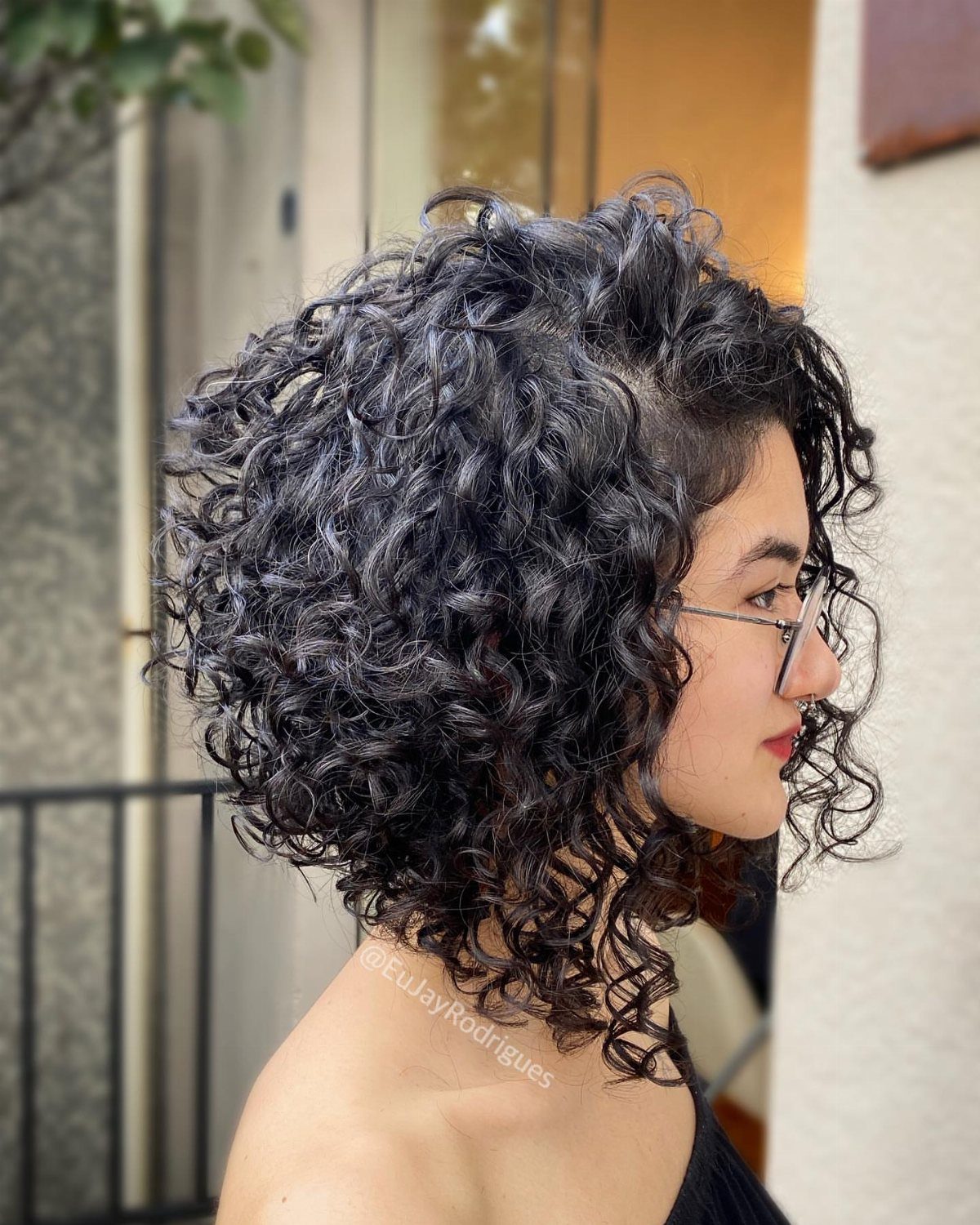
Wearing your natural curl or wave means no daily flat iron, and with full, voluminous curls like these that saves the most time. My advice is to cut for the pattern you have, not the one you wish for.
Tell your stylist you plan to wear it natural, so the shaping works with the curl. Then let it dry on its own and keep the products simple.
13. Blunt Cut
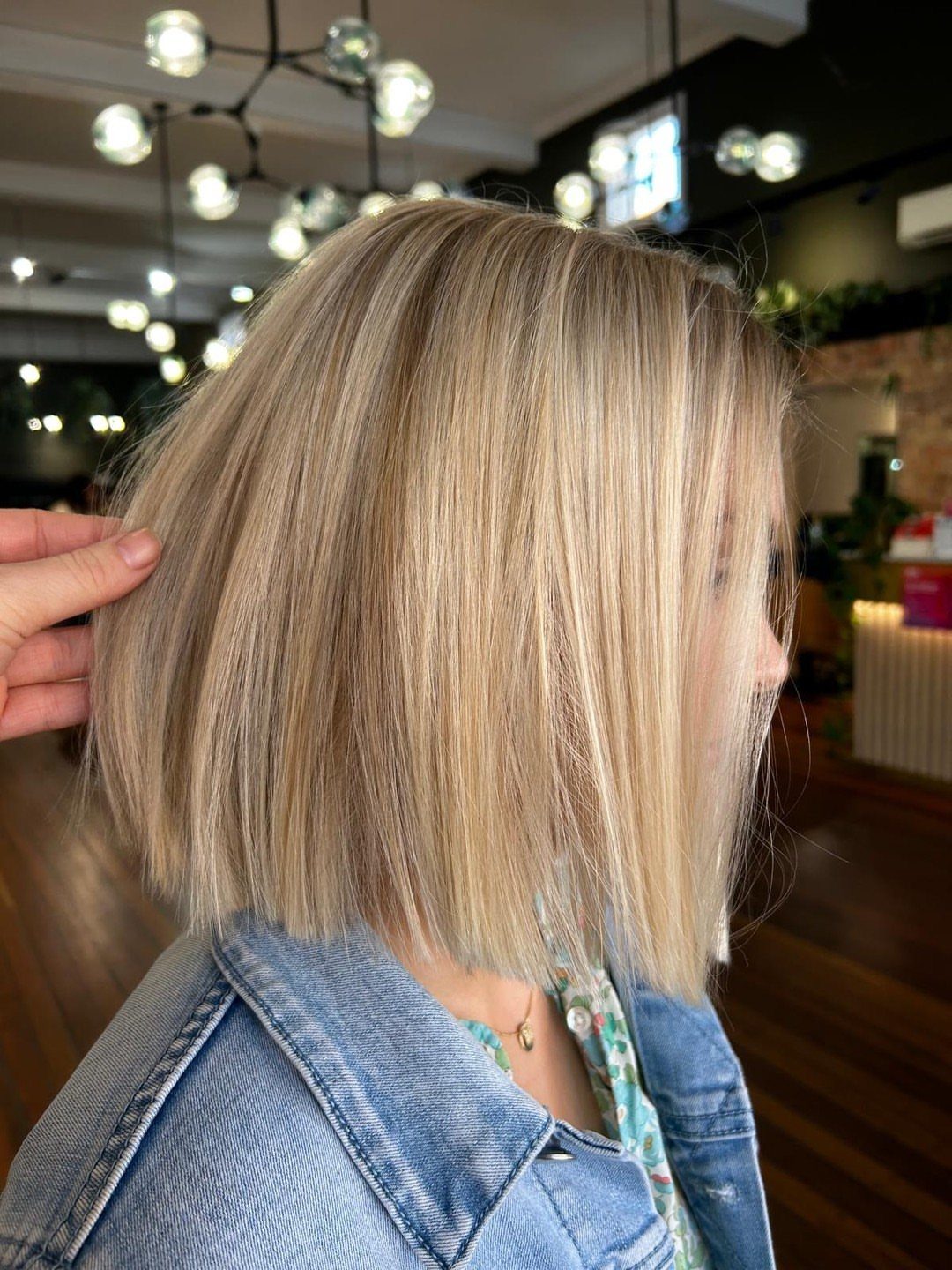
A straight-across perimeter gives a blunt cut its whole identity: one clean edge, no fraying, and a shape you can read from across the room.
On blonde hair worn straight to the shoulders, as here, the line shows up even more because there is nothing breaking it.
Ask for a blunt cut with the ends taken all the same length, not feathered or point-cut. A stylist who hears "defined edge" will know what you mean.
14. Curtain Bangs
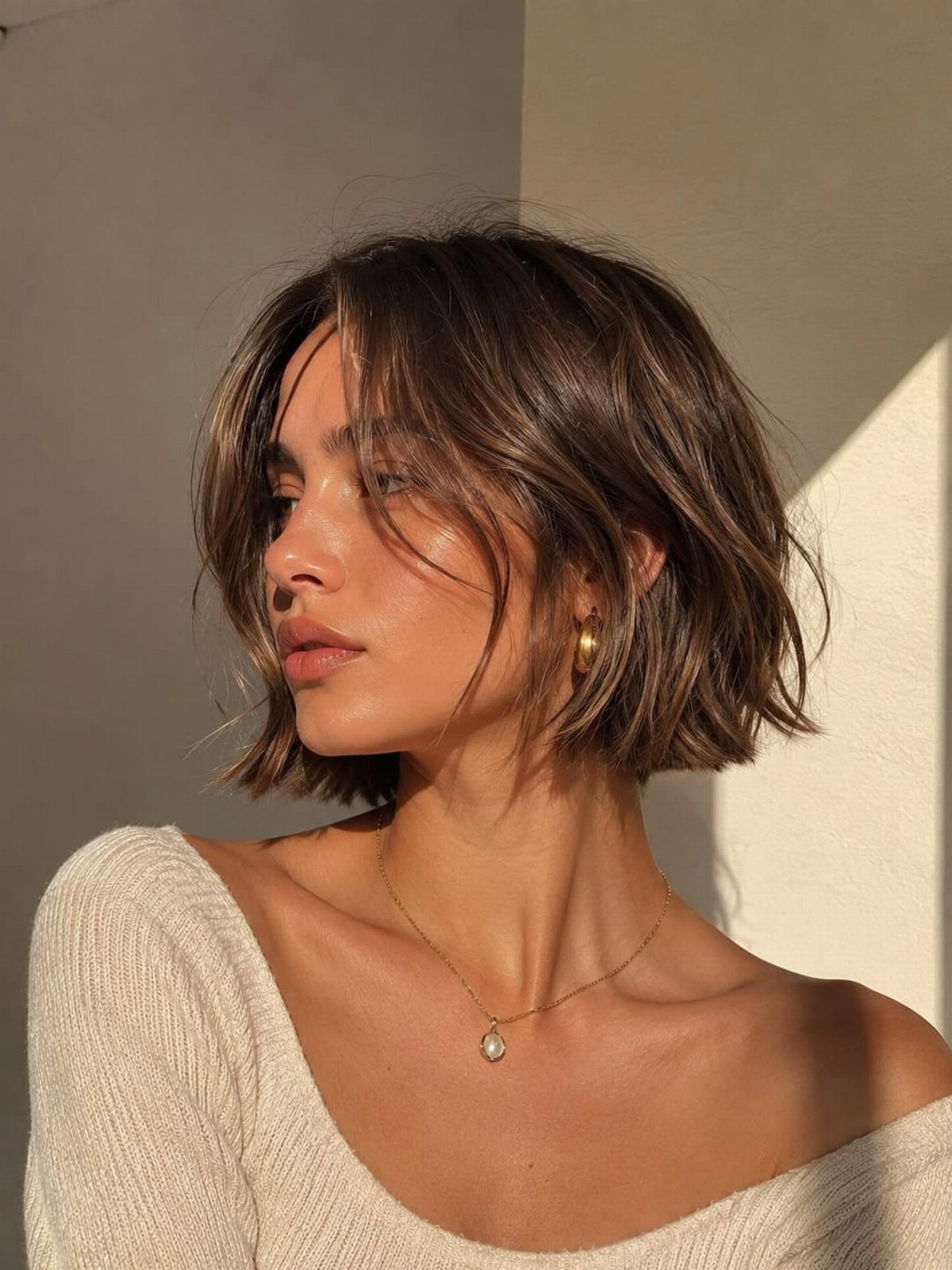
Long enough to part and sweep to each side, curtain bangs are the fringe for people who dread the grow-out.
On a tousled, wavy bob, curtain bangs blend into the rest of the cut as they lengthen instead of turning into an awkward in-between.
Ask for them long and parted in the center, and bring a photo so your stylist can see exactly how far down you want them to fall.
15. Bixie
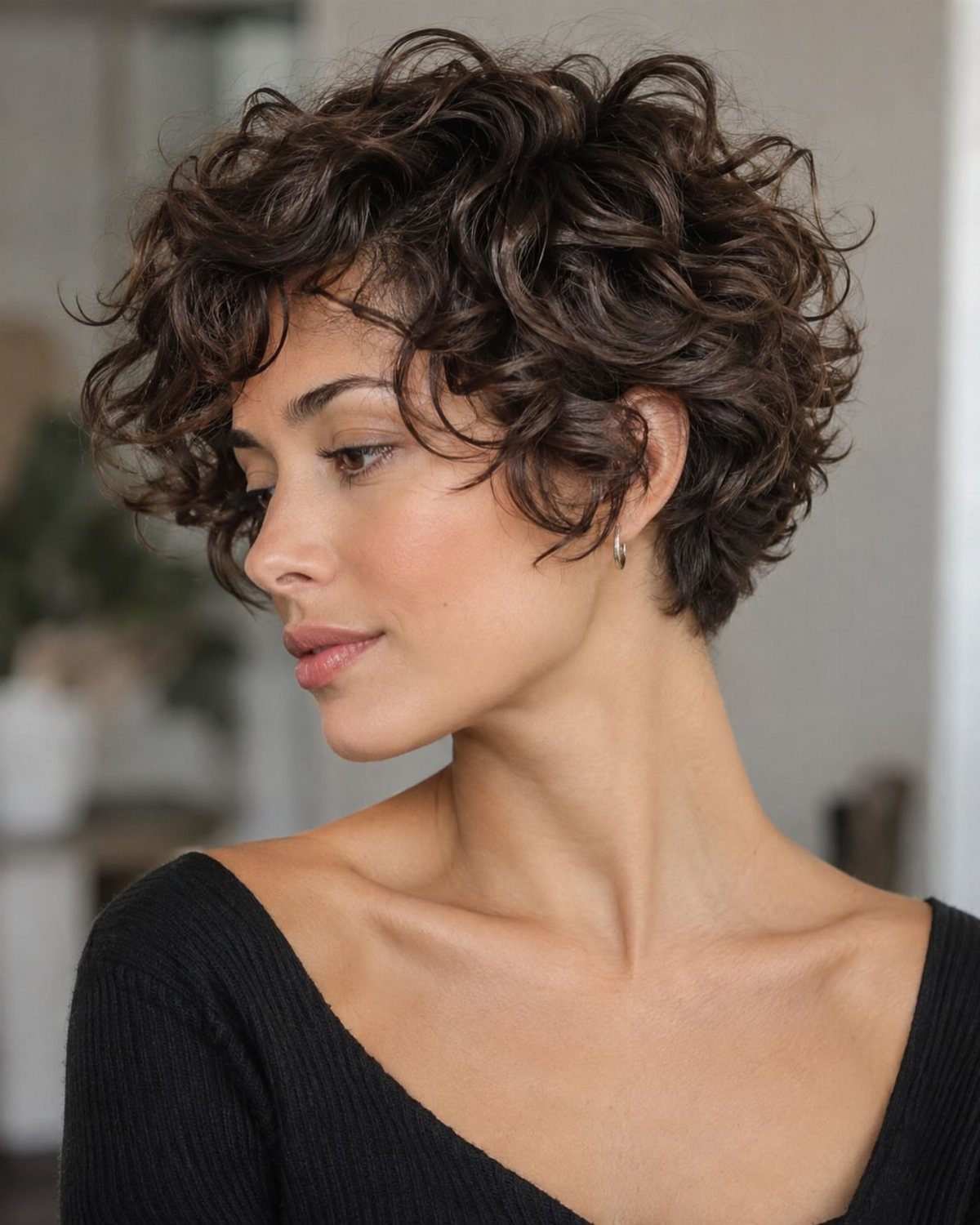
Part bob, part pixie, a bixie keeps some softness at the top and cuts the sides and back close.
Curly hair suits it well: the tapered sides leave the curls on top free to build volume, and a profile like this shows that shape clearly.
Use the word "bixie" at the salon, then say whether you want it cropped or fuller on top. I lean toward fuller when the hair is curly.
16. Classic Bob
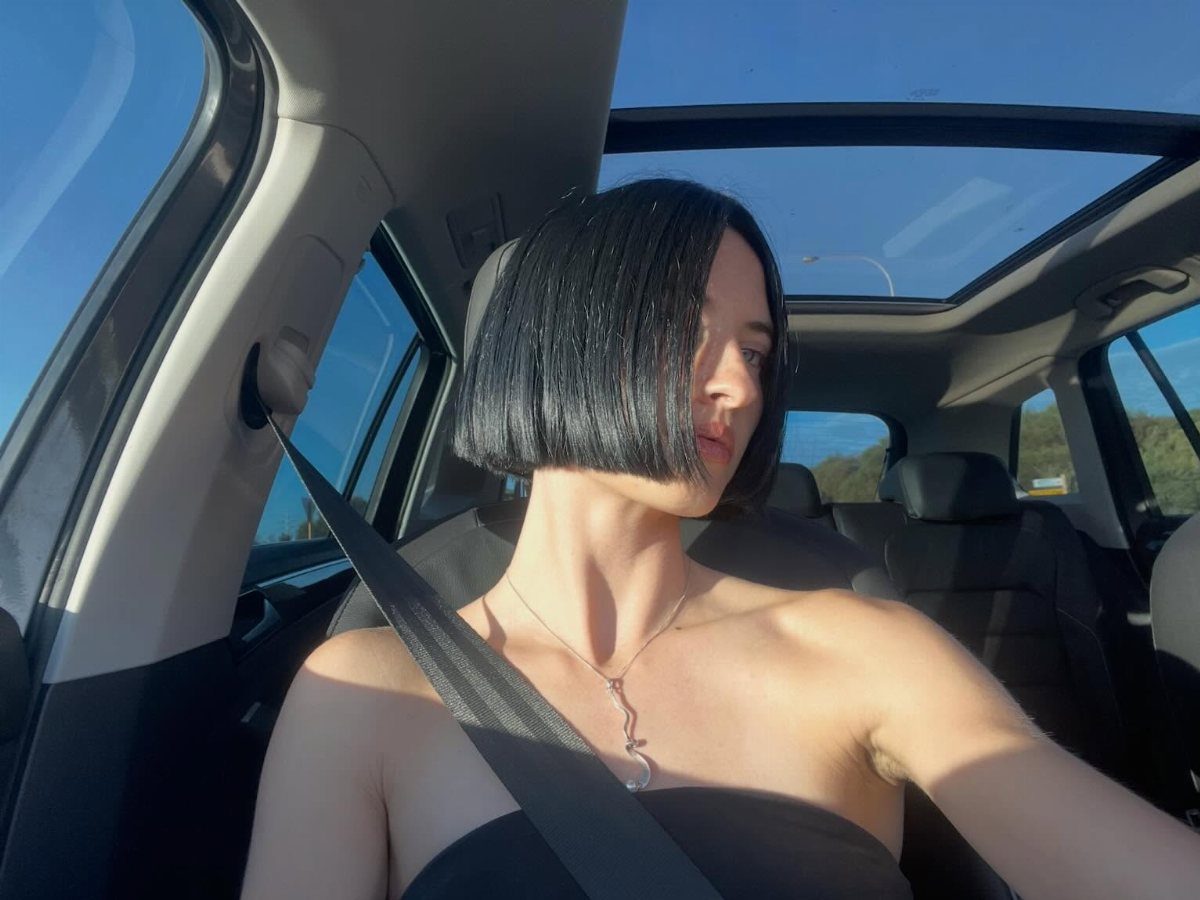
Jawline length and a straight-across hem make the classic bob a cut that behaves as it grows.
Sleek black hair at chin length, as here, shows the shape at its sharpest, and as the ends move down it still reads as a bob, only a longer one.
Tell your stylist you want jaw length with one straight, blunt line across the bottom. For anyone who wants no surprises, a classic bob is the safest cut I know.
17. Face-Framing Layers
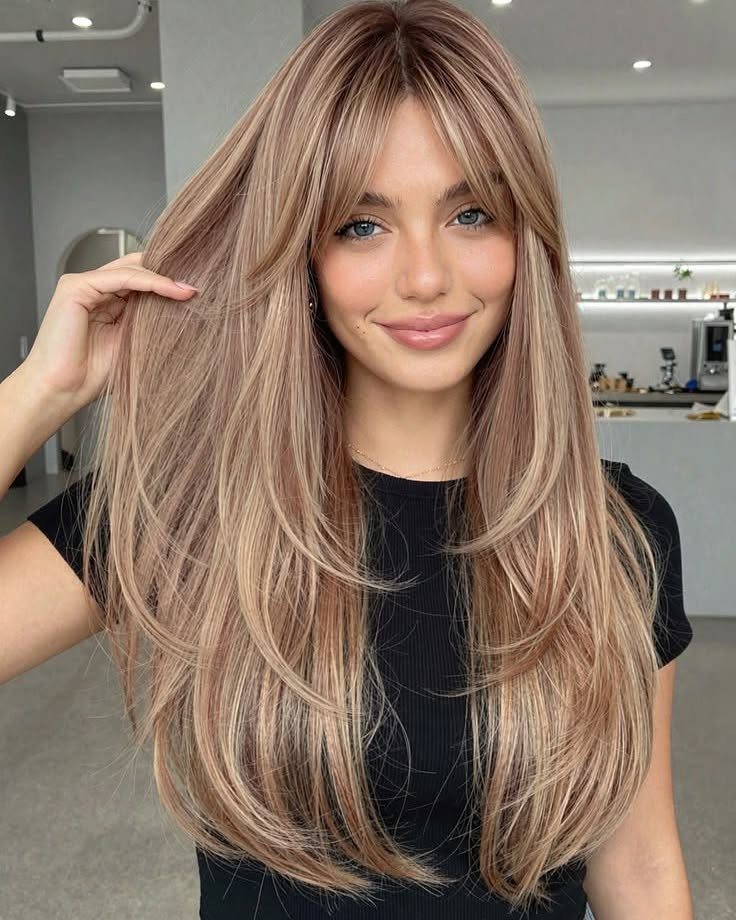
Layers cut around the face are there to point attention at your features, and on long hair they do it without costing any length.
With long curtain-style bangs, as here, the front pieces sweep outward and frame the cheekbones while the back stays full.
Tell the stylist where you want the shortest layer to land, since that spot decides which feature gets the spotlight. Chin or cheekbone are the usual places to start.
Hair and Stylist Considerations
Fine hair does best with a simple air-dry style, so tell your stylist up front that you won’t be blow-drying.
If you dislike heat tools in general, ask for a "wash and go" cut by that name. It signals that the shape has to look finished without a dryer, straightener or curling iron.
Choose a cut that works with the texture you already have, then weigh hair type, face shape and personal style before you commit. A stylist can tailor the details, so I treat the consultation as part of the decision.
A modern bowl cut is a good example of a cut that asks little of you.
“Clients want hair that’s easy to live with, not hair that feels like a full-time job.”
Heat and Hair Condition
Whenever your schedule allows, skip the dryer and let the hair dry on its own. It cuts heat damage and saves you the time a dryer takes.
When you do reach for a hot tool, use it less often and put heat protectant on first. I’d never skip that step, even for a quick pass.
A texturizing spray or a curl cream is worth buying in a good version, because one product can do most of the finishing.
Low-maintenance cuts still need trims now and then to hold their shape and keep the ends healthy.