Your starting color decides which of these is yours: deep plum-black and the long straight plum without bleach suit darker hair, and the wig skips the question entirely.
At one end, plum-black passes for brunette indoors and flashes violet only in direct sun; at the other, plum-purple curls and a wig give you the color with no bleach involved.
Curls, long waves, straight lengths and short feathered ends each wear plum differently, and the glossy, layered and highlighted versions each ask for their own upkeep.
1. Glossy Plum Hair
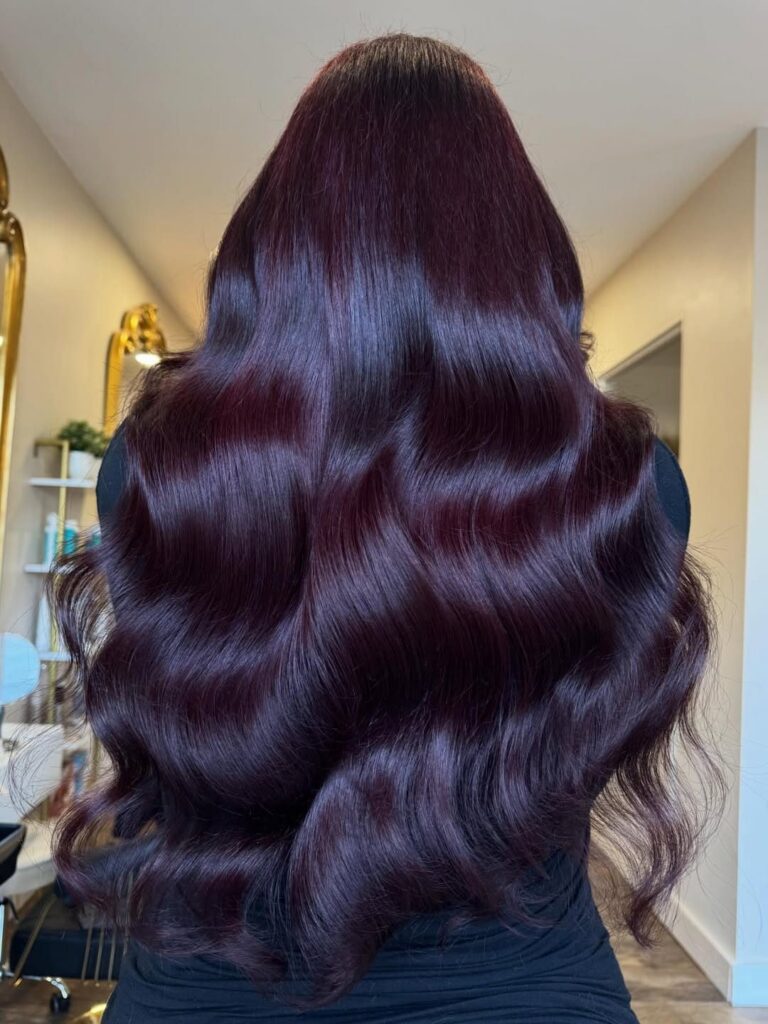
The finish here is polished and reflective, the kind that catches light with every turn.
A gloss serum or spray after styling locks in that shine, and a glossing treatment every few weeks keeps the color from turning flat. Deep plum reads richest when the surface is smooth.
Smooth, well-sealed hair shows the gloss most clearly, since frizz and roughness scatter light and make plum look flat. The color itself stays darker and more saturated than brighter purples, which makes the reflective finish stand out even more.
2. Plum-purple Curls
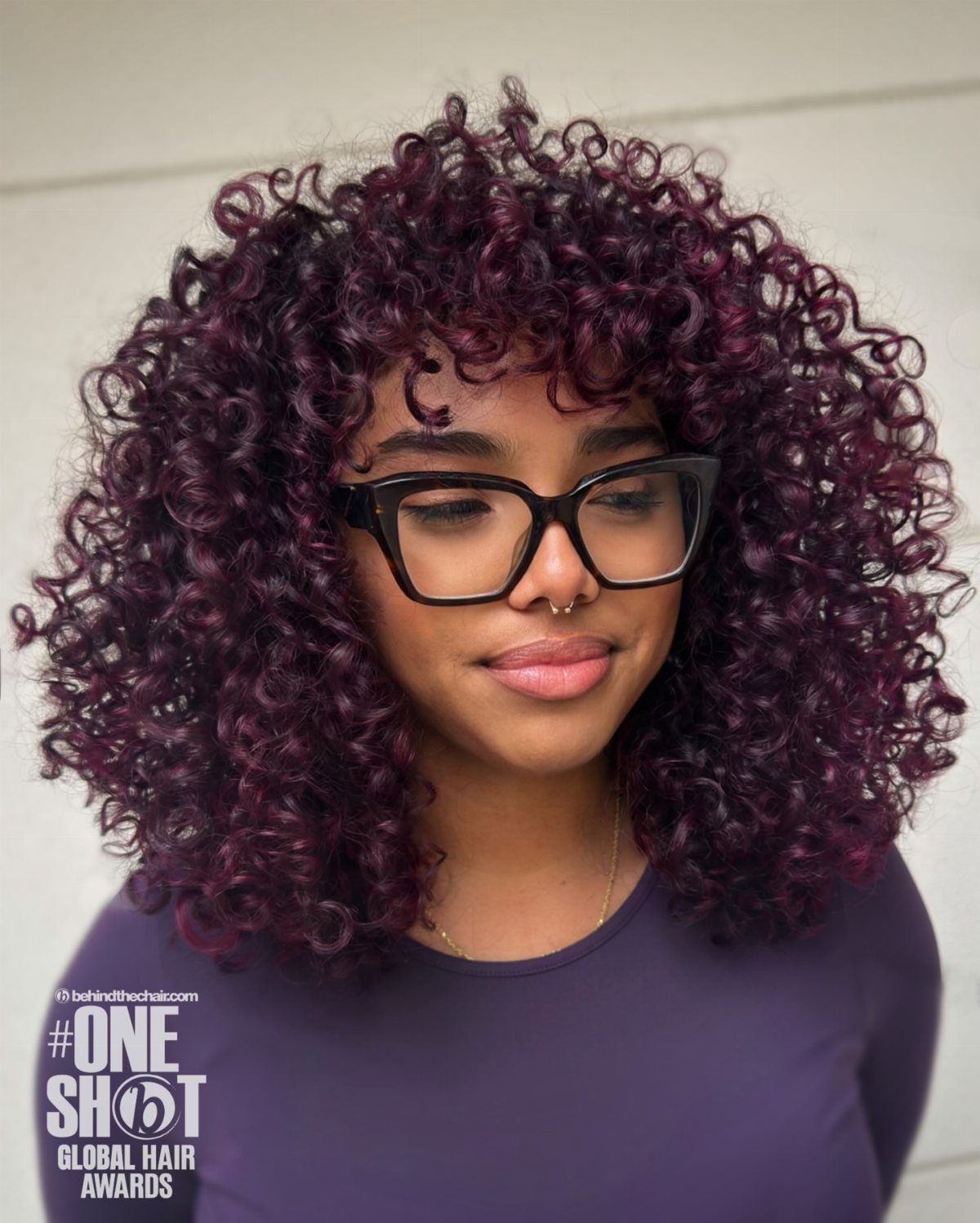
Tight curls hold plum-purple tone in a way that straight hair doesn’t.
Each coil catches light differently, so the purple reads more dimensional without adding highlights. The curl pattern itself is the texture, whether natural or heat-set.
Voluminous curls like these need moisture to keep definition without frizz.
A leave-in conditioner and curl cream work better than oils, which can weigh down the shape. The color shows best when the curls are separated and not clumped into wide sections.
3. Deep Plum-black Hair
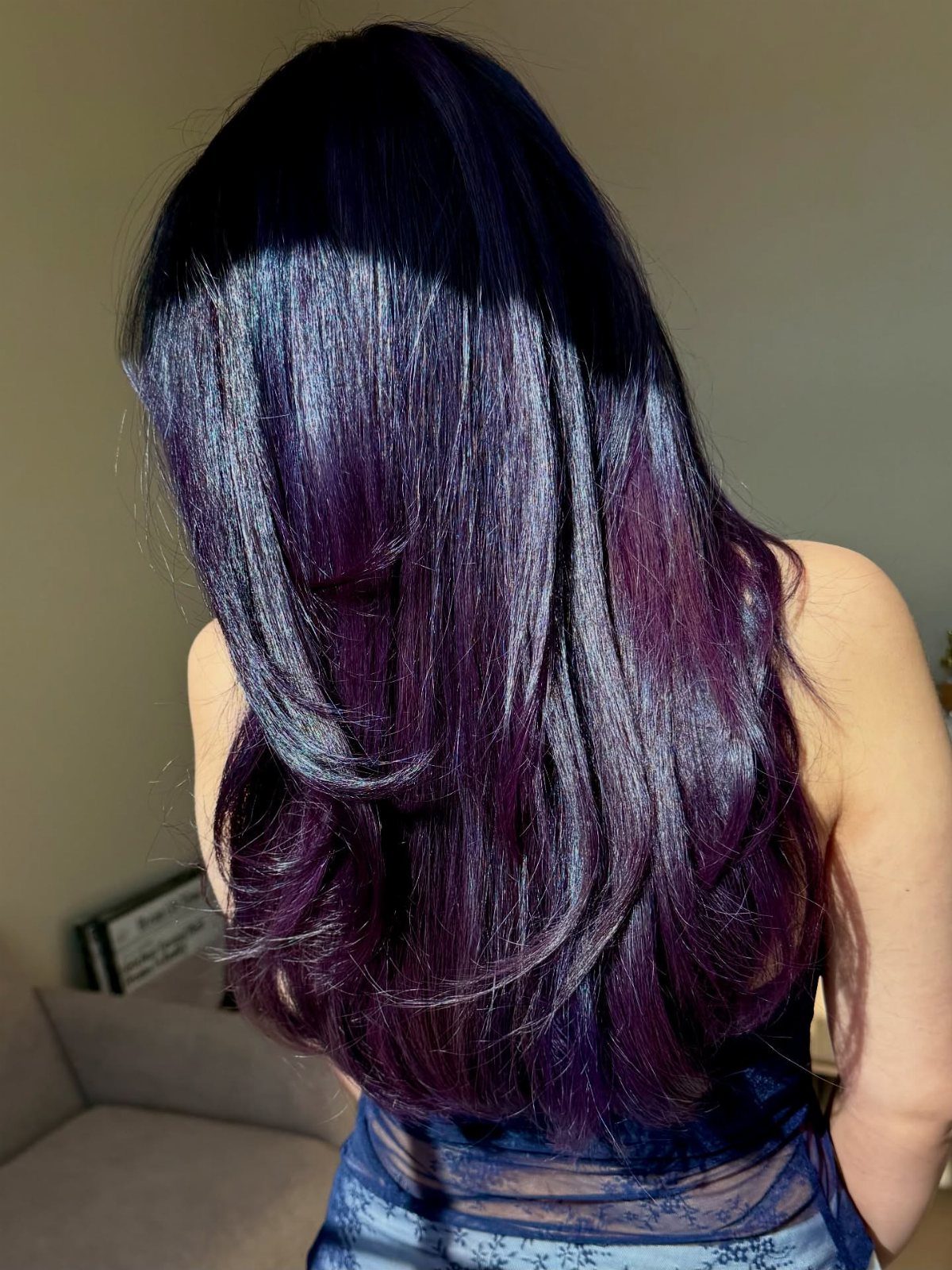
Plum-black sits closer to true black than most plum shades, with just enough violet to register in direct light.
The base is dark enough that it reads as brunette indoors and shows its purple undertone in sunlight or bright indoor lighting.
This shade works well on hair that doesn’t lift easily, since it doesn’t require pre-lightening the way brighter purples do.
The color deposits over dark brown or black hair and fades gradually without turning brassy. A purple-toning shampoo once a week keeps the violet from washing out too quickly.
4. Plum Feathered Ends
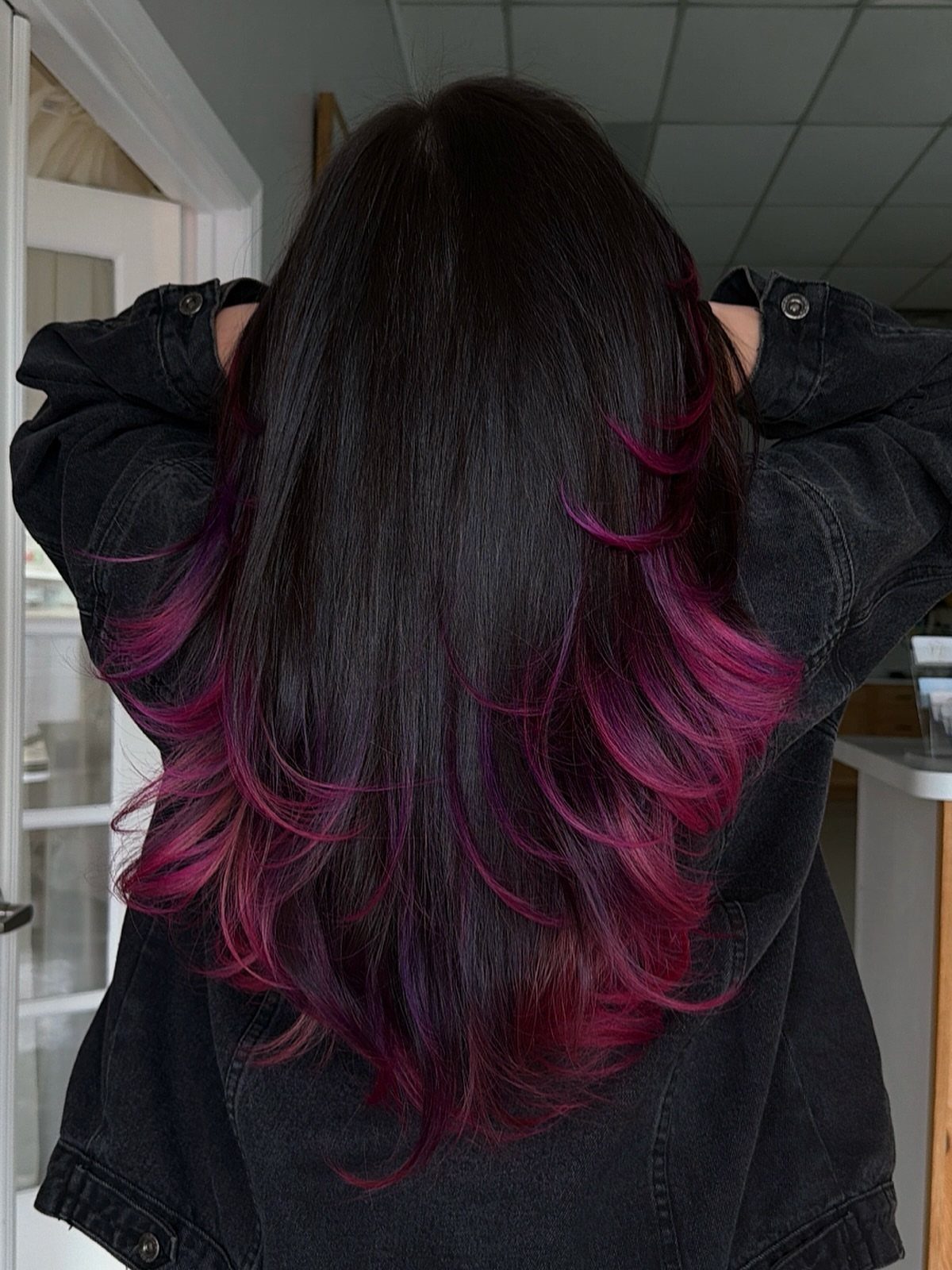
Feathered ends curve outward in a way that shows off the color at the tips, where it tends to be brightest.
The layers are cut to finish in soft, separated pieces rather than a blunt line, so the plum tone spreads across the ends instead of sitting in one solid block.
A round brush and blow dryer flip the ends out while drying, or a flat iron wrapped away from the face does the same thing in less time.
The feathering shows up best on hair that’s long enough to layer without losing length, usually past the shoulders.
5. Plum-purple Wigs
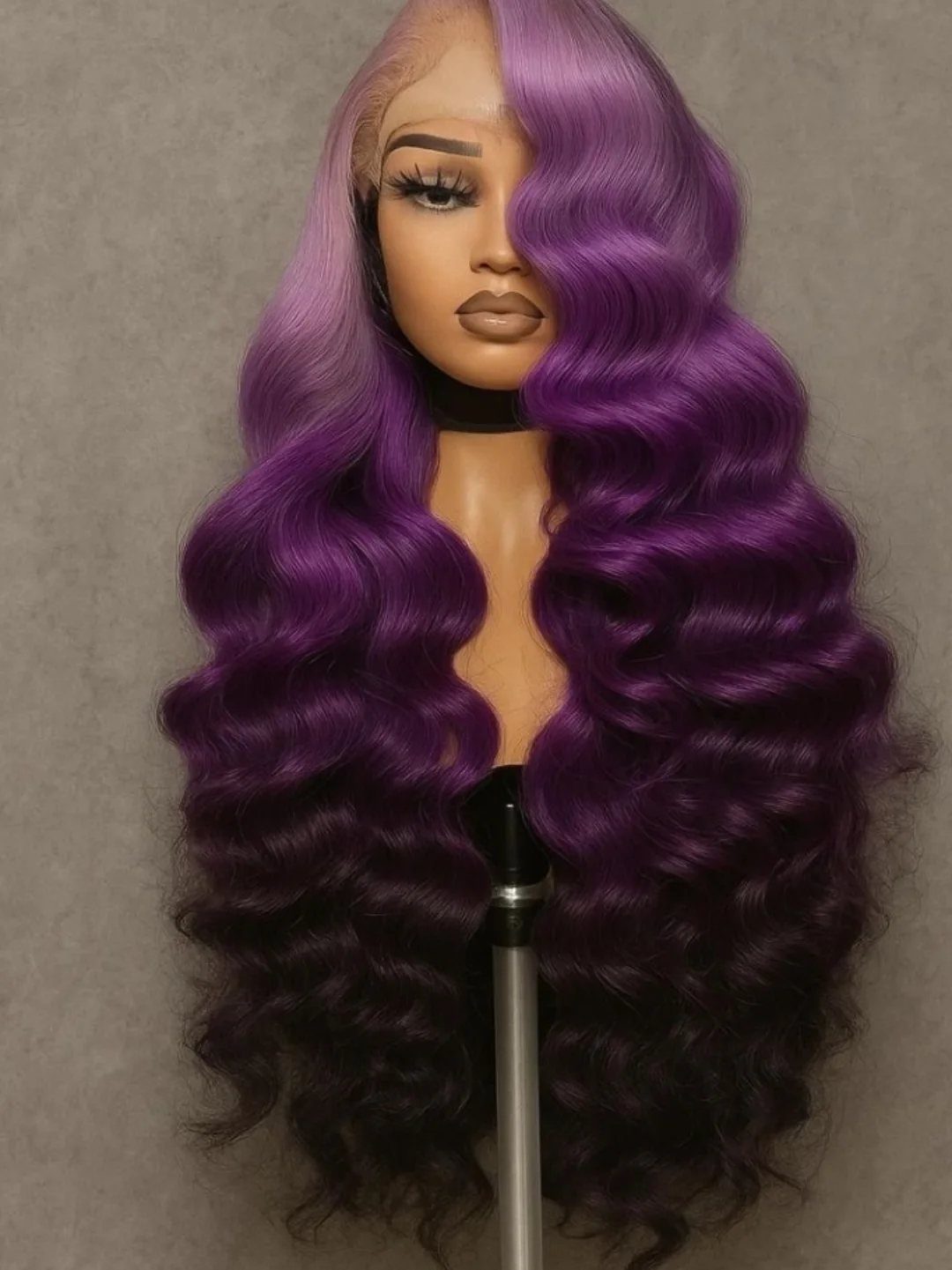
A wig lets you try deep plum without committing to the upkeep or the bleach.
The ones styled in loose waves and center parts are the easiest to wear straight out of the box, since the parting is already set and the waves don’t need restyling.
Lace-front wigs sit more naturally at the hairline, but synthetic fiber holds the color longer than human hair and costs less upfront.
The color won’t fade the way dyed natural hair does, so the shade you see is the shade you keep. A wig cap underneath keeps your own hair flat and prevents the wig from shifting during the day.
6. Long Layered Plum Waves
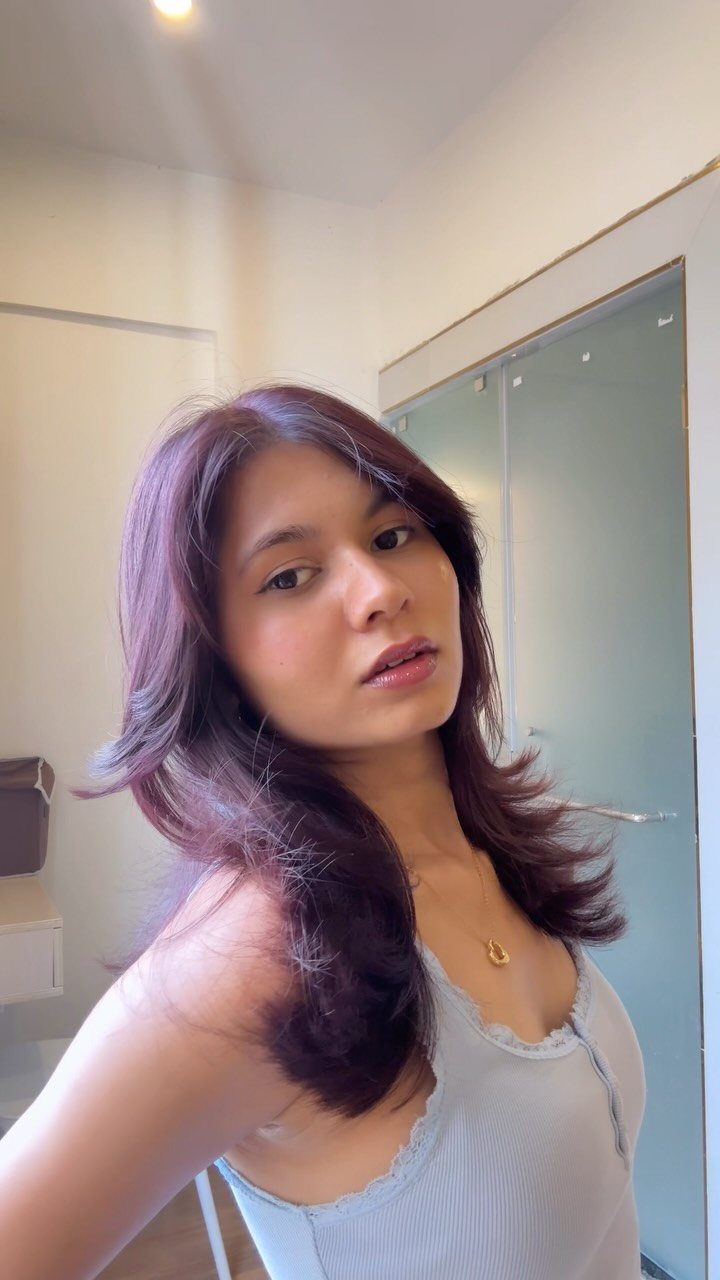
Long layers cut into wavy hair let the plum color shift in tone from roots to ends, even when the dye job is one solid shade.
The waves break up the color so it doesn’t look flat, and the layers keep the length from weighing down the curl pattern.
Feathered layers start around the shoulders and continue to the ends, so the top stays heavier and the bottom gets lighter.
A curling iron wrapped from mid-shaft to ends, not clamped at the root, gives waves that match this kind of layering. The color holds best on hair that’s been toned after lightening, since plum fades fast on yellow-toned bases.
7. Long Straight Plum Hair Without Bleach
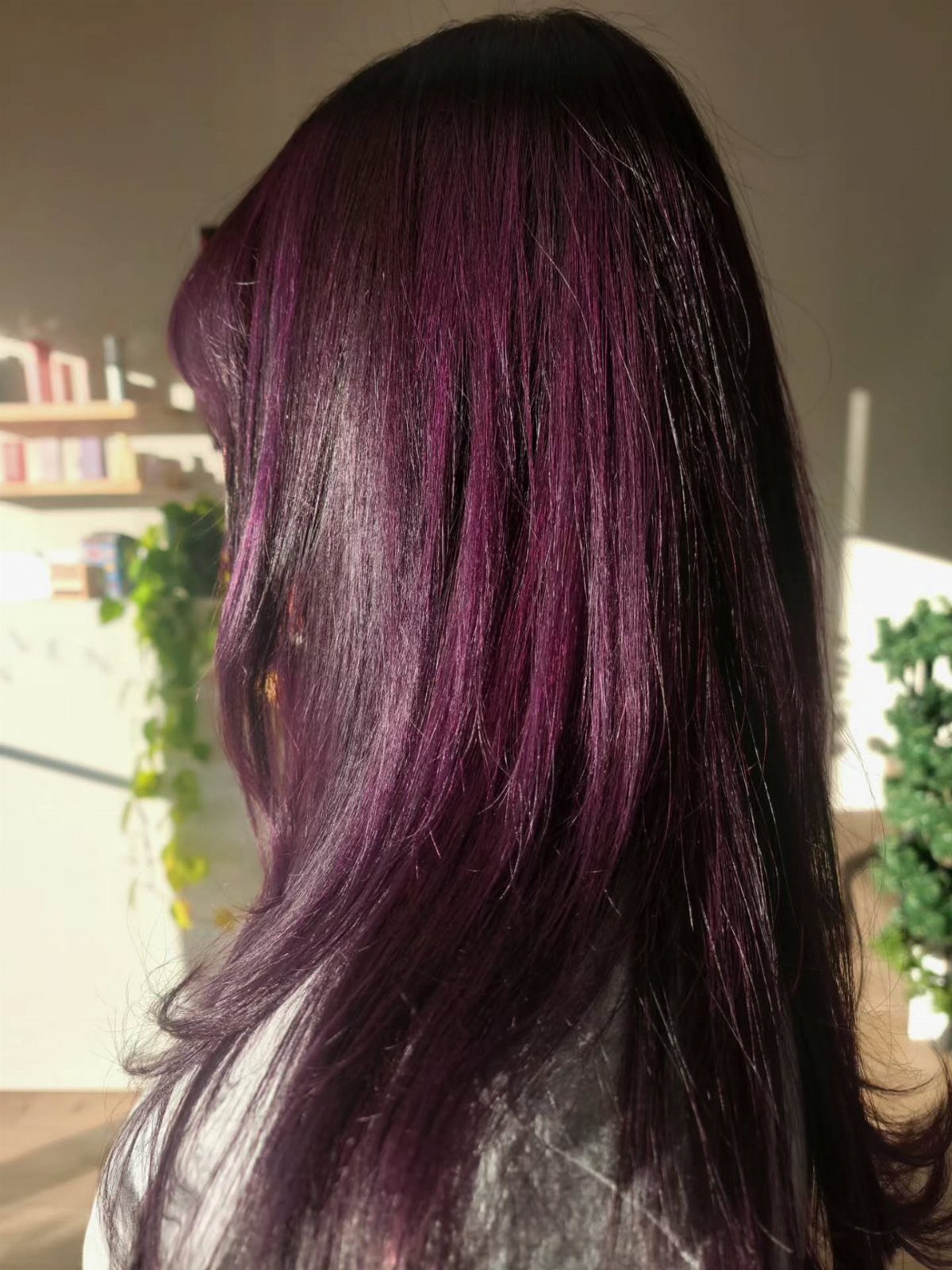
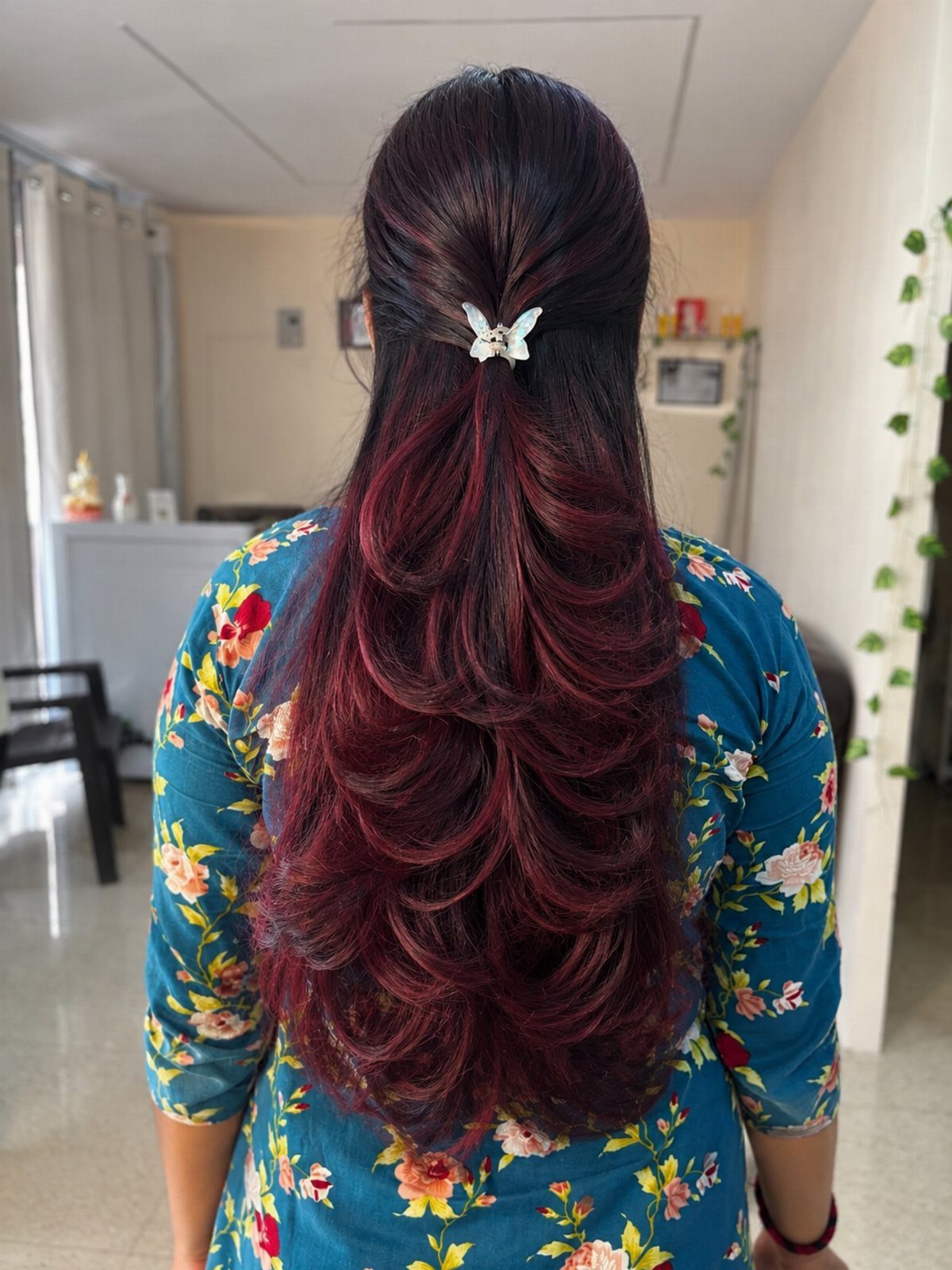
Dark hair can carry plum without lightener, and this is the proof. The color sits in the lengths as a deep magenta-leaning tint, so it looks rich rather than neon.
Straight hair shows that tint evenly from crown to ends, so a smooth blow-dry or flat-iron finish matters more than any styling trick.
Ask your stylist for a deep plum deposited over your natural dark base, and expect a shade that stays low-key indoors and warms up in brighter light.
8. Plum Hair with Red Highlights
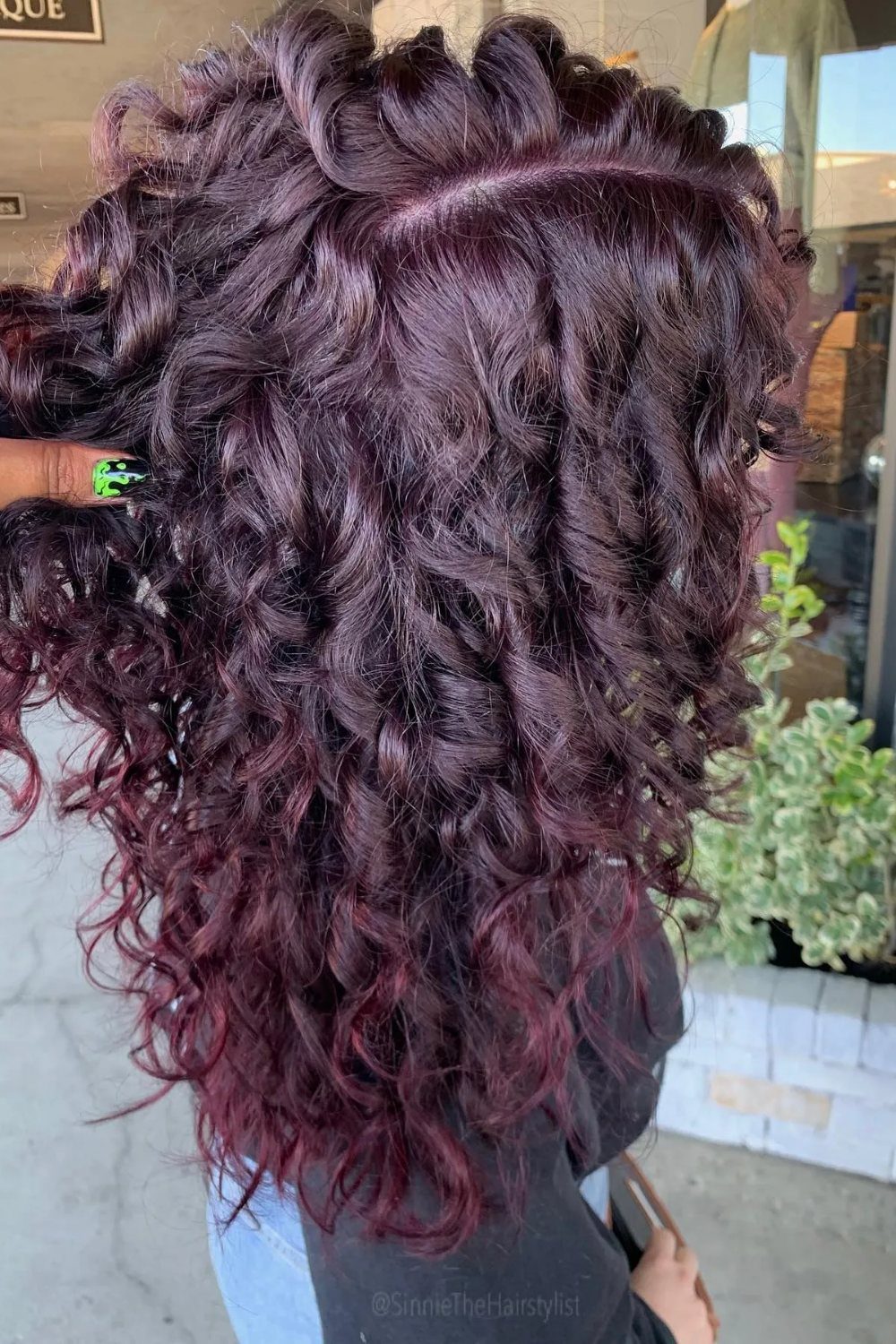
Red works best here as a thread, not a stripe. Thin pieces of red through plum-burgundy curls add warmth, and the curl pattern keeps breaking them up so they never sit in one band.
I’d keep the red sparse and ask for it placed in fine strands, so plum stays the main color. Shoulder length suits this well, because the highlights stay visible through the whole shape without crowding it.
9. Side-parted Plum Hair
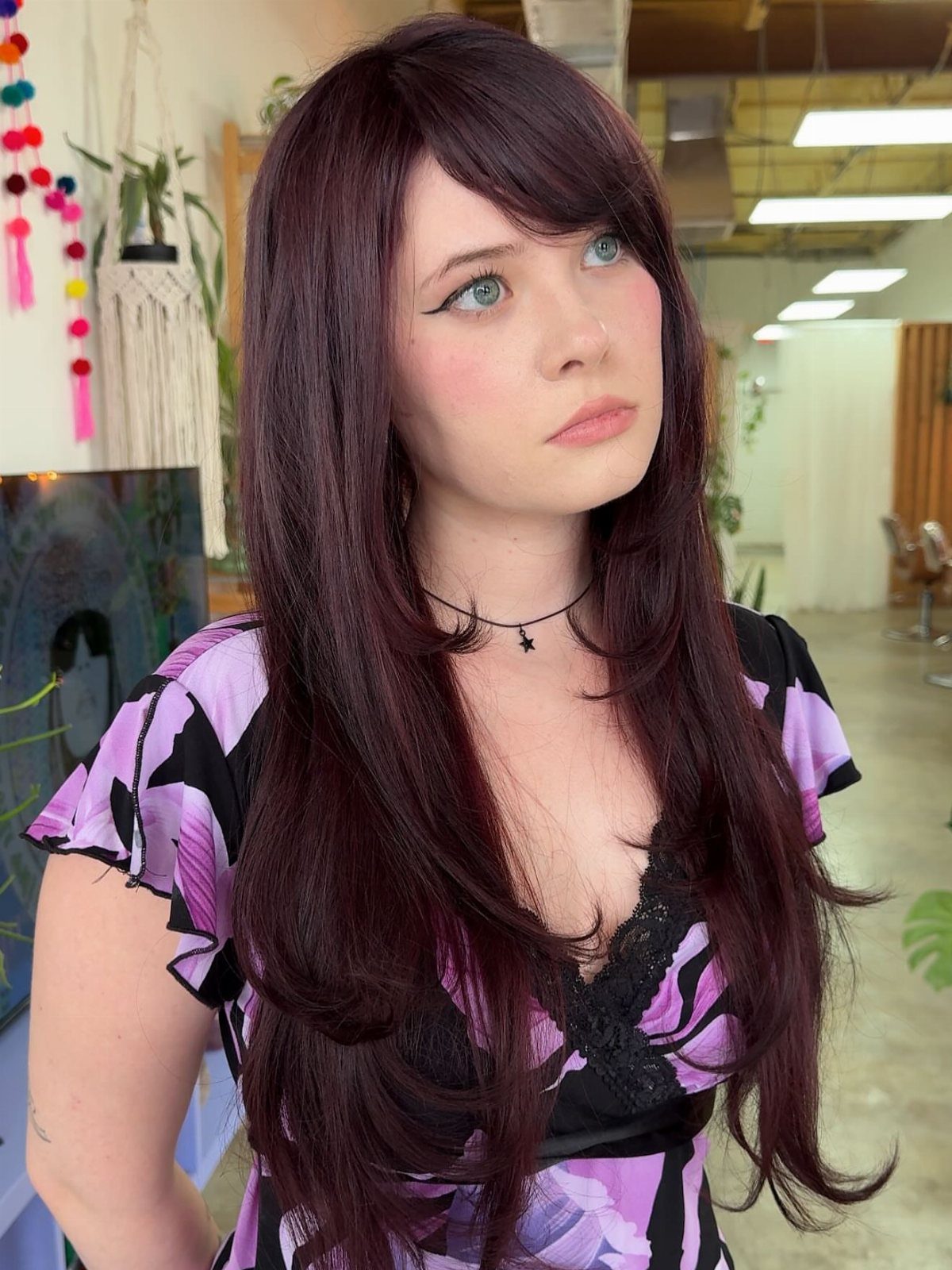
A deep side part throws most of the hair to one side, which gives the plum a big, smooth sweep across the front. The side-swept bangs soften that line and blend into the length instead of cutting across the forehead.
At home, part the hair while it’s damp and blow-dry the bangs sideways with a round brush, so they learn the direction. Bangs need regular trims to keep their shape, and that’s the real upkeep on this look.
10. Face-framing Plum Layers
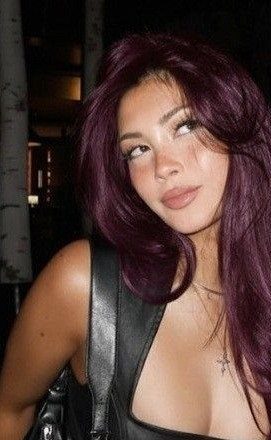
Face-framing pieces do the work of a haircut without removing length. The shortest layers begin near the face and blend back into the longer hair, so the plum color moves with every turn of the head.
Ask for soft layers rather than sharp ones; they look more natural on dark plum and grow out without an obvious step. A flat iron turned away from the face keeps those front pieces swinging back and open.
11. Plum Hair with Lowlights
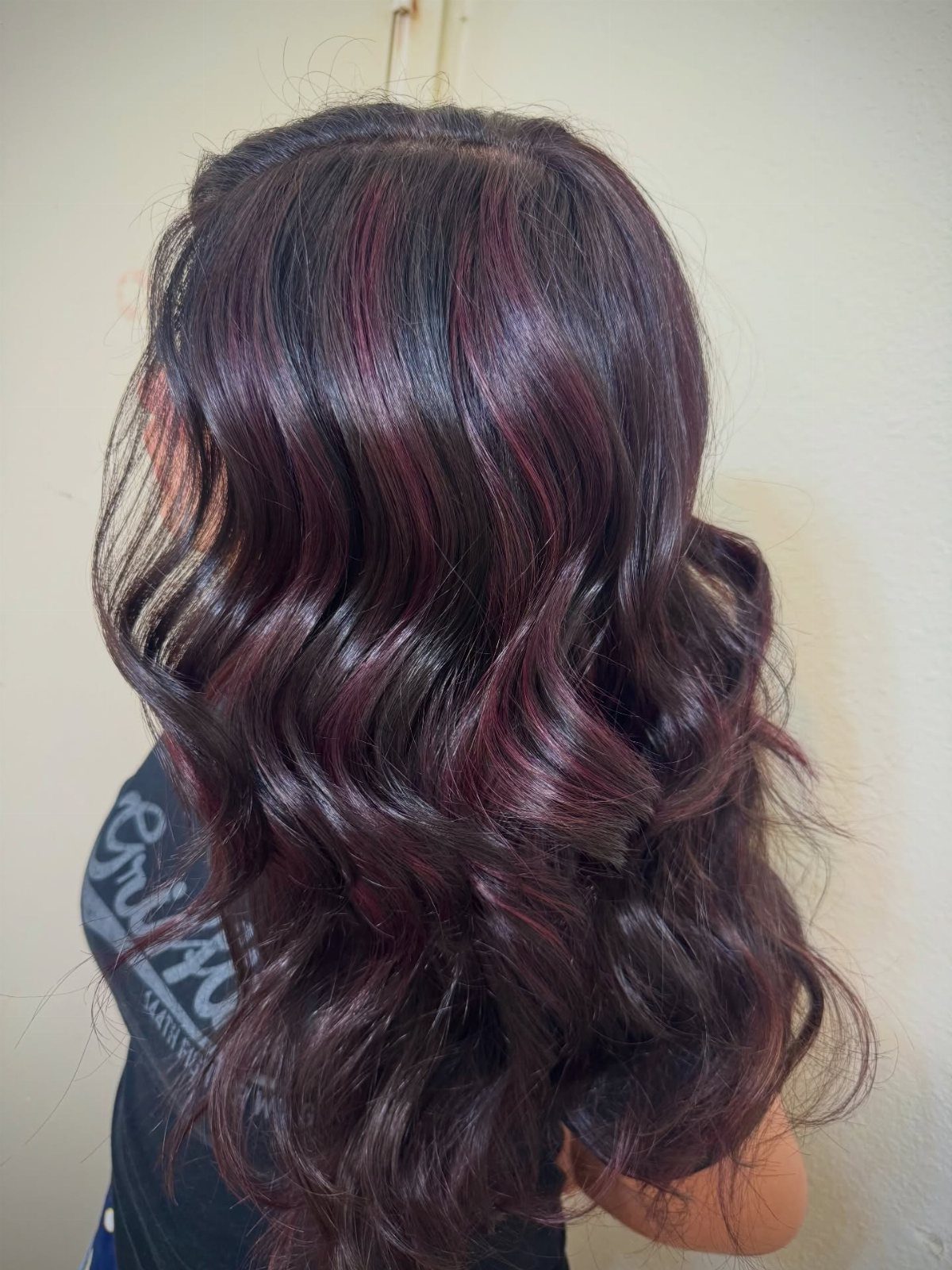
Black lowlights give plum waves a shadow, and that shadow is what makes the color look deep rather than flat. As the waves bend, the darker strands drop behind the plum ones and the reddish-purple sheen shows up on top.
Ask for the lowlights fine and spread through the lengths, not in thick chunks. Subtle placement keeps plum as the dominant color, and the dark strands can make regrowth at the roots less noticeable.
12. Plum Brunette Highlights
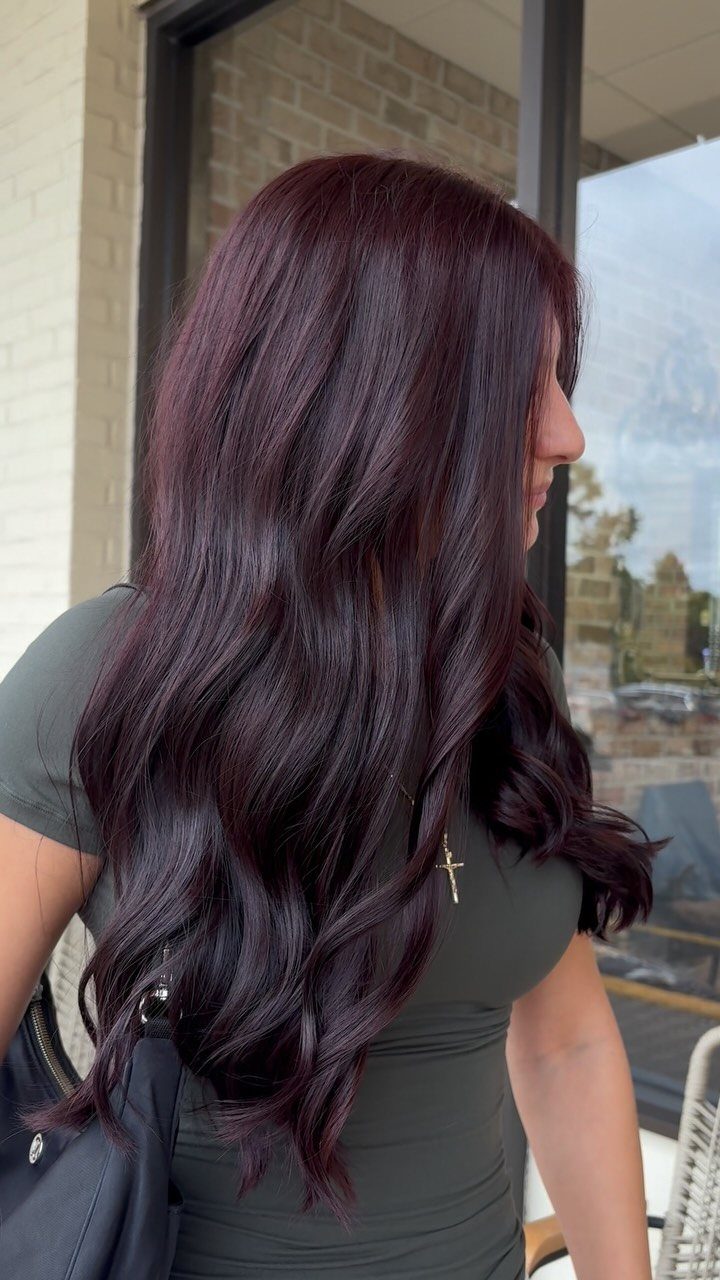
Plum-burgundy highlights on dark brown hair are the quietest way to wear this color. Brown stays the base, and the burgundy only shows in movement and good light.
Bring the photo to your stylist and ask whether your brown needs lightening for the highlights to show, because that decides how much work the appointment takes.
I’d keep the highlights fine and few; long waves give them room to catch the light.
Frequently Asked Questions
What is the best semi-permanent purple shade for dark hair?
Deep plum is the safest pick for dark hair, and plum-black is the easiest version to wear.
A deep violet-black is the one I’d pick: it reads as black until direct light catches it, and it stains dark brown or black strands with no bleach beforehand.
A magenta-leaning plum also reads rich instead of neon, which brighter purples on dark bases often don’t.
What hair color is purple?
Purple hair runs from bright violet down to plum, and plum is the darkest, most wearable end: deep violet with berry undertones.
Indoors, plum-black passes for dark brunette and only turns violet in sunlight; on curls, plum-purple looks brighter since every coil bounces light at its own angle.
Brighter purples than plum need pre-lightening on dark hair, so plum is the lower-effort route.