
Onion juice has one small trial behind it, and it covers alopecia areata, not pattern baldness.
In that 2002 study, 20 of 23 people using onion juice regrew hair by 6 weeks, versus 2 of 15 using tap water. Do a 24-hour patch test first, since skin contact alone can trigger a reaction.
What the Research Says
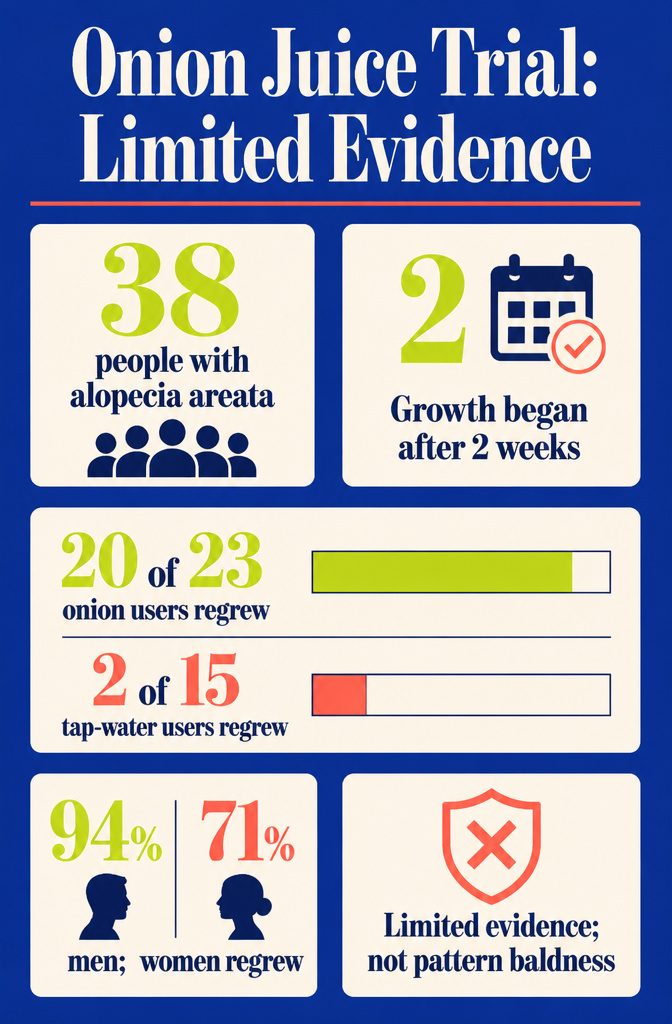
In a 2002 trial, 38 people with alopecia areata applied onion juice to the scalp twice daily, and growth began after 2 weeks. The headline numbers:
Almost 74 percent of participants had some hair regrowth after 4 weeks, and at 6 weeks about 87 percent experienced hair regrowth.
The comparison is more telling: 20 of the 23 people in the onion group reported growth at 6 weeks, against 2 of 15 using tap water. Men did better, with nearly 94% regrowing hair versus 71% of women.
Alopecia areata affects 6.8 million people in the U.S., yet the evidence is limited and does not show onion juice treats pattern baldness or other hair-loss conditions.
How Onion Juice Might Work
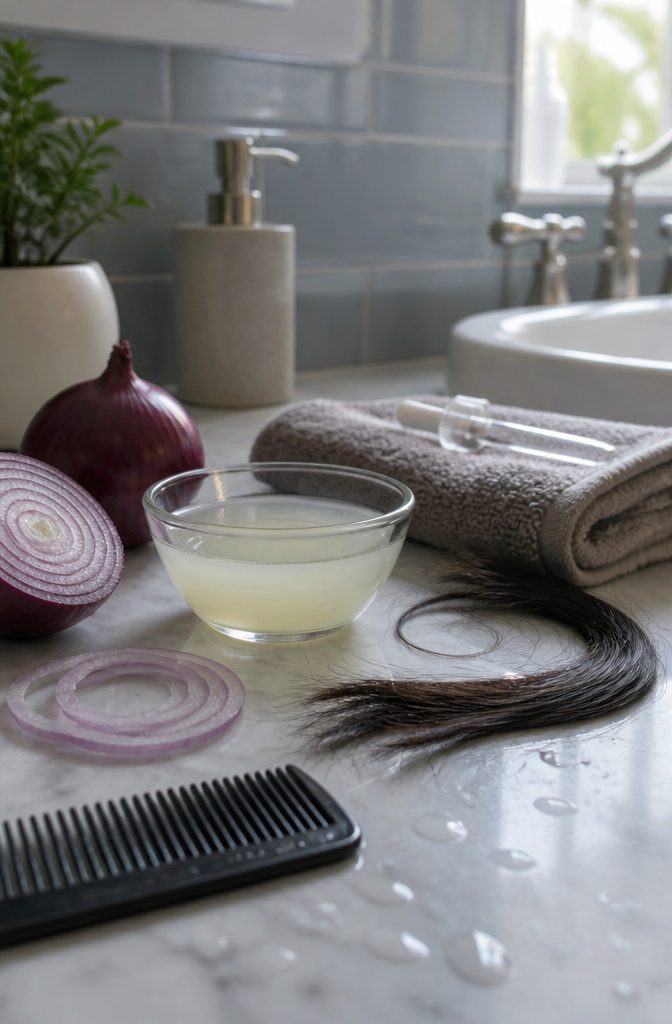
Sulfur is the main reason people reach for onions. Keratin, the main protein in hair, is built from sulfur-containing amino acids, so the theory is that the juice supplies raw material.
That sulfur is also credited with boosting circulation around follicles, the proposed route to more nutrients at the root.
Flavonoids such as quercetin and kaempferol are claimed to cut oxidative stress, calm scalp inflammation and fight the bacteria and fungus behind buildup and dandruff.
Catalase, an enzyme, is said to break down hydrogen peroxide at the roots and delay premature graying.
Shine and softer texture are credited to that healthier scalp. I treat all of this as theory, and existing gray hair is not expected to reverse.
Making Onion Juice
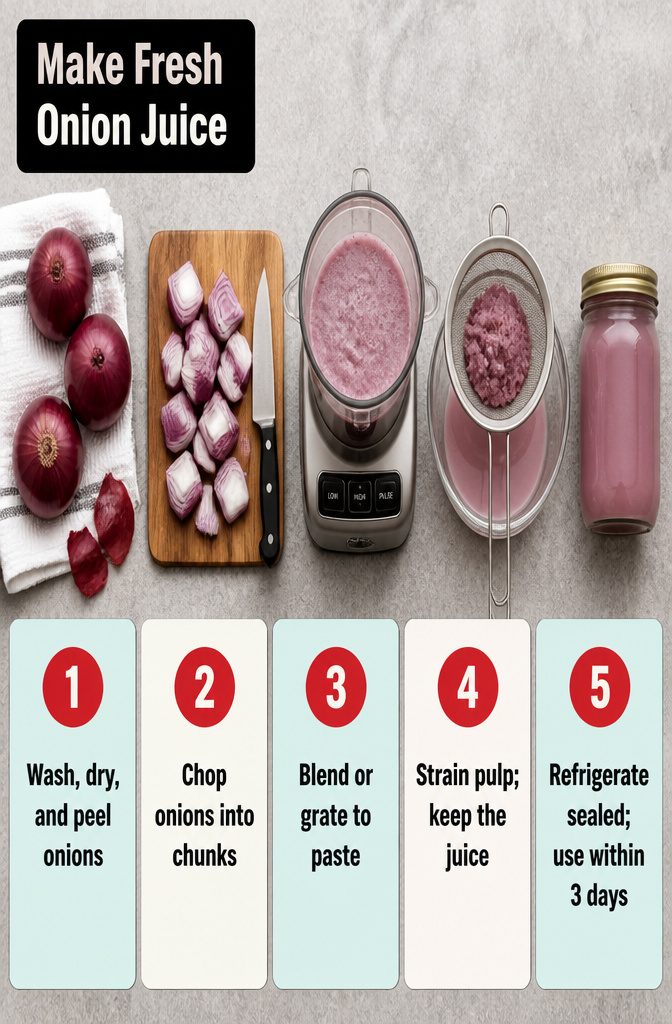
- Wash the onions, dry them with a clean towel, and peel them.
- Chop them into chunks. A small batch takes 1–2 red onions; a larger one takes about four.
- Blend in small batches until nearly liquid, or grate into a paste. A strong blender needs no added water.
- Press the pulp through cheesecloth, muslin or a fine strainer, and discard it.
- Use the juice right away, or refrigerate it in a sealed glass jar.
Red onions run higher in antioxidants and yellow higher in sulfur, but any color works. I’d grab red if both are in the kitchen.
Storage advice ranges from 1 to 5 days up to a full week.
I’d keep it to 3 days at most and make small batches, since older juice can irritate the scalp. Toss anything that smells sour.
Applying It to the Scalp
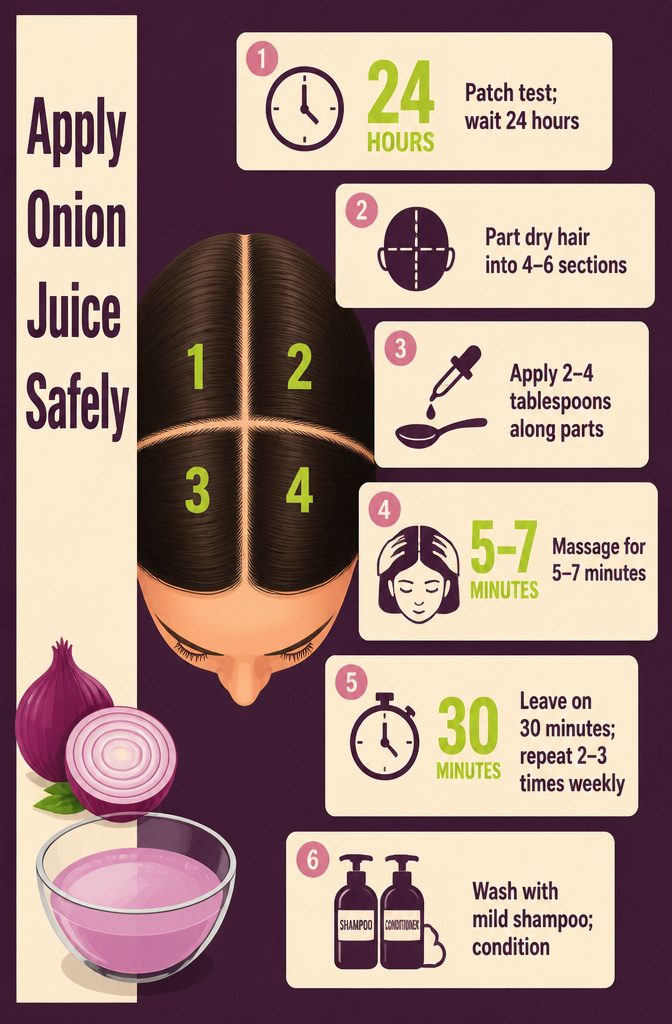
- Dab a little behind the ear or on the inner forearm, then wait 24 hours before going near the scalp.
- Part dry hair into 4–6 sections.
- Apply 2–4 tablespoons along the parts with fingertips or a cotton ball.
- Massage for 5–7 minutes; 10 is the upper end.
- Leave it on. Guidance splits: about 30 minutes, 2–3 times weekly for 30–60 minutes, or 15 minutes at most for a vinegar rinse version. The study used daily or twice-daily application. I’d start at 30 minutes, 2–3 times weekly.
- Wash out with a mild shampoo, then condition.
Reduced shedding or texture changes show up around 4–6 weeks, visible growth at 2–3 months. Plan on at least a few months.
Risks and Precautions
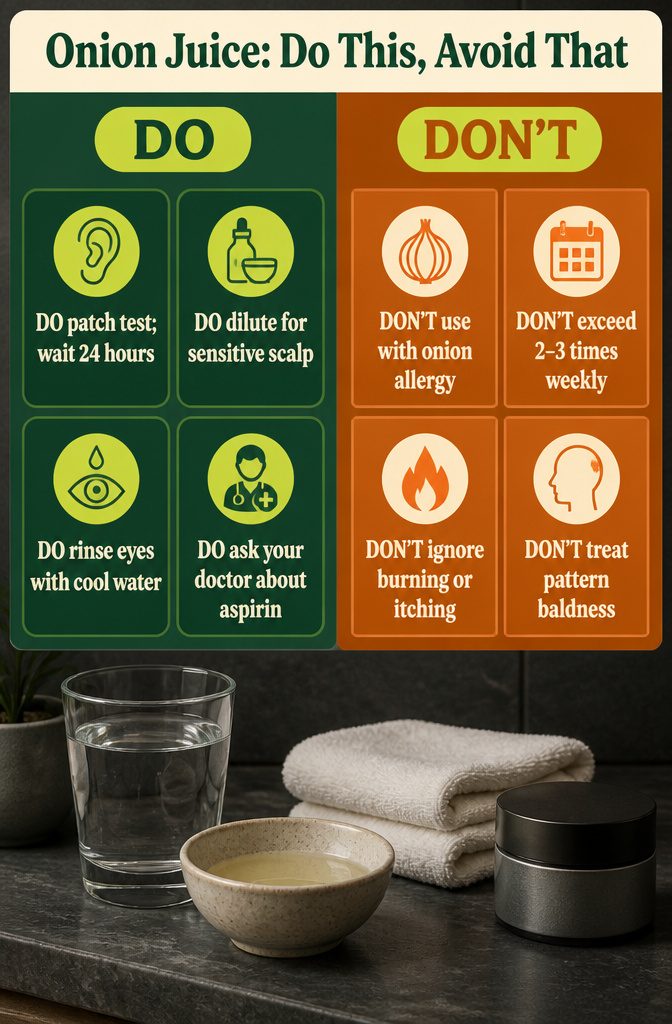
Onion juice is mostly safe, but these are the ways it goes wrong:
- Allergy: If onions bother you to eat, skip this. Skin contact alone can trigger a reaction.
- Irritation: Redness and itching show up even without an allergy. Mixing in aloe vera or coconut oil softens it.
- Patch test: Dab a little behind your ear or on your inner wrist, then wait 24 hours.
- Sensitive scalp: Dilute with equal parts water, leave it on 20 minutes instead of 60, and stop at any burning or persistent itching.
- Frequency: More than 2–3 times weekly can irritate. Dry, tight skin means cut back.
- Eyes: Drips burn and redden them. Rinse with cool water.
- Medications: Aspirin can raise skin sensitivity, so ask your doctor.
- Hair loss: Onion juice is not a proven cure for pattern baldness or other hair-loss conditions.
Smell and How to Fix It
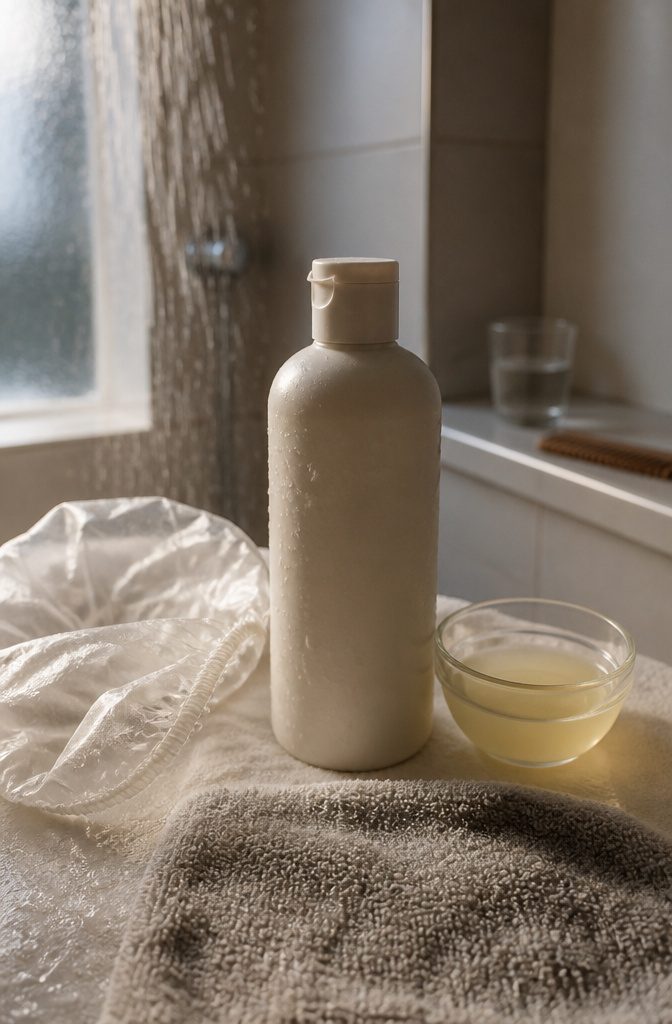
Sulfur compounds cause the smell, and they’re the same compounds credited with the hair benefits, so you can’t remove one without the other.
Odor is the most repeated reason people quit. Shampoo twice with a mild shampoo and rinse with cool water, because hot water makes the smell stronger.
An apple cider vinegar rinse afterward helps, and so does lemon juice diluted in water. Mixing 2 teaspoons of lemon juice into 3–4 teaspoons of onion juice cuts the odor from the start.
A few drops of lavender or peppermint oil mask it during application, and a shower cap contains it during the leave-on. I’d still set expectations: none of these removes the smell completely.
Recipes With Add-Ins
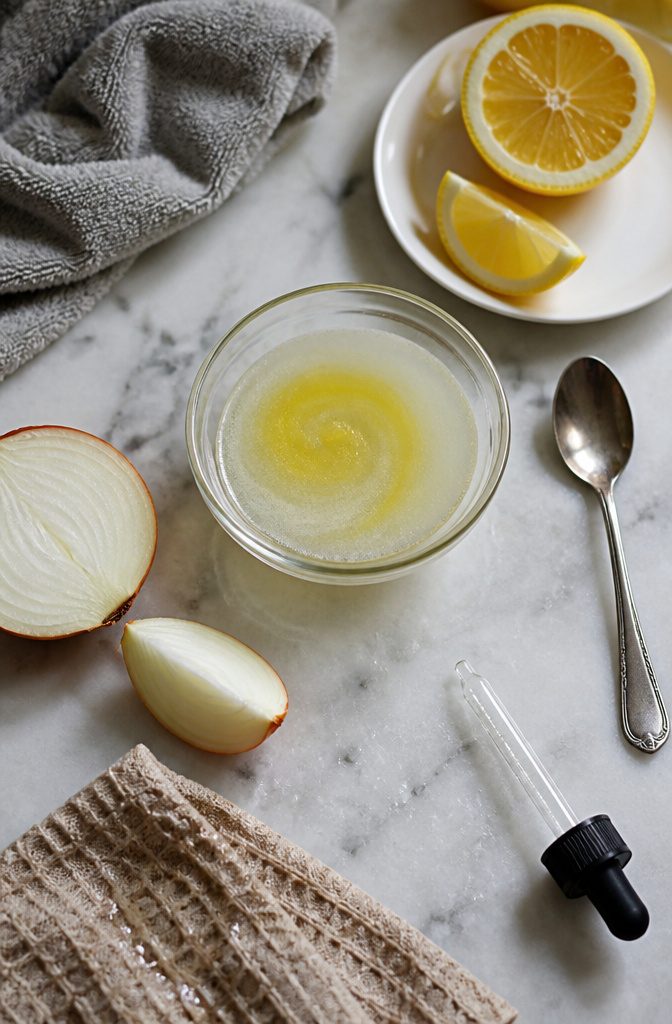
These are separate ideas, not one agreed formula, so pick one add-in at a time. Onion with lemon is my first pick: it has the simplest ratio, and leaving the lemon out means more odor.
| Recipe | Mix | Leave on |
|---|---|---|
| Onion + lemon | 3 tsp juice, 2 tsp lemon (some say 3–4 tsp juice) | 30 min |
| Honey mask | 2 tbsp juice, 1 tbsp raw honey | 30 min |
| Aloe | Equal parts; refrigerate, use within 2 days | n/a |
| Apple cider vinegar rinse | Equal parts; twice weekly at most | 15 min max |
| Essential oil | 2–3 drops per tbsp juice | 20–30 min |
| Garlic | 2–3 onions, 4–5 cloves; twice weekly at most | n/a |
| Coconut oil | 1:1, 2:1 or 3:1 | n/a |
Other Hair Loss Treatments
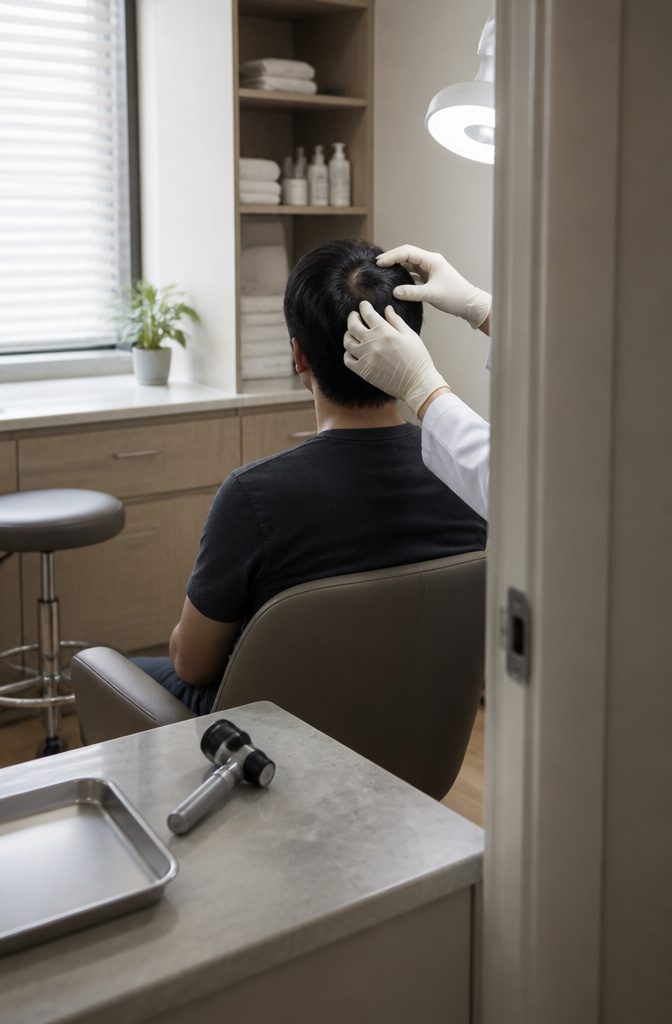
Onion juice does not cure every kind of hair loss.
For some conditions, a hair transplant is the only treatment that works, and clinics now offer more than surgery: platelet-rich plasma and platelet-rich fibrin therapy, stem cell hair therapy, mesotherapy, skin-safe laser treatments and the DHI Robotic Hair Transplant.
For everyday thinning, finasteride and minoxidil are the two names I’d bring to a doctor first. Both are established treatments, while onion juice is still a home remedy that needs more study.
If flaking is the real problem, a dandruff shampoo goes straight at it. Get the cause of the loss confirmed by a dermatologist before you spend months on a kitchen remedy.
Frequently Asked Questions
Does onion juice really help hair grow?
It may help with alopecia areata, but the evidence is limited.
In a 2002 trial, 20 of 23 people using onion juice reported regrowth at 6 weeks, compared with 2 of 15 using tap water. Nothing shows it treats pattern baldness or other types of hair loss.
How long does onion juice take to work on hair?
Reduced shedding or texture changes tend to appear around 4–6 weeks, and visible growth around 2–3 months. Plan on at least a few months of steady use before judging the results, since they depend on your own hair cycle.
How often should I use onion juice on my hair?
Use it 2–3 times a week, leaving it on for about 30 minutes.
More often than that can irritate the scalp, and dry or tight skin is a sign to cut back. The 2002 study applied it daily or twice daily, but I’d begin with the gentler schedule.
Can I apply onion juice directly to my hair?
Yes, but put it on the scalp rather than the lengths, and only after a 24-hour patch test.
Part dry hair into 4–6 sections, work 2–4 tablespoons along the parts with your fingertips, and massage for 5–7 minutes. Wash it out with a mild shampoo and condition afterward.
What are the side effects of onion juice on hair?
The main ones are scalp redness, itching and irritation, and skin contact alone can set off an allergic reaction.
Juice that drips into your eyes burns and reddens them, so rinse with cool water. Some medications, aspirin among them, can raise skin sensitivity, so ask your doctor first.
Can I use onion juice if I have a sensitive scalp?
Possibly, with extra care.
Patch test behind your ear and wait 24 hours, dilute the juice with equal parts water, and leave it on for 20 minutes instead of 60. Stop right away if you feel burning or itching that doesn’t fade.
Why does onion juice smell so strong, and how do I get rid of it?
Sulfur compounds cause the smell, and they are the same compounds credited with the hair benefits.
Shampoo twice with a mild shampoo and rinse with cool water, since hot water makes the odor stronger. An apple cider vinegar rinse or diluted lemon juice helps, though nothing removes the smell completely.
What is the best onion for hair loss?
Any color works.
Red onions run higher in antioxidants and yellow onions run higher in sulfur. If both are in the kitchen, I’d grab red.
What can I mix with onion juice for hair regrowth?
Add one ingredient at a time. Lemon is the simplest: 3 tsp onion juice with 2 tsp lemon juice, left on for 30 minutes, which also cuts the odor.
Raw honey (2 tbsp juice to 1 tbsp honey), aloe vera, coconut oil and an apple cider vinegar rinse are other options, and aloe or coconut oil can soften irritation.