Pick the egg part by your hair’s problem: yolk for dry, damaged or brittle hair, white for oily roots and buildup, whole egg for normal hair.
Rinse with cool or lukewarm water, because heat cooks the egg onto the strands. Past 30 minutes, the mask can begin to harden on your hair.
1. Choose the Egg Part
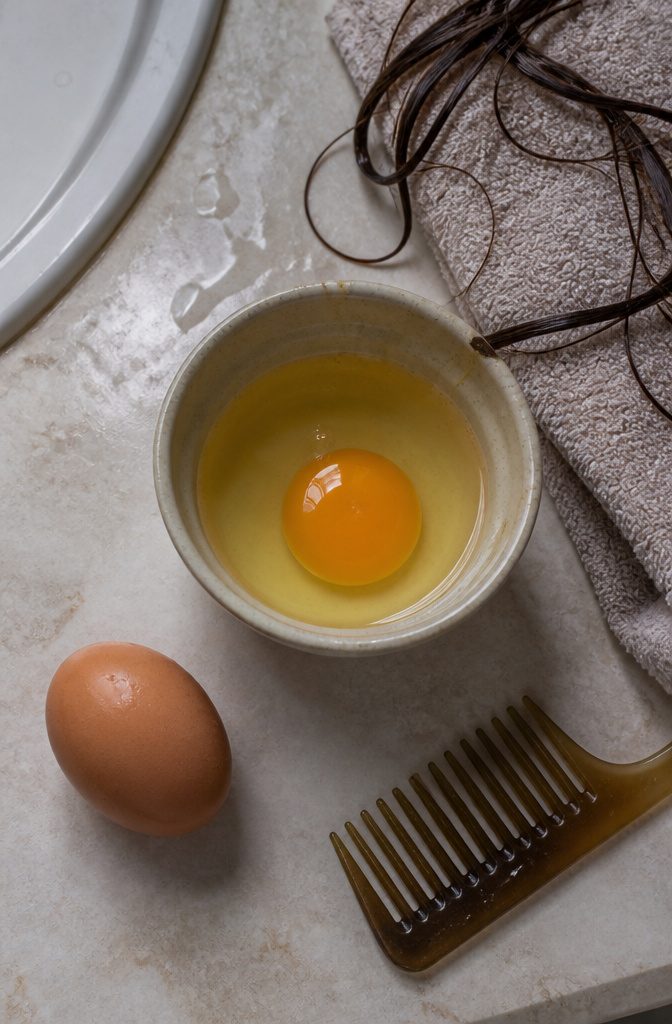
Whole egg is the default for normal hair: the white cleanses while the yolk conditions, so one mix covers both.
Past that, choose by problem. Yolk wins for dryness, damage, dullness and brittle hair, because its fats and vitamins moisturize and help hair hold that moisture.
I’d also pick it if breakage or hair fall is the worry, since the yolk carries biotin, folate and vitamins A and E. White wins for oily roots, buildup and limp hair: its protein strengthens the shaft, it clarifies the scalp, and it smooths the cuticle, which calms frizz.
Skip the white if your ends feel parched. For amounts, Sarah Stirling uses 1 yolk, or 2 eggs for very long hair.
2. Mix the Mask
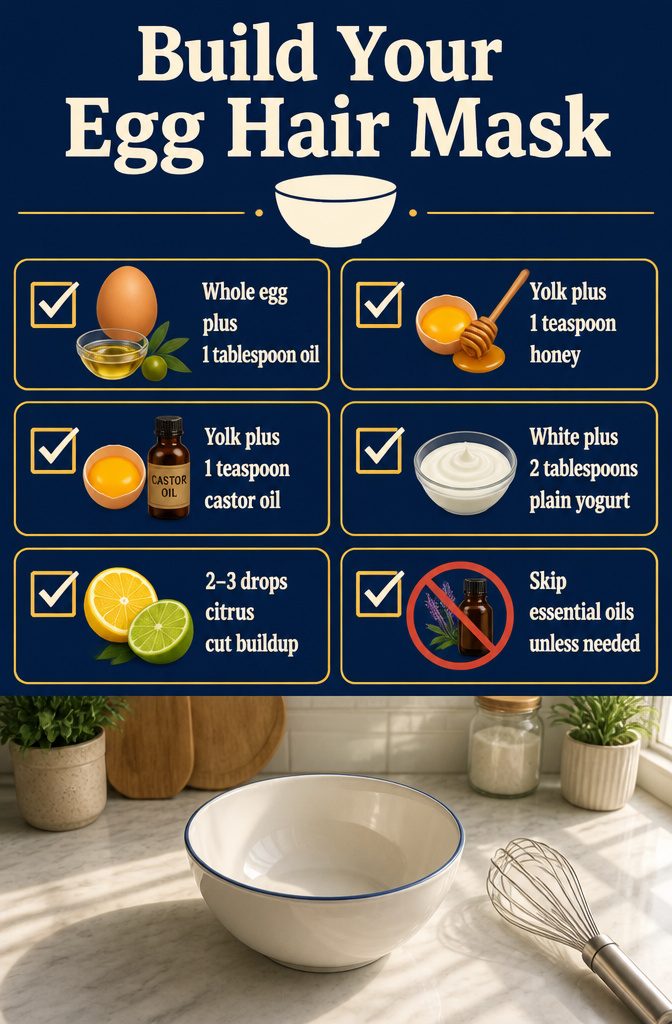
Start with a whole egg and one tablespoon of olive or coconut oil for the basic mask that covers both cleansing and moisture.
Crack the egg into a bowl, whisk until smooth and slightly frothy, and stop before you overbeat it into a bubble storm you’ll be scooping out of your hair later.
Common add-ins let you steer the recipe toward what your hair needs:
- 1 egg yolk with 1 teaspoon honey for damaged ends that need repair
- 1 yolk with 1 teaspoon castor oil when shine matters more than volume
- 1 egg white with 2 tablespoons plain yogurt for oily scalps that need less conditioning weight
- 2 to 3 drops lemon or lime juice to cut buildup and tamp down the egg smell
- Olive oil, aloe vera, banana, mayonnaise, or milk depending on how dry your hair runs
I skip the essential oils unless the scent really bothers you. The citrus handles most of it, and one more ingredient is one more thing to rinse out.
3. Apply to Damp Hair
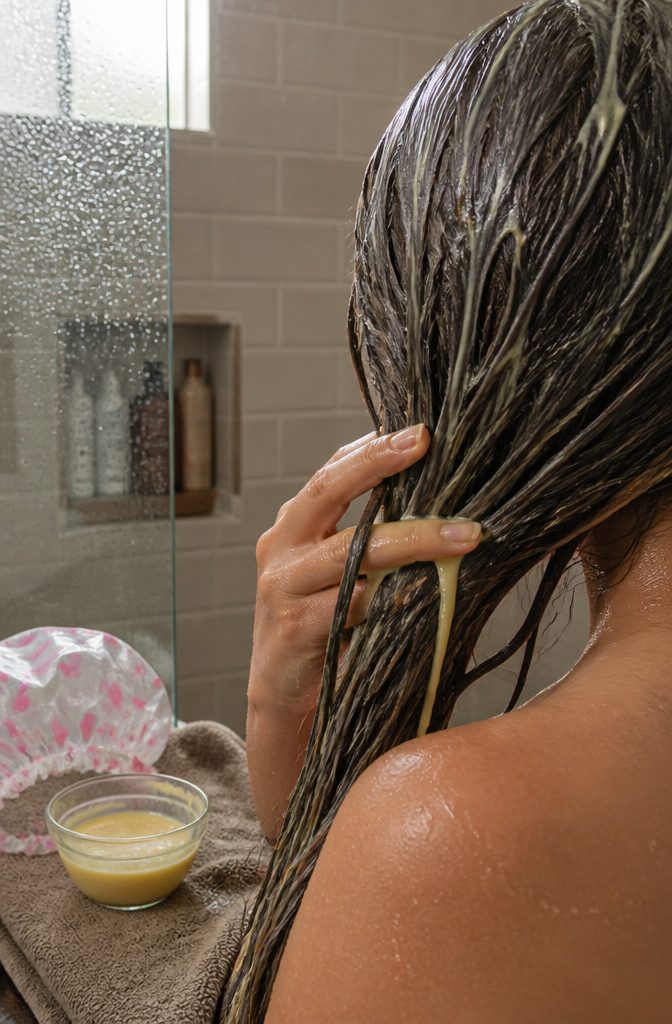
Damp hair holds the mix better than dry, so wet it first and place the egg by goal.
Use roots to ends for a general mask, scalp only for oily hair or growth treatments, and ends only for split ends or damage.
Neatness isn’t the aim at this stage, as this description of the method shows:
Hold bowl close to your head and just sort of slop it on, massaging in to the ends and the roots.
Slop first, then work it through so every section is coated, and cover with a shower cap.
For the egg-white treatment, use half a cup on clean, damp hair. For growth, mix 1 egg white, 1 tablespoon coconut oil and 1 tablespoon aloe vera gel, then massage the scalp for 10 minutes.
4. Leave It On 3 to 30 Minutes
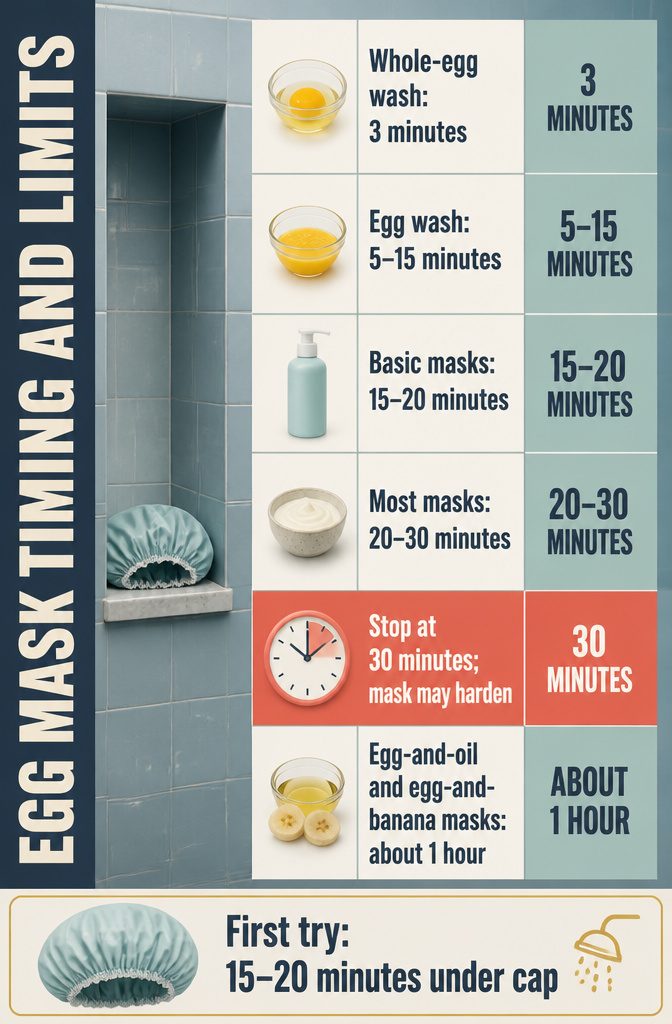
Leave times run from 3 minutes to an hour, and 30 minutes is the line that matters.
Yes Madam and Paris Beauty Pro both say not to go past it, and Paris Beauty Pro adds that the mask can begin to harden on the hair. I stay well under it.
| Option | Leave on |
|---|---|
| Whole-egg wash (Cosmopolitan) | 3 minutes |
| Egg wash | 5–15 minutes |
| Clarifying shampoo | 10 minutes |
| Basic masks | 15–20 minutes |
| Most other masks | 20–30 minutes |
| Egg-and-oil and egg-and-banana masks | about 1 hour |
For a first try, 15–20 minutes under a shower cap is plenty.
5. Rinse With Cool Water
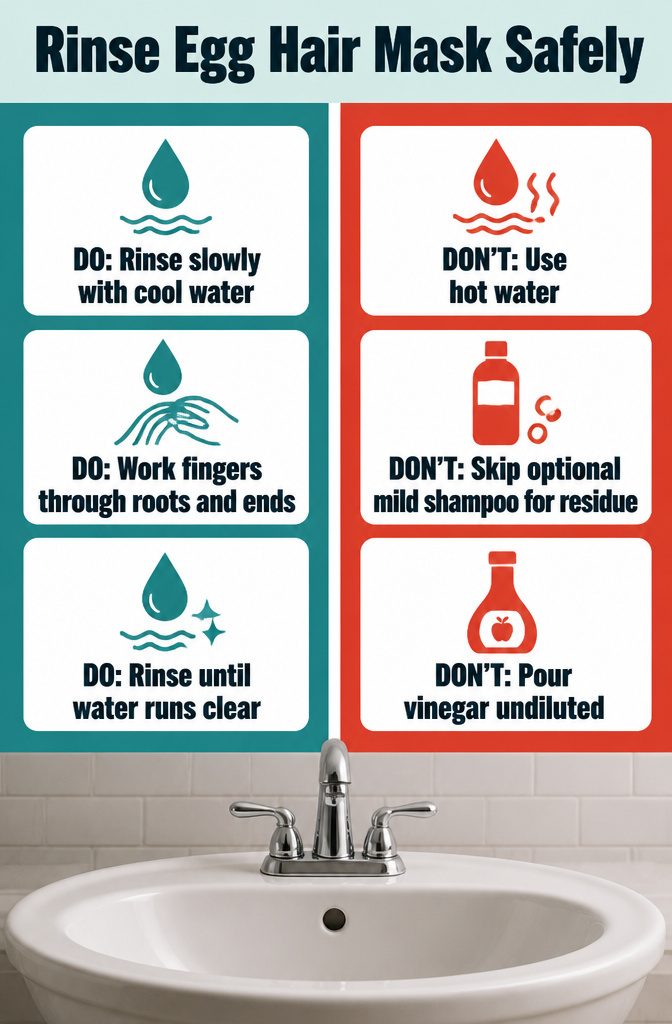
Hot water is the one thing that ruins an egg mask. Heat cooks the egg, and cooked egg turns tough and clings to the strands, so it’s hard to wash out.
Keep the water cool or lukewarm and rinse slowly, working your fingers through the roots and ends until the water runs clear. Cool water also helps seal the cuticle, which adds shine.
Shampoo and conditioner afterward are optional. I’d use a mild shampoo if you want to clear every trace of residue.
For a final rinse, mix 1 part apple cider vinegar with 4 parts water, pour it through, and rinse again. Some egg odor can linger anyway.
6. Set a Schedule
The advice ranges from twice a week to once a fortnight, so the number depends on what you’re applying:
- Egg wash: once a week or every 10–14 days.
- Whole-egg mask: once a week for most hair types (Clinikally), every two weeks if your hair is oily.
- Yolk mask: once or twice a month (Paris Beauty Pro).
- Cosmopolitan caps it at once a fortnight, because more leaves hair stiff and brittle.
- Yolk-and-olive-oil mask: twice a week (Woman’s World).
- Since nobody agrees on one number, I’d start at the low end, then go up if hair feels dry or back off if it turns heavy or greasy.
- Softer hair can show up after 1 or 2 uses. Deeper change in strength and shine usually takes 4–6 weeks.
7. Eat Them for Growth
Eating eggs does more for hair than wearing them. The yolk carries biotin, folate, vitamins A and D, and iron, and the protein supplies the raw material hair is built from.
Two to three eggs per week is the amount cited, an easy habit to add. Set your expectations first, though: hair grows about half an inch per month, and no food pushes it past that rate.
Egg applied to the scalp has little evidence behind it for growth, so I’d treat a mask as a conditioning step and nothing more.
If you’re actually losing hair, minoxidil (FDA-approved, sold without a prescription) and finasteride (prescription-only) are better supported, and a dermatologist can tell you which fits.
What Yolks and Whites Do
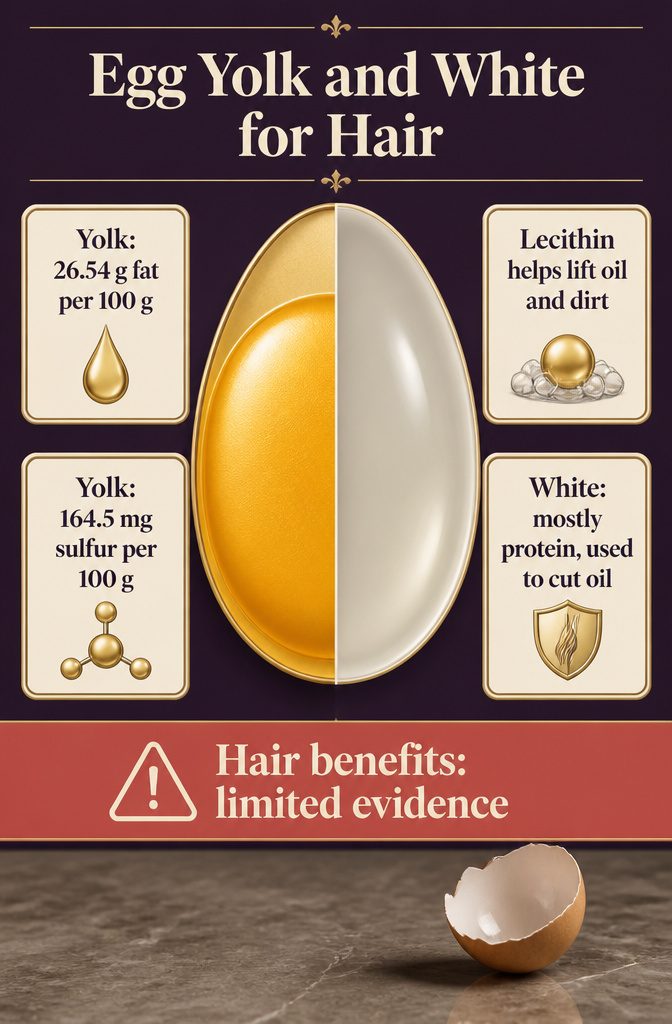
The yolk is the rich half: 26.54 g of fat per 100 g, plus lecithin, vitamins and 164.5 mg of sulfur per 100 g, a mineral that hair itself is built with.
Lecithin is an emulsifier, so it grabs oil and dirt and lets water carry them off.
That is why raw egg can stand in for shampoo. The white is mostly protein, and it’s the half people use to cut oil.
The claims are softness, shine, strength and less breakage. Evidence that egg on your hair delivers any of them is limited, and most of it is anecdote.
I’d treat egg as a conditioning treatment, not a growth fix. Empress Sisi reportedly used yolks with cognac, so the habit is old, but old isn’t proof.
Match Egg to Hair Type
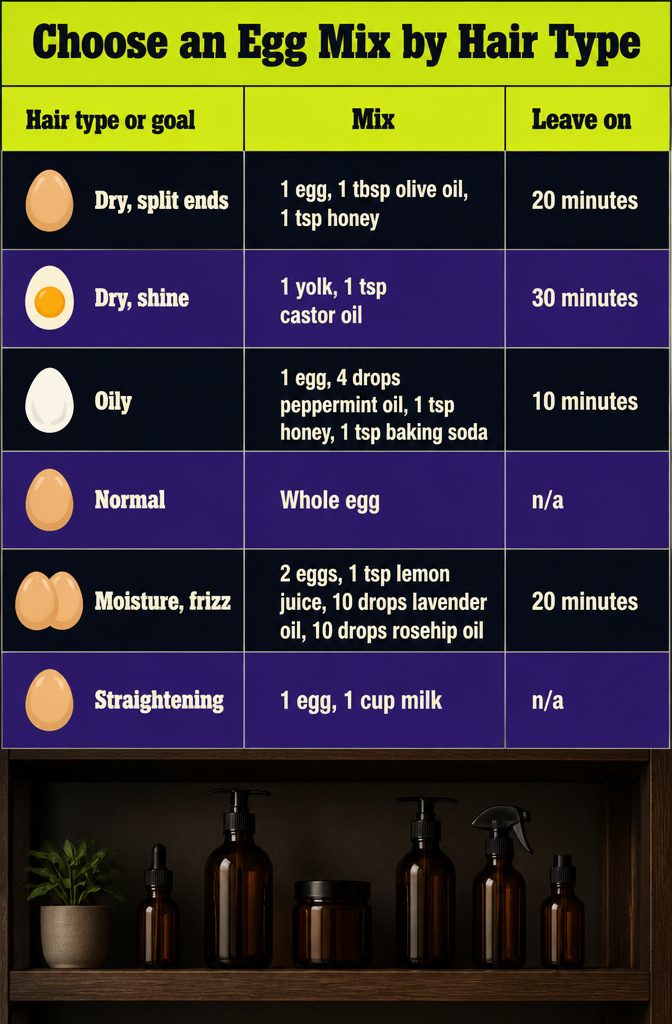
Dry hair gets the yolk and oil, oily hair gets whites or a clarifying mix with baking soda, and normal hair takes a whole egg.
| Hair type or goal | Mix | Leave on |
|---|---|---|
| Dry, split ends | 1 egg, 1 tbsp olive oil, 1 tsp honey | 20 minutes |
| Dry, shine | 1 yolk, 1 tsp castor oil | 30 minutes |
| Oily | 1 egg, 4 drops peppermint oil, 1 tsp honey, 1 tsp baking soda | 10 minutes |
| Normal | Whole egg | n/a |
| Moisture, frizz | 2 eggs, 1 tsp lemon juice, 10 drops lavender oil, 10 drops rosehip oil | 20 minutes |
| Straightening | 1 egg, 1 cup milk | n/a |
Raw Egg Safety
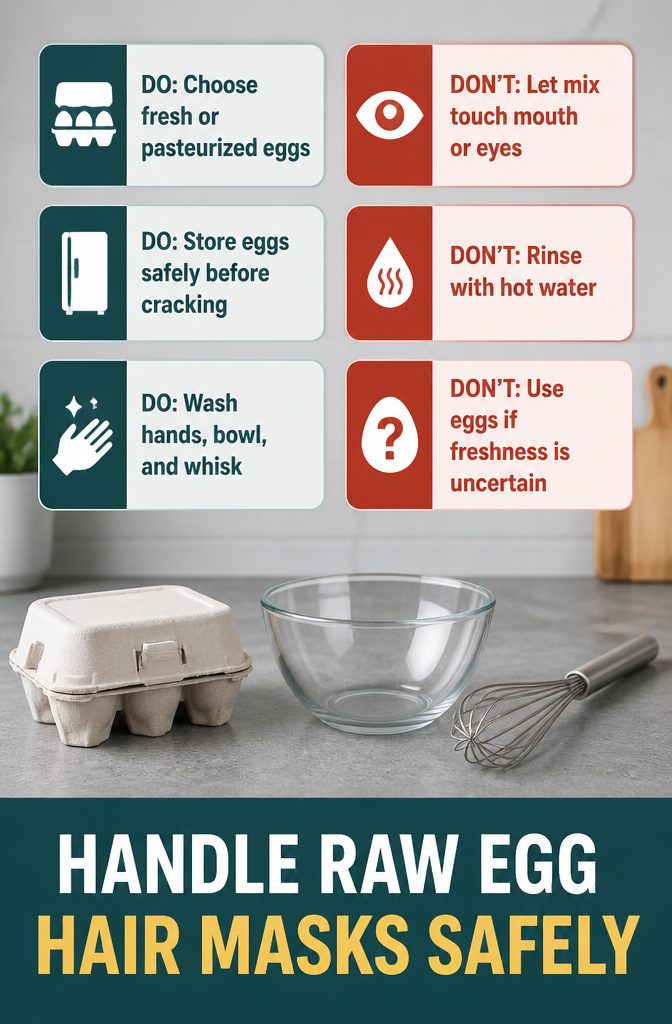
Raw egg can carry Salmonella, which causes infection and stomach illness, so handle the bowl the way you would any raw food.
- Use fresh eggs and store them safely until you crack one. Pasteurized eggs are the safer pick, and I’d choose them if you’re unsure how old the carton is.
- Keep the mix away from your mouth and eyes.
- Wash your hands as soon as the mask is on, and wash the bowl and whisk too.
- Keep hot water away from the egg. Heat cooks it onto the strands, and cooked egg is tough to wash out. Cool or lukewarm water leaves it runny.
Patch Test and Allergies
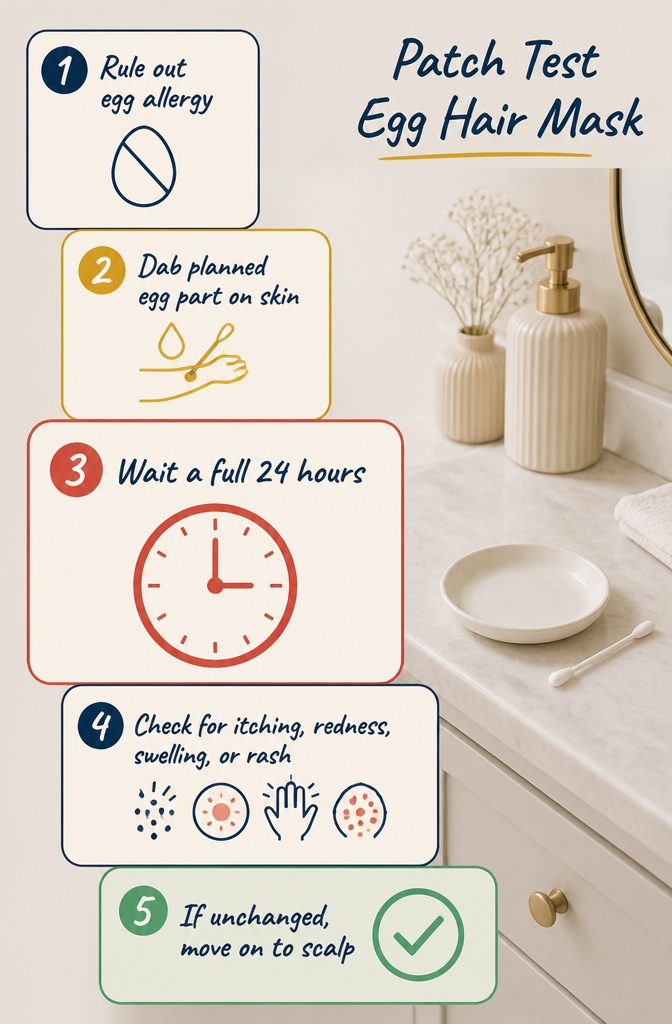
- Rule out an egg allergy first. Anyone with one should skip egg on hair and scalp altogether, since the reaction comes from the egg proteins.
- Dab a small amount of the egg onto a patch of skin. Use the same part of the egg you plan to put on your head, whether that’s the whole egg, yolk, or white.
- Leave it and wait a full 24 hours. A reaction can lag behind the application, so I wouldn’t trust a quick 10-minute check.
- Look for itching, redness, swelling, rash, or general irritation. Any one of them means the mask is off the table. Redness with blisters is worth showing a dermatologist.
- If the skin looks the same as it did before, you’re clear to move on to the scalp.
Signs of Protein Buildup
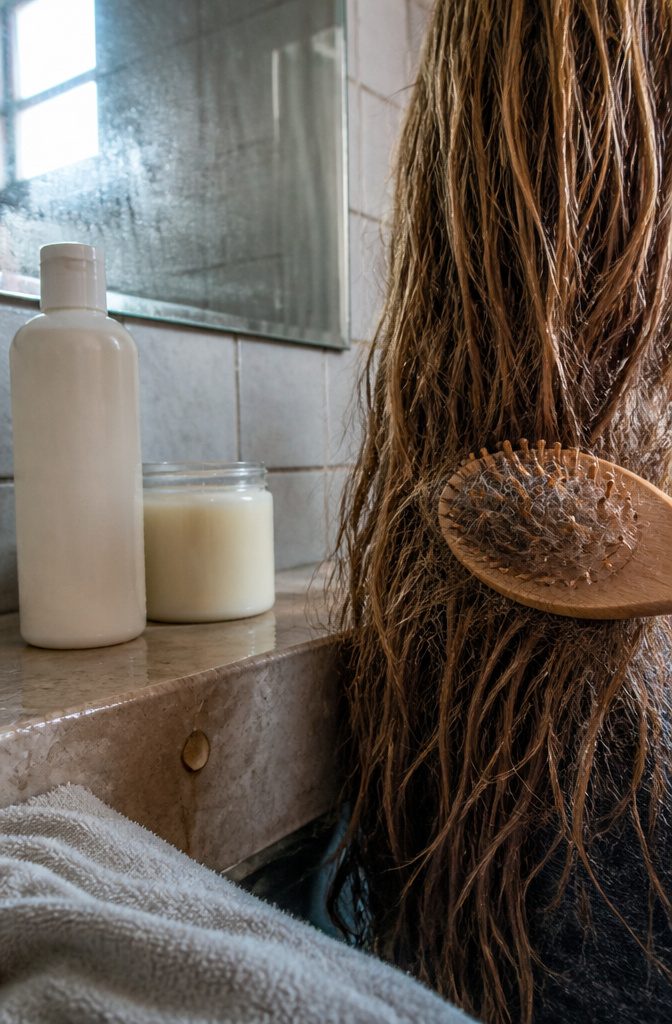
Stiff strands that snap when you brush them are the clearest sign of too much protein.
Hair that feels heavy, coated or greasy points the same way, since egg is naturally sticky and leftover residue collects dirt. A lingering egg smell after drying means the rinse was too short or too warm.
Sarah Stirling washed with egg twice a week and, after a couple of months, found protein buildup in her hair; a wash with regular shampoo and conditioner cleared it.
When hair feels coated, skip the next treatment and space them further apart, then follow with a moisturizing conditioner or mask. Oily hair gets weighed down fastest, so I’d stretch it to once every two weeks.
Frequently Asked Questions
How do I use eggs in my hair, on wet or dry hair?
Whisk 1 whole egg with 1 tablespoon of olive or coconut oil until smooth, then work it through damp hair.
Damp hair holds the mix better than dry hair. Cover with a shower cap for 15–20 minutes and rinse with cool water.
Is applying egg good for hair?
It works best as a conditioning treatment.
The yolk’s fats moisturize dry, dull or brittle hair, and the white adds protein. Evidence that it delivers softness, shine or strength is limited and mostly anecdotal.
Do egg whites help hair?
Yes, mainly for oily roots, buildup and limp hair.
The white is mostly protein, so it clarifies the scalp and smooths the cuticle, which calms frizz. Research is limited, and dry ends do better without it.
Can I use a whole egg or just the yolk, and which is better for dry hair?
A whole egg suits normal hair because the white cleanses while the yolk conditions.
For dry or damaged hair, use the yolk alone, such as 1 yolk with 1 teaspoon of honey for ends that need repair. Whites on their own are better saved for oily hair.
How long can you leave an egg in your hair?
Stay under 30 minutes, since the mask can start to harden on the hair after that.
For a first try, 15–20 minutes under a shower cap is plenty. A quick whole-egg wash can be as short as 3 minutes.
How often should I wash my hair with raw eggs?
Start at the low end: once a week for most hair types, or every two weeks if your hair is oily.
Advice ranges from twice a week to once a fortnight, so adjust to how your hair responds. If it feels stiff, heavy or coated, skip the next treatment and space them out.
How do you rinse raw egg out of hair without it cooking?
Use cool or lukewarm water, never hot, because heat cooks the egg onto the strands.
Rinse slowly, running your fingers through the roots and ends until the water runs clear. A mild shampoo or a final rinse of 1 part apple cider vinegar to 4 parts water can clear leftover residue.
Is it safe to put raw egg in your hair, and will it smell?
It is safe when you treat the egg like any raw food, since it can carry Salmonella.
Use fresh or pasteurized eggs, keep the mix away from your mouth and eyes, and wash your hands and bowl afterward. Some smell can linger, but 2–3 drops of lemon or lime juice in the mix and a vinegar rinse help.
Will an egg hair mask work for all hair types?
It can suit most hair types if you match the egg to your hair: yolk and oil for dry hair, whites for oily hair, and a whole egg for normal hair.
Oily hair gets weighed down fastest, so use it less often. Anyone with an egg allergy should skip it, and everyone else should patch test on skin for a full 24 hours first.
How long does it take to see results from an egg hair mask?
Hair can feel softer after 1 or 2 uses. Deeper changes in strength and shine usually take 4–6 weeks of regular treatments.
Does an egg mask stop shedding or help hair grow?
Evidence for egg on the scalp as a growth treatment is thin, though some people report less shedding.
Eating 2–3 eggs per week does more for hair, and hair grows about half an inch per month regardless of what you apply. If you are actually losing hair, a dermatologist can tell you whether minoxidil or finasteride fits.