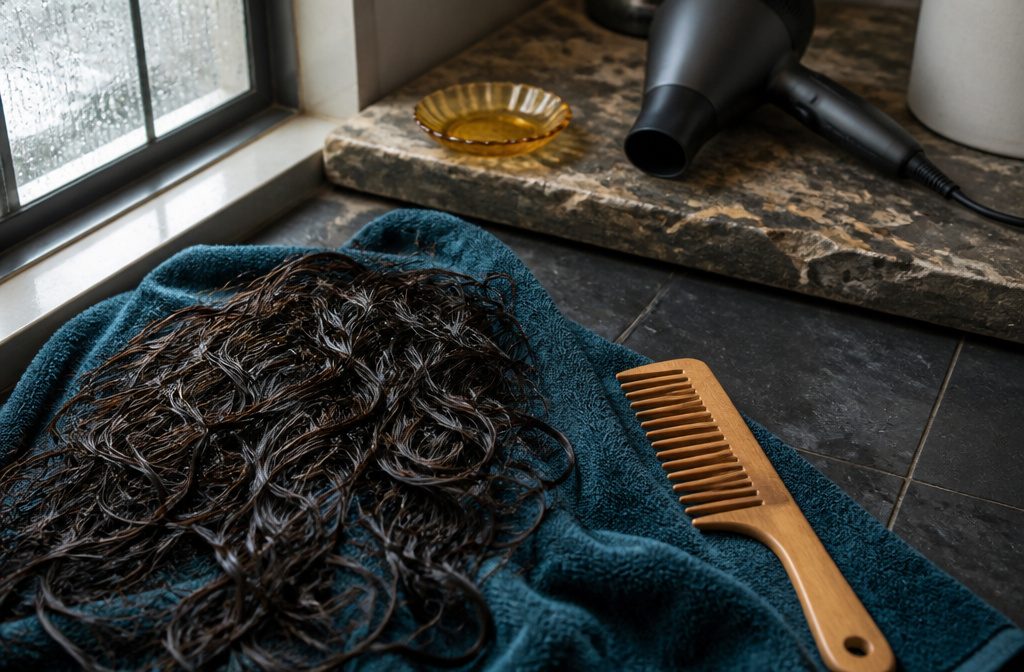
Caring for hair is a sequence of steps from wash day through styling, and the wash schedule depends on type: oily hair every other day, curly hair once a week.
Overwashing strips natural oils, and blow-drying soaking strands prolongs heat contact, so air dry to about 80% before the dryer finishes the job.
Cleanse Without Overwashing
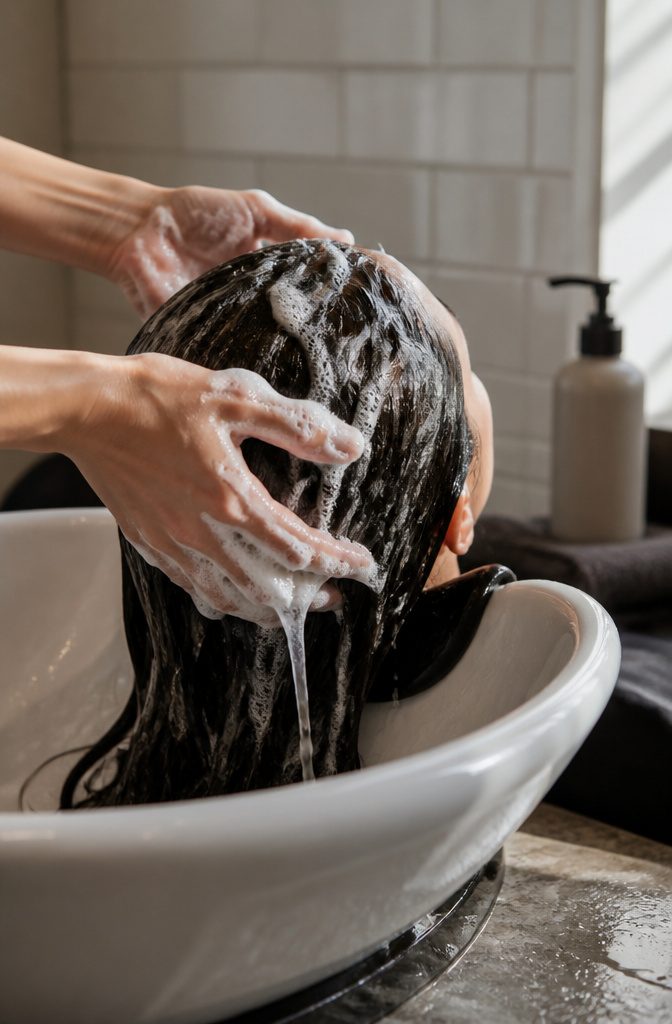
Match the shampoo to the hair.
Thin, greasy hair needs a stronger formula, while dry or damaged hair does better with a gentler one. Pureology Hydrate Shampoo is one example of the softer kind.
Work a coin-size amount into your scalp with your fingertips for 1–2 minutes, then let the foam run through the lengths.
Use lukewarm water and finish with a cool rinse. Hot water pushes the cuticle open and lets moisture leak out.
Frequency splits into two camps: 2–3 times a week, or every 2–3 days.
The first suits dry, thick or curly hair, and the second suits oily scalps or sweaty workouts. I lean toward the lower end, because washing too often strips the natural oils your hair needs.
Condition the Ends
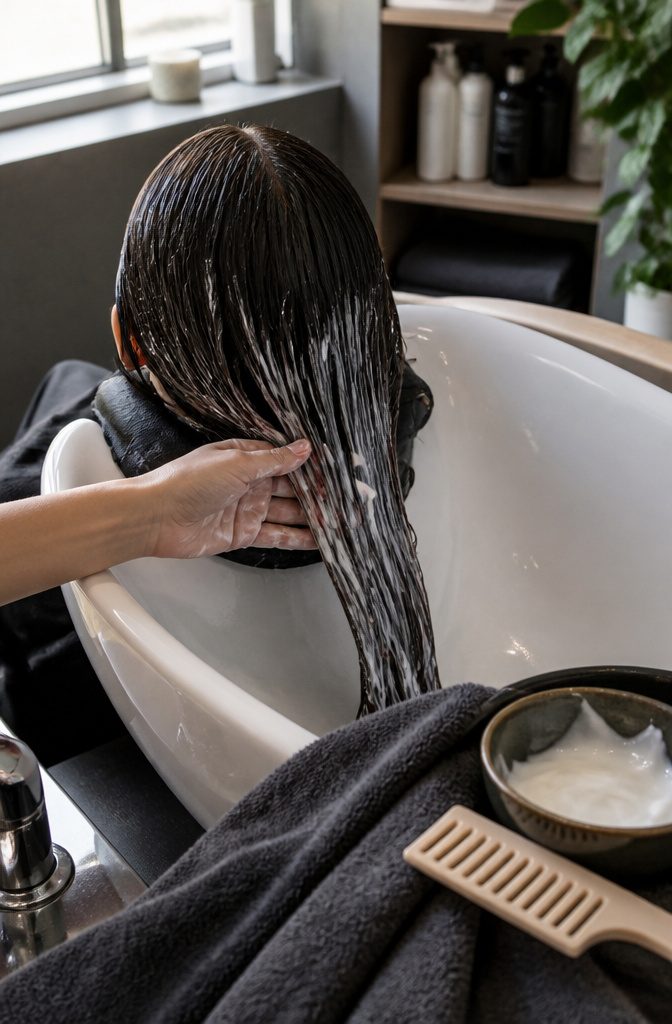
Shampoo strips out hair’s natural conditioning agents, so conditioner has to put moisture back and smooth the cuticle for a shinier finish.
Fine hair does best with a lightweight formula packed with humectants, which hydrate without weighing it down. Dry or damaged hair wants a richer formula with plant oils.
Work it through the mid-lengths and ends only, because the scalp makes its own conditioning oils and the ends are the driest part. Leave it on about 2 minutes, then rinse well.
Once a week, I’d swap in a deep conditioner and let it sit 5 to 15 minutes or more.
Add a protein treatment monthly if heat tools or chemical services have done damage. Used too often, protein builds up and leaves hair dry.
Detangle Gently
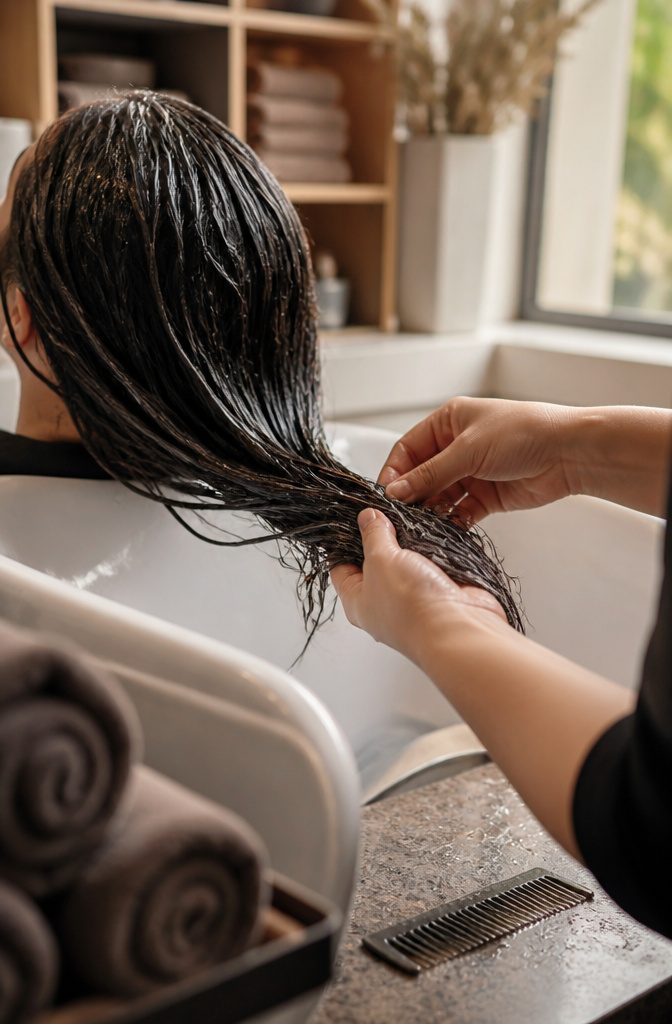
Hair that is only lightly tangled can wait until it dries.
Heavy knots are different: detangle while the hair is still coated in conditioner, because the slip gives strands the stretch to come apart instead of snapping. Wet hair breaks more easily, and rough handling leaves it frizzy.
Start with your fingers, which feel a knot before a brush does, and ease the strands apart one at a time.
Then finish with a detangling brush or wide-tooth comb, working from the ends up toward the roots. A brush with a handle steers through thick hair more easily than a palm-sized one.
Keep it to one pass, since over-brushing weakens the roots and breaks hair.
Towel Dry With Microfiber

Conditioner leaves the cuticle lying flat, and a terrycloth towel dragged back and forth lifts it again. That roughness is where dull, frizzy strands come from.
Squeeze and blot with a microfiber towel instead, pressing the water out rather than rubbing it. Microfiber is absorbent enough that this rarely takes long.
Plume’s Ultra Soft Microfiber Hair Towel is my pick for this. A fastener at the back holds your hair in place, and the towel is made to cut drying time in half while reducing friction-related breakage.
Hold off on the blow-dryer at first. Give your hair some air-drying time so the dryer has less work to do.
Hydrate and Seal
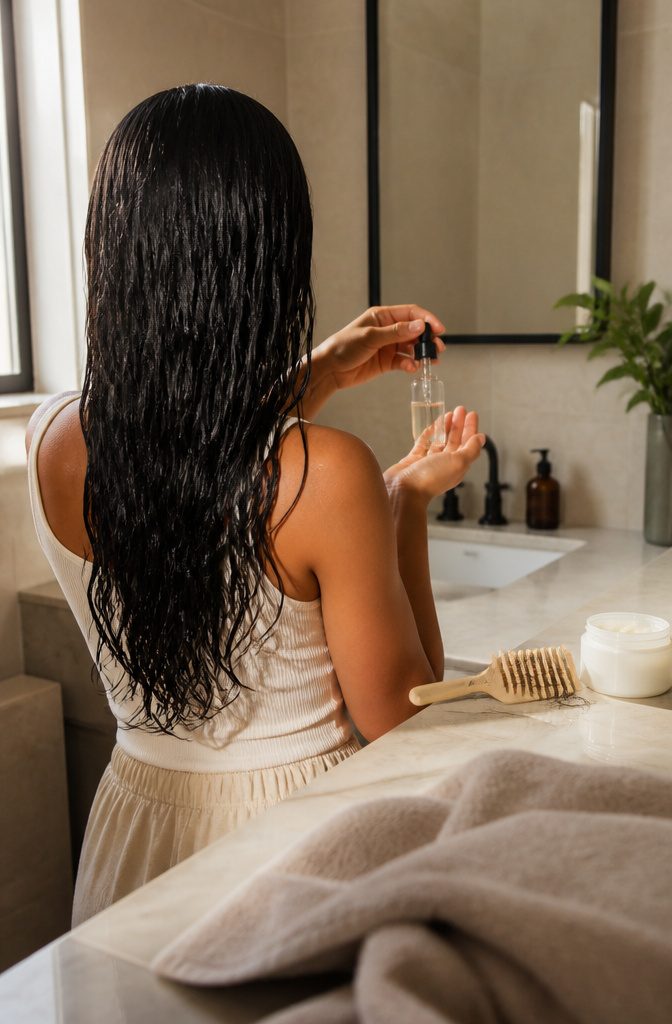
Wet hair is one of the best moments to add hydration, so this step goes on right after the towel.
A serum is the popular choice because it stays lightweight while still hydrating, and most contain ingredients that lock moisture in so it can’t evaporate.
HerStyler’s Castor Oil Hair Serum, built on aloe vera, castor oil, argan oil and vitamin E, is one example.
A leave-in does the same job with more slip. It’s a 10 Miracle Leave-In is a well-known pick, and GHC’s Oat and Cupuacu Butter Crème Leave-In reduces frizz and defines curls.
Whichever you choose, go alcohol-free so the product doesn’t dry your hair out. I’d rank that above fragrance.
Protect From Heat
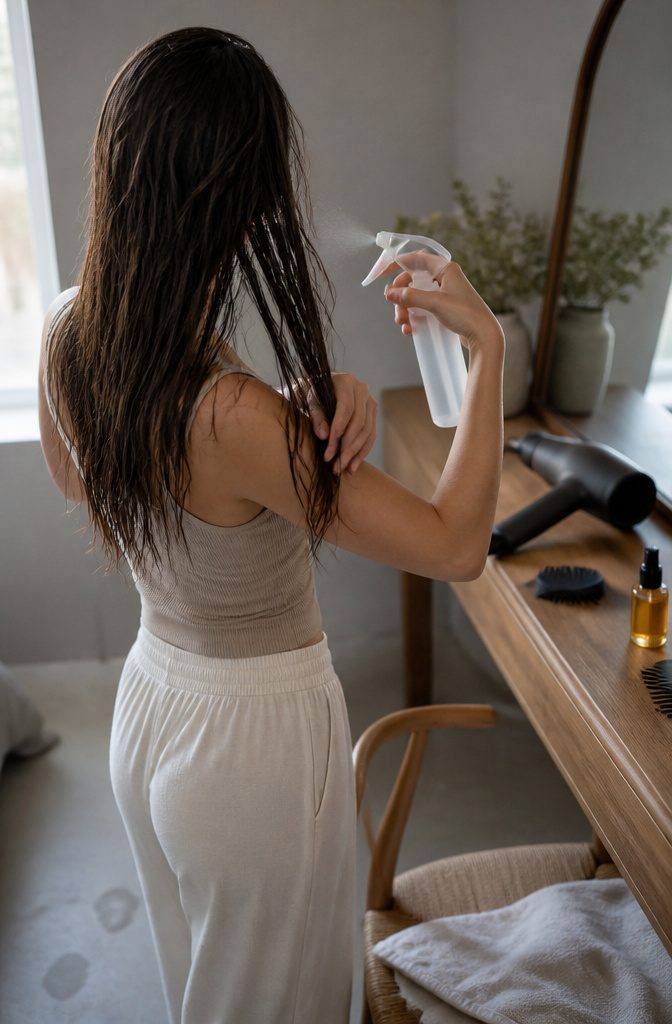
Any day a blow dryer, flat iron or curling wand touches your hair, a heat protectant goes on first. Serums, mousses and sprays all coat each strand so the product takes the heat instead of your hair.
Look for argan oil on the label. The only morning you can skip it is one with no heat at all.
Towel dry well, then wait until hair is about 80% dry before blow drying, and keep the setting low even if it adds a few minutes.
Daily heat tools wear hair down, so I’d hold curling and straightening to once or twice a week and braid or twist on the other days.
Dry and Style
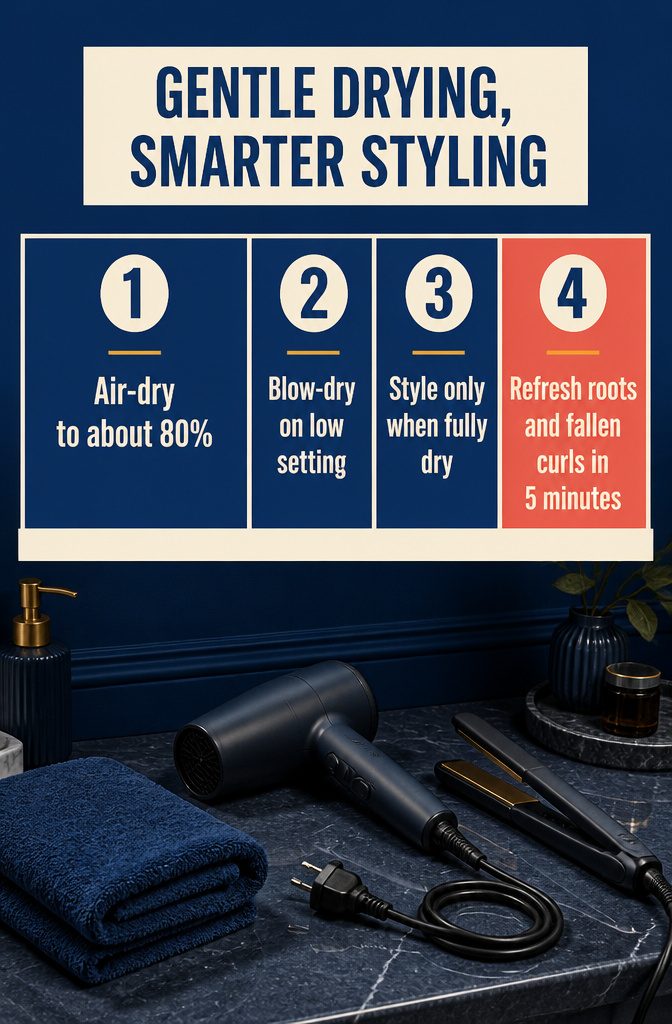
- Let hair air dry until it is about 80% dry. Blow-drying soaking strands means longer contact with heat, so the dryer should only finish the job.
- Blow-dry on a low setting. It takes a little longer, but your ends will hold up better.
- Wait for hair to dry completely before curling or straightening. Use the lowest temperature that still holds the style, and never run a flat iron over damp hair, which can cause bubble hairs.
- Refresh instead of restyling on busy days. Work in dry shampoo, blow-dry only the roots, and re-curl just the pieces that fell. That takes about 5 minutes.
Adjust for Your Hair Type
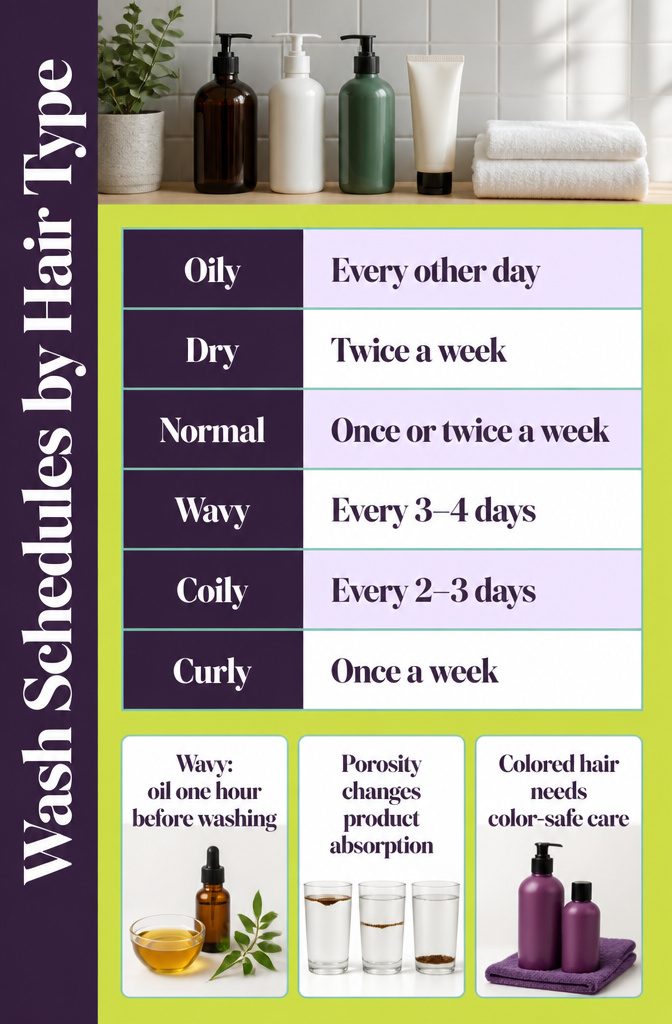
Thicker strands, like curly and coily hair, can go longer between washes, while thin hair gets oily fast. Use this as your starting schedule:
| Hair type | Wash frequency |
|---|---|
| Oily | Every other day |
| Dry | Twice a week |
| Normal | Once or twice a week |
| Wavy | Every 3–4 days |
| Coily | Every 2–3 days |
| Curly | Once a week |
Wavy hair gets one extra step: massage a hair-friendly oil through it an hour before washing, then use a wave-formulated shampoo. A leave-in conditioner makes waves bouncier.
Porosity (low, normal or high) is worth checking too, since it changes how your hair takes in product. Colored hair needs color-safe shampoo and conditioner, whatever the type.
Clarify and Exfoliate the Scalp
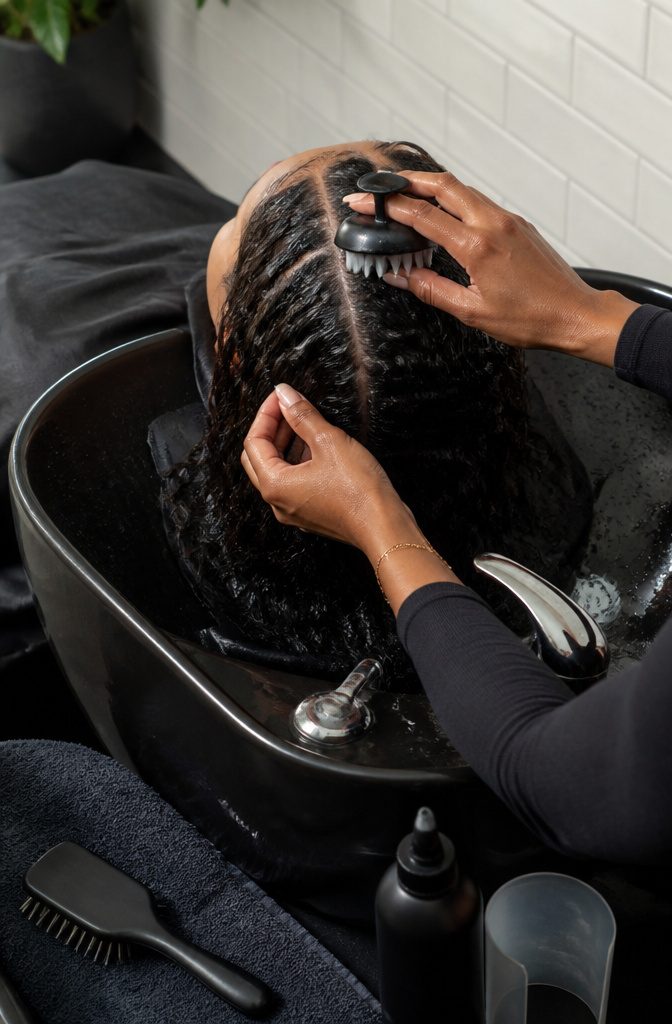
Advice on clarifying shampoo splits three ways: weekly, every two weeks, or monthly. I land on every two weeks, and I’d move to weekly only if your roots go flat or greasy fast.
A scalp scrub adds a deeper reset once or twice a month, which suits oily, dandruff-prone scalps best. Section the hair, work the scrub in with a scalp brush for a few minutes, then rinse with a mild shampoo.
For flakes, a salicylic acid treatment lifts buildup, but once a week is enough. More often can irritate or dry the scalp.
Oiling is optional.
Rosemary oil goes on the scalp, and castor oil can sit for 1–2 hours. If your scalp runs oily or your climate is humid, stop at 30 minutes so follicles don’t clog.
Protect Hair at Night

Cotton and wool pull moisture and natural oils out of hair like a sponge, so a satin-lined cap or satin pillowcase does more overnight than most products.
Keep the evening routine to 10 minutes: massage oil or serum into your scalp, then braid or twist your hair loosely to cut tangles. The morning shrinks to 5 minutes because the style is already set.
For the scalp step, Agent Nateur’s Holi (Locks) serum costs $89. Work in 1–2 droppers before bed, up to 4 times a week, and shampoo the next morning.
I’d start at the low end and see what frequency your hair likes. Rotate protective styles every 6–8 weeks so the same sections aren’t pulled week after week.
Food, Water, and Sleep

Products and technique do the heavy lifting, but a routine works better with these habits behind it:
- Eat protein from both animal and plant sources, plus leafy greens, other vegetables and fruit for vitamins and minerals. Hair is keratin, a protein, so that is the first thing I’d check.
- Drink water through the day. Hydration shows up in shine.
- Sleep 7 to 8 hours a night. Hair health follows overall health.
- Exercise regularly.
- Skip smoking, which can cause early hair loss.
- Trim every 6–8 weeks so split ends don’t travel up the shaft and cause more breakage.
When to See a Pro
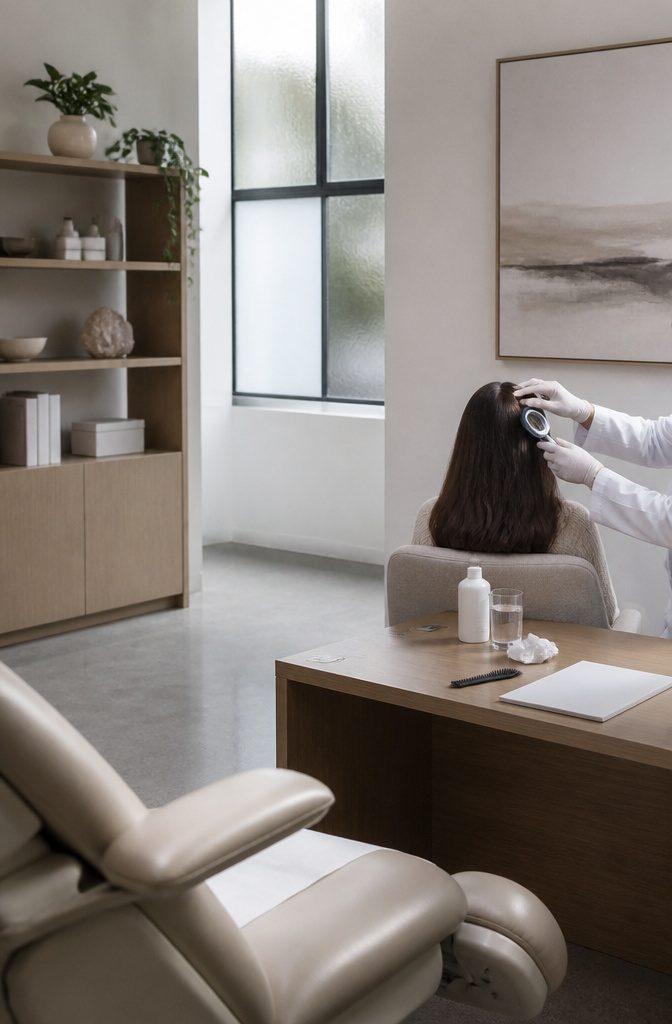
Flakes that survive 2 weeks of over-the-counter dandruff shampoo call for a dermatologist, not a third product.
The same goes before you add any treatment. Dandruff serums and bond treatments both have a place in a hair care routine, but a dermatologist can tell you whether your concern is what you think it is.
Bond treatments soften and smooth strands and often reverse damage, which helps only if damage is the real problem.
Trouble that lives in the hair rather than the scalp, like ends that stay dry or a routine that never seems to work, is a stylist’s territory.
Bring photos of your hair and a rundown of what you currently do each wash day.
Frequently Asked Questions
How often should I wash my hair?
Most people do well washing 2–3 times a week.
Oily scalps or sweaty workouts can push that to every 2–3 days. Dry, thick or curly hair sits at the low end, and washing too often strips the natural oils your hair needs.
Is it okay to use hot water to wash my hair?
No.
Wash with lukewarm water and finish with a cool rinse. Hot water opens the cuticle, lets moisture leak out and strips natural oils.
What is a proper hair care routine?
Cleanse with shampoo, condition the ends, detangle gently, blot dry with a microfiber towel, add a serum or leave-in, then apply a heat protectant before any hot tool.
Layer in a deep conditioner once a week and a clarifying shampoo every 2 weeks. Set your wash schedule by hair type.
Which shampoo and conditioner should I use?
Pick both for your hair type.
Thin, greasy hair needs a stronger shampoo, while dry or damaged hair does better with a gentler one. Fine hair suits a lightweight conditioner with humectants, dry hair a richer one with plant oils, and colored hair needs color-safe products.
Should I use conditioner every time I wash?
Yes, after each shampoo, because shampoo strips out the hair’s natural conditioning agents.
Apply it to the mid-lengths and ends only, leave it about 2 minutes, then rinse well. A deep conditioner once a week adds extra moisture.
Do I need to use heat styling tools every day?
No.
Keep curling and straightening to once or twice a week, and braid or twist your hair on the other days. Whenever you do use heat, apply a heat protectant first and use the lowest setting that works.
Should I brush my hair daily?
Once or twice a day with a wide-tooth comb or a soft brush is plenty, and more than that just adds friction and breakage.
One gentle pass is enough: start with your fingers, then use a detangling brush or wide-tooth comb from the ends up toward the roots. Over-brushing weakens the roots and breaks hair, and wet hair is the most fragile.
How can I protect my hair while sleeping?
Use a satin pillowcase or a satin-lined cap, since cotton and wool pull moisture and oils out of hair.
Braid or twist your hair loosely before bed to cut down on tangles. Rotate protective styles every 6–8 weeks so the same sections aren’t pulled over and over.
How do I deal with dry and brittle hair?
Switch to a gentler shampoo and a richer conditioner with plant oils, and use a deep conditioner once a week for 5–15 minutes or more.
Wash dry hair about twice a week, keep heat on low and trim every 6–8 weeks. If heat or chemical services caused the damage, a protein treatment once a month helps, but more often than that leads to buildup and dryness.
What role does diet play in hair care?
Diet supports everything you do on the outside. Hair is keratin, a protein, so get protein from animal and plant sources, plus leafy greens, other vegetables and fruit for vitamins and minerals.
Drinking water and sleeping 7–8 hours a night also show up in your hair, and smoking can cause early hair loss.