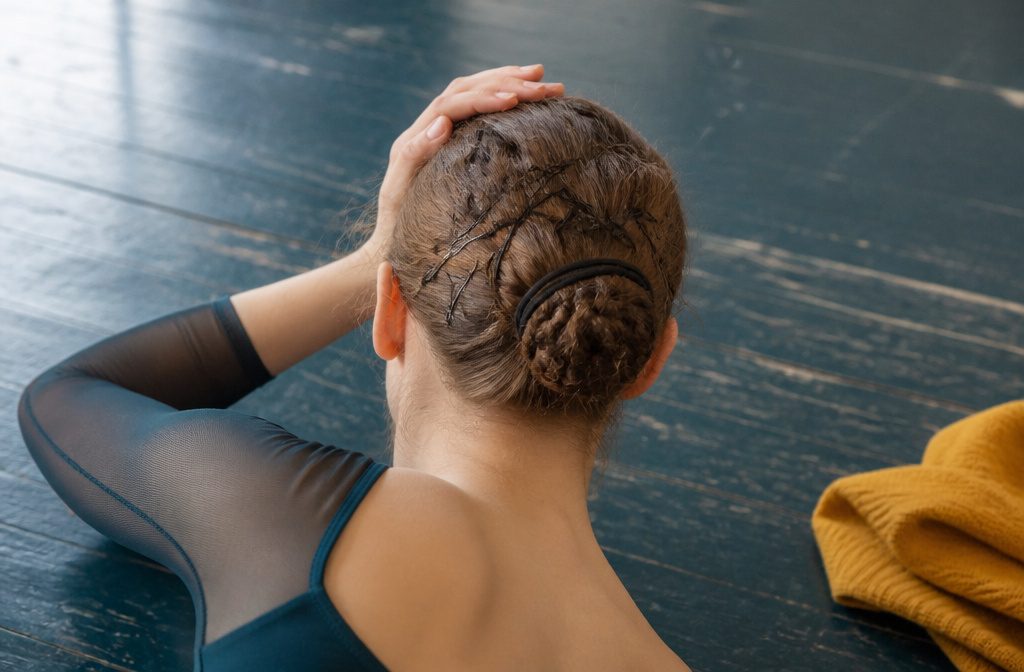
Dancers’ hairstyles are buns, braids and ponytails pinned or tied so nothing moves when you turn, jump or tip your head upside down.
The condition is the pins: a style that looks tight can still slip mid-turn. Stack 2–3 elastics, cross bobby pins in an X, then shake your head for about 15 seconds to test it.
Classical Ballet Bun
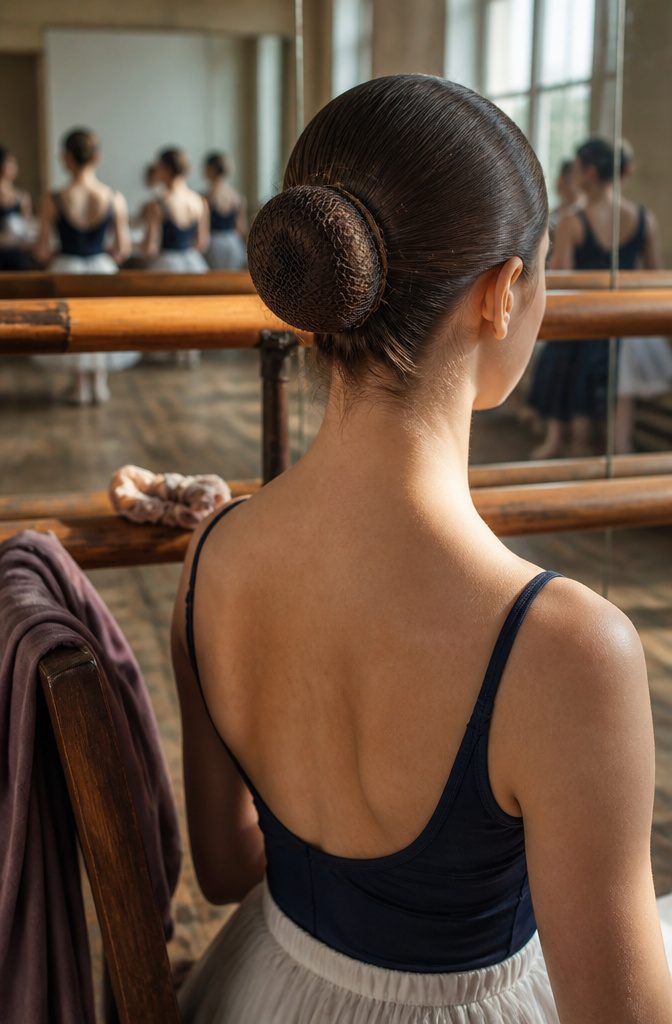
The classical ballet bun is the traditional dance style teachers ask for most, especially for picture day and recital.
It starts as a high ponytail: twist the tail into a coil, wrap the coil around its base, and pin it with bobby pins all the way around.
Hairspray goes on last, and a hairnet is an optional extra layer of security.
A classical bun is smaller and flatter than a sock bun and sits in the middle or back of the head, so a tall, puffy sock bun is the wrong shape for a teacher who asked for this one.
I’d add the hairnet whenever the bun has to last through a full run-through.
French Twist
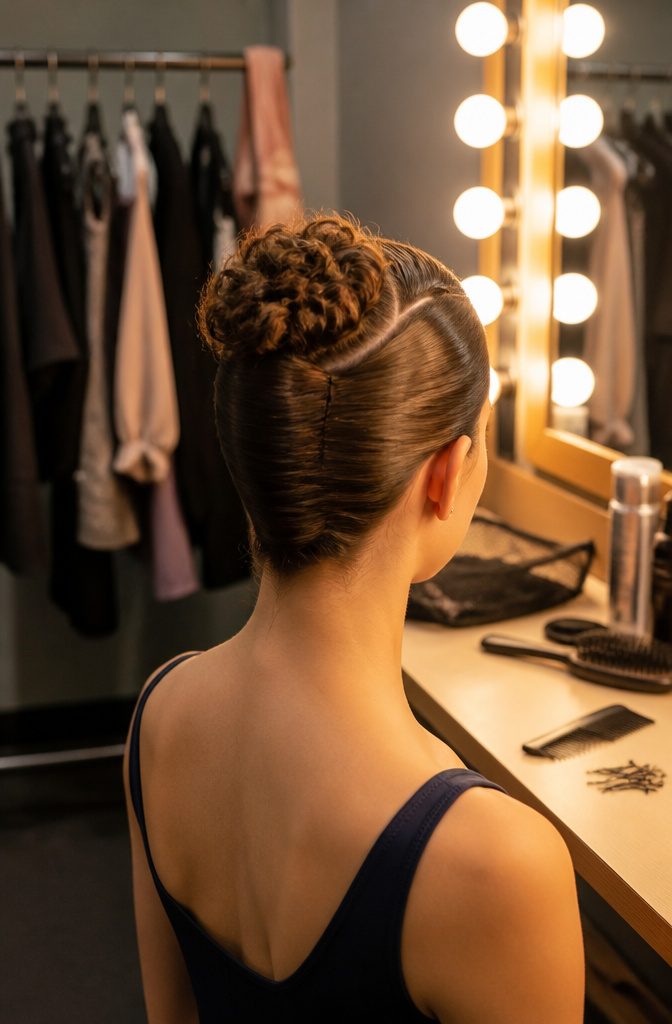
A French twist goes with any leotard, which is a big part of why it works on stage.
The hair is gathered low at the nape, twisted upward and pinned flat, so the head reads as one smooth, finished line. It’s a classic shape, and feeling professional in it helps the dancing.
Part your hair on your preferred side and work in gel first; curls won’t stay down without it. Gather a low ponytail without an elastic, then twist upward from the bottom, pinning as you go.
Twist the leftover curls into a small bun at the top and pin it. Add a little more gel, then finish with the lightest-hold hair spray you own so the hair comes out easily at the end of the night.
High Ponytail
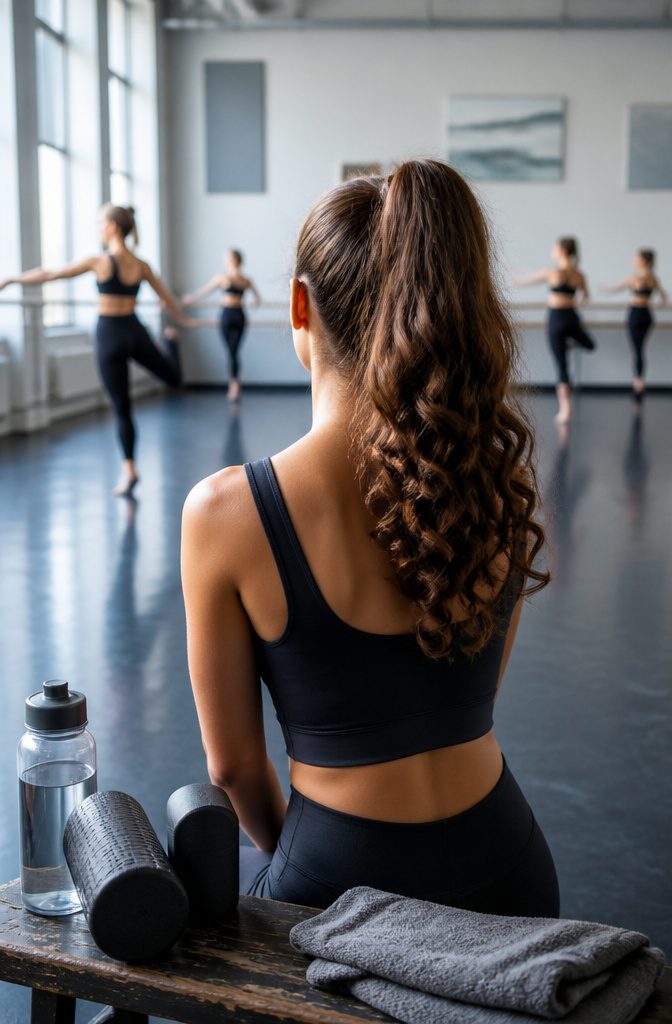
A high ponytail sits at the highest part of the back of the head, without creeping onto the top of it.
A low ponytail sits where the head meets the neck, and a middle one sits at the middle back, so high is the placement that lifts hair off the face.
Wear it plain and slicked, or add 1-inch curls from a curling iron or wand for a ponytail that still has movement. For bigger curls, wrap hair in foam rollers after a shower and sleep in them.
In the morning, take the rollers out, shake the curls loose and set them with hairspray. For high-energy classes, my pick is a braided ponytail: braiding the length adds weight control and keeps the tail from flying into your face.
Braided Ponytail
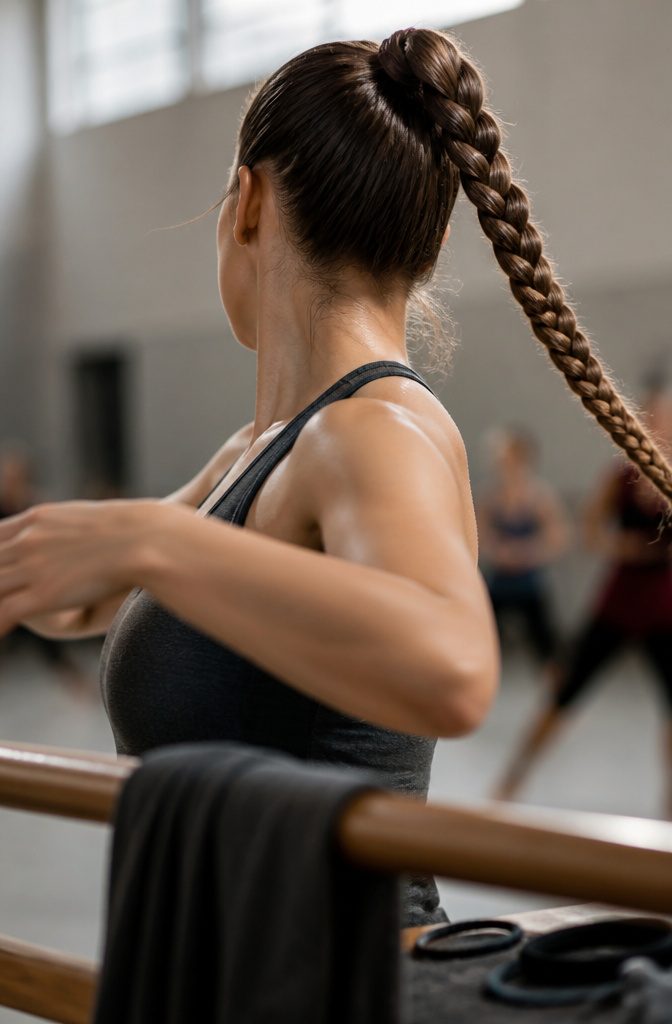
A loose ponytail whips around on every spin, and a braid turns that swinging fall of hair into one weighted rope.
Braiding the full length of a high ponytail keeps the ends from flying into your face during turns, while the pony still moves with you.
I’d pick it over a plain high pony for any high-energy session, like dance fitness, cheer routines or fast choreography. It reads sportier than a ballet bun, so it’s the wrong call where a strict classical look is required.
On shorter hair, a half-up pony with a braid and a little pomade for hold works better than forcing a full tail.
Braided Crown
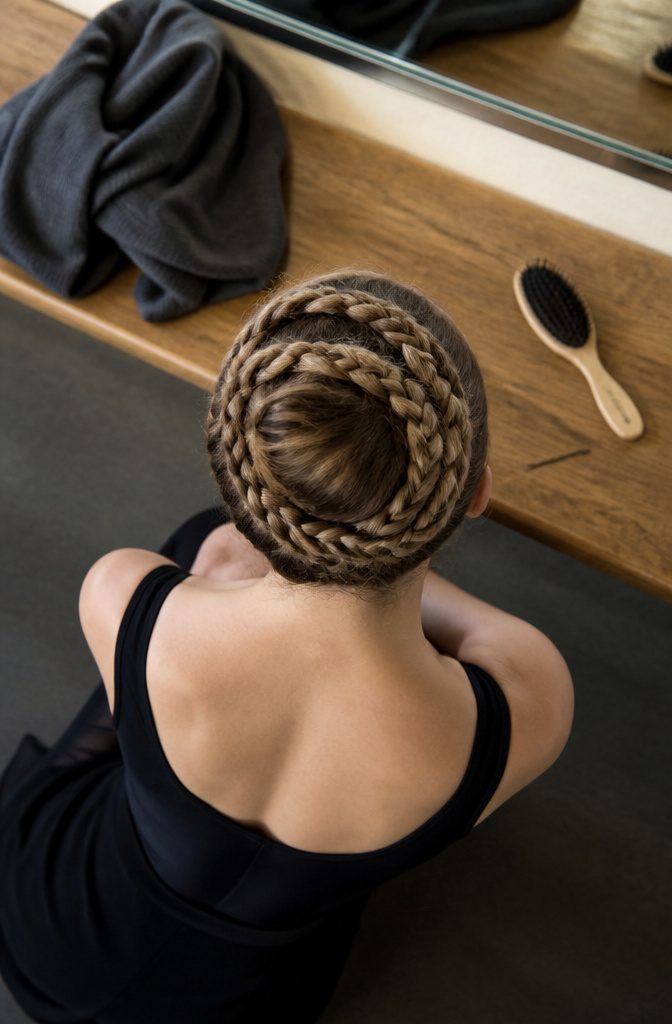
Two braids laid across the crown and pinned flat keep every strand anchored and off the face, which suits dancers who spin, jump and tip the head upside down. The braids gather the hair, but the pins do the holding.
With too few pins, the crown slides forward after a few turns. I’d pin each braid at every curve and tuck the ends under the opposite braid, sliding the pins in against the scalp rather than laying them on top.
A few extra pins beat retouching backstage. If the hairline feels tight, loosen the braids slightly at the edges, because a crown that tugs becomes a distraction fast.
Double Buns
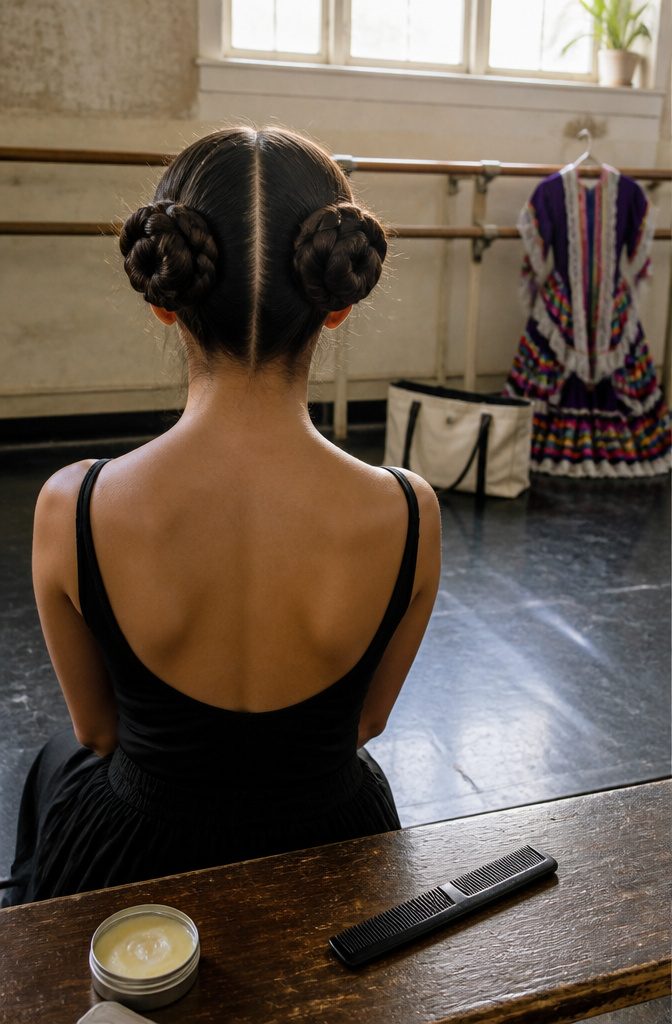
Double buns start with a center part, and that part decides how the whole style sits.
Run a comb from forehead to nape so each side holds the same amount of hair; a lopsided split leaves one bun heavier than the other.
Pull each side into a pigtail, twist it around itself into a bun, and pin it with bobby pins. Set both pigtails at the same height before you twist, because a bun can’t fix a crooked base.
The style works on most hair lengths.
On shorter strands, pull the front up with a forming pomade so the ends stay put. I’d save it for energetic sets and festivals rather than a formal stage look.
Bubble Ponytail
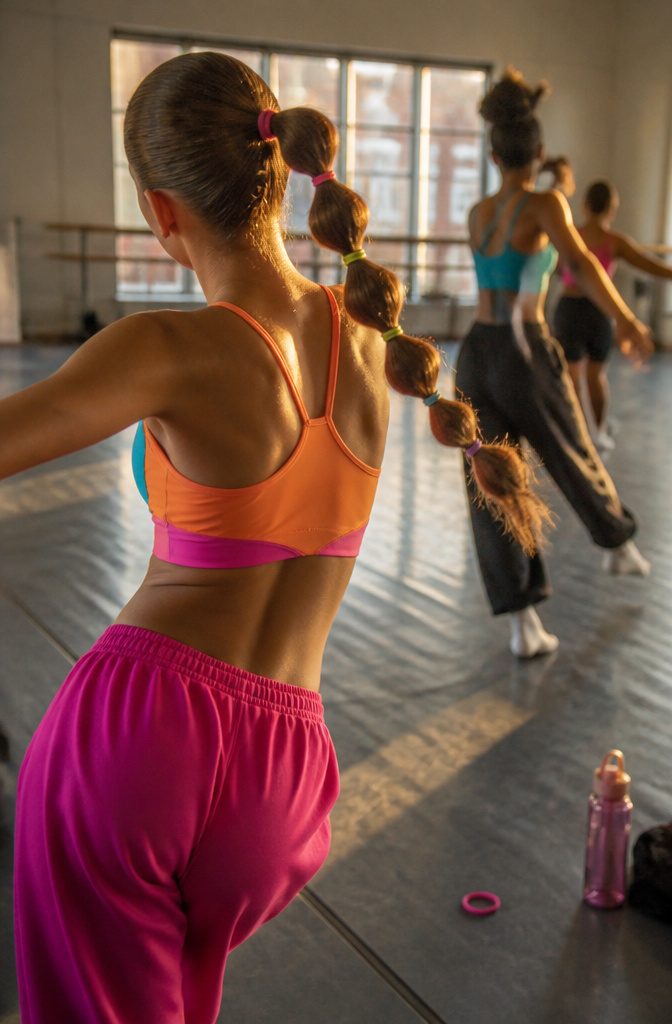
Make a ponytail, then add elastics at intervals down its length.
Each stretch between them puffs out into a section, or bubble. Because the elastics pin the hair in several places, the length can’t swing when you turn, jump or spin.
That makes this the most playful ponytail here that still stays put, and I’d pick it over a plain tail for any routine with fast direction changes.
Elastic color is where you can have fun. Mix and match shades to pick up your costume, or keep them all matched for a cleaner look.
Short hair can pull this off too. Use smaller elastics and plenty of hairspray, which gives each bubble enough grip to hold its shape.
Double Braids
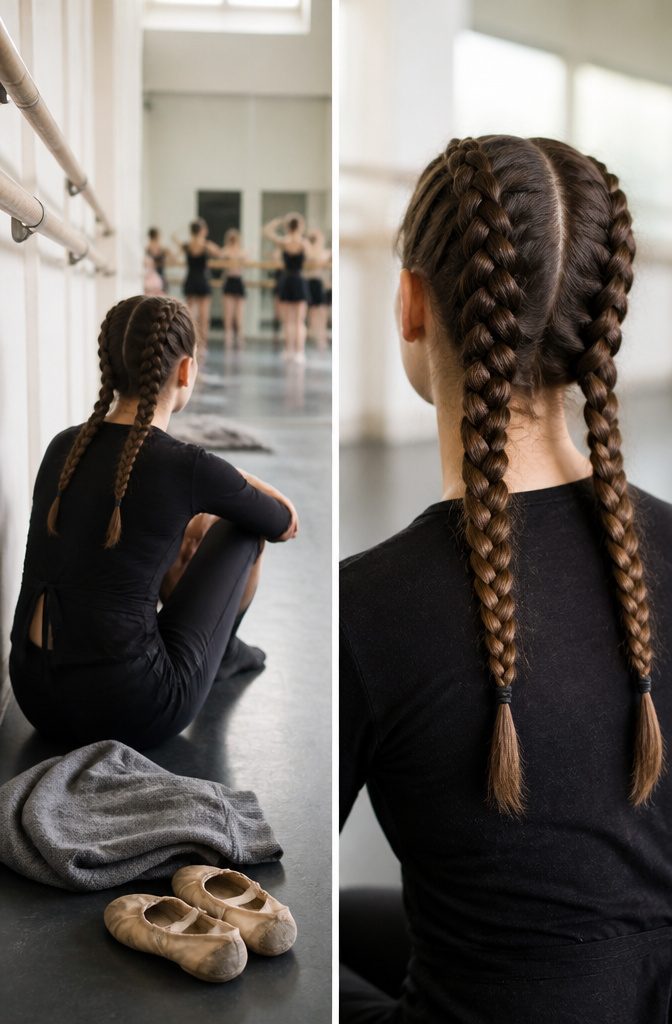
Two braids, one on each side, split the weight of your hair into equal halves, so nothing pulls toward a single spot.
French, Dutch or simple plaits all work, and each one spreads hair evenly and keeps it firmly secured. That makes double braids a strong pick for long classes and hard sessions where you never stop moving.
Comfort is the second win. A single ponytail anchors everything at one point, while two braids reduce tension on any one area of the scalp, and that matters more the longer they stay in.
For a full rehearsal day, I’d take them over a lone ponytail. They also still look good once class lets out.
Low Bun
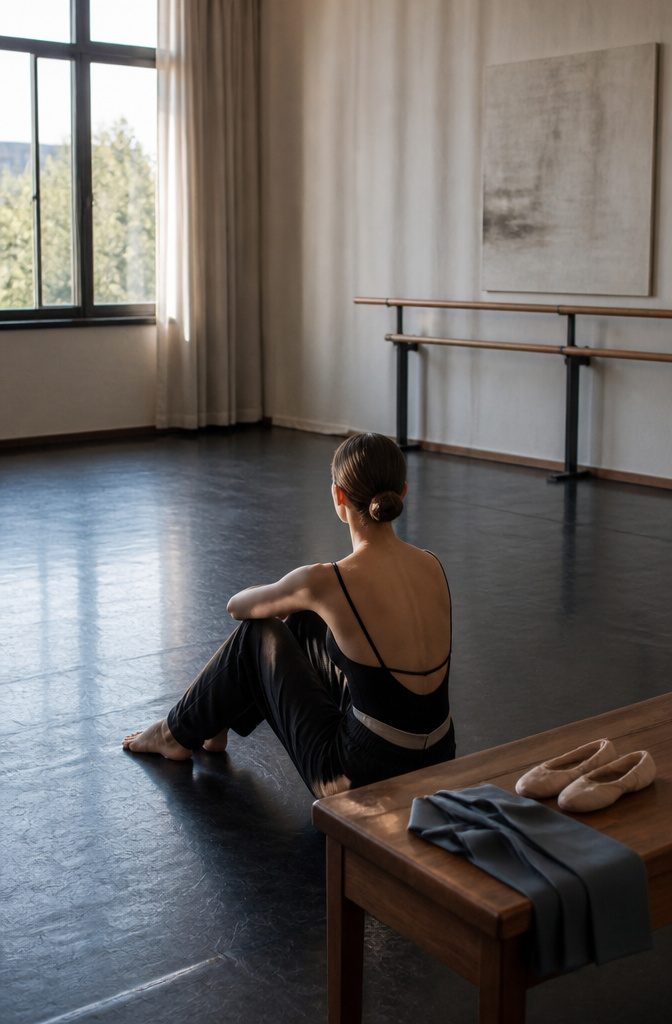
A low bun sits at the nape, where the head meets the neck, which is the same spot a low ponytail occupies.
Gather the hair there first, and the bun that follows stays put instead of drifting upward or sagging down the neck.
It pulls on the scalp less than a high bun does, so I reach for it in lyrical dance and in classes where flow and control matter more than explosive movement. Keep it tight and smooth.
A loose low bun slips, mostly during floor work and turns. If you prefer comfort over bounce, this is the bun I’d pick.
Half-Up Style
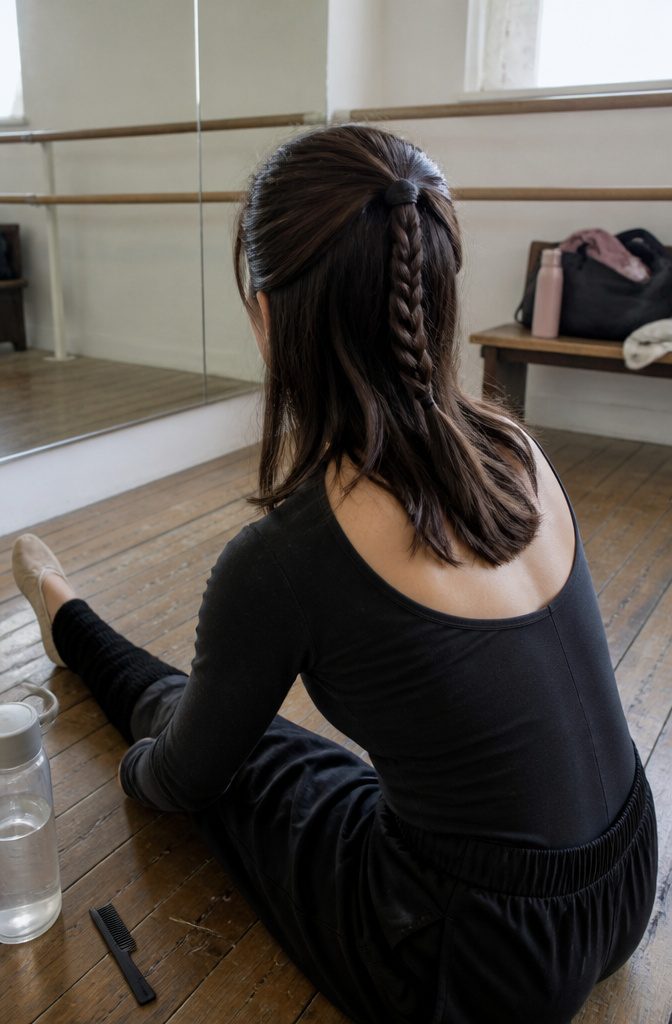
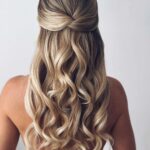
Hair that is too short or too layered for a bun can still be secured: pull the front and sides back and leave the rest down.
For the shortest lengths, I like a half-up pony with a braid and pomade, since the pomade settles flyaways and the braid gives the ends something to do.
Slippery, straight hair needs grip first.
Maria Ambrose of Paul Taylor Dance Company works in a sea salt spray, French braids the top half from the hairline, and pins the braid with a ribbed bobby pin, because smooth ones slide out.
She then brings the other side back, mists the wispies with water, and joins both sides with an elastic. Skip washing the day before a show; a little oil weighs the hair down.
Fro-Hawk
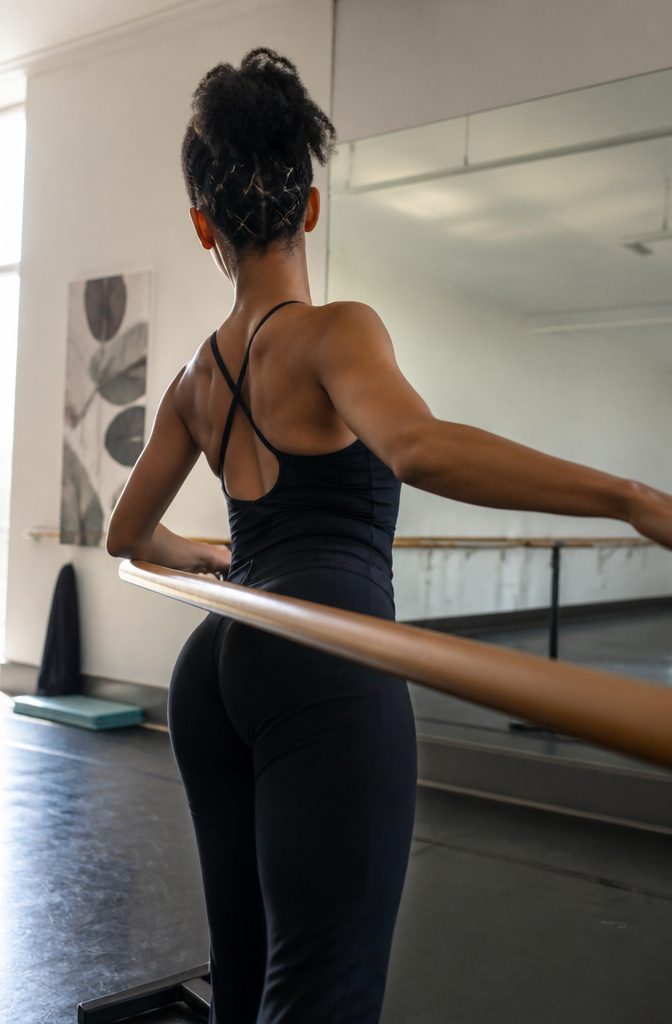
Natural hair is brushed upward toward the center of the head and pinned in place, which leaves a raised ridge that keeps the volume of the texture instead of flattening it.
Pins do the holding, and crossing them in an X is what makes it stay: each pin braces the other, so the hair has nothing to slide against the way it does around a single pin.
You can pin one side or both.
One side gives an asymmetrical line, while both sides give a balanced, even crest. I’d choose based on the choreography and which way your head turns most, since the pinned side is the one the audience will keep seeing.
Dutch Braid Into a Low Bun
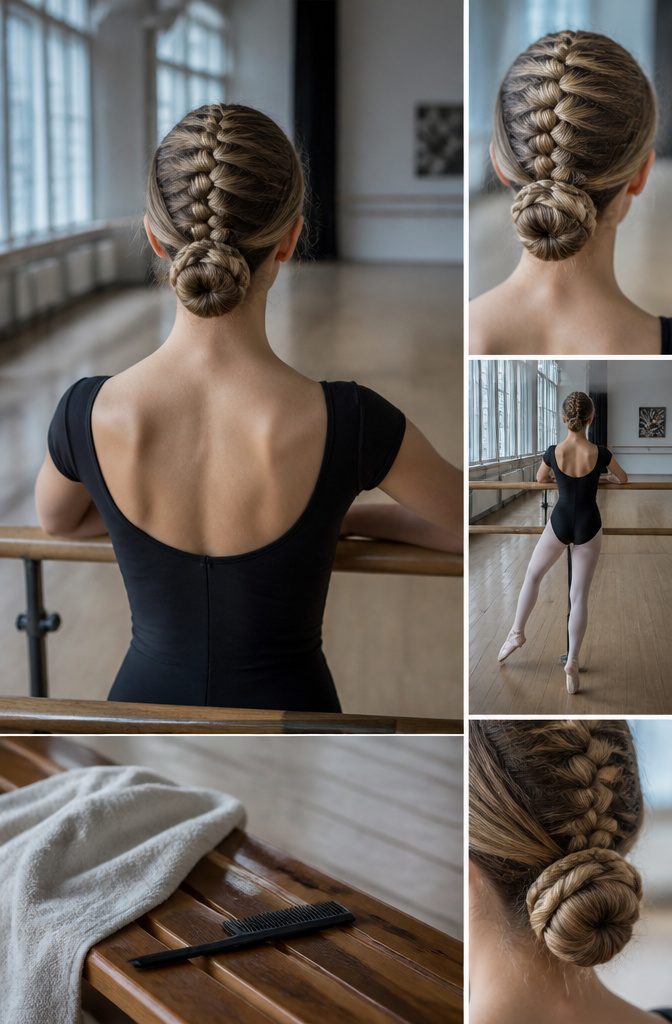
A Dutch braid is done like a French braid, except the strands cross under rather than over.
Start with a small section at the center of the hairline and braid backward, picking up hair down the middle of the head until you reach the nape and none is left.
Secure the braid in a low ponytail with an elastic, then twist the length into a low bun, pinning with large U-shaped bobby pins as you go.
Tuck bubbled or rogue hairs into the braid and pin them. Pin any wispies near the face back, and add hairspray only if your waves need it.
Lia Cirio of Boston Ballet calls this her go-to rehearsal style, since the braid controls frizz when she sweats and softens her severe facial structure. For frizzy or wavy hair, I’d choose it over a plain low bun.
Inside-Out Braid
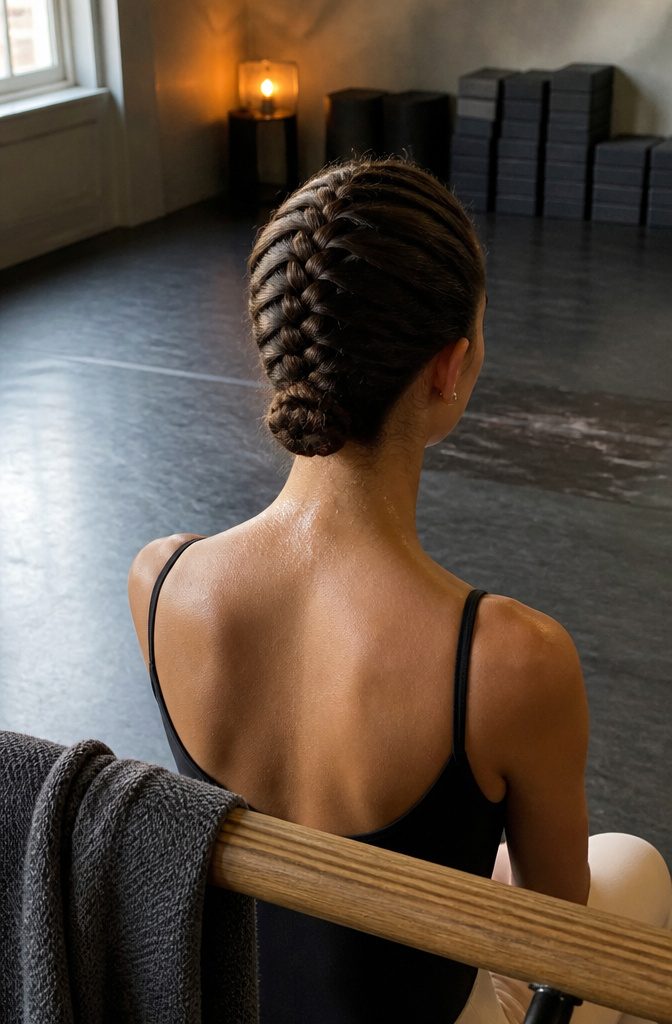
An inside-out braid is a French braid with one change: the strands cross under each other instead of over.
Start with a small section at the center of the hairline and work back toward the nape, picking up hair as you go.
Crossing under makes a tighter braid, and that is what lets it be pinned into a bun. It also keeps frizz down once you start to sweat.
The Jo+Jax audition advice lists a French braid along the hairline as one way to keep hair off your face.
For anything you plan to pin up, I’d cross under instead of over, since the tighter braid gives the pins more to hold.
Prep and the 15-Second Shake Test
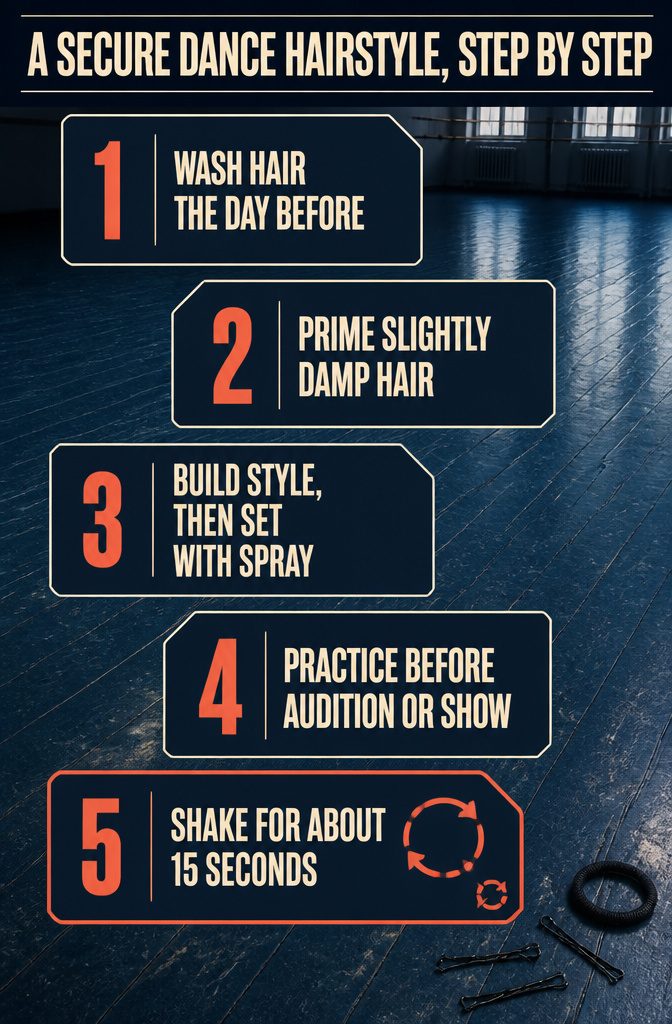
- Wash the day before. Clean hair is slippery, and day-old hair grips better. Very straight, slick hair may do better unwashed, since a little natural oil adds weight.
- Prime slightly damp hair with pomade or paste, working in sections from the bottom up. Sea salt spray adds grip to straight strands.
- Build the style, then set it with strong or extra-strong hairspray.
- Practice the whole style well before the audition or show, so the performance isn’t its first run.
- Shake your head for about 15 seconds: up, down, forward, back and side to side. If anything feels loose, add elastics or pins and test again.
A bun that slips mid-turn pulls your focus off the spin. Sweat and jumps will find every weak spot.
Pins, Elastics, Hairnets and Hairspray
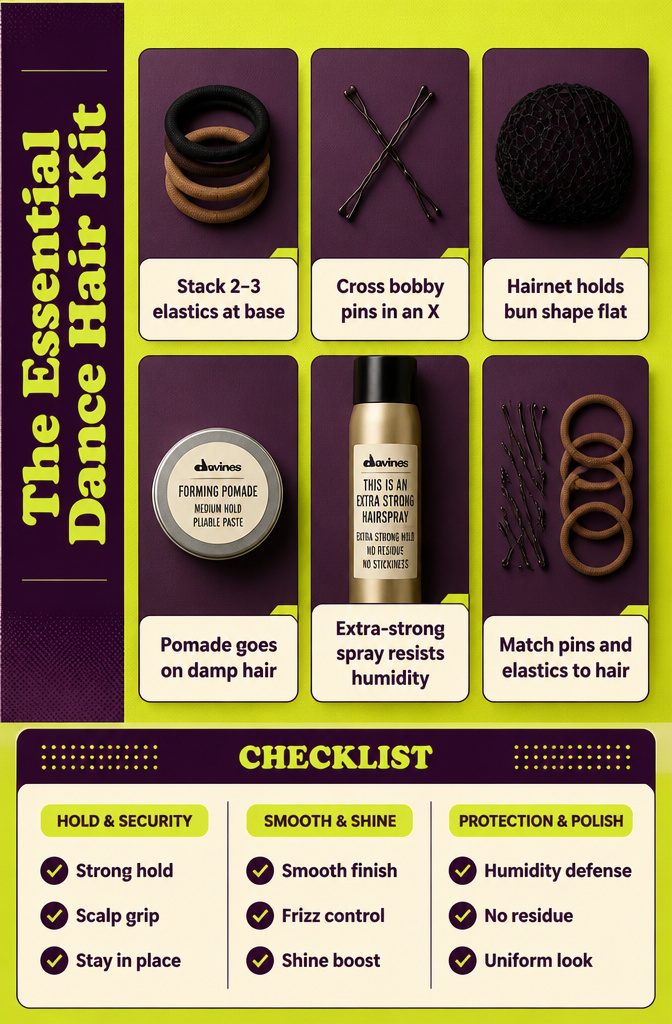
Each piece of the kit has its own job:
- Elastics: stack 2–3 elastics on a ponytail or bun base instead of one, and buy ones made for your hair type.
- Bobby pins: press them in firmly at the scalp and cross them in an X for extra grip.
- Hairnet: I wouldn’t skip one over a bun or curls. It holds the shape and flattens a bun down.
- Pomade or paste: Davines Forming Pomade or Medium Hold Pliable Paste goes on slightly damp hair before styling.
- Hairspray: Davines This Is An Extra Strong Hairspray sets the finished style against humidity and movement, without residue or stickiness.
- Color match: choose pins and elastics in your hair color. Fluorescent ones draw the audience’s eye, and a group should look uniform.
Matching Style to Dance and Hair Type
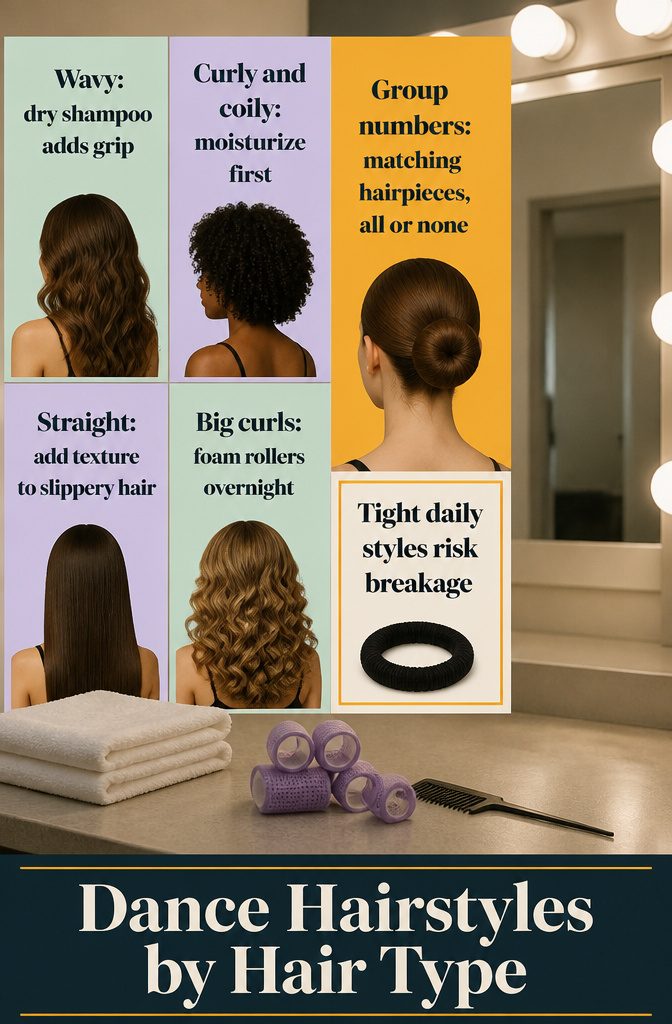
Hair texture and the stage decide most of this, so match them first:
- Wavy: Dry shampoo adds grip, and washing every three days spares waves from daily drying and heat.
- Curly and coily: Moisturize before styling, since dry curls fight the pins.
- Straight: Add texture to slippery hair. For a pin-straight audition look, flat-iron, part down the center, and pin the two front ¼-inch pieces under.
- Big curls: Foam rollers overnight, then shake out and spray.
- Contemporary: A slicked low ponytail at the nape.
- Group numbers: Elastics and pins match hair color, and hairpieces are all or none.
- Daily wear: Tight styles cause breakage, headaches and scalp tension, so I rotate styles and use soft elastics.
Frequently Asked Questions
What is the best hairstyle for dancing?
The best one is whichever style stays put through your hardest movement while keeping hair off your face. A classical bun suits ballet, a braided high ponytail suits high-energy sessions, and double braids suit long rehearsal days.
For a dance event, an updo that matches your outfit and feels secure works well. Shake your head for about 15 seconds in every direction, and if anything feels loose, add elastics or pins and test again.
What do dancers put in their hair?
Dancers use elastics, bobby pins, a hairnet, pomade or paste, and a strong or extra-strong hairspray.
Stack 2–3 elastics at the base of a ponytail or bun, and press bobby pins in at the scalp, crossing them in an X for extra grip.
Pomade goes on slightly damp hair before styling, and hairspray goes on last. Pick pins and elastics in your hair color so a group looks uniform.