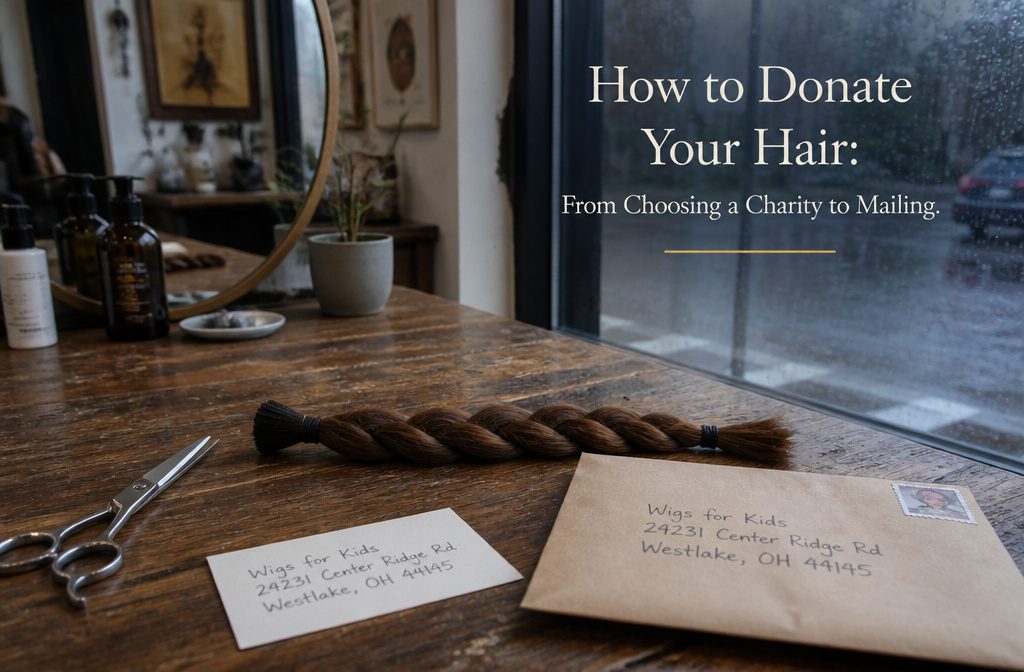
Donated hair is cut as tightly tied ponytails or braids, mailed to a charity, and made into wigs for people with medical hair loss.
Rules vary by group: Wigs for Kids takes only virgin hair 12 inches or longer, while Children With Hair Loss accepts healthy highlights and needs just 8 inches.
Choose an Organization
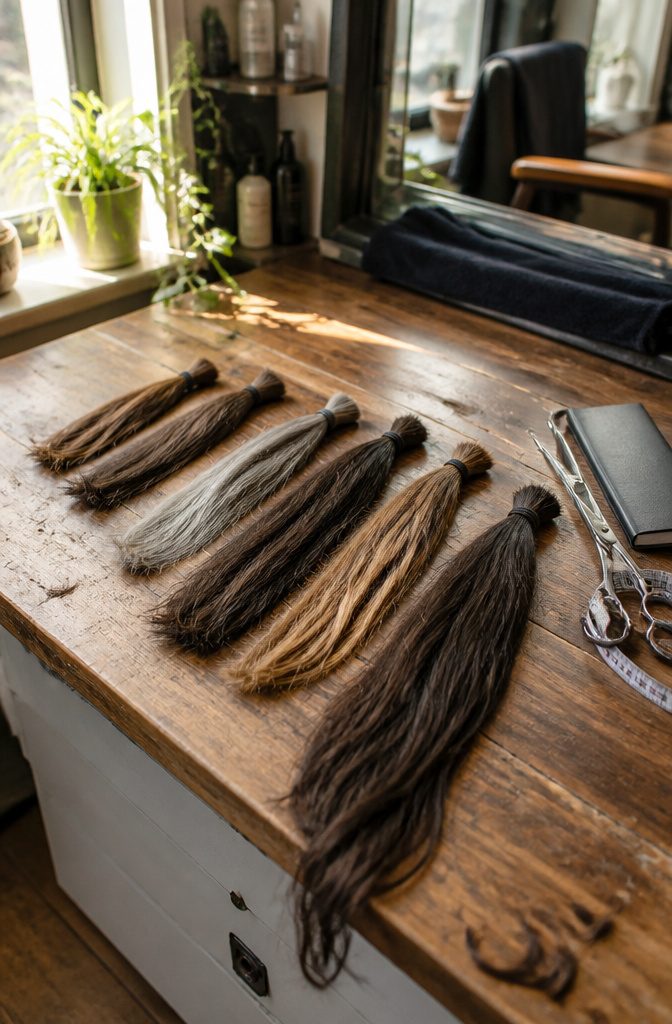
Rules change by charity, so read the current instructions on the organization’s own site before cutting anything. Wigs for Kids began in 1981 and requires at least 12 inches with no perm, color or highlights.
Children With Hair Loss will take healthy highlighted hair. Pantene Beautiful Lengths partners with the American Cancer Society.
Locks of Love is the name most people know:
Founded in 1997, Locks of Love is probably the most well-known hair donation organization in the United States.
— Yahoo
It also accepts shorter cuts, chemically treated hair and gray hair, and Hair We Share takes gray too. Length, color treatment, gray hair and condition are where the rules differ most.
Measure Your Hair
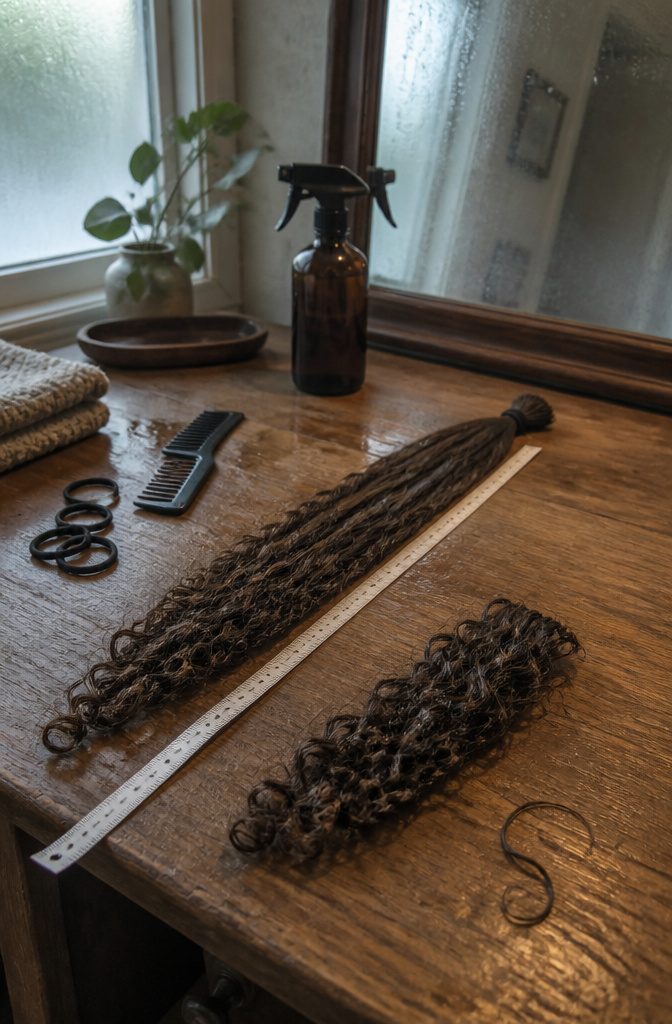
Minimums run from 8 to 14 inches, so check your target group before you grow or cut anything. Children With Hair Loss takes 8, Survivor Gals and Davines take 10, and Wigs for Kids, Hair We Share and Angel Hair for Kids ask for 12.
Wigs for Kids states 12–14 for ponytails, and Chai Lifeline asks for 14. Davines measures from the cut end to the tip.
Layered hair can qualify if the longest layer reaches the minimum. Curly hair should be pulled straight to measure, not read at its curled length.
A single ponytail can cost up to 4 inches, so measure with that loss in mind. Bateau says most groups ask for 8–12 inches, so I’d aim for 12 before booking the cut.
Wash and Dry Completely
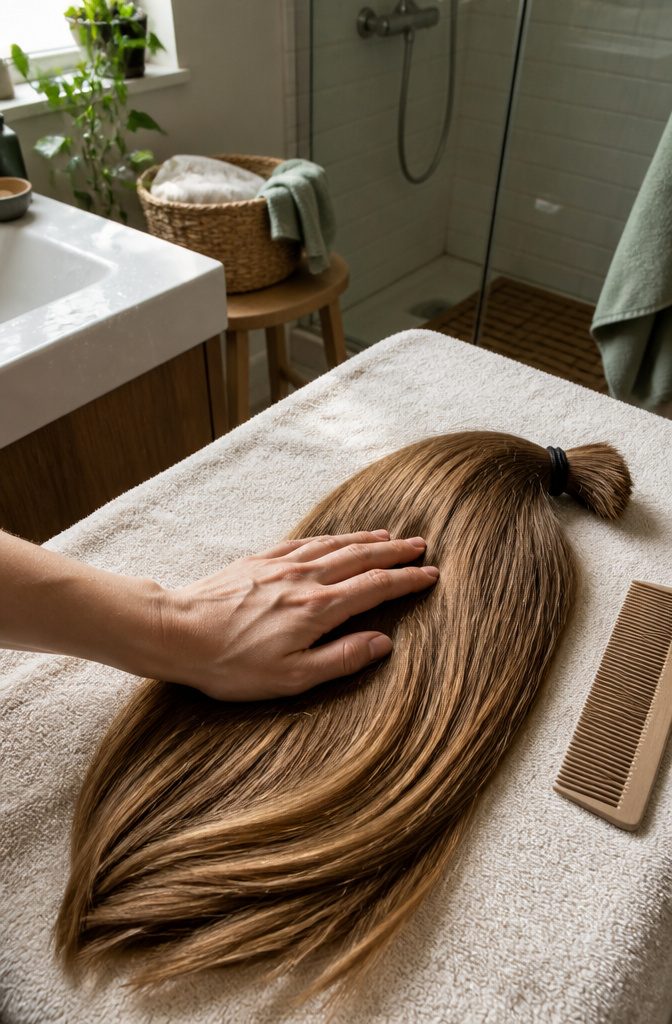
Hair has to be clean, fully dry and free of styling products before you cut it. Damp hair can grow mold and bacteria while it sits in a package, and Davines says moldy hair gets thrown away.
Hair We Share states plainly that it takes no hair that arrives wet. Gel, hairspray and similar products can also interfere with processing, so wash it and leave it bare afterward.
Press a palm against the thickest part of the hair before you cut. If it feels cool or heavy, it isn’t dry yet, so give it more time.
Divide and Secure
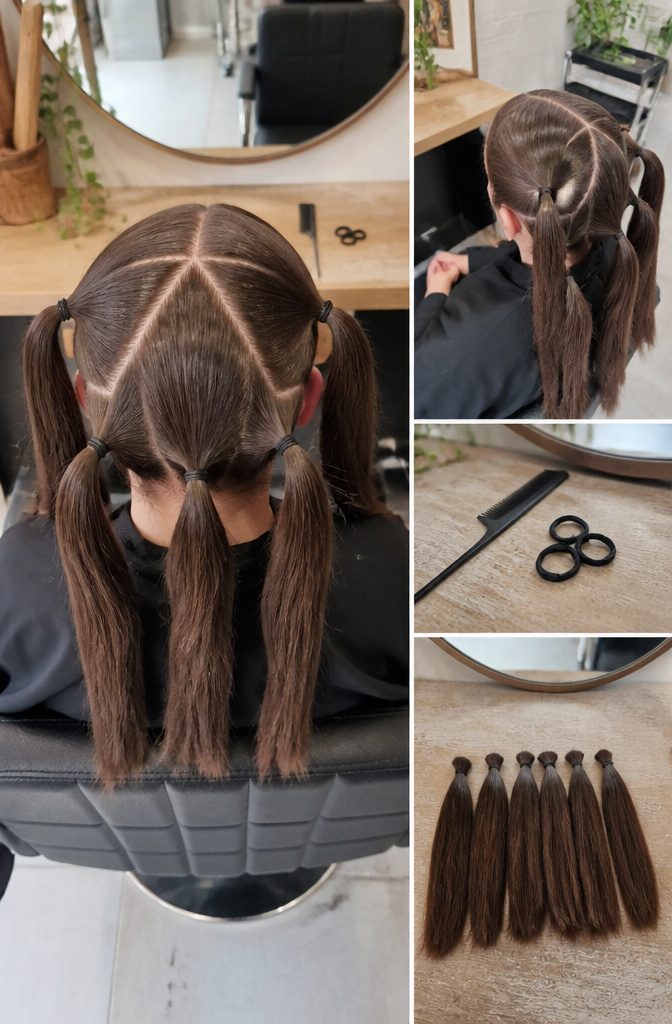
Start with a center part, then part again over the top of each ear. That makes four sections, which I’d treat as the minimum.
Six sections is better than four, and a single ponytail can cost you up to 4 inches of length. Some organizations accept as few as 2 sections and as many as 6, but I wouldn’t go below four.
Tie the hair in front of each ear first, then the hair behind each ear.
Pull every hair tie tight at the top of its section, and if you’re braiding, tie off both ends. A loosely wrapped bundle slips out of its band in the mail, and loose strands arrive unusable.
Cut Above the Ties
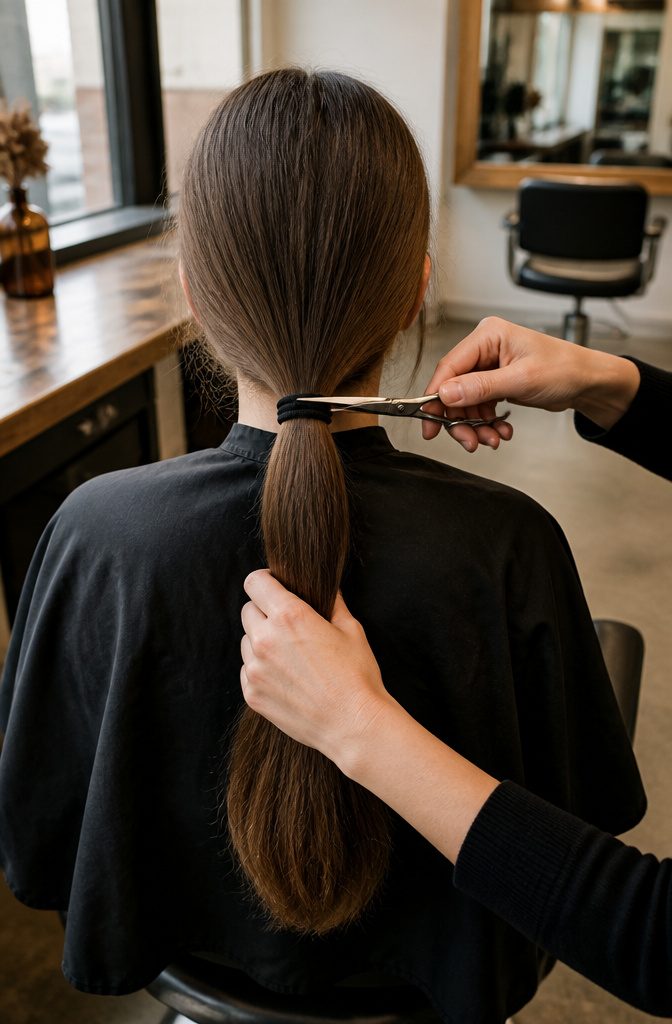
Cut on the ponytail side of the elastic, never through it or below it.
Cut above the hair tie so the bundle stays bound. Loosely wrapped hair tends to slip out of its band during shipping, and a donation that comes apart in the mail is unusable.
Each ponytail or braid should be tight before the first snip, because that elastic is all that holds the length together once the scissors close.
Anyone can make the cut at home if the guidelines are followed.
A stylist still gives the cleanest result, and I’d book one for this. I cover how to do that in the salon section later on.
Package and Mail
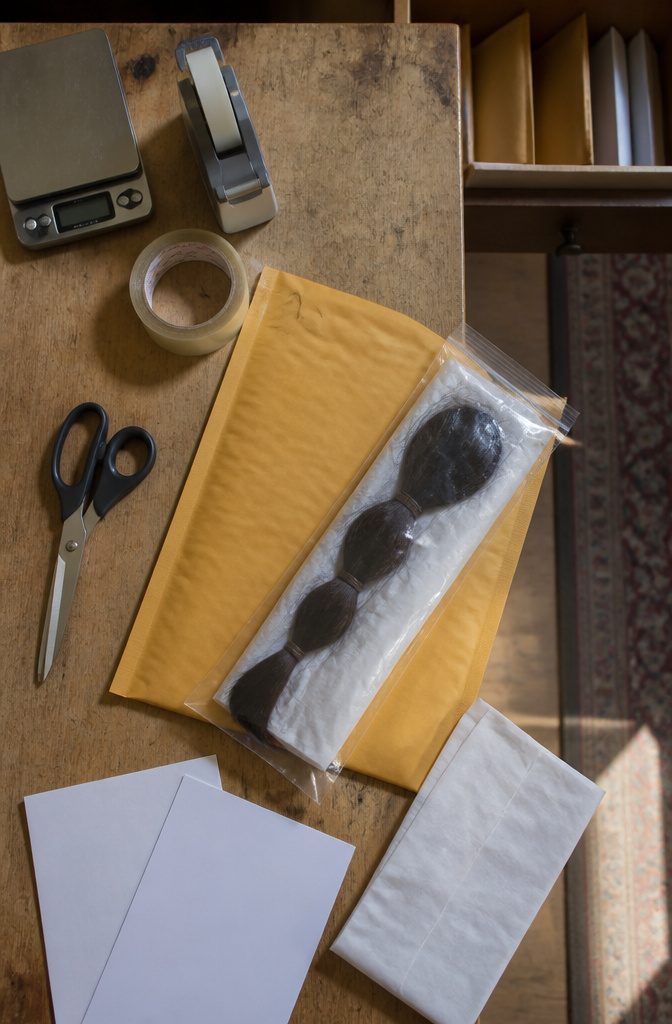
- Lay the ponytails or braids together and wrap them in one piece of tissue paper. Don’t use a separate sheet for each.
- Slide the bundle into a plastic or zip-close bag and seal it. Hair We Share rejects hair that isn’t in a sealed plastic bag, so I’d seal it for every charity.
- Add the donor form if the charity asks for one. Wigs for Kids and Children with Hair Loss both have forms you can download from their sites.
- Mail the package to the address on the organization’s own website. Copy it from there, not from a third-party page, since addresses can change.
Follow Post-Cut Instructions
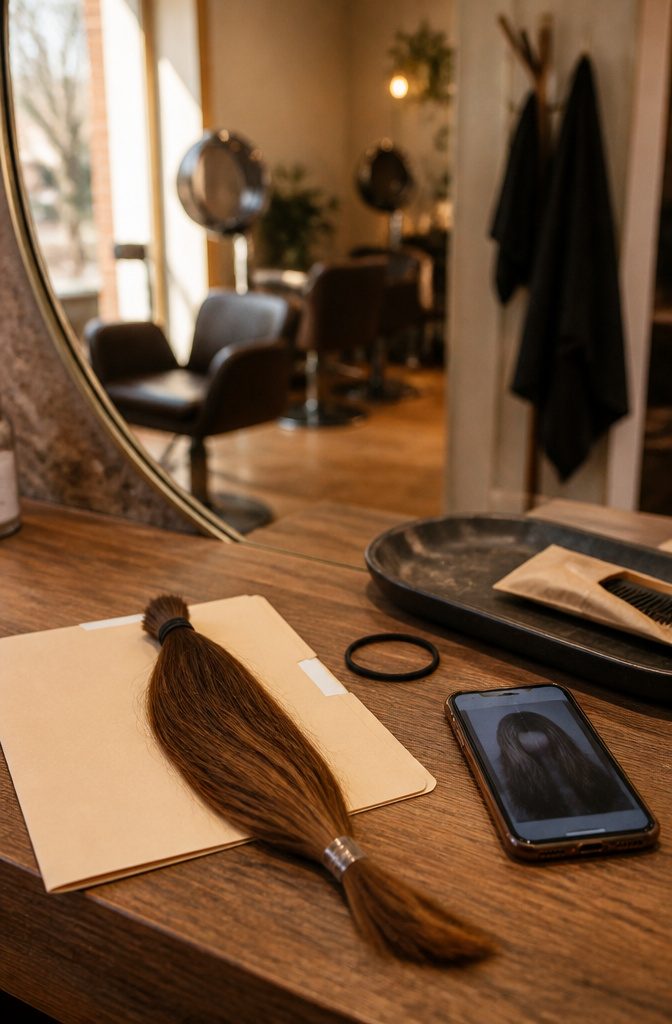
Ask the stylist before the cut whether the salon mails the ponytail or hands it back to you. Some salons give the secured hair back to the donor to mail, while others send it on themselves.
Organizations vary too, so follow the mailing and tracking instructions your chosen organization gives you instead of assuming one routine fits all. Keep those instructions next to the ponytail so nothing gets guessed at the post office.
Hair We Share offers Ponytail Tracking, which shows a photo of the donor’s hair in a wig. If seeing where your hair ended up matters to you, I’d weigh that heavily when picking where to send it.
Who Your Hair Helps
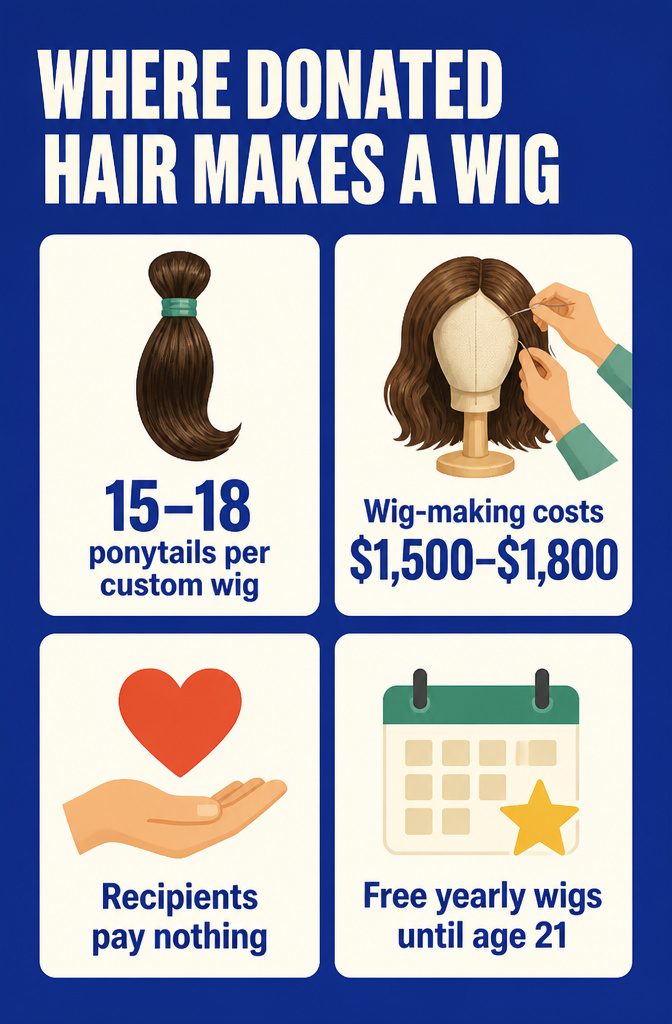
Donated ponytails become wigs for children and adults with medical hair loss from cancer treatment, alopecia, burns or trichotillomania. One custom wig takes 15–18 ponytails and costs $1,500–$1,800 to make, so your ponytail is a small piece of a big job.
Recipients don’t pay for the finished wig. Children With Hair Loss, for one, gives each recipient a free wig every year until they turn 21.
Your hair may travel before it helps anyone. Some organizations send donations to manufacturers in places like Indonesia or China, where the hair is sorted, processed and made into a wig by hand.
The finished wig then returns to the organization’s U.S. headquarters, which distributes it to the people who need it.
Eligibility Requirements
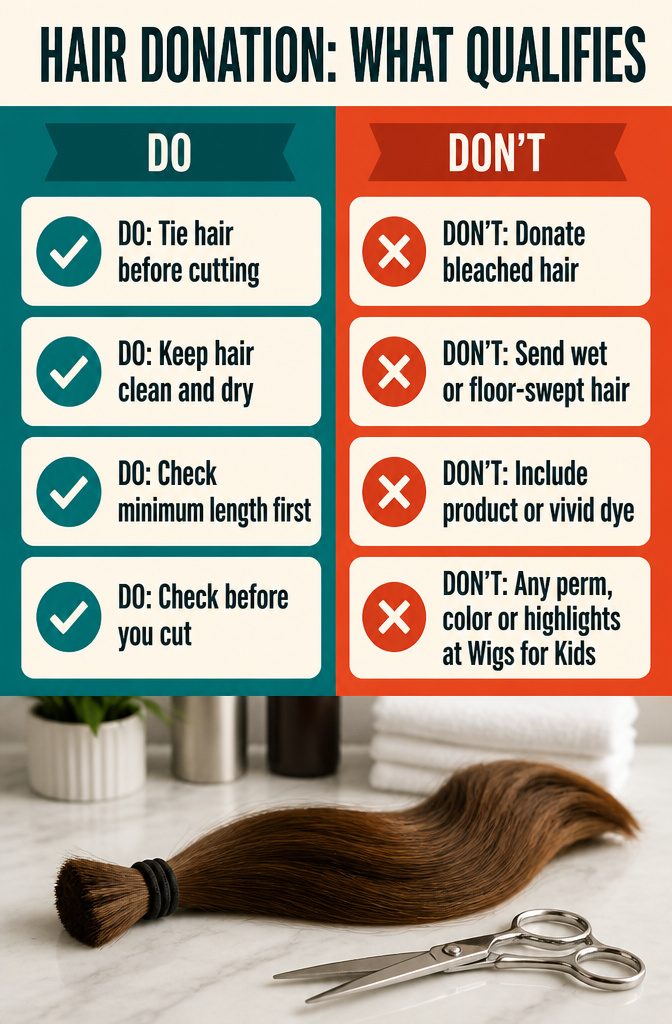
Most groups take hair that is clean, dry and healthy, but each sets its own length and chemical rules, so check before you cut.
Usually accepted:
- Hair at least 8 inches long; 12 inches is the more common minimum
- Dyed hair in a natural color, with no bleach
- Healthy highlights at some groups, and perms or straightened hair once damaged ends are trimmed
- Gray hair, though a few groups limit how much
Usually rejected:
- Hair that is bleached or lightened
- Wet hair, which molds in transit
- Hair swept off the floor
- Hair in a non-natural color
- Hair with styling product in it
- Any perm, color or highlights at Wigs for Kids, which takes only virgin hair 12 inches or longer
Wigs for Kids vs. Children With Hair Loss
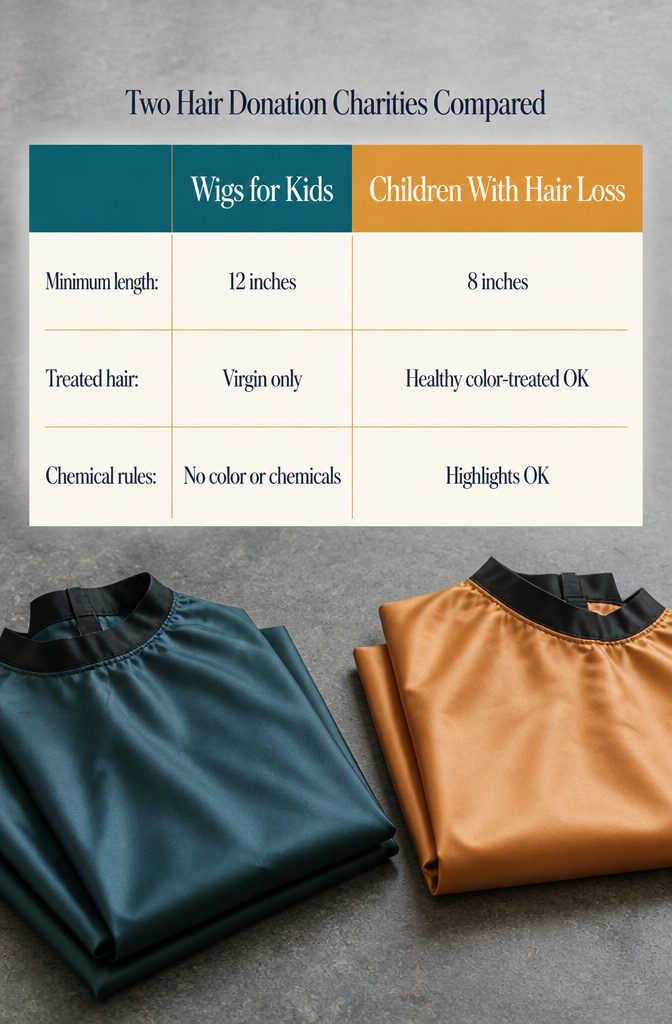
Wigs for Kids accepts only virgin hair, so any color or chemical treatment rules you out. Children With Hair Loss takes healthy color-treated and highlighted hair, and needs 4 fewer inches.
| Charity | Minimum length | Treated hair |
|---|---|---|
| Wigs for Kids | 12 inches | Virgin only; no color or chemicals |
| Children With Hair Loss | 8 inches (accepts 8–10) | Healthy color-treated and highlighted OK |
| Hair We Share | 12 inches, or 8 with Ponytail Tracking | Natural-color dye, no bleach |
| Survivor Gals | 10 inches | No bleach; dyed or permed OK |
| Chai Lifeline | 14 inches | n/a |
| Angel Hair for Kids | 12 inches | No perms |
For color-treated hair, Children With Hair Loss is my pick; Hair We Share works if your dye is a natural shade.
Ask a Salon
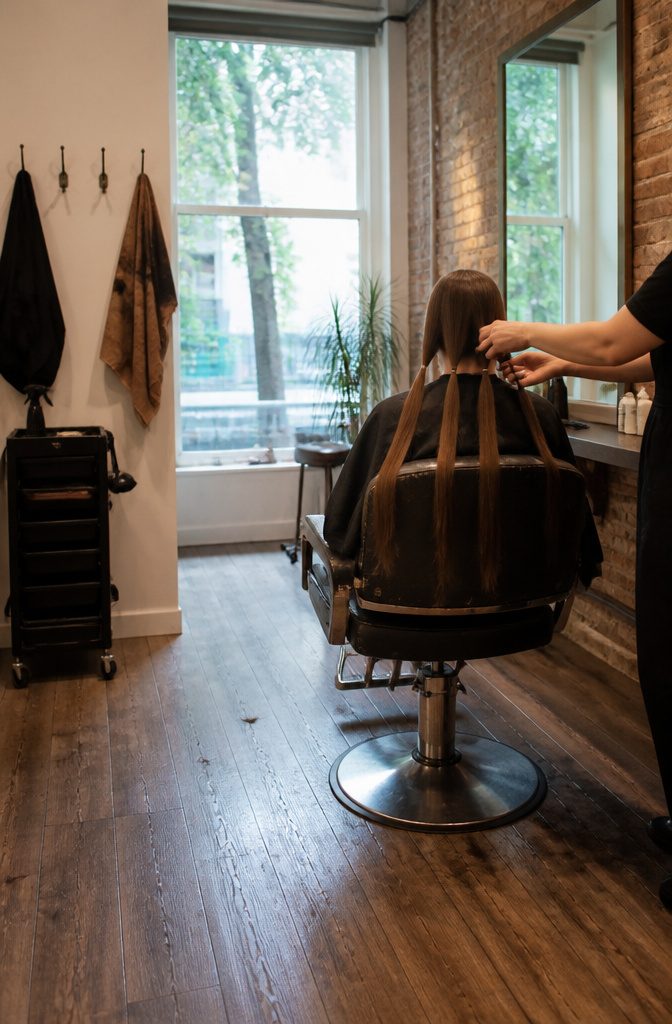
Anyone can cut hair for donation if the guidelines are followed, but I’d book a salon anyway.
Davines recommends a stylist for the cleanest possible result, and the reason is practical: a trained stylist handles the sectioning, secures each ponytail or braid, and cuts above the tie, so you aren’t working scissors behind your own head.
The tie is where DIY cuts go wrong.
Loosely wrapped hair tends to slip out of its band in the mail, and hair that comes loose is unusable. A stylist who has done this before pulls each tie tight before the first snip.
Some salons make donation part of the job.
Isle of You says its staff are trained to process donations, and it calls itself a Wigs for Kids Ambassador and Affiliate Salon. Ask whether your stylist has done a donation cut before you book.
Other Ways to Give
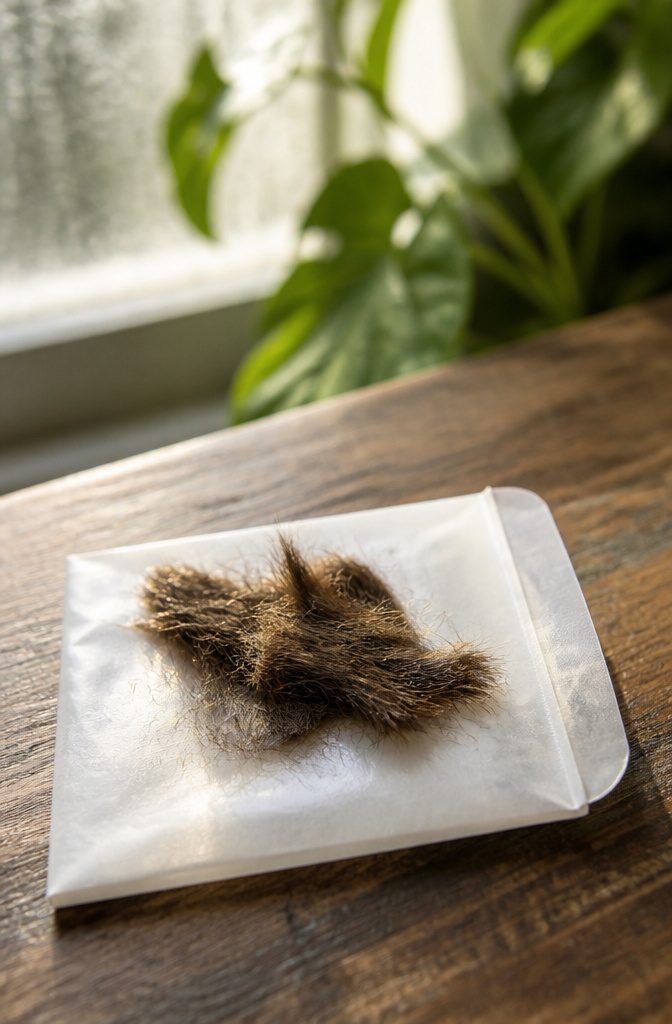
If your hair doesn’t qualify for a wig, it can still do useful work.
Matter of Trust takes clippings from individuals, salons and groomers, then felts the natural fibers into mats that soak up oil and petrochemical spills, hold soil in place, help wild habitats and keep storm drains clear.
You sign up through their Hum Sum platform.
Money is the other route. A custom-fitted wig costs $1,500–$1,800 to make, and Children with Hair Loss and Wigs for Kids give theirs away free.
A cash donation through either organization’s website covers part of that bill, and it’s tax deductible. If your hair won’t make the cut, I’d put a few dollars toward a wig.
Frequently Asked Questions
How long does your hair have to be to donate?
Minimums run from 8 to 14 inches depending on the organization, and 12 inches is the most common.
Children With Hair Loss takes 8, Survivor Gals takes 10, and Wigs for Kids asks for 12. Measure with a loss of up to 4 inches per ponytail in mind, and pull curly hair straight when you measure.
Can I donate my hair to charity?
Yes. Groups such as Wigs for Kids, Children With Hair Loss and Hair We Share turn donated ponytails into wigs for children and adults with medical hair loss from cancer treatment, alopecia, burns or trichotillomania.
Each charity sets its own length and chemical rules, so read its current instructions before you cut.
Can I donate hair that is highlighted or colored?
It depends on the charity. Children With Hair Loss accepts healthy color-treated and highlighted hair, but Wigs for Kids takes only virgin hair with no perm, color or highlights.
Faded color is a maybe at Wigs for Kids, because most permanent dye changes the hair’s structure even after the shade looks gone, while temporary color that washes out in a few shampoos may be fine.
Bleached or lightened hair is usually turned away.
What is the difference between Children With Hair Loss and Wigs for Kids?
Wigs for Kids accepts only virgin hair at least 12 inches long, with no color or chemical treatment.
Children With Hair Loss takes healthy color-treated and highlighted hair and needs only 8 inches. If your hair has been dyed or highlighted, Children With Hair Loss is the better fit.
How much hair does it take to make a wig?
One custom wig takes 15–18 ponytails. Making it costs $1,500–$1,800, so a single donation is one small piece of a much larger job.
What happens to my hair after I donate it?
Yes, it is used for a wig. Some organizations send donations to manufacturers in places like Indonesia or China, where the hair is sorted, processed and made into a wig by hand.
The finished wig returns to the organization’s U.S. headquarters, which gives it to a recipient at no cost.
If I can’t donate my hair, how else can I help?
You can give money. A custom wig costs $1,500–$1,800 to make, and Children With Hair Loss and Wigs for Kids give theirs away free, so a cash gift on either website covers part of that cost and is tax deductible.
Clippings that don’t qualify for wigs can go to Matter of Trust, which felts them into mats that soak up oil spills.