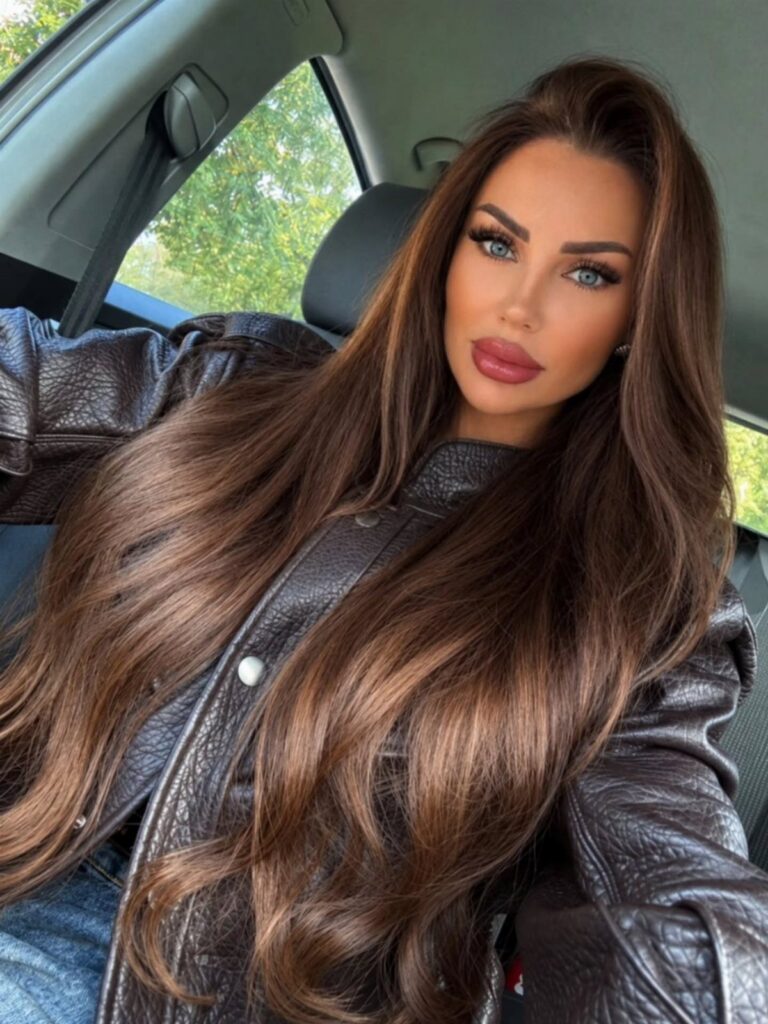
The ideas here run from a sleek black sheet with nothing to style to waves, bangs and ponytails that take minutes, plus shades from espresso to chestnut brown.
What decides which one is yours is how your hair dries on its own: hair that dries flat and straight gets its shape from layers, curled ends or a blunt hem, while hair that already waves can carry volume and a high ponytail.
I’d settle the cut before the color, since a smooth surface is what makes a dark shade read as rich.
1. Long Layered Hair
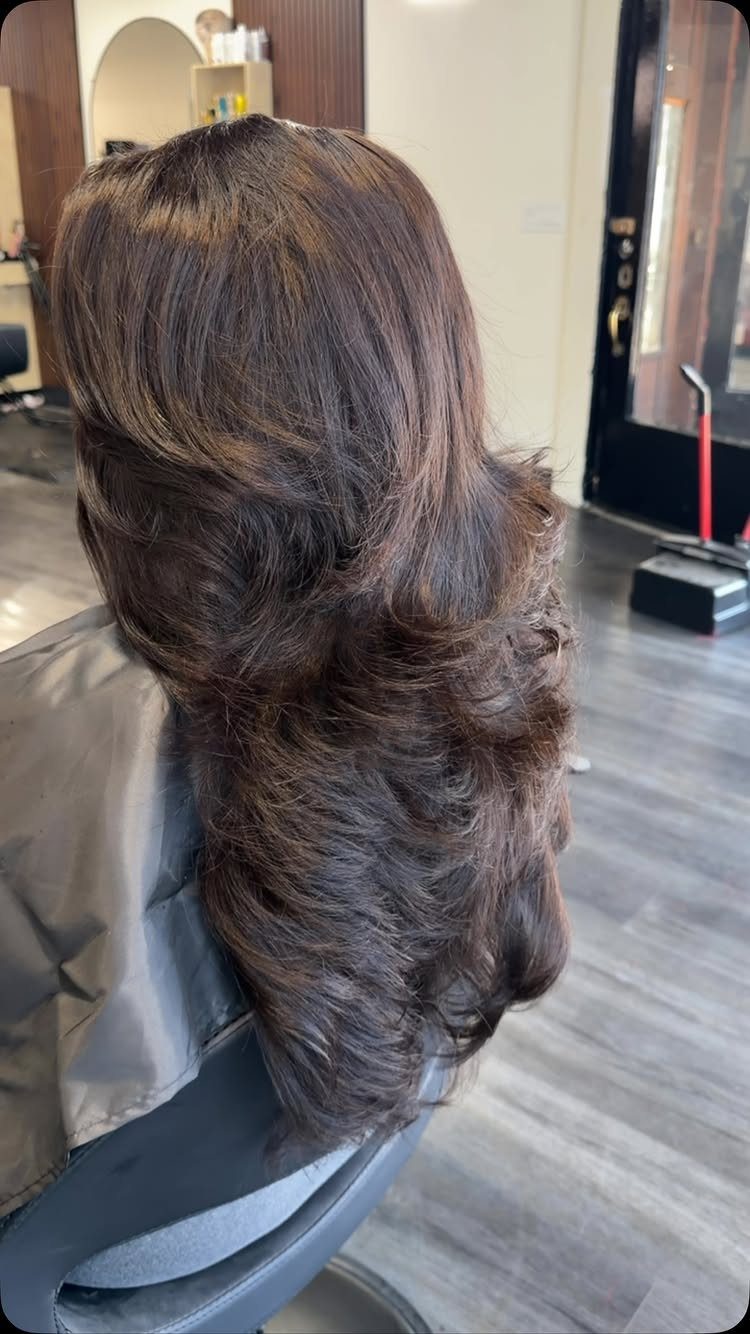
Layers are what keep very long dark hair from hanging like a single heavy curtain. Cut through the length, they give the ends a feathered, lighter look and let the hair move when you walk.
I would ask a stylist for long layers rather than short ones, so you keep the length and still get the lift. Bring a photo, and say whether you want the layers soft or choppy.
2. Glossy Straight Hair
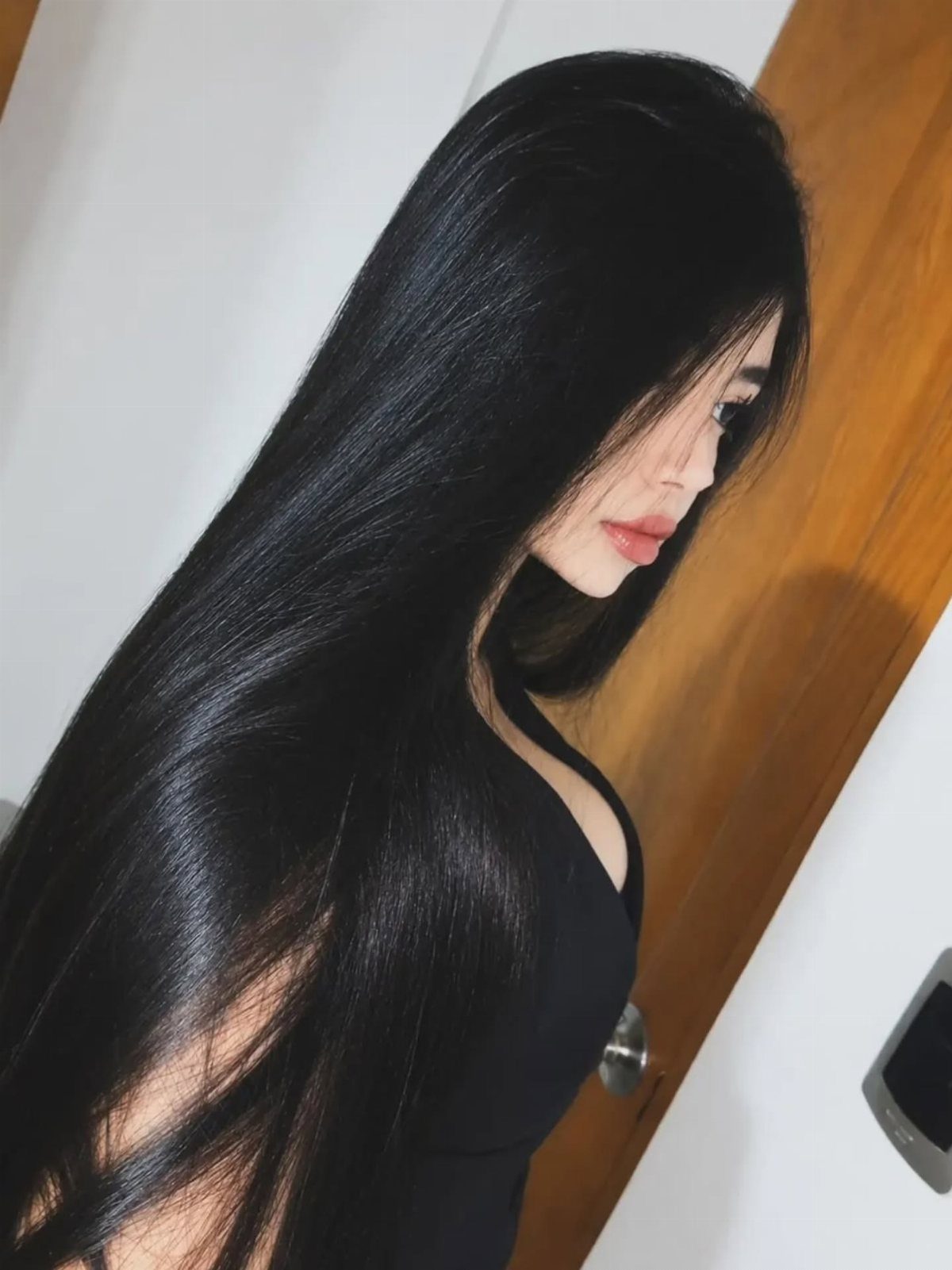
Straight, glossy and worn loose: that is the whole look, and shine does most of the work. On dark hair, a smooth surface reads as rich color, so a dull finish undoes it faster than any cut mistake.
I prefer it with no layers fighting the line. Let the hair hang and the sleekness carries the style by itself.
3. Waist-length Hair
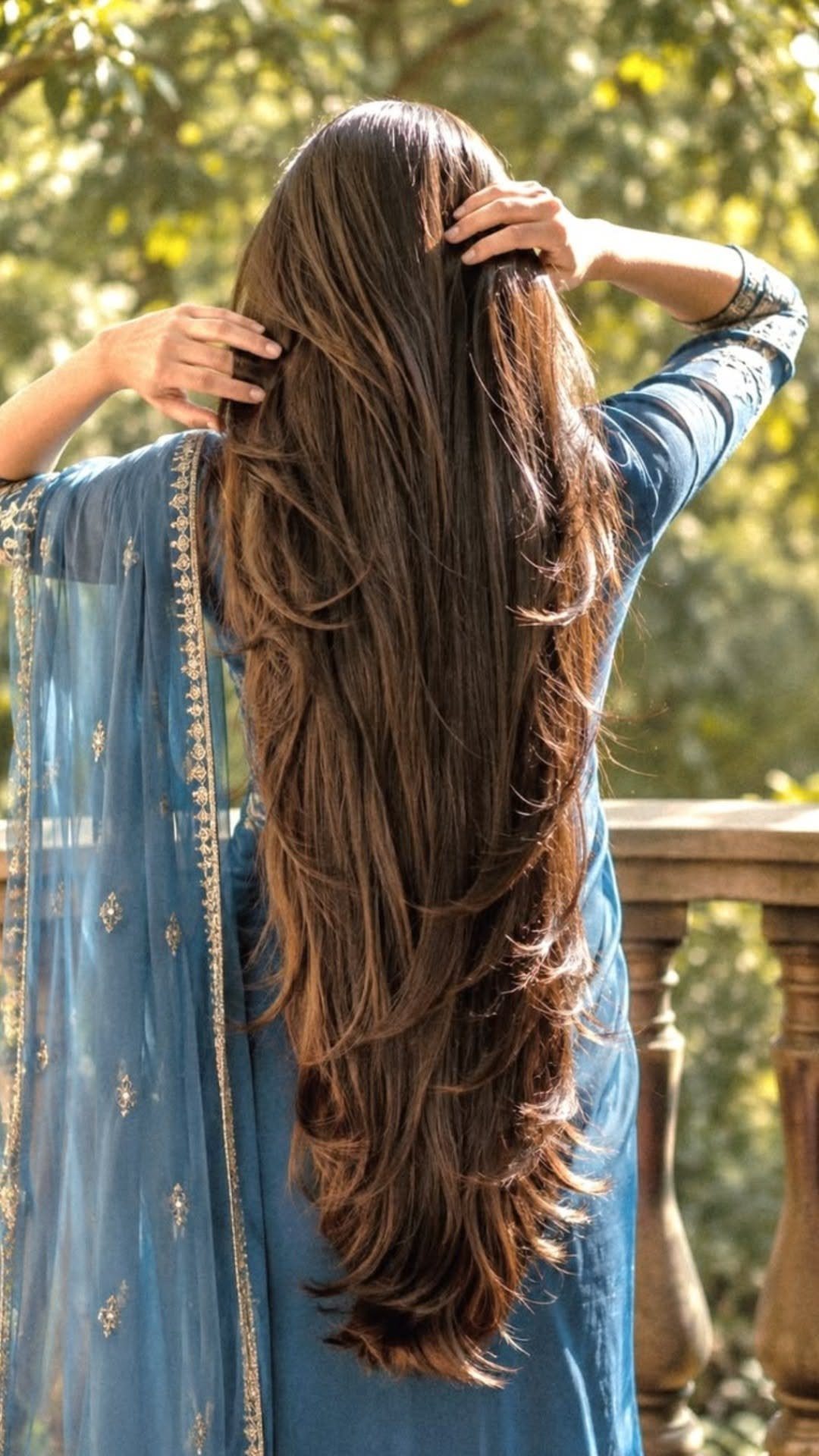
Hair that reaches the waist is a length commitment more than a style. Dark hair at this point falls in one long sweep down the back, and it looks strongest worn down.
Ask for a trim that tidies the ends without taking inches, since the length is the point. I would say this one suits people who like waiting for hair to grow.
4. Soft Curled Ends
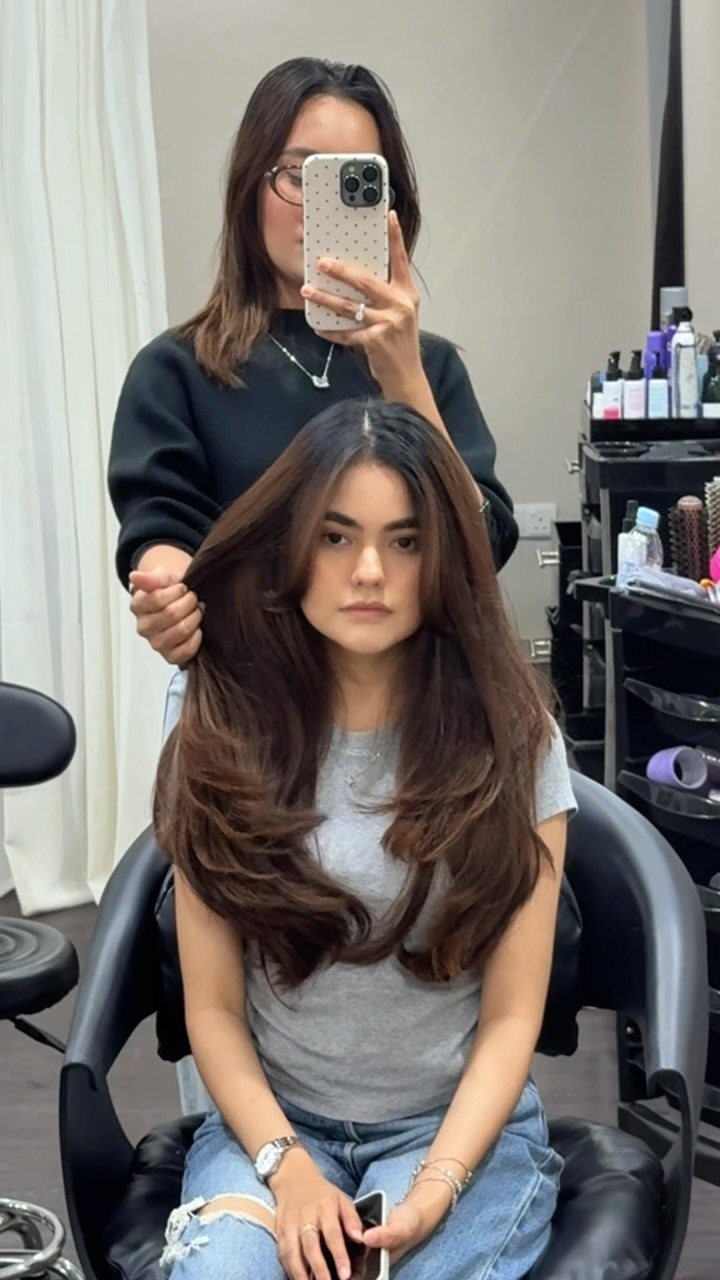
Curled ends give long dark hair a gentle finish without turning the whole head into waves. Only the last few inches bend, either outward or under, which keeps the top looking smooth.
A loose curl reads softer than a tight one on dark hair, so I would keep it relaxed. Ask your stylist for soft ends if you want to request it by name.
5. Tapered Ends
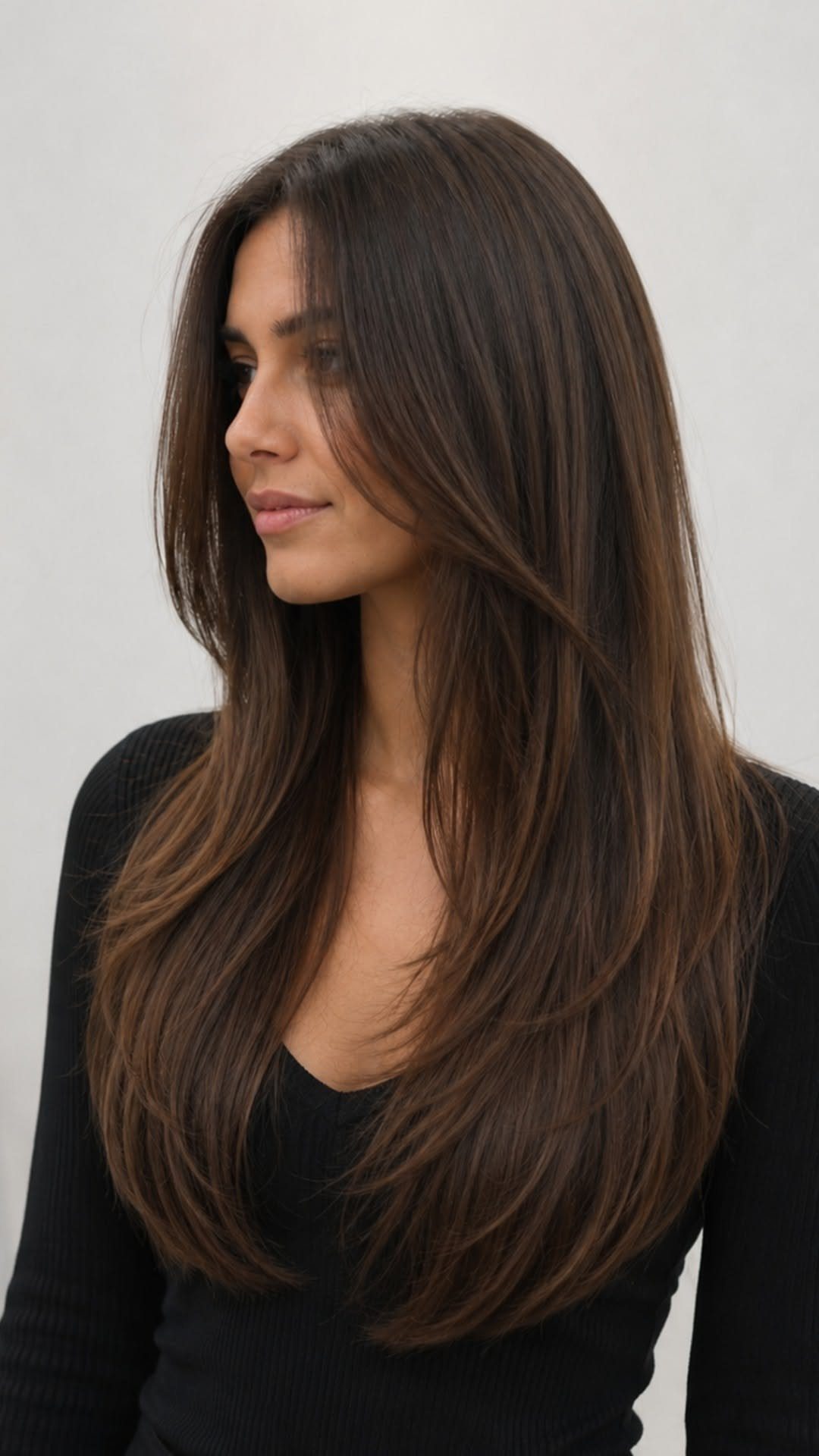
Tapered ends make long hair finish in a fine, soft point instead of a heavy straight edge. Combined with smooth layers, the length looks lighter, and dark brown hair keeps its shape without bulk at the bottom.
If you want this, tell your stylist to taper the ends rather than blunt-cut them. I like it for anyone who finds a hard line too severe.
6. Long Black Hair
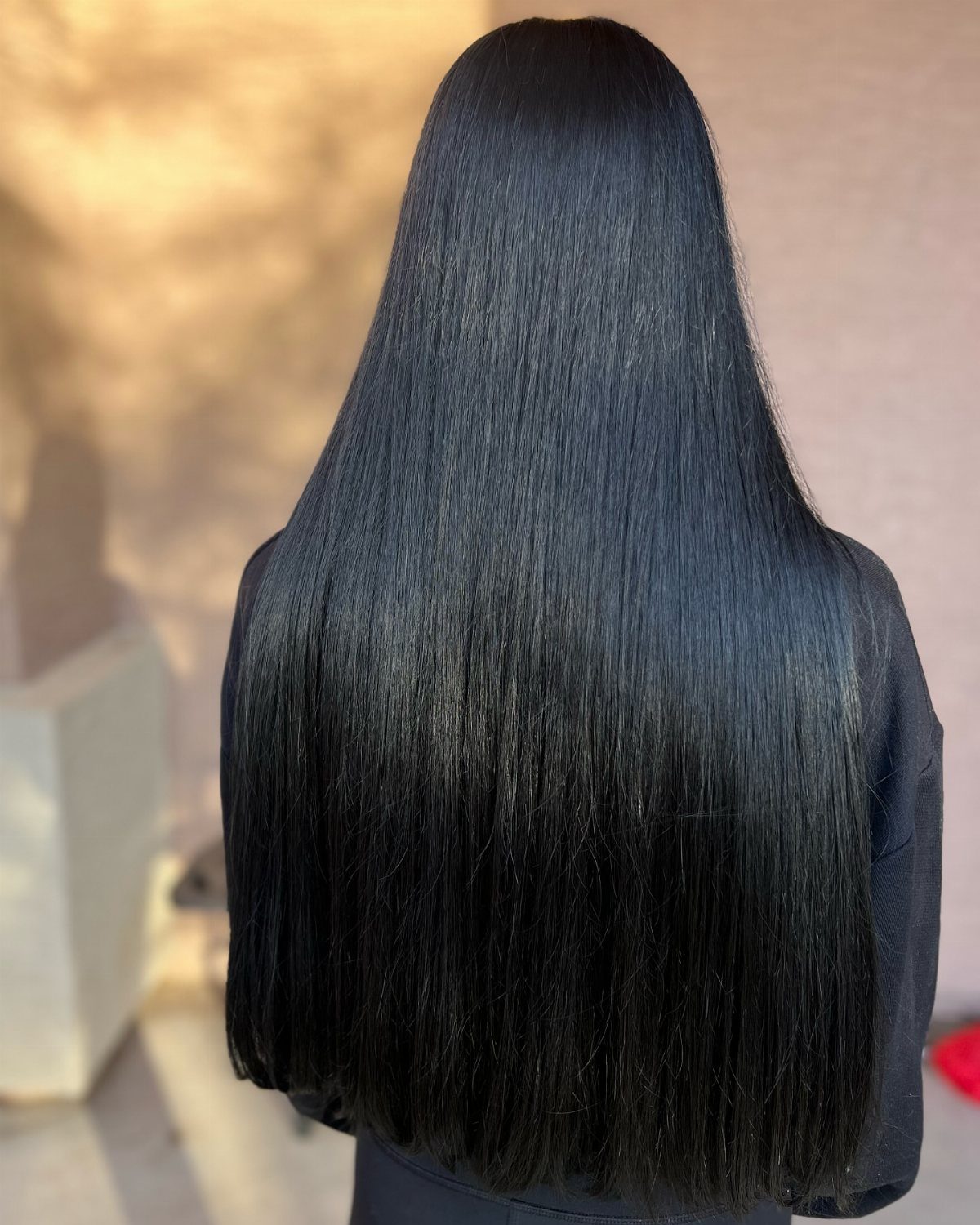
Black hair at this length is all about the shine, and that shine is what keeps it from looking flat. Very long, straight and glossy, it falls down the back as one dark sheet.
It is a bold, simple choice with nothing to style. I would pick it if you want drama without any daily effort beyond keeping the hair smooth.
7. Dark Brown Hair
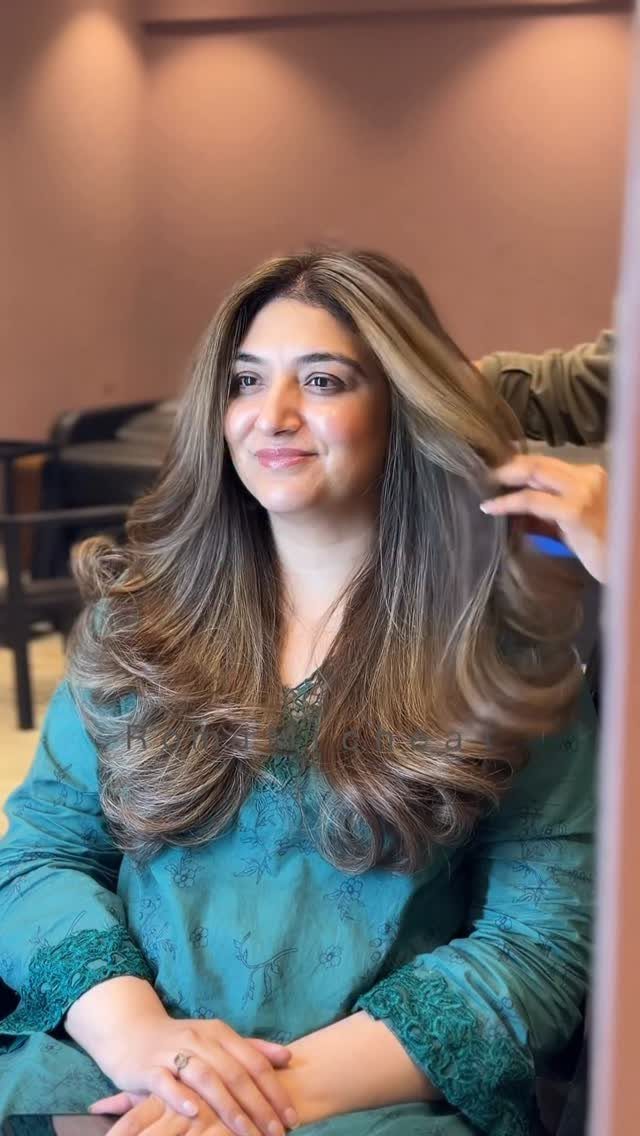
Dark brown reads softer than black, and on long hair it shows more dimension: the color shifts a little from root to ends instead of sitting flat.
With lighter pieces running through it and curled ends, the shade looks warm and full.
I would pick this over black if you want something rich that still looks easy. Ask a stylist for a dark brown base, and bring a photo so the lighter pieces land where you want them.
8. Face-framing Layers
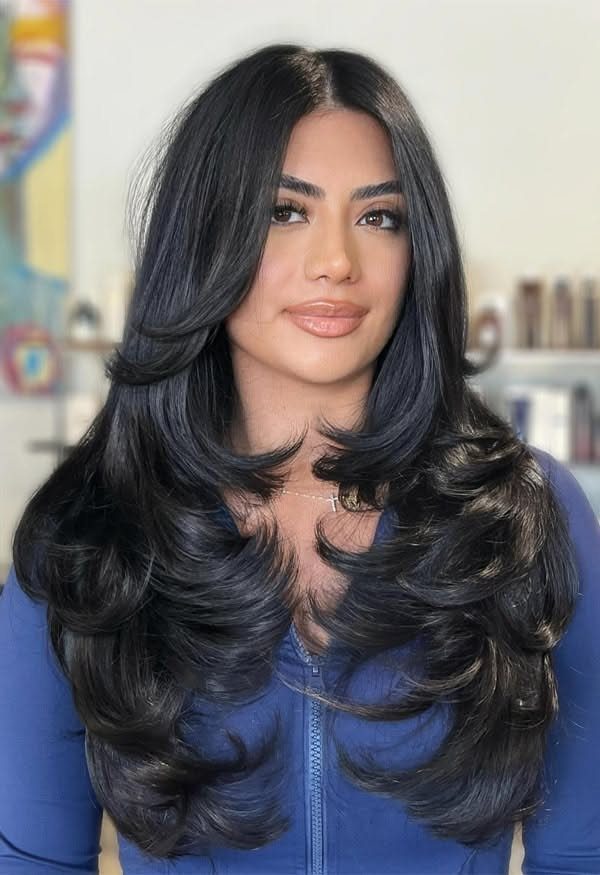
Cut around the face, the shortest pieces of a long haircut can sit anywhere from the cheekbones to well below the chin. That length choice shapes how the whole front of the hair frames you.
Shorter pieces open the face; longer ones blend into the rest of the length.
I like them curled softly at the ends, which keeps dark hair from looking heavy up front. When you book, say which length you want and point to it in a photo.
9. Center Part
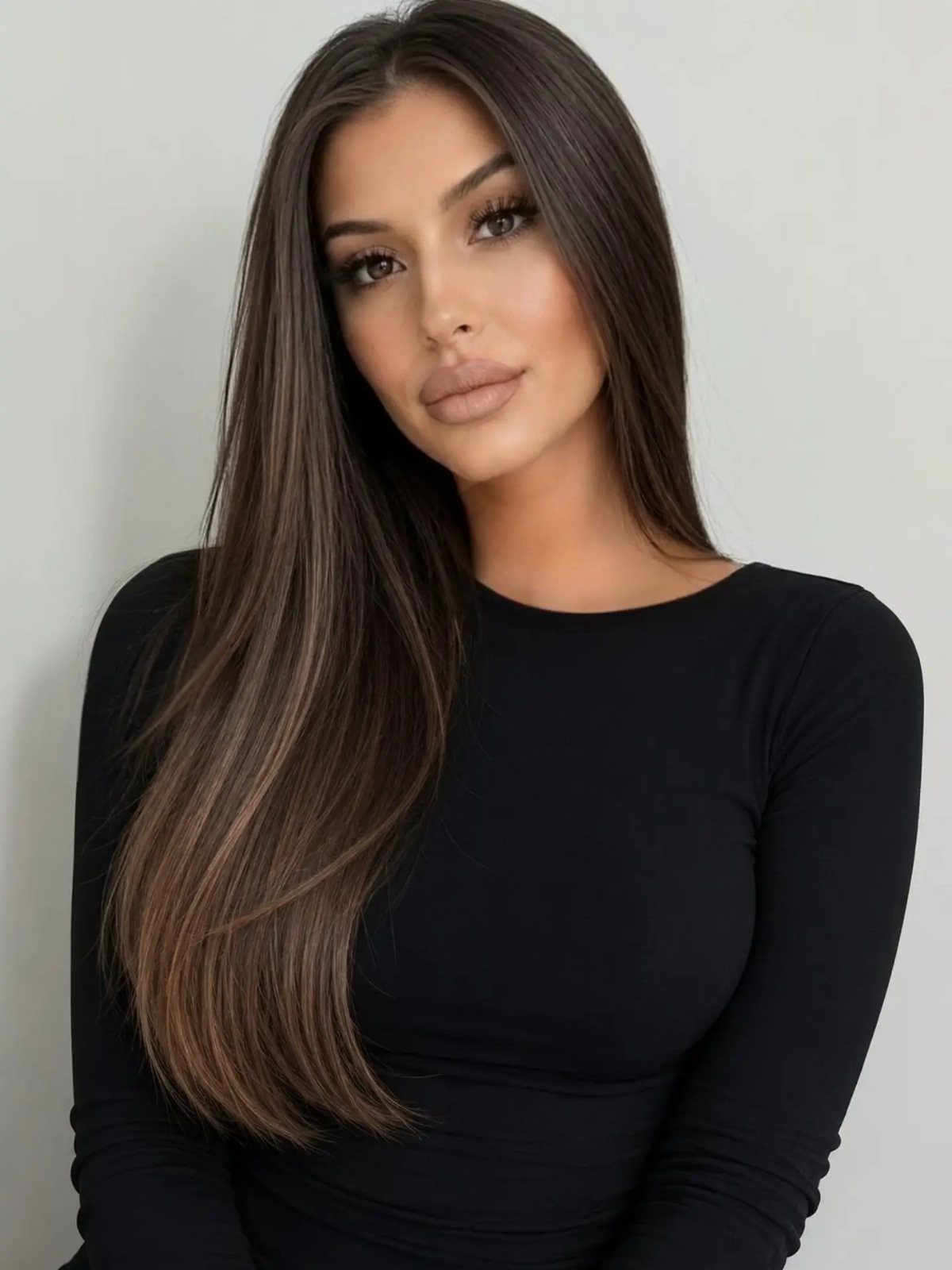
Parted straight down the middle, long dark hair falls evenly on both shoulders, and the symmetry puts the focus on the face.
It takes about a minute: run a comb from the center of the forehead back to the crown, then smooth each side down.
A smooth finish suits it best, since any frizz at the part shows right away. If a center part feels too sharp for you, shift it slightly off-center and see how it sits.
10. Side Part
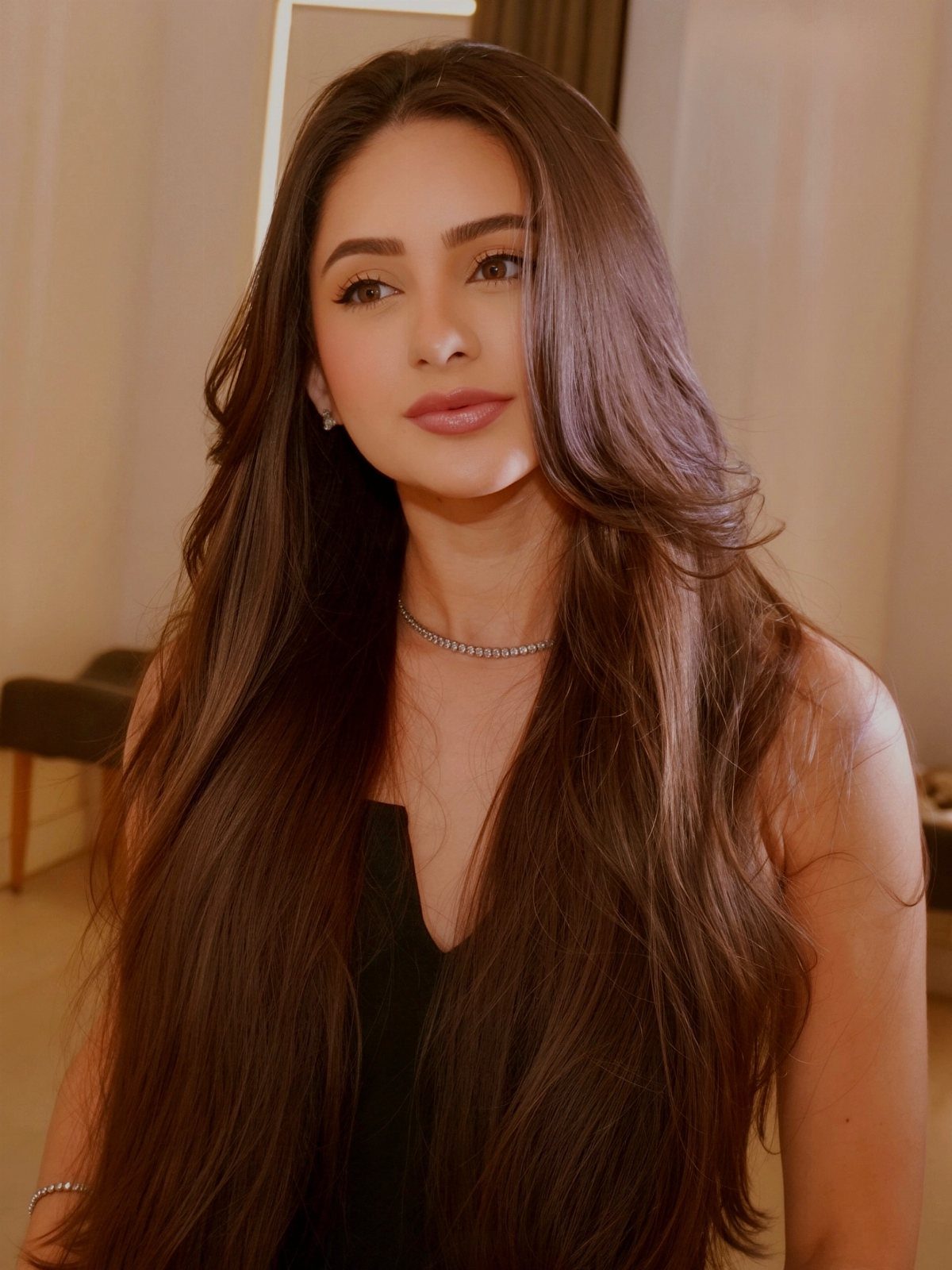
A side part throws the weight of long dark hair to one side, so the hair sweeps across the forehead and the shape shifts completely from a center split. Soft waves make the effect looser.
I find it the easiest way to make an old haircut look new.
Comb the part where the hair naturally wants to fall, then flip it to the other side if you want more lift at the root. Try both before settling on one.
11. Loose Waves
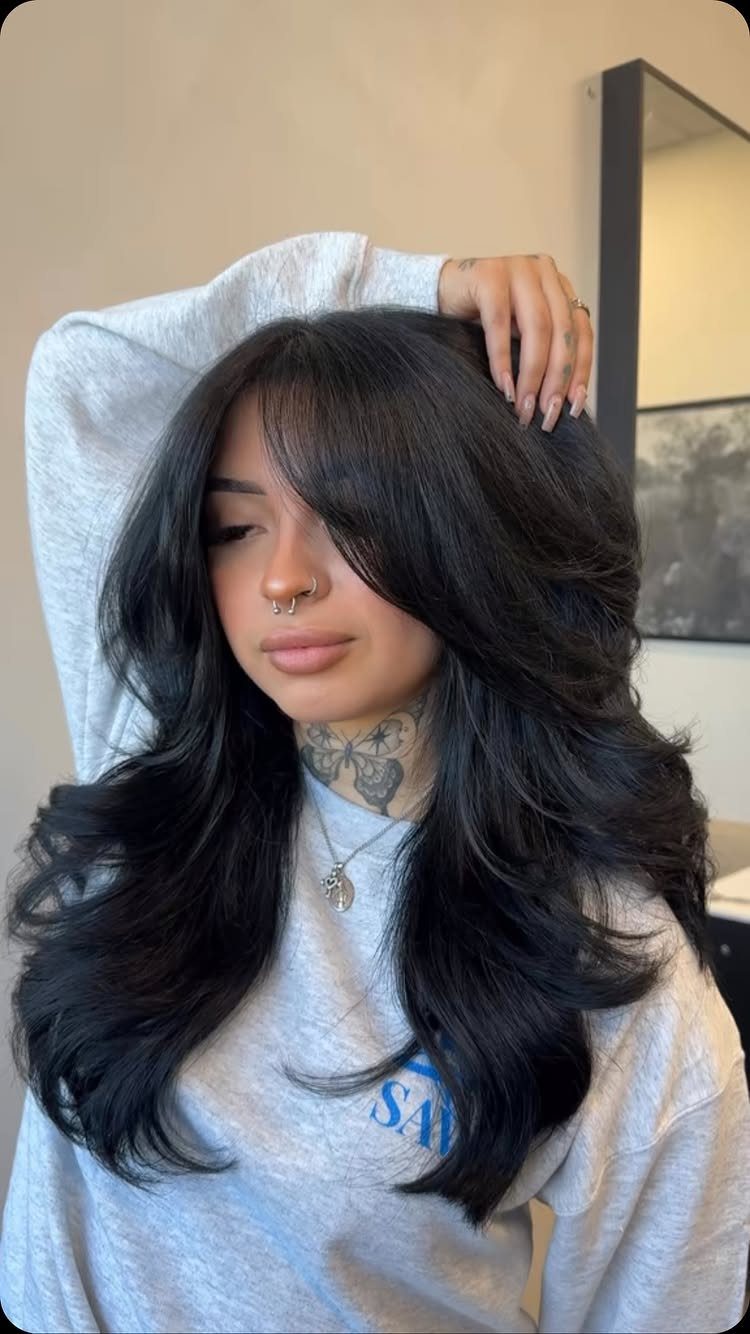
Waves worn loose give long dark hair movement without any fuss. Whether they stay soft and blurred or turn more defined, the hair gets body from the layers, and the curve reads clearly against a dark shade.
I would choose the softer version if you are not sure, because it forgives a lot.
Layered cuts make waves easier to hold, since the shorter pieces add shape through the middle. Ask your stylist for layers if your hair looks flat when it dries.
12. Voluminous Hair
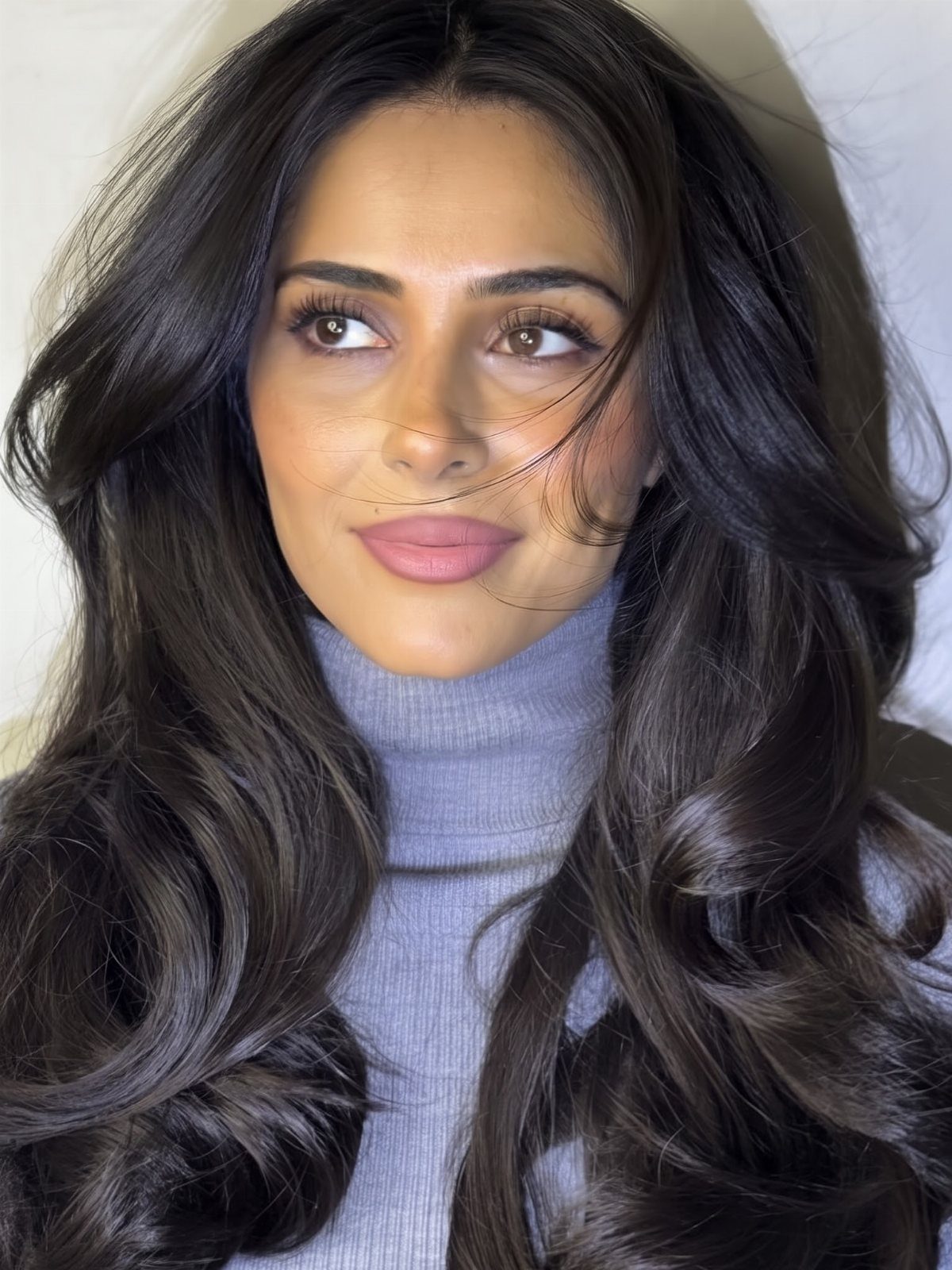
Volume on long dark hair comes from lift at the roots and shape through the middle, so the hair fans outward rather than hanging flat down the back. Wavy texture adds to it.
This is the look I would choose if your hair tends to lie close to the head. Dry it with the roots lifted, and let the waves stay loose through the length.
Brushing the waves out adds fullness and loosens the pattern at the same time, so decide how much body you want before the brush touches your hair.
13. Subtle Highlights
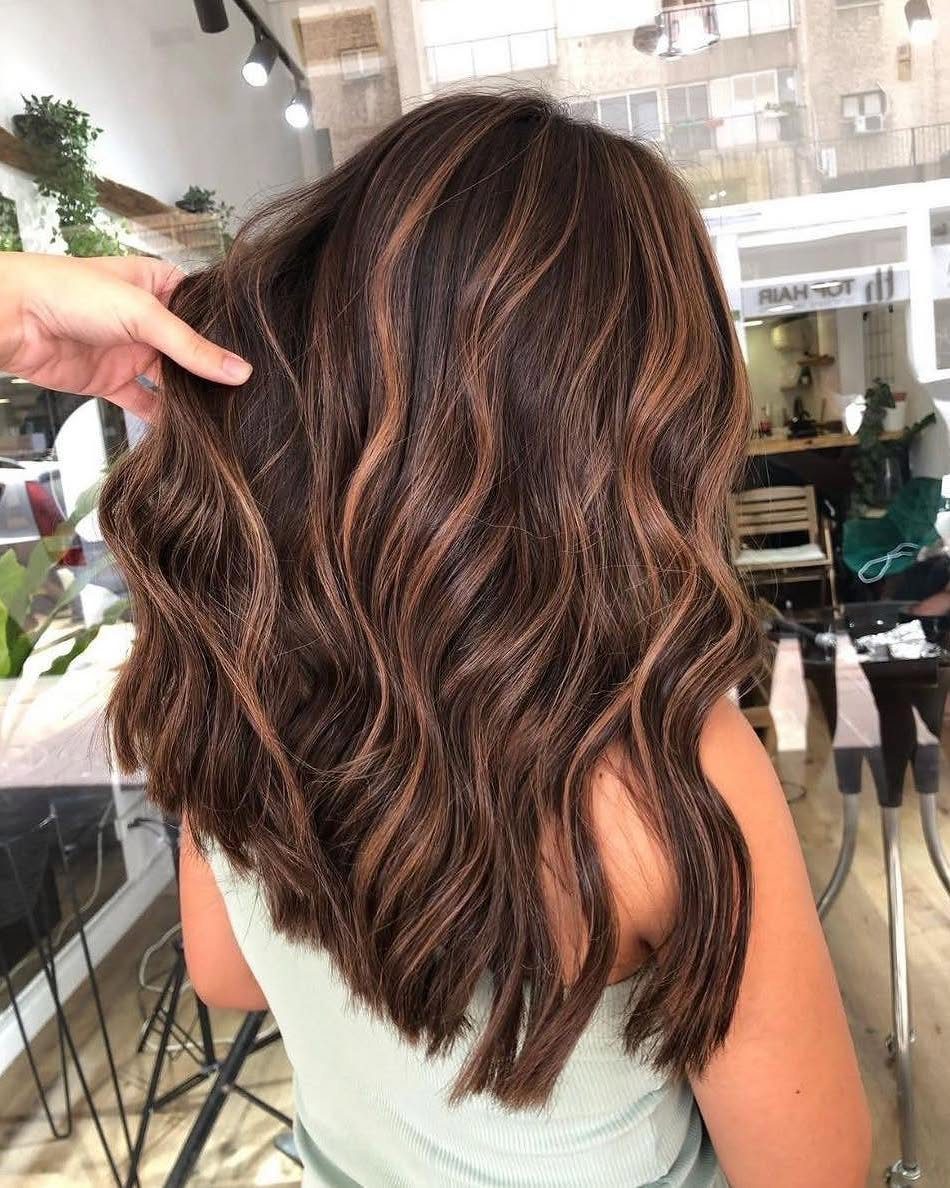
Caramel threaded through dark brown gives long hair a little contrast without changing the base color. Because the lighter pieces are subtle, the shade still reads as brunette, and the warmth shows most when the waves move.
I would pick this if black or deep brown feels flat to you. Show your stylist a photo and ask for warm, soft caramel pieces rather than bold stripes.
14. Half-up Waves
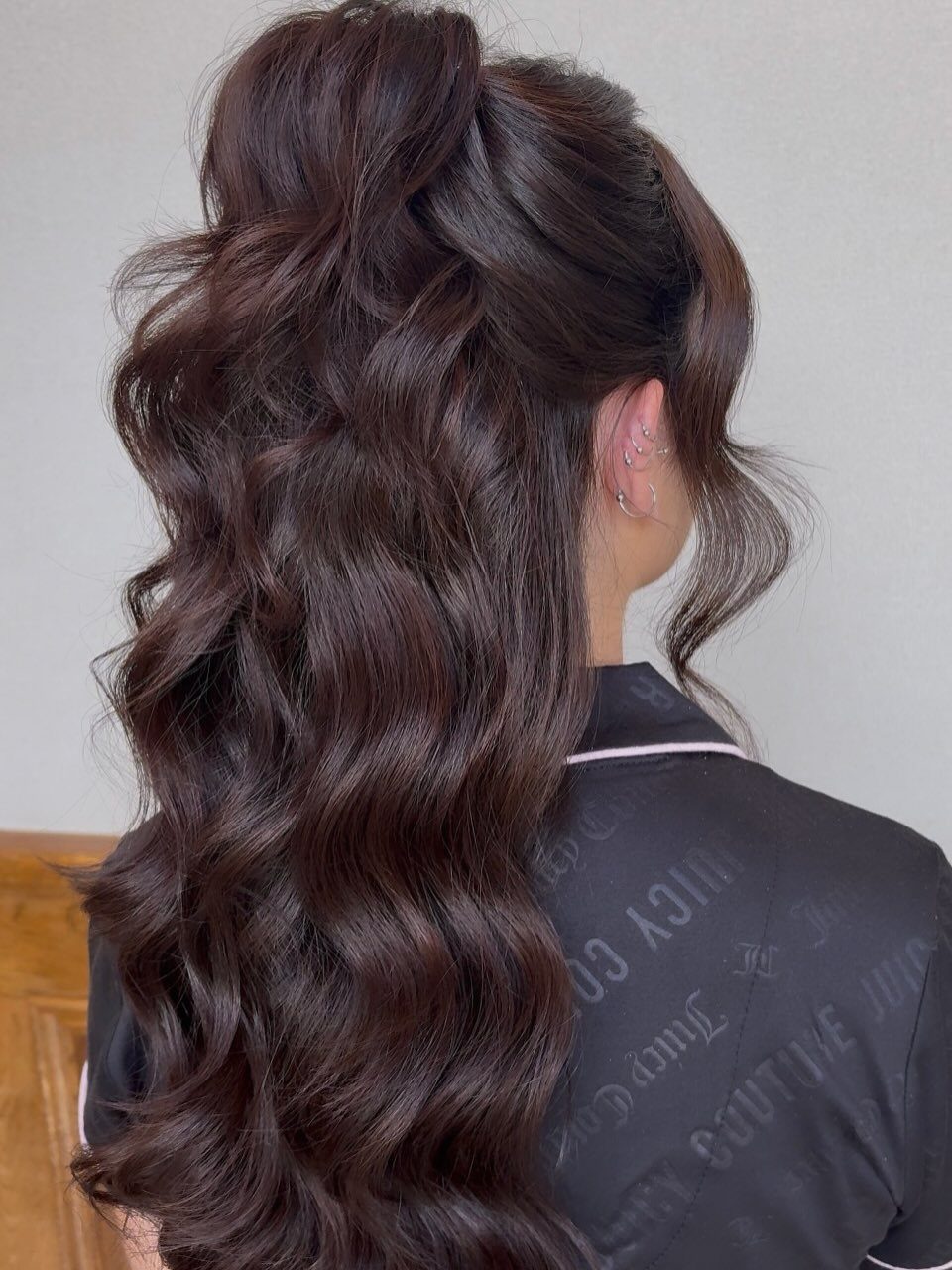
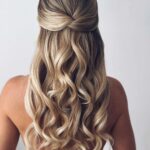
Pinning back only the top section of very long, wavy hair keeps the face clear and leaves the rest falling loose down the back. Waves make the pinned part look fuller.
Gather the section from temple to temple, twist it once, and secure it with a clip or pins at the back of the crown.
I like leaving a few waves loose near the face so the style stays soft. It’s a quick fix for the days when you don’t want to restyle everything.
15. Nape Ponytail
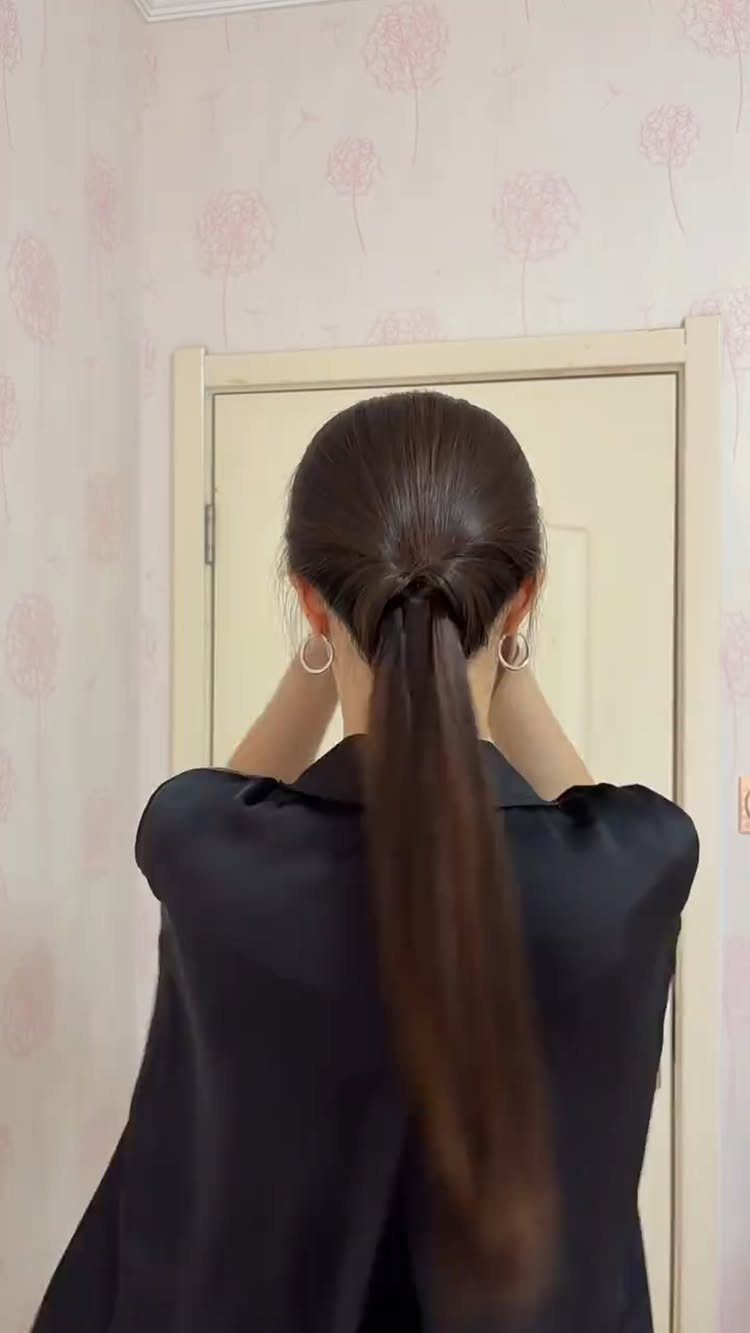
Low at the nape, a ponytail pulls long straight hair into a single smooth line. A nape ponytail is the neatest option for long dark hair, and the weight of dark hair makes it hang cleanly.
Brush the hair back first, then tie it just above the neckline with a snug elastic.
I would skip any bumps at the crown; the sleekness is the appeal. Hoop earrings or a plain neckline suit it well.
16. Wispy Bangs Updo
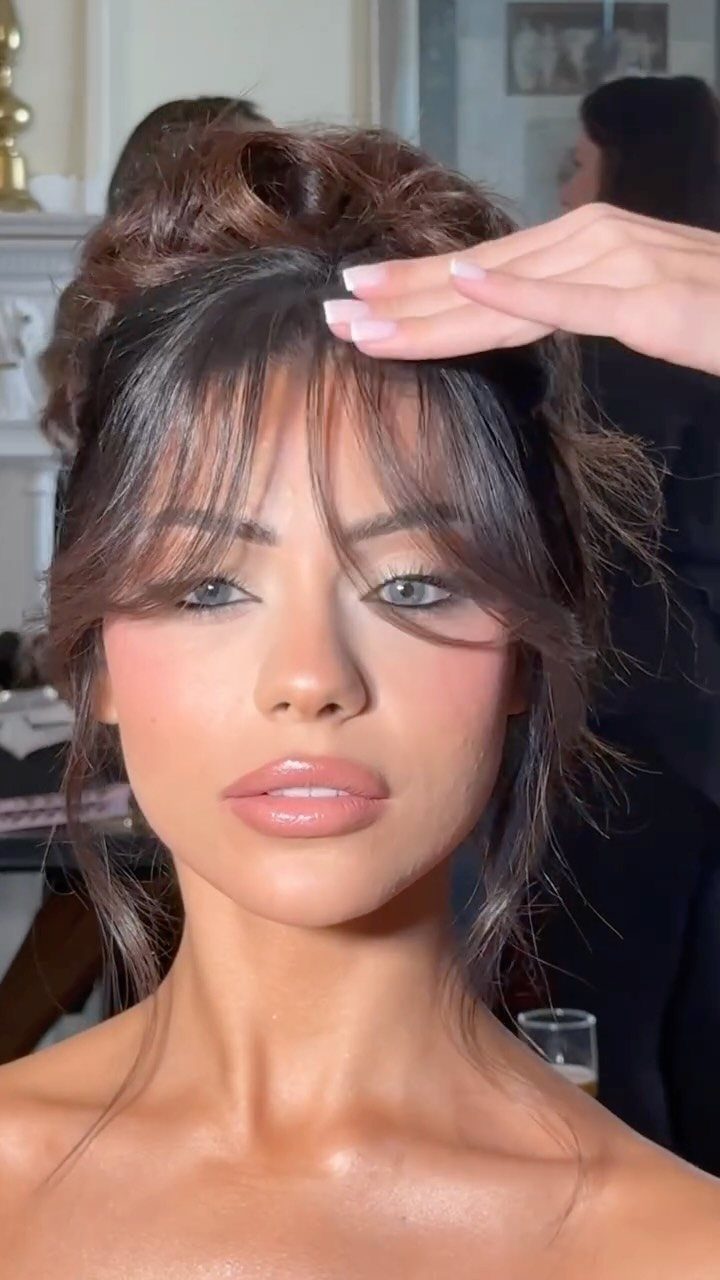
Wispy bangs soften a loose updo, and the pairing works because the fringe is sheer enough to let the forehead show through. The rest of the hair is gathered up with a relaxed, slightly undone shape.
Pin the hair up without pulling it tight, then leave a few strands loose around the face.
If you don’t have bangs yet, ask your stylist for them light and thin; they’re easier to live with that way. I prefer the messy version to a polished one.
17. Blunt Hair Hem
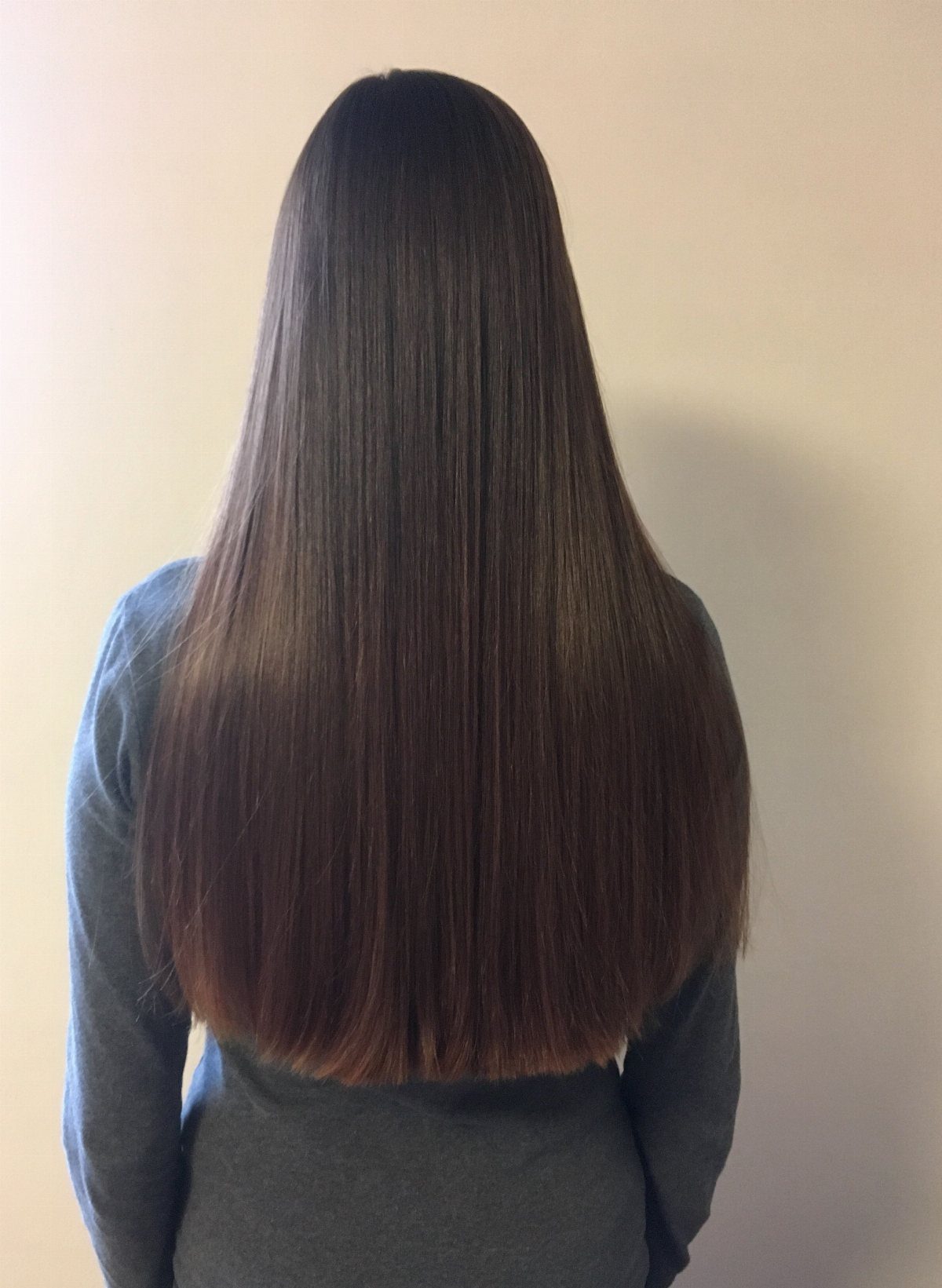
A blunt hem cuts the ends in one straight line, and on long, glossy dark hair the line is the whole statement. A slightly uneven edge looks more natural than a ruler-straight one, and it forgives the days between trims.
Ask for a blunt cut with no thinning at the ends, and say you’d like it a touch soft rather than razor-sharp.
A blunt hem pairs well with a glossy straight finish, though thick hair will hold the edge better than fine hair.
18. Thick Hair Ends
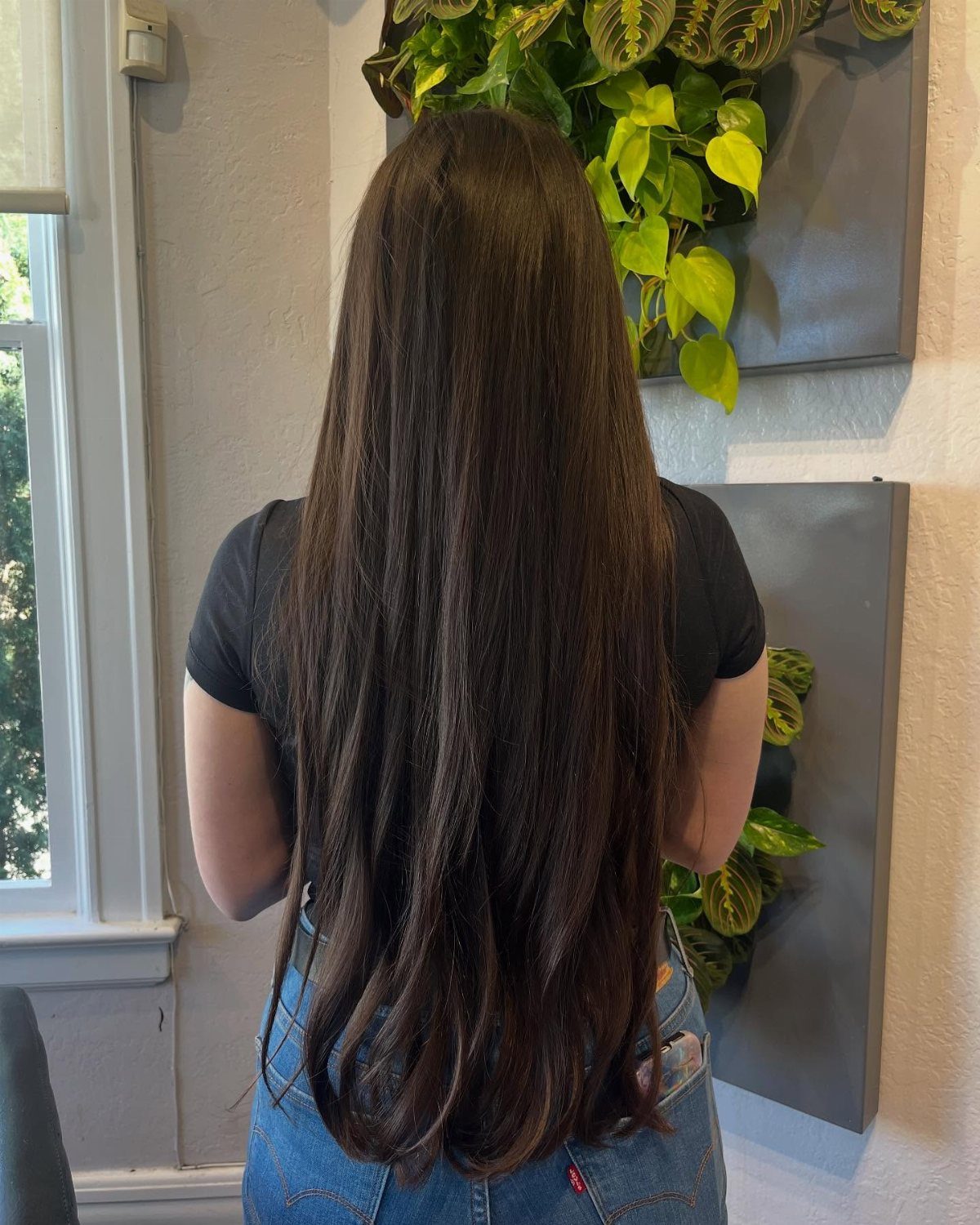
Fullness at the bottom is what separates thick ends from the thinned, wispy finish many long cuts drift toward. The hair falls in a dense, slightly wavy shape, so the ends look as substantial as the roots.
Tell your stylist not to thin or over-layer the lower inches.
I would trim only a little at a time, since every inch lost takes some of that weight with it. A slight wave helps the ends look even fuller.
19. Soft Versatile Bang
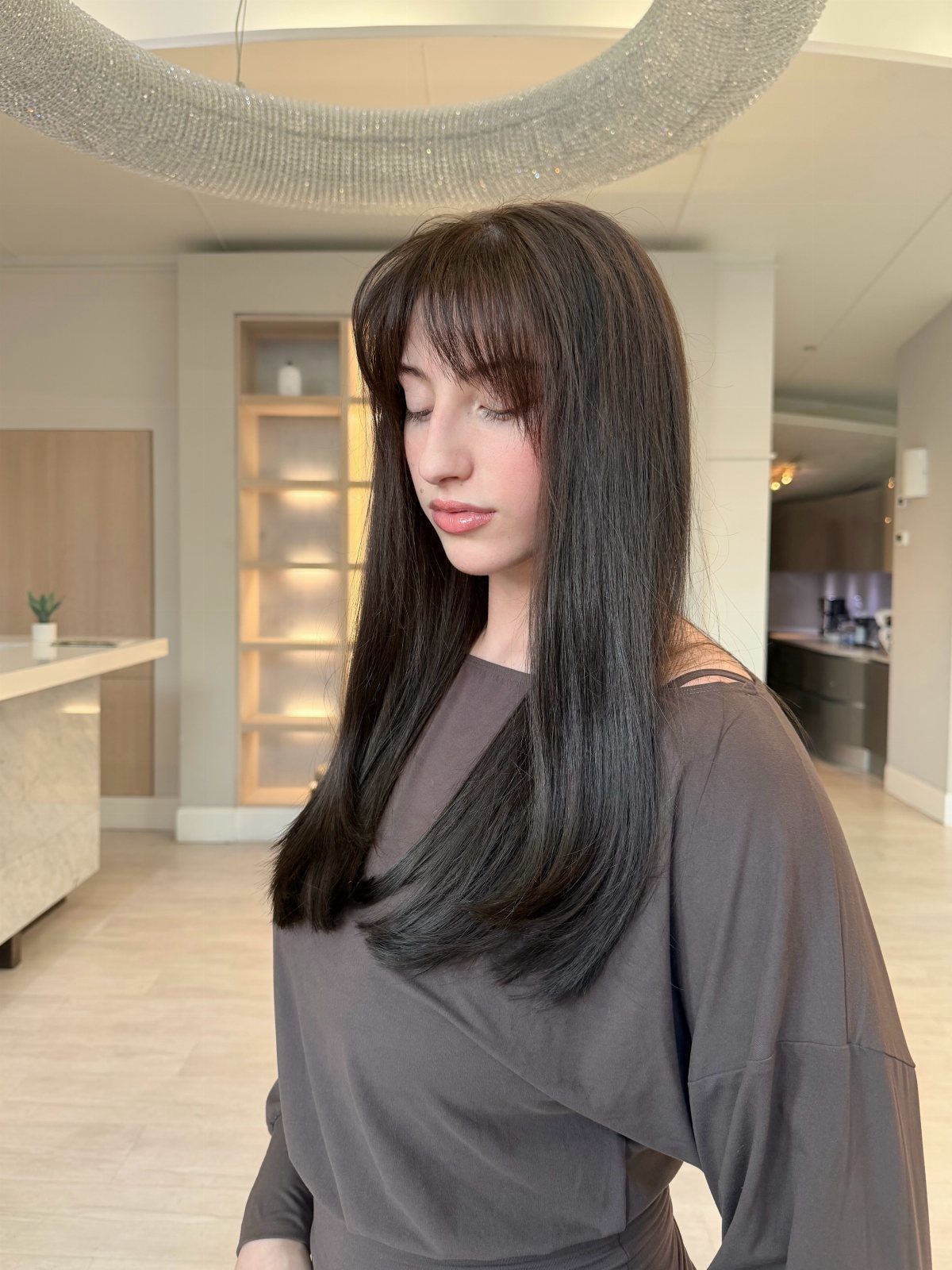
A soft bang is the quickest way to change long dark hair without touching the length.
A wispy, light fringe opens the forehead a little and keeps the face from feeling hidden, which is why it suits long dark hair that can otherwise look heavy around the face.
I would ask for it thin and soft rather than full, because it’s easier to live with and easier to grow out.
Bring a photo to the salon and tell your stylist how far down the forehead you want it to sit.
20. Side-swept Bangs
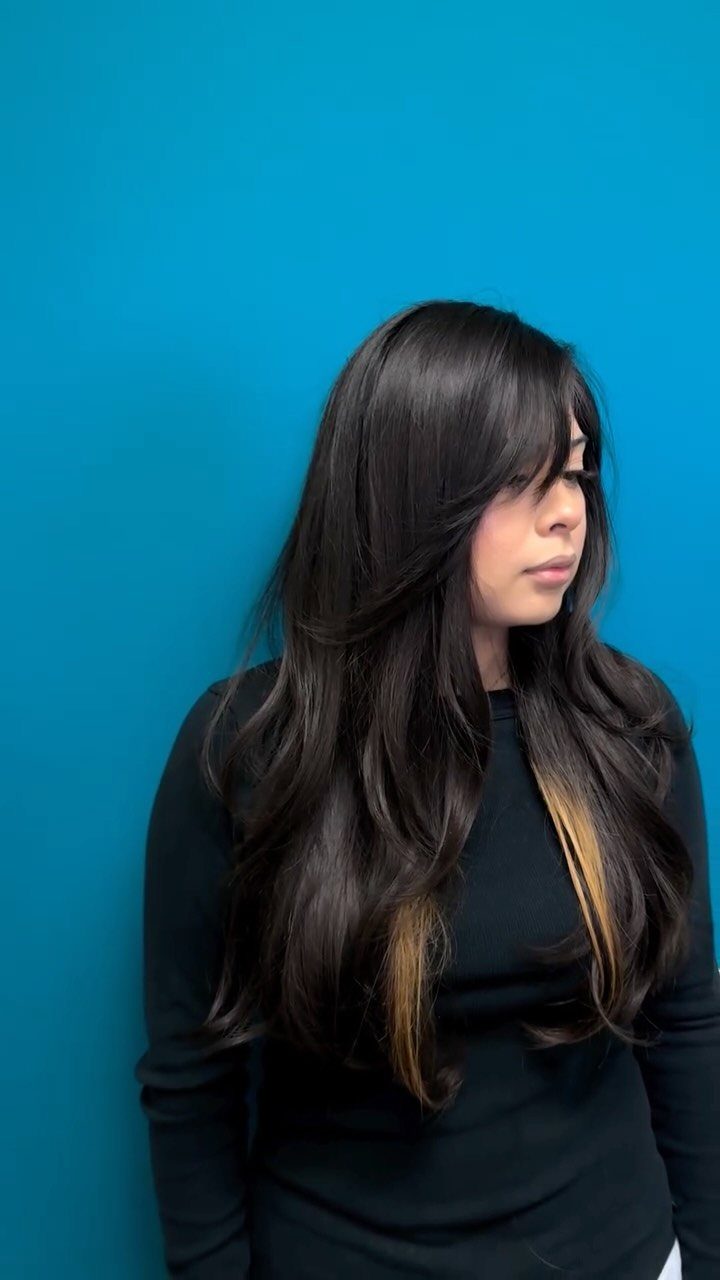
Swept to one side, bangs blend into the long layers instead of stopping at a hard line. On dark hair that is layered, the side sweep leads the eye along the shape of the cut.
Ask for bangs cut long enough to tuck behind the ear or sweep across, so you can switch between the two. I like this version for anyone nervous about a blunt fringe, since it never sits straight across the forehead.
21. Full Wispy Fringe
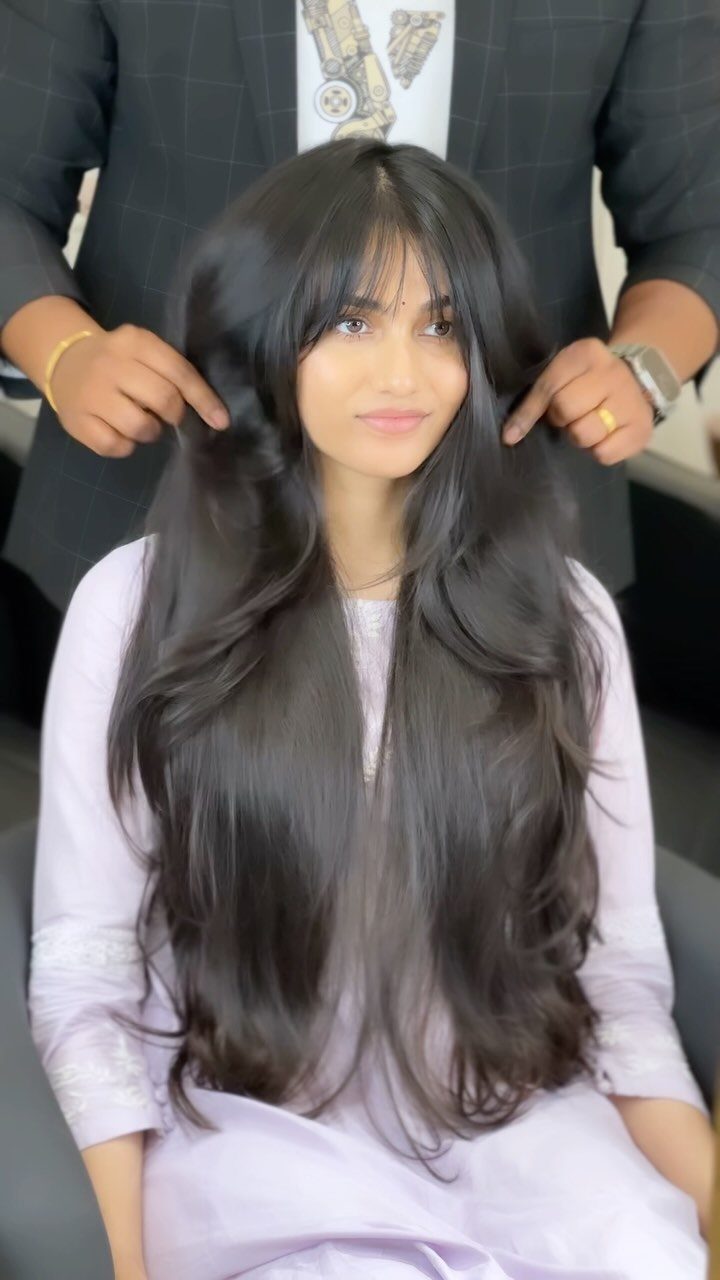
Against long, dark hair, a full fringe stands out as the one soft, airy thing in the look. The wisps let a bit of skin show through, which stops the bangs from reading as a heavy block.
For this one I would choose full but light, not thick and dense.
Tell your stylist you want wispy coverage across the whole forehead. Keep the rest of the hair smooth so the fringe gets the attention.
22. High Wavy Ponytail
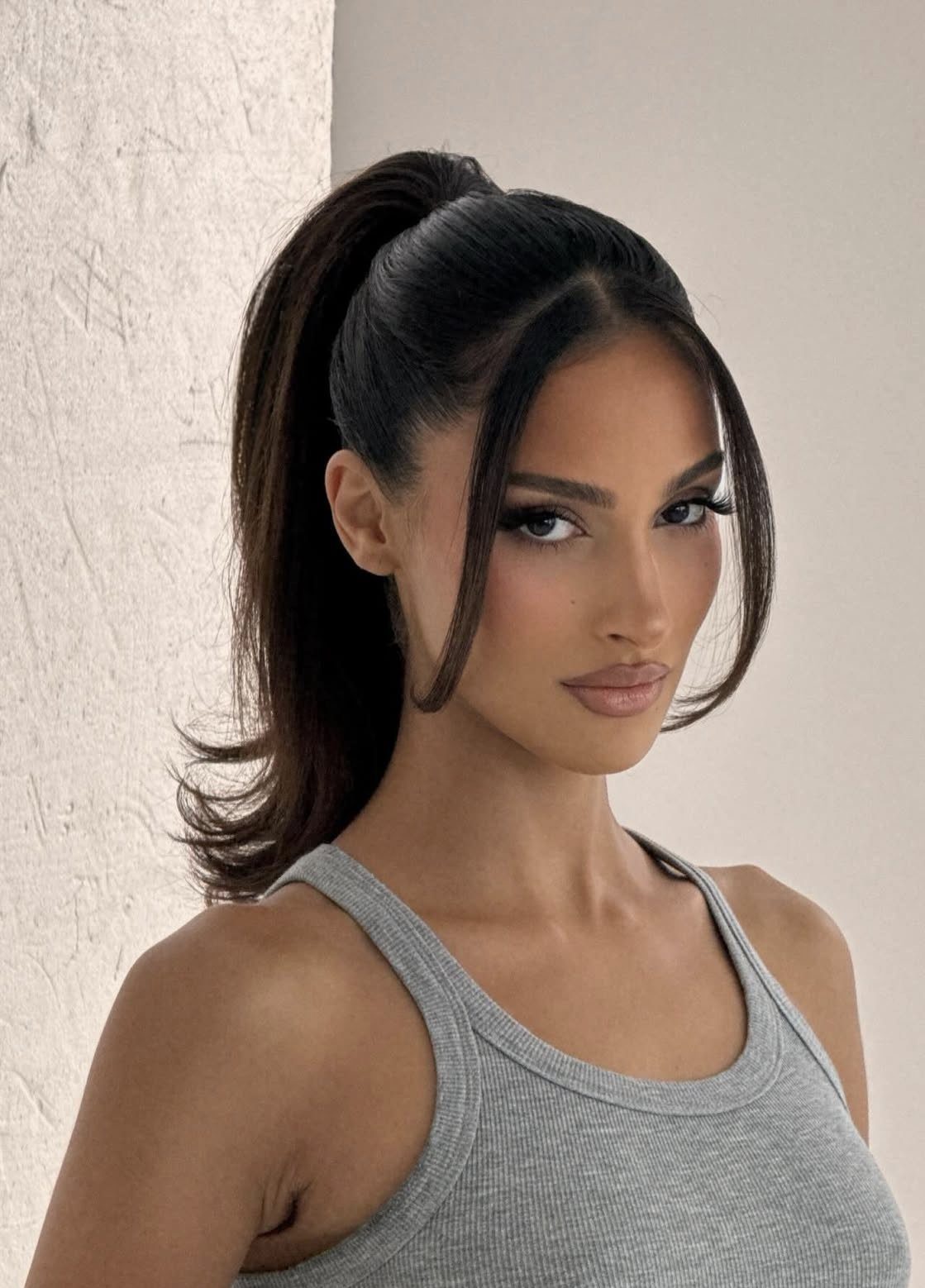
Gathered high on the head, loose waves swing from the ponytail instead of hanging flat, and a few strands left out at the face keep the style relaxed.
Tie it at the crown or a little higher with a snug elastic, then pull out the pieces around the face.
Waves hold their shape better than straight hair in a high tie, so I would curl first if yours is straight. It takes minutes, which makes it a good morning default.
23. Chestnut Brown Layers
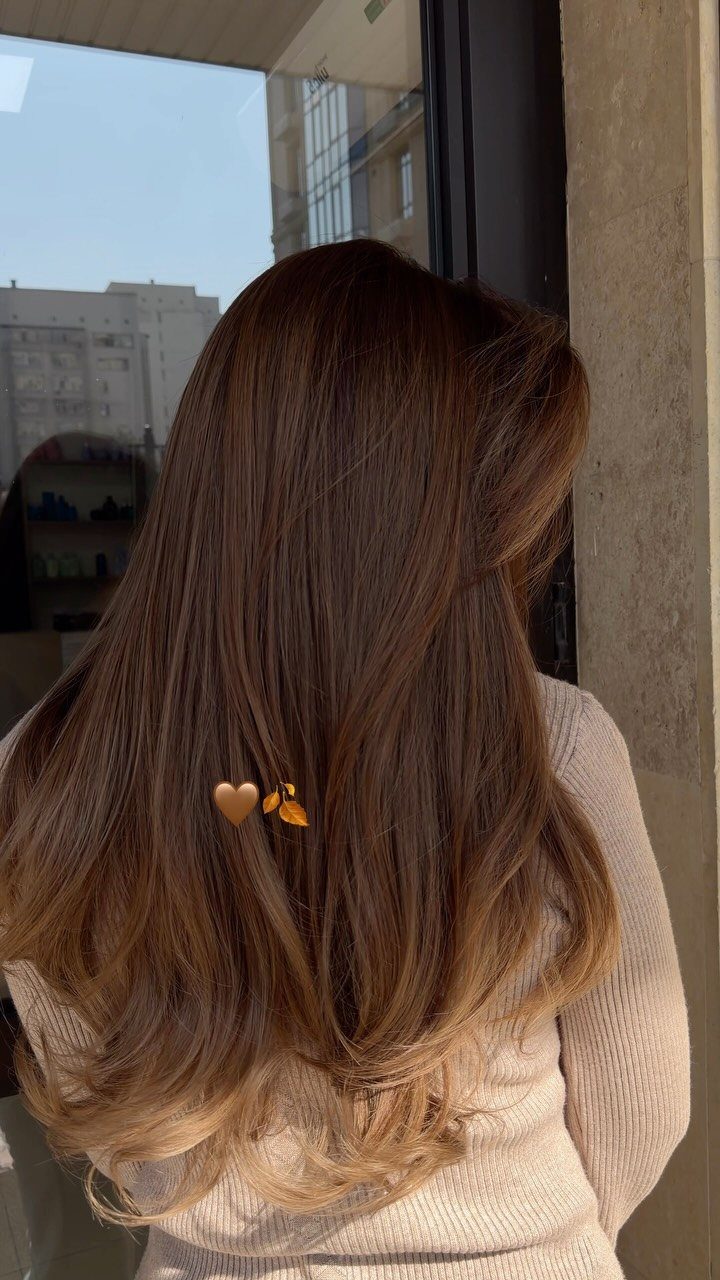
Chestnut brown layers give long hair a warm, moving shape, and the lighter ends curl up to catch the light. The layers keep all that length from falling in one flat sheet.
If you want it, ask for chestnut brown with ends a shade lighter than the roots, and say you want soft layers. I would pick this over a single dark shade when you want warmth without losing the brunette base.
24. Espresso Brunette
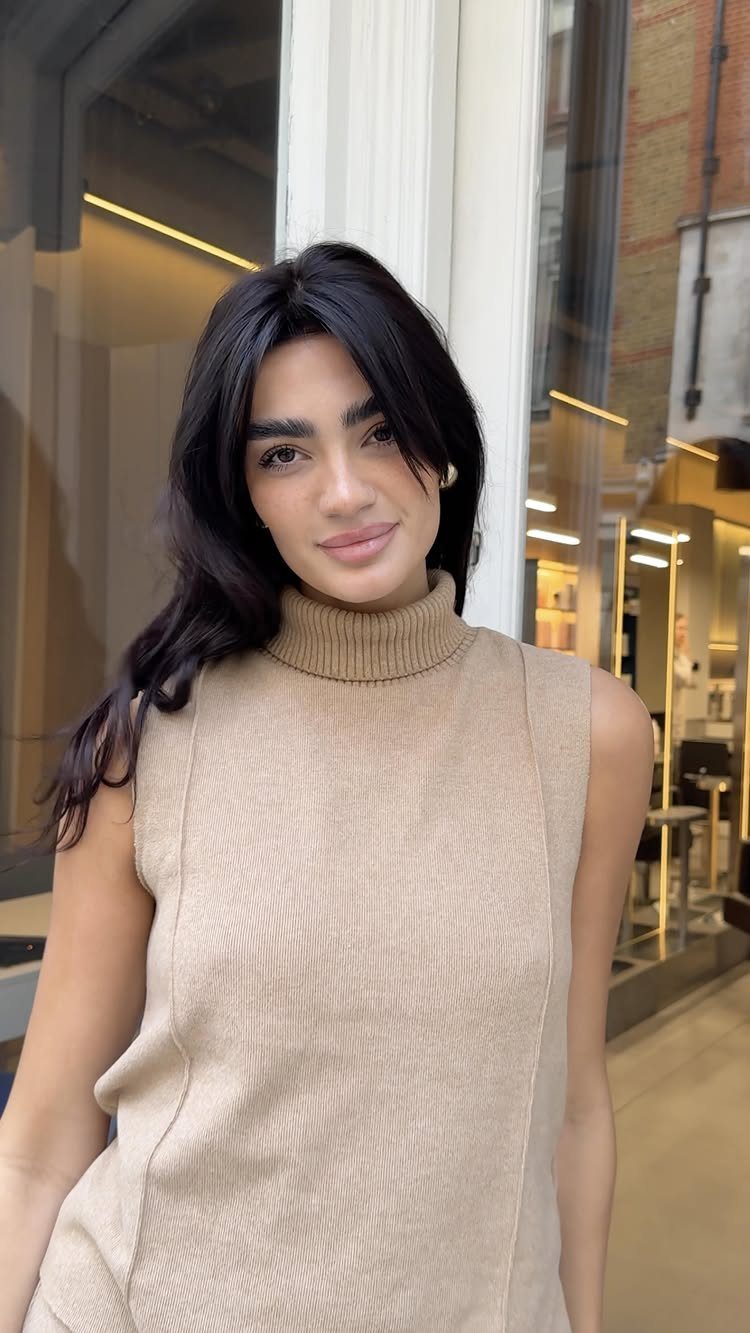
Espresso is a brunette so deep it nearly reads black, but it keeps a hint of brown that shows when the light hits it. On long hair, that glossy finish does the work, especially with loose waves around the face.
Ask your stylist for espresso brunette by name and bring a photo. I’d choose it over true black if you want depth that still looks soft against the skin.
25. Chocolate Brown Hair
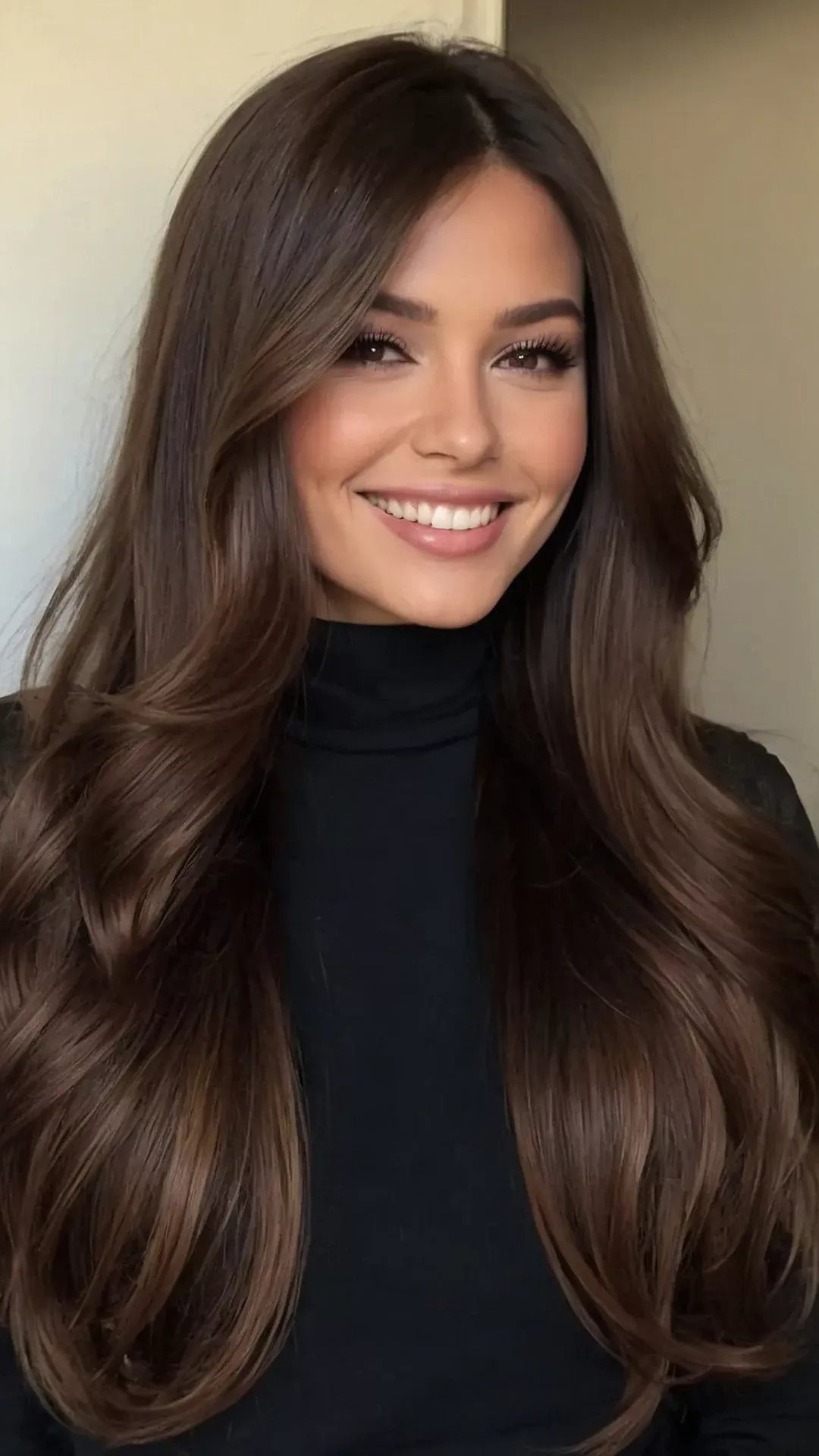
Chocolate brown runs a step warmer than espresso or black, with a soft reddish-gold cast that shows up most in sunlight.
On long, wavy hair parted to the side, it reads as soft and full, with a rich brown that stays friendly against the skin.
I would pick it if espresso feels too deep but you still want a dark, glossy base.
Brown shades get labeled differently from salon to salon, so a reference photo does more than the color name alone. Keeping the waves loose lets the color do the work.
Frequently Asked Questions
What is the prettiest brown hair color?
For long hair, I’d start with dark brown. Because the shade moves a bit between root and ends, it catches light in a way flat black never does, and that gives long hair more depth.
Chocolate brown runs warmer, with a faint reddish-gold glow when the sun hits it, while espresso goes so deep that most people would call it black at first glance.
Salons label browns differently, so take a reference photo along with the shade name.
I want to know what to do with my hair?
Try a soft, thin bang first. It opens the forehead without touching your length and is easier to grow out than a full fringe.
Then ask your stylist to leave the lower inches thick, with no thinning or over-layering, and trim only a little at a time. If you want a color change, a darker shade with semi-permanent lowlights is another route.